Winter Grips Japan

Winter Grips Japan

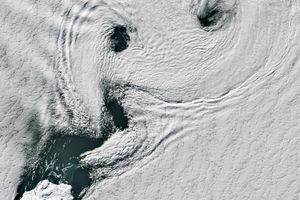
A satellite image shows snow blanketing Hokkaido, Japan, with sea ice swirling just north of the island.
February 5, 2026

Northern Japan, especially the island of Hokkaido, is home to some of the snowiest cities in the world. Sapporo, the island’s largest city and host of an annual snow festival, typically sees more than 140 days of snowfall, with nearly 6 meters (20 feet) accumulating on average each year. The ski resorts surrounding the city delight in the relatively dry, powdery “sea-effect” snow that often falls when frigid air from Siberia flows across the relatively warm waters of the Sea of Japan.

However, despite the region’s familiarity with heavy snowfall, winter 2026 got off to a disruptive start. A series of intense storms in January and February repeatedly paralyzed transportation systems, closing airports, snarling roadways, and suspending trains. Following storms that dropped more than 2 meters (7 feet) of snow in Aomori, a city on the island of Honshu just south of Hokkaido (out of frame), authorities deployed troops to help clear roofs, according to news reports. The snow has caused dozens of deaths and hundreds of injuries, according to Japan’s Fire and Disaster Management Agency.

On February 5, 2026, the MODIS (Moderate Resolution Imaging Spectroradiometer) on NASA’s Terra satellite acquired this image of snow-covered landscapes across Hokkaido. With more than 31 active volcanoes, the island features several large caldera lakes, including at least five that are visible in the image. (Calderas are large depressions formed by volcanic eruptions.) In the east, forested windbreaks around Nakashibetsu form a checkerboard pattern, while to the north, swirls of drifting sea ice adorn the Sea of Okhotsk.

The Sea of Okhotsk is the southernmost sea that routinely hosts large amounts of sea ice. Although this winter brought unusually cold weather, long-term observations indicate that the amount of ice observed there each year has declined significantly in recent decades. One 2026 analysis noted a 3.4 percent per decade decline in the maximum extent of its winter sea ice since the 1970s. These changes could have implications for the region’s marine ecosystems, which are known for being highly productive and producing massive phytoplankton blooms each spring after the ice melts. 

Disruptive snowstorms are also striking elsewhere in Japan. In February, a storm blanketed western Japan in snow, leading to more travel disruptions and the early closure of some polling stations during national elections.  

NASA Earth Observatory image by Michala Garrison, using MODIS data from NASA EOSDIS LANCE and GIBS/Worldview. Story by Adam Voiland.

References & Resources

You may also be interested in:

Stay up-to-date with the latest content from NASA as we explore the universe and discover more about our home planet.

The West Faces Snow Drought

4 min read

Very wet—but very warm—weather in the western U.S. has left many mountainous regions looking at substantial snowpack deficits.

Article

Antarctic Sea Ice Saw Its Third-Lowest Maximum

2 min read

Sea ice around the southernmost continent hit one of its lowest seasonal highs since the start of the satellite record.

Article

Arctic Sea Ice Ties for 10th-Lowest on Record

3 min read

Satellite data show that Arctic sea ice likely reached its annual minimum extent on September 10, 2025.

Article

Powered by WPeMatico

Get The Details…

What You Need to Know About NASA’s SpaceX Crew-12 Mission

What You Need to Know About NASA’s SpaceX Crew-12 Mission

The four members of NASA's SpaceX Crew-12 mission to the International Space Station pose together for an official crew portrait. From left are, Roscosmos cosmonaut and Mission Specialist Andrey Fedyaev, NASA astronauts Jessica Meir and Jack Hathaway, Commander and Pilot respectively, and ESA (European Space Agency) astronaut and Mission Specialist Sophie Adenot.
jsc2026e004045 (Oct. 17, 2025) — The four members of NASA’s SpaceX Crew-12 mission to the International Space Station pose together for an official crew portrait. From left are, Roscosmos cosmonaut and Mission Specialist Andrey Fedyaev, NASA astronauts Jessica Meir and Jack Hathaway, Commander and Pilot respectively, and ESA (European Space Agency) astronaut and Mission Specialist Sophie Adenot.
NASA

Four crew members are set to launch to the International Space Station as part of NASA’s SpaceX Crew-12 mission, where they will conduct research, technology demonstrations, and maintenance aboard the orbiting laboratory.

The crew will lift off from Space Launch Complex 40 at Cape Canaveral Space Force Station in Florida aboard a SpaceX Dragon spacecraft named Freedom. The spacecraft previously flew NASA’s SpaceX Crew-4 and Crew-9 missions, as well as private astronaut missions Axiom Mission 2 and 3.

NASA astronauts Jessica Meir and Jack Hathaway will serve as spacecraft commander and pilot, respectively. They will be joined by ESA (European Space Agency) astronaut Sophie Adenot and Roscosmos cosmonaut Andrey Fedyaev, who will serve as mission specialists. Crew-12 will join Expedition 74 crew members already aboard the space station.

During their eight-month mission, Crew-12 will conduct a variety of science experiments to advance research and technology for future Moon and Mars missions and benefit humanity back on Earth. This research includes studies of pneumonia-causing bacteria to improve treatments, on-demand intravenous fluid generation for future space missions, automated plant health monitoring, investigations of plant and nitrogen-fixing microbe interactions to enhance food production in space, and research on how physical characteristics may affect blood flow during spaceflight.

Meanwhile, support teams are progressing through Dragon preflight milestones for Crew-12, they also are preparing a SpaceX Falcon 9 rocket booster for its second flight. After system checkouts are complete and all components are certified, teams will mate Dragon to Falcon 9 in SpaceX’s hangar at the launch site. The integrated spacecraft and rocket then will roll to the pad for a dry dress rehearsal with the crew and an integrated static fire test before launch.

This flight is the 12th crew rotation mission with SpaceX to the space station as part of NASA’s Commercial Crew Program.

Meet Crew-12

The four members of NASA's SpaceX Crew-12 mission to the International Space Station pose together for a crew portrait in their pressure suits at SpaceX headquarters in Hawthorne, California. From left are, Roscosmos cosmonaut and Mission Specialist Andrey Fedyaev, NASA astronauts Jack Hathaway and Jessica Meir, Pilot and Commander respectively, and ESA (European Space Agency) astronaut and Mission Specialist Sophie Adenot.
jsc2026e004033 (Jan. 21, 2026) — The four members of NASA’s SpaceX Crew-12 mission to the International Space Station pose together for a crew portrait in their pressure suits at SpaceX headquarters in Hawthorne, California. From left are, Roscosmos cosmonaut and Mission Specialist Andrey Fedyaev, NASA astronauts Jack Hathaway and Jessica Meir, Pilot and Commander respectively, and ESA (European Space Agency) astronaut and Mission Specialist Sophie Adenot.
SpaceX

This will be the second flight to the space station for Meir, who was selected as a NASA astronaut in 2013. The Caribou, Maine, native earned a bachelor’s degree in biology from Brown University, a master’s degree in space studies from the International Space University, and a doctorate in marine biology from Scripps Institution of Oceanography in San Diego. On her first spaceflight, Meir spent 205 days as a flight engineer during Expedition 61/62, and she completed the first three all-woman spacewalks with fellow NASA astronaut Christina Koch, totaling 21 hours and 44 minutes outside of the station. Since then, she has served in various roles, including assistant to the chief astronaut for commercial crew (SpaceX), deputy for the Flight Integration Division, and assistant to the chief astronaut for the human landing system. Follow @Astro_Jessica on X and Instagram.

A commander in the United States Navy, Hathaway was selected as part of the 2021 astronaut candidate class. This will be Hathaway’s first spaceflight. The South Windsor, Connecticut, native holds a bachelor’s degree in physics and history from the U.S. Naval Academy and master’s degrees in flight dynamics from Cranfield University and national security and strategic studies from the U.S. Naval War College. Hathaway also is a graduate of the Empire Test Pilot’s School, Fixed Wing Class 70 in 2011. At the time of his selection, Hathaway was deployed aboard the USS Truman, serving as Strike Fighter Squadron 81’s prospective executive officer. He has accumulated more than 2,500 flight hours in 30 different aircraft, including more than 500 carrier arrested landings and 39 combat missions. Follow @astro_hathaway on X and Instagram.

The Crew-12 mission will be Adenot’s first spaceflight. Before her selection as an ESA astronaut in 2022, Adenot earned a degree in engineering from ISAE-SUPAERO in Toulouse, France, specializing in spacecraft and aircraft flight dynamics. She also earned a master’s degree in human factors engineering at Massachusetts Institute of Technology in Cambridge. After earning her master’s degree, she became a helicopter cockpit design engineer at Airbus Helicopters and later served as a search and rescue pilot at Cazaux Air Base from 2008 to 2012. She then joined the High Authority Transport Squadron in Villacoublay, France, and served as a formation flight leader and mission captain from 2012 to 2017. Between 2019 and 2022, Adenot worked as a helicopter experimental test pilot in Cazaux Flight Test Center with DGA (Direction Générale de l’Armement – the French Defence Procurement Agency). She has logged more than 3,000 hours flying 22 different helicopters. Follow @Soph_astro on X and  Instagram.

This will be Fedyaev’s second long-duration stay aboard the orbiting laboratory. He graduated from the Krasnodar Military Aviation Institute in 2004, specializing in aircraft operations and air traffic organization, and earned qualifications as a pilot engineer. Prior to his selection as a cosmonaut, he served as deputy commander of an Ilyushin-38 aircraft unit in the Kamchatka Region, logging more than 600 flight hours and achieving the rank of second-class military pilot. Fedyaev was selected for the Gagarin Research and Test Cosmonaut Training Center Cosmonaut Corps in 2012 and has served as a test cosmonaut since 2014. In 2023, he flew to the space station as a mission specialist during NASA’s SpaceX Crew-6 mission, spending 186 days in orbit as an Expedition 69 flight engineer. For his achievements, Fedyaev was awarded the title Hero of the Russian Federation and received the Yuri Gagarin Medal.

Mission Overview

The four members of NASA's SpaceX Crew-12 mission to the International Space Station pose together for a crew portrait in their blue flight suits at SpaceX headquarters in Hawthorne, California. From left are, Roscosmos cosmonaut and Mission Specialist Andrey Fedyaev, NASA astronauts Jack Hathaway and Jessica Meir, Pilot and Commander respectively, and ESA (European Space Agency) astronaut and Mission Specialist Sophie Adenot.
jsc2026e004030 (Jan. 23, 2026) — The four members of NASA’s SpaceX Crew-12 mission to the International Space Station pose together for a crew portrait in their blue flight suits at SpaceX headquarters in Hawthorne, California. From left are, Roscosmos cosmonaut and Mission Specialist Andrey Fedyaev, NASA astronauts Jack Hathaway and Jessica Meir, Pilot and Commander respectively, and ESA (European Space Agency) astronaut and Mission Specialist Sophie Adenot.
SpaceX

Following liftoff, Falcon 9 will accelerate Dragon to approximately 17,500 mph. Once in orbit, the crew, along with NASA and SpaceX mission control, will monitor a series of maneuvers to guide Dragon to the space-facing port of the station’s Harmony module. The spacecraft is designed to dock autonomously, but the crew can pilot it manually if necessary.

After docking, Crew-12 will be welcomed aboard the station by the three-member Expedition 74 crew, including NASA astronaut Chris Williams and Roscosmos cosmonauts Sergey Kud-Sverchkov and Sergei Mikaev.

While aboard the space station, Crew-12 will welcome a Soyuz spacecraft in July carrying three new crew members: NASA astronaut Anil Menon and Roscosmos cosmonauts Pyotr Dubrov and Anna Kikina. They also will bid farewell to the Soyuz carrying Williams, Kud-Sverchkov, and Mikaev. The crew also is expected to see the arrival of Dragon, Roscosmos Progress, and Northrop Grumman’s Cygnus XL spacecraft for station resupply.

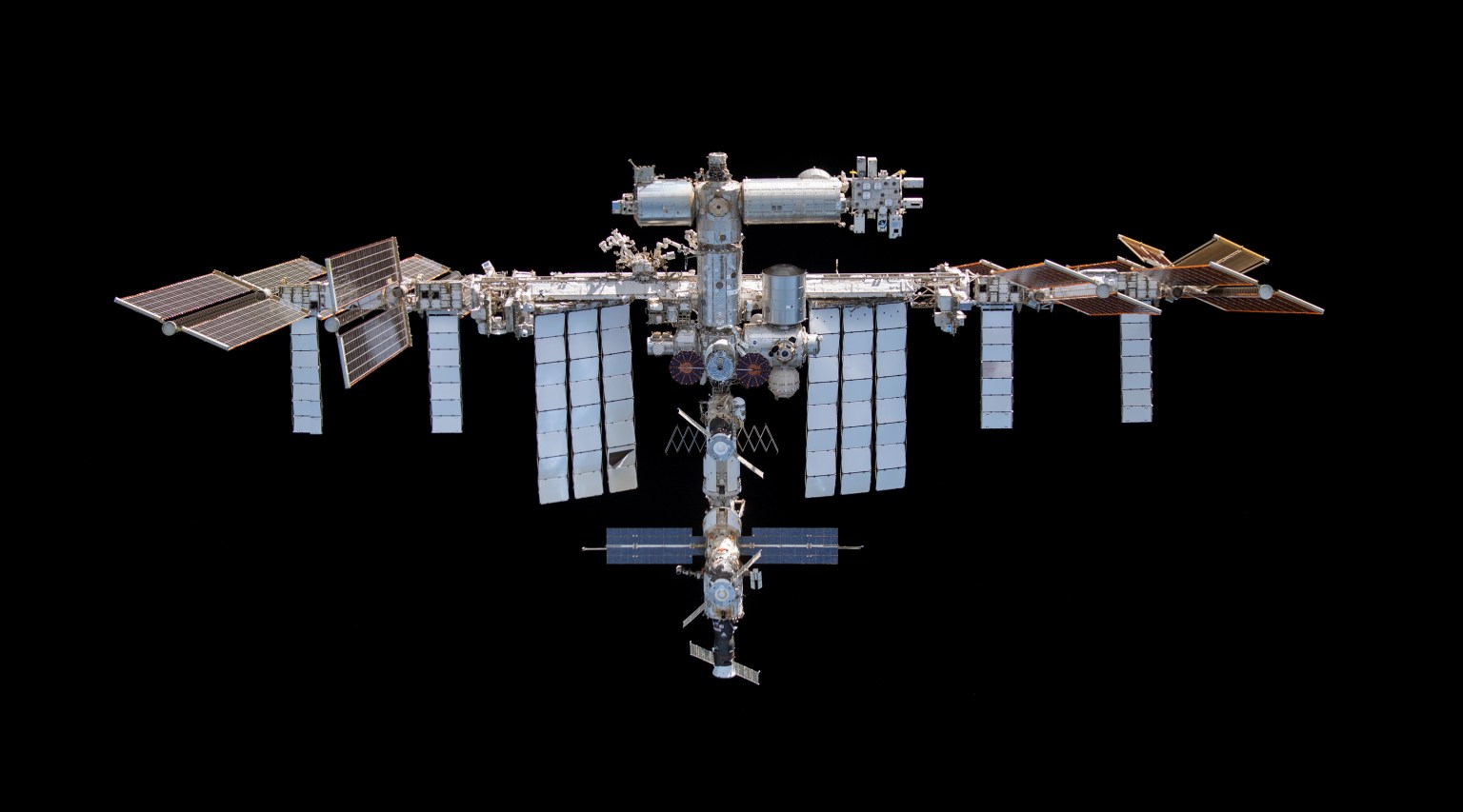
For more than 25 years, people have lived and worked continuously aboard the International Space Station, advancing scientific knowledge and making research breakthroughs that are not possible on Earth. The station is a critical testbed for NASA to understand and overcome the challenges of long-duration spaceflight and to expand commercial opportunities in low Earth orbit. As commercial companies concentrate on providing human space transportation services and destinations as part of a robust low Earth orbit economy, NASA is focusing its resources on deep space missions to the Moon as part of the Artemis campaign in preparation for future human missions to Mars.

Learn more about the space station, its research, and crew, at:

https://www.nasa.gov/international-space-station

Powered by WPeMatico

Get The Details…
Joseph Zakrzewski

Space Station Research Contributes to Artemis II

Space Station Research Contributes to Artemis II

The full Moon fills the frame against a black sky, with multiple small silhouettes of the International Space Station captured as it transits across the Moon’s face.
A composite image shows the International Space Station as it transits the Moon. Photo Credit: NASA/Joel Kowsky
NASA/Joel Kowsky

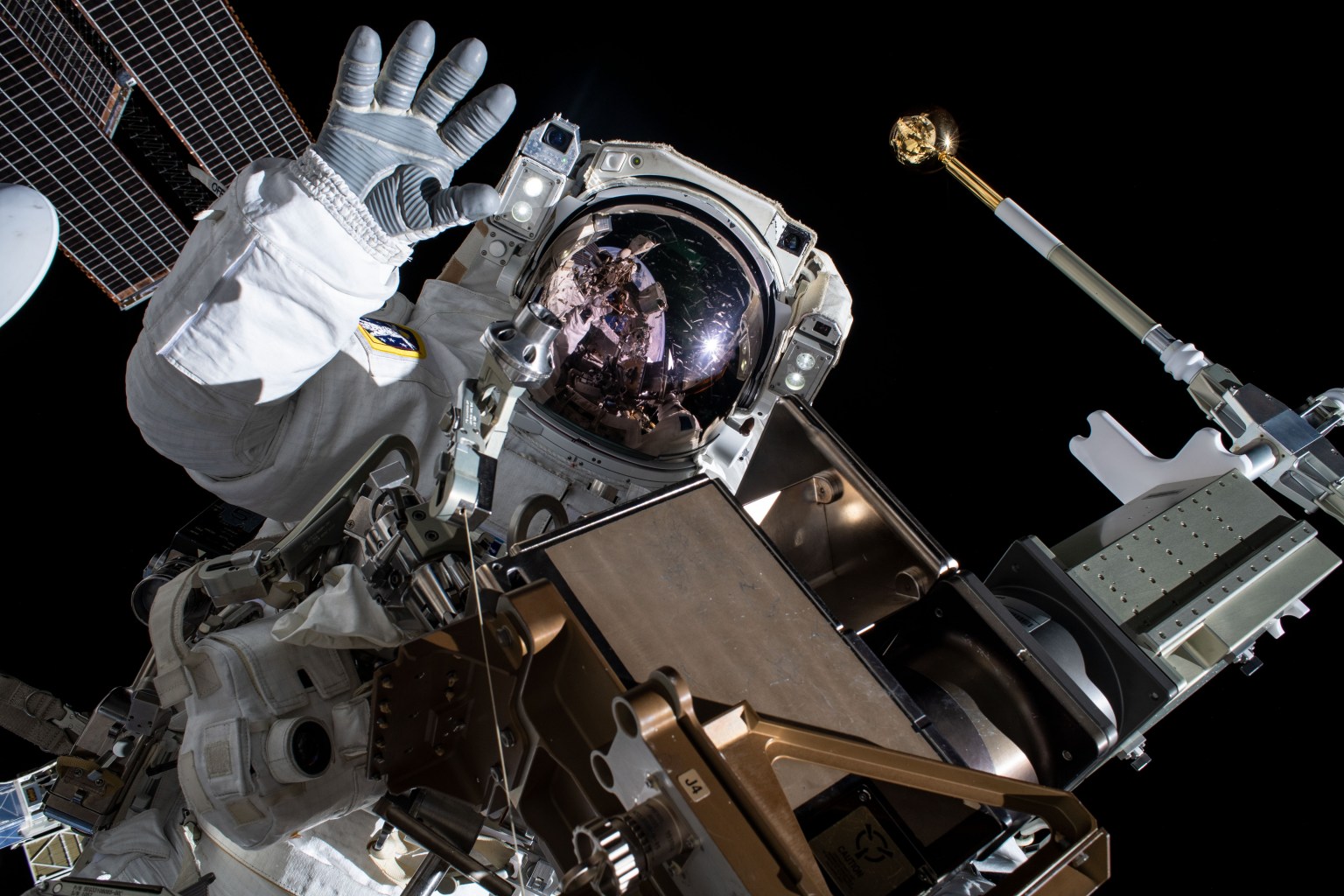
Have you ever heard the saying, “You have to learn how to walk before you can run?” The same can be true in human space exploration. To push capabilities further and ensure safe, successful missions, NASA must test ideas and solve challenges ahead of time. While Earth-based research and engineering helps NASA progress through various challenges, it can’t fully replicate the space environment. That’s where the International Space Station comes in — an out-of-this-world laboratory where astronauts help prepare for missions to the Moon, Mars, and beyond.

Four astronauts float together inside the International Space Station, smiling and holding small devices about the size of a printer ink cartridge. They are surrounded by equipment, cables, and modules in the microgravity laboratory.
(From left) Andreas Mogensen of ESA (European Space Agency); Loral O’Hara and Jasmin Moghbeli, both from NASA; and Satoshi Furukawa of JAXA (Japan Aerospace Exploration Agency), showing off crew active dosimeters used for radiation monitoring. Credit: NASA
NASA

Since 2000, NASA and its partners have used the orbiting laboratory to conduct groundbreaking research and collaborate to advance human exploration to the depths of our solar system. Research aboard the space station helped lay the foundation for the Orion spacecraft’s life support and safety systems, which will carry four astronauts around the Moon during the Artemis II mission. These systems include radiation sensing equipment, carbon dioxide removal systems, a water-based portable fire extinguisher, emergency fire masks, the toilet, a heat exchanger, and a backup emergency navigation system.

Artemis II also includes a set of science objectives, many rooted in research and methods pioneered aboard the space station. One example is Spaceflight Standard Measures, an experiment that tracks psychological and physiological data points. This research will branch off to collect astronaut information beyond low Earth orbit, deepening our understanding of how the body adapts to living and working far from Earth.

Organ-chip experiments use small devices containing cells to model how tissues and organs respond to space stressors and therapeutic treatments. These devices and their related hardware have been used in several experiments aboard the space station and will continue their legacy in the lunar environment to study the effects of deep space stressors on human health using cells from Artemis II astronauts. Organ-chip research could be used to develop improved prevention and personalized medical treatments for people on Earth and in space.

NASA astronaut Jonny Kim takes a photo of Earth landmarks from the International Space Station's cupola. Credit: NASA.
NASA astronaut Jonny Kim takes a photo of Earth landmarks from the International Space Station’s cupola. Credit: NASA.
NASA

Methods proven through Crew Earth Observations aboard space station are informing Crew Lunar Observations in support of Artemis II science and handheld imaging of the Moon. The crew will analyze and photograph geologic features on the lunar far side, providing critical information for Artemis III surface exploration. Frameworks from Earth observations, including target planning, visualization software, and scripts, have been adapted for lunar observations, shaping operations and preparing for future exploration missions.  

Small, cost-effective satellites called CubeSats are deployed from space station and other spacecraft to test new technologies and conduct scientific research in low Earth orbit. Building on this success, NASA is partnering with international agencies to deploy CubeSats aboard Artemis II for technology demonstrations and studies in high Earth orbit.

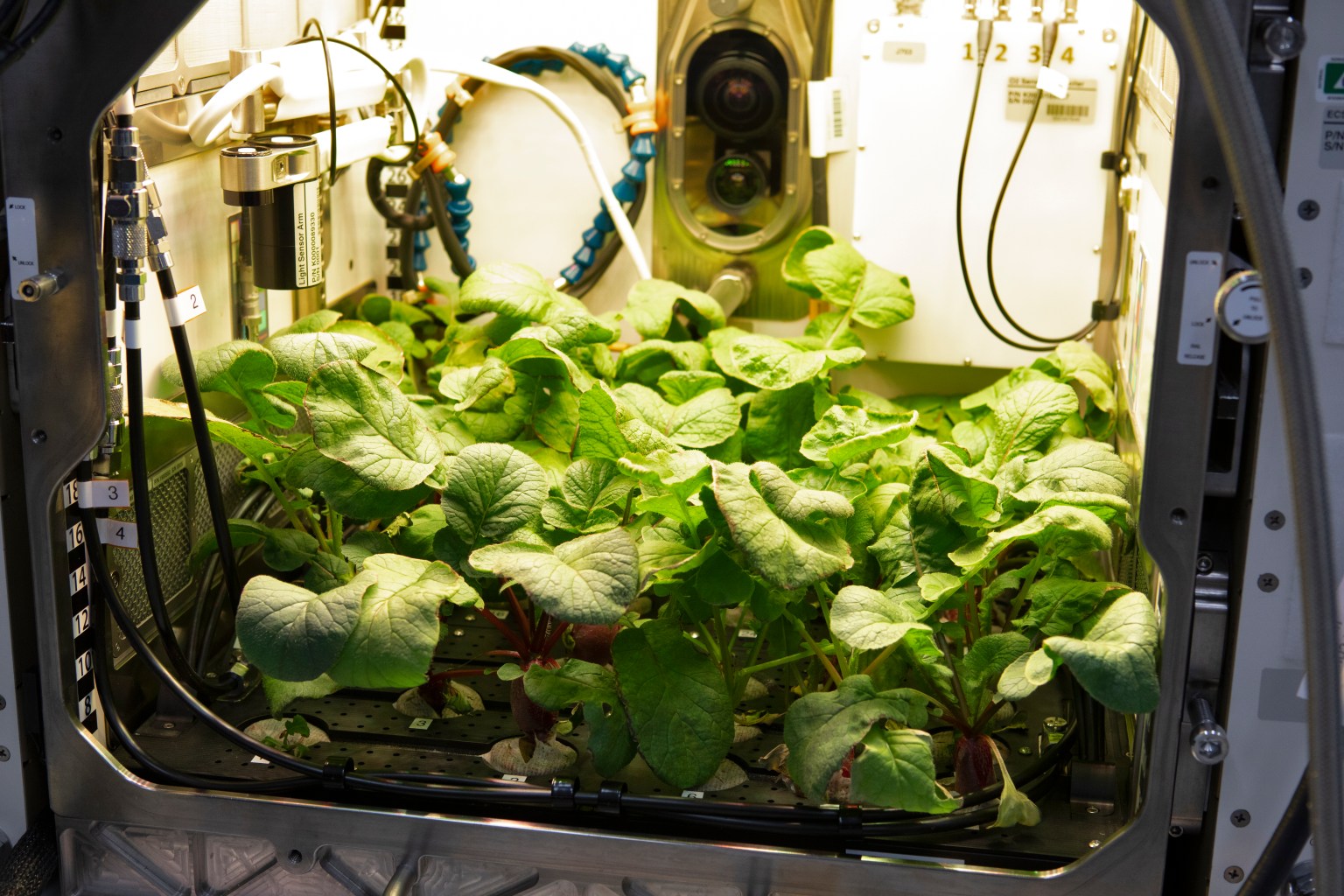
The space station remains a critical testbed for optimizing communications, robotics, and other technologies for missions to the Moon and Mars. Researchers also study the effects of spaceflight on people, develop tools to monitor crew health, and enhance plant growth to support astronaut safety and wellbeing.

As humans prepare to venture beyond Earth’s orbit for the first time in more than 50 years, we celebrate the space station and other NASA programs that walked so Artemis could run.

Share

Details

Last Updated

Feb 06, 2026

Powered by WPeMatico

Get The Details…
Christine Giraldo

A Grand, Snow-Rimmed Canyon

A Grand, Snow-Rimmed Canyon

A portion of the Grand Canyon, photographed from above, forms a U shape. The plateau on both sides of the canyon is partially covered in a layer of white snow.
January 26, 2026

A sunny day in early 2026 revealed the remnants of a winter storm on Arizona’s high desert—and produced a striking, if somewhat puzzling, display of light and shadow in the Grand Canyon. An astronaut aboard the International Space Station captured these photographs of the distinct topography on January 26, 2026.

Snow flurries were flying in the area the previous two days, as they were across much of the central and eastern U.S. Hazardous conditions within Grand Canyon National Park prompted officials to close Desert View Drive, which runs along a portion of the South Rim shown in the photo above, and to issue warnings about icy trails. (The North Rim is closed to traffic in winter and early spring.) When the road reopened around the time of these photos, a layer of white remained on both the South Rim, at an elevation of around 7,000 feet (2,100 meters), and the North Rim, at about 8,000 feet (2,400 meters).

A portion of the Grand Canyon, with the curving Colorado River at its bottom, runs across the width of this downward-looking photo. Snow covers some of the plateau on both sides of the canyon, with more appearing on the North Rim.
January 26, 2026

Snow is typical at these high elevations in winter. The South Rim and North Rim see average season totals of 58 inches and 142 inches, respectively. At lower, warmer elevations, precipitation tends to fall as rain. On January 24, for example, snow fell on the plateau, while a weather station at Phantom Ranch on the canyon floor recorded 0.06 inches of rain.

If these photos make the iconic feature of the American West look more like a mountain range than a vast chasm, the effect is likely due to a visual illusion called relief inversion. Many people have an unconscious expectation that a light source should come from the top of an image. In these images, however, the Sun is shining from the south, or the bottom of the photos. Though the shadows on the canyon walls may be visually deceiving, the presence of snow helps to signal that the flat areas sit at higher elevations.

Astronaut photographs ISS074-E-208838 and ISS074-E-208848 were acquired on January 26, 2026, with a Nikon Z9 digital camera using a focal length of 400 millimeters. They are provided by the ISS Crew Earth Observations Facility and the Earth Science and Remote Sensing Unit at NASA Johnson Space Center. The images were taken by a member of the Expedition 74 crew. The images have been cropped and enhanced to improve contrast, and lens artifacts have been removed. The International Space Station Program supports the laboratory as part of the ISS National Lab to help astronauts take pictures of Earth that will be of the greatest value to scientists and the public, and to make those images freely available on the Internet. Additional images taken by astronauts and cosmonauts can be viewed at the NASA/JSC Gateway to Astronaut Photography of Earth. Story by Lindsey Doermann.

References & Resources

You may also be interested in:

Stay up-to-date with the latest content from NASA as we explore the universe and discover more about our home planet.

An Amphitheater of Rock at Cedar Breaks

4 min read

The colorful formations found in this bowl-shaped escarpment in southwestern Utah are the centerpiece of Cedar Breaks National Monument.

Article

A Northwest Night Awash in Light

3 min read

The glow of city lights, the aurora, and a rising Moon illuminate the night along the northwest coast of North…

Article

Five Minutes in Orbit

3 min read

An astronaut captured a moonrise—and much more—in a series of photos taken from the International Space Station.

Article

Powered by WPeMatico

Get The Details…

NASA Sets Coverage for Agency’s SpaceX Crew-12 Launch, Docking

NASA Sets Coverage for Agency’s SpaceX Crew-12 Launch, Docking

The four members of NASA's SpaceX Crew-12 mission to the International Space Station pose together for a crew portrait inside a SpaceX Dragon spacecraft at SpaceX headquarters in Hawthorne, California. From left are, Roscosmos cosmonaut and Mission Specialist Andrey Fedyaev, NASA astronauts Jack Hathaway and Jessica Meir, Pilot and Commander respectively, and ESA (European Space Agency) astronaut and Mission Specialist Sophie Adenot.
The four members of NASA’s SpaceX Crew-12 mission to the International Space Station pose together for a crew portrait inside a SpaceX Dragon spacecraft at SpaceX headquarters in Hawthorne, California. From left are, Roscosmos cosmonaut and Mission Specialist Andrey Fedyaev, NASA astronauts Jack Hathaway and Jessica Meir, Pilot and Commander respectively, and ESA (European Space Agency) astronaut and Mission Specialist Sophie Adenot.
SpaceX

NASA will stream live coverage of the upcoming prelaunch, launch, and docking activities for the agency’s SpaceX Crew-12 mission to the International Space Station.

Liftoff is targeted for no earlier than 6:01 a.m. EST on Wednesday, Feb. 11, from Space Launch Complex 40 at Cape Canaveral Space Force Station in Florida. The targeted docking time is approximately 10:30 a.m., Thursday, Feb. 12.

Watch agency launch coverage on NASA+, Amazon Prime, and the agency’s YouTube channel. Individual events on YouTube will have their own stream closer to their start time. Learn how to watch NASA content through a variety of online platforms, including social media.

The SpaceX Dragon spacecraft will carry NASA astronauts Jessica Meir and Jack Hathaway, ESA (European Space Agency) astronaut Sophie Adenot, and Roscosmos cosmonaut Andrey Fedyaev, to the orbiting laboratory for a science mission. This is NASA’s 12th crew rotation mission and the 13th human spaceflight mission to the space station supported by the Dragon spacecraft since 2020, as part of the agency’s Commercial Crew Program.

The deadline for media accreditation for in-person coverage of this launch has passed. The agency’s media credentialing policy is available online. For questions about media accreditation, please email: ksc-media-accreditat@mail.nasa.gov.

Media who need access to NASA live video feeds may subscribe to the agency’s media resources distribution list to receive daily updates and links.

NASA’s mission coverage is as follows (all times Eastern and subject to change based on real-time operations):

Sunday, Feb. 8

11 a.m. – Crew-12 virtual media event from Astronaut Crew Quarters at NASA’s Kennedy Space Center in Florida with the following participants:

  • Jessica Meir, commander, NASA
  • Jack Hathaway, pilot, NASA
  • Sophie Adenot, mission specialist, ESA
  • Andrey Fedyaev, mission specialist, Roscosmos

Watch live coverage of the virtual crew media event on NASA Kennedy’s YouTube account.

Media may ask questions via phone. For the dial-in number and passcode, media should contact the NASA Kennedy newsroom no later than one hour prior to the beginning of the news conference at: ksc-newsroom@mail.nasa.gov

Monday, Feb. 9

11 a.m. – Prelaunch news conference with the following participants:

  • Steve Stich, manager, Commercial Crew Program, NASA
  • Dana Weigel, manager, International Space Station Program, NASA
  • Andreas Mogensen, Human Exploration Group Leader, ESA
  • William Gerstenmaier, vice president, Build and Flight Reliability, SpaceX

NASA will provide live coverage of the news conference on the agency’s YouTube channel.

Media may ask questions in person and via phone. For the dial-in number and passcode, media should contact the NASA Kennedy newsroom no later than one hour prior to the beginning of the news conference at: ksc-newsroom@mail.nasa.gov.

Wednesday, Feb. 11

4 a.m. – Launch coverage begins on NASA+, Amazon Prime, and YouTube.

6:01 a.m. – Launch

Following the conclusion of launch coverage, NASA will distribute audio-only discussions between Crew-12, the space station, and flight controllers during Dragon’s transit to the orbital complex. NASA+ coverage resumes at the start of rendezvous and docking and continues through hatch opening and welcoming remarks. 

7:30 a.m. – Postlaunch news conference with the following participants:

  • NASA Administrator Jared Isaacman
  • Josef Aschbacher, director general, ESA
  • Steve Stich, manager, Commercial Crew Program, NASA
  • Dana Weigel, manager, International Space Station Program, NASA
  • Lee Echerd, senior mission manager, Human Spaceflight Mission Management, SpaceX

Live coverage of the postlaunch news conference will stream on the agency’s YouTube channel.

Media may ask questions in person and via phone. Limited auditorium space will be available for in-person participation. For the dial-in number and passcode, please contact the NASA Kennedy newsroom no later than one hour prior to the beginning of the news conference at ksc-newsroom@mail.nasa.gov.

Thursday, Feb. 12

8:30 a.m. – Arrival coverage begins on NASA+, Amazon Prime, and YouTube.

10:30 a.m. – Targeted docking to the space-facing port of the station’s Harmony module.

12:15 p.m. – Hatch opening followed by welcome remarks

All times are estimates and could be adjusted based on real-time operations after launch. Follow the space station blog for the most up-to-date operations information.

Live video coverage prior to launch

NASA will provide a live video feed of Space Launch Complex 40 approximately six hours prior to the planned liftoff of the Crew-12 mission. Pending unlikely technical issues, the feed will be uninterrupted until the prelaunch broadcast begins on NASA+, approximately two hours prior to launch. Once the feed is live, find it online at: http://youtube.com/kscnewsroom.

NASA website launch coverage
Launch day coverage of the mission will be available on the NASA website. Coverage will include live streaming at 4 a.m. Feb. 11, and blog updates as the countdown milestones occur. On-demand streaming video on NASA+ and photos of the launch will be available shortly after liftoff. For questions about countdown coverage, contact the NASA Kennedy newsroom at 321-867-2468. Follow countdown coverage on the commercial crew or Crew-12 blog.

Attend launch virtually

Members of the public may register to attend this launch virtually. NASA’s virtual guest program for this mission also includes curated launch resources, notifications about related opportunities or changes, and a stamp for the NASA virtual guest passport following launch.

Audio only coverage

Launch audio also will be available on Launch Information Service and Amateur Television System’s VHF radio frequency 146.940 MHz and KSC Amateur Radio Club’s UHF radio frequency 444.925 MHz, FM mode, heard within Brevard County on the Space Coast.

Watch, engage on social media

Follow the Crew-12 mission on X, Facebook, and Instagram by following and tagging these accounts:

X: @NASA, @NASAKennedy, @Space_Station, @ISS National Lab, @SpaceX

Facebook: NASA, NASAKennedy, ISS, ISS National Lab

Instagram: @NASA, @NASAKennedy, @ISS, @ISSNationalLab, @SpaceX

Coverage en Espanol

Did you know NASA has a Spanish section called NASA en Espanol? Check out NASA en Espanol on X, Instagram, Facebook, and YouTube for additional mission coverage.

Para obtener información sobre cobertura en español en el Centro Espacial Kennedy o si desea solicitar entrevistas en español, comuníquese con Antonia Jaramillo: 321-501-8425; antonia.jaramillobotero@nasa.gov; o Messod Bendayan: 256-930-1371; messod.c.bendayan@nasa.gov.

NASA’s Commercial Crew Program has delivered on its goal of safe, reliable, and cost-effective transportation to and from the International Space Station from the United States through a partnership with American private industry. This partnership is opening access to low Earth orbit and the International Space Station to more people, more science, and more commercial opportunities. For more than 25 years, humans have continuously lived and worked aboard the International Space Station, advancing scientific knowledge and demonstrating new technologies that enable us to prepare for human exploration of the Moon as we prepare for Mars.

To learn about the mission, visit:

https://www.nasa.gov/commercialcrew

-end-

Joshua Finch / Jimi Russell
Headquarters, Washington
202-358-1100
joshua.a.finch@nasa.gov / james.j.russell@nasa.gov

Steven Siceloff
Kennedy Space Center, Florida
321-867-2468
steven.p.siceloff@nasa.gov

Sandra Jones / Joseph Zakrzewski
Johnson Space Center, Houston
281-483-5111
sandra.p.jones@nasa.gov / joseph.a.zakrzewski@nasa.gov

Powered by WPeMatico

Get The Details…
Elizabeth Shaw