Jaclyn Kagey Shapes Humanity’s Return to the Moon 

Jaclyn Kagey Shapes Humanity’s Return to the Moon 
3 Min Read

Jaclyn Kagey Shapes Humanity’s Return to the Moon 

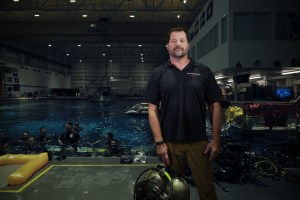
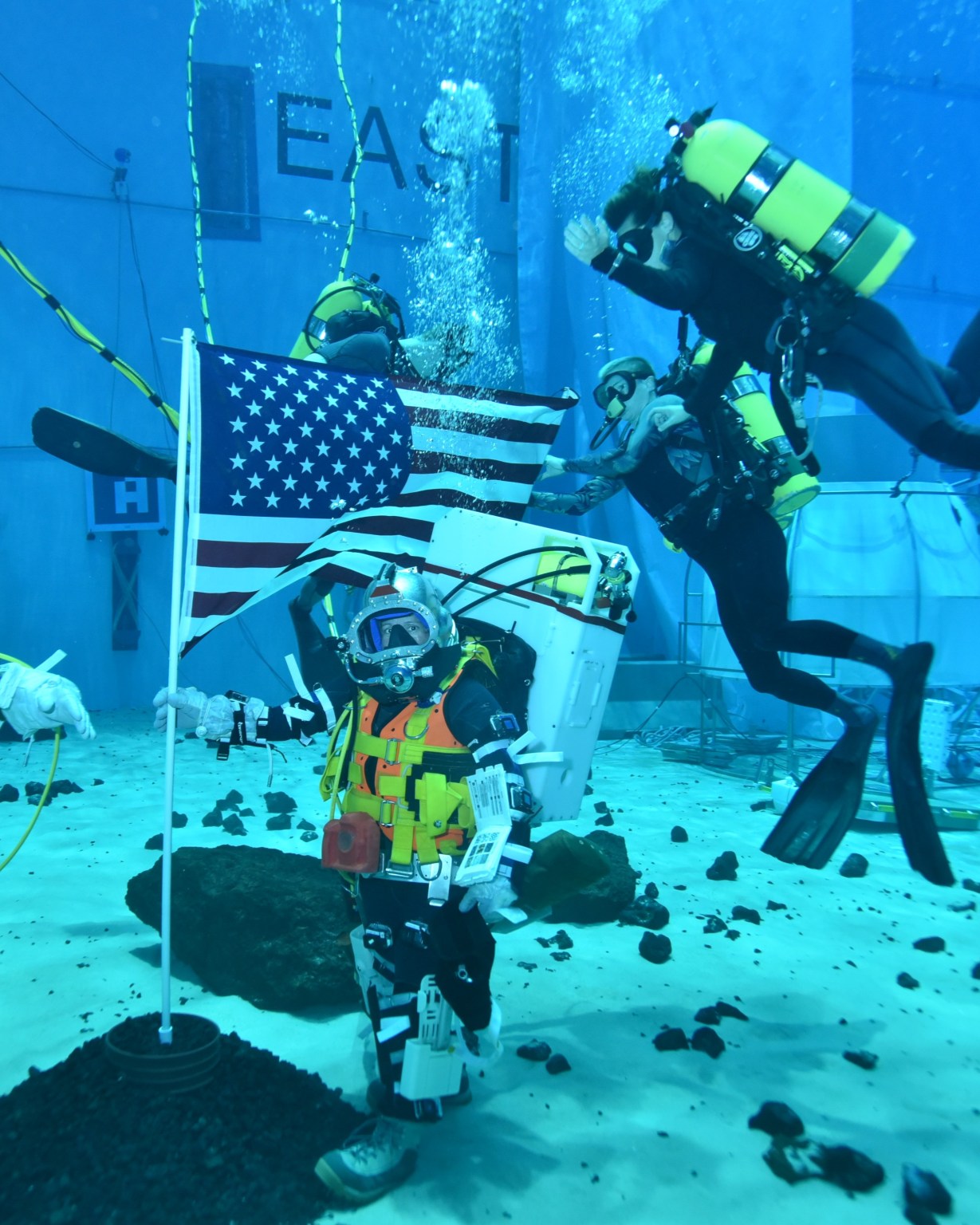
Two people practice underwater operations in a Moon like environment. The person on the left is holding an U.S. flag.

Jaclyn Kagey trains in NASA’s Neutral Buoyancy Laboratory, where astronauts and flight controllers rehearse spacewalk procedures in a simulated microgravity environment.

Credits:
NASA

For Jaclyn Kagey, preparing astronauts to put boots on the Moon is part of her daily work. 

As the Artemis extravehicular activity lead in NASA’s Flight Operations Directorate, Kagey plays a central role in preparing astronauts to safely explore the lunar surface. 

A woman poses in a black suit in front of the U.S. flag (left) and the NASA flag.
Official portrait of Jaclyn Kagey.
NASA/Robert Markowitz

My mission is to shape the historic endeavor by working closely with scientists and industry partners to define lunar surface activities. We are setting the standard for humanity’s return to the Moon.

Jaclyn Kagey

Jaclyn Kagey

Artemis Extravehicular Activity Lead

During Artemis missions, astronauts will explore the Moon’s South Pole, a region never visited by humans, paving the way for future deep space exploration.  

Kagey helps define how astronauts will work on the Moon, from planning detailed spacewalk timelines to guiding real-time operations. Crews will conduct these activities after stepping outside NASA’s human landing system, a commercial lander designed to safely transport astronauts from lunar orbit to the surface and back.  
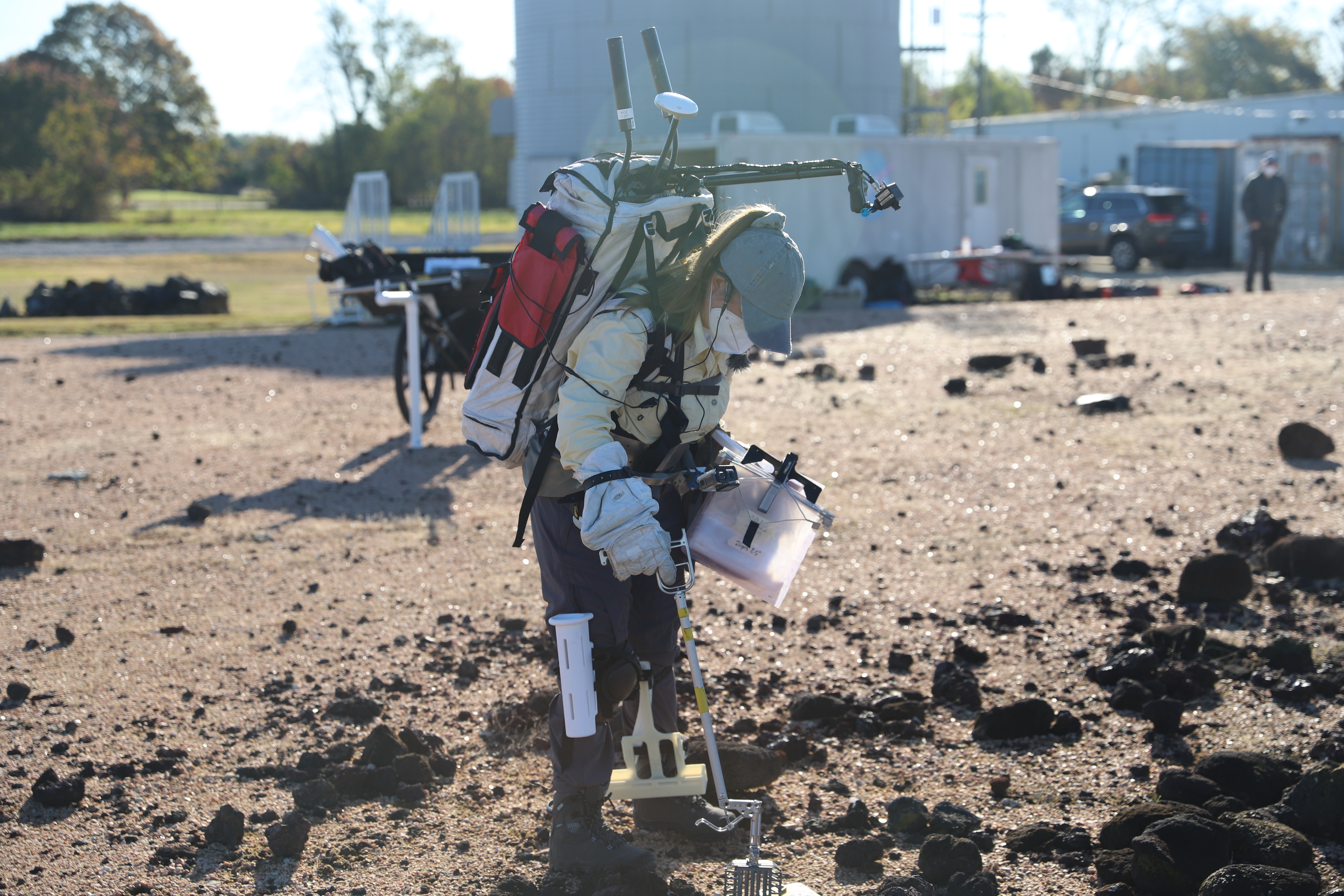
A woman wears a lunar backpack while practicing picking up rocks with a lunar tool at a rock yard.
Jaclyn Kagey conducts lunar surface operations training in the Rock Yard at Johnson Space Center, where teams test tools and procedures for future Artemis missions.
NASA

Kagey’s NASA career spans more than 25 years and includes work across some of the agency’s most complex programs.  

While studying at Embry-Riddle Aeronautical University, she watched space shuttle launches that solidified her goal of working at NASA. “From a young age, my aspirations were singularly focused on contributing to the nation’s aircraft and spaceflight endeavors,” she said. 

That goal became reality through United Space Alliance, where she and her husband began their careers as contractors.  
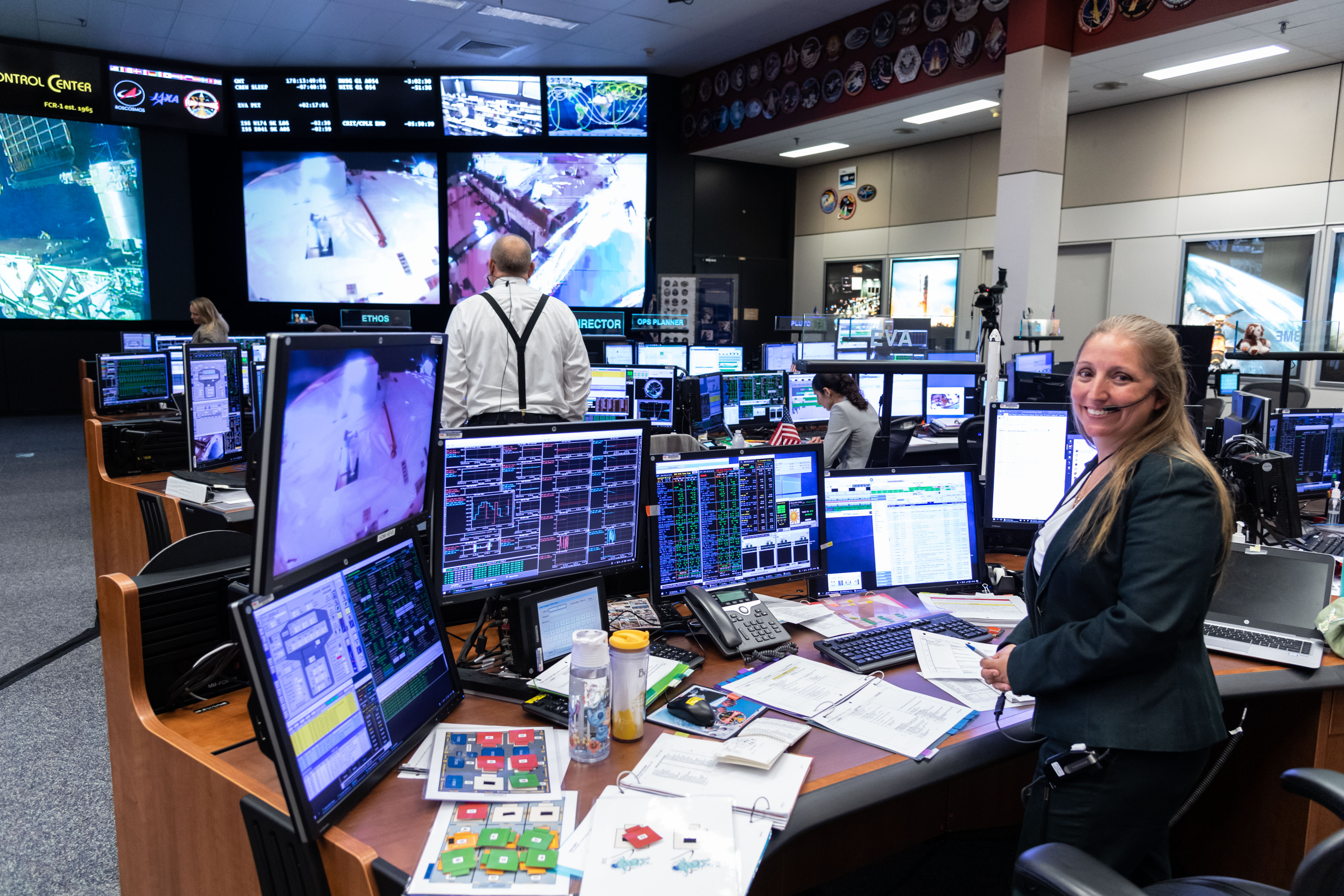
A woman smiles and poses at a desk in front of several monitors at mission control.
Jaclyn Kagey works in the Mission Control Center during a spacewalk simulation at NASA’s Johnson Space Center in Houston.
NASA/Robert Markowitz

One of her career-defining moments came during a high-pressure operation aboard the International Space Station. 

“I’ve planned and executed seven spacewalks, but one that stands out was U.S. EVA 21,” she said. “We had a critical ammonia leak on the station, and from the time the issue was identified, we had just 36 hours to plan, prepare the spacesuits, and execute the repair.” 

The team successfully completed the spacewalk and restored the system. “The agility, dedication, and teamwork shown during that operation were remarkable,” Kagey said. “It demonstrated what this team can accomplish under pressure.” 
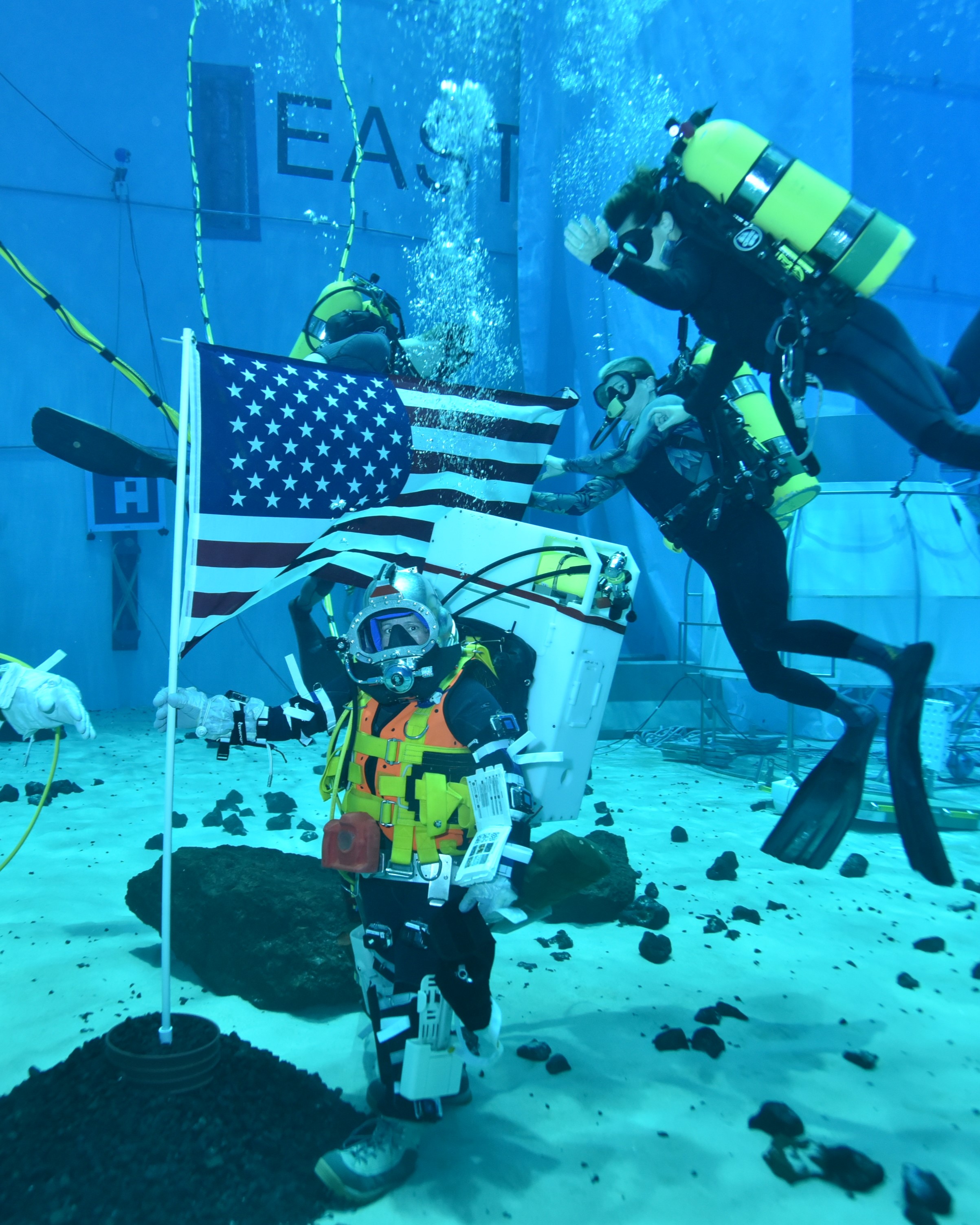
Two people practice underwater operations in a Moon like environment. The person on the left is holding an U.S. flag.
Jaclyn Kagey trains in NASA’s Neutral Buoyancy Laboratory, where astronauts and flight controllers rehearse spacewalk procedures in a simulated microgravity environment.
NASA

There are times when the mission requires everything you have. There are also times when you have to step back. Learning when to do each is critical.

Jaclyn Kagey

Jaclyn Kagey

Artemis Extravehicular Activity Lead

Throughout her career, Kagey has learned that adaptability is an essential skill. 

“Things rarely go exactly as planned, and my job is to respond in a way that keeps the crew safe and the mission moving forward,” she said.  
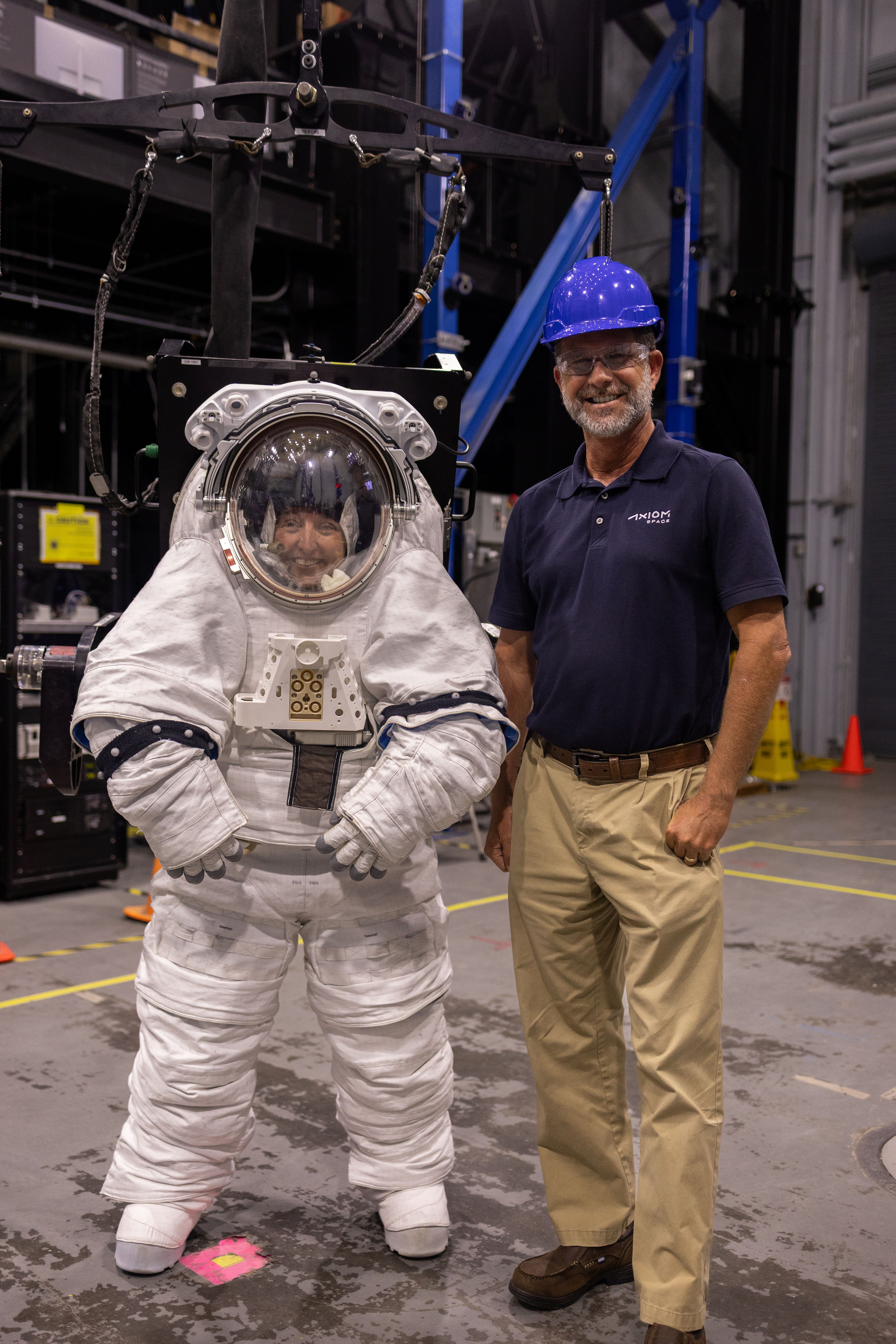
A woman, left, wearing a spacesuit poses next to a man at a facility.
Jaclyn Kagey suited up in Axiom Space’s Extravehicular Mobility Unit (AxEMU) spacesuit during a test on the Active Response Gravity Offload System (ARGOS) at Johnson’s Space Vehicle Mockup Facility.
Axiom Space

Kagey’s influence also extends to the future of spacesuit development. Standing on the shorter end of the height spectrum, she once could not complete a full test in the legacy Extravehicular Mobility Unit despite passing the fit check. Although Kagey could don the suit, its proportions were too large for her and made it difficult to move as needed for the test. That experience drove her to advocate for designs that better support a wider range of body types.  

That effort came full circle when she recently completed her first test in Axiom Space’s lunar spacesuit, called the Axiom Extravehicular Mobility Unit (AxEMU), on the Active Response Gravity Offload System (ARGOS) at Johnson Space Center in Houston. 

“It’s exciting to literally fit into the future of spacewalks!” Kagey said. 

About the Author

Sumer Loggins

Sumer Loggins

Share

Details

Last Updated

May 25, 2026

Powered by WPeMatico

Get The Details…
Sumer Loggins

Call for Creatives: NASA Seeks Help Illuminating Mission Storytelling

Call for Creatives: NASA Seeks Help Illuminating Mission Storytelling

NASA meatball
Credit: NASA

As NASA pushes the boundaries of exploration and innovation for the benefit of humanity, the agency is looking for partners to share mission stories covering Artemis Moon missions, nuclear propulsion, aeronautics, and more.

NASA published an Announcement for Proposals on May 21 asking filmmakers, documentarians, songwriters, storytellers, poets, and others to submit proposals to partner with the agency by Tuesday, June 30.

In this initial round, NASA is seeking up to 10 partners for unfunded Space Act Agreements to share the stories behind, and insights into, multiple NASA missions, including, but not limited to, the following:

  • Artemis program, including the recently added Artemis III mission in 2027, and Artemis IV lunar landing in 2028, as well as plans for the agency to develop a Moon Base. Learn more about Artemis on the agency’s website.
  • NASA’s advancement of nuclear propulsion, including the Space Reactor-1 Freedom mission to Mars in 2028 carrying the Skyfall payload.
  • NASA’s cutting-edge aviation work through flight tests and other efforts.

While this opportunity is focused on U.S. creators, the agency will consider proposals with a minority of international participants. Proposals should detail which area of focus is desired, funding and distribution arrangements, and any specifics needs from NASA to move forward (access to facilities, personnel, etc.).

Full requirements and other details are available online:

https://go.nasa.gov/CreatorProposals

-end-

Camille Gallo / Cheryl Warner
Headquarters, Washington
202-358-1600
camille.m.gallo@nasa.gov / cheryl.m.warner@nasa.gov

Share

Details

Last Updated

May 22, 2026

Editor
Jennifer M. Dooren

Related Terms

Powered by WPeMatico

Get The Details…
Lauren E. Low

Keeping NASA Flying: Ground Crews Ensure Aircraft Readiness

Keeping NASA Flying: Ground Crews Ensure Aircraft Readiness

4 min read

Preparations for Next Moonwalk Simulations Underway (and Underwater)

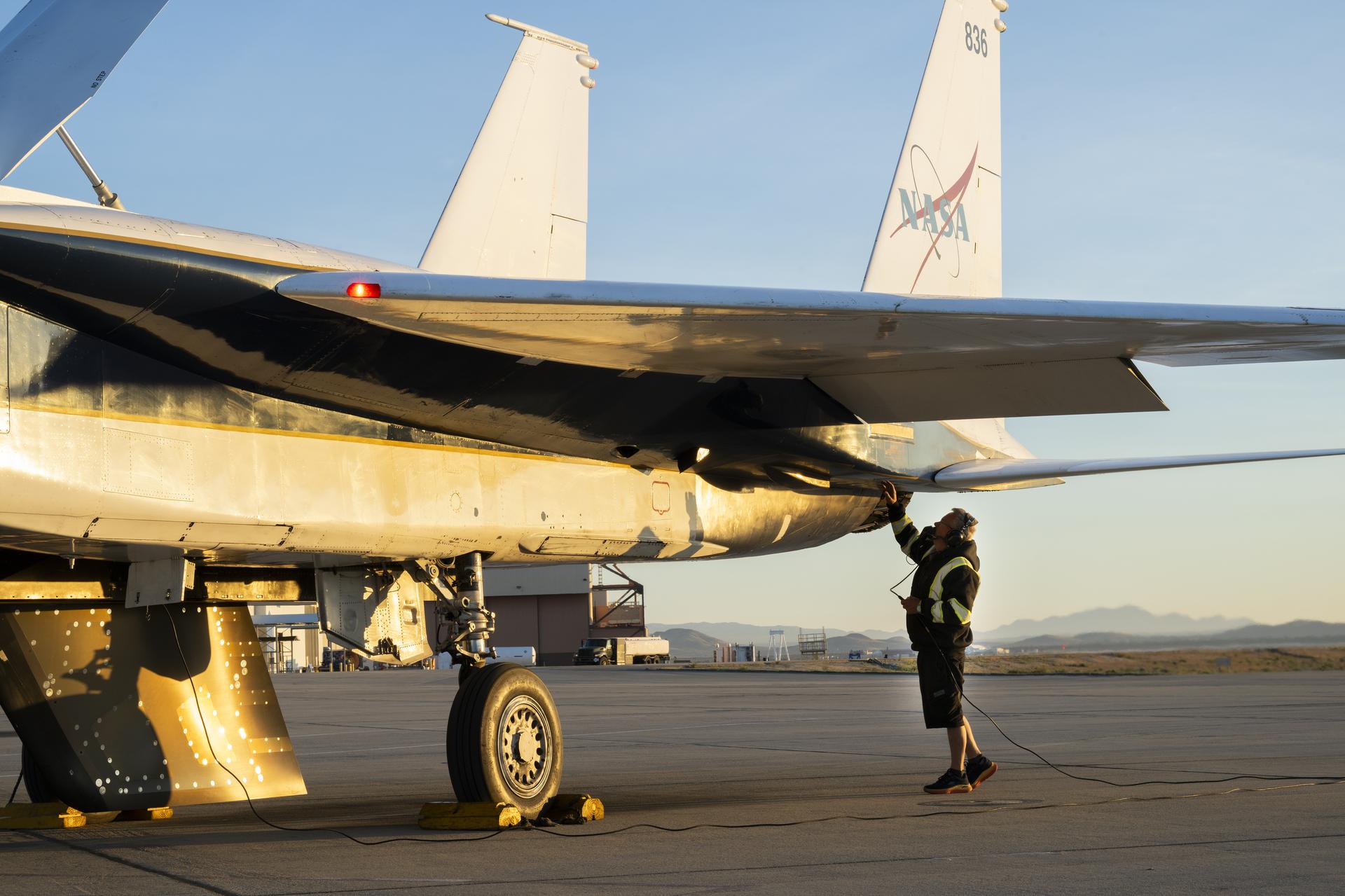
The back of a white jet aircraft’s wing and tails are seen in this image. One wheel and an attached test object, shaped like a wing, hangs from the bottom of the jet. A man in a black jacket, with yellow reflective coating, stands underneath and raises one hand to the aircraft. The man is wearing ear protection. Desert sand and mountains are seen in the background.
NASA crew chief Walt Kondracki checks an F-15 aircraft Tuesday, March 17, 2026, at NASA’s Armstrong Flight Research Center in Edwards, California. Ground crews, made of various roles, maintain the aircraft to be ready for each mission.
NASA/Carla Escamilla

From high‑speed research flights to high‑altitude science campaigns, NASA depends on aircraft that perform at their best and the ground crews who keep them mission ready.

At NASA’s Armstrong Flight Research Center in Edwards, California, specially trained maintenance crews are essential to keeping the agency’s aircraft flying safely and reliably.

This year, NASA added two F-15s and a Pilatus PC-12 to its fleet at Armstrong. These aircraft – alongside platforms such as the high-altitude ER-2s and NASA’s newest X-plane, the X-59 – reflect a wide range of capabilities. The maintenance staff is responsible for keeping each one mission ready.

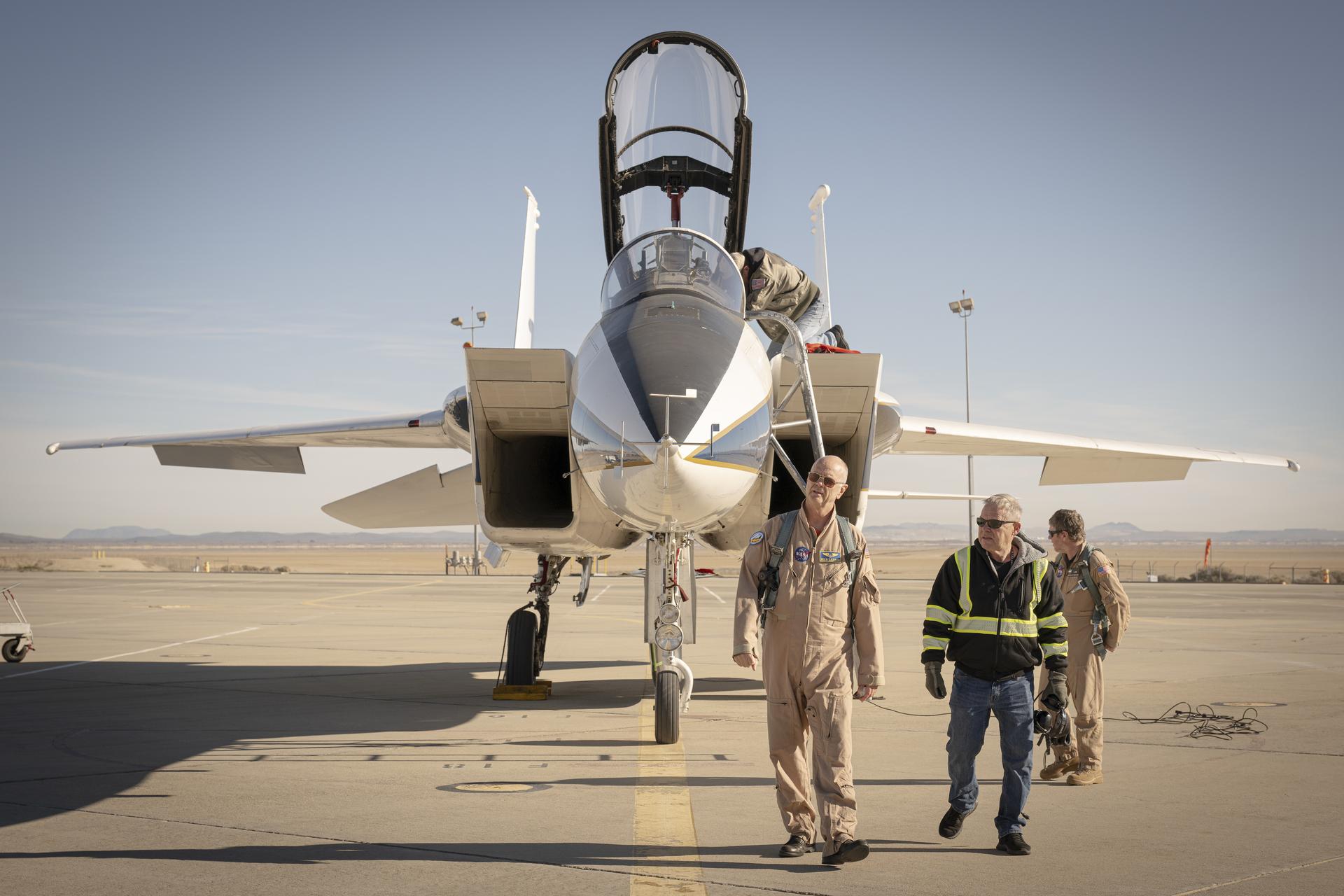
Three men, two wearing tan flight suits, and one wearing a black jacket with stripes of reflective yellow coating, walk to the right side of a jet aircraft. The aircraft faces forward and the canopy is open. Two wheels, intakes, wings, and tails are in view of the white aircraft. The aircraft sits on a concrete ramp with desert sand and mountains in the background.
NASA pilot Nils Larson, left, walks next to crew chief Walt Kondracki, right, by an F-15 aircraft Tuesday, Jan. 13, 2026, at NASA’s Armstrong Flight Research Center in Edwards, California. In the background, NASA mechanic Tim Logan secures the cockpit inside of the F-15, and flight test engineer A.J. Jaffe stands to the right.
NASA/Christopher LC Clark

“That’s the beauty of our Armstrong maintenance teams. They adapt to any type of change,” said Jose “Manny” Rodriguez, NASA Armstrong Gulfstream G-IV crew chief. “One day you could have an instrument being loaded, and the next day it may be aircraft reconfiguration, all while other aircraft systems may need fixing. They adapt and they overcome any situation.”

Each aircraft supports a specific mission, whether it’s conducting science research, serving as a support or chase aircraft, or assisting NASA rocket launches. The aircraft fly at different speeds, carry specialized hardware, and require maintenance crews to stay agile with fast-paced changes.

To ensure NASA can make aeronautics and science advancements safely, the crews work continuously, checking on the ejection seats, filling the tanks with fuel, and changing out brakes, wheels, wiring, and hardware constantly, all of which can degrade with each flight.

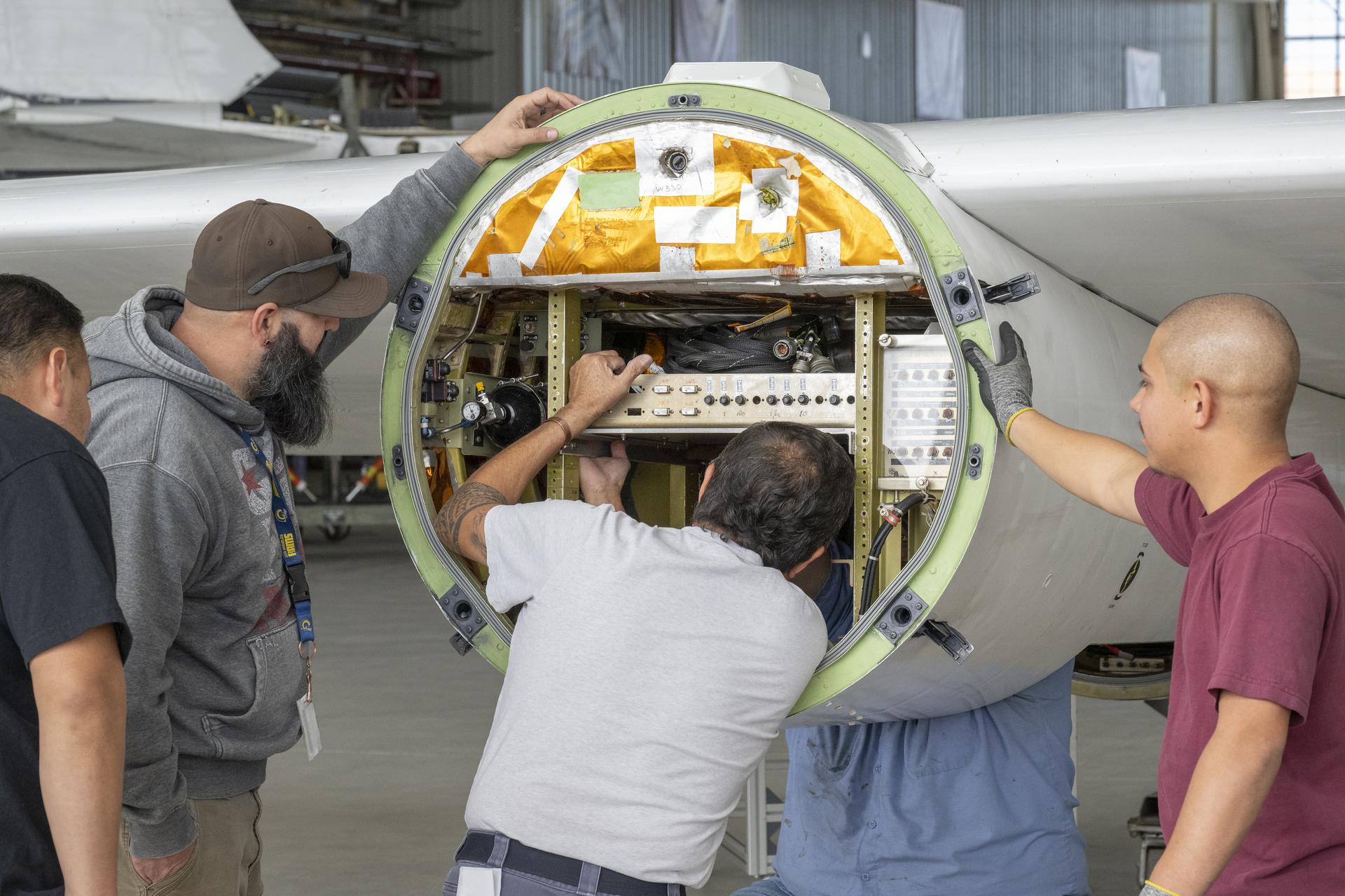
Four men surround a round object attached to an aircraft wing with shelves and wiring inside. One man’s arms are inside of the object, and he is adjusting a gold-colored piece of metal equipment. The other men watch as he works on the hardware.
From left, NASA avionics technician Jesse Orellana; quality assurance employee Jose Prieto; mechanic Francisco Rodriguez; and mechanic Vincent Moreno work on an ER-2 aircraft Monday, Jan. 26, 2026, at NASA’s Armstrong Flight Research Center in Edwards, California.
NASA/Christopher LC Clark

On any given day, an aircraft may be flight-ready for a mission, undergoing scheduled maintenance or modifications, or down for longer-term care.

There are typically multiple NASA Armstrong aircraft in the air in one day. Currently, the center’s C-20A is flying in Peru and Panama, the X-59 is often  flying twice per day with a chase plane, and the center’s ER-2 is flying in Colorado, supporting the Geological Earth Mapping Experiment (GEMx). All this work is happening at the same time, and Armstrong’s skilled maintenance staff is prepping and fixing aircraft as needed along the way.

The team includes mechanics with both military and civilian backgrounds, and the job involves a lot of on-the-job training.

Maintenance crews are composed of:

  • a crew chief – the person in charge of the airplane
  • an avionics technician, who specializes in navigation, communication, and flight control systems
  • quality assurance personnel, who oversee the work being done
  • additional mechanics assigned to each airplane

After the maintenance crew ensures the aircraft is in the best condition possible, the team tows it out to the flightline, and it becomes ready for operations. The NASA pilot assigned to the mission will walk around the aircraft with the assigned crew chief for a final safety check before flight.

“There is a crew chief assigned to every aircraft,” Rodriguez said. “The crew chief is responsible for the integrity of that aircraft, and at the end of the day, his signature and the pilot’s together are what constitutes that the aircraft is safe for flight.”

Maintenance crews track each flight to help ensure it completes the mission without returning early. If an aircraft does return to base early, the maintenance team stands ready. When it lands, the crew is right there again, helping the research team complete the mission and fixing whatever is needed to stay nimble and ready for the next flight.

“It’s difficult at times to work with different airplanes from both the civilian and military sides, but it’s very rewarding to see that we have the capability and the expertise to keep these aircraft flying,” Rodriguez said.

Powered by WPeMatico

Get The Details…
Dede Dinius

NASA to Compete Contract for Jet Propulsion Laboratory Management

NASA to Compete Contract for Jet Propulsion Laboratory Management

NASA's Jet Propulsion Laboratory Campus
NASA’s Jet Propulsion Laboratory in Southern California.
Credit: NASA

NASA announced plans Friday to compete the next contract for managing and operating the agency’s federally funded research and development center (FFRDC) in Southern California at the Jet Propulsion Laboratory (JPL), to ensure continued accountability and strong value for U.S. taxpayers.

The California Institute of Technology (Caltech) has managed the laboratory since its inception in the 1930s, and previous NASA contracts for its management and operations have been awarded sole source to the university since the facility was transferred from the U.S. Army to NASA in 1958.

The rapid growth of the U.S. space economy indicates there may now be a viable competitive market for programmatic and institutional elements of the FFRDC operations.

Conducting a competition for this contract enables NASA to assess the potential benefits of alternative management approaches to the FFRDC, including opportunities to enhance mission performance, innovation, and overall cost and operational efficiency, consistent with federal competition requirements.

This decision is part of a broader governmentwide and agency effort to find efficiencies, strengthen performance, and drive mission outcomes faster and more affordably.

“The Jet Propulsion Laboratory has delivered some of the most extraordinary scientific and engineering achievements in NASA’s history,” said NASA Administrator Jared Isaacman. “As America’s space economy evolves, we have a responsibility to the American people and the scientific community to evaluate how we can execute faster, operate more efficiently, and continue to deliver world-class science and engineering at the highest level. The decision to compete this contract reflects NASA’s commitment to strong stewardship of taxpayer resources and positions Jet Propulsion Laboratory to continue driving world-changing scientific discovery and technological innovation for decades to come.”

The work conducted at JPL remains critically important to the agency, and NASA is committed to maintaining continuity for active and future missions throughout the procurement process. NASA also is committed to maintaining the FFRDC’s existing physical location.

This approach is consistent with broader government practices, including at the Department of Energy, which has held full and open competitions for five of its 16 FFRDC management and operations contracts over the past 10 years.

The current contract with Caltech began Oct. 1, 2018, and runs through Sept. 30, 2028, with a potential maximum value of $30 billion, if all options are exercised. NASA has initiated the procurement process to compete the contract. Beginning this process now allows the agency sufficient time to conduct a comprehensive competition and award cycle while maintaining continuity for ongoing missions and laboratory operations.

For information about NASA and agency programs, visit:

https://www.nasa.gov

-end-

George Alderman / Cheryl Warner
Headquarters, Washington
202-358-1600
george.a.alderman@nasa.gov / cheryl.m.warner@nasa.gov

Share

Details

Last Updated

May 22, 2026

Powered by WPeMatico

Get The Details…
Cheryl Warner

NASA Announces Realignment to Accelerate Mission Delivery

NASA Announces Realignment to Accelerate Mission Delivery

NASA meatball
Credit: NASA

Editor’s Note: This advisory was updated May 22, 2026 to include a retirement.

NASA announced Friday an agencywide realignment to increase mission focus and move out on the National Space Policy. These changes position the agency to better deliver on the nation’s highest‑priority objectives with speed and efficiency.

During the Ignition event in late March, NASA Administrator Jared Isaacman and agency leaders outlined the most pressing objectives to deliver on the next chapter of American leadership in space. President Trump’s Executive Order Ensuring American Space Superiority, otherwise known as the National Space Policy, directed NASA to focus talent and resources on objectives including accelerating the Artemis program, establishing a Moon Base, developing a nuclear space reactor, igniting the orbital economy, and expanding missions of science and discovery.

To support the agency’s ambitious short- and long-term goals, NASA is taking action to increase specialization at centers and integrate mission directorates, elevating delivery of technically excellent work. Some of these actions include:

  • Center directors will continue reporting to Associate Administrator Amit Kshatriya, empowered to foster the unique capabilities of each center, and strengthen investments in infrastructure and the health of their workforce.
  • Mission directorates will now report directly to the administrator, ensuring focus on the mission and enabling them to leverage resources across centers, industry, and international partnerships with greater speed and efficiency.
  • The associate administrator also now serves as NASA chief engineer, reinforcing the agency’s technical backbone and ensuring continuity and autonomy in critical engineering decisions.
  • The agency continues to focus on rebuilding core competencies, insourcing contractors to civil servants where appropriate, strengthening the intern pipeline, and leveraging the agency’s joint recruitment initiative with the U.S. Office of Personnel Management, NASA Force, to build a strong, sustainable workforce for generations to come.

“This initiative reflects NASA’s extreme focus on executing the mission in direct support of the National Space Policy. We are focusing resources on the most pressing objectives only NASA is capable of undertaking and liberating the workforce from unnecessary bureaucracy and obstacles that impede progress. We aim to rebuild competencies and instill a culture that attracts the best and brightest capable of pursuing the most demanding engineering challenges and moving safely and urgently,” said Isaacman. “There will be no reduction in force, no program cancellations, no closures, but we will achieve cost savings through more efficient execution and taking an active role in delivering the outcomes the world has been waiting for from NASA. This is how we deliver on the mission, meet the moment, and continue to make history on behalf of the American people.”

Mission directorate realignment is as follows:

  • Human Spaceflight Mission Directorate (HSMD): With human spaceflight operational to both low Earth orbit and the Moon, the Exploration Systems Development Mission Directorate and Space Operations Mission Directorate will unify as HSMD.
  • Research and Technology Mission Directorate (RTMD): NASA will integrate the Aeronautics Research Mission Directorate and Space Technology Mission Directorate into the new RTMD. As a combined research, space technology, and aeronautics organization charged with nuclear power and propulsion development, RTMD will ensure NASA has the capabilities needed for the mission of today and the future.
  • Science Mission Directorate (SMD): Remains unchanged and continues to provide the foundation for NASA’s world‑leading scientific discovery.

Additional leadership roles, in alphabetical order, include:

  • John Bailey, associate administrator, Mission Support Directorate
  • Kevin Coggins, director, SCaN (Space Communications and Navigation), RTMD
  • Wesley Deadrick, director, Katherine Johnson IV&V Facility
  • Jamie Dunn, director, NASA’s Goddard Space Flight Center
  • Carlos García-Galán, program manager, Moon Base, HSMD
  • Dr. Lori Glaze, associate administrator, HSMD
  • Laurie Grindle, director, Aeronautics Division, RTMD
  • Marvin Horne, deputy assistant administrator for Procurement
  • Brian Hughes, director, NASA’s Kennedy Space Center
  • Kathleen Karika, associate administrator, Office of International and Interagency Relations, OIIR
  • Dr. James Kenyon, associate administrator, RTMD
  • Kelvin Manning, deputy associate administrator, HSMD
  • Meredith McKay, deputy associate administrator, OIIR
  • Dave Mitchell, special assignment lead for NASA Headquarters Relocation
  • Joel Montalbano, deputy associate administrator, HSMD
  • Bradley Niese, associate administrator for Procurement
  • Eli Ouder, acting deputy associate administrator, Mission Support Directorate
  • Jeremy Parsons, program manager, Artemis, HSMD
  • Bob Pearce to retire as head of ARMD after an amazing 36-year career at NASA
  • Wanda Peters, deputy associate administrator, RTMD
  • Dawn Schaible, director, NASA’s Glenn Research Center
  • Cynthia Simmons, deputy director, NASA’s Goddard Space Flight Center
  • Steve Sinacore, acting director, Space Reactor Office; program manager for SR-1, LR-1, RTMD
  • Adam Steltzner, chief engineer for Special Projects
  • Greg Stover, director, Advanced Research and Technology Division, RTMD
  • Dana Weigel, program manager, Low Earth Orbit, HSMD

Leadership at unlisted centers remains unchanged.

For more, please visit:

https://www.nasa.gov/nasa-leadership

-end-

Bethany Stevens / Camille Gallo
Headquarters, Washington
202-358-1600
bethany.c.stevens@nasa.gov / camille.m.gallo@nasa.gov

Powered by WPeMatico

Get The Details…
Cheryl Warner