Lynn Bassford Prioritizes Learning as a Hubble Mission Manager

Lynn Bassford Prioritizes Learning as a Hubble Mission Manager

6 min read

Lynn Bassford Prioritizes Learning as a Hubble Mission Manager

Name: Lynn Bassford

Title: Hubble Space Telescope Mission Flight Operations Manager

Formal Job Classification: Multifunctional Engineering and Science Manager

Organization: Astrophysics Project Division, Hubble Space Telescope Operations Project, Code 441

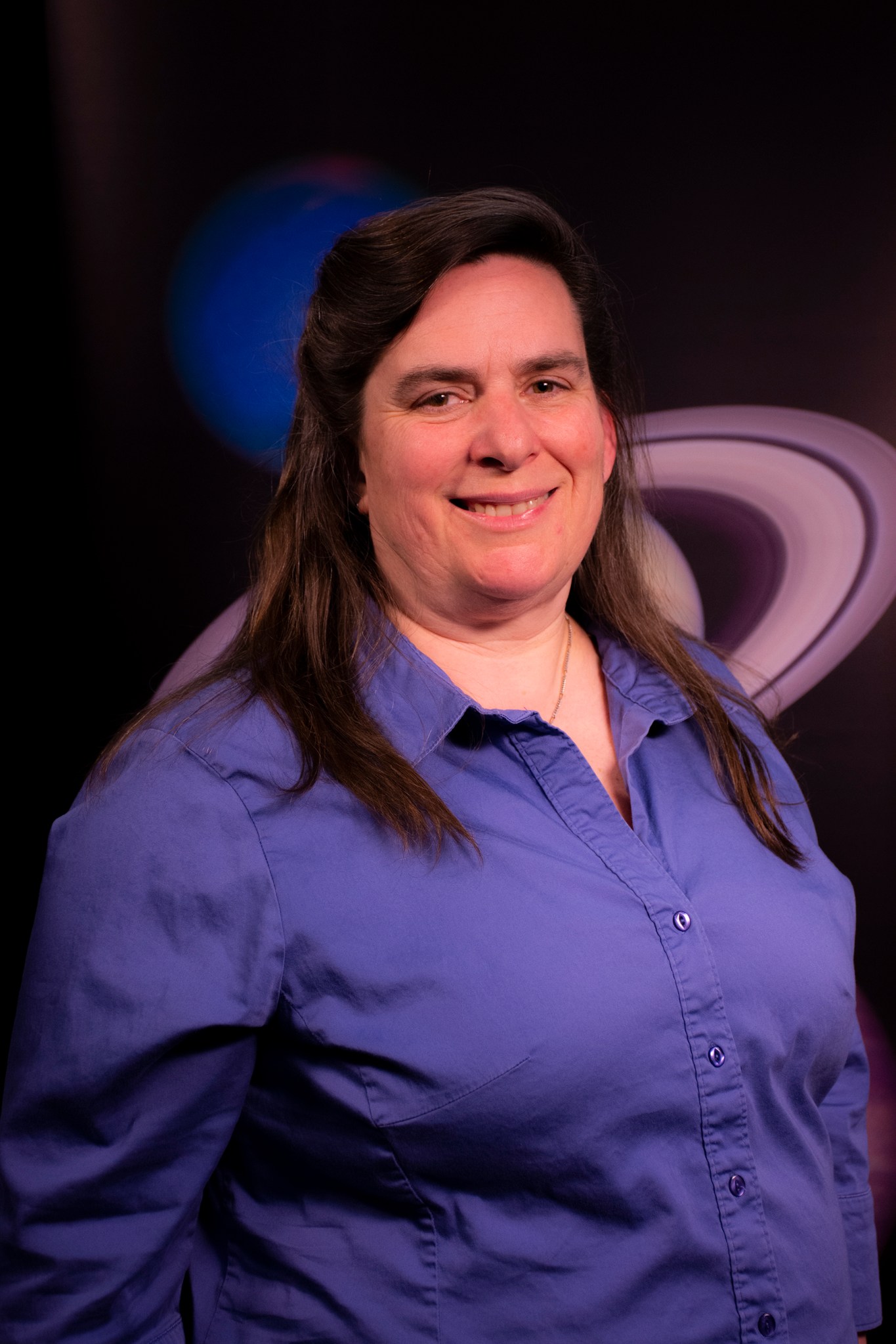
Lynn Bassford, a woman with long brown hair, smiles at the camera in an official headshot. She wears a purple collared shirt and poses in front of a photo of Saturn and Neptune.
Lynn Bassford’s long career enables her to keep learning. “It’s just a fact of my life to learn something new every day until the day I die,” she says. “I’m not happy being stagnant.”
NASA’s Goddard Space Flight Center/Tim Childers

What do you do and what is most interesting about your role here at Goddard? How do you help support Goddard’s mission?

I help Goddard’s Hubble Space Telescope Mission Operations Team to make sure that we’re taking care of the health and safety of the spacecraft. This includes commanding and playing back data from Hubble and working with the ground system and subsystems engineering teams to coordinate procedures, train people, schedule everyone, and manage resources.

How did you find your path to Goddard?

I graduated and wasn’t quite sure where a physics major would go for a position. So, I picked up a copy of Physics Today, went through every company in there, and sent out my résumé. After sending approximately 200, an application came back from Lockheed. It said to fill it out and send it to the Lockheed closest to you. There were 10 different locations, so I sent it to all 10. One day, there was a message on the answering machine that said, “Hey, Lynn, just wondering if you would like to work on a telescope in space for NASA.” The person who called, his name sounded like “Mr. Adventure,” and I gave him a call back and found out his name was Mr. Ed Venter. I can’t help but think it’s pretty cool, actually, because it has indeed been a great adventure!

What is your favorite part of working at Goddard?

Working with the spacecraft! Physically sending a command up and seeing it come back is just utterly amazing.

Over the years, I’ve had the luck of being able to meet several astronauts that have gone up in our servicing missions. In a couple cases, we had them visit us in the middle of the night on our long shifts. Meeting them is like meeting a rock star.

What first sparked your interest in space?

Space was a combination of sci-fi and reality. The Apollo 11 Moon landing took place a couple of months after I was born, so my dad and I like to say that I was in front of the TV watching and it just got absorbed into my persona. One day, I saw Sally Ride up working in space and the TV said she had a background in physics, so I did physics.

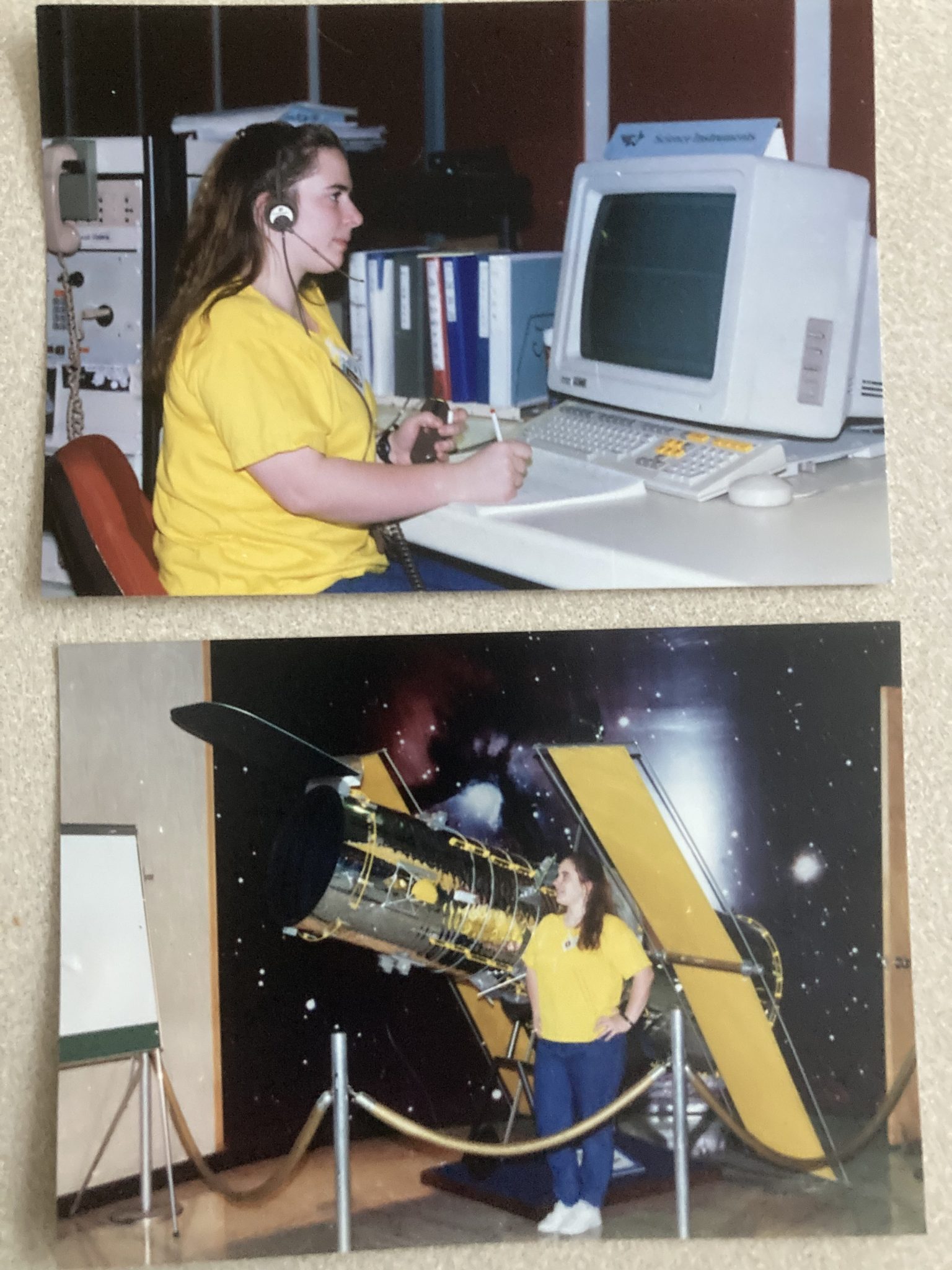
Two vintage photos showing Lynn Bassford, a woman with long brown hair, in the 1990's. She wears a yellow T-shirt, jeans, and white tennis shoes in both photos. In the top photo, she sits at a desk wearing a headset and working on an old desktop computer, with books, manuals and other equipment visible behind her. In the lower photo, she poses in front of a full-scale model of the Hubble Space Telescope. Hubble looks like a silver cylinder with long, rectangular solar panels attached to each side.
Lynn Bassford says her favorite part of working at Goddard has always been working directly with the Hubble Space Telescope. “Physically sending a command up and seeing it come back is just utterly amazing,” she says.
Courtesy of Lynn Bassford

What is your educational background?

I was always very good at science and math and absolutely loved them. In middle school, I wanted to do astrogeology, but everyone I talked to said I kind of made that up. Now it’s all around the place! I went to University of Lowell for physics, which became UMass at Lowell. I ended up working for a physics professor who was also the head of the astronomy department.

You’ve held many roles over your years at Goddard. How do you feel that they’ve contributed to your current role as a manager?

Everything I’ve done aligns. I learn from everyone at all levels that I interact with. I did eight-and-a-half years of rotating shift work with flight operations, and I made sure that I moved across the room from console to console learning the different areas. Then I went into science instruments system engineering for over five years, where I became the lead. Then I moved into this role in mission operations, which combines those but also brings in employee performance, career growth, safety, diversity and inclusion, and engagement. Understanding what each area does and how they work together helps you optimize everything. It’s just a fact of my life to learn something new every day until the day I die. I’m not happy being stagnant.

How do you manage stressful situations when working with the telescope?

I don’t even think about how stressful it is because of the training I had in those early days: working with and learning from the experts about what you look at, who you call, what you do, and how to keep the telescope in a safe condition. Even during issues or service missions, we’re actually a very calm team.

What is your proudest accomplishment at Goddard?

When I was a Flight Operations Team shift supervisor in charge of my own crew for Hubble, on Jan. 6, 1996, we got hit with a three-foot snowstorm. Back in those days, we were on rotating shift work. When I left work that day, there was a light layer of snow, so I went home and collected whatever I could in the house for food, knowing there were at least five people on-site that might not go home. I drove back to work with half-a-foot of snow. Seven people stayed for two-and-a-half days straight. We pulled the foam coverings off the walls, piled them up in layers, and made a mattress out of it. We put it in one of the warmer inner offices so we could take turns sleeping eight hours and splitting 16 hours between working real-time operations and moving our vehicles from lot to lot for the Goddard snowplows. NASA gave us a small award afterwards.

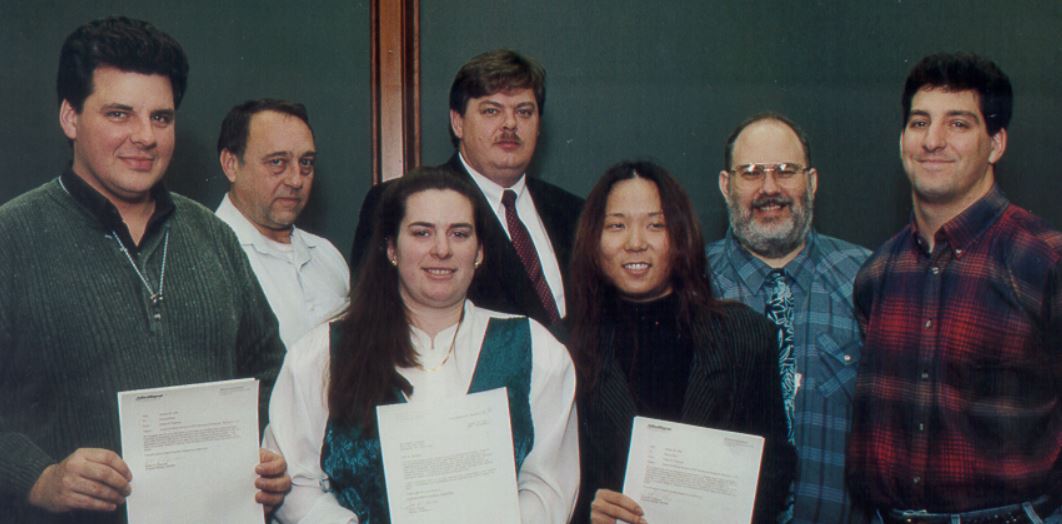
Lynn Bassford, a woman with long brown hair, poses in a vintage photo with a group of other people, several holding printed pieces of paper. Lynn wears a green velvet jumper and white blouse, and her colleagues of various ages and genders wear work clothes like suits or flannel shirts with ties. They pose in front of a dark green background.
Lynn Bassford and the 1996 Hubble flight operations team received an award for keeping Hubble running during a three-foot snowstorm. “Seven people stayed for two-and-a-half days straight,” Lynn recalls.
NASA’s Goddard Space Flight Center

What is the coolest part of your job?

Hubble’s mission is just generally the coolest. It’s helping to discover, and to rewrite science books. Helping humanity discover what’s out there and move forward into the universe is groundbreaking.

What advice would you give to people looking to have jobs at Goddard?

For students, make sure you work hard even though college can be quite a challenge. That’s the intention – to get you thinking in all different ways and broaden your mind. Don’t give up, even when it’s challenging.

For workers, diversifying your interests and not specializing in one area will make you open to a lot of different opportunities that you might not know about. You need to keep learning in order to be the best asset to an employer.

Do you have a favorite space or Hubble fact?

Hubble is a green telescope! We had solar panels before houses did.

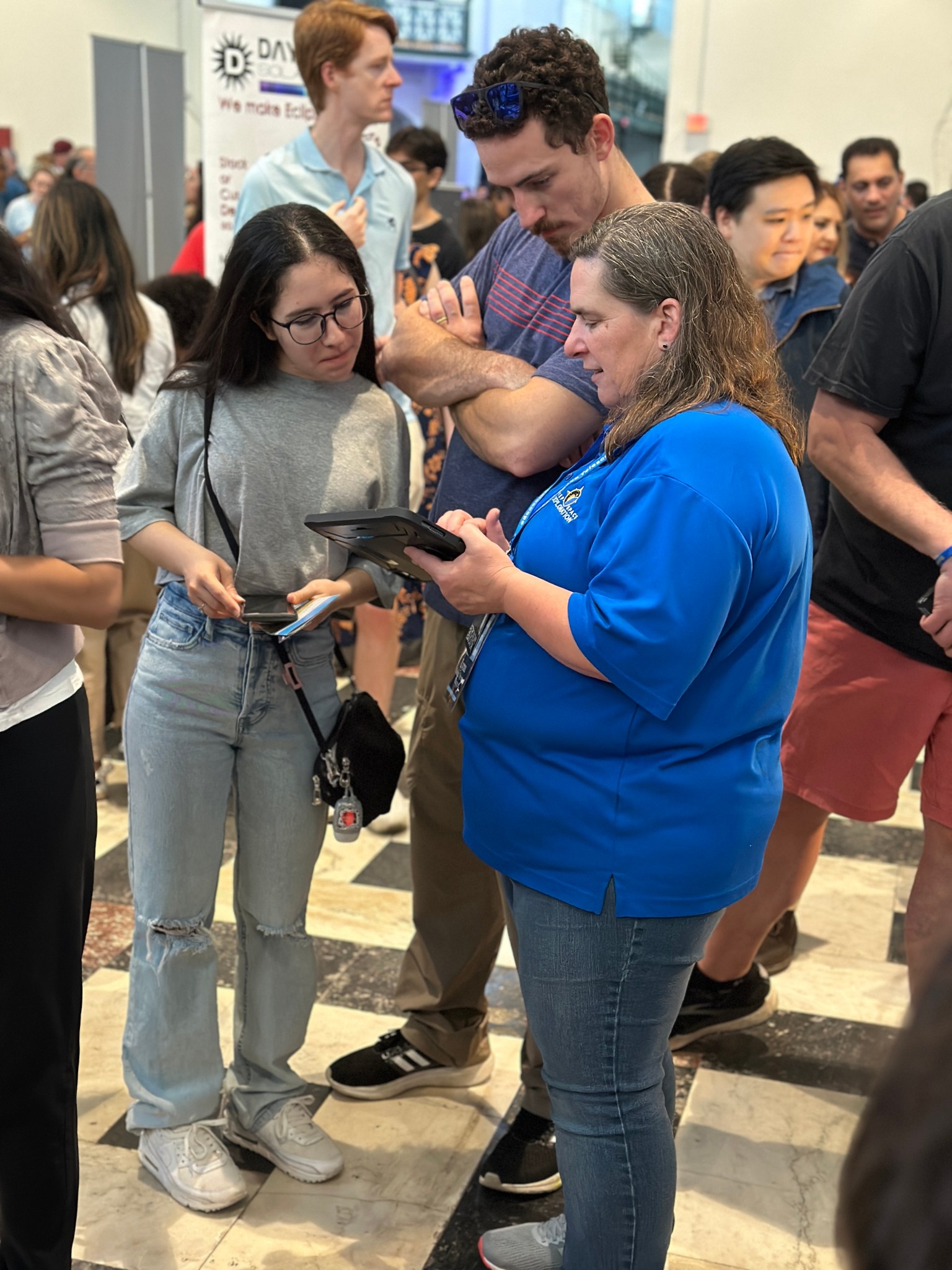
Lynn Bassford, a woman with wavy gray-brown hair, holds a tablet and speaks with members of the public at an event. She wears a bright blue shirt and jeans, and speaks to people in casual clothes who look intently at the tablet.
Lynn Bassford frequently helps out with Hubble outreach. “Hubble’s mission is just generally the coolest,” she says. “Helping humanity discover what’s out there and move forward into the universe is groundbreaking.”
Courtesy of Jim Jeletic

How do you like to spend your time outside of work?

My dedication to work and family takes up most of my time, admittedly. If I can fit it in, I like to walk outside, do artwork that involves Hubble, and do challenging sports like white water rafting and bungee jumping.

In the ’90s, I played on the men’s softball team at Goddard. I was a pitcher for the Hubble team.

What is your “six-word memoir”? A six-word memoir describes something in just six words. We’re all made of stardust, IDIC. IDIC stands for infinite diversity in infinite combinations – it comes from Star Trek’s Spock.

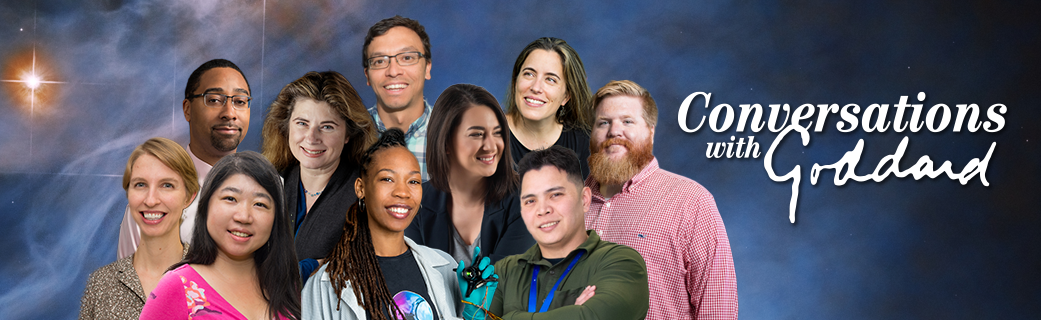
A banner graphic with a group of people smiling and the text "Conversations with Goddard" on the right. The people represent many genders, ethnicities, and ages, and all pose in front of a soft blue background image of space and stars.

Conversations With Goddard is a collection of Q&A profiles highlighting the breadth and depth of NASA’s Goddard Space Flight Center’s talented and diverse workforce. The Conversations have been published twice a month on average since May 2011. Read past editions on Goddard’s “Our People” webpage.

By Hannah Richter

NASA’s Goddard Space Flight Center, Greenbelt, Md.

Share

Details

Last Updated

Oct 17, 2023

Powered by WPeMatico

Get The Details…
Jessica Evans

NASA Makes It Easier to Find Assistive Technologies for Licensing

NASA Makes It Easier to Find Assistive Technologies for Licensing

3 min read

NASA Makes It Easier to Find Assistive Technologies for Licensing

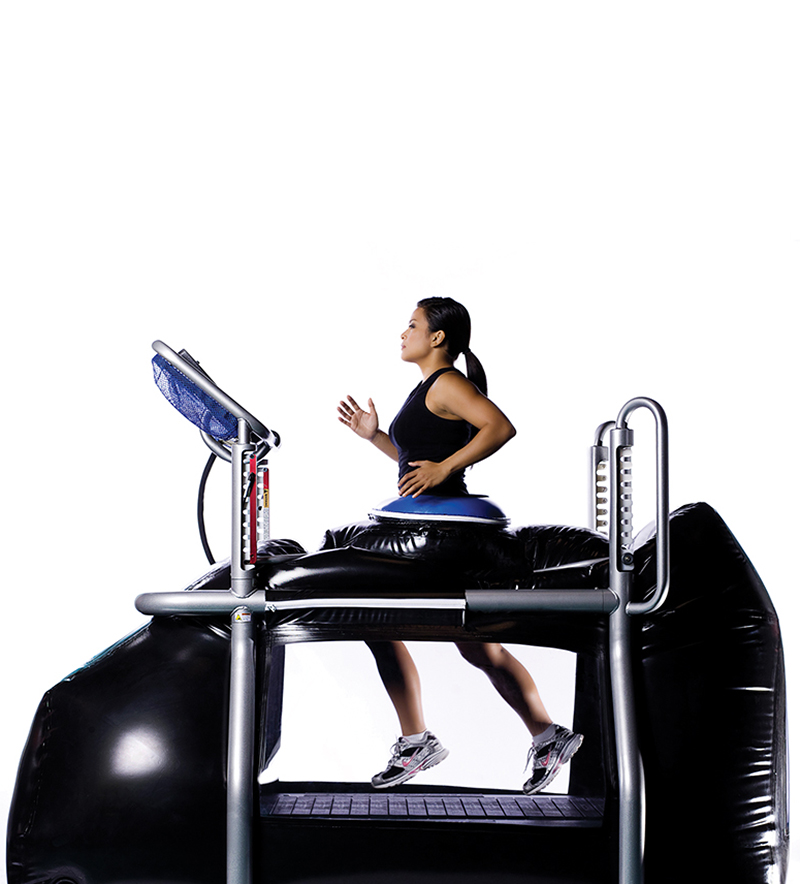
Woman running on the anti-gravity treadmill.
Alter-G Inc. licensed NASA technology in 2005 and commercialized it through an “anti-gravity” treadmill that is now used by a variety of patients, including professional and collegiate athletes, people learning to walk again after injury or surgery and people suffering from other stresses on the joints such as arthritis or obesity.
Alter-G Inc.

NASA develops a variety of technologies to explore space and beyond for the benefit of humanity. One measure of its success is the impact on the daily lives of millions of people with injuries and disabilities who are assisted with innovative treatments and products developed from NASA-derived technology.

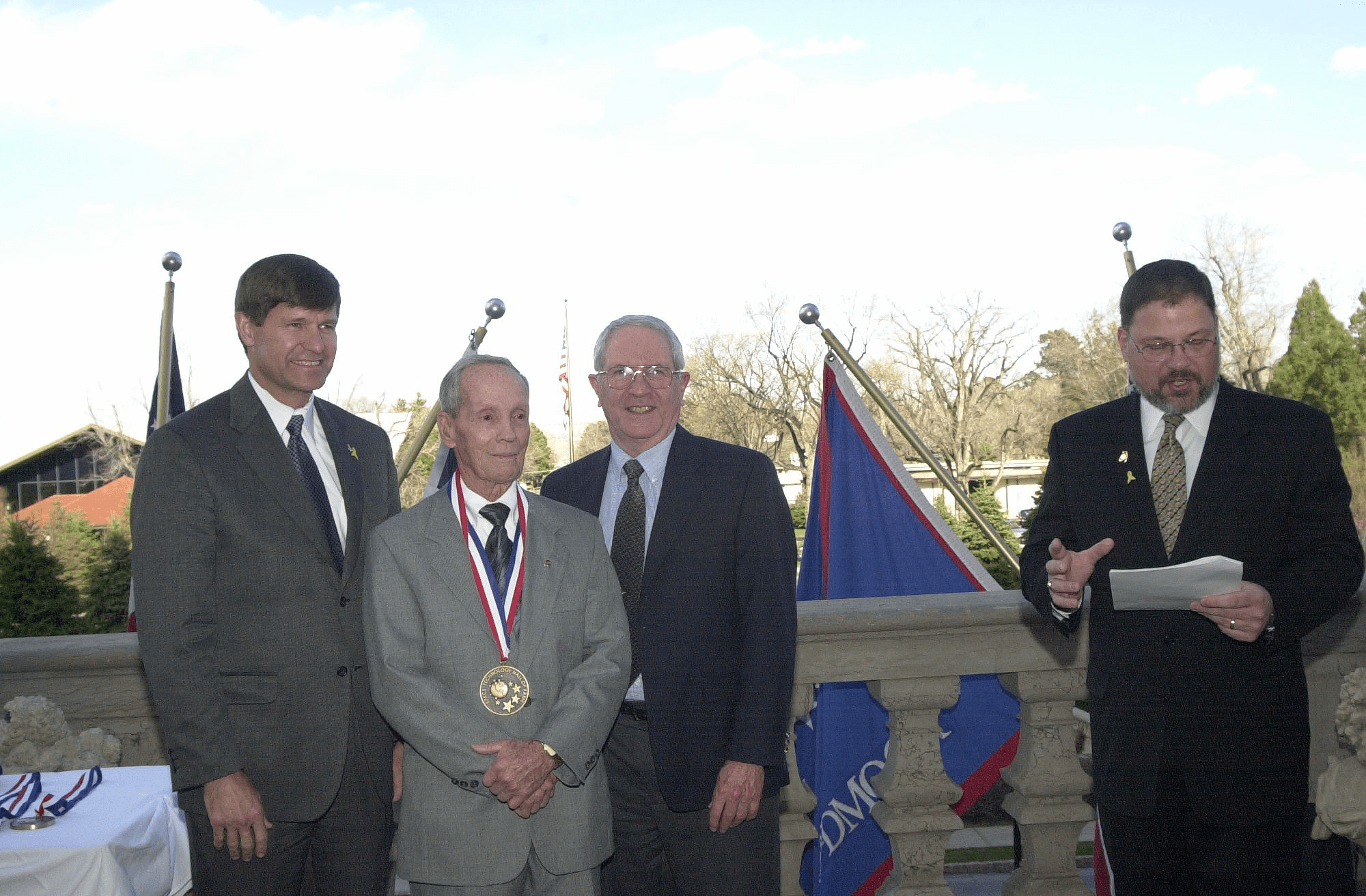
Kissiah being inducted into Space Foundations Space Technology Hall of Fame.
Kennedy Space Center engineer Adam Kissiah is inducted into the Space Foundation’s Space Technology Hall of Fame in 2003 for his invention of the cochlear implant. Left to right are former astronaut Donald McMonagle, Kissiah, former astronaut and NASA administrator Vice Adm. Richard Truly, and Space Foundation president and CEO Elliot Pulham.
Space Foundation

After all, it was thanks to NASA’s resources that Adam Kissiah, an electronics instrumentation engineer at NASA’s Kennedy Space Center, was able to create what would become the cochlear implant. This assistive technology is now considered a medical wonder and has restored hearing to hundreds of thousands of adults and children across the planet since its creation nearly 50 years ago.

And now, NASA is making it easier than ever to find and access patented inventions born from space exploration that could help design or manufacture assistive technologies. To help spur the next generation of assistive technologies, NASA has compiled patented technologies with potential applications to this industry in one place. Companies are invited to browse the list for innovations that can help improve an existing product or launch the creation of something new.

“NASA is no stranger to improving the world of health and medicine. Our technologies benefit all humanity, and making them easier to find for companies creating these tools to improve people’s quality of life just made sense,” said Dan Lockney, program executive for NASA’s Technology Transfer program. “We can’t wait to learn how these innovations born from NASA expertise will help people lead healthy, productive, and independent lives.”

According to the Assistive Technology Industry Association (ATIA), assistive technologies are products, equipment, and systems that enhance learning, working, and daily living for people with disabilities. This includes everything from hardware, such as prosthetics, hearing aids, and wheelchairs, to software like screen readers and communication programs.

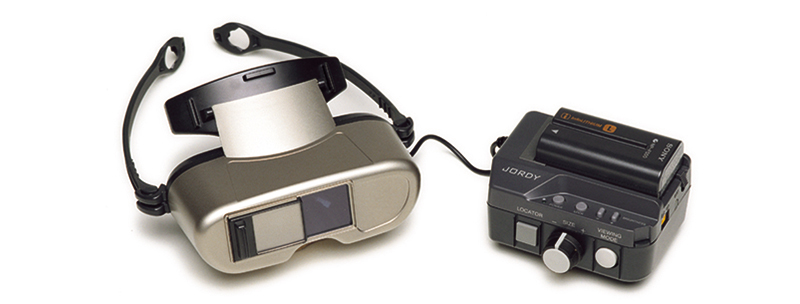
JORDY wearable device technology.
The Joint Optical Reflective Display (JORDY) wearable device helps people with low vision see by letting them change contrast, brightness, and display modes and by magnifying objects up to 50 times. The technology grew out of a joint effort by NASA, the Johns Hopkins Wilmer Eye Institute, and the U.S. Department of Veterans Affairs.
Enhanced Vision

Another notable NASA assistive technology spinoff is JORDY, or Joint Optical Reflective Display. The device enables people with low vision to read and write. JORDY enhances an individual’s remaining sight by magnifying objects up to 50 times and allowing them to change contrast, brightness, and display modes, depending on what works best for their low-vision condition.

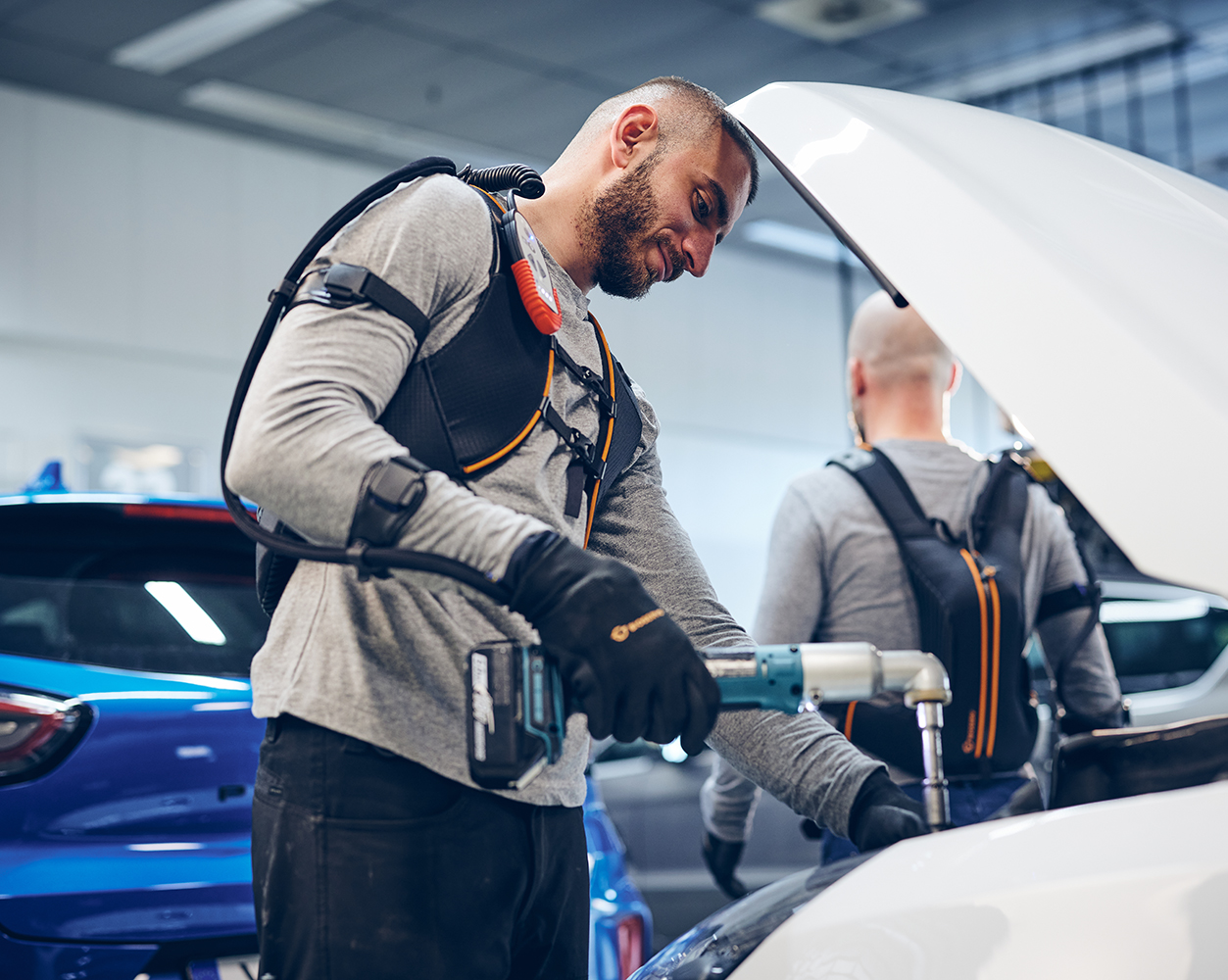
People working on vehicles.
Swedish company Bioservo Technologies’ Ironhand, based on a set of patents from NASA and General Motors’ (GM) Robo-Glove, is the world’s first industrial-strength robotic glove for factory workers and others who perform repetitive manual tasks.
Bioservo Technologies/Niklas Lagström

The curated list on technology.nasa.gov features hardware and software available for licensing, including:

  • A robotic upper body exoskeleton that helps the user control the shoulder and elbow to rehabilitate people suffering from the effects of a stroke or traumatic brain injury
  • A glove to help reduce the grasping force needed to operate tools for an extended period of time, born from a collaboration to build a robotic astronaut
  • 3D printing techniques to help build delicate or complex parts
  • New and improved processes to fabricate circuitry

In January 2024, representatives from NASA’s Technology Transfer program will be present at the ATIA conference in Orlando, Florida. Attendees will be able to learn more about the assistive technologies available for licensing.

NASA’s Technology Transfer program, managed by the Space Technology Mission Directorate, ensures technologies developed for missions of exploration and discovery are broadly available to the public, maximizing the benefit to humanity. Learn more by visiting the Technology Transfer Portal at:

https://technology.nasa.gov

Share

Details

Last Updated

Oct 17, 2023

Editor

Loura Hall

Contact

Ann M. Harkey
ann.m.harkey@nasa.gov

Powered by WPeMatico

Get The Details…
Loura Hall

Seeing Baja California Sur From Space

Seeing Baja California Sur From Space

The north coast of the Mexican state of Baja California Sur on the Pacific Ocean is pictured from the International Space Station as it orbited 258 miles above. The land is brown, with some smaller bodies of water. The northern coastline is scalloped. A few streaks of clouds stretch across land and water, but the sky is mostly cloudless.
NASA

The crew of the International Space Station saw this view of the north coast of the Mexican state of Baja California Sur as the space station orbited 258 miles above on Oct. 14, 2023.

In 24 hours, the space station makes 16 orbits of Earth, traveling through 16 sunrises and sunsets. The station’s orbital path takes it over 90 percent of the Earth’s population, with astronauts taking millions of images of the planet below. See more photos of our planet here.

Image credit: NASA

Powered by WPeMatico

Get The Details…
Monika Luabeya

60 Years Ago: NASA Selects Its Third Group of Astronauts

60 Years Ago: NASA Selects Its Third Group of Astronauts

On Oct. 18, 1963, NASA announced the selection of its third group of astronauts. Chosen from 720 military and civilian applicants, the newest group of 14 astronauts comprised the best educated class up to that time. Seven represented the U.S. Air Force, four the U.S. Navy, one the U.S. Marine Corps, and two were civilians. NASA selected them to fly the two-seat Gemini spacecraft designed to test techniques for the Apollo Moon landing program as well as the Apollo missions themselves. Tragically, four of their members died before making their first spaceflight. The 10 surviving members of the group flew 18 important missions in the Gemini and Apollo programs, with seven traveling to the Moon and four walking on its surface. In addition, one flew a long-duration mission aboard Skylab.
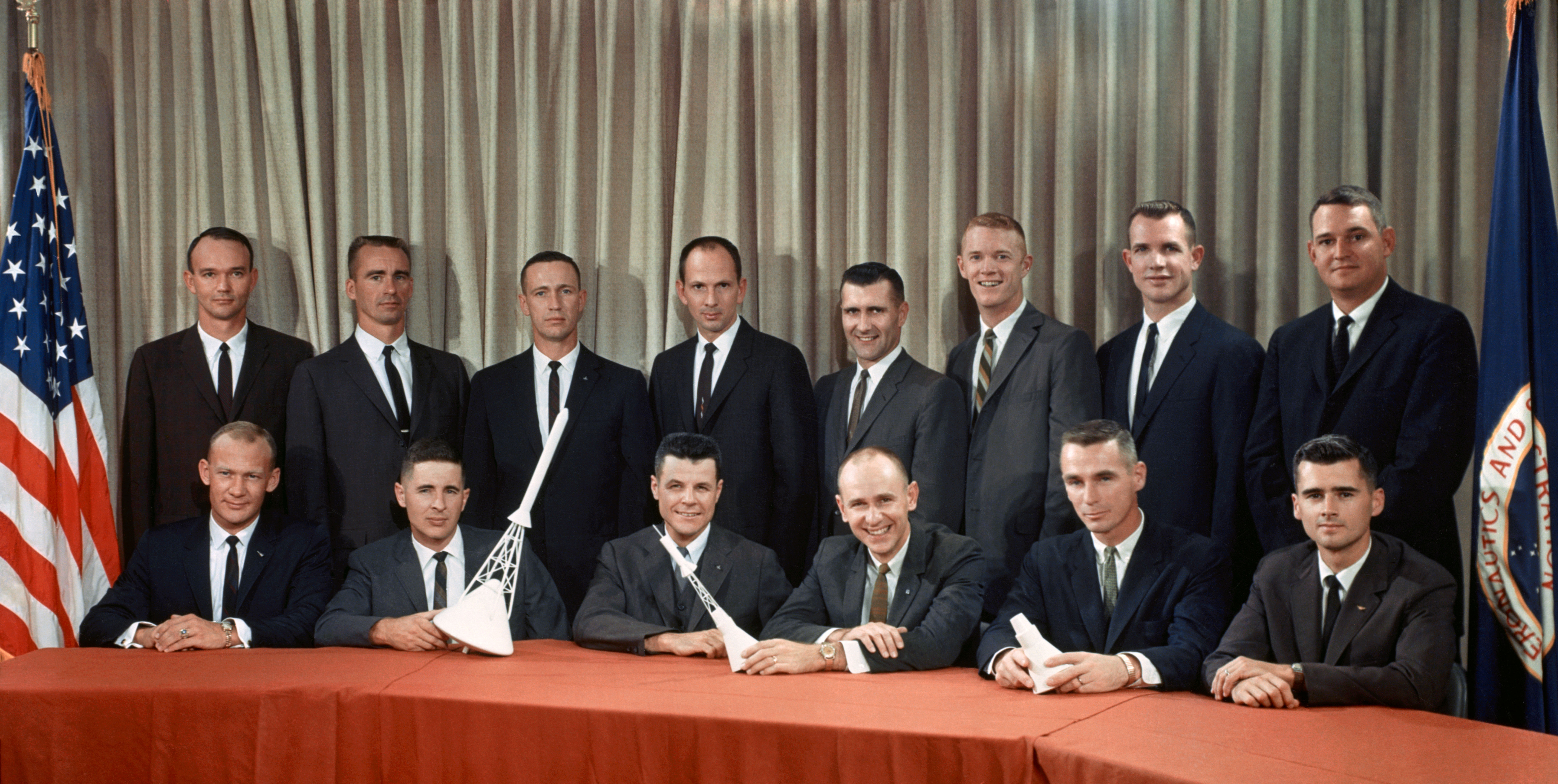
Group 3 astronauts pose following their introduction during the Oct. 17, 1963, press conference
The Group 3 astronauts pose following their introduction during the Oct. 18, 1963, press conference – front row, Edwin E. “Buzz” Aldrin, left, William A. Anders, Charles M. Bassett, Alan L. Bean, Eugene A. Cernan, and Roger B. Chaffee; back row, Michael Collins, left, R. Walter Cunningham, Donn F. Eisele, Theodore C. Freeman, Richard F. Gordon, Russell L. Schweickart, David R. Scott, and Clifton C. Williams.

On June 5, 1963, NASA announced that it would select 10-15 new candidates to augment the existing cadre of 15 active duty astronauts from its first two selections in 1959 and 1962. The agency had enough astronauts to staff the Gemini missions, but with Apollo missions then expected to begin in 1965, with up to four flights per year, it needed more astronauts. Selection criteria at the time for the candidates included U.S. citizenship, a degree in engineering or physical science, test pilot experience or 1,000 hours flying jets, 34 years old or younger, and no taller than six feet. From the 720 applications received by the July deadline, the selection board chose 136 candidates for further screening and narrowed that field down to 34 for extensive medical evaluations at Brooks Air Force Base (AFB) in San Antonio between July 31 and Aug. 15. The chair of the selection board, coordinator of astronaut activities Donald K. “Deke” Slayton, presented the names of the top 14 applicants to Robert R. Gilruth, director of the Manned Spacecraft Center (MSC), now NASA’s Johnson Space Center in Houston, who approved the list. Slayton then called each of the winning candidates with the good news. On Oct. 18, he introduced the new astronauts during a press conference in Houston. On average, this third group of astronauts were younger, slightly taller and heavier than the previous two groups, and better educated, six with master’s degrees and one having earned a doctorate.
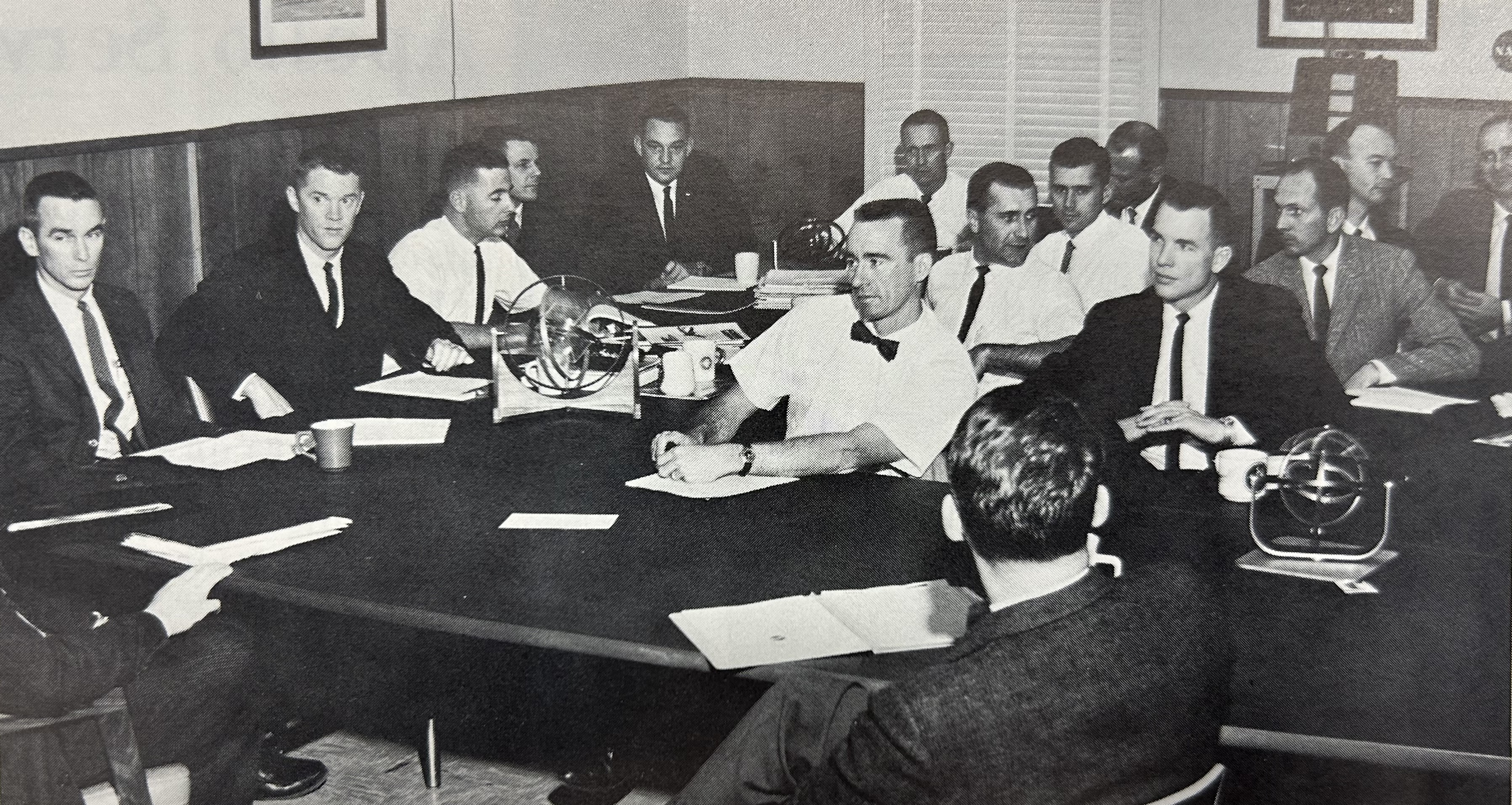
Mercury 7 astronaut and chief of operations and training for the astronaut office Walter M. Schirra
Mercury 7 astronaut and chief of operations and training for the astronaut office Walter M. Schirra, with back to camera, briefs the newly arrived 14 astronauts at the Manned Spacecraft Center, now NASA’s Johnson Space Center in Houston.

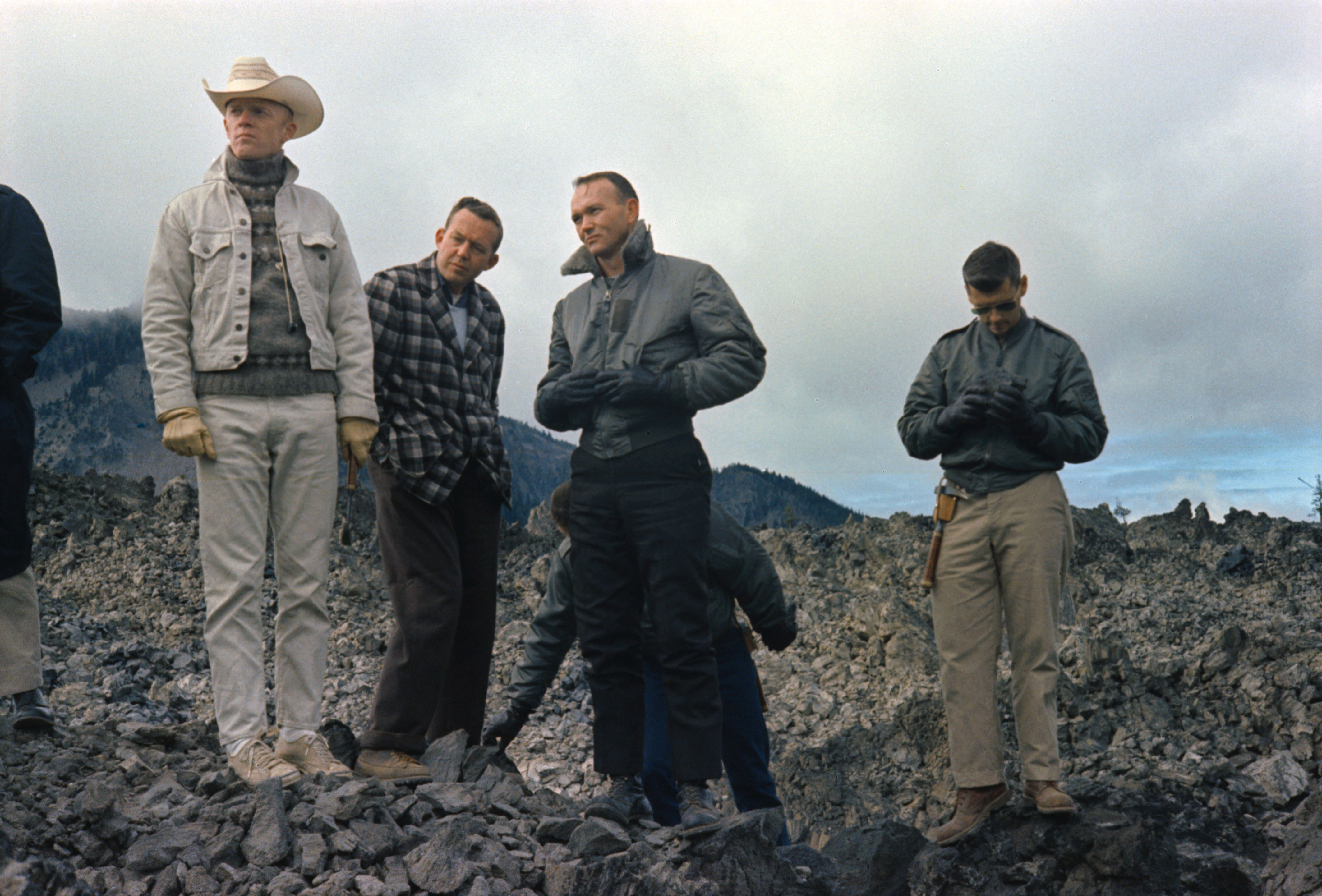
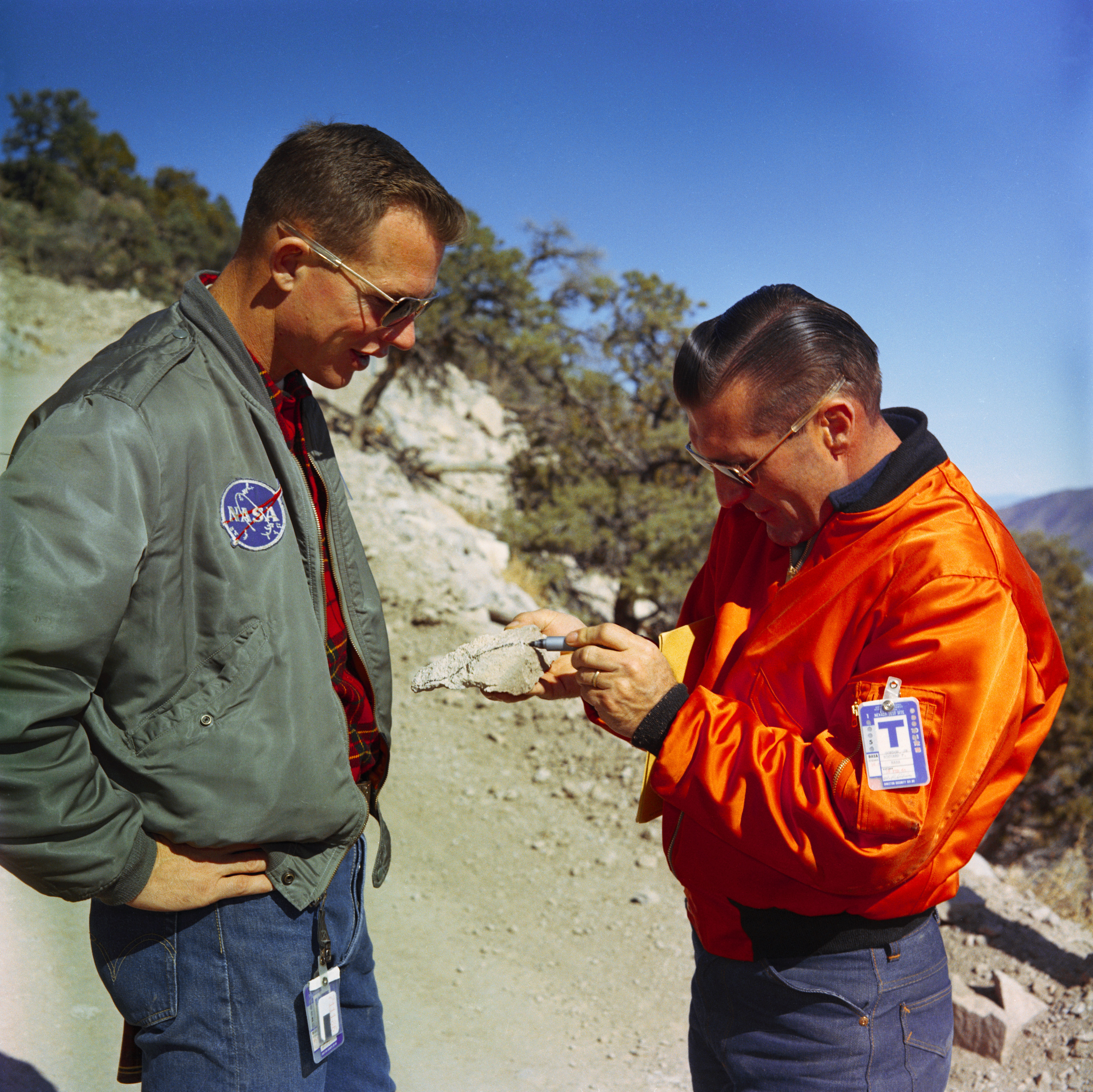
The Fourteen reported to work on Feb. 3, 1964, stationed initially at Houston’s Ellington AFB while construction of the MSC main campus on Clear Lake continued. During their first few months as astronauts, they visited various NASA centers and contractor facilities to become familiar with the space program’s major elements. Each astronaut received a technical assignment to gain expertise in specific aspects of spaceflight to pass their knowledge on to the rest of the group, and to help in the design of spacecraft, rockets, spacesuits, control systems, and simulators. Additionally, their 240-hour course work covered topics such as astronomy, aerodynamics, rockets, communications, space medicine, meteorology, upper atmospheric physics, navigation, orbital mechanics, computers, and geology. Because some of the group members could potentially receive assignments to land on the Moon, training including field trips to geologically interesting sites where they received instruction from geologists. They conducted jungle survival training in Panama, desert survival training around Reno, Nevada, and water survival training at the Pensacola, Florida, Naval Air Station.
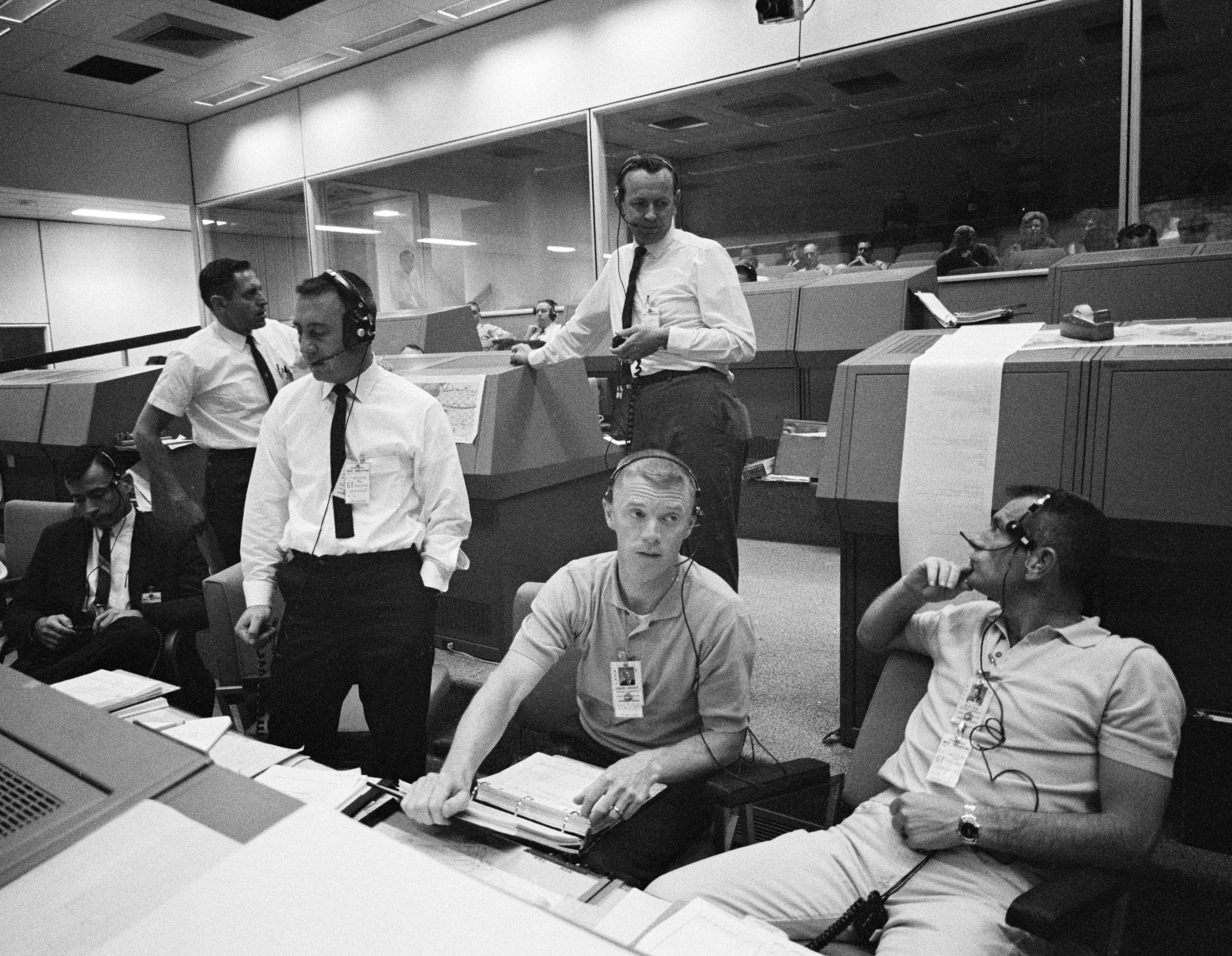
Group 3 astronaut Russell L. “Rusty” Schweickart Schweickart, geologist Uel Clanton, Michael Collins, and Roger B. Chaffee during geology training near Bend, Oregon. David R. Scott and Richard F. Gordon examine a rock sample during a geology field trip to the Nevada Test Site at Yucca Flats
Left: Group 3 astronaut Russell L. “Rusty” Schweickart, center, gets hands on experience as capsule communicator (capcom) during Gemini IV, the first flight controlled from the Mission Control Center at the Manned Spacecraft Center, now NASA’s Johnson Space Center in Houston. Middle: Schweickart, geologist Uel Clanton, Michael Collins, and Roger B. Chaffee during geology training near Bend, Oregon. Right: David R. Scott, left, and Richard F. Gordon examine a rock sample during a geology field trip to the Nevada Test Site at Yucca Flats.

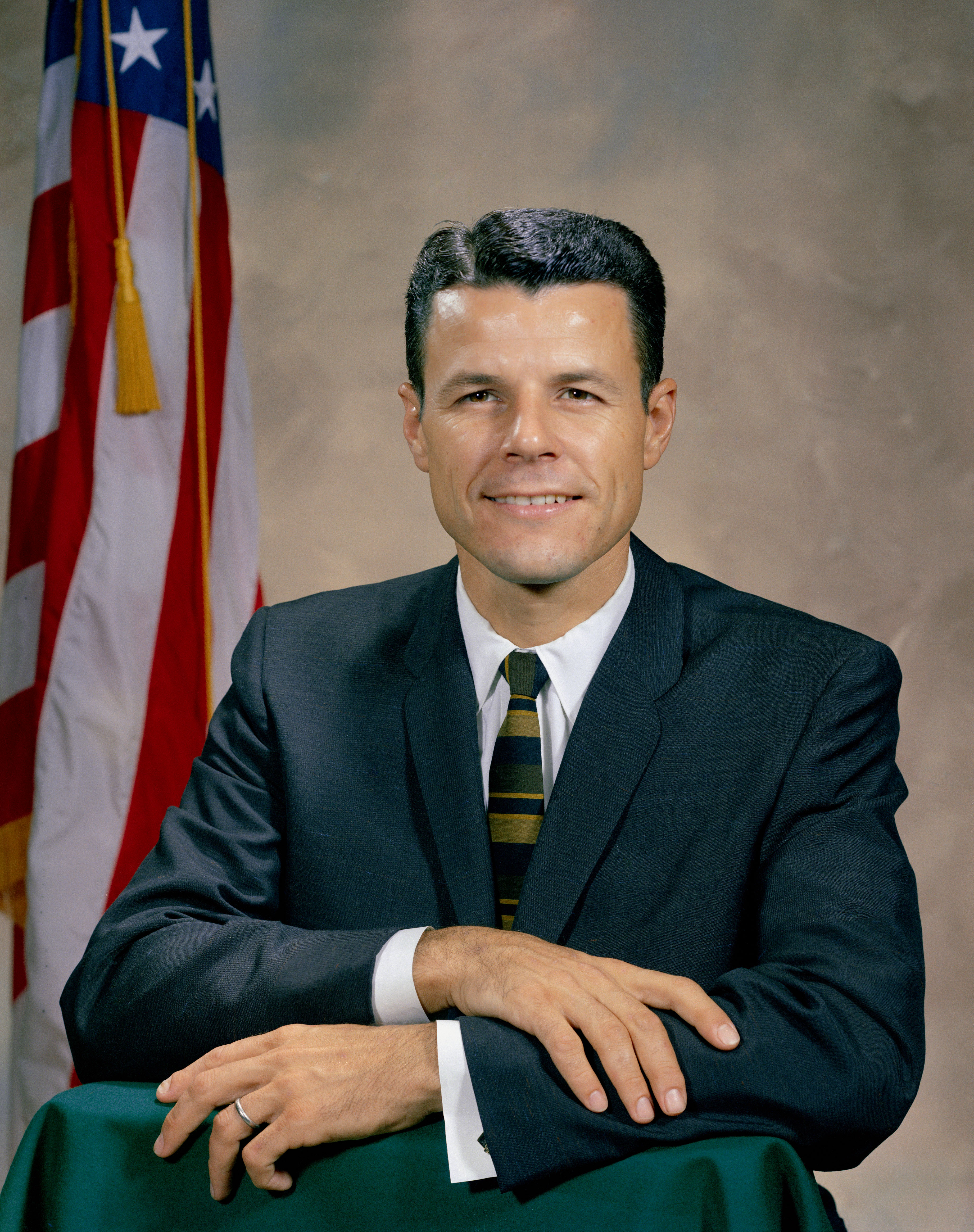
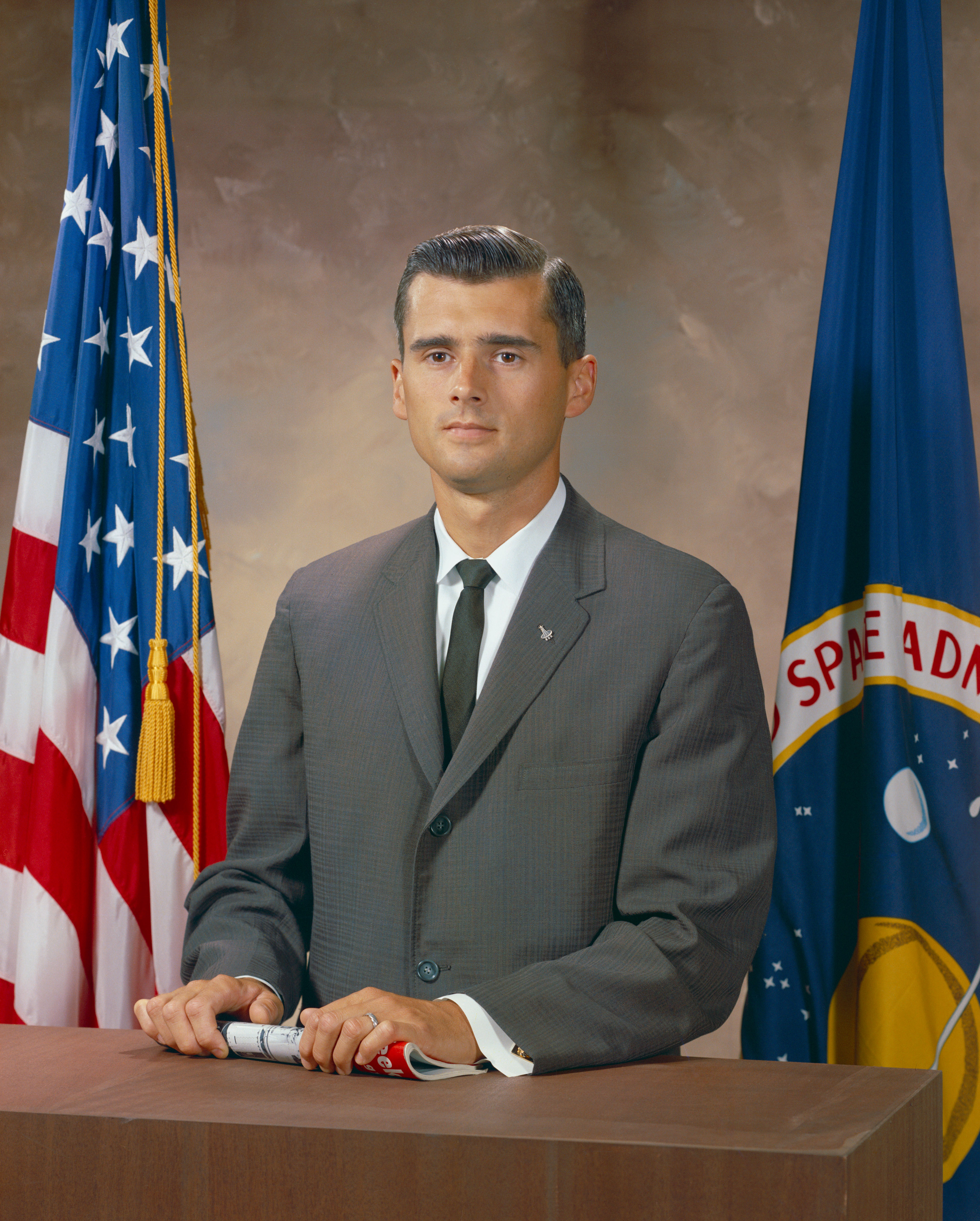
Of the 14, seven came from the U.S. Air Force (USAF), four from the U.S. Navy (USN), one from the U.S. Marine Corps (USMC), and two were civilians at the time of selection but had military experience. The astronauts included Edwin E. “Buzz” Aldrin (USAF), William A. Anders (USAF), Charles M. Bassett (USAF), Alan L. Bean (USN), Eugene A. Cernan (USN), Roger B. Chaffee (USN), Michael Collins (USAF), R. Walter Cunningham (civilian), Donn F. Eisele (USAF), Theodore C. “Ted” Freeman (USAF), Richard F. Gordon (USN), Russell L. “Rusty” Schweickart (civilian), David R. Scott (USAF), and Clifton C. “CC” Williams (USMC). Williams had the distinction as the first bachelor astronaut, a distinction he lost in July 1964.
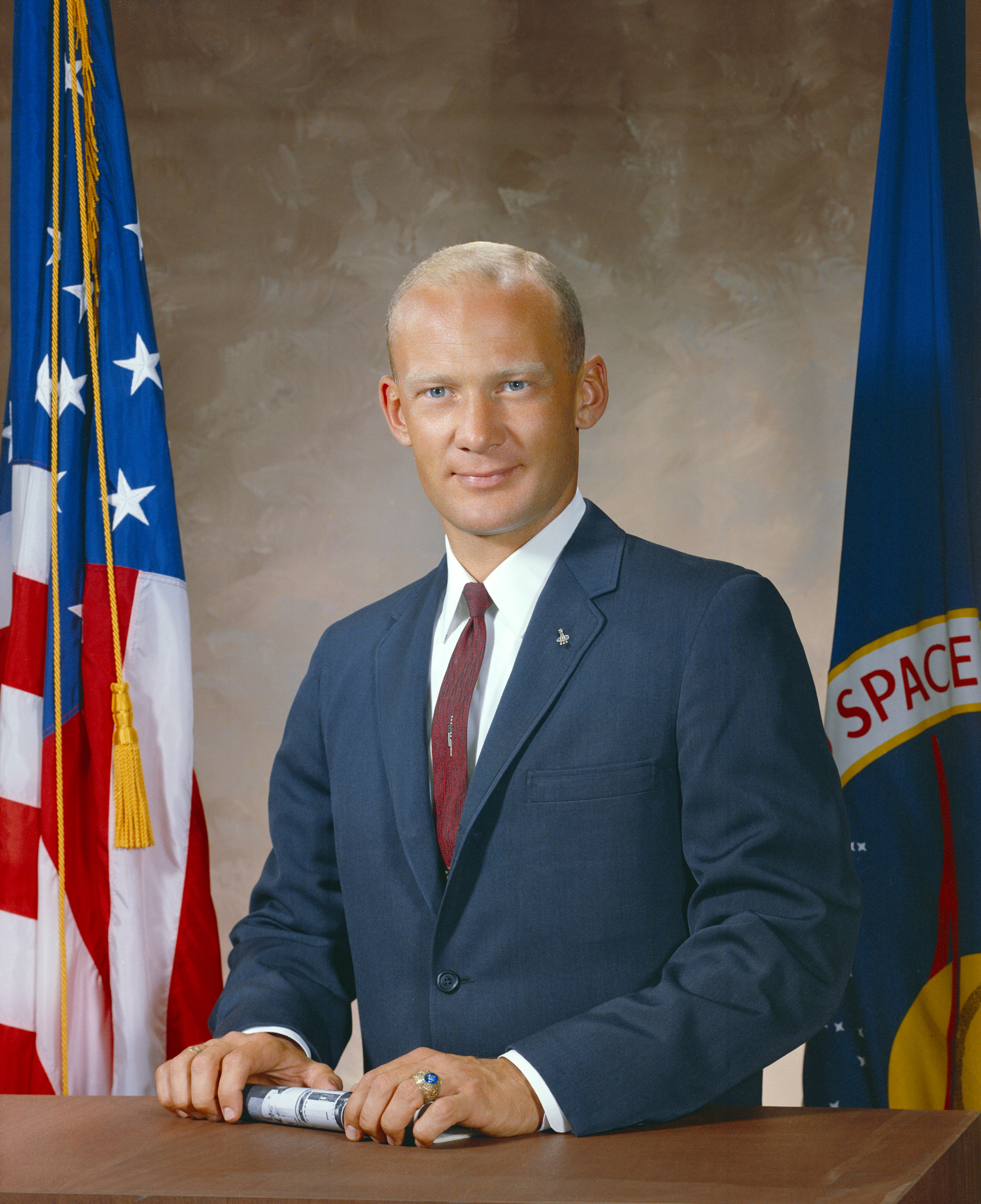
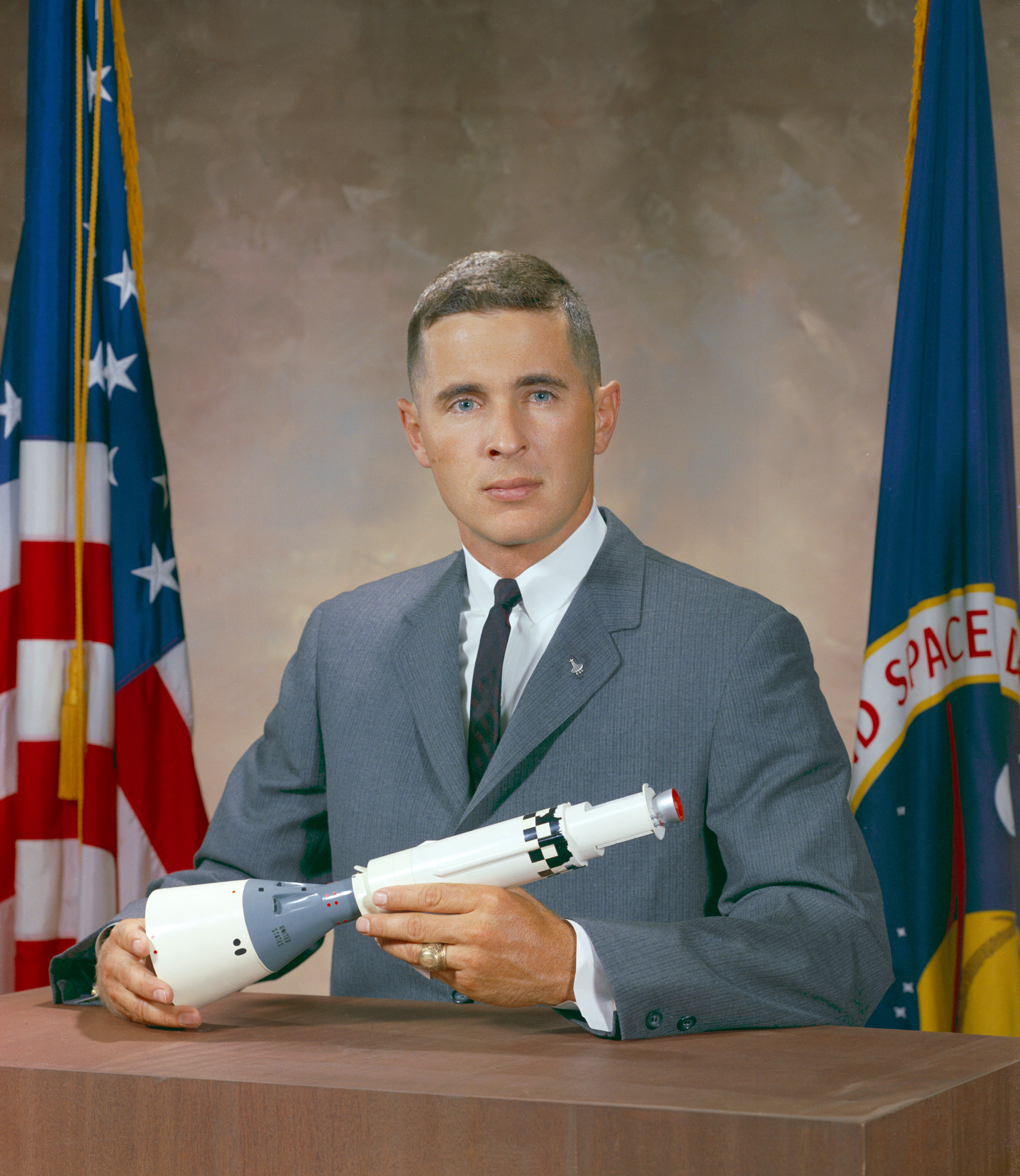
Group 3 astronaut Edwin E. “Buzz” Aldrin Astronaut William A. Anders Charles M. Bassett
Group 3 astronauts Edwin E. “Buzz” Aldrin, left, William A. Anders, and Charles M. Bassett.

Aldrin, who wrote his thesis on orbital rendezvous techniques for his Ph.D. in astronautics from the Massachusetts Institute of Technology in Cambridge, earned the nickname Dr. Rendezvous. Appropriately, Slayton tasked him to help with mission planning. Aldrin received his first crew assignment as the backup pilot for Gemini IX that included training for a spacewalk. He put that experience, plus additional training in a neutral buoyancy simulator, or underwater training to better simulate weightlessness, during his four-day Gemini XII flight during which he successfully completed three spacewalks. Moving on to the Apollo program, Aldrin next served as the backup Command Module Pilot (CMP) for the Apollo 8 first lunar orbital mission. As the prime Lunar Module Pilot (LMP) on Apollo 11, Aldrin became the second man to walk on the Moon in July 1969. He retired from NASA the following year.

Slayton assigned Anders, who held a master’s degree in nuclear engineering, to follow the development of environmental controls for Gemini and Apollo spacecraft. His first mission assignment came as the backup pilot for Gemini XI, and then as prime LMP on Apollo 8. He is credited with taking the famous Earthrise photo while he and his crewmates orbited the Moon. He served as backup CMP on Apollo 11, before retiring from NASA in August 1969 to join the National Aeronautics and Space Council.

Bassett’s technical assignment included training and simulators. Slayton assigned him as pilot on Gemini IX, a mission that included docking and a spacewalk. Tragically, on Feb. 28, 1966, just three months before their planned mission, Bassett and his command pilot Elliott M. See died in the crash of their T-38 Talon aircraft as they approached Lambert International Airport in St. Louis in inclement weather.
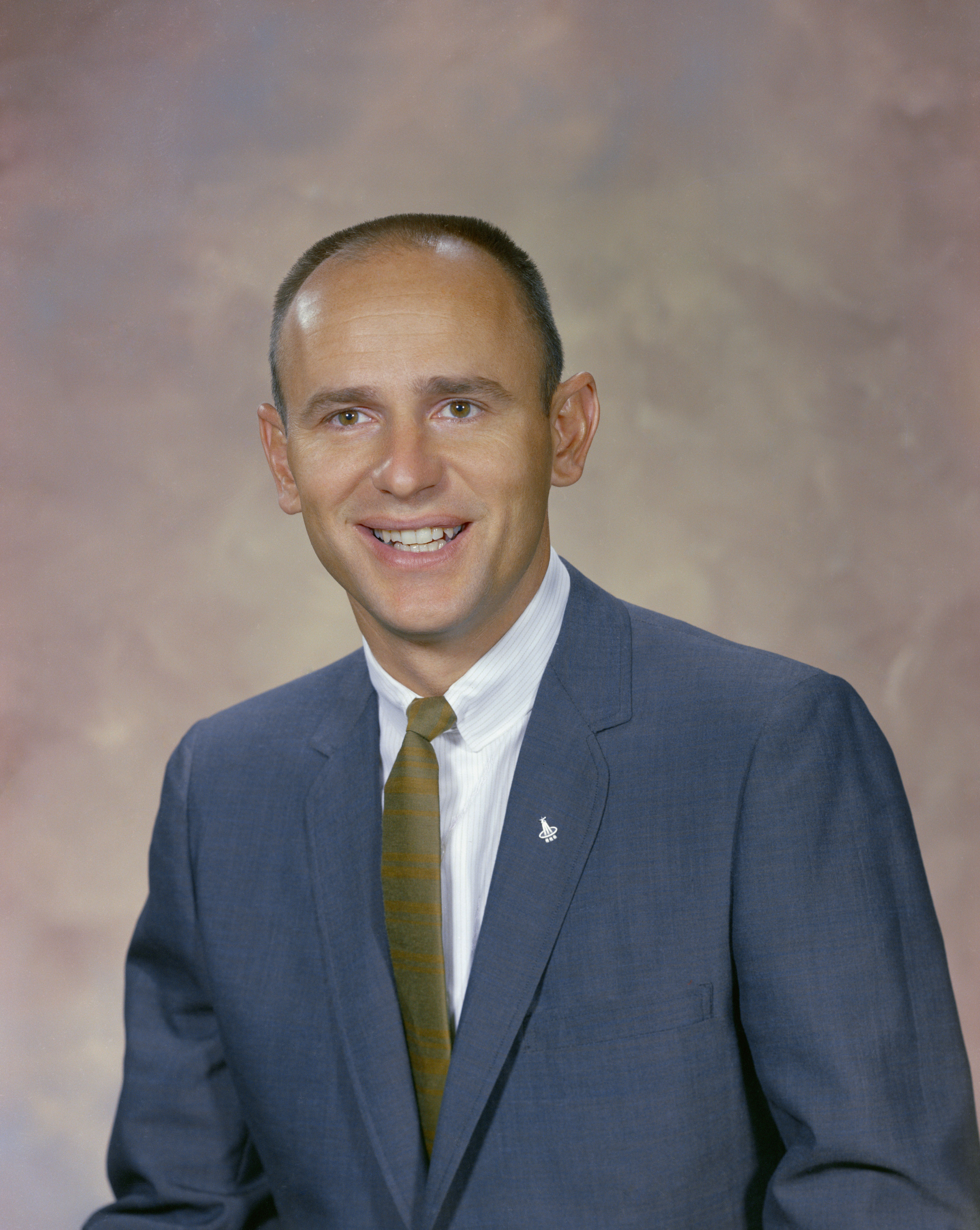
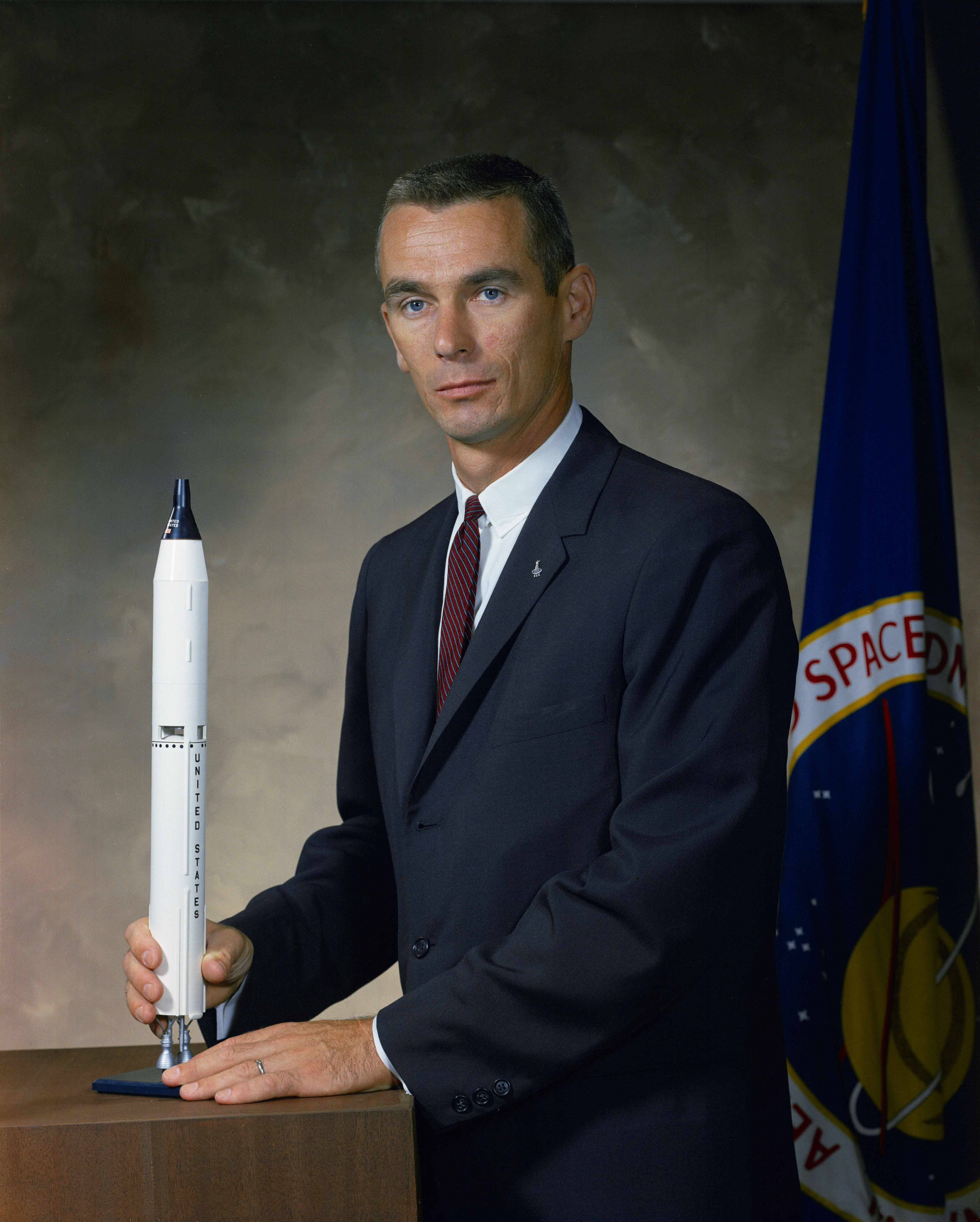
Alan L. Bean Eugene A. Cernan Roger B. Chaffee
Group 3 astronauts Alan L. Bean, left, Eugene A. Cernan, and Roger B. Chaffee.

Bean’s primary technical assignment involved spacecraft recovery systems. Slayton first assigned him as backup command pilot on Gemini X with Williams as his pilot. He next served as the backup LMP on Apollo 9, the first mission to test the Lunar Module (LM) in Earth orbit. That put him in position as the prime LMP on Apollo 12. During that mission he became the fourth man to walk on the Moon. He later served as the commander for the 59-day Skylab 3 mission in 1973 and as the backup commander for the Apollo-Soyuz Test Project (ASTP) in 1975. He retired from NASA in 1981.

Cernan, with a master’s in aeronautical engineering, followed the development of spacecraft propulsion and the Agena docking target for Gemini missions. Slayton assigned him as backup pilot for Gemini IX, and following the deaths of See and Bassett, Cernan and his commander Thomas P. Stafford took over as the prime crew. As luck would have it, they did not have a chance to dock with an Agena as it did not make it to orbit. Cernan conducted the second American spacewalk during that mission. He served as Aldrin’s backup on Gemini XII and then as the backup LMP on Apollo 7. That rotated him to the prime crew on Apollo 10, the dress rehearsal for the Moon landing during which he and Stafford took their LM to within nine miles of the lunar surface. He served as backup commander for Apollo 14, and then as prime commander of Apollo 17, the final Apollo Moon landing mission, he left the last footprints of that program in the lunar soil in December 1972. He remains one of only three people to have traveled to the Moon twice. He retired from NASA in 1976.

Chaffee’s technical assignment led him to follow the development of spacecraft communications systems. In March 1966, Slayton assigned him to the first crewed Apollo mission, along with commander Virgil I. “Gus” Grissom and senior pilot Edward H. White. Tragically, the three died on Jan. 27, 1967, in a fire aboard their spacecraft during a ground test on the launch pad.
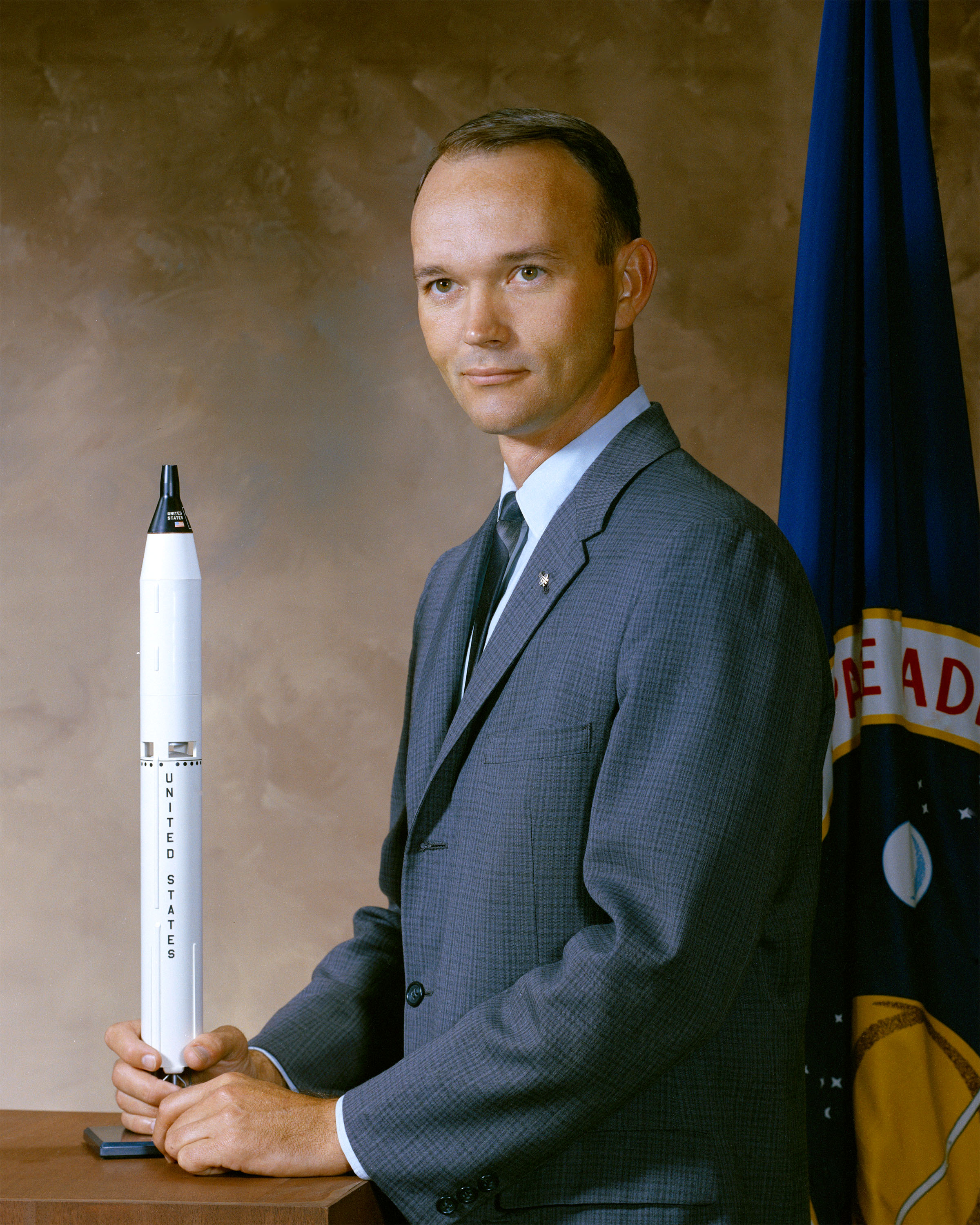
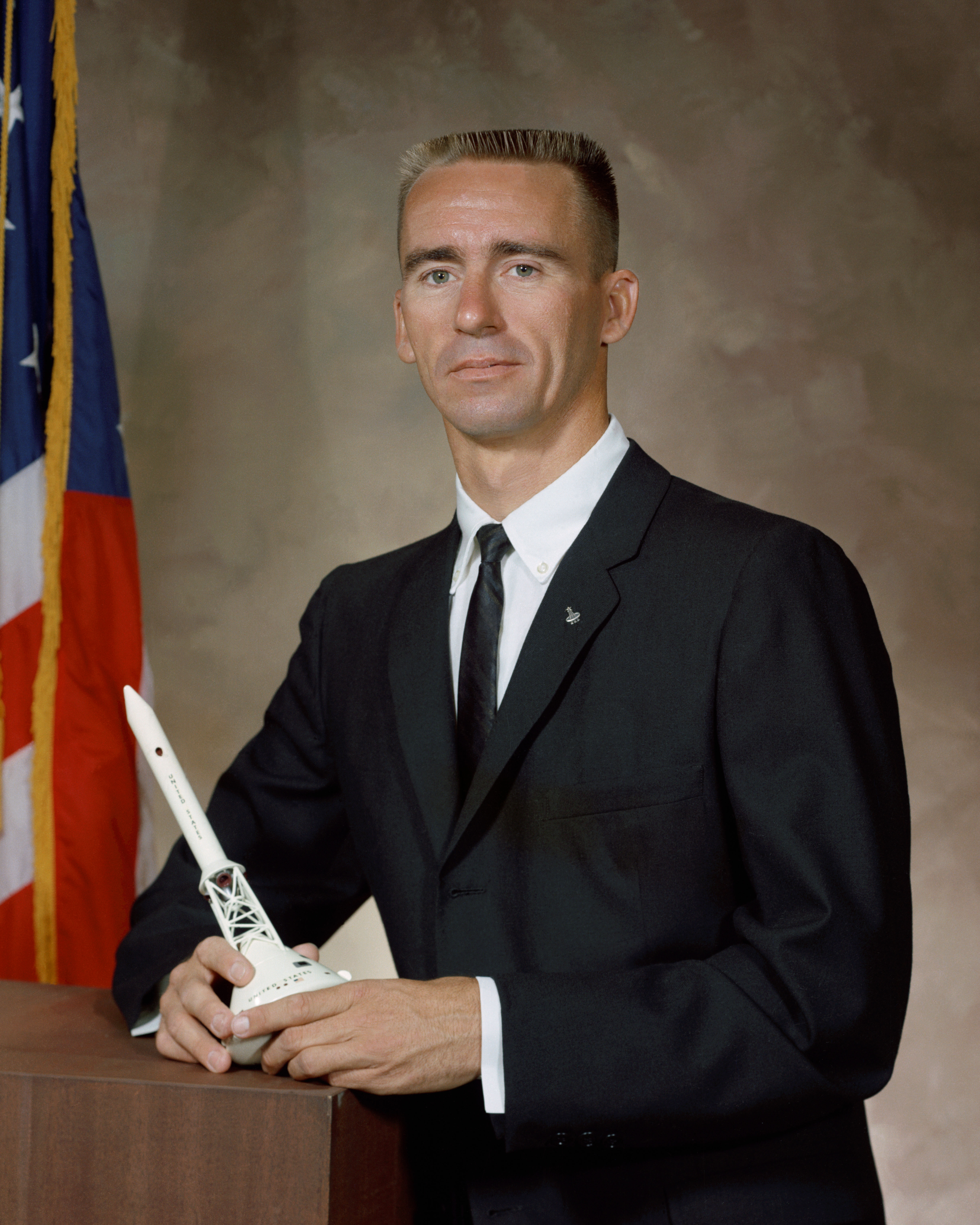
Michael Collins R. Walter Cunningham Donn F. Eisele
Group 3 astronauts Michael Collins, left, R. Walter Cunningham, and Donn F. Eisele.

Collins, who had applied for the 1962 class but did not get selected, followed the development of pressure suits and spacewalking systems. As his first crew assignment, he served as the backup pilot for the long duration Gemini VII mission. He next served as the pilot for Gemini X, the first mission to complete a rendezvous with two Agena targets, and during which he conducted two spacewalks. He briefly served as the CMP on the Apollo 8 crew before being sidelined by surgery to correct a bone spur in his neck. After his recovery, he served as the CMP on Apollo 11, the first Moon landing mission. He retired from NASA in 1970, and went on to serve as the director of the Smithsonian Institution’s National Air and Space Museum in Washington, D.C., overseeing the building of its new facility that opened for the nation’s bicentennial in 1976.

Cunningham, who held a master’s degree in physics and had nearly completed work on his Ph.D. when selected, oversaw the development of ground-based experiments to support spaceflights. Slayton assigned him to the second crewed Apollo mission, along with classmate Eisele and Walter M. Schirra as their commander. Later, Slayton reassigned them to back up the first Apollo crew of Grissom, White, and Chaffee. After the Apollo fire, Schirra, Eisele, and Cunningham became the prime crew for Apollo 7, the first crewed Apollo flight. After working on the Skylab program, he retired from NASA in 1971.

Slayton assigned Eisele, who held a master’s degree in astronautics, to oversee the development of spacecraft attitude control systems. Slayton assigned Eisele, along with Schirra and Cunningham to the second crewed Apollo mission, then reassigned them to back up the first Apollo crew. After the fire, Schirra, Eisele, and Cunningham became the prime crew for the first Apollo mission, completing the 11-day Apollo 7 mission in October 1968. Eisele later served as the backup CMP for Apollo 10. He retired from NASA in 1972.
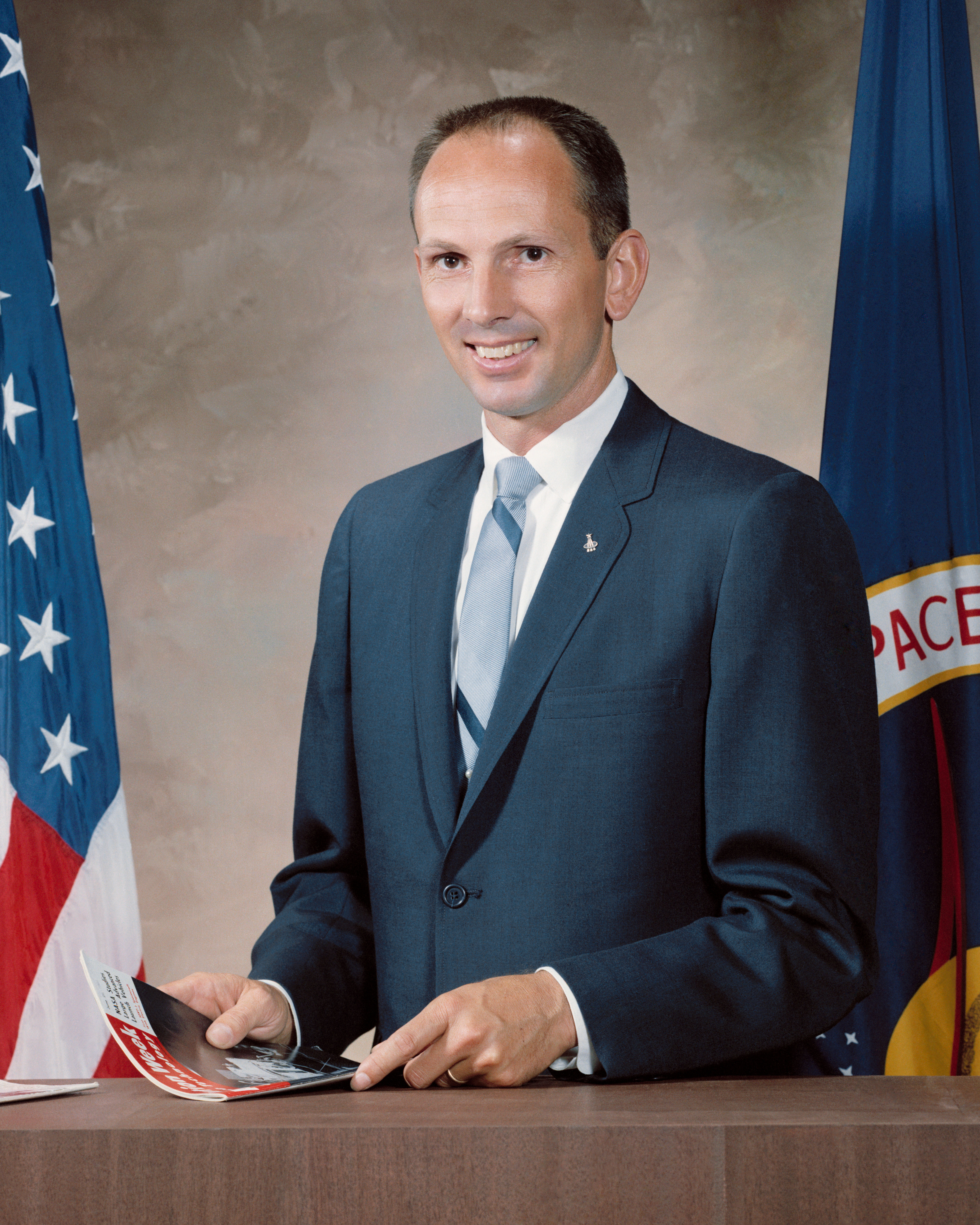
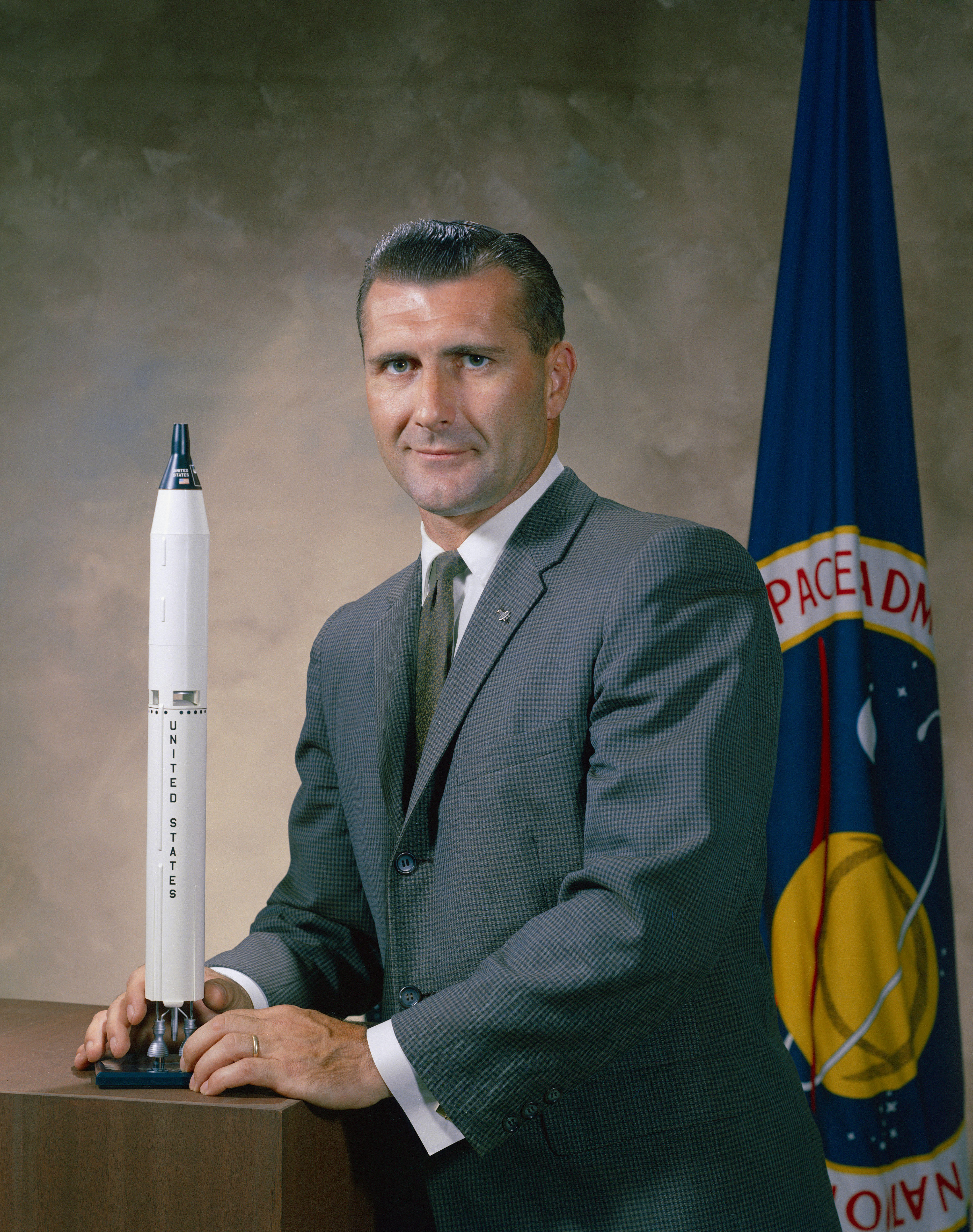
Theodore C. Freeman Richard F. Gordon Russell L. “Rusty” Schweickart.
Group 3 astronauts Theodore C. Freeman, left, Richard F. Gordon, and Russell L. “Rusty” Schweickart.

With a master’s degree in aeronautical engineering, Freeman’s technical assignment involved following the development of the various boosters for the Gemini and Apollo programs. Tragically, before he received a flight assignment, Freeman died in the crash of a T-38 Talon aircraft on Oct. 31, 1964, near Ellington AFB in Houston. He was the first active duty astronaut to perish.

Slayton put Gordon in charge of following the design of cockpit controls. Gordon’s first crew assignment was as backup pilot for Gemini VIII, the first docking mission. He next served as the pilot for Gemini XI that completed the docking with their Agena target on the first revolution. He conducted two spacewalks during that mission. On his next assignment, he served as the backup CMP for Apollo 9, and then as prime CMP on Apollo 12, the second Moon landing mission. His last official assignment as backup commander of Apollo 15 would have led him to most likely be commander of Apollo 18, but budget cuts in September 1970 canceled that mission. He retired from NASA the following year.

Schweickart, the youngest member of this astronaut class and with a master’s in aeronautics and astronautics, oversaw the development and integration of inflight experiments. First assigned in March 1966 as Chaffee’s backup on the first crewed Apollo mission, Schweickart and his crew mates James A. McDivitt and fellow classmate Scott were reassigned to the mission to carry out the first in-orbit test of the LM. They flew that mission as Apollo 9 in March 1969. Schweickart later served as the backup commander of the first Skylab crew. He retired from NASA in 1977.
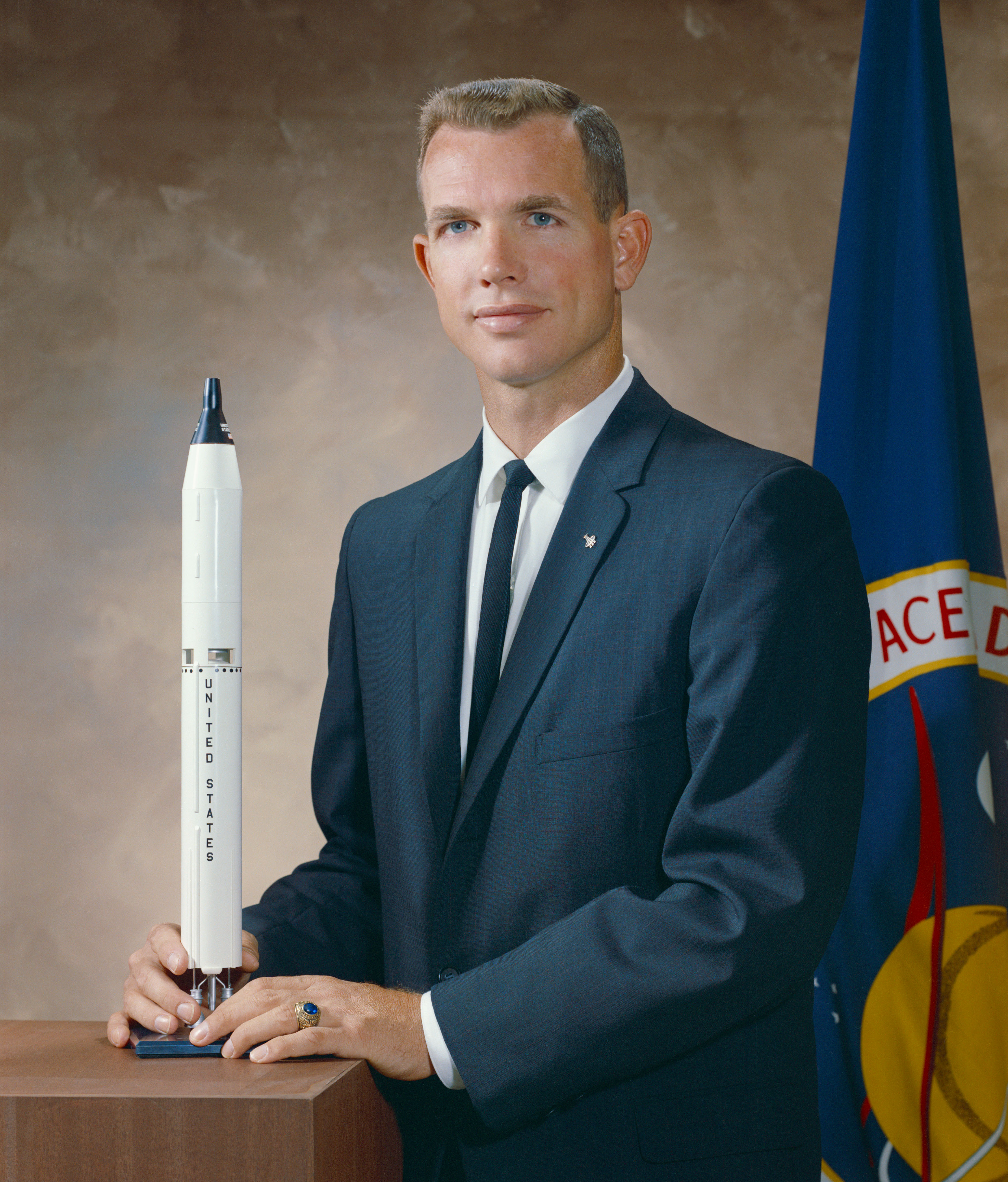
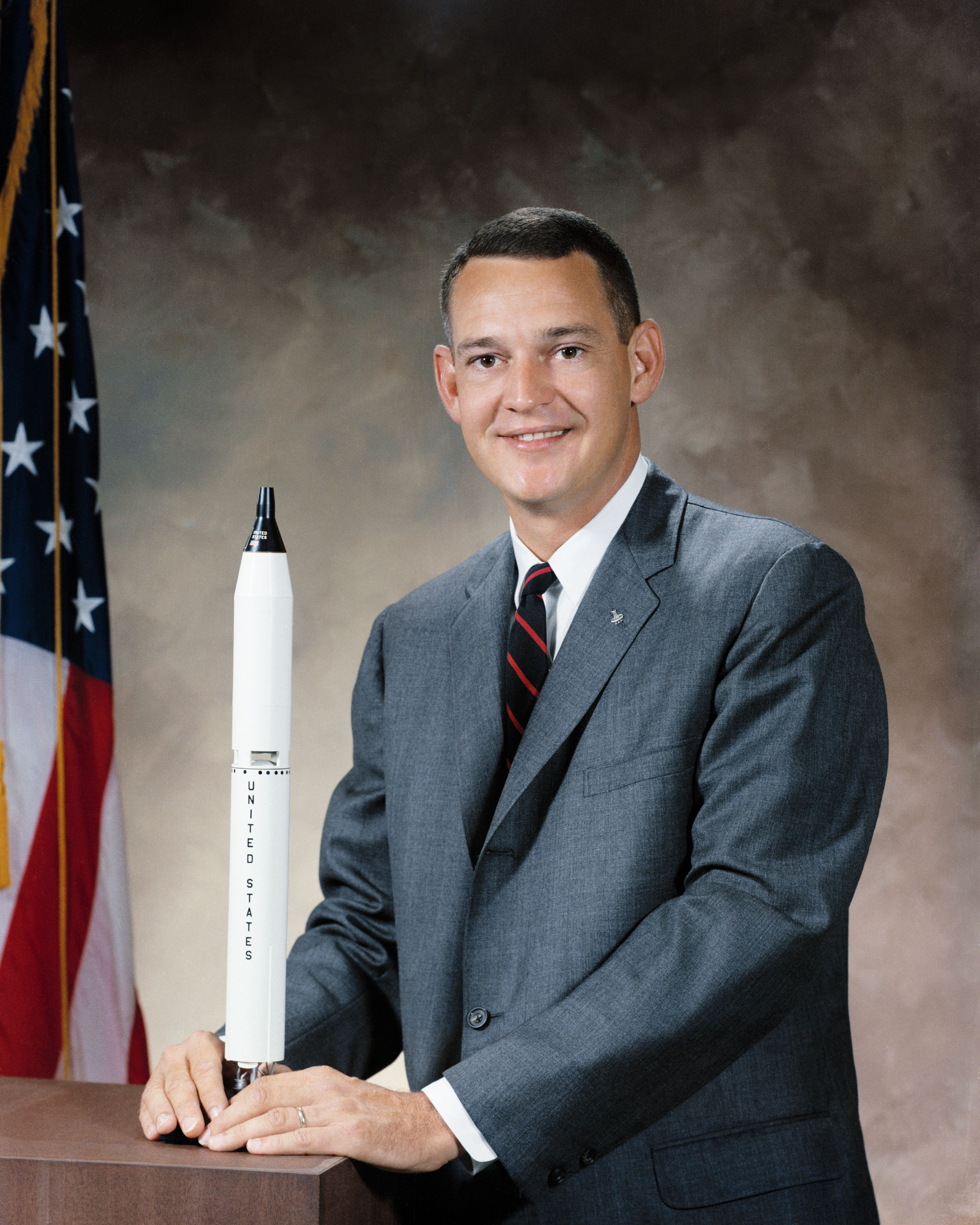
David R. Scott Clifton C. “CC” Williams
Group 3 astronauts David R. Scott, left, and Clifton C. “CC” Williams.

Slayton placed Scott, who held a master’s degree in aeronautics and astronautics, in charge of monitoring the development of guidance and navigation systems. On his first crew assignment, he served as pilot on Gemini VIII, the mission that featured the first docking with an Agena target and the first in-space emergency requiring an immediate return to Earth. Just days after that harrowing flight in March 1966, Scott was named to the backup crew for the first Apollo mission, but later he, McDivitt, and Schweickart were reassigned to the first flight to test the LM in space, the flight that flew as Apollo 9 in March 1969. Scott next served as backup commander of Apollo 12, then as prime commander of Apollo 15. He became the seventh man to walk on the Moon and the first to drive there, using the Lunar Roving Vehicle. After leaving the astronaut corps, he served first as the deputy director and then the director of NASA’s Dryden, now Armstrong, Flight Research Center at Edwards AFB in California’s Mojave Desert. He retired from NASA in 1977.

Williams, the only Marine and lone bachelor of the group (he married in July 1964), oversaw range operations and crew safety. Slayton assigned Williams as the backup pilot for Gemini X, and later he served as the LMP on a backup crew for the first flight of the LM in Earth orbit, along with Charles “Pete” Conrad and fellow classmate Gordon. Tragically, Williams died in the crash of a T-38 Talon aircraft near Tallahassee, Florida, on Oct. 5, 1967. Bean replaced him on Conrad’s crew, that became the Apollo 9 backup crew and ultimately the prime crew for Apollo 12. At Bean’s suggestion, Williams is memorialized on the Apollo 12 crew patch as a fourth star, the other three stars representing the actual flight crew.
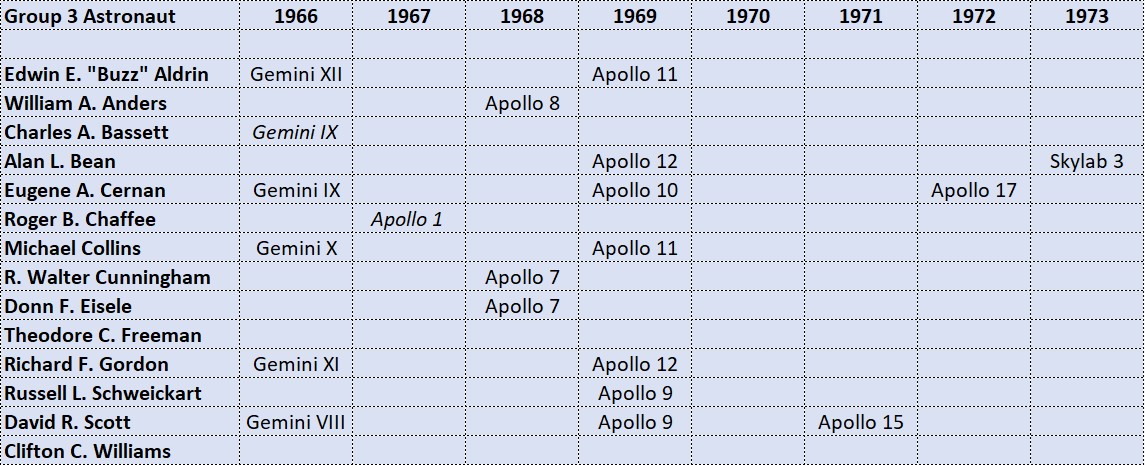
Summary of spaceflights by Group 3 astronauts.
Summary of spaceflights by Group 3 astronauts. The boxes with flight names in italics represent astronauts who died before they could undertake the mission.

As a group, The Fourteen tragically had the highest mortality rate of any astronaut class. The surviving 10 astronauts completed a total of 18 flights, five Gemini missions, 12 Apollo missions, and one Skylab mission. Of the group, Collins received the first crew assignment as Gemini VII backup pilot, while Scott made the first spaceflight on Gemini VIII. Bean made the last spaceflight by a Fourteen, as commander of Skylab 3 in 1973, and also the last to receive a crew assignment as the backup commander for the ASTP mission in 1975. Seven of The Fourteen traveled to the Moon, one of them twice, and four walked on its dusty surface. One even drove on it.
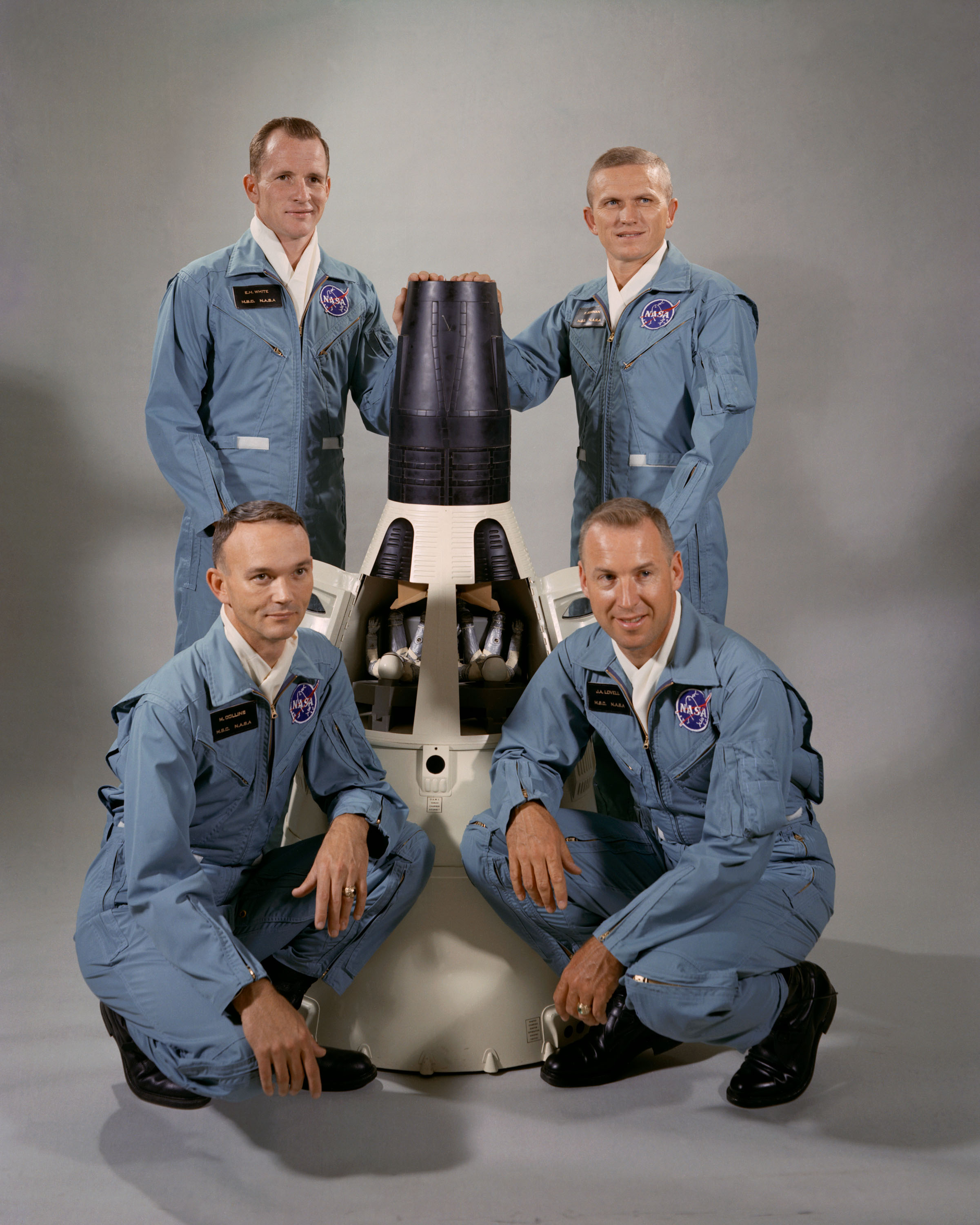
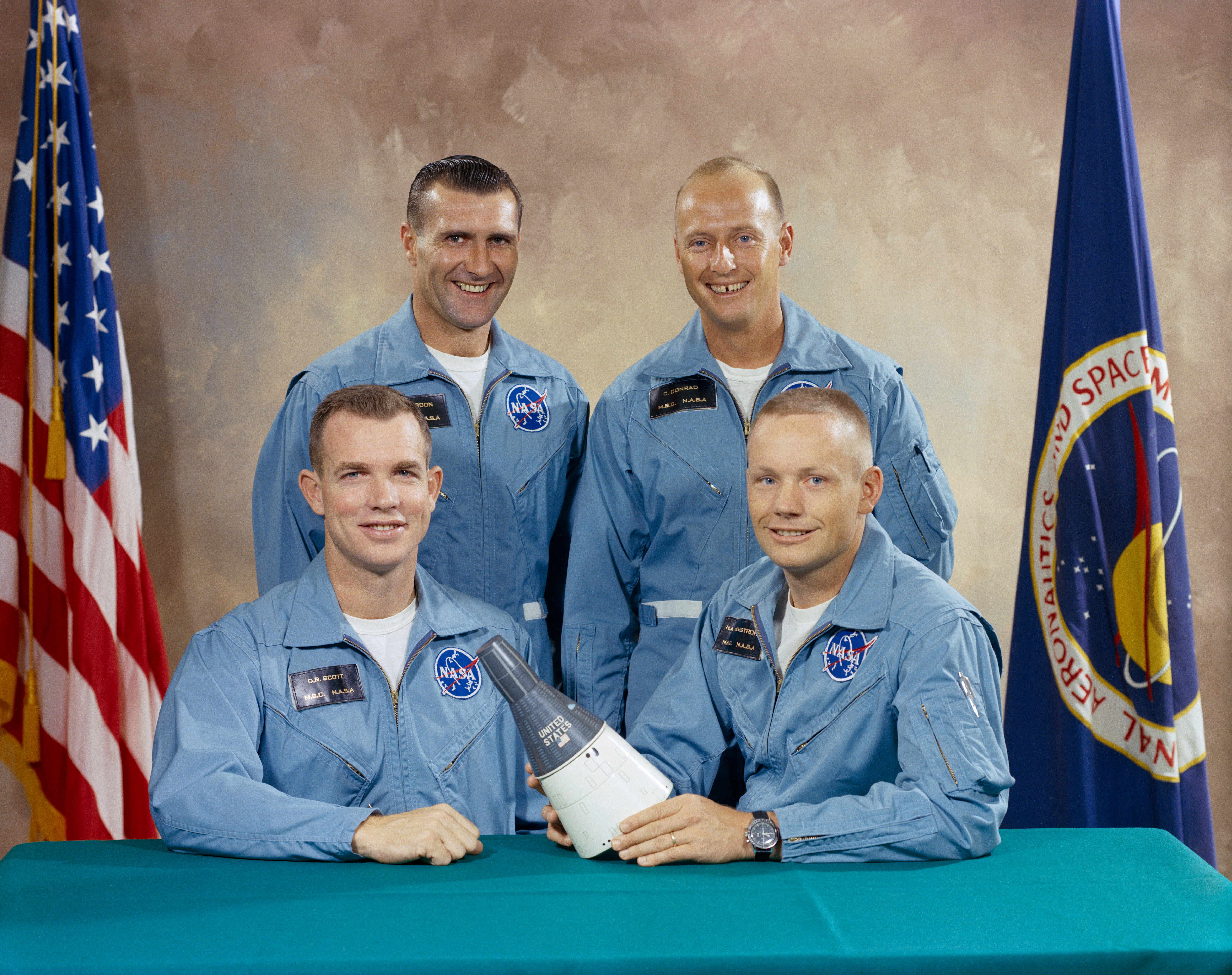
Michael Collins, lower left, the first of The Fourteen to receive a crew assignment as backup pilot on Gemini VII David R. Scott, lower left, received the first assignment to a prime crew as Gemini VIII pilot – fellow Fourteen Richard F. Gordon was assigned as his backup Scott awaits launch inside Gemini VIII.
Left: Michael Collins, lower left, the first of The Fourteen to receive a crew assignment as backup pilot on Gemini VII. Middle: David R. Scott, lower left, received the first assignment to a prime crew as Gemini VIII pilot – fellow Fourteen Richard F. Gordon was assigned as his backup. Right: Scott awaits launch inside Gemini VIII.

Powered by WPeMatico

Get The Details…
Kelli Mars