International Ocean Satellite Monitors How El Niño Is Shaping Up

International Ocean Satellite Monitors How El Niño Is Shaping Up
The maps above show sea levels in the Pacific Ocean
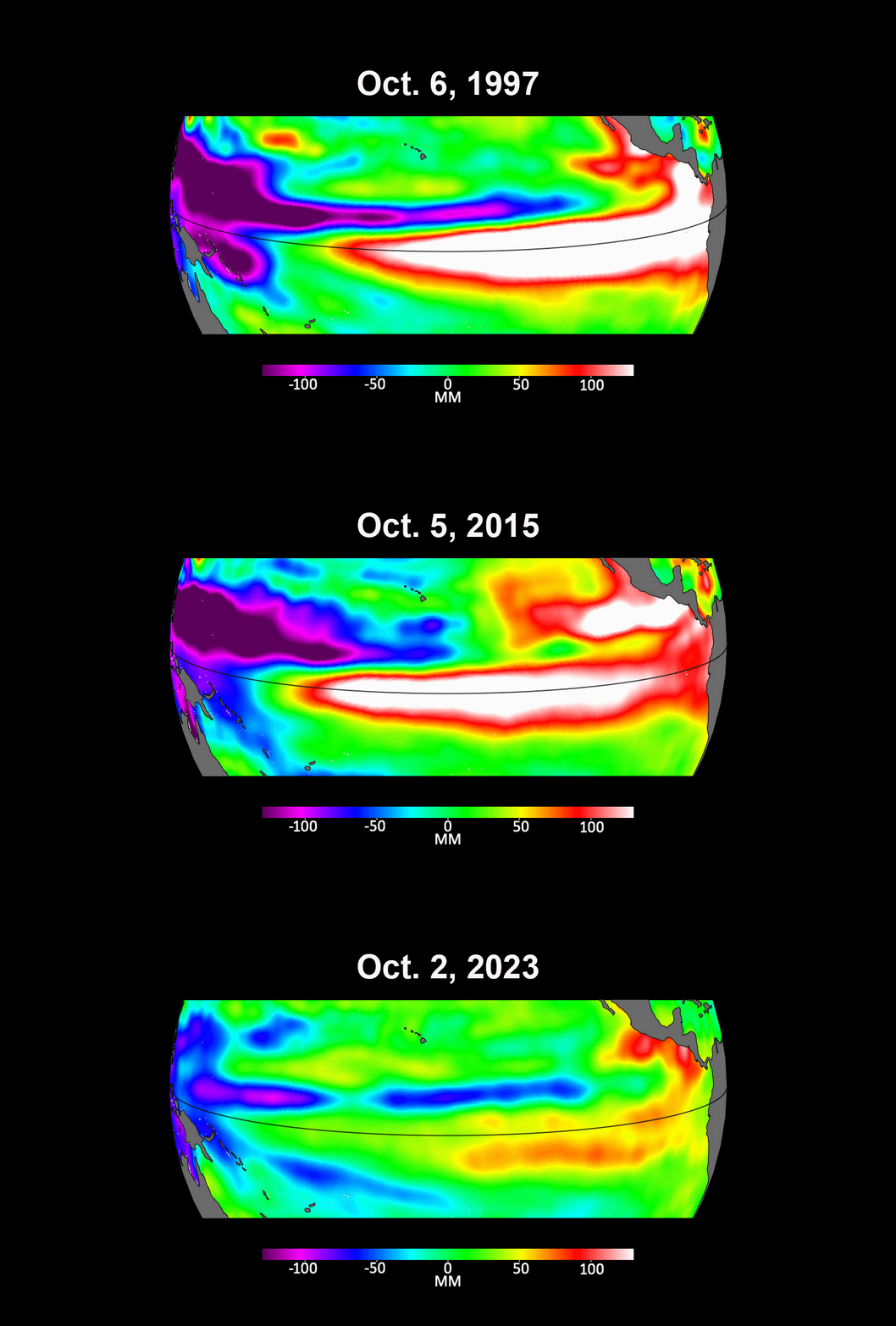
The maps above show sea levels in the Pacific Ocean during early October of 1997, 2015, and 2023, in the run up to El Niño events. Higher-than-average ocean heights appear red and white, and lower-than-average heights are in blue and purple.
NASA/JPL-Caltech

Sentinel-6 Michael Freilich is the latest satellite contributing to a 30-year sea level record that researchers are using to compare this year’s El Niño with those of the past.

Not all El Niño events are created equal. Their impacts vary widely, and satellites like the U.S.-European Sentinel-6 Michael Freilich help anticipate those impacts on a global scale by tracking changes in sea surface height in the Pacific Ocean.

Water expands as it warms, so sea levels tend to be higher in places with warmer water. El Niños are characterized by higher-than-normal sea levels and warmer-than-average ocean temperatures along the equatorial Pacific. These conditions can then propagate poleward along the western coasts of the Americas. El Niños can bring wetter conditions to the U.S. Southwest and drought to regions in the western Pacific, including Indonesia. This year’s El Niño is still developing, but researchers are looking to the recent past for clues as to how it is shaping up.

There have been two extreme El Niño events in the past 30 years: the first from 1997 to 1998 and the second from 2015 to 2016. Both caused shifts in global air and ocean temperatures, atmospheric wind and rainfall patterns, and sea level. The maps above show sea levels in the Pacific Ocean during early October of 1997, 2015, and 2023, with higher-than-average ocean heights in red and white, and lower-than-average heights in blue and purple. Sentinel-6 Michael Freilich captured the 2023 data, the TOPEX/Poseidon satellite collected data for the 1997 image, and Jason-2 gathered data for the 2015 map.

By October 1997 and 2015, large areas of the central and eastern Pacific had sea levels more than 7 inches (18 centimeters) higher than normal. This year, sea levels are about 2 or 3 inches (5 to 8 centimeters) higher than average and over a smaller area compared to the 1997 and 2015 events. Both of the past El Niños reached peak strength in late November or early December, so this year’s event may still intensify.

“Every El Niño is a little bit different,” said Josh Willis, Sentinel-6 Michael Freilich project scientist at NASA’s Jet Propulsion Laboratory in Southern California. “This one seems modest compared to the big events, but it could still give us a wet winter here in the Southwest U.S. if conditions are right.”

More About the Mission

Launched in November 2020, Sentinel-6 Michael Freilich is named after former NASA Earth Science Division Director Michael Freilich. The satellite is one of two that compose the Copernicus Sentinel-6/Jason-CS (Continuity of Service) mission.

Sentinel-6/Jason-CS was jointly developed by ESA (European Space Agency), the European Organisation for the Exploitation of Meteorological Satellites (EUMETSAT), NASA, and the U.S. National Oceanic and Atmospheric Administration, with funding support from the European Commission and technical support on performance from the French space agency CNES (Centre National d’Études Spatiales).

To learn more about Sentinel-6 Michael Freilich, visit:

https://www.nasa.gov/sentinel-6

News Media Contacts

Jane J. Lee / Andrew Wang
Jet Propulsion Laboratory, Pasadena, Calif.
818-354-0307 / 626-379-6874
jane.j.lee@jpl.nasa.gov / andrew.wang@jpl.nasa.gov

Powered by WPeMatico

Get The Details…
Anthony Greicius

NASA Employees Win Top Federal Award for Asteroid Deflection Mission

NASA Employees Win Top Federal Award for Asteroid Deflection Mission

Scott Bellamy, left, and Brian Key, right, stop for a photo moments after receiving the Samuel J. Heyman Service to America Medals. Bellamy and Key accepted on behalf of the entire DART team during a ceremony at the John F. Kennedy Center for Performing Arts in Washington on Oct. 17.
Scott Bellamy, left, and Brian Key, right, received the Samuel J. Heyman Service to America Medals. Bellamy and Key accepted on behalf of the entire DART team during a ceremony at the John F. Kennedy Center for Performing Arts in Washington on Oct. 17.
Allison Shelley for the Partnership for Public Service

NASA’s Brian Key and Scott Bellamy accepted the Samuel J. Heyman Service to America Medal on behalf of a mission team for the first planetary defense test during a ceremony at the John F. Kennedy Center for Performing Arts in Washington on Oct. 17.

The awards program for career federal employees, known as the Sammies, aims to highlight key accomplishments that benefit the nation, seeks to build trust in government, and inspire people to consider careers in public service.

Known as DART, NASA’s Double Asteroid Redirection Test mission successfully impacted a known asteroid in September 2022 and altered its orbit, demonstrating one planetary defense method that could be used to protect Earth from a potentially hazardous asteroid on a collision course with our home planet if one were ever discovered.

Key and Bellamy served as program manager and mission manager for DART, respectively, and are based in the Planetary Missions Program Office at NASA’s Marshall Space Flight Center in Huntsville, Alabama. For their work on the mission, the team was honored in the Science, Technology, and Environment category of the Heyman awards.

“DART was a first-of-its-kind mission that marked a watershed moment for planetary defense. The DART team members are some of the very best of NASA, and we are so excited to see Brian Key and Scott Bellamy recognized for their contributions and leadership,” NASA Administrator Bill Nelson said. “Brian, Scott, and the entire DART team have shaped the course of human space exploration, inspiring people around the world through innovation. Thanks to their dedication and hard work, NASA is better prepared to defend our home planet, and will be ready for whatever the universe throws at us.”

In his role on DART, Key maintained budget, staff, and schedule oversight for the mission and worked directly with DART spacecraft developers at Johns Hopkins Applied Physics Laboratory in Laurel, Maryland.

“I’m elated to see our team honored with this award and hope it will bring more attention to the valuable work NASA does to defend our home world,” Key said, who oversees management of NASA’s $2 billion portfolio spanning the Discovery Program, the New Horizons Program, and the Solar System Exploration Program, which covers the full range of large and small science missions exploring the planets, moons, asteroids, comets and other destinations of interest in the solar system.

Bellamy was tasked with keeping the team on track to launch and operate the mission. He echoed Key’s praise for the entire DART team.

“We’re just the managers,” Bellamy said. “Our role has been to serve the team, keeping things moving forward as smoothly as possible to enable them to do the actual hands-on, pencilwork-to-hardware that brought this mission from concept to reality.”

That mission could not have gone more flawlessly, they agreed. Launched in November 2021, the DART spacecraft traveled to more than 6.8 million miles from Earth with one simple goal: to intentionally impact into Dimorphos, a 492-foot-diameter asteroid, at roughly 14,000 miles per hour, thus altering its orbit around its much larger parent asteroid, Didymos. DART’s collision with Dimorphos altered the asteroid’s roughly 12-hour orbit period around its parent by about a half-hour.

“I don’t even have the words to describe the release of emotion in the control room when we got confirmation that DART had impacted,” Bellamy said. “The whole team went from nail-biting suspense to unbelievable excitement in a matter of seconds.”

As for future planetary defense activities, NASA and its partners will build on DART’s success. A follow-up mission by ESA (European Space Agency), called Hera, is scheduled to launch in 2024 to further assess DART’s impact on Dimorphos. NASA also is developing the NEO Surveyor mission, which is designed to accelerate the rate at which the agency can discovery potentially hazardous near-Earth objects, asteroids and comets which can come close to Earth and could pose an impact risk.

Johns Hopkins Applied Physics Laboratory managed the DART mission for NASA’s Planetary Defense Coordination Office. The agency provided support for the mission from several centers, including the Jet Propulsion Laboratory in Southern California; Goddard Space Flight Center in Greenbelt, Maryland; NASA’s Johnson Space Center in Houston; Glenn Research Center in Cleveland; and Langley Research Center in Hampton, Virginia.

Learn more about NASA’s Planetary Missions Program and Planetary Defense Coordination Offices online.

-end-

News Media Contacts

Jackie McGuinness
Headquarters, Washington
202-358-1600
jackie.mcguinness@nasa.gov

Jonathan Deal
Marshall Space Flight Center, Huntsville, Ala.
256-544-0034
jonathan.e.deal@nasa.gov

Share

Details

Last Updated

Oct 18, 2023

Editor

Claire A. O’Shea

Powered by WPeMatico

Get The Details…
Claire A. O’Shea

The Start of an Eclipse

The Start of an Eclipse

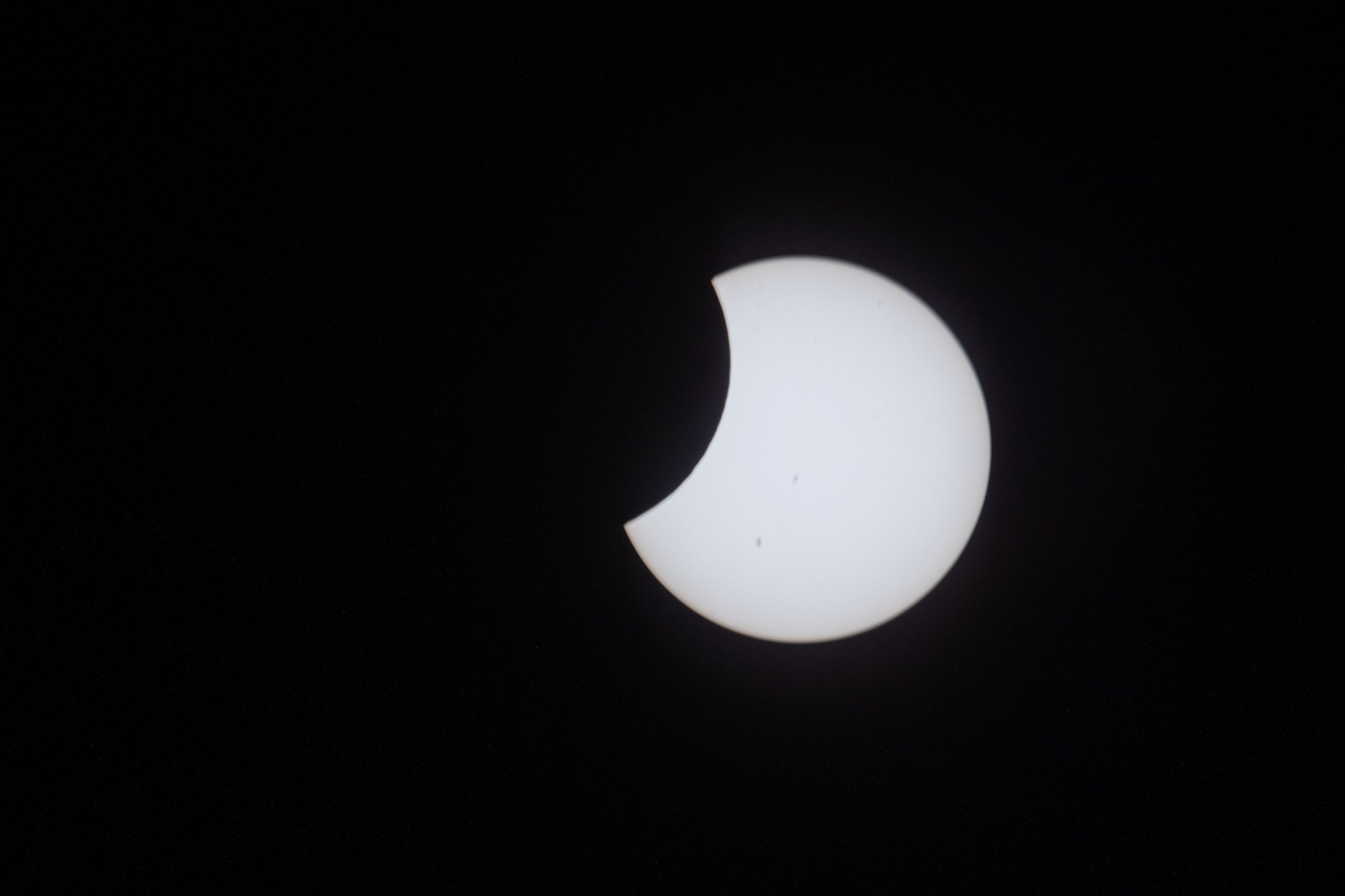
The Sun appears as a white disc in the darkness of space. The Moon begins to pass in front of it on the left, making it look like there's a circular portion of the Sun missing.
NASA / Jasmin Moghbeli

While aboard the International Space Station, astronaut Jasmin Moghbeli took this picture of the Moon passing in front of the Sun during the annular solar eclipse on Oct. 14, 2023. As the space station orbits Earth, astronauts take images of the planet below and phenomena in space.

Visible in parts of the United States, Mexico, and many countries in South and Central America, millions of people in the Western Hemisphere experienced this eclipse. If you weren’t in the path of the annular eclipse, or you want to relive this exciting event, watch our coverage of the 2023 annular solar eclipse.

Image credit: NASA/Jasmin Moghbeli

Powered by WPeMatico

Get The Details…
Monika Luabeya

All Together Now: Drill Joins Other Moon Rover Science Instruments

All Together Now: Drill Joins Other Moon Rover Science Instruments

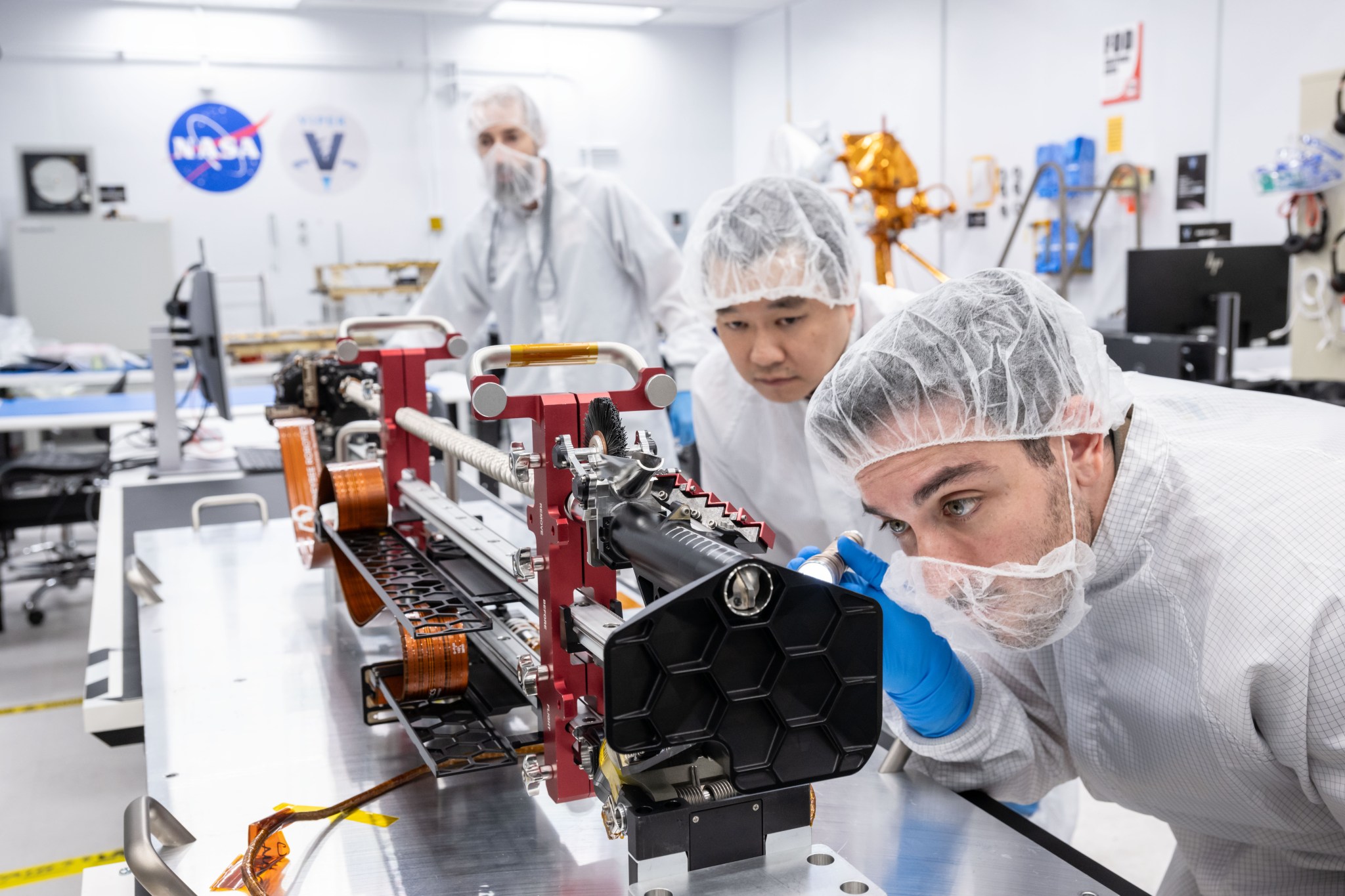
Engineers inspect the TRIDENT drill in a clean room.
A team of engineers from NASA’s Johnson Space Center in Houston and Honeybee Robotics in Altadena, California inspect TRIDENT – short for The Regolith Ice Drill for Exploring New Terrain – shortly after its arrival at the integration and test facility.
NASA/Robert Markowitz

A team of engineers from NASA’s Johnson Space Center in Houston and Honeybee Robotics in Altadena, California, inspect TRIDENT – short for The Regolith Ice Drill for Exploring New Terrain – shortly after its arrival at the integration and test facility. In the coming months, the team will integrate the drill into NASA’s first robotic Moon rover, VIPER – short for the Volatiles Investigating Polar Exploration Rover. 

TRIDENT is the fourth and final science instrument for VIPER to arrive at the clean room, where the vehicle is being built. NASA engineers have already successfully integrated VIPER’s three other science instruments into the rover. These include: the MSOLO (Mass Spectrometer Observing Lunar Operations), which was integrated in  July, and the NSS (Neutron Spectrometer System) and NIRVSS (Near-Infrared Volatiles Spectrometer System) instruments, which were integrated in August. 

TRIDENT will dig up soil cuttings from as much as three feet below the lunar surface using a rotary percussive drill – meaning it both spins to cut into the ground and hammers to fragment hard material for more energy-efficient drilling. In addition to being able to measure the strength and compactedness of the lunar soil, the drill features a tip that carries a temperature sensor to take readings below the surface. 

MSOLO is a commercial off-the-shelf mass spectrometer modified to withstand the harsh lunar environment by engineers and technicians at the agency’s Kennedy Space Center in Florida. MSOLO will help NASA analyze the chemical makeup of the lunar soil and study water on the surface of the Moon. 

NIRVSS will detect which types of minerals and ices are present, if any, and identify the composition of the lunar soil.

NSS will help scientists study the distribution of water and other potential resources on the Moon, by targeting its search for hydrogen – the element that’s the telltale sign of water, or H2O.

Over the past few months, engineers and technicians from the agency’s Johnson, Kennedy, and Ames Research Center, performed pre-integration operations, such as installing external heaters, harnesses, instrumentation sensors, and multi-layer insulation onto the instruments. This critical hardware will help monitor and control how hot or cold the instruments get as the rover encounters different temperature conditions on the Moon; depending on whether the rover is in sunlight or shade, temperatures can vary by as many as 300 degrees Fahrenheit.  

VIPER will launch to the Moon aboard Astrobotic’s Griffin lunar lander on a SpaceX Falcon Heavy rocket as part of NASA’s Commercial Lunar Payload Services initiative. It will reach its destination at Mons Mouton near the Moon’s South Pole in November 2024. During VIPER’s approximately 100-day mission, these four instruments will work together to better understand the origin of water and other resources on the Moon, which could support human exploration as part of NASA’s Artemis program.  

Powered by WPeMatico

Get The Details…
Rachel Hoover

NASA Conducts 1st Hot Fire of New RS-25 Certification Test Series

NASA Conducts 1st Hot Fire of New RS-25 Certification Test Series

2 min read

NASA Conducts 1st Hot Fire of New RS-25 Certification Test Series

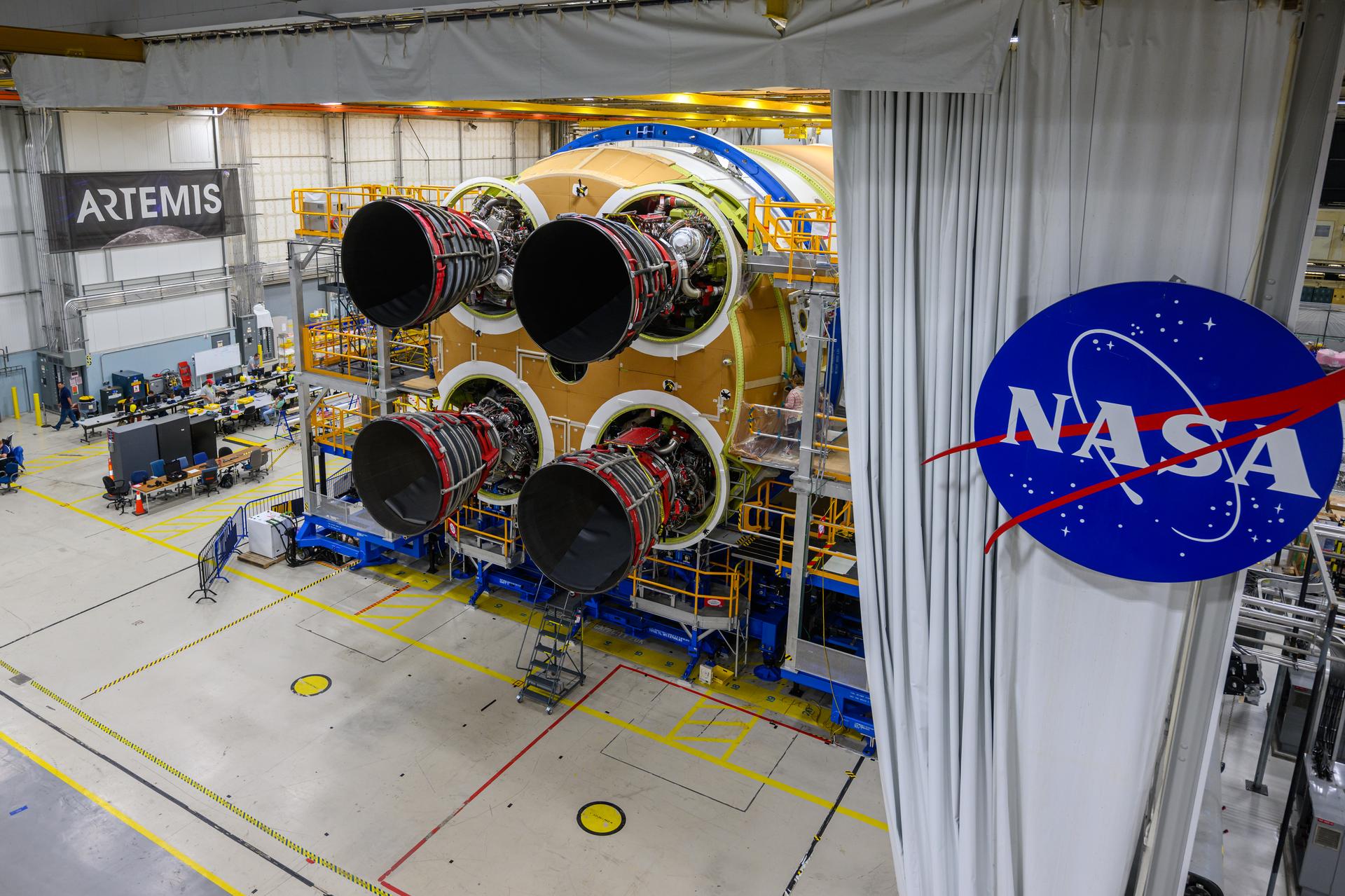
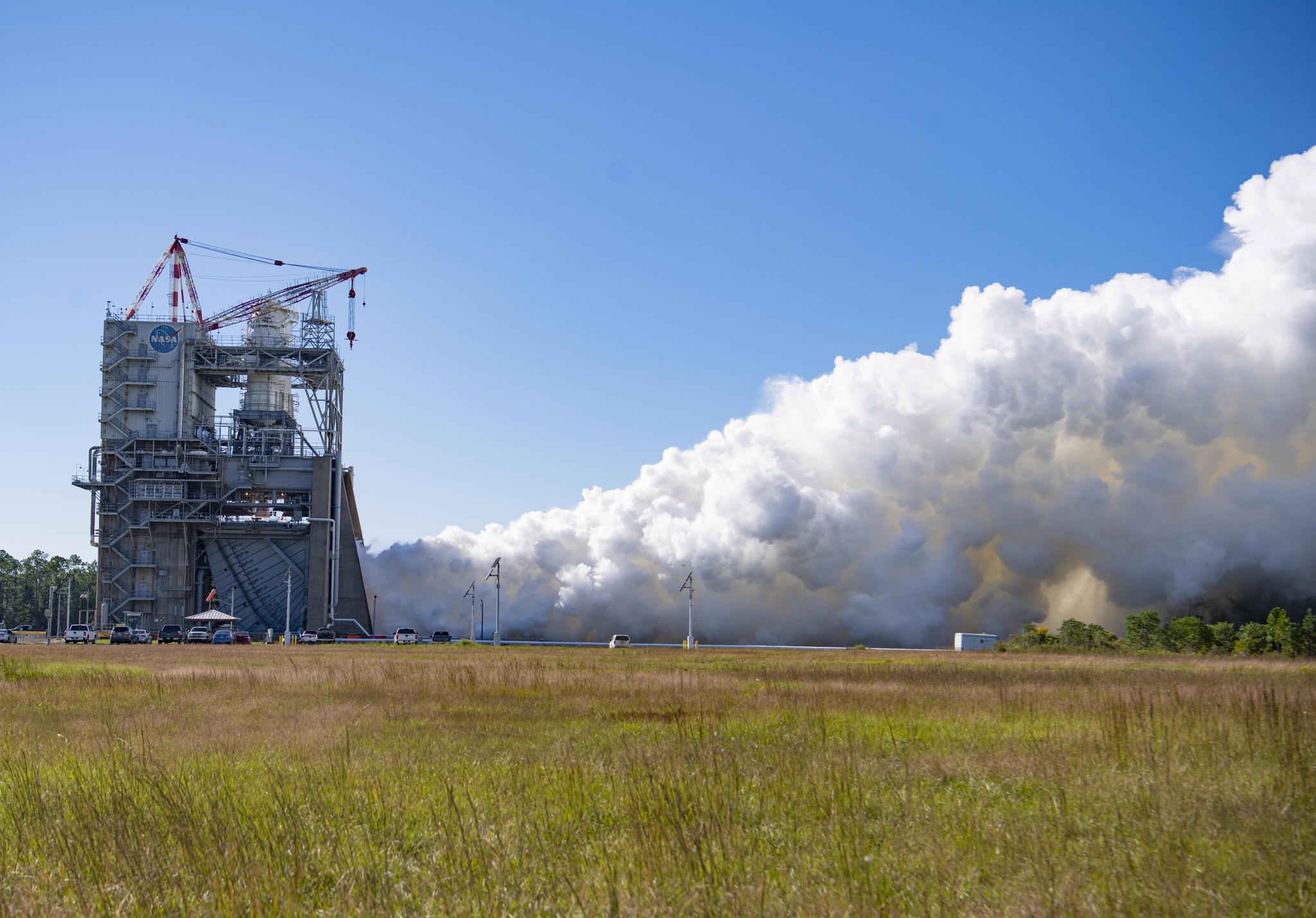
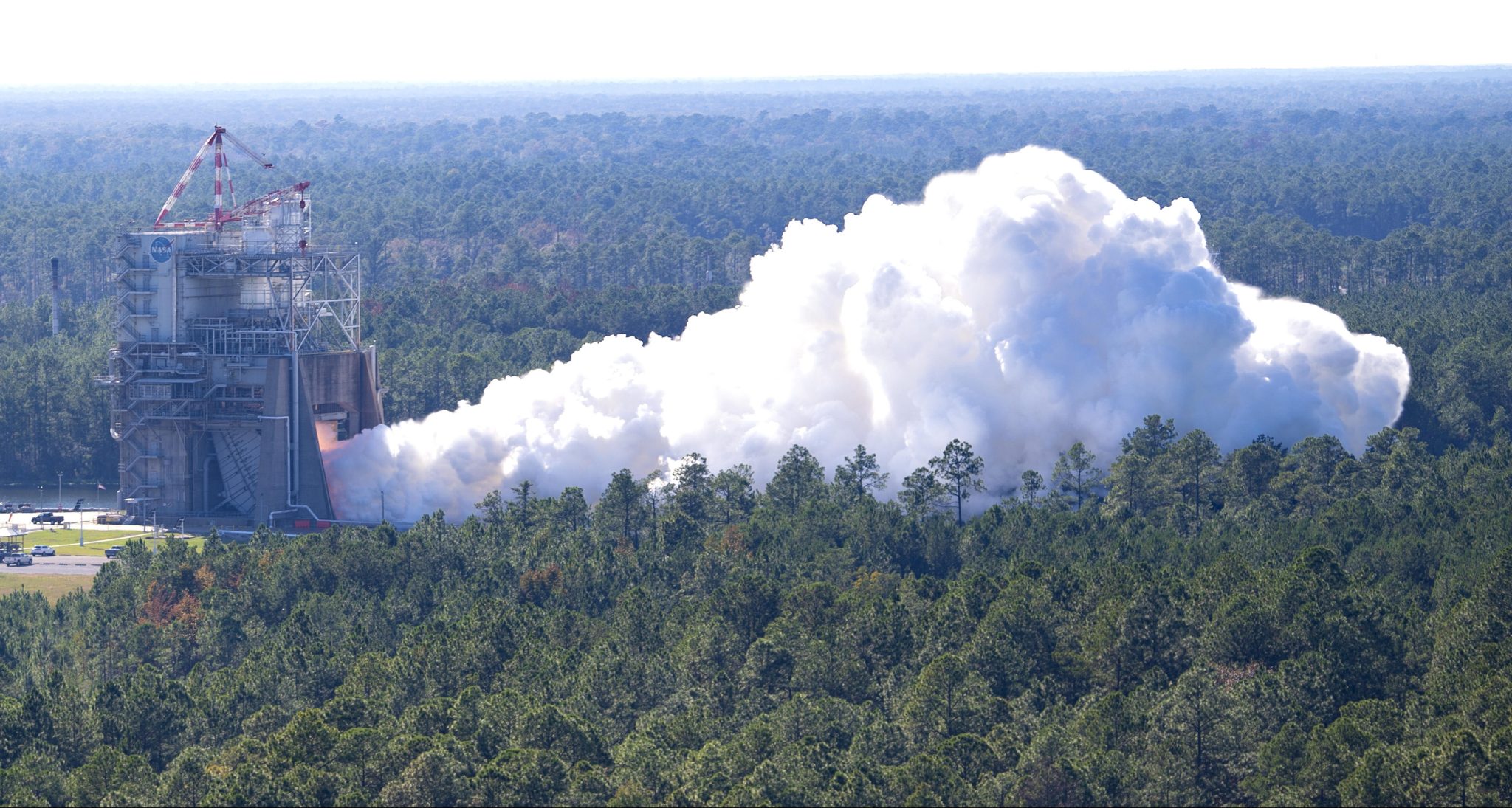
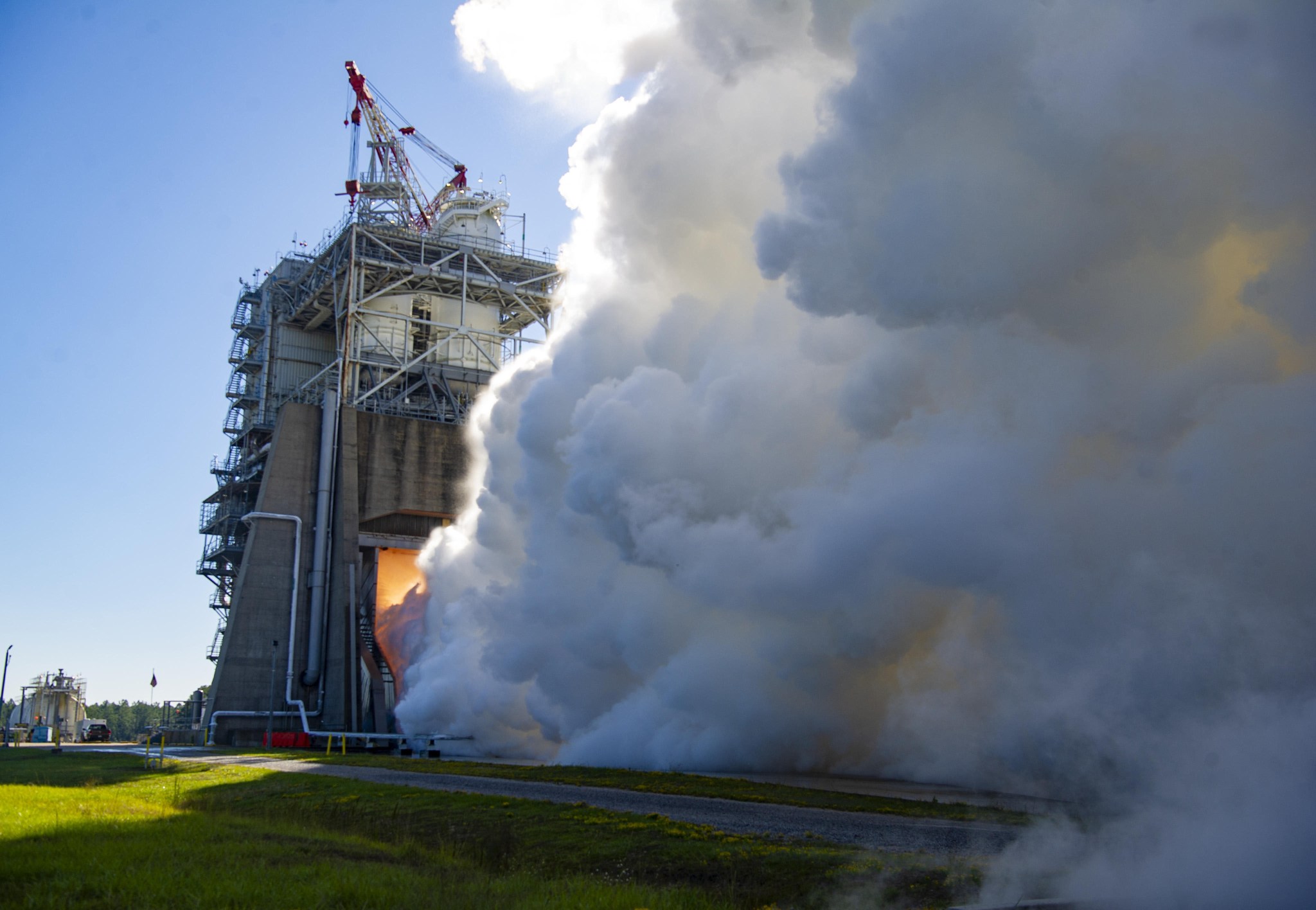
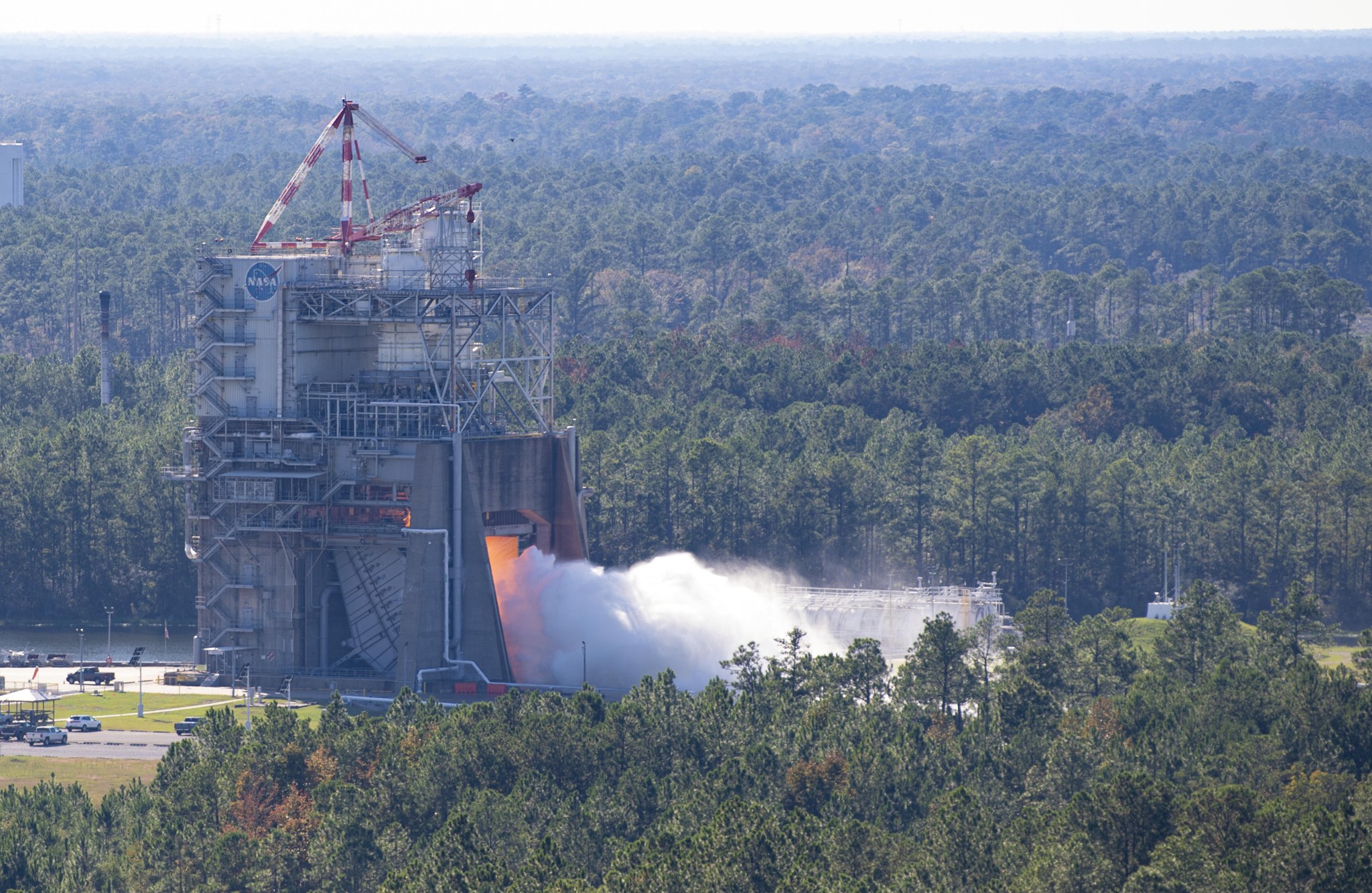
NASA conducted the first hot fire of a new RS-25 test series Oct. 17, beginning the final round of certification testing ahead of production of an updated set of the engines for the SLS (Space Launch System) rocket. The engines will help power future Artemis missions to the Moon and beyond.

A full duration test of the RS-25 certification engine was conducted at NASA's Stennis Space Center on October 17, 2023.
NASA completed a full duration, 550-second hot fire of the RS-25 certification engine Oct. 17, beginning a critical test series to support future SLS (Space Launch System) missions to deep space as NASA explores the secrets of the universe for the benefit of all.
NASA / Danny Nowlin
A full duration test of the RS-25 certification engine was conducted at NASA's Stennis Space Center on October 17, 2023.
NASA completed a full duration, 550-second hot fire of the RS-25 certification engine Oct. 17, beginning a critical
test series to support future SLS (Space Launch System) missions to deep space as NASA explores the secrets of the universe
for the benefit of all.
NASA / Danny Nowlin
NASA completed a full duration, 550-second hot fire of the RS-25 certification engine Oct. 17, beginning a critical
test series to support future SLS (Space Launch System) missions to deep space as NASA explores the secrets of the universe
for the benefit of all.
NASA / Danny Nowlin

Operators fired the RS-25 engine for more than nine minutes (550 seconds), longer than the 500 seconds engines must fire during an actual mission, on the Fred Haise Test Stand at NASA’s Stennis Space Center, near Bay St. Louis, Mississippi. Operators also fired the engine up to the 111% power level needed during an SLS launch. The hot fire marked the first in a series of 12 tests scheduled to stretch into 2024. The tests are a key step for lead SLS engines contractor Aerojet Rocketdyne, an L3Harris Technologies company, to produce engines that will help power the SLS rocket, beginning with Artemis V.

The test series will collect data on the performance of several new key engine components, including a nozzle, hydraulic actuators, flex ducts, and turbopumps. The components match design features of those used during the initial certification test series completed at the south Mississippi site in June. Aerojet Rocketdyne is using advanced manufacturing techniques, such as 3D printing, to reduce the cost and time needed to build the new engines. Four RS-25 engines help power SLS at launch, including on its Artemis missions to the Moon.

Through Artemis, NASA is returning humans, including the first woman and the first person of color, to the Moon to explore the lunar surface and prepare for flights to Mars. SLS is the only rocket capable of sending the agency’s Orion spacecraft, astronauts, and supplies to the Moon in a single mission.

Powered by WPeMatico

Get The Details…
Deborah K. Fendley