NASA, JAXA Benefit from Collaborative Fellowship Experience

NASA, JAXA Benefit from Collaborative Fellowship Experience
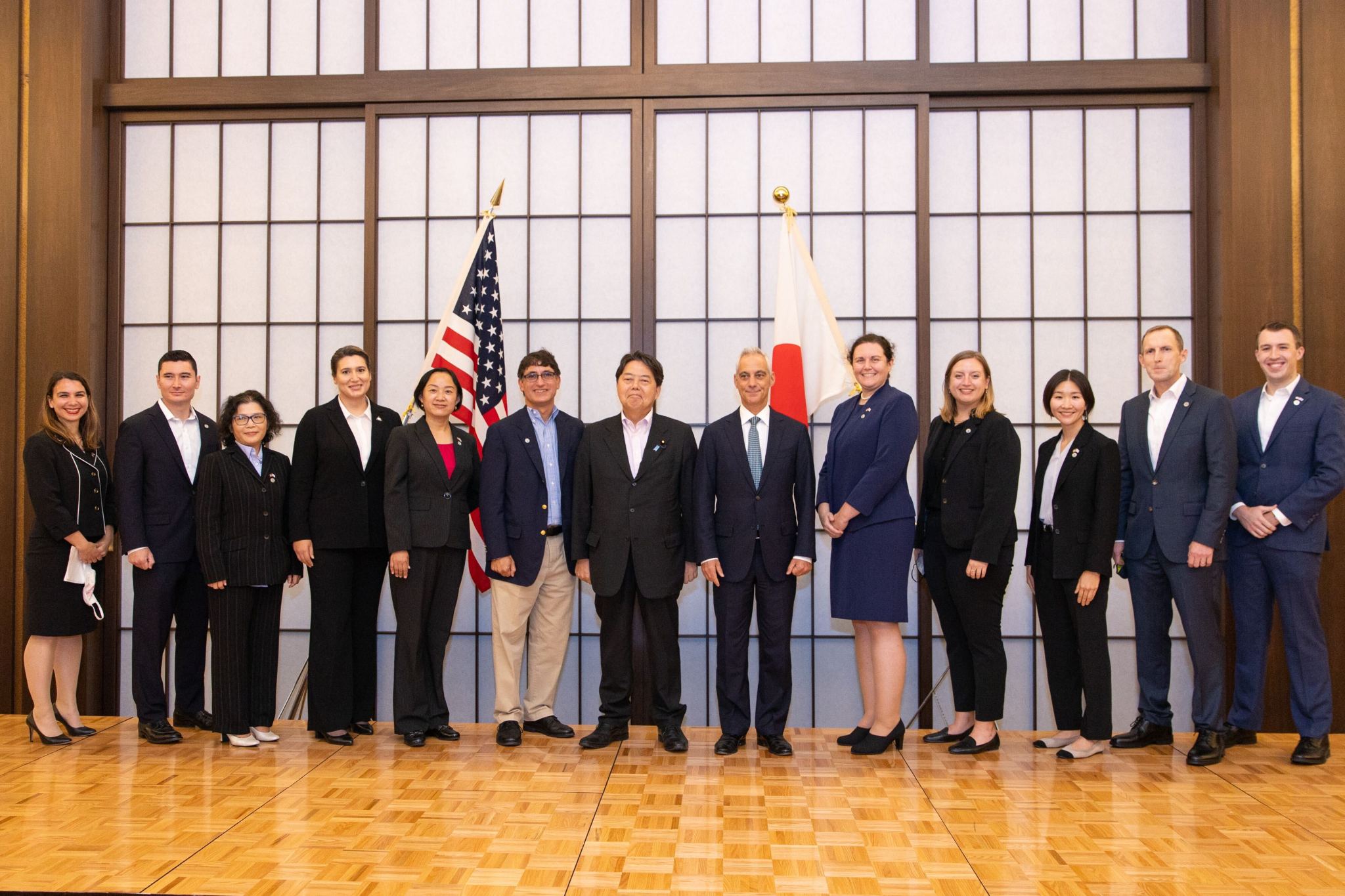
NASA's Katherine travels to Japan for Mansfield Fellowship experience.
NASA Kennedy Space Center’s Katherine Cook, fourth from the left, attends a welcome reception for the 26th class of Mansfield Scholars at the Iikura House in Japan on Sept. 1, 2022. The reception was jointly hosted by the Ministry of Foreign Affairs of Japan, the Mansfield Foundation, and the National Personnel Authority of Japan.
Contributed photo

A yearlong journey of cultural and professional development overseas has a NASA Deep Space Logistics employee excited about current and future collaboration with one of America’s key international partners in the agency’s Artemis program.   

Katherine Cook, who develops cargo delivery services for NASA’s Gateway, recently returned to the agency’s Kennedy Space Center in Florida after an immersive experience in Japan. There, she collaborated with JAXA (Japan Aerospace Exploration Agency), government ministries contributing to Japan’s space activities, and The National Diet’s House of Representatives.
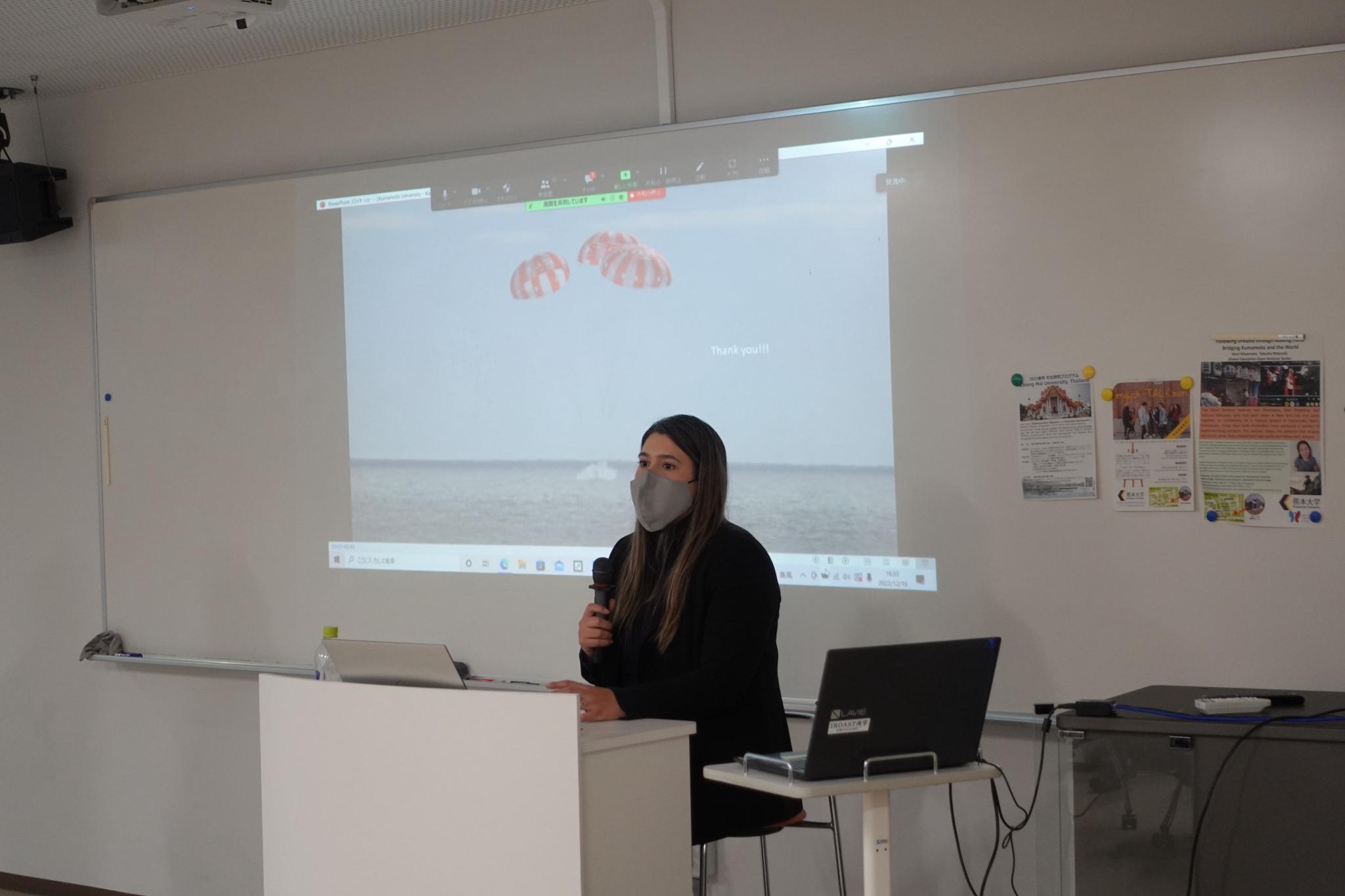
NASA's Katherine Cook speaks to students in Japan.
Katherine Cook speaks at Kumamoto University Graduate School for Science and Technology in Japan on Dec. 16, 2022. The university is located on Kyushu, the southernmost main island of Japan.
Contributed photo

“Everything I did involved Artemis and human exploration,” Cook said. “Developing technologies for Moon to Mars is challenging, but if we can find a good balance of leveraging the strengths of each partner and continue to evolve the partnership, we’ll be able to share knowledge in an even more integrated way.”     

As part of her trip, Cook spent about five months at the Tsukuba Space Center, approximately one hour north of Tokyo, working under JAXA Vice President and Director General for Human Spaceflight Technology Hiroshi Sasaki. She partnered with JAXA subject matter experts to host themed discussions for the directorate team, sharing and discussing ideas about the U.S and Japanese approaches, including future partnering opportunities.  

Her research themes included: NASA’s Moon to Mars objectives; commercial capabilities such as commercial low Earth orbit development; lunar surface transportation such as rovers and utility vehicles; lunar in-situ resource utilization, human landing systems, and science priorities to enable human exploration to the Moon and beyond. This required intense language training – before and throughout Cook’s trip – so she could understand, write, and speak Japanese with an audience ranging from students and coworkers to Japanese dignitaries, such as the Minister of Foreign Affairs Yoshimasa Hayashi and JAXA President Dr. Hiroshi Yamakawa.          
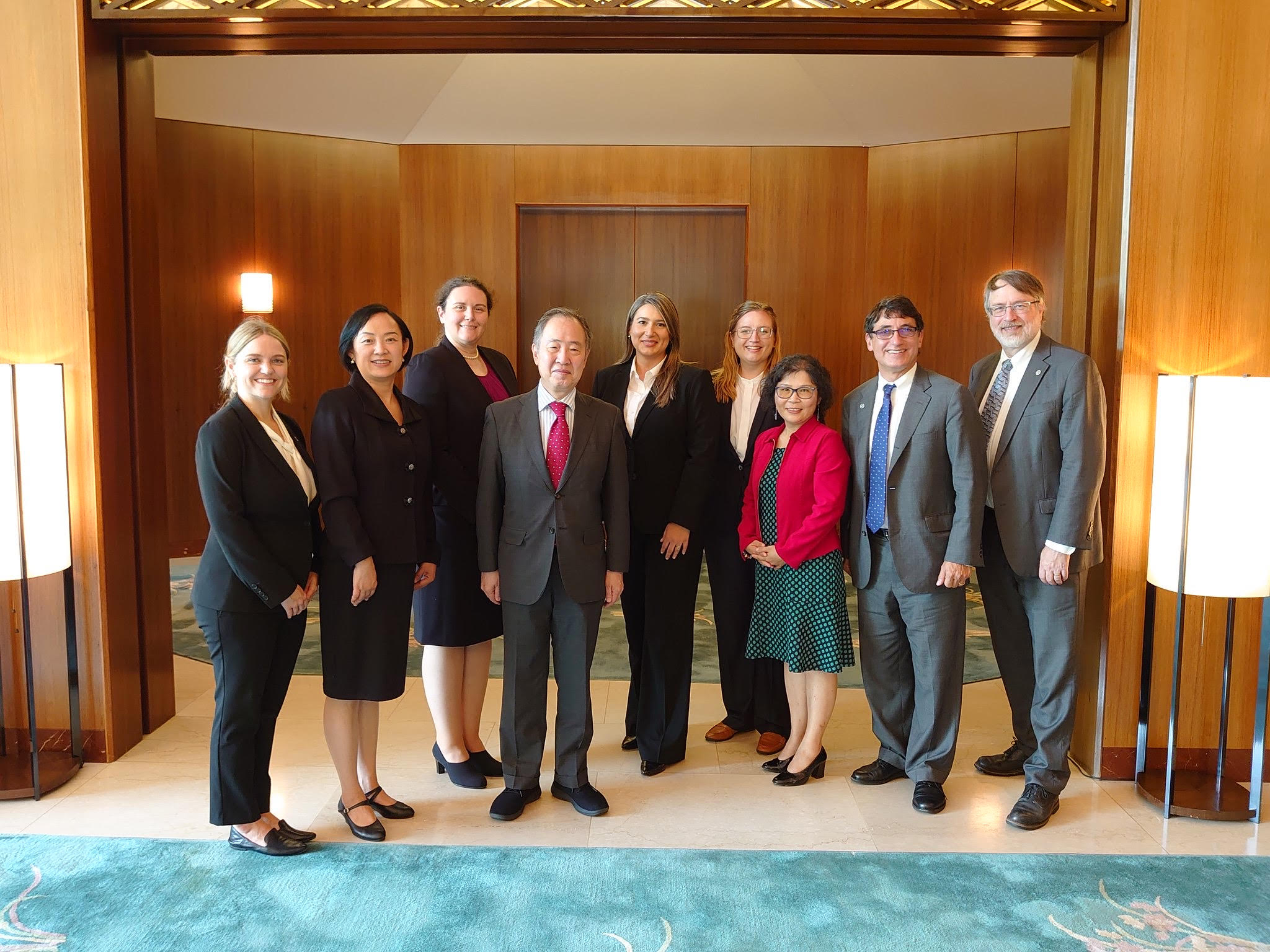
Katherine Cook, from NASA's Kennedy Space Center, visits with Koji Tomita, ambassador extraordinary and plenipotentiary of Japan to the United States
On June 15, 2022, Koji Tomita (fourth from the left), ambassador extraordinary and plenipotentiary of Japan to the United States, hosts six members of the Mansfield Fellowship, including NASA’s Katherine Cook, fifth from the left, in Washington, D.C., before their departure to Japan.
Contributed photo

“I think a lot of growth came out of challenging myself – both in learning more about NASA and U.S. agencies collaborating on space and learning about it deeply enough to explain it and communicate it in a succinct way that could make it through translation,” Cook said.

Cook was just the third NASA person selected in the nearly 30-year history of the Mansfield Fellowship, a program named for former U.S. Senate Majority Leader and U.S. Ambassador to Japan Mike Mansfield.

Invited to lecture at several university graduate programs, Cook was inspired by students’ interest in NASA’s Moon to Mars plans, as well as their knowledge and in-depth questions. Her interaction with Japanese colleagues was equally positive, as they welcomed her to their group with open arms.

During the Artemis I launch in November 2022, Cook invited members of the JAXA human spaceflight team to a launch viewing party. Aware that she was disappointed about missing the launch live, they blew her away by showing up in great numbers, doling out high-fives and ecstatically cheering on the launch in front of a big screen TV at the Tsukuba Space Center.
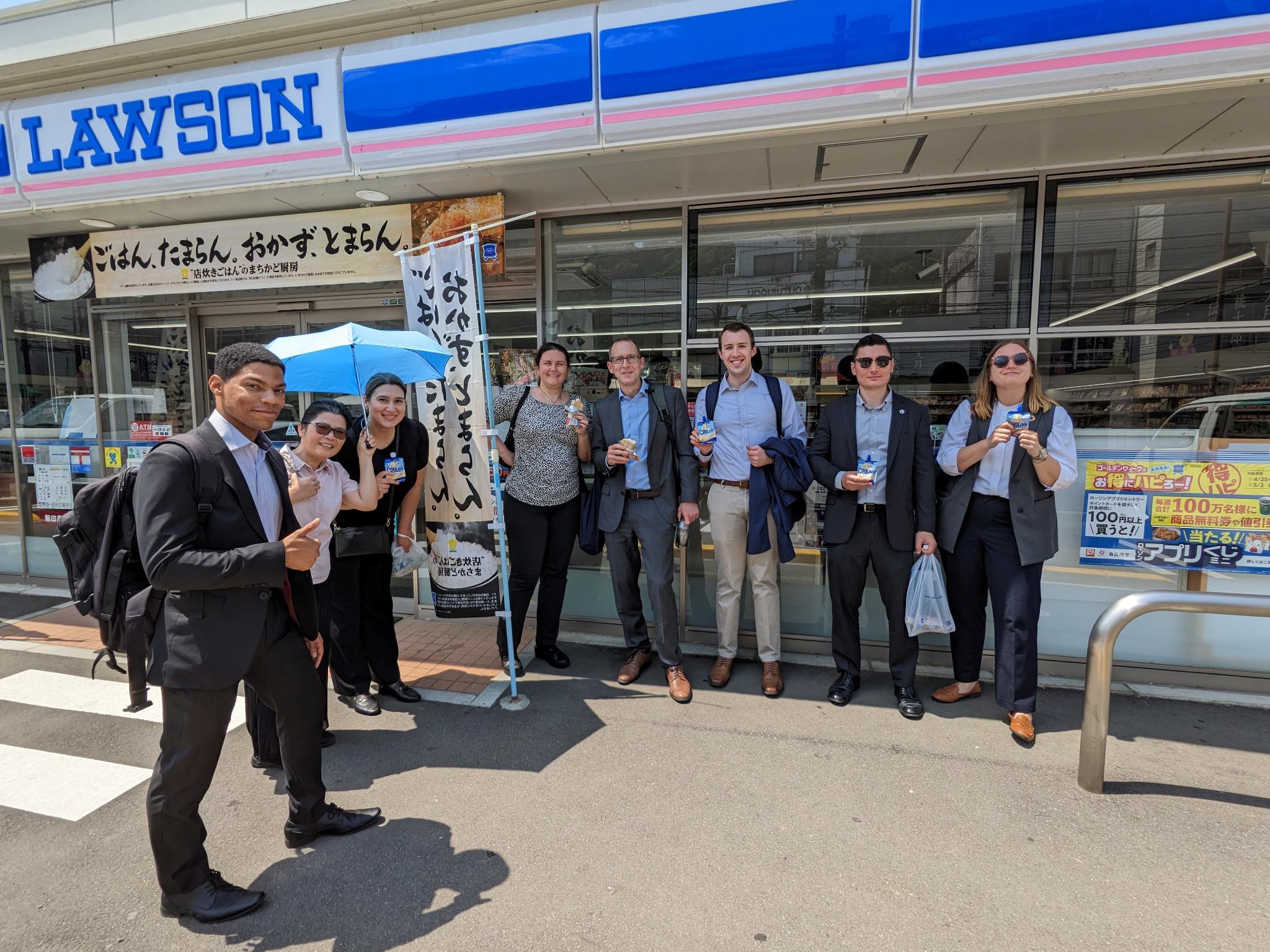
NASA Kennedy Space Center's Katherine Cook, with Mansfield Fellowship colleagues in Japan.
After a ride on the new Superconducting Maglev, the world’s fastest bullet train that travels up to 311 mph and operates on a magnetic levitation railway system, Mansfield Fellows stop by a convenience store for a drinkable ice cream treat on May 18, 2023. NASA’s Katherine Cook is pictured third from the left.
Contributed photo

“One thing that leaves an impression on you from Japan is their hospitality. The word for it is ‘omotenashi,’” Cook said. “It’s more than just a word; it’s culturally ingrained in how they interact with each other and the level of consideration that they put into everything they do.”

Enriched technically, culturally, and spiritually from her transformative experience in Japan, Cook returned to NASA “forever changed.” She learned a great deal about science, life, and her own agency. She even picked up a saying that she incorporated into her daily work routine.    

“In Japan, at the end of every day, you say, ‘Otsukaresama deshita,’ which means, ‘Thank you for your hard work.’ When you pass a coworker in the hall and when you toast in celebration with coworkers, you say ‘Otsukaresama des,’ ” Cook said. “Even still, when I meet with my Japanese counterparts, I will often say it. And it reminds me to carry that appreciation of my team throughout my day back at NASA. The simple phrase bonds us all together across the international Artemis work we do.”

Powered by WPeMatico

Get The Details…
Jim Cawley
NASA-ISRO Radar Mission to Provide Dynamic View of Forests, Wetlands

NASA-ISRO Radar Mission to Provide Dynamic View of Forests, Wetlands

6 min read

NASA-ISRO Radar Mission to Provide Dynamic View of Forests, Wetlands

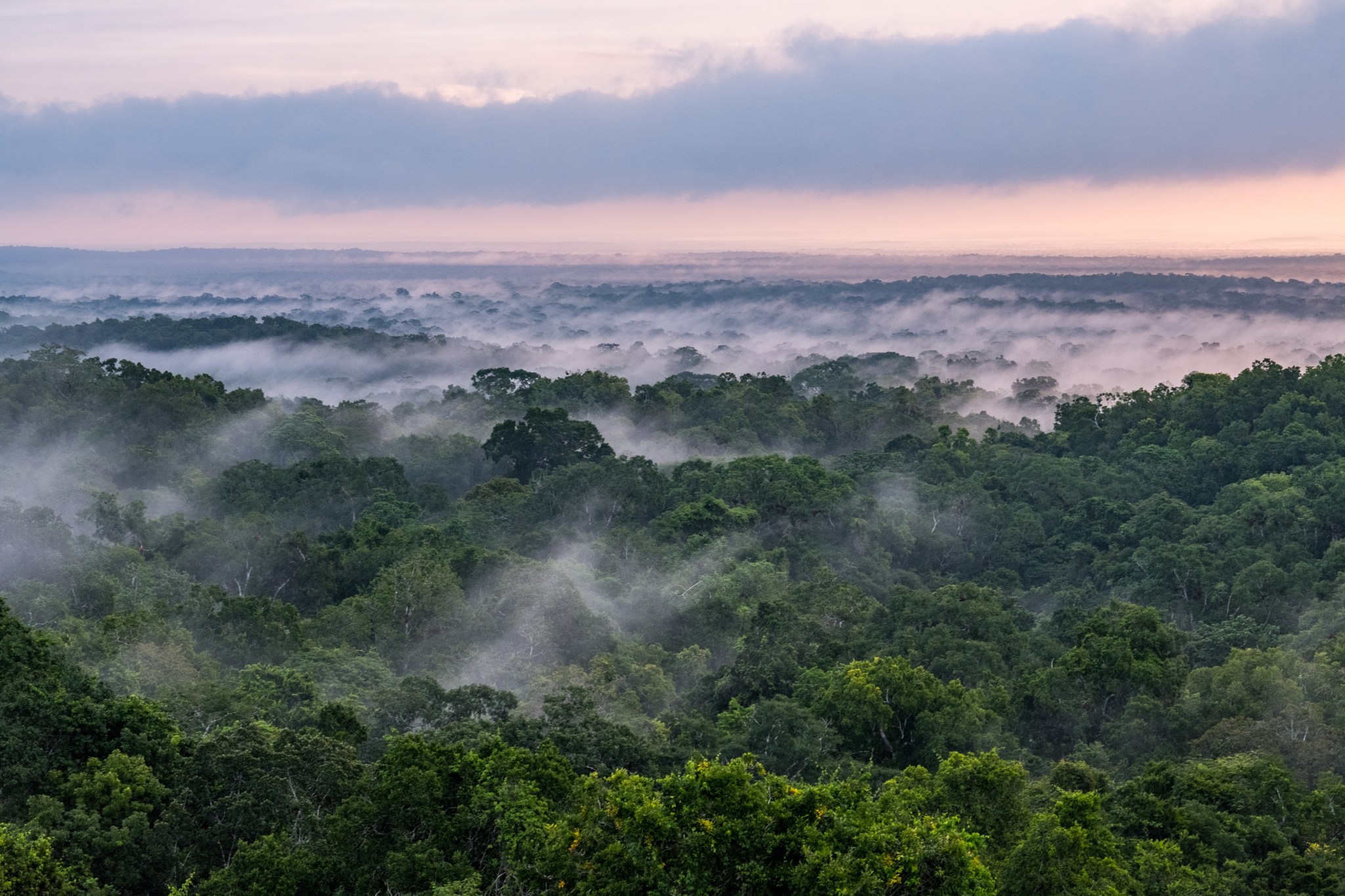
Forest in Tikal National Park in northern Guatemala
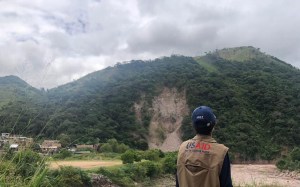
NISAR will use radar to study changes in ecosystems around the world, such as this forest in Tikal National Park in northern Guatemala, to understand how these areas are affected by climate change and human activity, and the role they play in the global carbon cycle.
Credit: USAID

NISAR will help researchers explore how changes in Earth’s forest and wetland ecosystems are affecting the global carbon cycle and influencing climate change.

Once it launches in early 2024, the NISAR radar satellite mission will offer detailed insights into two types of ecosystems – forests and wetlands – vital to naturally regulating the greenhouses gases in the atmosphere that are driving global climate change.

NISAR is a joint mission by NASA and ISRO (Indian Space Research Organisation), and when in orbit, its sophisticated radar systems will scan nearly all of Earth’s land and ice surfaces twice every 12 days. The data it collects will help researchers understand two key functions of both ecosystem types: the capture and the release of carbon.

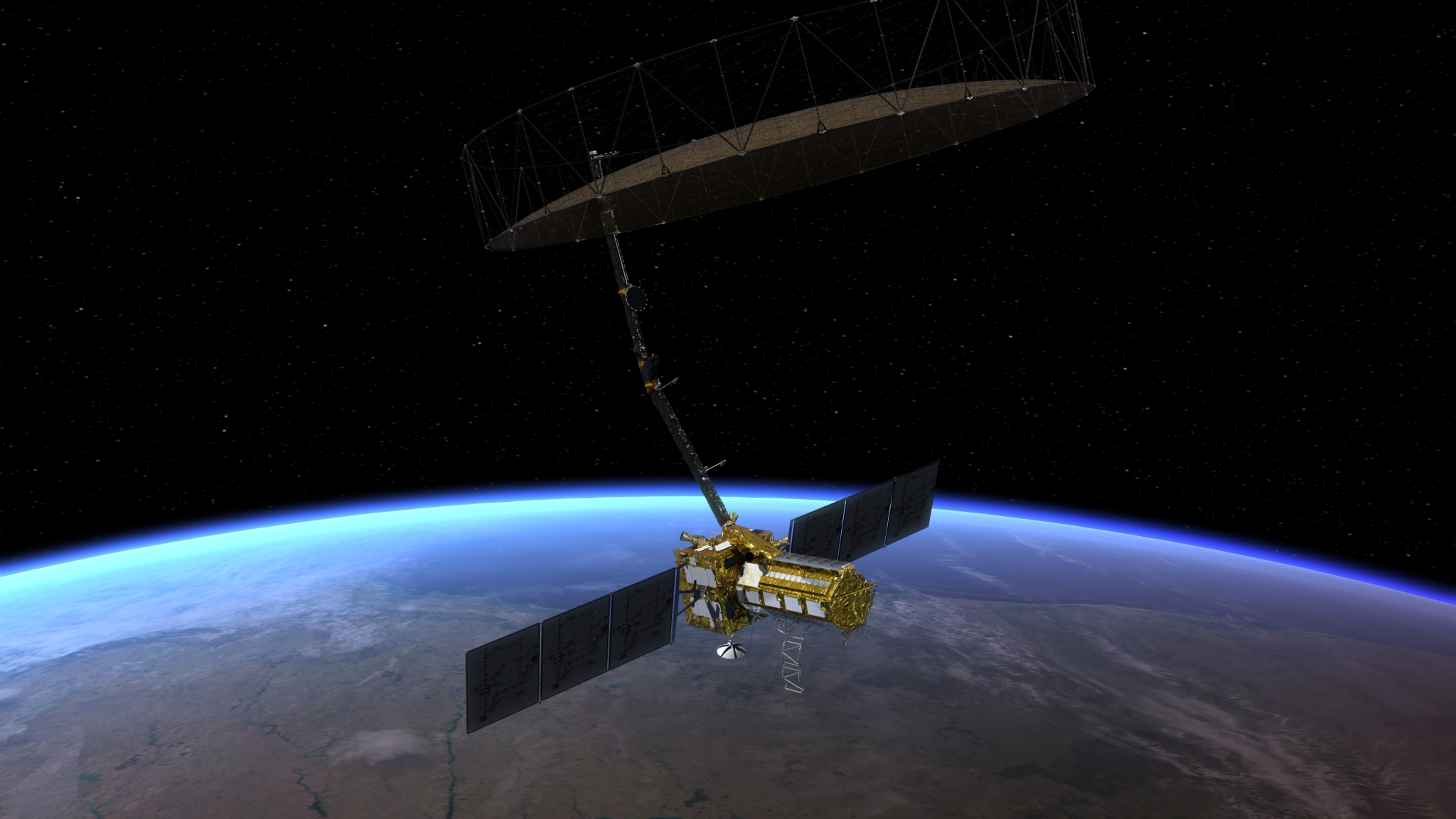
Artist’s concept, NISAR
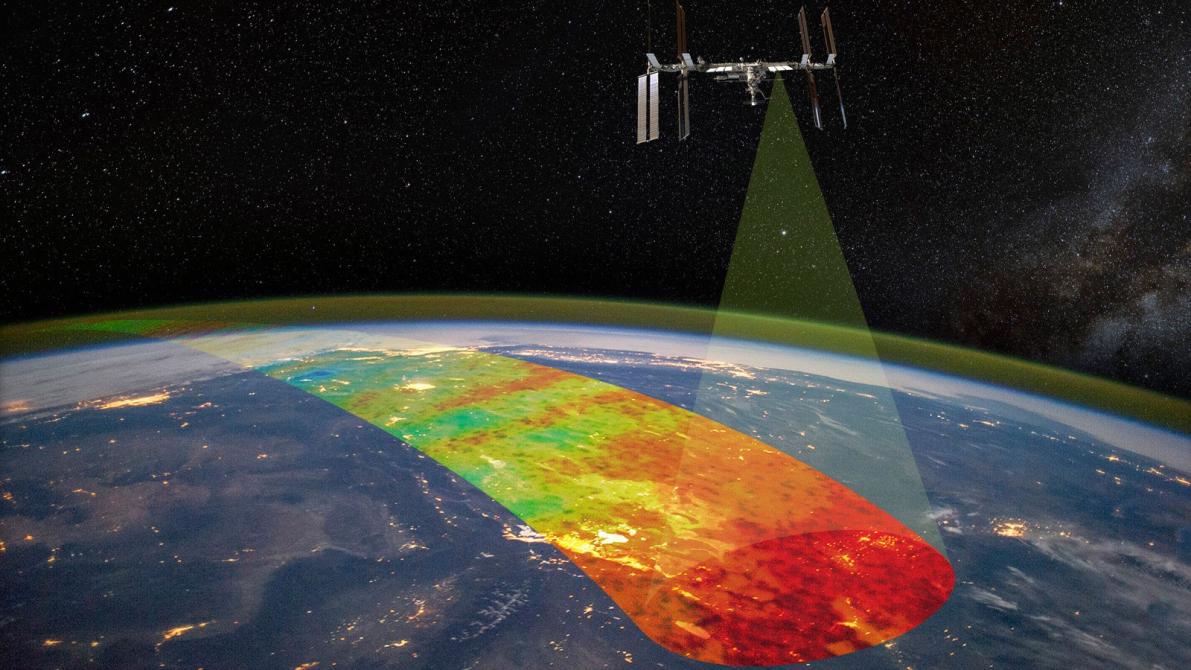
Pictured in this artist’s concept, NISAR, short for NASA-ISRO Synthetic Aperture Radar, marks the first time the U.S. and Indian space agencies have cooperated on hardware development for an Earth-observing mission. Its two radar systems will monitor change in nearly all of Earth’s land and ice surfaces twice every 12 days.
Credit: NASA/JPL-Caltech

Forests hold carbon in the wood of their trees; wetlands store it in their layers of organic soil. Disruption of either system, whether gradual or sudden, can accelerate the release of carbon dioxide and methane into the atmosphere. Tracking these land-cover changes on a global scale will help researchers study the impacts on the carbon cycle – the processes by which carbon moves between the atmosphere, land, ocean, and living things.

“The radar technology on NISAR will allow us to get a sweeping perspective of the planet in space and time,” said Paul Rosen, the NISAR project scientist at NASA’s Jet Propulsion Laboratory in Southern California. “It can give us a really reliable view of exactly how Earth’s land and ice are changing.”

Tracking Deforestation

Forestry and other land-use changes account for about 11% of net human-caused greenhouse gas emissions. NISAR’s data will improve our understanding of how the loss of forests around the world influences the carbon cycle and contributes to global warming.

“Globally, we do not understand well the carbon sources and sinks from terrestrial ecosystems, particularly from forests,” said Anup Das, an ecosystems scientist and co-lead of the ISRO NISAR science team. “So we expect that NISAR will greatly help address that, especially in less dense forests, which are more vulnerable to deforestation and degradation.”

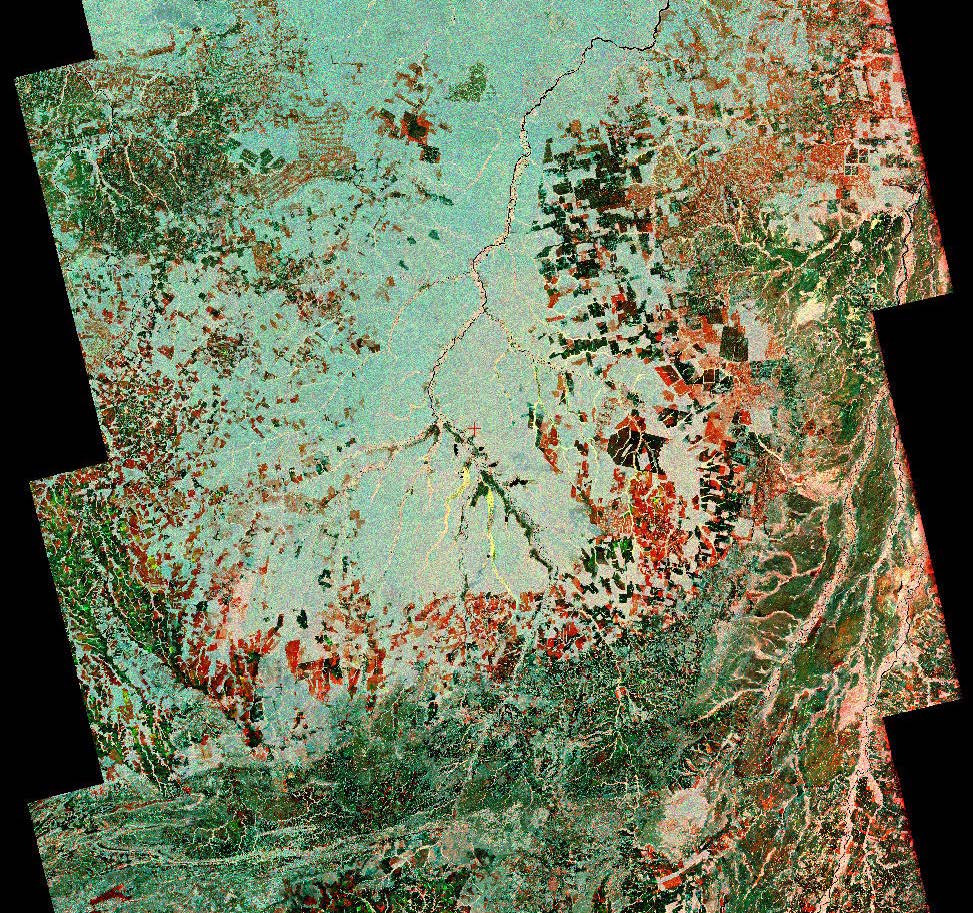
Composite that uses data from two Japanese L-band SAR missions
To show the kind of imagery NISAR will produce, researchers pointed to this composite that uses data from two Japanese L-band SAR missions to reveal land-cover change in Brazil’s Xingu River basin between 1996 and 2007. Black shows forest areas converted to farmland before 1996, and red shows additional areas cleared by 2007.
Credit: Woodwell Climate Research Center/Earth Big Data LLC. Data courtesy of METI and JAXA.

The signal from NISAR’s L-band radar will penetrate the leaves and branches of forest canopies, bouncing off the tree trunks and the ground below. By analyzing the signal that reflects back, researchers will be able to estimate the density of forest cover in an area as small as a soccer field. With successive orbital passes, it will be able to track whether a section of forest has been thinned or cleared over time. The data – which will be collected in early morning and evening and in any weather – could also offer clues as to what caused the change, such as disease, human activity, or fire.

It’s an important set of capabilities for studying vast, often cloud-covered rainforests such as those in the Congo and Amazon basins, which lose millions of wooded acres every year. Fire releases carbon into the air directly, while the deterioration of forests reduces the absorption of atmospheric carbon dioxide.

The data could also help improve accounting of deforestation and forest degradation – as well as forest growth – as countries that rely on logging try to shift toward more sustainable practices, said Josef Kellndorfer, a member of the NISAR science team and founder of Earth Big Data LLC, a provider of large data sets and analytic tools for research and decisions support. “Reducing deforestation and degradation is low-hanging fruit to address a substantial part of the global carbon emission problem,” he added.

Monitoring Wetland Flooding

Wetlands present another carbon puzzle: Swamps, bogs, peatlands, inundated forests, marshes, and other wetlands hold 20 to 30% of the carbon in Earth’s soil, despite constituting only 5 to 8% of the land surface.

When wetlands flood, bacteria go to work digesting organic matter (mostly dead plants) in the soil. Through this natural process, wetlands are the planet’s largest natural source of the potent greenhouse gas methane, which bubbles to the water’s surface and travels into the atmosphere. Meanwhile, when wetlands dry out, the carbon they store is exposed to oxygen, releasing carbon dioxide.

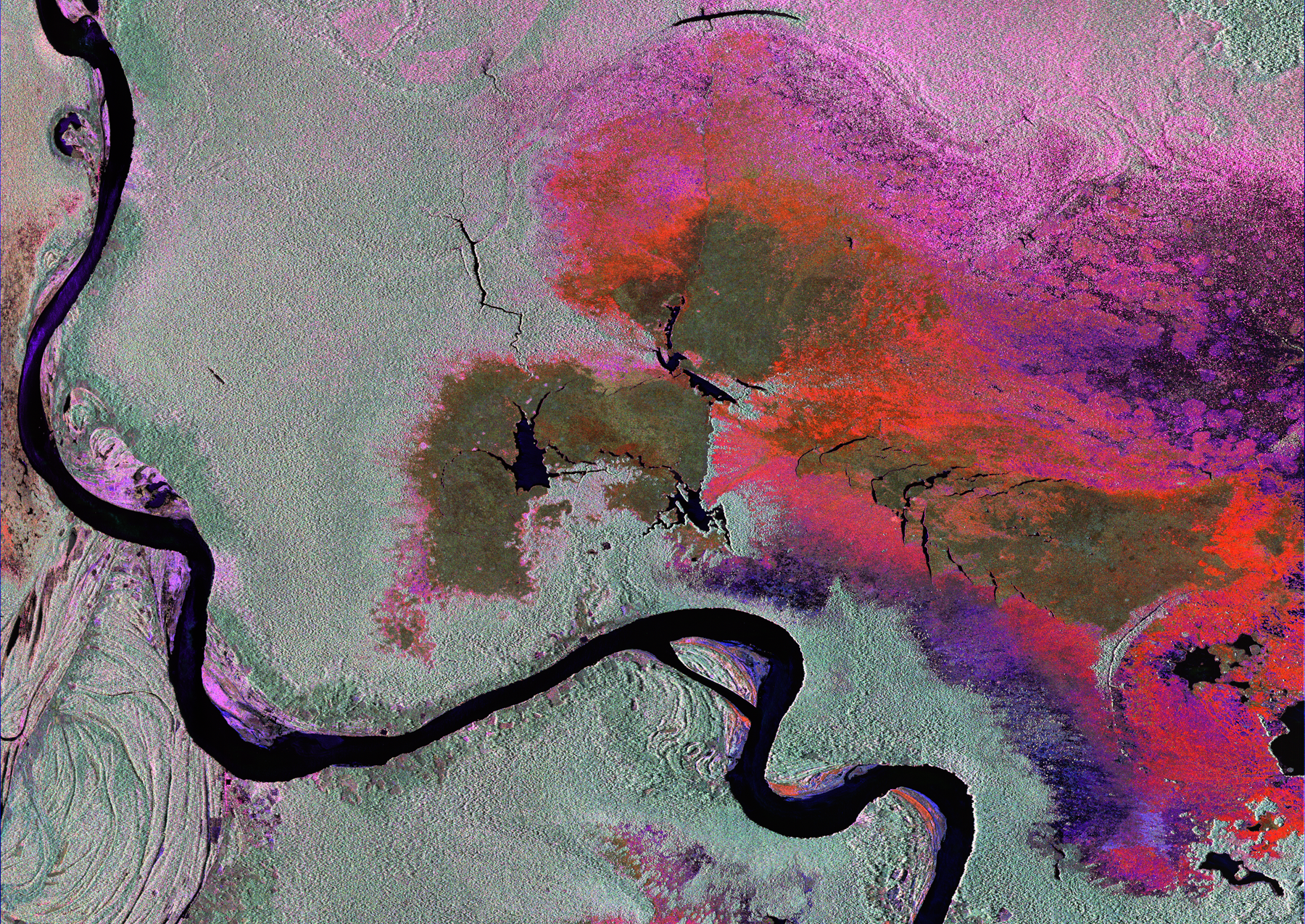
Airborne radar that flew over Peru in 2013
NISAR will track wetland flooding to study how these carbon-rich ecosystems are reacting to climate change. It will generate images like this one from an airborne radar that flew over Peru in 2013. Black indicates water, gray is rainforest, green is low vegetation, and red and pink are flooded plants.
Credit: NASA/JPL-Caltech

“These are huge reservoirs of carbon that can be released in a relatively short time frame,” said Erika Podest, a NISAR science team member and a carbon cycle and ecosystems researcher at JPL.

Less well understood is how changing temperature and precipitation patterns due to climate change – along with human activities such as development and agriculture – are affecting the extent, frequency, and duration of flooding in wetlands. NISAR will be able to monitor flooding, and with repeated passes, researchers will be able to track seasonal and annual variations in wetlands inundation, as well as long-term trends.

By coupling NISAR’s wetlands observations with separate data on the release of greenhouse gases, researchers should gain insights that inform the management of wetland ecosystems, said Bruce Chapman, a NISAR science team member and JPL wetlands researcher. “We have to be careful to reduce our impact on wetland areas so that we don’t worsen the situation with the climate,” he added.

NISAR is set to launch in early 2024 from southern India. In addition to tracking ecosystem changes, it will collect information on the motion of the land, helping researchers understand the dynamics of earthquakes, volcanic eruptions, landslides, and subsidence and uplift (when the surface sinks and rises). It will also track the movements and melting of both glaciers and sea ice.

More About the Mission

NISAR is an equal collaboration between NASA and ISRO and marks the first time the two agencies have cooperated on hardware development for an Earth-observing mission. JPL, which is managed for NASA by Caltech in Pasadena, leads the U.S. component of the project and is providing the mission’s L-band SAR. NASA is also providing the radar reflector antenna, the deployable boom, a high-rate communication subsystem for science data, GPS receivers, a solid-state recorder, and payload data subsystem. ISRO’s U R Rao Satellite Centre in Bengaluru, which is leading the ISRO component of the mission, is providing the spacecraft bus, the S-band SAR electronics, the launch vehicle, and associated launch services and satellite mission operations.

To learn more about NISAR, visit:
https://nisar.jpl.nasa.gov/

News Media Contacts

Andrew Wang / Jane J. Lee
Jet Propulsion Laboratory, Pasadena, Calif.
626-379-6874 / 818-354-0307
andrew.wang@jpl.nasa.gov / jane.j.lee@jpl.nasa.gov

2023-151

Powered by WPeMatico

Get The Details…
Anthony Greicius

NASA en español Senior Science Writer and Editor Noelia González

NASA en español Senior Science Writer and Editor Noelia González

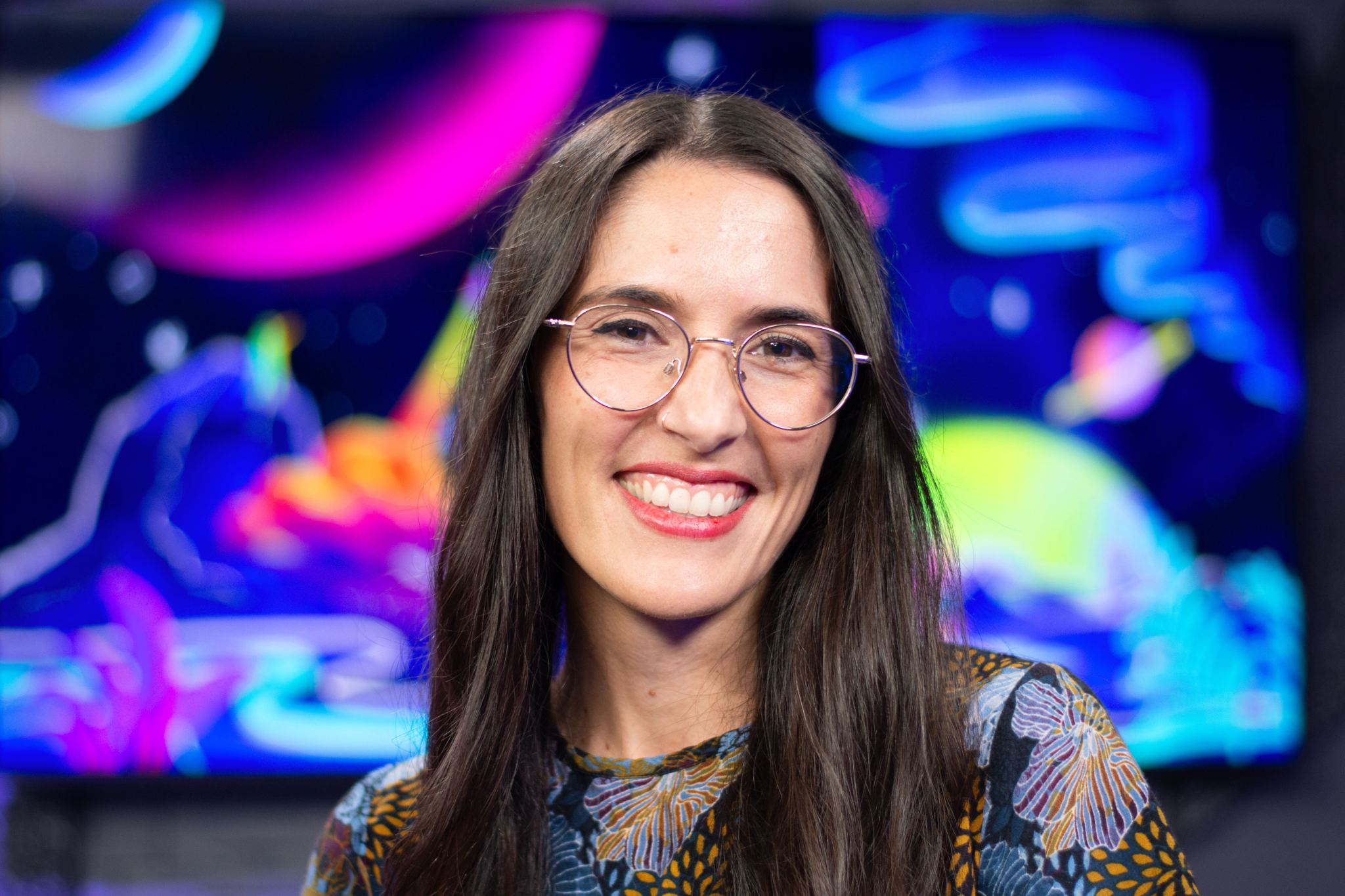
Noelia González smiles widely in the center of the frame. She is wearing large round glasses and a multicolored top of blues and oranges with a flower pattern, and her dark brown hair frames her face. Behind her is the brightly colored artwork for "Universo Curioso de la NASA," NASA’s first-ever Spanish podcast.

“Obviously, Spanish has a lot to do with accessibility and broadening our audiences. We are using Spanish as a tool to break those barriers to connect with audiences. Spanish is the language I grew up with in Uruguay, and the language that I feel more comfortable with. It is amazing that I get to use it as a bridge to communicate with our audiences on different platforms.

“We want to inform, but we also want to inspire and tell the stories that go beyond the mission and science. We want to tell the personal stories in [‘Universo Curioso de la NASA,’ NASA’s first-ever Spanish podcast].

“We started as a bonus episode of a miniseries of an existing podcast, ‘NASA’s Curious Universe,’ but we wanted to build something that was unique, specifically tailored to the Hispanic audience in the U.S. and worldwide. That would have our style and our voice. And I feel very, very lucky and proud and thankful to have had that opportunity to kind of build the podcast from the ground up with the guidance and work of other colleagues.

“As an immigrant myself reporting on stories about other immigrants, I want to show people that space is for all, and that’s something that we repeat over and over. I keep confirming how true that message is because it goes beyond NASA. It goes beyond the United States. There are no borders in space. These people that work on these missions are doing something for humanity, not just for the space agency. I am not a scientist or an engineer, and I feel a part of it. I am a part of these historic moments, like when we launched Artemis and DART [the Double Asteroid Redirection Test].”

– Noelia González, NASA en español Senior Science Writer and Editor, ADNET Systems, NASA’s Goddard Space Flight Center

Image Credit: NASA / Angeles Miron
Interviewer: NASA / Angel Kumari

Check out some of our other Faces of NASA.

Powered by WPeMatico

Get The Details…
Michelle Zajac

Join NASA to Celebrate Worm Design, Influence with Original Designer

Join NASA to Celebrate Worm Design, Influence with Original Designer

2 min read

Join NASA to Celebrate Worm Design, Influence with Original Designer

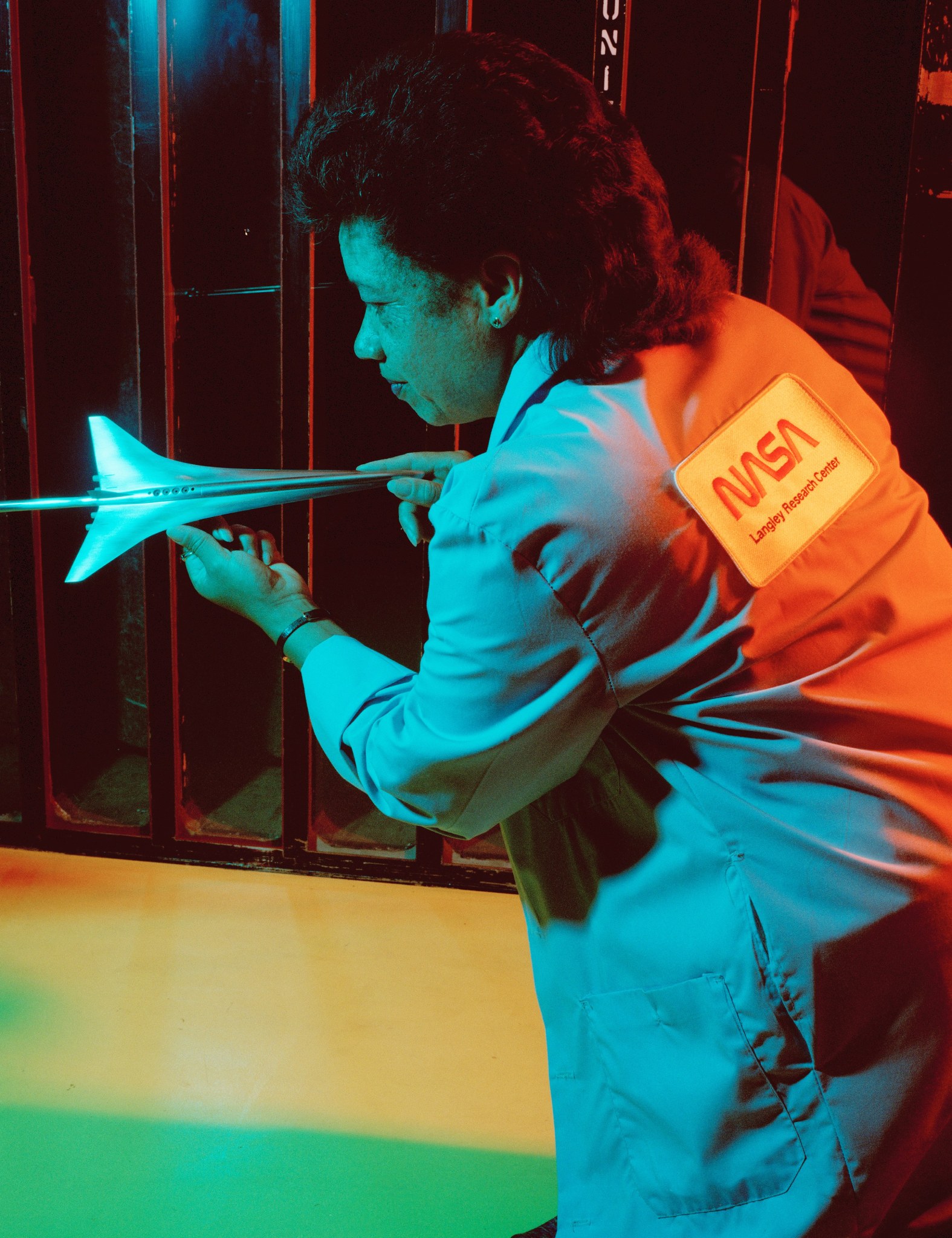
Dr. Christine Mann Darden holding a model of Mach II in the Unitary Tunnel at NASA’s Langley Research Center on Aug. 18, 1990. Darden is pictured in a lab coat with a NASA ‘worm’ logotype patch across her back.
NASA / Carol Petrachenko Chapman

Media are invited to hear a discussion on the design and cultural significance of the worm logotype with NASA and its creator Richard Danne at 11:30 a.m. EST on Monday, Nov. 6, at the agency’s headquarters in Washington.

The logotype, a simple, red unique type style of the word NASA, replaced the agency’s official logo (meatball) for several decades beginning in the 1970s before it was retired. The worm has since been revived for limited use.

The event will air live on NASA Television, the NASA app, YouTube, and on the agency’s website. Learn how to stream NASA TV through a variety of platforms.

Following opening remarks by Marc Etkind, associate administrator for NASA’s Office of Communications at NASA Headquarters, Danne and David Rager, creative art director at NASA, will provide remarks followed by a panel discussion with Danne and others including:

  • Bert Ulrich, entertainment and branding liaison, NASA Headquarters
  • Michael Beirut, designer, Pentagram
  • Shelly Tan, design reporter, The Washington Post (moderator)
  • Julia Heiser, head of live event merchandise, Amazon Music

NASA experts and Danne are available for on-site interviews, as well as remote interviews after the event.

Media interested in participating in person must RSVP to the NASA Headquarters newsroom by 3 p.m. on Friday, Nov. 3, at hq-media@mail.nasa.gov. NASA’s media accreditation policy is online.

The televised event will take place in the agency’s Webb Auditorium in the West Lobby inside NASA Headquarters located at 300 E St. SW in Washington.

Learn more about NASA’s missions at:

https://www.nasa.gov

-end-

News Media Contacts:

Claire O’Shea / Melissa Howell
Headquarters, Washington
202-358-1600
claire.a.oshea@nasa.gov / melissa.e.howell@nasa.gov

Share

Details

Last Updated

Oct 27, 2023

Related Terms

Powered by WPeMatico

Get The Details…
Claire A. O’Shea

NASA Rocket to See Sizzling Edge of Star-Forming Supernova

NASA Rocket to See Sizzling Edge of Star-Forming Supernova

5 min read

NASA Rocket to See Sizzling Edge of Star-Forming Supernova

A new sounding rocket mission is headed to space to understand how explosive stellar deaths lay the groundwork for new star systems. The Integral Field Ultraviolet Spectroscopic Experiment, or INFUSE, sounding rocket mission, will launch from the White Sands Missile Range in New Mexico on Oct. 29, 2023, at 9:35 p.m. MDT.

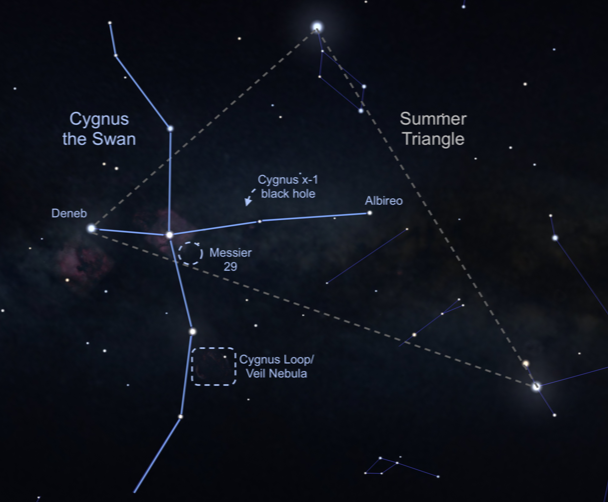
For a few months each year, the constellation Cygnus (Latin for “swan”) swoops through the northern hemisphere’s night sky. Just above its wing is a favorite target for backyard astronomers and professional scientists alike: the Cygnus Loop, also known as the Veil Nebula.

This image shows an illustration of the constellation Cygnus, Latin for “swan,” in the night sky. The Cygnus Loop supernova remnant, also known as the Veil Nebula, is located near one of the swan’s wings, outlined here in a rectangular box.
NASA

The Cygnus Loop is the remnant of a star that was once 20 times the size of our Sun. Some 20,000 years ago, that star collapsed under its own gravity and erupted into a supernova. Even from 2,600 light-years away, astronomers estimate the flash of light would have been bright enough to see from Earth during the day.

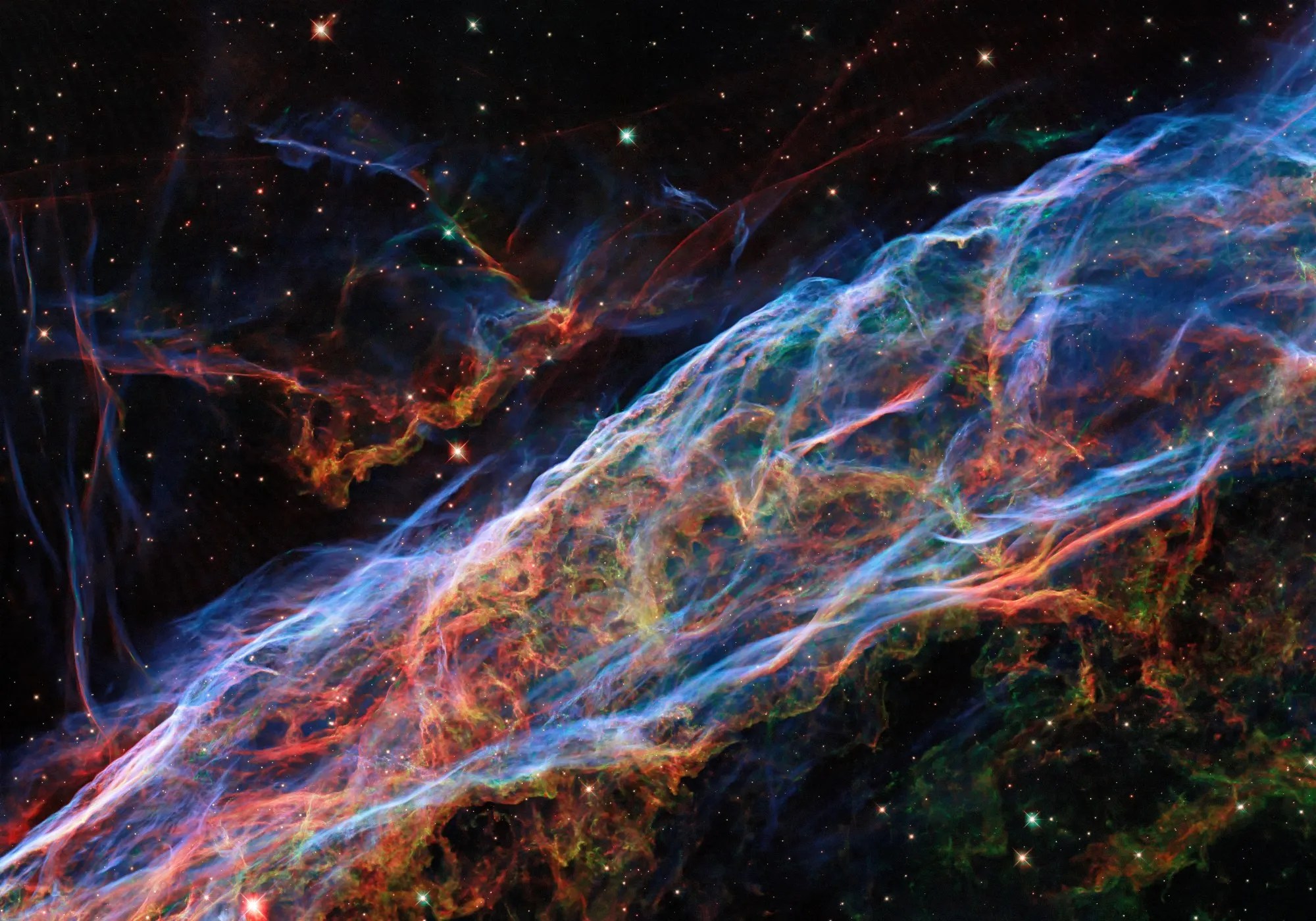
This image taken by NASA’s Hubble Space Telescope shows part of the Veil Nebula or Cygnus Loop. To create this colorful image, observations were taken by Hubble’s Wide Field Camera 3 instrument using five different filters. New post-processing methods have further enhanced details of emissions from doubly ionized oxygen (shown here in shades of blue), ionized hydrogen, and ionized nitrogen (shown here in shades of red).
ESA/Hubble & NASA, Z. Levay

Supernovae are part of a great life cycle. They spray heavy metals forged in a star’s core into the clouds of surrounding dust and gas. They are the source of all chemical elements in our universe heavier than iron, including those that make up our own bodies. From the churned-up clouds and star stuff left in their wake, gases and dust from supernovae gradually clump together to form planets, stars, and new star systems.

“Supernovae like the one that created the Cygnus Loop have a huge impact on how galaxies form,” said Brian Fleming, a research professor at the University of Colorado Boulder and principal investigator for the INFUSE mission.

The Cygnus Loop provides a rare look at a supernova blast still in progress. Already over 120 light-years across, the massive cloud is still expanding today at approximately 930,000 miles per hour (about 1.5 million kilometers per hour).

What our telescopes capture from the Cygnus Loop is not the supernova blast itself. Instead, we see the dust and gas superheated by the shock front, which glows as it cools back down.

“INFUSE will observe how the supernova dumps energy into the Milky Way by catching light given off just as the blast wave crashes into pockets of cold gas floating around the galaxy,” Fleming said.

To see that shock front at its sizzling edge, Fleming and his team have developed a telescope that measures far-ultraviolet light – a kind of light too energetic for our eyes to see. This light reveals gas at temperatures between 90,000 and 540,000 degrees Fahrenheit (about 50,000 to 300,000 degrees Celsius) that is still sizzling after impact.

INFUSE is an integral field spectrograph, the first instrument of its kind to fly to space. The instrument combines the strengths of two ways of studying light: imaging and spectroscopy. Your typical telescopes have cameras that excel at creating images – showing where light is coming from, faithfully revealing its spatial arrangement. But telescopes don’t separate light into different wavelengths or “colors” – instead, all of the different wavelengths overlap one another in the resulting image.

Spectroscopy, on the other hand, takes a single beam of light and separates it into its component wavelengths or spectrum, much as a prism separates light into a rainbow. This procedure reveals all kinds of information about what the light source is made of, its temperature, and how it is moving. But spectroscopy can only look at a single sliver of light at a time. It’s like looking at the night sky through a narrow keyhole.

The INFUSE instrument captures an image and then “slices” it up, lining up the slices into one giant “keyhole.” The spectrometer can then spread each of the slices into its spectrum. This data can be reassembled into a 3-dimensional image that scientists call a “data cube” – like a stack of images where each layer reveals a specific wavelength of light.

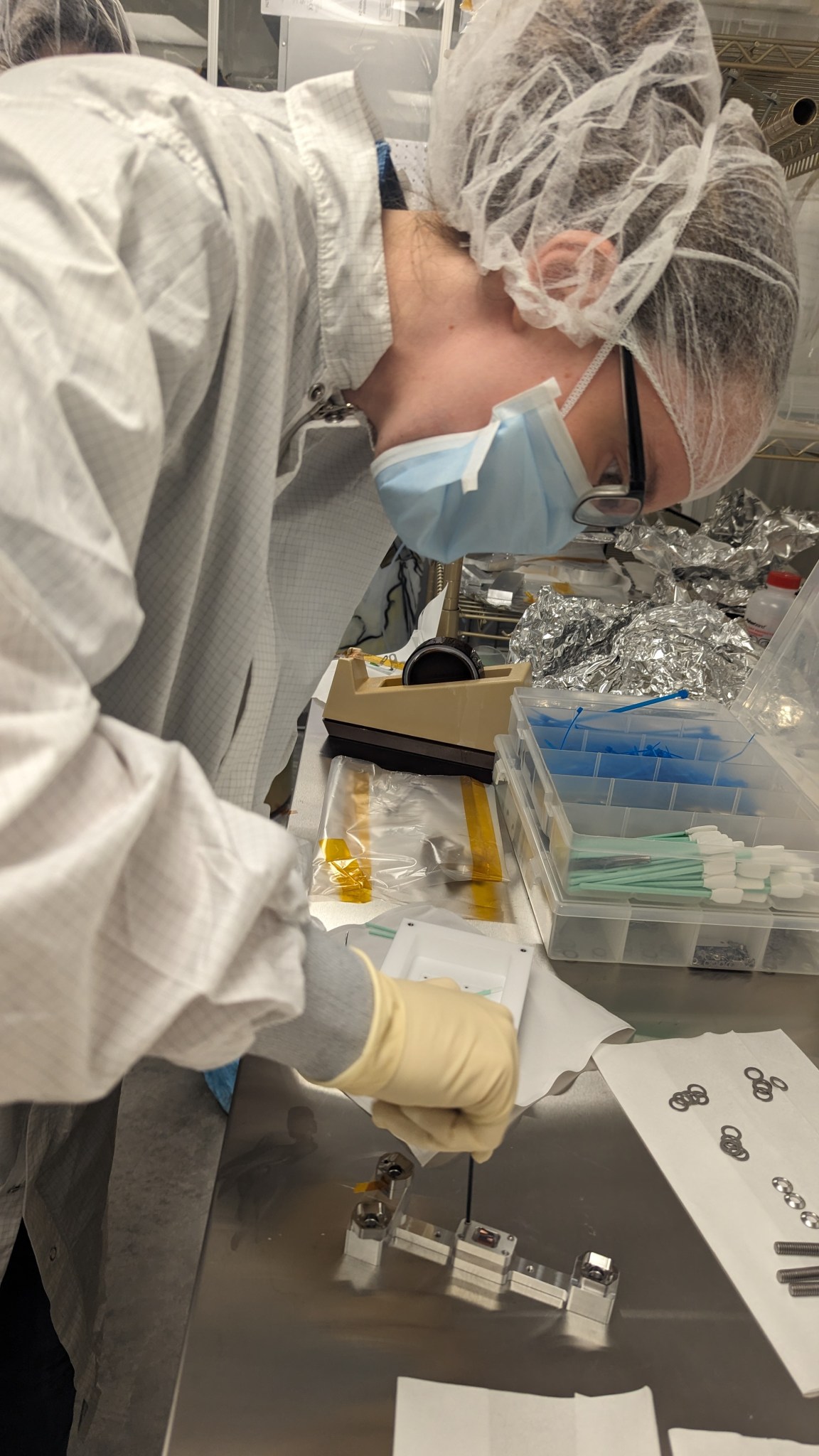
PhD student Emily Witt installs the delicate image slicer – the core optical technology for INFUSE – onto its mount in a CU-LASP clean room ahead of integration into the payload.
CU Boulder LASP/Brian Fleming

Using the data from INFUSE, Fleming and his team will not only identify specific elements and their temperatures, but they’ll also see where those different elements lie along the shock front.

“It’s a very exciting project to be a part of,” said lead graduate student Emily Witt, also at CU Boulder, who led most of the assembly and testing of INFUSE and will lead the data analysis. “With these first-of-their-kind measurements, we will better understand how these elements from the supernova mix with the environment around them. It’s a big step toward understanding how material from supernovas becomes part of planets like Earth and even people like us.”

To get to space, the INFUSE payload will fly aboard a sounding rocket. These nimble, crewless rockets launch into space for a few minutes of data collection before falling back to the ground. The INFUSE payload will fly aboard a two-stage Black Brant 9 sounding rocket, aiming for a peak altitude of about 150 miles (240 kilometers), where it will make its observations, before parachuting back to the ground to be recovered. The team hopes to upgrade the instrument and launch again. In fact, parts of the INFUSE rocket are themselves repurposed from the DEUCE mission, which launched from Australia in 2022.

NASA’s Sounding Rocket Program is conducted at the agency’s Wallops Flight Facility at Wallops Island, Virginia, which is managed by NASA’s Goddard Space Flight Center in Greenbelt, Maryland. NASA’s Heliophysics Division manages the sounding rocket program for the agency. The development of the INFUSE payload was supported by NASA’s Astrophysics Division.

Powered by WPeMatico

Get The Details…