NASA: Una jugosa historia de tomates en la Estación Espacial Internacional

NASA: Una jugosa historia de tomates en la Estación Espacial Internacional

El cultivo de alimentos a bordo de la Estación Espacial Internacional es una de las muchas investigaciones que han alcanzado la madurez para las misiones de vuelos espaciales de larga duración a la Luna y Marte.

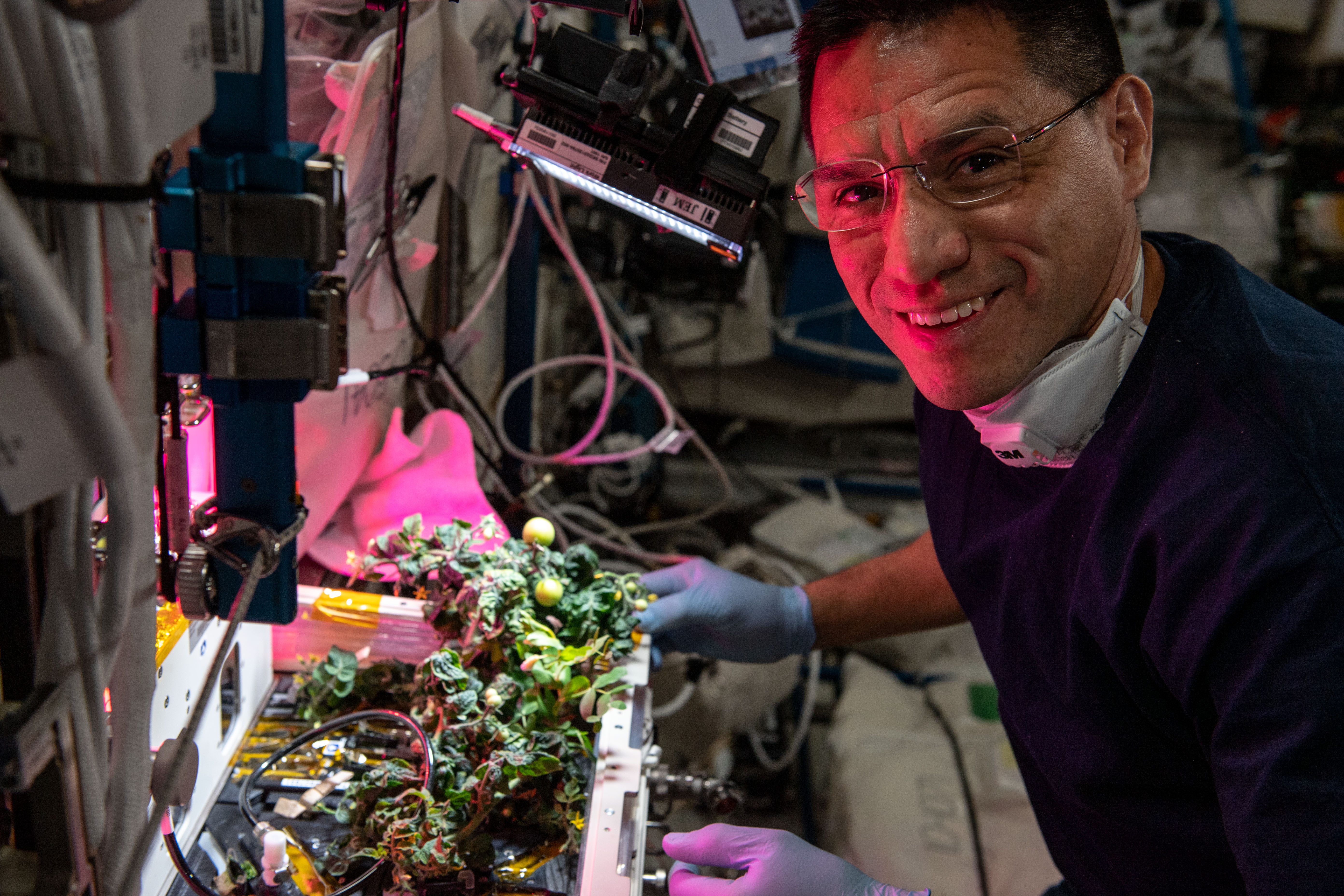
El astronauta de la NASA Frank Rubio compartió recientemente una jugosa historia de dos tomates rebeldes, a los que había perdido el rastro accidentalmente mientras recogía la cosecha para el experimento Sistema de Prueba en Órbita de Raíces Expuestas (XROOTS, por sus siglas en inglés) que llevó a cabo durante su permanencia a bordo de la estación espacial en 2022. El experimento utiliza técnicas hidropónicas y aeropónicas para el cultivo de plantas sin utilización de tierra ni otros medios de cultivo, y podría proporcionar soluciones aptas para los sistemas de cultivo necesarios en las futuras misiones de exploración espacial.
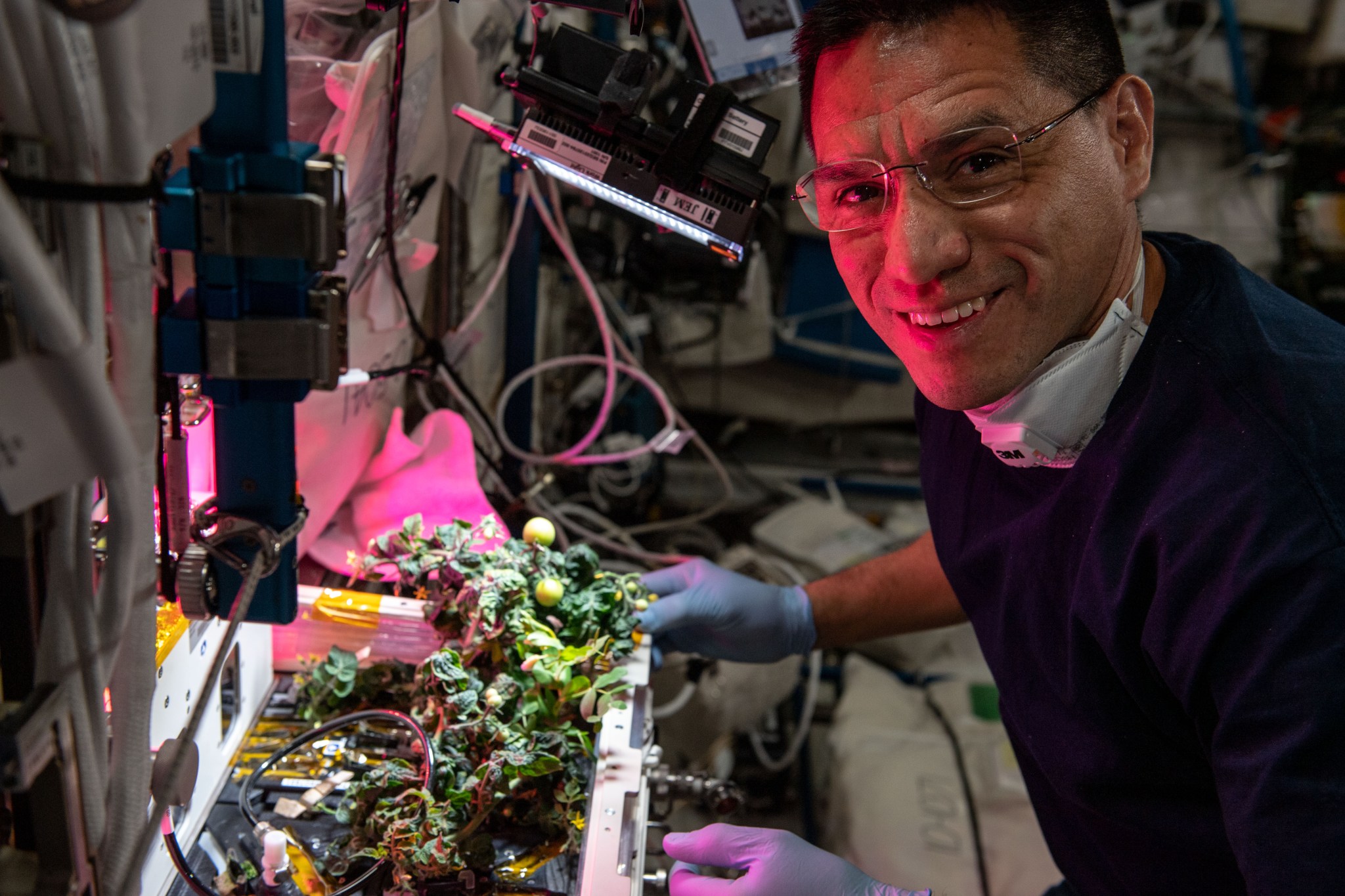
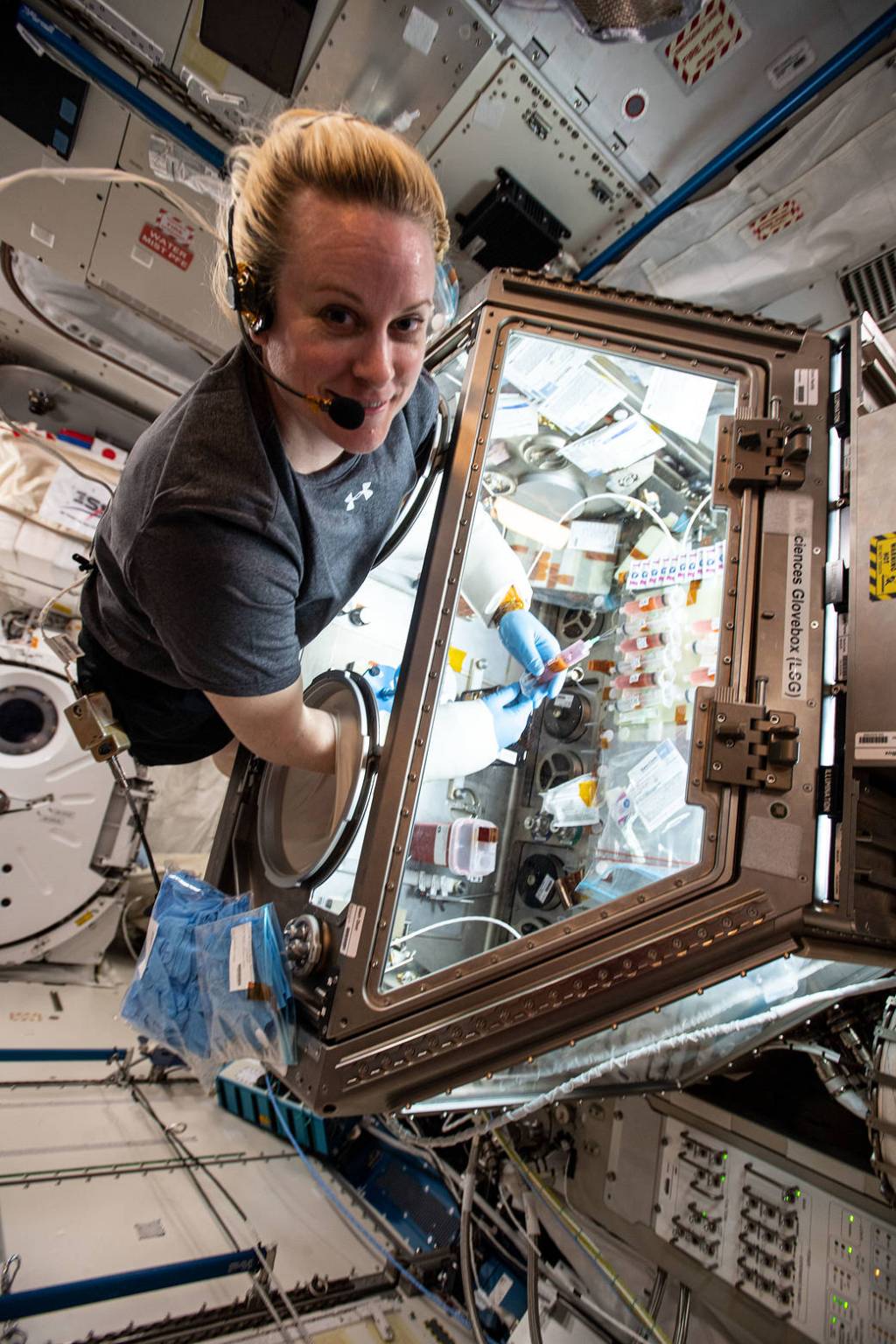
Retrato del astronauta de la NASA Frank Rubio trabajando en el experimento XROOTS a bordo de la Estación Espacial Internacional.
El astronauta de la NASA Frank Rubio es fotografiado realizando el manejo de fluidos y las inspecciones de cartuchos de semillas y plantas para el experimento XROOTS.
NASA

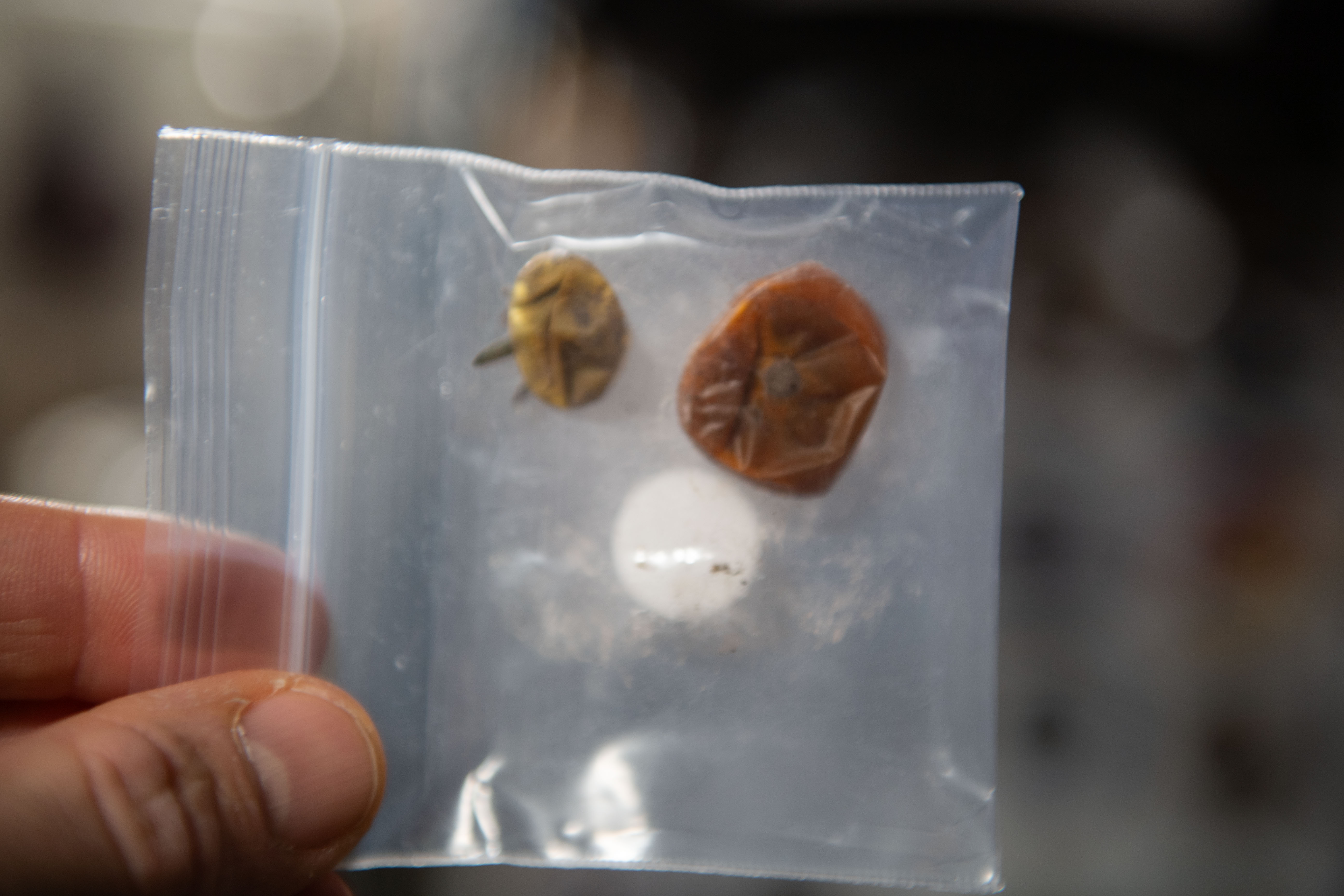
Mientras celebraban el 25.o aniversario de operaciones de la estación espacial, los tripulantes de la Expedición 70 revelaron que encontraron los tomates perdidos, comentando jocosamente que Rubio no se había comido los tomates como ellos sospechaban. A pesar de que había pasado casi un año desde su desaparición inicial, los tomates fueron hallados en una bolsa de plástico, deshidratados y ligeramente aplastados. Aparte de una ligera decoloración, no tenían crecimiento microbiano o fúngico visible.

Durante su estadía de 371 días a bordo de la estación —una permanencia récord para astronautas de Estados Unidos—, Rubio también llevó a cabo otro “fructífero” experimento para el estudio VEG-05, el cual ayuda a abordar la necesidad de un sistema continuo de producción de alimentos frescos en el espacio. Este experimento utilizó la instalación “Veggie” de la estación espacial para cultivar tomates enanos, centrándose en el impacto de la calidad de la luz y los fertilizantes en la producción de las frutas, la seguridad alimentaria microbiana, su valor nutricional y la aceptabilidad de su sabor por parte de la tripulación.
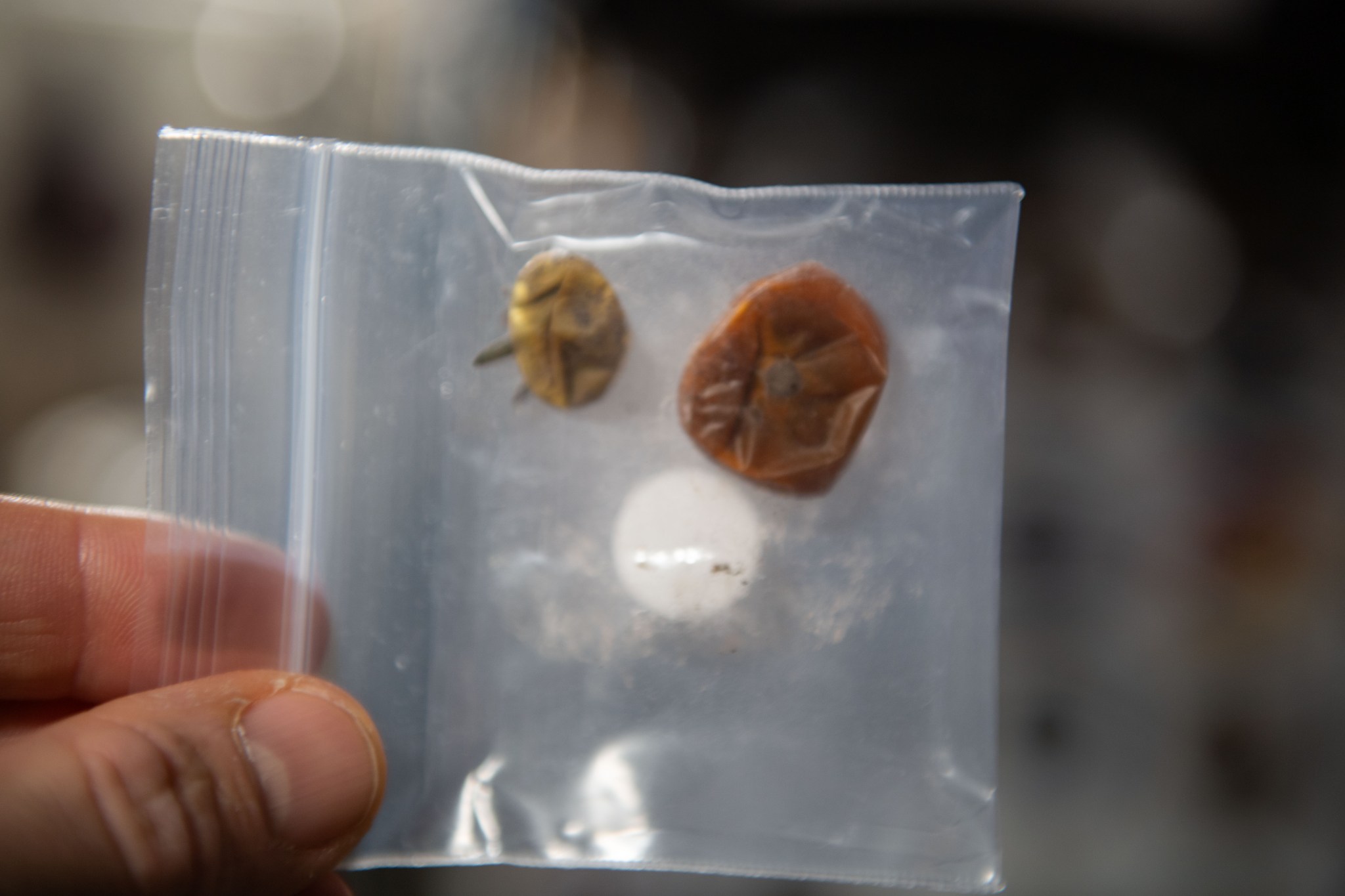
Fotografía de dos tomates enanos deshidratados dentro de una bolsa plástica.
Dos tomates rebeldes han sido recuperados casi un año después de que el astronauta Frank Rubio les perdiera el rastro accidentalmente mientras los cosechaba para el experimento XROOTS.
NASA

Si bien las muestras de los tomates rebeldes encontrados en el experimento XROOTS no regresarán a la Tierra para su análisis, ya que fueron desechados, la investigación de vegetales a bordo de la estación espacial continúa con el experimento Hábitat de Plantas 03, el cual regresará a la Tierra durante el próximo amerizaje de la 29.a misión comercial de reabastecimiento de SpaceX. Hábitat de Plantas 03 es una de las primeras investigaciones multigeneracionales de plantas a bordo de la estación espacial que podría ayudar a los investigadores a evaluar si las adaptaciones genéticas en una generación de plantas cultivadas en el espacio pueden transferirse a la siguiente. Los resultados de este estudio ayudarían a identificar elementos genéticos que aumentarían la adaptabilidad de las plantas a los vuelos espaciales, proporcionando información sobre cómo cultivar generaciones repetidas de cosechas para proporcionar alimentos y otros servicios en futuras misiones espaciales.

Los beneficios del cultivo de plantas en el espacio no se detienen ahí: los astronautas informan que el tiempo dedicado a la jardinería tiene beneficios psicológicos, lo que aumenta su calidad de vida en el espacio y levanta su moral. Las investigaciones a bordo de la estación espacial están permitiendo avances en la tecnología y el conocimiento científico necesarios para cultivar con éxito plantas en el espacio y ayudar a los humanos a ampliar los límites de los viajes espaciales. Este trabajo también contribuye con los esfuerzos para mejorar el cultivo de plantas para la alimentación y otros usos importantes en la Tierra.

Lee más sobre las investigaciónes en las que trabajó Frank Rubio durante su misión de un año en la estación espacial:

Ciencia destacada del año en el espacio del astronauta Frank Rubio – NASA
Powered by WPeMatico

Get The Details…
Christine Giraldo
NASA Awards Turbofan Engine Core Technology Demonstration Contract

NASA Awards Turbofan Engine Core Technology Demonstration Contract

NASA meatball logo
Credits: NASA

NASA has selected GE Aerospace of Cincinnati to work with the agency’s Hybrid Thermally Efficient Core (HyTEC) project, which is aiming to develop more fuel efficient engines for single-aisle aircraft.

The HyTEC’s Phase 2 Integrated Core Technology Demonstration is a cost-sharing contract with a maximum value of approximately $68.1 million and a five-year performance period that begins Feb. 15. The contract is awarded with a 50% minimum GE Aerospace cost share during the contract period.

Part of NASA’s Advanced Air Vehicles program, HyTEC was established to accelerate the development of turbofan engine small core technologies. The first phase of the project focused on developing several key engine core technologies, including high-pressure compressors, high-pressure turbines, advanced materials, electric hybridization, and compact combustors, through subsystem or component tests. To meet the goal of HyTEC Phase 2, GE Aerospace will integrate these technologies into an engine core to perform a compact, high-power density core ground demonstration by the end of September 2028.

HyTEC Phase 2 is a major demonstration within NASA’s Sustainable Flight National Partnership portfolio that will contribute to our nation’s goal of net-zero greenhouse gas emissions by 2050.

For information about NASA and other agency programs, visit:

https://www.nasa.gov

-end-

Roxana Bardan
Headquarters, Washington
202-358-1600
roxana.bardan@nasa.gov

Brian Newbacher
Glenn Research Center, Cleveland
216-433-5644
brian.t.newbacher@nasa.gov

Share

Details

Last Updated

Dec 14, 2023

Powered by WPeMatico

Get The Details…
Roxana Bardan

Inventor of Air Conditioning Helped Chill NASA Wind Tunnels

Inventor of Air Conditioning Helped Chill NASA Wind Tunnels

4 min read

Preparations for Next Moonwalk Simulations Underway (and Underwater)

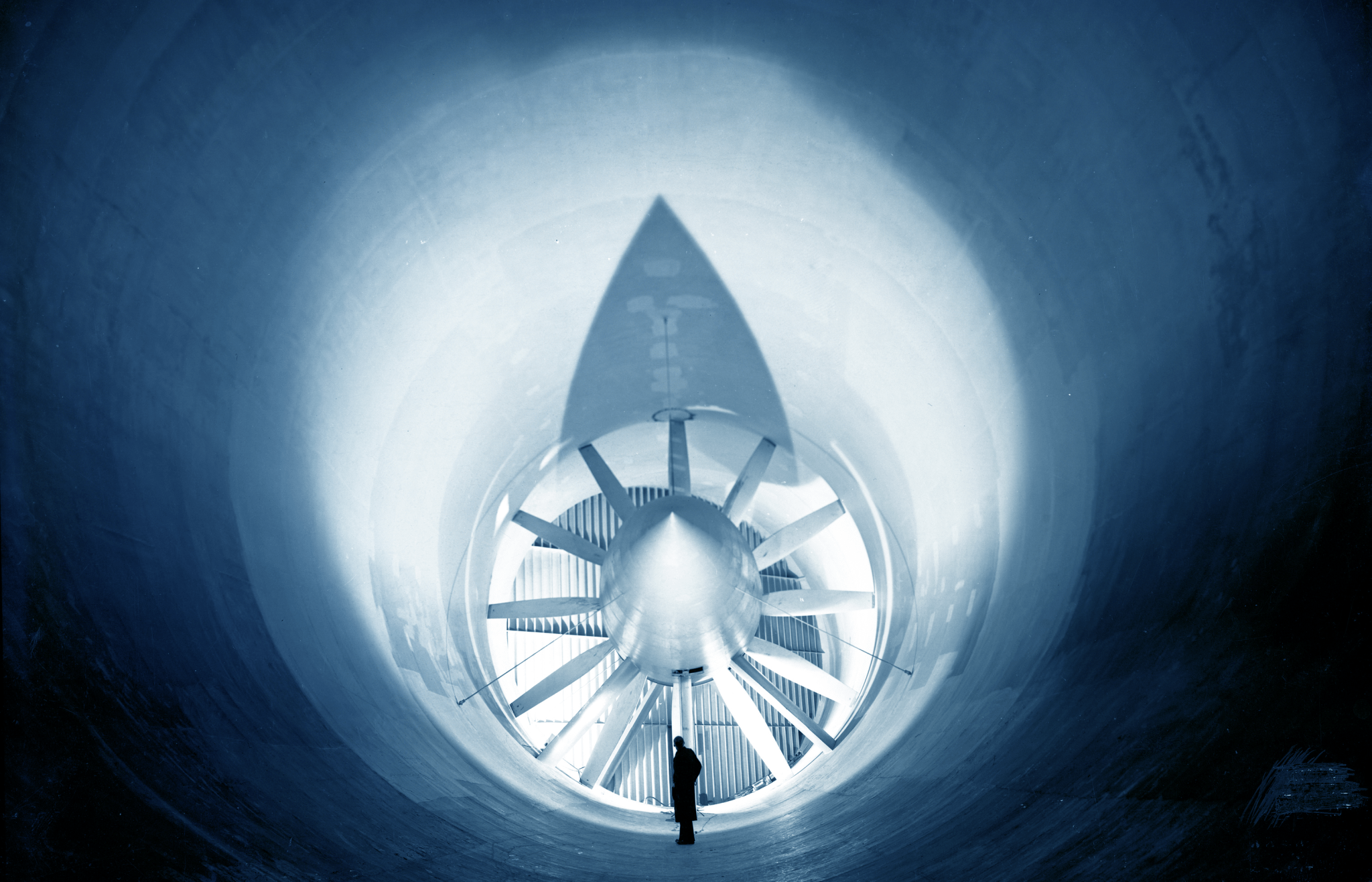
A man stands beneath the blades of a very large fan inside the Altitude Wind Tunnel. The foreground of the photo is dark, and only a silhouette of the person is visible. The area closer to the fan is illuminated.
When constructed in the early 1940s, NASA Glenn Research Center’s Altitude Wind Tunnel was the nation’s only wind tunnel capable of studying full-scale aircraft engines under realistic flight conditions.
NASA/William Bowles

Global tensions were high in the fall of 1941 as U-boats harassed ships in the Atlantic and German forces pushed deep into the Soviet Union. There was a critical need for the United States to get the National Advisory Committee for Aeronautics (NACA)’s new engine laboratory (today, NASA’s Glenn Research Center) in operation as soon as possible. It was especially important to complete its Altitude Wind Tunnel (AWT), which could be used to improve the engine performance of high-altitude combat aircraft.

NACA engineers were experts in wind tunnel design, but simulating 30,000-foot altitudes to test full-sized engines in the new facility posed several unique challenges. Perhaps the most daunting was chilling the millions of cubic feet of airflow in the tunnel to -47 degrees Fahrenheit. The NACA’s attempts to design adequate cooling coils for the unprecedented system proved ineffectual. To expedite the design process, the NACA convinced Willis Carrier, the nation’s premier refrigeration authority, to design the cooling system for the massive tunnel.

A video clip from the documentary, “A Tunnel Through Time – The History of NASA’s Altitude Wind Tunnel.”

Watch the full version

In October 1941, Vannevar Bush, a special liaison between President Franklin D. Roosevelt and the scientific community, set up a meeting between NACA leaders and Carrier, who had invented the world’s first electrical air conditioning unit in 1902. Although Carrier felt that his company was too busy with other military-related projects to bid on the tunnel project, he agreed to meet with those directly involved with the effort on Nov. 6, 1941. The NACA team only discussed the system in broad terms but stressed the importance of the tunnel to national interests.

In the end, Carrier agreed to perform some initial experiments and bid on the project. The NACA was so impressed by Carrier’s confidence and technical acumen that in early 1942 it planned to build a second tunnel, the Icing Research Tunnel, using the AWT’s proposed refrigeration system.

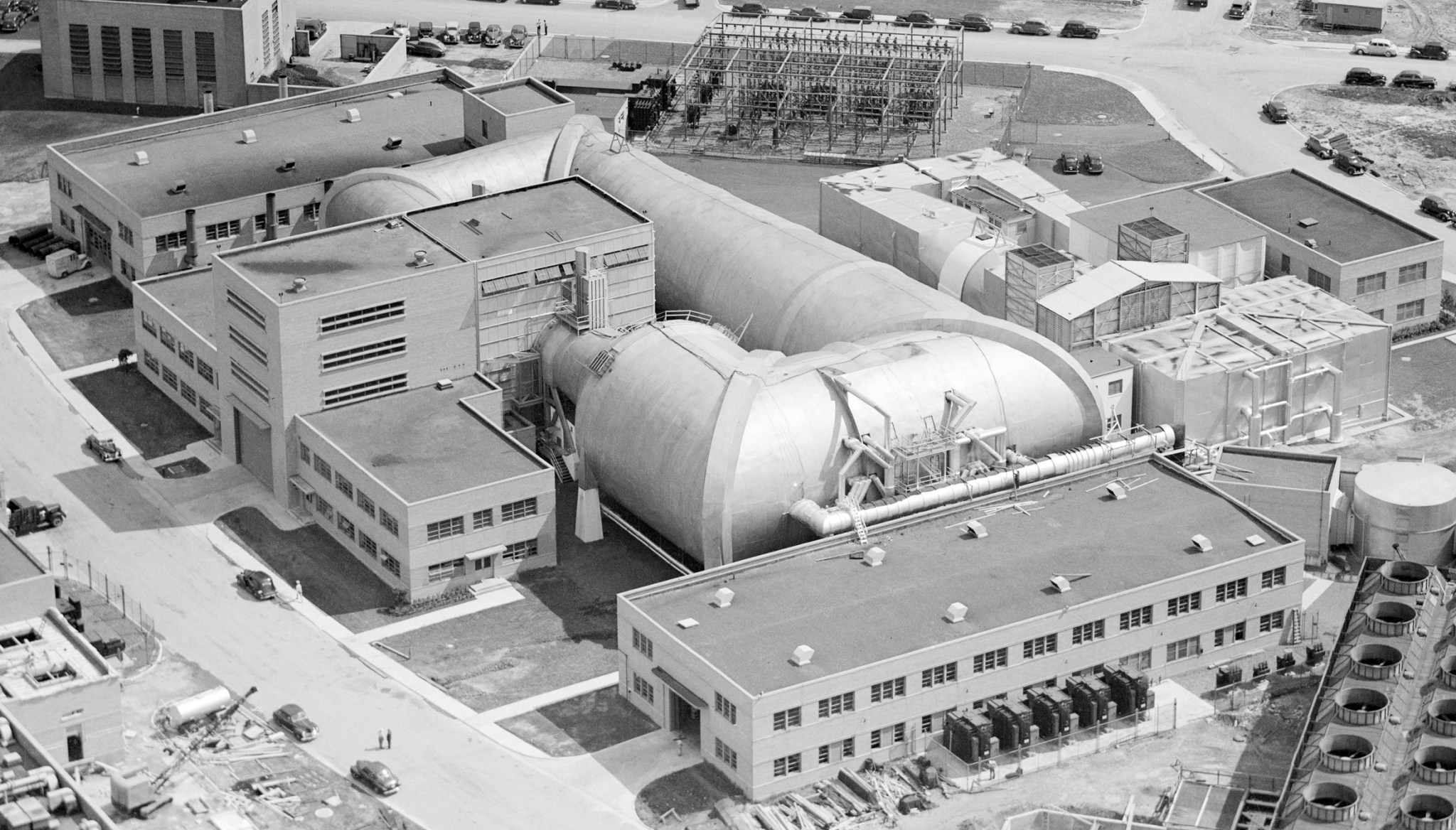
A black-and-white aerial view of a group of buildings at NASA’s Glenn Research Center. A large wind tunnel can be seen at the center of the photo.
An aerial view of NASA Glenn Research Center’s Altitude Wind Tunnel (AWT) complex and Refrigeration Building in 1945. The Icing Research Tunnel is visible to the right.
Credit: NASA/Handy

The Carrier Corporation officially began the project in March 1942 as the first tunnel’s foundations were laid in Cleveland. Carrier formed several teams to work on different aspects of the system and built a model of the AWT to test the concepts. They regularly worked 16-hour days to meet the design deadline. As one engineer stated, “Every assignment had to be done yesterday.”

Several new tactics were employed to meet the unique demands of the effort. Engineers designed many of the compressor valves and pumps specifically for the project and decided to use Freon-12, which had never been used on such a large scale, as the refrigerant. The most significant challenge was fitting the required 8,000 square feet of cooling coils into the 2,000-square-foot tunnel section. The solution was to arrange the coils in an accordion-like fashion and add turning vanes across the back to maintain the airflow’s velocity and pressure.

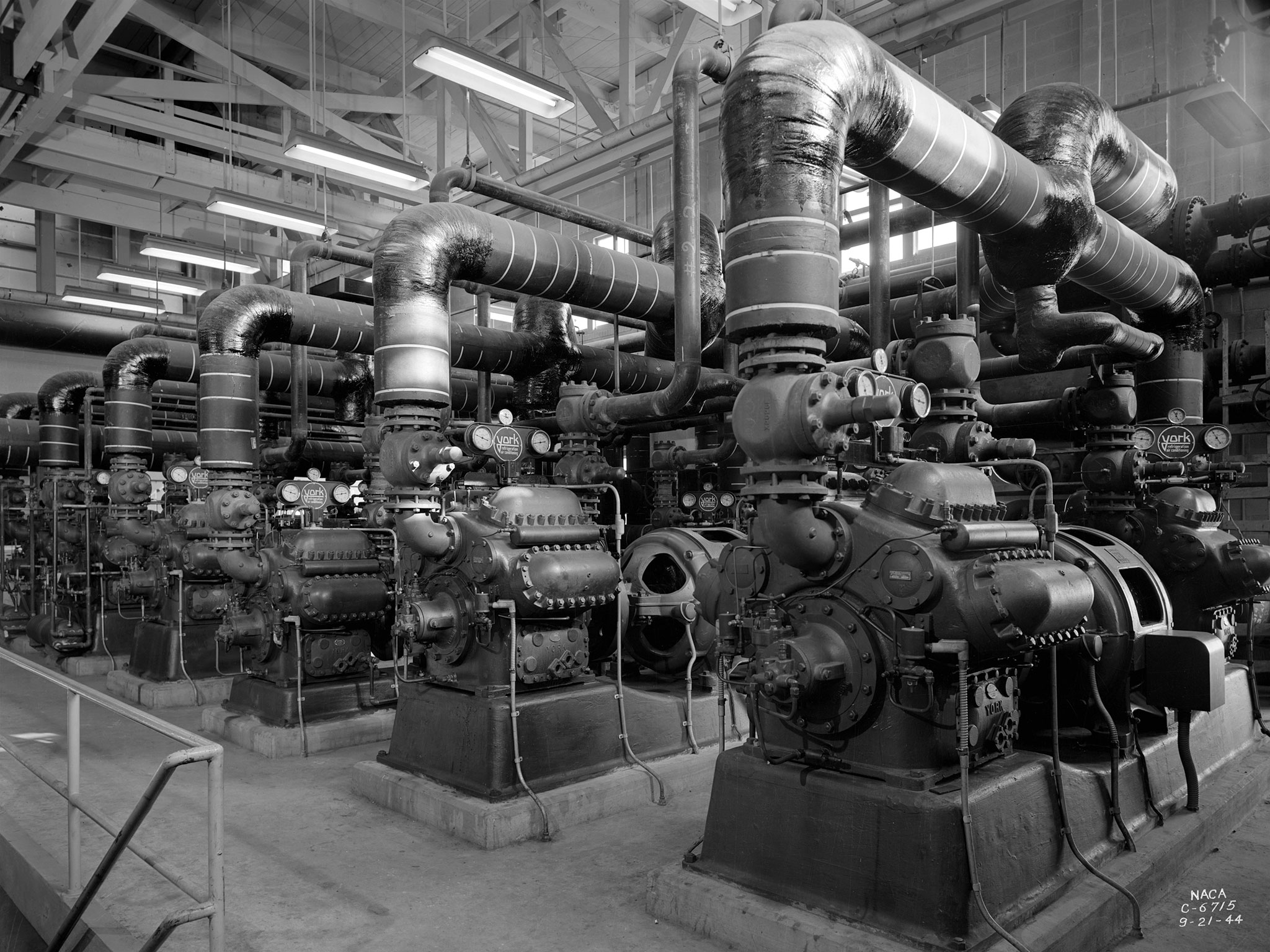
A black-and-white photo of a row of large compressors inside a warehouse building. They are metal and industrial with many gauges, tubes, and valves attached.
These compressors inside NASA Glenn Research Center’s Refrigeration Building were used to generate cold temperatures in the Altitude Wind Tunnel and Icing Research Tunnel.
Credit: NASA

The AWT’s cooling system was installed over the summer of 1943. Carrier and his team were present during the trial runs, and the tunnel began formal operation in February 1944. Its unique ability to test full-scale engines in simulated altitude conditions helped resolve engine cooling issues for the B-29 bomber during World War II and significantly advanced the development of the jet engine in the 1940s and 1950s. NASA converted the tunnel into a vacuum facility in 1963 and eventually shut it down in the 1970s.

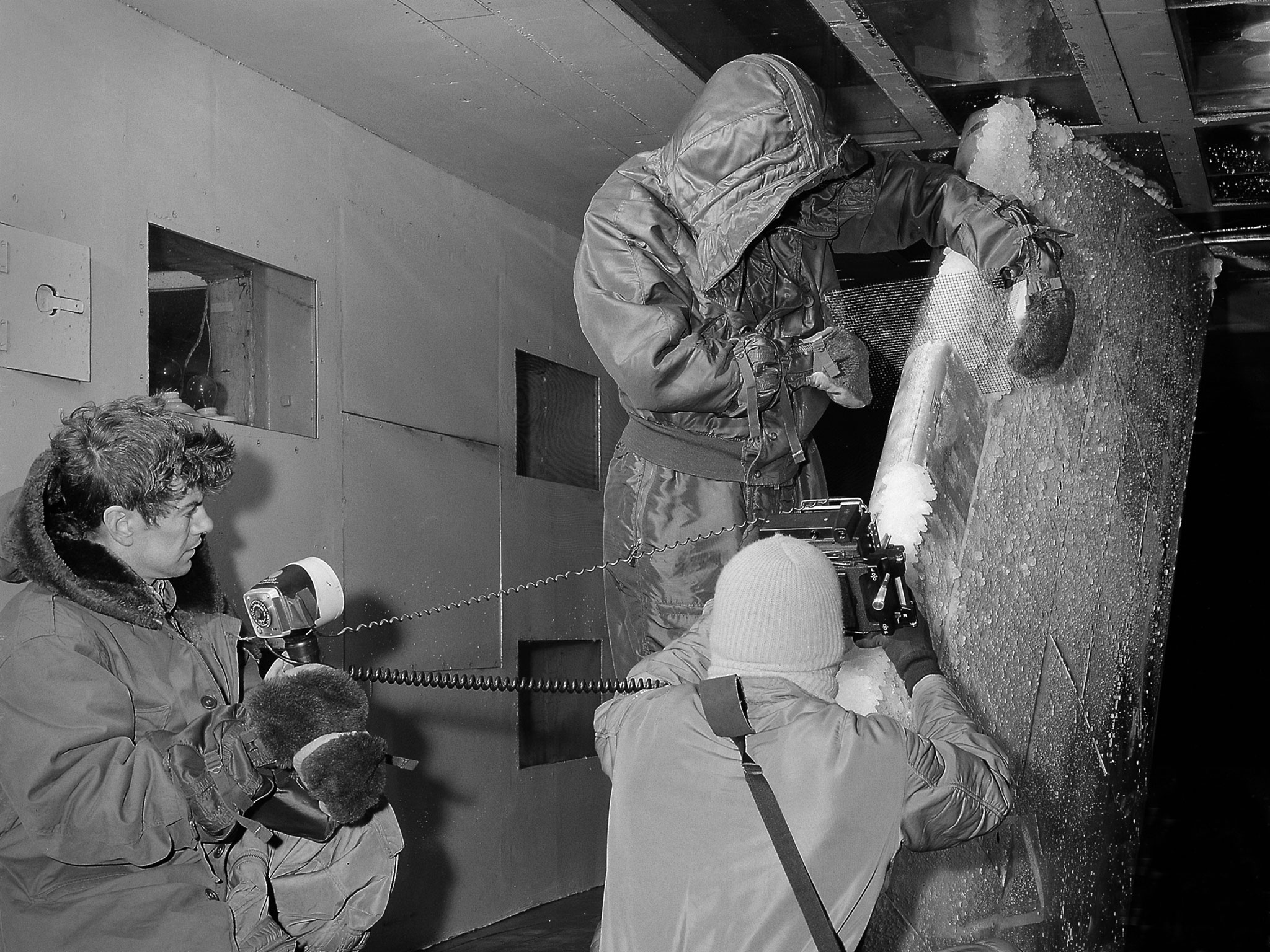
A black-and-white photo of three men dressed in winter gear working on a piece of test hardware inside NASA’s Icing Research Tunnel. All of the men are wearing coats and mittens and the one at the center also wears a hat. Chunks of ice are visible on the test hardware.
Technicians set up test hardware inside the test section of the Icing Research Tunnel in 1969.
Credit: NASA

The IRT, which came online in late summer 1944, creates freezing clouds to study ice buildup on aircraft components and test de-icing systems. Today, the IRT is the longest running – and among the largest –icing tunnel in the world.

In 1987, the American Society of Mechanical Engineers named the IRT an International Historic Engineering Landmark and noted, “there was never a more difficult, more exacting, or more vital refrigerating system than the one designed and built by the Carrier Corporation for the wind tunnels in Cleveland.”

Powered by WPeMatico

Get The Details…
Robert S. Arrighi

NASA: Let’s Ketchup on International Space Station Tomato Research

NASA: Let’s Ketchup on International Space Station Tomato Research

Growing food aboard the International Space Station is one of the many research investigations ripe for long duration spaceflight missions to the Moon and Mars.

NASA astronaut Frank Rubio recently shared the saucy story of two rogue tomatoes, which he had accidentally lost track of while harvesting for the eXposed Root On-Orbit Test System (XROOTS) experiment he conducted aboard the space station in 2022. The experiment uses hydroponic and aeroponic techniques to grow plants without soil or other growth media and could provide suitable solutions for plant systems needed for future space exploration missions.

While celebrating the space station’s 25th anniversary of operations, Expedition 70 crew members revealed they found the lost tomatoes, joking that Rubio did not eat the tomatoes as they suspected. Despite being nearly a year after the initial disappearance of the tomatoes, the fruit was found in a plastic bag dehydrated and slightly squished. Other than some discoloration, it had no visible microbial or fungal growth.

During his U.S. record-breaking 371-day stay aboard station, Rubio also conducted another a-peeling experiment for the VEG-05 study, which helps address the need for a continuous fresh-food production system in space. This experiment used the space station’s Veggie facility to grow dwarf tomatoes focusing on the impact of light quality and fertilizer on fruit production, microbial food safety, nutritional value, and taste acceptability by the crew.

While the rogue tomatoes found from the XROOTS experiment will not be returning to Earth for analysis as they were discarded, plant research aboard space station continues with Plant Habitat-03, returning to Earth during the upcoming splashdown of SpaceX’s 29th commercial resupply mission. Plant Habitat-03 is one of the first multi-generational plant studies aboard the space station which could help researchers assess whether genetic adaptations in one generation of plants grown in space can transfer to the next. Results from this study could help identify genetic elements that increase the adaptability of plants to spaceflight providing insight into how to grow repeated generations of crops to provide food and other services on future space missions.

The benefits of growing plants in space don’t stop there, astronauts report there are psychological benefits to time spent gardening, increasing their quality of life in space, and boosting their morale. Research aboard the space station is advancing the technology and scientific knowledge needed to successfully grow plants in space and help humans push the boundaries of space travel. This work also helps efforts to improve plants grown for food and other important uses here on Earth.

Read more about plant research on the space station: Station Science 101: Plant Research – NASA.

Powered by WPeMatico

Get The Details…
Christine Giraldo
NASA Facility Builds on Space Station Legacy at Kennedy

NASA Facility Builds on Space Station Legacy at Kennedy

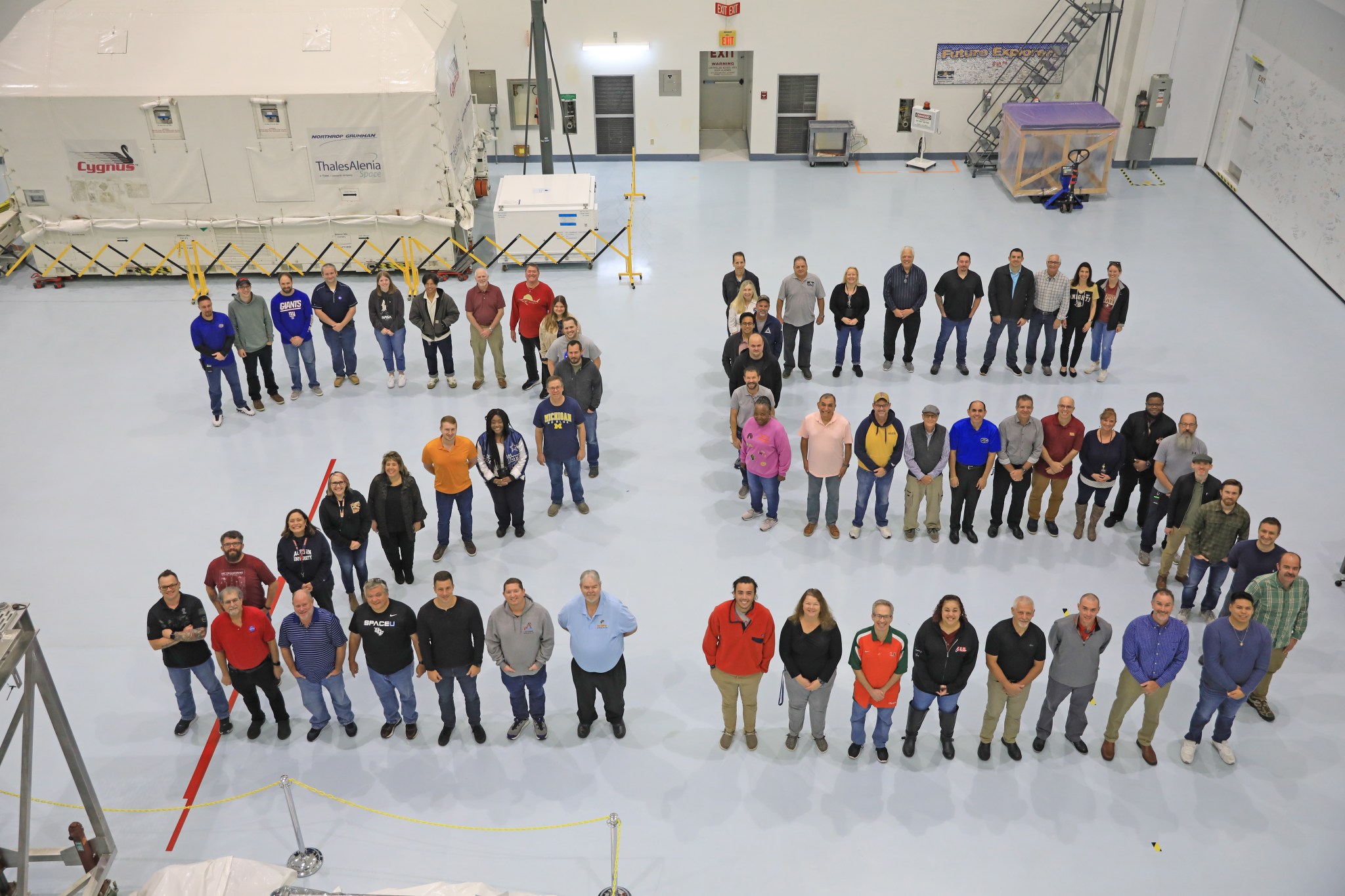
Teams at the Space Station Processing Facility at NASA’s Kennedy Space Center in Florida celebrate 25 years of supporting the International Space Station on November 28, 2023.
Teams at NASA’s Kennedy Space Center in Florida pose inside the Space Station Processing Facility’s high bay to celebrate 25 years of supporting the International Space Station.
NASA/Ben Smegelsky

Built to be the last stop for components of the International Space Station, the Space Station Processing Facility (SSPF) at NASA’s Kennedy Space Center in Florida, has been given a new name that honors this legacy while embracing its role as a multi-tenant processing facility.

Agency officials have updated the name of the 457,000 square foot, three-story building to “Space Systems Processing Facility,” recognizing its progression into a workplace for processing hardware bound for the station as well as to the Moon and beyond.

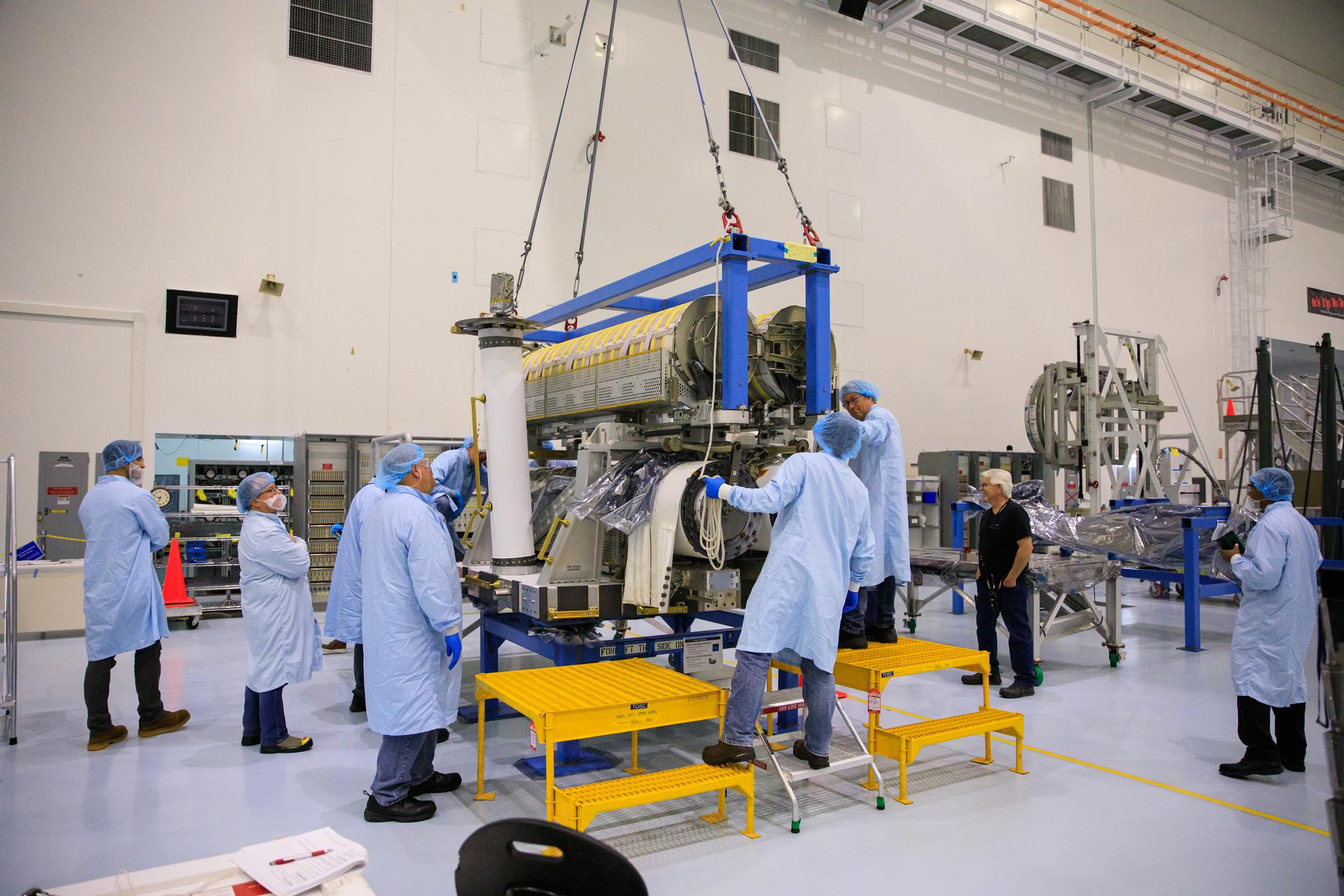
Inside the Space Station Processing Facility high bay at NASA’s Kennedy Space Center in Florida, technicians assist as a crane is used to lower a set of International Space Station Roll Out Solar Arrays (iROSA) onto a platform on March 23, 2023.
NASA/Isaac Watson

“Kennedy Space Center has a strong history of supporting the missions that have improved life on our planet while inspiring the world,” said Kennedy Space Center Director Janet Petro. “For the last 25 years, the facility has processed many of the critical components and elements necessary to build and sustain the work of the International Space Station. This name change reflects its remarkable evolution into a dynamic, multi-user processing environment in the wake of the center’s transformation to the nation’s premier spaceport, and we are seeing our vision of igniting space exploration and discovery come to life.”

Today, NASA programs such as Artemis and Commercial Resupply Services use the SSPF processing areas, with Gateway processing set to begin within the next few years. Commercial companies such as Northrop Grumman, Sierra Space, and SpaceX also manufacture and process payloads and hardware in the facility.

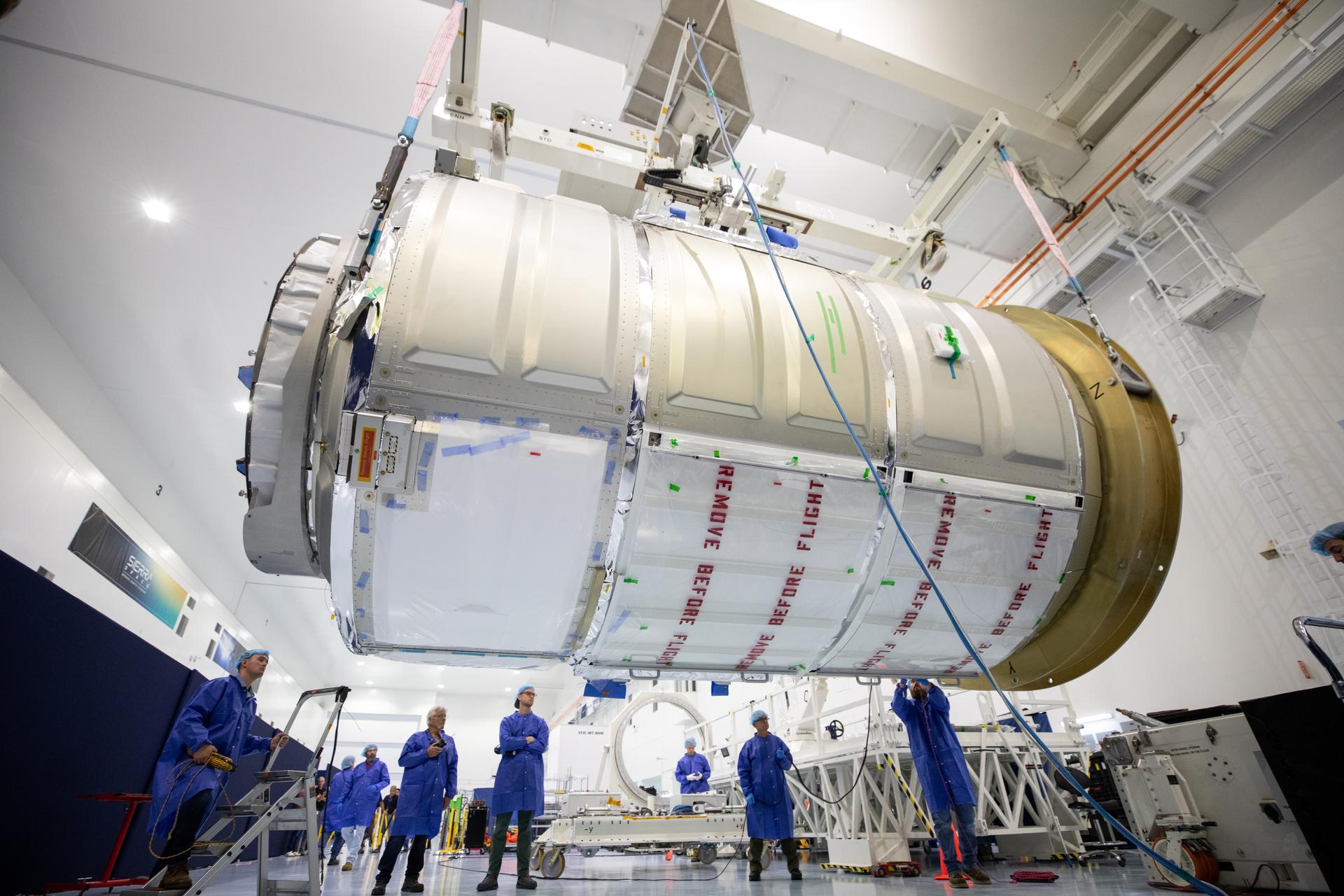
The Northrop Grumman Cygnus spacecraft’s pressurized cargo module (PCM) for the company’s 20th commercial resupply mission is lifted and moved by crane inside the high bay in the Space Station Processing Facility at NASA’s Kennedy Space Center in Florida on Monday, Sept. 18, 2023.
NASA/Ben Smegelsky

“All of the tenants in the facility are under contract with NASA to develop a product,” said Kevin Zari, associate director for the International Space Station and Exploration. “The next step in the evolution of the SSPF is going from government to commercial, just like we did with Low Earth Orbit launch vehicles. Soon, commercial entities might be using the facility, or some parts of the facility, on purely commercial ventures.”

Built originally for assembling and processing components for the space station, the SSPF hosted processing of the first U.S.-built component of the station, Node 1 – or the Unity connecting module – which was carried to orbit on STS-88 from Kennedy in December 1998. Node 1 helped kick off a 25-year legacy of 275 launches to the station, 337 dockings or redockings of spacecraft or modules, and over 3,700 science investigations since Expedition 0. This includes hosting 273 people from 21 countries – and counting – visiting or living on the orbiting laboratory. The SSPF played a key role each step of the way as the main site for processing station components, flight hardware, and science experiments in the clean room environment of its processing bays.

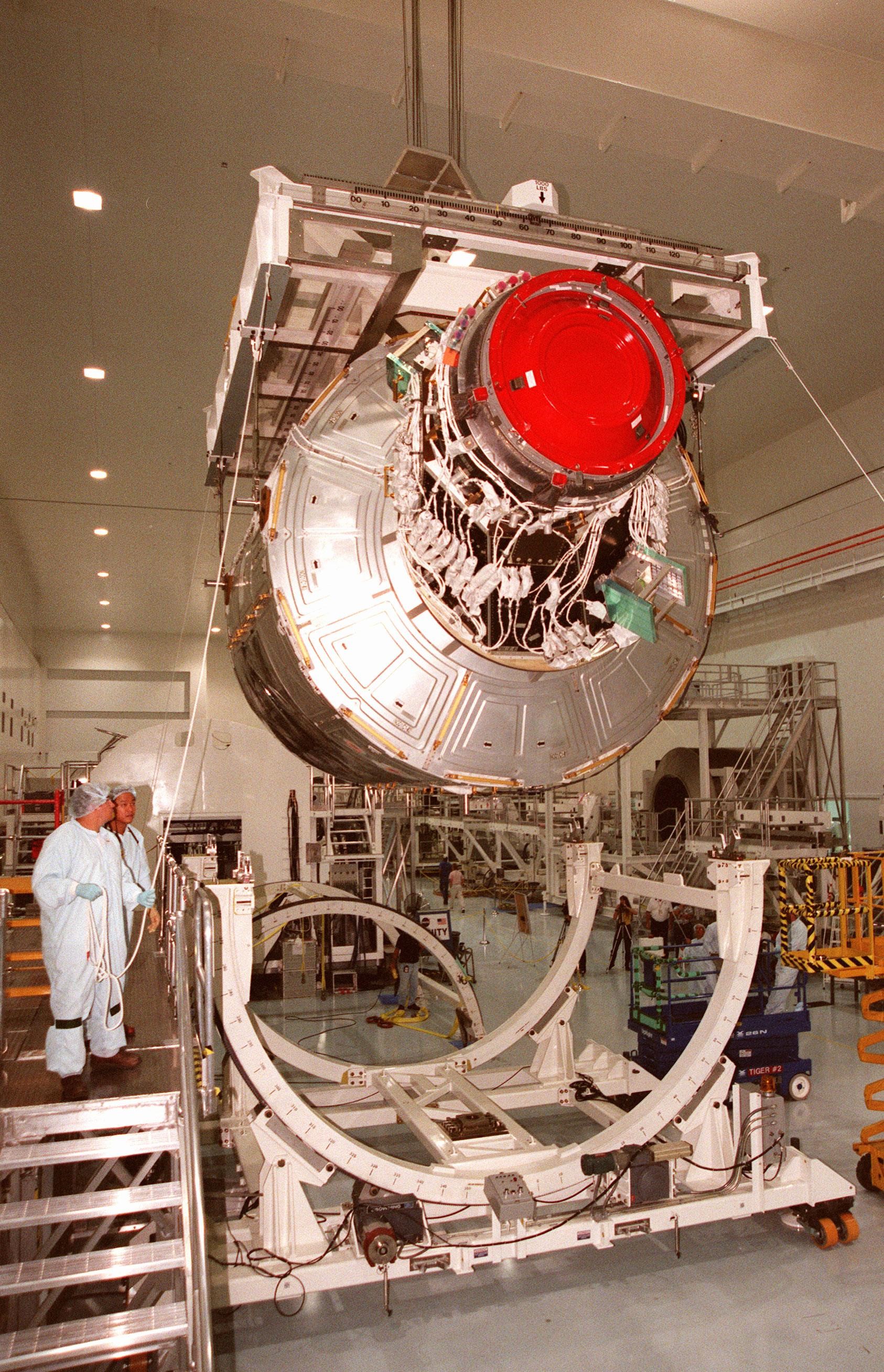
Workers in the SSPF high bay oversee the lifting of the Unity connecting module for its move to another location in the SSPF on Oct. 10, 1998. In the SSPF, Unity is undergoing testing such as the Pad Demonstration Test to verify the compatibility of the module with the Space Shuttle.
NASA

“The SSPF started off with the need to meet the requirements of the space station program,” Zari said. “Since the space shuttle was the lift vehicle for assembling the space station, with the exception of the Russian module and components, all NASA, ESA (European Space Agency), and JAXA (Japan Aerospace Exploration Agency) equipment came here to the SSPF for processing prior to launch.”

Space shuttle missions delivered nine elements of the station processed in the SSPF: Unity, Z1 truss, P6 integrated truss, Destiny, Canadarm 2, the joint airlock, and the S0, S1, and P1 trusses. All preparation and postflight maintenance for other vital parts of space station assembly was conducted in the SSPF, including multi-purpose logistics modules with critical supplies and science experiments that were flown to the station.

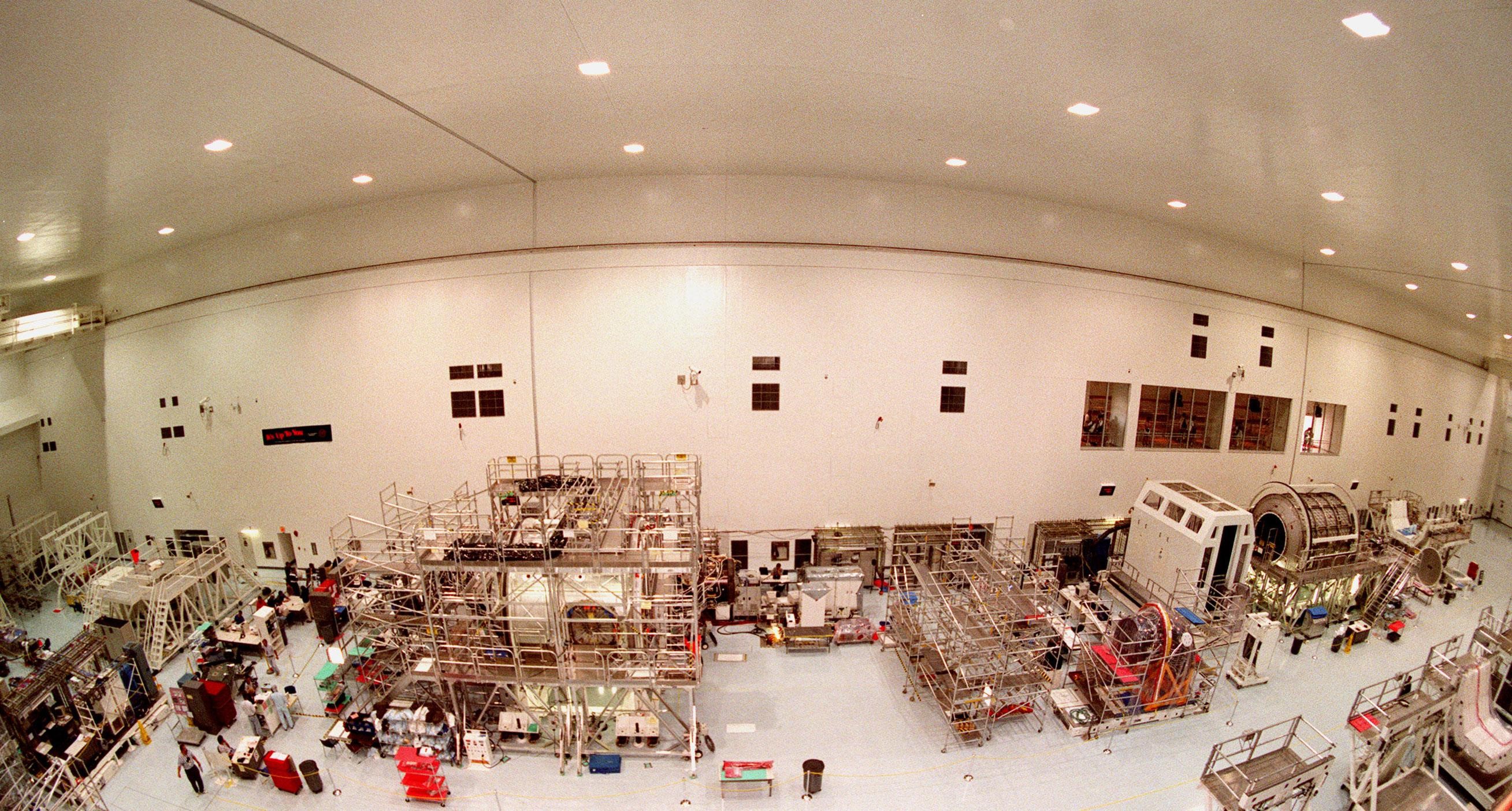
In this panoramic view of the SSPF taken Aug. 27, 1998, visible is (left to right) the Unity connecting module, the Rack Insertion Device and the first Multi-Purpose Launch Module, the Leonardo. Windows at the right above Leonardo allow visitors on tour to watch the activities in the SSPF.
NASA

“Even while the space station was still being built in the SSPF, you had science being checked out and ready to fly up to the station,” Curt Horanic, International Space Station technical director. “The SSPF was critical to assemble the space station, to test space station hardware on the ground, and to the science. First and foremost, the station is a laboratory and the research that’s happening is helping humans on Earth. And all of that research, for the most part, is coming through the SSPF.”

Both Horanic and Zari are among the small group of Kennedy employees who have been a part of the SSPF’s evolution since the beginning. Located just east of the Neil A. Armstrong Operations and Checkout Building, groundbreaking for the SSPF took place in March 1991 and dedication occurred in June 1994.

Aerial view of the Space Station Processing Facility
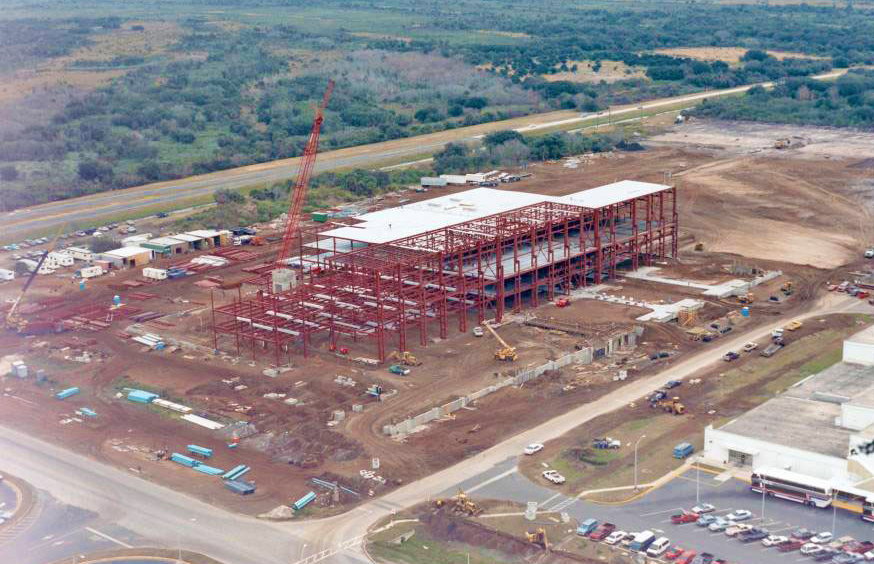
Construction of the SSPF as seen in an aerial view from January 1992.
NASA

“I remember being across the street at the Operations and Checkout Building when they used a golden shovel to dig the dirt that was here,” said Zari. “It’s been an amazing journey to watch it transform from a facility with only the space station in mind to a multi-program, multi-tenanted facility.”

Powered by WPeMatico

Get The Details…
Jason Costa