50 Years Ago: Skylab 4 Astronauts Push Past the One-Month Mark
In December 1973, Skylab 4 astronauts Gerald P. Carr, Edward G. Gibson, and William R. Pogue passed the one-month mark of the third and final mission aboard the Skylab space station. Launching on Nov. 16, they began a planned 56-day flight that mission managers fully expected to extend to 84 days. They continued the science program begun by the previous two Skylab crews, including biomedical studies on the effects of long-duration space flight on the human body, Earth observations using the Earth Resources Experiment Package (EREP), and solar observations with instruments mounted on the Apollo Telescope Mount (ATM). To study newly discovered Comet Kohoutek, scientists added cometary observations to the crew’s already busy schedule, including adding a far ultraviolet camera to Skylab’s instrument suite.
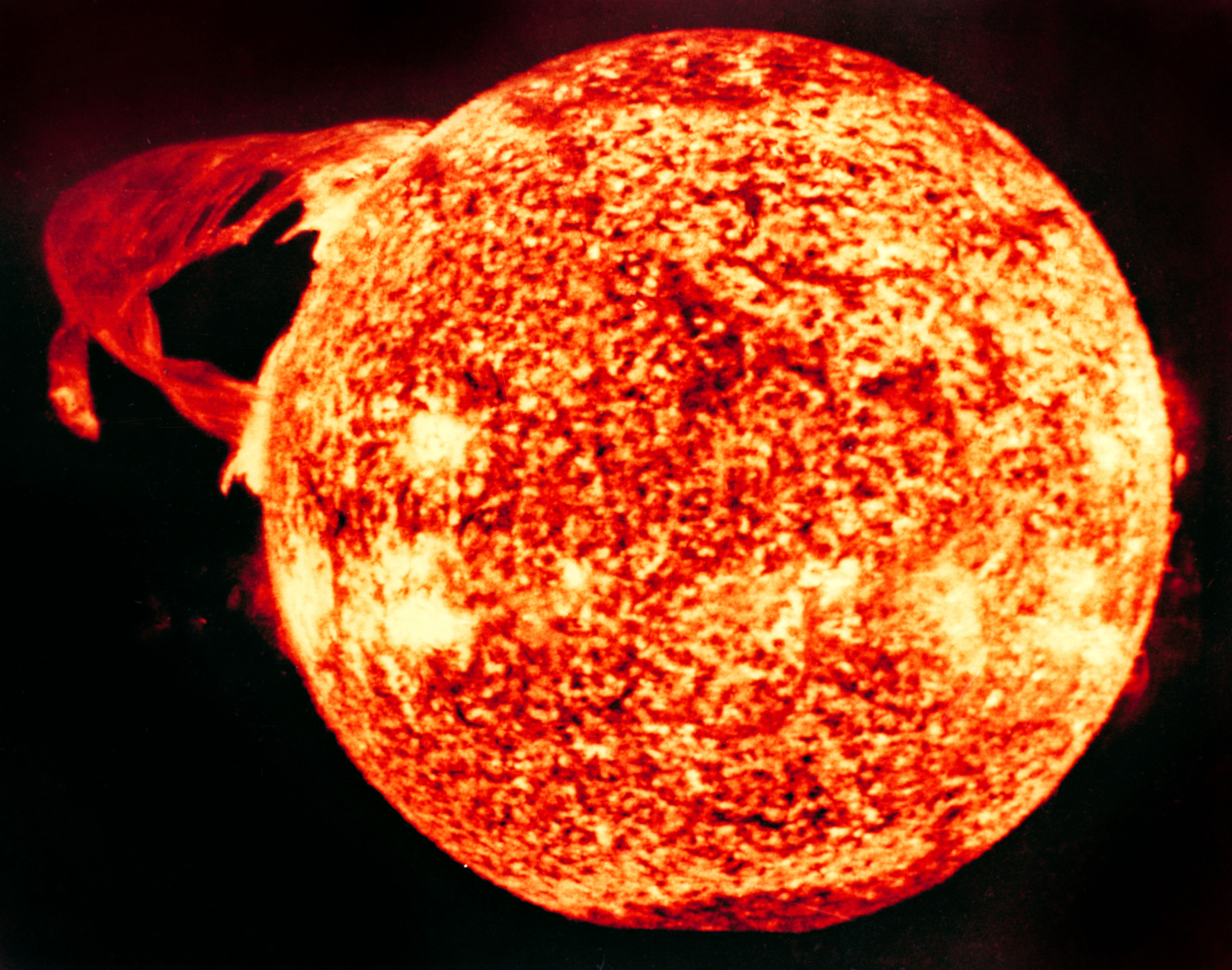
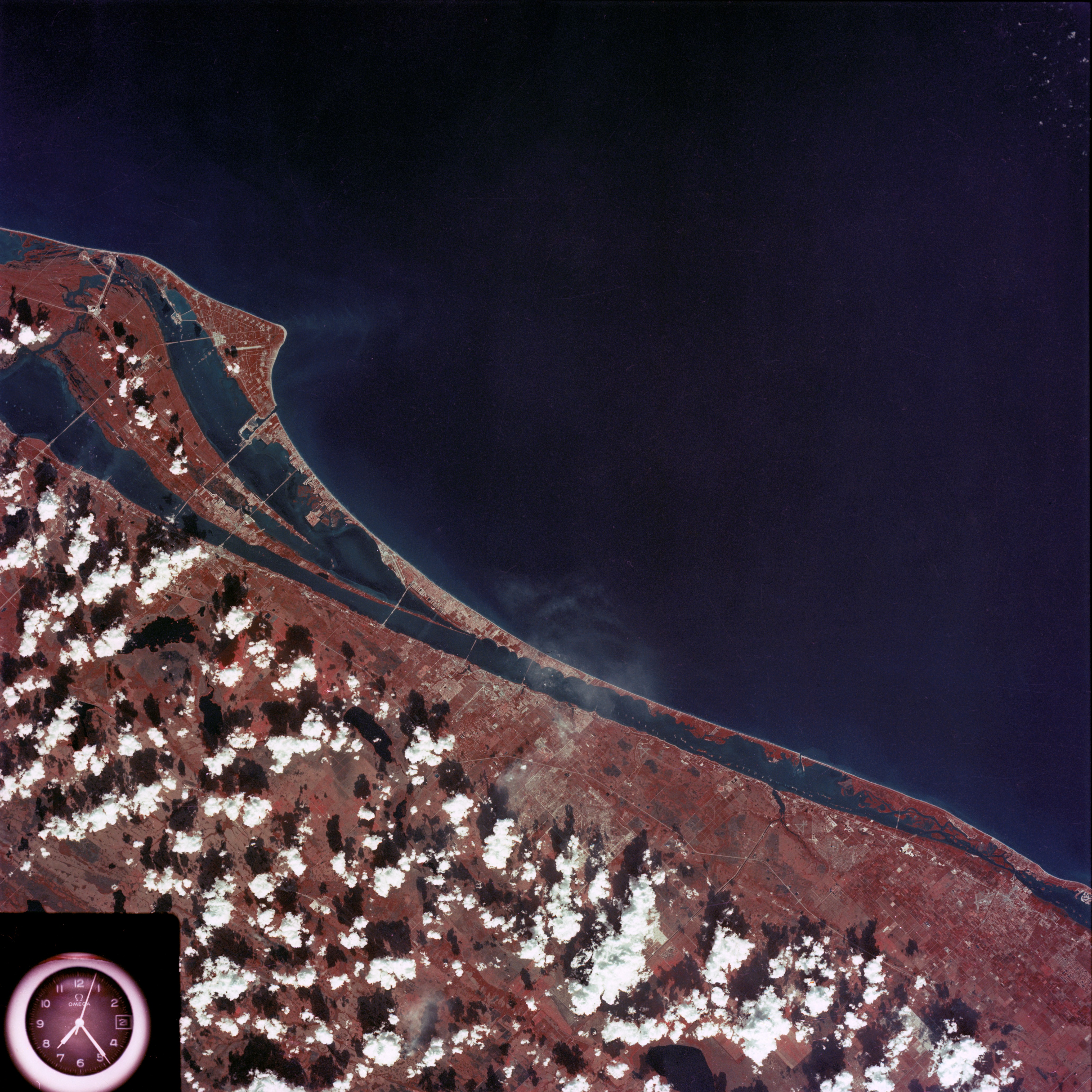
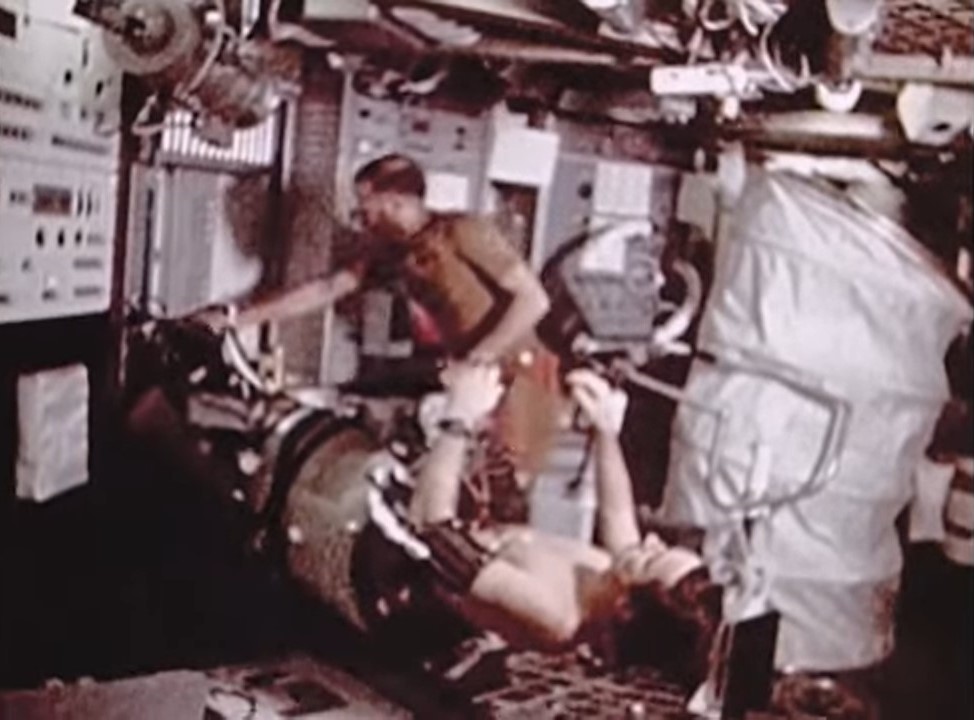
Left: Image of a massive solar flare taken by one of the Apollo Telescope Mount instruments. Middle: Earth Resources Experiment Package infrared photograph of Florida’s central Atlantic coast including NASA’s Kennedy Space Center. Right: Gerald P. Carr monitors Edward G. Gibson during a lower body negative pressure test of his cardiovascular system.
On Dec. 13, the mission’s 28th day, program officials assessed the astronauts’ performance and the status of the station and fully expected that they could complete the nominal 56-day mission and most likely the full 84 days. Despite being overworked and often behind the timeline, Carr, Gibson, and Pogue had already accomplished 84 hours of ATM solar observations, 12 EREP passes, 80 photographic and visual Earth observations, all of the scheduled medical experiments, as well as numerous other activities such as student experiments, and science demonstrations. The astronaut’s major concern centered around the timelining process that had not given them time to adjust to their new environment and did not consider their on-orbit daily routine. Despite the crew sending taped verbal messages to the ground asking for help in fixing these issues, the problem persisted. Skylab 4 Lead Flight Director Neil B. Hutchinson later admitted that the ground team learned many lessons about timelining long duration missions during the first few weeks of Skylab 4.
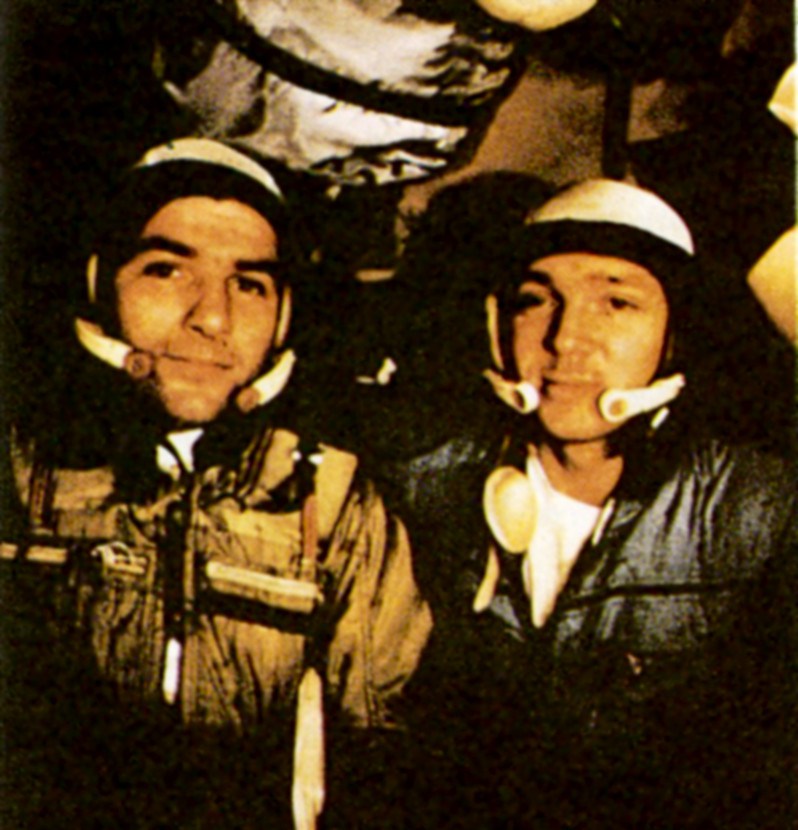

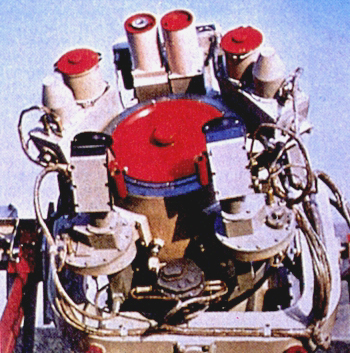
Left: Soyuz 13 cosmonauts Pyotr I. Klimuk, left, and Valentin V. Lebedev during their mission. Middle: Model of Soyuz 13, showing the replacement of the forward docking system with the Orion-2 telescope inside its housing. Right: Preflight view of the Orion-2 instrument package. Image credits: courtesy of Roscosmos.
On Dec. 18, Carr, Gibson, and Pogue received visitors in low Earth orbit. On their 33rd day aboard the Skylab space station, the Soviet Union launched Soyuz 13, with Pyotr I. Klimuk and Valentin V. Lebedev aboard. Although the event marked the first time in history that American astronauts and Soviet cosmonauts orbited the Earth at the same time, the two crews neither met nor communicated with each other, traveling in very different orbits with different missions. The Soyuz 13 cosmonauts operated a scientific package called Orion-2, comprised of three ultraviolet spectrographs for stellar observations and an X-ray telescope to image the Sun. Soviet engineers modified the orbital compartment of the Soyuz, removing its docking apparatus to accommodate the Orion-2 instruments. On Dec. 26, the cosmonauts landed in Kazakhstan in the middle of a snowstorm. The success of Soyuz 13 gave the Soviets and their American counterparts confidence that the spacecraft, modified after the Soyuz 11 accident, would be safe for the Apollo-Soyuz Test Project (ASTP), a joint mission agreed to in May 1972 and planned for July 1975.
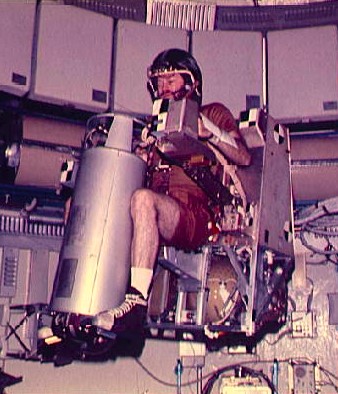
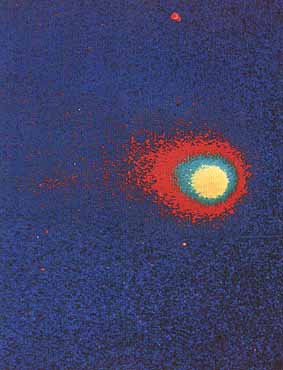
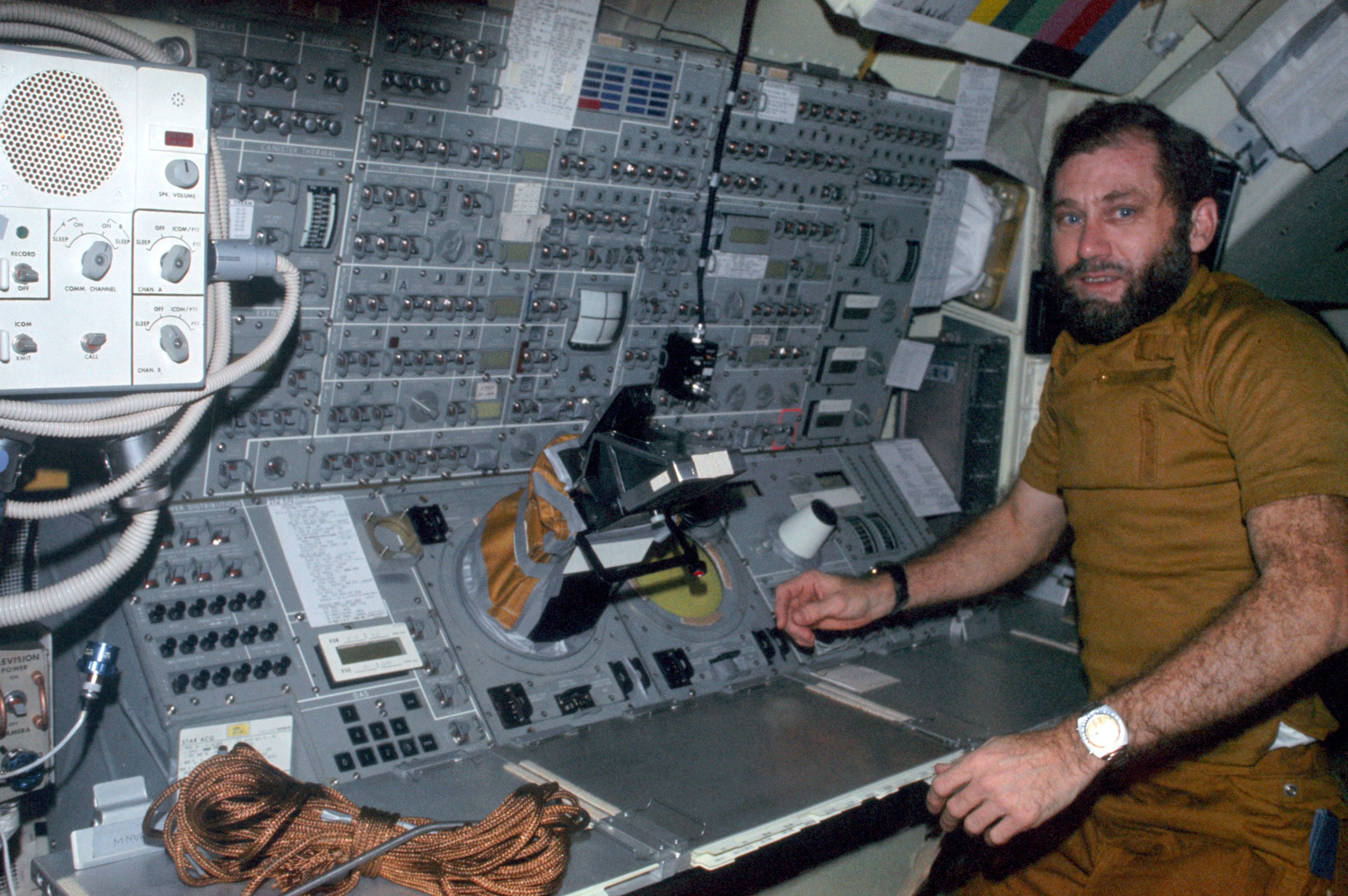
Left: Gerald P. Carr flying the Astronaut Maneuvering Unit. Middle: A far ultraviolet image of Comet Kohoutek. Right: William R. Pogue at the controls of the Apollo Telescope Mount.
Carr, Gibson, and Pogue increased their focus on observing Comet Kohoutek as it neared perihelion, or its closest approach to the Sun, on Dec. 28. At that point, Skylab’s solar telescopes could observe the comet better than any ground-based instruments. In addition to dedicated observations during two spacewalks, the astronauts continued to monitor the comet well into January as it headed rapidly away from the Sun, to return in maybe 75,000 years. The astronauts continued their medical studies and Earth observations as well as tests inside the large dome of the workshop of the Astronaut Maneuvering Unit, a precursor of the Manned Maneuvering Unit used during the space shuttle program to retrieve satellites.
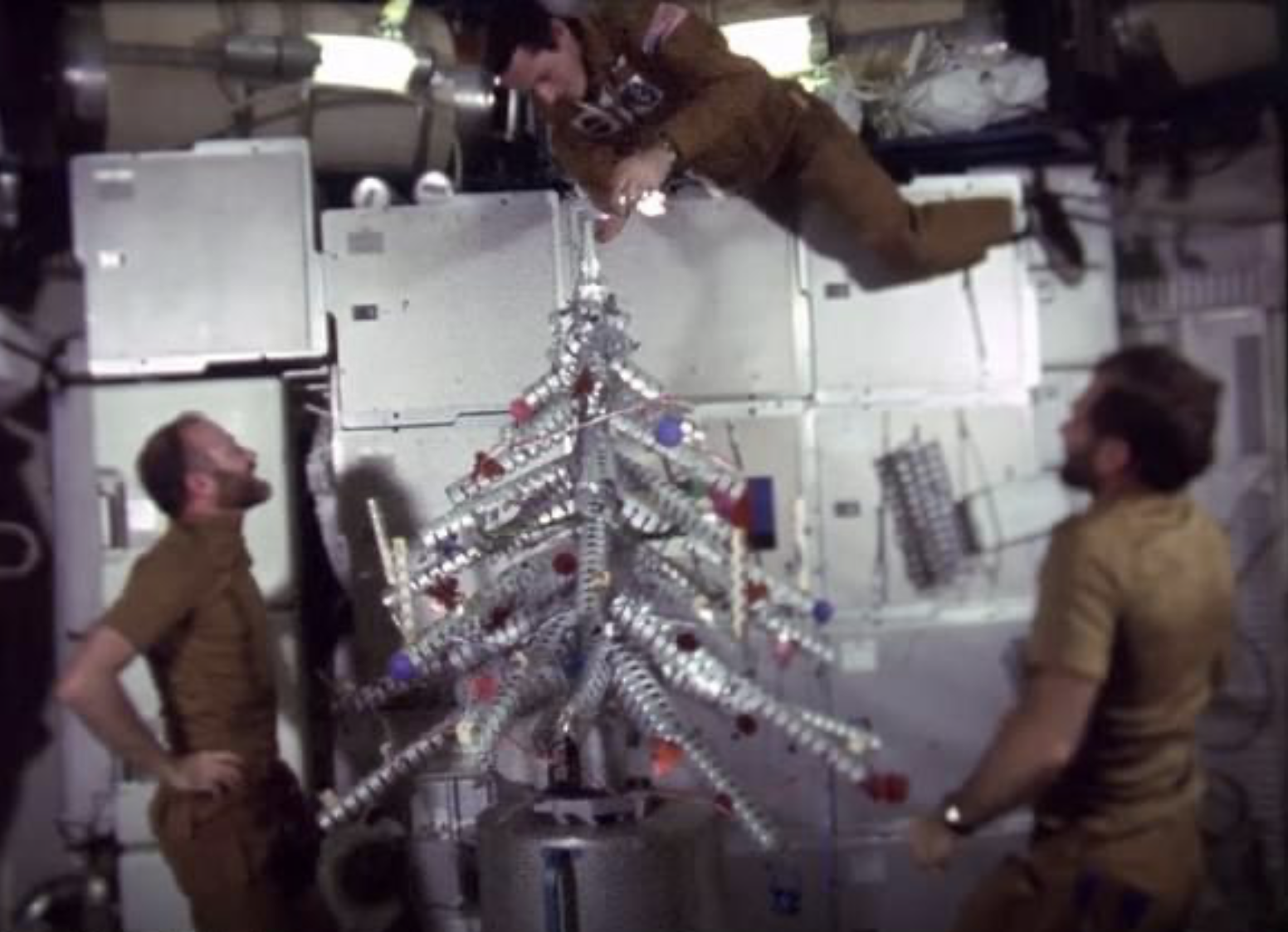
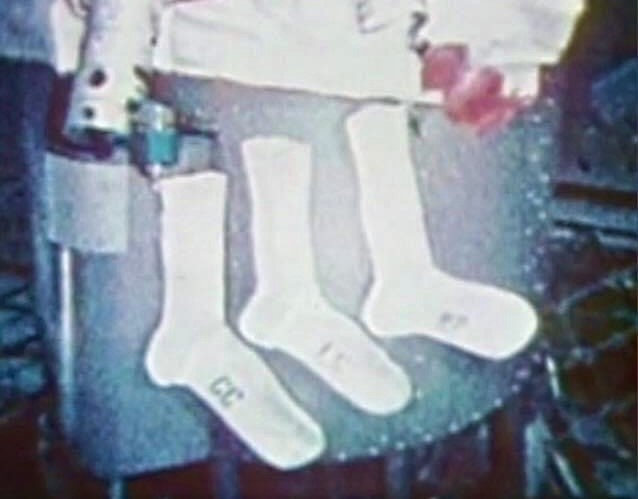
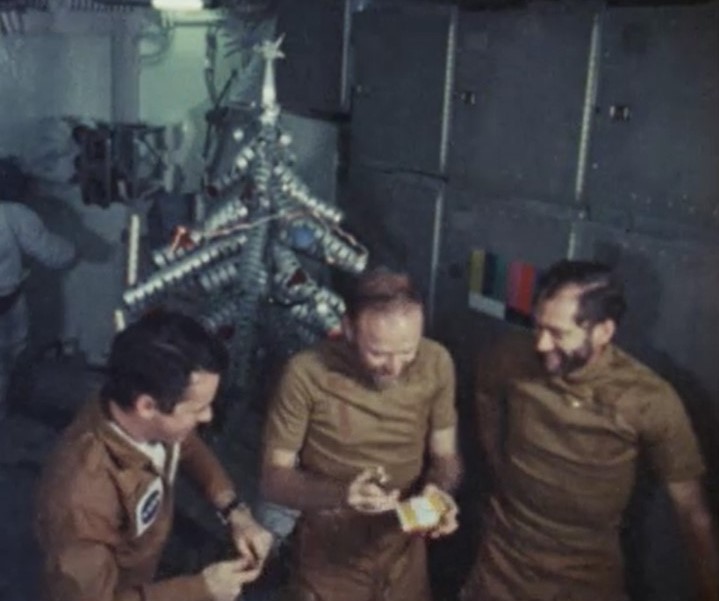
Left: Skylab 4 astronauts Gerald P. Carr, left, Edward G. Gibson, and William R. Pogue build and decorate their makeshift Christmas tree. Middle: Carr, left, Gibson, and Pogue’s Christmas stockings. Right: Gibson, left, Carr, and Pogue open Christmas presents.
For only the second time, American astronauts celebrated Christmas in space. On the first occasion five years earlier, Apollo 8 astronauts observed Christmas as the first crew to orbit the Moon. In the more spacious Skylab workshop, and with more time to prepare, Carr, Gibson, and Pogue built a makeshift Christmas tree by repurposing food cans, used colored decals as decorations, and topped it with a cardboard cutout in the shape of a comet. They hung stockings on the wall beneath the tree and sent holiday greetings to people on the ground.
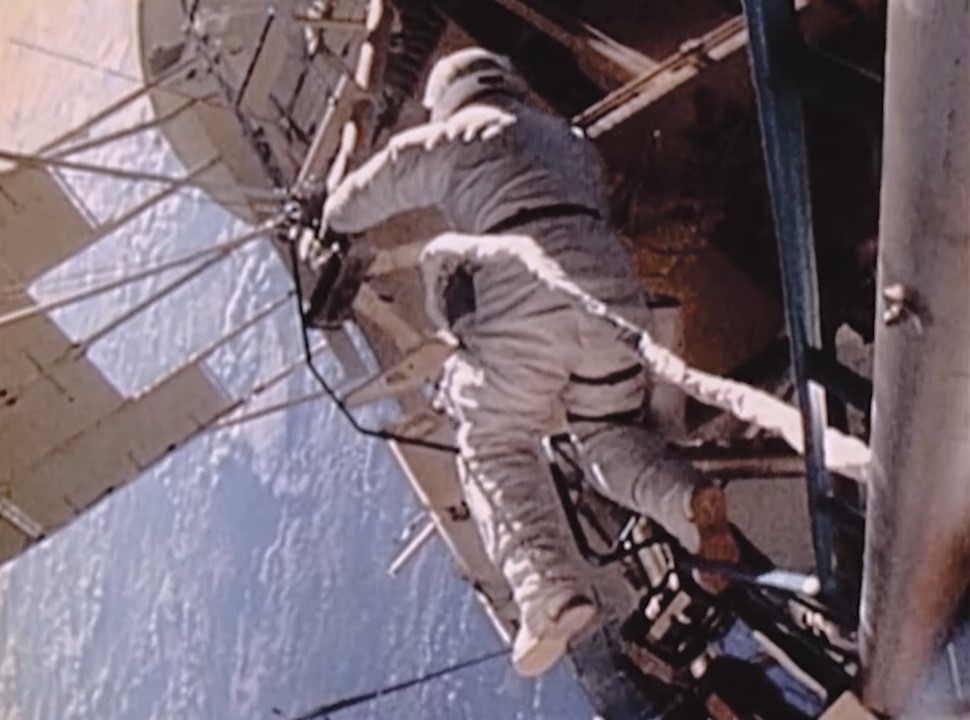
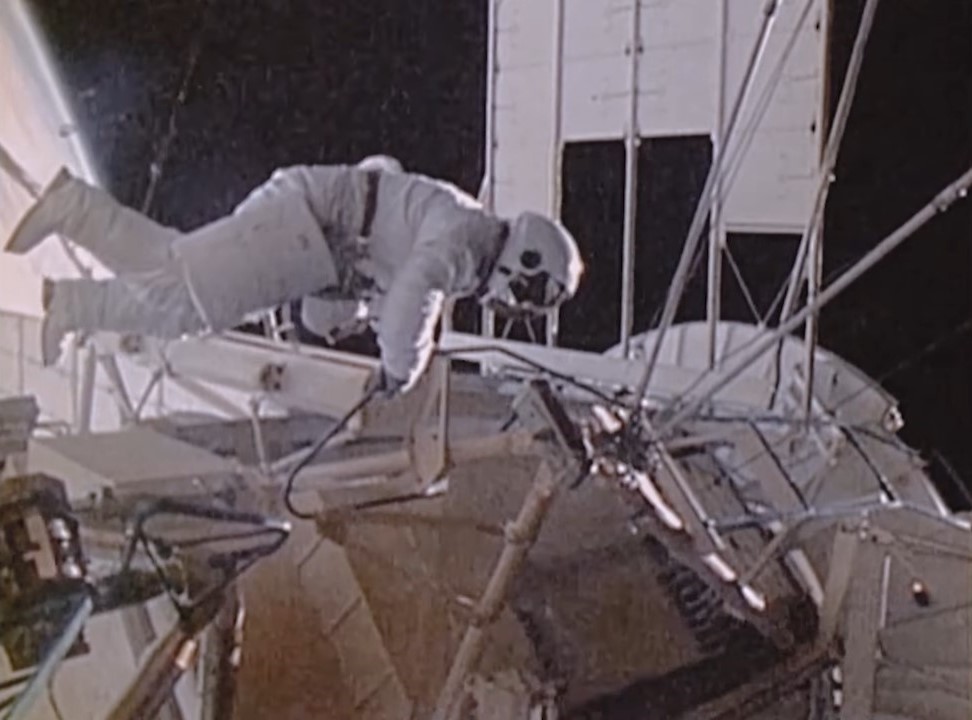
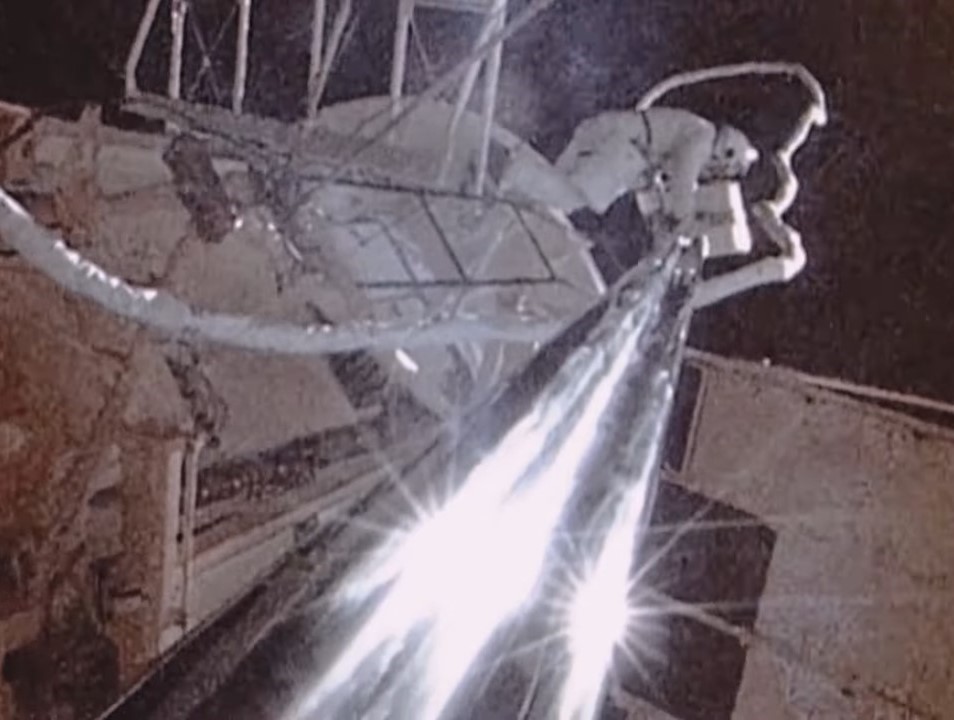
Skylab 4 astronaut Gerald P. Carr in three scenes from the mission’s second spacewalk, with tasks including changing film cassettes in the Apollo Telescope Mount (ATM), repairing one of the ATM instruments, and observing Comet Kohoutek.
The main task on Christmas Day involved the mission’s second spacewalk. Carr and Pogue spent 7 hours and 1 minute outside the space station, then a record for Earth orbital spacewalks. In addition to replacing film cartridges in the ATM, they repaired a stuck filter wheel on an ATM instrument, and used an ultraviolet camera to photograph Comet Kohoutek. Once back inside the station, they enjoyed a Christmas dinner complete with fruitcake, talked to their families, and opened presents from the astronauts’ wives that the ground crew at NASA’s Kennedy Space Center in Florida had hidden in lockers in the Command Module.
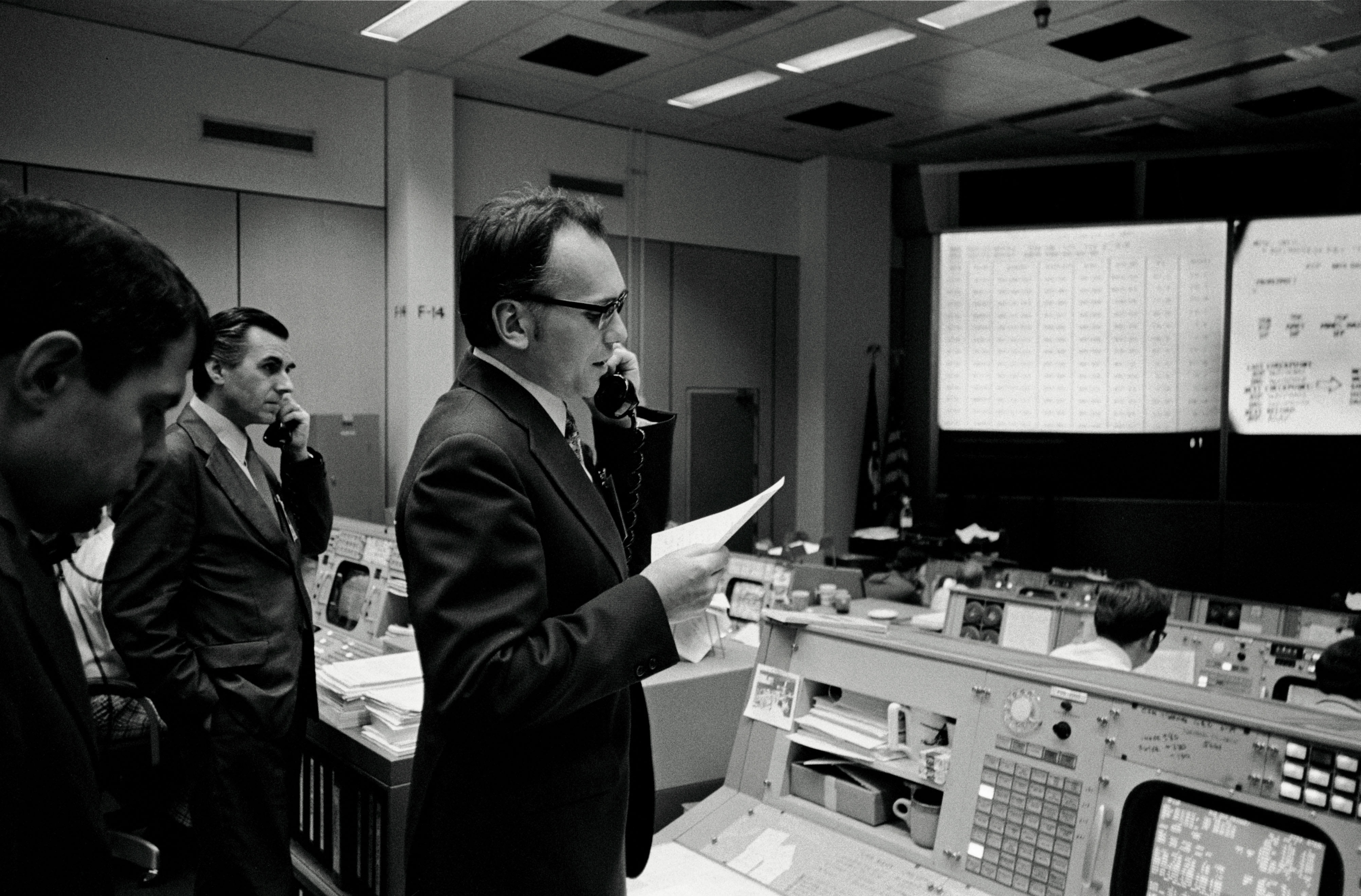
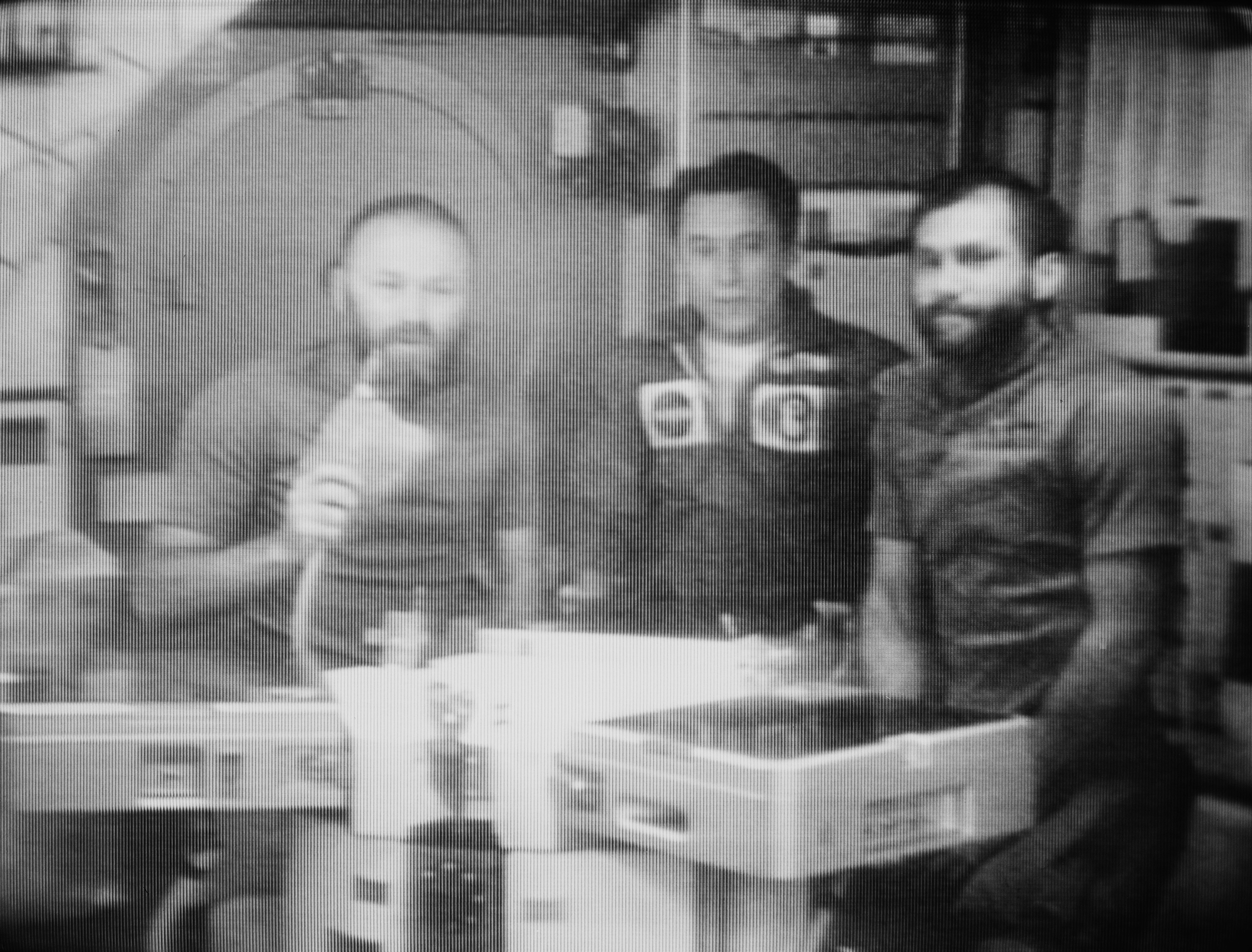
Left: In the Mission Control Center at NASA’s Johnson Space Center in Houston, Professor Luboš Kohoutek talks with the Skylab 4 crew. Middle: Astronauts Gerald P. Carr, left, Edward G. Gibson, and William R. Pogue during the videoconference with Professor Kohoutek. Right: Gibson during the third Skylab 4 spacewalk, exclusively dedicated to study Comet Kohoutek.
On Dec. 28, the day the astronauts reached the halfway point of their 84-day mission, they held an 11-minute video conference with the comet’s discoverer, Czech astronomer Luboš Kohoutek during his visit to the Mission Control Center at NASA’s Johnson Space Center (JSC) in Houston. The next day, Carr and Gibson completed the mission’s third spacewalk lasting 3 hours 29 minutes and dedicated to observing and photographing the comet. Although the crew’s work schedule had improved over the previous few weeks, the astronauts still found it difficult to accomplish the timeline the planners laid out for them. To rectify the problem, Carr requested a dedicated space to ground voice conference so the issues could be aired and rectified. Following what Carr later called the first sensitivity session in space on Dec. 30, planners understood the astronauts’ constraints and the crew worked more effectively the second half of the mission. Capsule communicator Richard H. Truly mentioned that JSC Director Christopher C. Kraft and Flight Crew Operations Chief Donald K. “Deke” Slayton had listened to the conversation and agreed that the teams “made about a million bucks” during the 55-minute conversation. The lessons learned about scheduling activities for long-duration spaceflights proved useful to later programs such as Shuttle/Mir and the International Space Station.
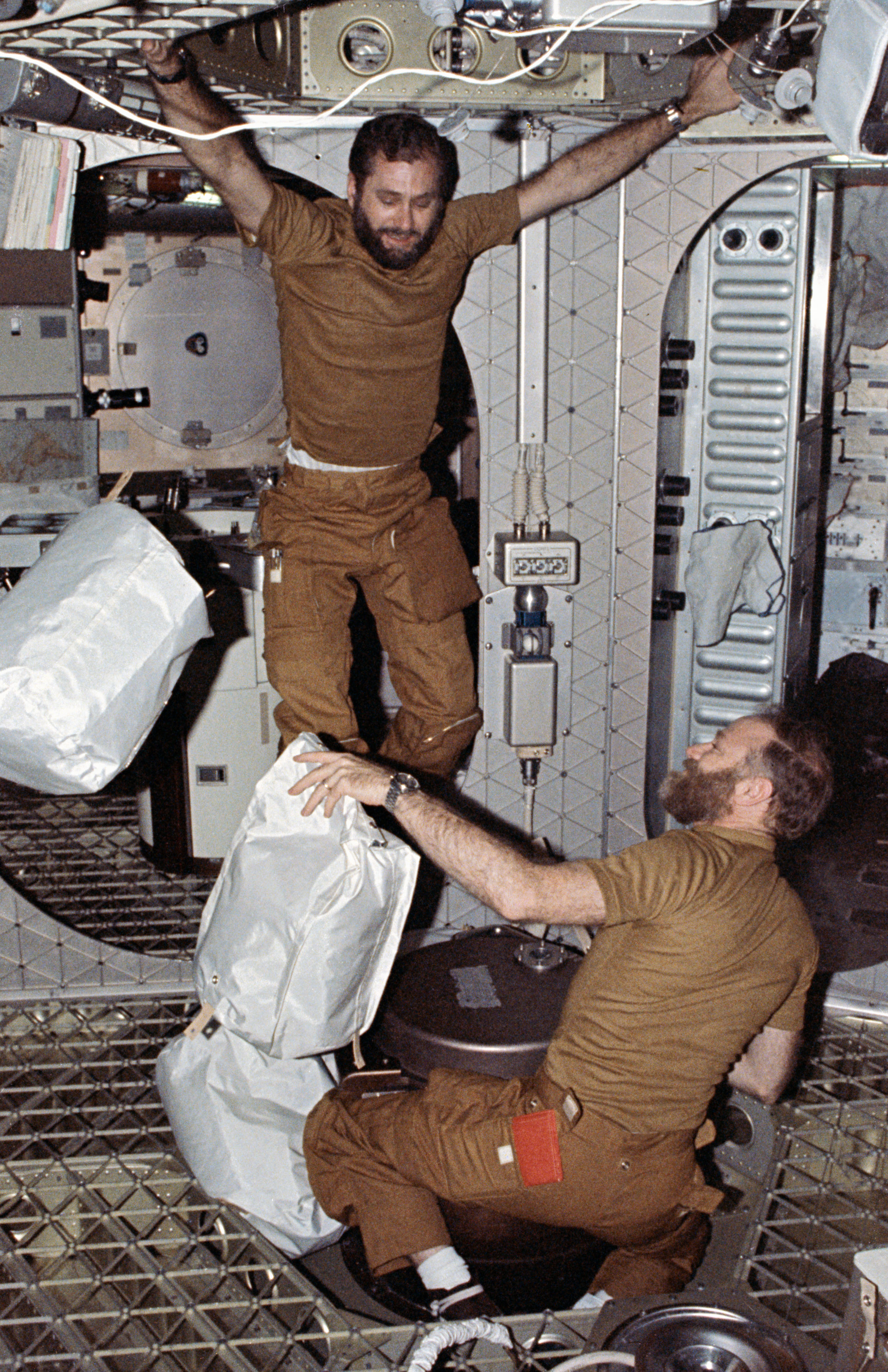
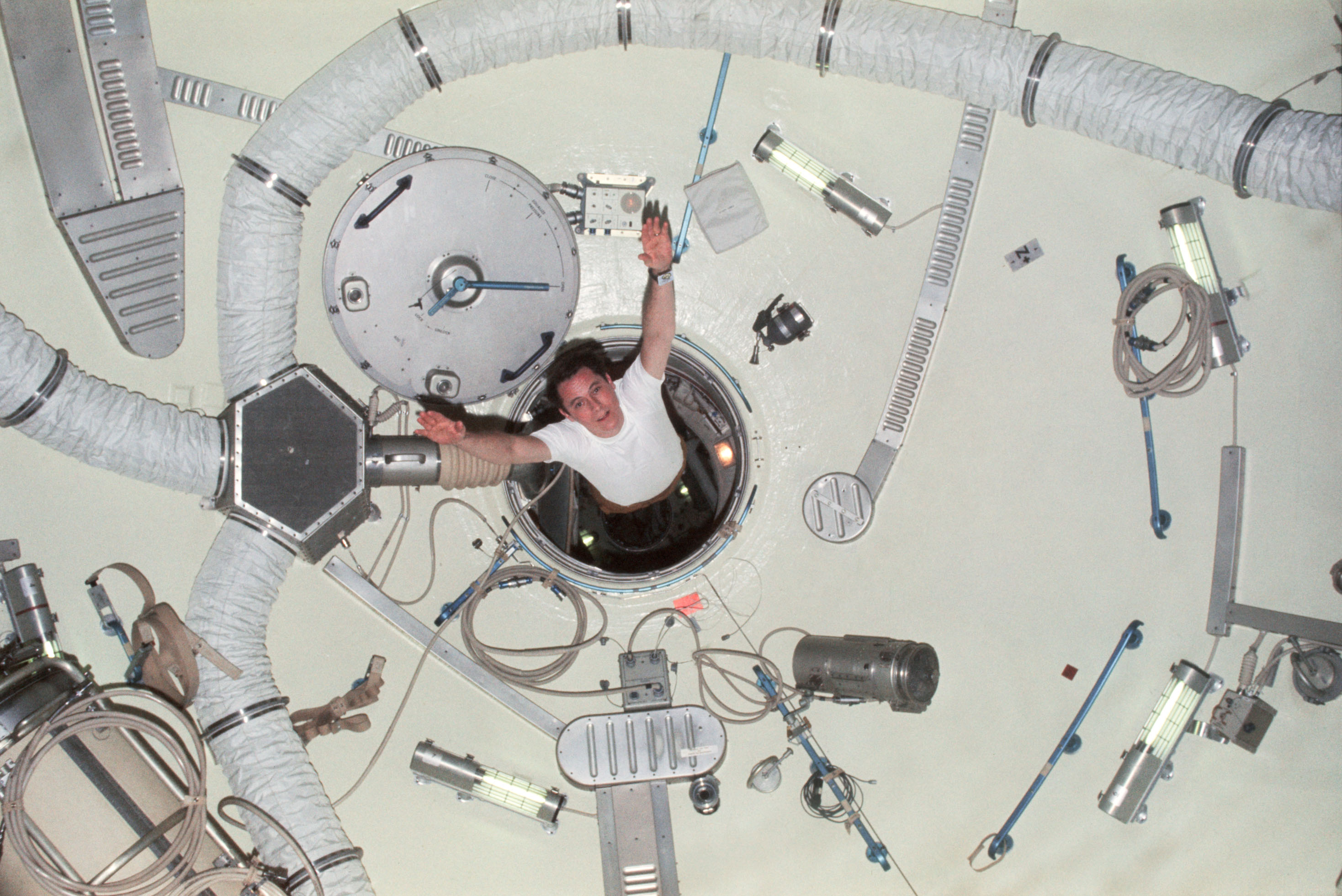
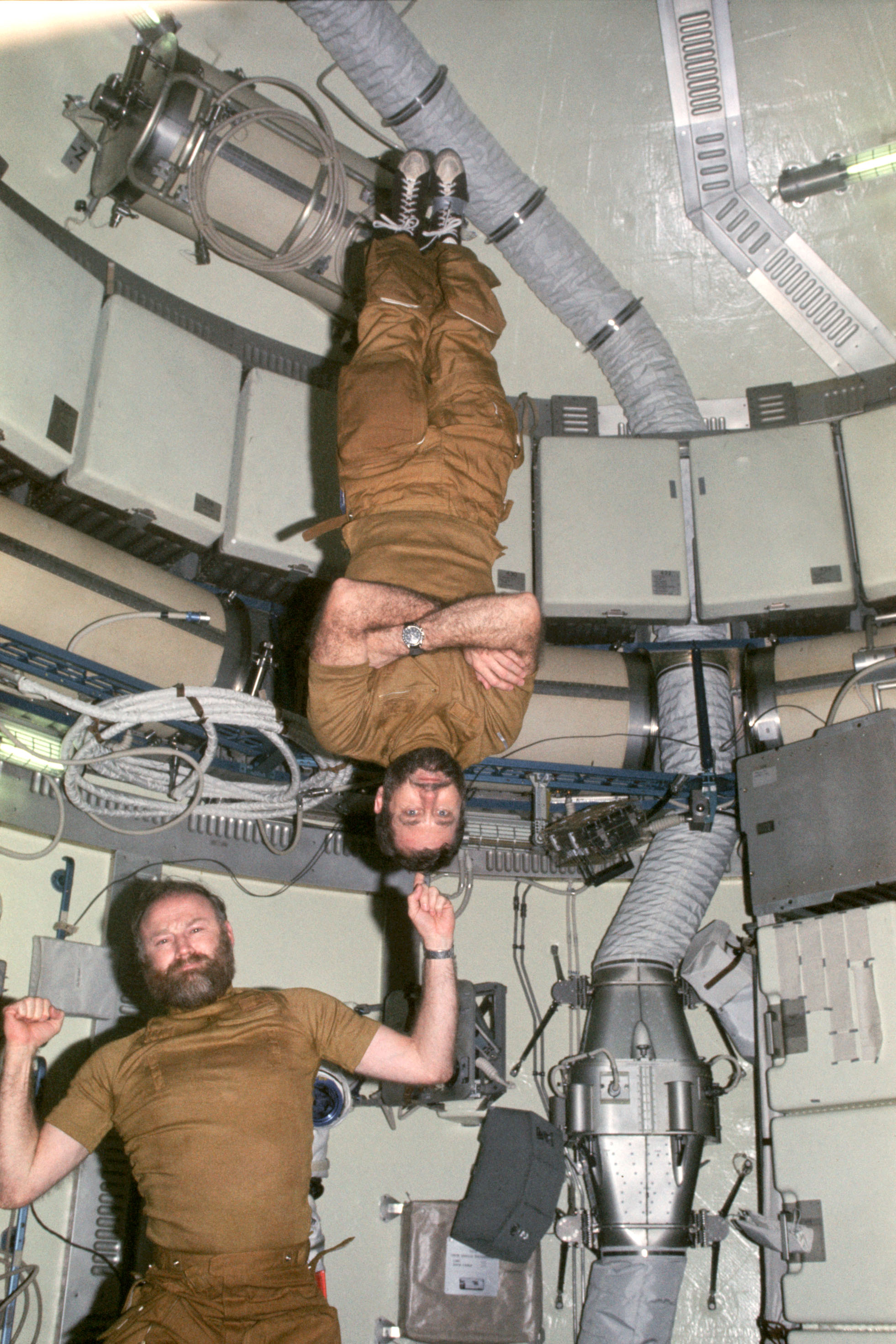
Left: Williams R. Pogue, left, and Gerald P. Carr place bags into the trash airlock. Middle: Edward G. Gibson floats into the large volume of the orbital workshop from airlock module. Right: Carr and Pogue demonstrate weightlessness.
On Jan. 1, 1974, Carr, Gibson, and Pogue celebrated the coming of the new year, the first space crew to observe that holiday along with Thanksgiving and Christmas. An American astronaut would not repeat that for 23 years until John E. Blaha during his four-month stay aboard the Mir space station in 1996-7. On Jan. 10, Carr, Gibson, and Pogue enjoyed a day off, meaning planners only scheduled one third of their time, freeing them to pursue activities of their own choosing. On the ground, mission managers held the 56-day review of the mission and based on the crew’s health and the station’s condition declared the mission go for 84 days, although strictly speaking, managers and flight surgeons approved the mission’s extension one week at a time.
For more insight into the Skylab 4 mission, read Carr’s, Gibson’s, and Pogue’s oral histories with the JSC History Office.
To be continued …
With special thanks to Ed Hengeveld for his expert contributions on Skylab imagery.
Powered by WPeMatico
Get The Details…
Kelli Mars