

Celebrating the Holiday Season in Space
The Christmas, Hanukkah, and New Year holidays are joyful events typically spent with family and friends. Astronauts and cosmonauts who find themselves in space during the holidays have found their own unique way to celebrate the occasions. In the early years of the space program, holidays spent in space occurred infrequently, most notably the flight of Apollo 8 around the Moon during Christmas 1968, making them more memorable. As missions became longer and more frequent, holidays in space became more common occasions. For the past 23 years, holidays spent aboard the International Space Station have become annual, if not entirely routine, events.
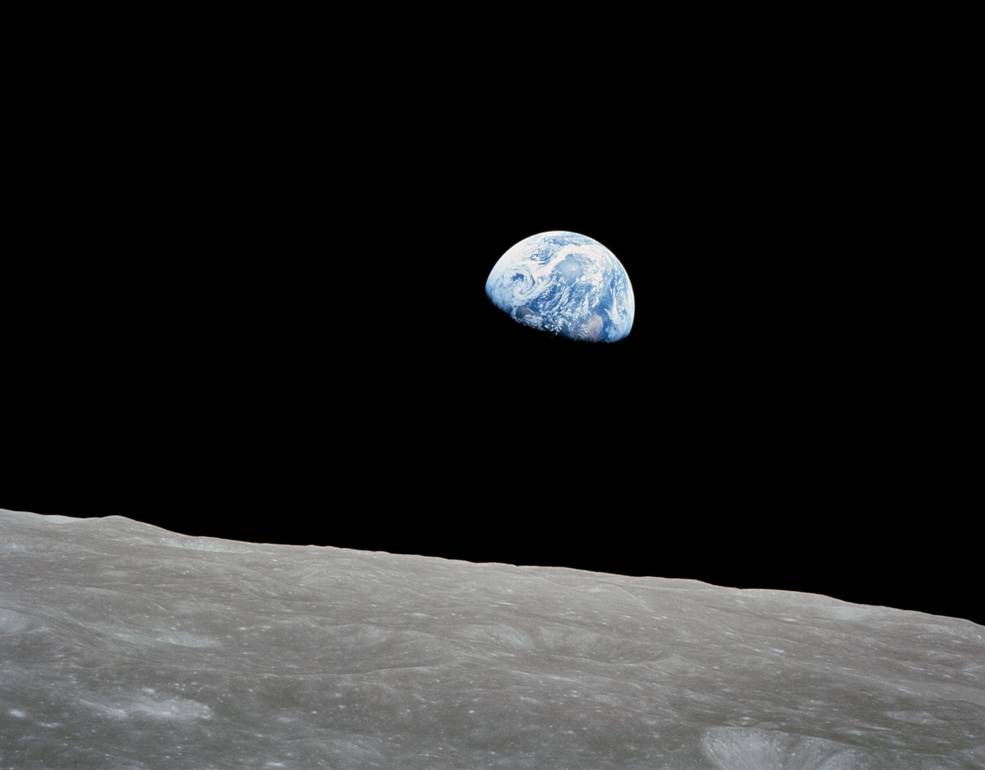
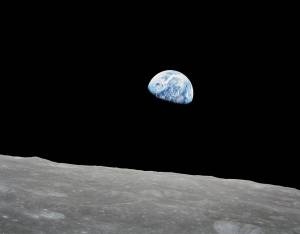
Left: The famous Earthrise photograph, taken by the Apollo 8 crew in lunar orbit. Right: Video of the Apollo 8 crew of Frank Borman, James A. Lovell, and William A. Anders reading from The Book of Genesis.
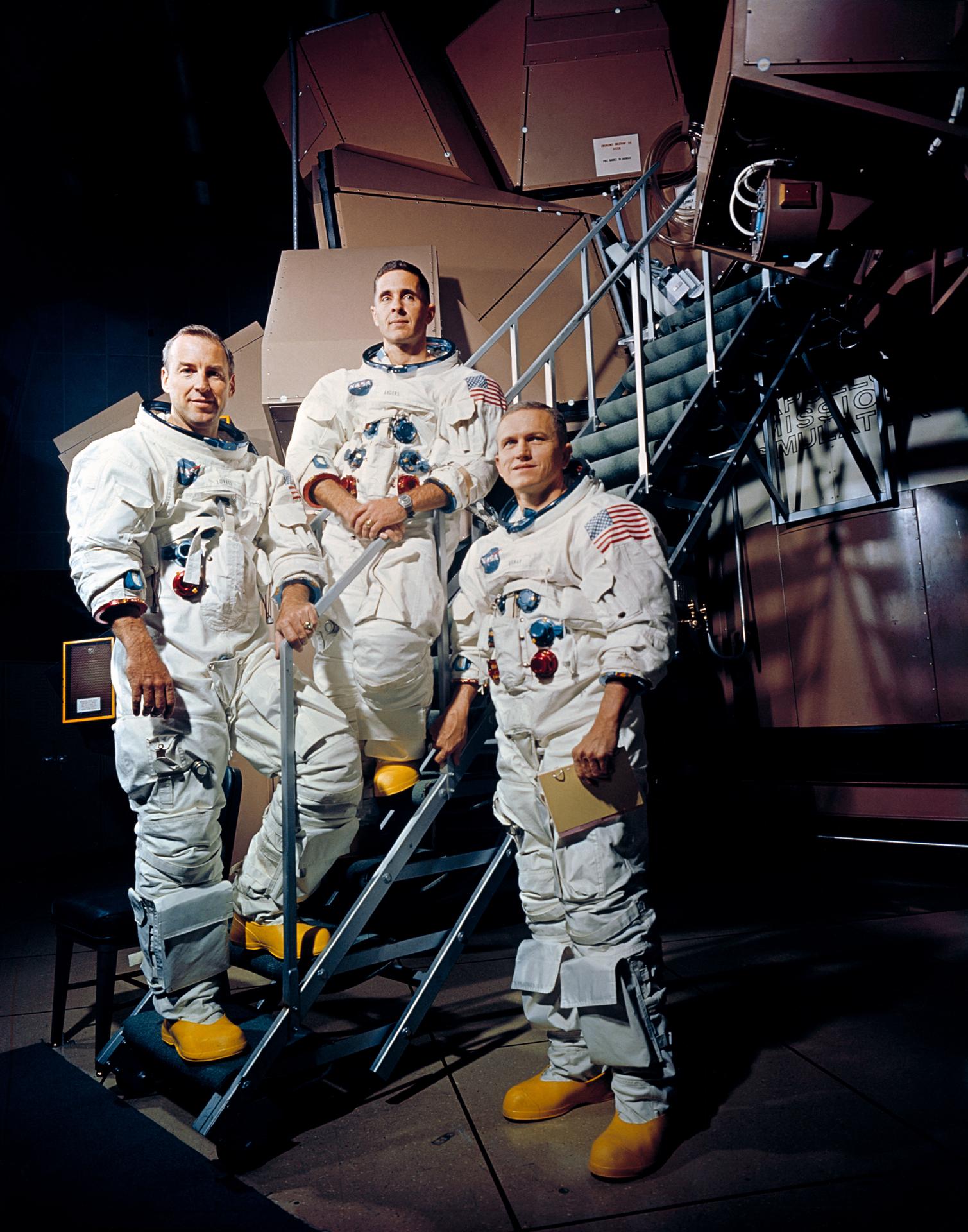
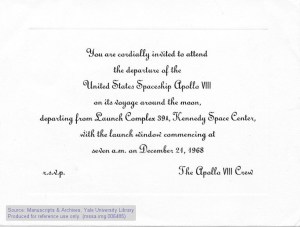
As the first crew to spend Christmas in space, Apollo 8 astronauts Frank Borman, James A. Lovell, and William A. Anders, celebrated the holiday while circling the Moon in December 1968, the first humans to leave Earth orbit. They immortalized the event on Christmas Eve by taking turns reading the opening verses from the Bible’s Book of Genesis as they broadcast scenes of the Moon gliding by below. An estimated one billion people in 64 countries tuned in to their Christmas Eve broadcast. As they left lunar orbit, Lovell radioed back to Earth, where Christmas Eve had already turned to Christmas Day, “Please be informed there is a Santa Claus!”
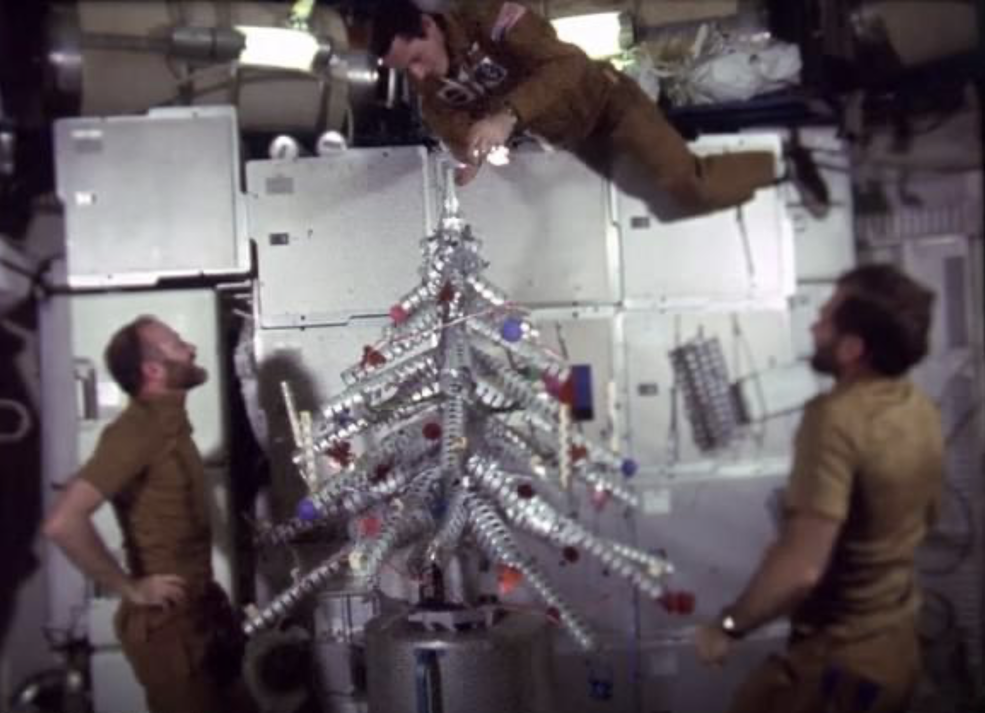
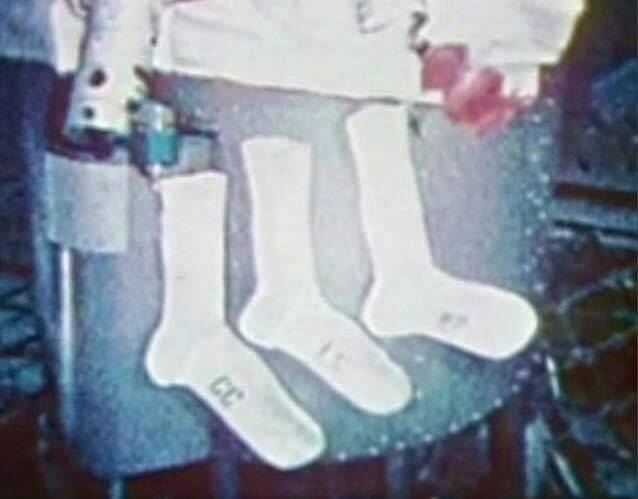
Left: Skylab 4 astronauts Gerald P. Carr, left, Edward G. Gibson, and William R. Pogue trim their homemade Christmas tree in December 1973. Right: Carr, Gibson, and Pogue hung their stockings aboard Skylab.
During their 84-day record-setting mission aboard the Skylab space station in 1973 and 1974, Skylab 4 astronauts Gerald P. Carr, William R. Pogue, and Edward G. Gibson celebrated Thanksgiving, Christmas, and New Year’s in space – the first crew to spend Thanksgiving and New Year’s in orbit. They built a homemade Christmas tree from leftover food containers, used colored decals as decorations, and topped it with a cardboard cutout in the shape of a comet. Carr and Pogue spent seven hours on a Christmas Day spacewalk to change out film canisters and observe the passing Comet Kohoutek. Once back inside the station, they enjoyed a Christmas dinner complete with fruitcake, talked to their families, and opened presents. They even had orbital visitors of sorts, as Soviet cosmonauts Pyotr I. Klimuk and Valentin V. Lebedev orbited the planet aboard Soyuz 13 between Dec. 18 and 26, marking the first time that astronauts and cosmonauts were in space at the same time. Different orbits precluded any direct contact between the two crews.
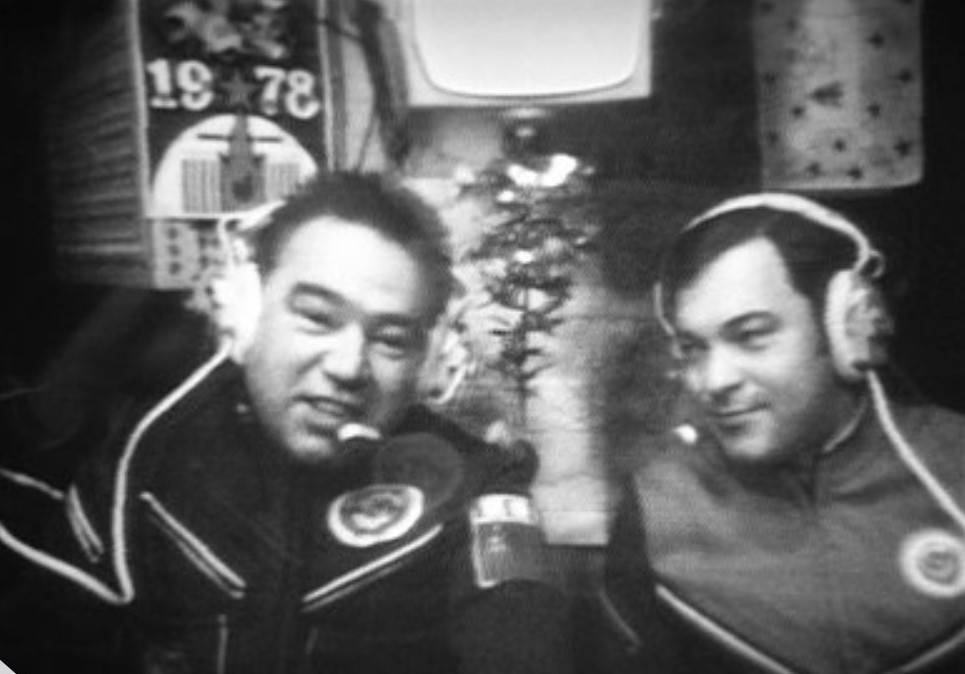
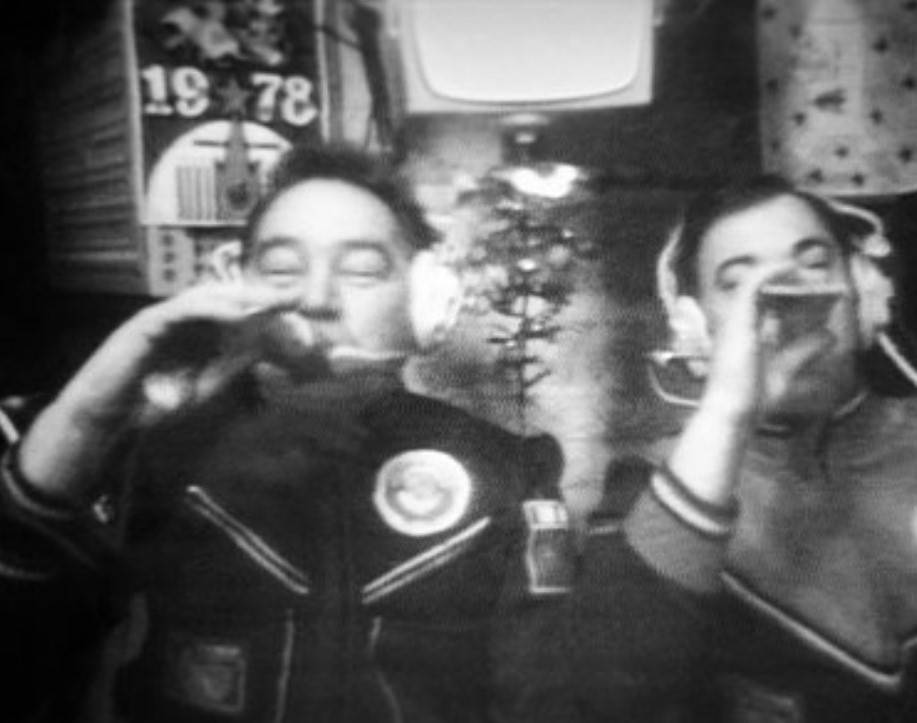
Aboard Salyut-6, Georgi M. Grechko, left, and Yuri V. Romanenko, toast to celebrate the new year in space, the first Russian cosmonauts to do so. Image credits: Courtesy of Roscosmos.
In the more secular Soviet era, the New Year’s holiday had more significance than the Jan. 7 observance of Orthodox Christmas. The first cosmonauts to ring in a new year in orbit were Yuri V. Romanenko and Georgi M. Grechko, during their record-setting 96-day mission in 1977 and 1978, aboard the Salyut-6 space station. They toasted the new year during a TV broadcast with the ground. The exact nature of the beverage consumed for the occasion has not been passed down to posterity.
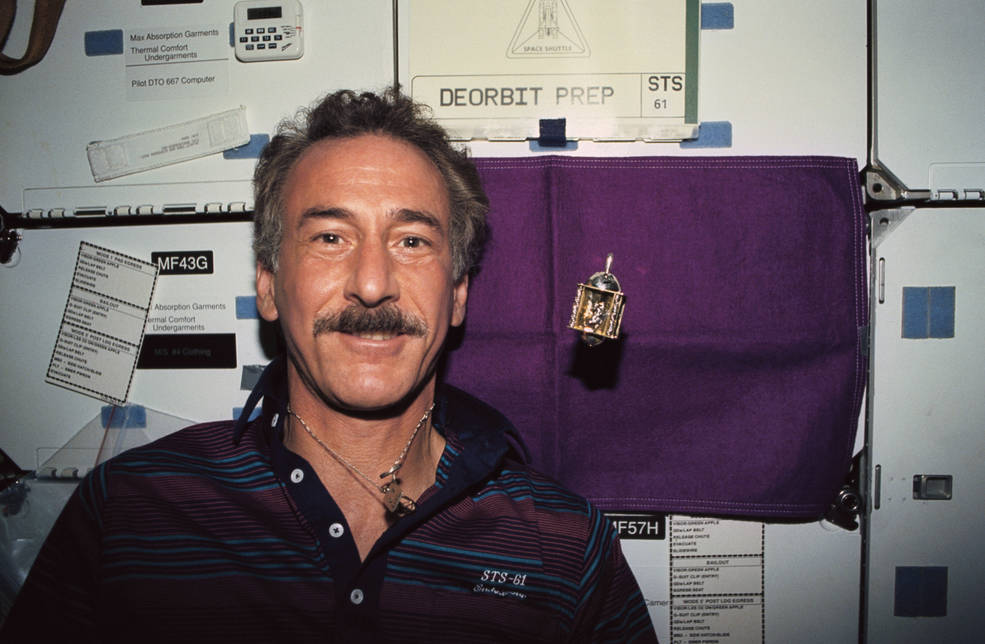
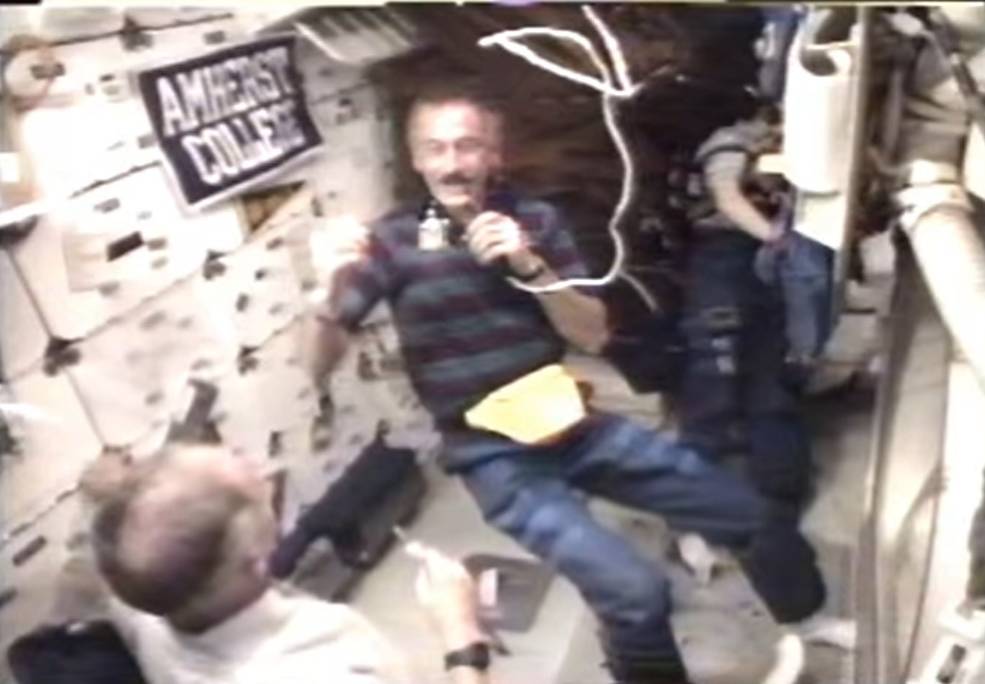
Left: STS-61 mission specialist Jeffrey A. Hoffman with a dreidel during Hanukkah in December 1993. Right: Video of Hoffman describing how he celebrated Hanukkah aboard space shuttle Endeavour.
The eight-day Jewish holiday of Hanukkah, also known as the Festival of Lights, celebrates the recapture of Jerusalem and rededication of the Second Temple in 164 B.C.E. It occurs in the month of Kislev in the Hebrew lunar calendar, which can fall between late November to late December in the Gregorian calendar. NASA astronaut Jeffrey A. Hoffman celebrated the first Hanukkah in space during the STS-61 Hubble Space Telescope first servicing mission in 1993. Hanukkah that year began on the evening of Dec. 9, after Hoffman completed his third spacewalk of the mission. He celebrated with a traveling menorah, unlit of course, and by spinning a dreidel.
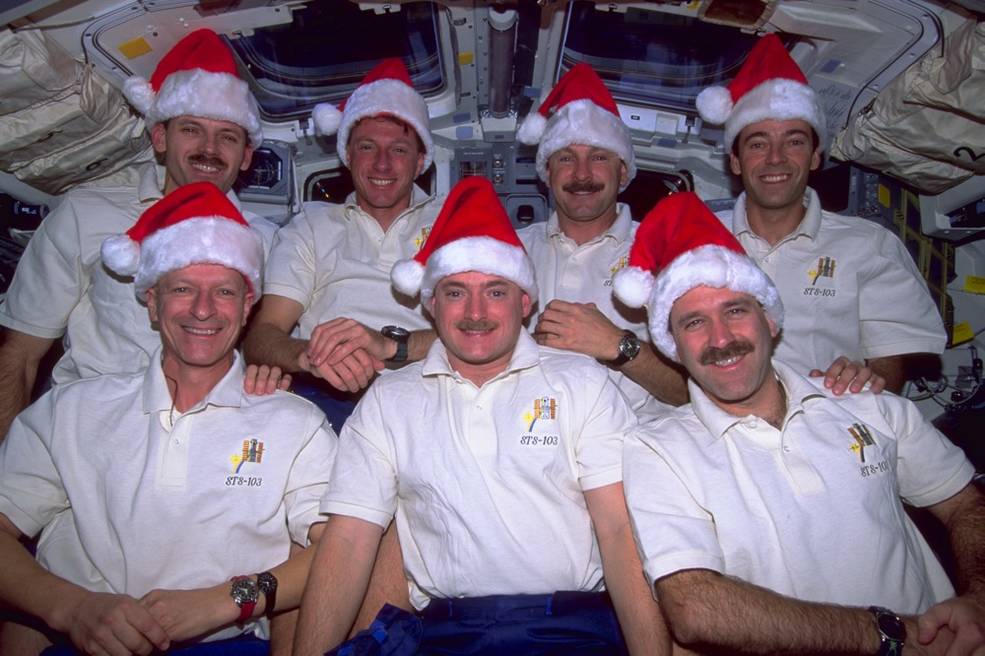
The STS-103 crew show off their Santa hats on the flight deck of space shuttle Discovery in 1999.
The crew of another Hubble Space Telescope repair mission, STS-103, celebrated the first space shuttle Christmas in 1999 aboard Discovery. For Christmas dinner, Curtis L. Brown, Scott J. Kelly, Steven L. Smith, Jean-François A. Clervoy of the European Space Agency (ESA), John M. Grunsfeld, C. Michael Foale, and Claude Nicollier of ESA enjoyed duck foie gras on Mexican tortillas, cassoulet, and salted pork with lentils. Smith and Grunsfeld completed repairs on the telescope during a Christmas Eve spacewalk.
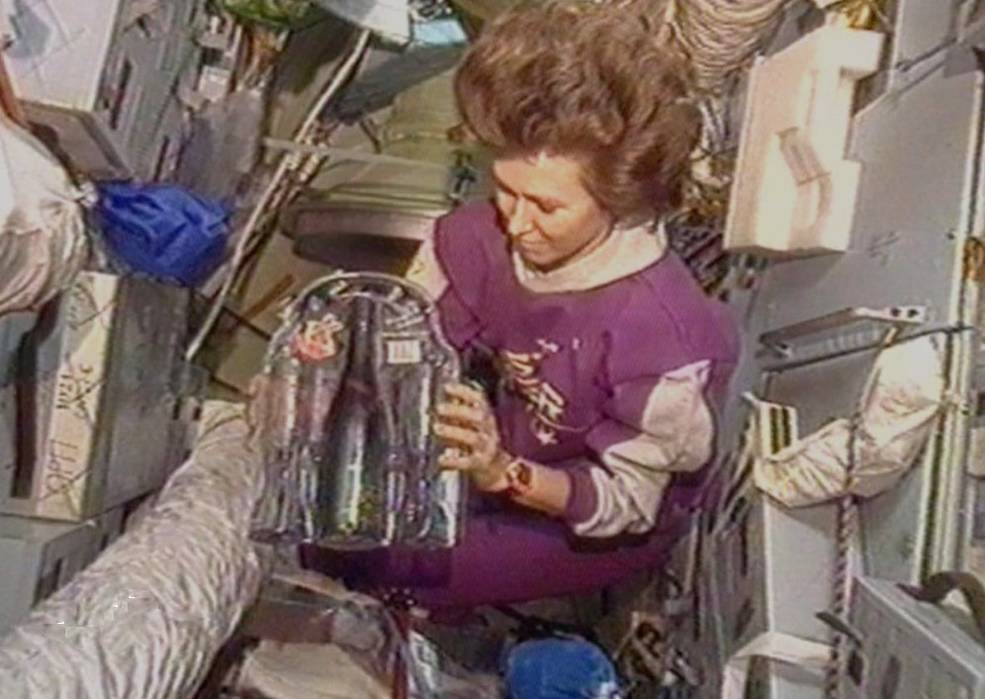
Left: Roscosmos cosmonaut and Mir Expedition 17 flight engineer Elena V. Kondakova with a bottle of champagne to celebrate New Year’s Eve 1994. Right: Video of Kondakova demonstrating the behavior of champagne in weightlessness aboard Mir. Image credits: Courtesy of Roscosmos.
Between 1987 and 1998, 12 Mir expedition crews spent their holidays aboard the ever-expanding orbital outpost. Two of the crews included NASA astronauts, John E. Blaha and David A. Wolf, aboard the Russian space station as part of the Shuttle-Mir Program.
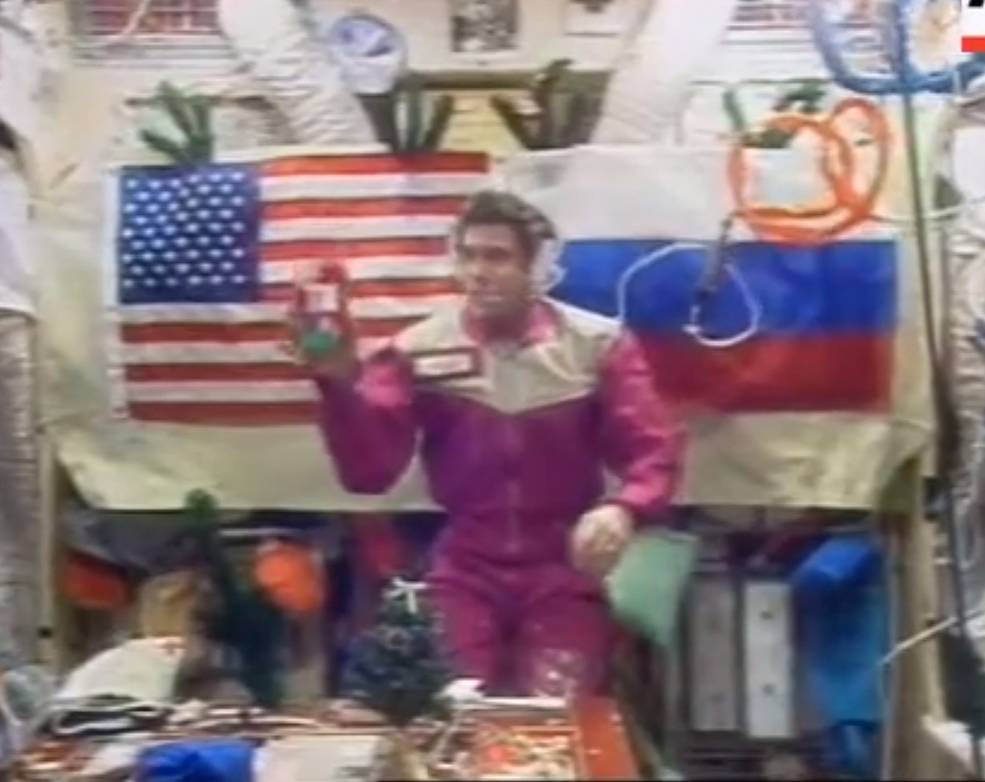
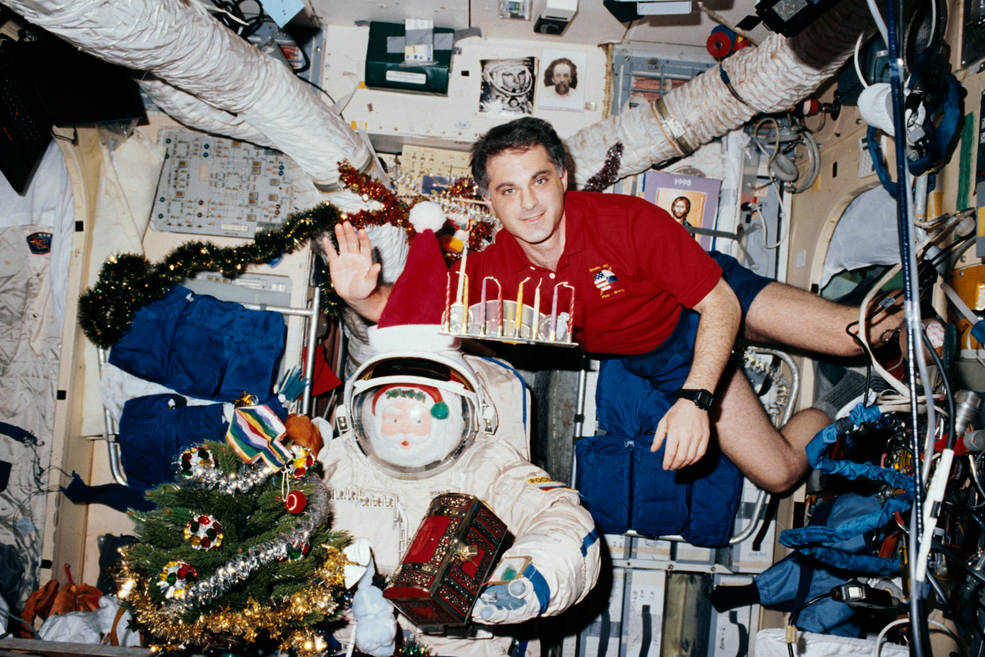
Left: Video of Mir Expedition 22 flight engineer and NASA astronaut John E. Blaha’s 1996 Christmas message from Mir. Right: Mir Expedition 24 flight engineer and NASA astronaut David A. Wolf with his menorah and dreidel to celebrate Hanukkah in 1997.
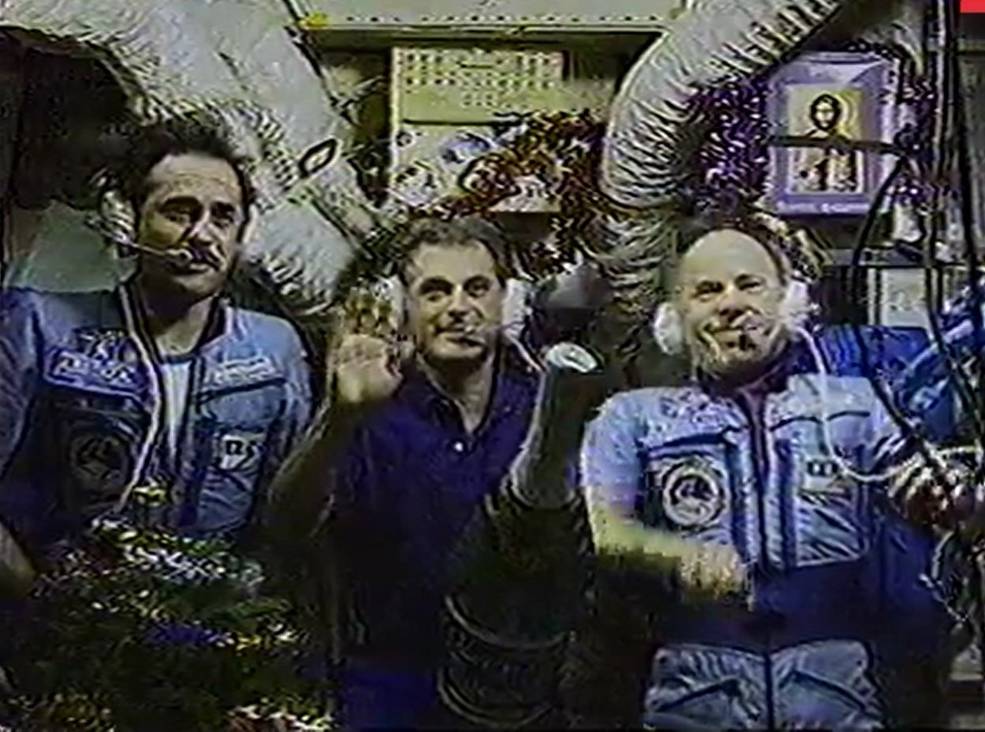
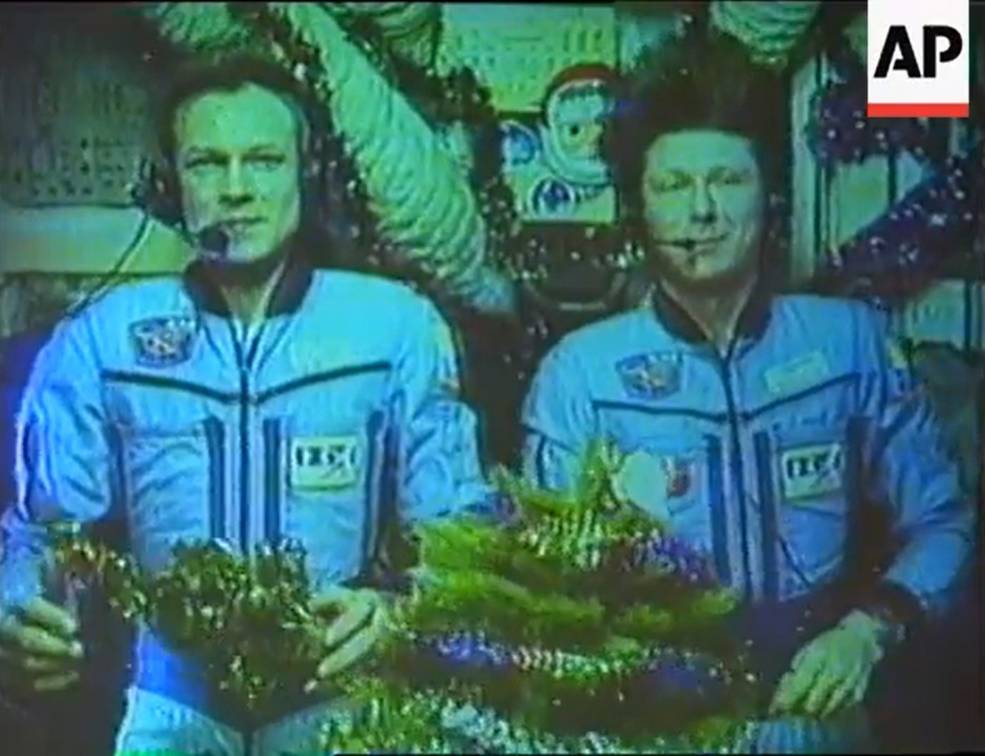
The last two New Year’s Eve messages from Mir. Left: Mir 24 crew of Pavel V. Vinogradov, left, NASA astronaut David A. Wolf, and Anatoli Y. Solovyev in 1997. Right: Mir 26 crew of Sergei V. Avdeyev, left, and Gennadi I. Padalka in 1998. It was the third time Avdeyev rang in the new year in space. Image credits: Courtesy of Roscosmos.
The arrival of Expedition 1 crew members William M. Shepherd of NASA and Yuri P. Gidzenko and Sergei K. Krikalev of Roscosmos aboard the International Space Station on Nov. 2, 2000, marked the beginning of a permanent human presence in space. The first to celebrate Christmas and ring in the new year aboard the fledgling orbiting laboratory, they began a tradition of reading a goodwill message to people back on Earth. Shepherd honored a naval tradition of writing a poem as the first entry of the new year in the ship’s log.
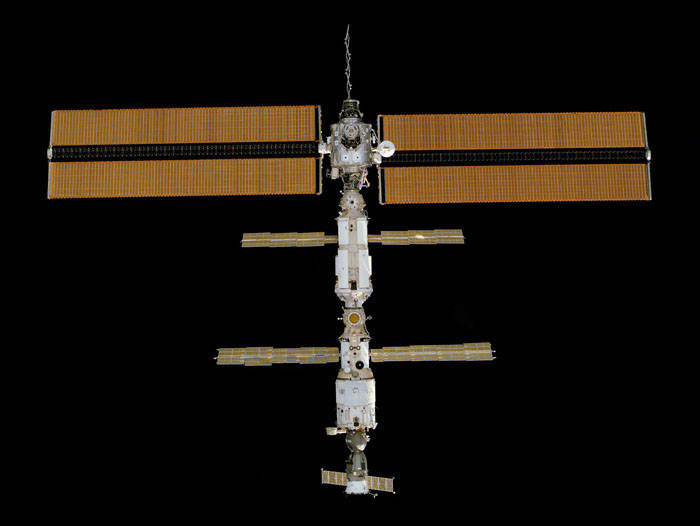
Left: Video of Expedition 1 crew members Yuri P. Gidzenko of Roscosmos, left, NASA astronaut William M. Shepherd, and Sergei K. Krikalev of Roscosmos reading their Christmas message in December 2000 – this marked Krikalev’s third holiday season spent in orbit, the first two spent aboard Mir in 1988 and 1991. Right: The space station as it appeared in December 2000.
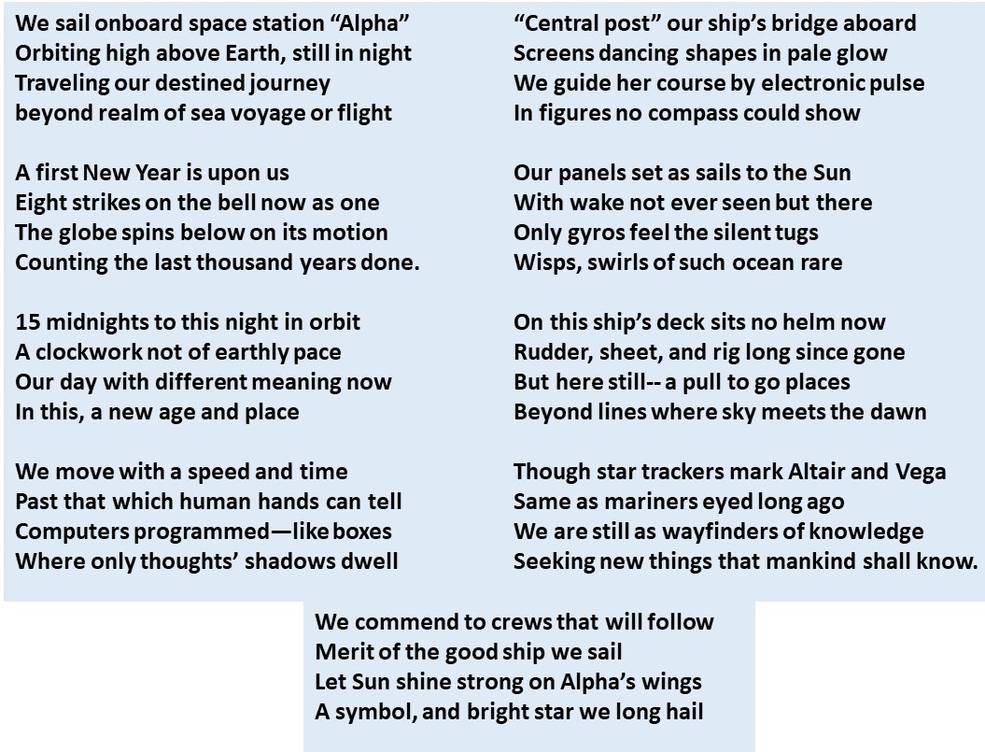
Expedition 1 commander NASA astronaut William M. Shepherd’s poem, written for the New Year’s Day 2001 entry in the space station’s log, in keeping with naval tradition.
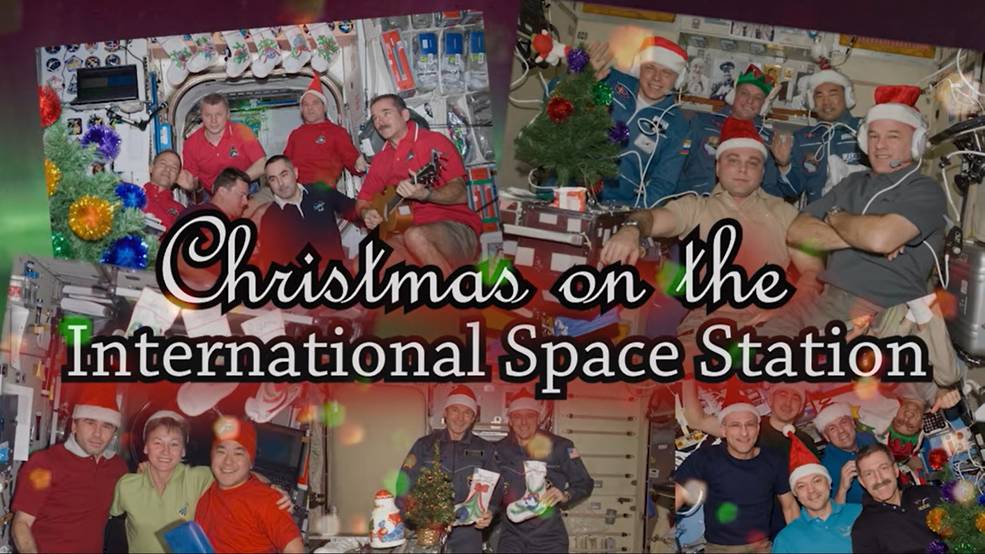
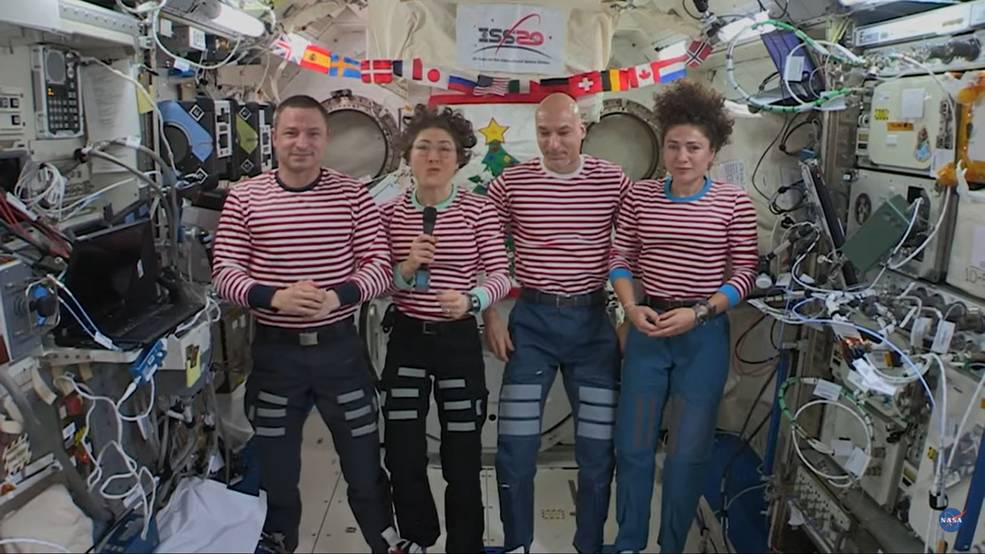
Left: A brief video selection of how some expedition crews celebrated Christmas aboard the space station. Right: From 2019, the Christmas message from the Expedition 61 crew members.
Enjoy the following selection of photographs and videos of international crews as they celebrated Hanukkah and Christmas, and rang in the new year over the past 22 years aboard the space station.
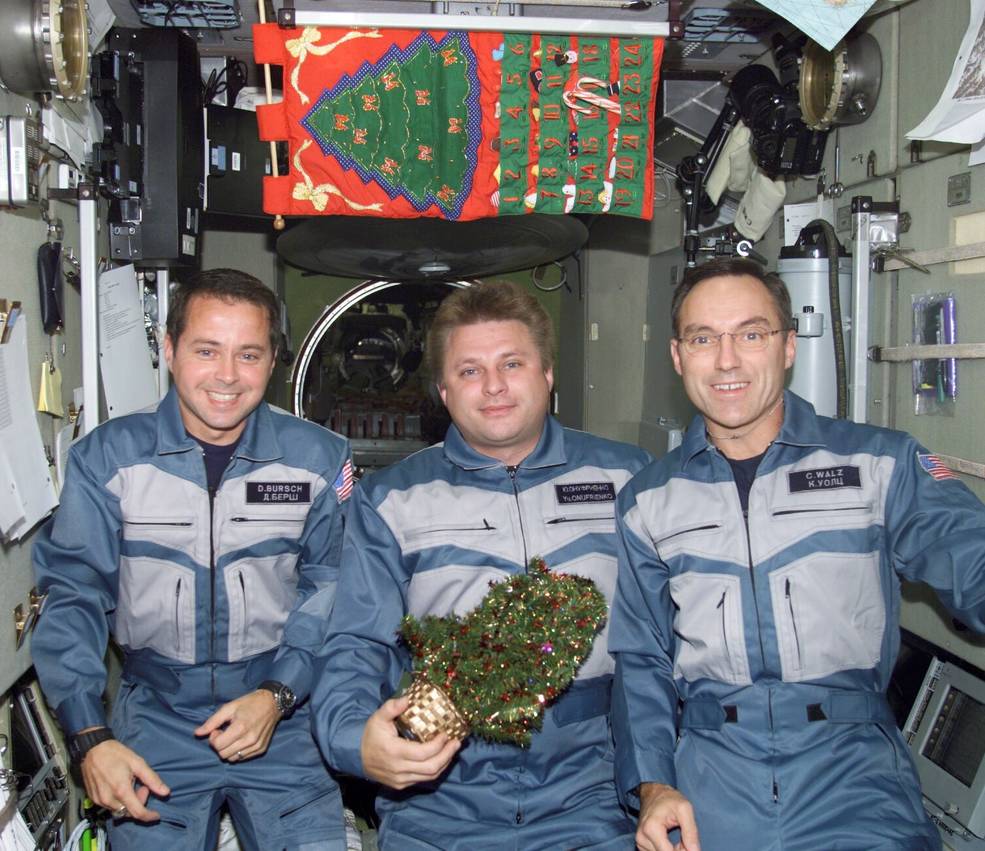
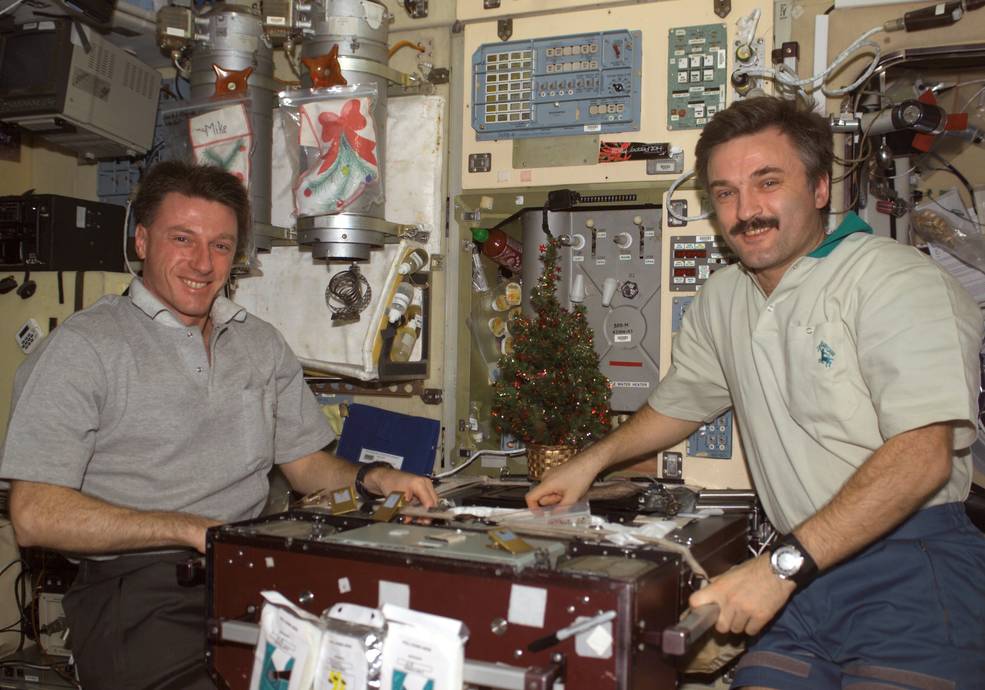
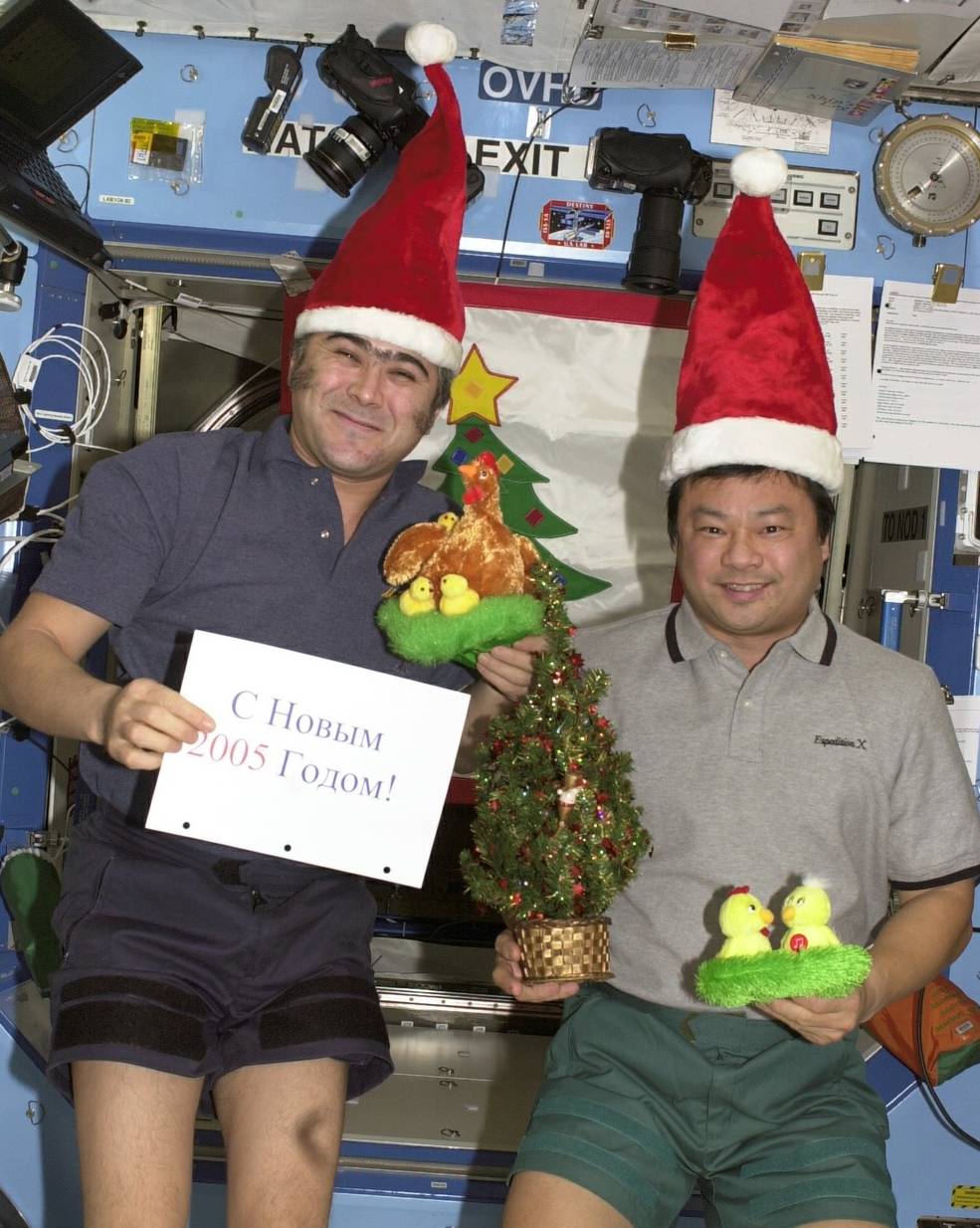
Left: The Expedition 4 crew of Daniel W. Bursch of NASA, left, Yuri I. Onufriyenko of Roscosmos, and Carl E. Walz of NASA poses for its Christmas photo in 2001. Middle: NASA astronaut C. Michael Foale, left, and Aleksandr Y. Kaleri of Roscosmos of Expedition 8 celebrate Christmas in 2003. Right: The Expedition 10 crew of Salizhan S. Sharipov of Roscosmos, left, and NASA astronaut Leroy Chiao festooned for New Year’s Eve 2004.
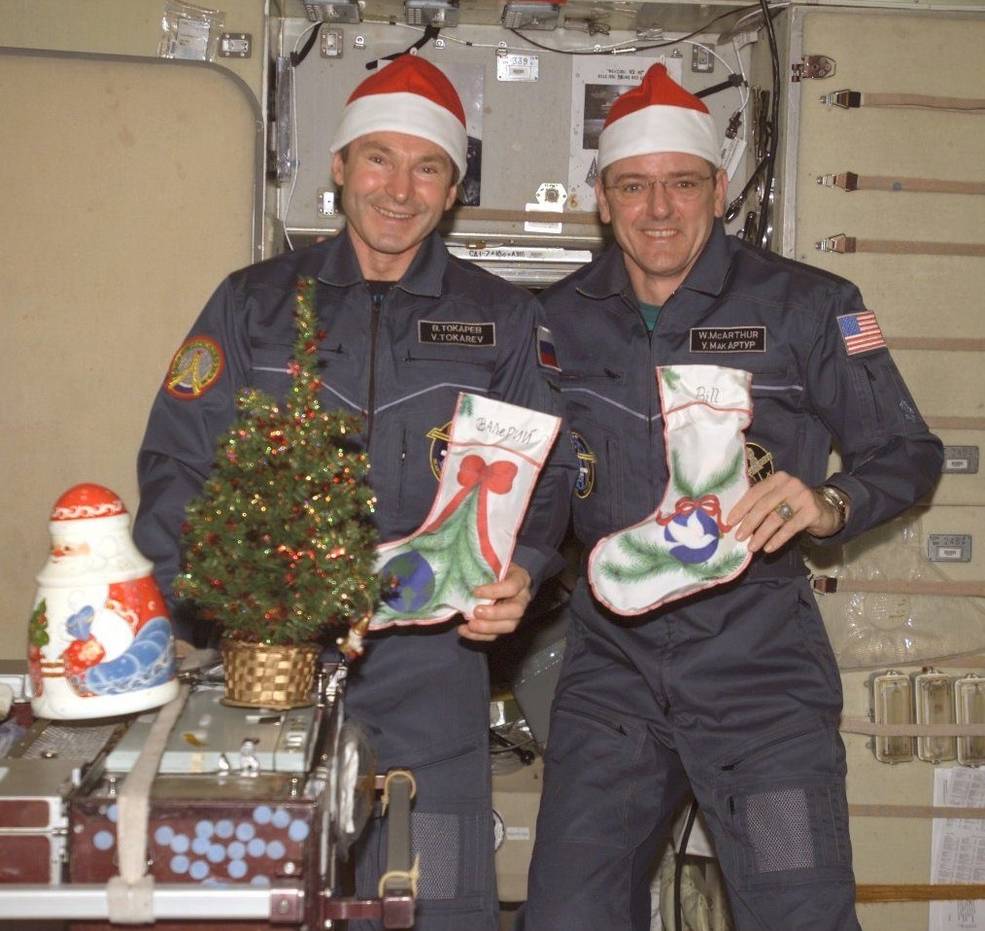
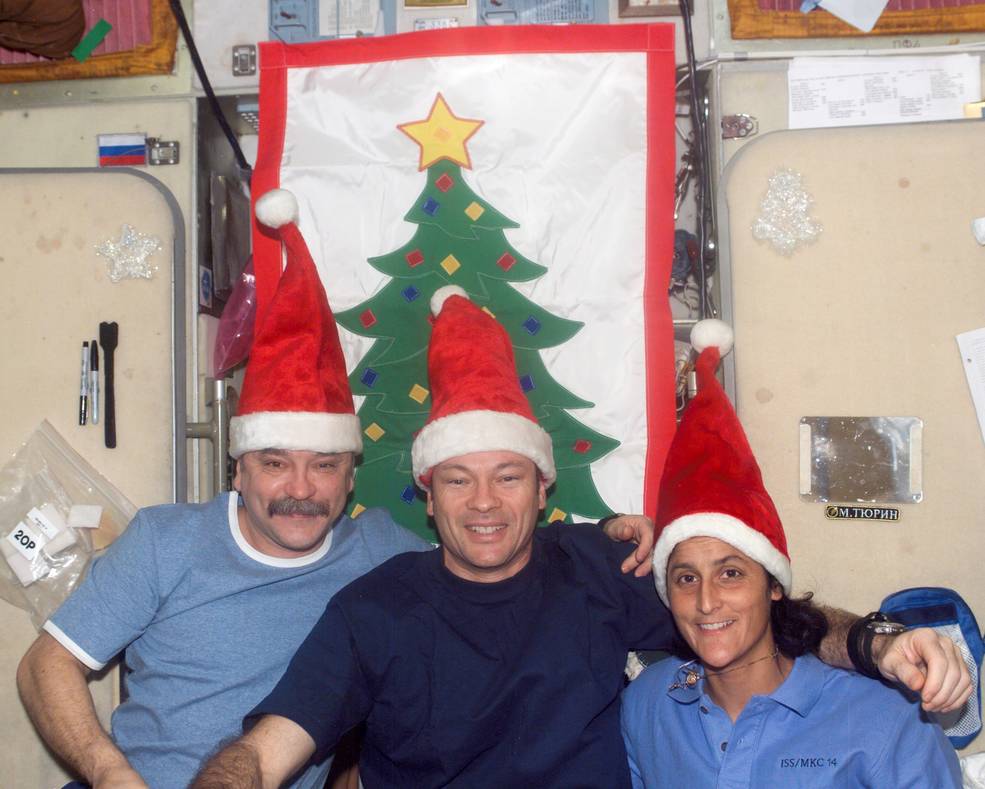
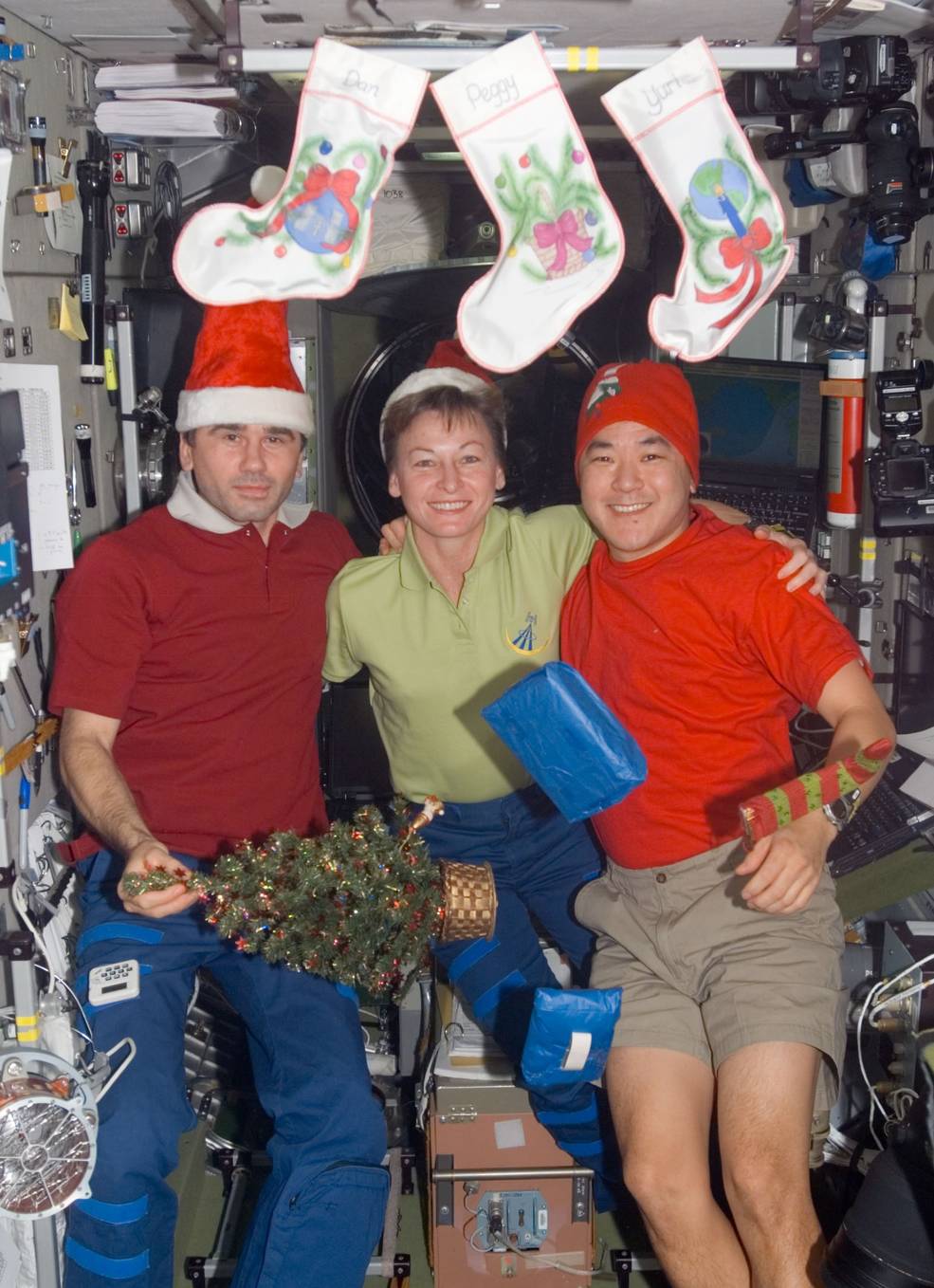
Left: Valeri I. Tokarev of Roscosmos, left, and NASA astronaut William S. McArthur of Expedition 12 pose with Christmas stockings in 2005. Middle: The Expedition 14 crew of Mikhail V. Tyurin of Roscosmos, left, and NASA astronauts Michael E. Lopez-Alegria and Sunita L. Williams pose wearing Santa hats for Christmas 2006. Right: The Expedition 16 crew of Yuri I. Malenchenko of Roscosmos, left, and NASA astronauts Peggy A. Whitson and Daniel M. Tani, with Christmas stockings and presents in 2007.
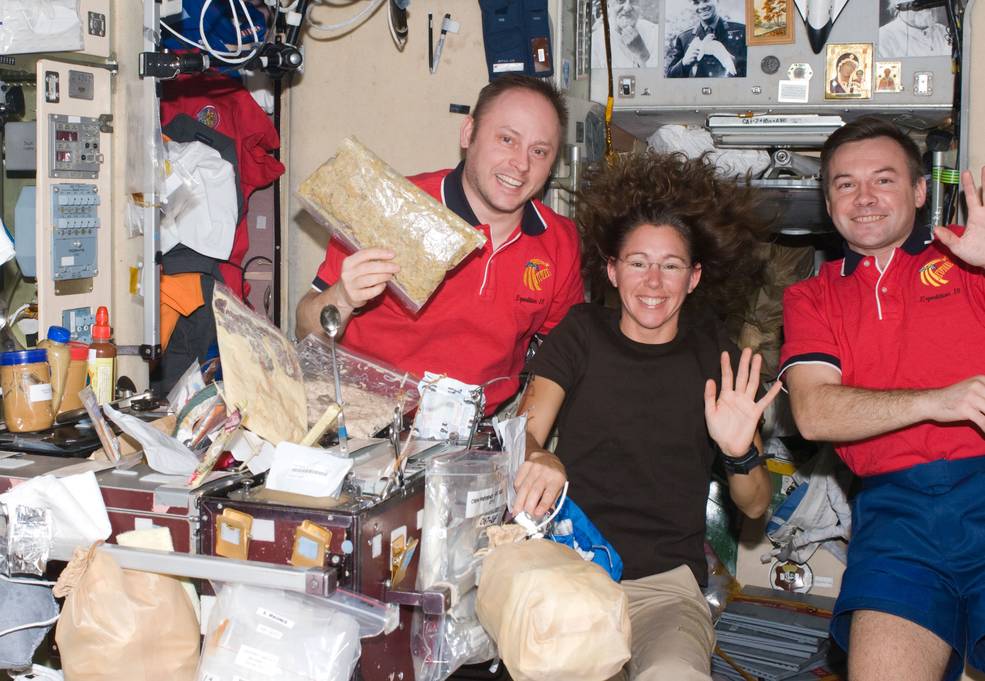
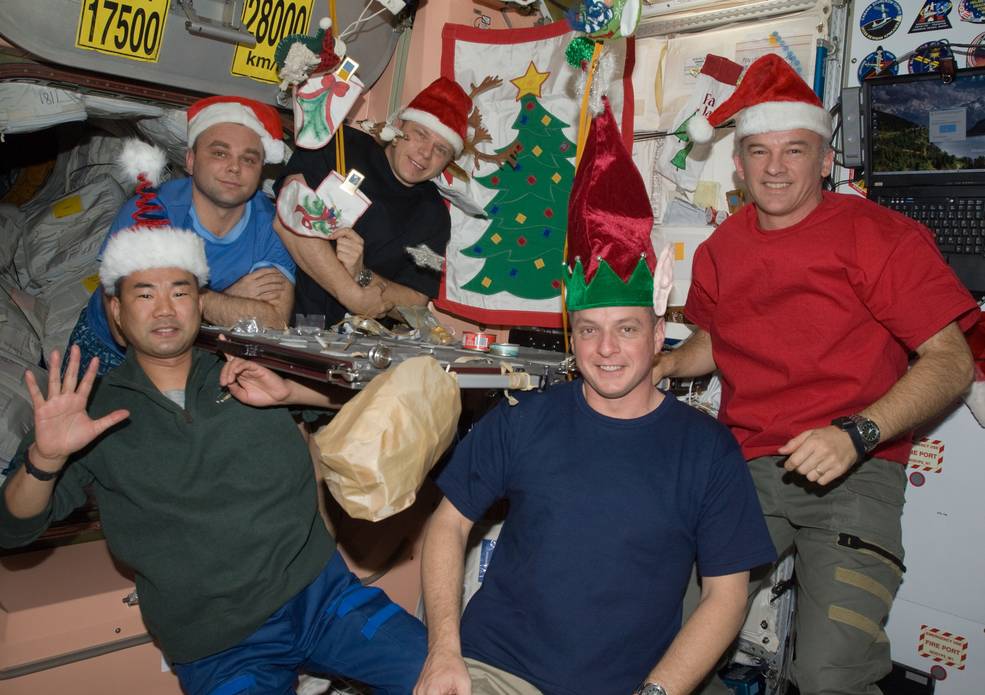
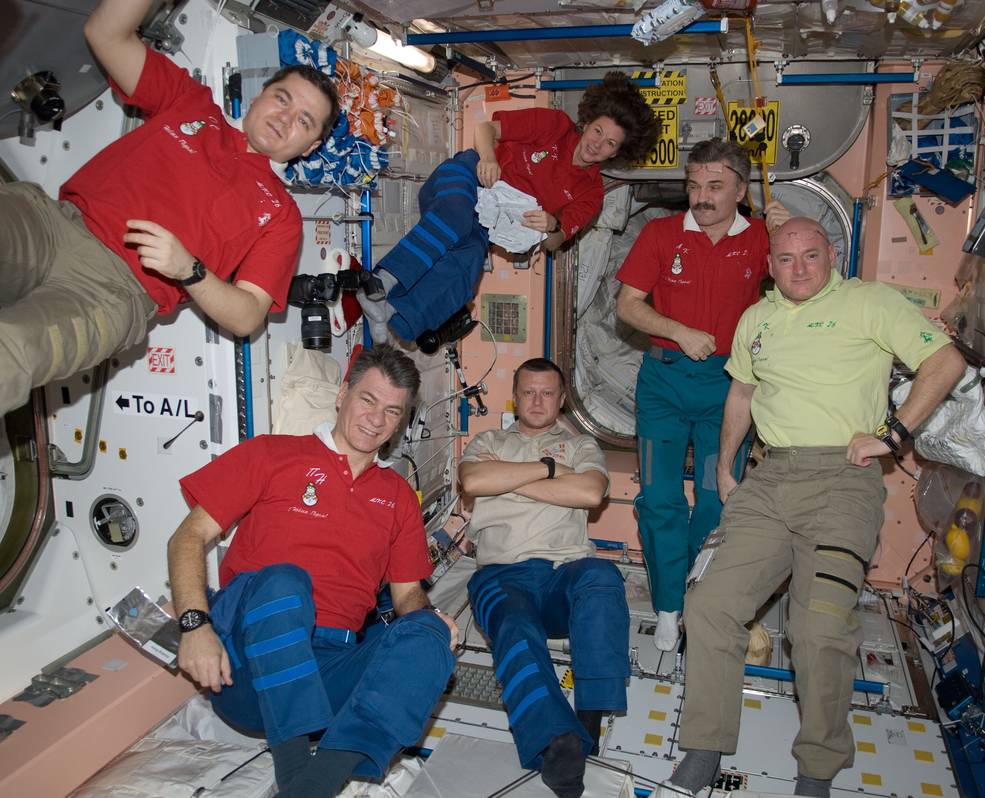
Left: The Expedition 18 crew of E. Michael Fincke, left, and Sandra H. Magnus of NASA, and Yuri V. Lonchakov of Roscosmos enjoys its Christmas dinner in 2008. Middle: The five-member Expedition 22 crew of Soichi Noguchi of the Japan Aerospace Exploration Agency, left, Maksim V. Surayev and Oleg V. Kotov of Roscosmos, and Timothy J. Creamer and Jeffrey N. Williams of NASA around the Christmas dinner table in 2009. Right: The Expedition 26 crew of Oleg I. Skripochka of Roscosmos, left, Paolo A. Nespoli of the European Space Agency, Dmitri Y. Kondratyev of Roscosmos, Catherine G. “Cady” Coleman of NASA, Aleksandr Y. Kaleri of Roscosmos, and NASA’s Scott J. Kelly celebrates New Year’s Eve 2010. This marked Kaleri’s third holiday season spent in space.
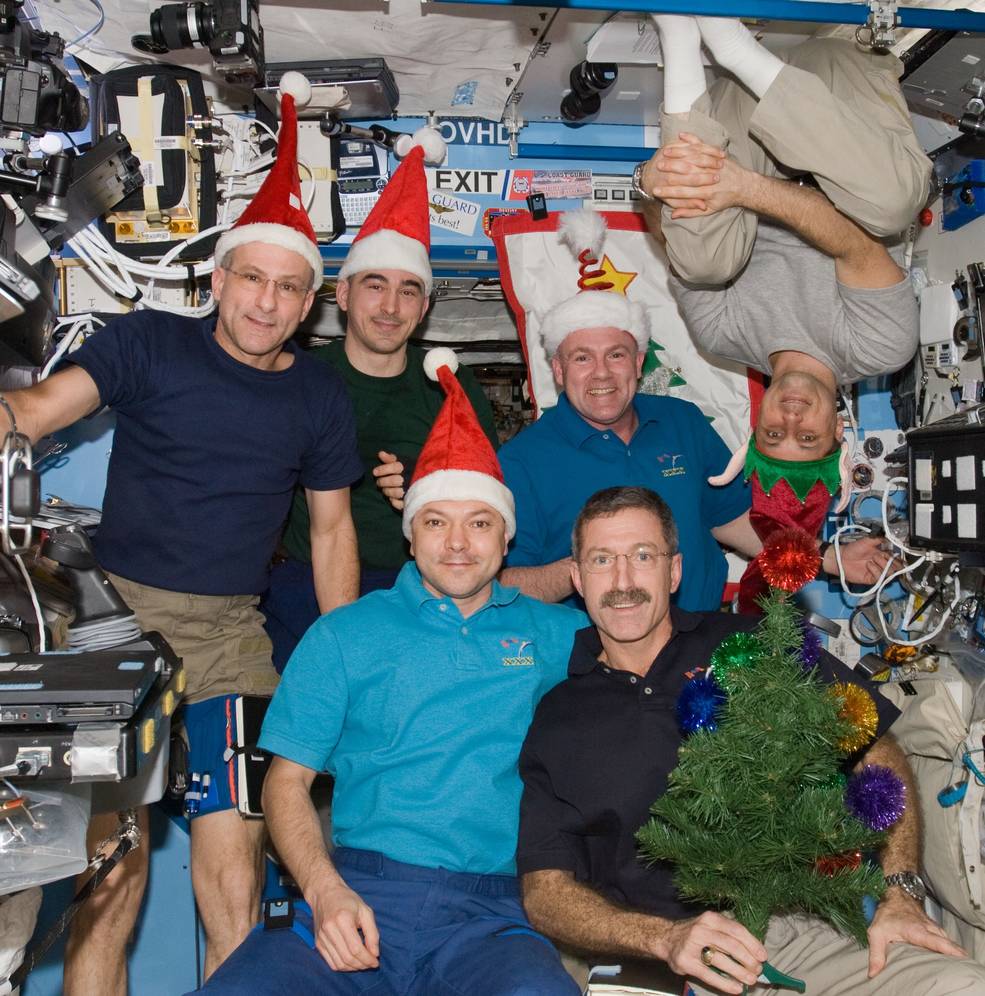
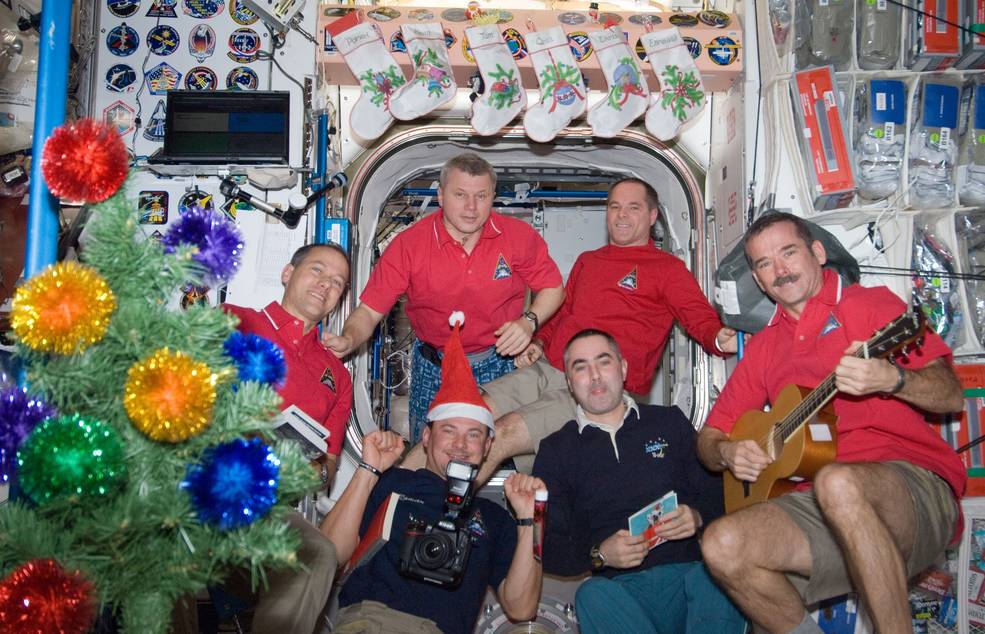
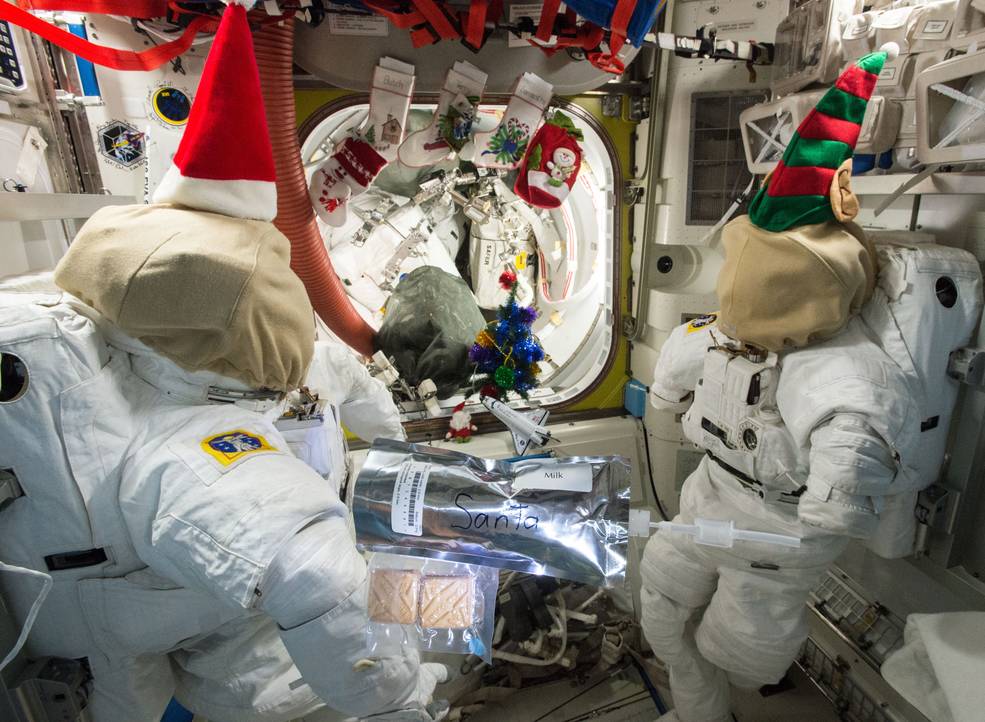
Left: The Expedition 30 crew of NASA astronaut Donald R. Pettit, left, Anatoli A. Ivanishin and Oleg D. Kononenko of Roscosmos, André Kuipers of the European Space Agency, NASA’s Daniel C. Burbank, and Anton N. Shkaplerov of Roscosmos pose for their Christmas photo in 2011. Middle: Christmas 2012 photograph of Expedition 34 crew members of NASA astronaut Thomas H. Marshburn, left, Roman Y. Romanenko, Oleg V. Novitski, and Yevgeni I. Tarelkin of Roscosmos, Kevin A. Ford of NASA, and Chris A. Hadfield of the Canadian Space Agency. Right: For Christmas in 2013, the Expedition 42 crew left milk and cookies for Santa and hung their stockings using the Joint Airlock as a makeshift chimney.
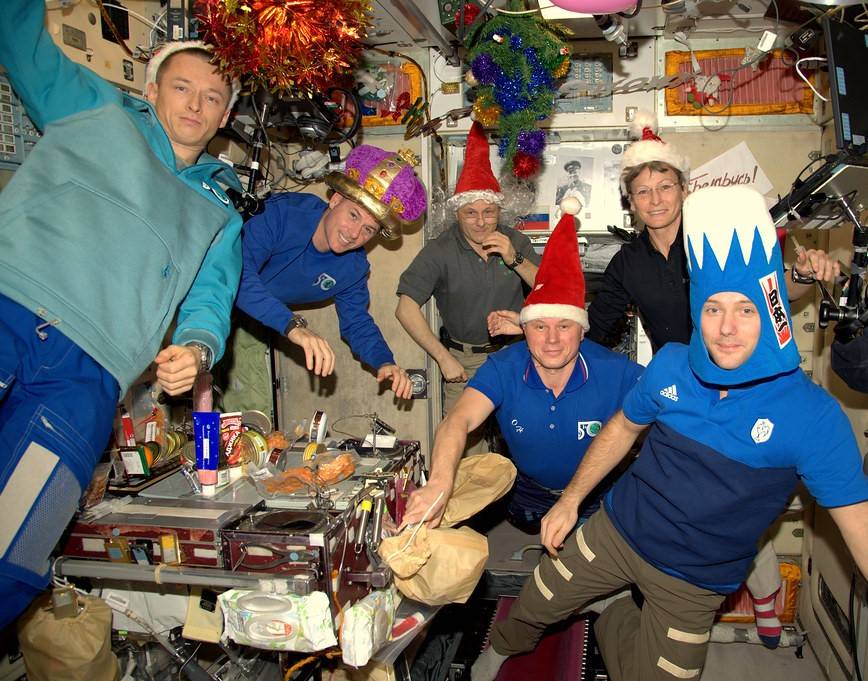
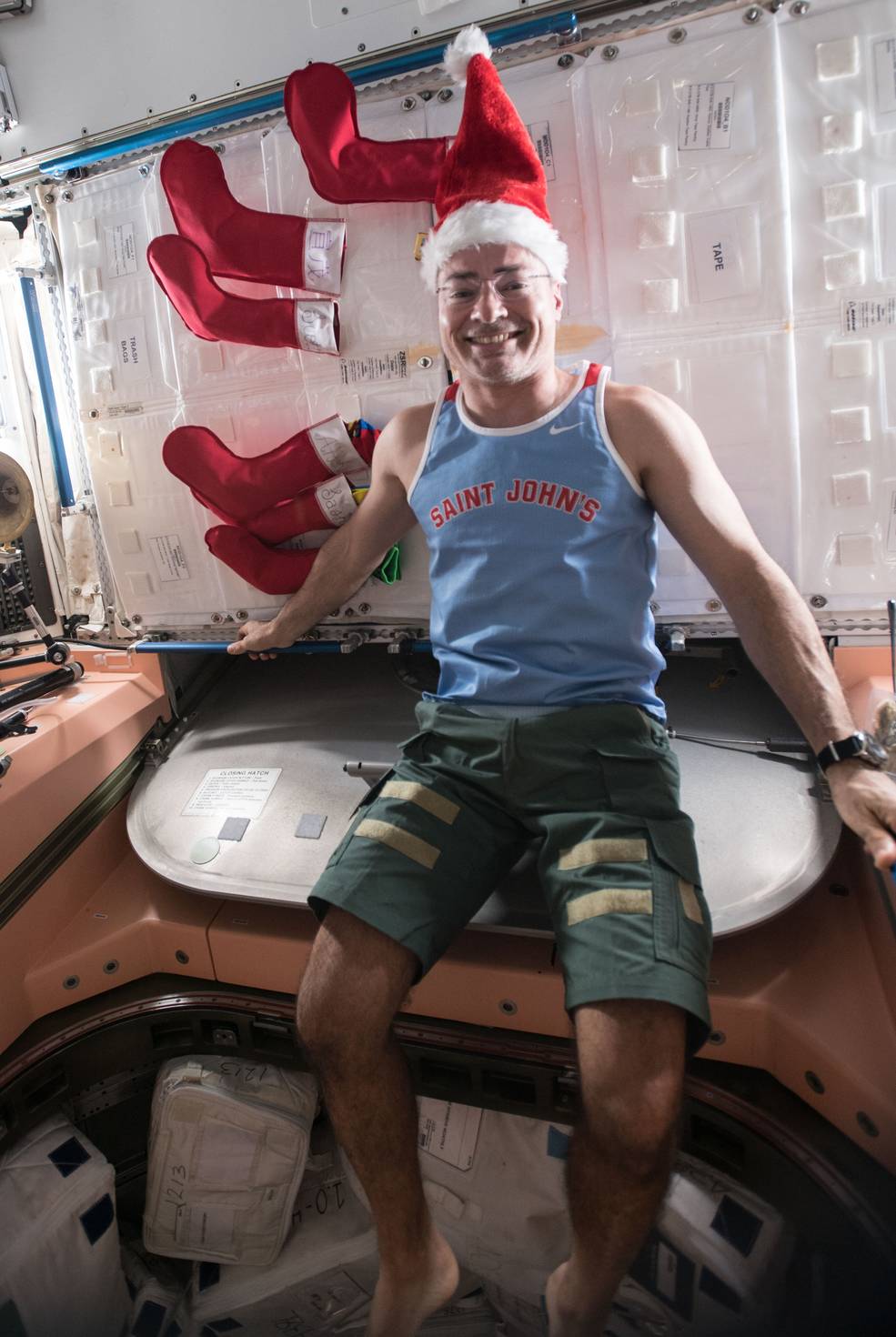
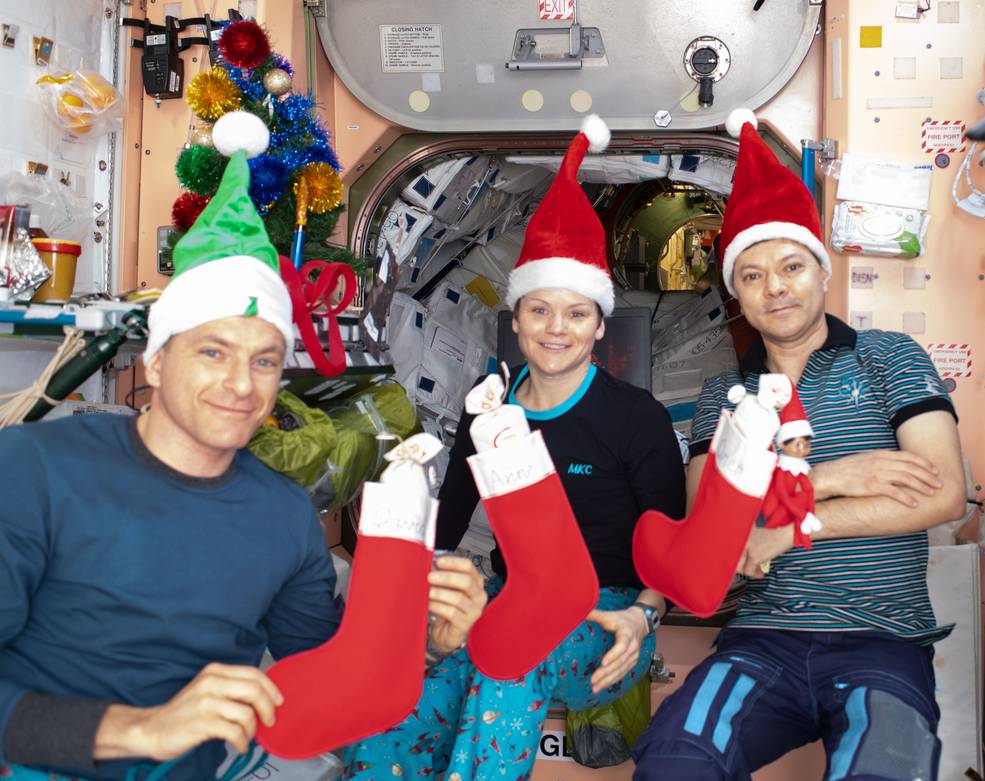
Left: Expedition 50 crew members Sergei N. Ryzhikov of Roscosmos, left, R. Shane Kimbrough of NASA, Andrei I. Borisenko and Oleg V. Novitski of Roscosmos, Peggy A. Whitson of NASA, and Thomas G. Pesquet of the European Space Agency celebrate New Year’s Eve in style in 2016. Middle: Expedition 54 crew member Mark T. Vande Hei of NASA strikes a pose as an Elf on the Shelf for Christmas 2017. Right: The Expedition 58 crew of David Saint-Jacques of the Canadian Space Agency, left, Anne C. McClain of NASA, and Oleg D. Kononenko of Roscosmos inspect their Christmas stockings for presents in 2018.
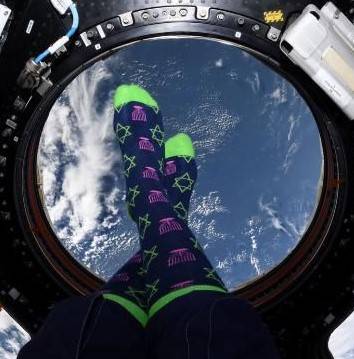
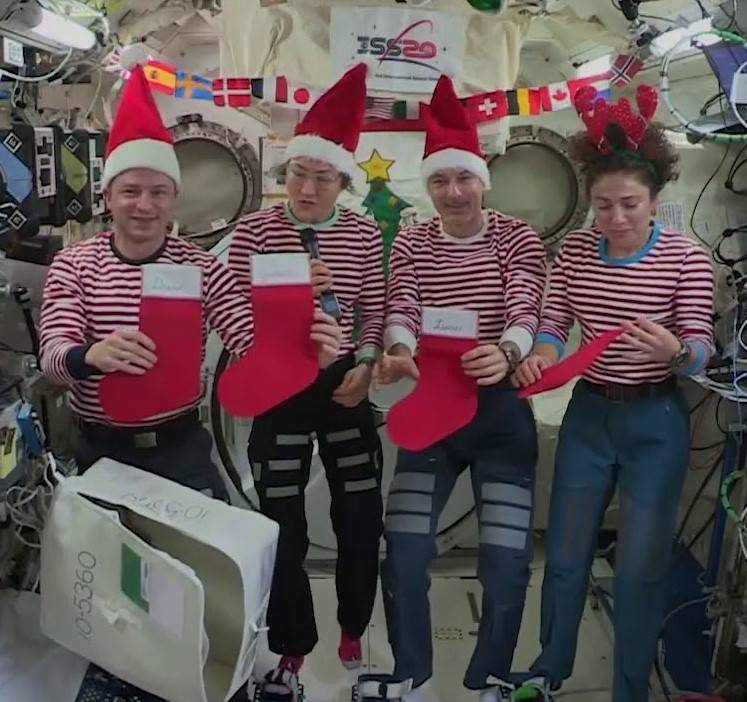
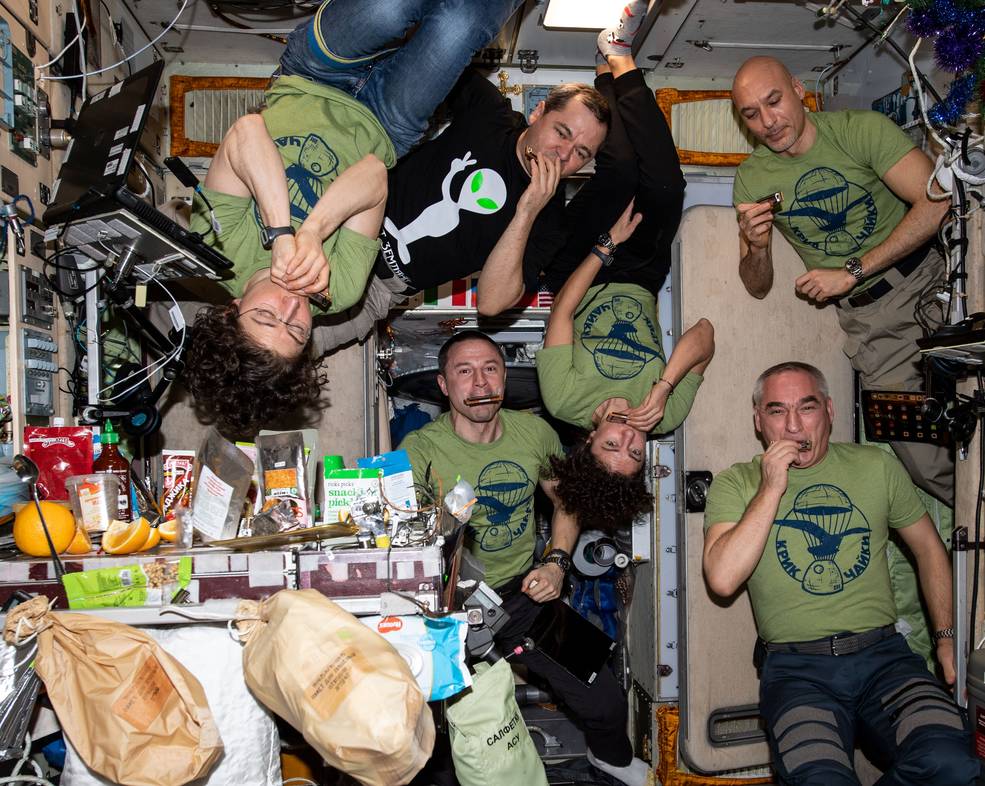
Three scenes from the 2019 holiday season aboard the space station. Left: Expedition 61 flight engineer Jessica U. Meir of NASA shows off her Hanukkah-themed socks in the Cupola. Middle: Expedition 61 crew members Andrew R. Morgan, left, and Christina H. Koch of NASA, Luca S. Parmitano of the European Space Agency, and Meir share their Christmas messages. Right: Expedition 61 crew members Koch, left, Morgan, Oleg I. Skripochka of Roscosmos, Meir, Aleksandr A. Skvortsov of Roscosmos, and Parmitano ring in the new year with harmonicas.
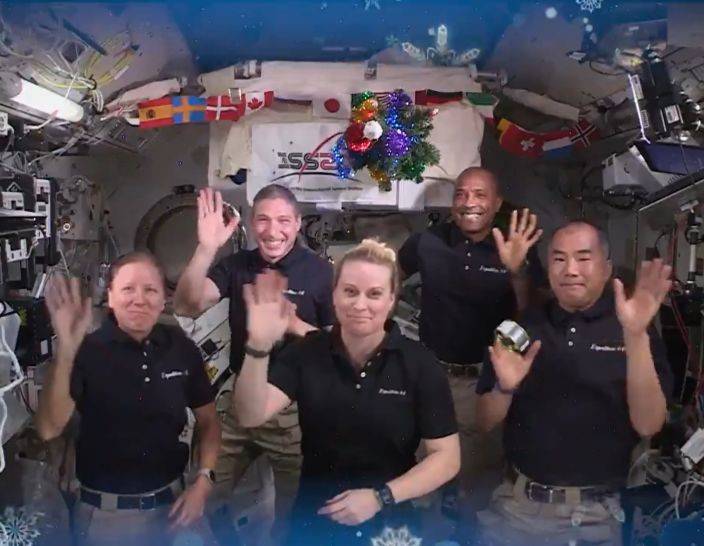
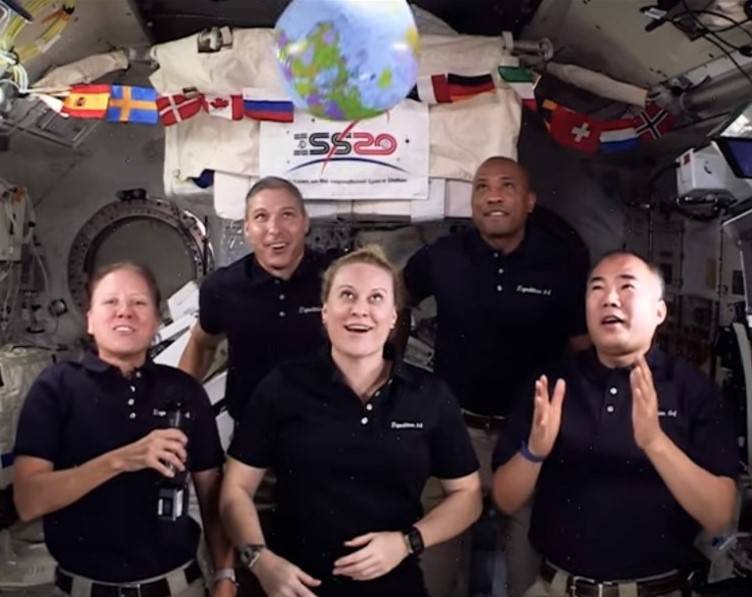
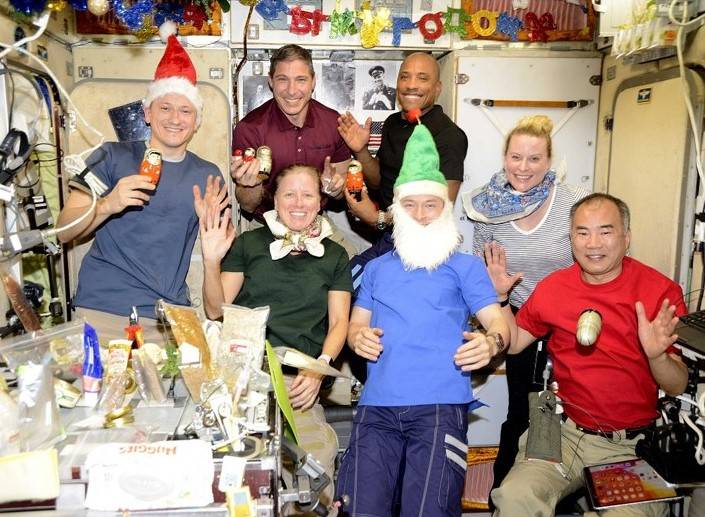
Three scenes from the 2020 holiday season aboard the space station. Left: Expedition 64 NASA astronauts Shannon Walker, left, Michael S. Hopkins, Kathleen H. Rubins, and Victor J. Glover and Soichi Noguchi of the Japan Aerospace Exploration Agency (JAXA) record Christmas greetings. Middle: Walker, left, Hopkins, Rubins, Glover, and Noguchi use an inflatable Earth globe as a substitute for the Times Square New Year’s Eve ball “drop” aboard the space station. Right: Expedition 64 crew members Sergei V. Kud-Sverchkov of Roscosmos, left, Hopkins, Walker, Sergei N. Ryzhikov of Roscosmos, Glover, Rubins, and Noguchi welcome in 2021 aboard the space station.
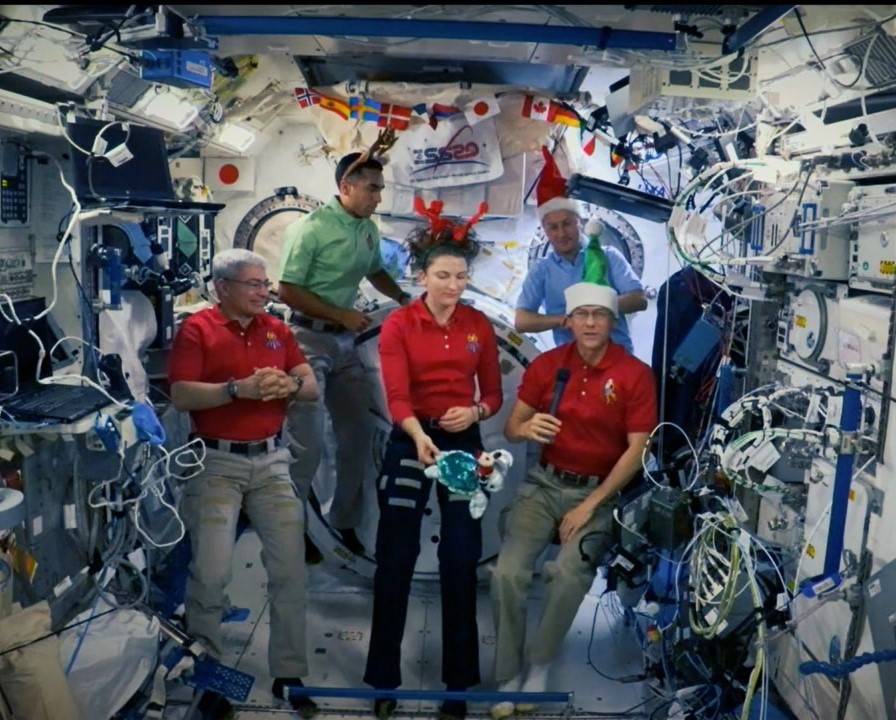
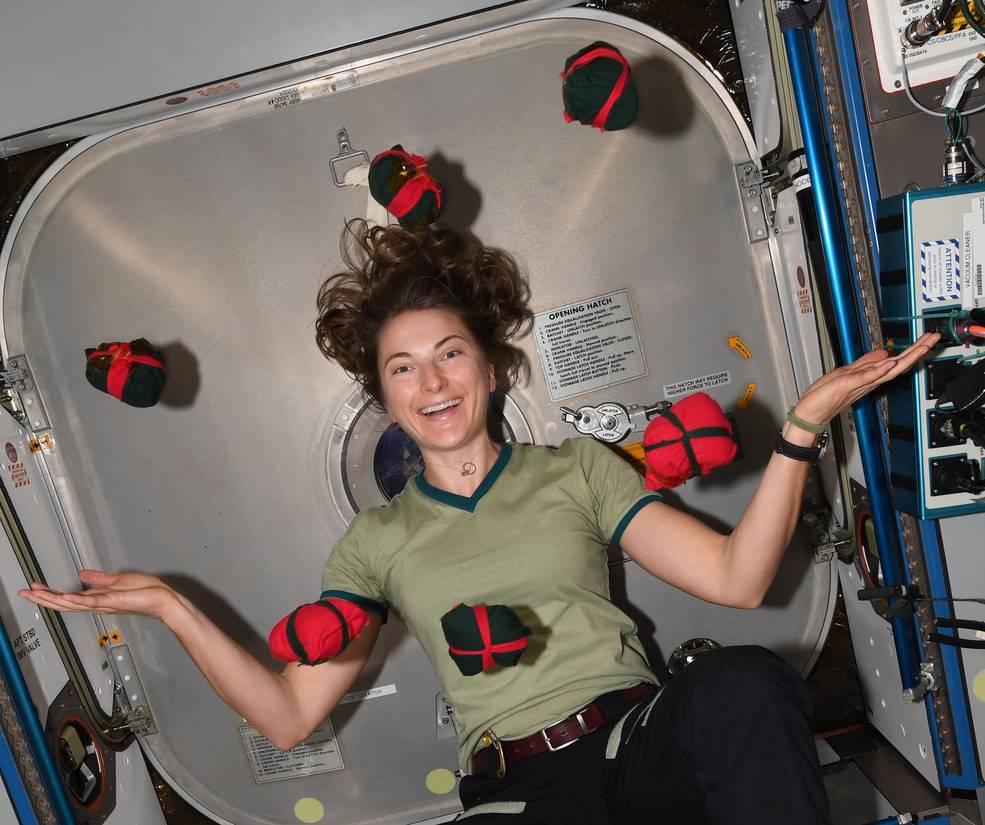
Left: During Expedition 66 in 2021, NASA astronauts Mark T. Vande Hei, left, Raja J. Chari, Kayla S. Barron, and Thomas H. Marshburn, and Matthias J. Maurer of the European Space Agency in a still from a video in which they share their thoughts about the holiday season. Right: Barron showing off the presents she wrapped for her six crewmates.
“It is a privilege to have the perspective of seeing so many countries,” said Expedition 66 Commander NASA astronaut Thomas H. Marshburn in a video sharing his thoughts about spending the New Year in space. “We can go from one side [of Earth] to another in just a few minutes and it truly gives us a feeling of unification for all human beings around the world.” “We get to see the sunrise many times a day, so thinking about the fact that people are waking up to a New Year each time we see that sunrise is pretty cool,” added NASA astronaut Raja J. Chari. In a social media post, ESA astronaut Matthias J. Maurer wrote about their New Year’s Eve dinner, and included a time lapse video of the festive meal.
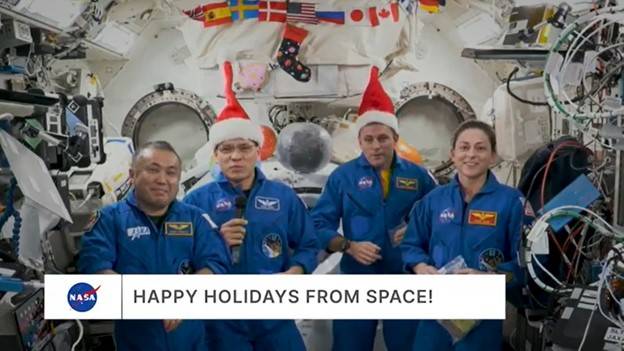
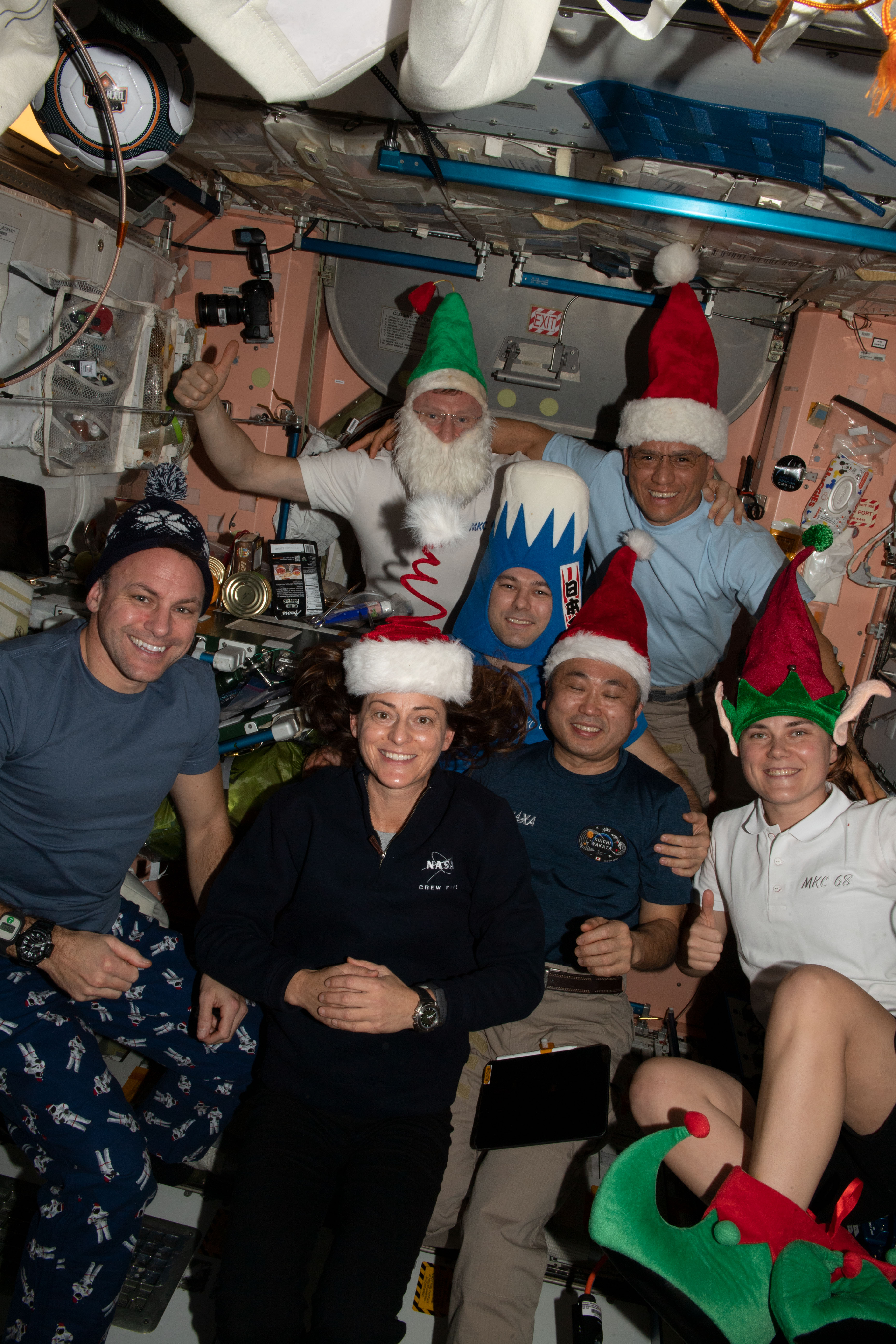
Left: Expedition 68 crew members Koichi Wakata of the Japan Aerospace Exploration Agency, left, and NASA astronauts Francisco C. “Frank” Rubio, Josh A. Cassada, and Nicole A. Mann record a holiday greeting from the space station. Right: Expedition 68 crew members wear holiday garb.
In 2022, Expedition 68 crew members NASA astronauts Nicole A. Mann, Josh A. Cassada, and Francisco C. “Frank” Rubio, and JAXA astronaut Koichi Wakata recorded a holiday message for everyone on the ground. They shared some of their personal traditions for the holidays and provided a glimpse of how they spend the holidays aboard the space station.
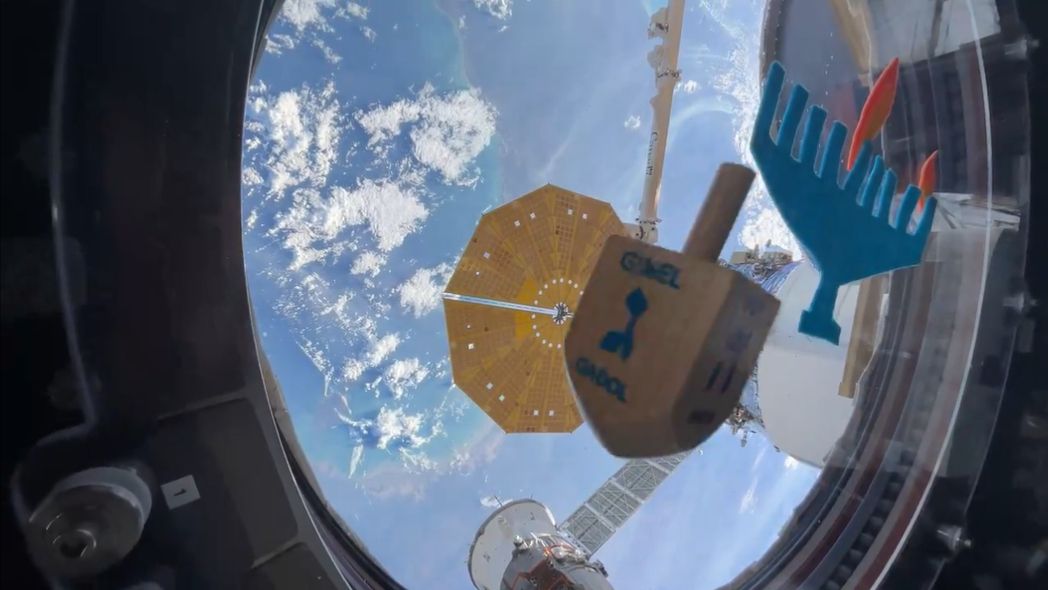
Expedition 70 NASA astronaut Jasmin Moghbeli’s felt menorah and dreidel that she used to celebrate Hanukkah.
Expedition 70 flight engineer NASA astronaut Jasmin Moghbeli’s husband and two little girls made a felt menorah for her to celebrate Hanukkah during her mission. Since astronauts can’t light real candles aboard the space station, Moghbeli pinned felt “lights” for each night of the eight-day holiday. A dreidel spun in weightlessness will continue spinning until it comes in contact with another object, but can’t land on any of its four faces.
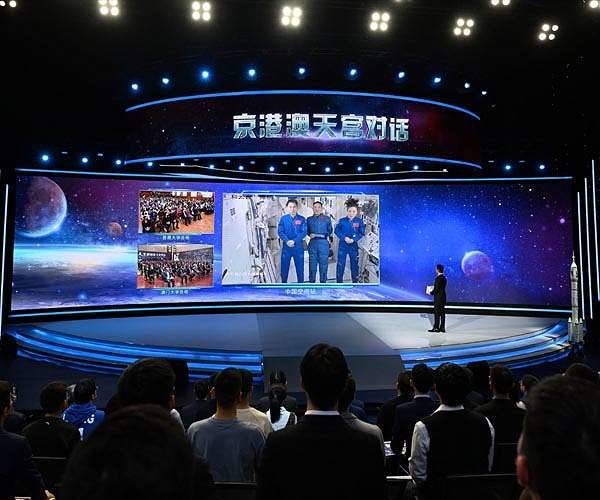
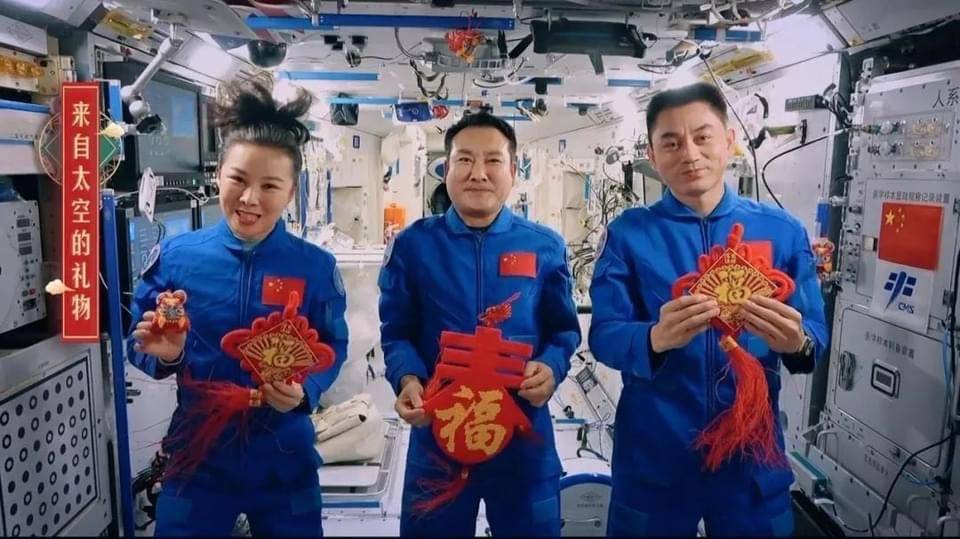
Left: To celebrate New Year’s Day 2022, Shenzhou 13 astronauts Ye Guangfu, left, Zhai Zhigang, and Wang Yaping aboard the China Space Station Tiangong hold a live video call. Right: Wang, left, Zhai, and Ye celebrate the Chinese New Year of the Tiger aboard Tiangong.
On Jan. 1, 2022, for the first time Chinese astronauts celebrated a New Year in space. The Shenzhou 13 crew of Zhai Zhigang, Wang Yaping, and Ye Guangfu arrived aboard the China Space Station Tiangong on Oct. 15, 2021, for a six-month mission. On New Year’s Day 2022, they hosted a live video call and interacted with college students at venues in Beijing, Hong Kong, and Macao. For the Feb. 1 start of the Chinese New Year of the Tiger, they decorated the space station and sent best wishes to people on the ground for a happy and prosperous new year.
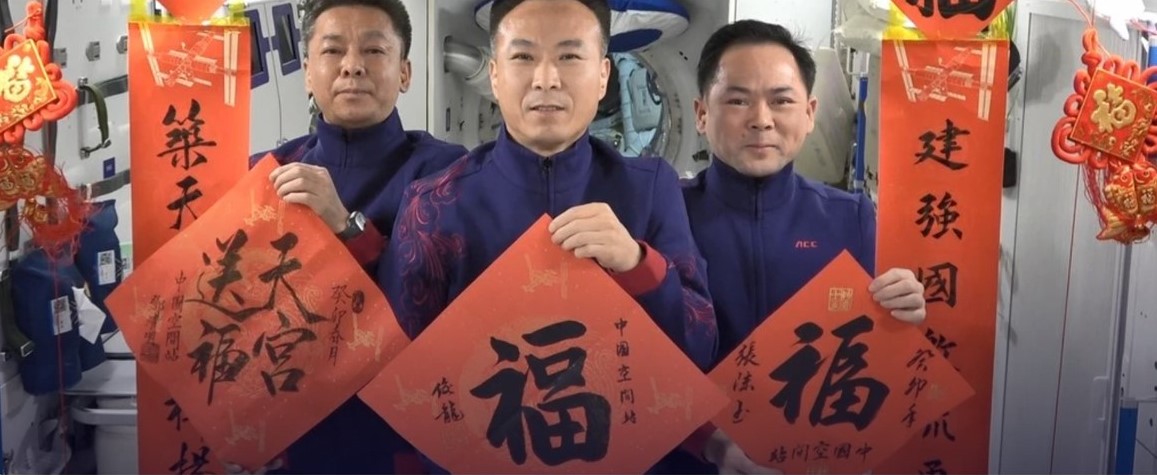
In January 2023, Shenzhou 15 astronauts Fei Junlong, left, Deng Qingming, and Zhang Lu send New Year’s greetings to Earth from the Tiangong China Space Station.
We hope you enjoyed these stories, photographs, and videos from holiday celebrations in space. This year, a record-tying 10 people from five nations will celebrate the holidays and ring in the new year while serving aboard two space stations – the International Space Station and the Tiangong China Space Station. We wish them all and everyone here on Earth the very best during the holiday season and hope that 2024 will indeed be a Happy New Year!
Powered by WPeMatico
Get The Details…
Kelli Mars