NASA Invites Stakeholders to STMD’s LIFT-1 Industry Forum

NASA Invites Stakeholders to STMD’s LIFT-1 Industry Forum

Artist concept of an In-situ Resource Utilization (ISRU) demonstration on the Moon. Many technologies in six priority areas encompassed by NASA’s Lunar Surface Innovation Initiative will need testing, such as advancing ISRU technologies that could lead to future production of fuel, water, or oxygen from local materials, expanding exploration capabilities.
NASA

NASA is hosting a virtual industry forum on Nov. 13, 2023, to introduce the agency’s Lunar Infrastructure Foundational Technologies (LIFT-1) demonstration Request for Information (RFI). At this event, representatives of NASA’s Space Technology Mission Directorate (STMD) will discuss the relevant Moon-to-Mars Objectives, STMD Envisioned Future Priorities (EFPs), and will answer questions from potential respondents interested in the RFI. Written responses to the Q&A will be posted to NSPIRES after the meeting. 

Although the primary focus for this activity is a future lunar surface resource utilization (ISRU) demonstration it will require multiple capabilities that may address other infrastructure objectives. The Industry Day offers an opportunity for respondents to gain insight and understanding of the ISRU objectives as well as those other foundational infrastructure objectives.

LIFT-1 REQUEST FOR INFORMATION INDUSTRY FORUM (virtual)  

Monday, Nov. 13, 2023 

1:00 p.m. – 2:00 p.m. EST 

Speakers: 

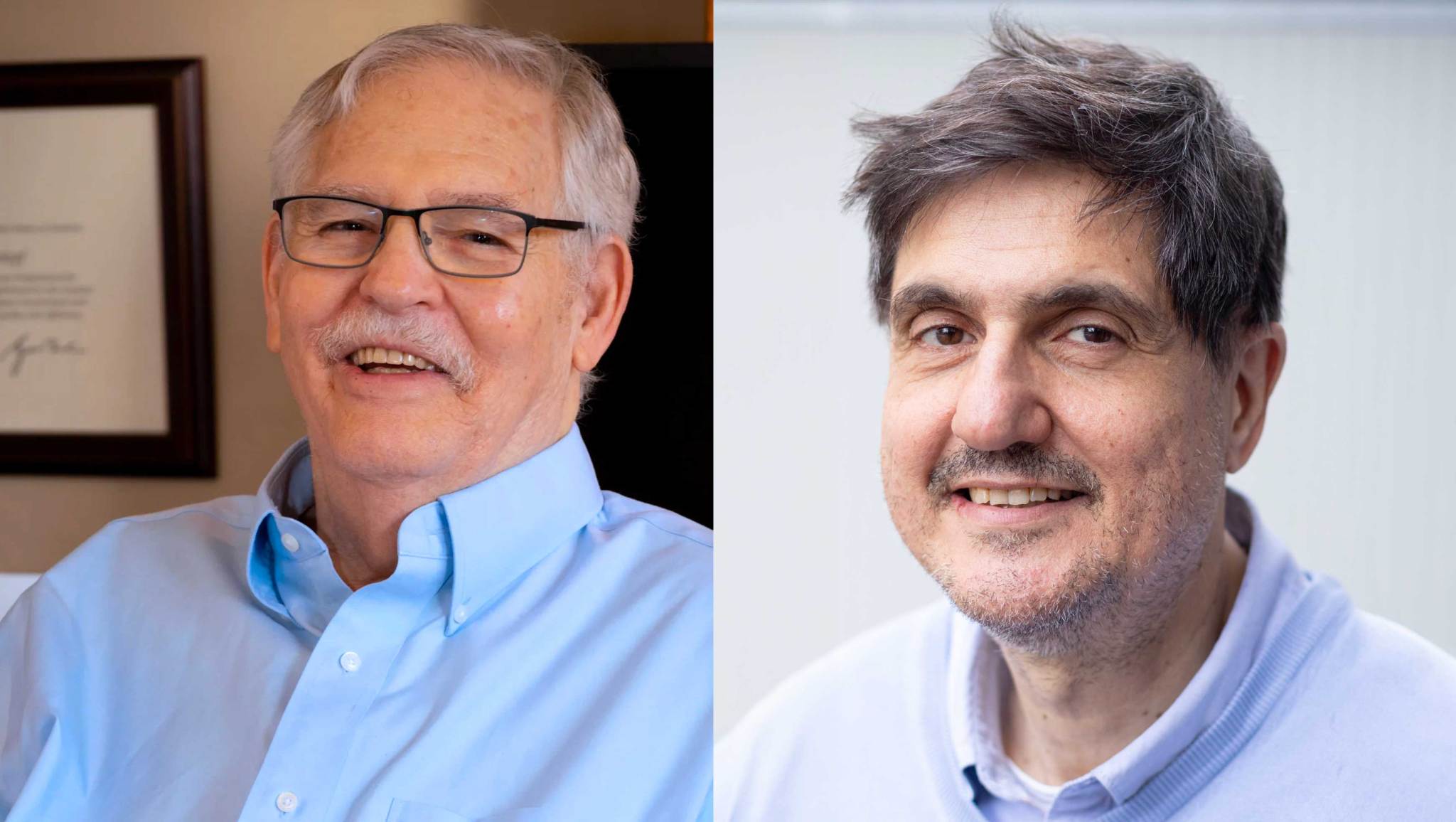
  • Niki Werkheiser, director of Technology Maturation, NASA’s Space Technology Mission Directorate, NASA Headquarters     
  • Jerry Sanders, lead for NASA’s In-Space Resource Utilization (ISRU), NASA Capability Leadership Team (CLT) (multiple NASA centers)  
  • Mike Ching, technical advisor, NASA’s Lunar Surface Innovation Initiative (LSII); Space Technology Mission Directorate, NASA Headquarters     

Platform: The Industry Forum will be conducted via the Webex application. To connect to the industry forum Webex meeting, participants must first register. Once registered, participants will receive a meeting invitation to the registered email address with options to join via Webex or audio only (phone). 

MORE INFORMATION 

The LIFT-1 RFI is available on NSPIRES and open for responses through December 18, 2023 (5:00 p.m. EST)

Please direct questions related to the RFI and industry day by email to: HQ-STMD-LIFT-1-RFI@nasaprs.com 

For media inquiries, please contact Jimi Russell, james.j.russell@nasa.gov.

Powered by WPeMatico

Get The Details…
Stefanie Payne

NASA Seeks Input for Future Lunar Surface Resource Utilization Demo

NASA Seeks Input for Future Lunar Surface Resource Utilization Demo

Artist concept of an In-situ Resource Utilization (ISRU) demonstration on the Moon. Many technologies in six priority areas encompassed by NASA’s Lunar Surface Innovation Initiative will need testing, such as advancing ISRU technologies that could lead to future production of fuel, water, or oxygen from local materials, expanding exploration capabilities.

As NASA ushers in an exciting era of long-term exploration on the Moon with Artemis, new strategies are being formulated to determine how technology, infrastructure, and operations will function together as a cohesive and cross-cutting system.

As a sustained presence grows at the Moon, opportunities to harvest lunar resources could lead to safer, more efficient operations with less dependence on Earth. Many new technologies in six priority areas encompassed by NASA’s Lunar Surface Innovation Initiative will need testing. For example, advancing In-situ Resource Utilization (ISRU) technologies could lead to future production of fuel, water, or oxygen from local materials, expanding exploration capabilities.

To support ISRU technology maturation, NASA issued a Request for Information (RFI) on Nov. 6 to formulate its future Lunar Infrastructure Foundational Technologies (LIFT-1) demonstration. Led by the Space Technology Mission Directorate (STMD), NASA’s primary objective for LIFT-1 is to demonstrate ISRU technologies to extract oxygen from lunar soil, to inform eventual production, capture, and storage. Additional LIFT-1 objectives may include demonstrating new landing technologies, surface operations, and scalable power generation in the Moon’s South Pole region.

With the RFI, NASA is asking for input from the lunar community to inform an integrated approach inclusive of launch, landing, and demonstration of surface infrastructure technologies as part of a subscale ISRU demonstration.

“The LIFT-1 demonstration creates a viable path to launch, land, and conduct operations on the lunar surface. This is the infusion path we need for ongoing industry and NASA center-led technology development activities,” said Dr. Prasun Desai, acting associate administrator of STMD at the agency’s Headquarters in Washington. “Using in-situ resources is essential to making a sustained presence farther from Earth possible. Just as we need consumables and infrastructure to live and work on our home planet, we’ll need similar support systems on the Moon for crew and robots to operate safely and productively.”

NASA has several current ISRU investments through partnerships with industry and academia. Prospecting, extraction, and mining initiatives are advancing our capabilities to find and harness resources from the lunar regolith. Chemical and thermal process developments may provide options to break down naturally occurring minerals and compounds found on the Moon and convert them to propellant or human consumables. Other potential longer-term applications could lead to extraterrestrial metal processing and construction of lunar surface structures using resources found on the Moon. Many of these technologies could be demonstrated and advanced on the Moon for future use at Mars. While the Moon has almost no atmosphere, Mars has an atmosphere rich in carbon dioxide, and NASA is investing in initiatives to use CO2 to create other useful elements or compounds.

MOXIE on NASA’s Mars Perseverance Rover marked the beginning of off-Earth ISRU technology demonstrations, successfully extracting oxygen from atmospheric carbon dioxide throughout a series of tests. NASA intends to demonstrate a similar capability on the lunar surface from its resources, and this RFI will help NASA capture stakeholder interest and ideas on how to partner, preferred acquisition approaches, and funding feasibility. This kind of input is critical to advancing innovative solutions that will help NASA and its partners explore the surface of the Moon for longer periods of time than ever before possible.

“An ISRU technology demonstration approach has been a topic of discussion within the Lunar Surface Innovation Initiative and Consortium communities for several years,” said Niki Werkheiser, director of Technology Maturation in STMD. “This RFI is the next phase to make it a reality.” 

The Lunar Surface Innovation Consortium (LSIC) was established by NASA in 2020 to coalesce government, academia, non-profit institutions, and the private sector to identify technological capabilities and hurdles that must be retired to achieve a sustained presence on the surface of the Moon, both human and robotic. 

The LIFT-1 RFI is available on NSPIRES and open for responses through Dec. 18, 2023, at 5:00 p.m. EST. NASA will host an industry forum on Monday, Nov. 13, 2023, at 1:00 p.m. EST.

Powered by WPeMatico

Get The Details…
Stefanie Payne

NASA Stennis Compiles Framework for the Future to Guide Center Forward

NASA Stennis Compiles Framework for the Future to Guide Center Forward

Cover is a futuristic illustration of astronauts living in space with Earth visible in the distance
An image shows the cover of the NASA Stennis Strategic Plan for 2024-2028.
NASA Stennis

NASA’s Stennis Space Center began with a single mission – to test Apollo rocket stages to carry humans to the Moon. Moving forward, the site has a renewed vision – to evolve as a unique, multifaceted aerospace and technology hub.

It also has a clear blueprint for getting there.

The NASA Stennis Strategic Plan 2024-2028, available online at nasa-stennis-strategic-plan-2024-2028.pdf, outlines goals and objectives in five critical areas – propulsion, the federal city, autonomous systems, range operations, and workforce development. For the center, the overarching focus is to align itself with the NASA mission, adapt to the changing aerospace and technology landscape, and grow into the future.

“A famous quote I really like says, ‘The best way to predict the future is to create it,’” NASA Stennis Center Director Rick Gilbrech said. “We are committed to doing just that by embracing the possibilities and seizing the opportunities before us. We want to ensure the road to space, and innovation continues to go through Mississippi for the benefit of all.”

Much has changed in the aerospace and technology world since NASA and NASA Stennis were established more than 60 years ago. Thanks in large part to NASA’s involvement, commercial space has flourished and continues to grow. Technology moves at a breakneck speed.

NASA Stennis has mirrored the nation’s space program, testing engines and propulsion systems for all three U.S. human space exploration eras – Apollo, space shuttle, and now, SLS (Space Launch System). Along the way, the site also grew into a federal city with about 40 resident companies, agencies, and entities on site. More recently, it emerged as a leader in working with commercial aerospace companies, both large and small.

It now seeks to take the next step by building on past success, using its skilled workforce and unique infrastructure and location to attract new tenants onsite, and expanding into such areas as autonomous systems and range operations.

“We have the chance to invent the future of NASA Stennis, and we have to be very strategic about it,” said Duane Armstrong, manager of the NASA Stennis Strategic Business Development Office. “The new plan is our guide to help make sure we are aligning ourselves with the NASA mission and the needs of our commercial partners.”

Key goals in the plan include: (1) transforming into a multi-user propulsion test enterprise; (2) growing as a sustainable and long-term federal city; (3) designing intelligent and autonomous aerospace systems and services; (4) utilizing its unique range location and infrastructure to support the testing and operation of uncrewed air, land, and marine systems; and (5) cultivating and optimizing the NASA Stennis workforce for the future.

“There is a lot of change likely in the years ahead, and we have to rethink our role and how we can continue to provide value,” Armstrong said. “This plan will serve as a framework to guide our actions and decisions.”

In six decades, NASA Stennis has grown into a powerful economic engine while also meeting challenges head-on and negotiating change. The challenge – and opportunity – now, Armstrong said, is to adapt to an evolving aerospace and technology landscape, connect people to purpose, and open a world of new possibilities.

C. Lacy Thompson
Stennis Space Center, Bay St. Louis, Mississippi
228-363-5499
calvin.l.thompson@nasa.gov

Powered by WPeMatico

Get The Details…
LaToya Dean

One Year of Spritacular Science!

One Year of Spritacular Science!

1 min read

One Year of Spritacular Science!

Have a camera? The Spritacular project needs your help capturing images of sprites and other Transient Luminous Events (TLEs) above thunderstorms.
Credit: Rachel Lense. Gigantic Jet Image Credit: Frankie Lucena

Sprites, those beguiling electrical flashes of light above thunderstorms, raise so many questions: Why do they take the shapes they do? What conditions in the upper atmosphere trigger them? How do sprites affect Earth’s global electric circuit, and what is their contribution to the energy in Earth’s upper atmosphere? On October 26, 2022, NASA’s Spritacular project began asking volunteers to help answer these questions. Happy Birthday, Spritacular!

“It has been an amazing journey,” said Dr. Burcu Kosar, space physicist at NASA’s Goddard Space Flight Center in Greenbelt, Maryland and Spritacular principal investigator.  “Our community is growing steadily. We have been so thankful for all the participation so far.”

The project has 308 volunteers that have contributed 189 observations from 13 different countries. The database analysis is underway, so stay tuned for some exciting research outcomes!

Have a camera? Join the chase of sprites from the ground, engage with our global community of observers, and contribute your observations for NASA Science!

NASA’s Citizen Science Program:
Learn about NASA citizen science projects

Share

Details

Last Updated
Nov 06, 2023

Powered by WPeMatico

Get The Details…

NASA Telescopes Discover Record-Breaking Black Hole

NASA Telescopes Discover Record-Breaking Black Hole

Astronomers have discovered the most distant black hole yet seen in X-rays, using NASA telescopes. The black hole is at an early stage of growth that had never been witnessed before, where its mass is similar to that of its host galaxy.

This result may explain how some of the first supermassive black holes in the universe formed.

By combining data from NASA’s Chandra X-ray Observatory and NASA’s James Webb Space Telescope, a team of researchers was able to find the telltale signature of a growing black hole just 470 million years after the big bang.

Astronomers found the most distant black hole ever detected in X-rays (in a galaxy dubbed UHZ1) using the Chandra and Webb space telescopes. X-ray emission is a telltale signature of a growing supermassive black hole. This result may explain how some of the first supermassive black holes in the universe formed. This image shows the galaxy cluster Abell 2744 that UHZ1 is located behind, in X-rays from Chandra and infrared data from Webb, as well as close-ups of the black hole host galaxy UHZ1.
Astronomers found the most distant black hole ever detected in X-rays (in a galaxy dubbed UHZ1) using the Chandra and Webb space telescopes. X-ray emission is a telltale signature of a growing supermassive black hole. This result may explain how some of the first supermassive black holes in the universe formed. These images show the galaxy cluster Abell 2744 that UHZ1 is located behind, in X-rays from Chandra and infrared data from Webb, as well as close-ups of the black hole host galaxy UHZ1.
X-ray: NASA/CXC/SAO/Ákos Bogdán; Infrared: NASA/ESA/CSA/STScI; Image Processing: NASA/CXC/SAO/L. Frattare & K. Arcand

See full image

“We needed Webb to find this remarkably distant galaxy and Chandra to find its supermassive black hole,” said Akos Bogdan of the Center for Astrophysics | Harvard & Smithsonian (CfA) who leads a new paper in the journal Nature Astronomy describing these results. “We also took advantage of a cosmic magnifying glass that boosted the amount of light we detected.” This magnifying effect is known as gravitational lensing.

Bogdan and his team found the black hole in a galaxy named UHZ1 in the direction of the galaxy cluster Abell 2744, located 3.5 billion light-years from Earth. Webb data, however, has revealed the galaxy is much more distant than the cluster, at 13.2 billion light-years from Earth, when the universe was only 3% of its current age.

Then over two weeks of observations with Chandra showed the presence of intense, superheated, X-ray emitting gas in this galaxy – a trademark for a growing supermassive black hole. The light from the galaxy and the X-rays from gas around its supermassive black hole are magnified by about a factor of four by intervening matter in Abell 2744 (due to gravitational lensing), enhancing the infrared signal detected by Webb and allowing Chandra to detect the faint X-ray source.

This discovery is important for understanding how some supermassive black holes can reach colossal masses soon after the big bang. Do they form directly from the collapse of massive clouds of gas, creating black holes weighing between about 10,000 and 100,000 Suns? Or do they come from explosions of the first stars that create black holes weighing only between about 10 and 100 Suns?

“There are physical limits on how quickly black holes can grow once they’ve formed, but ones that are born more massive have a head start. It’s like planting a sapling, which takes less time to grow into a full-size tree than if you started with only a seed”, said Andy Goulding of Princeton University. Goulding is a co-author of the Nature Astronomy paper and lead author of a new paper in The Astrophysical Journal Letters that reports the galaxy’s distance and mass using a spectrum from Webb.

Bogdan’s team has found strong evidence that the newly discovered black hole was born massive. Its mass is estimated to fall between 10 and 100 million Suns, based on the brightness and energy of the X-rays. This mass range is similar to that of all the stars in the galaxy where it lives, which is in stark contrast to black holes in the centers of galaxies in the nearby universe that usually contain only about a tenth of a percent of the mass of their host galaxy’s stars.

The large mass of the black hole at a young age, plus the amount of X-rays it produces and the brightness of the galaxy detected by Webb, all agree with theoretical predictions in 2017 by co-author Priyamvada Natarajan of Yale University for an “Outsize Black Hole” that directly formed from the collapse of a huge cloud of gas.

“We think that this is the first detection of an ‘Outsize Black Hole’ and the best evidence yet obtained that some black holes form from massive clouds of gas,” said Natarajan. “For the first time we are seeing a brief stage where a supermassive black hole weighs about as much as the stars in its galaxy, before it falls behind.”

The researchers plan to use this and other results pouring in from Webb and those combining data from other telescopes to fill out a larger picture of the early universe.

NASA’s Hubble Space Telescope previously showed that light from distant galaxies is highly magnified by matter in the intervening galaxy cluster, providing part of the motivation for the Webb and Chandra observations described here.

The paper describing the results by Bogdan’s team appears in Nature Astronomy, and a preprint is available online.

The Webb data used in both papers is part of a survey called the Ultradeep Nirspec and nirCam ObserVations before the Epoch of Reionization (UNCOVER). The paper led by UNCOVER team member Andy Goulding appears in the Astrophysical Journal Letters. The co-authors include other UNCOVER team members, plus Bogdan and Natarajan. A detailed interpretation paper that compares observed properties of UHZ1 with theoretical models for Outsize Black Hole Galaxies is forthcoming.

NASA’s Marshall Space Flight Center manages the Chandra program. The Smithsonian Astrophysical Observatory’s Chandra X-ray Center controls science operations from Cambridge, Massachusetts, and flight operations from Burlington, Massachusetts.

The James Webb Space Telescope is the world’s premier space science observatory. Webb is solving mysteries in our solar system, looking beyond to distant worlds around other stars, and probing the mysterious structures and origins of our universe and our place in it. Webb is an international program led by NASA with its partners, ESA (European Space Agency) and the Canadian Space Agency.

Read more from NASA’s Chandra X-ray Observatory.

For more Chandra images, multimedia and related materials, visit:

https://www.nasa.gov/mission/chandra-x-ray-observatory/

Megan Watzke
Chandra X-ray Center
Cambridge, Mass.
617-496-7998

Jonathan Deal
Marshall Space Flight Center
Huntsville, Ala.
256-544-0034

Powered by WPeMatico

Get The Details…
Lee Mohon