


Students Take on Airborne Field Research with NASA
3 min read
Students Take on Airborne Field Research with NASA
The gusty wind didn’t make it easy to hold tight to a balloon so large. The balloon, a scientific instrument called an ozonesonde, was about to be released into the atmosphere above the Texas Gulf Coast by students from NASA’s SARP (Student Airborne Research Program), which concluded its summer session July 27. The balloon’s job was to measure ozone concentrations as it rose through the atmosphere.

A dozen of the 48 undergraduate students participated in atmospheric field research. Guided by instrument scientists, university professors, and graduate students, the SARP students prepared the ozonesondes for takeoff. They chemically treated instrument cells attached to the sensor, wrangled the balloons during inflation, and finally, released them into the sky. As the balloons flew, the students monitored the data.
“This research program is a unique experience for students where they have the opportunity to see the different careers related to Earth system science,” said Yaitza Luna-Cruz, program manager for NASA’s Early Career Research Program at NASA Headquarters in Washington.
Each student was assigned to one of four disciplines: atmospheric science, oceans, terrestrial ecology, or hydrology. They gathered field data, designed individual research projects, and presented their findings at the end of the program. When possible, they cross-checked their measurements with NASA satellite missions.

“This is such an awesome experience,” said Marin Stevens, a chemistry student from the University of Colorado at Colorado Springs, minutes after she released the ozonesonde into the atmosphere. “It’s way beyond what I would have expected.”
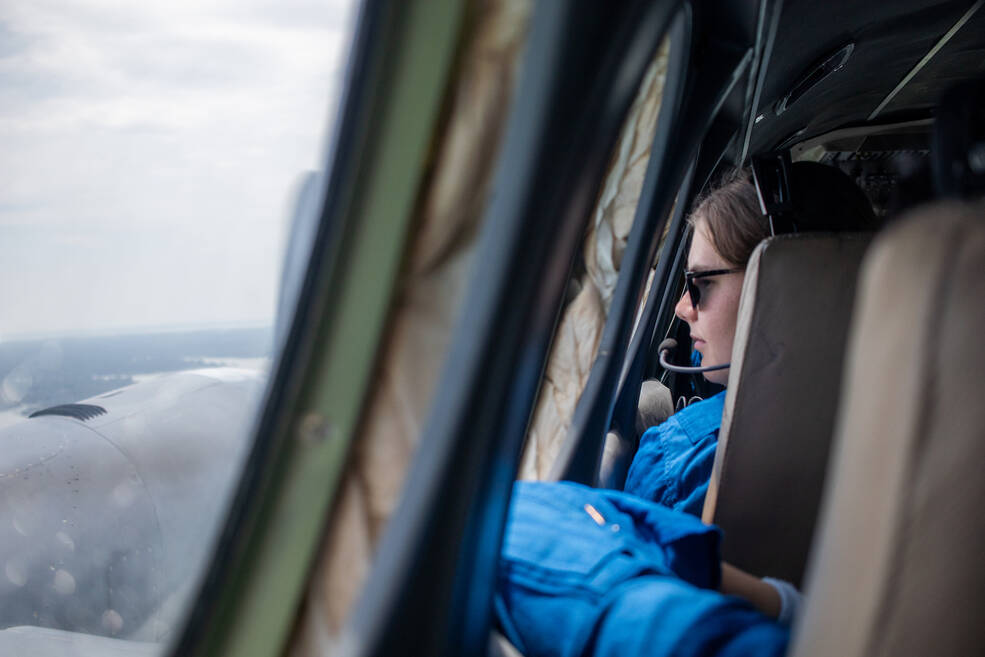
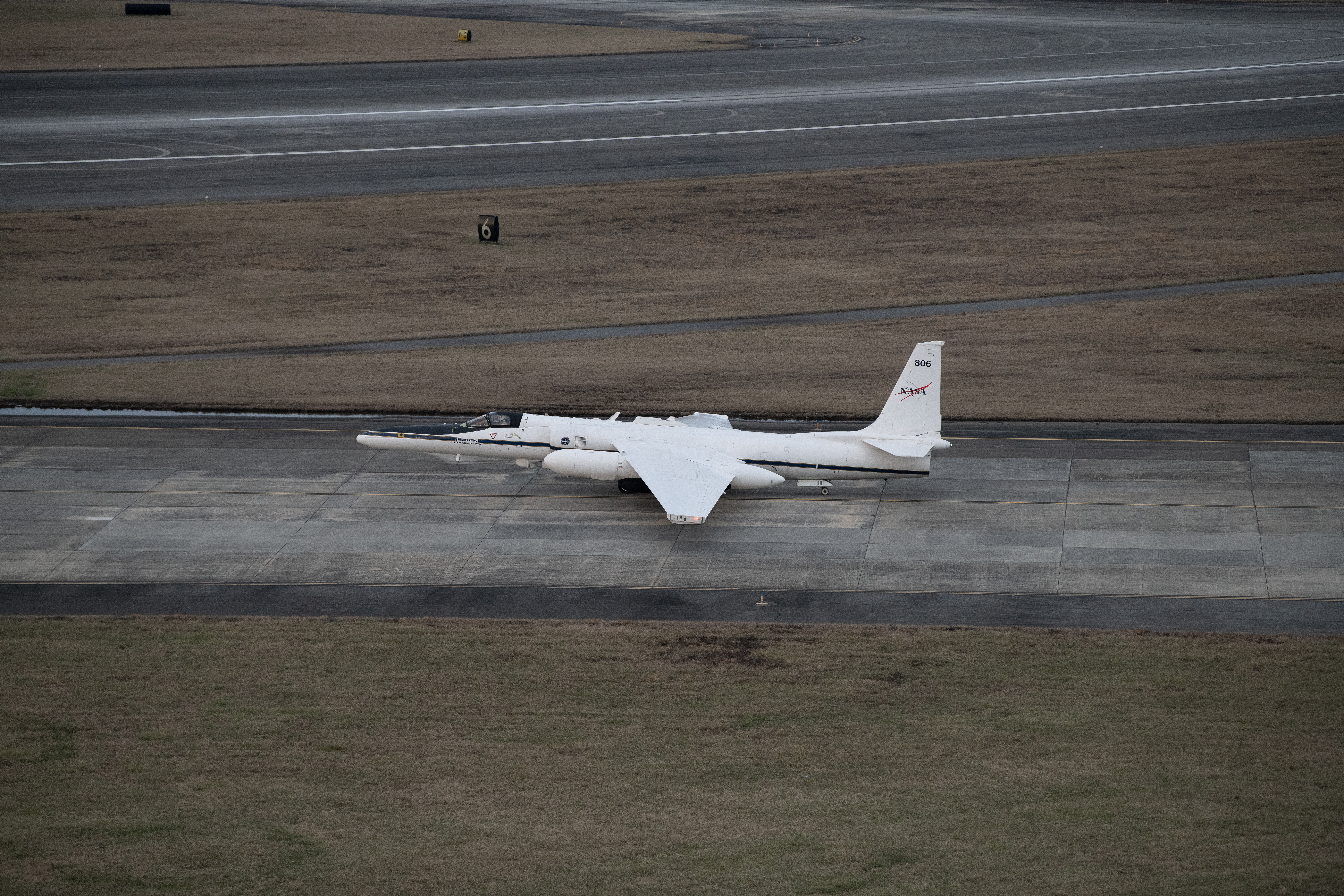
Airborne science was a highlight of the program. Five science aircraft supported the program this year, including NASA’s Gulfstream G-III, GV, and C-20A, Dynamic Aviation’s B200, and a P-III from the National Oceanic and Atmospheric Administration. Students worked alongside scientists operating various instruments, such as a laser designed to collect measurements on particulates in the atmosphere.
For many students, their time in Houston was their first foray into field research, and, like the students releasing the balloons, they were eager to continue to learn and experience hands-on science. After the first two weeks, the cohort split into two, with half of the students traveling to California and half to Virginia to continue their research.

“The coolest part of SARP is the passion everyone has,” said Joelle Hopkins, SARP project manager, NASA Headquarters. “It’s so enjoyable to work with scientists, faculty, and graduate mentors who are passionate about the science, sharing the science with the students, and building the next generation of scientists.”
The annual eight-week program enhances what students are learning in the classroom by giving them hands-on field experience. It is designed to be a steppingstone into a career in field research or other STEM fields. Students participate in all aspects of a scientific campaign, including data collection, data analysis, and research. They attend science lectures and workshops, join research flights, and accompany scientists into the field.
To learn more about NASA’s Airborne Science Program, visit:
https://airbornescience.nasa.gov/
By Erica McNamee
NASA’s Goddard Space Flight Center, Greenbelt, Md.
Share
Details
Related Terms
Explore More
Powered by WPeMatico
