Dramatic power reduction on 23cm for Belgium radio hams

Dramatic power reduction on 23cm for Belgium radio hams

A Galileo satellite - image credit ESA

A Galileo satellite – image credit ESA

The Belgium regulator BIPT has proposed cutting to just 20 watts the permitted power level for the Amateur and Amateur-Satellite allocations in 1260-1300 MHz which is to be used by the Galileo GNSS / GPS constellation.

A Google translation of the UBA post reads:

On December 18, the BIPT website provides BIPT consultation on the Frequencies, Power and Transmission modes that may be used by radio amateurs.

This consultation was already announced at the BIPT meeting with the recognized associations of September 28 and should provide a framework for the introduction of the CEPT Novice license in Belgium.

The most important part is the Appendix 1 which establishes the Frequency bands and technical characteristics allowed for the different categories of radio amateur licenses.

For holders of a HAREC license (class A operating certificate), there are only changes to the transmission power (usually in our favor):

• On most bands between 1.81 MHz and 440 MHz, the permitted power is 1500 W. Exceptions are 1.85-2.00 MHz (10 W), 5.3515-5.3665 MHz (15 W EIRP), 50-52 MHz (200 W), 69.95 MHz (10 W). EIRP), 70.1125-70.4125 MHz (50W) and 433.05-434.79 MHz (200W EIRP for (D-) ATV, 200W transmit power for other modes). On the bands above 1 GHz the permissible power is increased to 200 W, with the exception of 1260-1300 MHz (20 W). The special license for higher capital expires, but to perform exceptional experiments one can still submit a motivated request to temporarily use a larger capital. It is allowed to own devices that are capable of supplying a power up to twice the permitted maximum power.

The holders of the newly introduced CEPT Novice license (class B operating license) have access to almost all bands between 1.81 MHz and 440 MHz (except 5.3515-5.3665 MHz, 69.95 MHz and 70.1125-70.4125 MHz). The permitted transmission power is 100W at HF ​​and 6 meters and 50 W at 2 m and 70 cm. All classes of broadcast (modes) are allowed with the exception of D-ATV.
For the holders of a basic license (class C operating license) the changes are greater:

• The permissible transmission power is limited to 10 W, but the use of devices up to 100 W transmission power remains permitted (provided that the power is limited to 10 W). The use of external power amplifiers is not permitted.
• The use of the 17 m band (now 18.080-18.168 MHz), 12 m band (now 24.900-24.990 MHz) and 6 m band (now 50.125-52.000 MHz) is no longer allowed.
• The 20 m band is expanded (14,000-14,150 and 14,250-14,350 MHz), this is 65 kHz extra (14,080-140150 MHz).
• The 15 m band is expanded (21,000-21,150 and 21,320-21,450 MHz), this is 90 kHz extra (21,000-21,040 and 21,100-21,150 MHz).
• The 10 m band is expanded (28,000-29,700 MHz), this is 40 kHz extra (28,000-28,040 MHz).
• The permitted classes of broadcast (modes) do not change, everything modes except (D-) ATV remain allowed.

The full text of this consultation can be found on
https://www.ibpt.be/public/files/nl/22691/Raadpleging_RAM_2018-12-18.pdf

Everyone has the right to respond to the content of this consultation until January 18 and to propose changes.

The UBA will certainly do this and invites all members to send their comments and proposals for January 5 to ON7YD ( ( on7yd [at] uba [dot] be ) ). Anyone who wants to respond in their own name can find the procedure for this at
https://www.ibpt.be/nl/consumenten/radio/radioamateurs/raadpleging-op-verzoek-van-de-raad-van-het-bipt-met-betrekking-tot-het-ontwerp-van-besluit-van-de-raad-van-het-bipt-betreffende-de-frequenties-vermogens-en-transmissiemodi-die-mogen-worden-gebruikt-door-de-radioamateurs

UBA in Google English https://tinyurl.com/BelgiumUBA

2006 article Potential Interference To Galileo From 23cm Band Operations by Peter Blair G3LTF.
The Galileo constellation is expected to be fully operational by 2020.
http://www.southgatearc.org/articles/galileo.htm

Get The Details…

m5aka

AMSAT-UK

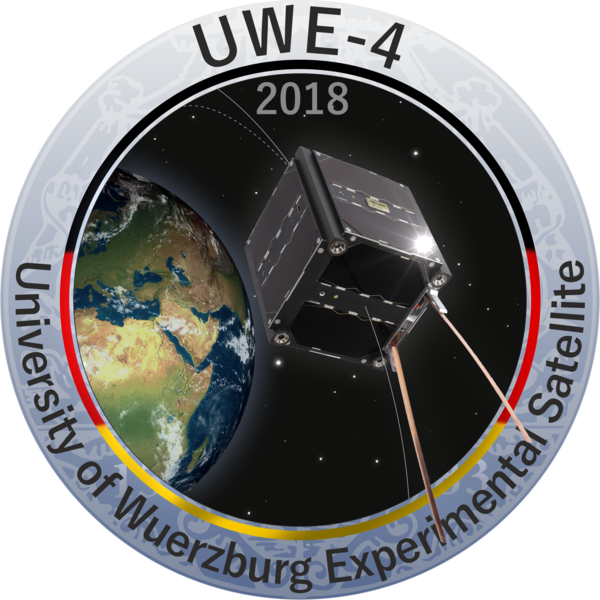
UWE-4 satellite ready to launch

UWE-4 satellite ready to launch

UWE-4 in the launch deployer

UWE-4 in the launch deployer

Last week our Team returned from the Vostochny Launch Site (Russia) where we performed the last check out tests of UWE-4 before launch on December 27, 2018.

The satellite will be launched through the German integrator ECM Space on a Soyuz-2 mission using a Fregat upper stage on December 27, 2018 at 02:07:18 UTC.

UWE-4 transportation to Far East of Russia was very smooth, so only a last software update and recharging of the batteries needed to be performed. By now, UWE-4 has been successfully integrated into the launch deployer followed by the integration with the upper stage, the fairing encapsulation will occur Thursday December 20.

UWE-4 LogoIn the meantime we updated our website to provide more detailed information about the orbit and the communication parameter including the beacon decoding information.

You can find all these and some more details here:
http://www7.informatik.uni-wuerzburg.de/forschung/space-exploration/projects/uwe-4/

As soon as we can provide the TLE, you will find them also on our website.

Kind regards,

The UWE‑4 Team

Get The Details…

m5aka

AMSAT-UK

NASA Astronaut, Crewmates Return to Earth After 197-Day Mission in Space

NASA Astronaut, Crewmates Return to Earth After 197-Day Mission in Space


Three members of the International Space Station’s Expedition 57 crew, including NASA astronaut Serena Auñón-Chancellor, returned to Earth Thursday, safely landing at 12:02 a.m. EST (11:02 a.m. local time) in Kazakhstan.

Get The Details…

NASA Breaking News

Expedition 57 Trio Back on Earth After 197-Day Space Mission

Expedition 57 Trio Back on Earth After 197-Day Space Mission

The three-member Expedition 57 crew
Official crew portrait of Expedition 57 crew members (from left) Serena Auñón-Chancellor of NASA, Alexander Gerst of ESA (European Space Agency) and Sergey Prokopyev of Roscosmos.

Three members of the International Space Station’s Expedition 57 crew, including NASA astronaut Serena Auñón-Chancellor, returned to Earth Thursday, safely landing at 12:02 a.m. EST (11:02 a.m. local time) in Kazakhstan.

Auñón-Chancellor and her crewmates, Expedition 57 Commander Alexander Gerst of ESA (European Space Agency) and Soyuz commander Sergey Prokopyev, launched June 6 and arrived at the space station two days later to begin their mission.

The Expedition 57 crew contributed to hundreds of experiments in biology, biotechnology, physical science and Earth science aboard the world-class orbiting laboratory. Highlights included investigations into new cancer treatment methods and algae growth in space. The crew also installed a new Life Sciences Glovebox, a sealed work area for life science and technology investigations that can accommodate two astronauts.

During the 197 days, they circled the globe 3,152 times, covering 83.3 million miles. This was the first flight for Auñón-Chancellor and Prokopyev and the second for Gerst, who – with a total of 362 days in orbit – now holds the flight duration record among ESA astronauts.

For the last 16 days of her mission, Auñón-Chancellor was joined by fellow NASA astronaut Anne McClain, marking the first time in which the only two U.S. astronauts on a mission were both women.

Prokopyev completed two spacewalks totaling 15 hours and 31 minutes. He and Oleg Artemyev of Roscosmos launched four small technology satellites and installed an experiment during a spacewalk Aug. 15. Then during a 7 hour, 45 minute spacewalk Dec. 11, he and Oleg Kononenko of Roscosmos retrieved patch samples and took digital images of a repair made to the habitation module of the Soyuz MS-09 in which the Expedition 57 trio rode home. The space station crew located and, within hours of its detection, repaired a small hole inside the Soyuz in August. The spacecraft was thoroughly checked and deemed safe for return to Earth.

Auñón-Chancellor will return home to Houston, Gerst will return to Cologne, Germany, and Prokopyev will return to Star City, Russia, following post-landing medical checks and research activities.

The Expedition 58 crew continues operating the station, with Oleg Kononenko of Roscosmos in command. Along with his crewmates Anne McClain of NASA and David Saint-Jacques of the Canadian Space Agency, the three-person crew will operate the station for a little more than two months until three additional crew members launch Feb. 28, 2019 to join them.

For news and more information about the mission, visit http://www.nasa.gov/station and https://blogs.nasa.gov/spacestation/. Get space station news, images and features via social media on Instagram at: @iss, ISS on Facebook, and on Twitter @Space_Station and @ISS_Research.

Get The Details…

Mark Garcia