NASA Invites Social Creators for Launch of NOAA Weather Satellite 

NASA Invites Social Creators for Launch of NOAA Weather Satellite 
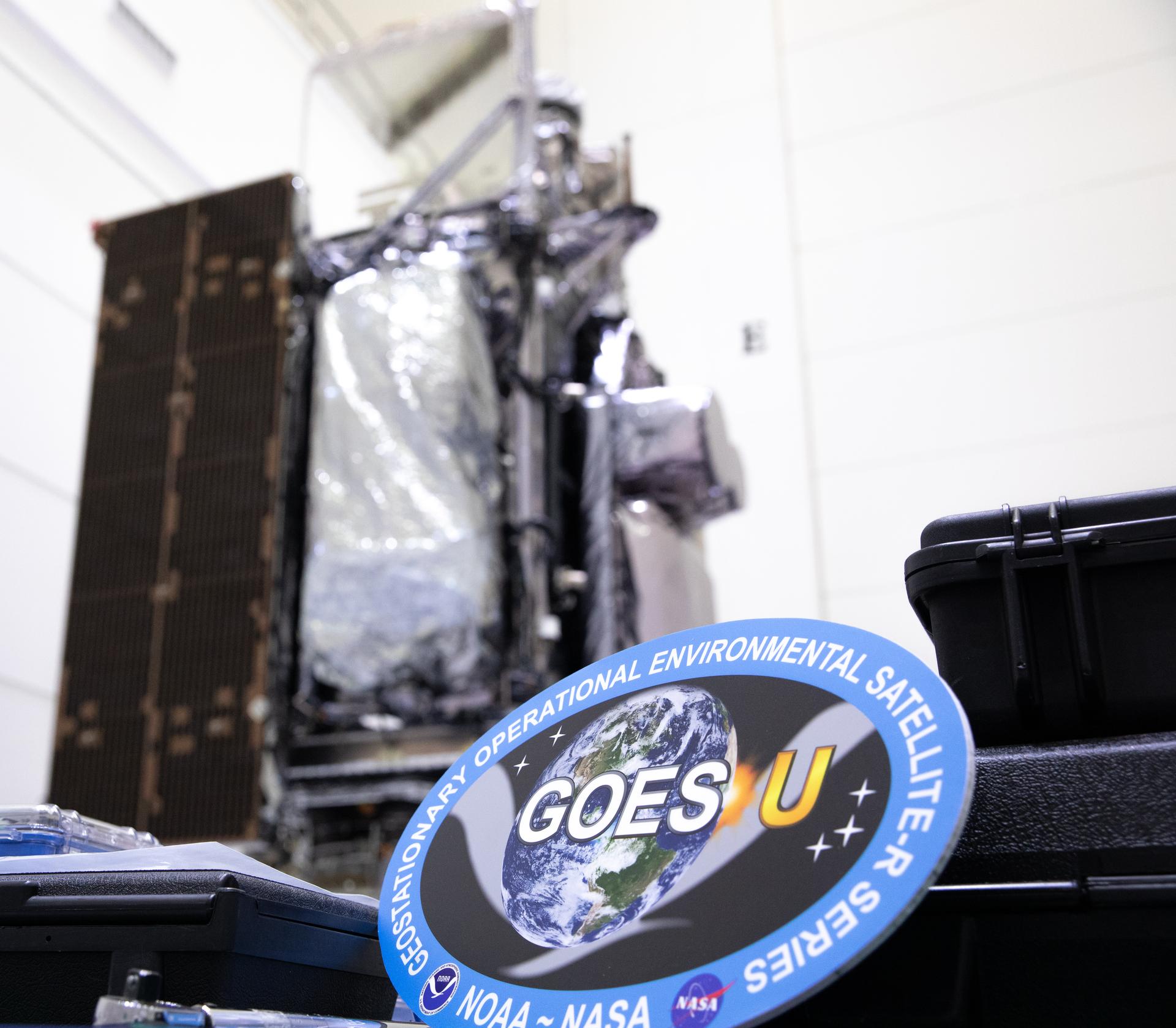
The mission insignia of NOAA’s Geostationary Operation Environmental Satellite-U (GOES-U) mission is pictured in front of the satellite in a vertical position on Wednesday, Jan. 24, 2024, at the Astrotech Space Operations Facility near the agency’s Kennedy Space Center in Florida. Part of a collaborative NOAA and NASA program, GOES-U is the fourth in a series of four advanced geostationary weather satellites. Data from the GOES satellite constellation – consisting of the GOES-R, GOES-S, GOES-T and GOES-U spacecraft – enables forecasters to predict, observe, and track local weather events that affect public safety like thunderstorms, hurricanes, and wildfires.
NASA/Ben Smegelsky

Registration is open for digital content creators to attend the launch of NOAA’s (National Oceanic and Atmospheric Administration) GOES-U (Geostationary Operational Environmental Satellite U) satellite, a mission to help improve weather observing and environmental monitoring capabilities on Earth, as well as improve space weather observations.

NASA and SpaceX are targeting a two-hour launch window opening at 5:16 p.m. EDT Tuesday, June 25, for the GOES-U launch on a SpaceX Falcon Heavy rocket from Launch Complex 39A at NASA’s Kennedy Space Center in Florida. NOAA’s GOES-U satellite will carry a suite of instruments for advanced imagery, atmospheric measurements, real-time mapping of lightning activity, and detecting approaching space weather hazards, including a new compact coronagraph that will image the outer layer of the Sun’s atmosphere to detect and characterize coronal mass ejections.

If your passion is to communicate and engage the world online, then this is the event for you! Seize the opportunity to see and share the #ReadyToGOES mission launch.

A maximum of 50 social media users will be selected to attend this two-day event and will be given access similar to news media.

NASA Social participants will have the opportunity to:

  • View the launch of the GOES-U satellite on a SpaceX Falcon Heavy rocket.
  • Tour NASA facilities at Kennedy Space Center.
  • Meet and interact with GOES-U subject matter experts.
  • Meet fellow space enthusiasts who are active on social media.

NASA Social registration for the GOES-U launch opens on Thursday, May 9, and the deadline to apply is 3 p.m. EDT Tuesday, May 14. All social applications will be considered on a case-by-case basis. 

APPLY NOW

Do I need to have a social media account to register?

Yes. This event is designed for people who: 

  • Actively use multiple social networking platforms and tools to disseminate information to a unique audience. 
  • Regularly produce new content that features multimedia elements. 
  • Have the potential to reach a large number of people using digital platforms, or reach a unique audience, separate and distinctive from traditional news media and/or NASA audiences. 
  • Must have an established history of posting content on social media platforms. 
  • Have previous postings that are highly visible, respected, and widely recognized. 

Users on all social networks are encouraged to use the hashtag #NASASocial and #ReadyToGOES. Updates and information about the event will be shared via @NASASocial and @NASAKennedy on X and via posts to Facebook and Instagram

How do I register?

Registration for this event opens Thursday, May 9, and closes at 3 p.m. EDT on Tuesday, May 14. Registration is for one person only (you) and is nontransferable. Each individual wishing to attend must register separately. Each application will be considered on a case-by-case basis. 

Can I register if I am not a U.S. citizen?

Because of the security deadlines, registration is limited to U.S. citizens. If you have a valid permanent resident card, you will be processed as a U.S. citizen. 

When will I know if I am selected?

After registrations have been received and processed, an email with confirmation information and additional instructions will be sent to those selected. We expect to send the acceptance notifications by May 31. 

What are NASA Social credentials?

All social applications will be considered on a case-by-case basis. Those chosen must prove through the registration process that they meet specific engagement criteria. 

If you do not make the registration list for this NASA Social, you still can attend the launch offsite and participate in the conversation online. Find out about ways to experience a launch here. 

What are the registration requirements?

Registration indicates your intent to travel to NASA’s Kennedy Space Center in Florida and attend the two-day event in person. You are responsible for your own expenses for travel, accommodations, food, and other amenities. 

Some events and participants scheduled to appear at the event are subject to change without notice. NASA is not responsible for loss or damage incurred as a result of attending. NASA, moreover, is not responsible for loss or damage incurred if the event is cancelled with limited or no notice. Please plan accordingly. 

Kennedy is a government facility. Those who are selected will need to complete an additional registration step to receive clearance to enter the secure areas. 

IMPORTANT: To be admitted, you will need to provide two forms of unexpired government-issued identification; one must be a photo ID and match the name provided on the registration. Those without proper identification cannot be admitted

For a complete list of acceptable forms of ID, please visit: NASA Credentialing Identification Requirements

All registrants must be at least 18 years old. 

What if the launch date changes?

Many different factors can cause a scheduled launch date to change multiple times. If the launch date changes, NASA may adjust the date of the NASA Social accordingly to coincide with the new target launch date. NASA will notify registrants of any changes by email. 

If the launch is postponed, attendees will be invited to attend a later launch date. NASA cannot accommodate attendees for delays beyond 72 hours. 

NASA Social attendees are responsible for any additional costs they incur related to any launch delay. We strongly encourage participants to make travel arrangements that are refundable and/or flexible. 

What if I cannot come to the Kennedy Space Center?

If you cannot come to the Kennedy Space Center and attend in person, you should not register for the NASA Social. You can follow the conversation online using #NASASocial.  

You can watch the launch on NASA Television or www.nasa.gov/nasatv/. NASA will provide regular launch and mission updates on @NASA and @NASAKennedy. 

If you cannot make this NASA Social, don’t worry; NASA is planning many other Socials in the near future at various locations! Check back here for updates.

Powered by WPeMatico

Get The Details…
Michelle Zajac

Astronauts Work on Science Gear, Cosmonauts Take Day Off

Astronauts Work on Science Gear, Cosmonauts Take Day Off

Astronaut Tracy C. Dyson checks out an Astrobee robotic free-flyer for the Zero Robotics, an educational contest, tech demonstration.
Astronaut Tracy C. Dyson checks out an Astrobee robotic free-flyer for the Zero Robotics tech demonstration for an educational contest to write robot-controlling software.

The four astronauts aboard the International Space Station had a full schedule of science activities on Thursday while the three cosmonauts took the day off and spent time relaxing in the microgravity environment.

The Expedition 71 crew services not only life support systems and electronics gear, but also research hardware to ensure the ongoing operation and integrity of a multitude of science experiments. Thursday was no exception as the four on-duty astronauts from NASA worked on a multipurpose science rack, a fluid physics rack, and a CubeSat deployer.

Flight Engineer Tracy C. Dyson began her morning in the Columbus laboratory module replacing computer hardware in an EXPRESS rack. The rack, one of ten aboard the station, hosts and supports a variety of payloads and experiments. Astronauts as well as scientists on the ground can also monitor and control the rack facilities.

Working in the Destiny laboratory module, Flight Engineer Mike Barratt also replaced computer gear but inside the Fluids Integrated Rack. This rack enables research to understand how liquids behave in weightlessness potentially informing the design of fuel tanks and hydraulic systems for spacecraft.

The computers that support the different science hardware can store and downlink the research data. They also enable communications between payloads and other station components including the ability to command and control the space investigations.

Over in the Kibo laboratory module, Flight Engineer Matthew Dominick removed an empty CubeSat deployer from inside Kibo’s airlock. The deployer is routinely packed with CubeSats, grappled by the Japanese robotic arm in the depressurized airlock, and pointed away from the station to release the shoe box-sized satellites into Earth orbit. The CubeSats are developed by international educational and governmental organizations for numerous public research objectives.

Dominick and Barratt also partnered together and reviewed SpaceX Dragon Endeavour spacecraft procedures to maintain their operational proficiency. Dominick and Barratt are Commander and Pilot, respectively, for the SpaceX Crew-8 mission along with Mission Specialists Jeanette Epps of NASA and Alexander Grebenkin of Roscosmos. All four are also Expedition 71 Flight Engineers.

Epps and Barratt also took turns working in the Waste and Hygiene Compartment, the orbital lab’s bathroom, located in the Tranquility module. Barratt reinstalled and activated hardware that had been removed earlier in the week for orbital plumbing maintenance. Epps wrapped up the work stowing gear that had been replaced inside Tranquility.

The orbital outpost’s three cosmonauts including Grebenkin, Commander Oleg Kononenko, and Flight Engineer Nikolai Chub relaxed on Thursday taking time out for their regularly scheduled workouts. The trio from Roscosmos will be back on duty Friday for more science, cargo, and lab upkeep duties.

For the latest on Boeing’s Crew Flight Test please visit NASA’s blog. NASA astronauts Butch Wilmore and Suni Williams are targeted to launch aboard Boeing’s Starliner spacecraft to the orbital lab no earlier than 6:16 p.m. EDT on Friday, May 17.


Learn more about station activities by following the space station blog@space_station and @ISS_Research on X, as well as the ISS Facebook and ISS Instagram accounts.

Get weekly video highlights at: https://roundupreads.jsc.nasa.gov/videoupdate/

Get the latest from NASA delivered every week. Subscribe here: www.nasa.gov/subscribe

Powered by WPeMatico

Get The Details…

Mark Garcia

NASA Invites Media to NOAA’s Advanced Weather Satellite Launch

NASA Invites Media to NOAA’s Advanced Weather Satellite Launch

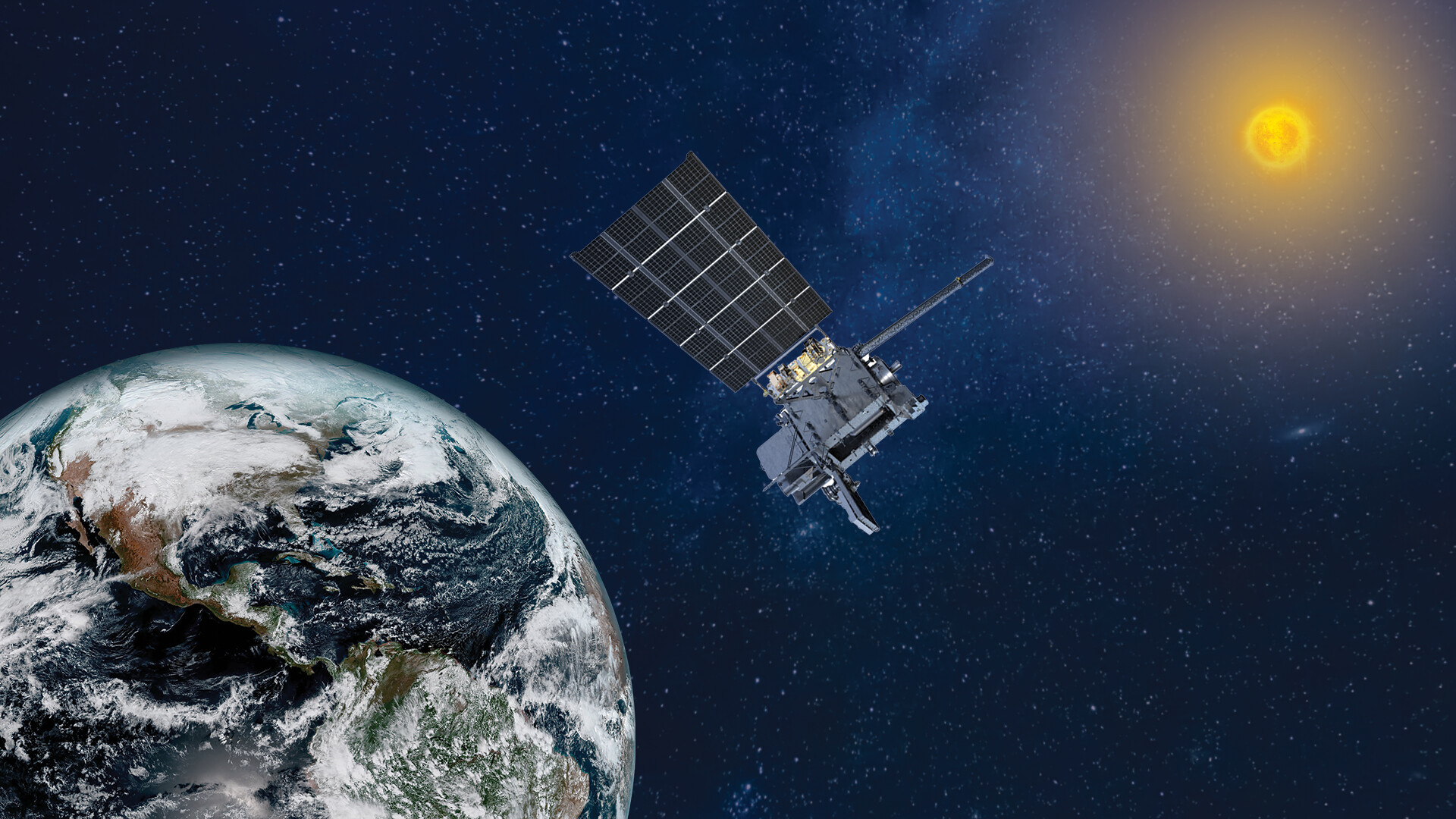
GOES-U spacecraft rendering. Credit: NOAA/Lockheed Martin

NASA is preparing to launch NOAA’s (National Oceanic and Atmospheric Administration) GOES-U (Geostationary Operational Environmental Satellite U), a mission to help improve weather observing and environmental monitoring capabilities on Earth, as well as advance space weather observations.

NASA and SpaceX are targeting a two-hour launch window opening at 5:16 p.m. EDT Tuesday, June 25. The mission will launch on a SpaceX Falcon Heavy rocket from Launch Complex 39A at NASA’s Kennedy Space Center in Florida.

The satellite will carry a suite of instruments for advanced imagery, atmospheric measurements, real-time mapping of lightning activity, and detecting approaching space weather hazards, including a new compact coronagraph that will image the outer layer of the Sun’s atmosphere to detect and characterize coronal mass ejections.

Media interested in covering the GOES-U launch must apply for media accreditation. Deadlines for accreditation are as follows:

  • U.S. media and U.S. citizens representing international media must apply for accreditation by 11:59 p.m., Friday, June 7.
  • International media without U.S. citizenship must apply by 11:59 p.m., Tuesday, May 28.

Media requiring special logistical arrangements, such as space for satellite trucks, tents, or electrical connections, should email ksc-media-accreditat@mail.nasa.gov by May 28.

A copy of NASA’s media accreditation policy is available online. For questions about accreditation, please email: ksc-media-accreditat@mail.nasa.gov. For other mission questions, please contact NASA Kennedy’s newsroom at: 321-867-2468.

Accredited media will have the opportunity to participate in a series of prelaunch briefings and interviews with key mission personnel. Details regarding the media event schedule will be communicated to accredited members as the launch date approaches.

NASA will post updates on launch preparations to prepare the spacecraft on the GOES blog.

As the fourth and final satellite in the GOES-R Series, GOES-U will enhance the nation’s ability to monitor and forecast weather, ocean, and environmental dynamics in real-time. The satellite has seven instruments that will provide advanced imagery and atmospheric measurements of Earth’s Western Hemisphere, real-time mapping of lightning activity, and advanced monitoring of solar activity and space weather. Following a successful launch and on-orbit checkout, NOAA will redesignate GOES-U as GOES-19. Working in tandem with GOES-18, the satellites will continuously observe Earth from the west coast of Africa to New Zealand, providing data for weather forecasting, severe storm tracking, and environmental monitoring. The GOES constellation helps protect the one billion people who live and work in the Americas.

NASA and NOAA collaborate on various missions to enhance our understanding of Earth, its climate, and its environment, enhancing the safety and well-being of all humanity. NASA’s Launch Services Program, based at Kennedy, manages the launch service for the GOES-U mission. NASA’s Goddard Space Flight Center in Greenbelt, Maryland, oversees the acquisition of the spacecraft and instruments. Lockheed Martin designs, builds, and tests the GOES-R series satellites. L3Harris Technologies provides the primary instrument, the Advanced Baseline Imager, along with the ground system, which includes the antenna system for data reception.

For further details about the GOES-U mission and updates on launch preparations, visit:

https://go.nasa.gov/48httvm

-end-

Liz Vlock
Headquarters, Washington
202-358-1600
elizabeth.a.vlock@nasa.gov

Peter Jacobs
Goddard Space Flight Center, Greenbelt, Maryland
301-286-0535
peter.jacobs@nasa.gov

Leejay Lockhart
Kennedy Space Center, Florida
321-747-8310
leejay.lockhart@nasa.gov

Share

Details

Last Updated

May 09, 2024

Powered by WPeMatico

Get The Details…
Abbey A. Donaldson

NASA Field Geology Training Prepares Artemis Mission Support Teams  

NASA Field Geology Training Prepares Artemis Mission Support Teams  

4 min read

Preparations for Next Moonwalk Simulations Underway (and Underwater)


A group of people stand on a incline with lava rocks.
A small team of participants in the Geology 101 field training gather on a large pile of rocks from a lava flow.
NASA/Robert Markowitz

NASA engineers, managers, and flight directors recently traded their cubicles and conference rooms for an ancient volcanic field in the northern Arizona desert to participate in a field geology course aimed at arming them with first-hand experience in what Artemis astronauts will do when they explore the Moon. 

The two-and-a-half-day exercise for Artemis mission support teams was a condensed version of the rigorous training astronauts receive to prepare for Artemis missions to the lunar South Pole region, but shares an important purpose.  

“We are building a common language and a common understanding of what it will be like to do field geology on the surface of the Moon,” said Cindy Evans, Artemis geology training lead at NASA’s Johnson Space Center in Houston. “This is so the people who are building spacesuits, building tools, building software systems, the people who will be flight controllers, and the managers who direct and fund all of this, can all understand the interlocking parts of surface exploration.” 

We are building a common language and a common understanding of what it will be like to do field geology on the surface of the Moon.

Cindy Evans

Cindy Evans

Artemis Geology Training Lead at NASA’s Johnson Space Center

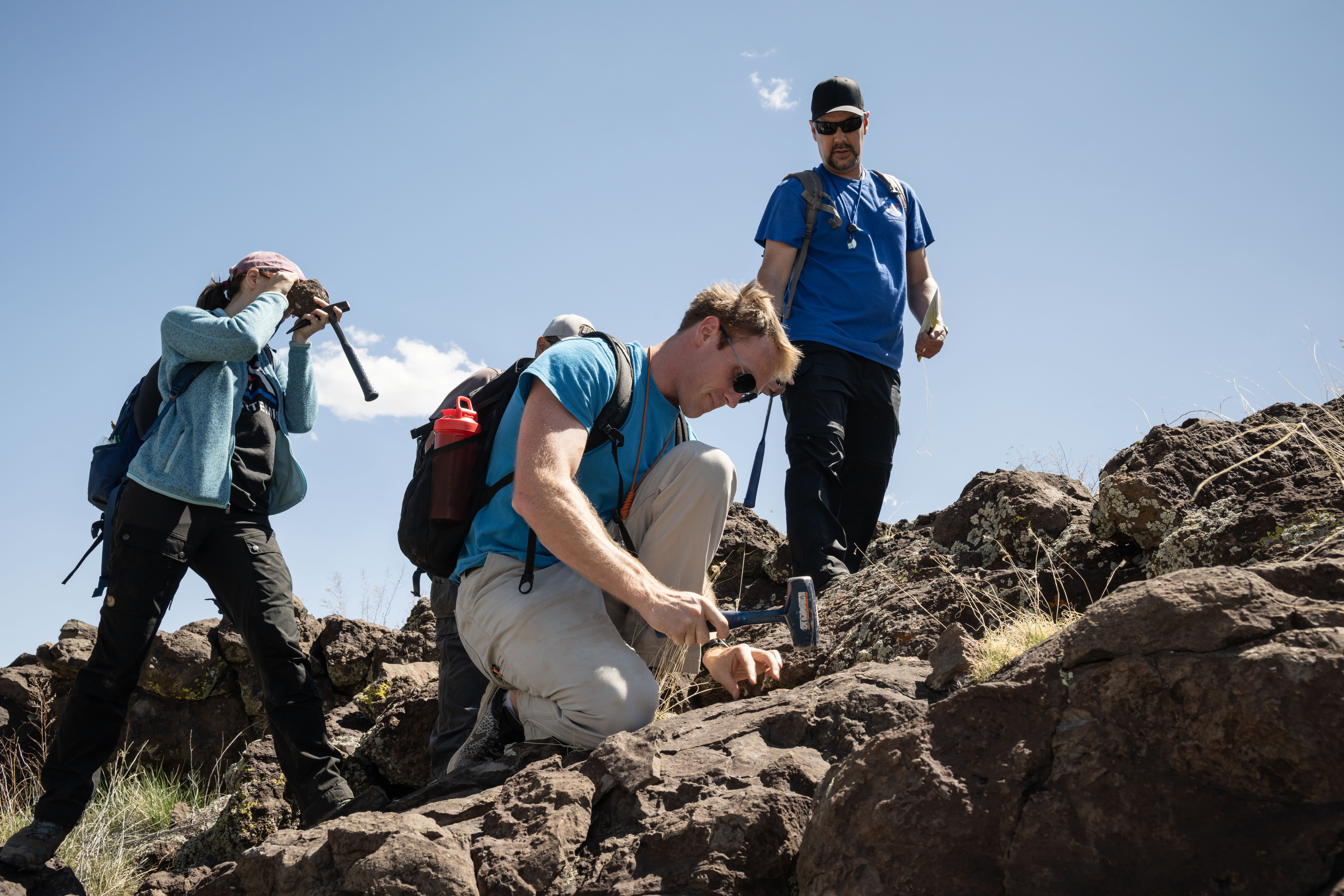
Small teams led by geology experts from NASA, the USGS (U.S. Geological Survey), and academia studied maps, built hypotheses about the geologic history of the area, and trekked for miles to test whether those hypotheses match reality. This field test required smashing rocks with hammers to study their mineral makeup, and carefully selecting a few to examine further after returning from the field in the same way Artemis astronauts will return samples from the Moon.  

Geology studies help uncover the rich physical history of an area. Each rock type represents a process and the order of layering of those rocks reveals a story that could unlock a planet’s secrets, offering clues for how it was formed and evolved over time.  

“The Moon doesn’t have an atmosphere or flowing water like we have here on Earth, and doesn’t have plate tectonics, which are processes that erase a lot of the evidence from the early Earth,” said Jacob Bleacher, chief exploration scientist in the Exploration Systems Development Mission directorate at NASA Headquarters in Washington. “The Moon still has that evidence, so we can go to the Moon and learn lessons about our home planet that we can’t learn here on the Earth.”  

Three people are on a hill made of lava rocks.
Artemis curation lead Juliane Gross, left, NASA flight controller Grant Harman, center, and imagery scientist Marco Lozano collect and examine samples during the Geology 101 field course.
NASA/Robert Markowitz

In the desert, as the mission support team members practiced the fundamental methods used by geologists to study an environment, they pieced together the story of the region. The planned walking paths, known as traverses, frequently changed based on what they were finding. Teams embraced the principle of “flexecution” – or flexible execution – a practice that could come into play as astronauts explore the lunar surface and report findings to a backroom of scientists supporting the mission in the Mission Control Center at Johnson, referred to as the science evaluation room.  

“The geologists will be the science evaluation room during Artemis missions, assimilating real-time mission data to understand the observations, tracking the samples, going back to the maps that they’ve built trying to understand how all those pieces fit together on a day-by-day and traverse-by-traverse basis,” said Evans. “When the astronauts return home with the samples and with their full observations, the scientists can hit the ground running to address key science questions.” 

With Artemis, NASA will study the history of the Moon and its relationship with Earth and build a blueprint for deeper space exploration. 

A woman holds a rock close to her face so she can get a better look.
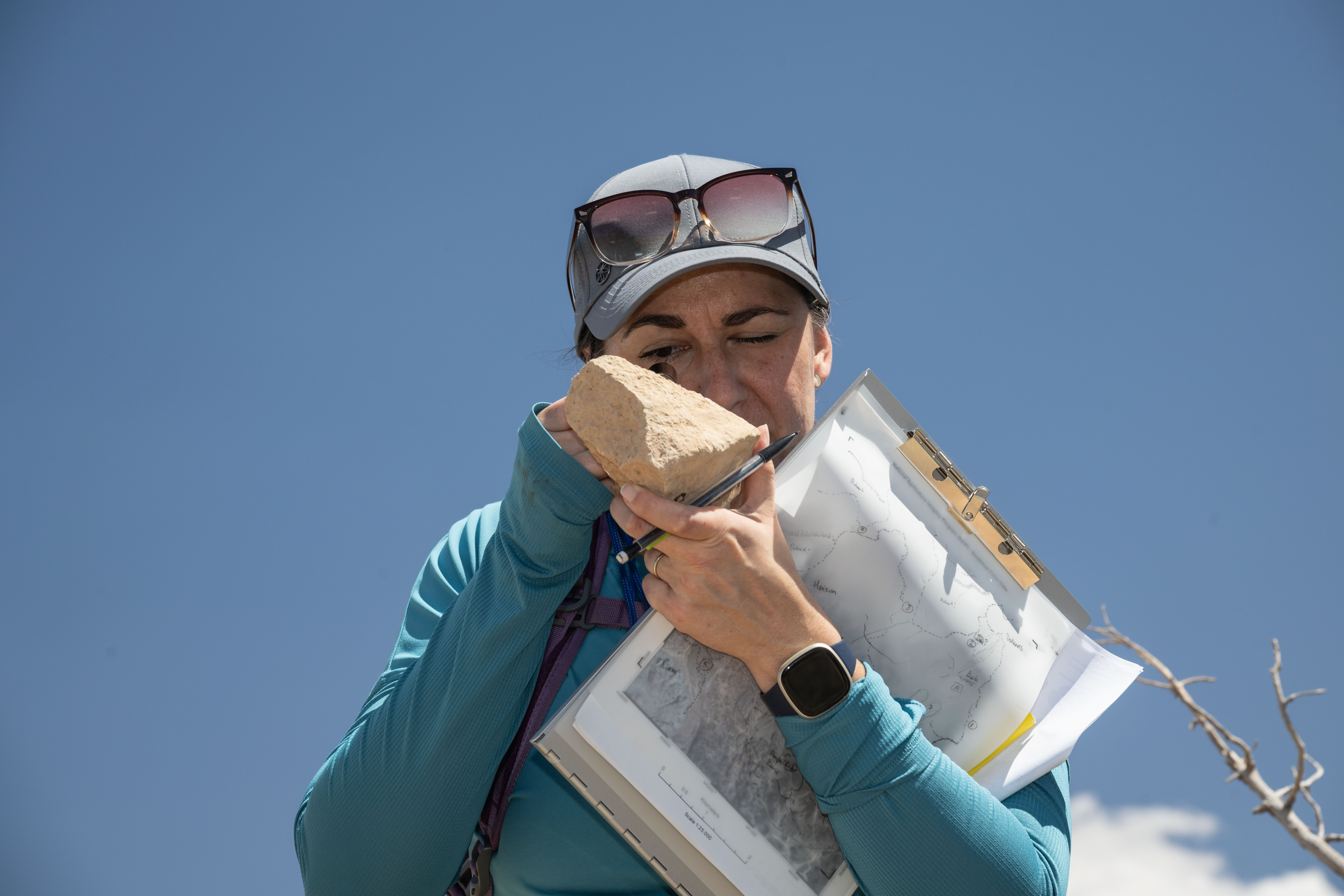
NASA Flight Director Diane Dailey examines a rock at the Geology 101 field training for Artemis mission support teams in the northern Arizona desert.
NASA/Robert Markowitz

“What we’re doing now is laying the groundwork for long-term exploration at the Moon,” Bleacher said. “Laying that groundwork will then help us explore other destinations like Mars. The Moon is a part of everything that we understand here on the Earth. It’s also an anchor point to help us understand how to interpret everything else in the solar system.” 

NASA conducts field tests in locations on Earth that have lunar-like landscapes to test a variety of operations and procedures, as well as new technologies, before leaving Earth for Artemis missions on the Moon. In addition to this geology training to build a foundation for mission support teams, another team will conduct simulated moonwalks in the Arizona desert this spring with mockup spacesuits to test hardware and new capabilities, like a heads-up display using augmented reality, for future Artemis missions.  

Through Artemis, NASA will send astronauts – including the first woman, first person of color, and its first international partner astronaut – to explore more of the lunar surface than ever before prepare for human missions to Mars for the benefit of all. 

Rachel Barry  
Johnson Space Center 


Powered by WPeMatico

Get The Details…
Andrea Lloyd

I Am Artemis: Lauren Fisher

I Am Artemis: Lauren Fisher

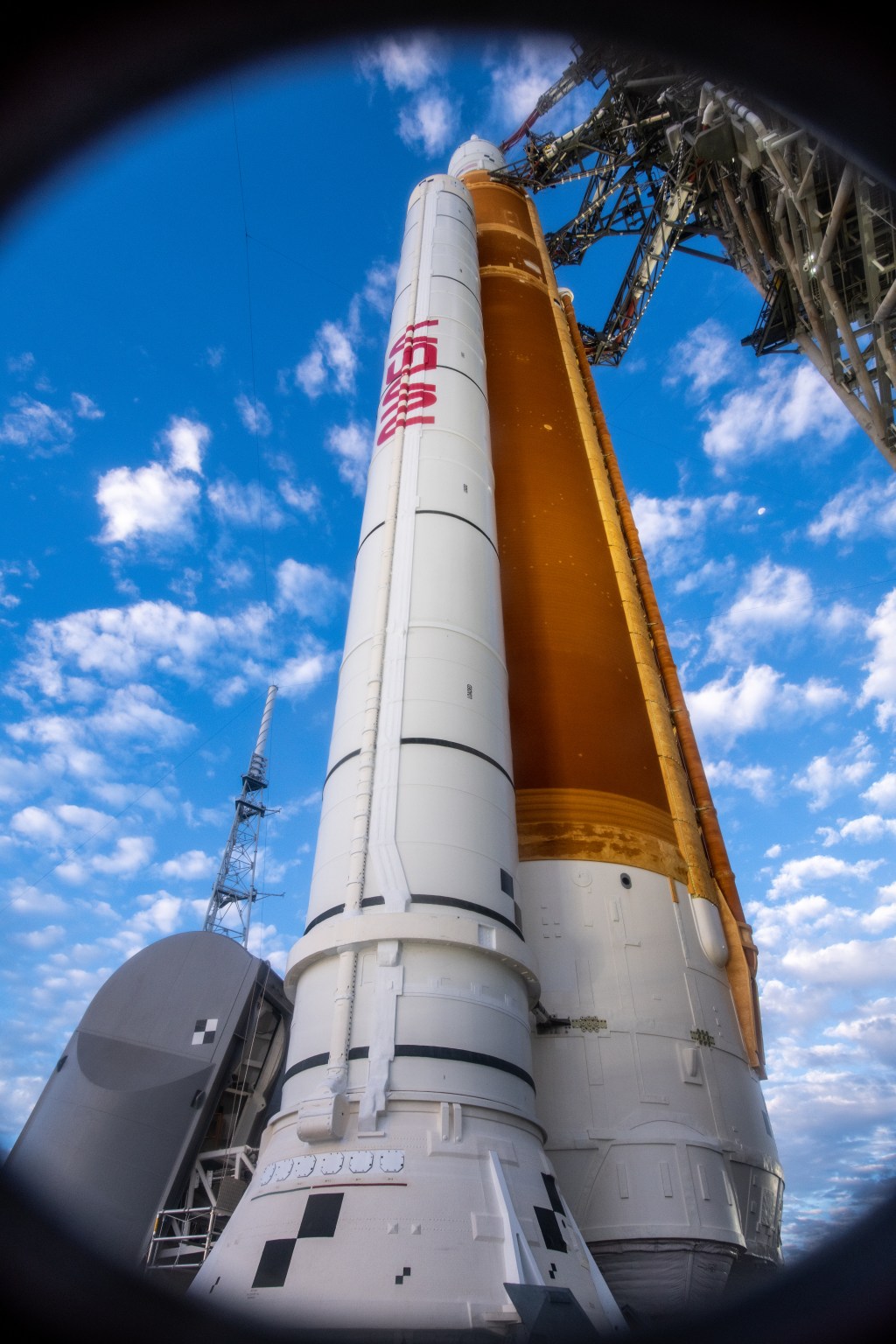
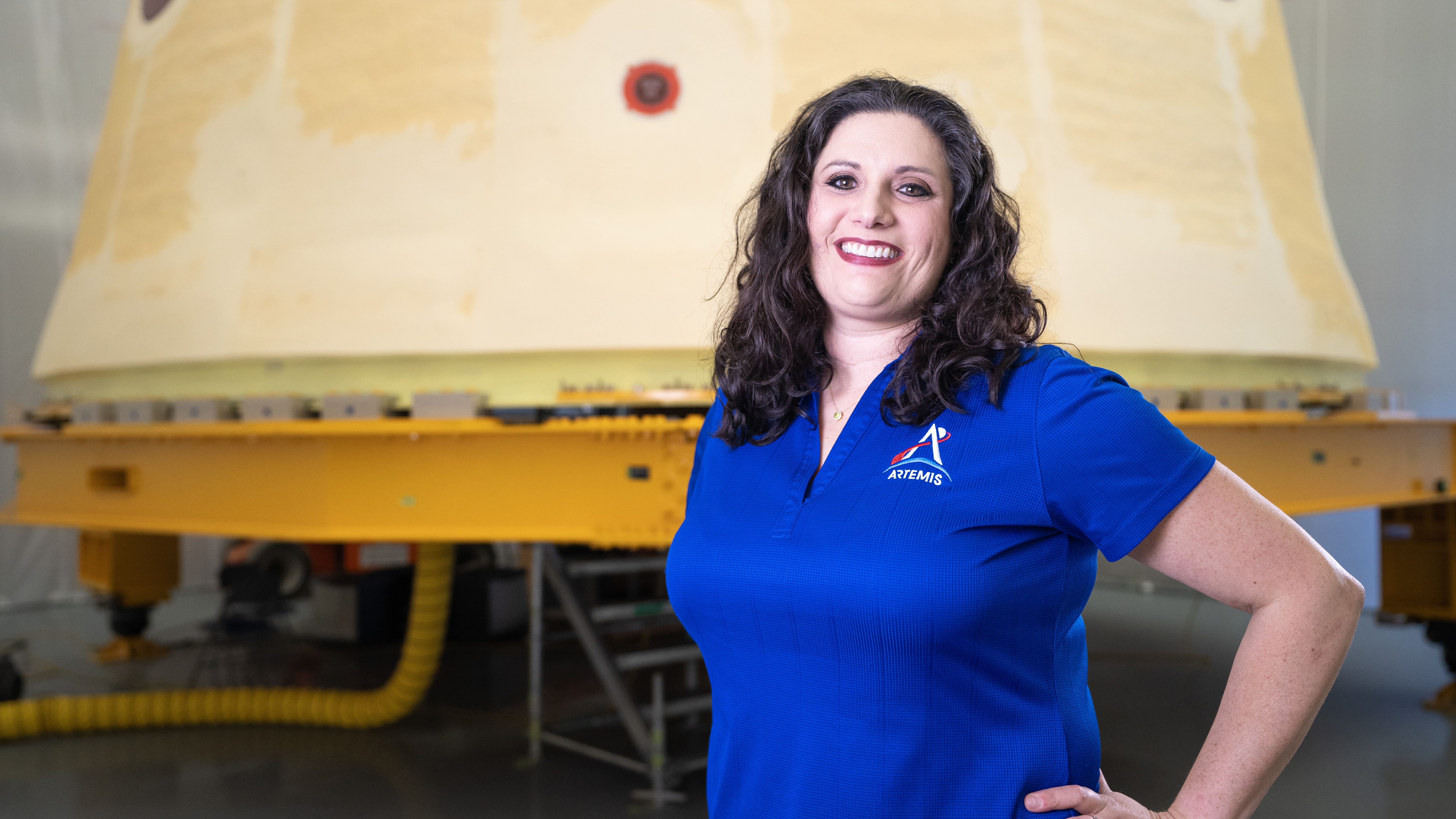
Lauren Fisher stands in front of the launch vehicle stage adapter for NASA’s SLS (Space Launch System) rocket.
Fisher stands in front of the launch vehicle stage adapter for NASA’s SLS (Space Launch System) rocket. The hardware will be used for the agency’s Artemis III mission that will land astronauts on the lunar surface. Fisher works with a number of teams across the agency and believes her background in music education has been an asset to her work as an engineer: “Teaching skills help you look at things from a different perspective and helps with understanding how others might approach a situation – all very helpful when I’m working with teams.”

Not many music majors get to be hands-on with building a Moon rocket, but Lauren Fisher has always enjoyed the unusual.

Now a structural materials engineer at NASA’s Marshall Space Flight Center in Huntsville, Alabama, Fisher works on a key adapter for NASA’s SLS (Space Launch System) rocket for the first crewed missions of NASA’s Artemis campaign.

Manufactured at Marshall by NASA, lead contractor Teledyne Brown Engineering, and the Jacobs Space Exploration Group’s ESSCA contract, the cone-shaped launch vehicle stage adapter partially encloses the rocket’s interim cryogenic propulsion stage and connects it to the core stage below and the Orion stage adapter above. The launch vehicle stage adapter also protects avionics and electrical devices from extreme vibration and acoustic conditions during launch and ascent.

Fisher and the thermal protection system team develop and apply the spray-on foam that acts as insulation and protects the adapter and all its systems from the extreme pressures and temperatures it’ll face during flight. The thermal protection system for the component, unlike other parts of the rocket, is applied by hand using a spray gun. When first applied, the insulation is yellow, but after time and exposure to the Sun, it turns orange.

“We’re taking the same stuff someone might use to insulate their attic, except making it for cryogenic atmospheres, and spraying it all over a giant piece of hardware that will help launch us to the Moon,” Fisher said. “With my work for NASA’s Space Launch System rocket, I get to play with foam and glue. I like to call it arts and crafts engineering!”

Although engineering runs in her family, Fisher initially graduated from University of Southern Mississippi with a Bachelor of Arts in music performance and an interest in music education. She developed an interest in carbon-based polymers, and decided to go back to school, completing a chemical engineering degree with a polymeric materials track from the University of Alabama in Huntsville. Her new degree led to an opportunity to work for the thermal protection system team at Marshall.

When Fisher isn’t in the office, she likes travelling to unusual places and checking items off her self-described “Bizarre Bucket List.” Recently, she went to Punxsutawney, Pennsylvania, to watch the famous groundhog predict an early spring.

Being part of the Artemis Generation is incredibly inspiring for Fisher, who takes pride in her work supporting the first three Artemis missions, including Artemis II, the first crewed mission under Artemis, in 2025.

“I’m literally building the hardware that will send the first woman to deep space,” Fisher says. “Watching our rocket take shape, I’m like ‘you see that thing? I did that; that’s mine. See that one? My team did that one. We did that, and see this?’” She beams with pride. “You can do that, too. Just being a part of the generation that’s changing the workforce and changing the space program it gives me goosebumps.”

NASA is working to land the first woman, first person of color, and its first international partner astronaut on the Moon under Artemis. SLS is part of NASA’s backbone for deep space exploration, along with the Orion spacecraft and Gateway in orbit around the Moon and commercial human landing systems, next-generational spacesuits, and rovers on the lunar surface. SLS is the only rocket that can send Orion, astronauts, and supplies to the Moon in a single launch.

Powered by WPeMatico

Get The Details…
Lee Mohon