NASA Invites Media to Annual Lunabotics Competition
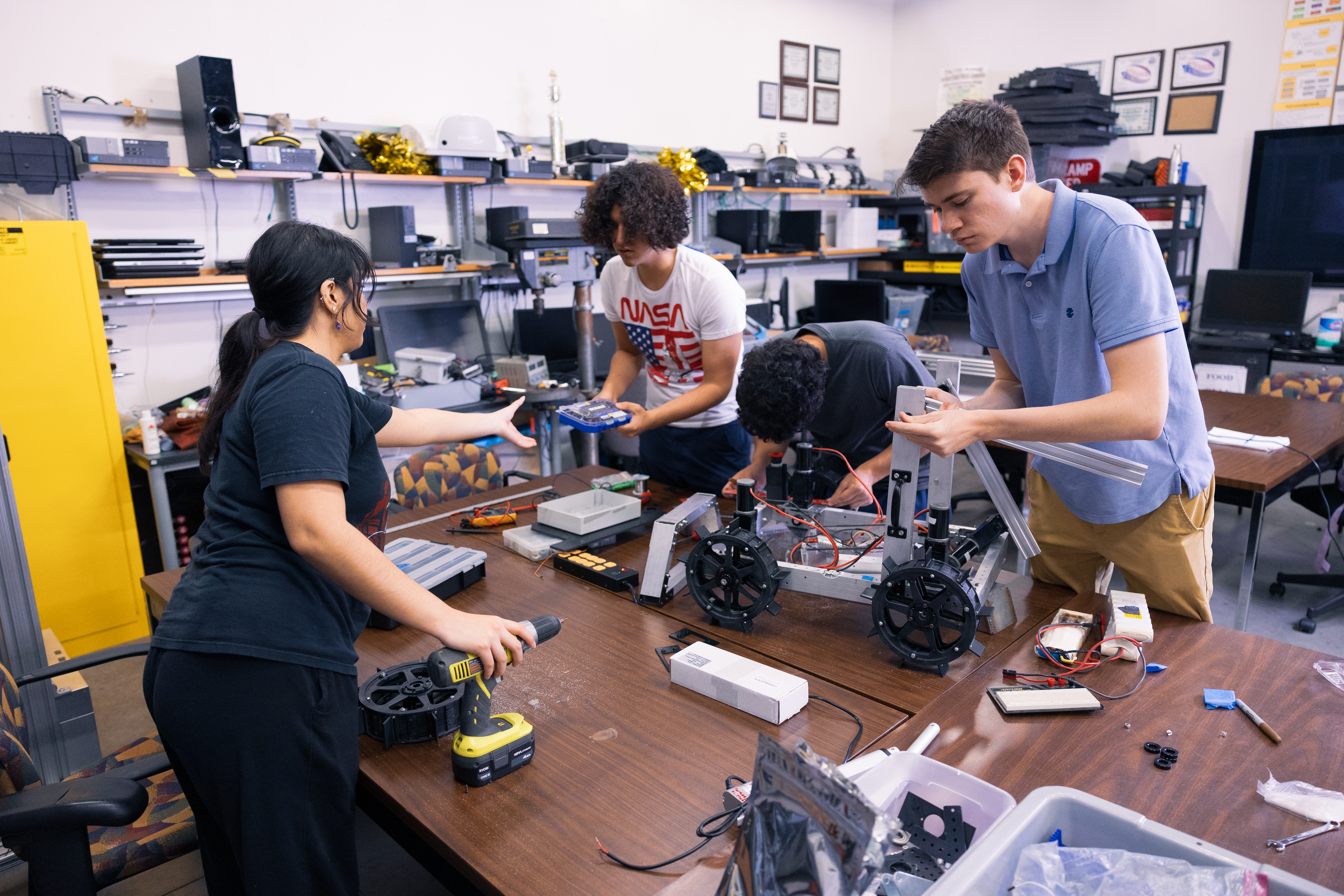
From left to right, Cielo Torres, Jacob Liorca, Thomas Jaycard, and Gavin Fitzgerald work on a robotic rover inside the University of Central Florida’s robotics lab ahead of the 2024 Lunabotics Challenge.
University of Central Florida/Antoine Hart
NASA’s 2024 Lunabotics Challenge offers more than 40 college teams from across the country the chance to design, build, and operate their own lunar robots, with the top 10 teams advancing to the final demonstrations phase. Media are invited to attend the finals on May 16-17 at the Kennedy Space Center Visitor Complex in Florida.
The teams’ autonomous rovers must be capable of building a berm structure from lunar regolith to protect critical Artemis infrastructure on the Moon. Such berms could defend against blast and ejecta during lunar landings and launches, shade cryogenic propellant tank farms, shield a nuclear power plant from space radiation, and provide other uses.
“The task of robotically building berm structures will be important for preparation and support of crewed lunar missions,” said Kurt Leucht, NASA software developer and In-Situ Resource Utilization (ISRU) researcher, as well as longtime Lunabotics commentator. “These competing teams are not only building critical engineering skills that will assist their future careers, they are literally helping NASA prepare for our future Artemis missions to the Moon.”
Coverage of Lunabotics will include live streaming of the first round and final round throughout the duration of the competition.
Reporters interested in attending the Lunabotics finals must contact Isabel Kennedy at isabel.kennedy@nasa.gov.
The first round of the challenge takes place May 12-14 in the Exolith Lab at the University of Central Florida in Orlando. Those wishing to attend the first round of the challenge should contact Margot Winick at margot.winick@ucf.edu.
Coordinated by NASA’s Office of STEM Engagement, Lunabotics has taken place annually since 2010. As one of NASA’s Artemis Student Challenges, the competition is designed to engage and retain students in STEM fields by expanding opportunities for student research and design in the areas of science, technology, engineering, and math.
NASA’s New Mobile Launcher Stacks Up for Future Artemis Missions
The foundation is set at NASA’s Kennedy Space Center in Florida for launching crewed missions aboard the agency’s larger and more powerful SLS (Space Launch System) Block 1B rocket in support of Artemis IV and future missions. On May 9, 2024, teams with NASA’s EGS (Exploration Ground Systems) Program and contractor Bechtel National Inc. transferred the primary base structure of the mobile launcher 2 to its permanent mount mechanisms using the spaceport’s beast-mode transporter – the crawler.
On Thursday, May 9, 2024, teams with NASA’s Exploration Ground Systems Program and primary contractor, Bechtel National, Inc., continue moving the base structure of mobile launcher 2 to a permanent mount structure where assembly will be completed at Kennedy Space Center in Florida. The 355-foot-tall mobile launcher 2 with a two-story base and a tower will be used to assemble and process the SLS (Space Launch System) rocket and Orion spacecraft in the Vehicle Assembly Building on NASA’s upcoming Artemis missions to the Moon beginning with Artemis IV.
Photo credit: NASA/Madison Tuttle
“Seeing mobile launcher 2 take shape has been incredible,” said Shawn Quinn, program manager for NASA’s EGS Program. “Anytime we can see the manifestation of our work into physical hardware means a lot to the EGS team. It is also inspiring for the future of Artemis, with each bolt and truss put in place signifying the next phase of humanity’s return to the Moon.”
Why is the “Jack & Set” process necessary?
Teams at Bechtel fabricated temporary pedestals 8 feet off the ground, facilitating a much more efficient and safer initial steel build process by sitting lower to the ground. These extremely large steel truss subassemblies, some weighing over 100,000 pounds each, sat on temporary bases. Once the entire 2.6 million-pound skeleton of the base was fully torqued and welded, teams used a specialized heavy-duty jacking system to raise the base to allow sufficient space for the spaceport’s crawler to be situated underneath the structure ahead of repositioning.
Four self-propelled modular transporters were driven underneath the sides of the steel assembly and then lowered the base onto eight surrounding jacks. Once secured, teams removed the transporters and used jacks to raise the base 18 feet to allow for crawler access underneath the structure. The crawler was then positioned under the new base skeleton, raised the structure a few inches higher, and repositioned it about 200 feet to the six permanent pedestals, called mount mechanisms, completing the “jack and set” operation.
“The jack & set milestone is a huge accomplishment for the NASA and Bechtel team,” said Darrell Foster, ground systems integration manager for NASA’s EGS Program. “It represents the hard work of hundreds of people – not only in the field putting the pieces together, but engineers and analysts who custom designed this structure, subcontracting buyers and delivery managers who drove the process to get the materials to the site, and the several offsite fabrication shops across the country.”
With NASA’s iconic Vehicle Assembly Building in the background, teams with the agency’s Exploration Ground Systems Program and primary contractor, Bechtel National, Inc. continue construction on the base of the platform for the new mobile launcher at Kennedy Space Center in Florida on Wednesday, April 24, 2024. Once completed and able to be carried atop the crawler-transporter, the 355-foot-tall mobile launcher 2 will be used during assembly, processing, and launch of the SLS (Space Launch System) rocket and Orion spacecraft on NASA’s upcoming Artemis missions to the Moon beginning with Artemis IV.
Photo credit: Isaac Watson
Now poised atop the new launch mount mechanisms at its park site near the spaceport’s Vehicle Assembly Building, teams will begin installing critical piping and electrical equipment inside the base. The mobile launcher will remain at the park site throughout the build and commissioning phases of the project.
The mobile launcher serves as the primary interface between the ground launch systems, SLS rocket, and Orion spacecraft that will launch the SLS Block 1B rocket, with its enhanced upper stage, to the Moon, allowing the agency to send astronauts and heavier cargo into lunar orbit than its predecessor, SLS Block 1. With Artemis, NASA will land the first woman, first person of color, and its first international partner astronaut on the lunar surface and establish long-term exploration for scientific discovery and to prepare for human missions to Mars.
As astronauts performed finishing tasks on the telescope during its final servicing mission in May 2009, they knew they had successfully concluded one of the most challenging and ambitious series of spacewalks ever conducted. But they couldn’t have known at the time what an impact they had truly made.
I had high hopes that Hubble would last at least five years more, and maybe even a little more to overlap with Webb. Here we are at 15 years and Hubble is going strong. The science from Hubble has been phenomenal.
John Grunsfeld
NASA Astronaut
“I had high hopes that Hubble would last at least five years more, and maybe even a little more to overlap with Webb,” said astronaut and former associate administrator for NASA’s Science Mission Directorate John Grunsfeld, who participated in three Hubble servicing missions and was lead mission specialist on SM4. “Here we are at 15 years and Hubble is going strong. The science from Hubble has been phenomenal.”
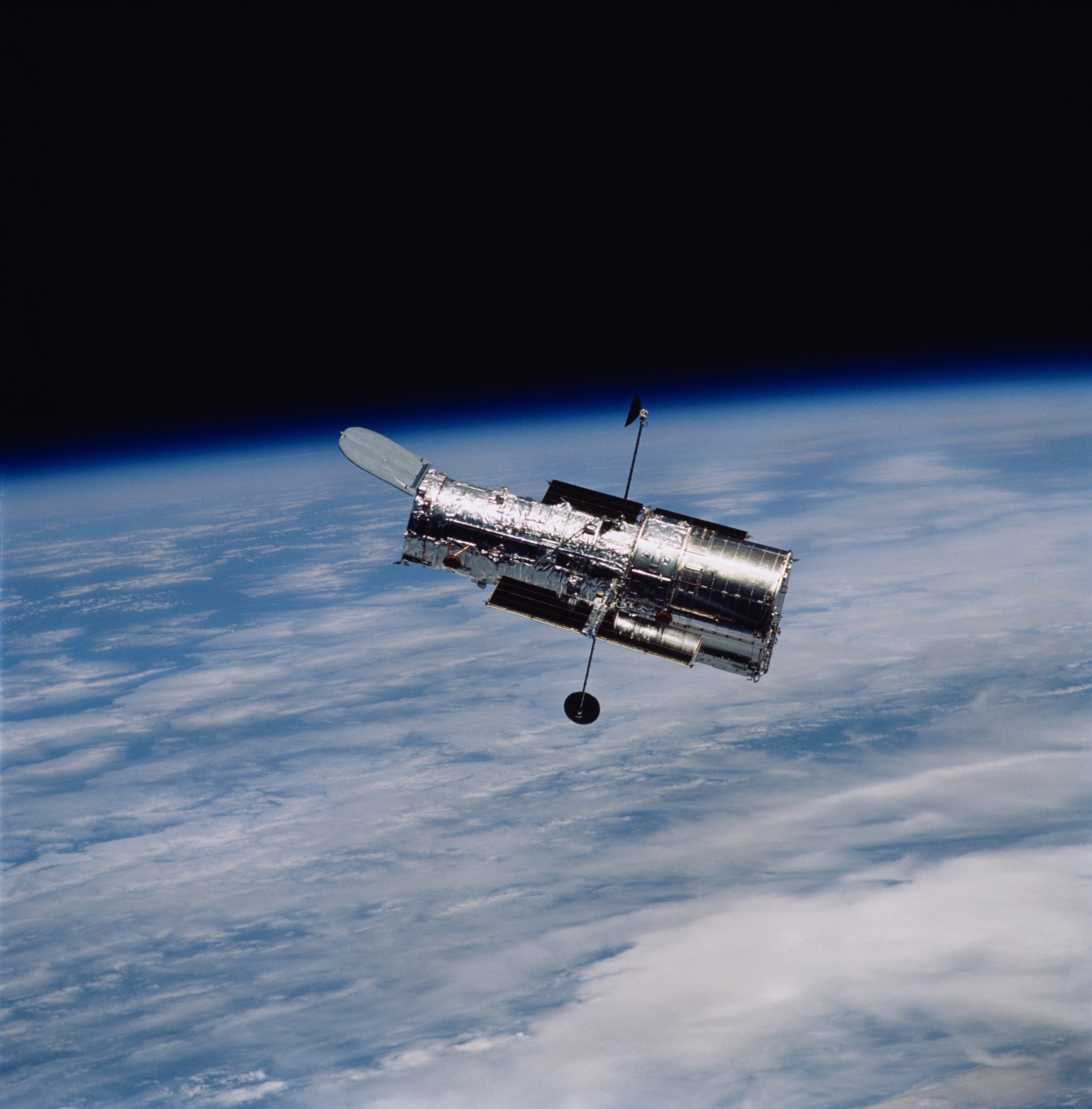
Today, more than three decades after its launch in 1990, Hubble continues to send stunning images back to Earth and conduct groundbreaking science. Much of the credit for the last 15 years belongs to Servicing Mission 4 (SM4), the fifth mission to repair and upgrade the telescope.
A Momentous Mission
Launched on May 11, 2009 and spanning 12 days, Servicing Mission 4 was unlike any that had gone before, with stakes higher than they had been since the first mission to repair the telescope’s flawed vision. It would be the last space shuttle mission to Hubble, with the retirement of the shuttle announced in 2004. In addition to installing two new instruments and replacing and upgrading key components, astronauts would make repairs never envisioned when the telescope was designed.
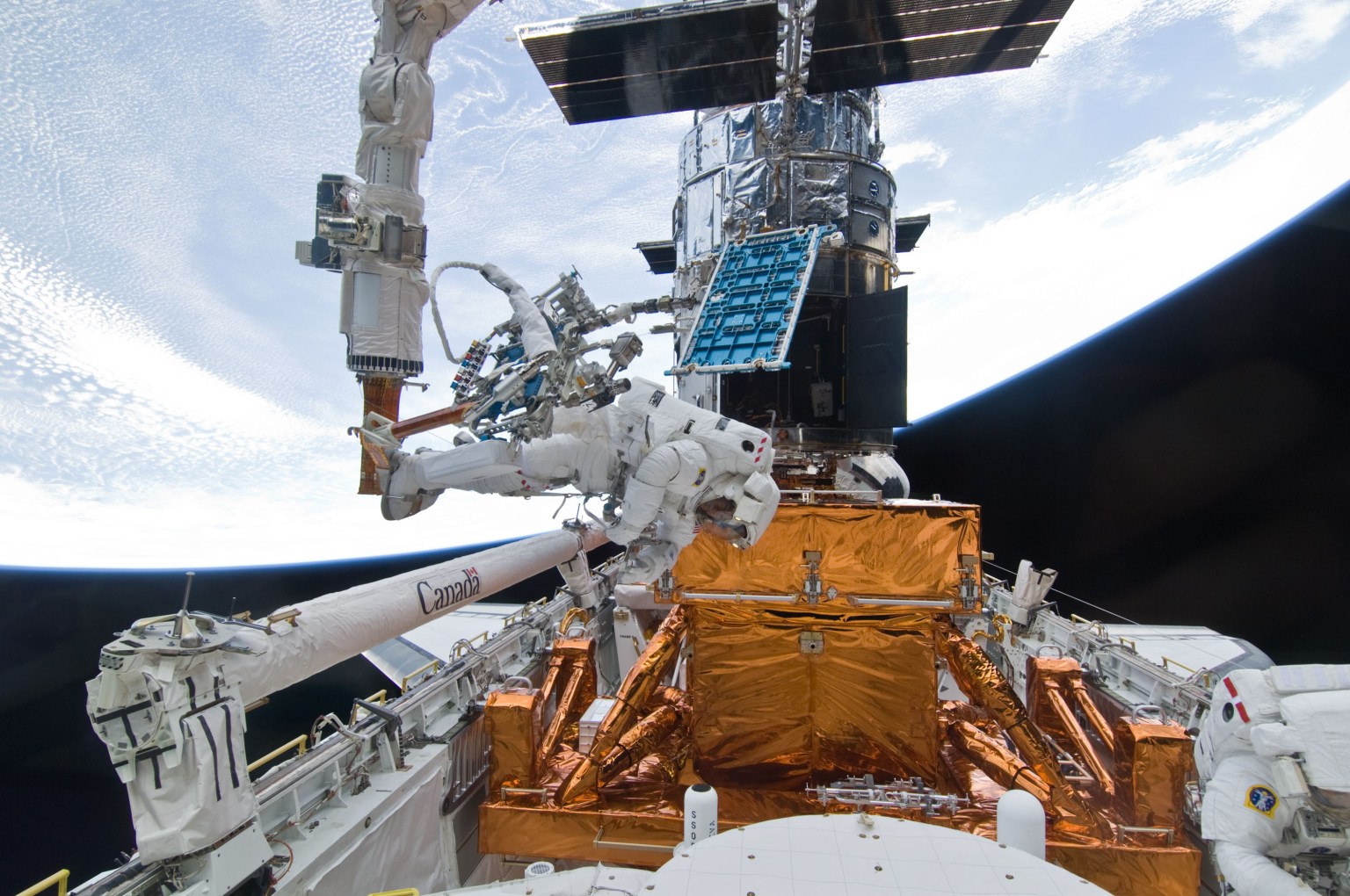
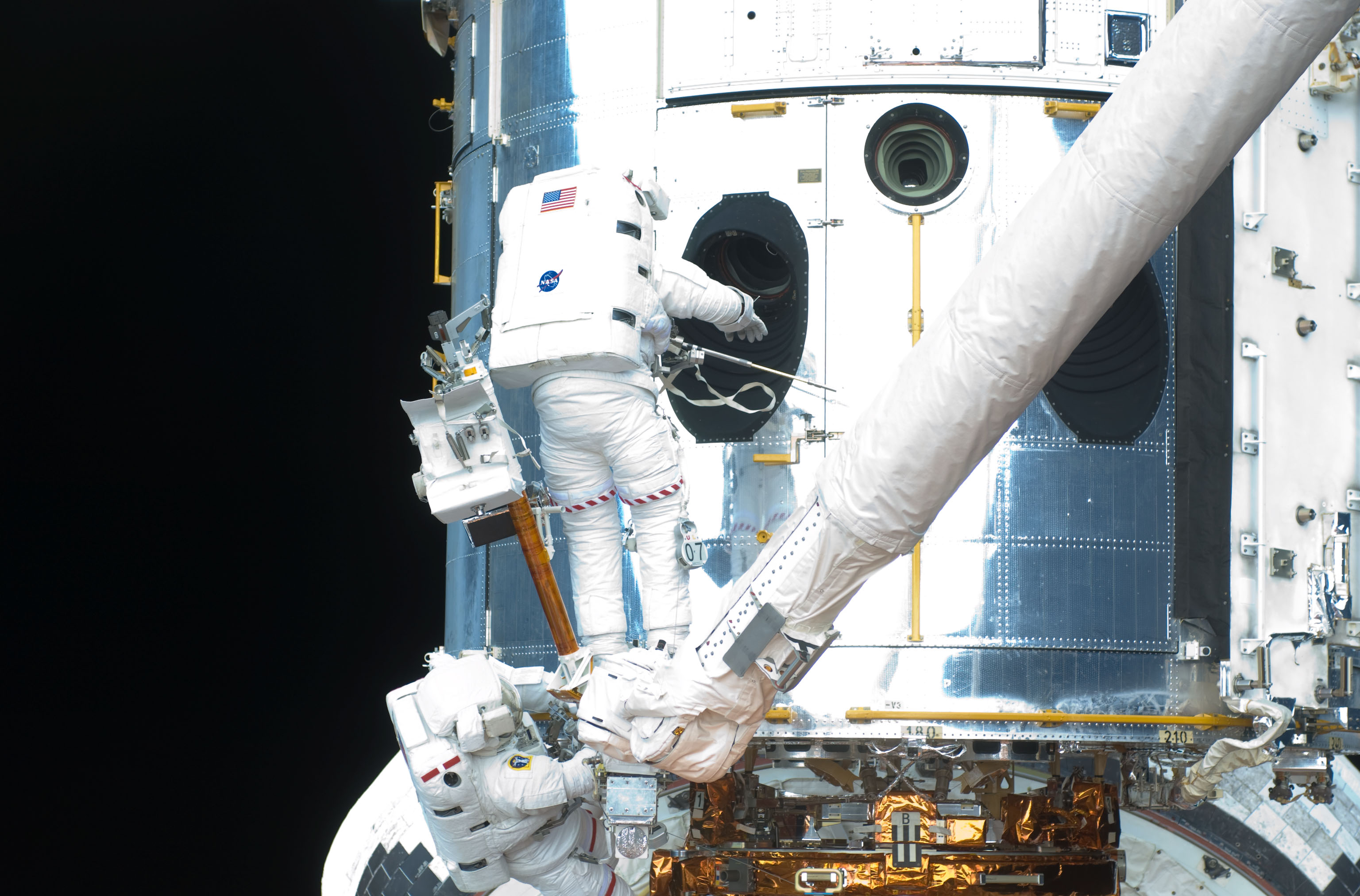
Astronauts Michael Good and Mike Massimino work to replace one of Hubble’s Rate Sensor Units, which contains two gyroscopes, during SM4.
NASA
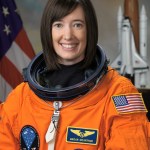
For Megan McArthur, SM4 astronaut and primary operator of the shuttle’s robotic arm during the mission, the importance of the mission hit home before it even started, when the crew attended an event with people who worked on and with Hubble. Expecting a casual meet-and-greet to kick off the start of their Hubble training, they walked into an auditorium packed with people, who gave the astronauts a wild standing ovation.
“We hadn’t done a single thing yet other than show up,” she recalled. “And I looked at one of my crewmates and we both teared up in that moment because it was such a powerful reminder of how important this was, and how meaningful it was for this huge community of engineers and scientists around the world who use that telescope to unlock the mysteries of the universe.”
…it was such a powerful reminder of how important this was, and how meaningful it was for this huge community of engineers and scientists around the world who use that telescope to unlock the mysteries of the universe.
Megan McArthur
NASA Astronaut
As the crew of seven astronauts headed toward Hubble on the space shuttle Atlantis, a second shuttle, Endeavour, waited on the launchpad in case a rescue was needed. After the loss of the space shuttle Columbia in 2003, Servicing Mission 4 was canceled due to safety concerns. Public support for the mission surged, and two years later it was reinstated and scheduled for 2008, only to be delayed for another year after the telescope’s critical Science Instrument Command and Data Handler suffered a failure. With the added time, engineers were able to add a replacement to the mission. By the time the SM4 launched, two instruments ― the Advanced Camera for Surveys (ACS) and the Space Telescope Imaging Spectrograph (STIS) ― had also experienced failures.
Hubble was designed and built for servicing in space, with modular, plug-and-play style components that could be easily swapped out. Astronauts had visited it four previous times leading up to SM4. (Servicing Mission 3 was split into two missions (3A and 3B) to get urgent repairs to Hubble quickly.) But during SM4, for the first time, astronauts cracked into two of the instruments to perform surgery in orbit. Using tools specially designed for the task, they opened up the ACS and STIS, swapped out components, rerouted power, and restored the instruments to their full capabilities.
The repairs were so effective that the two instruments have now gone more than twice as long without needing servicing than they achieved in the years prior to Servicing Mission 4.
Astronauts removed two older scientific instruments and added Wide Field Camera 3 (WFC3), a powerful camera that sees some ultraviolet and infrared wavelengths as well as visible light, and the Cosmic Origins Spectrograph (COS), which breaks ultraviolet light from cosmic objects into its component colors for analysis.
As this was certain to be the final shuttle mission to Hubble, the telescope had to be left in prime condition. Among other tasks, astronauts installed a new science computer and insulation. They replaced the telescope’s 19-year-old batteries and all of its gyroscopes, which determine how fast Hubble is turning and in what direction, with improved versions. Three of those gyroscopes have now operated longer than any gyroscopes previously installed on Hubble, and one has now been running continuously for 15 years, completing over 9 trillion revolutions.
The work could be challenging and intense. At one point, a bolt locking the Wide Field and Planetary Camera 2 into place wouldn’t turn. At another, a stripped screw on one of Hubble’s handrails blocked access to STIS and brought work to a standstill for hours, finally forcing astronaut Michael Massimino to physically wrench the handrail free.
“On each of my three trips to Hubble, the difficulty and scope of the work increased from mission to mission,” Grunsfeld said. “When we completed the final spacewalk on HST-SM4 in 2009, I was on top of the world ― figuratively, as we were in orbit around the Earth ― that we’d met and exceeded all expectations. The hard work and talent of the whole team is why we have an operating and productive observatory today.”
When the astronauts bid Hubble farewell, they left behind a telescope operating at peak performance ― and one that would energize humanity’s quest to understand the universe.
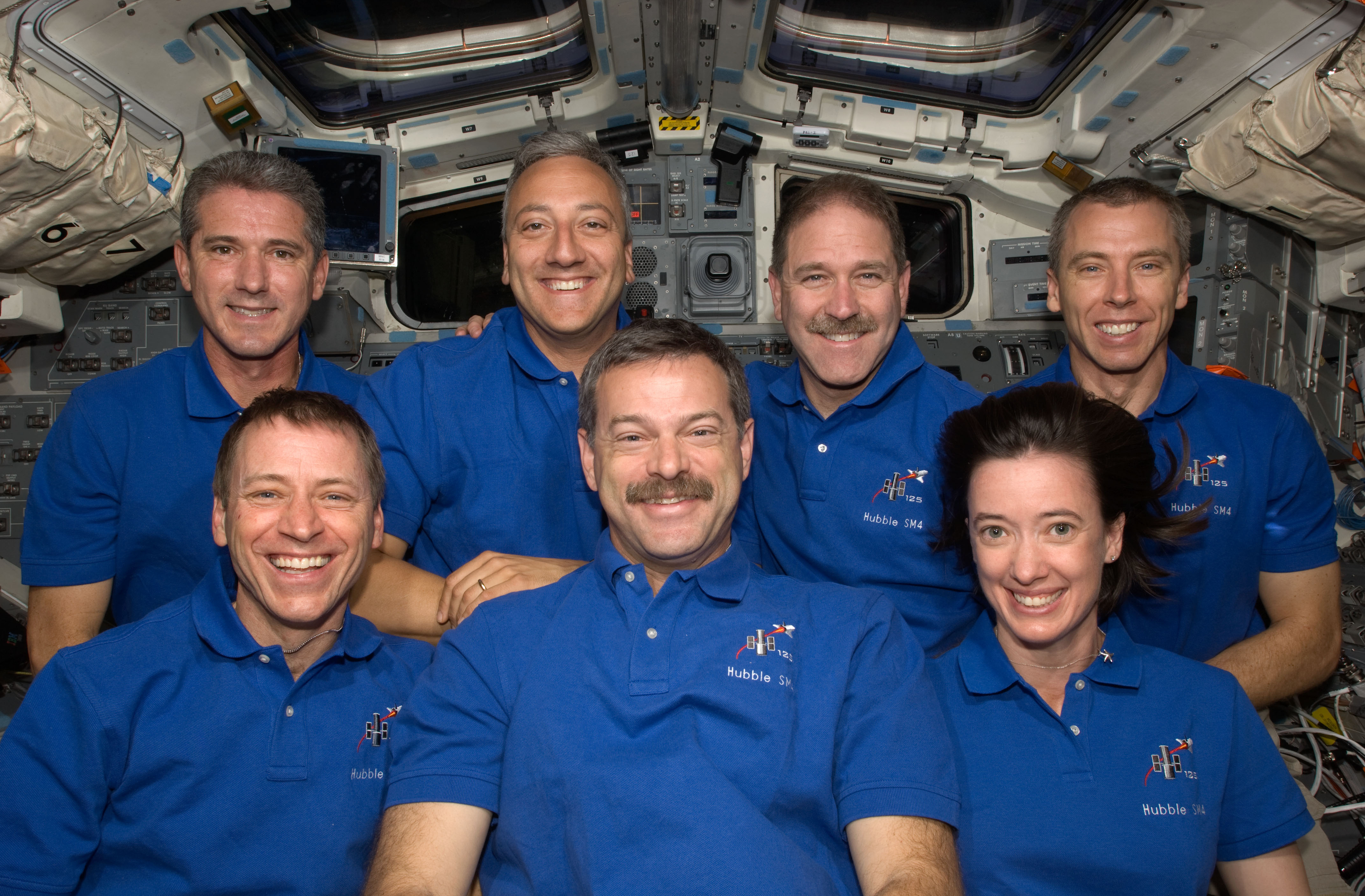
The Servicing Mission 4 crew pose for a photograph aboard the space shuttle Atlantis. Pictured in the front row (left to right) are astronauts Gregory C. Johnson, pilot; Scott Altman, commander; and Megan McArthur, mission specialist. Pictured in the back row (left to right) are astronauts Michael Good, Mike Massimino, John Grunsfeld, and Andrew Feustel, all mission specialists.
NASA
The resurrection of STIS and ACS and installation of WFC3 and COS provided by Servicing Mission 4 turned Hubble into a powerhouse that surpassed its previous capabilities. Since Hubble’s launch, its data have been the source of over 21,000 scientific papers. Over 6,000 of those ― around 30 percent ― arose from the new instruments installed on SM4 alone.
“There’s no doubt in my mind that the new and repaired instruments on Hubble are enabling scientific productivity like we’ve never seen before,” said Dr. Jennifer Wiseman, Hubble Space Telescope senior project scientist. “Being able to observe in wavelengths ranging from ultraviolet through the visible and into the near-infrared gives us a toolbox that is enabling new science in powerful ways that we never fully had before. Research by the scientific community is thriving based on Hubble data that have been taken since SM4.”
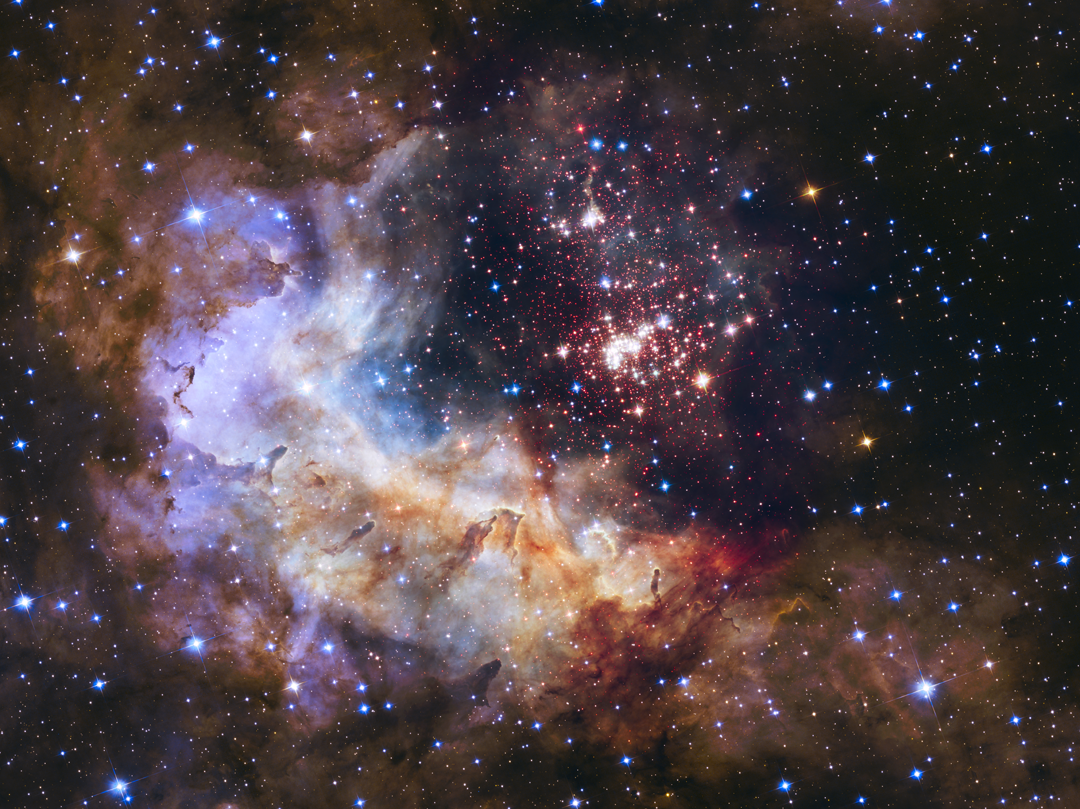
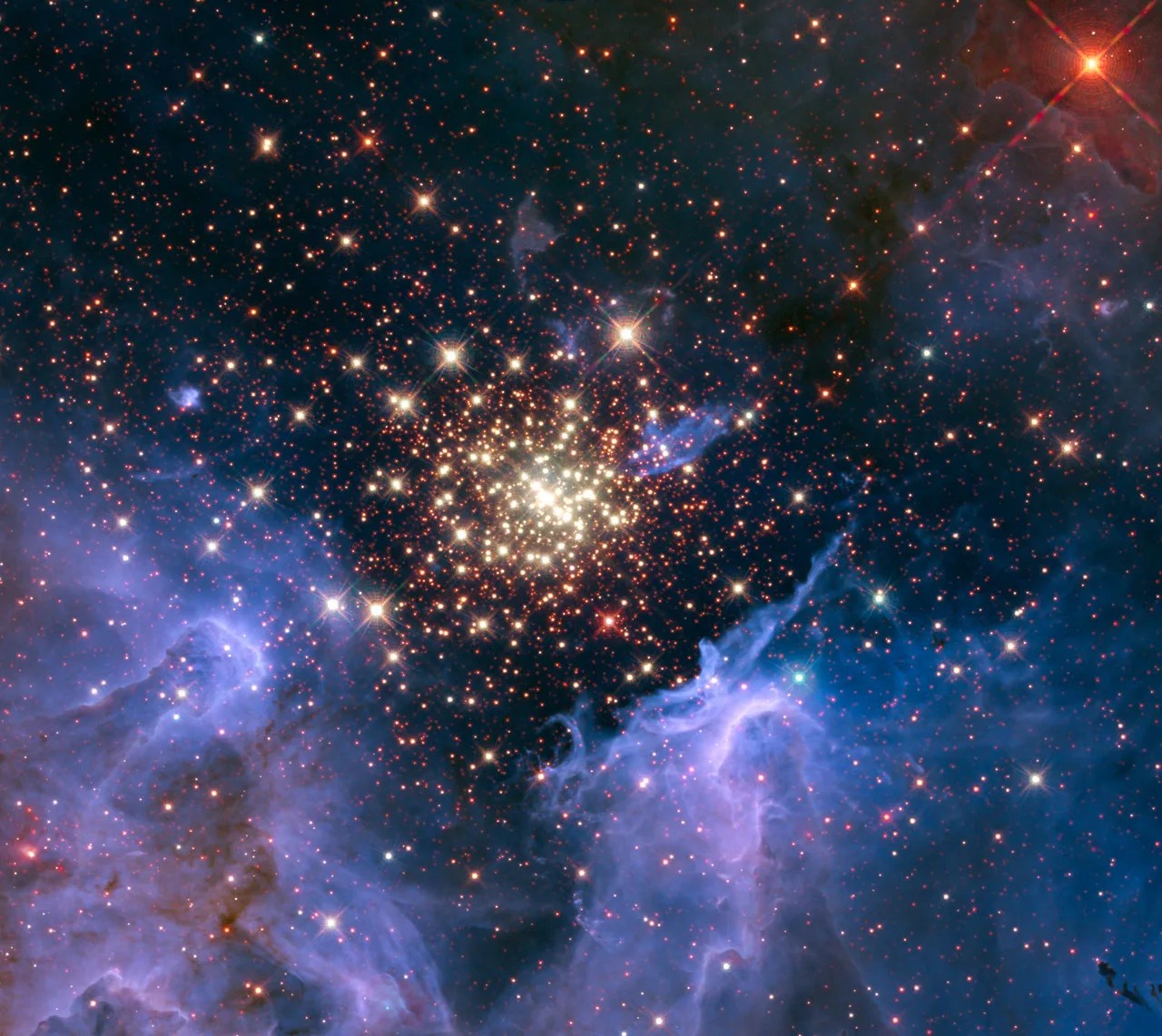
Hubble’s Wide Field Camera 3, installed during Servicing Mission 4, captured this image of star cluster Westerlund 2, which contains some of the Milky Way galaxy’s hottest, brightest, and most massive stars.
NASA, ESA, the Hubble Heritage Team (STScI/AURA), A. Nota (ESA/STScI) and the Westerlund 2 Science Team
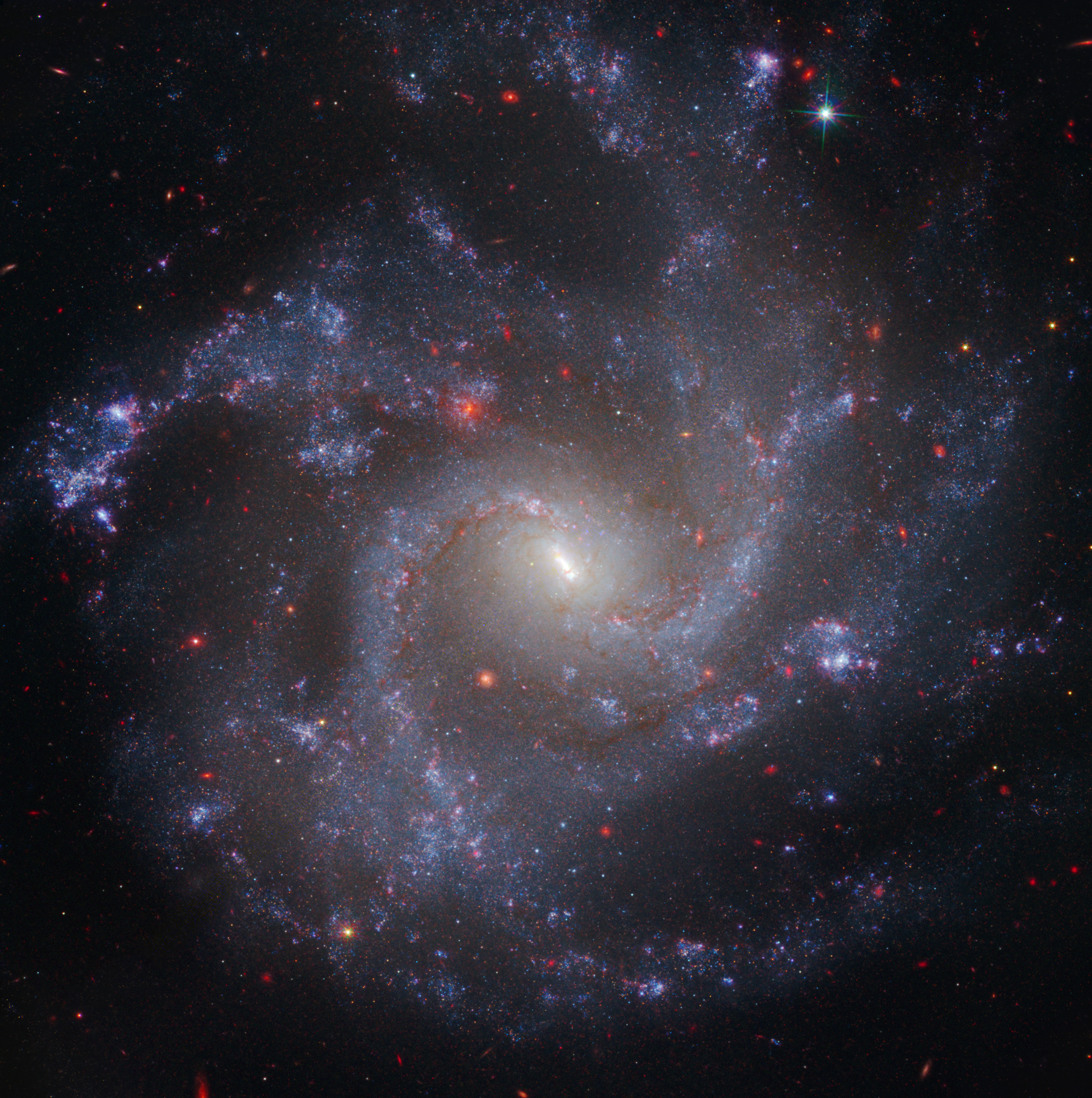
This image of NGC 5468, a galaxy located about 130 million light-years from Earth, combines data from the Hubble and James Webb space telescopes. This is the farthest galaxy in which Hubble has identified Cepheid variable stars. These are important milepost markers for measuring the expansion rate of the universe. The distance calculated from Cepheids has been cross-correlated with a type Ia supernova in the galaxy. Type Ia supernovae are so bright they are used to measure cosmic distances far beyond the range of the Cepheids, extending measurements of the universe’s expansion rate deeper into space.
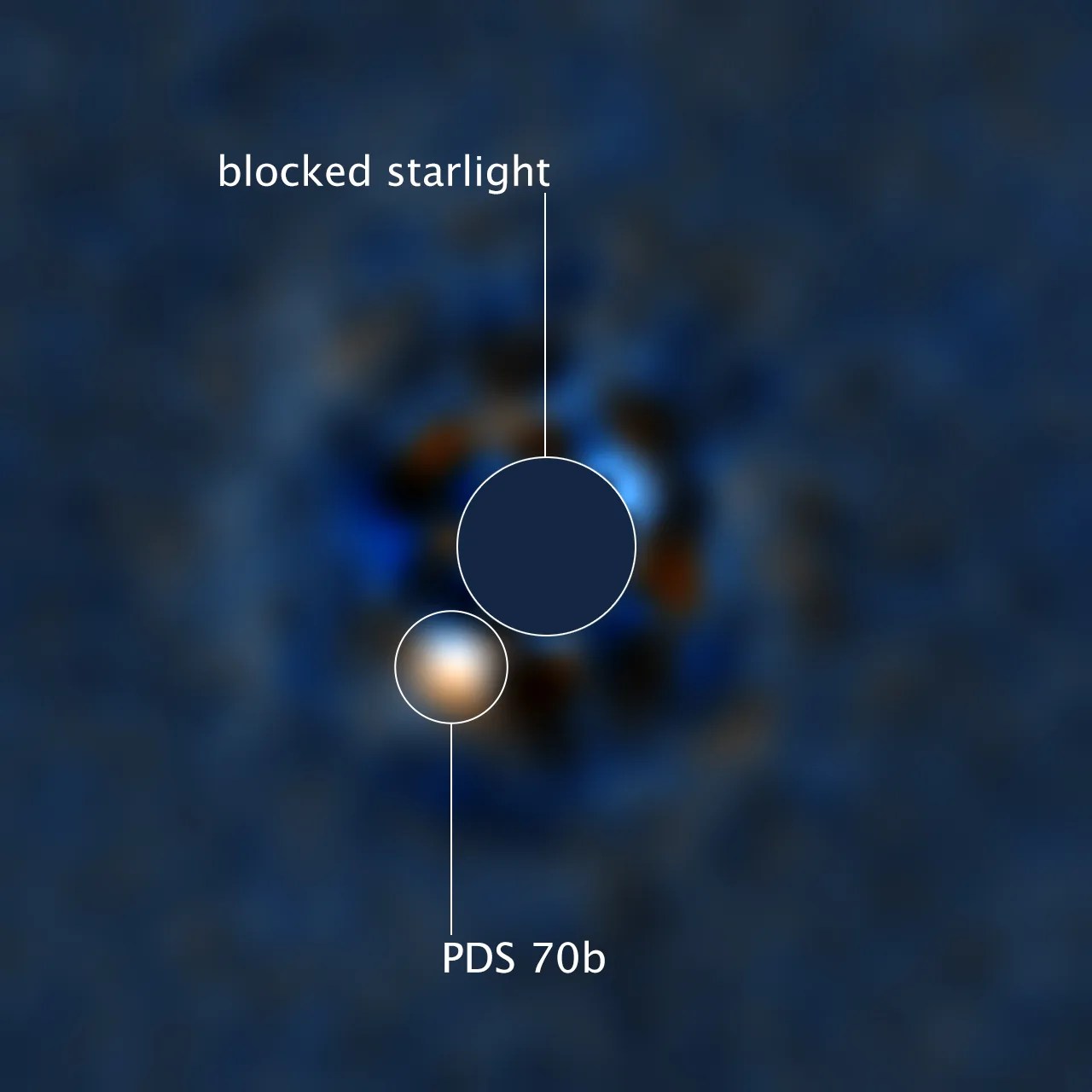
Hubble’s sensitivity to ultraviolet light revealed radiation from super-heated gas falling onto a world called PDS 70b. The glare of the star was blocked, allowing Hubble to directly observe PDS 70b accumulating mass. Located some 370 light-years from Earth, the planet is about five times the mass of Jupiter and growing at a snail’s pace. Researchers found that the planet is growing so slowly that if the rate remains steady for another million years, its bulk will increase by only about 1/100th of Jupiter’s mass
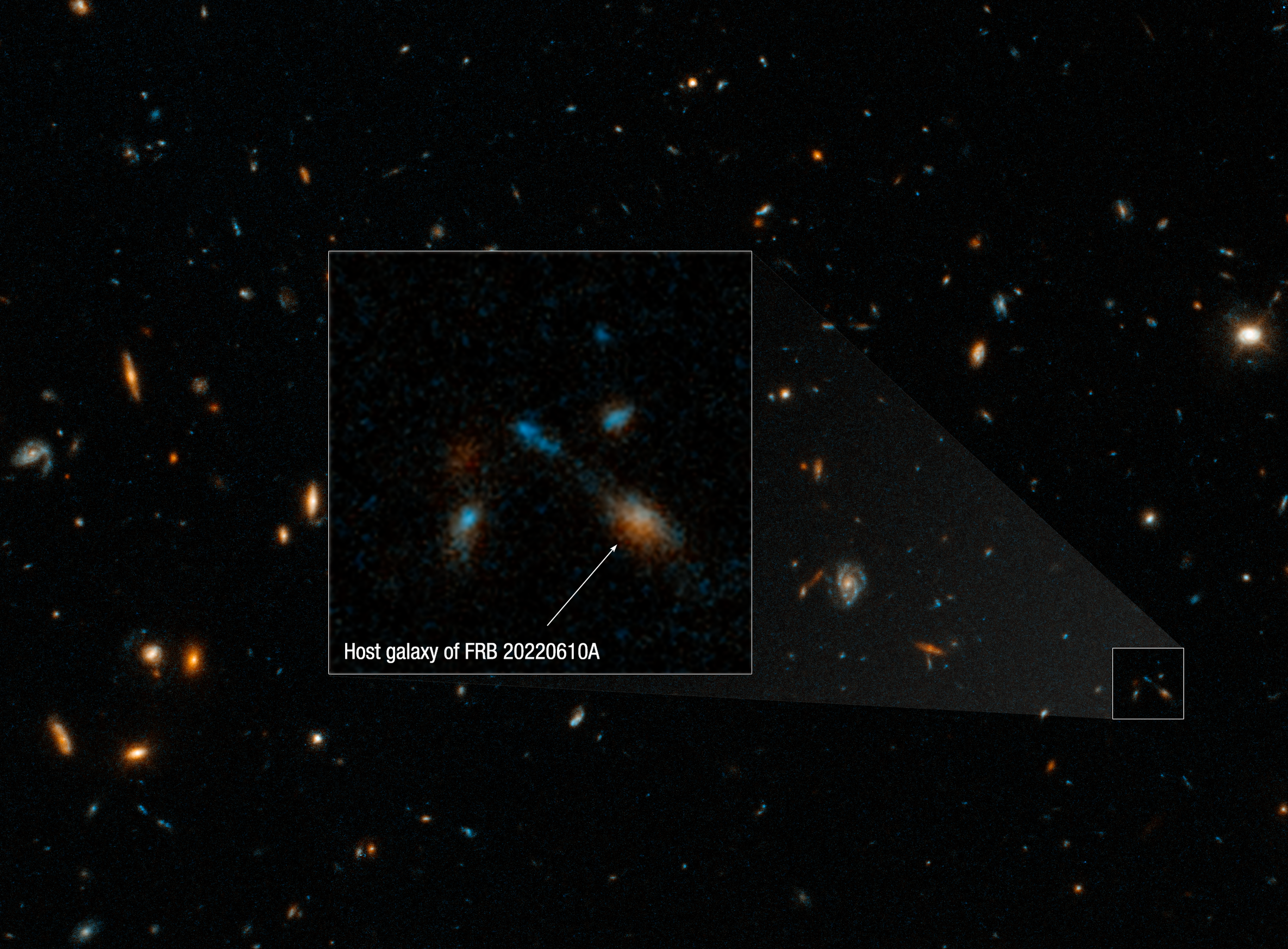
This Hubble image showcases the host galaxy of an exceptionally powerful fast radio burst, FRB 20220610A. Hubble’s sensitivity and sharpness allow it to observe the locations of these strange, fleeting, enormous blasts of energy ― including the farthest yet found. This compact group of multiple galaxies may be in the process of merging. They existed when the universe was only 5 billion years old.
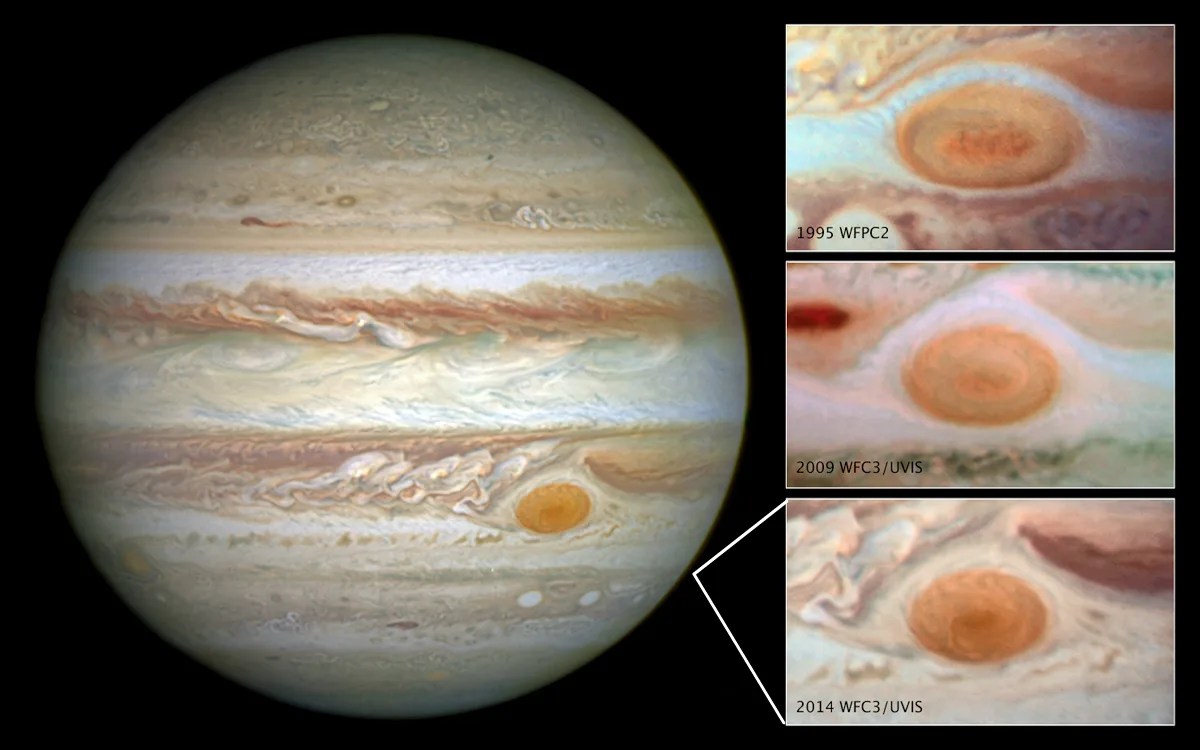
Hubble’s many years of observing Jupiter reveal that the planet’s trademark Great Red Spot is shrinking and its wind velocities are acceleration.
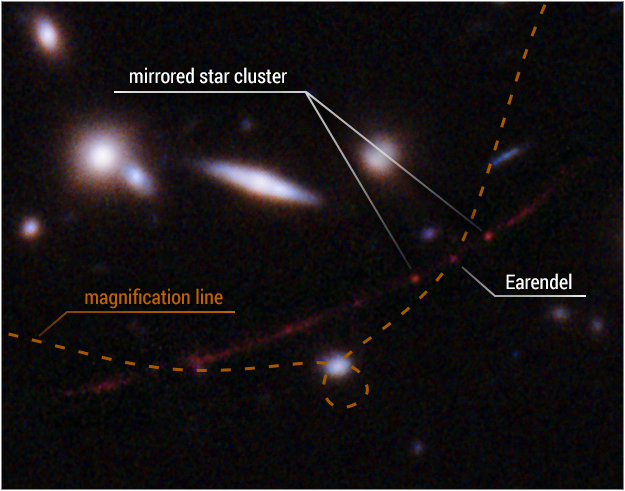
Hubble found the farthest individual star ever spotted, whose light has traveled 12.9 billion years to reach Earth. This detailed view highlights the star Earendel’s position along a ripple in space-time (dotted line) that magnifies it and makes it possible for the star to be detected over such a great distance. Also indicated is a cluster of stars that is mirrored on either side of the line of magnification. The distortion and magnification are created by the mass of a huge galaxy cluster located in between Hubble and Earendel. The mass of the galaxy cluster is so great that it warps the fabric of space, and looking through that region of space is like looking through a magnifying glass — along the edge of the glass or lens, the appearance of things on the other side are warped as well as magnified.
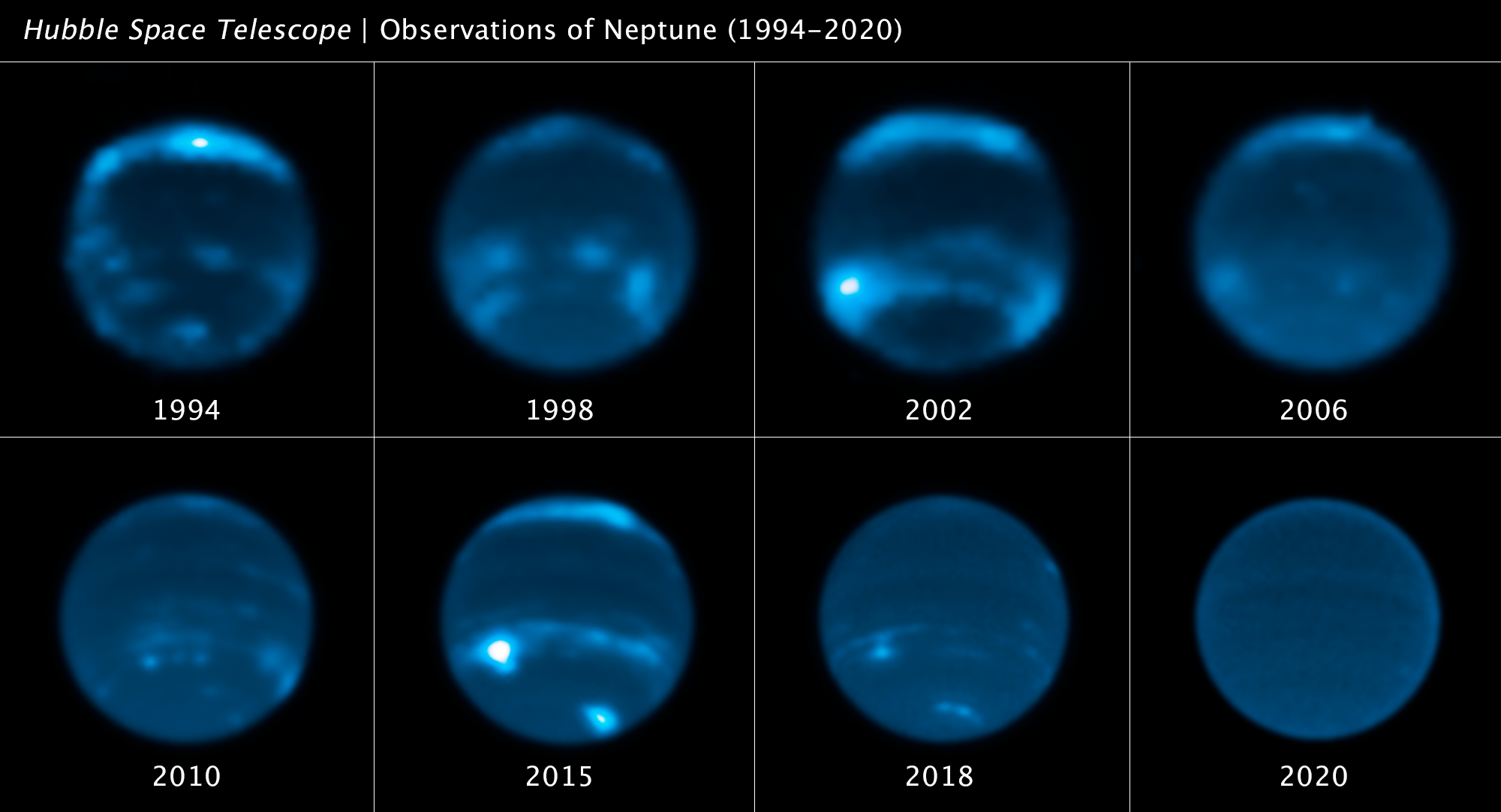
Hubble observations linked Neptune’s clouds to the solar cycle, showing that clouds increase every two years after the peak of an 11-year cycle, despite Neptune’s distance from the Sun.
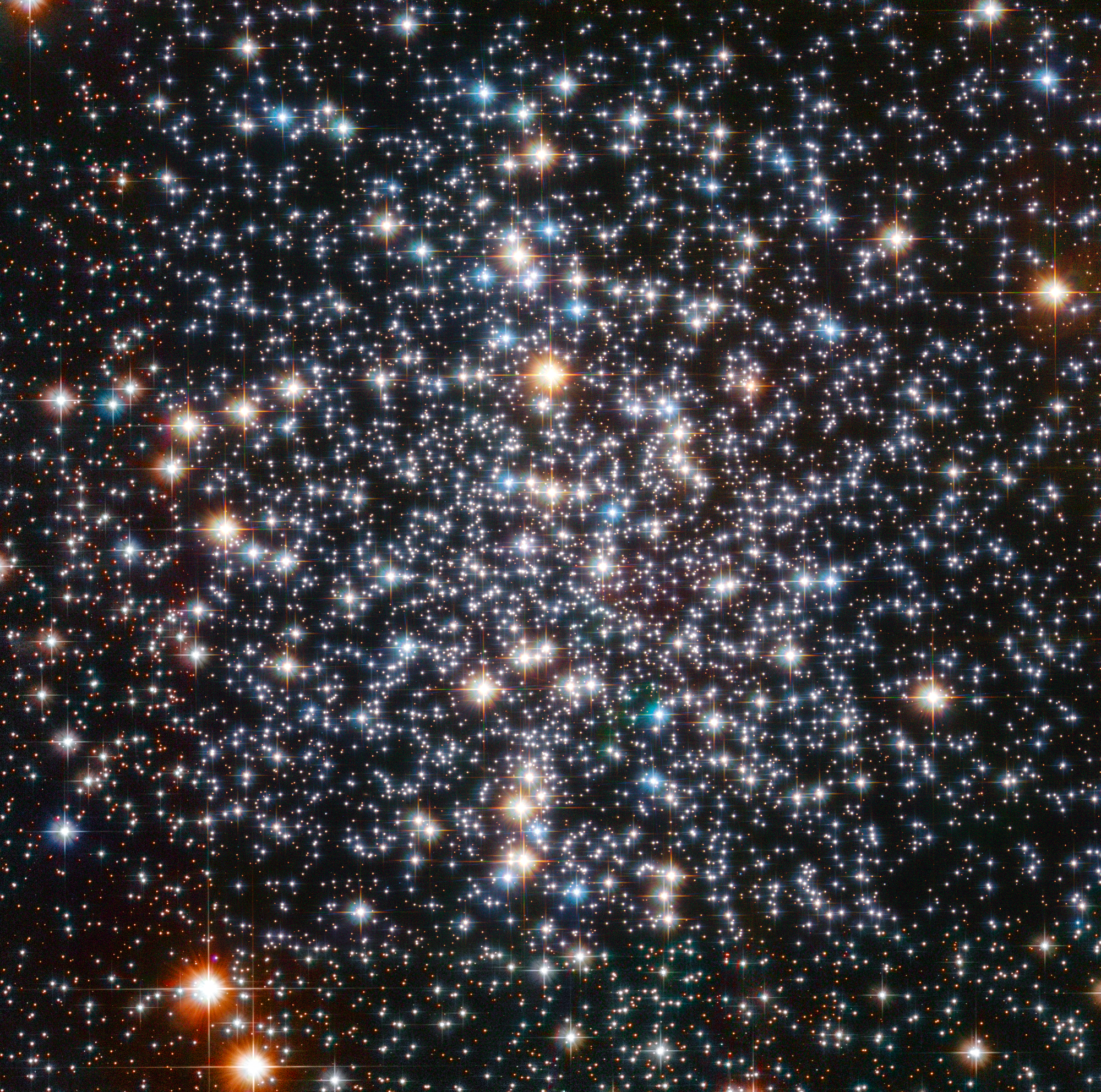
This Hubble image reveals a dense globular cluster called Messier 4. The cluster holds several hundred thousand stars and Hubble observations lead astronomers to suspect that an intermediate-mass black hole, weighing as much as 800 times the mass of our Sun, is lurking, unseen, at its core.
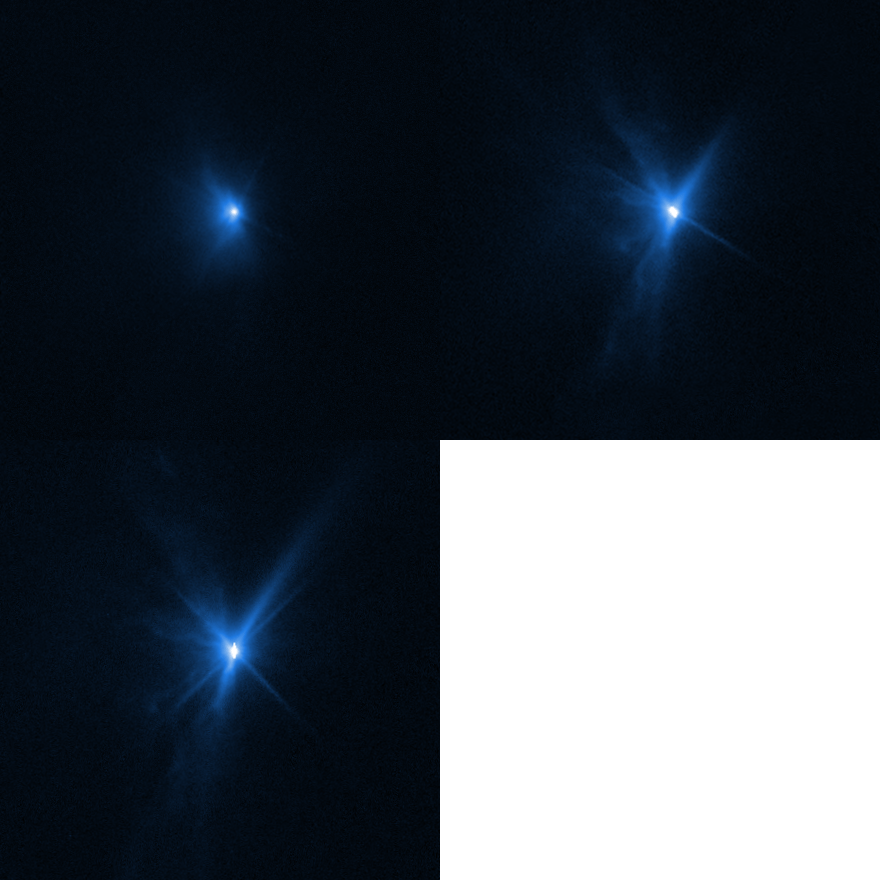
This animated GIF combines three of the images Hubble captured after NASA’s Double Asteroid Redirection Test (DART) intentionally impacted Dimorphos, a moonlet asteroid in the double asteroid system of Didymos. Hubble regularly works with other missions to make discoveries about our universe.
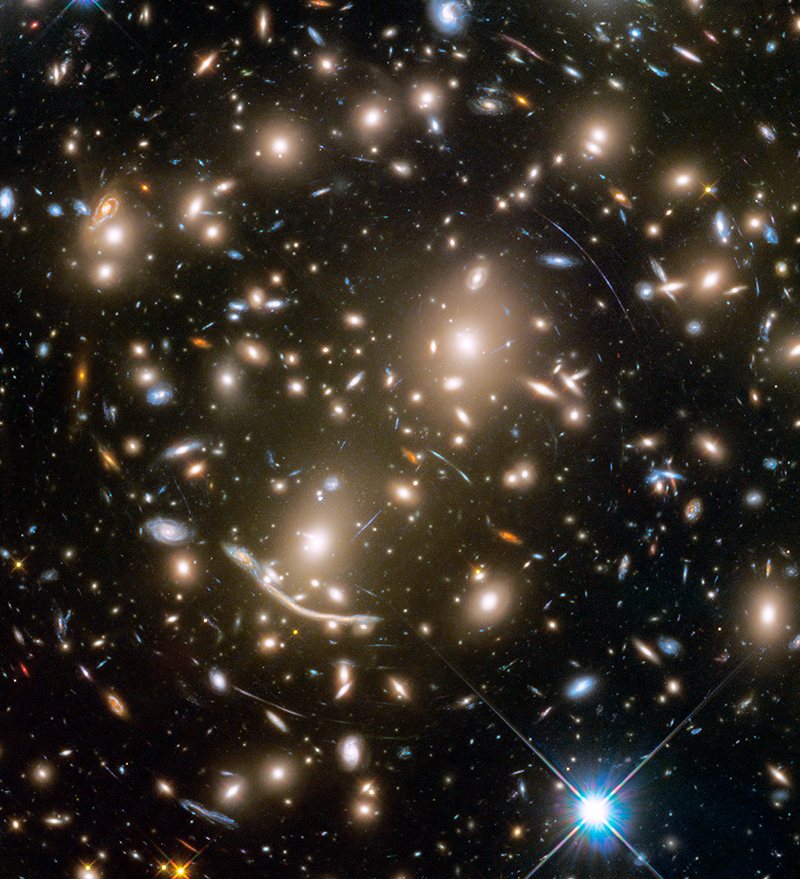
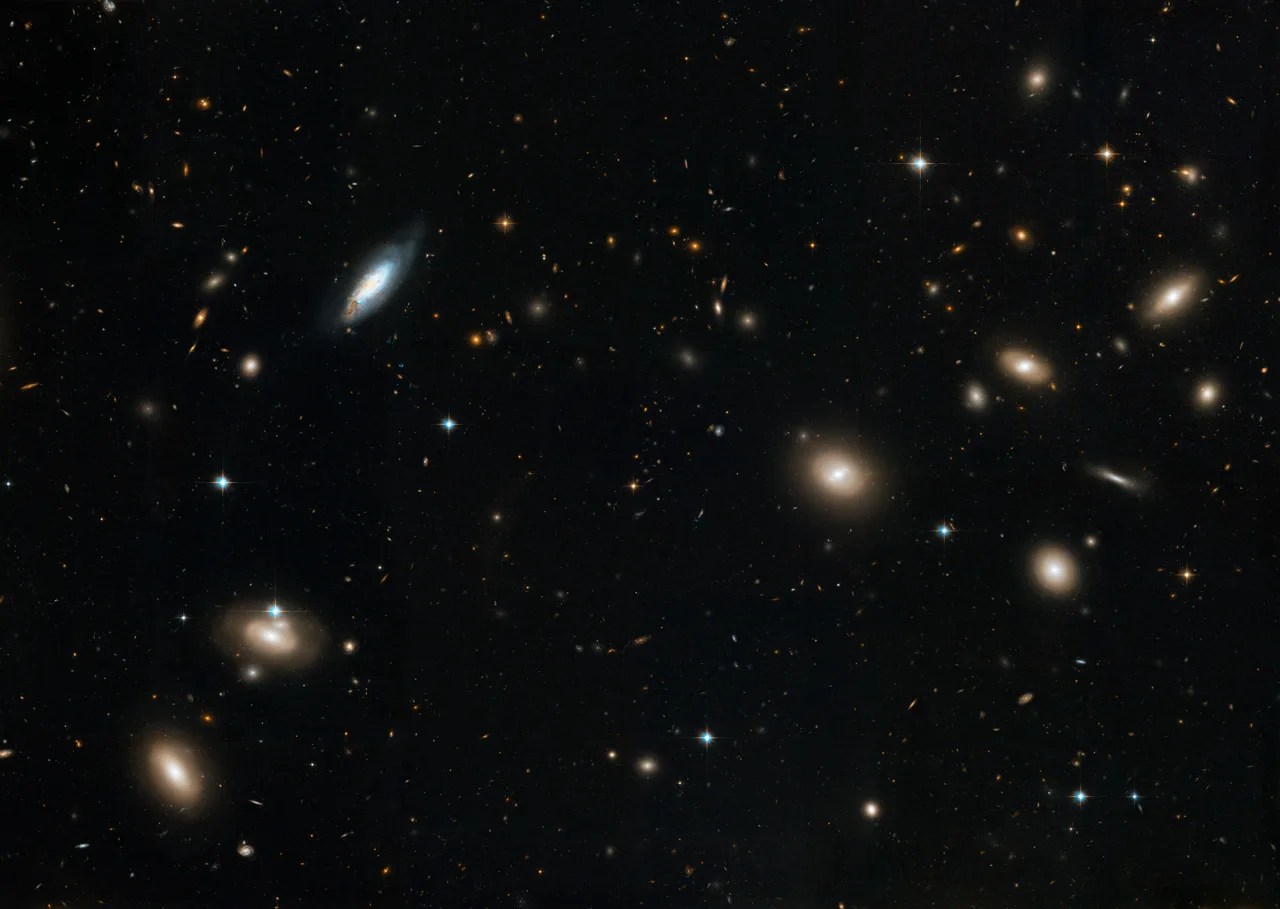
Hubble’s observations of galaxies have helped us better understand their origins and evolution. This Hubble image of galaxy cluster Abell 370, located approximately 4 billion light-years away, also reveals more distant galaxies that are behind the large cluster. They form curves and arcs as their light is magnified and warped by the powerful gravitational lens created by the galaxy cluster.
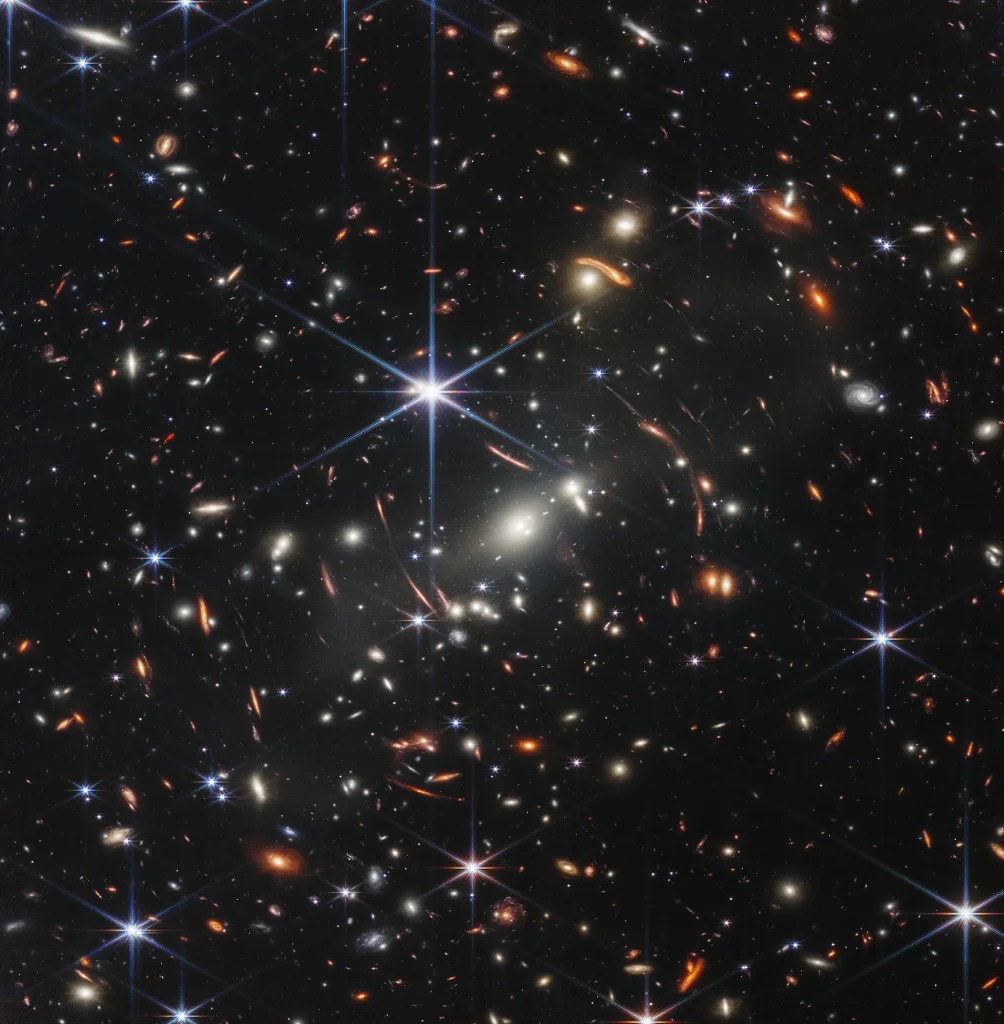
“Webb is really tuned to seeing the infrared wavelengths of light beyond what Hubble can pick up, but Webb cannot see the visible light and the ultraviolet light that Hubble can see, and we need all of those wavelengths of light for studying almost anything ― whether that’s planets, exoplanets, star systems, galaxies, the interstellar medium or cosmology,” Wiseman said. “So many proposals from scientists now involve both Hubble and Webb, because they are crucial partners for addressing some of the hottest topics in astrophysics.”
As Hubble starts its 35th year in orbit, the legacy of Servicing Mission 4 is on display in the telescope’s scientific bounty. “Hubble is more scientifically productive now than it’s ever been before, and it is playing a critical role in the portfolio of NASA’s flagship missions for science,” Wiseman said, noting that Hubble’s instruments have certain capabilities unmatched by anything else in orbit. “There are three big, strategic questions that NASA wants to address ― are we alone, how did we get here, and how does the universe work ― and Hubble is a primary facility for addressing them.”
Those scientific discoveries and the astounding images are the primary reason Hubble is celebrated around the globe, but its lasting presence in space is also a reminder of something even more profound.
McArthur recalled the moments after SM4 ended, when the crew had time to watch Hubble after it was released from the robotic arm. “There was nothing to do but gaze at it, and the feeling that I had at that point was a kind of awe or joy at the audacity of humans,” she said. “We have these amazing ideas like, let’s build a telescope and put it in orbit around the Earth to unlock the mysteries of the universe ― these very grand visions. And then here I am actually looking at it with my own eyes, this marvel of engineering that does exactly that. It gives me faith in humanity that when we put our minds to it, we can do just about anything, as long as we’re willing to work together.”
In May 2009, a brave team of astronauts embarked on a daring journey aboard Space Shuttle Atlantis. Their mission? To breathe new life into Hubble, ensuring its legacy of discovery could continue for years to come. Credit: NASA’s Goddard Space Flight Center; Lead Producer: Paul Morris
Preparations for Next Moonwalk Simulations Underway (and Underwater)
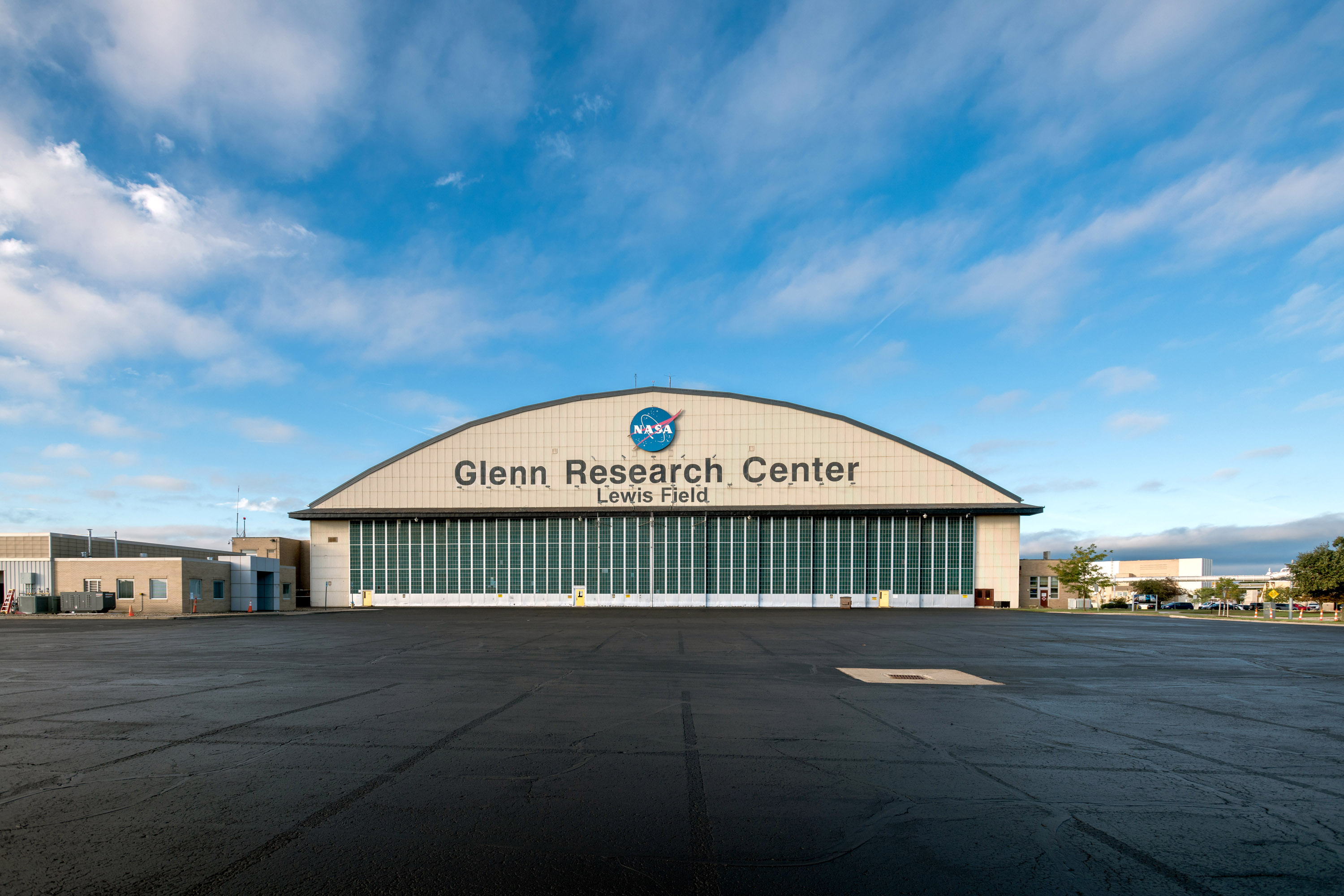
NASA Glenn Research Center’s iconic Flight Research Building (hangar).
Credit: NASA/Jef Janis
As NASA advances its aviation and spaceflight missions, its facilities and infrastructure need to evolve along with them. NASA centers, including Glenn Research Center in Cleveland, must find ways to reduce the cost of maintaining assets they aren’t currently using.
Toward this goal, NASA Glenn is offering opportunities to lease assets it no longer uses. These Enhanced Use Lease (EUL) agreements will allow space, aeronautics, and other related industry to use Glenn land and facilities in direct support of NASA’s mission. It’s an arrangement that could bring some of the best minds in aerospace closer together, spurring innovation.
“We want to strategically align Glenn’s unique aircraft and spacecraft testing assets with the aviation industry and emerging commercial market,” said Carlos Flores, NASA Glenn’s Strategic Planning Branch chief. “Our hope is to expand partnerships, accelerate innovation, and create regional economic opportunities.”
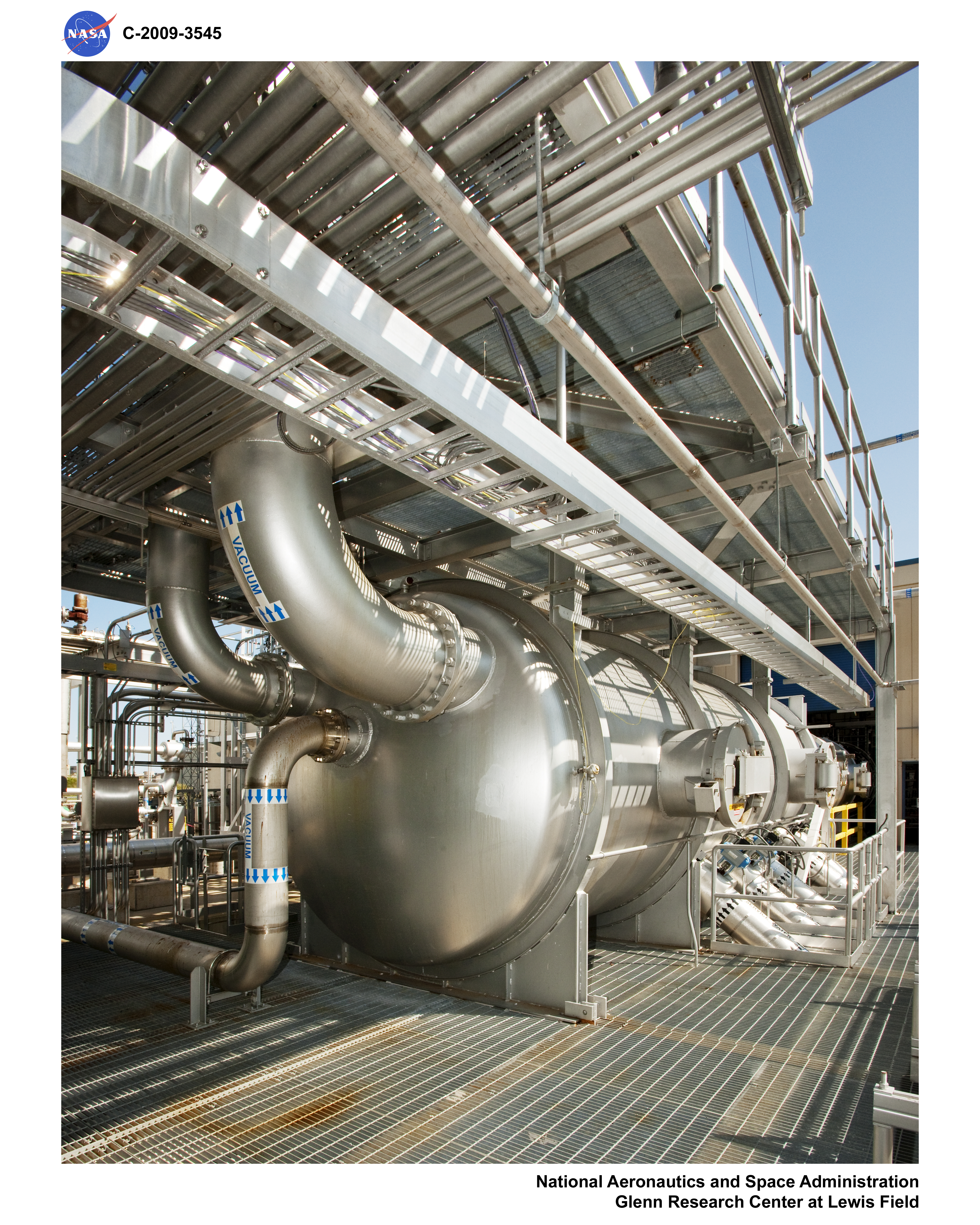
The Altitude Combustion Stand facility at NASA’s Glenn Research Center in Cleveland provides a system to test combustion components at a simulated altitude.
Credit: NASA
Flores said there are many advantages for commercial entities to lease NASA facilities. These partners will have more access to resources—such as other facilities and technical expertise— than those outside the gate.
“Once a company or university gets a foot in the door, it is very possible they will discover other assets and expertise they can leverage,” Flores said.
Glenn identified four facilities in Cleveland and one in Sandusky, Ohio, that will be considered under the EUL authority. They include:
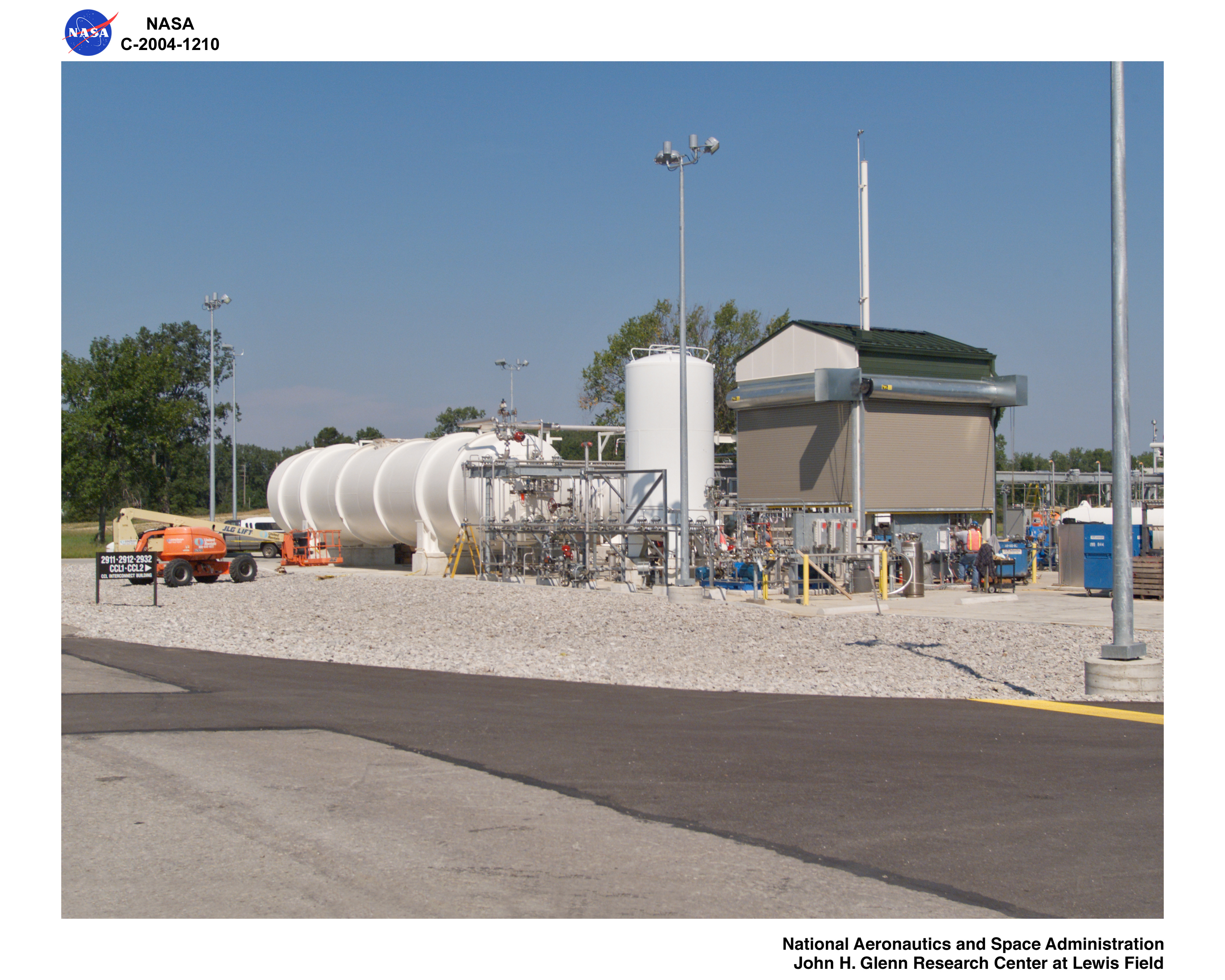
In March, Glenn released an Announcement for Proposal, or AFP, to the public soliciting offers for the use of the Cryogenics Components Laboratory at NASA’s Neil Armstrong Test Facility in Sandusky. An AFP is expected for the Altitude Combustion Stand in Cleveland within a couple of months.
Glenn and other NASA centers continually work to align their facilities and infrastructure with the Agency Master Plan, which serves as a roadmap for future development and redevelopment of agency property.
The Cryogenic Test Complex at NASA’s Neil Armstrong Test Facility in Sandusky, Ohio, allows large-scale liquid hydrogen (LH2) experiments to be conducted safely.
Credit: NASA
To align with the Agency Master Plan, Glenn must reduce its “maintenance gap,” which is the amount of property owned versus the amount of property the center can afford to maintain.
“The maintenance gap is one of the realities we face in an environment of current and future budget constraints,” Flores said.
While demolition is sometimes the easiest way to reduce square footage and maintenance costs, leasing can be a viable option for buildings that do not fit the demolition criteria.
“EULs will not only reduce the maintenance gap and the square footage we are responsible to maintain, but they will also enable us to create strategic partnerships and utilize revenue from the base rent for repairs to infrastructure,” Flores said.
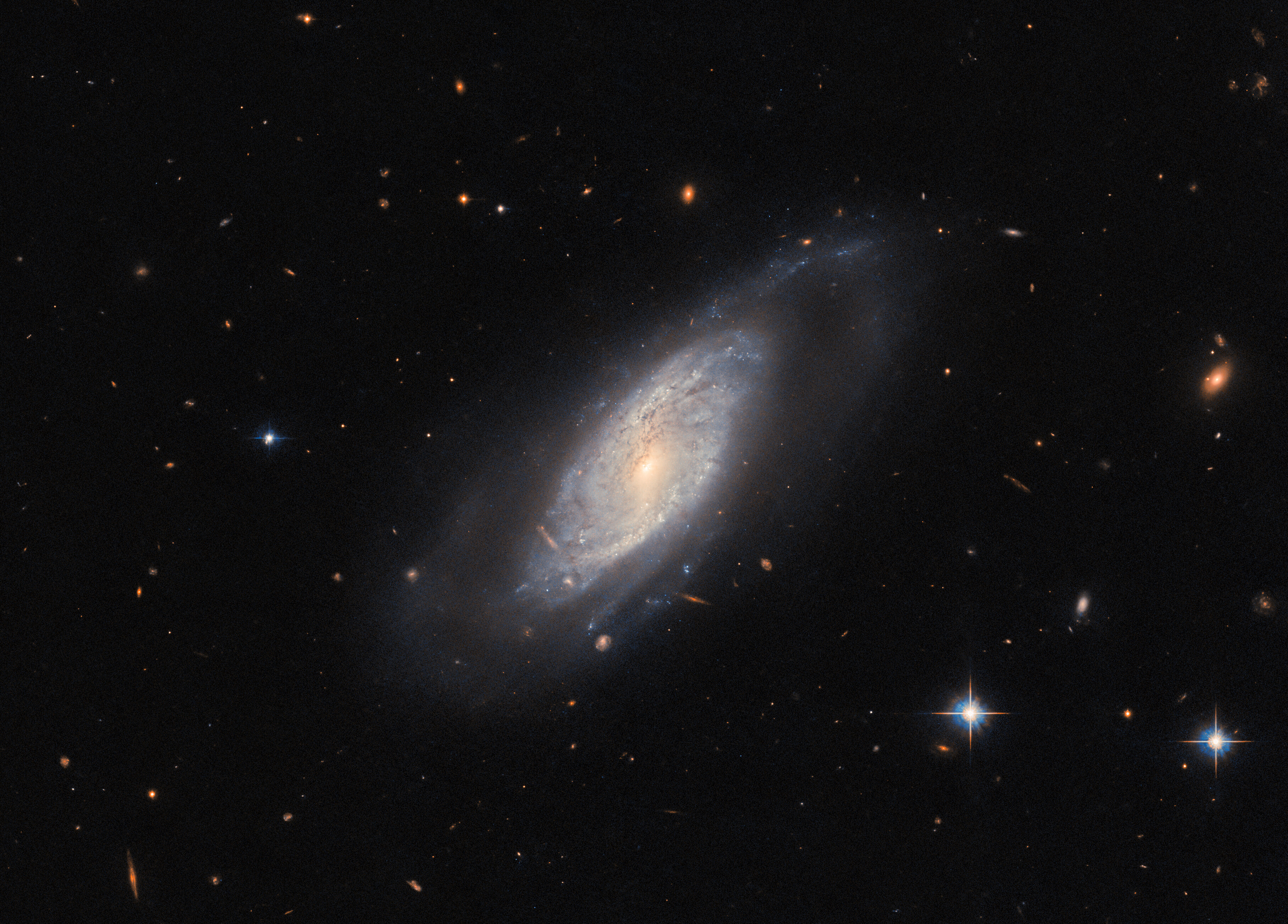
This image from the NASA/ESA Hubble Space Telescope highlights the spiral galaxy UGC 9684.
The celestial object showcased in this image from the NASA/ESA Hubble Space Telescope is the spiral galaxy UGC 9684, which lies around 240 million light-years from Earth in the constellation Boötes. This image shows an impressive example of several classic galactic features, including a clear bar in the galaxy’s center, and a halo surrounding its disk.
The data for this Hubble image came from a study of Type-II supernovae host galaxies. These cataclysmic stellar explosions take place throughout the universe, and are of great interest to astronomers, so automated surveys scan the night sky and attempt to catch sight of them. The supernova which brought UGC 9684 to Hubble’s attention occurred in 2020. It has since faded from view and is not visible in this image, which was taken in 2023.
Remarkably, the 2020 supernova isn’t the only one that astronomers have seen in this galaxy – UGC 9684 has hosted four supernova-like events since 2006, putting it up there with the most active supernova-producing galaxies. It turns out that UGC 9684 is a quite active star-forming galaxy, calculated as producing one solar mass worth of stars every few years! The most massive of these stars are short-lived, a few million years, and end their days as supernova explosions. This high level of star formation makes UGC 9684 a veritable supernova factory, and a galaxy to watch for astronomers hoping to examine these exceptional events.