NASA, Mission Partners Assessing Launch Opportunities for Crew Flight Test

NASA, Mission Partners Assessing Launch Opportunities for Crew Flight Test

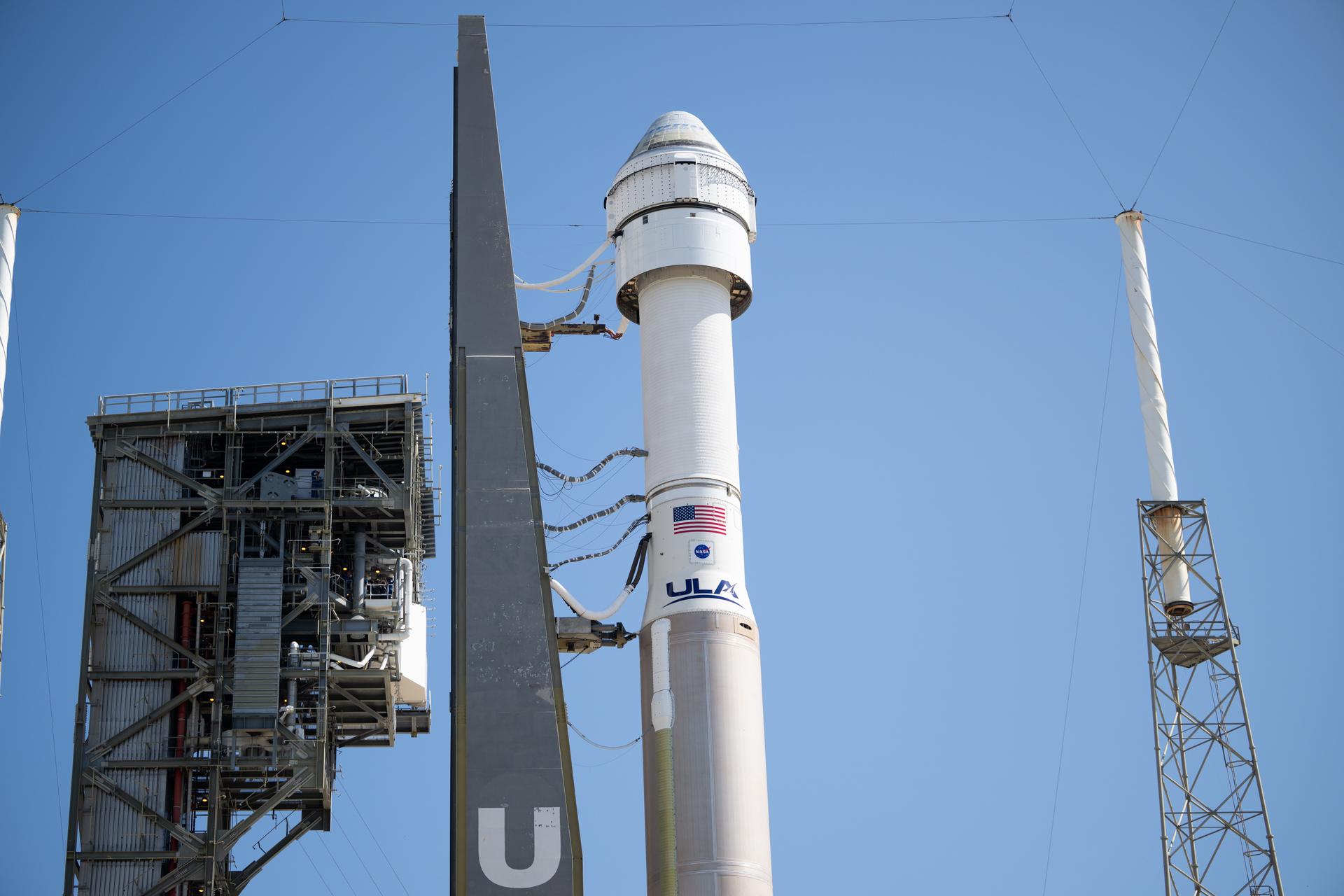
A United Launch Alliance Atlas V rocket with Boeing’s CST-100 Starliner spacecraft aboard is seen on the launch pad at Space Launch Complex 41 ahead of the NASA’s Boeing Crew Flight Test.
A United Launch Alliance Atlas V rocket with Boeing’s CST-100 Starliner spacecraft aboard is seen on the launch pad at Space Launch Complex 41 ahead of the NASA’s Boeing Crew Flight Test, Sunday, May 5, 2024 at Cape Canaveral Space Force Station in Florida. Photo credit: NASA/Joel Kowsky

Mission managers from NASA, Boeing, and ULA (United Launch Alliance) continue to evaluate a path forward toward launching the agency’s Boeing Crew Flight Test to the International Space Station. The teams are now working toward a launch opportunity at 12:25 p.m. ET on Saturday, June 1, with additional opportunities on Sunday, June 2, Wednesday, June 5, and Thursday, June 6.

Work continues to assess Starliner performance and redundancy following the discovery of a small helium leak in the spacecraft’s service module. As part of this work, and unrelated to the current leak which remains stable, teams are in the process of completing a follow-on propulsion system assessment to understand potential helium system impacts on some Starliner return scenarios. NASA also will conduct a Delta-Agency Flight Test Readiness Review to discuss the work that was performed since the last CFT launch attempt on May 6, and to evaluate issue closure and flight rationale ahead of the next attempt, as part of NASA’s process for assessing readiness. The date of the upcoming Flight Test Readiness Review is under consideration and will be announced once selected.

“There has been a great deal of exceptional analysis and testing over the last two weeks by the joint NASA, Boeing, and ULA teams to replace the Centaur Self Regulating Valve and troubleshoot the Starliner Service Module helium manifold leak,” said Steve Stich, manager, NASA Commercial Crew Program. “It has been important that we take our time to understand all the complexities of each issue including the redundant capabilities of the Starliner propulsion system and any implications to our Interim Human Rating Certification. We will launch Butch and Suni on this test mission after the entire community has reviewed the teams’ progress and flight rationale at the upcoming Delta Agency Flight Test Readiness Review.”

NASA, Boeing, and ULA officials will provide insight into the next targeted launch opportunity and updates regarding ongoing work during a media teleconference at 11 a.m. EDT Friday, May 24. NASA expects to issue a media advisory Thursday, May 23, with additional details for the call and how to participate.

Meanwhile, NASA astronauts Butch Wilmore and Suni Williams continue practicing in Starliner simulators to prepare for flight. The crew remains quarantined and will fly back to NASA’s Kennedy Space Center in Florida closer to the new launch date.

Powered by WPeMatico

Get The Details…

Danielle Sempsrott

NASA, Mission Partners to Discuss Starliner Crew Flight Test Progress

NASA, Mission Partners to Discuss Starliner Crew Flight Test Progress

A United Launch Alliance Atlas V rocket with Boeing’s CST-100 Starliner spacecraft aboard is seen as it is rolled out of the Vertical Integration Facility to the launch pad at Space Launch Complex 41. Credit: NASA/Joel Kowsky

As NASA, Boeing, and ULA (United Launch Alliance) continue to evaluate a path toward launching the agency’s Boeing Crew Flight Test, they will host a joint media teleconference at 11 a.m. EDT Friday, May 24.

The agency is working toward a launch at 12:25 p.m., Saturday, June 1, for the first crewed flight of Boeing’s Starliner spacecraft to the International Space Station as part of the agency’s Commercial Crew Program. Other launch opportunities are available on Sunday, June 2, Wednesday, June 5, and Thursday, June 6.

Audio of the teleconference will stream live on the agency’s website at:

https://www.nasa.gov/nasatv/

Participants in the briefing include:

  • NASA Associate Administrator Jim Free
  • Ken Bowersox, associate administrator, NASA’s Space Operations Mission Directorate
  • Steve Stich, manager, NASA’s Commercial Crew Program
  • Dana Weigel, manager, NASA’s International Space Station Program
  • Mark Nappi, vice president and program manager, Commercial Crew Program, Boeing
  • Gary Wentz, vice president, Government and Commercial Programs, ULA

Media may ask questions via phone only. For the dial-in number and passcode, media should contact the newsroom at NASA’s Kennedy Space Center in Florida no later than 10 a.m., Friday, May 24, at ksc-newsroom@mail.nasa.gov.

Teams continue to assess Starliner’s performance and redundancy after discovering a small but stable helium leak in the spacecraft’s service module. The agency announced May 22 that as part of this work, and unrelated to the current leak, NASA and Boeing are completing a follow-on propulsion system assessment to understand potential helium system impacts on some Starliner return scenarios. NASA also will conduct a Delta-Agency Flight Test Readiness Review closer to launch to evaluate the work performed since the last crew flight test launch attempt on May 6.

NASA astronauts Butch Wilmore and Suni Williams will be the first to launch aboard Boeing’s Starliner spacecraft and ULA’s Atlas V rocket from Space Launch Complex-41 at Cape Canaveral Space Force Station in Florida. Following launch, Starliner will dock to the space station before returning to Earth about a week later for a parachute and airbag-assisted landing in the southwestern United States.
Learn more about NASA’s Commercial Crew Program at:

https://www.nasa.gov/commercialcrew

-end-

Jimi Russell / Claire O’Shea
Headquarters, Washington
202-358-1100
james.j.russell@nasa.gov / claire.a.o’shea@nasa.gov

Steven Siceloff / Danielle Sempsrott / Stephanie Plucinsky
Kennedy Space Center, Florida
321-867-2468
steven.p.siceloff@nasa.gov / danielle.c.sempsrott@nasa.gov / stephanie.n.plucinsky@nasa.gov

Leah Cheshier / Anna Schneider
Johnson Space Center, Houston
281-483-5111
leah.d.cheshier@nasa.gov / anna.c.schneider@nasa.gov

Powered by WPeMatico

Get The Details…
Abbey A. Donaldson

NASA’s TESS Finds Intriguing World Sized Between Earth, Venus

NASA’s TESS Finds Intriguing World Sized Between Earth, Venus

5 min read

NASA’s TESS Finds Intriguing World Sized Between Earth, Venus

Using observations by NASA’s TESS (Transiting Exoplanet Survey Satellite) and many other facilities, two international teams of astronomers have discovered a planet between the sizes of Earth and Venus only 40 light-years away. Multiple factors make it a candidate well-suited for further study using NASA’s James Webb Space Telescope.

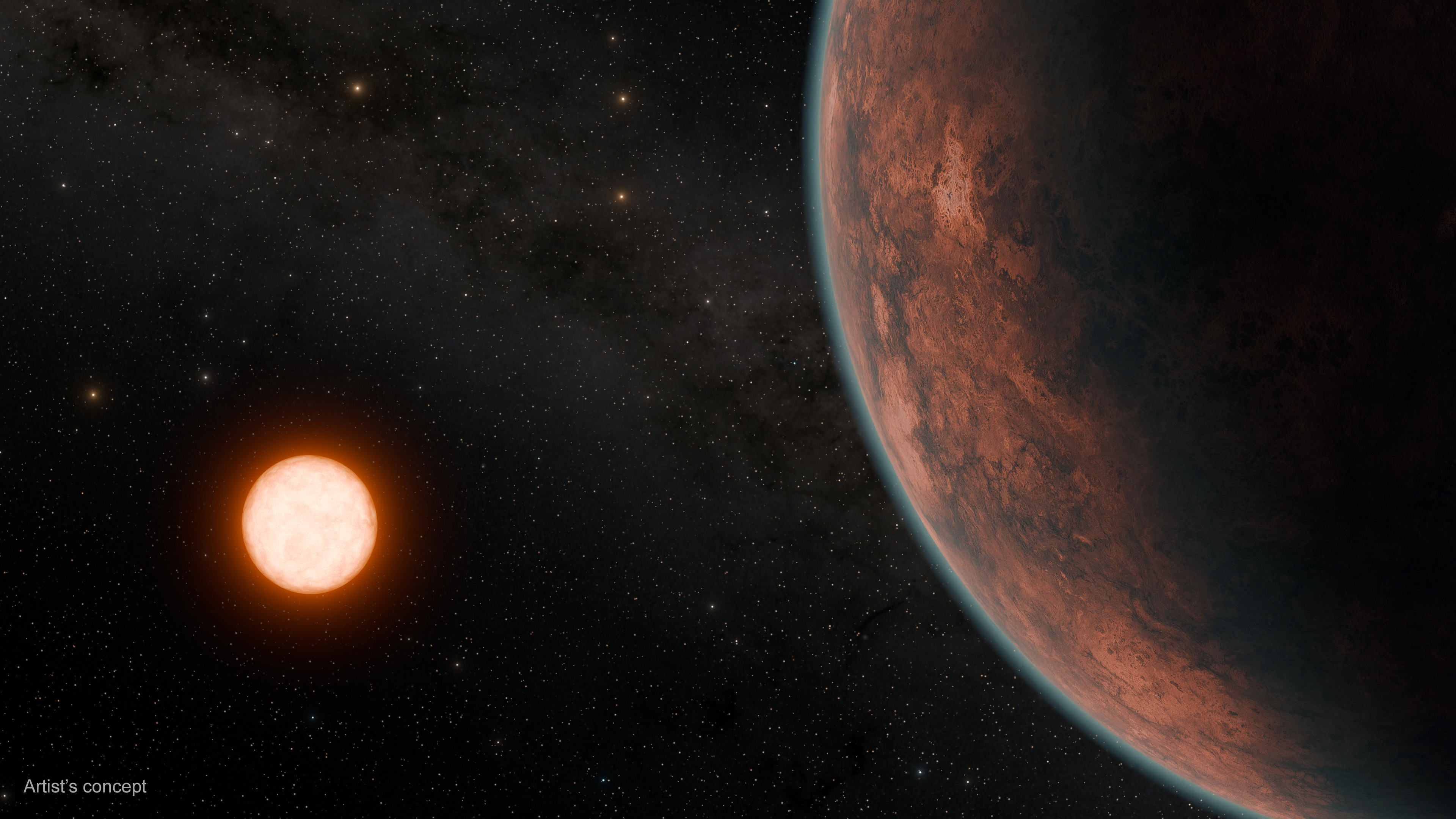
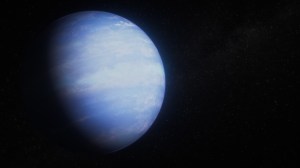
Space scene of a thin atmosphere version of Gliese 12 b
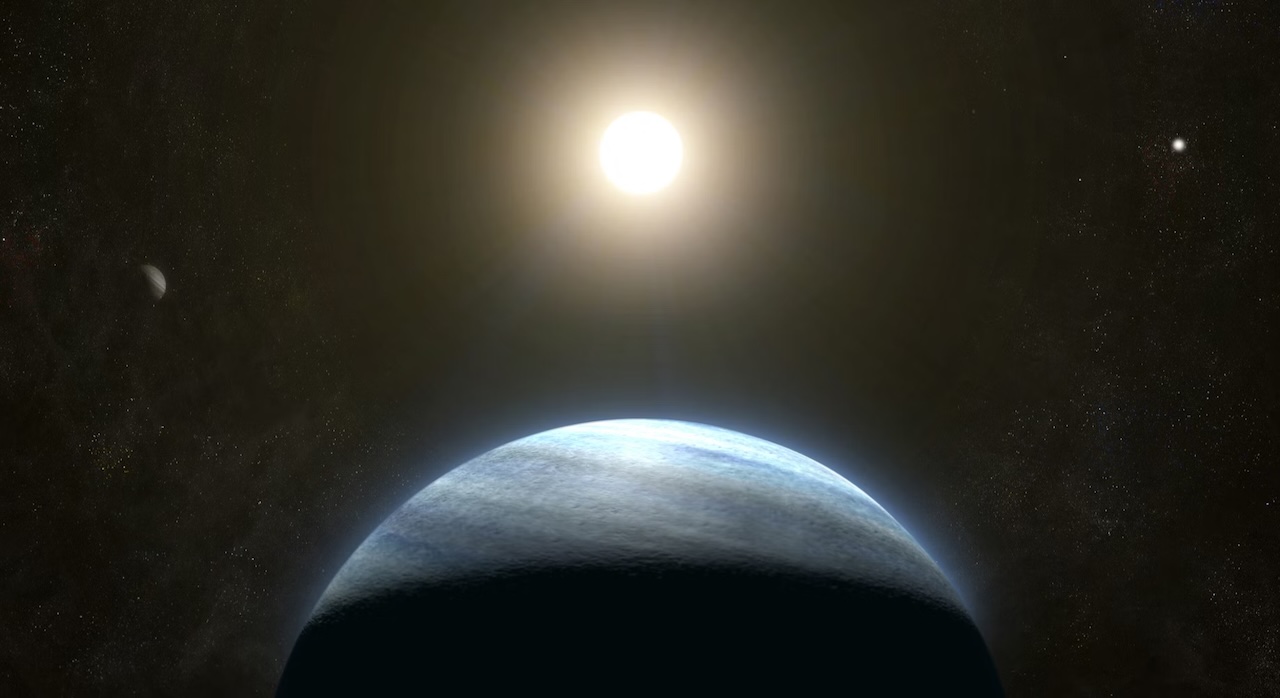
Gliese 12 b, which orbits a cool red dwarf star located just 40 light-years away, promises to tell astronomers more about how planets close to their stars retain or lose their atmospheres. In this artist’s concept, Gliese 12 b is shown retaining a thin atmosphere.
NASA/JPL-Caltech/R. Hurt (Caltech-IPAC)

TESS stares at a large swath of the sky for about a month at a time, tracking the brightness changes of tens of thousands of stars at intervals ranging from 20 seconds to 30 minutes. Capturing transits — brief, regular dimmings of stars caused by the passage of orbiting worlds — is one of the mission’s primary goals.

“We’ve found the nearest, transiting, temperate, Earth-size world located to date,” said Masayuki Kuzuhara, a project assistant professor at the Astrobiology Center in Tokyo, who co-led one research team with Akihiko Fukui, a project assistant professor at the University of Tokyo. “Although we don’t yet know whether it possesses an atmosphere, we’ve been thinking of it as an exo-Venus, with similar size and energy received from its star as our planetary neighbor in the solar system.”

The host star, called Gliese 12, is a cool red dwarf located almost 40 light-years away in the constellation Pisces. The star is only about 27% of the Sun’s size, with about 60% of the Sun’s surface temperature. The newly discovered world, named Gliese 12 b, orbits every 12.8 days and is Earth’s size or slightly smaller — comparable to Venus. Assuming it has no atmosphere, the planet has a surface temperature estimated at around 107 degrees Fahrenheit (42 degrees Celsius).

Astronomers say that the diminutive sizes and masses of red dwarf stars make them ideal for finding Earth-size planets. A smaller star means greater dimming for each transit, and a lower mass means an orbiting planet can produce a greater wobble, known as “reflex motion,” of the star. These effects make smaller planets easier to detect.

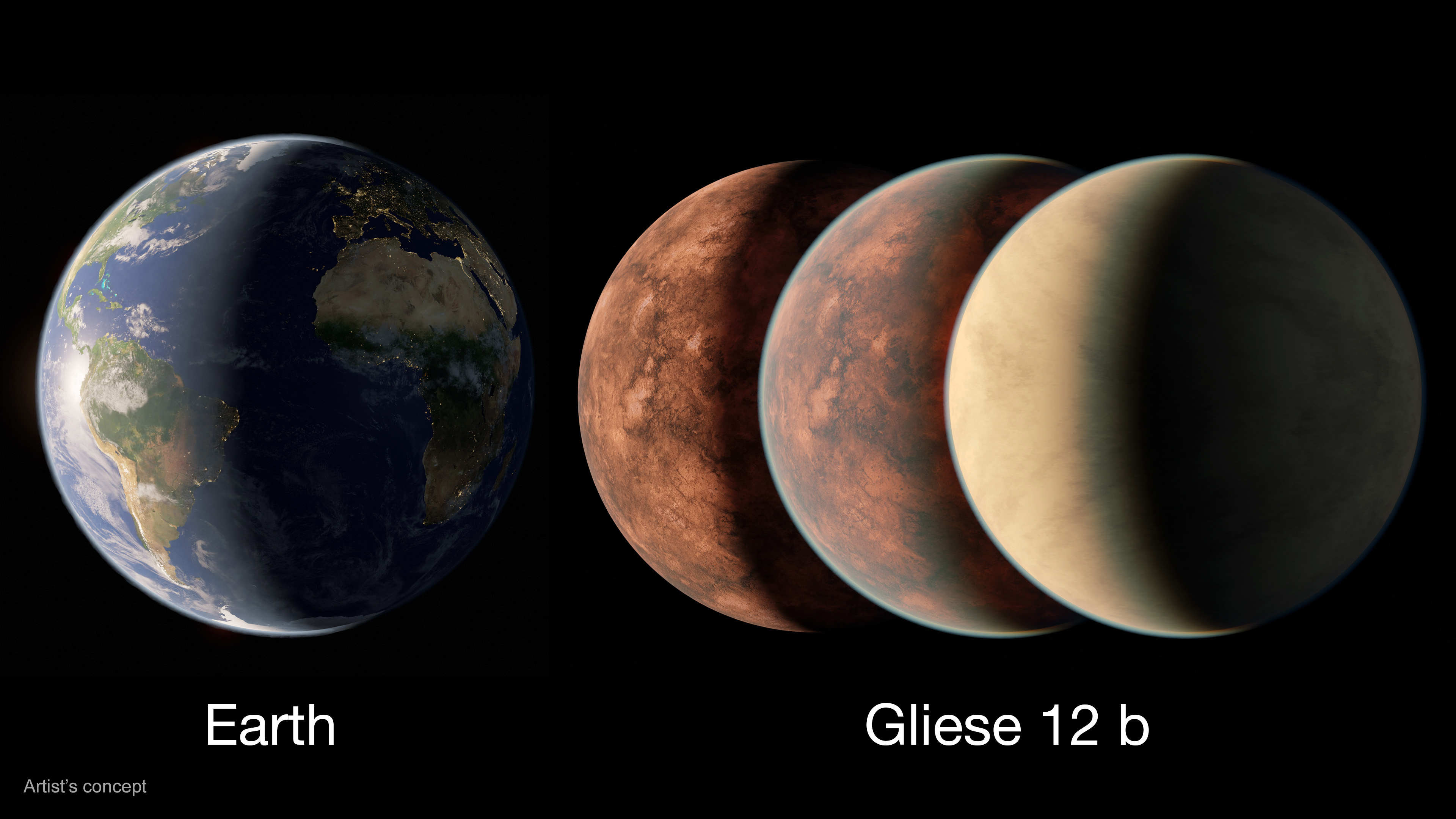
Illustration comparing Gliese 12 b models to Earth
Gliese 12 b’s estimated size may be as large as Earth or slightly smaller — comparable to Venus in our solar system. This artist’s concept compares Earth with different possible Gliese 12 b interpretations, from one with no atmosphere to one with a thick Venus-like one. Follow-up observations with NASA’s James Webb Space Telescope could help determine just how much atmosphere the planet retains as well as its composition.
NASA/JPL-Caltech/R. Hurt (Caltech-IPAC)

The lower luminosities of red dwarf stars also means their habitable zones — the range of orbital distances where liquid water could exist on a planet’s surface — lie closer to them. This makes it easier to detect transiting planets within habitable zones around red dwarfs than those around stars emitting more energy.

The distance separating Gliese 12 and the new planet is just 7% of the distance between Earth and the Sun. The planet receives 1.6 times more energy from its star as Earth does from the Sun and about 85% of what Venus experiences.

“Gliese 12 b represents one of the best targets to study whether Earth-size planets orbiting cool stars can retain their atmospheres, a crucial step to advance our understanding of habitability on planets across our galaxy,” said Shishir Dholakia, a doctoral student at the Centre for Astrophysics at the University of Southern Queensland in Australia. He co-led a different research team with Larissa Palethorpe, a doctoral student at the University of Edinburgh and University College London.

Both teams suggest that studying Gliese 12 b may help unlock some aspects of our own solar system’s evolution.

“It is thought that Earth’s and Venus’s first atmospheres were stripped away and then replenished by volcanic outgassing and bombardments from residual material in the solar system,” Palethorpe explained. “The Earth is habitable, but Venus is not due to its complete loss of water. Because Gliese 12 b is between Earth and Venus in temperature, its atmosphere could teach us a lot about the habitability pathways planets take as they develop.”

One important factor in retaining an atmosphere is the storminess of its star. Red dwarfs tend to be magnetically active, resulting in frequent, powerful X-ray flares. However, analyses by both teams conclude that Gliese 12 shows no signs of extreme behavior.

A paper led by Kuzuhara and Fukui was published May 23 in The Astrophysical Journal Letters. The Dholakia and Palethorpe findings were published in Monthly Notices of the Royal Astronomical Society on the same day.

During a transit, the host star’s light passes through any atmosphere. Different gas molecules absorb different colors, so the transit provides a set of chemical fingerprints that can be detected by telescopes like Webb. 

“We know of only a handful of temperate planets similar to Earth that are both close enough to us and meet other criteria needed for this kind of study, called transmission spectroscopy, using current facilities,” said Michael McElwain, a research astrophysicist at NASA’s Goddard Space Flight Center in Greenbelt, Maryland, and a co-author of the Kuzuhara and Fukui paper. “To better understand the diversity of atmospheres and evolutionary outcomes for these planets, we need more examples like Gliese 12 b.”

TESS is a NASA Astrophysics Explorer mission managed by NASA Goddard and operated by MIT in Cambridge, Massachusetts. Additional partners include Northrop Grumman, based in Falls Church, Virginia; NASA’s Ames Research Center in California’s Silicon Valley; the Center for Astrophysics | Harvard & Smithsonian in Cambridge, Massachusetts; MIT’s Lincoln Laboratory; and the Space Telescope Science Institute in Baltimore. More than a dozen universities, research institutes, and observatories worldwide are participants in the mission.

By Francis Reddy
NASA’s Goddard Space Flight Center, Greenbelt, Md.

Media Contact:
Claire Andreoli
301-286-1940
claire.andreoli@nasa.gov
NASA’s Goddard Space Flight Center, Greenbelt, Md.

Powered by WPeMatico

Get The Details…

New Images From Euclid Mission Reveal Wide View of the Dark Universe

New Images From Euclid Mission Reveal Wide View of the Dark Universe

6 min read

Preparations for Next Moonwalk Simulations Underway (and Underwater)

With NASA contributions, the mission will complement dark energy studies to be made by the agency’s upcoming Nancy Grace Roman Space Telescope.

The Euclid mission, led by ESA (the European Space Agency) with contributions from NASA, has released five new images that showcase the space telescope’s ability to explore two large-scale cosmic mysteries: dark matter and dark energy. Dark matter is an invisible substance five times more common in the universe than “regular” matter but with an unknown composition. “Dark energy” is the name given to the unknown source causing the universe to expand faster and faster.

By 2030, Euclid will create a cosmic map that covers almost a third of the sky, using a field of view that is far wider that than NASA’s Hubble and James Webb space telescopes, which are designed to study smaller areas in finer detail. Scientists will then chart the presence of dark matter with higher precision than ever before. They can also use this map to study how dark energy’s strength has changed over time.

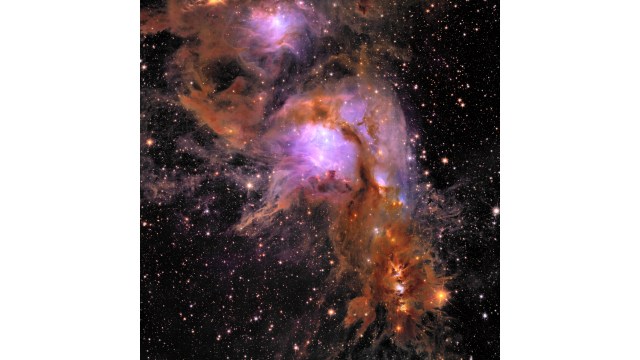
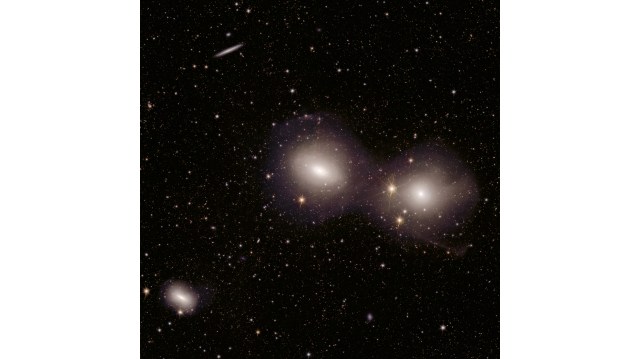
The five new images feature views of varying sizes — from a star-forming region in the Milky Way galaxy to clusters of hundreds of galaxies — and were taken shortly after Euclid’s launch in July 2023 as part of its early release observations program. The mission released five images from that program last year as a preview of what Euclid would offer, before scientists had analyzed the data.

The new images, related science papers, and data are available at the Euclid website. A pre-recorded program by ESA about these findings is available on ESA TV and YouTube.

Mission planners with NASA’s forthcoming Nancy Grace Roman Space Telescope will use Euclid’s findings to inform Roman’s complementary dark energy work. Scientists will use Roman, with its better sensitivity and sharpness, to extend the kind of science Euclid enables by studying fainter and more distant galaxies.

Curved Space

Abell 2390
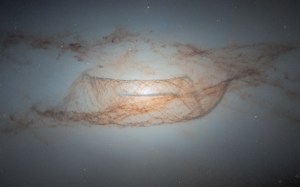
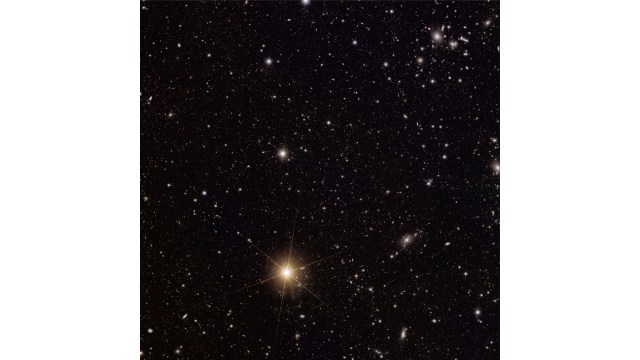
More than 50,000 galaxies are visible in this image of Abell 2390, a galaxy cluster 2.7 billion light-years away from Earth. Near the center of the image, some of the galaxies appear smudged and curved, an effect called strong gravitational lensing that can be used to detect dark matter.
ESA/Euclid/Euclid Consortium/NASA, image processing by J.-C. Cuillandre (CEA Paris-Saclay), G. Anselmi; CC BY-SA 3.0 IGO or ESA Standard Licence

One way Euclid will help scientists study dark matter is by observing how this mysterious phenomenon warps the light from distant galaxies, as seen in one of the new images featuring a cluster of galaxies called Abell 2390. The mass of the galaxy cluster, which includes dark matter, creates curves in space. Light from more distant galaxies traveling over those curves appears to bend or arc, similar to how light looks when passing through the warped glass of an old window. Sometimes the warping is so powerful it can create rings, pronounced arcs, or multiple images of the same galaxy — a phenomenon called strong gravitational lensing.

Scientists interested in exploring the effects of dark energy will primarily look for a subtler effect, called weak gravitational lensing, which requires detailed computer analysis to detect and reveals the presence of even smaller clumps of dark matter. By mapping that dark matter and tracing how these clumps evolve over time, scientists will investigate how the outward acceleration of dark energy has changed dark matter’s distribution.

“Because dark energy is a relatively weak effect, we need larger surveys to give us more data and better statistical precision,” said Mike Seiffert, the NASA project scientist for Euclid at the agency’s Jet Propulsion Laboratory in Southern California. “It’s not something where we can zoom in on one galaxy and study it in detail. We need to look at a much bigger area but still be able to detect these subtle effects. To make that happen, we needed a specialized space telescope like Euclid.”

The telescope uses two instruments that detect different wavelengths of light: the visible-light imager (VIS) and the near-infrared spectrometer and photometer (NISP). Foreground galaxies emit more light in visible wavelengths (those the human eye can perceive), while background galaxies are typically brighter in infrared wavelengths.

“Observing a galaxy cluster with both instruments allows us to see galaxies at a wider range of distances than what we could get using either visible or infrared alone,” said JPL’s Jason Rhodes, principal investigator for NASA’s Euclid dark energy science team. “And Euclid can make these types of deep, wide, high-resolution images hundreds of times faster than other telescopes.”

Discoveries Beyond Dark Energy

Galaxy NGC 6744
Euclid’s large field of view captures the entirety of galaxy NGC 6744 and shows astronomers key areas of star formation. Forming stars is the main way by which galaxies grow and evolve, so these investigations are central to understanding why galaxies look the way they do.
ESA/Euclid/Euclid Consortium/NASA, image processing by J.-C. Cuillandre (CEA Paris-Saclay), G. Anselmi; CC BY-SA 3.0 IGO or ESA Standard Licence

While dark matter and dark energy are central to the Euclid, the mission has a variety of other astronomical applications. Euclid’s large-area sky map can, for instance, be used to discover faint objects and observe changes in cosmic objects, like a star changing in brightness. Euclid’s new science results include the detection of free-floating planets (planets that don’t orbit stars), which are difficult to find because of their faintness. In addition, the data reveals newly discovered brown dwarfs. Thought to form like stars but not quite large enough to begin fusion in their cores, these objects highlight the differences between stars and planets.

“The data, images, and scientific papers coming out now mark the very beginning of Euclid’s scientific results, and they show a startlingly wide variety of science beyond the primary objective of the mission,” said Seiffert. “What we’re already seeing from Euclid’s wide view has produced results that study individual planets, features in our home Milky Way galaxy, and the structure of the universe at large scales. It’s both thrilling and a little overwhelming to keep up with all the developments.”

More About the Mission

Three NASA-supported science teams contribute to the Euclid mission. In addition to designing and fabricating the sensor-chip electronics for Euclid’s Near Infrared Spectrometer and Photometer (NISP) instrument, JPL led the procurement and delivery of the NISP detectors as well. Those detectors, along with the sensor chip electronics, were tested at NASA’s Detector Characterization Lab at Goddard Space Flight Center in Greenbelt, Maryland. The Euclid NASA Science Center at IPAC (ENSCI), at Caltech in Pasadena, California, will archive the science data and support U.S.-based science investigations. JPL is a division of Caltech.

For more information about Euclid go to:

https://www.nasa.gov/mission_pages/euclid/main/index.html

For more information about Roman, go to:

https://roman.gsfc.nasa.gov

News Media Contact

Calla Cofield
Jet Propulsion Laboratory, Pasadena, Calif.
626-808-2469
calla.e.cofield@jpl.nasa.gov

2024-070

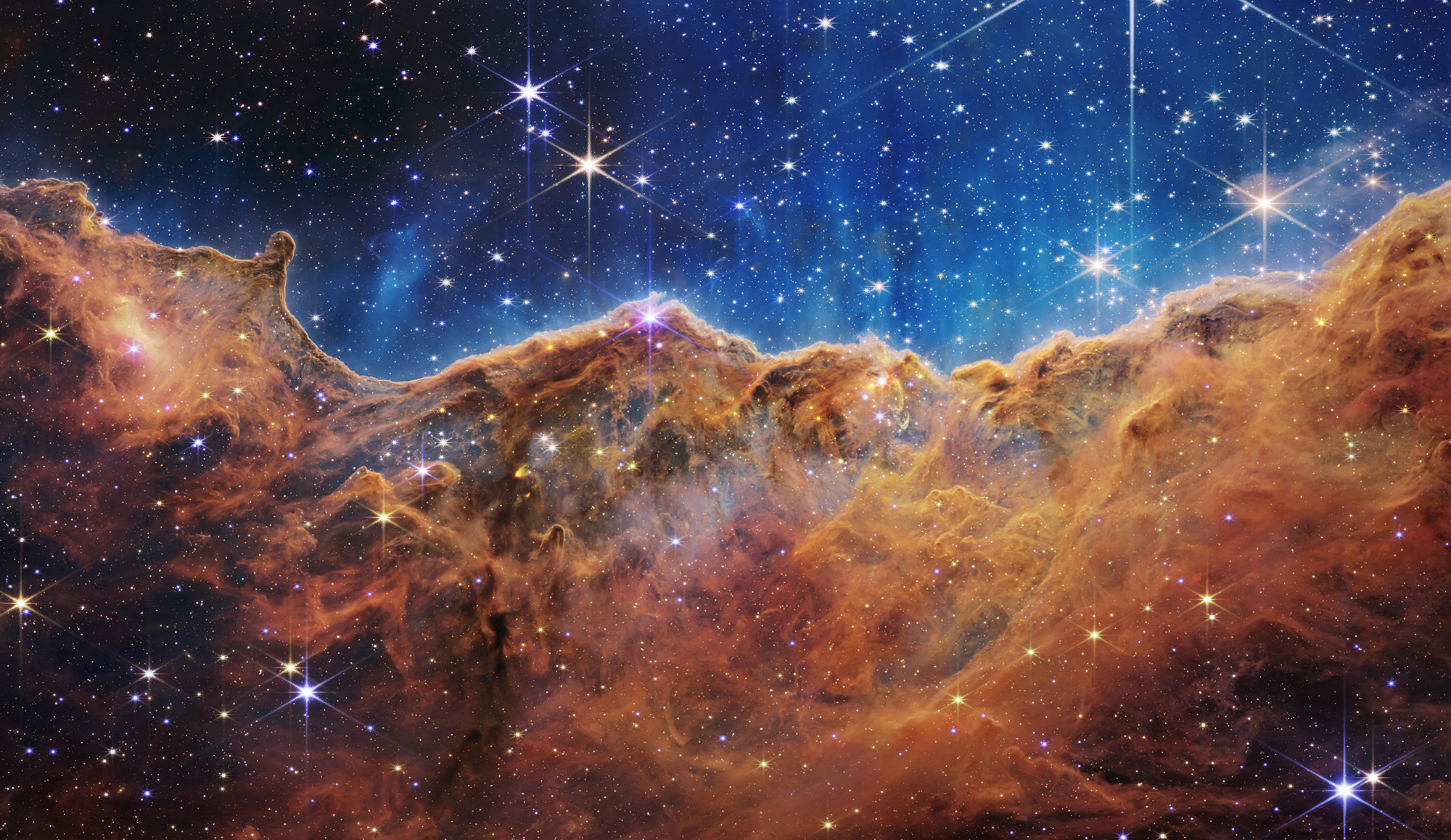
This landscape of “mountains” and “valleys” speckled with glittering stars is actually the edge of a nearby, young, star-forming region called NGC 3324 in the Carina Nebula. Captured in infrared light by NASA’s new James Webb Space Telescope, this image reveals for the first time previously invisible areas of star birth.
NASA, ESA, CSA, and STScI

Powered by WPeMatico

Get The Details…
Anthony Greicius

Medicine, DNA Research on Station Benefits Health on Earth and Space

Medicine, DNA Research on Station Benefits Health on Earth and Space

Astronaut Tracy C. Dyson works on the Gaucho Lung investigation studying ways to improve the delivery of respiratory system drugs.

The Expedition 71 crew continued its pharmaceutical research, sequenced DNA, and studied the digestion system on Wednesday. The International Space Station residents also kept up their science hardware and life support maintenance throughout the day.

NASA Flight Engineer Tracy C. Dyson worked in the Harmony module on Wednesday morning studying how microgravity affects surface tension for the Gaucho Lung investigation. Doctors hypothesize results may improve respiratory system medicines and reduce contamination in tubes benefitting both the health care and food industries.

NASA Flight Engineer Jeanette Epps spent her afternoon in the Harmony module sequencing DNA collected from microbe samples swabbed from station surfaces. The Genes in Space Molecular Operations and Sequencing (GISMOS) study seeks to identify bacteria inhabiting station systems without sending samples down to Earth for analysis. Insights may help researchers improve bacterial monitoring and fight antimicrobial resistance maintaining human health on Earth and in space.

Epps earlier helped NASA Flight Engineer Mike Barratt who had been gathering tools to work on the water recovery system located in the Tranquility module. The duo removed the treadmill rack and the water recovery system readying the workspace for the advanced plumbing job that will take place on Thursday.

NASA Flight Engineer Matthew Dominick started his day in Tranquility replacing components in the orbital outpost’s restroom, also known as the Waste and Hygiene Compartment. In the afternoon, Dominick worked in the Columbus laboratory module assembling and installing a device that can measure mass in microgravity. The Space Linear Acceleration Mass Measurement Device (SLAMMD) applies a known force to a crew member then calculates mass using a form of Newton’s Second Law of Motion, force equals mass times acceleration.

During the morning in the station’s Roscosmos segment, cosmonauts Oleg Kononenko and Nikolai Chub scanned their stomachs with an ultrasound device after breakfast. The two were collecting data to help doctors understand how the digestive system adapts to weightlessness. Kononenko went on and downloaded data collected from radiation detectors while Chub packed the Progress 86 cargo craft with items and trash for a disposal.

Roscosmos Flight Engineer Alexander Grebenkin wrapped up operations with the European robotic arm after two days of robotics training and activities. He then spent the rest of the day on cleaning and electronics and communications maintenance.


Learn more about station activities by following the space station blog@space_station and @ISS_Research on X, as well as the ISS Facebook and ISS Instagram accounts.

Get weekly video highlights at: https://roundupreads.jsc.nasa.gov/videoupdate/

Get the latest from NASA delivered every week. Subscribe here: www.nasa.gov/subscribe

Powered by WPeMatico

Get The Details…

Mark Garcia