NASA PC-12 Aircraft Makes Move to Support Flight Research Across Agency

NASA PC-12 Aircraft Makes Move to Support Flight Research Across Agency

2 min read

Preparations for Next Moonwalk Simulations Underway (and Underwater)

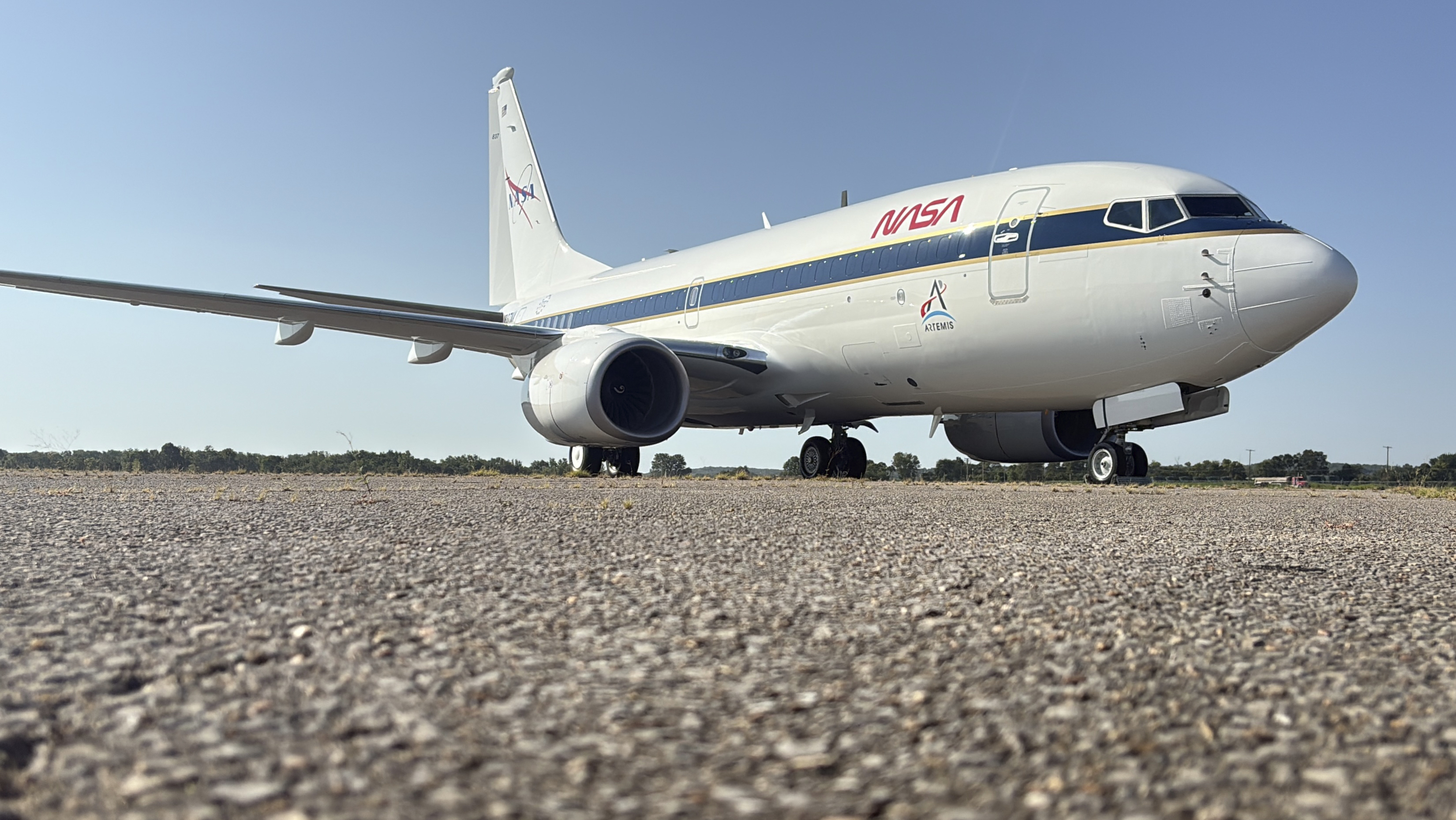
A NASA Pilatus PC-12 aircraft will now be based at NASA’s Armstrong Flight Research Center in Edwards, California, in order to support flight research efforts across the agency.

The PC-12 was acquired in 2022 by NASA’s Glenn Research Center in Cleveland for use in advanced technology development. The PC-12 will continue to support research at NASA Glenn while also helping expand flight research capability by supporting other agency efforts.

“NASA Armstrong is proficient in supporting a deployed aircraft concept, where our aircraft goes to another part of the country or world to complete a specific mission,” said Darren Cole, capabilities manager for the Flight Demonstrations and Capabilities project at NASA Armstrong. “That’s exactly what we are going to do with the PC-12, to continue a wide range of flight research.”

Two men stand facing each other, one in a green flight jacket, and one in a brown flight jacket. They shake hands while standing in front of the back of a white aircraft with a blue stripe.
Troy Asher, director for flight operations at NASA’s Armstrong Flight Research Center in Edwards, California, shakes hands with Jeremy Johnson, a pilot with NASA’s Glenn Research Center in Cleveland. The two stand in front of a NASA Pilatus PC-12 aircraft, tail number 606, which arrived at the center Feb. 11, 2026. This aircraft is now housed at NASA Armstrong to continue supporting research at NASA Glenn, among other agency efforts.
NASA/Christopher LC Clark

Over four years of service at Glenn, the PC-12 has proven a valuable research asset, with contributions such as supporting a communications relay experiment with the International Space Station. Using a portable laser terminal, the PC-12 sent a 4K video stream relayed through a ground network and a satellite to the space station, which was able to send information back. The system helped effectively penetrate cloud coverage.

The aircraft also was used to study surveillance systems that could help handle the air traffic demands of future air taxis flying in cities.

From its new home at NASA Armstrong, the plane will support a variety of agency, industry, and academic research, including continued technology development research led by Glenn and conducted in conjunction with Glenn’s Aerospace Communications Facility.

A small white aircraft with a blue stripe, and a black front propellor, drives along a concrete ramp with the desert and mountains behind it. There are two people inside, and only the tops of the helmets of both people can be seen under the clear canopy of the aircraft.
A NASA T-34 aircraft, tail number 602, arrived at NASA’s Armstrong Flight Research Center in Edwards, California, on Feb. 14, 2026. This aircraft was flown from NASA’s Glenn Research Center in Cleveland, to NASA Armstrong, to be evaluated for use as a flight research and pilot training platform for the center.
NASA/Carla Thomas

A NASA T-34 aircraft from Glenn also arrived at Armstrong in February to be evaluated for use. The T-34 can allow NASA pilots to either conduct flight research or train to fly the PC-12 when that larger aircraft is undergoing maintenance or modifications.

“The T-34’s design allows for future pod-mounted flight research efforts,” Cole said. “This could include ideas in development by researchers within NASA or through external partnerships — to get something quickly into the air for flight testing at a low cost.”

The T-34 from Glenn joins another already housed at NASA Armstrong, part of a fleet that has recently grown with new assets, including two F-15s. These help Armstrong remain the agency’s home base for breakthrough flight research and test projects.

The aircraft are supported through NASA’s Aeronautics Research Mission Directorate.

Share

Details

Last Updated

Mar 24, 2026

Editor
Dede Dinius
Contact
Teresa Whiting

Powered by WPeMatico

Get The Details…
Dede Dinius

Reminders of Where We’ve Been, Where We’re Going

Reminders of Where We’ve Been, Where We’re Going

Three Moon rocks are encased in three different kinds of containers. They all sit on a flat surface. Behind them is the NASA flag with the agency's seal on it. The flag is lit from the bottom by red and blue lighting.
NASA/Bill Ingalls

Three Moon rocks are on display during a March 24, 2026, event where NASA announced a series of transformative agencywide initiatives designed to achieve the National Space Policy and advance American leadership in space.

NASA leadership provided updates on mission priorities, including sending the first astronauts to the lunar surface in more than 50 years, establishing the initial elements of a permanent lunar base, getting America underway in space on nuclear propulsion, and other objectives.

Image credit: NASA/Bill Ingalls

Powered by WPeMatico

Get The Details…
Monika Luabeya

3 Ways Students Can Get Involved With Artemis

3 Ways Students Can Get Involved With Artemis

3 Min Read

3 Ways Students Can Get Involved With Artemis

A person in a special underwater suit working with equipment in the NASA Buoyancy Lab

NASA’s Artemis program will establish a sustainable lunar presence, unlock new scientific discoveries, and develop technologies for spaceflight to Mars and beyond – and students can help shape this new era of space exploration.

As America launches this new Golden Age of innovation and exploration, NASA and its partners offer exciting opportunities for students to get involved in the mission and strengthen the future workforce through internships, competitions, and more.

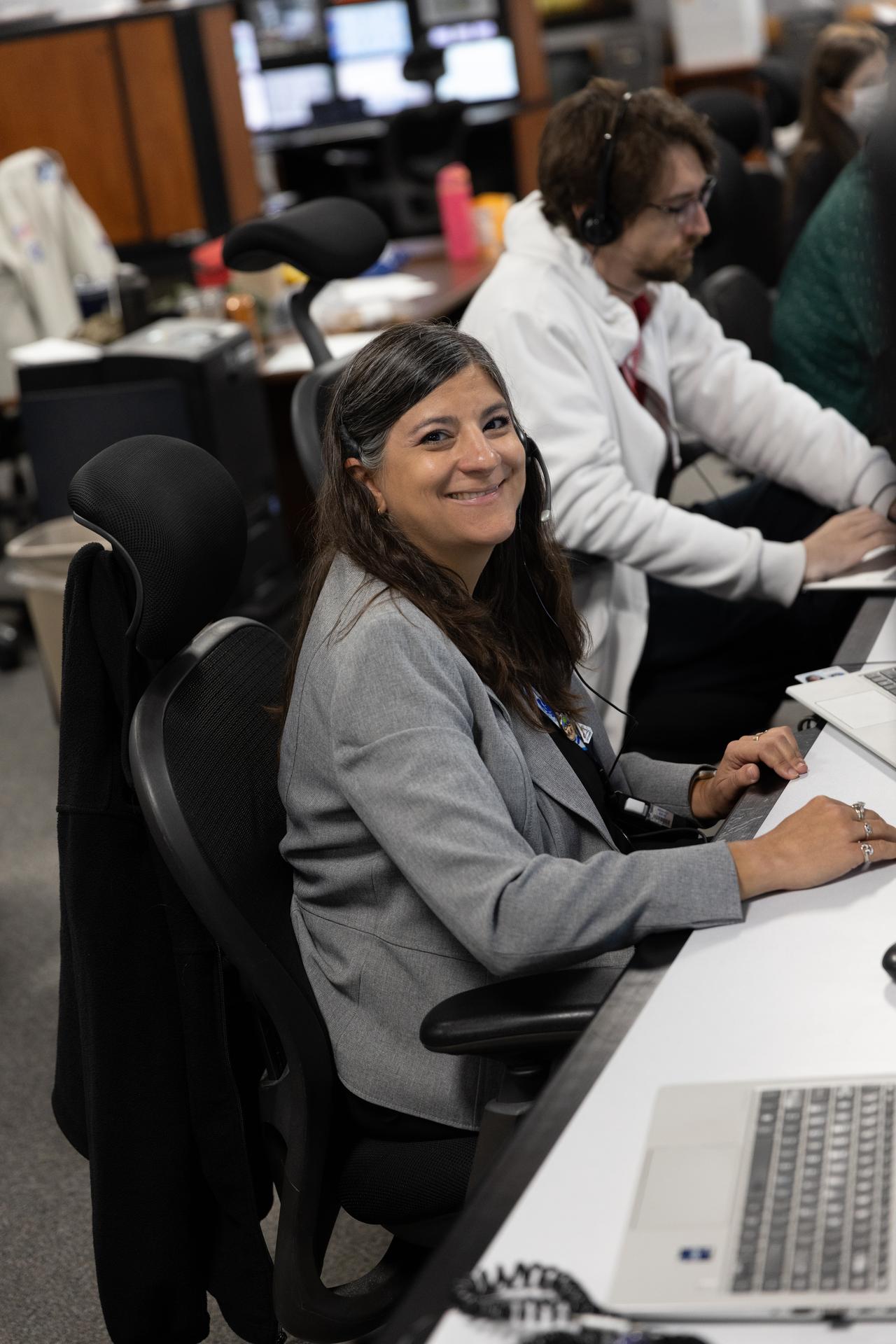
An intern with a headset on sitting at a desk with several monitors
Michael Svara is an intern in the Exploration Propulsion Systems Group in the Flight Operations Division at NASA’s Johnson Space Center in Houston.

Turn Skills Into Impact With NASA Internships

NASA Internships enable U.S. college students to contribute to Artemis through their work on projects supporting lunar exploration, spacecraft systems, and the cutting-edge technology development that makes deep space missions possible.

As NASA interns, students gain hands-on experience that builds technical skills, connections, and career readiness. Interns collaborate with agency professionals and receive guidance from supportive mentors, all while tackling authentic challenges posed by advanced spaceflight. NASA internships go beyond learning experiences to provide a launch pad into the workforce.

Want to learn more? Explore the NASA Internships website, follow NASA Internships on Instagram, and check out our 5 Tips to Craft a Standout Internship Application.

Inside the Neutral Buoyancy Laboratory at NASA’s Johnson Space Center in Houston, a professional diver tests a student-designed tool created for the Micro-g Neutral Buoyancy Experiment Design Teams (Micro-g NExT) challenge.

Innovate Solutions Through NASA Student Design Challenges

NASA’s student design challenges offer hands-on STEM experience and an introduction to the skills needed for aerospace careers. These challenges build technical expertise, problem-solving skills, and confidence, preparing participants for roles in the nation’s STEM workforce while giving them a chance to make an impact on the agency’s most ambitious goals. Here are the NASA student challenges focusing on Artemis and related technologies:

  • Human Exploration Rover Challenge: Teams of high school and college students from around the world build and then race pedal-powered rovers over a lunar-like obstacle course at the U.S. Space & Rocket Center in Huntsville, Alabama.
  • Micro-g Neutral Buoyancy Experiment Design Teams (Micro-g NExT): U.S. undergraduate teams are tasked with designing, building, and testing space exploration tools in simulated microgravity at Johnson Space Center’s Neutral Buoyancy Laboratory.
  • NASA Spacesuit User Interface Technologies for Students (NASA SUITS): This challenge engages college students nationwide in the design of next-generation spacesuit user interfaces – technologies supporting future human exploration on the Moon or Mars.
  • NASA’s Student Launch: U.S. student teams are challenged to design, build, and launch a high-powered rocket with a scientific payload, culminating in an annual final launch at Marshall Space Flight Center in Huntsville, Alabama.
Dive into the Artemis program inside the Minecraft universe through a partnership between Minecraft Education and NASA.

Engage With Artemis Through the World of Minecraft

Student teams can dive into the Artemis program inside the Minecraft universe. Since 2023, players have been building rockets, launching missions to the Moon, and creating bases on the lunar surface through a partnership between Minecraft Education and NASA. This April, the collaboration’s Artemis adventures will expand to include the new Minecraft Education Build Challenge, Mission Control: Artemis. Students will step into NASA’s Mission Control, use block-based code to guide a spacewalk on the lunar surface, and dream up the ultimate control center for the next generation of space explorers.

Two students working with equipment in a rocky terrain
Students put their designs to the test during the NASA Spacesuit User Interface Technologies for Students (NASA SUITS) challenge.

Be Part of the Next Giant Leap

NASA and the nation are embarking on a new era in human spaceflight, and students are invited to get involved, increase their knowledge, and learn how they can transform a passion for STEM into a rewarding role in the aerospace workforce.

Ready to be part of NASA’s next giant leap? Check out NASA’s Learning Resources website to learn more about current student opportunities and career resources from NASA’s Office of STEM Engagement.

Powered by WPeMatico

Get The Details…
Sandra May

NASA Research Proposes Technology to Seek Earth-Like Exoplanets

NASA Research Proposes Technology to Seek Earth-Like Exoplanets

2 Min Read

NASA Research Proposes Technology to Seek Earth-Like Exoplanets

Member of the KISS team

Caltech Keck Institute of Space Studies (KISS) team during a March 2026 workshop.

Credits:
KISS

As NASA seeks to understand the mysteries of the universe, the agency is advancing technologies to locate and explore Earth-like planets far beyond our solar system. A key element of this research involves observing reflected light from exoplanets, which can reveal indicators of Earth-like features such as water and oxygen. However, detecting this faint reflected light with current telescope technology remains a significant challenge due to the overwhelming brightness of nearby stars and other celestial objects.

NASA’s Hybrid Observatory for Earth-like Exoplanets (HOEE) concept presents a potential solution by combining an orbiting starshade with a large ground-based telescope to suppress starlight and enable direct imaging of exoplanets.

We have pioneered a transformative approach to the search for life beyond our solar system by deploying a space-borne starshade to cast a near perfect shadow over Earth’s largest telescopes, we suppress stellar glare before it ever enters the atmosphere.

John Mather

John Mather

HOEE principal investigator at NASA’s Goddard Space Flight Center in Greenbelt, Maryland

Recent research, published earlier this year and featured on the cover of Monday’s Nature Astronomy March issue, suggests the HOEE concept could produce much sharper images allowing us to see entire exoplanetary systems and to clearly separate planet images from each other as well as from interference of dust clouds, the host star, and from the starshade itself. Its extreme sensitivity could enable the detection of small planets, and even large dwarf planets. Most notably, it could enable high-fidelity, wide-band spectroscopy, a scientific technique that can be used to study the interaction between matter and light, improving the path to identifying the chemical signatures of life.

For decades, the starshade was a novel concept. Now, NASA’s Innovative Advanced Concepts (NIAC) program is turning that idea into a buildable reality. Through a series of targeted studies, NASA researchers are investigating whether it could be practical to build and develop an engineering roadmap.

Team leading NASA’s Hybrid Observatory for Earth-like Exoplanets concept pictured with the cover of Nature Astronomy featuring their research “The observation of Earth-like exoplanets with ground-based telescopes and a shared orbiting starshade.” From left NASA’s Goddard Space Flight Center researchers Dr. John Mather and Dr. Eliad Peretz, followed by NASA’s Jet Propulsion Laboratory researchers Dr. Ahmed Soliman and Dr. Stuart Shaklan.
KISS

NASA’s Hybrid Observatory for Earth-like Exoplanets (HOEE) is a three-time NIAC award recipient, having received Phase I awards in 2022 and 2025. The HOEE concept is supported by researchers at NASA Goddard, NASA’s Jet Propulsion Laboratory in Southern California, and NASA’s Ames Research Center in California’s Silicon Valley.

Latest Related Research

Powered by WPeMatico

Get The Details…
Loura Hall

NASA’s Water-Hunting Tool Will Help Scout Moon’s South Pole 

NASA’s Water-Hunting Tool Will Help Scout Moon’s South Pole 

Harrison Schmitt stands next to a giant boulder on the Moon in this photo taken from a distance.
Apollo 17 geologist and astronaut Harrison Schmitt next to a large bolder on the Taurus-Littrow landing site on the Moon. 
NASA

NASA is joining international partners to hunt for ice on the Moon in support of future human exploration. The agency is providing a water-detecting instrument, the Neutron Spectrometer System (NSS), to the Lunar Polar Exploration (LUPEX) mission led by JAXA (Japan Aerospace Exploration Agency) and ISRO (Indian Space Research Organisation).  

The instrument, which detects ice under the lunar surface, will be installed on LUPEX’s lunar rover planned to arrive at the Moon no earlier than 2028. NASA’s support of LUPEX is part of an ongoing effort to identify and characterize lunar water and other materials that easily evaporate near the Moon’s South Pole. 

Water is a critical material for NASA’s plans to develop an enduring presence on the Moon. Instead of relying solely on resources carried from Earth, astronauts could use the Moon’s water for breathable air, rocket fuel, and more. The first step is to find deposits of meaningful quantities of water close to the surface to mark potential landing areas for future astronauts. The water on the Moon is mostly found as molecules within lunar regolith, the dusty and rocky material that covers the Moon’s surface, but there may be ice deposits below the surface of the lunar South Pole. Once we better understand the quantity and quality of the available resources, we can learn how to harness it for exploration.  

“There is currently a gap in our understanding of how lunar ice is distributed at small scales, from 10s of centimeters up to 10s of kilometers,” said Rick Elphic, NSS lead at NASA’s Ames Research Center in California’s Silicon Valley, where the instrument was developed in collaboration with Lockheed Martin Advanced Technology Center in Palo Alto, California. “The only way to understand the ‘where’ and ‘how much’ of lunar ice is by exploring on the surface at these scales.”  

How neutrons signal water 

NASA’s Neutron Spectrometer System instrument will search for signs of water ice on the Moon’s surface aboard a lunar rover belonging to the Lunar Polar Exploration (LUPEX) mission led by JAXA (Japan Aerospace Exploration Agency) and ISRO (Indian Space Research Organisation).
NASA/Warren Davis

Scientists can search for water on the Moon without drilling into the surface. Instead, they hunt for concentrations of hydrogen, the H in H₂O. Past missions in lunar orbit have found signs of water at the Moon’s poles, but ground missions are needed to build detailed maps of location and quantity.  

Instruments like NSS can infer the presence of hydrogen by detecting interactions with particles called neutrons. Neutrons are constantly rattling around in the lunar soil, and they’re about the same size as hydrogen atoms. When these two particles interact, fewer medium-energy neutrons are ejected from the soil. The absence of medium-energy neutrons suggests more of the particles are interacting with hydrogen underground, a deficit that can be measured with the right tools.  

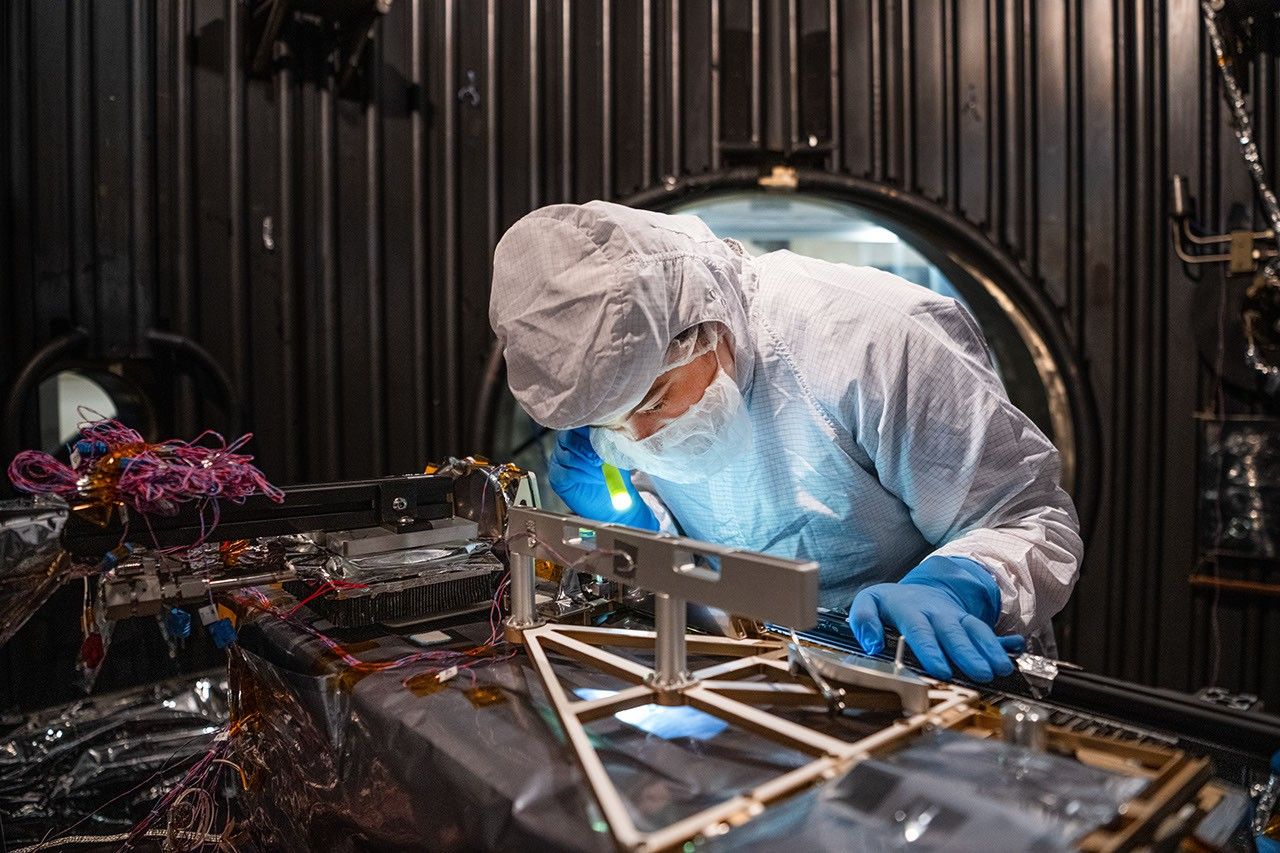
The NSS instrument uses a “gas proportional counter” to detect neutrons bouncing out of the lunar soil. It features two tubes that contain a rare gas called helium-3 that is very sensitive to neutrons. When neutrons strike the helium-3 gas atoms, the gas produces electrical pulses that can be counted to infer the presence and quantity of hydrogen up to three feet underground.  

Series of water-hunters 

Ongoing investigation of the Moon’s water will inform how astronauts might access it in the future. To that end, NASA researchers at Ames have developed a series of NSS instruments intended to ride aboard different missions to investigate sites at the Moon’s South Pole.  

The first Moon-bound NSS instrument in the series was carried aboard Astrobotic’s Peregrine lander, Astrobotic Peregrine Mission One, which launched in January 2024. That mission came to an end without touching down on the lunar surface, but the NSS aboard powered on and operated on multiple days over the course of the 10-day mission. These operations successfully captured data about the particle background of deep space, which strongly supported NSS operations on future missions.  

NASA’s VIPER (Volatiles Investigating Polar Exploration Rover) mission, part of the agency’s Artemis campaign, will carry another NSS. As part of NASA’s ongoing Commercial Lunar Payload Services effort, a fourth NSS instrument will ride aboard the MoonRanger “micro rover” developed by Carnegie Mellon University in Pittsburgh.  

“The three upcoming NSS rover expeditions will tell us what kinds of places on the Moon are most likely to host ice,” Elphic said. “Missions to the lunar surface can then be planned to similar sites where ice can be found.” 

The Neutron Spectrometer System was jointly developed by NASA’s Ames Research Center and Lockheed Martin Advanced Technology Center in Palo Alto, California. 

For more information on the science of water on the Moon, visit: 

https://science.nasa.gov/moon/moon-water-and-ices

Karen Fox / Molly Wasser
Headquarters, Washington 
240-285-5155 / 240-419-1732 
karen.c.fox@nasa.gov / molly.l.wasser@nasa.gov  

Arezu Sarvestani 
Ames Research Center, Silicon Valley  
650-613-2334 
arezu.sarvestani@nasa.gov 

Powered by WPeMatico

Get The Details…
Arezu Sarvestani