Rebekah Hounsell: Tracking Cosmic Light to Untangle the Universe’s Darkest Mysteries

Rebekah Hounsell: Tracking Cosmic Light to Untangle the Universe’s Darkest Mysteries

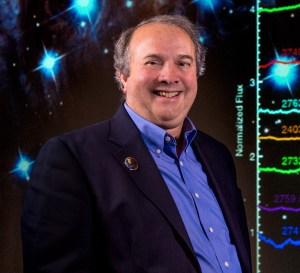
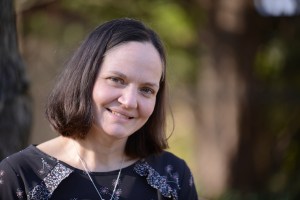
Rebekah Hounsell is an assistant research scientist working on ways to optimize and build infrastructure for future observations made by the Nancy Grace Roman Space Telescope. The mission will shed light on many astrophysics topics, like dark energy, which are currently shrouded in mystery. Rebekah also works as a support scientist for the TESS (Transiting Exoplanet Survey Satellite) mission, helping scientists access and analyze data.

Name: Rebekah Hounsell
Title: Assistant Research Scientist
Formal Job Classification: Support Scientist for the TESS mission and Co-Principal Investigator of the Roman Supernova Project Infrastructure Team (PIT)
Organization: Code 667.0
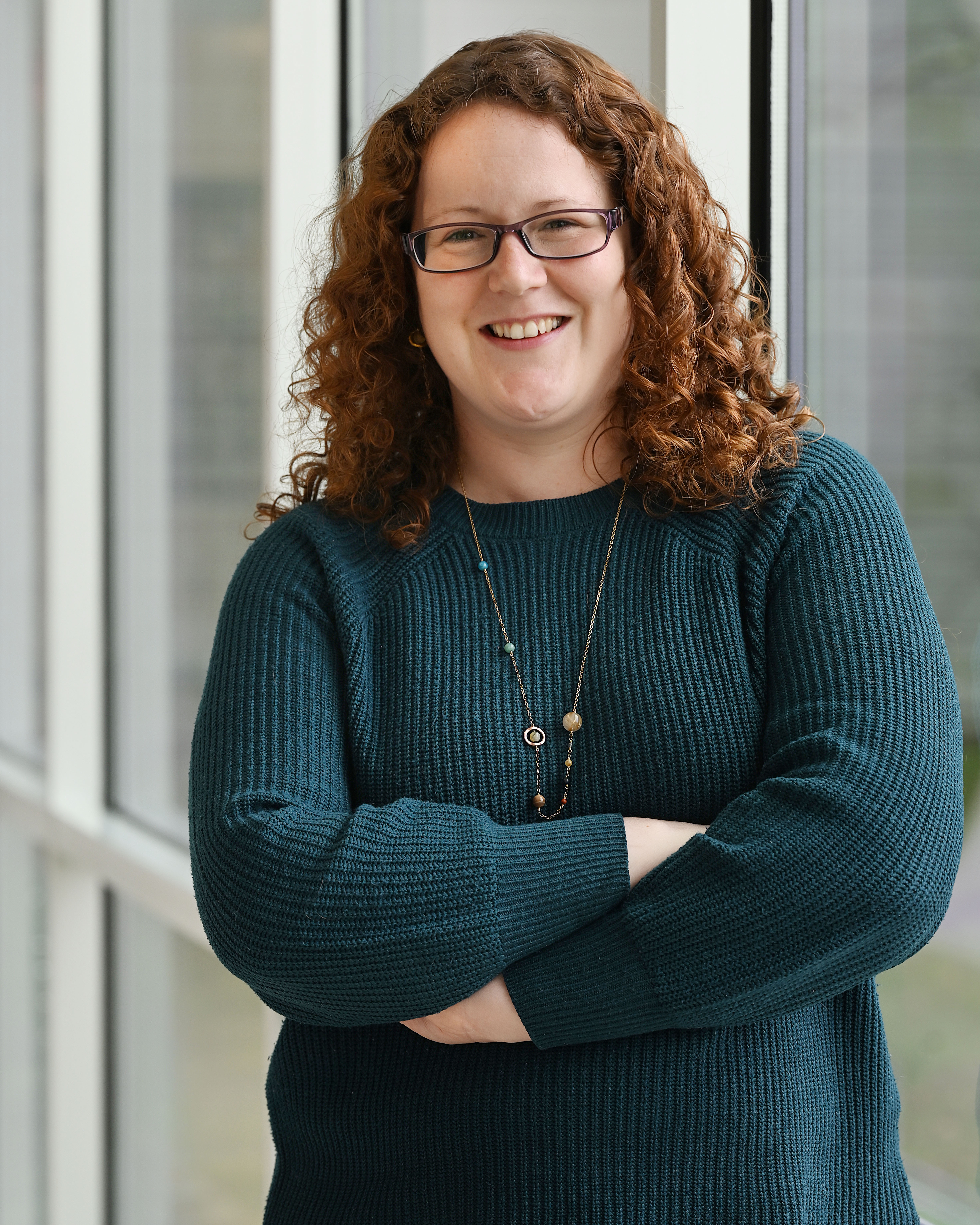
Rebekah Hounsell knew she wanted to study space from a very young age. Now, she’s a scientist at NASA’s Goddard Space Flight Center in Greenbelt, Md.
NASA/Chris Gunn

What do you do and what is most interesting about your role at Goddard?

I am fortunate to have several roles at Goddard. I am a support scientist for TESS. Here I aid the community in accessing and analyzing TESS data. I am a co-principal investigator of a Roman project infrastructure team, focusing on building infrastructure to support supernova cosmology with the Roman HLTDS (High Latitude Time-Domain Survey). In addition, I am part of the Physics of the Cosmos program analysis group executive committee, co-chairing both the Cosmic Structure Science interest group and the Time-Domain and Multi-Messenger Astrophysics Science interest group. In these roles I have been fortunate enough to get a glimpse into how missions such as TESS and Roman work and how we can make them a success for the community. Missions like TESS are paving the way for future wide area surveys like Roman, providing a plethora of high cadence transient and variable star data, which can be used to gain a better understanding of our universe and our place within it.

How will your current work influence the Nancy Grace Roman Space Telescope’s future observations?

The Roman team I am leading is tasked with developing a pixels-to-cosmology pipeline for the analysis of supernova data from the HLTDS. What this means is that we will develop tools to aid the community in obtaining supernova lightcurves and prism spectra, which are precise enough to be used in testing various cosmological modes. We are also working to develop tools which will allow the community to test various HLTDS designs, adjusting cadence, filters, exposure times, etc., to best optimize its output for their science.

What got you interested in astrophysics? What was your path to your current role?

When I was a child I lived in a very rural area in England, with little to no light pollution. I had a wonderful view of the night sky and was fascinated by stars. I remember when I found out that the universe was expanding and my first thought was “into what?” I think it was that which fueled my curiosity about space and pushed me into astrophysics. At about 10 years old, I decided astrophysics was the path for me, and after that I really started to focus on physics and math at school.

At 18, 19 I went to Liverpool University/Liverpool John Moores and completed my master’s in astrophysics in 2008. I then went on to obtain my Ph.D., focusing on classical and recurrent novae. In 2012 I received my first postdoc at STScI (the Space Telescope Science Institute in Baltimore). It was at STScI that I learned about how the instruments operating on Hubble worked and figured out that what I really loved doing was working on data and improving it. At the time however, I wasn’t ready to leave academia altogether, so I took another postdoc at the University of Illinois Champaign Urbana/UC Santa Cruz. It was here that I first started working on Roman, only back then it was known as WFIRST. I was a member of a Supernova Science Investigation Team for WFIRST and worked to optimize the design of what was then known as the SN survey, later to become the HLTDS. During this time I published a paper that created some of the most realistic simulations of the survey, including various statistical and systematic effects. After this I headed to the University of Pennsylvania to work on core collapse supernovae from the Dark Energy Survey. This was an exciting data set, but again I realized what I really liked doing was working on data from or for a mission. As such I took my current job at NASA.

A woman stands beside a telescope model
Rebekah stands by a model of NASA’s upcoming Nancy Grace Roman Space Telescope. The observatory’s deployable aperture cover, or sun shade, is visible in the background in the largest clean room at Goddard.
NASA/David Friedlander

What are you most looking forward to exploring through Roman’s eyes?

Given the nature of the mission, Roman is going to discover a plethora of transient events. Some of these will be extremely rare and if caught in one of Roman’s high cadenced, deep fields, the data obtained will be able to shed new light on the physics driving these phenomena. I am also excited about these data being used with those from other observatories including the Vera C. Rubin Observatory and NASA’s James Webb Space Telescope.

What has surprised you the most about the universe as you’ve learned more about it?

We are still discovering so many new things which shed new light on the universe, its evolution, and our place in it. In recent years we have learned about kilonovae, gravitational waves, and we’ve discovered various diverse supernovae. There are so many extreme and complex events that we are still trying to understand, and I suspect that Roman will reveal even more.

What is your favorite thing about working for NASA?

There is no one path to working at NASA. I have met so many people who entered into the field following completely different paths than myself. I love this. We all have something different to bring to the table and those differences are what makes NASA what it is today.
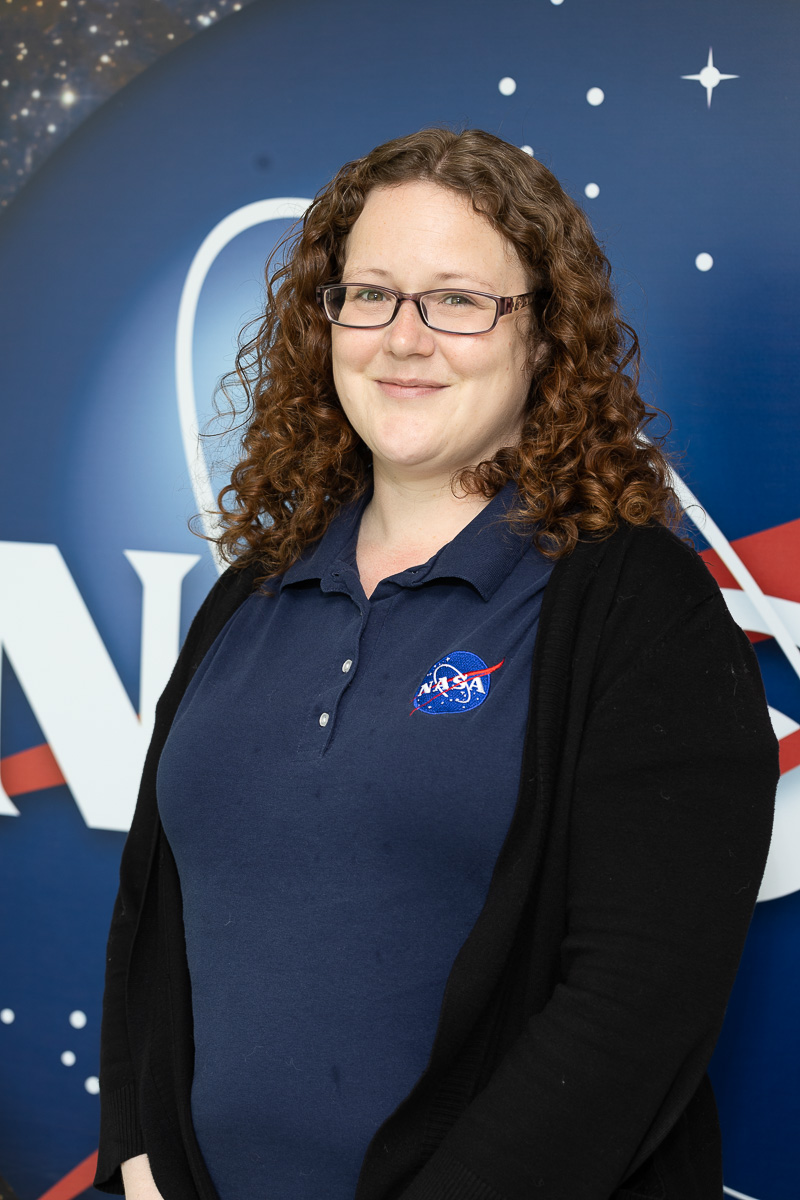
A woman smiling
A portrait of Rebekah in front of the NASA meatball.
NASA/David Friedlander

What hobbies fill your time outside of work?

I like to paint and draw. I also enjoy looking after animals. I also love participating in outreach events. When I lived in Philly I helped to set up the Astronomy on Tap branch there. I think it is important to talk about what we do and why it is needed.

What advice do you have for others who are interested in working in astronomy?

There is no one path. Don’t think you have to complete x, y, z steps and then you make it. That is not true. Do what you are passionate about, what you enjoy to learn about. And most importantly ask questions! Learn about what others are doing in the field, how they got there, and figure out what works for you.

By Ashley Balzer
NASA’s Goddard Space Flight Center, Greenbelt, Md.
A graphic with a collection of people's portraits grouped together in front of a soft blue galaxy background. The people come from various races, ethnicities, and genders. A soft yellow star shines in the upper left corner, and the stylized text

Conversations With Goddard is a collection of Q&A profiles highlighting the breadth and depth of NASA’s Goddard Space Flight Center’s talented and diverse workforce. The Conversations have been published twice a month on average since May 2011. Read past editions on Goddard’s “Our People” webpage.

Share

Details

Last Updated

Jul 16, 2024

Contact
Ashley Balzer
Location
Goddard Space Flight Center

Powered by WPeMatico

Get The Details…
Ashley Balzer
55 Years Ago: Apollo 11’s One Small Step, One Giant Leap

55 Years Ago: Apollo 11’s One Small Step, One Giant Leap

“Houston, Tranquility Base here, the Eagle has landed.” “That’s one small step for [a] man, one giant leap for mankind.” “Magnificent desolation.” Three phrases that recall humanity’s first landing on and exploration of the lunar surface. In July 1969, Apollo 11 astronauts Neil A. Armstrong, Michael Collins, and Edwin E. “Buzz” Aldrin completed humanity’s first landing on the Moon. They fulfilled President John F. Kennedy’s national goal, set in May 1961, to land a man on the Moon and return him safely to the Earth before the end of the decade. Scientists began examining the first Moon rocks two days after the Apollo 11 splashdown while the astronauts began a three-week postflight quarantine.
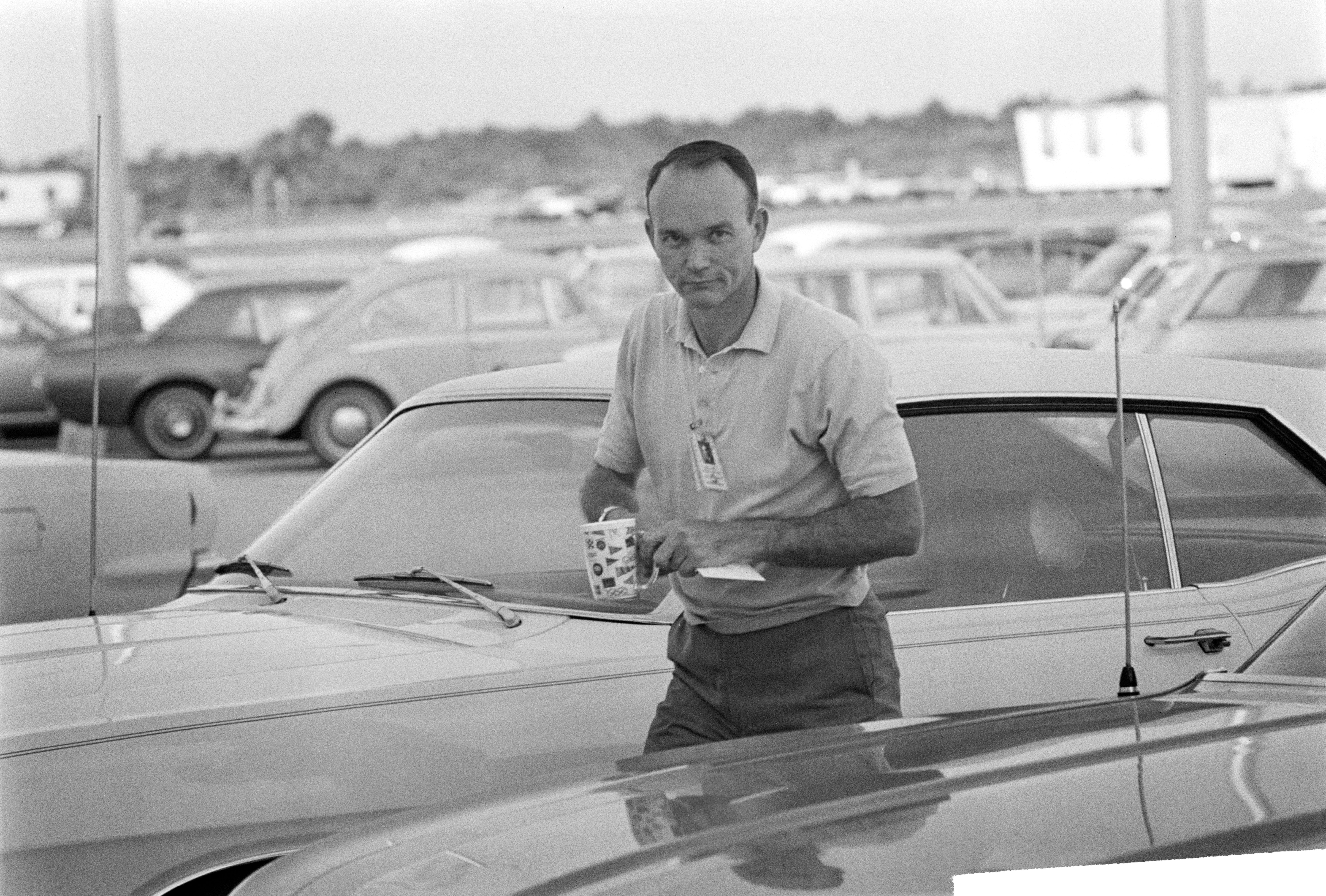
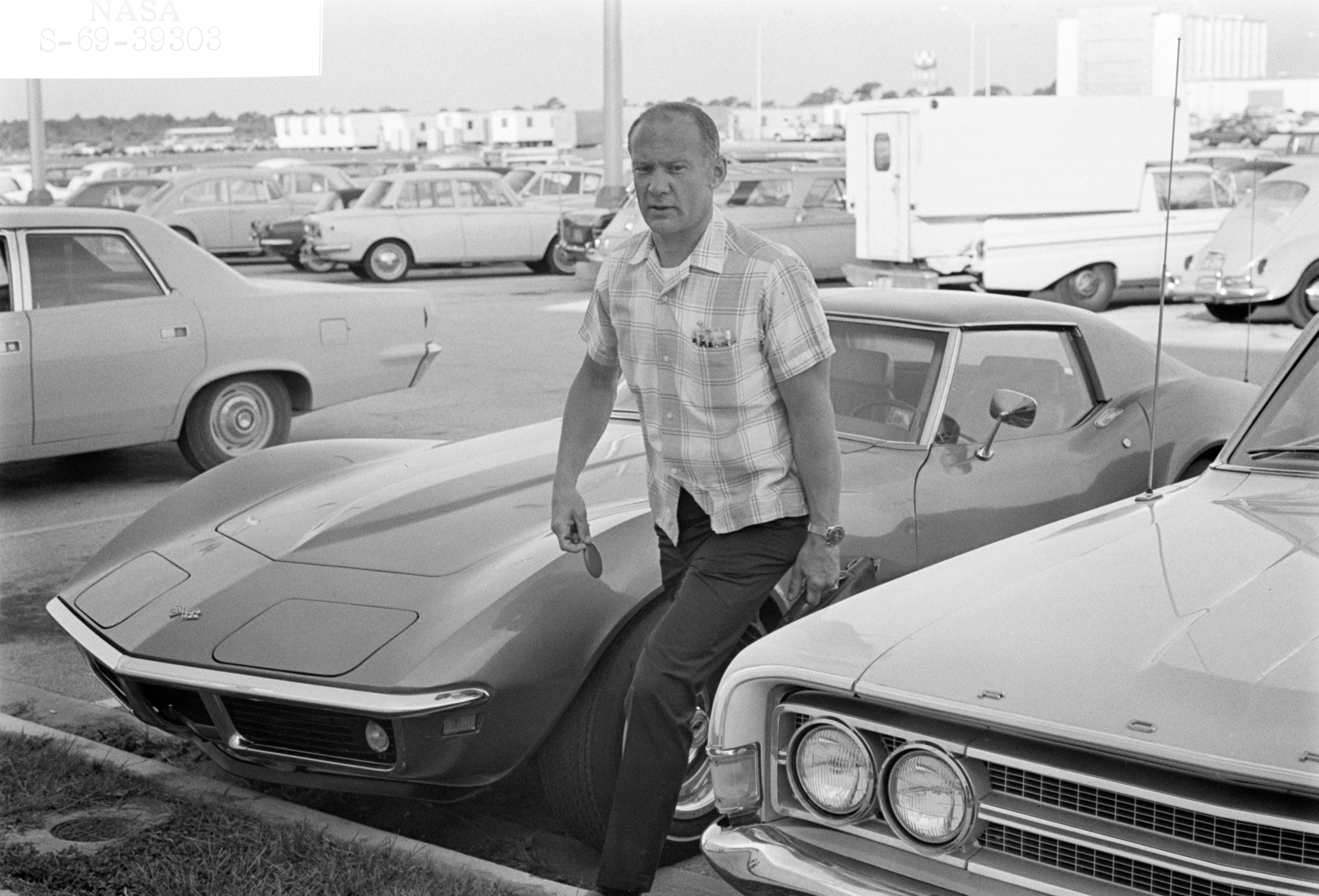
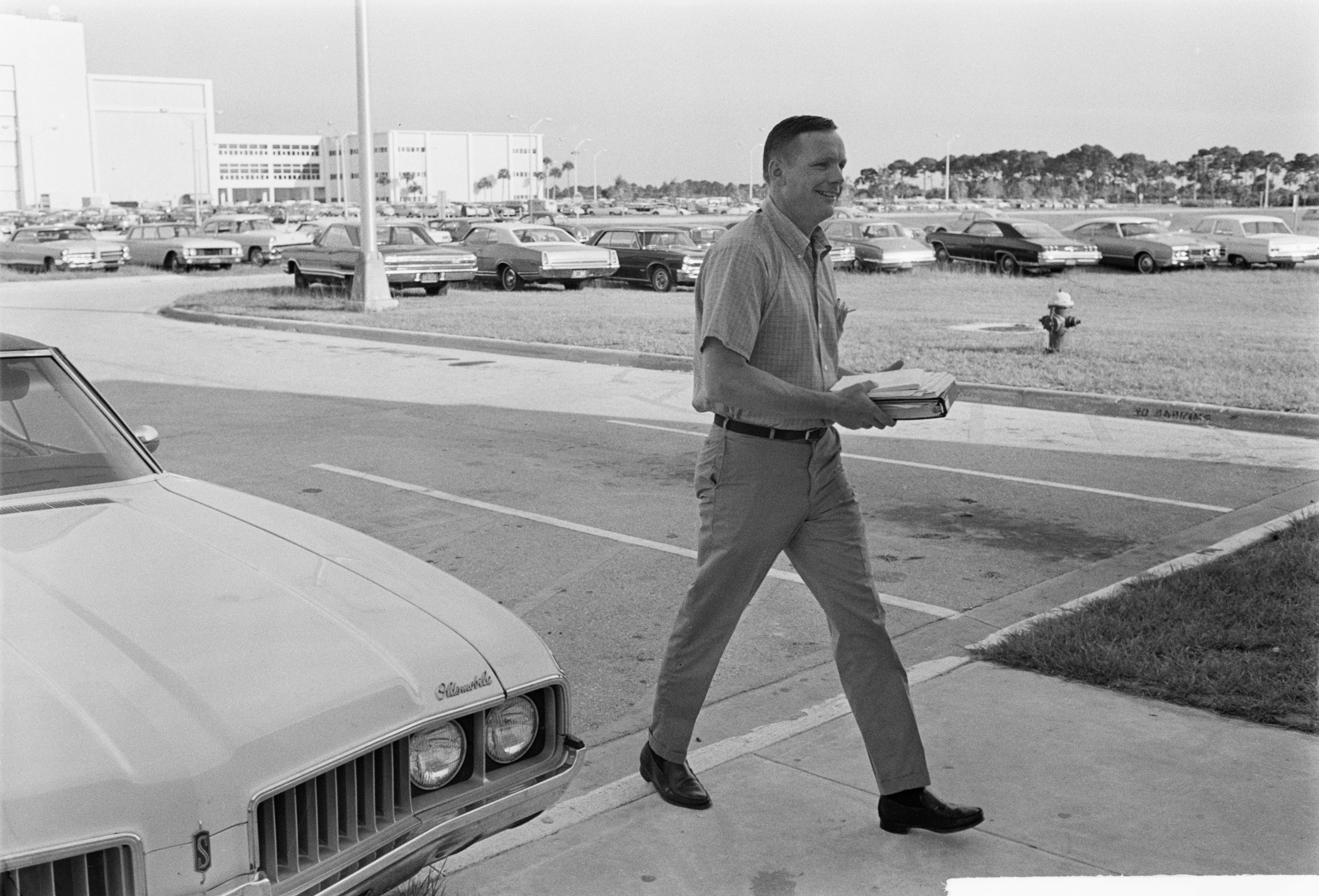
Apollo 11 astronaut Neil A. Armstrong arrive for work at NASA’s Kennedy Space Center in Florida four days before launch Apollo 11 astronauts Michael Collins arrive for work at NASA’s Kennedy Space Center in Florida four days before launch Apollo 11 astronauts Edwin E. “Buzz” Aldrin arrive for work at NASA’s Kennedy Space Center in Florida four days before launch
Just another day at the office. Apollo 11 astronauts Neil A. Armstrong, left, Michael Collins, and Edwin E. “Buzz” Aldrin arrive for work at NASA’s Kennedy Space Center in Florida four days before launch.

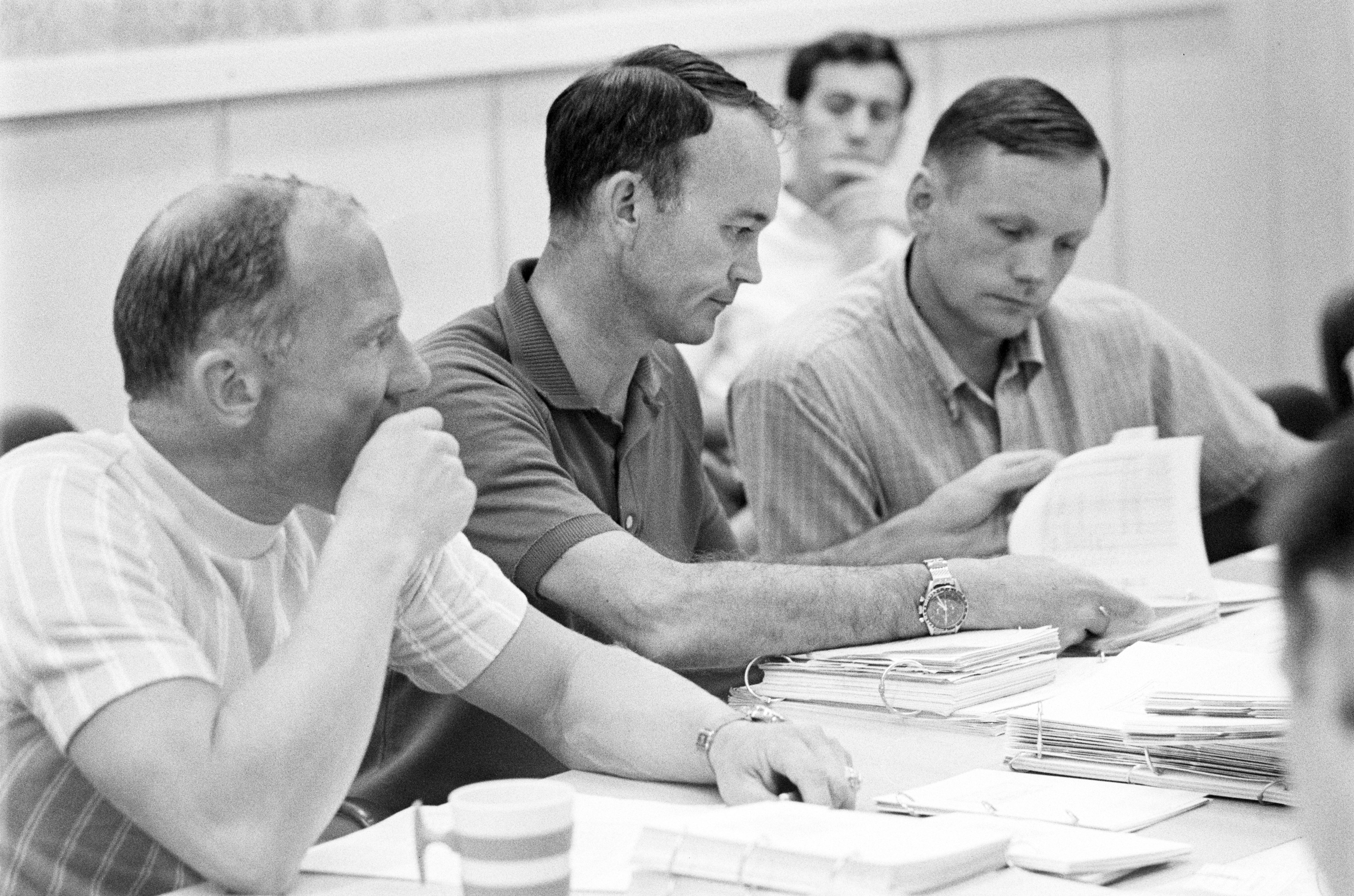
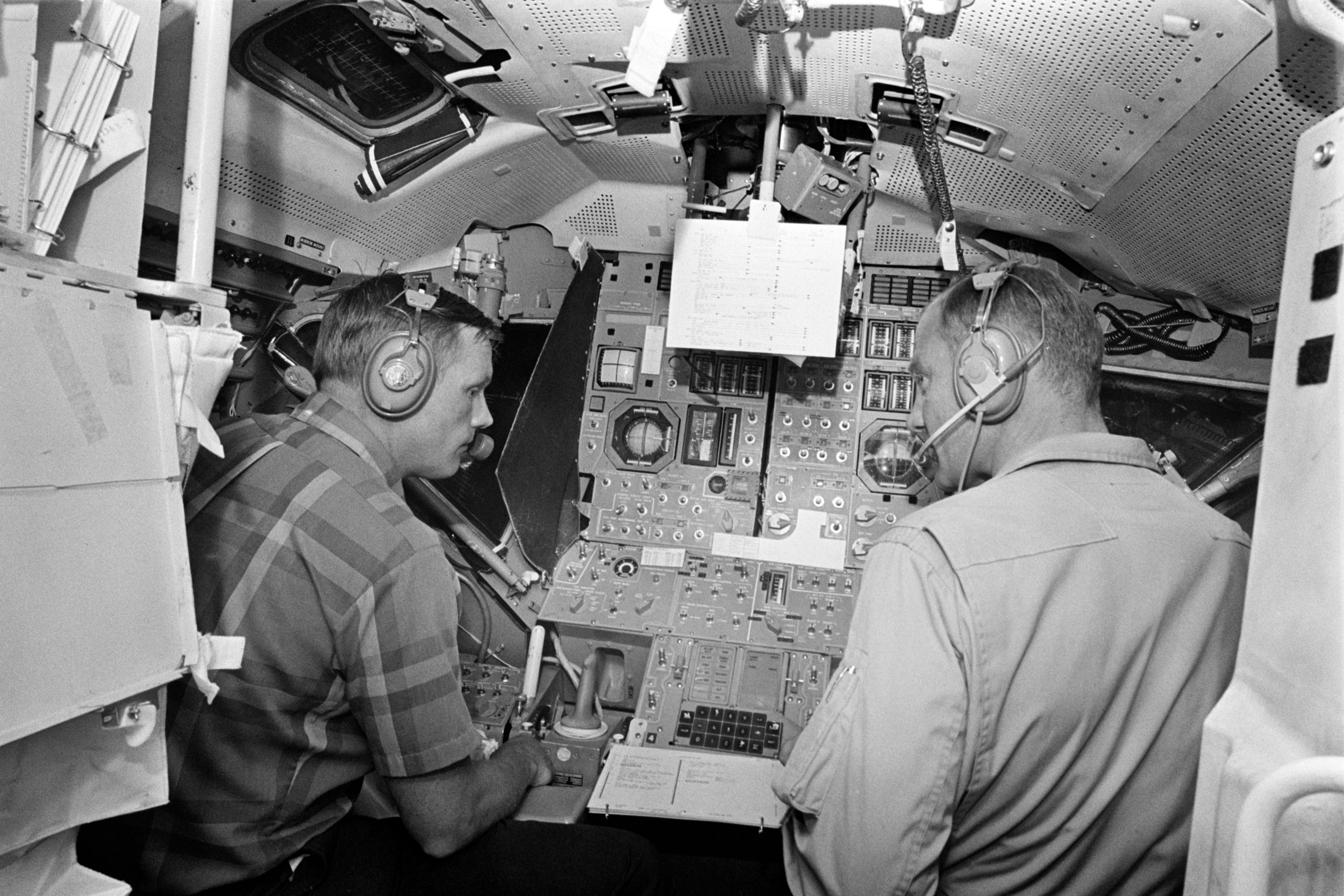
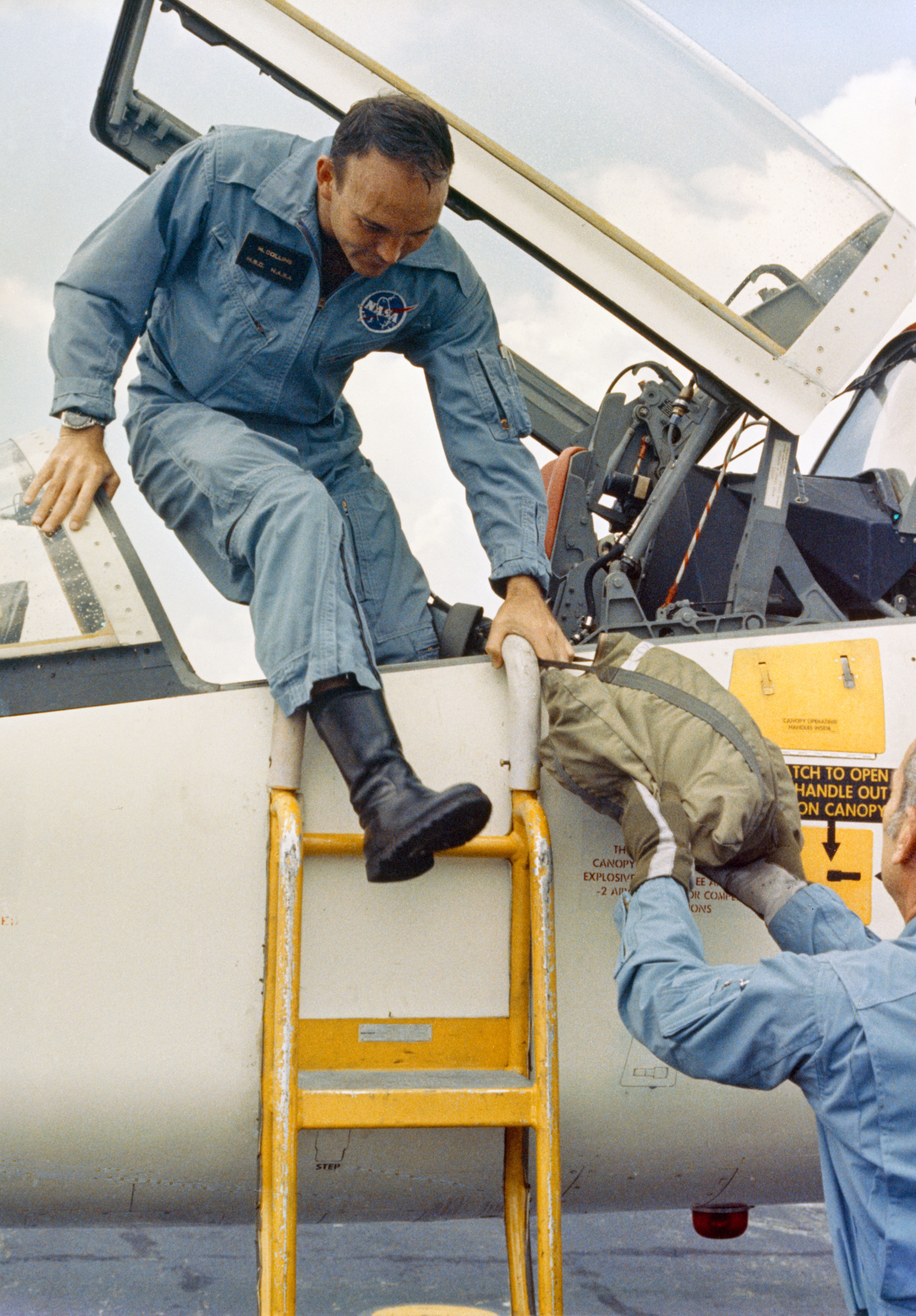
Buzz, Mike, and Neil study their flight plans one more time Neil and Buzz in the Lunar Module simulator Mike gets in some flying a few days before launch
Left: Buzz, Mike, and Neil study their flight plans one more time. Middle: Neil and Buzz in the Lunar Module simulator. Right: Mike gets in some flying a few days before launch.

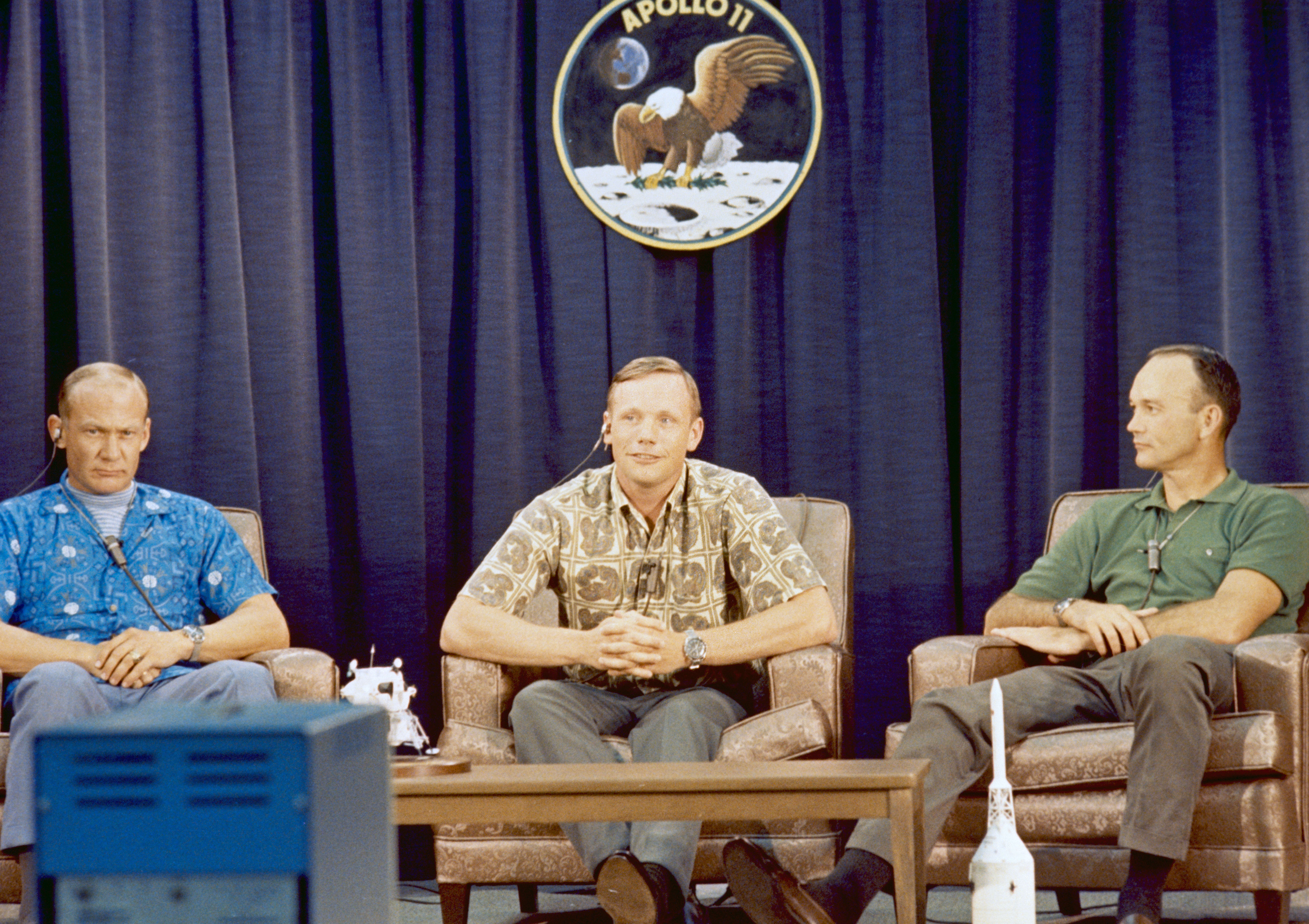
Buzz, Neil, and Mike look very relaxed as they talk to reporters in a virtual press conference on July 14
Buzz, Neil, and Mike look very relaxed as they talk to reporters in a virtual press conference on July 14.

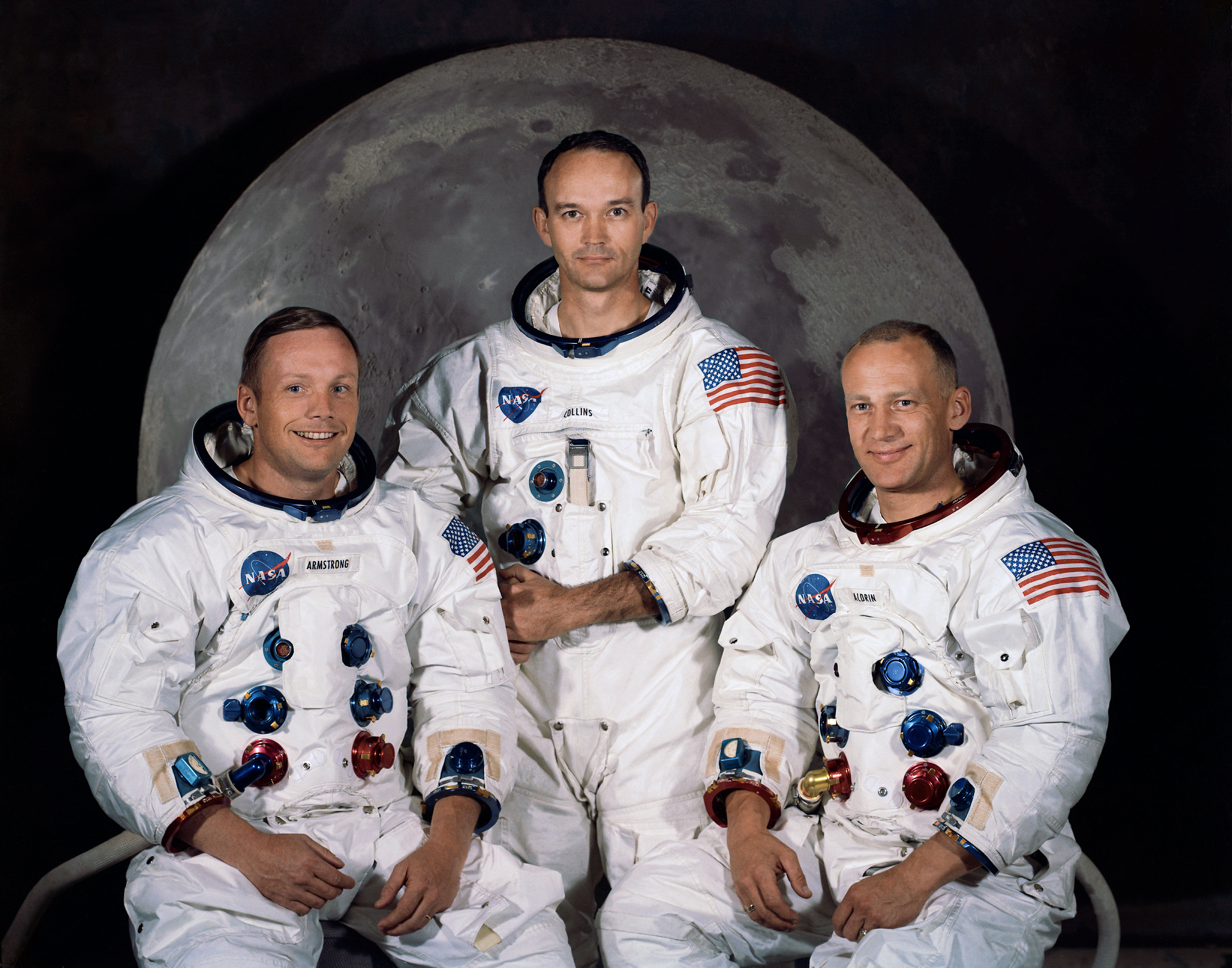
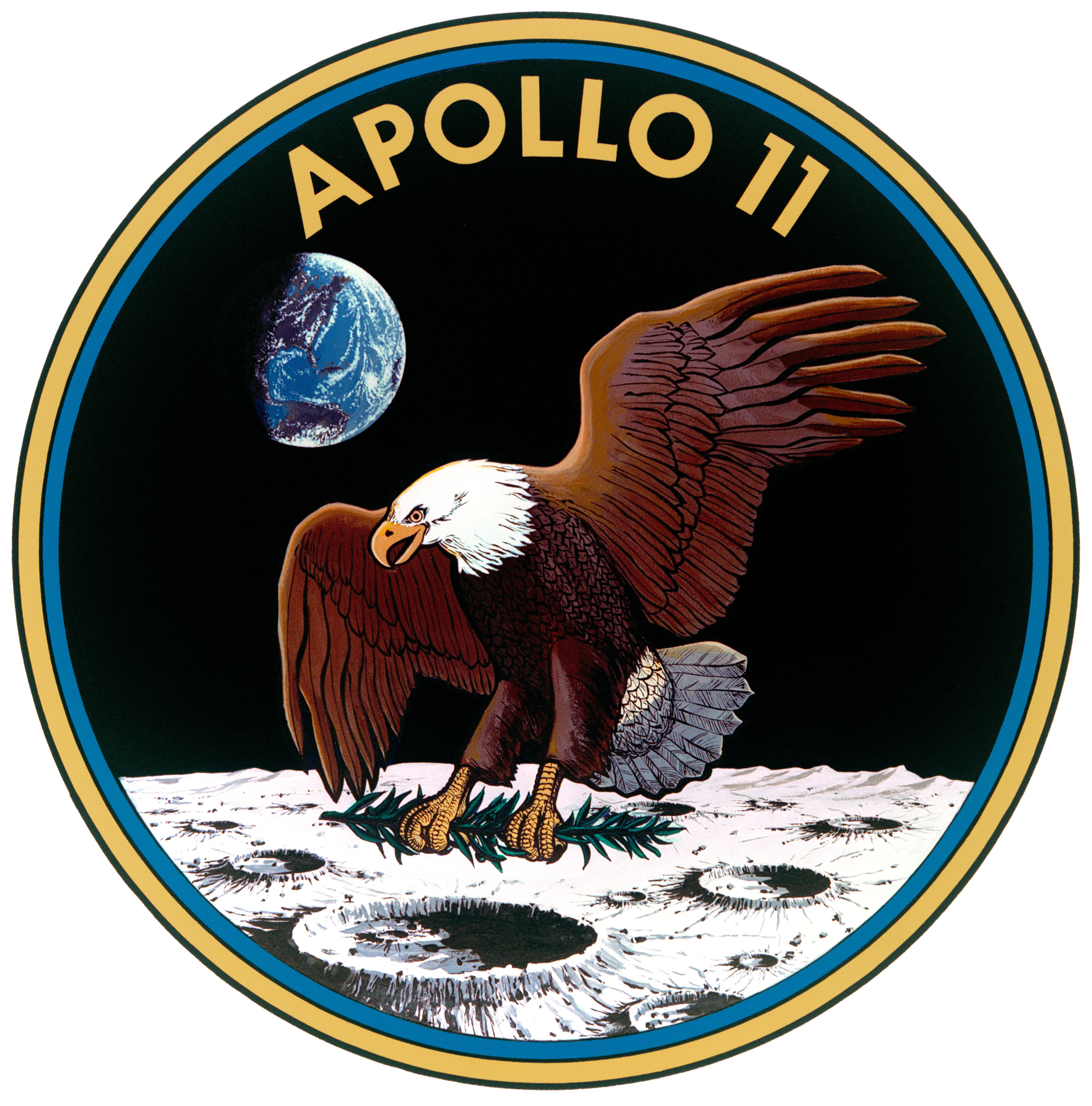
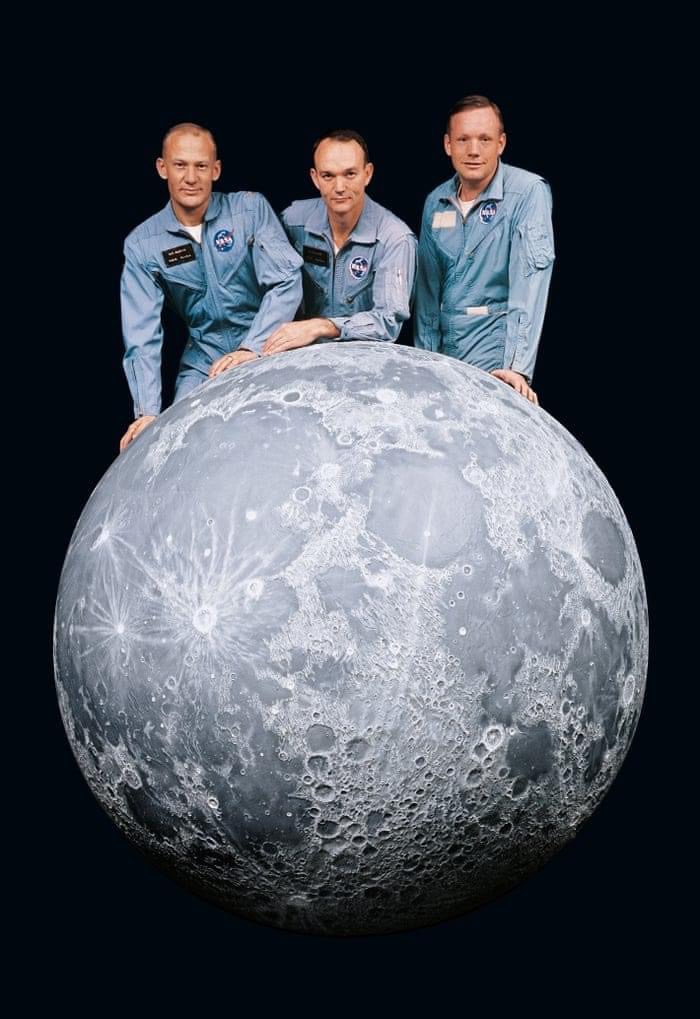
The Apollo 11 crew The Apollo 11 patch The crew conquer the Moon, a TIME LIFE photograph
Left: The crew. Middle: The patch. Right: The crew conquer the Moon, a TIME LIFE photograph.

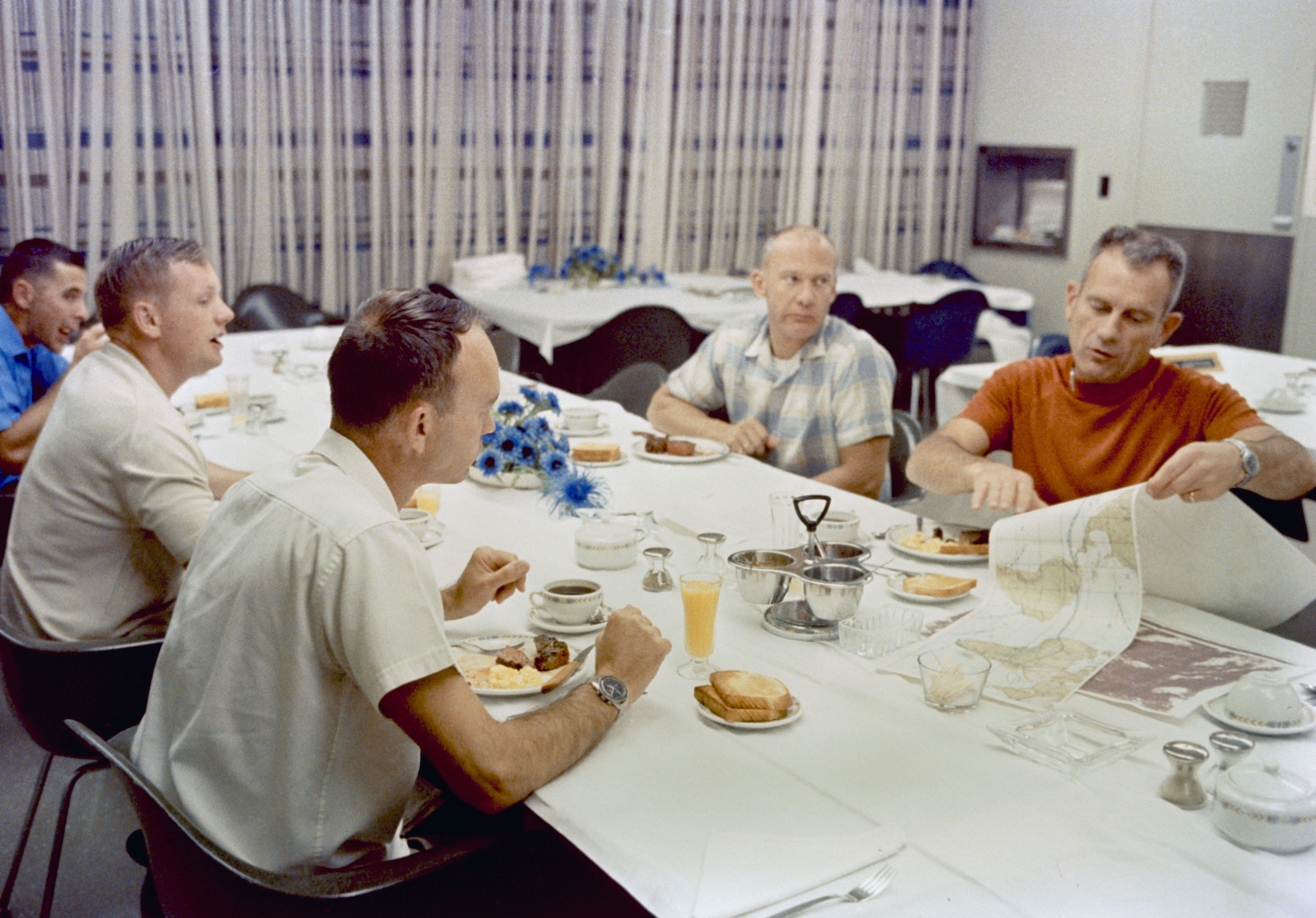
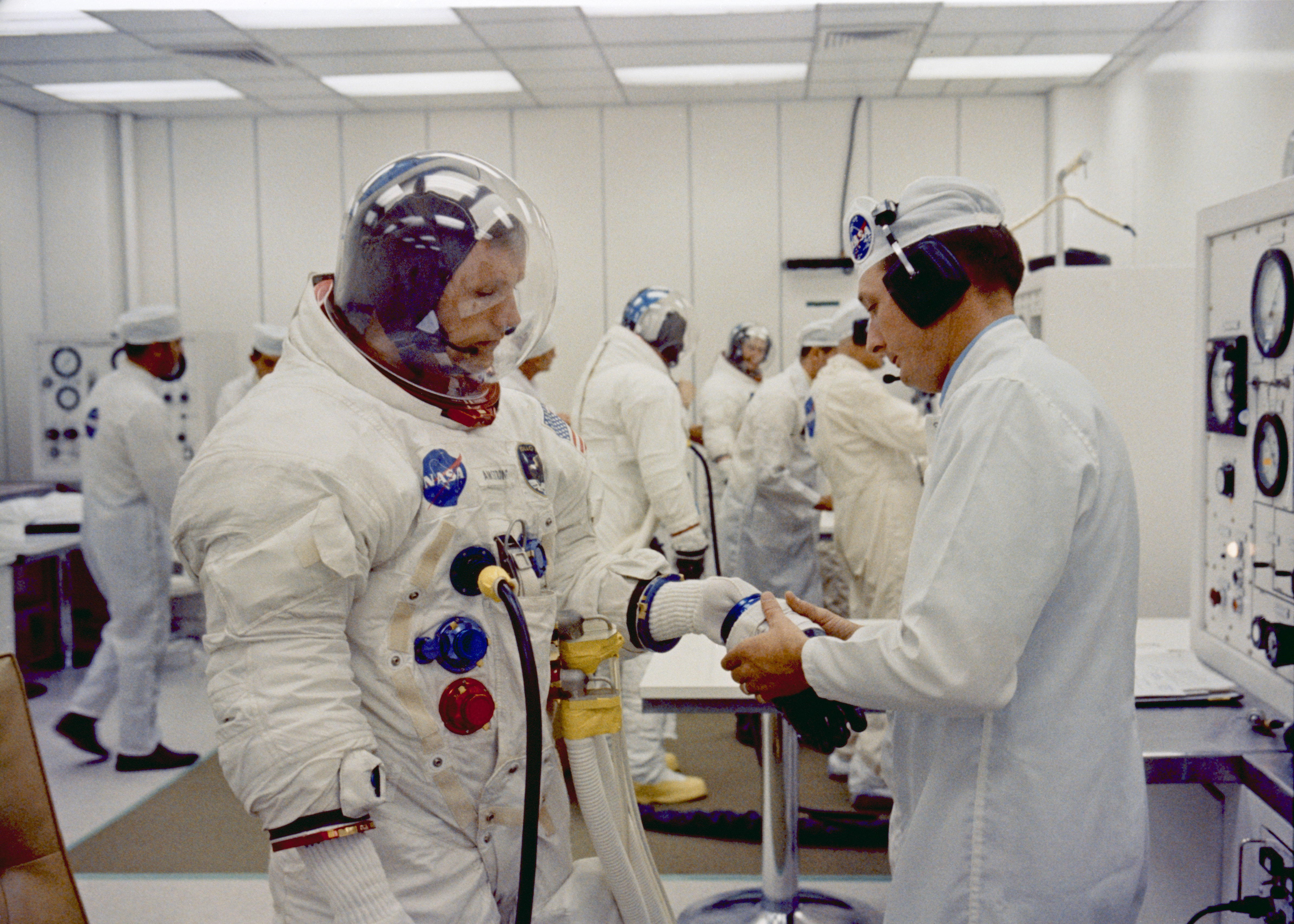
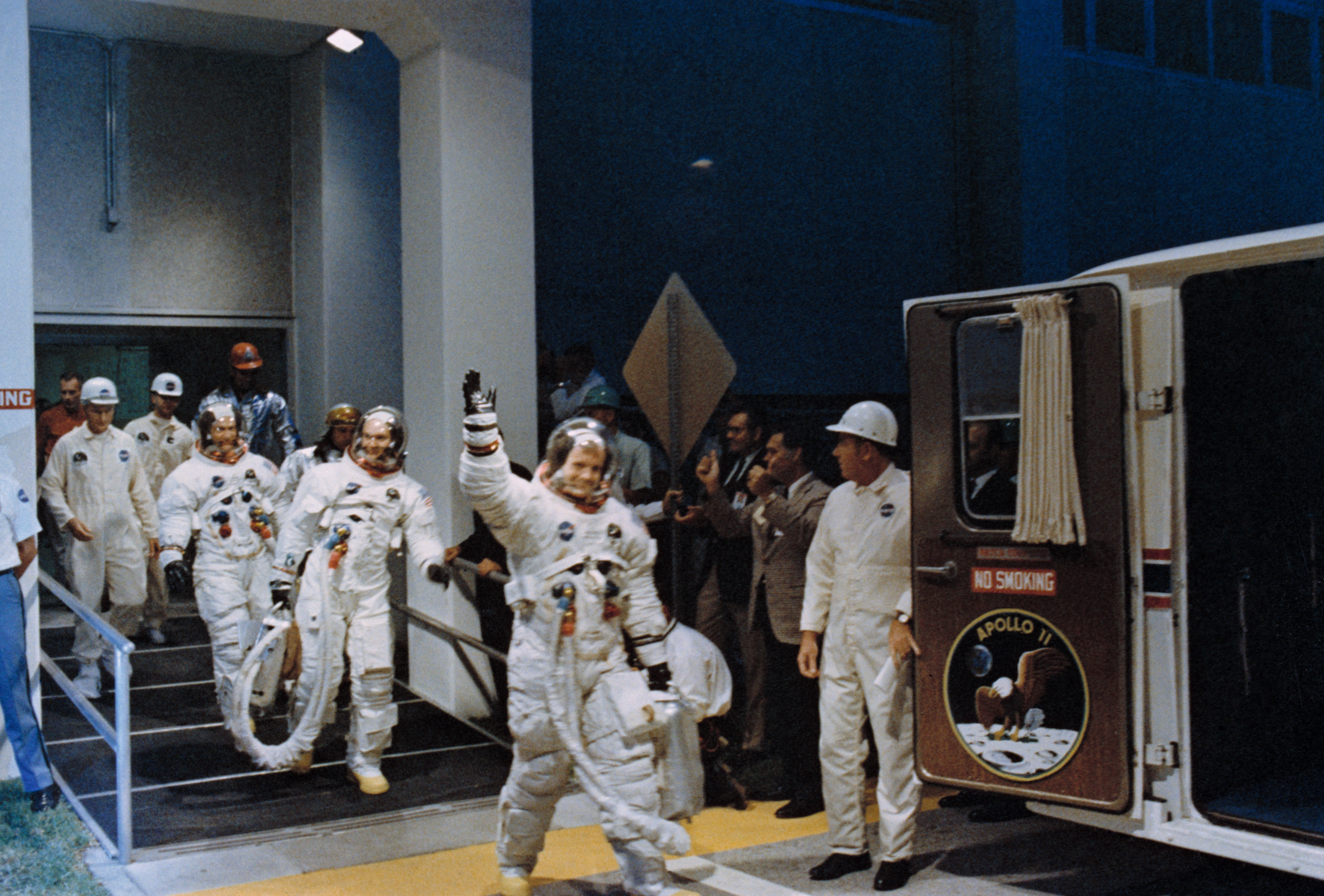
Breakfast, the most important meal if you’re going to the Moon Proper attire for lunar travel Apollo 11 crew. Wave good-bye to all your friends and supporters before you head for the launch pad
Left: Breakfast, the most important meal if you’re going to the Moon. Middle: Proper attire for lunar travel. Right: Wave good-bye to all your friends and supporters before you head for the launch pad.

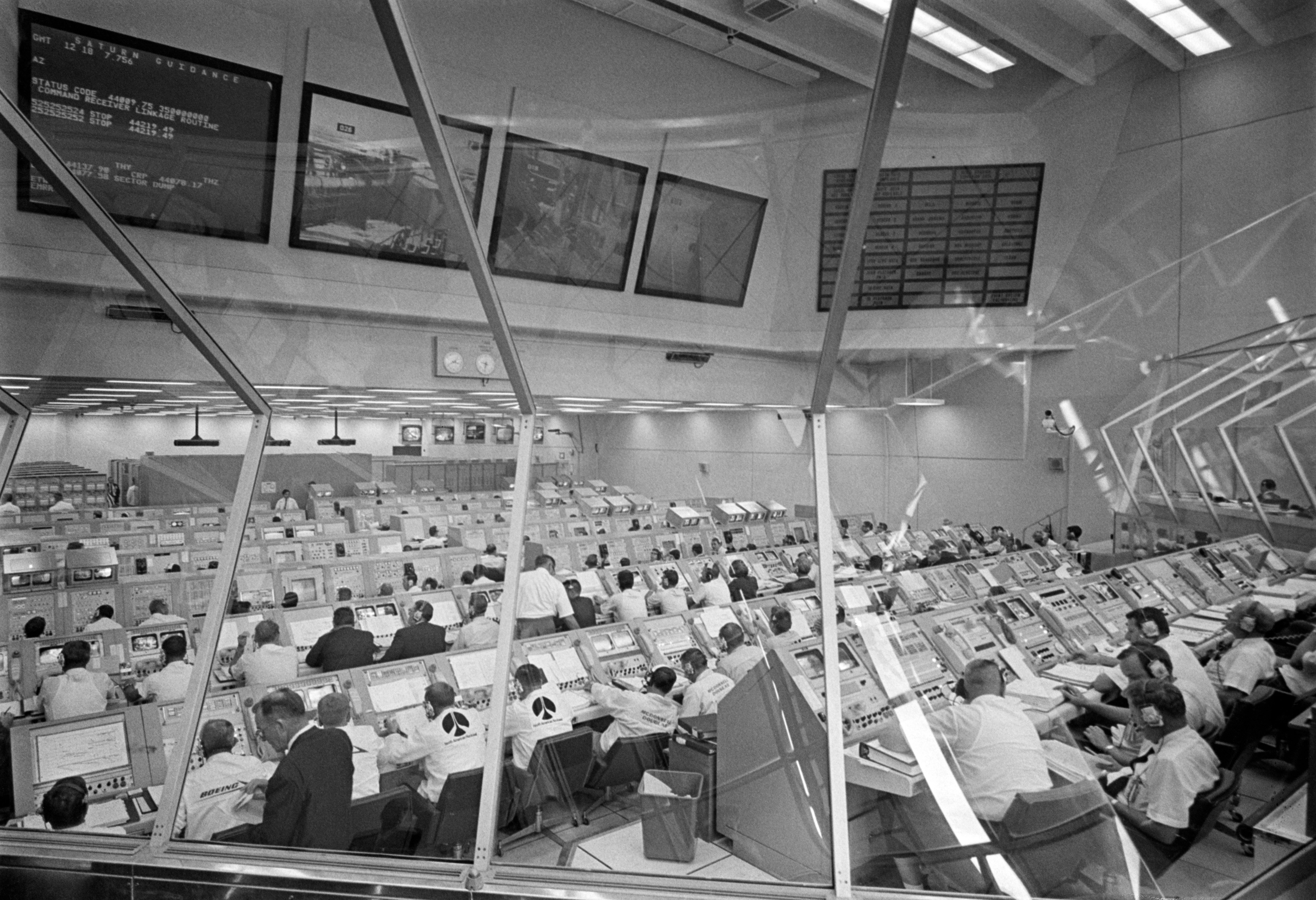
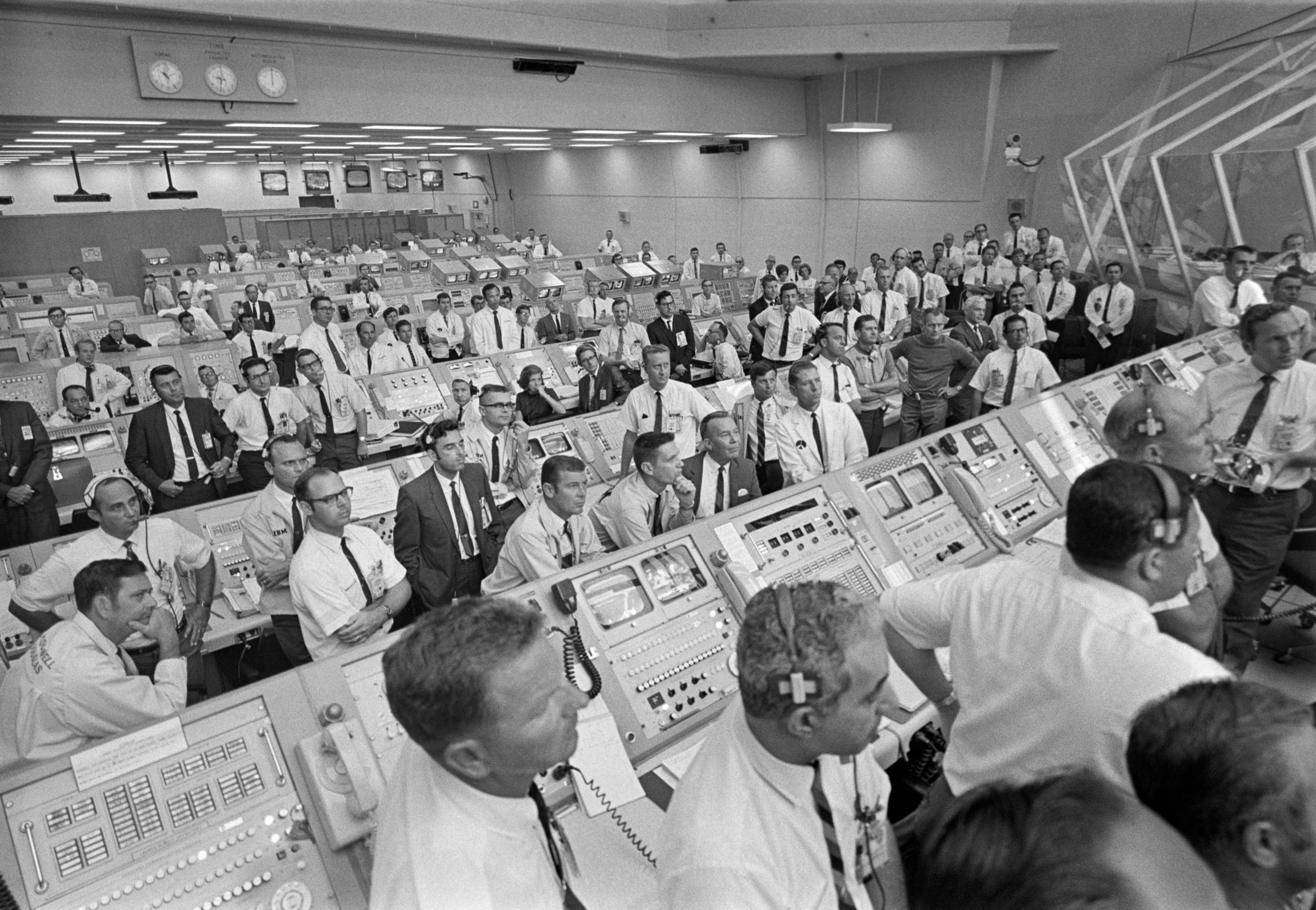
Engineers in the Launch Control Center at NASA’s Kennedy Space Center in Florida monitor the countdown Once the rocket clears the launch tower, they turn control over to another team and they can watch it ascend into the sky Engineers in the Mission Control Center at the Manned Spacecraft Center, now NASA’s Johnson Space Center in Houston, take over control of the flight once the tower is clear
Left: Engineers in the Launch Control Center at NASA’s Kennedy Space Center in Florida monitor the countdown. Middle: Once the rocket clears the launch tower, they turn control over to another team and they can watch it ascend into the sky. Right: Engineers in the Mission Control Center at the Manned Spacecraft Center, now NASA’s Johnson Space Center in Houston, take over control of the flight once the tower is clear.

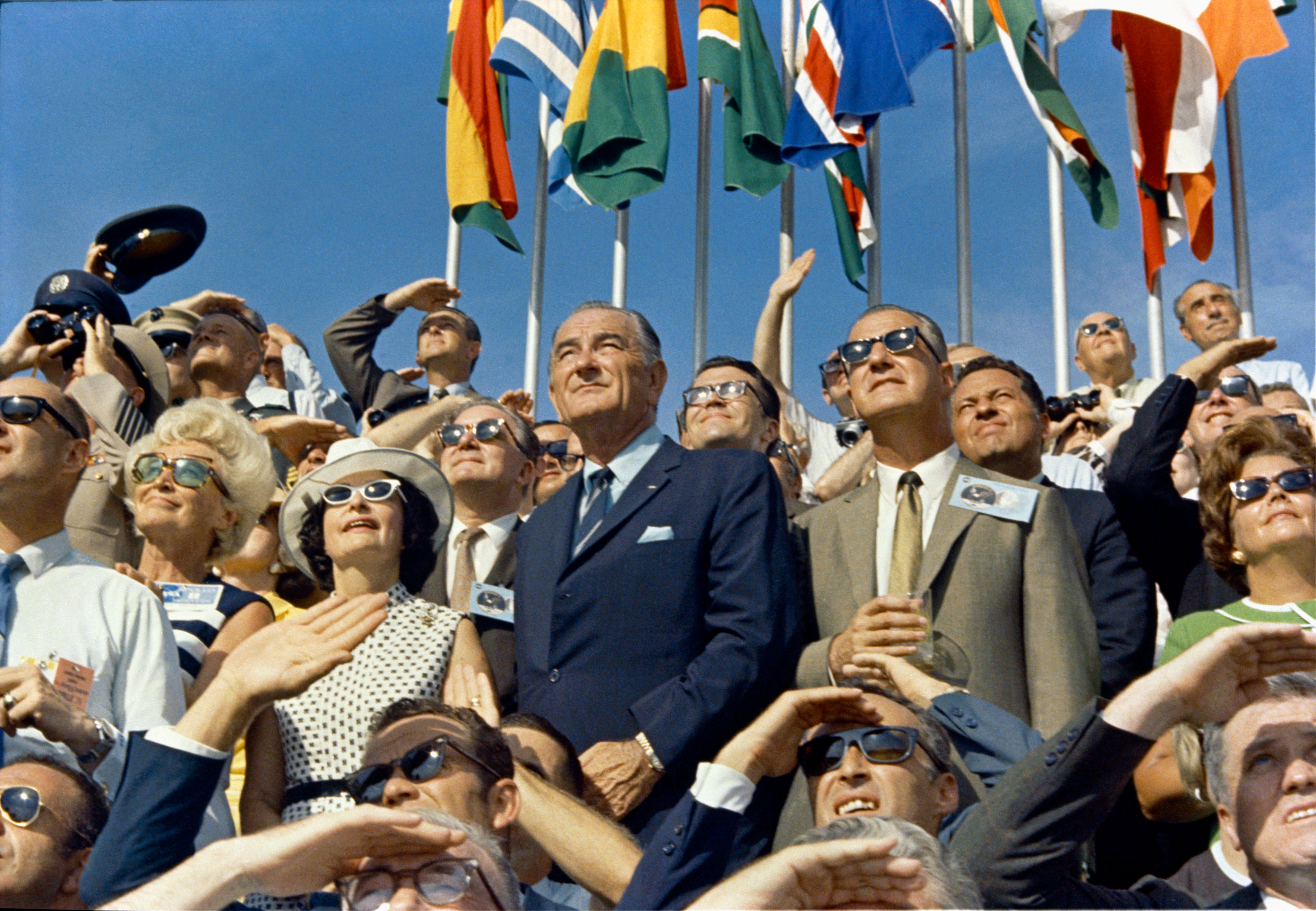
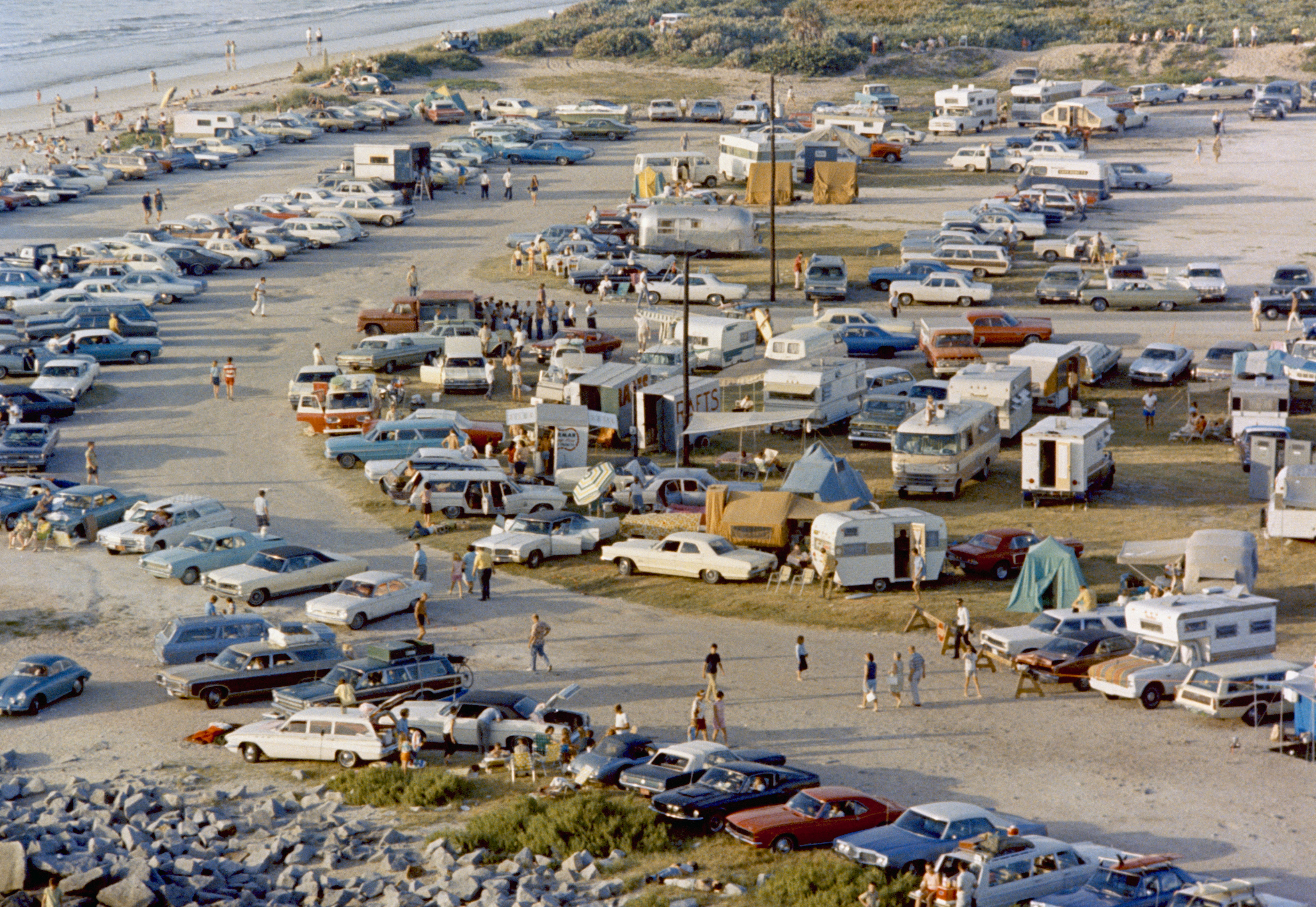
Lady Bird, LBJ, and VP Agnew in the VIP stands A million more camped out along the beaches to see the historic launch
Left: Lady Bird, LBJ, and VP Agnew in the VIP stands. Right: A million more camped out along the beaches to see the historic launch.

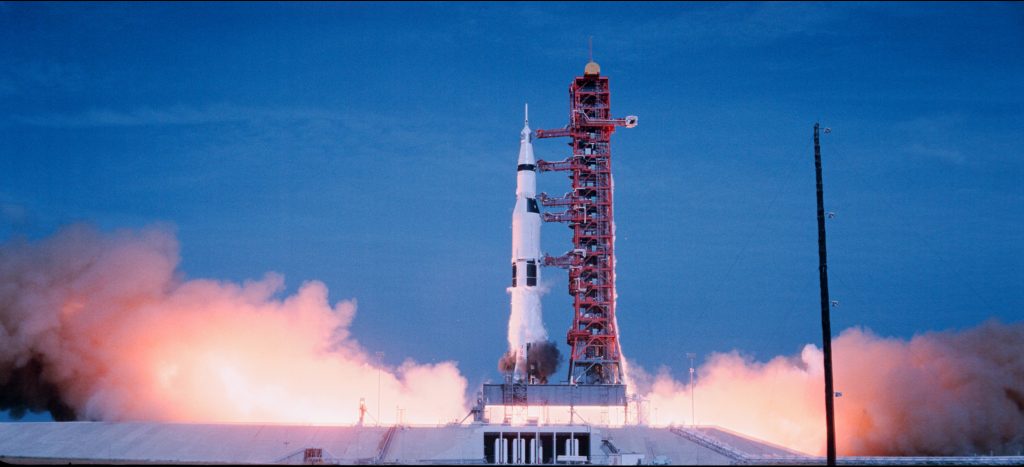
July 16, 1969. And we’re off!! Liftoff from Launch Pad 39A
July 16, 1969. And we’re off!! Liftoff from Launch Pad 39A.

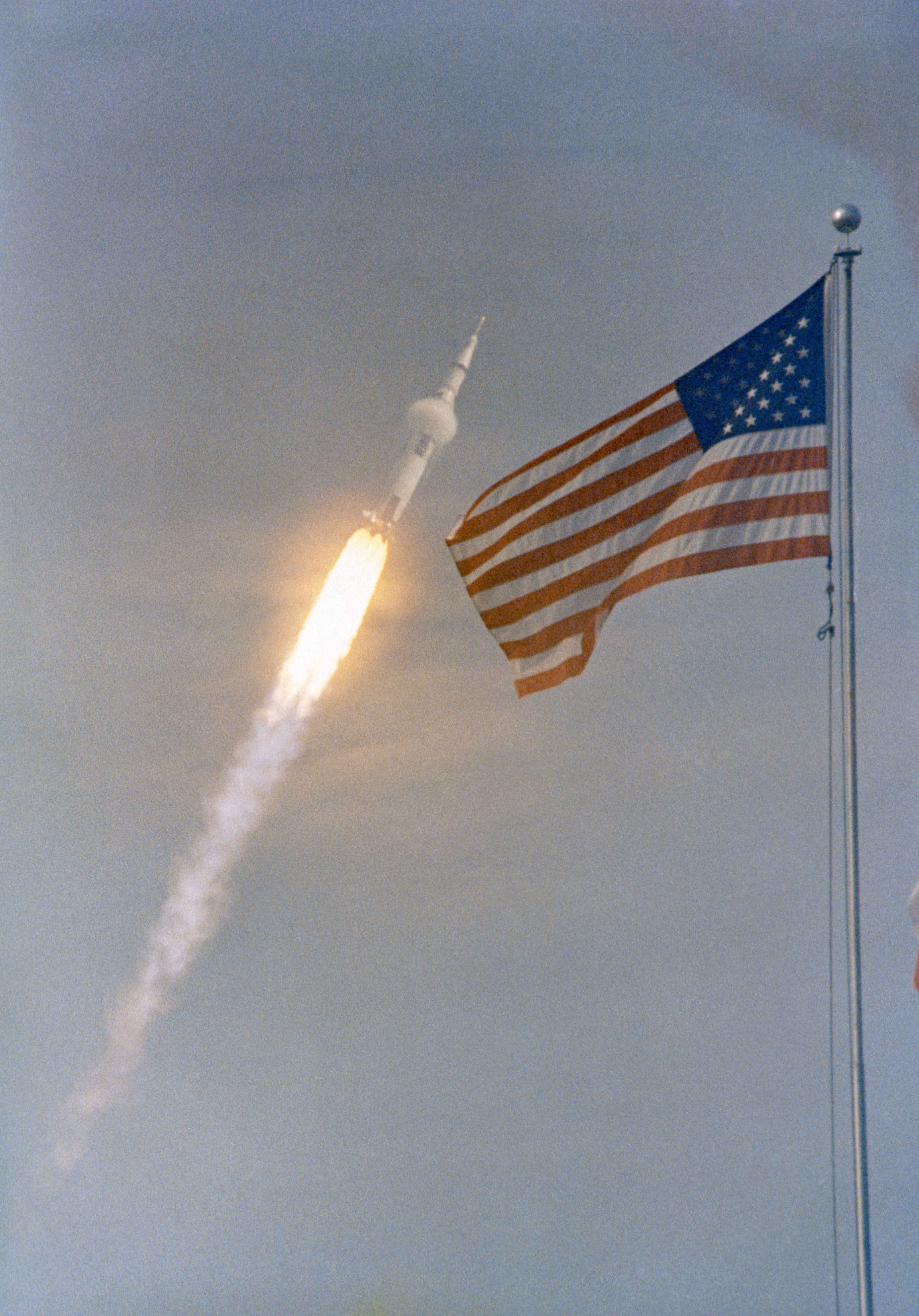
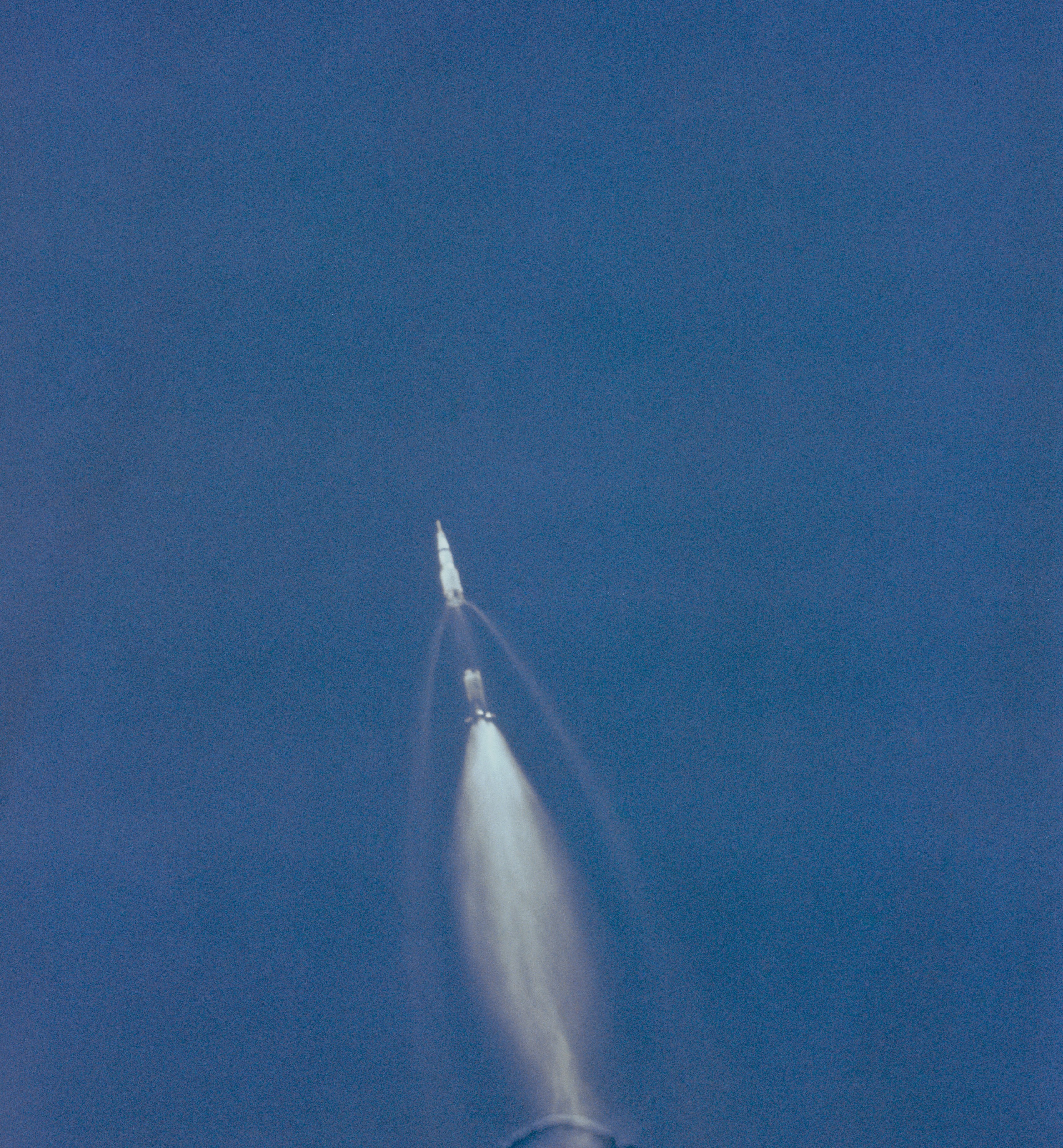
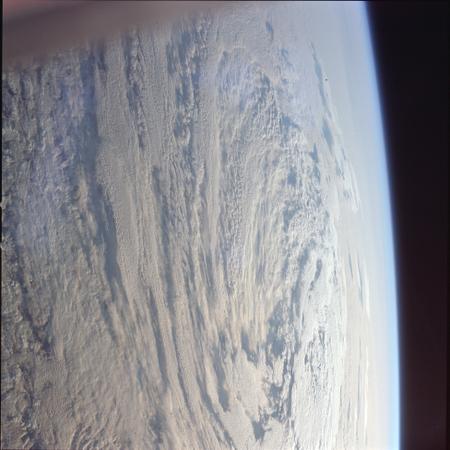
The American flag is pictured in the foreground as the Saturn V rocket for the historic Apollo 11 mission soars through the sky First stage separation for Apollo 11 orbit 1 low pressure system
Left: The American flag is pictured in the foreground as the Saturn V rocket for the historic Apollo 11 mission soars through the sky. Middle: First stage separation for Apollo 11. Right: Made it to orbit!

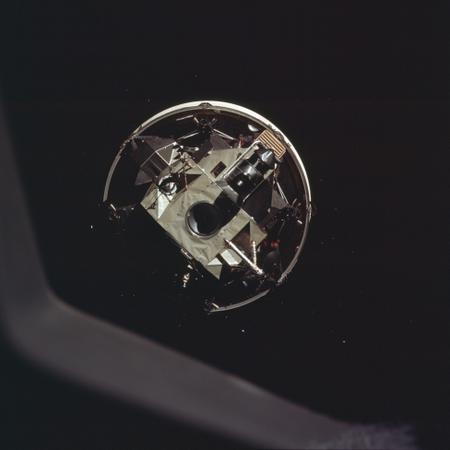
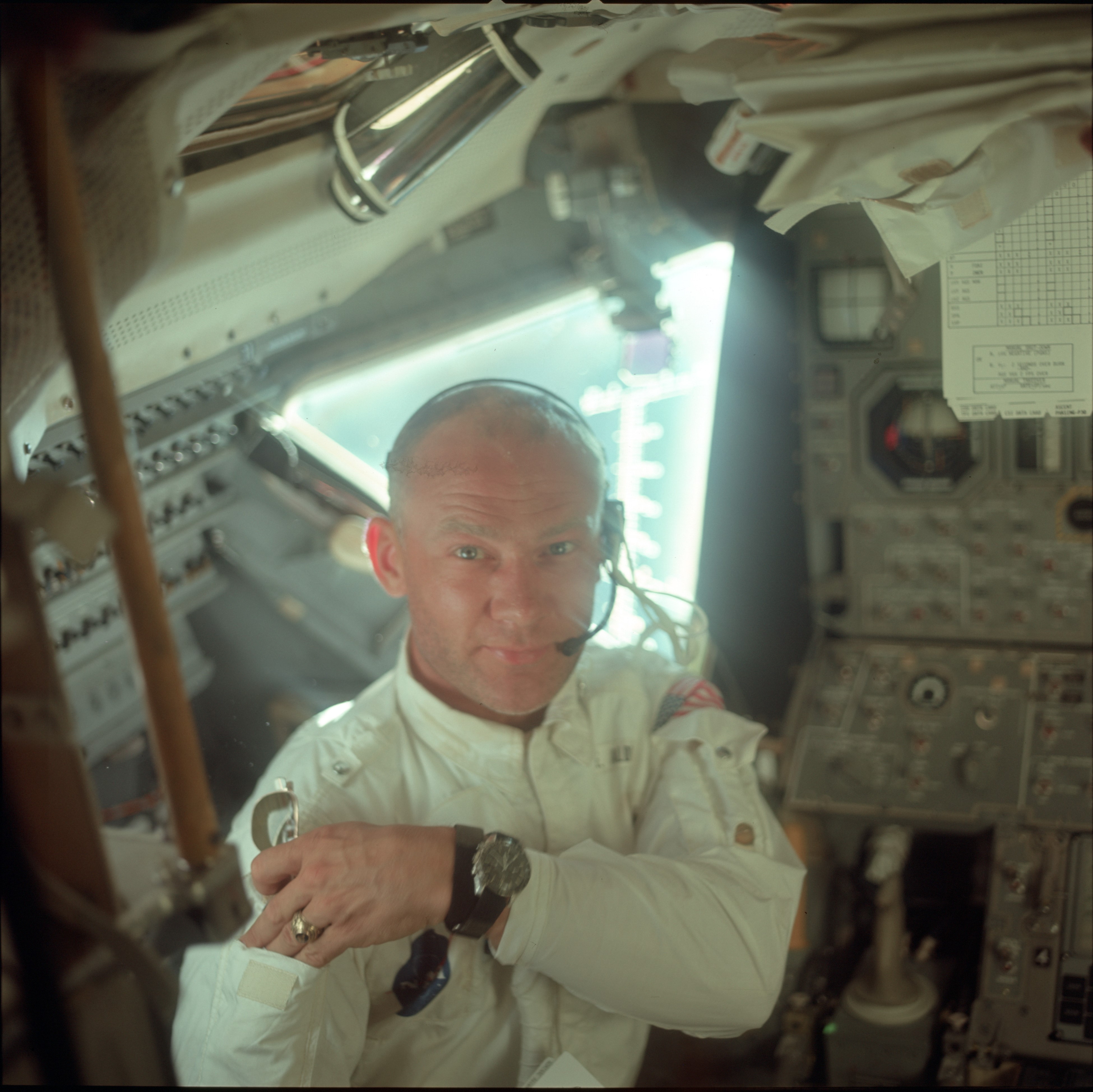
Hey, don’t forget your LM! Buzz in the LM As the world turns smaller
Left: Hey, don’t forget your LM! Middle: Buzz in the LM: “S’allright?” “S’allright!” Right: As the world turns smaller.

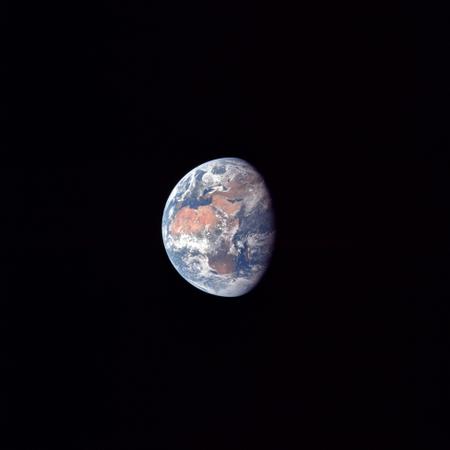
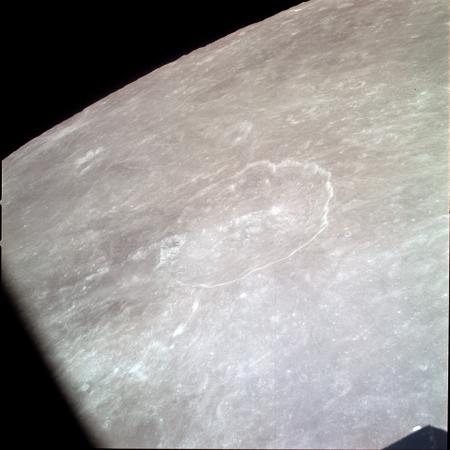
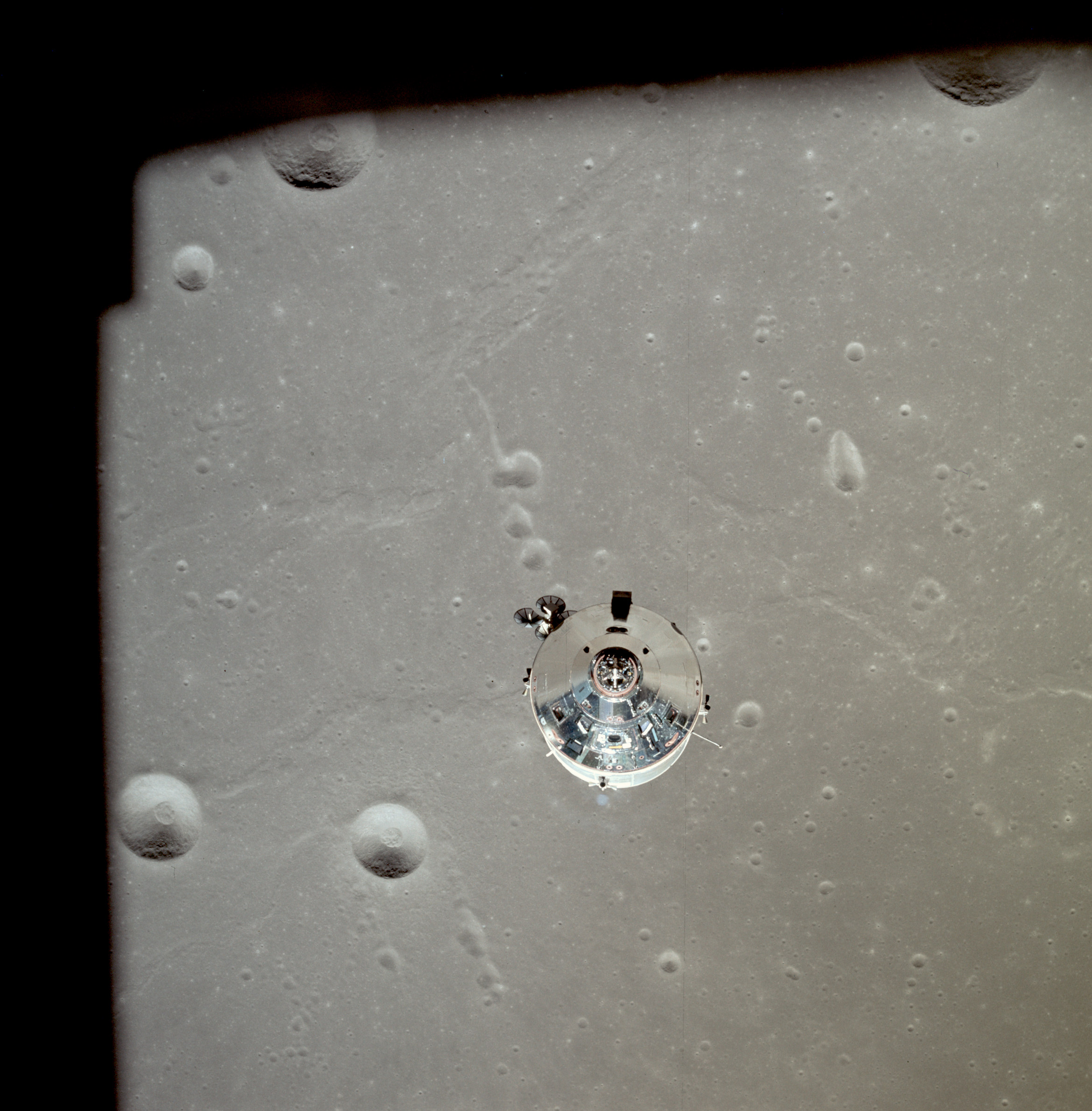
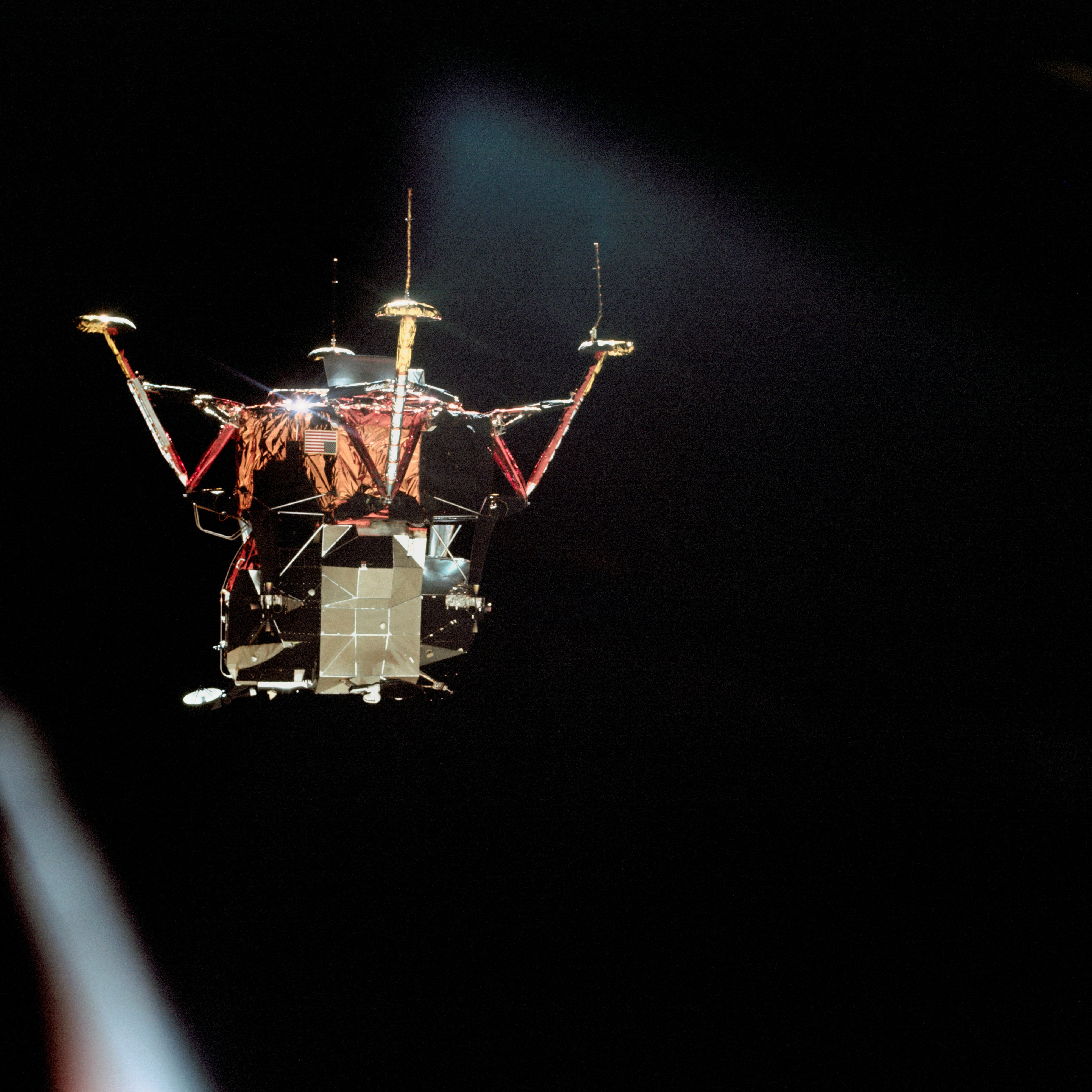
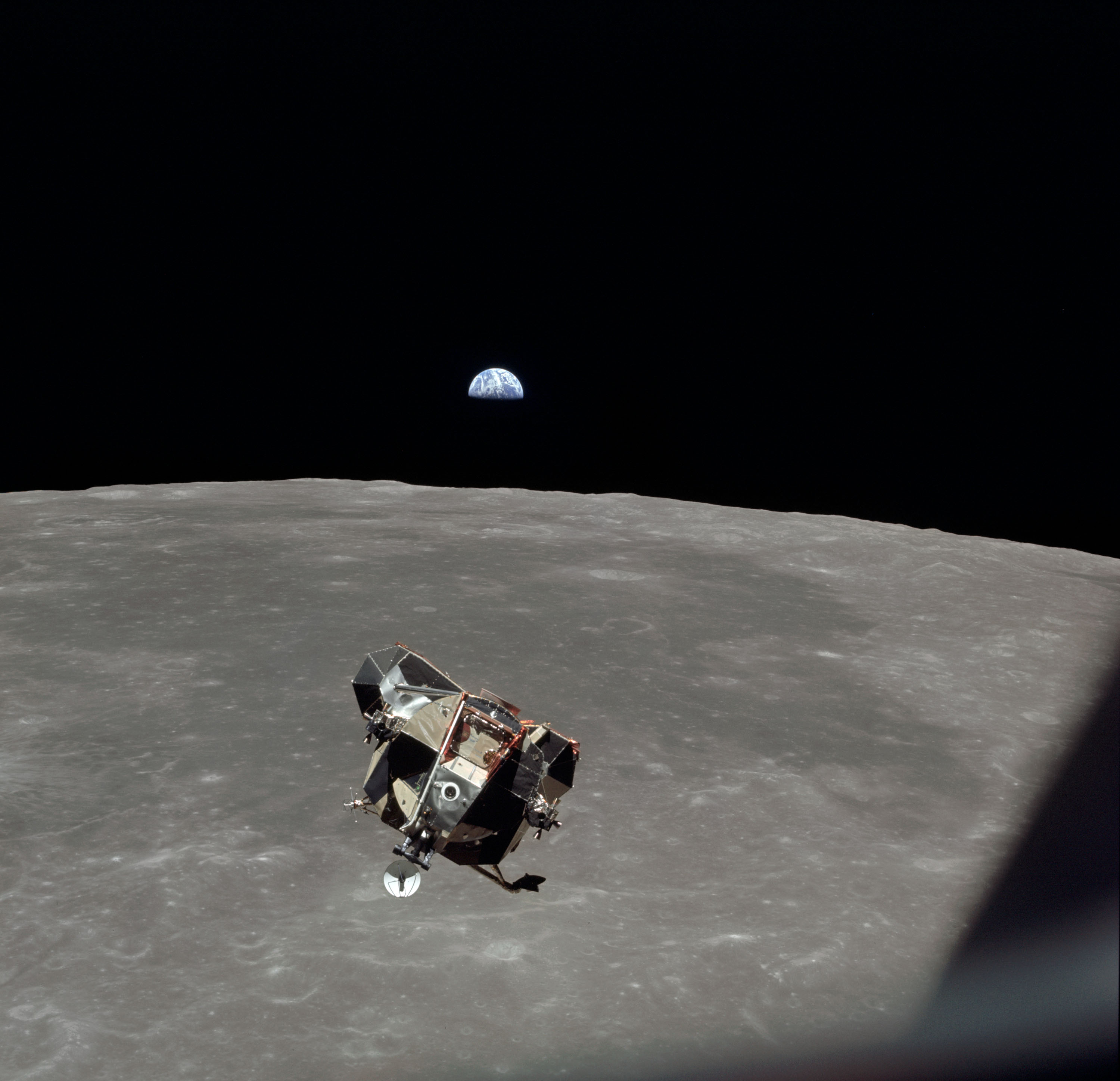
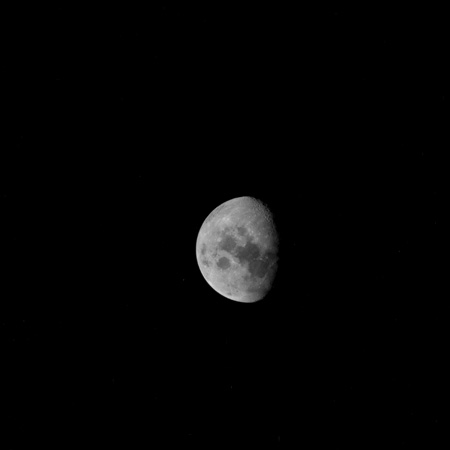
crater king lunar earthrise columbia after undocking eagle after undocking
Left: Hello Moon! Middle left: Hello Earth! Middle right: See you soon, Columbia! Right: See you soon, Eagle! Happy landing!

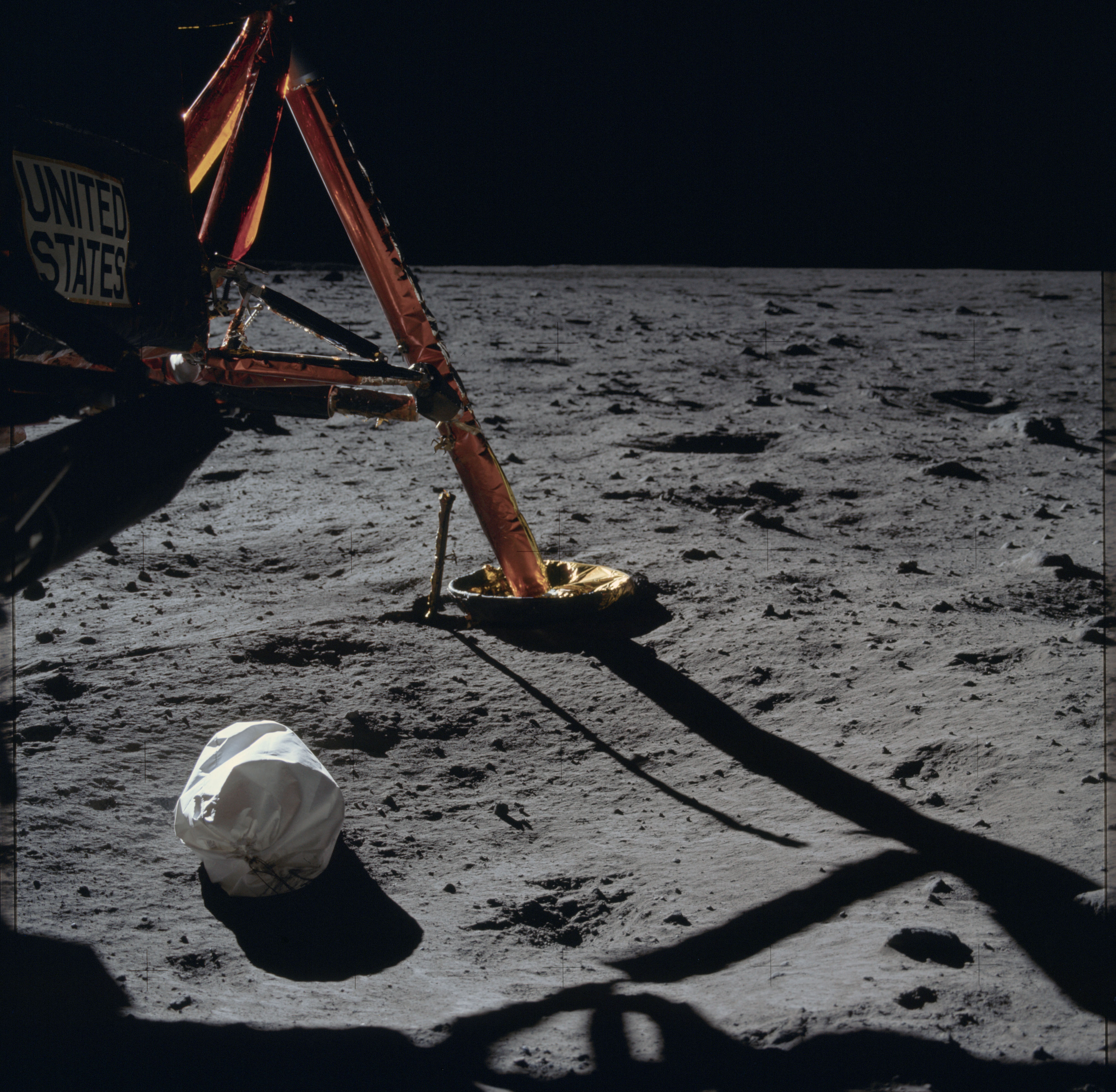
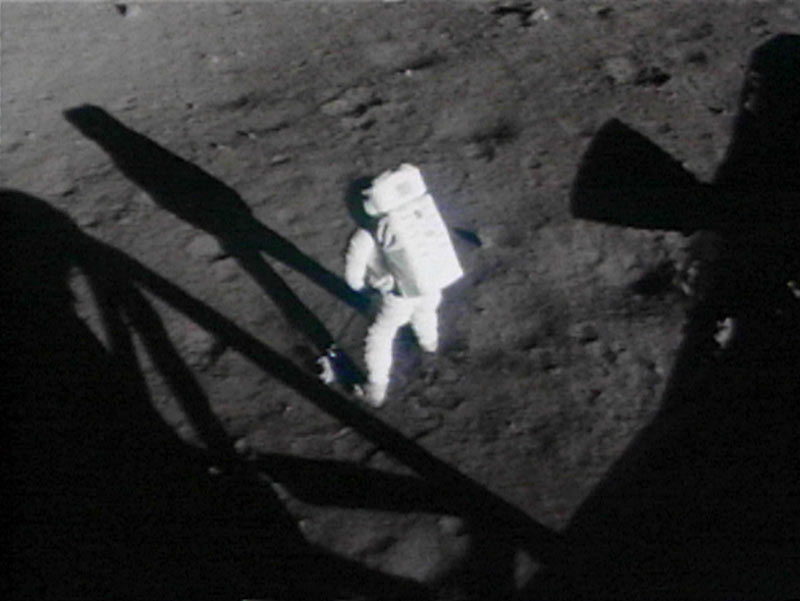
view from lm after landing Neil takes THE first step First image taken from the lunar surface
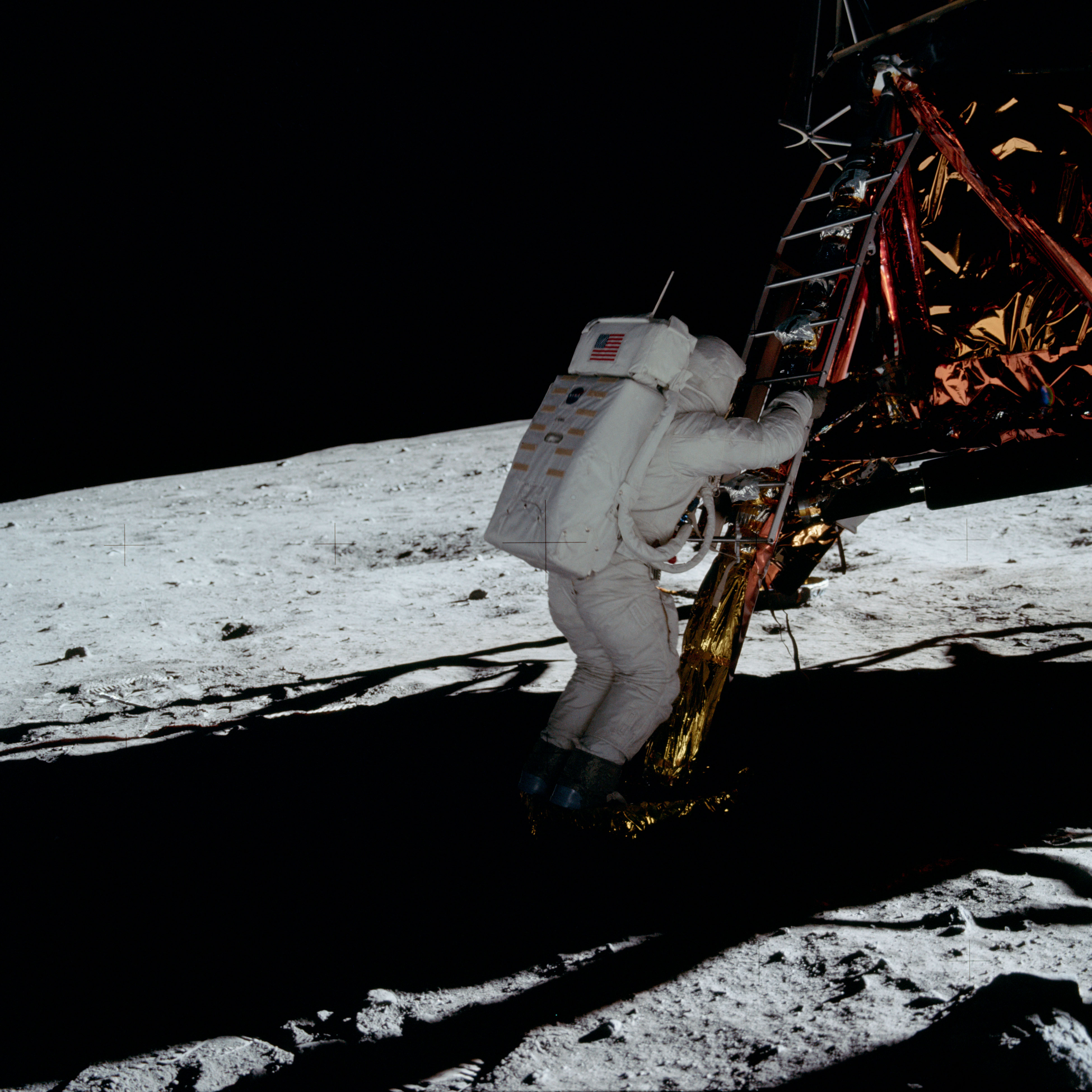
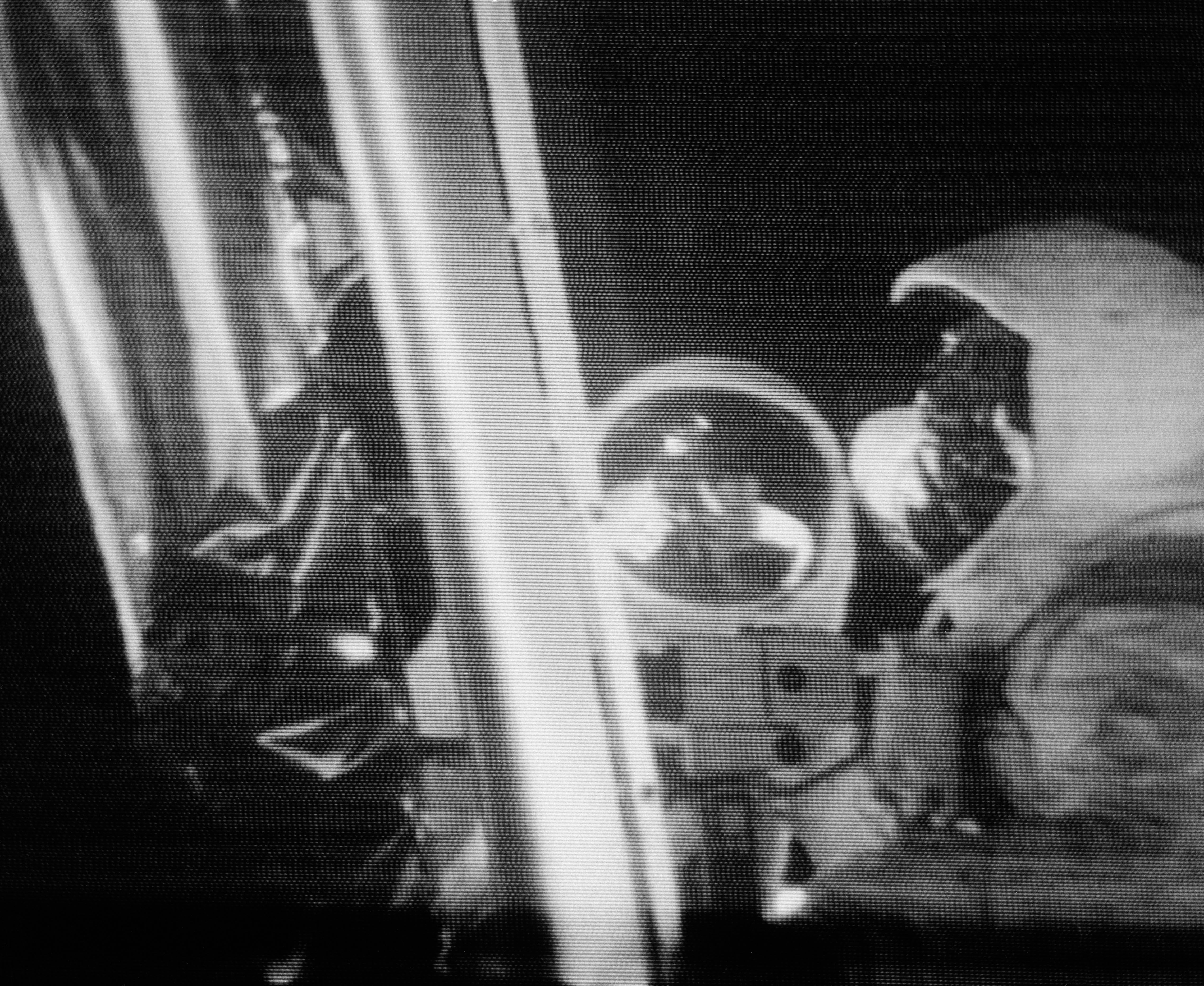
July 20, 1969. Left: Magnificent desolation, from Buzz’s window after landing. Middle: Neil takes THE first step. Right: First image taken from the lunar surface.

Neil grabs a contingency sample, just in case Buzz joins the party Neil and Buzz read the plaque Buzz sets up the solar wind experiment
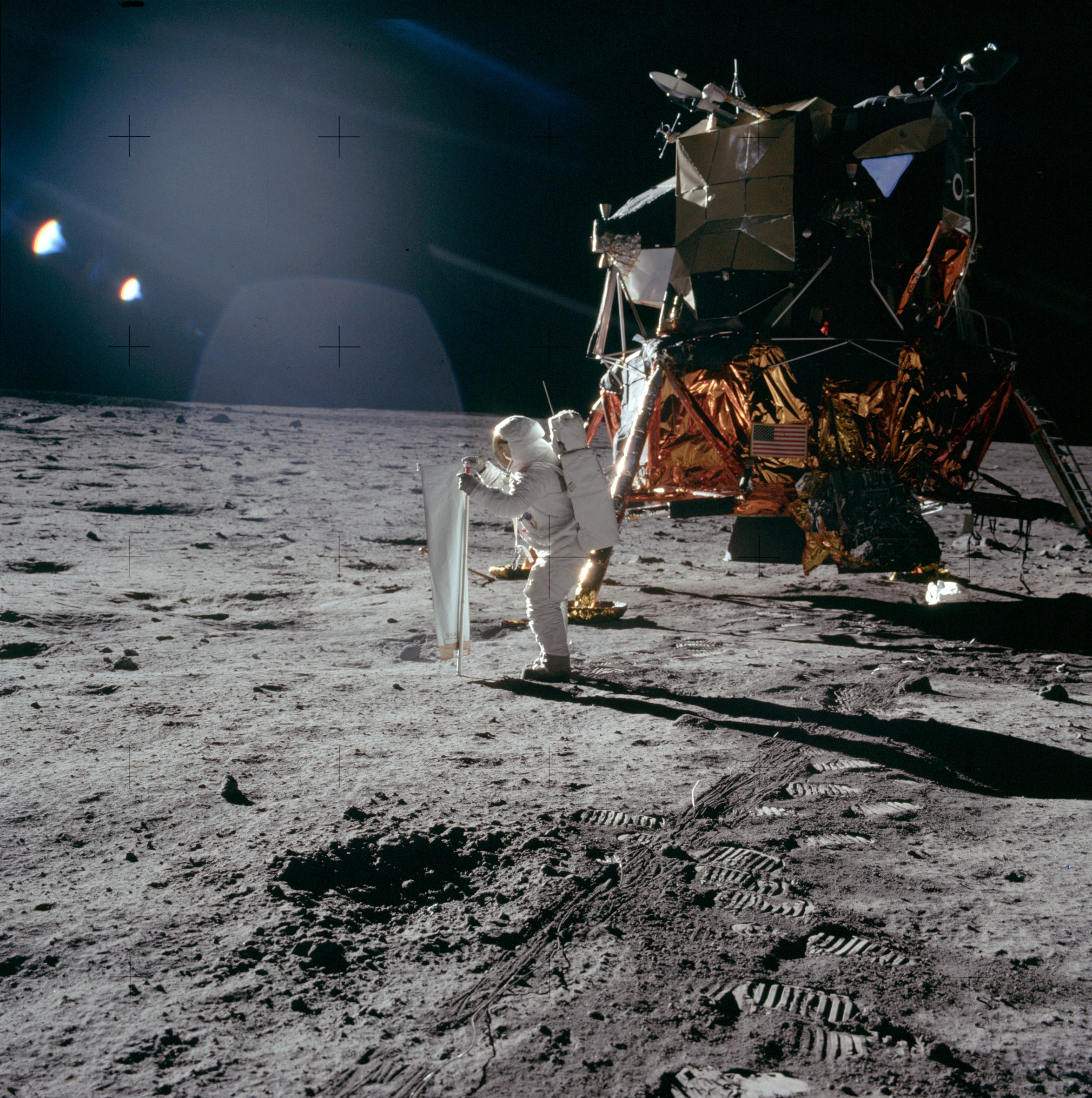
Left: Neil grabs a contingency sample, just in case. Middle left: Buzz joins the party. Middle right: Neil and Buzz read the plaque. Right: Buzz sets up the solar wind experiment.

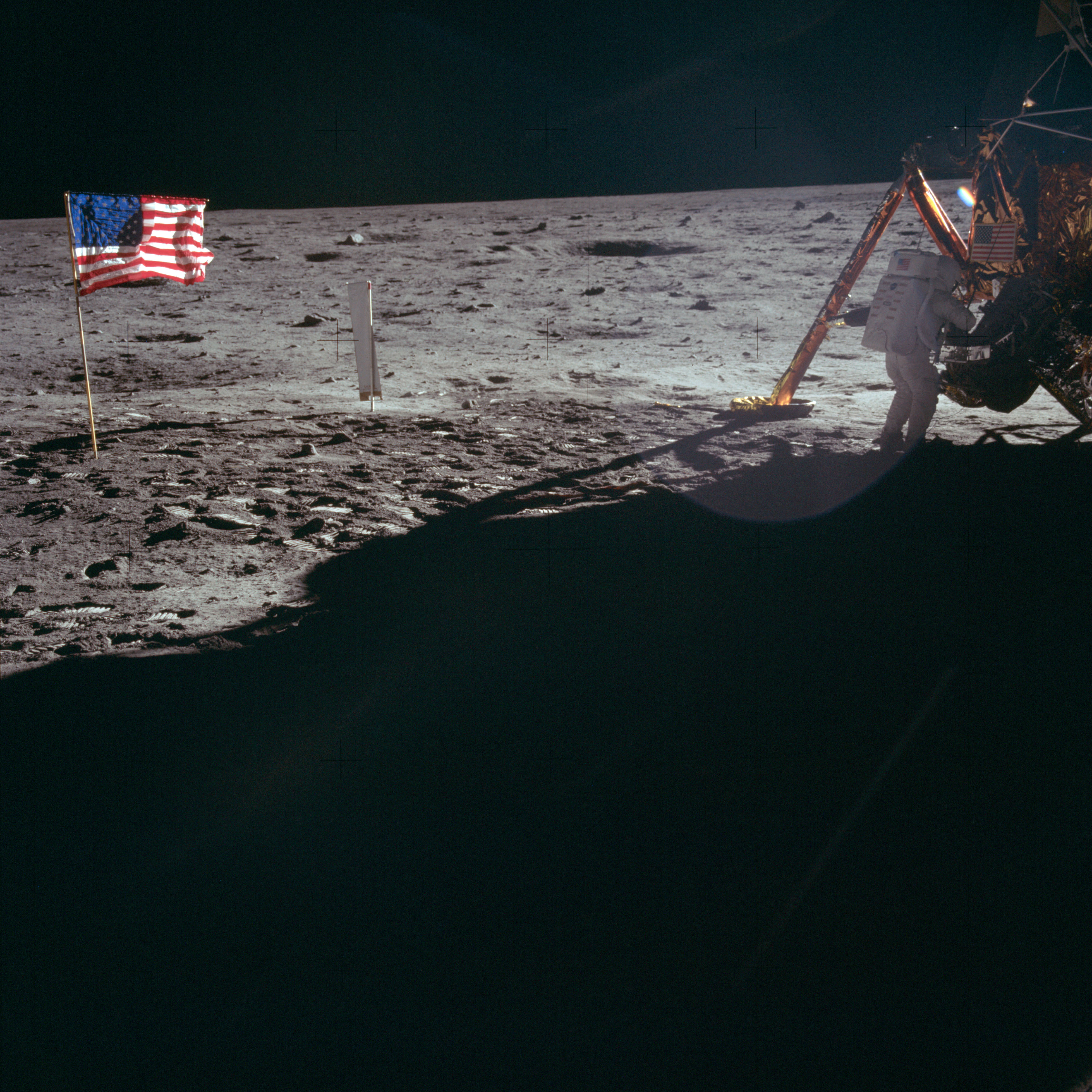
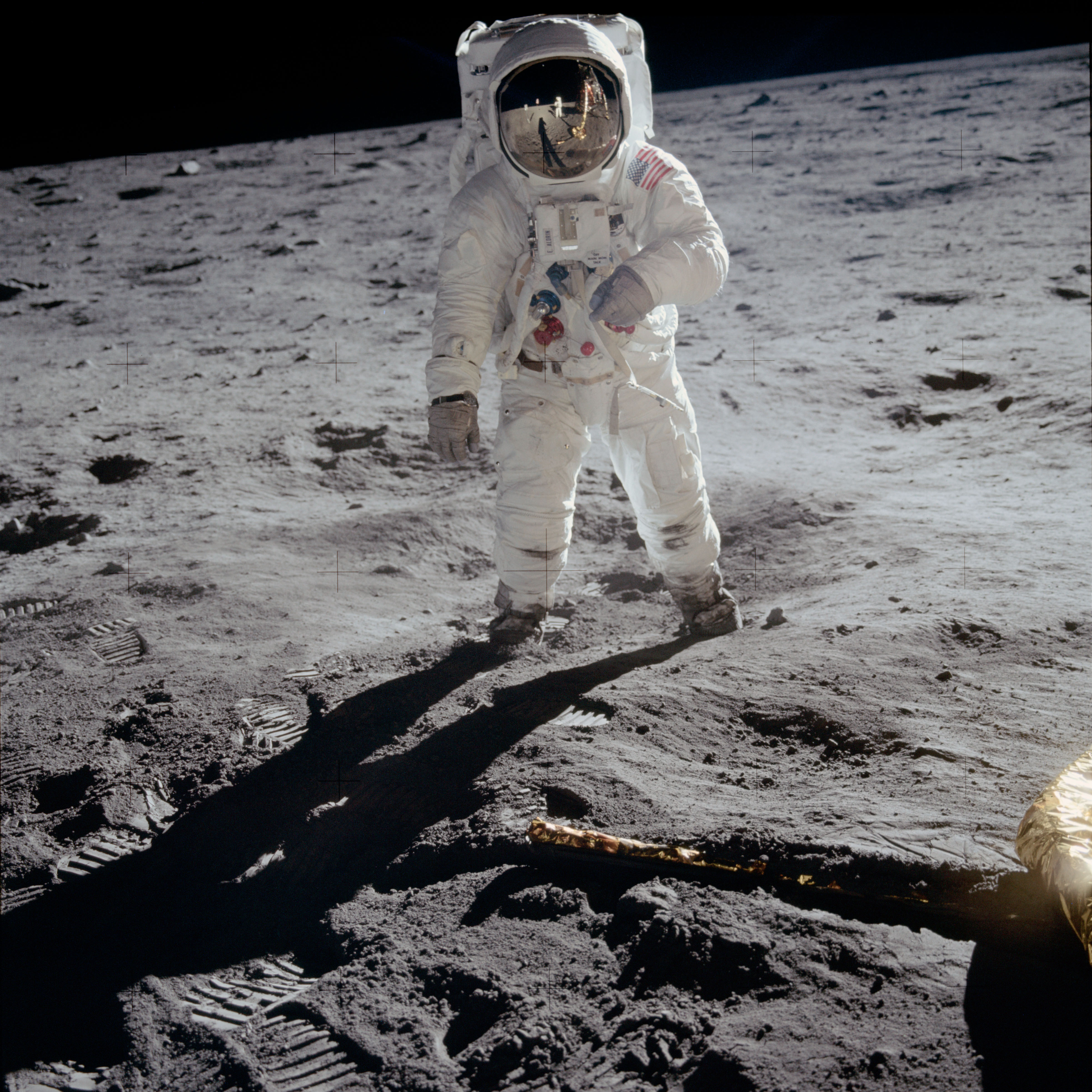
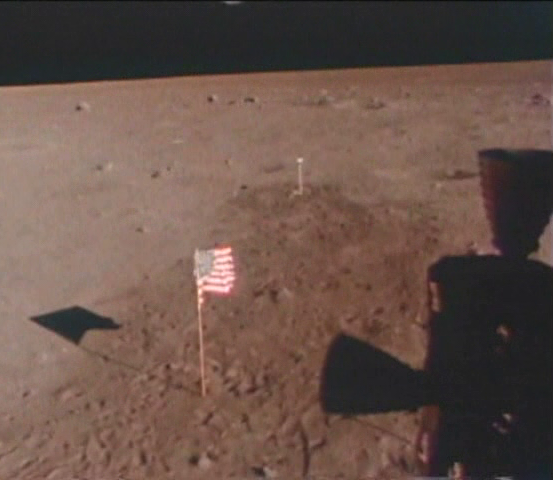
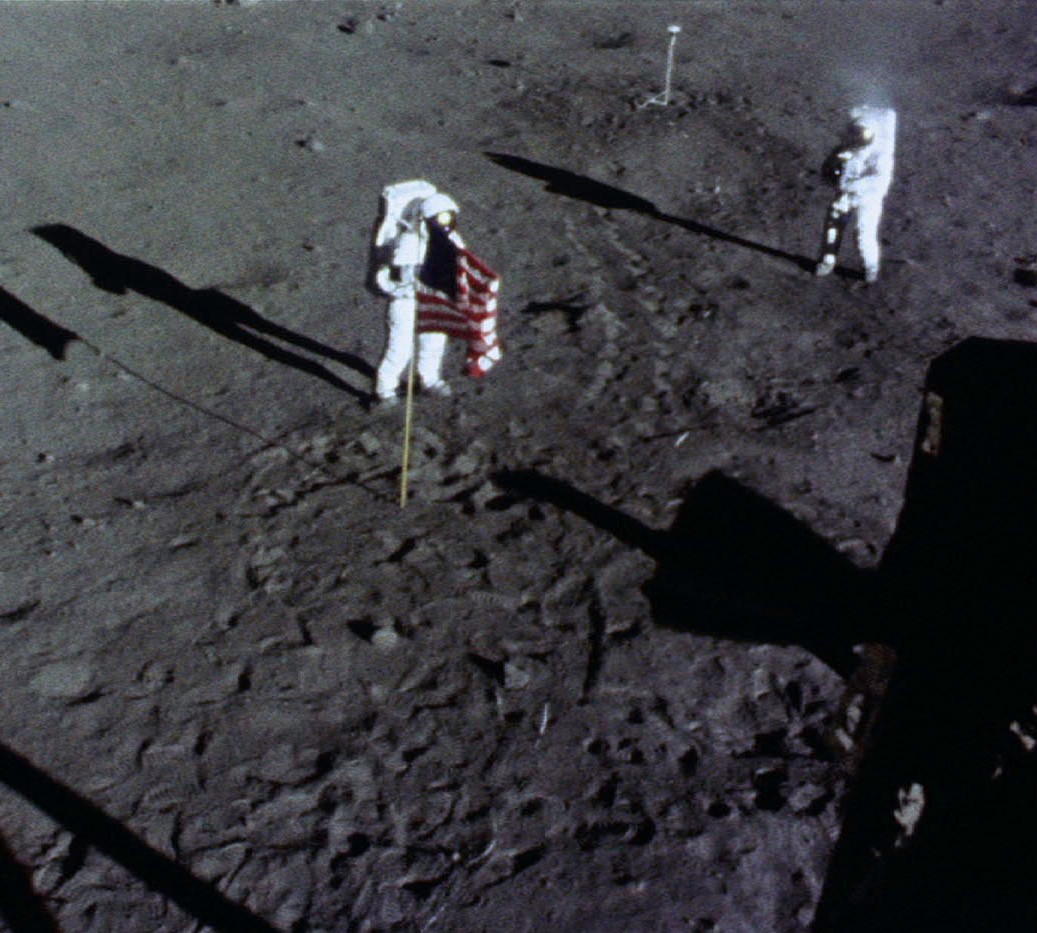
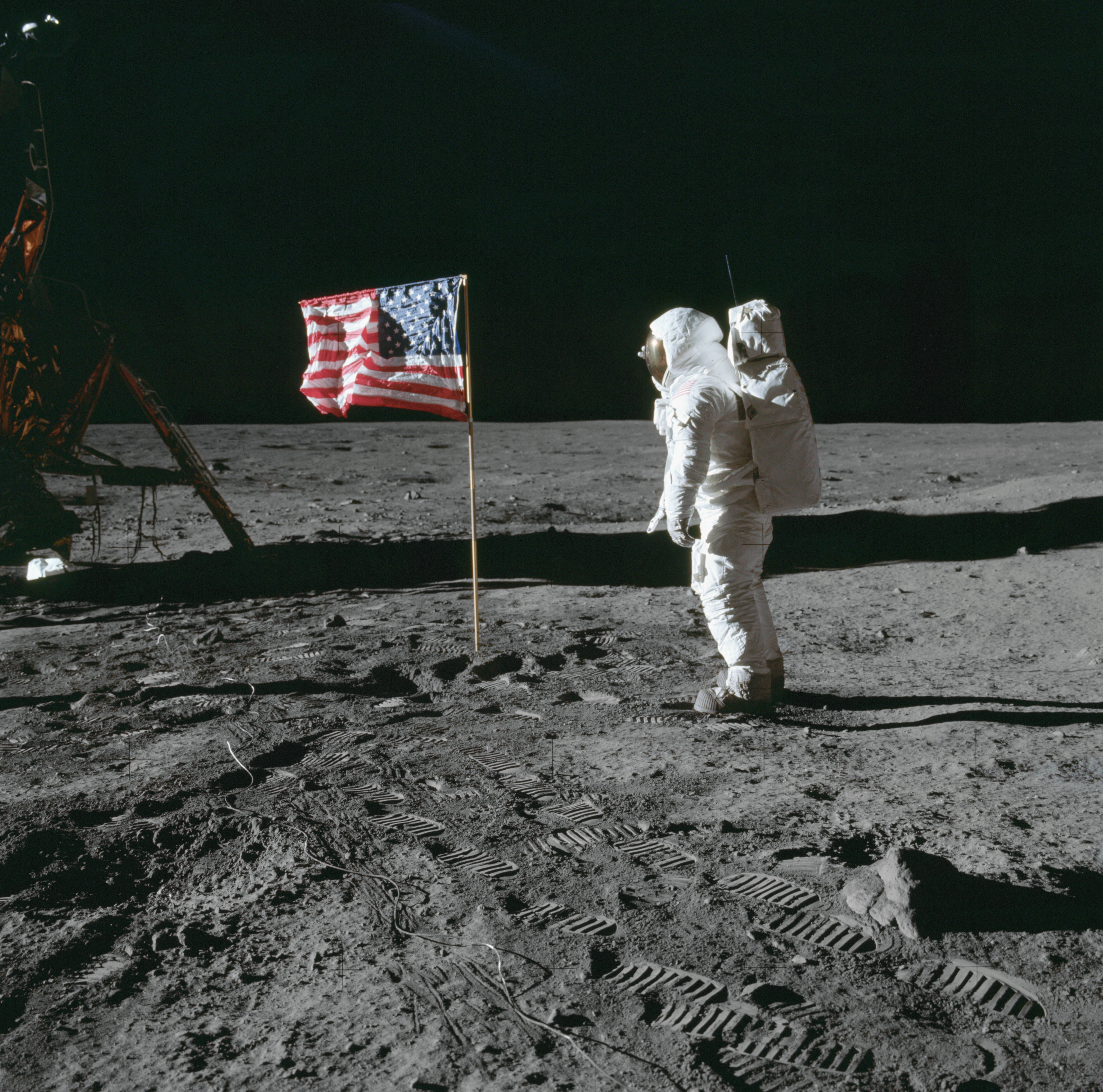
Buzz and Neil set up the flag Neil takes that famous photo of Buzz saluting flag Often misidentified as Neil’s first footprint, it’s actually Buzz’s to test the lunar soil
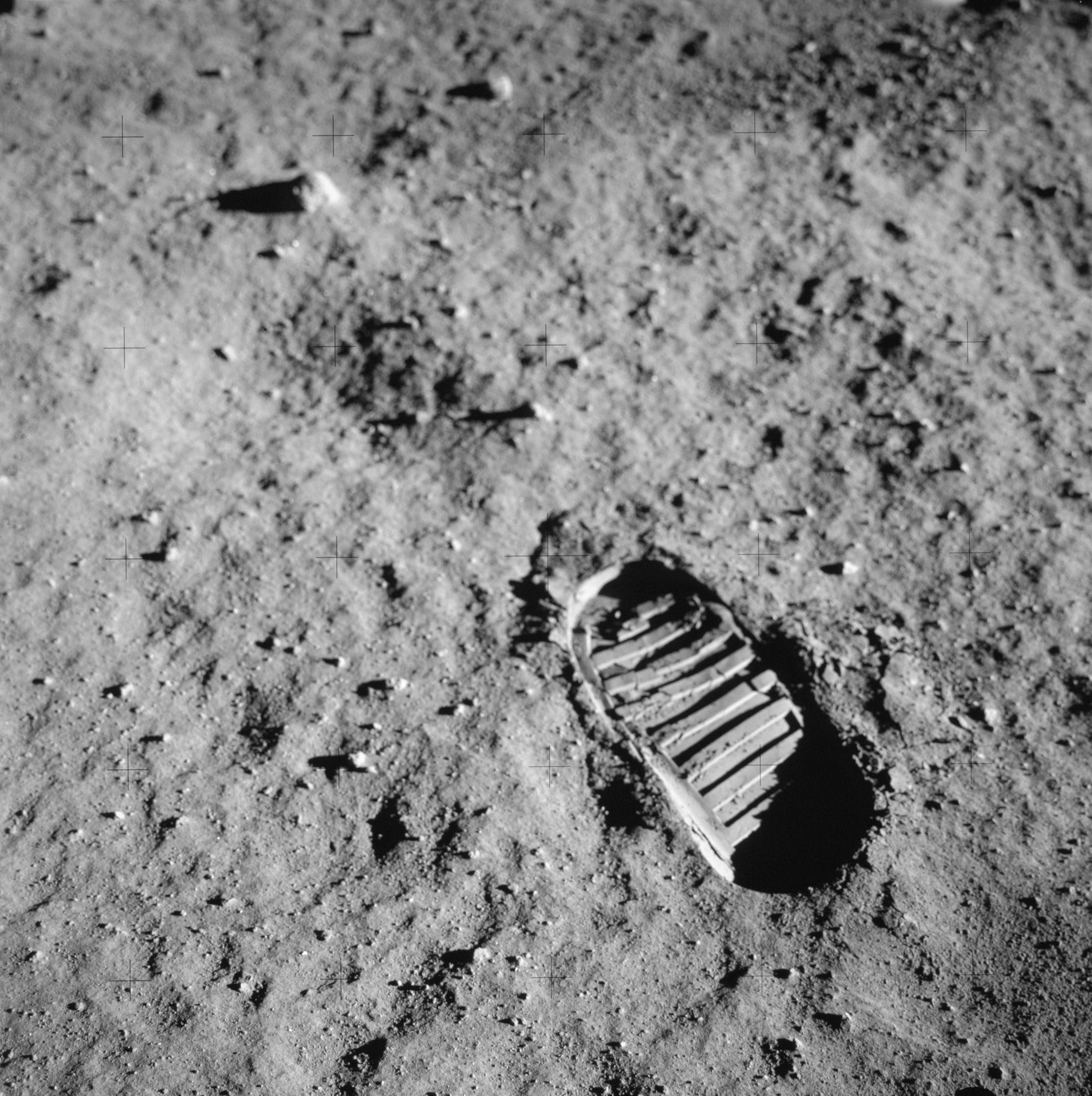
Left: Buzz and Neil set up the flag. Middle left: Neil takes that famous photo of Buzz. Middle right: You know, this famous photo! Right: Often misidentified as Neil’s first footprint, it’s actually Buzz’s to test the lunar soil.

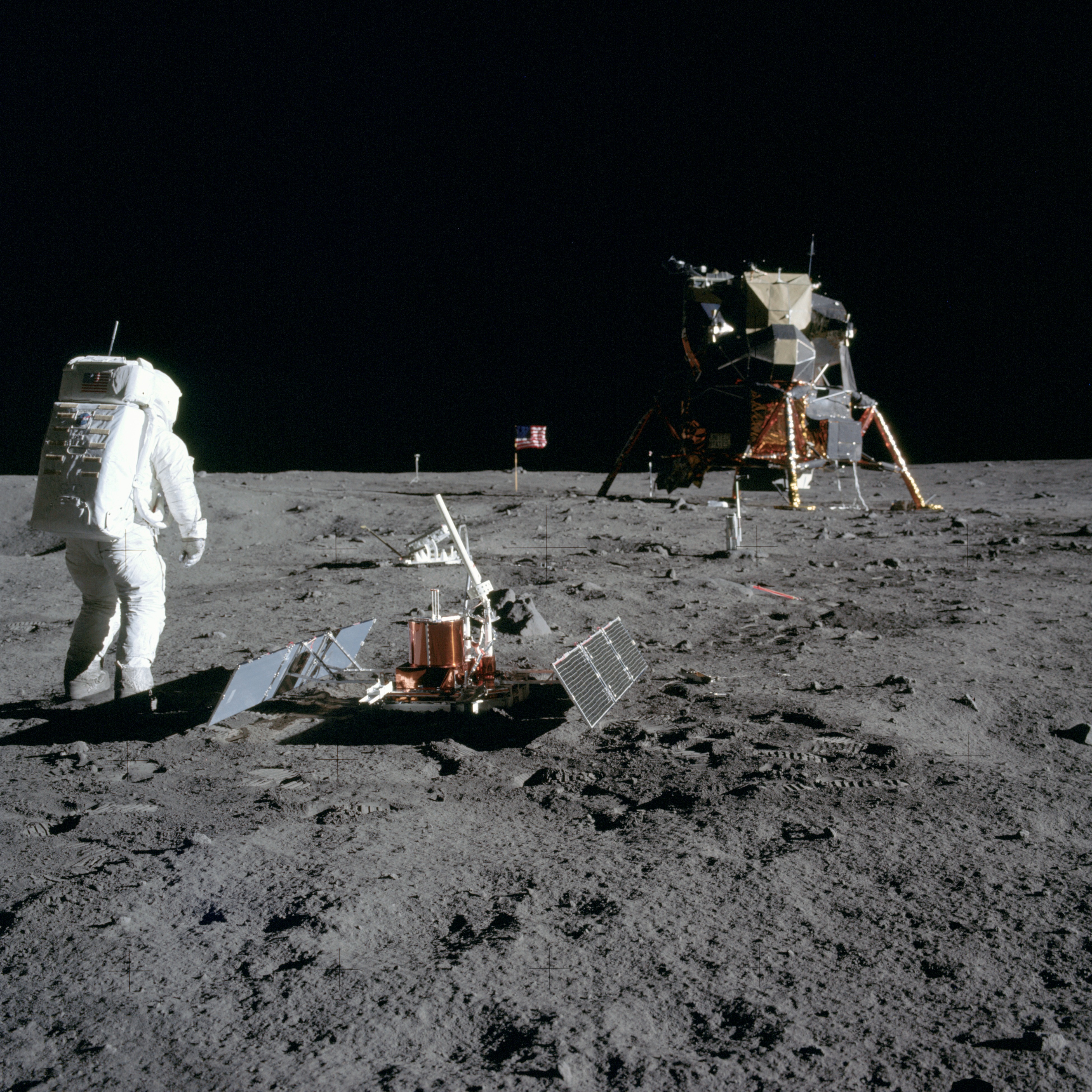
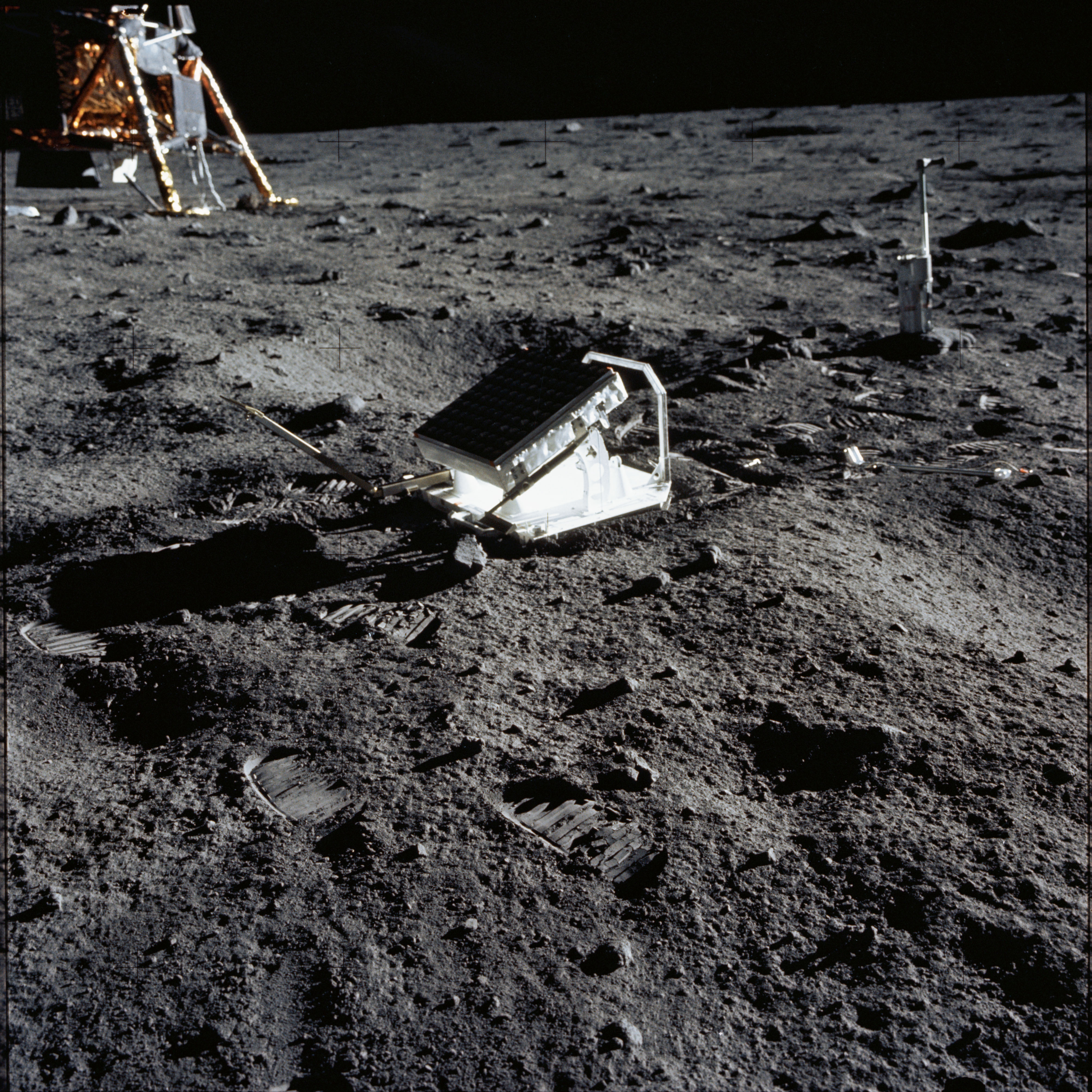
Buzz had the camera for a while and snapped one of the few photos of Neil on the surface Buzz, the seismometer, and the LM The LM and the laser retroreflector One of two photos from the surface that show both Buzz, the main subject, and Neil, the reflection
Left: Buzz had the camera for a while and snapped one of the few photos of Neil on the surface. Middle left: Buzz, the seismometer, and the LM. Middle right: The LM and the laser retroreflector. Right: One of two photos from the surface that show both Buzz, the main subject, and Neil, the reflection.

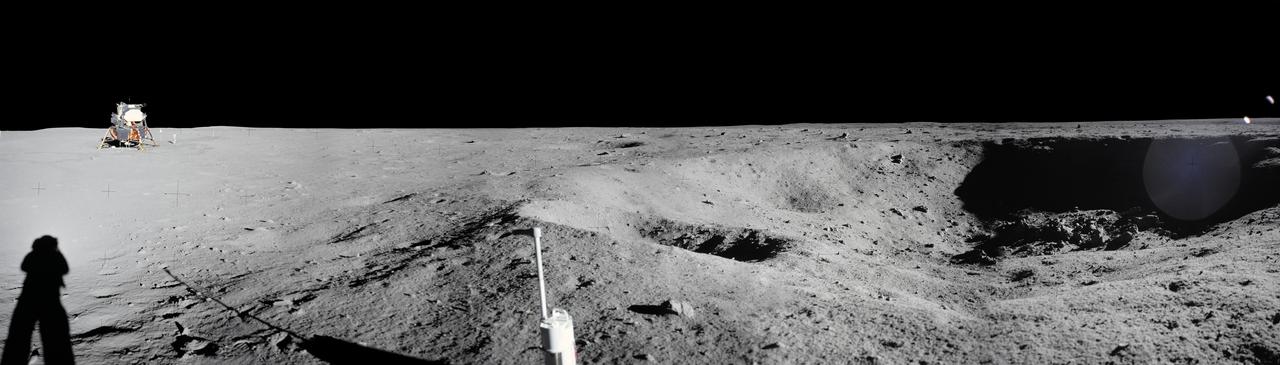
Neil took a stroll to Little West Crater and took several photos, spliced together into this pano
Neil took a stroll to Little West Crater and took several photos, spliced together into this pano.

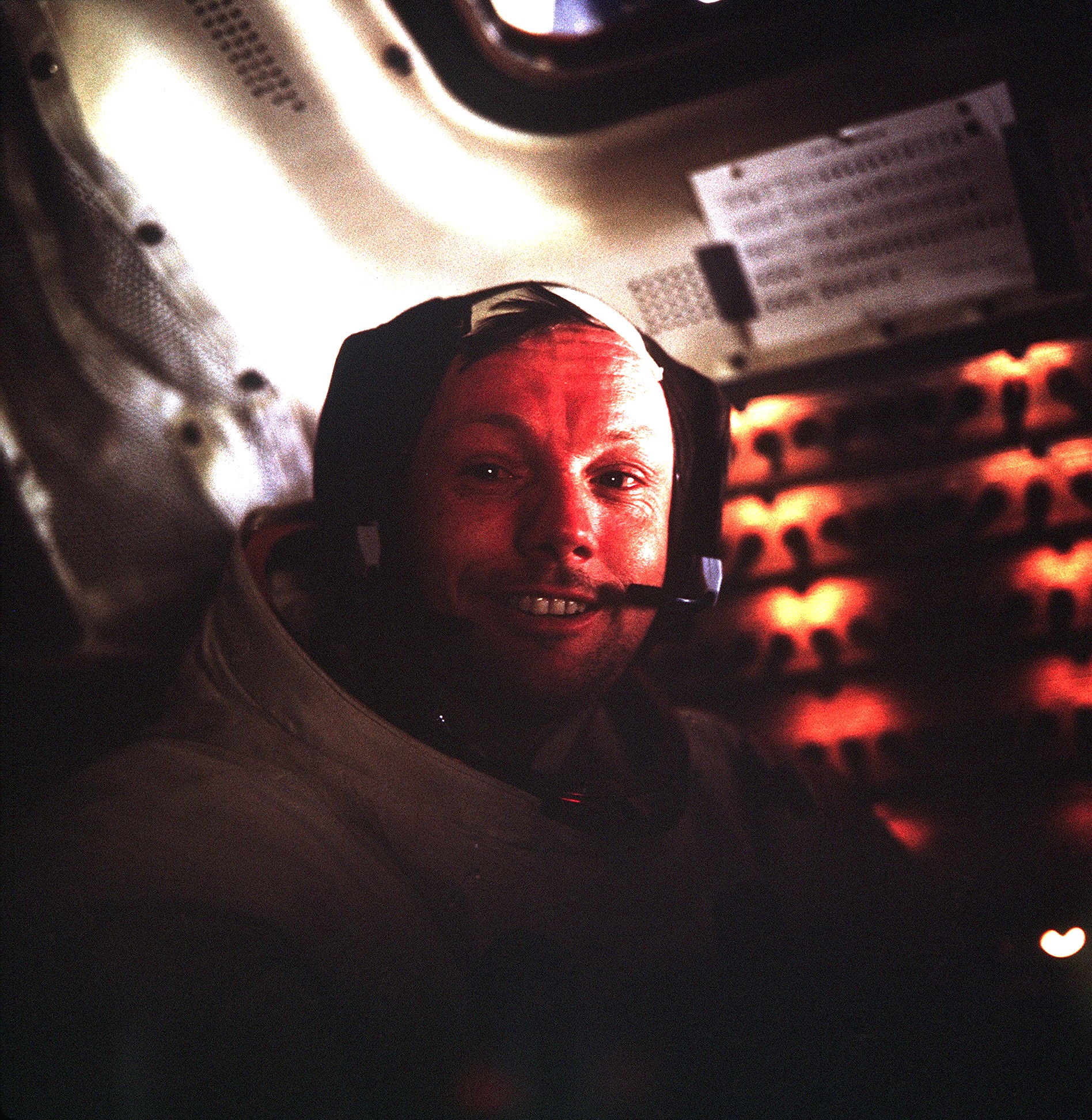
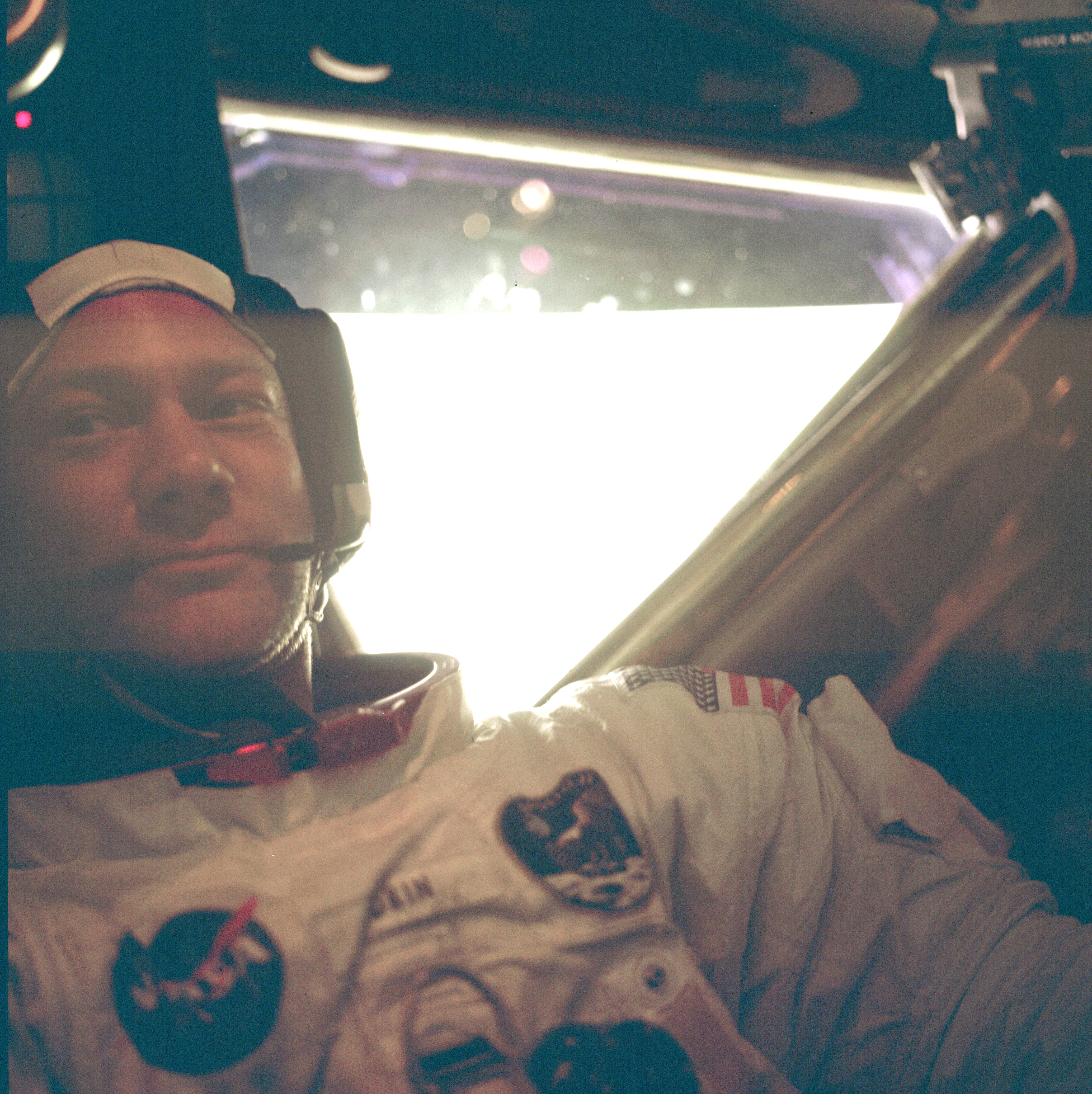
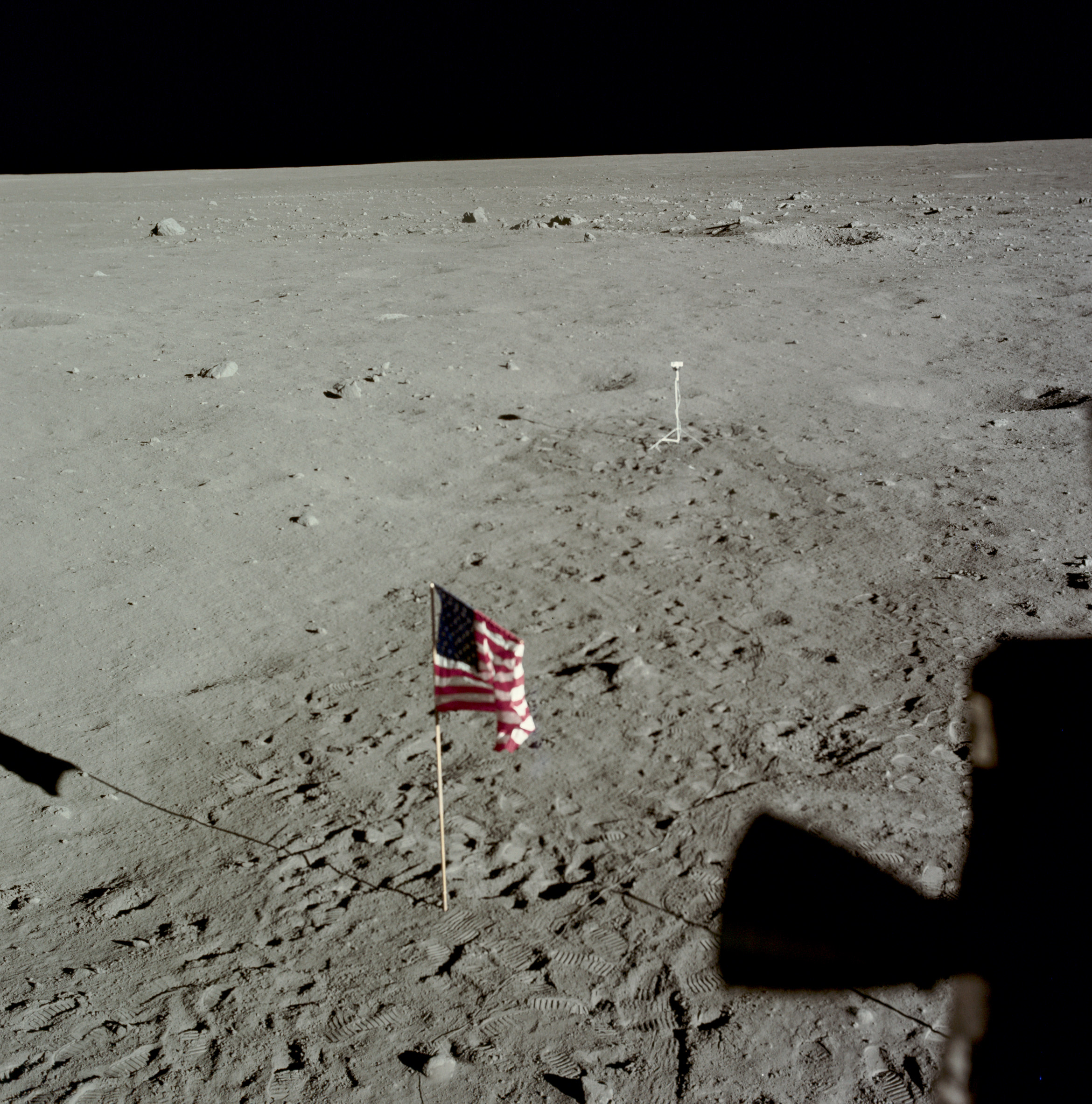
Neil after the spacewalk, tired but satisfied aldrin post eva The flag from Buzz’s window before they went to sleep The same view, and the flag moved! Not aliens, it settled in the loose lunar regolith overnight
Left: Neil after the spacewalk, tired but satisfied. Middle left: Ditto for Buzz. Middle right: The flag from Buzz’s window before they went to sleep. Right: The same view, and the flag moved! Not aliens, it settled in the loose lunar regolith overnight.

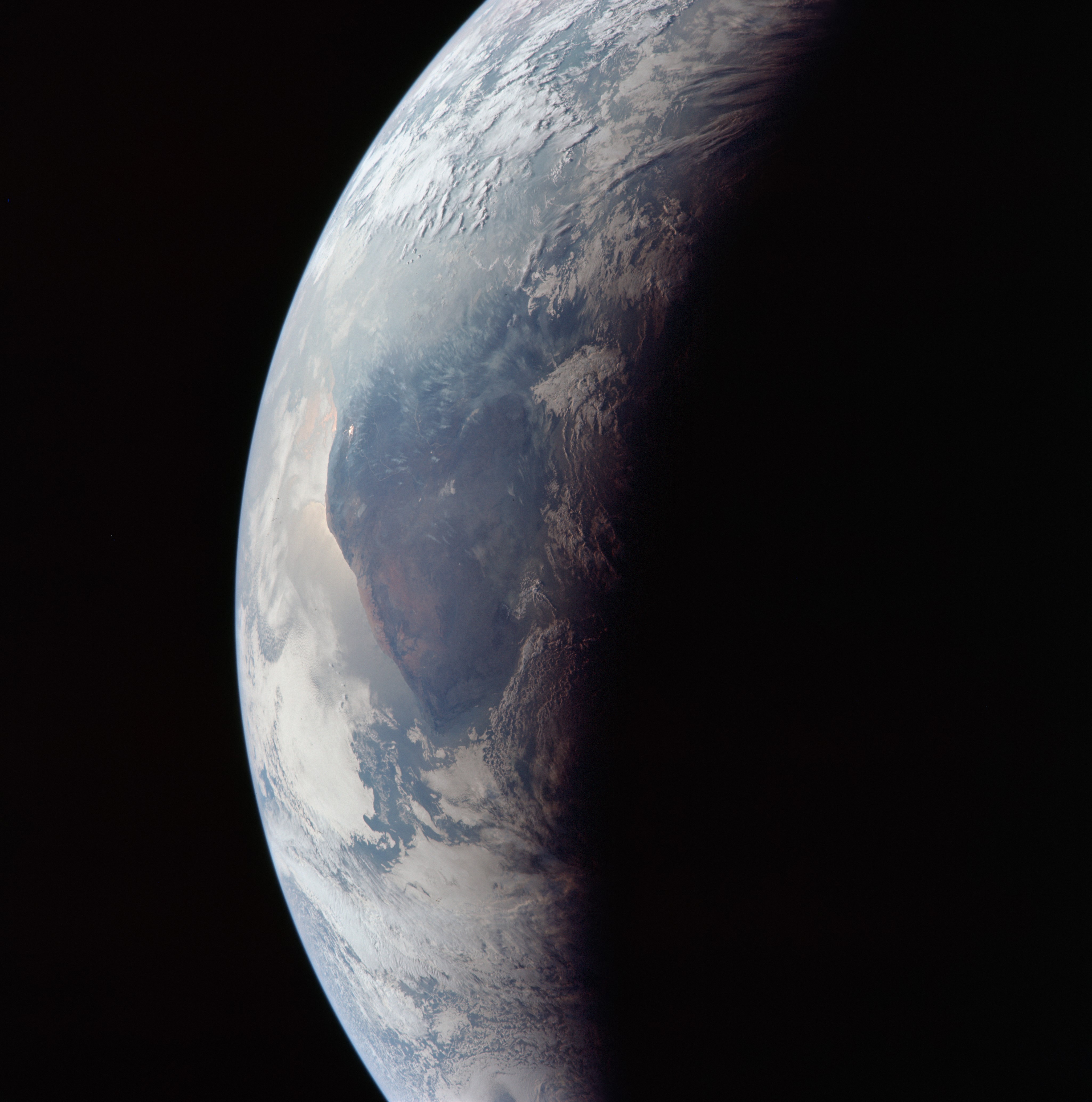
Liftoff, the Eagle has wings again! Eagle approaches Columbia, and incidentally everyone alive at the time is in this picture, except for Mike who took it Moon departure earth approach
July 21, 1969. Left: Liftoff, the Eagle has wings again! Middle left: Eagle approaches Columbia, and incidentally everyone alive at the time is in this picture, except for Mike who took it. Middle right: On the way home, the Moon gets smaller. Right: And the Earth gets bigger.

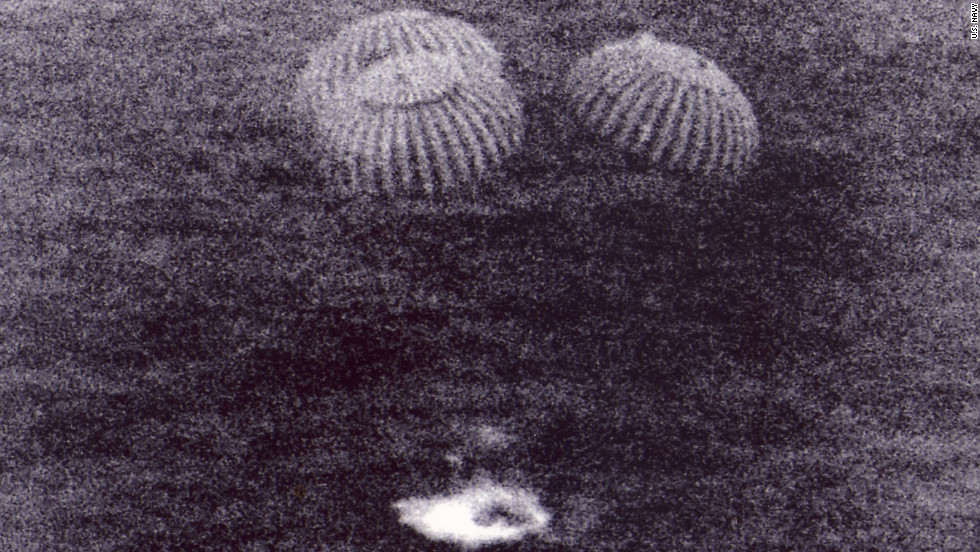
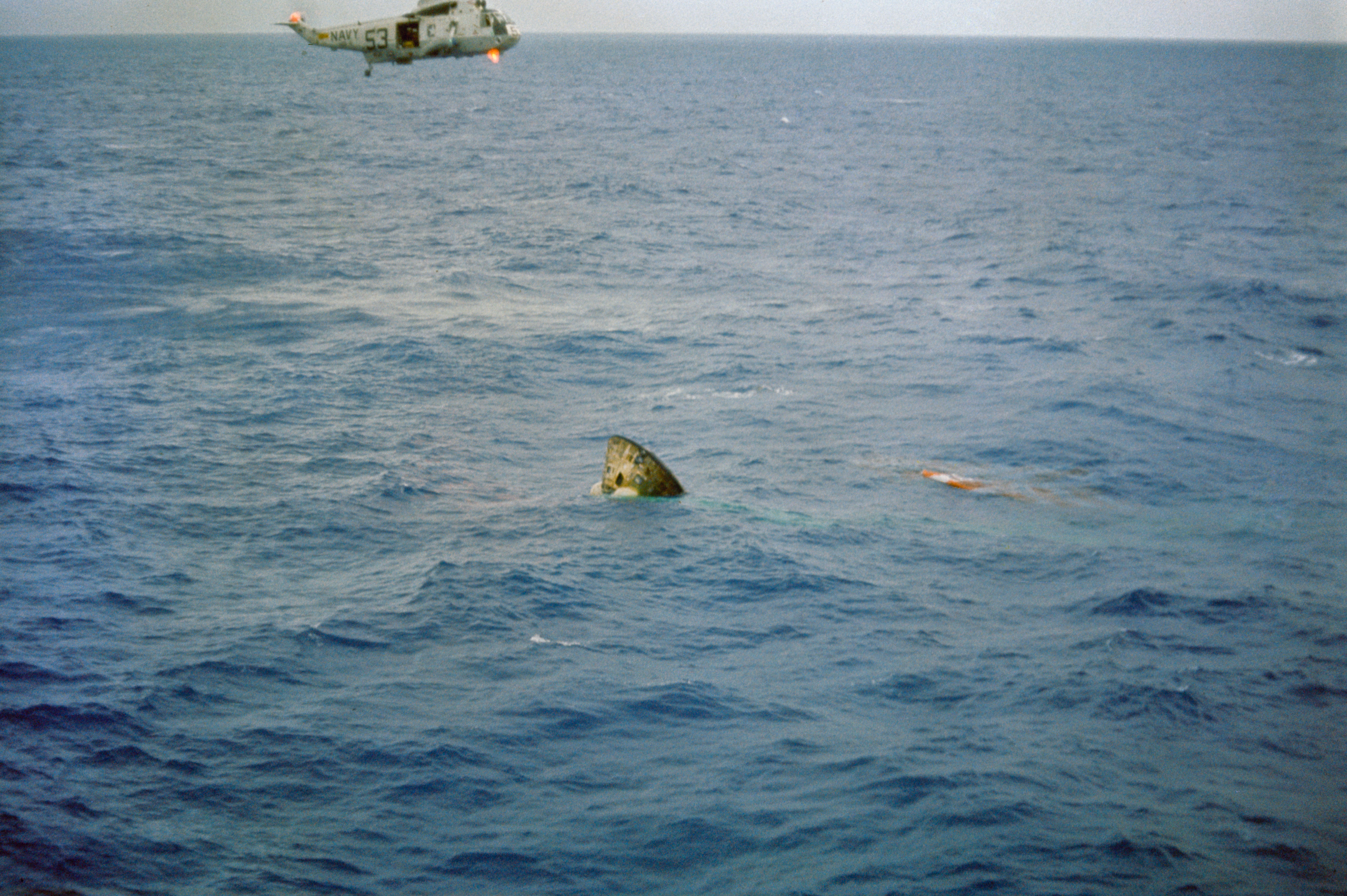
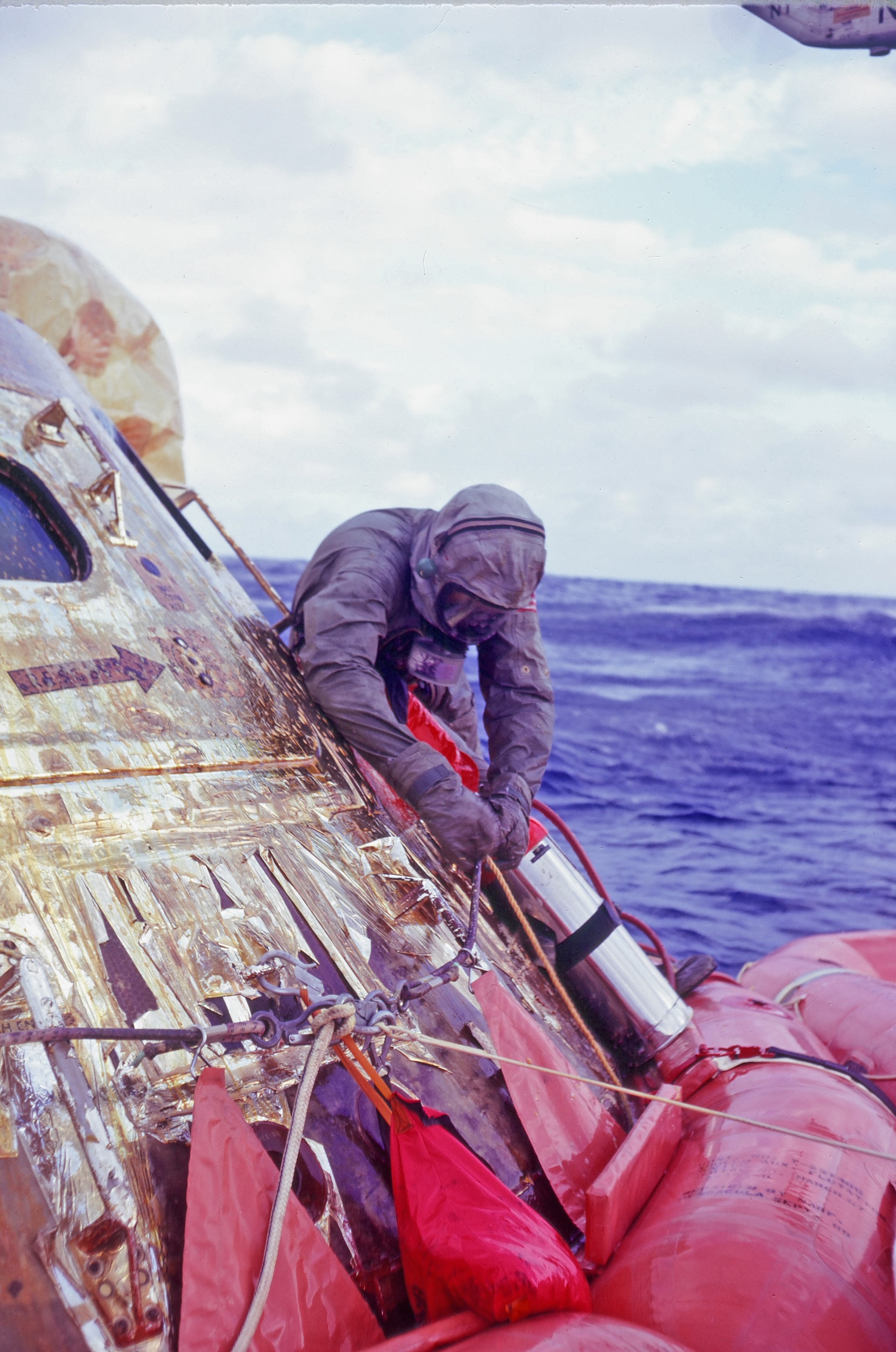
Splashdown, as captured from a recovery helicopter Upside down in Stable 2, before balloons inflated to right the spacecraft Wearing his Biological Isolation Garment (BIG), Clancy Hatleberg, the decontamination officer, sets up his decontamination canisters. He’s already handed the astronauts their BIGs, who are donning them inside the spacecraft
July 24, 1969. Left: Splashdown, as captured from a recovery helicopter. Middle: Upside down in Stable 2, before balloons inflated to right the spacecraft. Right: Wearing his Biological Isolation Garment (BIG), Clancy Hatleberg, the decontamination officer, sets up his decontamination canisters. He’s already handed the astronauts their BIGs, who are donning them inside the spacecraft.

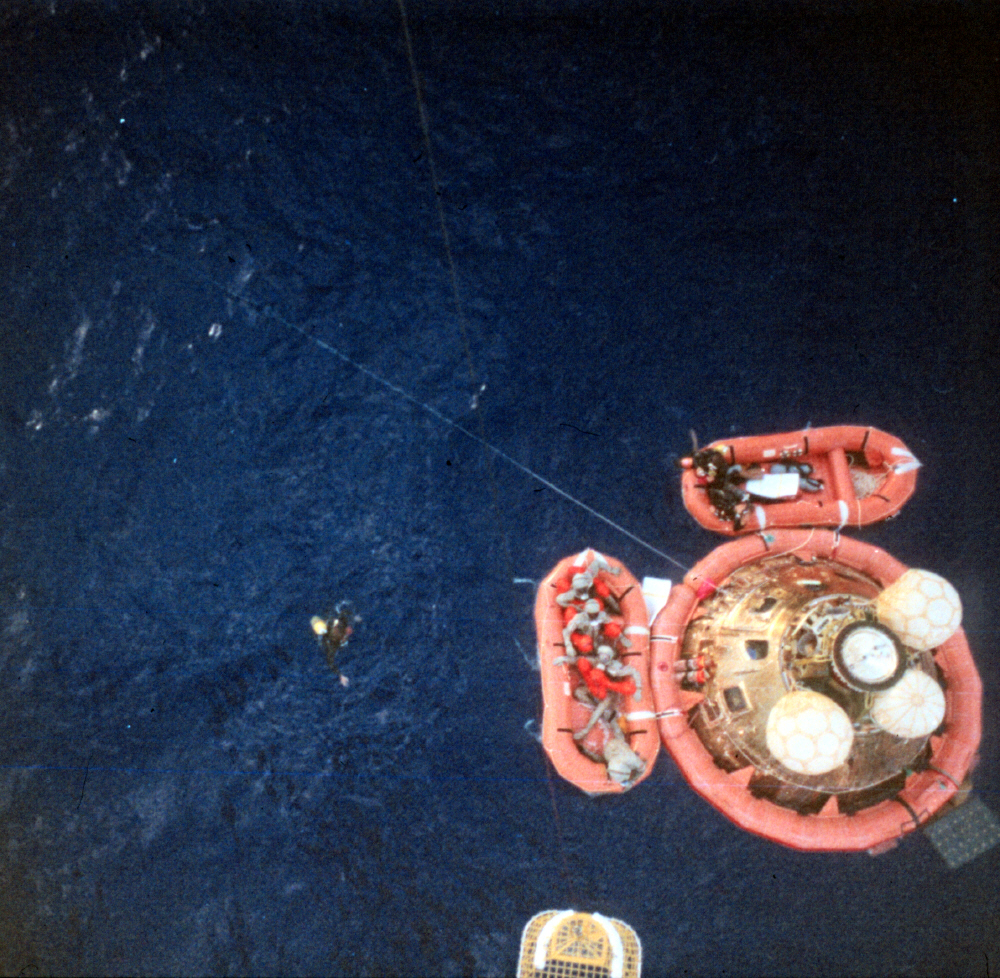
Hatleberg, left, with Neil, Buzz, and Mike in the decontamination raft Taken by U.S. Navy UDT swimmer Mike Mallory in a nearby raft, Hatleberg prepares to capture the Billy Pugh net for Neil, while Buss and Mike wave to Mallory taken from the recovery helicopter, the Billy Pugh net visible at the bottom of the photo
Left: Hatleberg, left, with Neil, Buzz, and Mike in the decontamination raft. Middle: Taken by U.S. Navy UDT swimmer Mike Mallory in a nearby raft, Hatleberg prepares to capture the Billy Pugh net for Neil, while Buss and Mike wave to Mallory. Right: The same scene, taken from the recovery helicopter, the Billy Pugh net visible at the bottom of the photo.

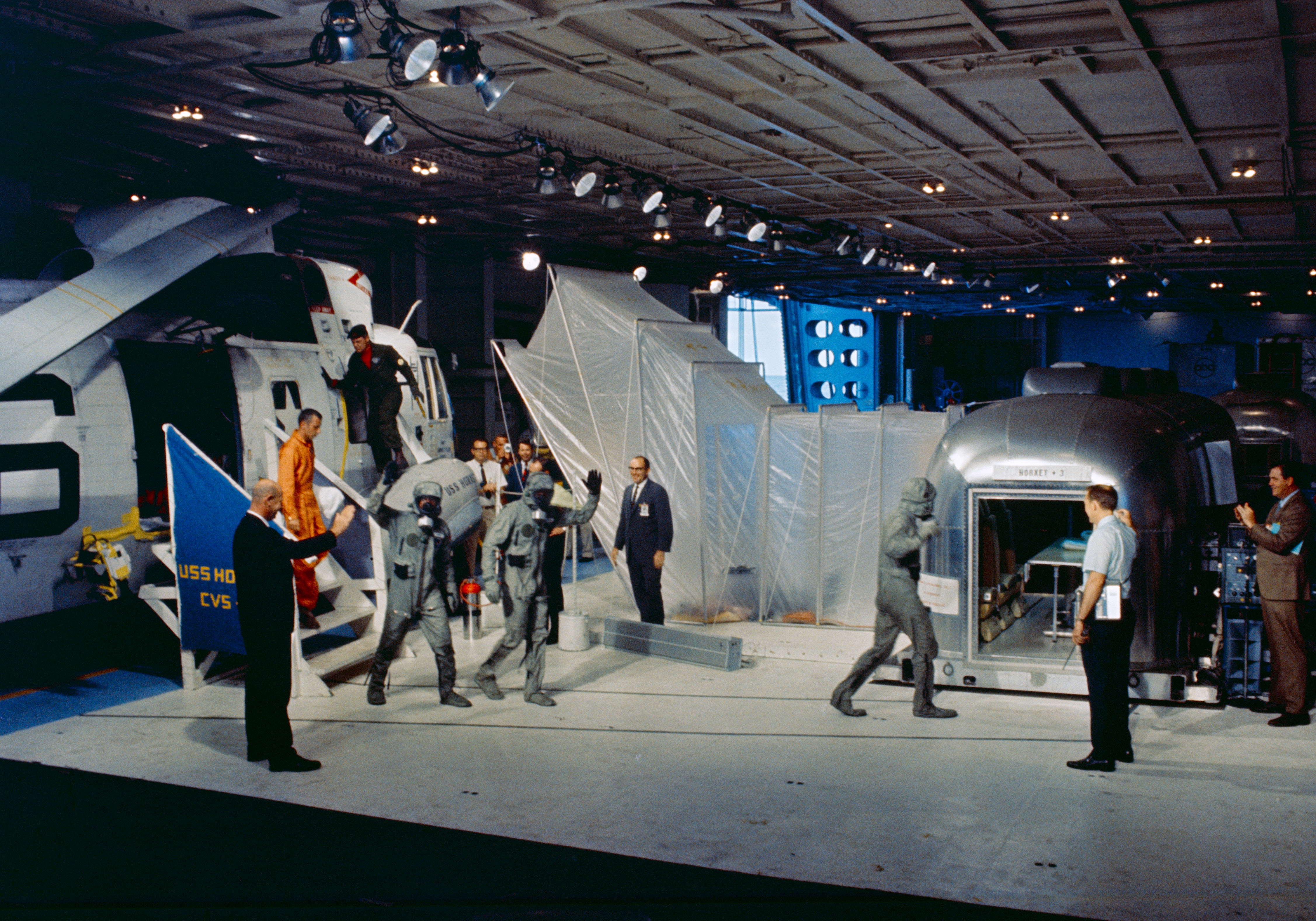
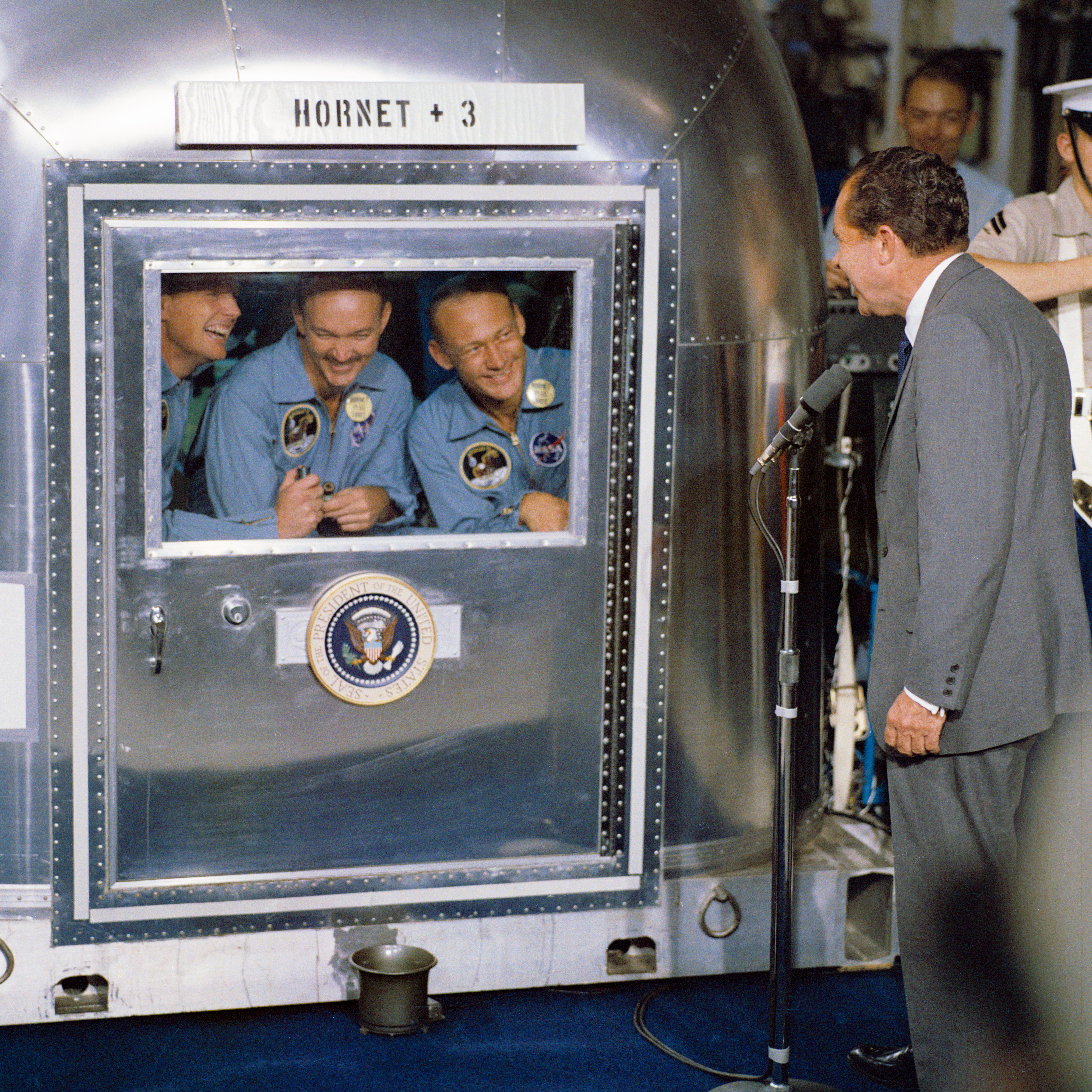
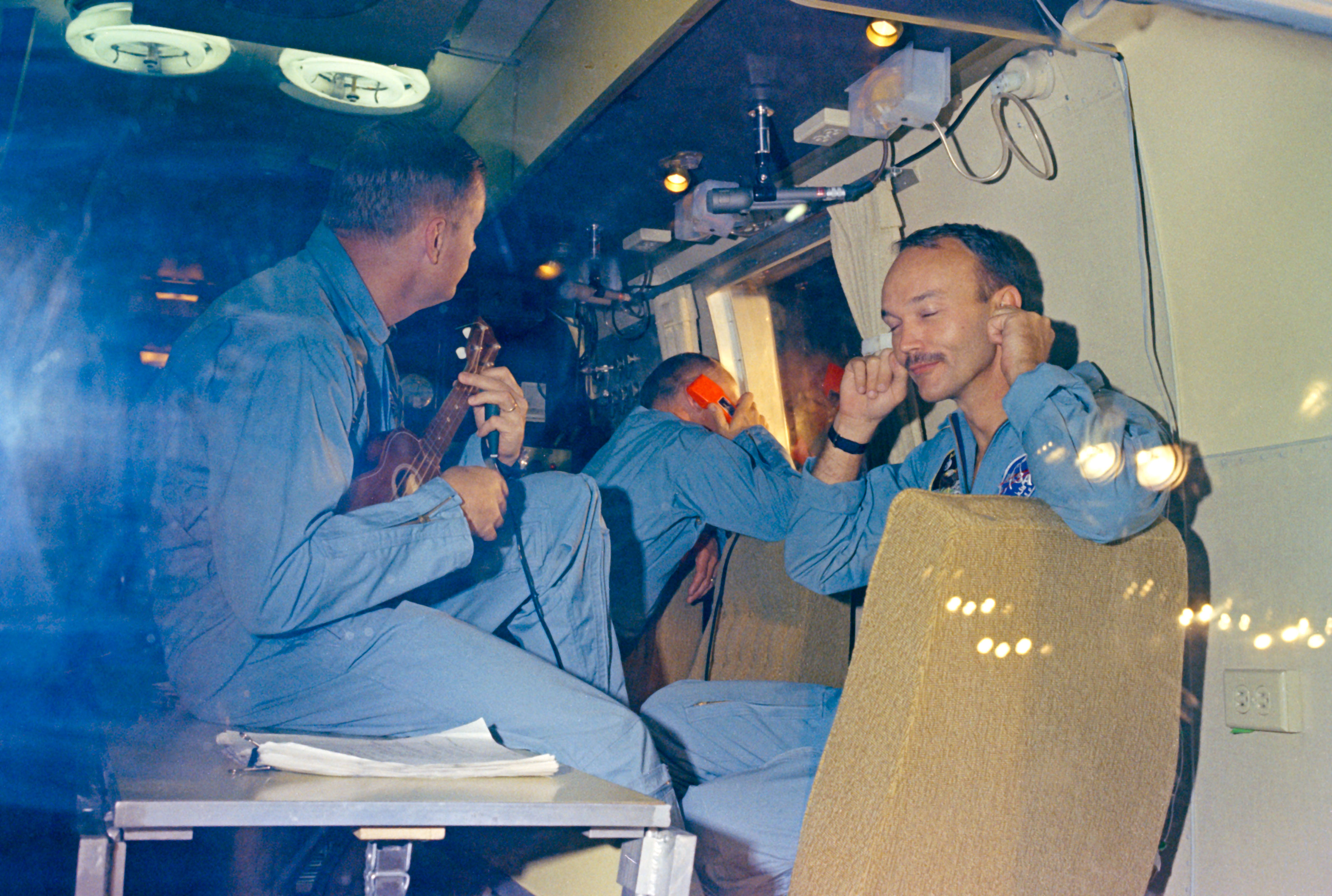
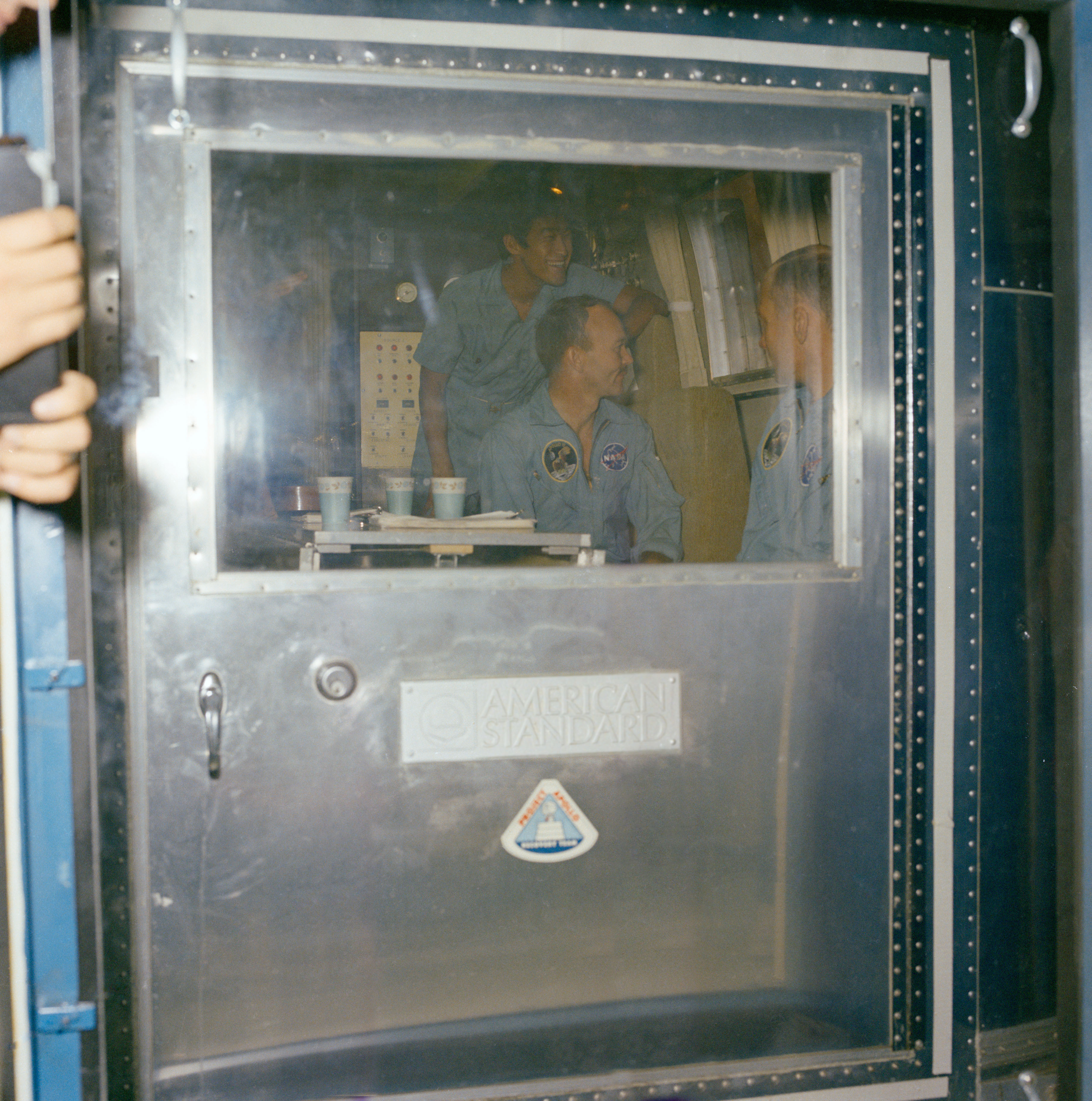
Once aboard the U.S.S. Hornet, Mike, Neil, and Buzz wearing their BIGs walk the 10 steps from the Recovery One helicopter to the Mobile Quarantine Facility (MQF), with NASA flight surgeon Dr. William Carpentier, in orange suit, following behind NASA engineer John Hirasaki filmed the astronauts as they entered the MQF Changed from their BIGs into flight suits, Mike, Neil, and Buzz chat with President Nixon through the MQF’s window Neil, playing the ukelele, Buzz, and Mike inside the MQF
Left: Once aboard the U.S.S. Hornet, Mike, Neil, and Buzz wearing their BIGs walk the 10 steps from the Recovery One helicopter to the Mobile Quarantine Facility (MQF), with NASA flight surgeon Dr. William Carpentier, in orange suit, following behind. Middle left: NASA engineer John Hirasaki filmed the astronauts as they entered the MQF. Middle right: Changed from their BIGs into flight suits, Mike, Neil, and Buzz chat with President Nixon through the MQF’s window. Right: Neil, playing the ukelele, Buzz, and Mike inside the MQF.

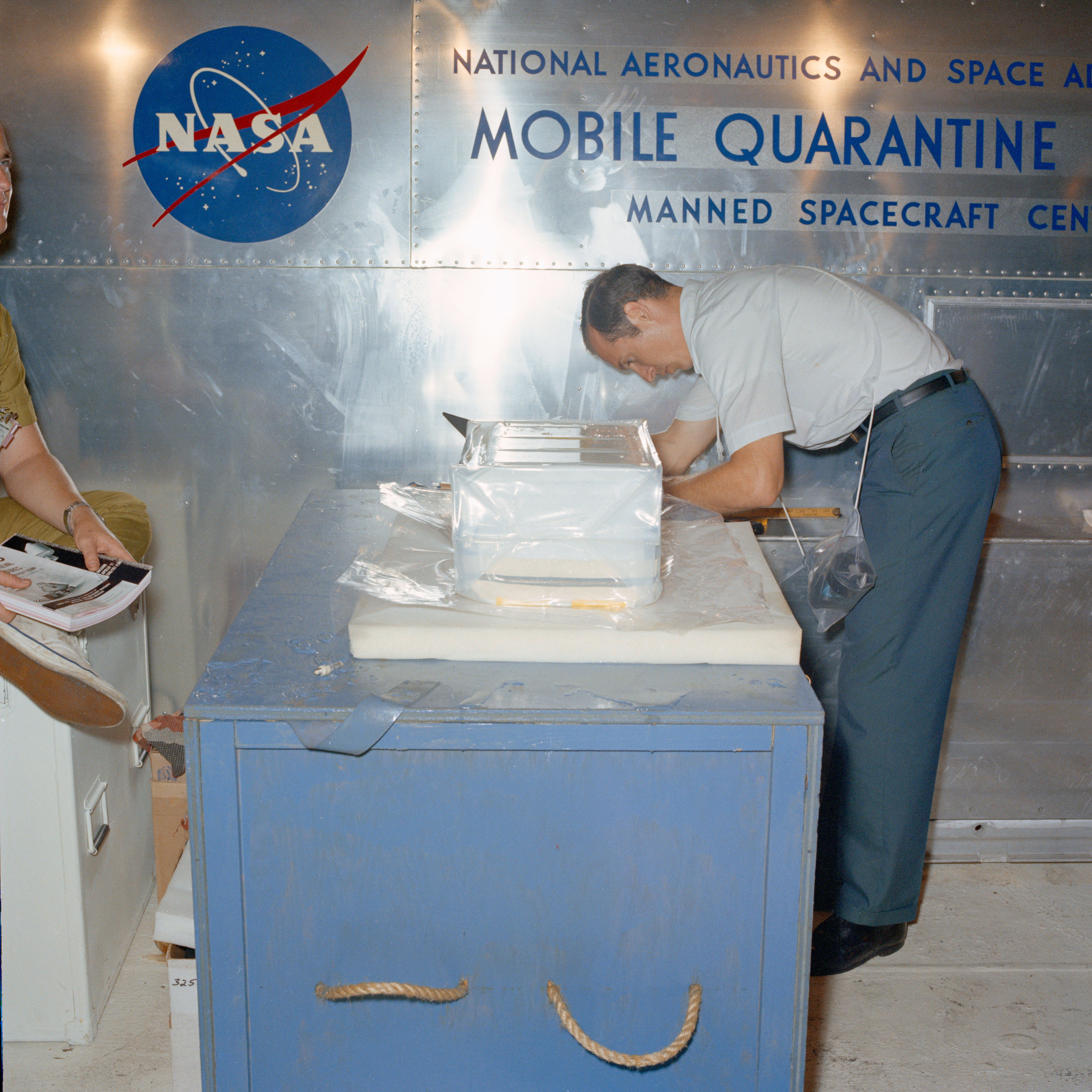
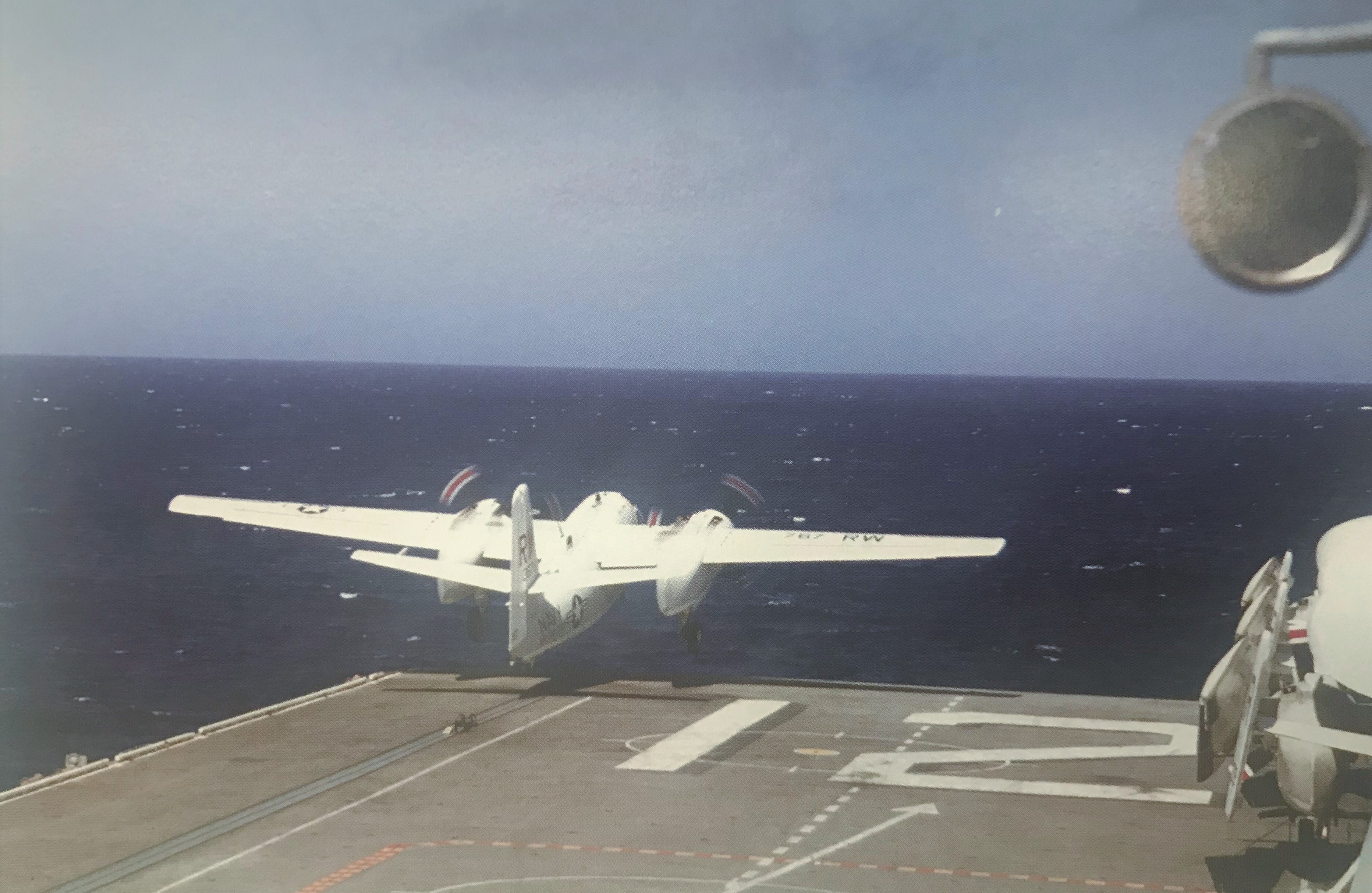
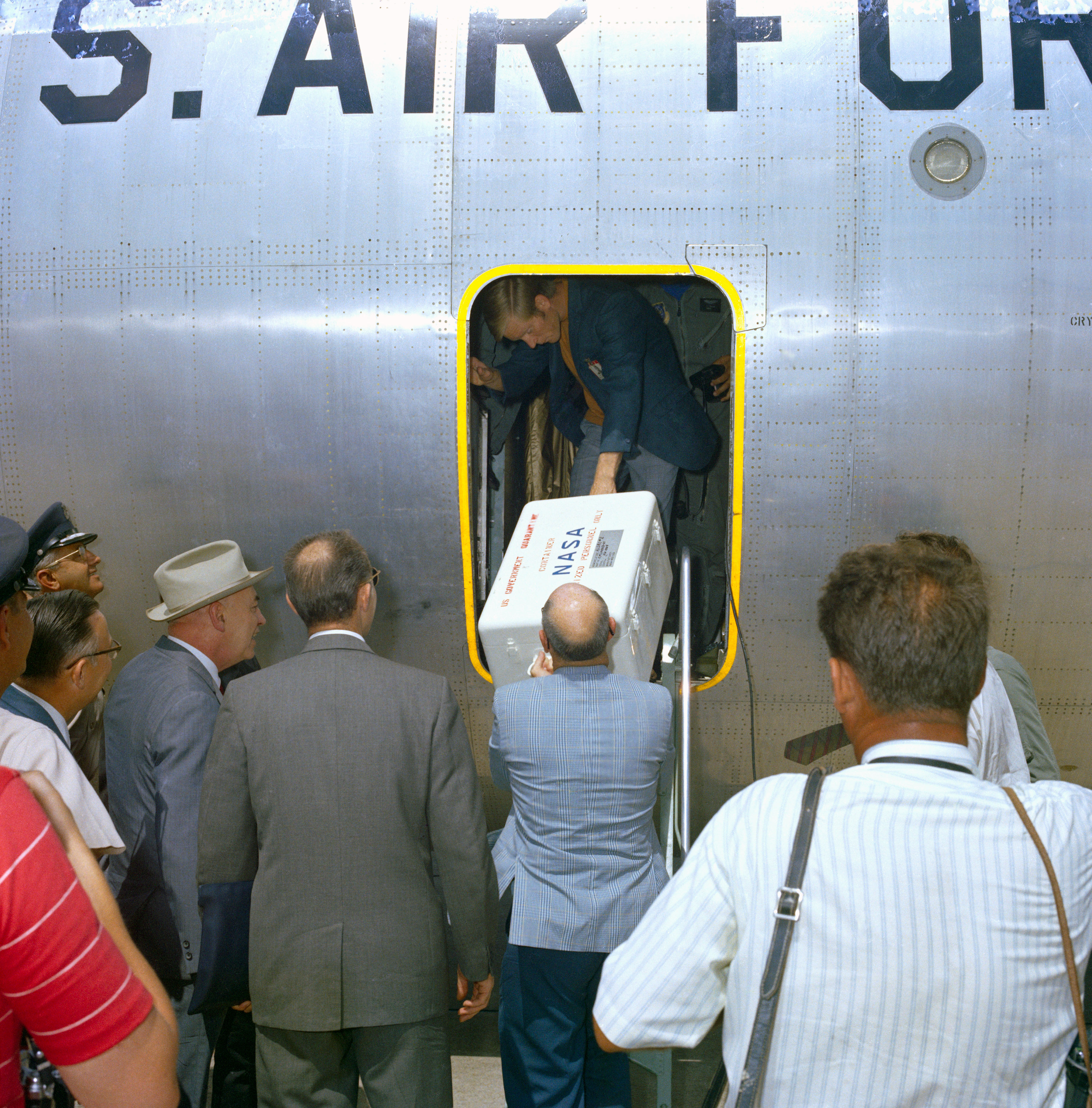
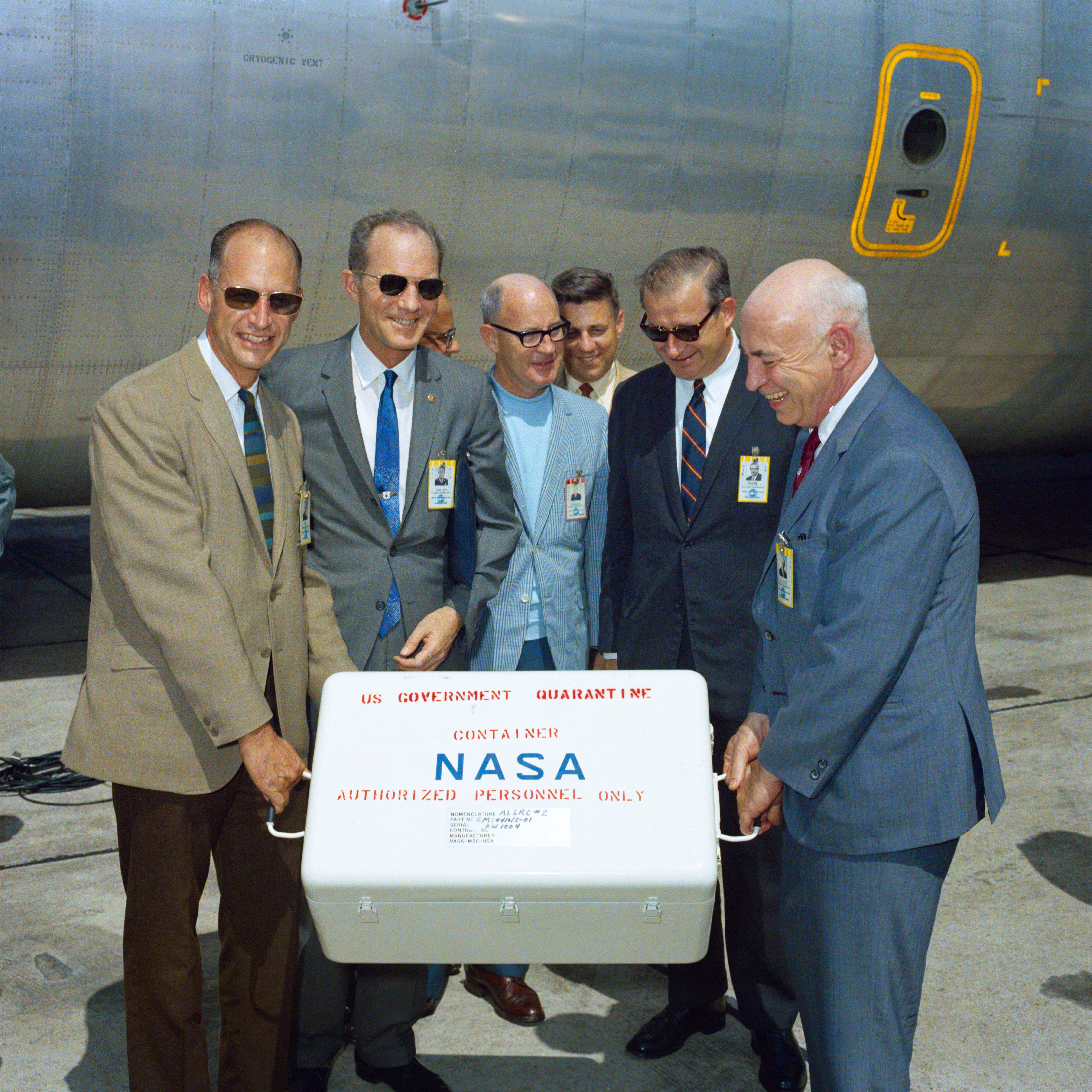
NASA technician receives the first box of Moon rocks from the MQF’s transfer lock Within a few hours of splashdown, the first box of Moon rocks departs Hornet bound for Johnston Island, where workers transferred it to a cargo plane bound for Houston Workers at Houston’s Ellington Air Force Base unload the first box of Moon rocks about eight hours later Senior NASA managers hold the first box of Moon rocks
Follow the Moon rocks from the Hornet to Ellington AFB. Left: NASA technician receives the first box of Moon rocks from the MQF’s transfer lock. Middle Left: Within a few hours of splashdown, the first box of Moon rocks departs Hornet bound for Johnston Island, where workers transferred it to a cargo plane bound for Houston. Middle right: Workers at Houston’s Ellington Air Force Base unload the first box of Moon rocks about eight hours later. Right: Senior NASA managers hold the first box of Moon rocks.

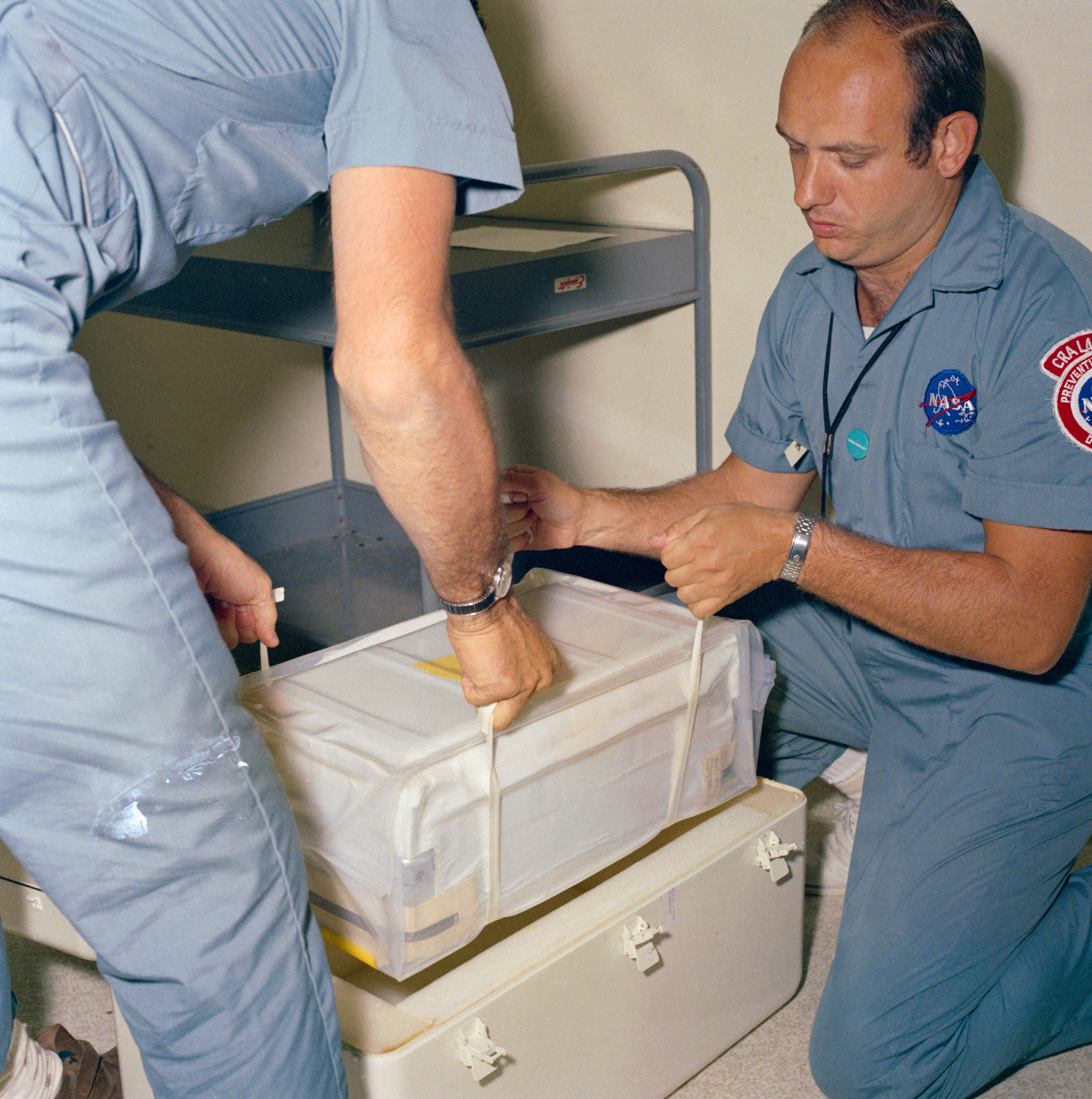
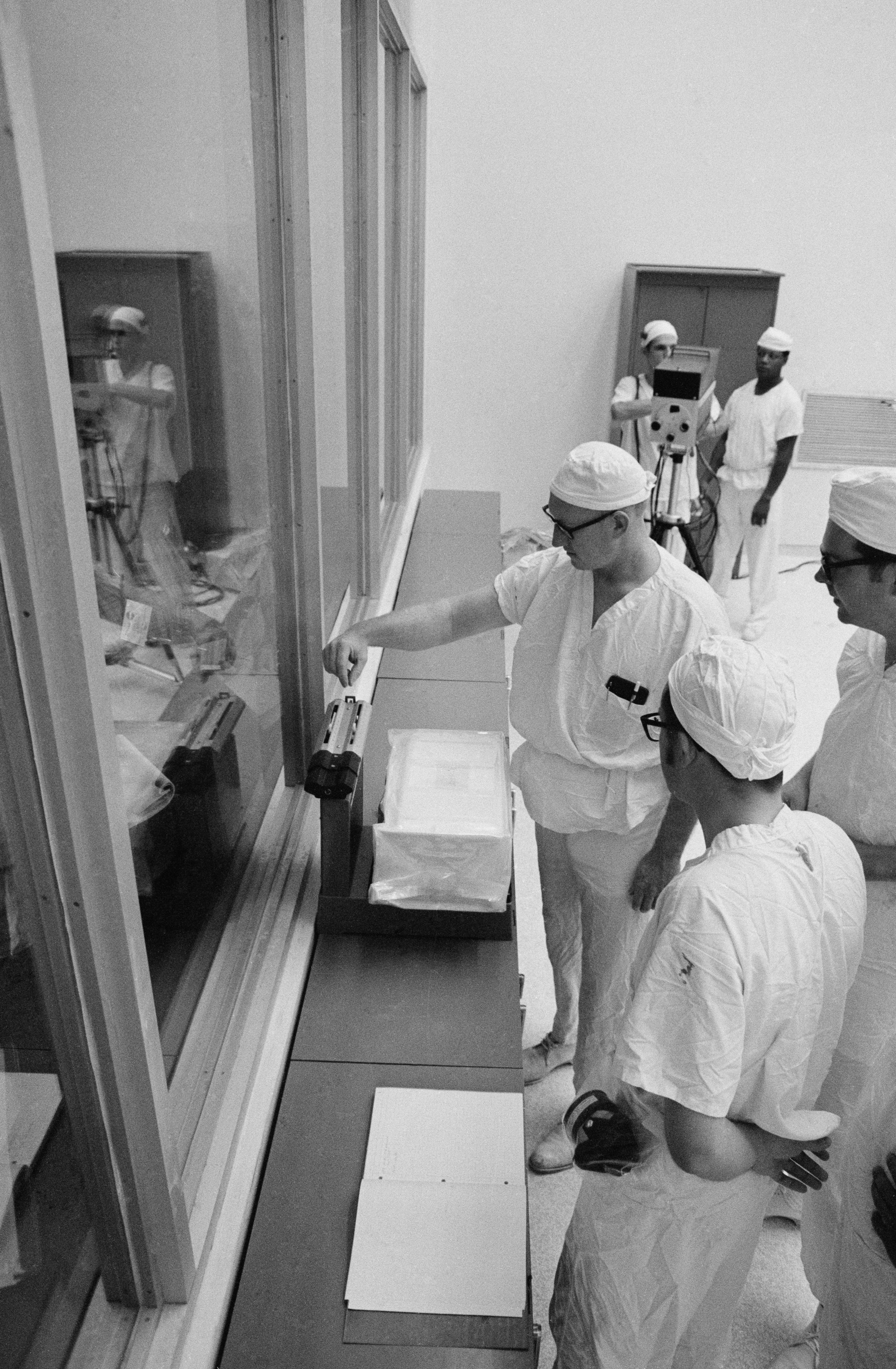
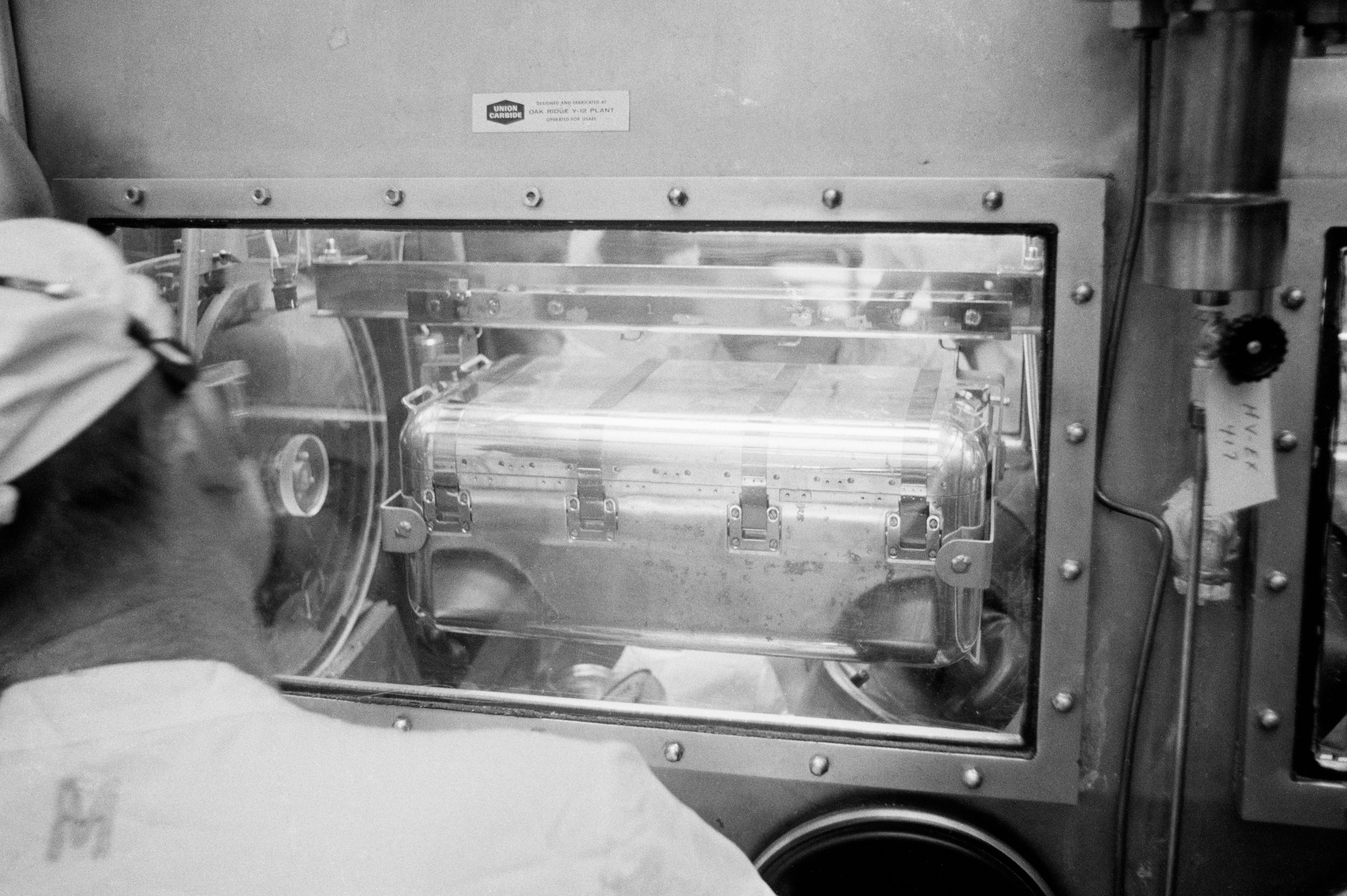
NASA officials Howard Schneider and Gary McCollum carry the first box of Moon rocks from the cargo plane to a waiting car for transport to the LRL at MSC In the LRL, technicians at MSC unpack the first box of Moon rocks Technicians weigh the box of Moon rocks The first box of Moon rocks inside a glovebox
July 25, 1969. Follow the Moon rocks from Ellington to the glovebox in the Lunar Receiving Laboratory (LRL). Left: NASA officials Howard Schneider and Gary McCollum carry the first box of Moon rocks from the cargo plane to a waiting car for transport to the LRL at MSC. Middle right: In the LRL, technicians at MSC unpack the first box of Moon rocks. Middle right: Technicians weigh the box of Moon rocks. Right: The first box of Moon rocks inside a glovebox.

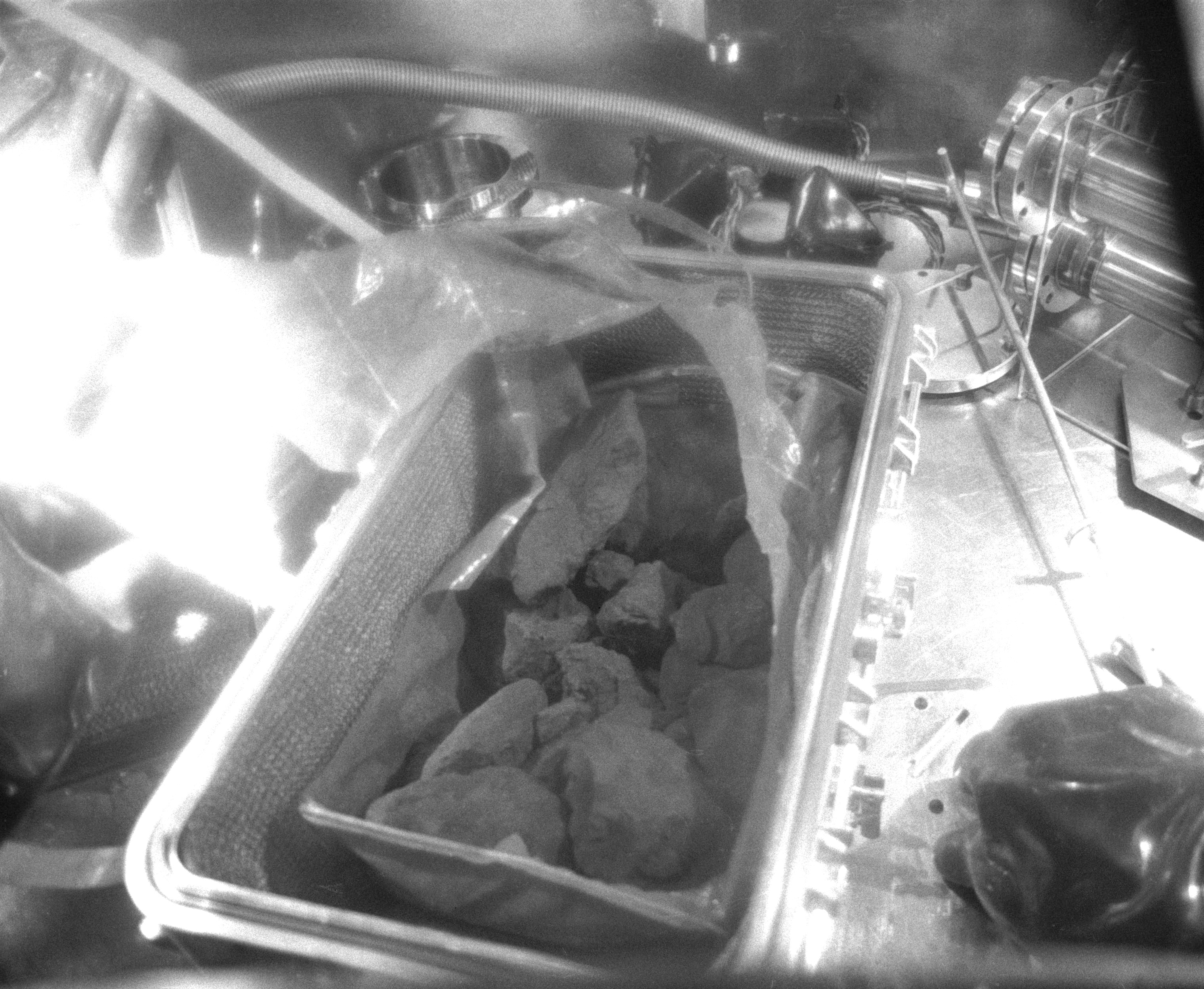
The first box of Moon rocks has been unwrapped The box has been opened, revealing the first lunar samples The first rock to be documented, less than 48 hours after splashdown
July 26, 1969. Follow the Moon rocks in the LRL glovebox. Left: The first box of Moon rocks has been unwrapped. Middle: The box has been opened, revealing the first lunar samples. Right: The first rock to be documented, less than 48 hours after splashdown.

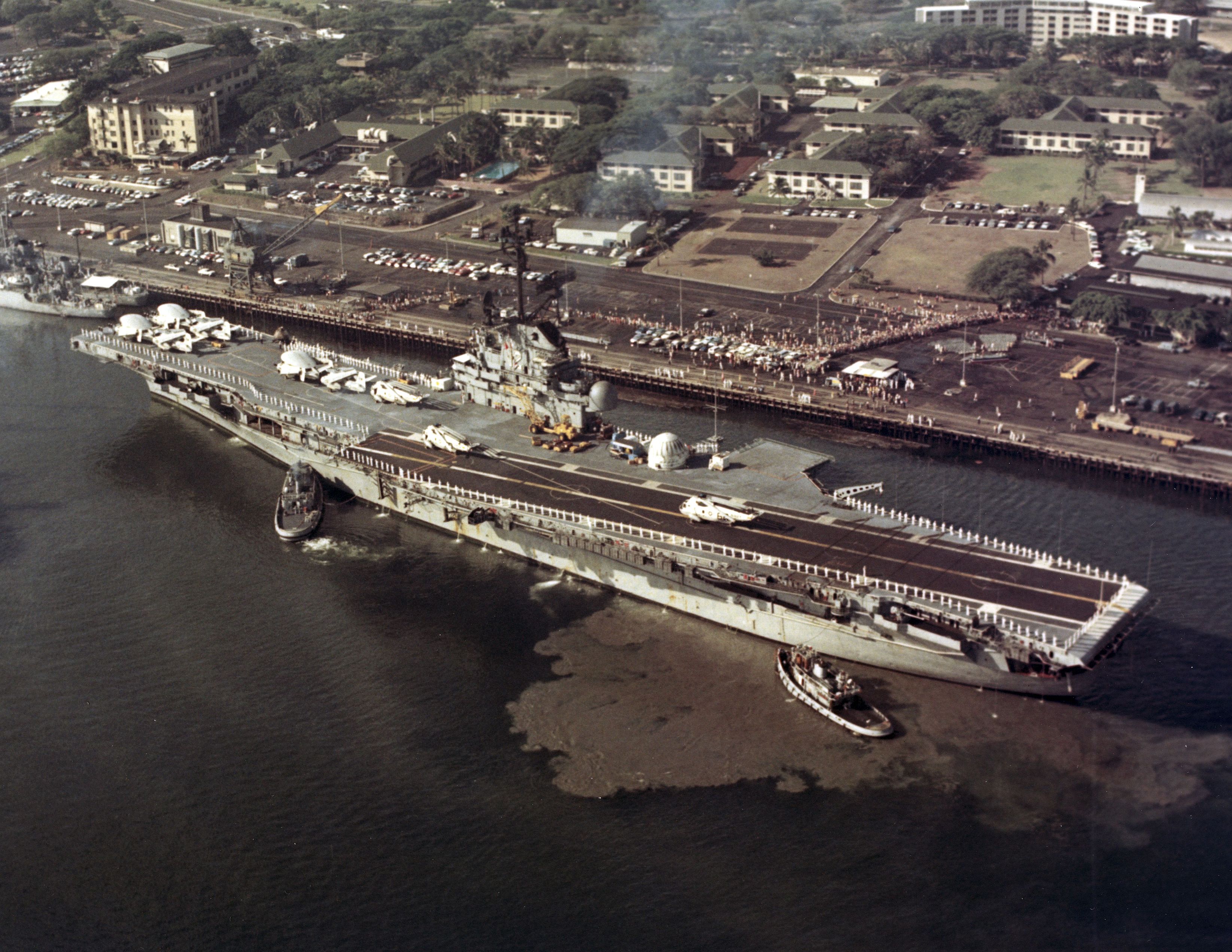
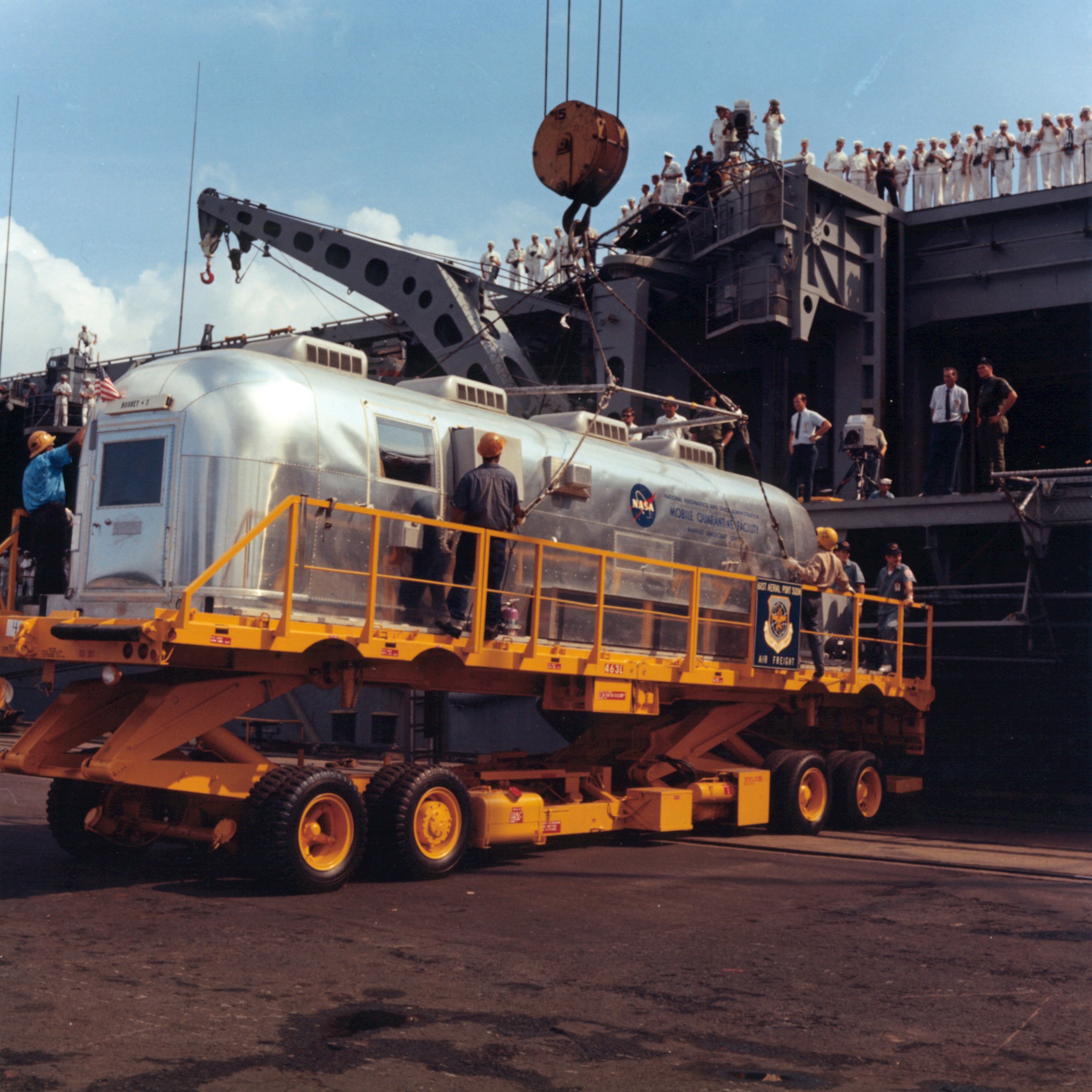
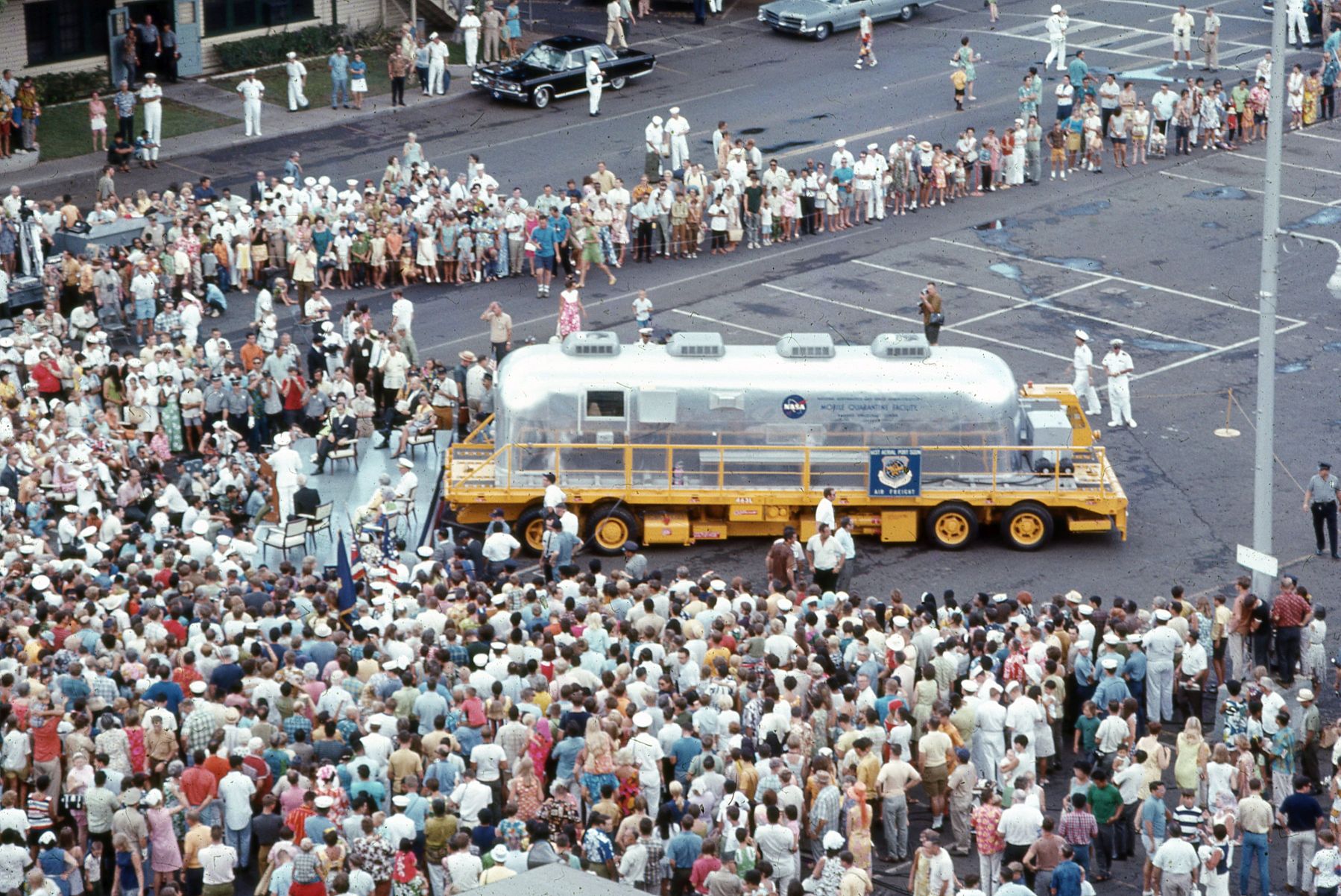
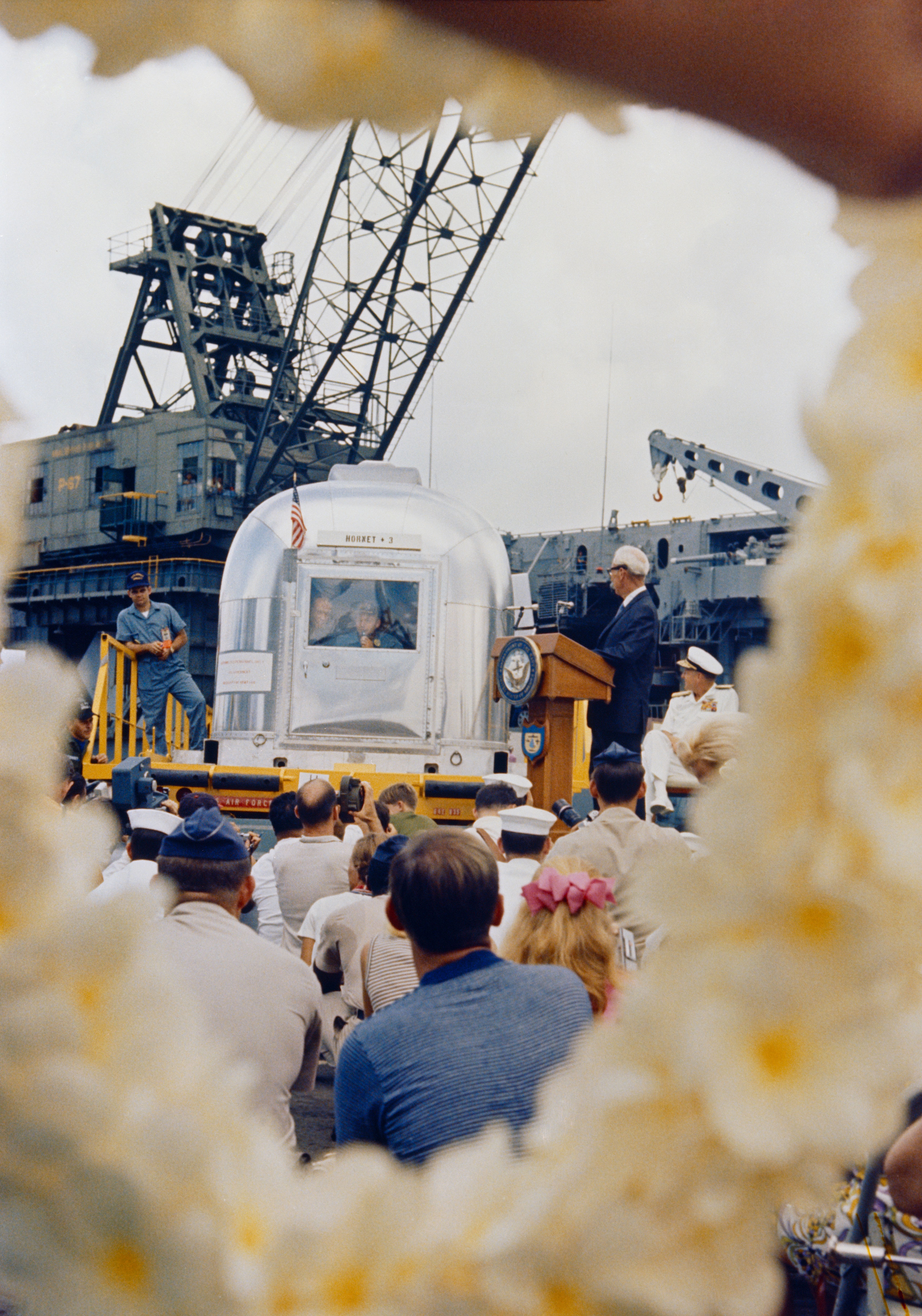
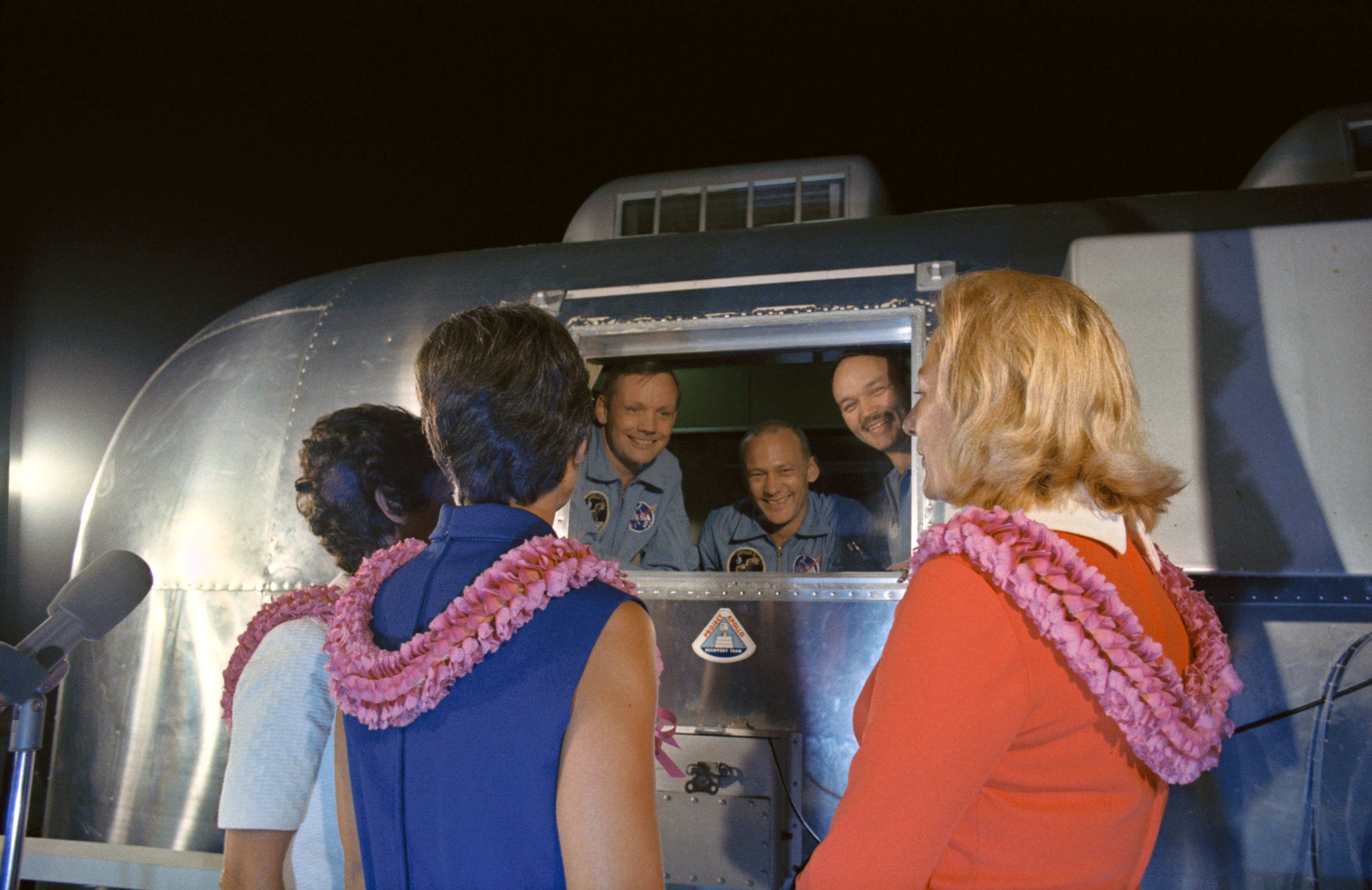
Two days after splashdown, the U.S.S. Hornet docks at Pearl Harbor in Honolulu Workers lift the MQF, with Neil, Mike, and Buzz inside, onto the pier A large welcome celebration for the Apollo 11 astronauts The MQF seen through a lei
July 26, 1969. Follow the astronauts from Hornet to Honolulu. Left: Two days after splashdown, the U.S.S. Hornet docks at Pearl Harbor in Honolulu. Middle left: Workers lift the MQF, with Neil, Mike, and Buzz inside, onto the pier. Middle right: A large welcome celebration for the Apollo 11 astronauts. Right: The MQF seen through a lei.

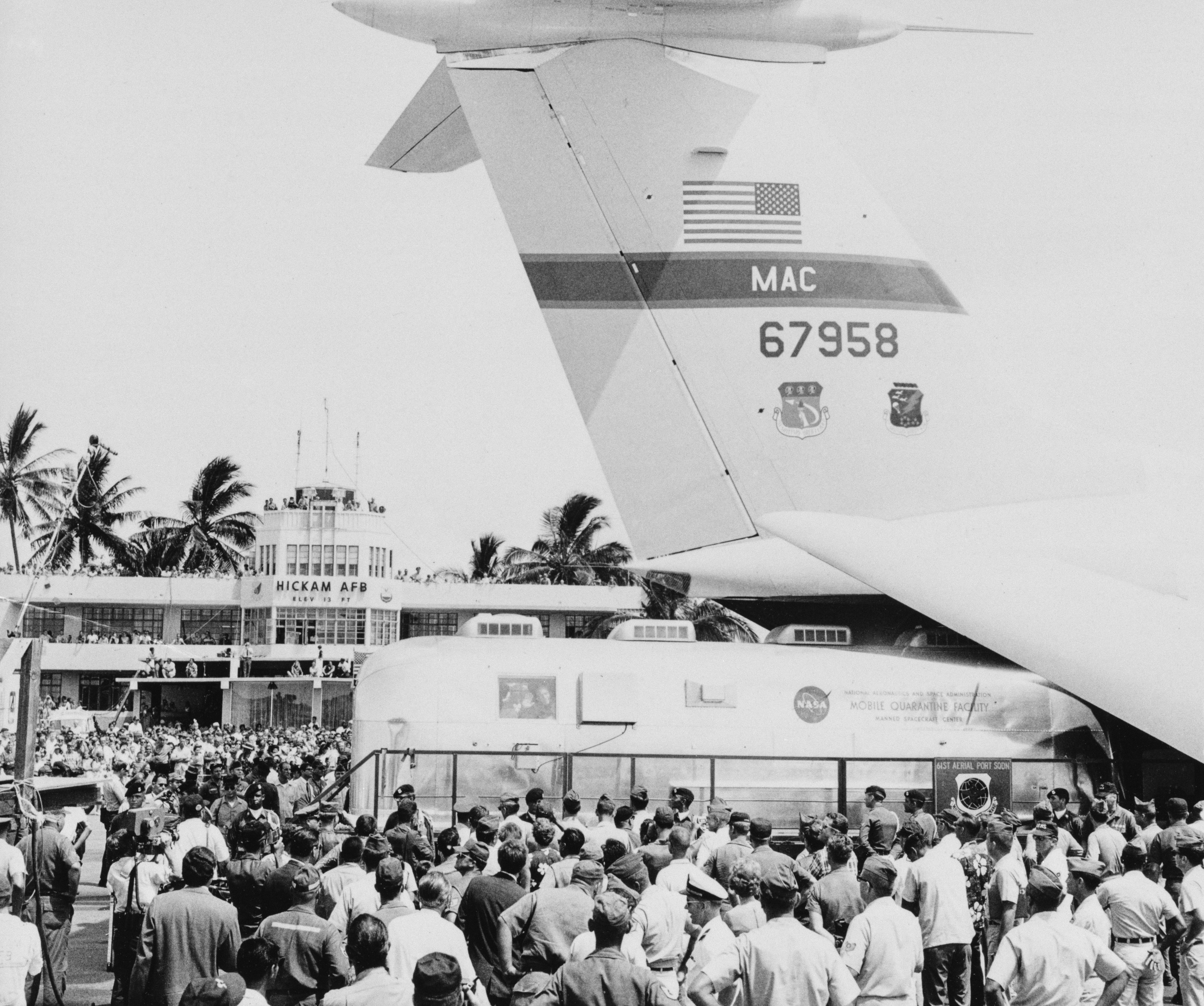
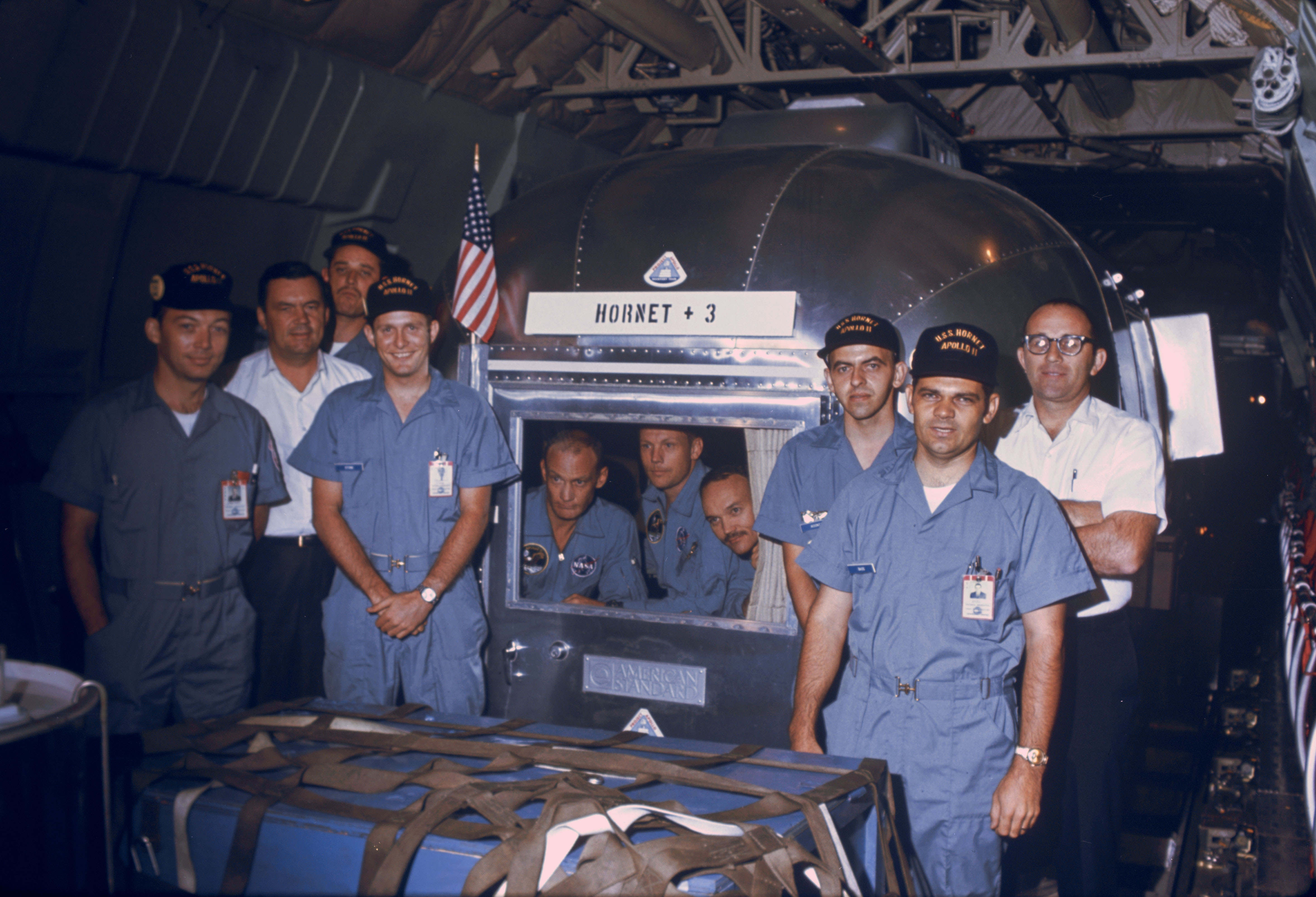
Workers truck the MQF from Pearl Harbor to nearby Hickam AFB Workers load the MQF onto a cargo plane at Hickam for the flight to Houston During the eight-hour flight, NASA recovery team members pose with Neil, Mike, and Buzz, seen through the window of the MQF Workers unload the MQF at Houston’s Ellington AFB
Follow the astronauts from Pearl Harbor to Ellington AFB. Left: Workers truck the MQF from Pearl Harbor to nearby Hickam AFB. Middle left: Workers load the MQF onto a cargo plane at Hickam for the flight to Houston. Middle right: During the eight-hour flight, NASA recovery team members pose with Neil, Mike, and Buzz, seen through the window of the MQF. Right: Workers unload the MQF at Houston’s Ellington AFB.

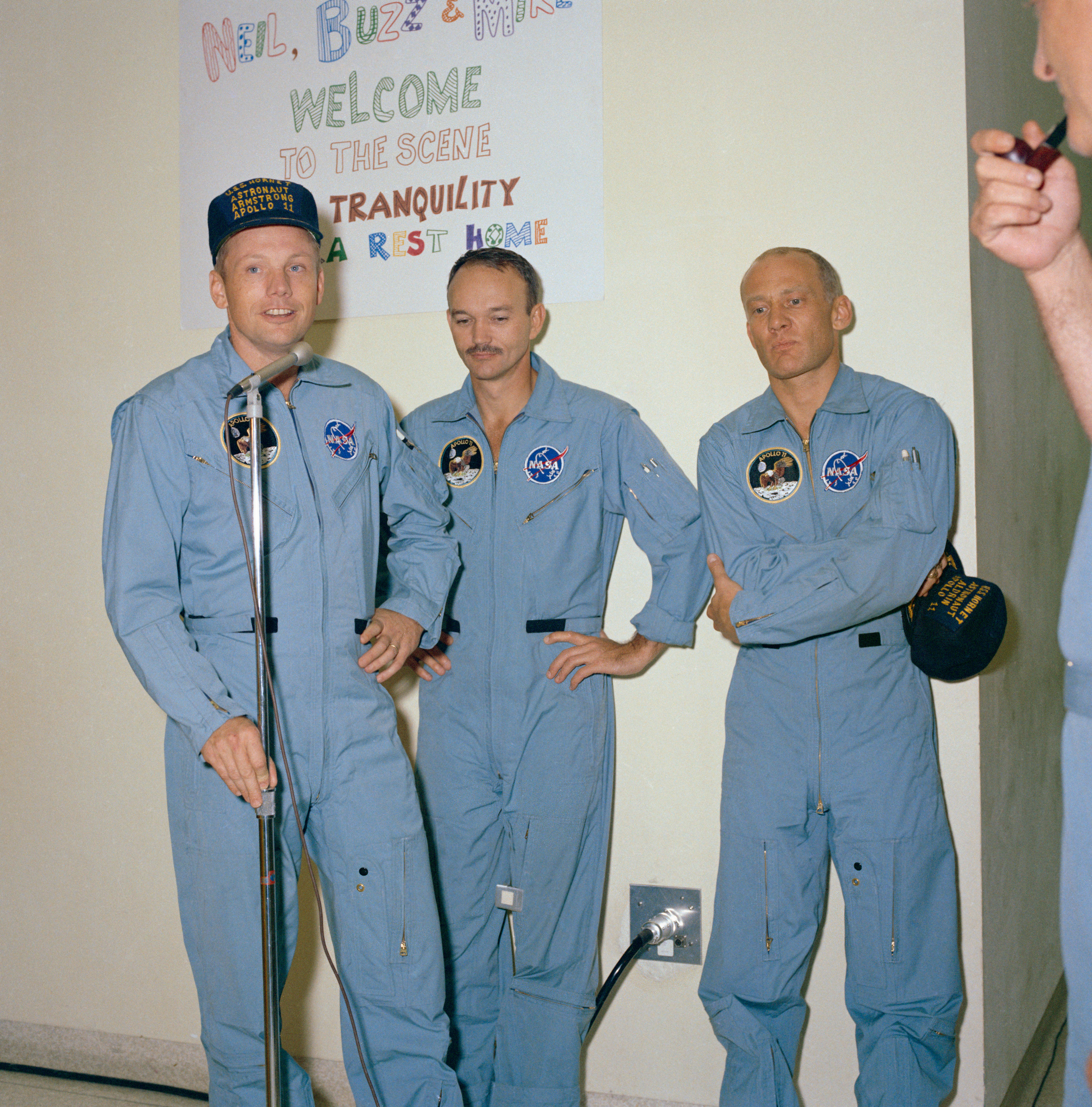
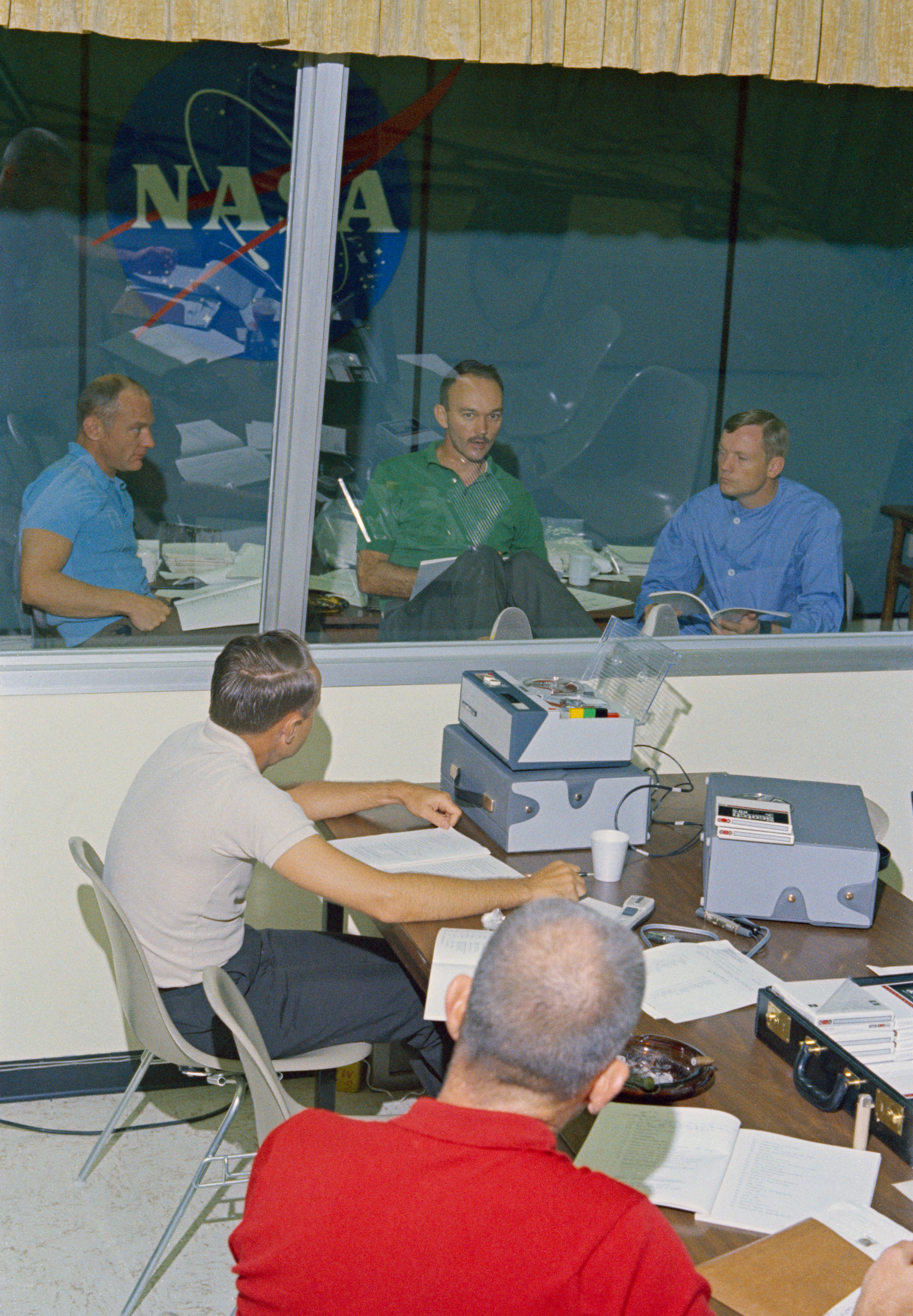
At Ellington, Neil, Mike, and Buzz reunite with their wives Jan, Pat, and TBS The MQF docks at the LRL Neil, Mike, and Buzz address the workers inside the LRL It’s back to work for Neil, Mike, and Buzz as they hold their debriefs in a glass-walled conference room in the LRL
July 27, 1969. Follow the astronauts from Ellington to working in the LRL. Left: At Ellington, Neil, Mike, and Buzz reunite with their wives Jan, Pat, and TBS. Middle left: The MQF docks at the LRL. Middle right: Neil, Mike, and Buzz address the workers inside the LRL. Right: It’s back to work for Neil, Mike, and Buzz as they hold their debriefs in a glass-walled conference room in the LRL.

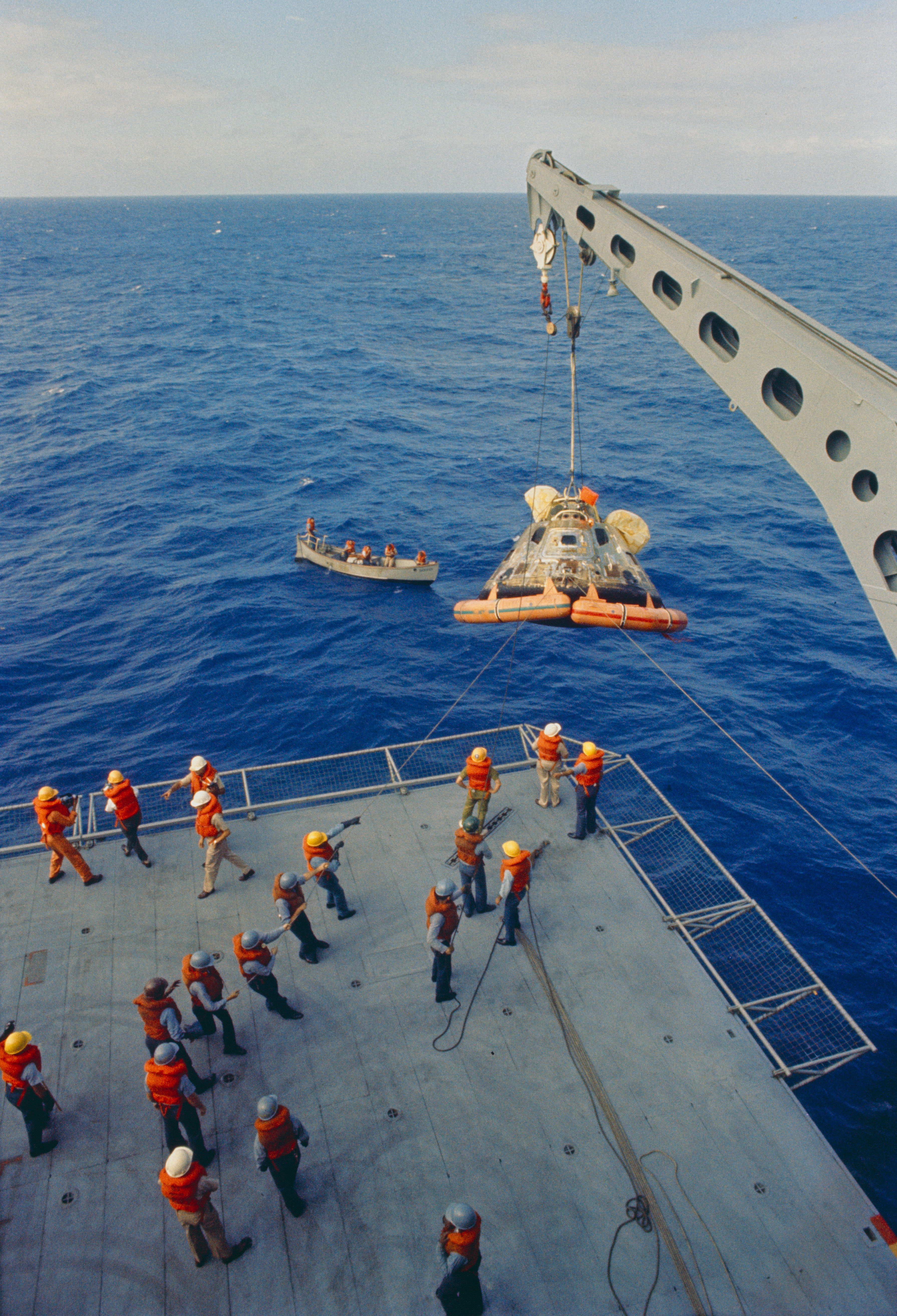
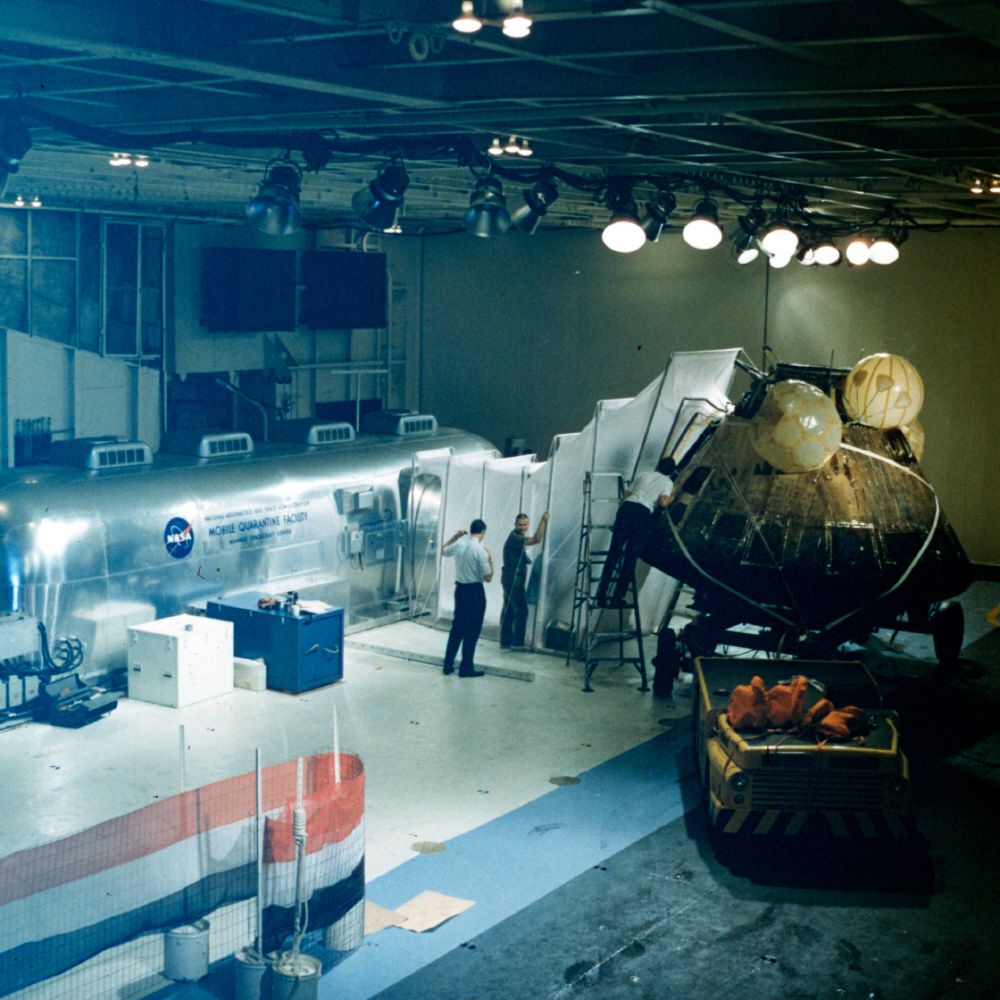
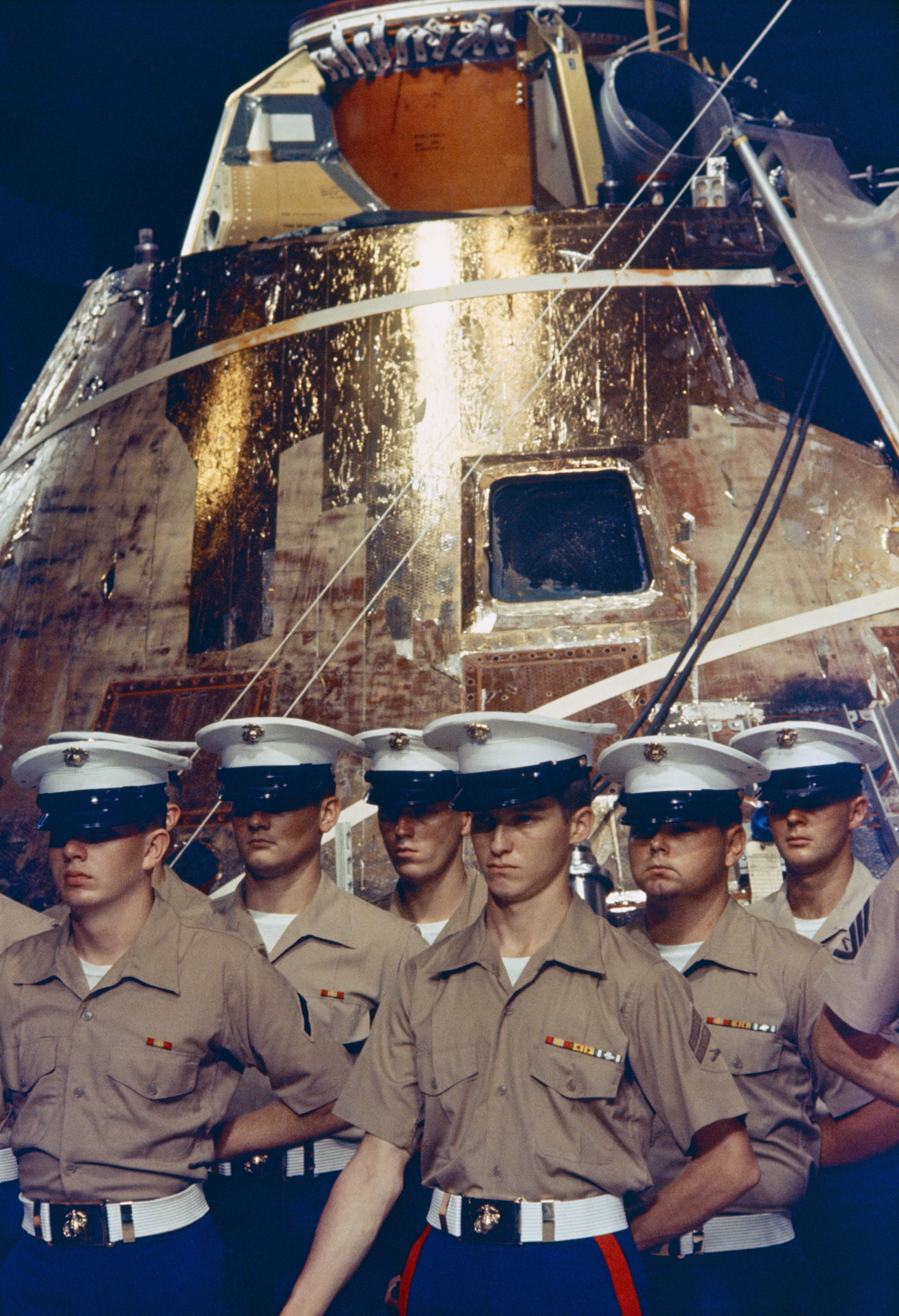
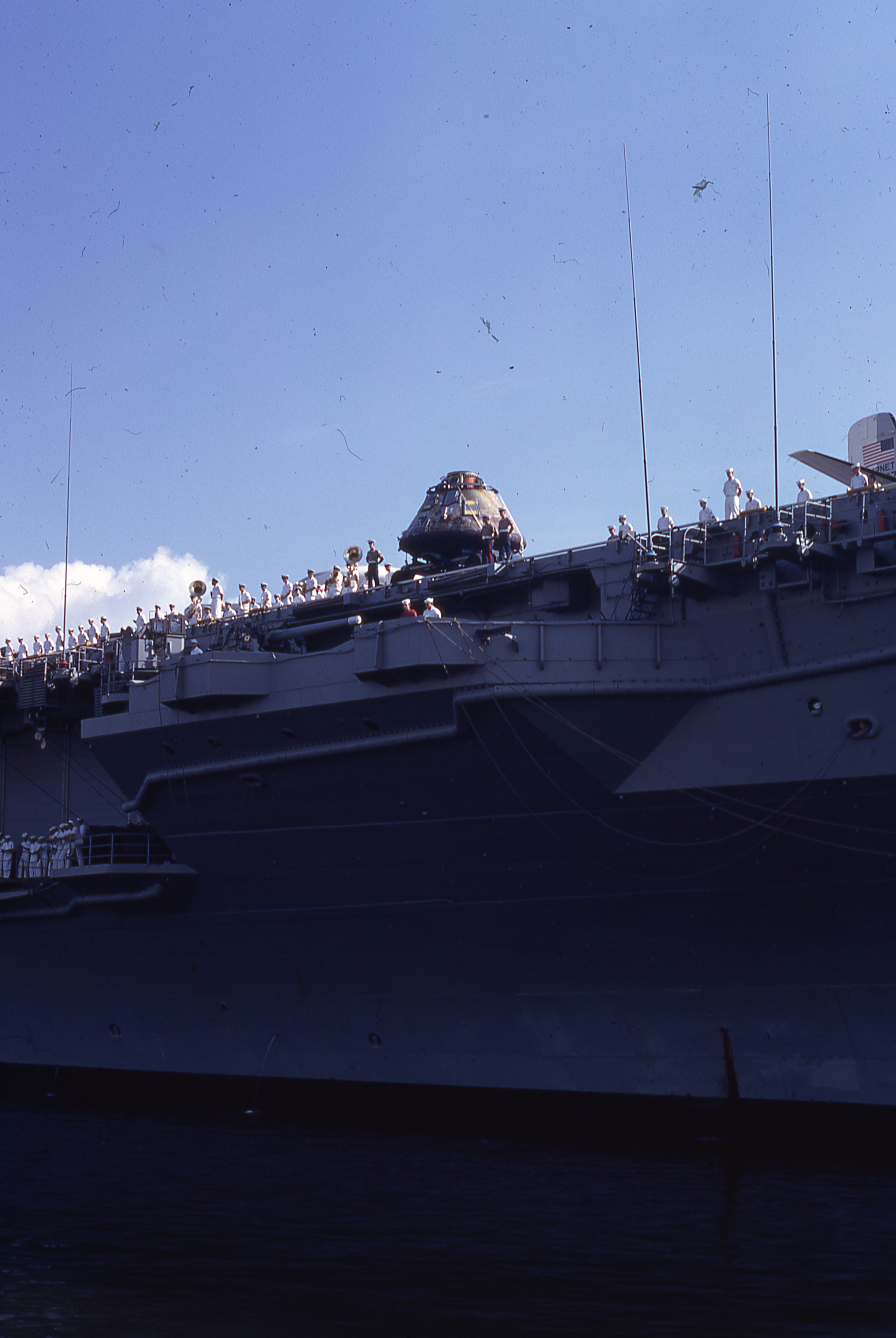
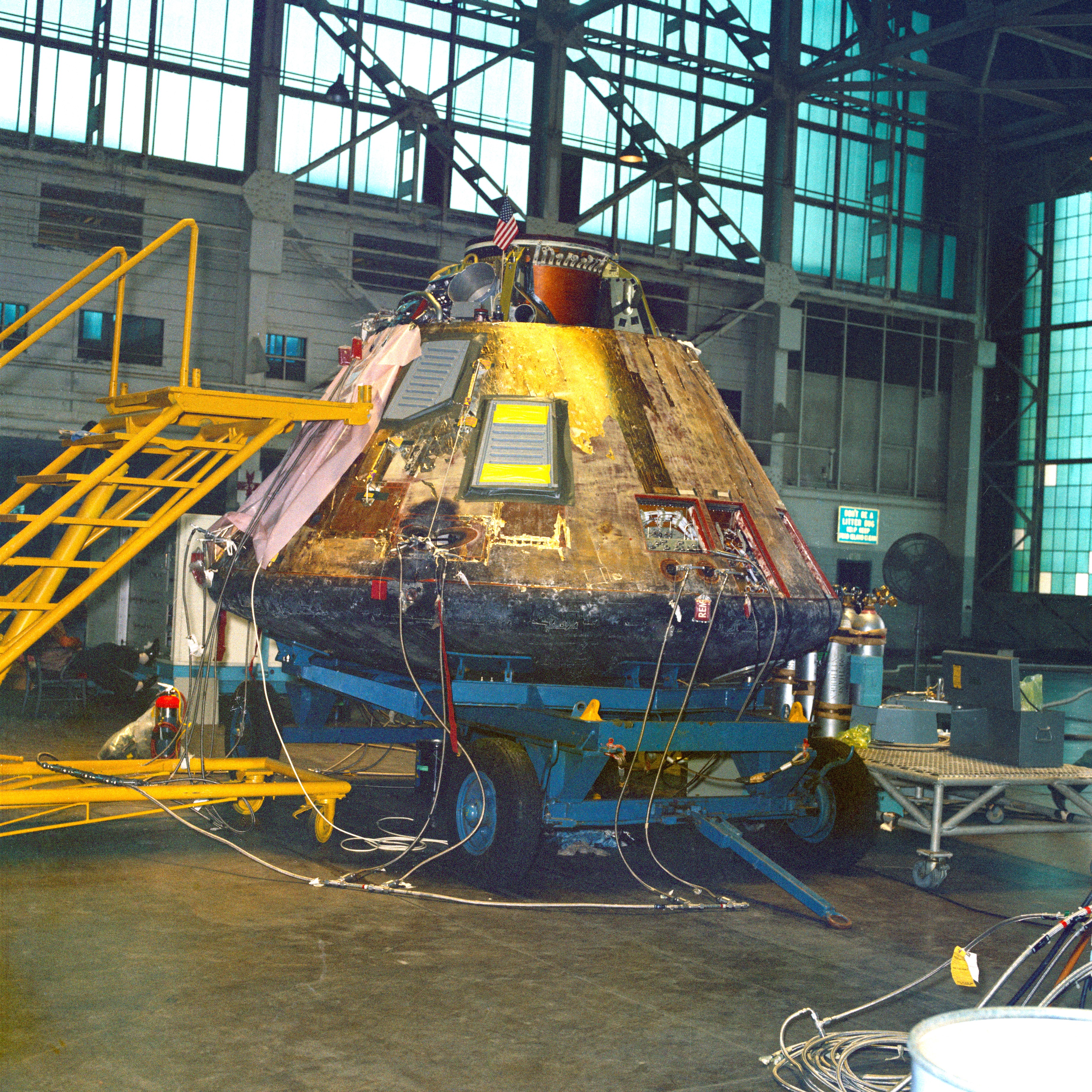
Sailors hoist the Command Module Columbia onto the deck of the U.S.S. Hornet The flexible tunnel connects the CM to the MQF, allowing for retrieval of the Moon rocks and other item U.S. Marines guard Columbia aboard the Hornet Columbia brought on deck as Hornet docks in Pearl Harbor NASA engineers safe Columbia on Ford Island in Honolulu
Follow the spacecraft from splashdown to Hawaii. Left: Sailors hoist the Command Module Columbia onto the deck of the U.S.S. Hornet. Middle left: The flexible tunnel connects the CM to the MQF, allowing for retrieval of the Moon rocks and other items. Center: U.S. Marines guard Columbia aboard the Hornet. Middle right: Columbia brought on deck as Hornet docks in Pearl Harbor. Right: NASA engineers safe Columbia on Ford Island in Honolulu.

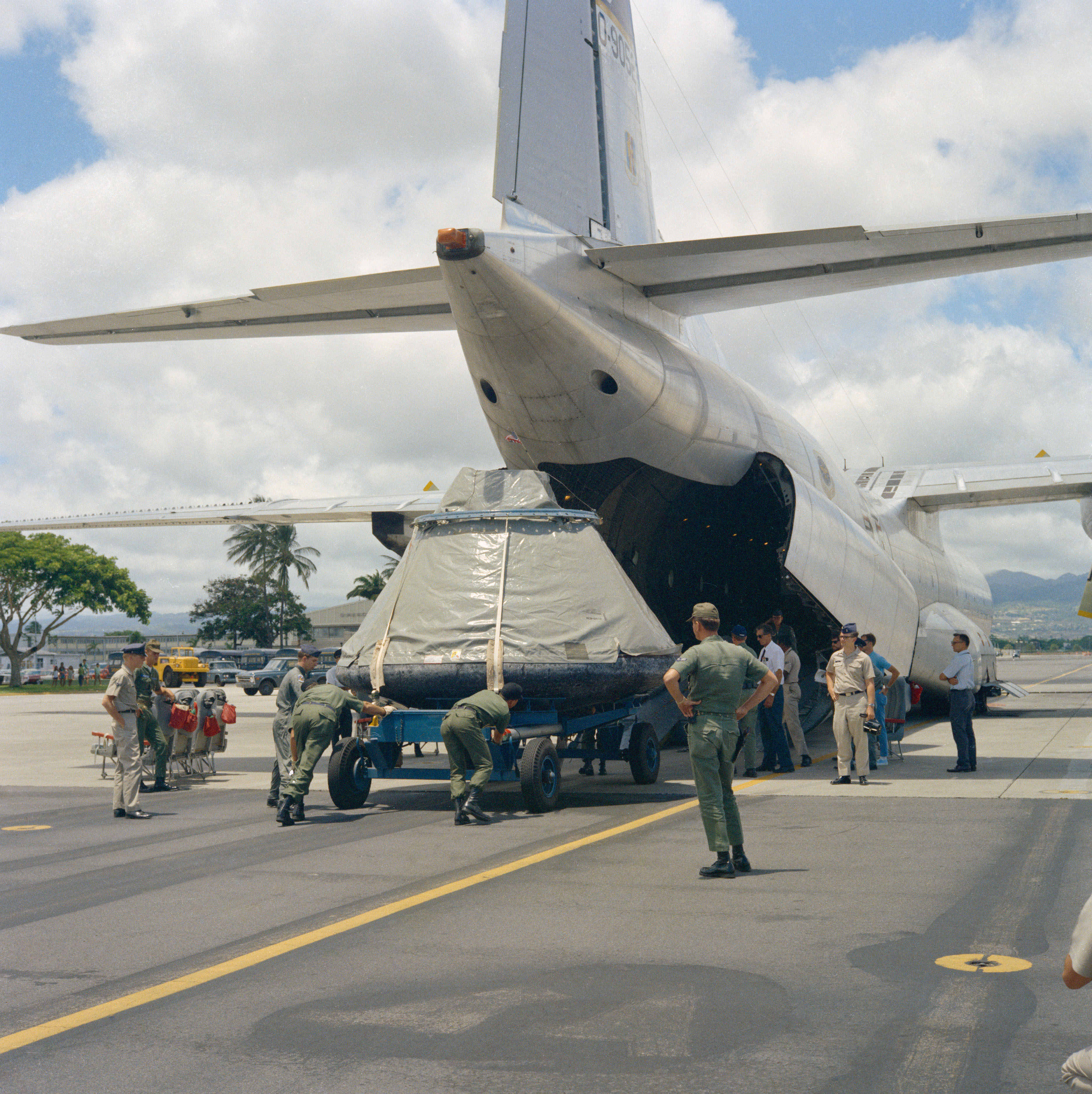
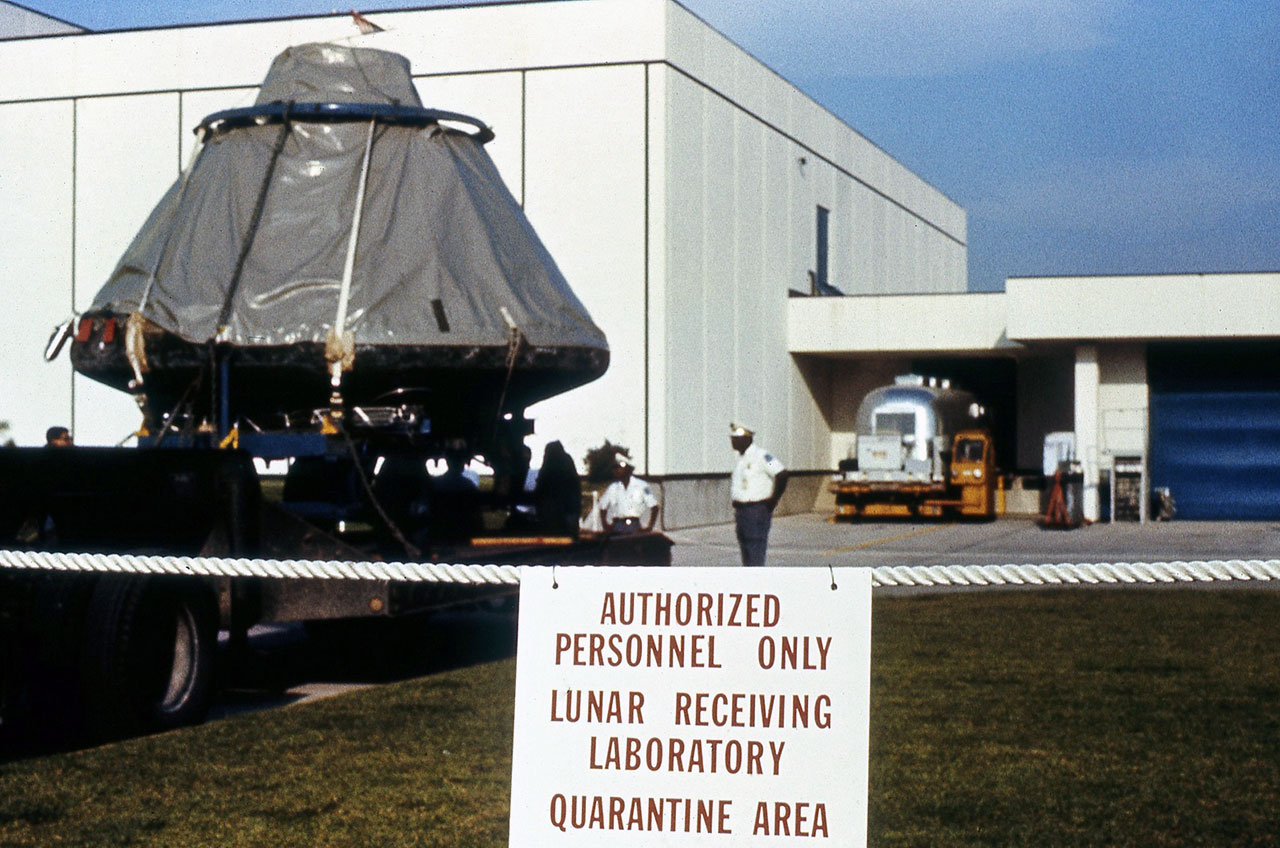
Airmen load Columbia onto a cargo plane at Hickam AFB for the flight to Houston Columbia arrives outside the LRL, where the MQF is still docked Hirasaki opens the hatch to Columbia in the LRL
July 31, 1969. Follow the spacecraft from Hawaii to the LRL. Left: Airmen load Columbia onto a cargo plane at Hickam AFB for the flight to Houston. Middle: Columbia arrives outside the LRL, where the MQF is still docked. Right: Hirasaki opens the hatch to Columbia in the LRL.

To be continued …

News from around the world in July 1969:

July 1 – Investiture of Prince Charles, age 21, as The Prince of Wales.

July 3 – 78,000 attend the Newport Jazz Festival in Newport, Rhode Island.

July 4 – John Lennon and the Plastic Ono Band release the single “Give Peace a Chance.”

July 11 – David Bowie releases the single “Space Oddity.”

July 11 – The Rolling Stones release “Honky Tonk Woman.”

July 14 – “Easy Rider,” starring Dennis Hopper, Peter Fonda, and Jack Nicholson, premieres.

July 18 – NASA Administrator Thomas O. Paine approves the “dry” workshop concept for the Apollo Applications Program, later renamed Skylab.

July 26 – Sharon Sites Adams becomes the first woman to solo sail the Pacific Ocean.

July 31 – Mariner 6 makes close fly-by of Mars, returning photos and data.

Powered by WPeMatico

Get The Details…
Kelli Mars

NASA Signs US, Saudi Arabia Agreement for Civil Aeronautics, Space Collaboration

NASA Signs US, Saudi Arabia Agreement for Civil Aeronautics, Space Collaboration

Image of the NASA logo
Credit: NASA

The United States and Saudi Arabia signed a framework agreement that opens new possibilities for cooperation with NASA in areas such as space science, exploration, aeronautics, space operations, education, and Earth science.

NASA Administrator Bill Nelson signed on behalf of the U.S., and CEO of the Saudi Space Agency Mohammed bin Saud Al-Tamimi signed on behalf of the Kingdom of Saudi Arabia.

“Building on my visit to Saudi Arabia earlier this year, I look forward to strengthening our cooperation for the future of exploration,” said Nelson. “We are living in the golden era of exploration – one that is rooted in partnership. This new agreement outlines how we’ll work together, and explore together, for the benefit of humanity.” 

Known as the “Framework Agreement Between the Government of the United States of America and the Government of The Kingdom of Saudi Arabia on Cooperation in Aeronautics and the Exploration and Use of Airspace and Outer Space for Peaceful Purposes,” it establishes the overall legal framework to facilitate and strengthen mutually beneficial collaboration between the two countries.

“The agreement represents a turning point in the Kingdom’s journey towards building a strong and prosperous space sector,” said Saudi Space Agency Chairman Abdullah bin Amer Al-Swaha. “It reflects the Kingdom’s firm commitment to progress and innovation in the field of space, and its continuous efforts to enhance its position as an important partner on the global stage for space exploration and scientific discovery.” 

The agreement also acknowledges the importance of the Artemis Accords, which Saudi Arabia signed in July 2022, for the transparent, safe, and responsible exploration of space. The commitments of the Artemis Accords, and efforts by the signatories to advance implementation of all its principles, support NASA’s Artemis campaign with its partners and other activities of the accords signatories.

The signing comes two months after Nelson’s visit to Saudi Arabia, where he met with Saudi Space Agency and other senior officials to discuss future partnerships and civil space cooperation for the broader U.S. and Saudi Arabia relationship.

In May 2023, two Saudi mission specialists, Ali Alqarni and Rayyanah Barnawi, were among a group of Axiom Mission-2 private astronauts who launched into orbit aboard a SpaceX Dragon from NASA’s Kennedy Space Center in Florida, highlighting international cooperation. The Axiom Space astronauts conducted scientific research, outreach, and commercial activities aboard the International Space Station.

For more information about NASA’s international partnerships, visit:

https://www.nasa.gov/oiir

-end-

Meira Bernstein / Elizabeth Shaw
Headquarters, Washington
202-358-1600
meira.b.bernstein@nasa.gov / elizabeth.a.shaw@nasa.gov

Share

Details

Last Updated

Jul 16, 2024

Powered by WPeMatico

Get The Details…
Tiernan P. Doyle

Prepare for Perseids!

Prepare for Perseids!

4 Min Read

Prepare for Perseids!

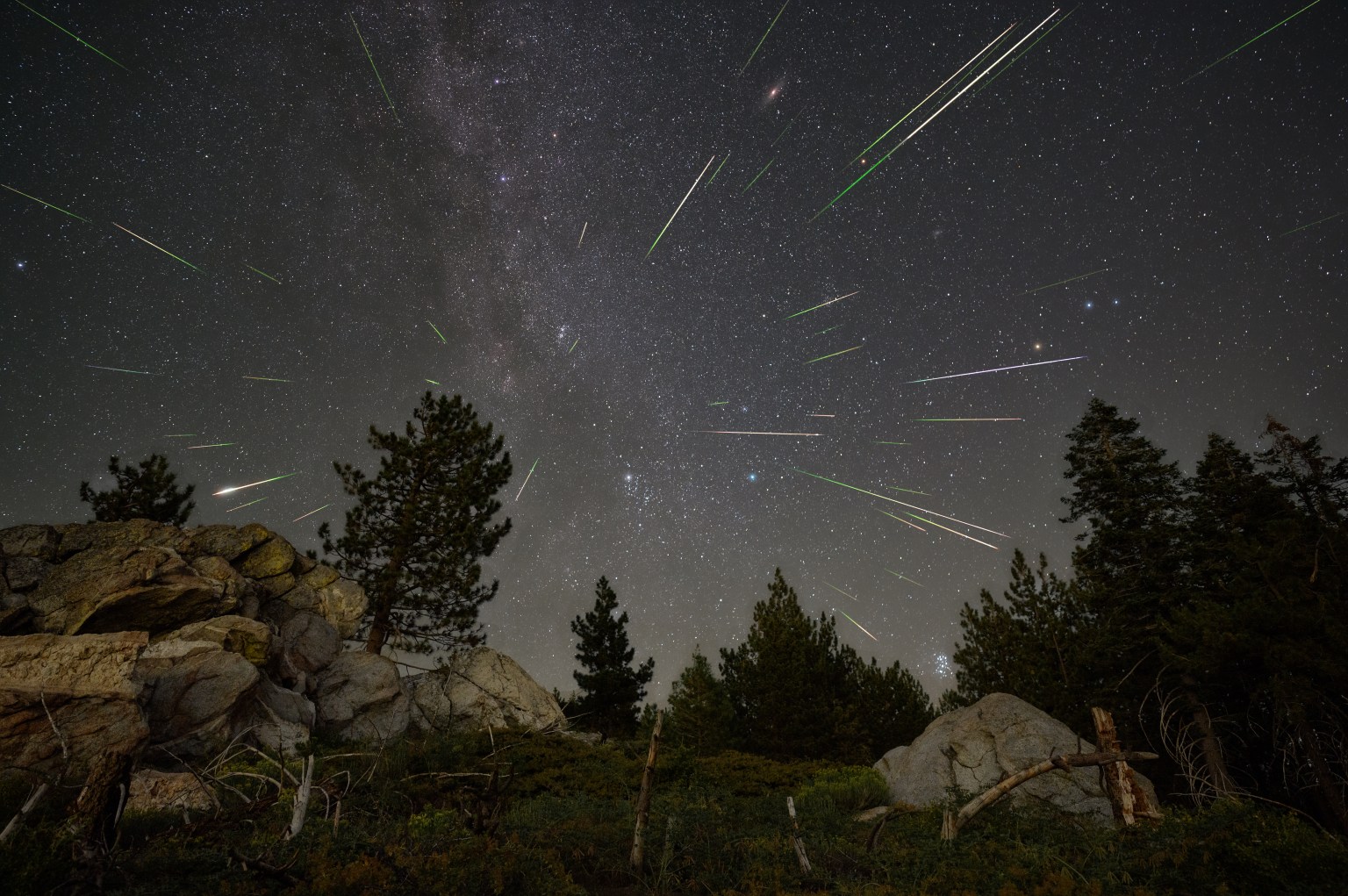
Dark sky with streaks of light from the Perseid meteor shower.
A view of the 2023 Perseid meteor shower from the southernmost part of Sequoia National Forest, near Piute Peak.
Credits:
NASA/Preston Dyches

Are you ready for the 2024 Perseids? Their peak is expected to be on the night of August 11 through the morning of the 12th, with good seeing to be had the nights before and after. You may have already spotted a few Perseids streaking across the summer skies! This shower, part of the debris stream of comet Swift-Tuttle, actually starts in mid to late July and lasts through most of August. While most of these nights only showcase a few meteors each hour, the peak of the Perseids brings many, many more. How much more? The number actually varies every year; there can be as little as a few dozen per hour, but some rare years bring a brief “burst’ of up to two hundred beautiful “shooting stars” an hour.

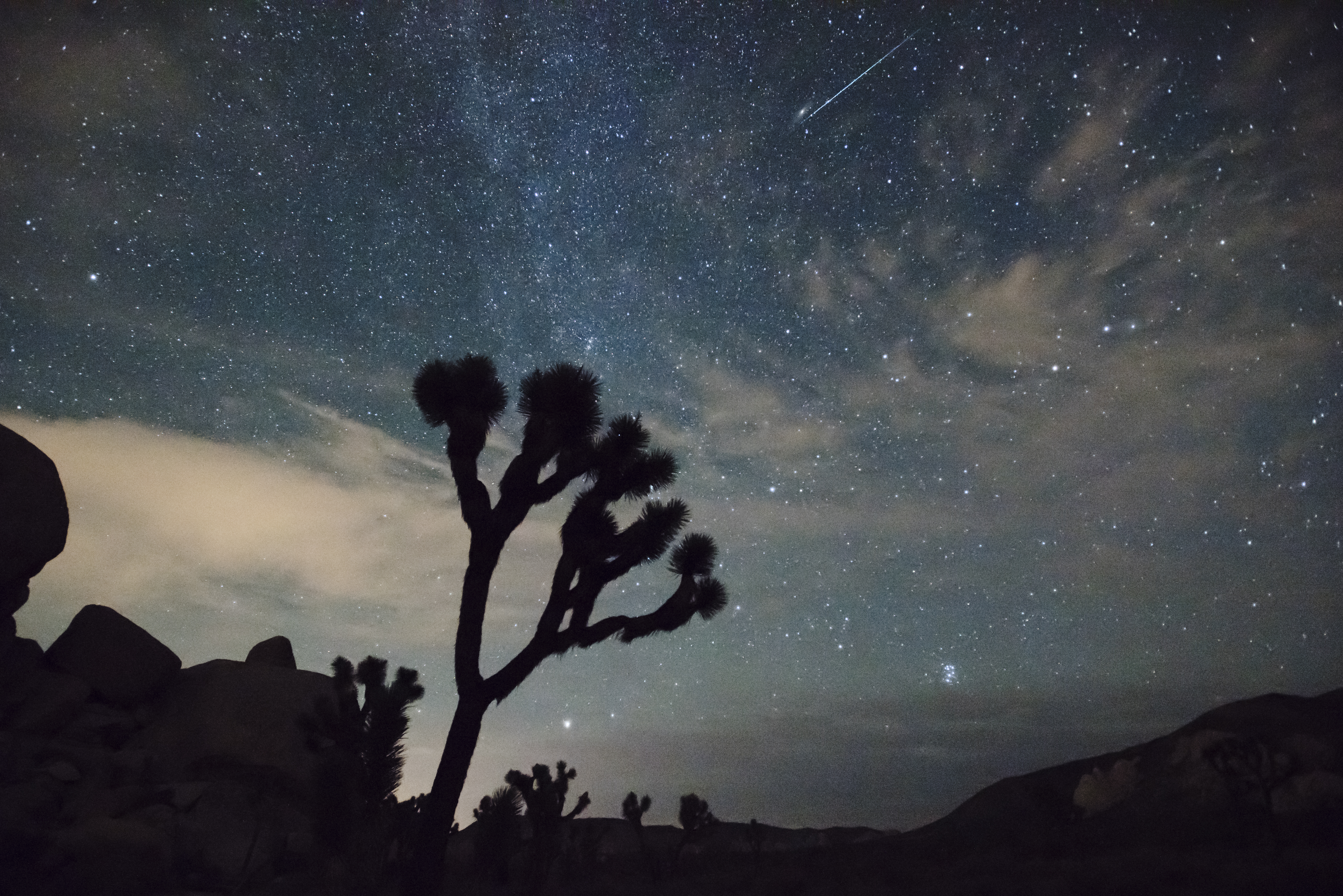
Image of a Perseid meteor streaking over Joshua Tree National Park
Image of a Perseid meteor streaking over Joshua Tree National Park.
Brad Sutton/National Parks Service

This year’s Perseids will be slightly impacted by a 53% waxing Moon, but the Moon will set right as the Perseids begin to peak! This means that if you are in an area free from light pollution and enjoy clear skies, you may be able to see quite a few meteors over the course of the night! How many will you be able to see? There’s only one way to find out for yourself how strong the Perseids will be this year: go outside and patiently watch!

We have a few tips on how to make the most of your meteor shower viewing experience: 

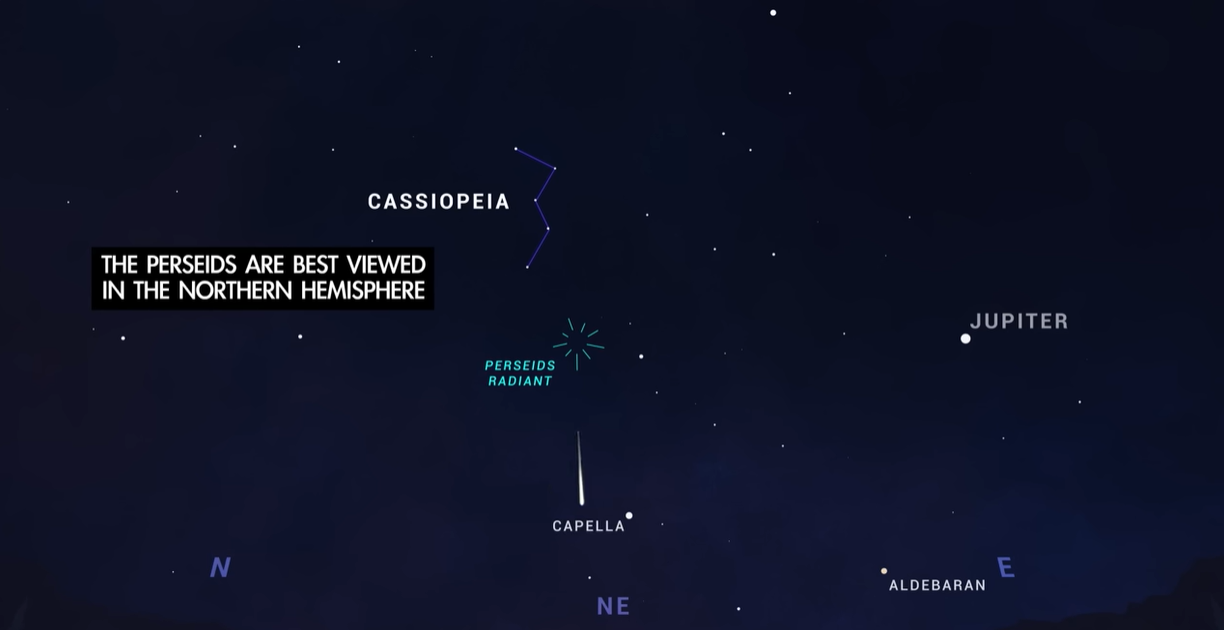
Map of the night sky showing the radiant of the Perseids, and the constellation Cassiopeia with the text: The Perseids are best viewed in the northern hemisphere
If you trace the meteor trails of the Perseids back to their source, you will find they seem to come from a spot near the constellation Perseus – hence their name, and the name of most meteor showers.
What’s Up: August 2023, NASA/JPL
  • Get out of the city!  Try to get to the darkest location you can. The darker it is where you are, the more meteors you will see streaking across the sky.
  • Check the weather forecast for that night. You may need to check out two or three areas for predictions on fog, clouds, and temperature. Some weather sites even offer forecasts specially tailored for sky watching. Make sure you have clear skies to go along with those dark ones.
  • Find a meteor shower party! Go to a gathering of like-minded folks in a local park, or an event hosted by a local astronomy club – especially if it’s your first time! Find a Perseids party by searching the Night Sky Network for clubs near you, or by searching for events near you 
  • Stay warm and comfortable outside-be prepared! You will be out for a good long while and will want to lie flat on your back to soak up as much of the sky as possible. To stay cozy, bring a blanket, jacket, hat, a warm drink, and water. You may think it’s silly to bring some warm clothes in the middle of the summer, but late at night the temperature can drop just enough to be chilly.  If you are in a buggy area, you will want to apply some bug spray to avoid irritating bites
  • Bring your friends and family! Company under starry skies is wonderful, and they provide a bonus since there are more eyes on the sky! Groups can spot more meteors than single individuals and help each other find ‘hot spots” in the sky. (Also- if you are out in the wilderness in the dark, good company helps you feel safer.)

For more information on one of our favorite meteor showers, check out NASA’s Perseid page and EarthSky’s great observing guide. You should also check out JPL’s August 2023 “What’s Up? video as Preston Dyches offers great tips on how to watch for the Perseids, as well as other objects to look for in the night skies while you wait for these brilliant streaks. You can also use NASA’s “Fluximator” meteor shower activity application to try to predict when the peak activity will be for your location.  We also have a handout you can use at your star parties and outreach events: Heads up! It’s a Meteor Shower resource page.

Have fun and may you have clear skies and great weather for your meteor shower party!

Originally posted by Dave Prosper: August 2018

Last Updated by Kat Troche: May 2024

Powered by WPeMatico

Get The Details…