NASA Invites Media to Event with Scientists, Research Plane in Alaska

NASA Invites Media to Event with Scientists, Research Plane in Alaska

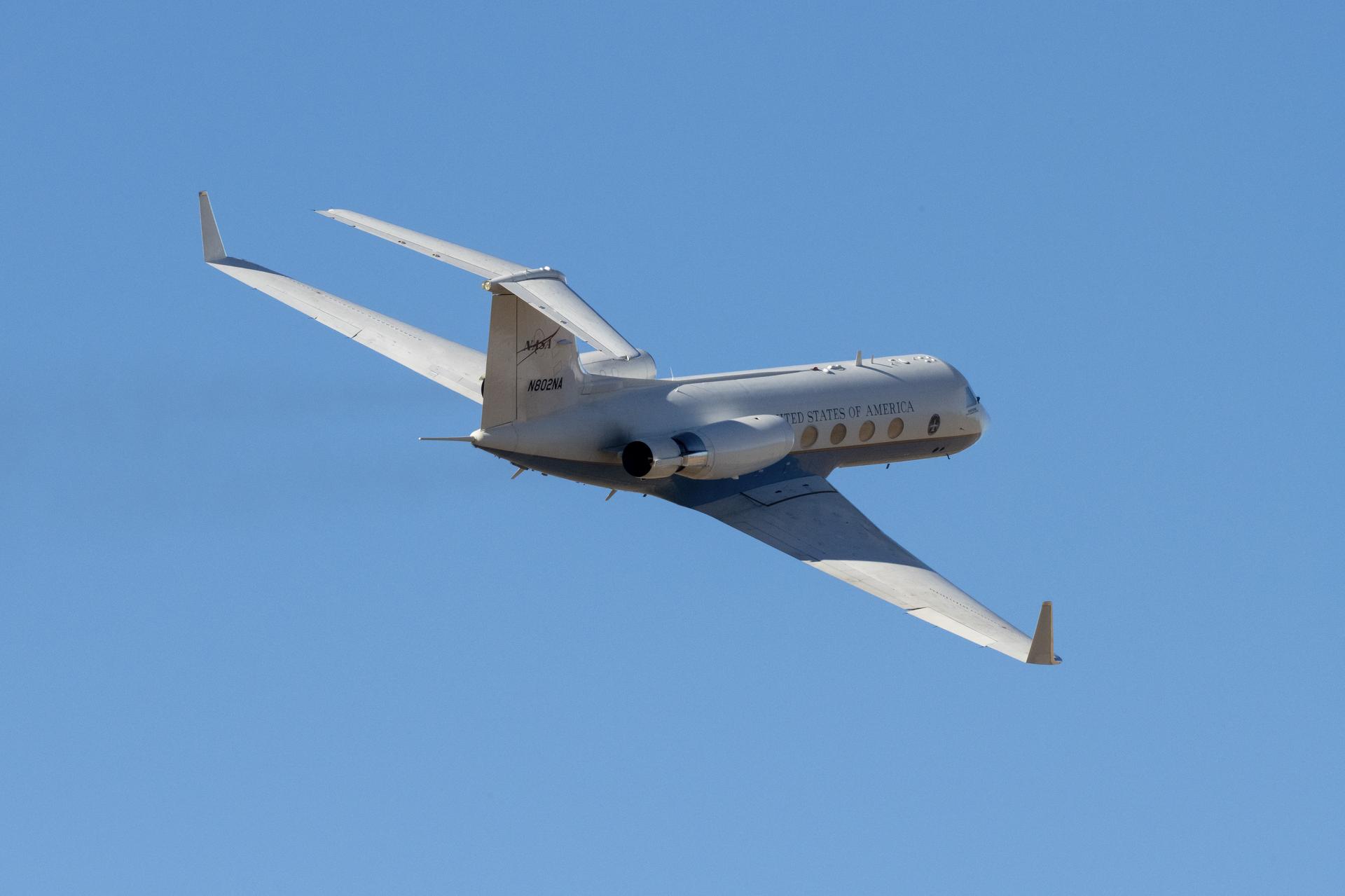
The NASA C-20A (Gulfstream III), shown here in a file photo, is an aircraft that has been structurally modified and instrumented by NASA’s Armstrong Flight Research Center in Edwards, Calif., to serve as a versatile, collaborative research platform for the Earth science community and other researchers.
NASA/Jim Ross

NASA invites media to view a research aircraft and interview scientists in Fairbanks, Alaska, on Thursday, Aug. 22, prior to flights of the agency’s Arctic-Boreal Vulnerability Experiment (ABoVE), which seeks a better understanding of the sensitivity of northern ecosystems and communities to climate change.

Media also will have the opportunity to tour NASA’s C-20A, a modified Gulfstream III aircraft from the agency’s Armstrong Flight Research Center in Edwards, California, and meet scientists and instrument team members using ABoVE’s radar instrument from NASA’s Jet Propulsion Laboratory in Southern California. Media are welcome to film researchers on the ground as they communicate with the airborne team.   

Weather permitting, the ABoVE media availability will take place from 3:30 p.m. to 5:30 p.m. AKDT at the Omni Logistics aircraft hangar, 6302 Old Airport Road, Fairbanks. Media interested in participating should contact Dr. Elizabeth Hoy, senior support scientist, at elizabeth.hoy@nasa.gov prior to the event. NASA’s media accreditation policy is online.

view from inside the cockpit of a NASA research aircraft; two people operate numerous controls while a green landscape is visible through the windows
With the help of research aircraft, NASA’s Arctic-Boreal Vulnerability Experiment (ABoVE) has sought better understanding of the sensitivity of northern ecosystems and communities to climate change for nearly a decade. This cockpit view was captured during a 2022 ABoVE flight.
NASA/Katie Jepson

Climate change in the Arctic and boreal regions is unfolding faster than anywhere else on Earth, resulting in reduced Arctic Sea ice, thawing of permafrost soils, decomposition of long-frozen organic matter, widespread changes to lakes, rivers, coastlines, and alterations of ecosystem structure and function.

Nearly a decade of ABoVE flights has enabled accurate comparisons over time of permafrost, thermokarst, and boreal forests. The 2024 ABoVE field campaign covers Alaska and western Canada. It is coordinated through NASA’s Terrestrial Ecology Program. 

For more information on ABoVE, visit:

https://above.nasa.gov

-end-

Rob Garner
Goddard Space Flight Center, Greenbelt, Md.
301-286-5687
rob.garner@nasa.gov

Share

Details

Last Updated

Aug 14, 2024

Editor
Rob Garner
Contact
Rob Garner
Location
Goddard Space Flight Center

Powered by WPeMatico

Get The Details…
Rob Garner

NASA Funds Research Projects Advancing STEM Career Development

NASA Funds Research Projects Advancing STEM Career Development

Image of the NASA logo
Credit: NASA

NASA has awarded $6 million to 20 teams from emerging research institutions across the United States supporting projects that offer career development opportunities for science, technology, engineering, and mathematics (STEM) students.

This is the third round of seed funding awarded through the agency’s MOSAICS (Mentoring and Opportunities in STEM with Academic Institutions for Community Success) program, formerly the Science Mission Directorate Bridge Program. The program seeks to expand access to NASA research opportunities in the science and engineering disciplines, as well as to NASA’s workforce.

“The STEM workforce continues to grow, and today’s students, studying at a variety of higher-education institutions — community colleges, primarily undergraduate institutions, and minority-serving institutions — are the STEM workforce of tomorrow, who will work to solve some of our biggest challenges at home while answering some of our biggest questions about our universe,” said Padi Boyd, director of MOSAICS at NASA Headquarters in Washington. “Exposing today’s students to the incredibly inspiring and cutting-edge discoveries made through NASA’s space science people and resources ensures that these students get the training they need to persist in STEM careers, while fostering enduring collaborations between NASA researchers and faculty at a wide range of institutions.”

NASA’s Science Mission Directorate MOSAICS program funds research projects building relationships between college faculty and researchers at the agency while providing mentorship and training for students in STEM disciplines. The projects support teams at academic institutions that historically have not been part of the agency’s research enterprise — including Hispanic-serving institutions, historically Black colleges and universities, Asian American and Native American Pacific Islander-serving institutions, and primarily undergraduate institutions.

The program previously awarded seed funding to 11 teams in February and 13 teams in April. This third cohort brings the total number of projects funded to 44 teams at 36 academic institutions in 21 U.S. states and territories, including Washington and Puerto Rico, in collaboration with seven NASA centers. A new opportunity to apply for seed funding is now open until March 28, 2025.

The following projects were selected as the third cohort to receive seed funding:

“Bridging Fundamental Ice Chemistry Studies and Ocean World Explorations”
Principal investigator: Chris Arumainayagam, Wellesley College, Massachusetts
NASA center: NASA’s Jet Propulsion Laboratory (JPL), Southern California

“Planetary Analog Field Science Experiences for Undergraduates: Advancing Fundamental Research and Testing Field Instrument Operations”
Principal investigator: Alice Baldridge, Saint Mary’s College of California
NASA center: NASA’s Goddard Space Flight Center, Greenbelt, Maryland

“Building an FSU-JPL Partnership to Advance Science Productivity Through Applications of Deep Learning”
Principal investigator: Sambit Bhattacharya, Fayetteville State University, North Carolina
NASA center: NASA JPL

“CSTAT: Establishing Center for Safe and Trustworthy Autonomous Technologies”
Principal investigator: Moitrayee Chatterjee, New Jersey City University
NASA center: NASA Goddard

“Development of Biomechanics Simulation Tool for Muscle Mechanics in Reduced Gravity to Enhance Astronaut Mission Readiness”
Principal investigator: Ji Chen, University of the District of Columbia
NASA center: NASA’s Johnson Space Center, Houston

“NASA Next Level”
Principal investigator: Teresa Ciardi, Santa Clarita Community College District, California
NASA center: NASA JPL

“Controlled Assembly of Amphiphilic Janus Particles in Polymer Matrix for Novel 3D Printing Applications in Space
Principal investigator: Ubaldo Cordova-Figueroa, Recinto Universitario Mayaguez
NASA center: NASA’s Glenn Research Center, Cleveland

“Development of a Non-Invasive Sweat Biosensor for Traumatic Brain Injury Compatible With In-Space Manufacturing to Monitor the Health of Astronauts”
Principal investigator: Lisandro Cunci, University of Puerto Rico, Rio Pedras
NASA center: NASA’s Ames Research Center, Silicon Valley, California

“Examining Climate Impacts of Cirrus Clouds Through Past, Present, and Future NASA Airborne Campaigns”
Principal investigator: Minghui Diao, San Jose State University Research Foundation, California
NASA center: NASA Ames

“CSUN-JPL Collaboration to Study Ocean Fronts Using Big Data and Open Science Structures in Coastal North America”
Principal investigator: Mario Giraldo, California State University, Northridge
NASA center: NASA JPL

“Accelerating Electric Propulsion Development for Planetary Science Missions With Optical Plasma Diagnostics”
Principal investigator: Nathaniel Hicks, University of Alaska, Anchorage
NASA center: NASA JPL

“Advancing Students Through Research Opportunities in Los Angeles (ASTRO-LA)”
Principal investigator: Margaret Lazzarini, California State University, Los Angeles
NASA center: NASA JPL

“Bridging Toward a More Inclusive Learning Environment Through Gamma-ray Burst Studies With Machine Learning and Citizen Science”
Principal investigator: Amy Lien, University of Tampa, Florida
NASA center: NASA Goddard

“Hampton University STEM Experience With NASA Langley Research Center: Polarimetry for Aerosol Characterization”
Principal investigator: Robert Loughman, Hampton University, Virginia
NASA center: NASA’s Langley Research Center, Hampton, Virginia

“Aerocapture Analysis and Development for Uranus and Neptune Planetary Missions”
Principal investigator: Ping Lu, San Diego State University
NASA center: NASA Langley

“Pathways from Undergraduate Research to the Habitable Worlds Observatory”
Principal investigator: Ben Ovryn, New York Institute of Technology
NASA center: NASA Goddard

“Point-Diffraction Interferometer for Digital Holography”
Principal investigator: James Scire, New York Institute of Technology
NASA center: NASA Goddard

“From Sunbeams to Career Dreams: Illuminating Pathways for NMSU Students in Solar-Terrestrial Physics in Partnership With NASA GSFC”
Principal investigator: Juie Shetye, New Mexico State University
NASA center: NASA Goddard

“CONNECT-SBG: Collaborative Nexus for Networking, Education, and Career Training in Surface Biology and Geology”
Principal investigator: Gabriela Shirkey, Chapman University, California
NASA center: NASA JPL

“Multiplexed Phytohormone and Nitrate Sensors for Real-Time Analysis of Plant Responses to Pathogenic Stress in Spaceflight-Like Conditions”
Principal investigator: Shawana Tabassum, University of Texas, Tyler
NASA center: NASA’s Kennedy Space Center, Florida

Learn more about the MOSAICS program at:

https://science.nasa.gov/researchers/smd-bridge-program

-end-

Alise Fisher
Headquarters, Washington
202-358-2546
alise.m.fisher@nasa.gov

Share

Details

Last Updated

Aug 14, 2024

Editor
Jessica Taveau

Powered by WPeMatico

Get The Details…
Jessica Taveau

NASA’s Perseverance Rover to Begin Long Climb Up Martian Crater Rim

NASA’s Perseverance Rover to Begin Long Climb Up Martian Crater Rim

5 min read

Preparations for Next Moonwalk Simulations Underway (and Underwater)

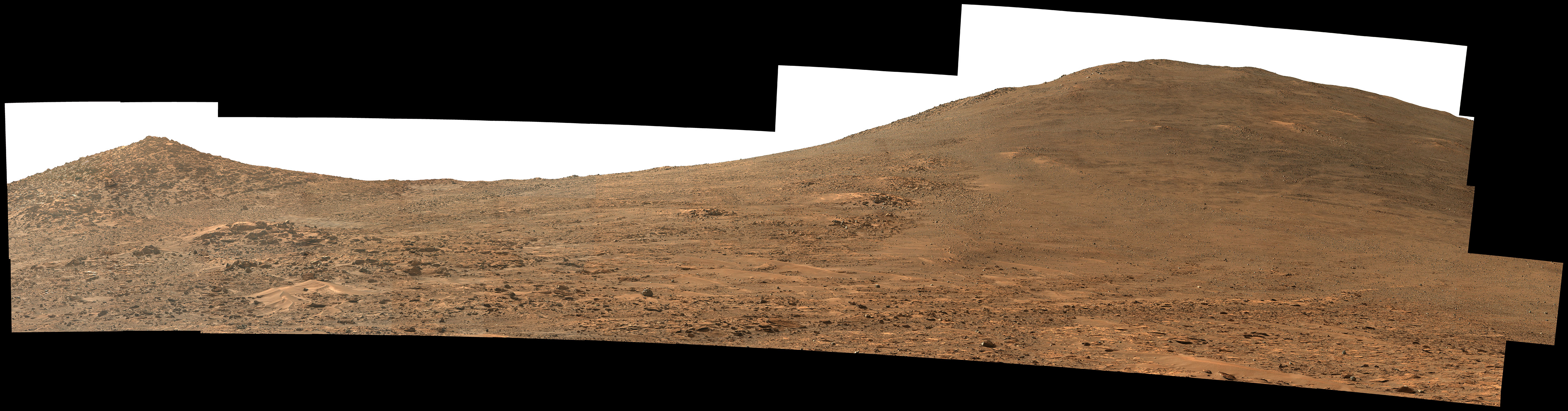
This panorama shows the area NASA’s Perseverance Mars rover will climb in coming months
This panorama shows the area NASA’s Perseverance Mars rover will climb in coming months to crest Jezero Crater’s rim. It is made up of 59 images taken by the rover’s Mastcam-Z on Aug. 4.
NASA/JPL-Caltech/ASU/MSSS

After 2½ years exploring Jezero Crater’s floor and river delta, the rover will ascend to an area where it will search for more discoveries that could rewrite Mars’ history.

NASA’s Perseverance Mars rover will soon begin a monthslong ascent up the western rim of Jezero Crater that is likely to include some of the steepest and most challenging terrain the rover has encountered to date. Scheduled to start the week of Aug. 19, the climb will mark the kickoff of the mission’s new science campaign — its fifth since the rover landed in the crater on Feb. 18, 2021.

“Perseverance has completed four science campaigns, collected 22 rock cores, and traveled over 18 unpaved miles,” said Perseverance project manager Art Thompson of NASA’s Jet Propulsion Laboratory in Southern California. “As we start the Crater Rim Campaign, our rover is in excellent condition, and the team is raring to see what’s on the roof of this place.”

Two of the priority regions the science team wants to study at the top of the crater are nicknamed “Pico Turquino” and “Witch Hazel Hill.” Imagery from NASA’s Mars orbiters indicates that Pico Turquino contains ancient fractures that may have been caused by hydrothermal activity in the distant past.

Rover looking back at the “Bright Angel” area
One of the navigation cameras aboard NASA’s Perseverance Mars rover captured this view looking back at the “Bright Angel” area on July 30, the 1,224th Martian day, or sol, of the mission.
NASA/JPL-Caltech

Orbital views of Witch Hazel show layered materials that likely date from a time when Mars had a very different climate than today. Those views have revealed light-toned bedrock similar to what was found at “Bright Angel,” the area where Perseverance recently discovered and sampled the “Cheyava Falls” rock, which exhibits chemical signatures and structures that could possibly have been formed by life billions of years ago when the area contained running water.

It’s Sedimentary

During the river delta exploration phase of the mission, the rover collected the only sedimentary rock ever sampled from a planet other than Earth. Sedimentary rocks are important because they form when particles of various sizes are transported by water and deposited into a standing body of water; on Earth, liquid water is one of the most important requirements for life as we know it.  

A study published Wednesday, Aug. 14, in AGU Advances chronicles the 10 rock cores gathered from sedimentary rocks in an ancient Martian delta, a fan-shaped collection of rocks and sediment that formed billions of years ago at the convergence of a river and a crater lake.

The core samples collected at the fan front are the oldest, whereas the rocks cored at the fan top are likely the youngest, produced when flowing water deposited sediment in the western fan.

“Among these rock cores are likely the oldest materials sampled from any known environment that was potentially habitable,” said Tanja Bosak, a geobiologist at the Massachusetts Institute of Technology in Cambridge and member of Perseverance’s science team. “When we bring them back to Earth, they can tell us so much about when, why, and for how long Mars contained liquid water and whether some organic, prebiotic, and potentially even biological evolution may have taken place on that planet.”

This map shows the route NASA’s Perseverance Mars rover
This map shows the route NASA’s Perseverance Mars rover will take (in blue) as it climbs the western rim of Jezero Crater, first reaching “Dox Castle,” then investigating the “Pico Turquino” area before approaching “Witch Hazel Hill.”
NASA/JPL-Caltech/University of Arizona

Onward to the Crater Rim

As scientifically intriguing as the samples have been so far, the mission expects many more discoveries to come.

“Our samples are already an incredibly scientifically compelling collection, but the crater rim promises to provide even more samples that will have significant implications for our understanding of Martian geologic history,” said Eleni Ravanis, a University of Hawaiì at Mānoa scientist on Perseverance’s Mastcam-Z instrument team and one of the Crater Rim Campaign science leads. “This is because we expect to investigate rocks from the most ancient crust of Mars. These rocks formed from a wealth of different processes, and some represent potentially habitable ancient environments that have never been examined up close before.”

Reaching the top of the crater won’t be easy. To get there, Perseverance will rely on its auto-navigation capabilities as it follows a route that rover planners designed to minimize hazards while still giving the science team plenty to investigate. Encountering slopes of up to 23 degrees on the journey (rover drivers avoid terrain that would tilt Perseverance more than 30 degrees), the rover will have gained about 1,000 feet (300 meters) in elevation by the time it summits the crater’s rim at a location the science team has dubbed “Aurora Park.”

Then, perched hundreds of meters above a crater floor stretching 28 miles (45 kilometers) across, Perseverance can begin the next leg of its adventure.

More Mission Information

A key objective of Perseverance’s mission on Mars is astrobiology, including caching samples that may contain signs of ancient microbial life. The rover will characterize the planet’s geology and past climate, to help pave the way for human exploration of the Red Planet and as the first mission to collect and cache Martian rock and regolith.

NASA’s Mars Sample Return Program, in cooperation with ESA (European Space Agency), is designed to send spacecraft to Mars to collect these sealed samples from the surface and return them to Earth for in-depth analysis.

The Mars 2020 Perseverance mission is part of NASA’s Moon to Mars exploration approach, which includes Artemis missions to the Moon that will help prepare for human exploration of the Red Planet.

NASA’s Jet Propulsion Laboratory, which is managed for the agency by Caltech, built and manages operations of the Perseverance rover.

For more about Perseverance:

science.nasa.gov/mission/mars-2020-perseverance

News Media Contacts

DC Agle
Jet Propulsion Laboratory, Pasadena, Calif.
818-393-9011
agle@jpl.nasa.gov

Alise Fisher / Erin Morton
NASA Headquarters, Washington
202-358-1600
alise.m.fisher@nasa.gov / erin.morton@nasa.gov

2024-107

Powered by WPeMatico

Get The Details…
Anthony Greicius

Xiaoyi Li Engineers Instruments and the Teams that Get Them Done

Xiaoyi Li Engineers Instruments and the Teams that Get Them Done

Name: Xiaoyi Li

Title: Instrument Systems Engineer (ISE) of Venus Atmospheric Structure Investigation (VASI) for the Deep Atmosphere Venus Investigation of Noble gases, Chemistry, and Imaging (DAVINCI) and Deputy ISE of Comprehensive Auroral Precipitation Experiment (CAPE) instrument for the Geospace Dynamics Constellation (GDC) mission

Formal Job Classification: Instrument Systems Engineer

Organization: Instrument/Payload Systems Engineering Branch, Engineering Directorate (Code 592)

Xiaoyi Li in a shirt with NASA's logo and
Xiaoyi Li is an instrument systems engineer at NASA’s Goddard Space Flight Center in Greenbelt, Md. “My role involves not only managing technical tasks but also blending a variety of technical skills and personalities,” she said. “Understanding of the technical connections between different components is essential to ensure the integrated systems meet requirements. In addition, helping to cultivate collaboration and synthesize diverse expertise is vital. I find the process of learning about and achieving integration of different personalities within the team particularly rewarding.”
Photo Courtesy Xiaoyi Li

What do you do and what is most interesting about your role here at Goddard?

I have two roles. As the instrument systems engineer of VASI, I lead the technical team to develop a sensor suite for this component of NASA’s upcoming DAVINCI mission to Venus. I am also the deputy instrument systems engineer of CAPE where I assist the lead for developing the CAPE instrument for the Geospace Dynamics Constellation mission. The most intriguing aspect of my job is to collaborate with two talented and diverse technical teams, learn from team members, and come up with solutions to resolve technical challenges within budget and schedule.

What is your educational background?

I received a bachelor’s degree in mechanical engineering from Tongji University in Shanghai, China. I furthered my education at the University of New South Wales, Australia, where I earned a master’s in mechanical engineering. After I moved to the U.S., I received a Ph.D. in mechanical engineering from the University of Central Florida in Orlando. My doctorate was funded by a NASA grant to design, build and test a spaceflight cryocooler.

Why did you become a mechanical engineer?

I grew up in an engineering family. My mother was a chemical engineer. My father was an architect and structural engineer. I grew up watching them build large factories. While I would like to think I would have become an engineer without their influence, growing up with such incredible role models gave me access to, and an understanding of engineering disciplines that I never really considered any other profession.

What brought you to Goddard?

Upon completing my Ph.D. in 2005, I started out as a mission analyst for launch service programs at NASA’s Kennedy Space Center in Florida. In 2009, I began working as a thermal engineer for NASA’s Wallops Flight Facility in Virginia. In 2010, I came across a position that brought me back to my Ph.D. days and I couldn’t pass up the opportunity. I joined the Cryogenics and Fluids Branch at Goddard.

What did you do at Goddard before your current position?

I contributed to multiple engineering and science studies, proposals, and projects as a cryogenics engineer. Notably, I served as the principal investigator for two IRAD studies. One of the studies was submitted to the Patent Office and later was granted a new patent. Additionally, I was a co-inventor for another patent. Prior to joining my current group, I held the position of instrument cryogenics lead for the Roman Space Telescope. I served as the associate branch head in my current organization before devoting full time as an instrument systems engineer.

What are your main responsibilities as the instrument systems engineer for CAPE and VASI?

As the deputy instrument systems engineer for CAPE, my main responsibility is to assist the lead to coordinate multiple technical teams. The main focus is to work with the mechanical, electrical, thermal, structural, and other engineers to build electron/ion analyzers. For the VASI instrument, which has a smaller team, I take a more direct role in organizing and coordinating the technical work. This position allows me to engage in hands-on engineering tasks, which is extremely gratifying being able to get “my hands dirty.”

My role involves not only managing technical tasks but also blending a variety of technical skills and personalities. Understanding of the technical connections between different components is essential to ensure the integrated systems meet requirements. In addition, helping to cultivate collaboration and synthesize diverse expertise is vital. I find the process of learning about and achieving integration of different personalities within the team particularly rewarding.

How do you coordinate between all the different systems and personalities?

My experience includes over eight years in leadership roles, supported by extensive training and a robust technical background. This includes a one-year detail assignment in Goddard’s Science Mission Directorate. In this role, I facilitate collaboration within the engineering team, as well as between the engineers and the scientists to ensure that the instrument meets scientific objectives while adhering to well established engineering best practices and principles. Additionally, I empower our subject matter experts to pursue their innovative ideas while guiding them toward a unified direction through a shared vision. Although individual approaches may vary, we are all committed to the collective goal of a successful mission.

Who were your mentors and what did they advise?

I am grateful for the guidance of two mentors who have been instrumental in my development. Mr. Dave Everett, a systems engineer by trade and the current head of our branch, has been my technical mentor. He taught me, among many other things, the importance of understanding the overall system. Ms. Maria So, my leadership mentor, is a former senior executive service (SES) member at Goddard. As a fellow Chinese woman and engineer, her influence has been profound. She has guided me and acted as a sounding board for some very exciting but challenging decisions these past years. She also taught me the importance of seeing the bigger picture and the critical organizational leadership role to systems engineering, which has shaped my approach to leadership.

In turn, I apply these teachings and ideas when I informally mentor the younger engineers on my team. I encourage them to tackle problems independently by providing the necessary background knowledge and allowing them the autonomy to make decisions. I guide them when needed, but I believe in balance and the importance of learning through one’s own mistakes.

two women standing in an auditorium
Li with her leadership mentor, Maria So, at a Goddard “Taste of Asia” event celebrating Asian American, Native Hawaiian and Pacific Islander Heritage Month. “Her influence has been profound,” Li said. “She has guided me and acted as a sounding board for some very exciting but challenging decisions these past years. She also taught me the importance of seeing the bigger picture and the critical organizational leadership role to systems engineering, which has shaped my approach to leadership.”
Photo courtesy Xiaoyi Li

What is your involvement with the Asian American Native Hawaiian and Pacific Islander Employee Resource Group (AANHPI)?

I have been actively involved with the group, and I recently served as co-chair for three years. Our group is dedicated to advocating for the wellness of the Asian American community within Goddard. Our group also addresses any concerns from the community members by reporting directly to Goddard senior management. In addition, we foster a sense of community and support among members through community events including our annual “Taste of Asia and the Pacific Islands” lunch event at Goddard.

What do you do for fun?

I enjoy cooking a variety of cuisines, including Chinese and Thai (which I learned in Australia), as well as classic American dishes. My favorite culinary challenge is a rib roast using suis vide method, which involves 18 hours of slow cooking before finishing it in the oven! Additionally, I enjoy playing video games with my family and friends, which is a great way to relax and connect.

By Elizabeth M. Jarrell
NASA’s Goddard Space Flight Center, Greenbelt, Md.

A banner graphic with a group of people smiling and the text "Conversations with Goddard" on the right. The people represent many genders, ethnicities, and ages, and all pose in front of a soft blue background image of space and stars.

Conversations With Goddard is a collection of Q&A profiles highlighting the breadth and depth of NASA’s Goddard Space Flight Center’s talented and diverse workforce. The Conversations have been published twice a month on average since May 2011. Read past editions on Goddard’s “Our People” webpage.

Share

Details

Last Updated

Aug 14, 2024

Editor
Rob Garner
Contact
Rob Garner
Location
Goddard Space Flight Center

Powered by WPeMatico

Get The Details…
Rob Garner

Stem Cells, Fluid Physics on Station as Next Cargo Mission Nears Launch

Stem Cells, Fluid Physics on Station as Next Cargo Mission Nears Launch

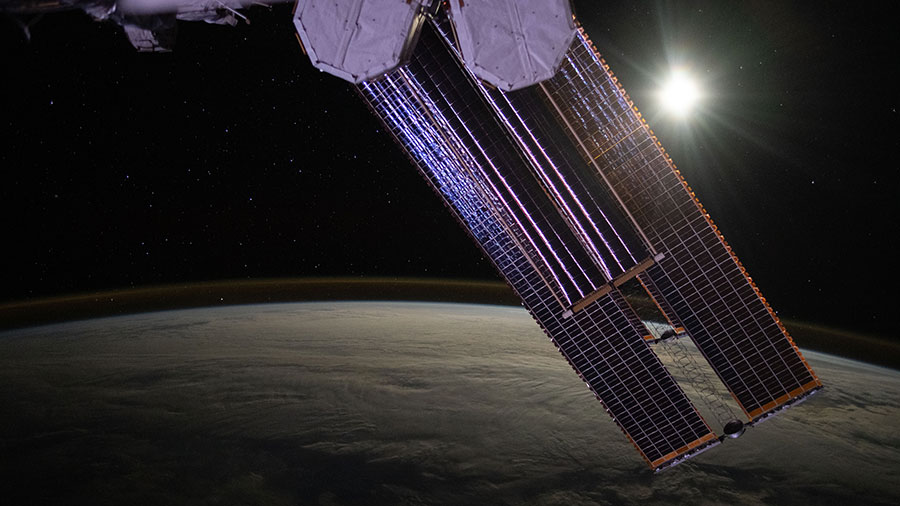
The Moon illuminates a cloud-covered Pacific Ocean as stars glitter in the background above the Earth's airglow.
The Moon illuminates a cloud-covered Pacific Ocean as stars glitter in the background above the Earth’s airglow.

Tuesday was a light duty day aboard the International Space Station for some of the crewmates as the rest of the orbital residents explored biotechnology and fluid physics while maintaining life support systems. Back on Earth, a new cargo craft stands ready to resupply the orbital outpost following the departure of another resupply spacecraft late Monday.

Studying stem cells in microgravity eliminates the challenges of growing and reproducing cells in Earth’s gravity environment. However, the space-borne results of stem cell research may have far-reaching Earth-bound benefits including advanced cellular manufacturing processes and improved human health.

NASA Flight Engineer Tracy C. Dyson explored how to grow stem cells in space today servicing samples inside the Kibo laboratory module’s Life Science Glovebox. Afterward, she peered at the stem cell specimens with the state-of-the-art Kermit microscope that can be operated by a station crew member or remotely by scientists on the ground. NASA astronauts Matthew Dominick and Jeanette Epps spent a few moments during their light duty day assisting Dyson with the glovebox work and the microscope set up.

NASA’s Commander for the Boeing Crew Flight Test Butch Wilmore worked throughout the day checking water systems and replacing components on thermal control hardware. He first collected drinking water samples, processed those samples, then analyzed them using the total organic compound analyzer. Next, Wilmore worked inside the Tranquility module replacing gear that cools equipment and rejects heat.

NASA astronauts Mike Barratt and Suni Williams also had a light schedule on Tuesday with the duo periodically swapping out orbital plumbing gear and training to use advanced life support systems.

A Roscosmos Progress 89 cargo spacecraft is due to launch from the Baikonur Cosmodrome in Kazakhstan at 11:20 p.m. EDT on Wednesday. It will take a day a two-day trip to the orbital outpost where cosmonauts Oleg Kononenko and Nikolai Chub will be monitoring its automated approach and docking planned for 1:56 a.m. on Saturday. The Progress 89 will dock to the Zvezda service module’s rear port that was vacated at 10 p.m. on Monday after the Progress 87 space freighter undocked and completed its six-month resupply mission.

Kononenko started Tuesday transferring water from the docked Progress 88 cargo craft into station water tanks. He then joined Chub for a videotaped session answering questions submitted by media outlets from their home country. Chub earlier spent his day exploring how magnetic and electrical fields affect fluids in microgravity. Flight Engineer Alexander Grebenkin began his day downloading data that captures how international crews and mission controllers interact with each other. Afterward, Grebenkin pointed a digital camera toward Earth and took photographs using hyper-spectroscopy to study the effects of natural and man-made disasters.


Learn more about station activities by following the space station blog@space_station and @ISS_Research on X, as well as the ISS Facebook and ISS Instagram accounts.

Get weekly video highlights at: https://roundupreads.jsc.nasa.gov/videoupdate/

Get the latest from NASA delivered every week. Subscribe here: www.nasa.gov/subscribe

Powered by WPeMatico

Get The Details…

Mark Garcia