Crew Finalizing Science For Return to Earth Aboard Dragon

Crew Finalizing Science For Return to Earth Aboard Dragon

Expedition 72 crewmates Suni Williams of NASA and Aleksandr Gorbunov of Roscosmos wear personal protective equipment shortly after the hatches opened to the newly arrived SpaceX Dragon cargo spacecraft on Nov. 5, 2024. Photo credit: NASA
Expedition 72 crewmates Suni Williams of NASA and Aleksandr Gorbunov of Roscosmos wear personal protective equipment shortly after the hatches opened to the newly arrived SpaceX Dragon cargo spacecraft on Nov. 5, 2024.

The Expedition 72 crew is packing up finalized science experiments this week for return to Earth aboard the SpaceX Dragon cargo spacecraft. The International Space Station residents also studied antibiotic resistant bacteria and set up space botany hardware.

Station Commander Suni Williams and Flight Engineer Don Pettit, both from NASA, kicked off their day transferring research samples from station science freezers into portable POLAR freezers that will soon be installed inside the departing Dragon. Williams then joined NASA Flight Engineer Nick Hague loading and strapping down more cargo inside Dragon for retrieval and analysis on Earth.

Dragon is scheduled to undock from the Harmony module’s forward port at 11:05 a.m. EST on Thursday for a splashdown off the coast of Florida the following day. NASA’s live coverage of undocking and departure begins at 10:50 a.m. EST on NASA+. Learn how to watch NASA content through a variety of platforms, including social media.

Pettit later spent the rest of his shift with NASA Flight Engineer Butch Wilmore processing bacteria samples in the Kibo and Harmony modules to understand why some pathogens are more potent in the microgravity environment. The duo was using genetic analysis techniques to identify the antibiotic resistant organisms and help researchers protect crew health on long-term space missions. Those samples will also be collected and packed inside Dragon this week for return and analysis back on Earth.

Williams set up research components inside the Advanced Plant Habitat to support an upcoming experiment to understand how different water levels affect plant growth in space and the microbes that live on plants. Results may lead to improved methods for growing food on Earth and in space. Hague began installing a small satellite deployer on Kibo’s multipurpose experiment platform that will soon be placed into the vacuum of space to release a series of CubeSats.

Working in the Roscosmos segment of the space station, Flight Engineer Aleksandr Gorbunov used different wavelengths to image natural and human-caused conditions on Earth then jogged on a treadmill for a fitness evaluation. His fellow cosmonauts Alexey Ovchinin and Ivan Vagner spent their day monitoring carbon dioxide levels and servicing the atmospheric purification system in the orbital lab’s Roscosmos segment among other life support tasks.


Learn more about station activities by following the space station blog, @space_station and @ISS_Research on X, as well as the ISS Facebook and ISS Instagram accounts.

Get the latest from NASA delivered every week. Subscribe here: www.nasa.gov/subscribe

Powered by WPeMatico

Get The Details…

khowren

Astronaut Suni Williams and Astrobee

Astronaut Suni Williams and Astrobee

Astrobee, a robot that looks like a small black cube with two blue tentacle-like arms on top. Behind it, astronaut Suni Williams stretches her arms out to match Astrobee's arms.
NASA astronaut and Expedition 72 Commander Suni Williams checks out the Astrobee robotic free-flyer in the Kibo laboratory module outfitted with tentacle-like arms containing gecko-like adhesive pads to demonstrate satellite capture techniques. Development of this robotic technology may increase the life span of satellites and enable the removal of space debris.
NASA

In this picture from Nov. 15, 2024, Astronaut Suni Williams imitates the tentacle-like arms of the Astrobee robotic free-flyer in the foreground.

Astrobee robots help astronauts reduce time they spend on routine duties, leaving them to focus more on the things that only humans can do. Working autonomously or via remote control by astronauts, flight controllers or researchers on the ground, the robots are designed to complete tasks such as taking inventory, documenting experiments conducted by astronauts with their built-in cameras or working together to move cargo throughout the station. In addition, the system serves as a research platform that can be outfitted and programmed to carry out experiments in microgravity – helping us to learn more about how robotics can benefit astronauts in space.

Image credit: NASA

Powered by WPeMatico

Get The Details…
Monika Luabeya

¿Por qué cultivamos plantas en el espacio?

¿Por qué cultivamos plantas en el espacio?

1 Min Read

¿Por qué cultivamos plantas en el espacio?

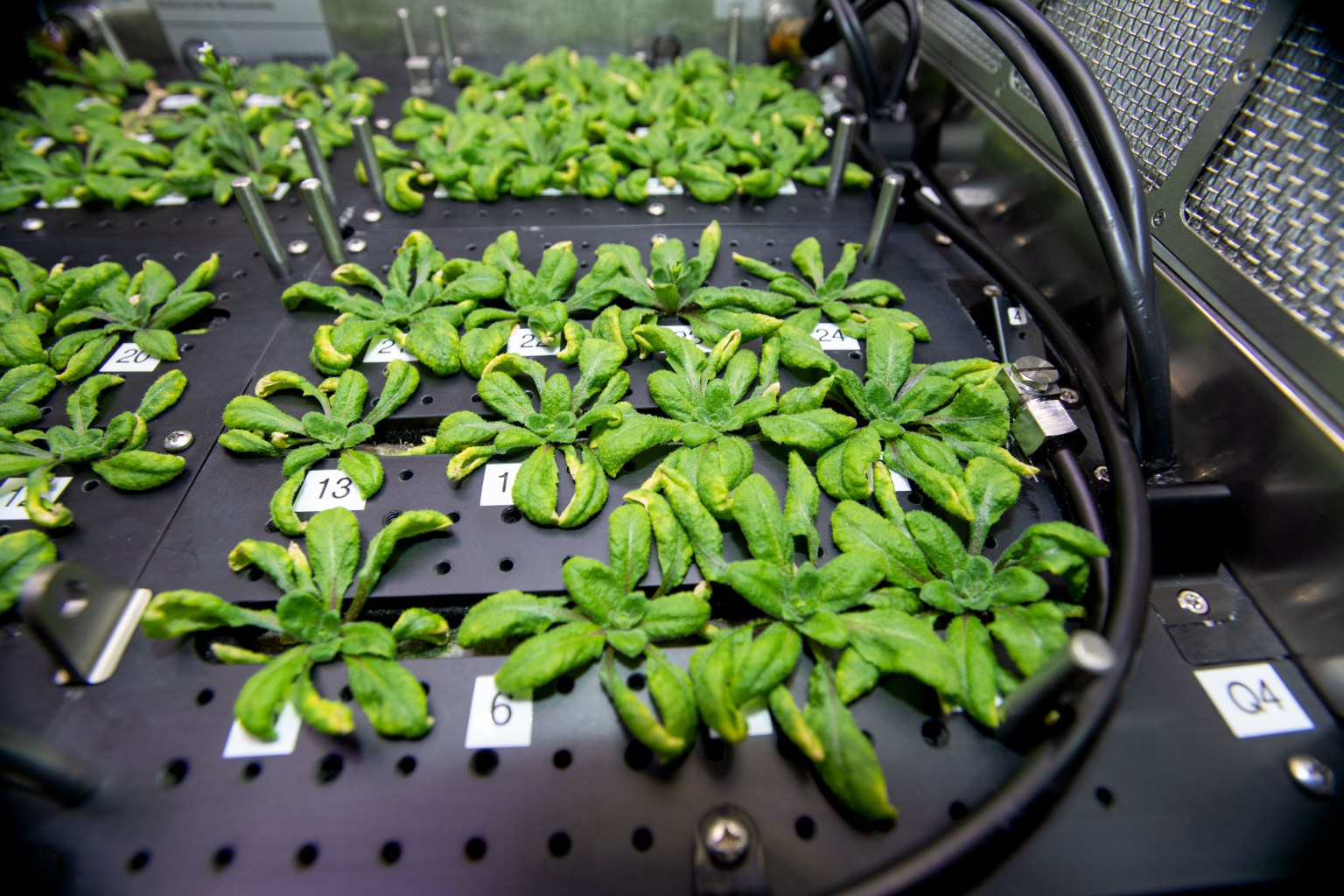
imagen de plantas creciendo en un hábitat vegetal en la estación espacial

Plantas de berro Thale de tres semanas de edad de la investigación Plant Habitat-03 son vistas justo antes de una cosecha a bordo de la Estación Espacial Internacional.

Credits:
NASA

Hay muchas razones por las cuales cultivamos diversos tipos de plantas en el espacio. Las plantas proveen alimentación y bienestar psicológico a los astronautas y ayudan a reciclar el aire de la Estación Espacial Internacional, pero hay muchos otros beneficios asociados con esta actividad. Jorge Sotomayor, gerente de investigaciones de la Estación Espacial Internacional, te explica por qué es tan importante el cultivo de plantas en el espacio para el desarrollo de la ciencia y para futuras misiones a la Luna, y eventualmente, a Marte.

Share

Details

Last Updated

Dec 03, 2024

Powered by WPeMatico

Get The Details…
Ana Guzman

Sols 4382-4383: Team Work, Dream Work

Sols 4382-4383: Team Work, Dream Work

3 min read

Sols 4382-4383: Team Work, Dream Work

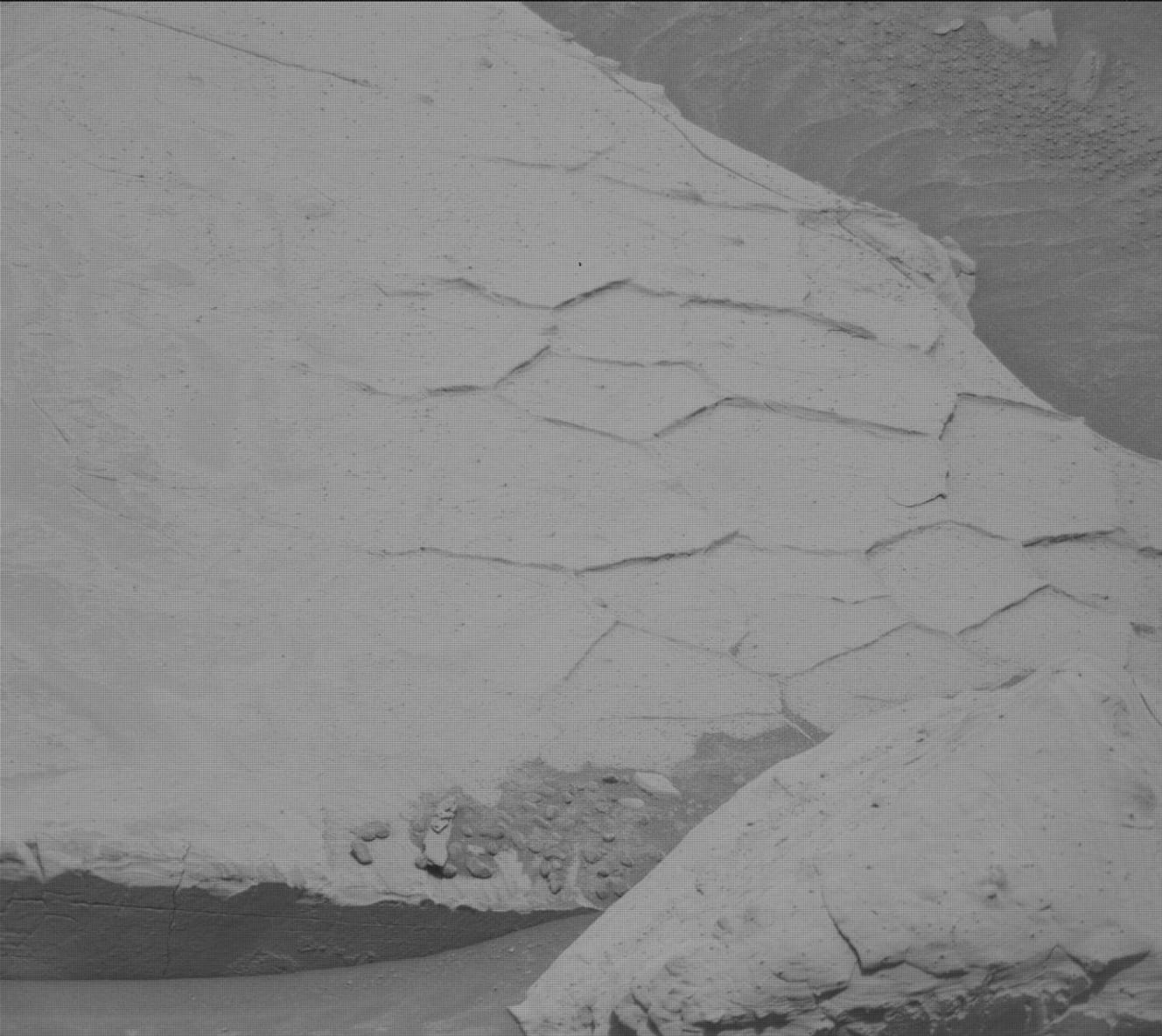
A grayscale photograph of the Martian landscape shows a flat field covered in jagged rocks extending from the foreground at the bottom of the frame, to a line about one-sixth of the way up the frame, where it reaches a rock feature rising from the ground. That feature, a butte composed of rock layers, resembles a stack of rugs, angled with the lowest layers on the right and subsequent layers shifting to the left as it grows higher.
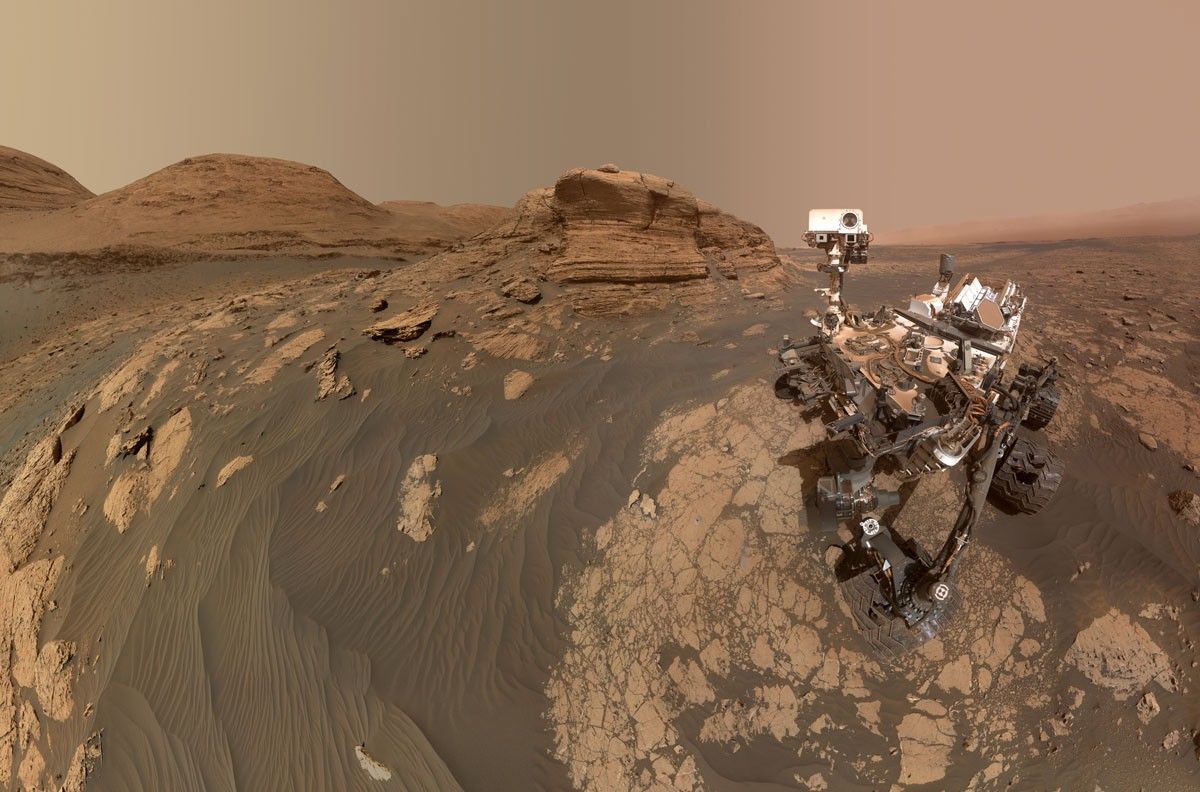
NASA’s Mars rover Curiosity acquired this image using its Right Navigation Camera on sol 4373 — Martian day 4,373 of the Mars Science Laboratory mission — on Nov. 24, 2024, at 08:32:59 UTC.
NASA/JPL-Caltech

Earth planning date: Monday, Dec. 2, 2024

Today, after a weeklong holiday break, the team was eager to take a look at Curiosity’s new workspace. After driving 51 meters (about 167 feet) alongside Texoli butte (pictured) we had a whole host of new rocks to examine, and it was one of those curiously perfect planning days where everything falls into place. Our team of geologists here on Earth was busy studying the images our Martian geologist had downlinked to Earth prior to planning, and we scheduled 1.5 hours of science activities on the first sol of this plan. An interesting and varied workspace today saw lots of instruments working together to study the rocks in-depth — teamwork really does make the dream work.

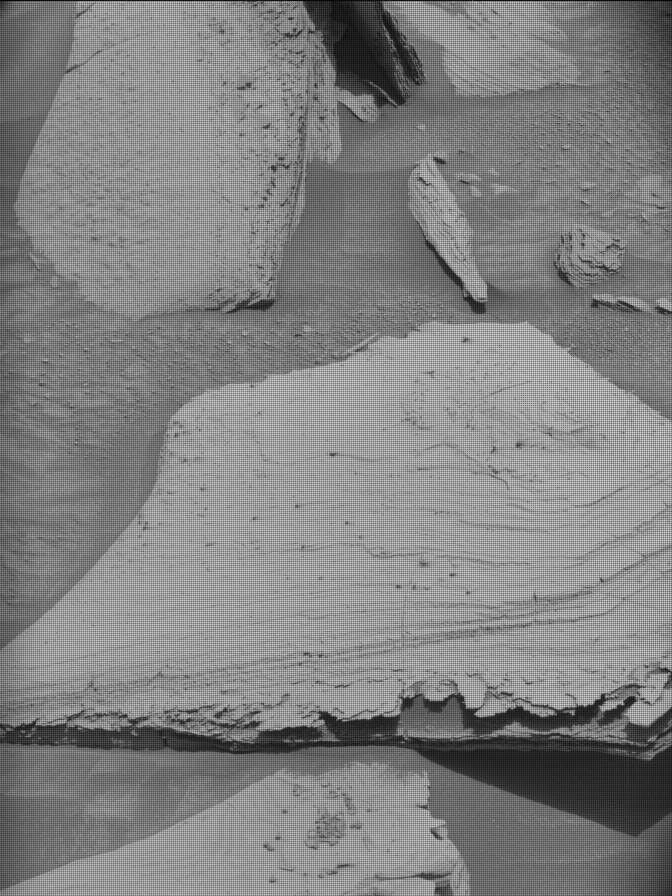
To begin, we are targeting a vertical rock face called “Coronet Lake” near the rover. Coronet Lake has a cluster of nodules on show and we are getting information on the composition of these nodules with APXS and a ChemCam LIBS, as well as a close-up image with our MAHLI instrument. We also have a second MAHLI activity scheduled on a flat rock called “Excelsior Mountain.” Our observant team spotted an interesting-looking rock named “Admiration Point.” This rock may have fallen from the nearby Texoli butte, or could be a meteorite. To test these hypotheses further, we are targeting Admiration Point with a Mastcam mosaic and a ChemCam passive. ChemCam and Mastcam work together again on a target named “Olancha,” an area of rocks that could contain evidence of deformation from when the rocks first formed. Olancha will be targeted with a ChemCam long-distance RMI and a Mastcam mosaic.

Mastcam is finishing off the geological observations here with mosaics of “Angels Camp,” a rock containing veins where water may have once flowed, “Bare Island Lake,” a gray rock containing interesting polygonal ridges, and a trough feature close to Coronet Lake. ChemCam is taking another look back at Gediz Vallis channel to see a transition between light- and dark-toned rocks with a long-distance RMI, and we are rounding off this plan with our standard environmental observations.

As the Geology and Mineralogy theme group Keeper of the Plan for today’s planning, I made sure that this sol was packed full of science activities that the team wanted to schedule. After this busy first sol, Curiosity will be driving about 50 meters (about 164 feet), continuing to make our way out of Gediz Vallis, and we are all very excited to see what the rest of the sulfate-bearing unit has to offer us.

Written by Emma Harris, graduate student at Natural History Museum, London

Share

Details

Last Updated
Dec 03, 2024

Related Terms

Powered by WPeMatico

Get The Details…

NASA Builds Bridges at Bayou Classic

NASA Builds Bridges at Bayou Classic

1 min read

Preparations for Next Moonwalk Simulations Underway (and Underwater)

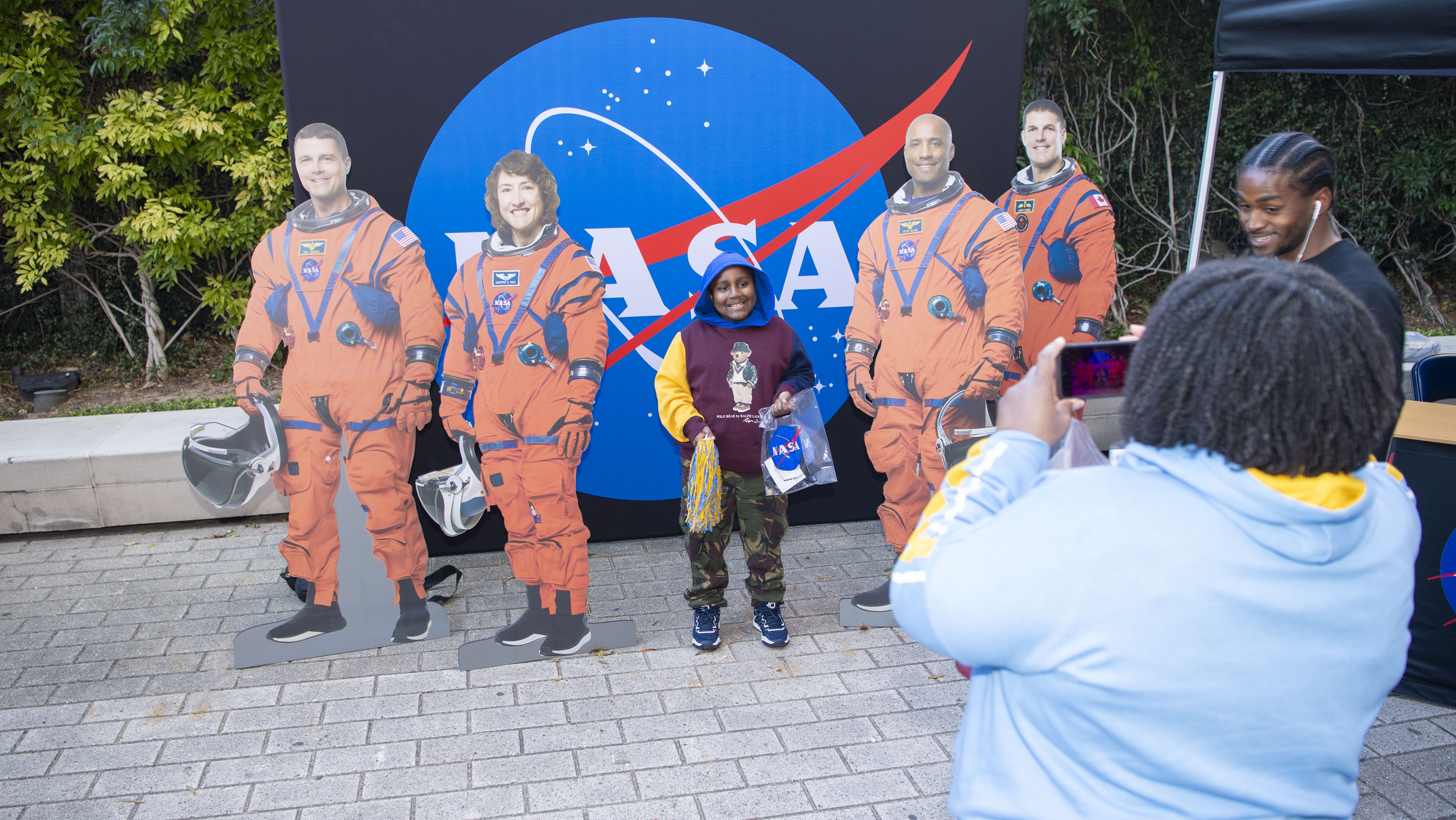
a young fan poses for a photo with cardboard images of NASA’s Artemis II crew
Fans at the 51st Annual Bayou Classic in New Orleans snap a photo with cardboard images of NASA’s Artemis II crew on Nov. 30.
NASA/Danny Nowlin

NASA was on full display during the 51st Annual Bayou Classic Fan Fest activity on Nov. 30, hosting an informational booth and interacting with event participants. Kicking off the Fan Fest on stage were Ken Newton, director of the NASA Shared Services Center Service Delivery Directorate; Pam Covington, director of the NASA Stennis Office of Communications; and Dawn Davis, chief of the NASA Stennis Engineering & Test Directorate Office of Technology Development.

NASA representatives, including HBCU alumni, supported the morning-long event, providing Fan Fest attendees with promotional items and information about student internship and employment opportunities with the agency.

The annual Bayou Classic event attracts tens of thousands of visitors each year and features several days of activities, including a nationally broadcast football game, involving two Historically Black Colleges and Universities in Louisiana – Southern University in Baton Rouge and Grambling State University in Grambling.

The NASA outreach and engagement effort during this year’s event focused on the theme – There’s Space for Everybody at NASA. It was part of an ongoing agencywide commitment to advance equity and reach deeper into underrepresented and underserved segments of society and was in support of efforts to advance racial equity in the federal government.

Powered by WPeMatico

Get The Details…
LaToya Dean