NASA Sets Coverage for Agency’s SpaceX Crew-9 Launch, Docking

NASA Sets Coverage for Agency’s SpaceX Crew-9 Launch, Docking
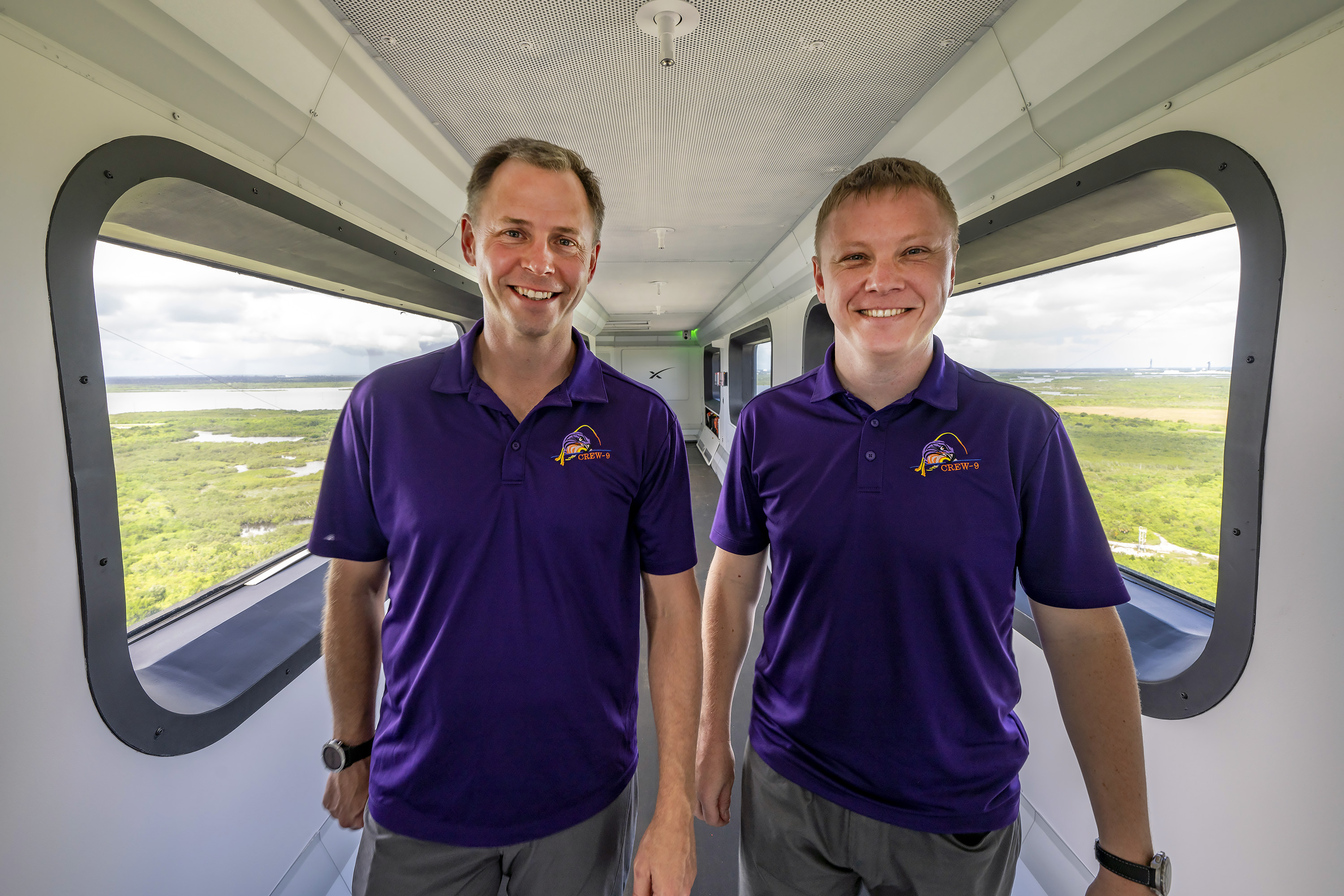
NASA astronaut Nick Hague and Roscosmos cosmonaut Aleksandr Gorbunov walk across the crew access arm at Space Launch Complex-40 at Cape Canaveral Space Force Station in Florida.
Credit: SpaceX

NASA will provide coverage of the upcoming prelaunch and launch activities for the agency’s SpaceX Crew-9 mission to the International Space Station.

Liftoff is targeted for 1:17 p.m. EDT, Saturday, Sept. 28, from Space Launch Complex-40 at Cape Canaveral Space Force Station in Florida. This is the first human spaceflight mission to launch from that pad. The targeted docking time is approximately 5:30 p.m. Sunday, Sept. 29.

Live coverage of the prelaunch news conference, launch, the post-launch news conference, and docking stream on NASA+ and the agency’s website. Learn how to stream NASA content through a variety of additional platforms, including social media.

The SpaceX Dragon spacecraft will carry NASA astronaut Nick Hague and Roscosmos cosmonaut Aleksandr Gorbunov to the orbiting laboratory for an approximate five-month science mission. This is the ninth crew rotation mission and the 10th human spaceflight mission for NASA to the space station supported by Dragon since 2020 as part of the agency’s Commercial Crew Program.

The deadline for media accreditation for in-person coverage of this launch has passed. The agency’s media credentialing policy is available online. For questions about media accreditation, please email: ksc-media-accreditat@mail.nasa.gov.

Media looking for access to NASA live video feeds can subscribe to the agency’s media resources distribution list to receive daily updates and links.

NASA’s mission coverage is as follows (all times Eastern and subject to change based on real-time operations):

Friday, Sept. 27

11:30 a.m. – One-on-one media interviews at NASA’s Kennedy Space Center in Florida with various mission subject matter experts. Sign-up information will be emailed to media accredited to attend this launch.

1:15 p.m. – NASA’s SpaceX Crew-9 Panel: Space Station 101 with the following participants:

  • NASA Associate Administrator Jim Free
  • Robyn Gatens, director, NASA’s International Space Station Program, and acting director, NASA’s Commercial Spaceflight Division
  • Jennifer Buchli, chief scientist, NASA’s International Space Station Program
  • John Posey, Dragon engineer, NASA’s Commercial Crew Program

Media may ask questions in person and via phone. Limited auditorium space will be available for in-person participation. For the dial-in number and passcode, media should contact the Kennedy newsroom no later than 12:15 p.m. Friday, Sept. 27, at ksc-newsroom@mail.nasa.gov.

Coverage of the virtual news conference will stream live on NASA+, YouTube, Facebook, and the agency’s website. Members of the public may ask questions online by posting questions to the YouTube, Facebook, and X livestreams using #AskNASA.

5 p.m. – Prelaunch news conference from Kennedy with the following participants:

  • NASA Associate Administrator Jim Free
  • Ken Bowersox, associate administrator, NASA’s Space Operations Mission Directorate
  • Steve Stich, manager, NASA’s Commercial Crew Program
  • Dina Contella, deputy manager, NASA’s International Space Station Program
  • Jennifer Buchli, chief scientist, NASA’s International Space Station Program
  • William Gerstenmaier, vice president, Build & Flight Reliability, SpaceX
  • Brian Cizek, launch weather officer, 45th Weather Squadron, Cape Canaveral Space Force Station

Coverage of the virtual news conference will stream live on NASA+ and the agency’s website.

Media may ask questions in person and via phone. Limited auditorium space will be available for in-person participation. For the dial-in number and passcode, media should contact the Kennedy newsroom no later than 4 p.m. Friday, Sept. 27, at ksc-newsroom@mail.nasa.gov.

Saturday, Sept. 28

9:10 a.m. – Launch coverage begins on NASA+ and the agency’s website.

1:17 p.m. – Launch

Following the conclusion of launch and ascent coverage, NASA will switch to audio only. Continuous coverage resumes on NASA+ at the start of rendezvous and docking and continues through hatch opening and the welcome ceremony. For NASA+ information, schedules, and links to streaming video, visit:

https://plus.nasa.gov

3 p.m. – Postlaunch news conference with the following participants:

  • NASA Deputy Administrator Pam Melroy
  • Ken Bowersox, associate administrator, NASA’s Space Operations Mission Directorate
  • Dana Hutcherson, deputy program manager, NASA’s Commercial Crew Program
  • Dina Contella, deputy manager, NASA’s International Space Station Program
  • Sarah Walker, director, Dragon Mission Management, SpaceX

The virtual news conference will stream live on NASA+, YouTube, and the agency’s website.

Media may ask questions in person and via phone. Limited auditorium space will be available for in-person participation. For the dial-in number and passcode, please contact the Kennedy newsroom no later than 2 p.m. Saturday, Sept. 28, at ksc-newsroom@mail.nasa.gov.

Sunday, Sept. 29

3:30 p.m. – Arrival coverage begins on NASA+ and the agency’s website.

5:30 p.m. – Targeted docking to the forward-facing port of the station’s Harmony module

7:15 p.m. – Hatch opening

7:40 p.m. – Welcome ceremony

All times are estimates and could be adjusted based on real-time operations after launch. Follow the space station blog for the most up-to-date operations information.

Audio Only Coverage

Audio only of the news conferences and launch coverage will be carried on the NASA “V” circuits, which may be accessed by dialing 321-867-1220, -1240 or -7135. On launch day, “mission audio,” countdown activities without NASA+ launch commentary, will be carried on 321-867-7135.

Launch audio also will be available on Launch Information Service and Amateur Television System’s VHF radio frequency 146.940 MHz and KSC Amateur Radio Club’s UHF radio frequency 444.925 MHz, FM mode, heard within Brevard County on the Space Coast.

Live Video Coverage Prior to Launch

NASA will provide a live video feed of Space Launch Complex-40 approximately six hours prior to the planned liftoff of the Crew-9 mission. Pending unlikely technical issues, the feed will be uninterrupted until the prelaunch broadcast begins on NASA+, approximately four hours prior to launch. Once the feed is live, find it online at:  http://youtube.com/kscnewsroom

NASA Website Launch Coverage

Launch day coverage of NASA’s SpaceX Crew-9 mission will be available on the agency’s website. Coverage will include livestreaming and blog updates beginning no earlier than 9:10 a.m. Sept. 28, as the countdown milestones occur. On-demand streaming video and photos of the launch will be available shortly after liftoff.

For questions about countdown coverage, contact the Kennedy newsroom at 321-867-2468. Follow countdown coverage on the commercial crew or Crew-9 blog.

Attend Launch Virtually

Members of the public can register to attend this launch virtually. NASA’s virtual guest program for this mission also includes curated launch resources, notifications about related opportunities or changes, and a stamp for the NASA virtual guest passport following a successful launch.

Watch, Engage on Social Media

Let people know you’re following the mission on X, Facebook, and Instagram by using the hashtags #Crew9 and #NASASocial. You can also stay connected by following and tagging these accounts:

X: @NASA, @NASAKennedy, @NASASocial, @Space_Station, @ISS_Research, @ISS National Lab, @SpaceX, @Commercial_Crew

Facebook: NASA, NASAKennedy, ISS, ISS National Lab

Instagram: @NASA, @NASAKennedy, @ISS, @ISSNationalLab, @SpaceX

Coverage en Espanol

Did you know NASA has a Spanish section called NASA en Espanol? Make sure to check out NASA en Espanol on X, Instagram, Facebook, and YouTube for more coverage on Crew-9.

Para obtener información sobre cobertura en español en el Centro Espacial Kennedy o si desea solicitar entrevistas en español, comuníquese con Antonia Jaramillo: 321-501-8425;antonia.jaramillobotero@nasa.gov; o Messod Bendayan: 256-930-1371; messod.c.bendayan@nasa.gov.

NASA’s Commercial Crew Program has delivered on its goal of safe, reliable, and cost-effective transportation to and from the International Space Station from the United States through a partnership with American private industry. This partnership is changing the arc of human spaceflight history by opening access to low-Earth orbit and the International Space Station to more people, more science, and more commercial opportunities. The space station remains the springboard to NASA’s next great leap in space exploration, including future missions to the Moon and, eventually, to Mars.

For NASA’s launch blog and more information about the mission, visit:

https://www.nasa.gov/commercialcrew

-end-

Joshua Finch / Jimi Russell
Headquarters, Washington
202-358-1100
joshua.a.finch@nasa.gov / james.j.russell@nasa.gov

Steven Siceloff / Danielle Sempsrott / Stephanie Plucinsky
Kennedy Space Center, Florida
321-867-2468
steven.p.siceloff@nasa.gov / danielle.c.sempsrott@nasa.gov / stephanie.n.plucinsky@nasa.gov

Leah Cheshier
Johnson Space Center, Houston
281-483-5111
leah.d.cheshier@nasa.gov

Powered by WPeMatico

Get The Details…
Tiernan P. Doyle
NASA Wallops to Support Sounding Rocket Launch

NASA Wallops to Support Sounding Rocket Launch

1 min read

Preparations for Next Moonwalk Simulations Underway (and Underwater)

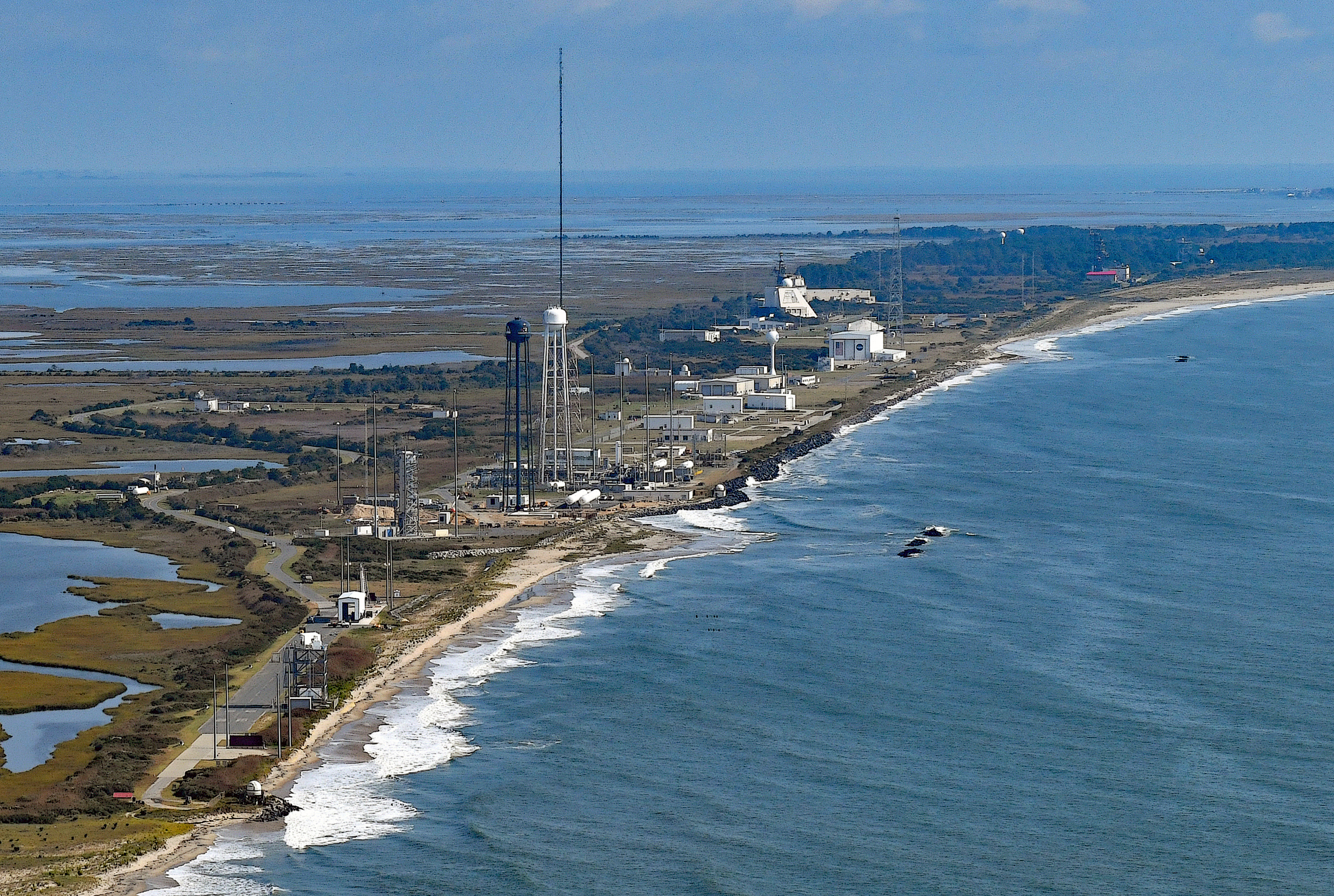
Aerial view of NASA's Wallops Flight Facility's launch range structures along the coastline of Wallops Island, Virginia. Ocean, bay and marsh lands surround the range.
This September 2024 aerial photograph shows the coastal launch range at NASA’s Wallops Flight Facility on Virginia’s Eastern Shore. Wallops is the agency’s only owned-and-operated launch range.
Courtesy Patrick J. Hendrickson; used with permission

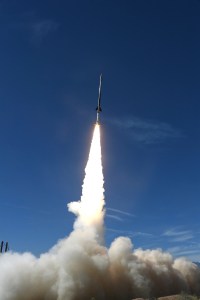
NASA’s Wallops Flight Facility in Virginia is scheduled to support the launch of a suborbital sounding rocket for the Department of Defense during a launch window that runs 1:45 to 6:30 p.m. EDT each day from Sept. 26 to 30. 

No real-time launch status updates will be available and the launch will not be livestreamed. 

The rocket launch may be visible from the Chesapeake Bay region.

Share

Details

Last Updated

Sep 25, 2024

Editor
Olivia F. Littleton
Contact
Jeremy Eggers
Location
Wallops Flight Facility

Related Terms

Powered by WPeMatico

Get The Details…
Olivia F. Littleton

NASA’s Art Program is Back

NASA’s Art Program is Back

An image of two murals painted on loading dock garage doors. The murals include bold, bright colors and geometric shapes. The image to the left features Earth with a satellite that features the NASA logo. The mural on the right has an image of a child in an astronaut suit playing with toys.
NASA/Joel Kowsky

NASA launched its reimagined art program by unveiling two murals on Sept. 23, 2024. The murals, titled “To the Moon, and Back,” were created by New York-based artist team Geraluz and WERC and use geometrical patterns to invite deeper reflection on the exploration, creativity, and connection with the cosmos. The vision of this next phase is to inspire and engage the Artemis Generation with community murals and other art projects for the benefit of humanity.

NASA has long used art to tell the story of its awe-inspiring missions. Soon after its inception, the agency started a formal program commissioning artists to develop inspiring pieces like portraits and paintings that highlighted an unexpected side of the agency. In 1962, NASA’s then Administrator James Webb tasked staffer and artist James Dean with implementing the new program, and with the help of the National Gallery of Art, Dean laid the framework to artistically capture the inspiration of NASA’s Apollo program. As the NASA Art Program continues to evolve, the agency remains focused on inspiring and engaging the next generation of explorers – the Artemis Generation – in new and unexpected ways, including through art.

Image Credit: NASA/Joel Kowsky

Powered by WPeMatico

Get The Details…
Monika Luabeya

NASA Analysis Shows Irreversible Sea Level Rise for Pacific Islands

NASA Analysis Shows Irreversible Sea Level Rise for Pacific Islands

5 min read

Preparations for Next Moonwalk Simulations Underway (and Underwater)

Overhead view of Pacific Island nation Kiribati
Pacific Island nations such as Kiribati — a low-lying country in the southern Pacific Ocean — are preparing now for a future of higher sea levels.
NASA Earth Observatory

Climate change is rapidly reshaping a region of the world that’s home to millions of people.

In the next 30 years, Pacific Island nations such as Tuvalu, Kiribati, and Fiji will experience at least 8 inches (15 centimeters) of sea level rise, according to an analysis by NASA’s sea level change science team. This amount of rise will occur regardless of whether greenhouse gas emissions change in the coming years.

The sea level change team undertook the analysis of this region at the request of several Pacific Island nations, including Tuvalu and Kiribati, and in close coordination with the U.S. Department of State.

In addition to the overall analysis, the agency’s sea level team produced high-resolution maps showing which areas of different Pacific Island nations will be vulnerable to high-tide flooding — otherwise known as nuisance flooding or sunny day flooding — by the 2050s. Released on Sept. 23, the maps outline flooding potential in a range of emissions scenarios, from best-case to business-as-usual to worst-case.

“Sea level will continue to rise for centuries, causing more frequent flooding,” said Nadya Vinogradova Shiffer, who directs ocean physics programs for NASA’s Earth Science Division. “NASA’s new flood tool tells you what the potential increase in flooding frequency and severity look like in the next decades for the coastal communities of the Pacific Island nations.”

Team members, led by researchers at the University of Hawaii and in collaboration with scientists at the University of Colorado and Virginia Tech, started with flood maps of Kiribati, Tuvalu, Fiji, Nauru, and Niue. They plan to build high-resolution maps for other Pacific Island nations in the near future. The maps can assist Pacific Island nations in deciding where to focus mitigation efforts.

“Science and data can help the community of Tuvalu in relaying accurate sea level rise projections,” said Grace Malie, a youth leader from Tuvalu who is involved with the Rising Nations Initiative, a United Nations-supported program led by Pacific Island nations to help preserve their statehood and protect the rights and heritage of populations affected by climate change. “This will also help with early warning systems, which is something that our country is focusing on at the moment.”

Future Flooding

The analysis by the sea level change team also found that the number of high-tide flooding days in an average year will increase by an order of magnitude for nearly all Pacific Island nations by the 2050s. Portions of the NASA team’s analysis were included in a sea level rise report published by the United Nations in August 2024.  

Areas of Tuvalu that currently see less than five high-tide flood days a year could average 25 flood days annually by the 2050s. Regions of Kiribati that see fewer than five flood days a year today will experience an average of 65 flood days annually by the 2050s.

“I am living the reality of climate change,” said Malie. “Everyone (in Tuvalu) lives by the coast or along the coastline, so everyone gets heavily affected by this.” 

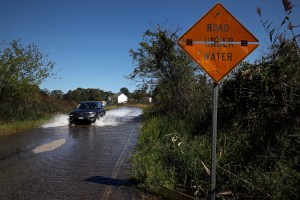
Flooding on island nations can come from the ocean inundating land during storms or during exceptionally high tides, called king tides. But it can also result when saltwater intrudes into underground areas and pushes the water table to the surface. “There are points on the island where we will see seawater bubbling from beneath the surface and heavily flooding the area,” Malie added.

Matter of Location

Sea level rise doesn’t occur uniformly around the world. A combination of global and local conditions, such as the topography of a coastline and how glacial meltwater is distributed in the ocean, affects the amount of rise a particular region will experience.

“We’re always focused on the differences in sea level rise from one region to another, but in the Pacific, the numbers are surprisingly consistent,” said Ben Hamlington, a sea level researcher at NASA’s Jet Propulsion Laboratory in Southern California and the agency’s sea level change science team lead.

The impacts of 8 inches (15 centimeters) of sea level rise will vary from country to country. For instance, some nations could experience nuisance flooding several times a year at their airport, while others might face frequent neighborhood flooding equivalent to being inundated for nearly half the year.

Researchers would like to combine satellite data on ocean levels with ground-based measurements of sea levels at specific points, as well as with better land elevation information. “But there’s a real lack of on-the-ground data in these countries,” said Hamlington. The combination of space-based and ground-based measurements can yield more precise sea level rise projections and improved understanding of the impacts to countries in the Pacific.  

“The future of the young people of Tuvalu is already at stake,” said Malie. “Climate change is more than an environmental crisis. It is about justice, survival for nations like Tuvalu, and global responsibility.”

To explore the high-tide flooding maps for Pacific Island nations, go to:

https://sealevel.nasa.gov

News Media Contacts

Jane J. Lee / Andrew Wang
Jet Propulsion Laboratory, Pasadena, Calif.
818-354-0307 / 626-379-6874
jane.j.lee@jpl.nasa.gov / andrew.wang@jpl.nasa.gov

2024-128

Share

Details

Last Updated

Sep 25, 2024

Powered by WPeMatico

Get The Details…
Anthony Greicius

­­Robotic Moving ‘Crew’ Preps for Work on Moon 

­­Robotic Moving ‘Crew’ Preps for Work on Moon 

4 Min Read

­­Robotic Moving ‘Crew’ Preps for Work on Moon 

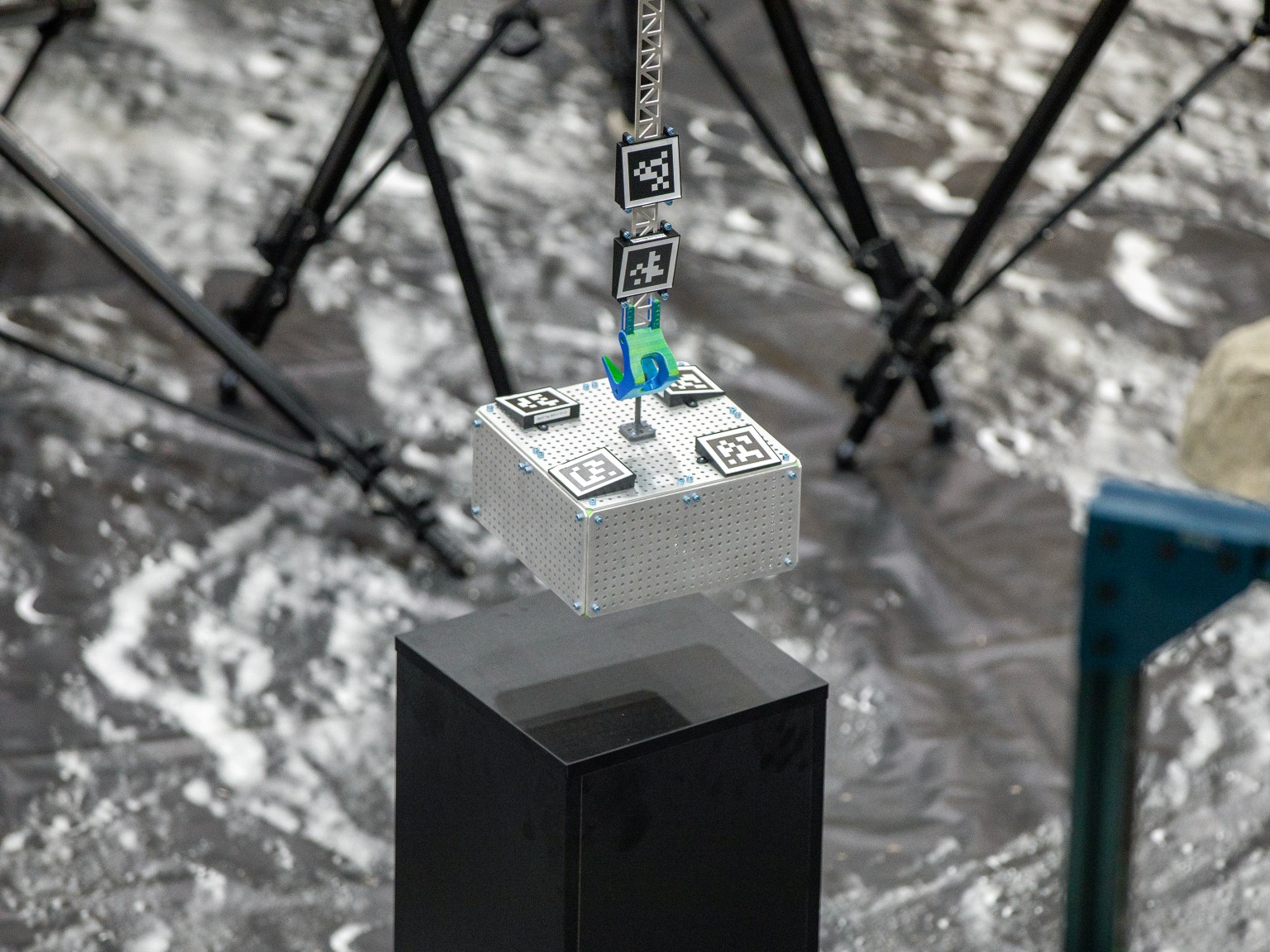
The LANDO system works by using onboard sensors to scan encoded markers (similar to a QR code) on a payload, which will reveal critical information about its position and orientation relative to the LSMS. This information is used to calculate where the robotic arm exists in space and plan the motion path to pick up and move payloads.

Credits:
NASA/David C. Bowman

As NASA moves forward with efforts to establish a long-term presence on the Moon as part of the Artemis campaign, safely moving cargo from landers to the lunar surface is a crucial capability.  

Whether the cargo, also known as payloads, are small scientific experiments or large technology to build infrastructure, there won’t be a crew on the Moon to do all the work, which is where robots and new software come in. 

A team at NASA’s Langley Research Center in Hampton, Virginia, spent the last couple of years infusing existing robotic hardware with a software system that makes the robot operate autonomously. Earlier this month, that team, led by researcher Dr. Julia Cline of NASA Langley’s Research Directorate, ran demonstrations of their system called LANDO (Lightweight Surface Manipulation System AutoNomy capabilities Development for surface Operations and construction). 

LANDO prepares to move its payload to a safe spot on the simulated lunar surface.
NASA/David C. Bowman

The demos took place in an area set up to look like the Moon’s surface, complete with fake boulders and a model lunar lander. During the first demo, the team placed the payload, a small metal box, on a black pedestal. The robotic arm stretched over the scene, with its dangling hook poised to grasp the box.

As the team huddled nearby around computers, sensors on the arm scanned the surrounding area, looking for the metal box, which was outfitted with encoded markers — similar to QR codes — that revealed critical information about its position and orientation relative to the arm. Using a graphic user interface, team member Amelia Scott also chose a location for LANDO to place the payload.

During a series of slow, methodical movements, LANDO transports a payload from a pedestal to a simulated lunar surface.
NASA/Angelique Herring

After locating the metal box and computing a safe path to move it, the arm began a slow, deliberate movement toward its target, coming in at a precise angle that allowed the hook to select a capture point on the payload. Once engaged, the arm slowly lifted the payload from the pedestal, moved right, and gently lowered the payload to the simulated lunar surface. With the payload safely on the surface, the system carefully disengaged the hook from the capture point and returned to its home position. The entire process took a few minutes. Shortly after the first demo was complete, the team did it again, but with a small model rover.  

“What we demonstrated was the repeatability of the system,moving multiple payloads to show that we’re consistently and safely able to get them from point A to point B,” said Cline. “We also demonstrated the Lightweight Surface Manipulation System hardware – the ability to control the system through space and plan a path around obstacles.” 

The system’s successful performance during the September demonstration marks the end of this project, but the first step in developing a larger system to go to the Moon. 

Now that the team has determined how the system should function, Cline believes the next natural step would be to develop and test an engineering design unit on one of the landers going to the Moon as part of NASA’s Commercial Lunar Payload Services (CLPS) initiative. The team is actively looking for industry partners who want to commercialize the capability. 

Through CLPS, NASA is working with commercial companies to deliver science and technology demonstrations to the Moon.  

The work behind LANDO could be directly infused into much larger versions of a lightweight surface manipulation system.

The LANDO team, back row, left to right: Dominic Bisio, Joshua Moser, Walter Waltz, Jacob Martin, Ryan Bowers, Brace White and Iok Wong. And kneeling, left to right: Amelia Scott, Matthew Vaughan, Julia Cline, Jessica Friz and Javier Puig-Navarro.
NASA/Ryan Hill

“The overall control system we’ve developed would apply to larger versions of the technology,” said Cline. “When you think about the payloads we’ll have to offload for on the Moon, like habitats and surface power systems, this is the kind of general-purpose tool that could be used for those tasks.” 

The LANDO system was funded through the Early Career Initiative in NASA’s Space Technology Mission Directorate (STMD). Through STMD, NASA supports and develops transformative space technologies to enable future missions. As NASA embarks on its next era of exploration with the Artemis campaign, STMD is helping advance technologies, developing new systems, and testing capabilities at the Moon that will be critical for crewed missions to Mars. 

Share

Details

Last Updated

Sep 25, 2024

Editor
Joe Atkinson

Powered by WPeMatico

Get The Details…
Julia L. Bradshaw