30 Years Ago: STS-68 The Second Space Radar Lab Mission
On Sept. 30, 1994, space shuttle Endeavour took to the skies on its 7th trip into space. During the 11-day mission, the STS-68 crew of Commander Michael A. Baker, Pilot Terrence “Terry” W. Wilcutt, and Mission Specialists Steven L. Smith, Daniel W. Bursch, Peter J.K. “Jeff” Wisoff, and Payload Commander Thomas “Tom” D. Jones operated the second Space Radar Laboratory (SRL-2) as part of NASA’s Mission to Planet Earth. Flying five months after SRL-1, results from the two missions provided unprecedented insight into Earth’s global environment across contrasting seasons. The astronauts observed pre-selected sites around the world as well as a volcano that erupted during their mission using SRL-2’s U.S., German, and Italian radar instruments and handheld cameras.
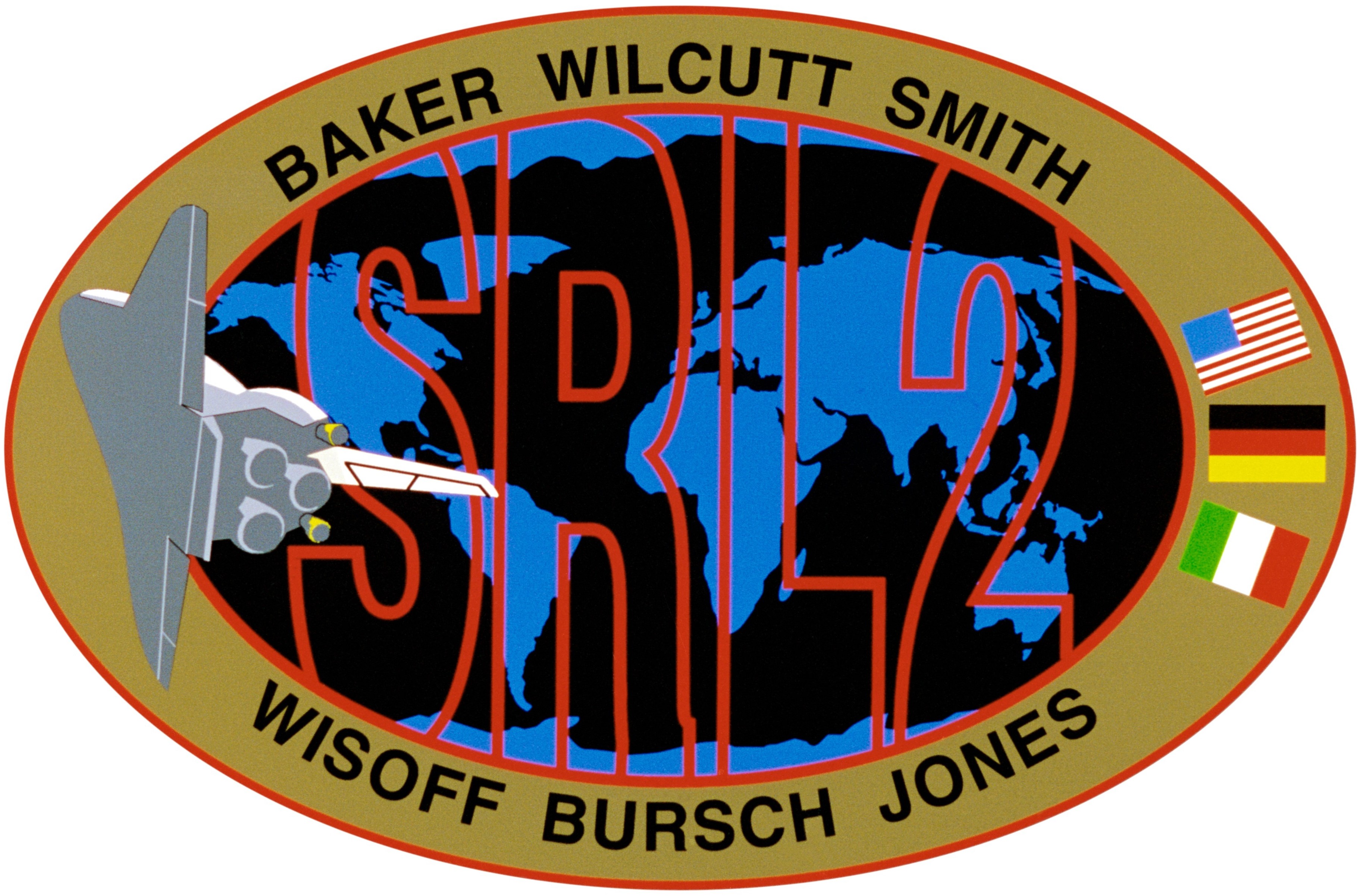
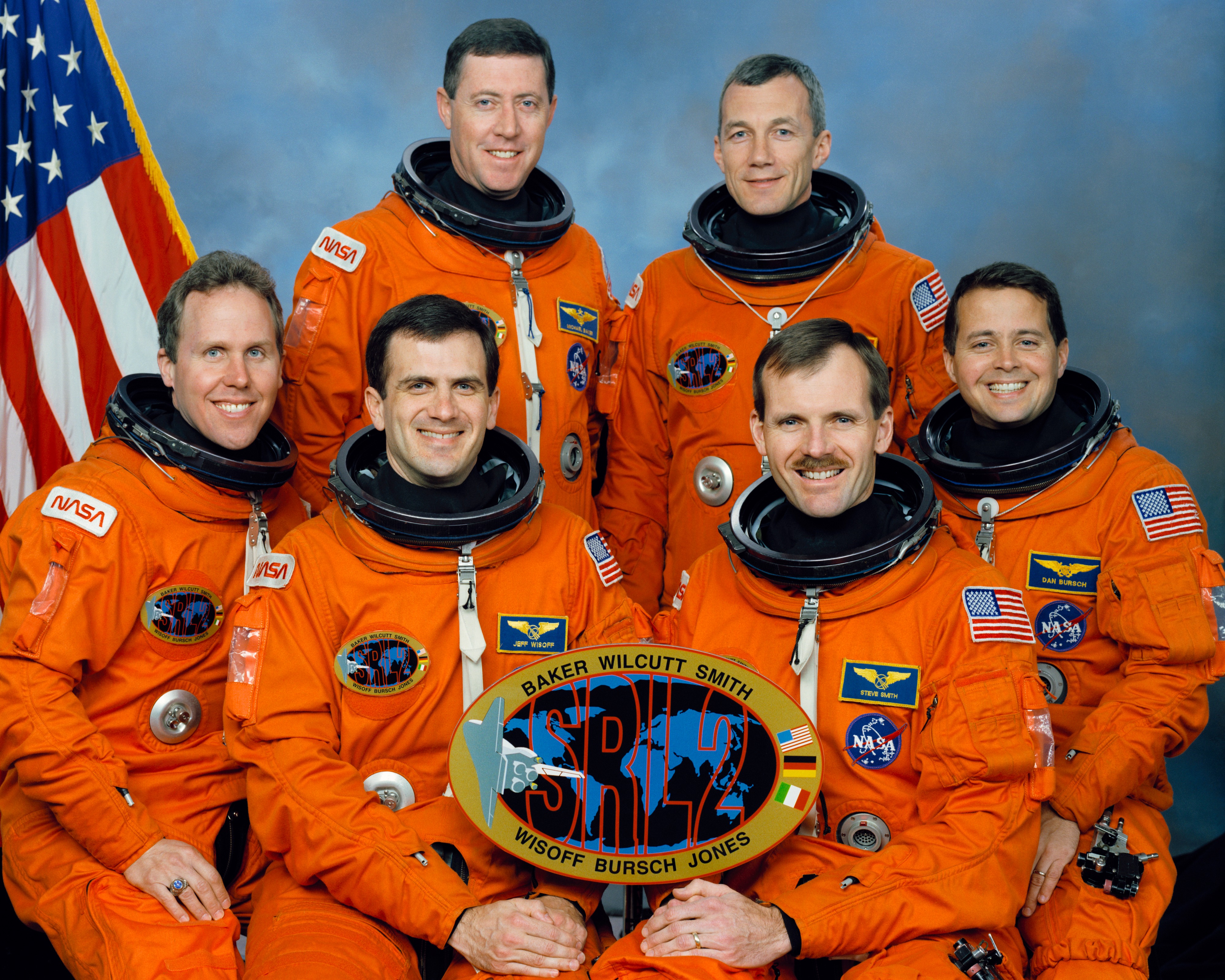
Left: The STS-68 crew patch. Right: Official photo of the STS-68 crew of Thomas D. Jones, front row left, Peter J.K. “Jeff” Wisoff, Steven L. Smith, and Daniel W. Bursch; Michael A. Baker, back row left, and Terrence W. Wilcutt.
In August 1993, NASA named Jones as the SRL-2 payload commander, eight months before he flew as a mission specialist on STS-59, the SRL-1 mission. When NASA could not meet JPL’s request to fly their personnel as payload specialists on the SRL missions, the compromise solution reached had one NASA astronaut – in this case, Jones – fly on both missions. Selected as an astronaut in 1990, STS-59 marked Jones’ first flight and STS-68 his second. In October 1993, NASA named the rest of the STS-68 crew. For Baker, selected in 1985, SRL-2 marked his third trip into space, having flown on STS-43 and STS-52. Along with Jones, Wilcutt, Bursch, and Wisoff all came from the class of 1990, nicknamed The Hairballs. STS-68 marked Wilcutt’s first spaceflight, while Bursch had flown once before on STS-51 and Wisoff on STS-57. Smith has the distinction as the first from his class of 1992 – The Hogs – assigned to a spaceflight, but the Aug. 18 launch abort robbed him of the distinction of the first to actually fly, the honor going instead to Jerry M. Linenger when STS-64 ended up flying before STS-68.
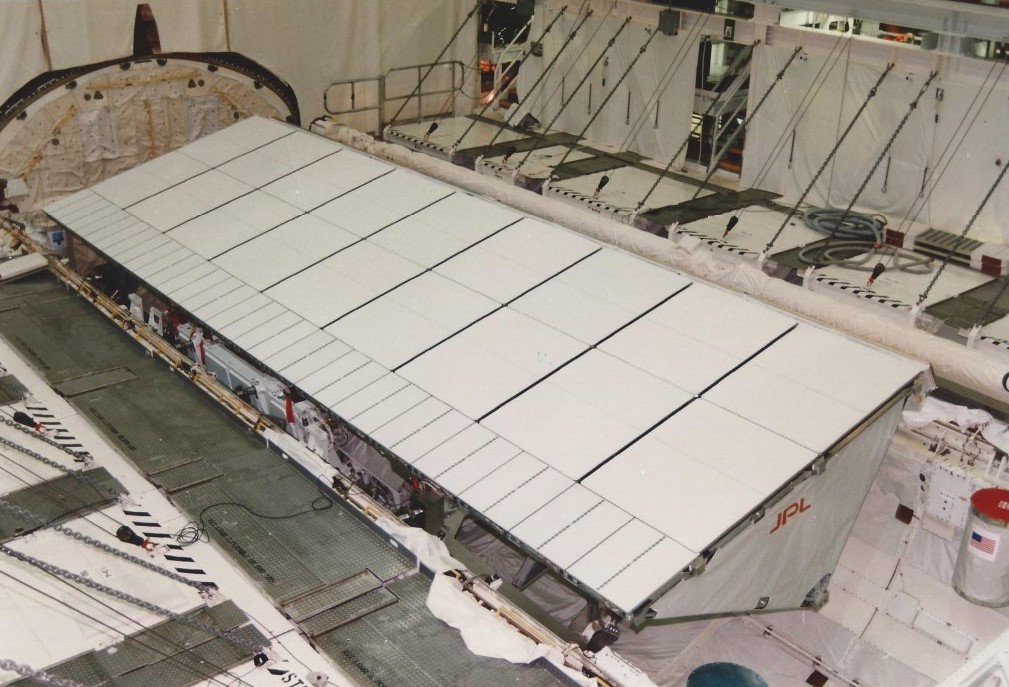

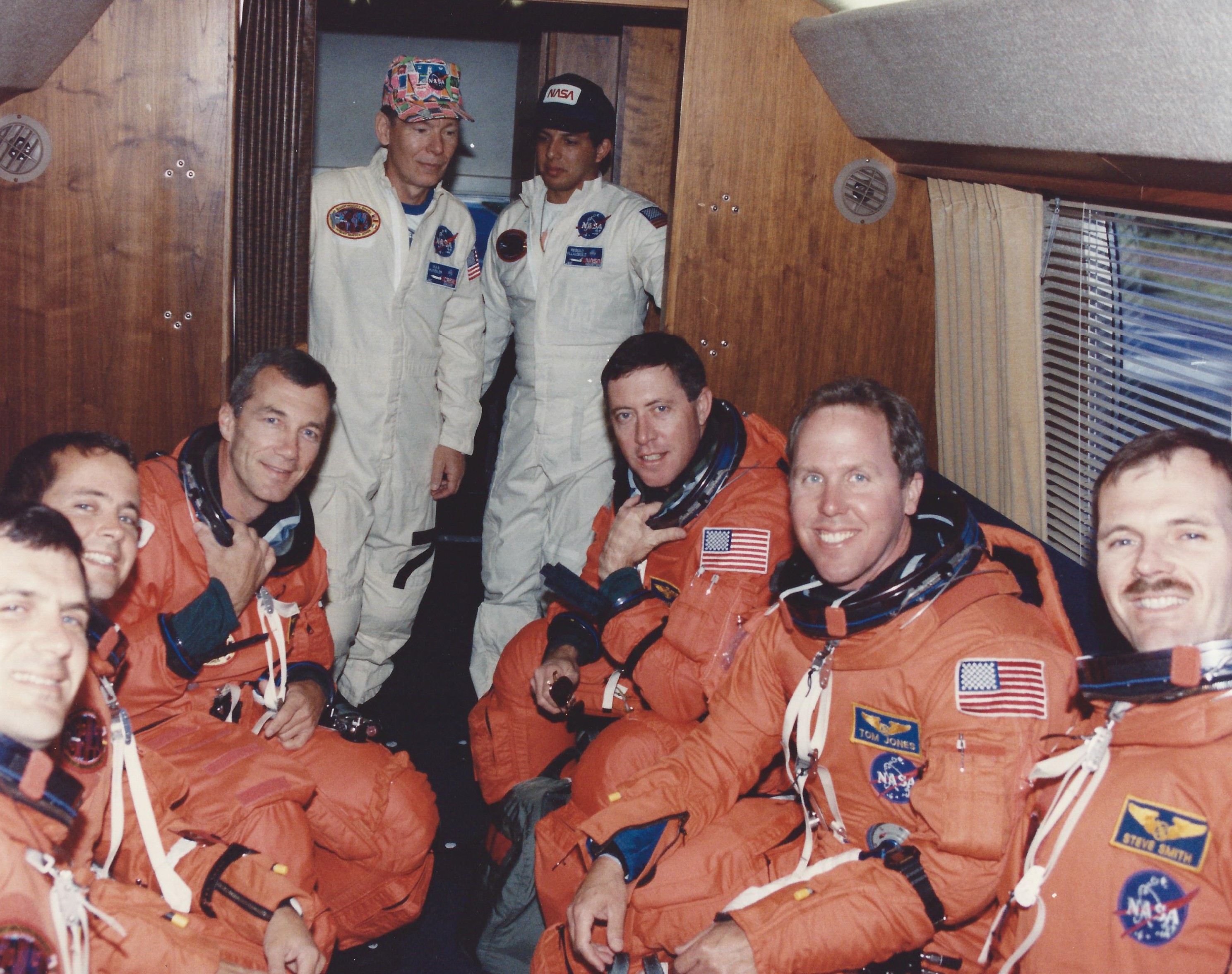
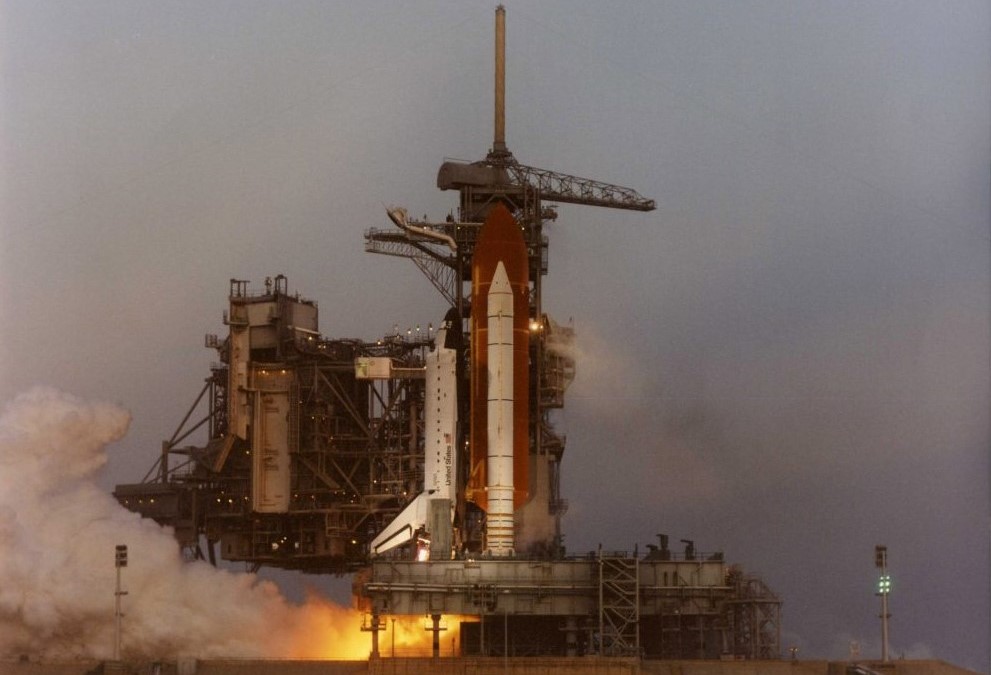
Left: The Spaceborne Imaging Radar-C (SIR-C) in Endeavour’s payload bay in the Orbiter Processing Facility at NASA’s Kennedy Space Center in Florida. Middle: Endeavour on Launch Pad 39A. Right: STS-68 crew in the Astrovan on its way to Launch Pad 39A for the Terminal Countdown Demonstration Test.
The SRL payloads consisted of three major components – the Spaceborne Imaging Radar-C (SIR-C), built by NASA’s Jet Propulsion Laboratory in Pasadena, California, the X-band Synthetic Aperture Radar (X-SAR) sponsored by the German Space Agency DLR and the Italian Space Agency ASI, and the Measurement of Air Pollution from Satellites (MAPS), built by NASA’s Langley Research Center in Hampton, Virginia. Scientists from 13 countries participated in the SRL data gathering program, providing ground truth at preselected observation sites. The SIR system first flew as SIR-A on STS-2 in November 1981, although the shortened mission limited data gathering. It flew again as SIR-B on STS-41G in October 1984, and gathering much useful data.
Building on that success, NASA planned to fly an SRL mission on STS-72A, launching in March 1987 into a near-polar orbit from Vandenberg Air Force, now Space Force, Base in California, but the Challenger accident canceled those plans. With polar orbits no longer attainable, a 57-degree inclination remained the highest achievable from NASA’s Kennedy Space Center (KSC) in Florida, still allowing the radar to study more than 75% of Earth’s landmasses. As originally envisioned, SRL-2 would fly about six months after the first mission, allowing data gathering during contrasting seasons. Shuttle schedules moved the date of the second mission up to August 1994, only four months after the first. But events intervened to partially mitigate that disruption.
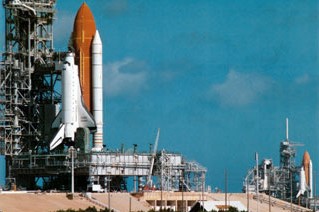
Left: Launch abort at Launch Pad 39A at NASA’s Kennedy Space Center in Florida. Right: A few days after the launch abort, space shuttle Discovery arrives at Launch Pad 39B, left, with space shuttle Endeavour still on Launch Pad 39A, awaiting its rollback to the Vehicle Assembly Building.
Endeavour arrived back at KSC following its previous flight, the STS-59 SRL-1 mission, in May 1994. Workers in KSC’s Orbiter Processing Facility refurbished the SRL-1 payloads for their reflight and serviced the orbiter, rolling it over to the Vehicle Assembly Building (VAB) on July 21 for mating with its External Tank and Solid Rocket Boosters (SRBs). Endeavour rolled out to Launch Pad 39A on July 27. The six-person STS-68 crew traveled to KSC to participate in the Terminal Countdown Demonstration Test on Aug. 1, essentially a dress rehearsal for the launch countdown. They returned to KSC on Aug. 15, the same day the final countdown began.
Following a smooth countdown leading to a planned 5:54 a.m. EDT launch on Aug. 18, Endeavour’s three main engines came to life 6.6 seconds before liftoff. With just 1.8 seconds until the two SRBs ignited to lift the shuttle stack off the pad, the Redundant Set Launch Sequencer (RSLS) stopped the countdown and shutdown the three main engines, two of which continued running past the T-zero mark. It marked the fifth and final launch abort of the shuttle program, and the closest one to liftoff. Bursch now had the distinction as the only person to have experienced two RSLS launch aborts, his first one occurring on STS-51 just a year earlier. Engineers traced the shutdown to higher than anticipated temperatures in a high-pressure oxygen turbopump in engine number three. The abort necessitated a rollback of Endeavour to the VAB on Aug. 24 to replace all three main engines with three engines from Atlantis on its upcoming STS-66 mission. Engineers shipped the suspect engine to NASA’s Stennis Space Center in Mississippi for extensive testing, where it worked fine and flew on STS-70 in July 1995. Meanwhile, Endeavour returned to Launch Pad 39A on Sept. 13.
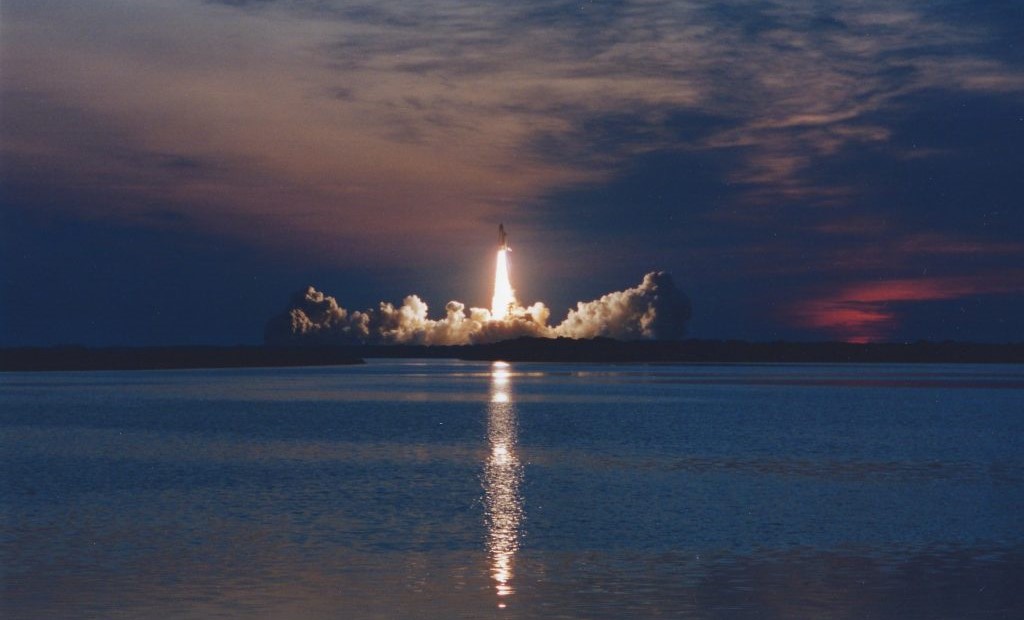
Liftoff of Endeavour on the STS-68 mission.
On Sept. 30, 1994, Endeavour lifted off on time at 6:16 a.m. EDT, and eight and half minutes later delivered its crew and payloads to space. Thirty minutes later, a firing of the shuttle’s Orbiter Maneuvering System (OMS) engines placed them in a 132-mile orbit inclined 57 degrees to the equator. The astronauts opened the payload bay doors, deploying the shuttle’s radiators, and removed their bulky launch and entry suits, stowing them for the remainder of the flight.


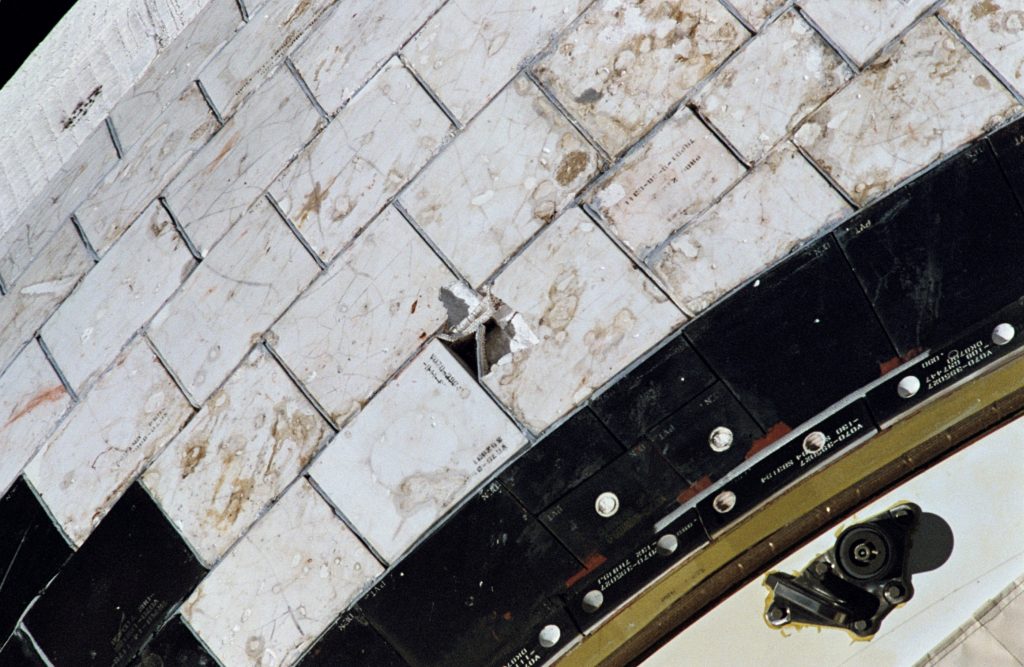
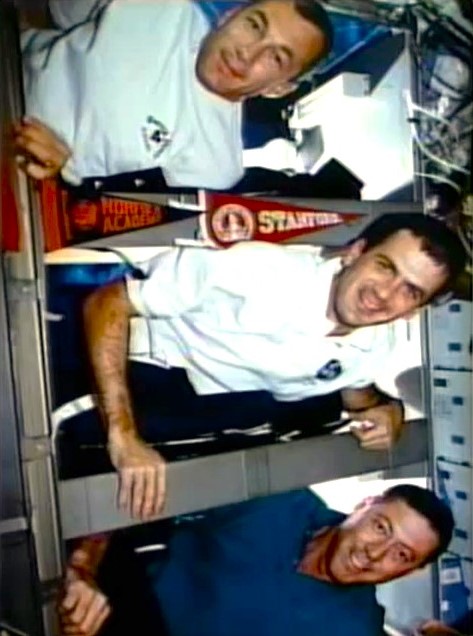
Left: The Space Radar Laboratory-2 payload in Endeavour’s cargo bay, showing SIR-C (with the JPL logo on it), X-SAR (the long bar atop SIR-C), and MAPS (with the LaRC logo on it). Middle: The STS-68 Blue Team of Daniel W. Bursch, top, Steven L. Smith, and Thomas D. Jones in their sleep bunks. Right: Tile damage on Endeavour’s starboard Orbital Maneuvering System pod caused by a strike from a tile from Endeavour’s front window rim that came loose during the ascent.
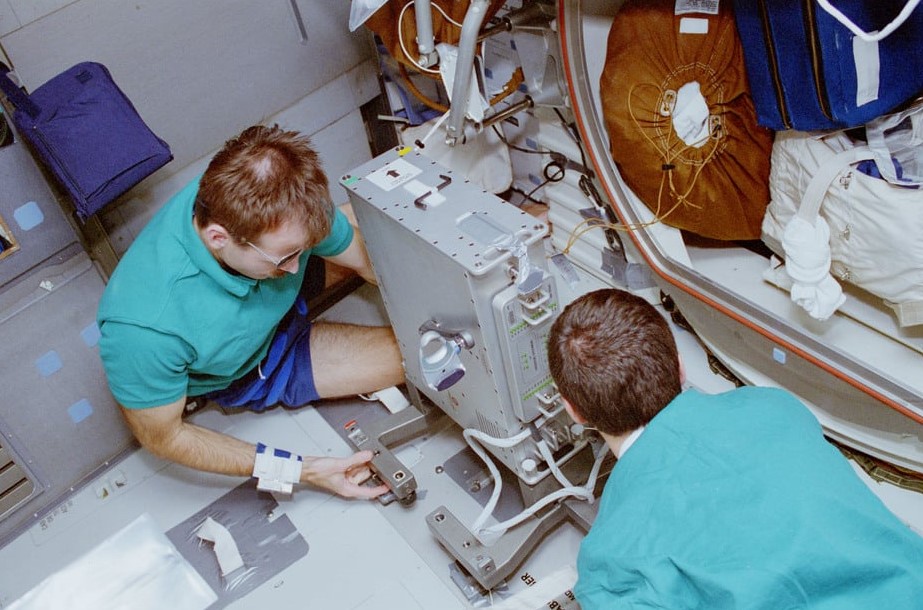
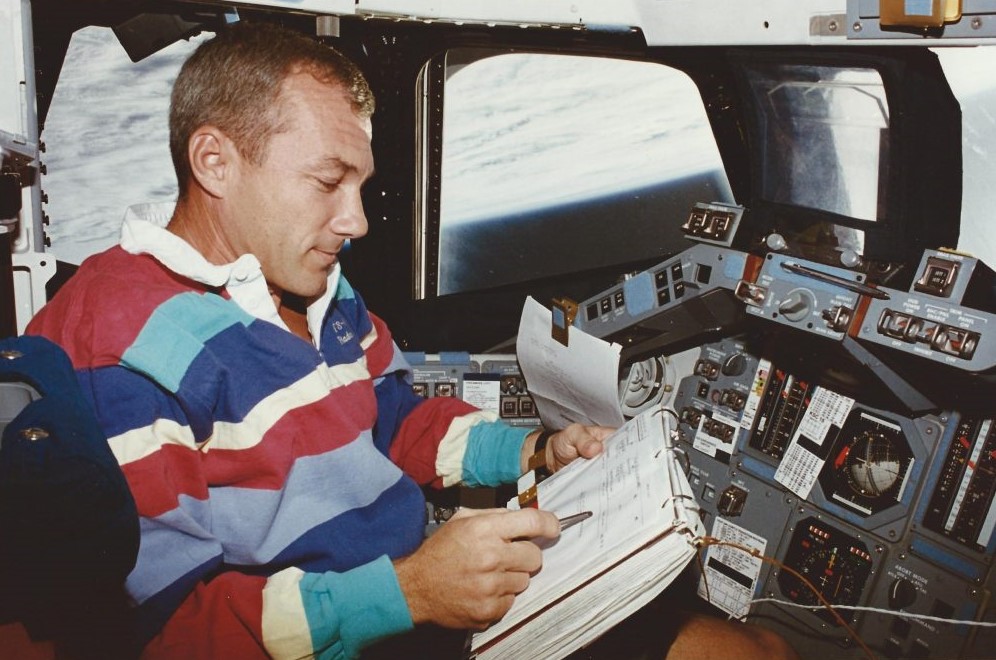
Left: Steven L. Smith, left, and Peter J.K. “Jeff” Wisoff set up the bicycle ergometer in the shuttle’s middeck. Middle: The STS-68 Red Team of Terrence W. Wilcutt, top, Wisoff, and Michael A. Baker in their sleep bunks. Right: Wilcutt consults the flight plan for the next maneuver.
The astronauts began to convert their vehicle into a science platform, and that included breaking up into two teams to enable 24-hour-a-day operations. Baker, Wilcutt, and Wisoff made up the Red Team while Smith, Bursch, and Jones made up the Blue Team. Within five hours of liftoff, the Blue Team began their sleep period while the Red Team started their first on orbit shift by activating the SIR-C and X-SAR instruments in the payload bay and some of the middeck experiments. During inspection of the OMS pods, the astronauts noted an area of damaged tile, later attributed to an impact from a tile from the rim of Endeavour’s front window that came loose during the ascent to orbit. Engineers on the ground assessed the damage and deemed it of no concern for the shuttle’s entry.
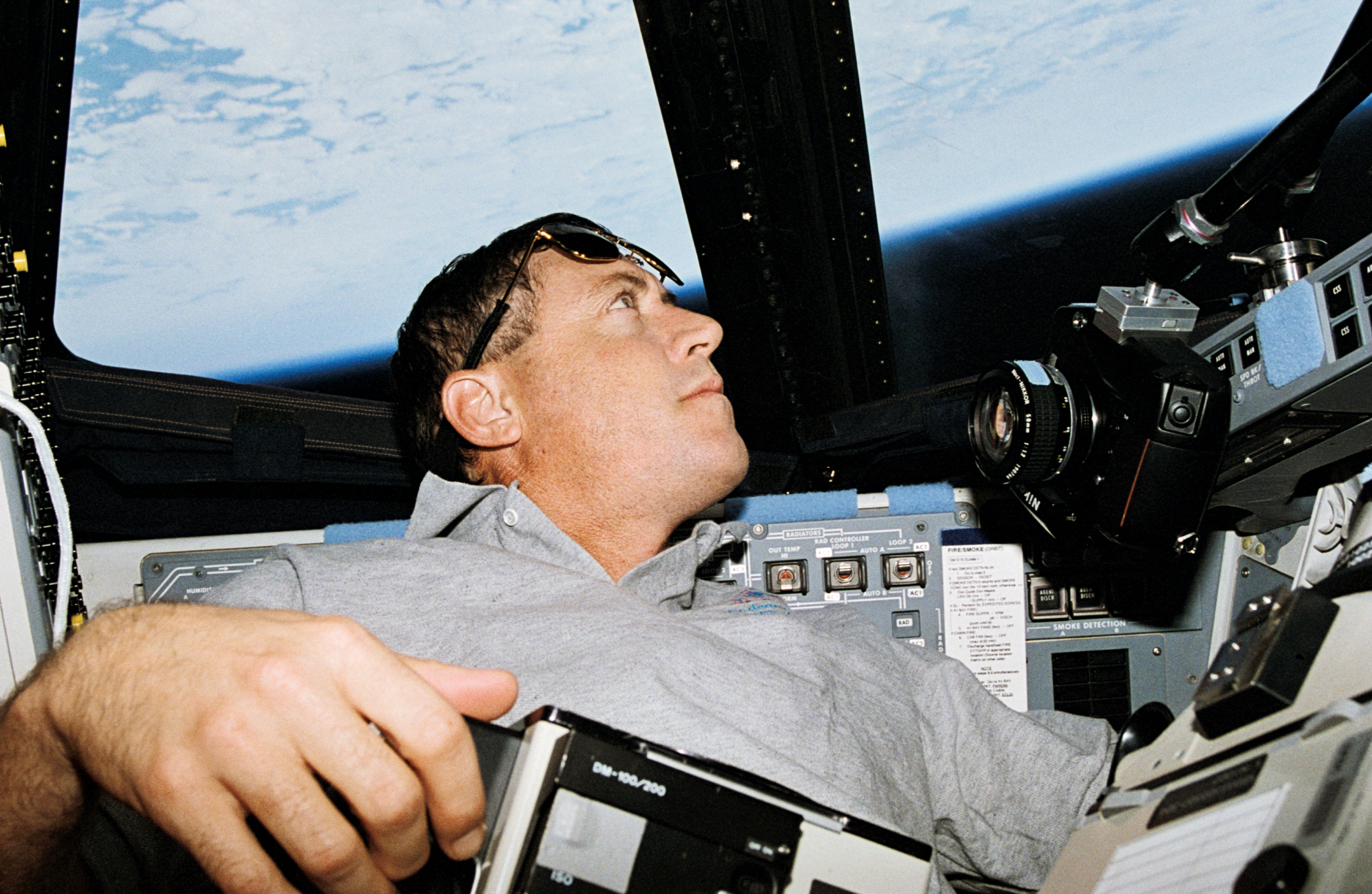

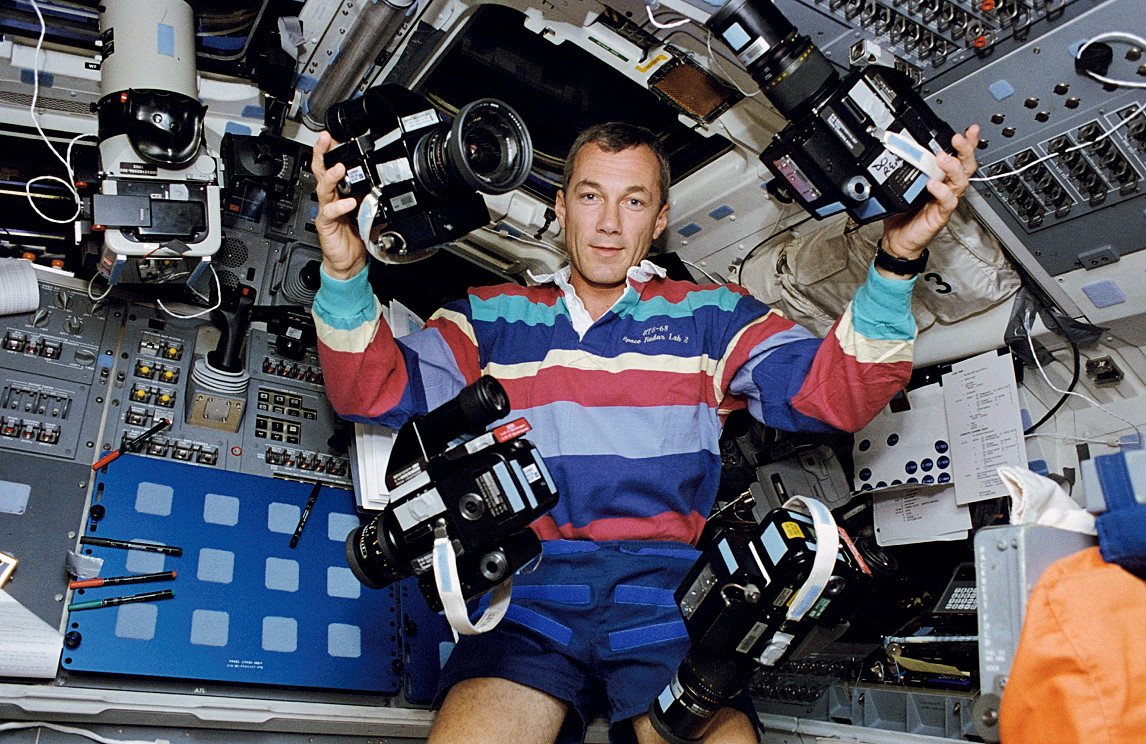
Left: Michael A. Baker prepares to take photographs through the commander’s window. Middle: Thomas D. Jones, left, Daniel W. Bursch, and Baker hold various cameras in Endeavour’s flight deck. Right: Terrence W. Wilcutt with four cameras.

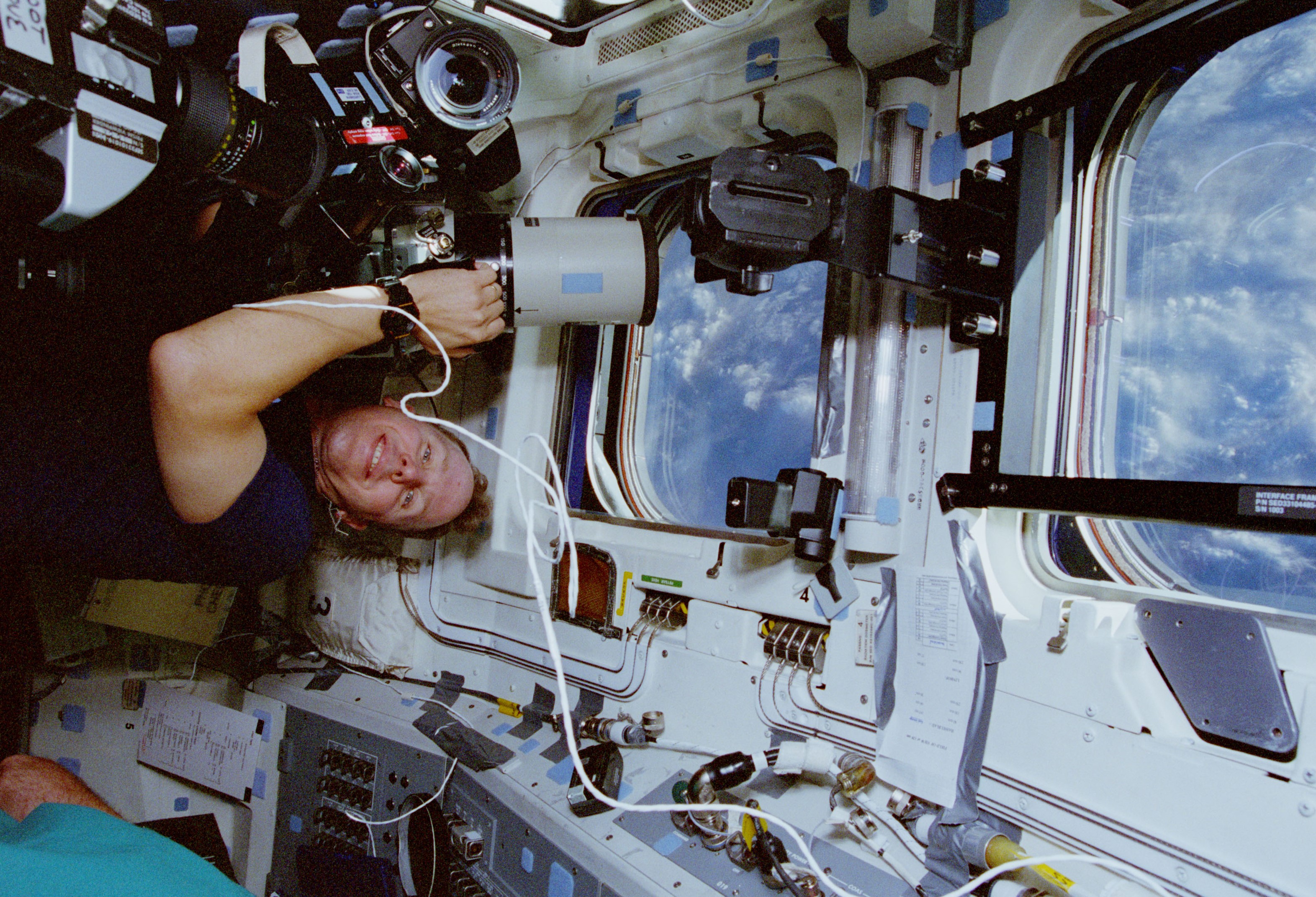
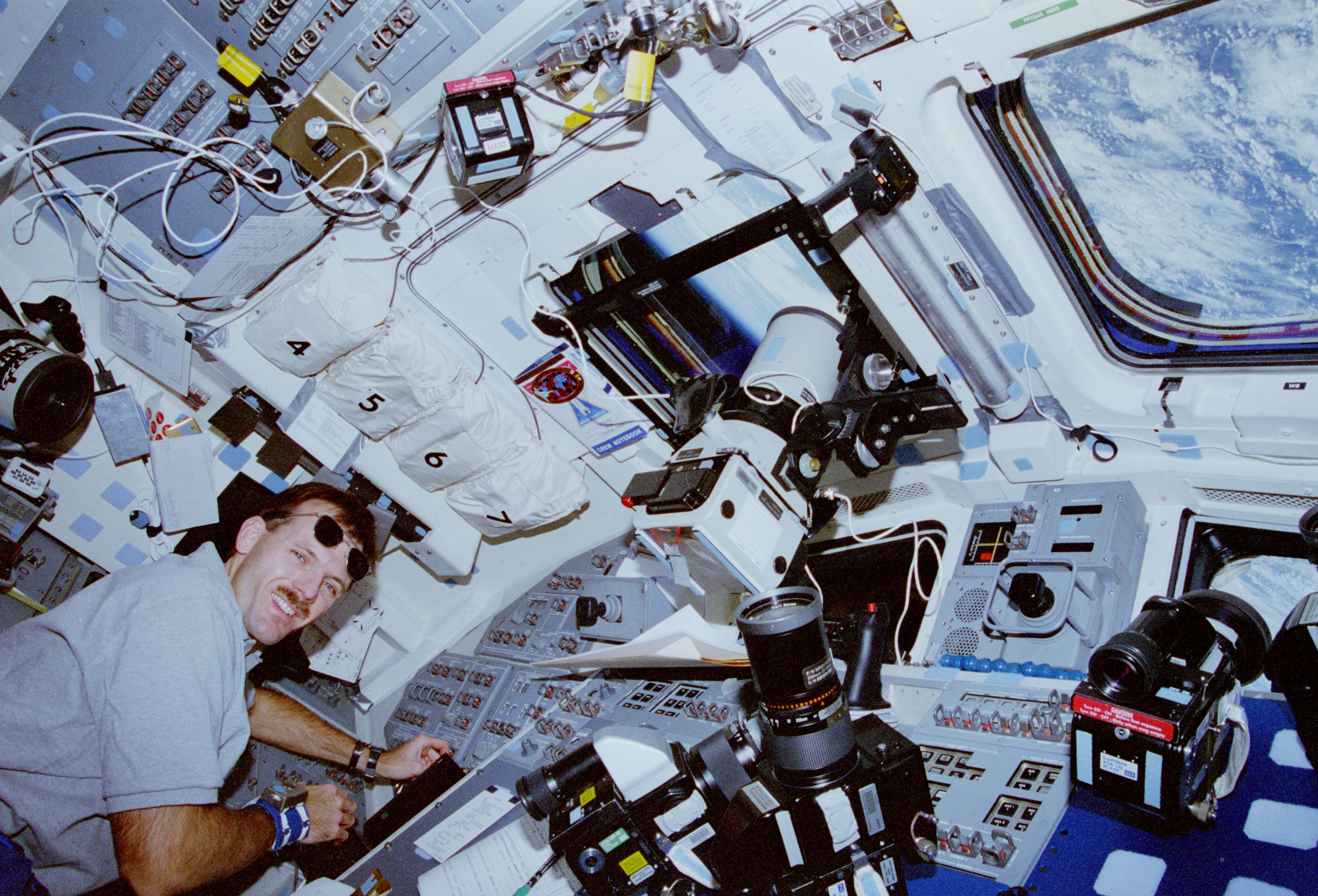
Left: Thomas D. Jones, left, and Daniel W. Bursch consult a map in an atlas developed specifically for the SRL-2 mission. Middle: Jones takes photographs through the overhead window. Right: Steven L. Smith takes photographs through the overhead window.
By sheer coincidence, the Klyuchevskaya volcano on Russia’s Kamchatka Peninsula began erupting on the day STS-68 launched. By the mission’s second day, the astronauts trained not only their cameras on the plume of ash reaching 50,000 feet high and streaming out over the Pacific Ocean but also the radar instruments. This provided unprecedented information of this amazing geologic event to scientists who could also compare these images with those collected during SRL-1 five months earlier.
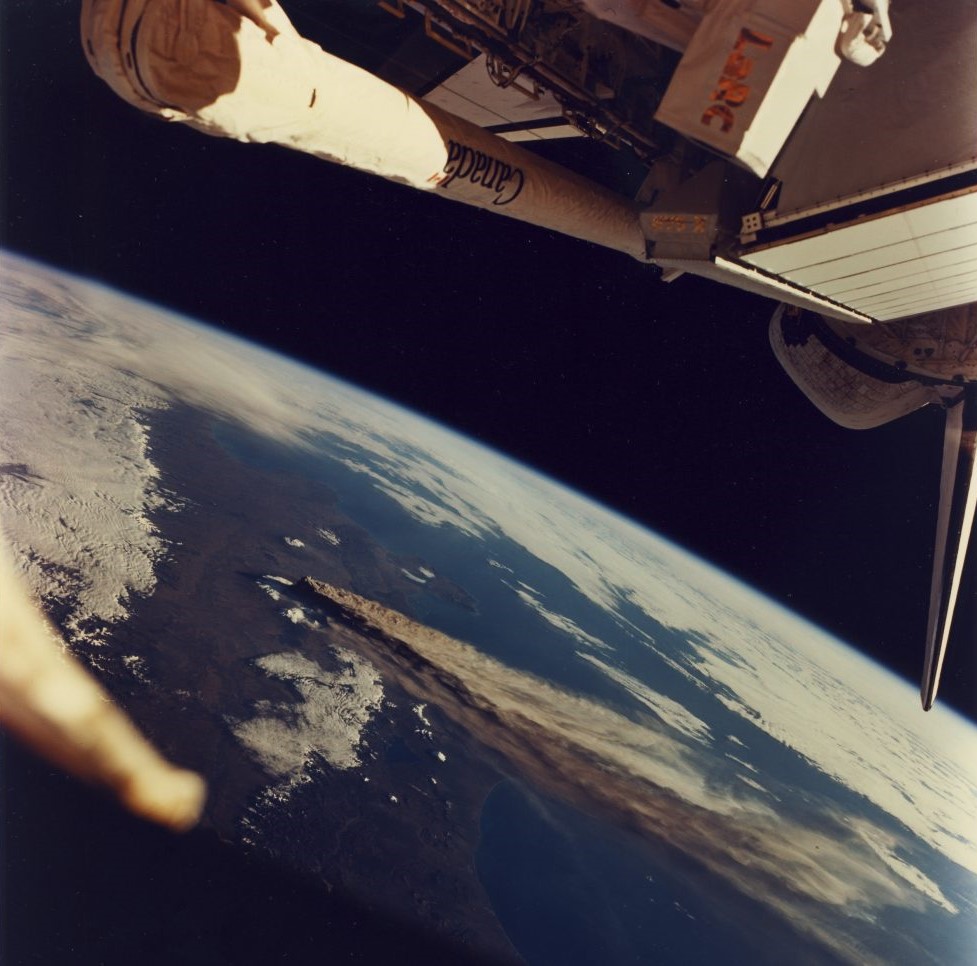
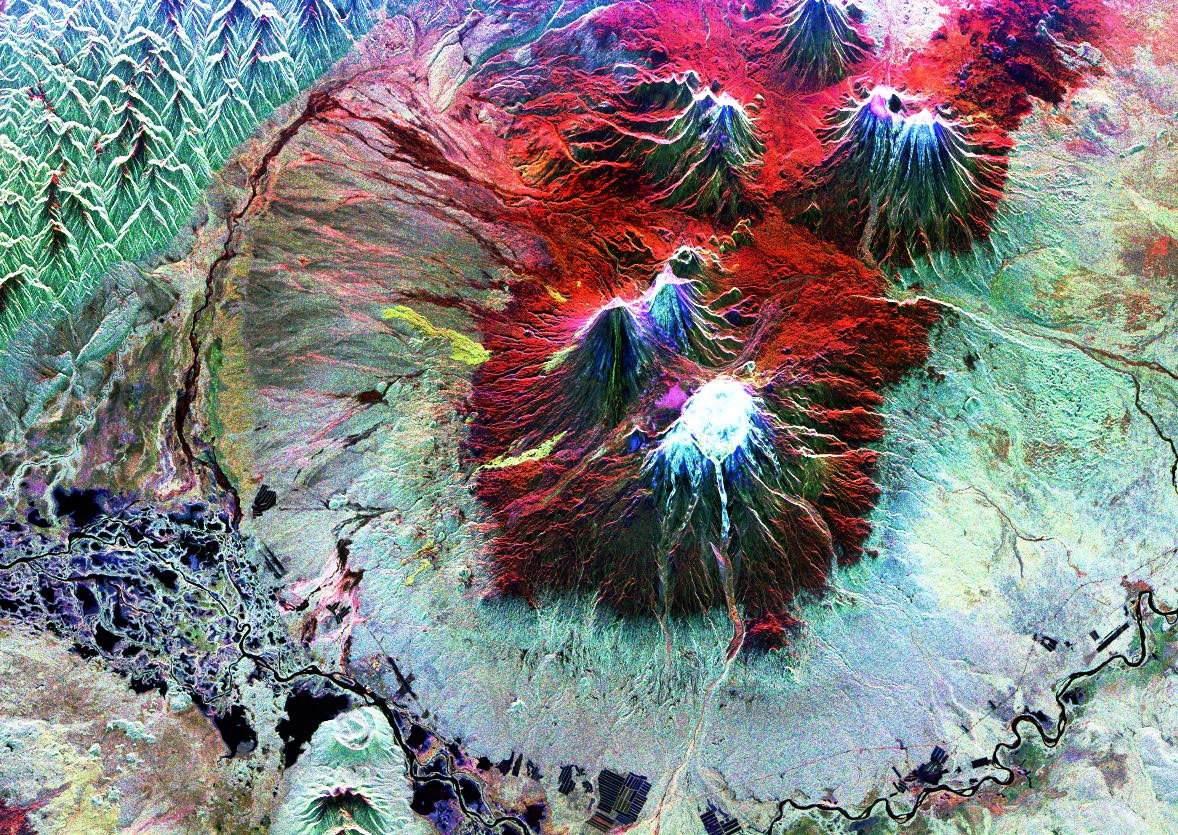
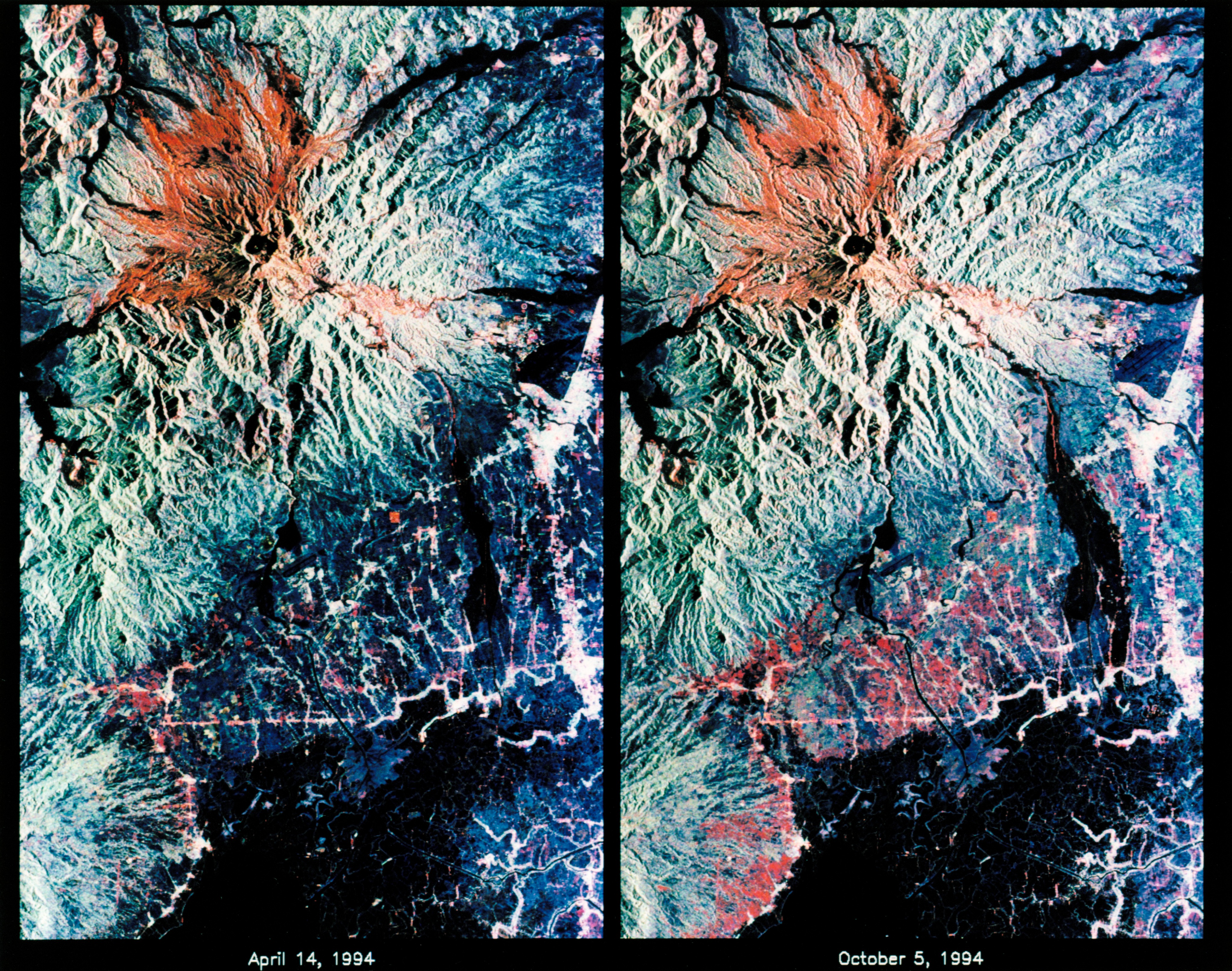
Left: Eruption of Klyuchevskaya volcano on Russia’s Kamchatka Peninsula. Middle: Radar image of Klyuchevskaya volcano. Right: Comparison of radar images of Mt. Pinatubo in The Philippines taken during SRL-1 in April 1994 and SRL-2 in October 1994.
The STS-68 crew continued their Earth observations for the remainder of the 11-day flight, having received a one-day extension from Mission Control. On the mission’s eighth day, they lowered Endeavour’s orbit to 124 miles to begin a series of interferometry studies that called for extremely precise orbital maneuvering to within 30 feet of the orbits flown during SRL-1, the most precise in shuttle history to that time. These near-perfectly repeating orbits allowed the construction of three-dimensional contour images of selected sites. The astronauts repaired a failed payload high rate recorder and continued working on middeck and biomedical experiments.
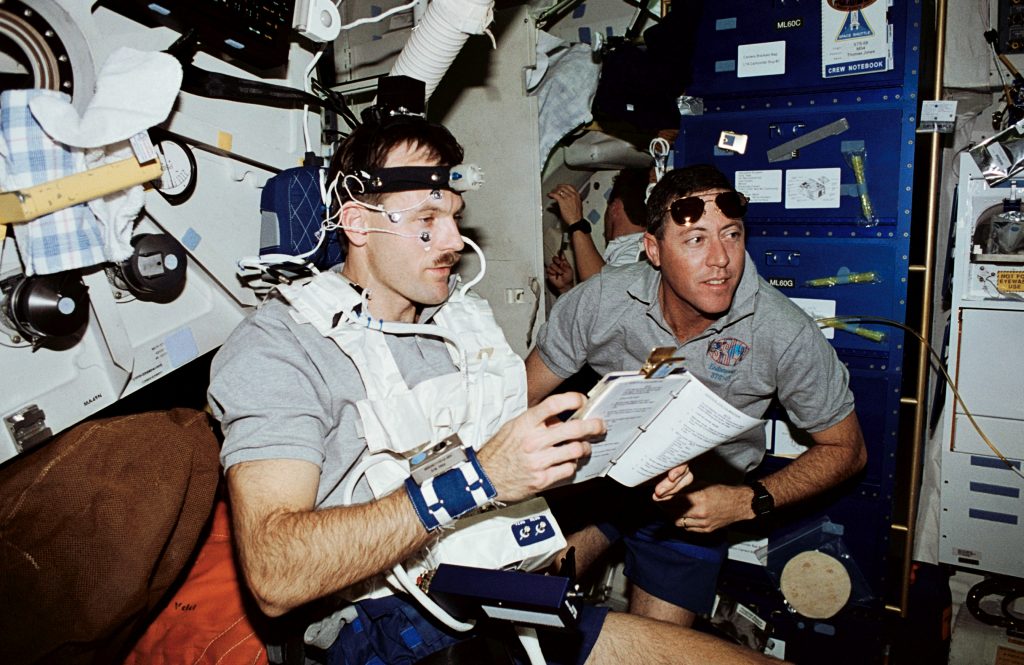
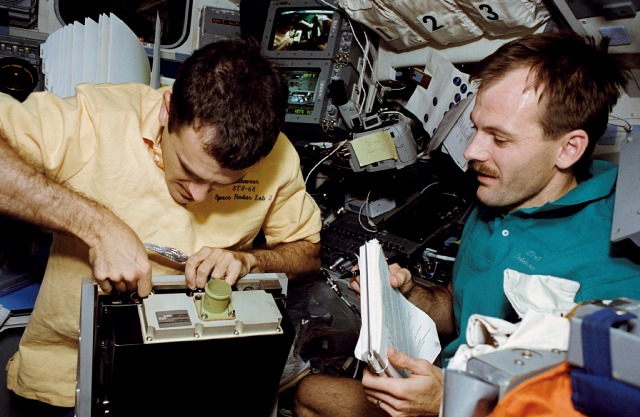
Left: Steven L. Smith, left, conducts a biomedical experiment as Michael A. Baker monitors. Right: Peter J.K. “Jeff” Wisoff, left, and Smith repair a payload high rate recorder.
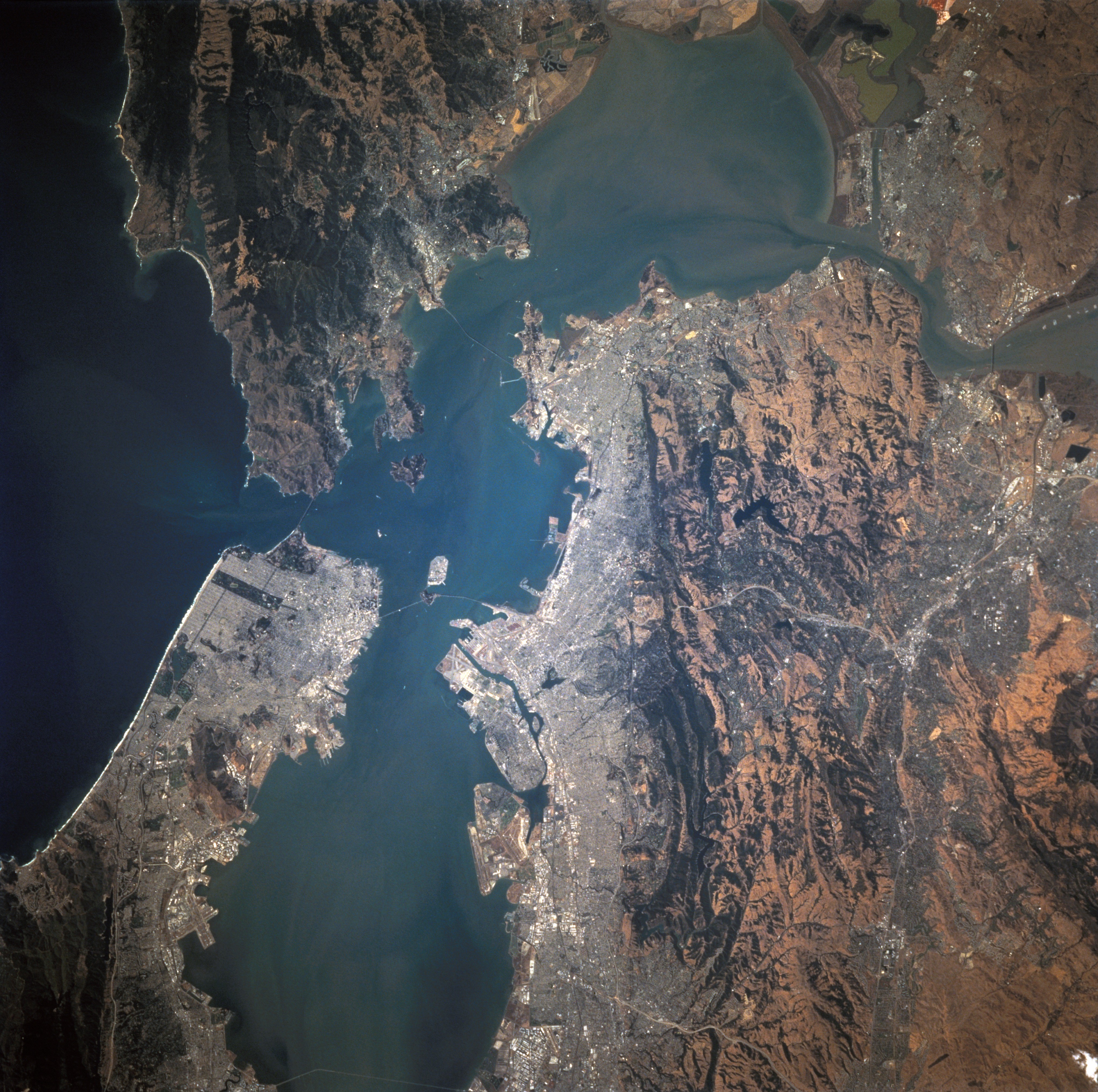


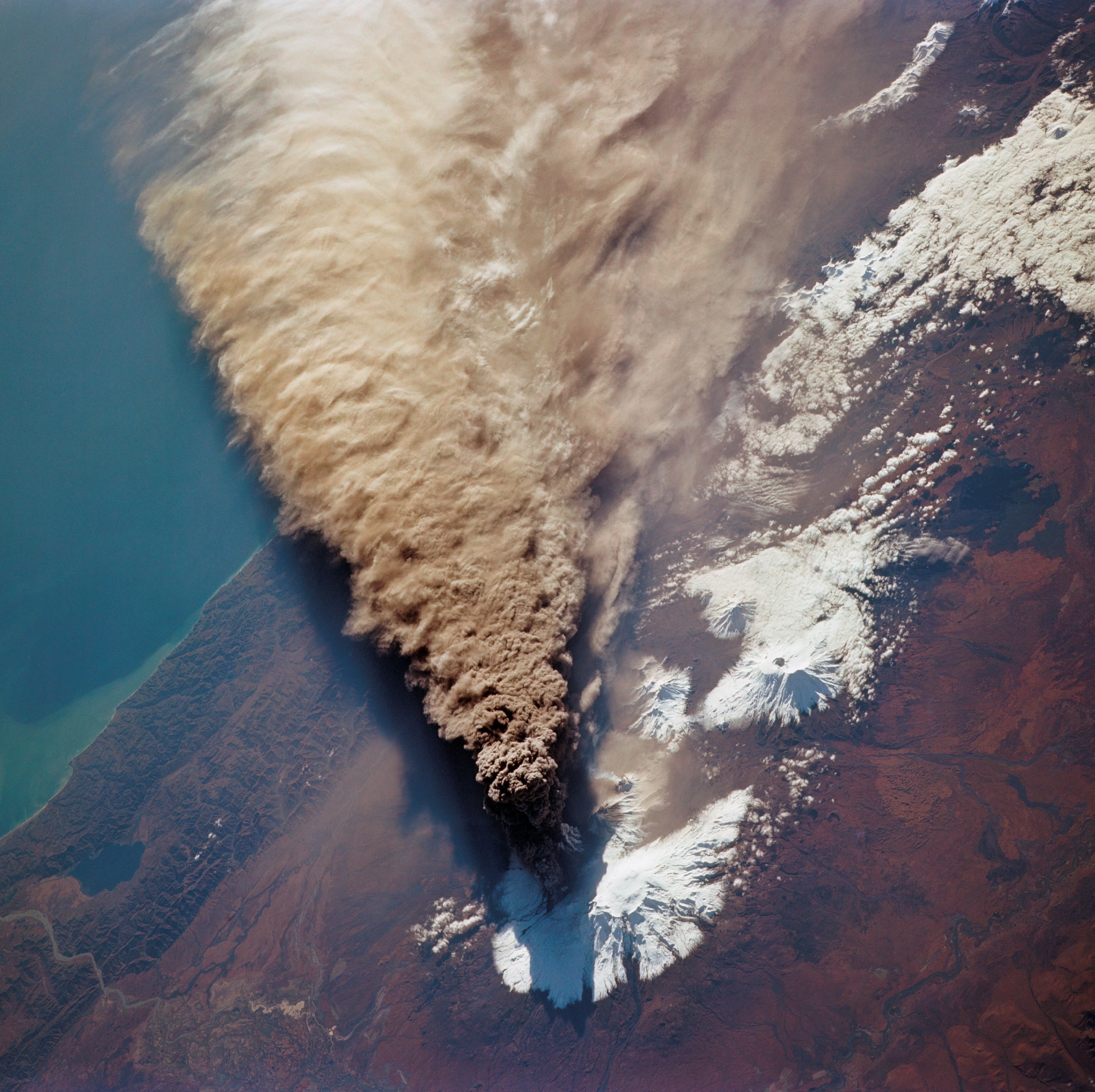
A selection of STS-68 crew Earth observation photographs. Left: The San Francisco Bay area. Middle left: The Niagara Falls and Buffalo area. Middle right: Riyadh, Saudi Arabia. Right: Another view of the Klyuchevskaya volcano on Russia’s Kamchatka Peninsula.
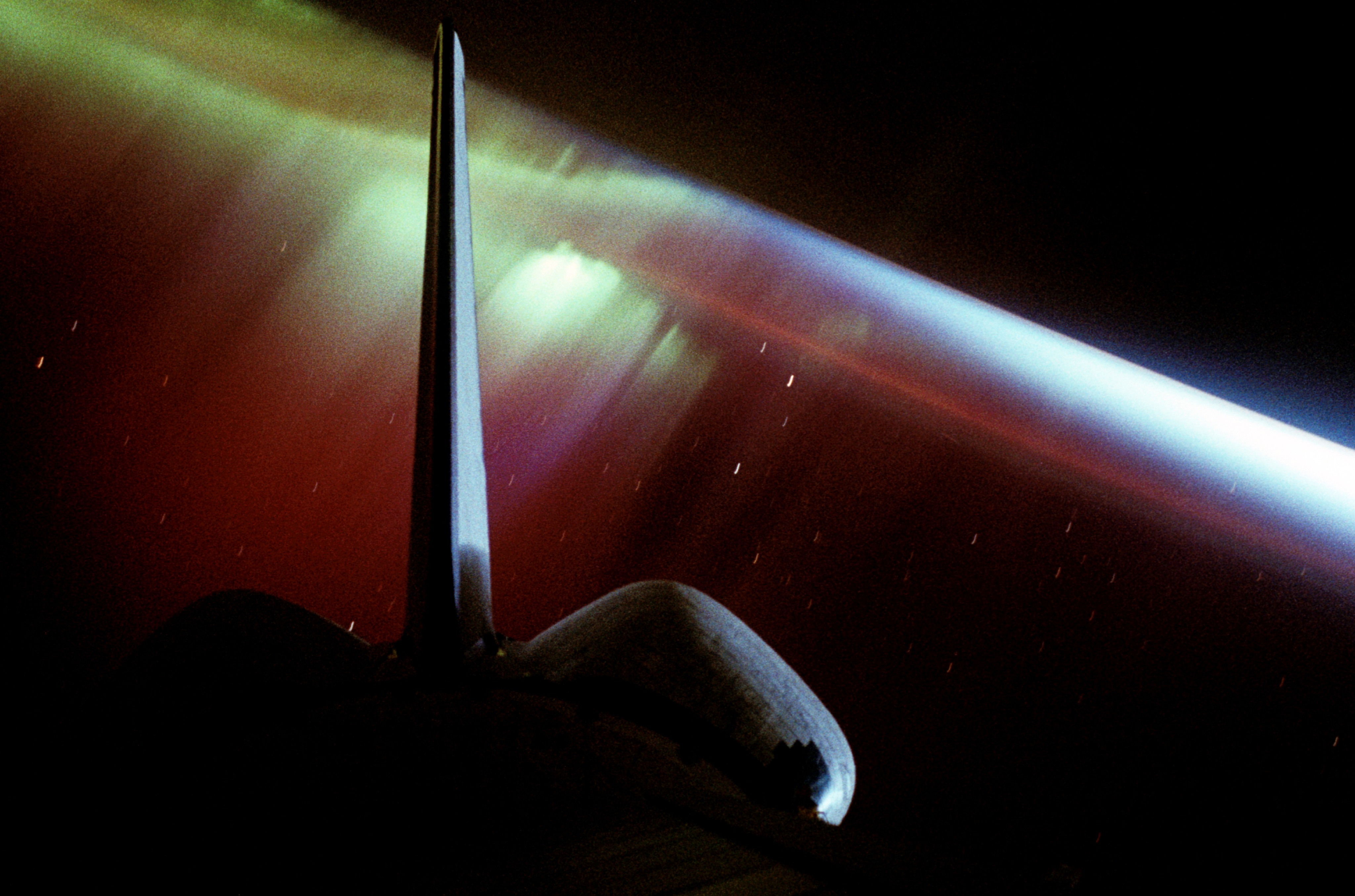

The high inclination orbit afforded the astronauts great views of the aurora australis, or southern lights.
On this mission in particular, the STS-68 astronauts spent considerable time looking out the window, their images complementing the data taken by the radar instruments. Their high inclination orbit enabled views of parts of the planet not seen during typical shuttle missions, including spectacular views of the southern lights, or aurora australis.
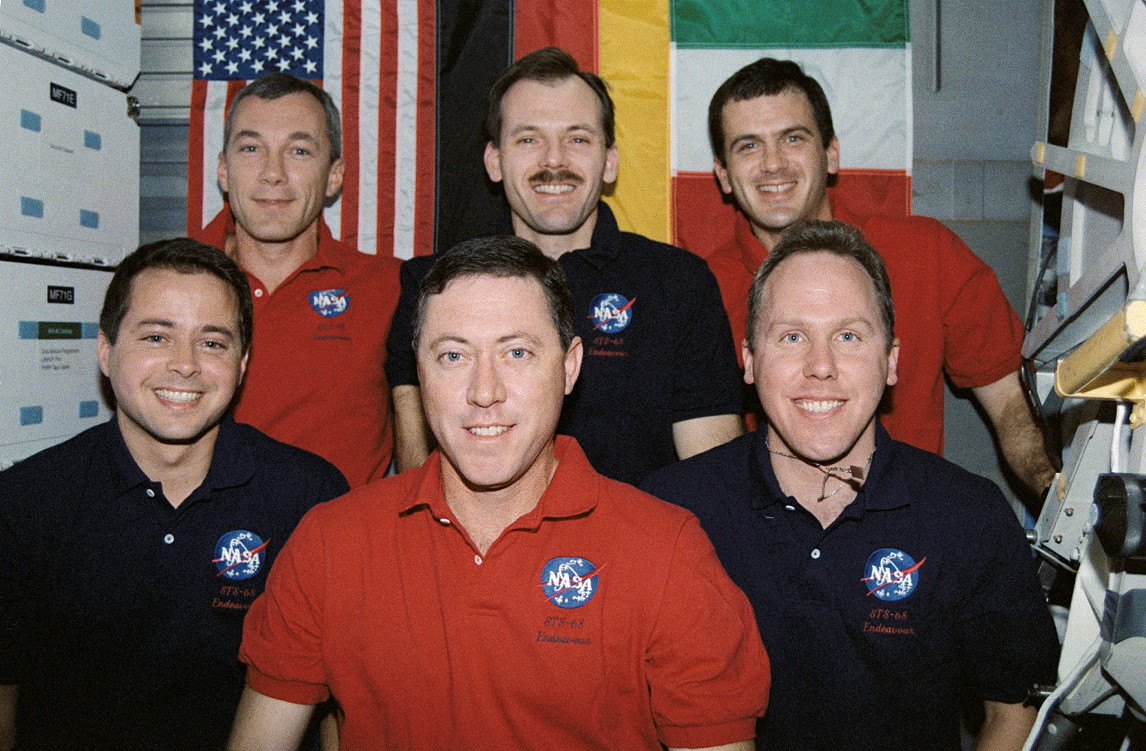

Two versions of the inflight STS-68 crew photo.
On flight day 11, with most of the onboard film exposed and consumables running low, the astronauts prepared for their return to Earth the following day. Baker and Wilcutt tested Endeavour’s reaction control system thrusters and aerodynamic surfaces in preparation for deorbit and descent through the atmosphere, while the rest of the crew busied themselves with shutting down experiments and stowing away unneeded equipment.
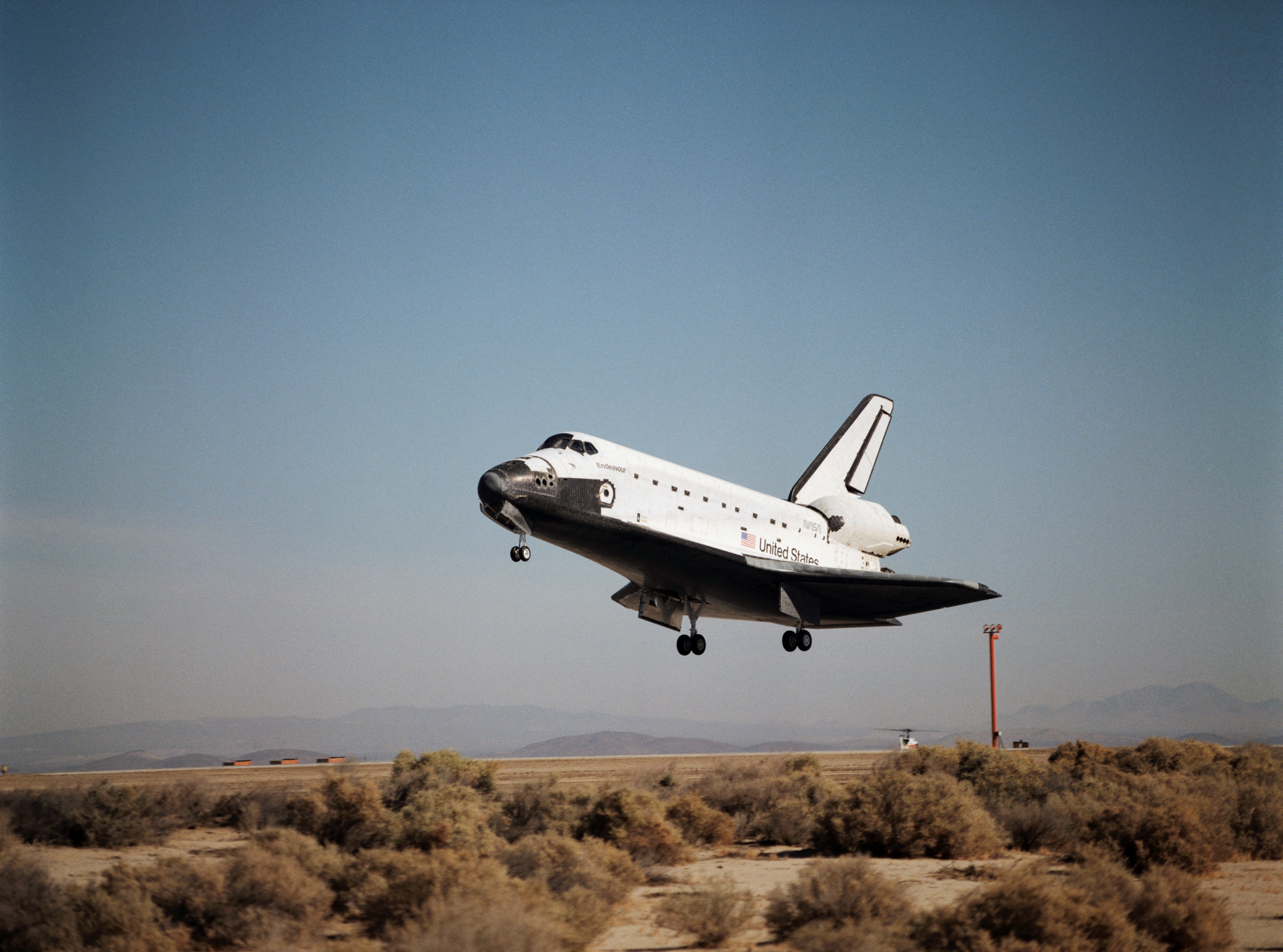
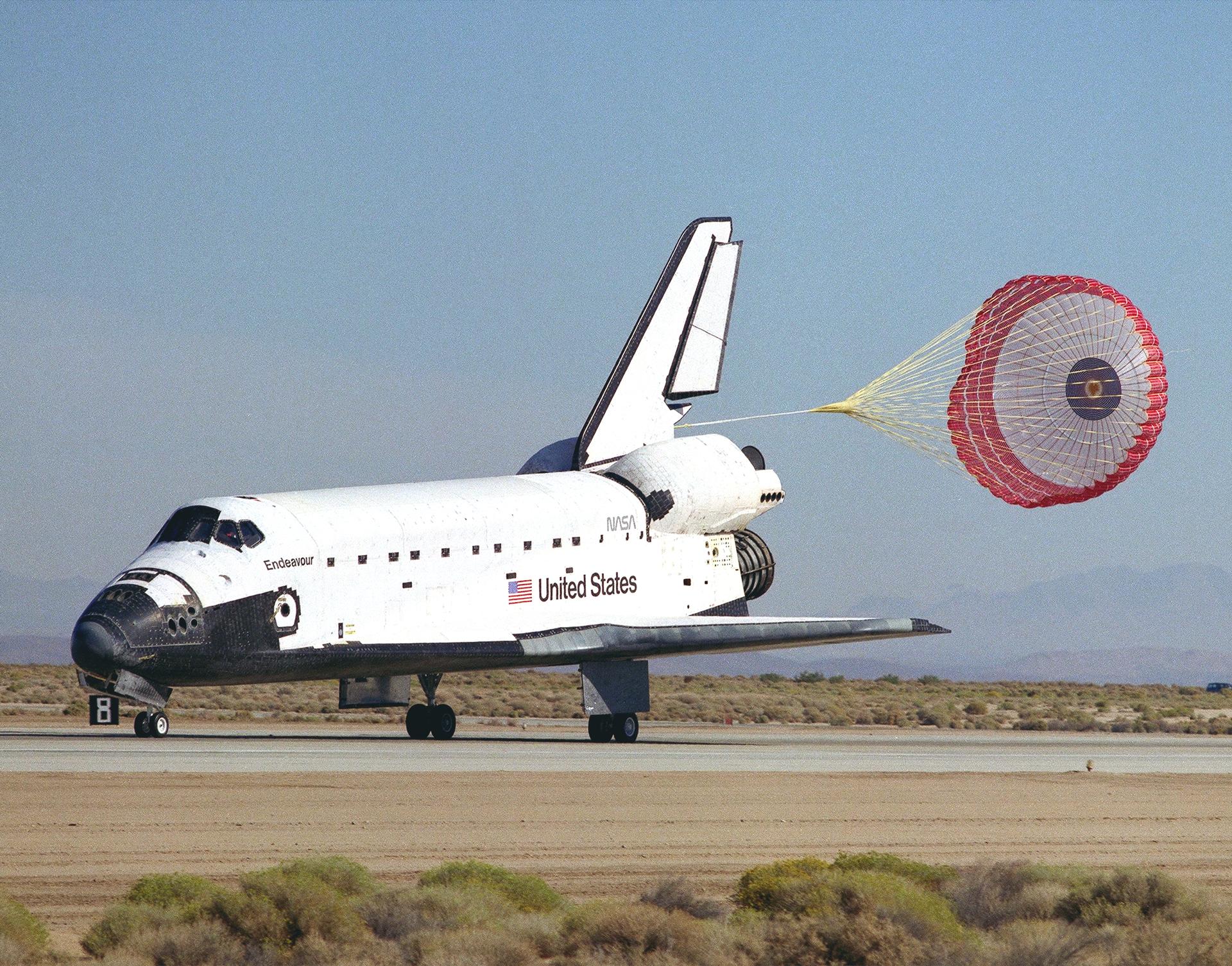
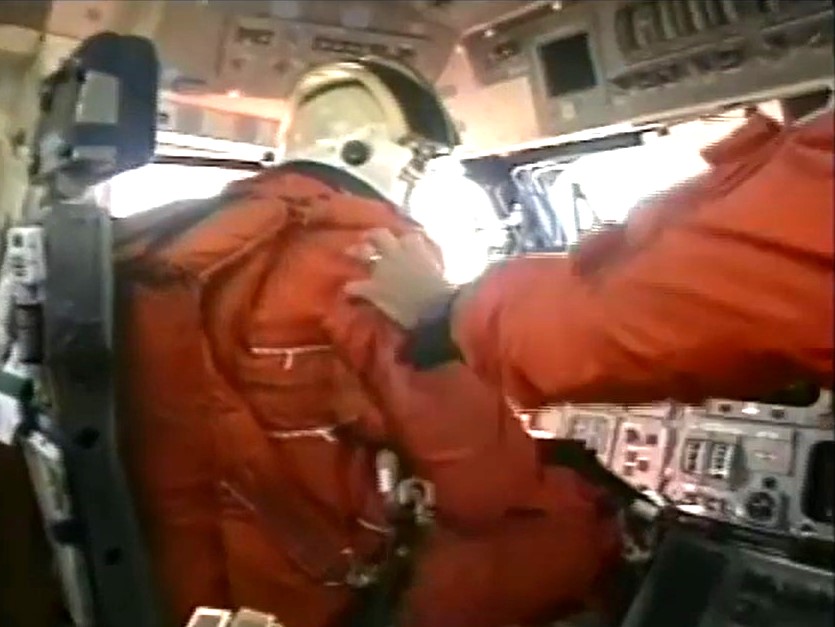
Left: Endeavour moments before touchdown at California’s Edwards Air Force Base. Middle: Michael A. Baker brings Endeavour home to close out STS-68 and a successful SRL-2 mission. Right: Baker gets a congratulatory tap on the shoulder from Terrence W. Wilcutt following wheels stop.
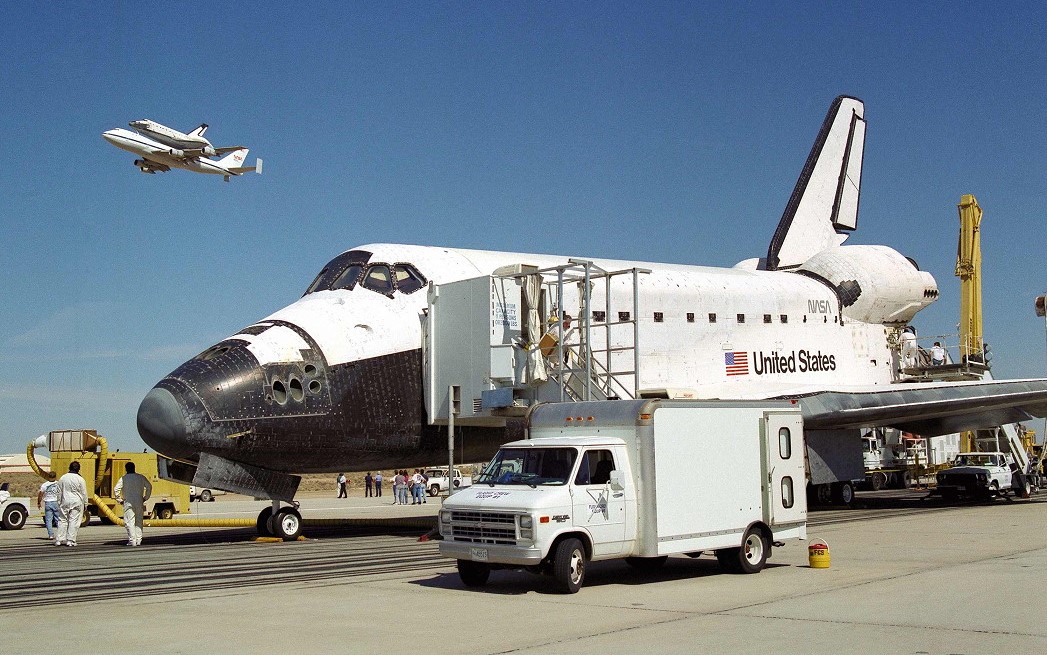
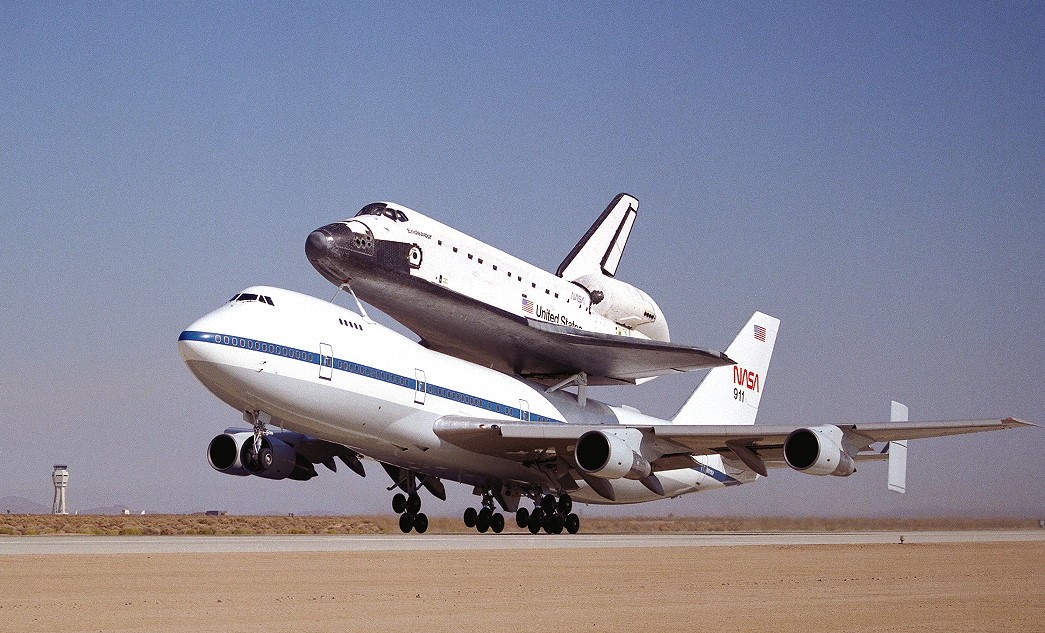
Left: As workers process Endeavour on the runway, Columbia atop a Shuttle Carrier Aircraft (SCA) flies overhead on its way to the Palmdale facility for refurbishment. Right: Mounted atop an SCA, Endeavour departs Edwards for the cross-country trip to NASA’s Kennedy Space Center in Florida.
On Oct. 11, the astronauts closed Endeavour’s payload bay doors, donned their launch and entry suits, and strapped themselves into their seats for entry and landing. Thick cloud cover at the KSC primary landing site forced first a two-orbit delay in their landing, then an eventual diversion to Edwards Air Force Base (AFB) in California. The crew fired Endeavour’s OMS engines to drop out of orbit. Baker piloted Endeavour to a smooth landing at Edwards, ending the 11-day 5-hour 46-minute flight. The crew had orbited the Earth 182 times. Workers at Edwards safed the vehicle and placed it atop a Shuttle Carrier Aircraft for the ferry flight back to KSC. The duo left Edwards on Oct. 19, and after stops at Biggs Army Airfield in El Paso, Texas, Dyess AFB in Abilene, Texas, and Eglin AFB in the Florida panhandle, arrived at KSC the next day. Workers there began preparing Endeavour for its next flight, STS-67, in March 1995. Meanwhile, a Gulfstream jet flew the astronauts back to Ellington Field in Houston for reunions with their families.
Diane Evans, SIR-C project scientist, summarized the scientific return from STS-68, “We’ve had a phenomenally successful mission.” The radar instrument collected 60 terabits of data, filling 67 miles of magnetic tape during the mission. In 1990s technology, that equated to a pile of floppy disks 15 miles high! In 2006, using an updated comparison, astronaut Jones equated that to a stack of CDs 65 feet high. The radar instruments completed 910 data takes of 572 targets during about 80 hours of imaging. To complement the radar data, the astronauts took nearly 14,000 photographs using 14 different cameras. To image the various targets required more than 400 maneuvers of the shuttle, requiring 22,000 keystrokes in the orbiter’s computer. The use of interferometry, requiring precision orbital tracking of the shuttle, to create three-dimensional topographic maps, marks another significant accomplishment of the mission. Scientists published more than 5,000 papers using data from the SRL missions.
Enjoy the crew narrate a video about the STS-68 mission. Read Wilcutt’s recollections of the mission in his oral history with the JSC History Office.
Explore More


Powered by WPeMatico
Get The Details…
Kelli Mars