Dragon Suit, Seat Checks During Crew Departure Preps and Space Science

Dragon Suit, Seat Checks During Crew Departure Preps and Space Science

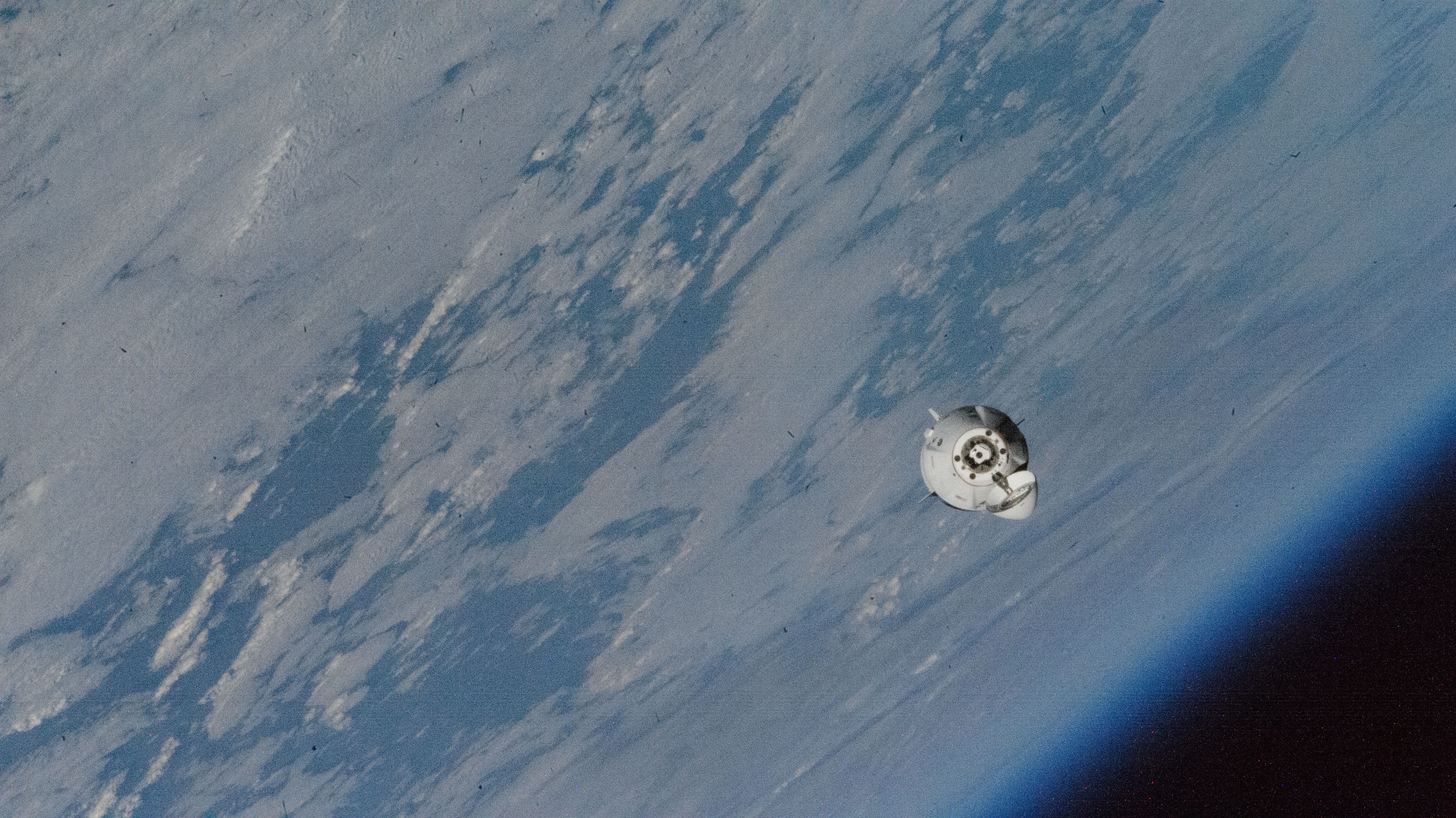
The SpaceX Dragon Freedom spacecraft carrying NASA astronaut Nick Hague and Roscosmos cosmonaut Aleksandr Gorbunov approaches the International Space Station on Sept. 29, 2024.

Expedition 72 Commander Suni Williams and Flight Engineer Butch Wilmore, both NASA astronauts, tried on their SpaceX Dragon pressure suits for the first time on Tuesday with assistance from new crewmate Nick Hague of NASA. The NASA trio checked out their pressurized suits, tested the suits’ audio configurations, and conducted seat fit checks inside the Dragon Freedom spacecraft while wearing the suits.

The three astronauts later joined Roscosmos Flight Engineer Aleksandr Gorbunov and practiced emergency drills inside the Dragon docked to the Harmony module’s forward port. Williams and Wilmore, who rode the Boeing Starliner spacecraft to the International Space Station in June, will return to Earth with Hague and Gorbunov aboard the Dragon spacecraft in February.

In the meantime, four other Expedition 72 crewmates are nearing the end of their space research mission that began on March 5. NASA astronaut Matthew Dominick will command the SpaceX Dragon Endeavour spacecraft leading Pilot Mike Barratt and Mission Specialists Jeanette Epps and Alexander Grebenkin back to Earth on a date soon to be set by NASA and SpaceX mission managers. The homebound SpaceX Crew-8 quartet has been packing personal items and other station cargo inside Endeavour for the ride home. Grebenkin also tested the Roscosmos-designed lower body negative pressure suit that may help ease the adjustment to Earth’s gravity and offset space-caused symptoms.

NASA Flight Engineer Don Pettit and Roscosmos Flight Engineers Alexey Ovchinin and Ivan Vagner, who have been aboard the orbital outpost since Sept. 11, spent Tuesday working on a variety of physics and biology investigations. Pettit worked inside the Microgravity Science Glovebox testing advanced life support hardware that may be used on future space missions operating in different gravity environments. Ovchinin strapped on a sensor-packed cap that measured his responses while practicing futuristic planetary and robotic piloting techniques on a computer. Vagner assisted Grebenkin as he tried on the specialized suit that may counteract the effects of living in weightlessness.

At the end of the crew shift on Tuesday, all 11 space station crew residents gathered together and reviewed their roles and responsibilities in the unlikely event of an emergency. The orbital crew coordinated with mission controllers from around the world familiarizing themselves with using personal protective equipment and fire extinguishers. The astronauts and cosmonauts also reviewed the necessary actions and evacuation procedures in case of a fire, a chemical leak, or a pressure leak.


Learn more about station activities by following the space station blog@space_station and @ISS_Research on X, as well as the ISS Facebook and ISS Instagram accounts.

Get weekly video highlights at: https://roundupreads.jsc.nasa.gov/videoupdate/

Get the latest from NASA delivered every week. Subscribe here: www.nasa.gov/subscribe

Powered by WPeMatico

Get The Details…

Mark Garcia

NASA Announces Selections for Lunar Comms, Network Studies

NASA Announces Selections for Lunar Comms, Network Studies

NASA has selected Intuitive Machines of Houston and Aalyria Technologies Inc. of Livermore, California, to perform capability studies with the goal of advancing space communications and exploration technologies. These studies will allow NASA to gain insights into industry capabilities and innovations to facilitate NASA partnerships with commercial communications and navigation providers.

The awards, under the Next Space Technologies for Exploration Partnerships-2 (Next STEP-2) Broad Agency Announcement (BAA) Appendix Q, are firm fixed-price milestone-based contracts.

Intuitive Machines is awarded $647,600 — Study Area No. 1, Lunar User Terminals and Network Orchestration — to conduct state-of-the-art studies and demonstrations for a dual-purpose navigation and communication lunar surface user terminal. The terminal will support lunar surface exploration planning and ensure interoperability with future LunaNet compatible service providers working in partnership with NASA, ESA (European Space Agency), and other space agencies.

Aalyria Technologies is awarded $393,004 — Study Area No. 2, Network Orchestration and Management System (NOMS) — to provide NASA with insights on advanced Network Orchestration and Management Systems that effectively address NASA’s need to integrate into multiple commercial and government communication service providers supporting the Near Space Network.

NASA’s Near Space Network is managed by the agency’s Goddard Space Flight Center in Greenbelt, Maryland, under the direction of the agency’s SCaN (Space Communications and Navigation) program office within the Space Operations Mission Directorate at NASA Headquarters in Washington. The Near Space Network provides NASA missions with robust communications services through an interoperable architecture composed of a mixture of existing NASA and commercial services.

“These awards are part of NASA’s continuing effort to build commercial partnerships to help support increasingly sophisticated and high-demand space missions,” said Greg Heckler, new capability lead for the SCaN Program at NASA Headquarters in Washington. “Seamless interoperability across networks, from here on Earth to cislunar space, is an essential element of SCaN’s emerging ‘one network’ approach. These awards will move us one step closer to realizing that future.”

The innovative studies delivered by industry through the Next Space Technologies for Exploration (NextSTEP) – 2 Omnibus Broad Agency Announcement vehicle bolster the agency’s goal to create a reliable, robust, and cost-effective set of commercial services in which NASA is one of many customers.

Learn more about the NextSTEP public-private partnership model at:

https://www.nasa.gov/nextstep

-end-

Jeremy Eggers
Goddard Space Flight Center, Greenbelt, Md.
757-824-2958
jeremy.l.eggers@nasa.gov

Powered by WPeMatico

Get The Details…
Rob Garner

Astrophysicist Gioia Rau Explores Cosmic ‘Time Machines’

Astrophysicist Gioia Rau Explores Cosmic ‘Time Machines’

To shape NASA’s path of exploration forward, Dr. Gioia Rau unravels stars and worlds beyond our solar system.

Name: Dr. Gioia Rau
Title: Astrophysicist
Organization: Exoplanets and Stellar Astrophysics Laboratory, Astrophysics Division, Science Mission Directorate (Code 667)

Dr. Gioia Rau stands against a wall with a large Hubble image of a spiral galaxy. She is standing to the right of the image wearing a black blazer, white shirt, tan pants, and glasses.
Dr. Gioia Rau is an astrophysicist at NASA’s Goddard Space Flight Center in Greenbelt, Md.
Photo courtesy of Gioia Rau

What do you do and what is most interesting about your role here at Goddard?

I’m an astrophysicist who studies both evolved stars, stars that about to die, and exoplanets, planets outside our solar system. I study the stars that once held the elements that are in our body, such as calcium. I also lead the science part of several mission concept studies. And I am really passionate about strategic thinking.

How does it feel to achieve your childhood dream of becoming an astrophysicist at NASA?

I am from Italy. Growing up, I was always fascinated by NASA. As a child, I watched the shuttle launches. I loved everything about stars, planets, and galaxies. I devoured astronomy books. I always knew that I wanted to study astrophysics.

Around 10 years old, I wrote a letter to NASA saying that I wanted to become an astrophysicist to study the universe. NASA sent me information and encouraged me to study and work hard. So I did.

I still remember my first day working at NASA. I looked around with so much joy at my dream coming true. Every day that I work at Goddard, I find more passion to continue pursue my dreams.

What is your educational background?

In 2009, I earned a Bachelor of Science in physics from the University of Rome, La Sapienza. In 2011, I obtained a master’s in physics and astrophysics there. Also in 2011, I was awarded a very competitive fellowship to do a master’s thesis at the California Institute of Technology and NASA’s Jet Propulsion Lab thanks to my high GPA. In 2016, I earned a Ph.D. in astrophysics from the University of Vienna. I came to Goddard in 2017 when I obtained a NASA post-doctoral fellowship.

Why do you study evolved stars? 

Evolved stars are the future of our own Sun, which in about 5 billion years will die. Evolved stars also produce elements found in our own bodies, as, for example, the calcium in our bones, the iron in our blood, and the gold in our rings. The stardust that I study is spread by the stellar winds into the interstellar medium to form new generation of stars and planets, and contribute to the cosmic recycle of matter in the universe.

As Carl Sagan said, “We are all made of stardust.”

What is most interesting about studying exoplanets?

If we discover an exoplanet within the habitable zone of its star, we increase the likelihood of finding a planet with Earth-like conditions. This can enhance our understanding of planetary formation processes, and help determine if these exoplanets may harbor life through studying their atmospheres.

My team of students and scientists used Artificial Intelligence techniques to discover new exoplanet candidates. They are called candidates because they need to be confirmed through follow-up observations. It was a very exciting, pioneering project using cutting-edge techniques.

Why is working on mission concepts important to you?

Mission concepts represent the future of space exploration, and I lead the science team of multiple mission concepts. By working on these pioneering projects, we as teams are actively shaping the future of NASA, and advancing the field of astrophysics. I am grateful for the opportunity to collaborate with so many brilliant scientists and engineers. I am passionate about strategic thinking and the visionary process behind it to shape the future of science and of organizations alike. I thrive on seeing the big picture and contributing to initiative that shape the future of organizations and people alike.

Why do you love mentoring?

I love working with students. It is gratifying to teach them and fuel their passions and also, again, working with the next generation helps shape NASA’s future. I tell the students what I firmly believe: that resilience, grit, passion, and hard work are some of the most important qualities in a scientist. That integrity, humility, and flexibility are great values to honor as a scientist. And I tell them not to be afraid of trying something new. After all, failure is part of being a scientist. Doing science is about learning from failures, to be successful. As scientists, we follow the scientific method to test our hypotheses through experiments. Ninety-nine percent of the time that experiment does not work the first time. So we need to keep refining the experiment until it does work. I also tell my students to keep in focus their goal, and work very hard toward it: make a plan and stick to it.

What is your message when you do outreach?

I started doing outreach when I was in college. I have since done hundreds of outreach events; I am passionate about sharing the joy of astrophysics, and my passion for it, with the general public! When I do outreach, my goal is to make the Universe accessible to the public: the Cosmos belongs to all of us, and we can all enjoy the beauty and wanders of the Universe, together.  I aim to build connections that bridge the gap between science and the public, working together to deepen our understanding of the Universe and inspire the next generation of scientists. I also remind the audience that behind every success there are a multitude of failures that led to that success. I tell them why I am passionate about science and how I became an astrophysicist at NASA. Engaging with people makes science more accessible and relatable. Outreach inspires the next generation to become scientists.

Who is your science hero?

Hypatia. She was an astronomer and a philosopher who lived in ancient Greece. At that time, scientists were also philosophers, and I love philosophy. She was martyred because her views were considered to be against the established way of thinking. She was a martyr for freedom of thought.

Do you have a phrase that you live by?

Keep on dreaming, and work hard toward your goals; ad astra per aspera!

Who do you wish to thank?

My father and my mother, and my current family: my husband who is my biggest supporter and fan, and my kids for the joy they bring. I also would like to thank all my mentors along the way. They always believed in me and guided me on my path.

What do you do for fun?

I love playing volleyball, skiing, reading, taking photos, playing the piano and the guitar, hiking, sailing, baking, and of course being with my family.

What is your “six-word memoir”? A six-word memoir describes something in just six words.

Unraveling mysteries, shaping futures, inspiring paths.

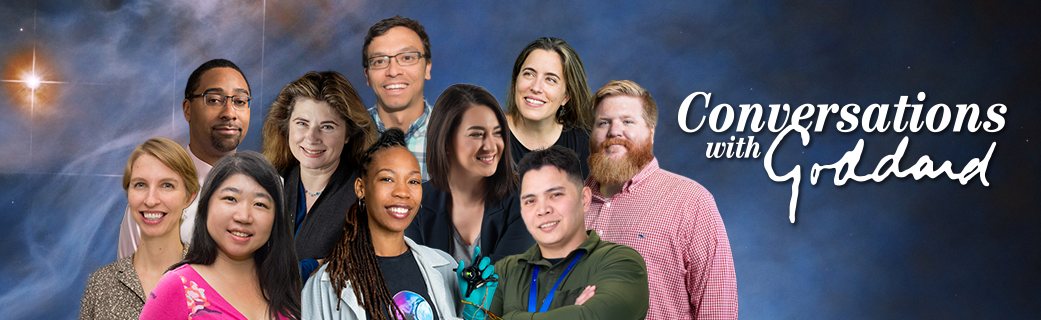
A banner graphic with a group of people smiling and the text "Conversations with Goddard" on the right. The people represent many genders, ethnicities, and ages, and all pose in front of a soft blue background image of space and stars.

Conversations With Goddard is a collection of Q&A profiles highlighting the breadth and depth of NASA’s Goddard Space Flight Center’s talented and diverse workforce. The Conversations have been published twice a month on average since May 2011. Read past editions on Goddard’s “Our People” webpage.

Share

Details

Last Updated

Oct 01, 2024

Editor
Madison Olson
Contact
Rob Garner
Location
Goddard Space Flight Center

Powered by WPeMatico

Get The Details…
Madison Olson

Three-time Spacewalker Josh Cassada to Retire from NASA

Three-time Spacewalker Josh Cassada to Retire from NASA

Oct. 1, 2024

Astronaut floating in space conducting a spacewalk next the the International Space Station
NASA astronaut Josh Cassada holds a roll-out solar array as he rides the Canadarm2 robotic arm during a spacewalk in support of the Expedition 68 mission aboard the International Space Station on Dec. 3, 2022.
Credit: NASA

Three-time Spacewalker Josh Cassada to Retire from NASA

NASA astronaut Josh Cassada retired Oct. 1, after 11 years of service to the agency across multiple programs, including 157 days in space and three spacewalks. Cassada also is a retired United States Navy captain and naval aviator with more than two decades of service.

Cassada served as pilot of NASA’s SpaceX Crew-5 mission and Expedition 68 flight engineer aboard the International Space Station, executing myriad maintenance, contingency, and upgrade activities inside the station while also contributing to hundreds of experiments and technology demonstrations. His three spacewalks outside of the orbiting laboratory totaled more than 21 hours, successfully installing a pair of International Space Station Roll-Out Solar Arrays (IROSAs) to boost the station’s electrical capacity. Cassada, alongside crewmate NASA astronaut Frank Rubio, also assembled the infrastructure for a future IROSA installation and fully restored a malfunctioning legacy solar array.

“I want to extend my sincere gratitude to Josh for his dedication and service to human space exploration,” said NASA Johnson Space Center Director Vanessa Wyche. “Josh’s contributions and achievements to the advancement of science and exploration will inspire the next generation of explorers, the Artemis generation, and benefit humanity for decades to come.”

NASA astronaut Josh Cassada poses in front of an American flag in his white extravehicular mobility unit spacesuit and holding his helmet in hands.
NASA astronaut Josh Cassada poses for a portrait in his extravehicular mobility unit spacesuit on August 8, 2022.
Credit: NASA/Robert Markowitz

Throughout Expedition 68, Cassada and his crewmates completed extensive problem-solving with ground teams, including the modification of the SpaceX Dragon spacecraft to accommodate an additional crew member in the event of an emergency return, and leveraged the crew’s various skill sets and training to ensure continued safe and effective operations for current and future crews.

In Houston, Cassada served as a capsule communicator in NASA’s Mission Control Center and assistant to the chief of the Astronaut Office for space station operations. As a physicist and test pilot, Cassada also contributed to the development of NASA’s Commercial Crew Program and Orion spacecraft and represented the Astronaut Office in technical and operational reviews of scientific experiments such as the Alpha Magnetic Spectrometer and Cold Atom Lab.

“Josh has played a significant role in NASA’s deliverance of reliable and cost-effective human transportation to and from the space station,” said Norm Knight, director of flight operations at NASA Johnson. “Through his dedication and commitment to human spaceflight exploration, Josh’s work will continue to push us forward on our journey back to the Moon, and beyond. We will miss him and are excited to see what his next journey entails.”

As he transitions from government service, Cassada will return to the private sector, working on extremely low light detection technologies with broad and emerging applications in various areas, including quantum networks and computing, remote sensing, long-range communication, semiconductor manufacturing, and medical imaging.

“I am incredibly grateful for my many opportunities here at NASA,” Cassada said, “and especially to have served alongside some of the most amazing people both on and off our planet, accomplishing things that are only possible when we work and innovate together as a team.  As humans, we explore . And each scientific adventure, whether in a lab on Earth or in space, requires courage to explore and advance society. I am incredibly fortunate to have been surrounded by explorers during my entire career so far and going forward. An expedition may seem daunting, but it’s a lot less so when you’re prepared and with the right crewmates.”

Before his selection by NASA in 2013 as a member of NASA’s 21st Class, Cassada earned his doctorate in High Energy Particle Physics from the University of Rochester, New York and was a U.S. Navy pilot, instructor pilot, test pilot, and instructor test pilot. Throughout his career, Cassada has accumulated more than 4,000 flight hours in over 50 different aircraft and has been awarded various military and civilian awards.

Cassada graduated from White Bear Lake Area High School in Minnesota in 1991 and received his bachelor’s in Physics in 1995 from Albion College in Michigan.

Learn more about International Space Station research and operations at:

https://www.nasa.gov/station

-end-

Courtney Beasley
Johnson Space Center, Houston
281-483-5111
courtney.m.beasley@nasa.gov

Powered by WPeMatico

Get The Details…
Wendy K. Avedisian

NASA’s SpaceX Crew-8 Concludes Space Station Scientific Mission

NASA’s SpaceX Crew-8 Concludes Space Station Scientific Mission

6 min read

Preparations for Next Moonwalk Simulations Underway (and Underwater)

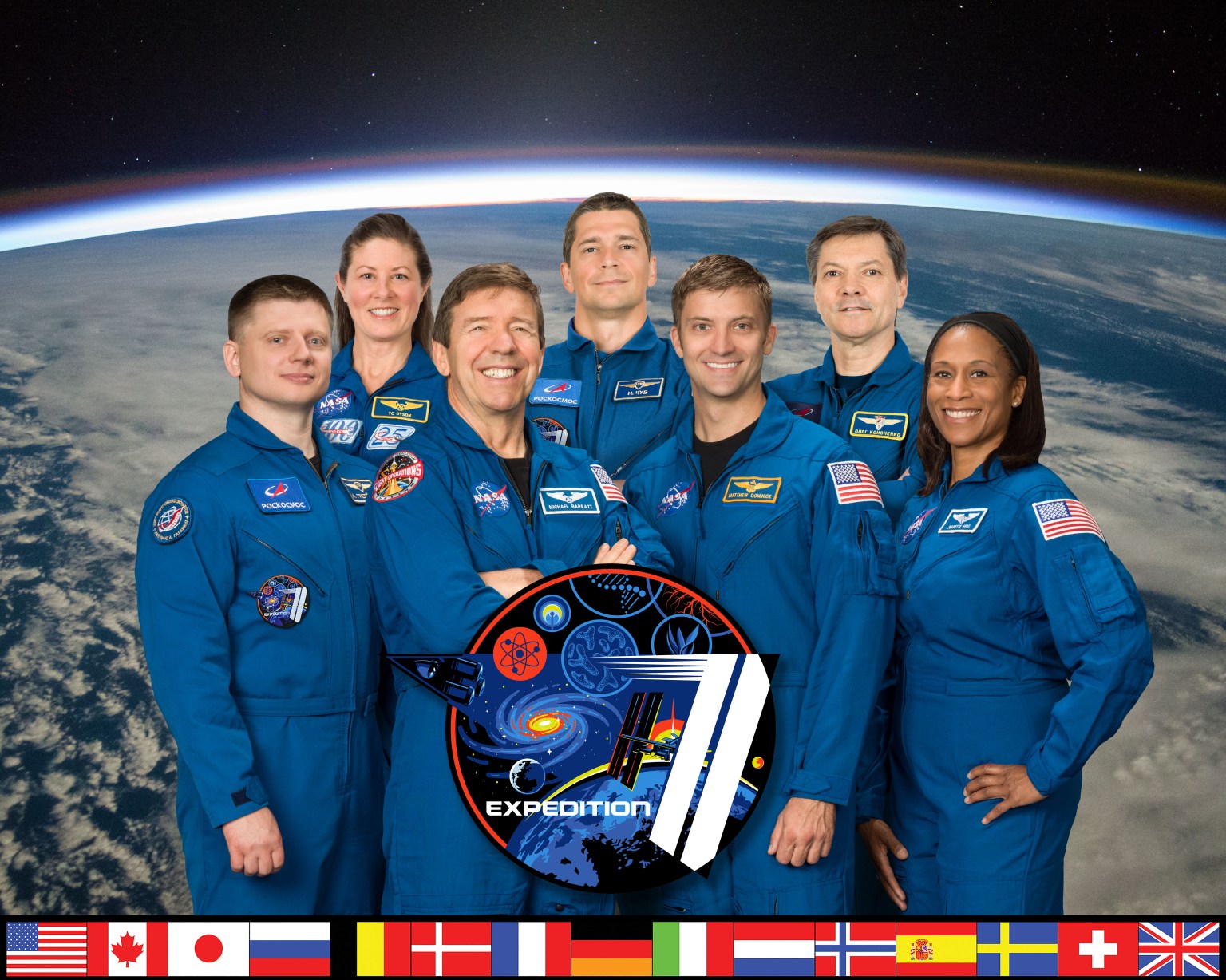
NASA astronauts Michael Barratt, Matthew Dominick, and Jeanette Epps and Roscosmos cosmonaut Alexander Grebenkin are returning to Earth after months aboard the International Space Station conducting scientific experiments and technology demonstrations for the agency’s SpaceX Crew-8 mission. The four launched on March 3 aboard a SpaceX Dragon spacecraft from NASA’s Kennedy Space Center in Florida.

Here’s a look at some scientific milestones accomplished during their mission:

Revealing resistant microorganisms

NASA astronaut Jeanette Epps extracts DNA for the Genomic Enumeration of Antibiotic Resistance in Space experiment, which surveys the station for antibiotic-resistant organisms and sequences their DNA to examine adaptations to space. Results could support development of measures to protect astronauts and people in buildings and facilities on Earth, such as hospitals, from resistant bacteria.

Epps, wearing a black t-shirt, pants, headband, and white gloves, uses a pipette to fill a rack of small vials. The rack sits on a blue metal work surface along with other equipment and cords. A laptop is attached to the Velcro strips on her pants leg.
NASA

Brain organoid models

NASA astronaut Mike Barratt processes samples for Human Brain Organoid Models for Neurodegenerative Disease & Drug Discovery. This investigation uses human brain organoids created with stem cells from patients to study neuroinflammation, a common feature of neurodegenerative conditions such as Parkinson’s disease. The organoids provide a platform to study these diseases and their treatments and to potentially address how extended spaceflight affects the brain.

Wearing a long-sleeved dark blue shirt, a headset, and glasses, Barratt is looking through the clear top of the Life Sciences Glovebox. His gloved hands inside the box hold two sample syringes, and two more are taped to the back wall of the box.
NASA

Bioprinting human tissues

Tissue samples bioprinted in microgravity are higher quality than those printed on the ground. NASA astronaut Matthew Dominick processes cardiac tissue samples for the Redwire Cardiac Bioprinting Investigation. Results could advance the production of organs and tissues for transplant and improve 3D printing of foods and medicines on future long-duration space missions.

Dominick, wearing a headlamp and black polo shirt with a US flag decal on the left sleeve, smiles at the camera. His arms are inside the plastic sleeves of a portable glovebox, and a laptop is visible just above and to the left of the glovebox.
NASA

Growing better drugs

NASA astronaut Mike Barratt works on Pharmaceutical In-space Laboratory – 02, which uses the station’s Advanced Space Experiments Processor to study how microgravity affects the production of various types of protein crystals. The ability to produce better crystals could lead to manufacturing improvements and new applications and better performance for pharmaceutical compounds, potentially providing more positive patient experiences.

Barratt is wearing a dark blue t-shirt, green pants, and a headset. He is peering at his hands inside the sleeves of a portable glovebox, holding a sample cassette, a silver box the size and shape of a briefcase.
NASA

Alloy solidification

NASA astronaut Jeanette Epps works on Materials Science Lab Batch 3a, two projects investigating the solidification of metallic alloys in space. Insights gained could help improve alloy solidification processes on the ground, supporting the development of materials with superior chemical and physical properties for applications in space and on Earth.

Wearing a long-sleeved black shirt and white gloves, Epps is smiling and holding a silver soup-can-sized canister in her left hand and guiding a long silver rod attached to it into an opening in the Material Science Laboratory, a metal circular device with white plastic edging.
NASA

Fueling the flames

The Solid Fuel Ignition and Extinction- Growth and Extinction Limit investigation determines how fuel temperature affects material flammability. This image shows the fuel surface during a burn (the black part of the sphere) and the distance traveled by the flame (blue). Results could improve researchers’ understanding of fire growth and inform the development of optimal fire suppression techniques to protect crews on future missions.

An acrylic sphere hangs from a rod in the middle of this image, a bright blue flame arcing around the bottom of it. The sphere is mottled black on its lower two-thirds and smooth near its top. A greenish, unburned sphere hangs off to its left, and a bright green wire coil (the igniter) is visible in the lower foreground. The entire image is tinged green.
NASA

Very long-distance calls

NASA astronaut Jeanette Epps wraps up an ISS Ham Radio session on April 10, with students in Italy. The program connects students and enthusiasts with astronauts in space via amateur radio. Participants study space, radio waves, and related topics to prepare questions before their scheduled call.

Epps, smiling at the camera, is wearing a black t-shirt and headband, holding a tablet in her left hand and placing the mic on the wall-mounted ham radio with her right. A video camera is mounted just above it. The walls around her are covered in multiple cords, rails, and straps, and just over her right shoulder are several mission stickers on a wall.
NASA

Student robotics competition

For Astrobee-Zero Robotics, students compete to have their code control one of the space station’s Astrobee robots. The experience helps inspire the next generation of scientists, engineers, and explorers. NASA astronaut Mike Barratt works with the Astrobee robot named Bumble during operations for the project.

Barratt, wearing a long-sleeved blue shirt with an expedition patch on its chest, faces the camera. Just to his right floats Bumble, a cube-shaped robot about the size of a toaster oven. Its sides are black with a white panel in the middle that has camera lenses and two bright blue lights near the bottom. There is a laptop to his right.
NASA

Immune function in space

NASA astronaut Jeanette Epps prepares samples for Immunity Assay, a study of how spaceflight affects immune function. Previously, astronaut immune function could only be examined pre- and postflight, but a newly developed assay allows for testing during flight. This capability provides a more precise assessment of the immune changes that happen in space.

Epps wears a red t-shirt, black pants, and white gloves. She is holding a large syringe in her right hand and is using a blue clip in her left hand to attach a sample tube to the blue lab work table. There are multiple plastic bags across the front of the table and a cluster of pink bags on its upper right. The wall behind it holds various supplies, such as tape, scissors, and pens.
NASA

Getting weighed in weightlessness

The Space Linear Acceleration Mass Measurement Device calculates a crew member’s mass based on Newton’s Second Law of Motion, which states force equals mass times acceleration. NASA astronaut Matthew Dominick performs maintenance on the device, used in support of multiple NASA and ESA (European Space Agency) investigations on how spaceflight affects the body.

Dominick, wearing a red t-shirt and dark green pants, is looking down and smiling. In front of him is a square silver brace with blue padding on its end with silver arms extending above and below it, also with blue padding. Above the brace is a large schematic poster showing how to use the device, and a laptop is mounted off to the left.
NASA

Satellites for science

NASA astronaut Mike Barratt prepares for the Nanoracks Cubesat Deployer Mission 27on April 16. The mission deployed seven research satellites: a reflectometer to measure sea ice, tests of telemetry instruments and solar cells, a hyperspectral thermal imager, a gamma-ray burst detector, a new remote sensing technique, and a magnetic field measurement test.

Barratt, wearing a long-sleeved black shirt, khaki pants, and white gloves, looks at the camera and gestures at the hardware in front of him, two large rectangular drawers mounted sideways on a rack extending out from a circular hatch behind him. The open door of the hatch is to his left, and the blue and yellow boxy Astrobee robots are attached to their docks on the wall to his right.
NASA

Remote-controlled robots

NASA astronaut Jeanette Epps remotely manipulates a robot on the ground for Surface Avatar. The investigation tests system ergonomics, operator response to feedback, and the potential challenges for actual orbit-to-ground remote control. Such operation is an important capability for future exploration missions to the Moon and Mars.

Epps wears a long-sleeved black shirt and a headset and uses her right hand to interact with a laptop mounted to the wall in front of her. On the screen is a simulation of a robot operating on a planetary surface.
NASA

The power of photographs

NASA astronauts Mike Barratt, Matthew Dominick, and Loral O’Hara take photographs in the station’s cupola, adding to the more than 4.7 million images produced for Crew Earth Observations. These images support scientific studies on topics ranging from aquatic organisms and icebergs to the effects of artificial lighting at night and inform the response of decision-makers to natural disasters such as volcanoes and floods.

Three astronauts, all wearing black, are facing the camera in the cupola, where Earth is visible through the window above them. Barratt, on the left, holds a handrail with his left hand and points a camera toward Earth with his right hand, squinting his left eye. Dominick, center, smiles up at the window, and O’Hara, on the right, uses both hands to point a camera with a large lens at Earth. The camera obscures her face.
NASA

Reflections on the Moon

For Earthshine from ISS, astronauts photograph the Moon throughout the lunar cycle to study changes in the light it reflects from Earth. Results could help validate the concept of observing Earth’s climate from satellite-borne instruments and add to researchers’ understanding of how the planet’s climate is changing.

The Moon is a bright white crescent in the center of this image, surrounded by the blackness of space.
NASA

Packing a Dragon

NASA astronauts Matthew Dominick and Tracy C. Dyson pack frozen samples into the SpaceX Dragon spacecraft for return to Earth and analysis by researchers. The spacecraft launched to the orbiting laboratory on March 21 for NASA’s SpaceX 30th commercial resupply services mission, carrying scientific experiments and supplies, and returned to Earth on April 30.

Dominick, in the foreground, is wearing a blue t-shirt and special black and blue gloves, facing the camera, and holding one of the cold storage trays, a silver metal basket the size of a cat carrier. Behind him is Dyson, wearing a red t-shirt and the same kind of gloves and holding a black box between her hands. Four circular doors to the cold stowage unit are on the wall in front of Dominick.
NASA

Cygnus delivers

Northrop Grumman’s Cygnus cargo spacecraft attached to the Canadarm2 robotic arm before being released from the space station on July 12. NASA’s Northrop Grumman 20th commercial resupply services mission arrived Feb. 1 with experiments on 3D printing, robotic surgery, tissue cartilage, and more.

At the top of the image are the curved silver undersides of three of the space station’s modules. A long, jointed robotic arm extends down from the module on the right. Attached to its end is the silver cylindrical spacecraft with two round, gold solar panels on either side. The blue Earth is visible to the left, and sunlight glints off Cygnus.
NASA

Melissa Gaskill

International Space Station Research Communications Team

NASA’s Johnson Space Center

Download high-resolution photos and videos of the research mentioned in this article. Search this database of scientific experiments to learn more about those mentioned in this article.

Powered by WPeMatico

Get The Details…
Christian M. Getteau