Connected Learning Ecosystems: Educators Learning and Growing Together

Connected Learning Ecosystems: Educators Learning and Growing Together

3 min read

Connected Learning Ecosystems: Educators Learning and Growing Together

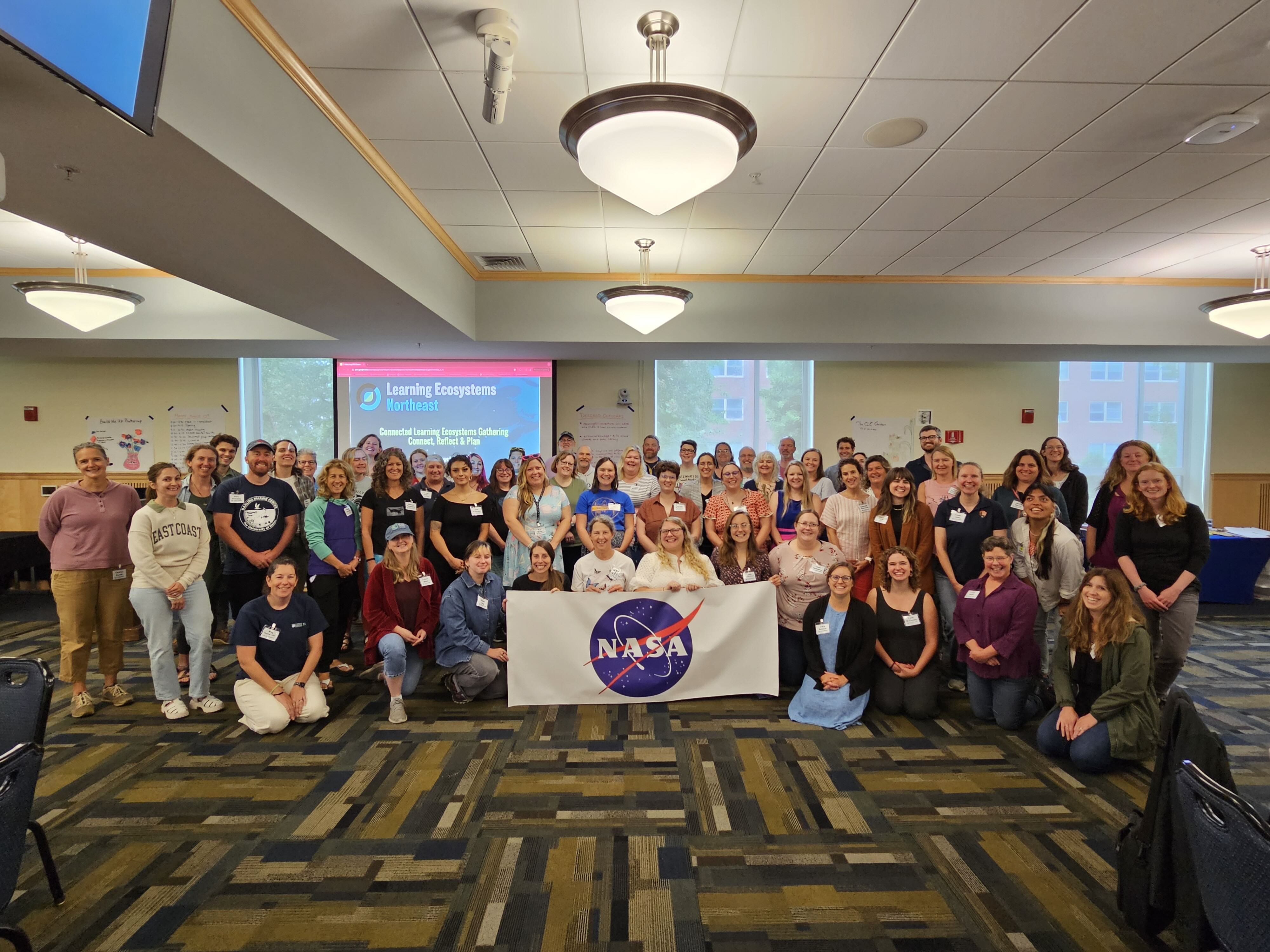
On August 19-20, 53 educators from a diverse set of learning contexts (libraries, K-12 classrooms, 4-H afterschool clubs, outdoor education centers, and more) gathered in Orono, Maine for the Learning Ecosystems Northeast (LENE) biannual Connect, Reflect, & Plan Connected Learning Ecosystems (CLEs) Gathering. These gatherings are meant to foster meaningful connections and collaborations and shared knowledge and confidence building amongst educators within the LENE network.

NASA Science Activation’s Learning Ecosystems Northeast (LENE) is a network of education partners across the Northeastern United States, led by the Gulf of Maine Research Institute. These partners are dedicated to creating and linking communities of in and out of school educators, Connected Learning Ecosystems (CLEs), who are committed to empowering the next generation of climate stewards.

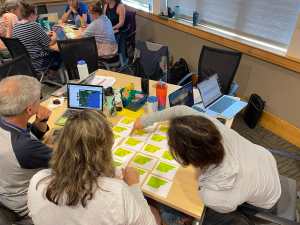
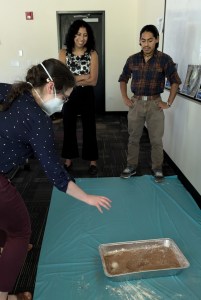
The focus of this gathering was to provide educators the time, experiences, connections, and space to explore ways they can prepare the youth and communities they work with to build resilience in the face of climate change. Educators participated in sessions around local asset mapping, climate mental health, positive youth development, building STEM skills through games and fieldwork, and planning forward around coastal flooding and sea level rise. Each session was followed by time to debrief, reflect, and plan both in their regional CLEs as well as with statewide partners. The value of NASA assets and connection to local issues was woven throughout many experiences during this gathering. LENE’s CLE Resource Drive has a growing list of phenomena-based NASA assets that has been curated based on the interests of their network over time. The Global Learning and Observations to Benefit the Environment (GLOBE) program’s GLOBE Observer tree height app was part of the Ash Protection community science protocol and many NASA assets enhance the educator-guided planning forward experience guide that youth practice the difficult, real-life conversations about the
consequences of sea level rise as they think about ways they can plan for a resilient future in the face of rising seas and coastal flooding.

Sara King from the Rural Aspirations Project (Hancock/Midcoast CLE) had this to say: “Before I first joined the CLE, I viewed STEM professionals to be separate from myself for the most part because I did not feel very confident in my abilities in all parts of STEM. I feel more comfortable with data and technology, engineering, and science practices now.”

One educator said that their highlight from the gathering was, “[o]pportunities to meet with other teachers and educators and librarians to share ideas about how we can pool our resources and reach more students.” These educators left with draft learning projects ready for refinement and review, renewed dedication and motivation for the school year, and new perspectives to lead them into continued conversations and partnership with their CLE peers as they meet throughout the year.

Learn more about Learning Ecosystem Northeast’s efforts to empower the next generation of environmental stewards at https://www.learningecosystemsnortheast.org. The Learning Ecosystems Northeast project is supported by NASA under cooperative agreement award number NNX16AB94A and is part of NASA’s Science Activation Portfolio. Learn more about how Science Activation connects NASA science experts, real content, and experiences with community leaders to do science in ways that activate minds and promote deeper understanding of our world and beyond: https://science.nasa.gov/learn

A group photo of all the organizers and participating educators in front of the NASA logo
The August 2024 Connect, Reflect & Plan Connected Learning Ecosystem Gathering crew (educators and project partners from across Maine and even one California partner).

Share

Details

Last Updated
Oct 08, 2024
Editor
NASA Science Editorial Team

Powered by WPeMatico

Get The Details…

Systems Engineer Noosha Haghani Prepped PACE for Space

Systems Engineer Noosha Haghani Prepped PACE for Space

Throughout the life cycles of missions, Goddard engineer Noosha Haghani has championed problem-solving and decision-making to get to flight-ready projects.

Name: Noosha Haghani
Title: Plankton Aerosol Clouds and Ecosystem (PACE) Deputy Mission Systems Engineer
Formal Job Classification: Electrical engineer
Organization: Engineering and Technology Directorate, Mission Systems Engineering Branch (Code 599)

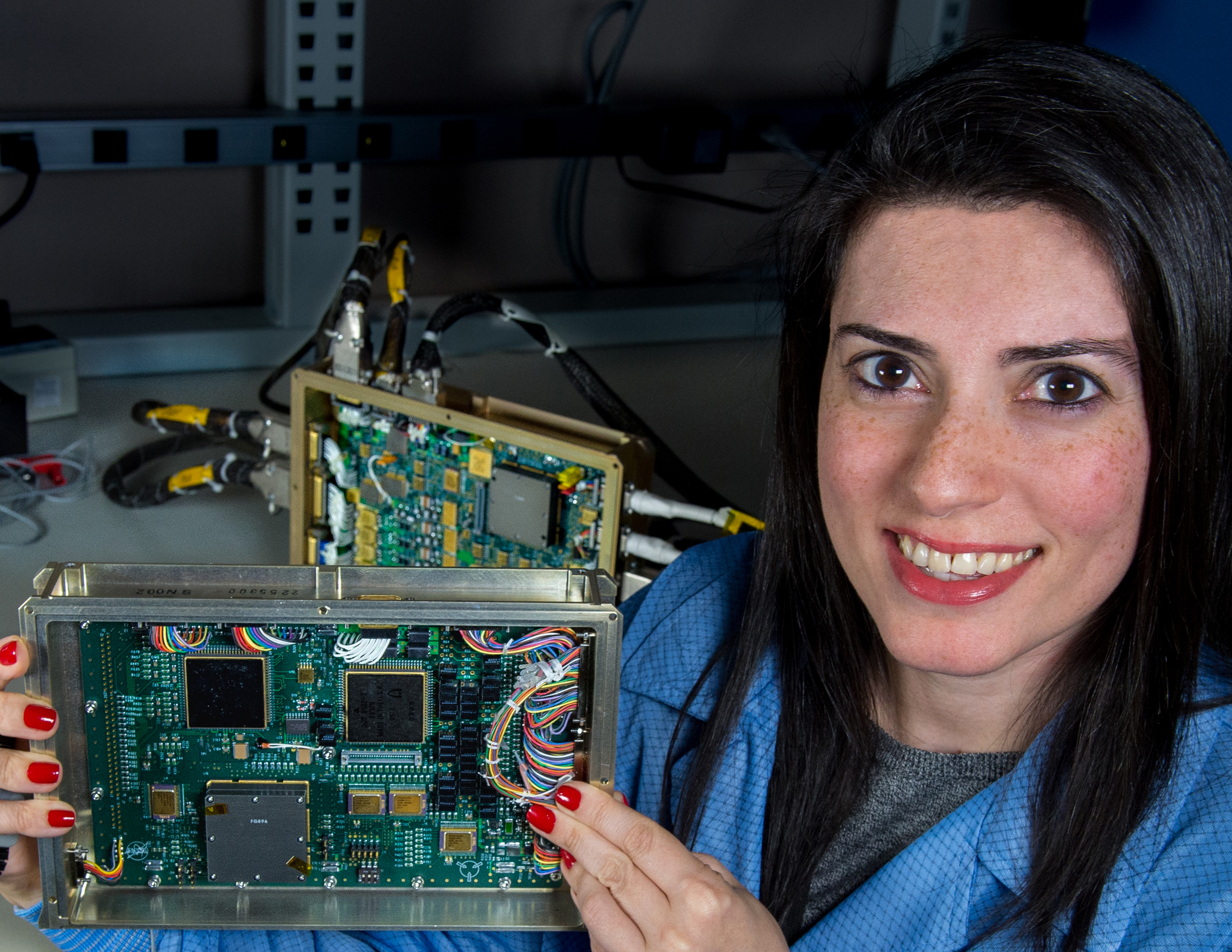
Haghani holds an electronic card from MUSTANG
Noosha Haghani is a systems engineer for the Plankton Aerosol Clouds and Ecosystem (PACE) mission at NASA’s Goddard Space Flight Center in Greenbelt, Md.
Credit: NASA

What do you do and what is most interesting about your role here at Goddard?

As the PACE deputy mission systems engineer, we solve problems every day, all day long. An advantage I have is that I have been on this project from the beginning.

Why did you become an engineer? What is your educational background?

I was always very good at math and science. Both of my parents are engineers. I loved building with Legos and solving puzzles. Becoming an engineer was a natural progression for me.

I have a BS in electrical engineering and a master’s in reliability engineering from the University of Maryland, College Park. I had completed all my course work for my Ph.D. as well but never finished due to family obligations.

How did you come to Goddard?

As a freshman in college, I interned at Goddard. After graduation, I worked in industry for a few years. In 2002, I returned to Goddard because I realized that what we do at Goddard is so much more unique and exciting to me.

My mother also works at Goddard as a software engineer, so I am a second-generation Goddard employee. Early on in my career, my mother and I met for lunch occasionally. Now I am just too busy to even schedule lunch.

Describe the advantages you have in understanding a system which you have worked on from the original design through build and testing?

I came to the PACE project as the architect of an avionics system called MUSTANG, a set of hardware electronics that performs the function of the avionics of the mission including command and data handling, power, attitude control, and more. As the MUSTANG lead, I proposed an architecture for the PACE spacecraft which the PACE manager accepted, so MUSTANG is the core architecture for the PACE spacecraft. I led the team in building the initial hardware and then moved into my current systems engineering role.

Knowing the history of a project is an advantage in that it teaches me how the system works. Understanding the rationale of the decision making we made over the years helps me to better appreciate why we built the system way we did.

How would you describe your problem-solving techniques?

A problem always manifests as some incorrect reading or some failure in a test, which I refer to as evidence of the problem. Problem solving is basically looking at the evidence and figuring out what is causing the problem. You go through certain paths to determine if your theory matches the evidence. It requires a certain level of understanding of the system we have built. There are many components to the observatory including hardware and software that could be implicated. We compartmentalize the problem and try to figure out the root cause systematically. Sometimes we must do more testing to get the problem to recreate itself and provide more evidence.

As a team lead, how do you create and assign an investigation plan?

As a leader, I divide up the responsibilities of the troubleshooting investigation. We are a very large team. Each individual has different roles and responsibilities. I am the second-highest ranking technical authority for the mission, so I can be leading several groups of people on any given day, depending on the issue.

The evidence presented to us for the problem will usually implicate a few subsystems. We pull in the leads for these subsystems and associated personnel and we discuss the problem. We brainstorm. We decide on investigation and mitigation strategies. We then ask the Integration and Test team to help carry out our investigation plan.

As a systems engineer, how do you lead individuals who do not report to you or through your chain of command?

I am responsible for the technical integrity of the mission. As a systems engineer, these individuals do not work for me. They themselves answer to a line manager who is not in my chain of command. I lead them through influencing them.

I use leadership personality and mutual respect to guide the team and convince them that the method we have chosen to solve the problem is the best method. Because I have a long history with the project, and was with this system from the drawing board, I generally understand how the system works. This helps me guide the team to finding the root cause of any problem.

How do you lead your team to reach consensus?

Everything is a team effort. We would be no where without the team. I want to give full credit to all the teams.

You must respect members of your team, and each team member must respect you as a leader. I first try to gather and learn as much as possible about the work, what it takes to do the work, understanding the technical aspects of the work and basically understanding the technical requirements of the hardware. I know a little about all the subsystems, but I rely on my subsystem team leads who are the subject matter experts.

The decision on how to build the system falls on the Systems Team. The subject matter experts provide several options and define risks associated with each.  We then make a decision based on the best technical solution for the project that falls within the cost/schedule and risk posture.

If my subject matter experts and I do not agree, we go back and forth and work together as a team to come to a consensus on how to proceed. Often we all ask many questions to help guide out path. The team is built on mutual respect and good communication. When we finally reach a decision, almost everyone agrees because of our collaboration, negotiation and sometimes compromise.

What is your favorite saying?

Better is the enemy of good enough. You must balance perfectionism with reality.

How do you balance perfectionism with reality to make a decision?

Goddard has a lot of perfectionists. I am not a perfectionist, but I have high expectations. Goddard has a lot of conservatism, but conservatism alone will not bring a project to fruition.

There is a level of idealism in design that says that you can always improve on a design. Perfection is idealistic. You can analyze something on paper forever. Ultimately, even though I am responsible for the technical aspects only, we still as a mission must maintain cost and schedule. We could improve a design forever but that would take time and money away from other projects. We need to know when we have built something that is good enough, although maybe not perfect.

In the end, something on paper is great, but building and testing hardware is fundamental in order to proceed. Occasionally the decisions we make take some calculated risk. We do not always have all the facts and furthermore we do not always have the time to wait for all the facts. We must at some point make a decision based on the data we have.

Ultimately a team lead has to make a judgement call. The answer is not in doing bare minimum or cutting corners to get the job done, but rather realizing what level of effort is the right amount to move forward.

Why is the ability to make a decision one of your best leadership qualities?

There is a certain level of skill in being able to make a decision. If you do not make a decision, at some point that inability to make a decision becomes a decision. You have lost time and nothing gets built.

My team knows that if they come to me, I will give them a path forward to execute. No one likes to be stuck in limbo, running in circles. A lot of people in a project want direction so that they can go forward and implement that decision. The systems team must be able to make decisions so that the team can end up with a finished, launchable project.

One of my main jobs is to access risk. Is it risky to move on? Or do I need to investigate further? We have a day-by-day risk assessment decision making process which decides whether or not we will move on with the activities of that day.

As an informal mentor, what is the most important advice you give?

Do not give up. Everything will eventually all click together.

What do you like most about your job?

I love problem solving. I thrive in organized chaos. Every day we push forward, complete tasks. Every day is a reward because we are progressing towards our launch date.

Who inspires you?

The team inspires me. They make me want to come to work every day and do a little bit better. My job is very stressful. I work a lot of hours. What motivates me to continue is that there are other people doing the same thing, they are amazing. I respect each of them so much.

What do you do for fun?

I like to go to the gym and I love watching my son play sports. I enjoy travel and I love getting immersed in a city of a different country.

By Elizabeth M. Jarrell
NASA’s Goddard Space Flight Center, Greenbelt, Md.

A banner graphic with a group of people smiling and the text "Conversations with Goddard" on the right. The people represent many genders, ethnicities, and ages, and all pose in front of a soft blue background image of space and stars.

Conversations With Goddard is a collection of Q&A profiles highlighting the breadth and depth of NASA’s Goddard Space Flight Center’s talented and diverse workforce. The Conversations have been published twice a month on average since May 2011. Read past editions on Goddard’s “Our People” webpage.

Share

Details

Last Updated

Oct 08, 2024

Editor
Madison Olson
Contact
Rob Garner
Location
Goddard Space Flight Center

Powered by WPeMatico

Get The Details…
Madison Olson

NASA Seeks Innovative Artemis Lunar Logistics, Mobility Solutions

NASA Seeks Innovative Artemis Lunar Logistics, Mobility Solutions

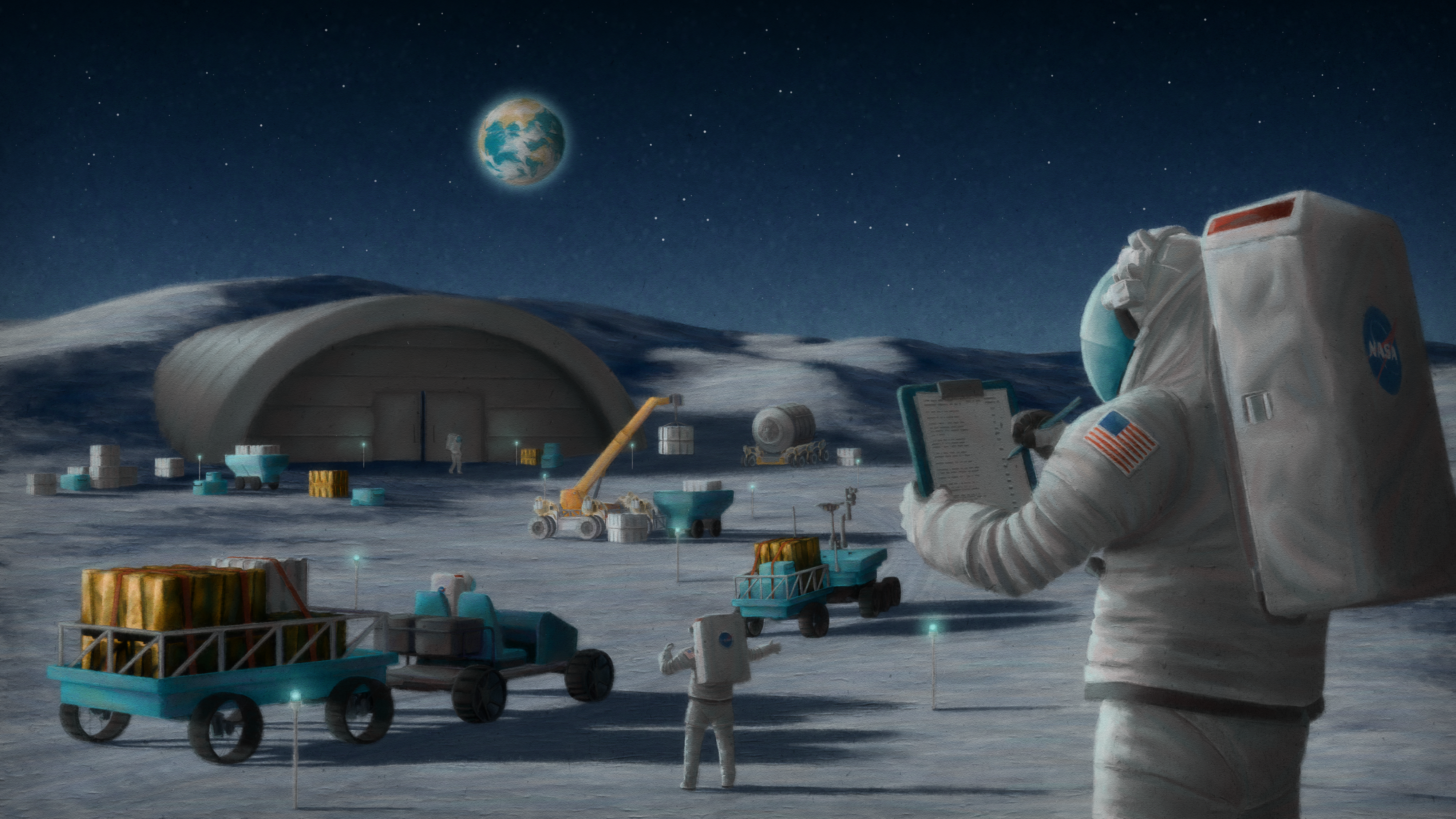
Illustration of logistics elements on the lunar surface.
NASA

NASA is asking U.S. industry to submit innovative architecture solutions that could help the agency land and move cargo on the lunar surfaced during future Artemis missions. Released in September, the agency’s request for proposal also supports NASA’s broader Moon to Mars Objectives.

Previously, NASA published two white papers outlining lunar logistics and mobility gaps as part of its Moon to Mars architecture development effort that augmented an earlier white paper on logistics considerations. The current ask, Lunar Logistics and Mobility Studies, expects proposing companies to consider these publications, which describe NASA’s future needs for logistics and mobility.

“NASA relies on collaborations from diverse partners to develop its exploration architecture,” said Nujoud Merancy, deputy associate administrator, strategy and architecture in the Exploration Systems Development Mission Directorate at NASA Headquarters in Washington. “Studies like this allow the agency to leverage the incredible expertise in the commercial aerospace community.”

Lunar Logistics Drivers, Needs

Logistics items, including food, water, air, and spare parts, comprise a relatively large portion of the cargo NASA expects to need to move around on the Moon, including at the lunar South Pole where the agency plans to send crew in the future.

The Lunar Logistics Drivers and Needs white paper outlines the importance of accurately predicting logistics resupply needs, as they can heavily influence the overall architecture and design of exploration missions.

As the agency progresses into more complex lunar missions, NASA will require more and more lunar logistics as the agency increases mission frequency and duration. This current proposal seeks industry studies that could help inform NASA’s approach to this growing need.

Lunar Mobility Drivers, Needs

The white paper discusses the transportation of landed cargo and exploration assets from where they are delivered to where they are used, such as to locations with ideal lighting, away from ascent vehicle landing sites, or near other assets. These distances can range from yards to miles away from landing locations, and the ability to move around landing sites easily and quickly are key to exploring the lunar surface efficiently.

NASA’s current planned lunar mobility elements, such as the Lunar Terrain Vehicle and Pressurized Rover, have a capability limit of about 1,760 pounds (800 kilograms) and will primarily be used to transport astronauts around the lunar surface. However, future missions could include a need to move cargo totaling around 4,400 to 13,000 pounds (2,000 to 6,000 kg). To meet this demand, NASA must develop new mobility capabilities with its partners.

Lunar Surface Cargo

The Lunar Surface Cargo white paper characterizes lunar surface cargo delivery needs, compares those needs with current cargo lander capabilities, and outlines considerations for fulfilling this capability gap. While cargo delivery capabilities currently included in the Moon to Mars architecture — like CLPS (Commercial Lunar Payload Services) and human-class delivery landers — can meet near-term needs, there are substantial gaps for future needs.

Access to a diverse fleet of cargo landers would empower a larger lunar exploration footprint. A combination of international partnerships and U.S. industry-provided landers could supply the concepts and capabilities to meet this need. The request for proposals doesn’t explicitly seek new lander concepts but does ask for integrated assessments of logistics that can include transportation elements.

“We’re looking for industry to offer creative insights that can inform our logistics and mobility strategy,” said Brooke Thornton, industry engagement lead for NASA’s Strategy and Architecture Office. “Ultimately, we’re hoping to grow our awareness of the unique capabilities that are or could become a part of the commercial lunar marketplace.”

This is the latest appendix to NASA’s Next Space Technologies for Exploration Partnerships (NextSTEP-2). Solicitations under NextSTEP seek commercial development of capabilities that empower crewed exploration in deep space. NASA published the latest NextSTEP omnibus, NextSTEP-3, on Sept. 27.

Request for Proposals

https://sam.gov/opp/2291c465203240388302bb1f126c3db9/view

Powered by WPeMatico

Get The Details…
Danny Baird

Journey Through Stars with NASA in New Minecraft Game

Journey Through Stars with NASA in New Minecraft Game

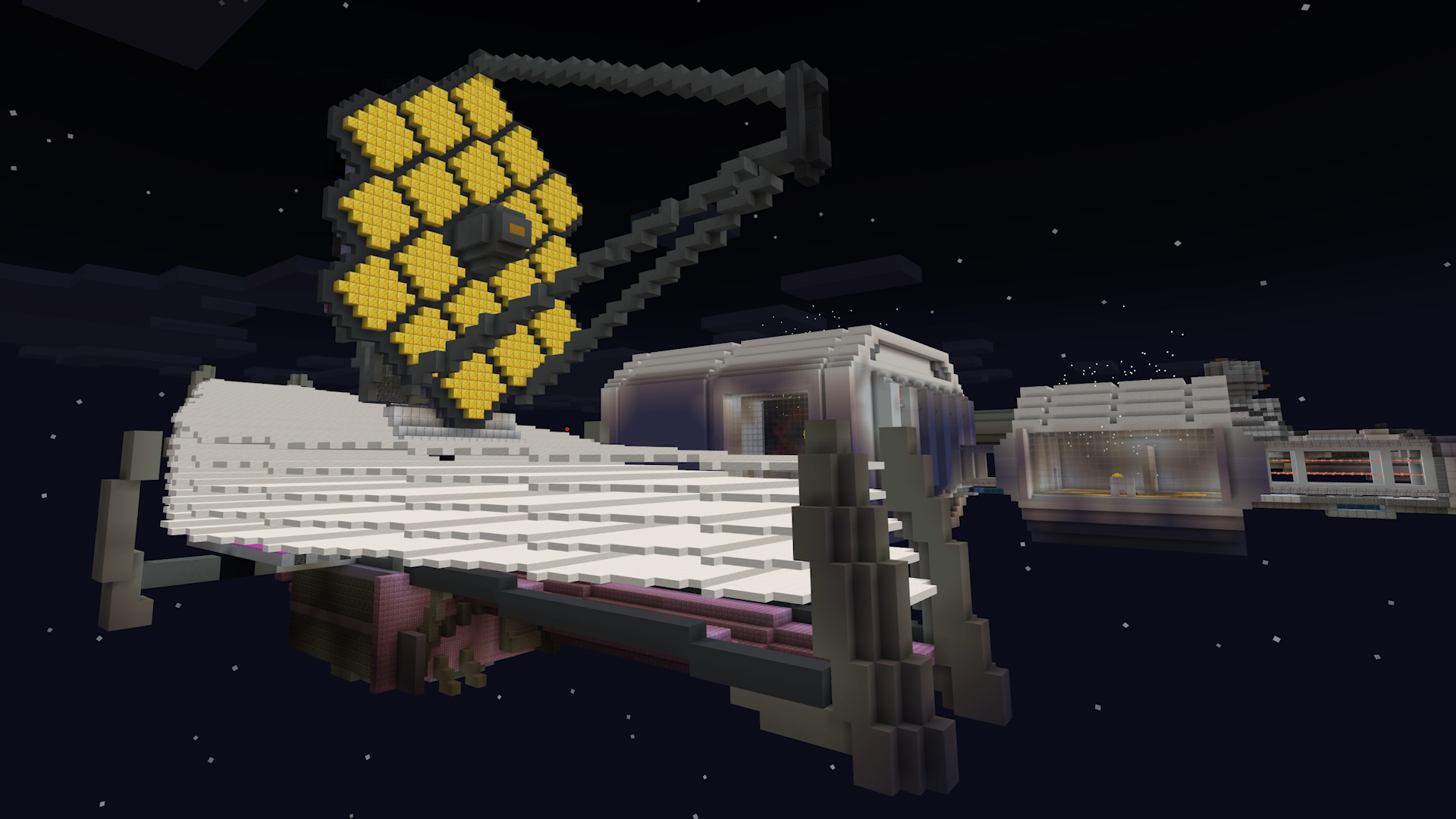
A preview image of the Minecraft world inspired by NASA’s James Webb Space Telescope. Credit: Minecraft

NASA invites gamers, educators, and students to grab their pickaxe and check out its latest collaboration with Minecraft exploring a new world inspired by the agency’s James Webb Space Telescope. The partnership allows creators to experience NASA’s discoveries with interactive modules on star formation, planets, and galaxy types, modeled using real Webb images.

The James Webb Space Telescope Challenges were developed to inspire the next generation of scientists, engineers, and technicians. Through the game, students can immerse themselves in the science and technology behind Webb, deepening their understanding of NASA’s mission and sparking an interest in the real-world applications of science, technology, engineering, and math (STEM).

“We’re thrilled to bring the wonders and science of NASA’s James Webb Space Telescope into the hands of the Artemis Generation through this exciting Minecraft collaboration,” said NASA Deputy Administrator Pam Melroy. “This collaboration is yet another way anyone can join NASA as we explore the secrets of the universe and solve the world’s most complex problems, making space exploration engaging for learners of all ages.” 

NASA’s James Webb Space Telescope launched to space Dec. 25, 2021, and has gone on to make detailed observations of the planets within our own solar system, peer into the atmospheres of planets orbiting other stars outside our solar system, and capture images and spectra of the most distant galaxies ever detected.

“NASA’s collaboration with Minecraft allows players to experience the excitement of one of the most ambitious space missions ever,” said Mike Davis, Webb project manager at NASA’s Goddard Space Flight Center in Greenbelt, Maryland. “No matter where Webb looks, it sees something intriguing, setting the stage for amazing discoveries yet to come. As people explore the Minecraft world of Webb, we hope they will be inspired to carry that interest further and maybe someday help NASA build future space telescopes.”

Webb is the world’s premier space science observatory. The space telescope is solving mysteries in our solar system, looking beyond to distant worlds around other stars, and probing the mysterious structures and origins of our universe and our place in it. Webb is an international program led by NASA with its partners, ESA (European Space Agency) and CSA (Canadian Space Agency).

NASA’s Office of STEM Engagement provides unique opportunities for students to learn about STEM. In 2023, NASA partnered with Minecraft on an Artemis Challenge where users could build and launch a rocket, guide their Orion spacecraft, and even establish a lunar base alongside their team. Through collaboration with partners such as Microsoft, NASA can share the excitement of space exploration with even more students who are part of the Artemis Generation.

Learn more about how NASA’s Office of STEM Engagement is inspiring the next generation of explorers at:

https://www.nasa.gov/stem

Powered by WPeMatico

Get The Details…
Abbey A. Donaldson

NASA, NOAA to Provide Update on Progress of Solar Cycle

NASA, NOAA to Provide Update on Progress of Solar Cycle

NASA’s Solar Dynamics Observatory captured this image of an X9.0 solar flare – as seen in the bright flash in the center – on Oct. 3, 2024. This is the largest flare of Solar Cycle 25 to date.
Credit: NASA

NASA and the National Oceanic and Atmospheric Administration (NOAA) will discuss the Sun’s activity and the progression of Solar Cycle 25 during a media teleconference at 2 p.m. EDT, Tuesday, Oct. 15. Tracking the solar cycle is a key part of better understanding the Sun and mitigating its impacts on technology and infrastructure as humanity explores farther into space.

During the teleconference, experts from NASA, NOAA, and the international Solar Cycle 25 Prediction Panel, which is co-sponsored by both agencies, will discuss recent solar cycle progress and the forecast for the rest of this cycle.

Audio of the teleconference will stream live on the agency’s website at:

https://www.nasa.gov/live

Participants include:

  • Jamie Favors, director, NASA’s Space Weather Program
  • Kelly Korreck, program scientist, NASA’s Heliophysics Division
  • Elsayed Talaat, director, Office of Space Weather Observations, NOAA
  • Bill Murtagh, program coordinator, NOAA’s Space Weather Prediction Center
  • Lisa Upton, co-chair, Solar Cycle 25 Prediction Panel

To participate in the media teleconference, media must RSVP no later than 12 p.m. on Oct. 15, to Abbey Interrante at: abbey.a.interrante@nasa.gov.  

The Sun goes through regular cycles of activity lasting approximately 11 years. During the most active part of the cycle, known as solar maximum, the Sun can unleash immense explosions of light, energy, and solar radiation, all of which create conditions known as space weather. Space weather can affect satellites and astronauts in space, as well as communications systems such as radio and GPS — and power grids on Earth. When the Sun is most active, space weather events become more frequent. Solar activity, such as the storm in May 2024, has sparked displays of aurora and led to impacts on satellites and infrastructure in recent months.

NASA works as a research arm of the nation’s space weather effort. NASA observes the Sun and our space environment constantly with a fleet of spacecraft that study everything from the Sun’s activity to the solar atmosphere, and to the particles and magnetic fields in the space surrounding Earth. The NOAA Space Weather Prediction Center is the U.S. government’s official source for space weather forecasts, watches, warnings, and alerts.

For more information on how NASA studies the Sun and space weather, visit:  

https://www.nasa.gov/sun

-end-

Karen Fox
Headquarters, Washington
202-358-1600
karen.fox@nasa.gov

Sarah Frazier
Goddard Space Flight Center, Greenbelt, Md.
202-853-7191
sarah.frazier@nasa.gov

Erica Grow Cei
NOAA’s National Weather Service, College Park, Md.
202-853-6088
erica.grow.cei@noaa.gov

Share

Details

Last Updated

Oct 08, 2024

Editor
Jessica Taveau

Powered by WPeMatico

Get The Details…
Jessica Taveau