NASA, Artemis Accords Signatories Progress on Sustainable Exploration

NASA, Artemis Accords Signatories Progress on Sustainable Exploration

Representatives of the Artemis Accords signatories, including NASA leadership, met Oct. 14, 2024, for a principals meeting in Milan, during the International Astronautical Congress. With 42 of 45 signatories participating in the event, established and emerging spacefaring nations from every region of the world were represented.
Credit: UAE Space Agency

A record number of Artemis Accords signatories, including the United States, gathered at the International Astronautical Congress (IAC), the world’s largest global space conference taking place in Milan this week, furthering discussions on the safe and responsible use of space for the benefit of all.

During the space conference, top space agency leaders and other government representatives met Oct. 14 to continue advancing implementation of the Artemis Accords, marking the most comprehensive engagement yet among Accords signatories.

“As we send humans further into the solar system, collaboration and shared responsibility among nations are more critical than ever,” said NASA Deputy Administrator Pam Melroy. “The Artemis Accords provide a common sense set of principles to guide our work together, and our recent efforts to further their implementation is fostering a remarkable environment of trust and cooperation where all nations can contribute to and benefit from these endeavors.”

The high-level meeting was co-chaired by NASA, CSA (Canadian Space Agency) and Italian Space Agency. With 42 of 45 signatories participating, established and emerging spacefaring nations from every region of the world were represented to help create a foundation for future space exploration for the Artemis Generation.

Leaders from each nation reflected on how the group can contribute to and advance existing multilateral forums, further technical discussions to inform policy deliberations, and promote and encourage the participation of emerging space nations including the adoption of the Artemis Accords by additional countries. They agreed on recommendations on non-interference, interoperability, release of scientific data, long-term sustainability guidelines, and registration to advance implementing the Artemis Accords. A method of operations was established for the ongoing work of the signatories.

“Promoting the participation of emerging space nations and encouraging the adoption of the Artemis Accords is crucial for the entire space,” said Teodoro Valente, president of the Italian Space Agency. “This is a matter of strategic importance in order to ensure the active and meaningful engagement of emerging space nations, both those already part of the Artemis Accords, and those poised to join in the future.”

The conversation in Milan built on previous work during a workshop in Montreal in May 2024, where participantsdelved into the topics such as non-interference and interoperability.

“Canada is pleased to be part of a growing group of countries committed to the safety and sustainability of outer space activities,” said Lisa Campbell, CSA president. “We are strong supporters of the Artemis Accords and are pleased to have hosted the most recent workshop that advanced work on key aspects of the Artemis Accords. We look forward to continuing this important work in the coming months and years.”

In October 2023, signatories agreed on an initial set of mission data parameters to advance transparency and non-interference in conducting space activities. The data parameters identify relevant information about planned lunar surface missions including expected launch dates, the general nature of activities, and landing locations. Recent progress also included work on a database to house them. Several space agencies, including NASA, have submitted mission data to the United Nations Office of Outer Space Affairs for dissemination.

Potential focus areas for the next year include further advancing sustainability, including debris management for both lunar orbit and the surface of the Moon.

In 2020, the United States and seven other nations were the first to sign the Artemis Accords, which identified a set of principles promoting the beneficial use of space for humanity. The Artemis Accords are grounded in the Outer Space Treaty and other agreements including the Registration Convention, the Rescue and Return Agreement, as well as best practices and norms of responsible behavior that NASA and its partners have supported, including the public release of scientific data. 

The commitments of the Artemis Accords and efforts by the signatories to advance implementation of these principles support the safe and sustainable exploration of space.

Learn more about the Artemis Accords at:

https://www.nasa.gov/artemis-accords

-end-

Amber Jacobson / Elizabeth Shaw
Headquarters, Washington
202-358-1600
amber.c.jacobson@nasa.gov / elizabeth.a.shaw@nasa.gov

Powered by WPeMatico

Get The Details…
Lauren E. Low

Hubble Captures a New View of Galaxy M90

Hubble Captures a New View of Galaxy M90

2 min read

Hubble Captures a New View of Galaxy M90

A spiral galaxy. It has a bright core with light spilling out. Its disk holds thick clumps of dark reddish dust, which swirls around the galaxy following its rotation. Brighter and hotter stars, shown in blue, speckle parts of the disk. A halo of faint gas wraps around the galaxy, extending beyond the edges of the image.
This eye-catching image offers us a new view of the spiral galaxy Messier 90 from the NASA/ESA Hubble Space Telescope.
ESA/Hubble & NASA, D. Thilker, J

This NASA/ESA Hubble Space Telescope image features the striking spiral galaxy Messier 90 (M90, also NGC 4569), located in the constellation Virgo. In 2019, Hubble released an image of M90 created with Wide Field and Planetary Camera 2 (WFPC2) data taken in 1994, soon after its installation. That WFPC2 image has a distinctive stair-step pattern due to the layout of its sensors. Wide Field Camera 3 (WFC3) replaced WFPC2 in 2009 and Hubble used WFC3 when it turned its aperture to Messier 90 again in 2019 and 2023. That data resulted in this stunning new image, providing a much fuller view of the galaxy’s dusty disk, its gaseous halo, and its bright core.

The inner regions of M90’s disk are sites of star formation, seen here in red H-alpha light from nebulae. M90 sits among the galaxies of the relatively nearby Virgo Cluster, and its orbit took M90 on a path near the cluster’s center about three hundred million years ago. The density of gas in the inner cluster weighed on M90 like a strong headwind, stripping enormous quantities of gas from the galaxy and creating the diffuse halo we see around it. This gas is no longer available to form new stars in M90, with the spiral galaxy eventually fading as a result.

M90 is located 55 million light-years from Earth, but it’s one of the very few galaxies getting closer to us. Its orbit through the Virgo cluster has accelerated so much that M90 is in the process of escaping the cluster entirely. By happenstance, it’s moving in our direction. Astronomers have measured other galaxies in the Virgo cluster at similar speeds, but in the opposite direction. As M90 continues to move toward us over billions of years, it will also be evolving into a lenticular galaxy.

Media Contact:

Claire Andreoli
NASA’s Goddard Space Flight CenterGreenbelt, MD
claire.andreoli@nasa.gov

Powered by WPeMatico

Get The Details…

What is Air Quality?

What is Air Quality?

5 min read

Preparations for Next Moonwalk Simulations Underway (and Underwater)

Clean air is essential for healthy living, but according to the World Health Organization (WHO), almost 99% of the global population breathes air exceeding their guideline limits of air pollution. “Air quality is a measure of how much stuff is in the air, which includes particulates and gaseous pollutants,” said Kristina Pistone, a research scientist at NASA Ames Research Center. Pistone’s research covers both atmospheric and climate areas, with a focus on the effect of atmospheric particles on climate and clouds. “It’s important to understand air quality because it affects your health and how well you can live your life and go about your day,” Pistone said. We sat down with Pistone to learn more about air quality and how it can have a noticeable impact on human health and the environment.

What makes up air quality?

There are six main air pollutants regulated by the Environmental Protection Agency (EPA) in the United States: particulate matter (PM), nitrogen oxides, ozone, sulfur oxides, carbon monoxide, and lead. These pollutants come from from natural sources, such as the particulate matter that rises into the atmosphere from fires and desert dust, or from human activity, such as the ozone generated from sunlight reacting to vehicle emissions.

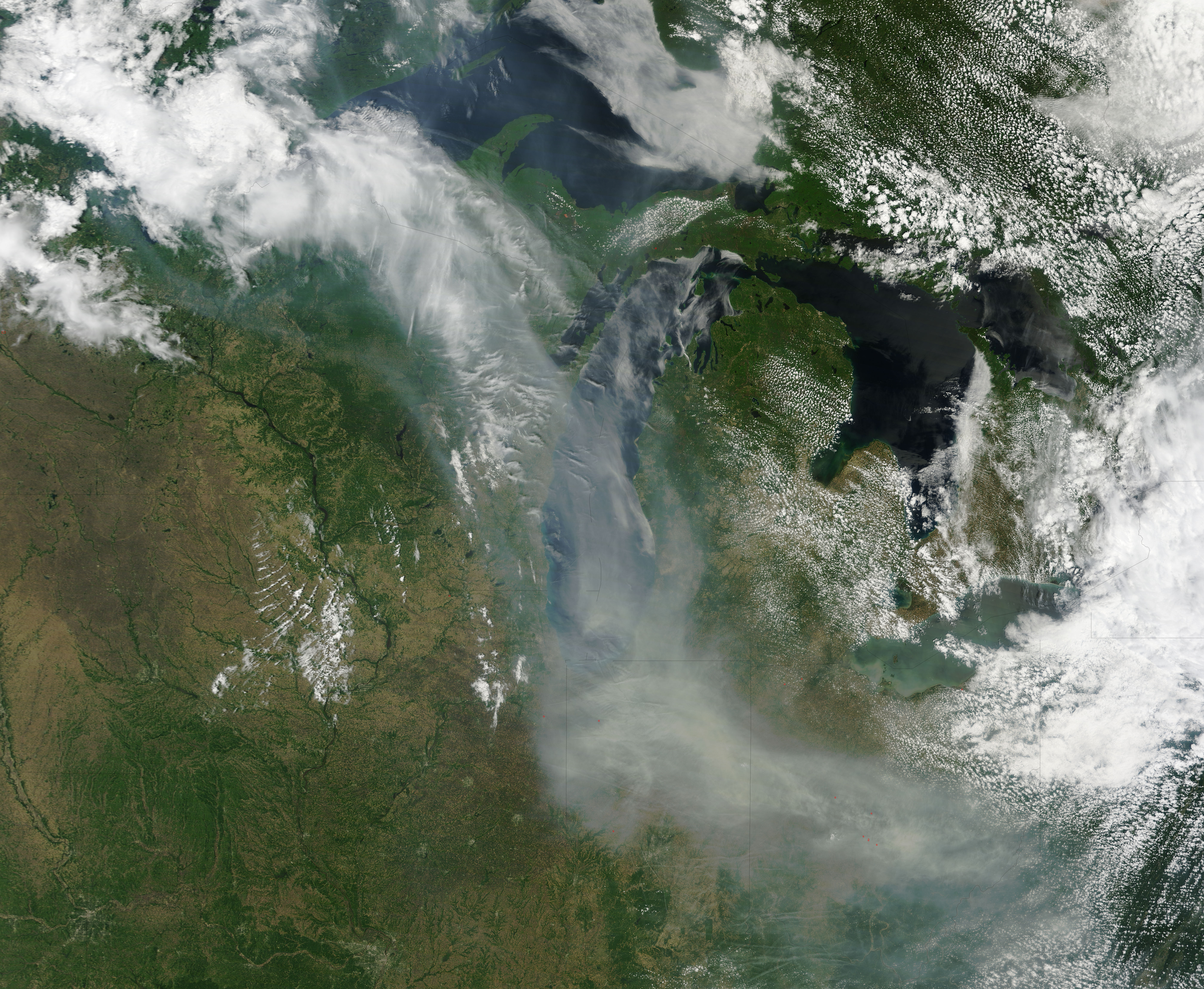
Satellite image showing wildfire smoke drifting down from Canada into the American Midwest, captured by the Moderate Resolution Imaging Spectroradiometer (MODIS) on June 09, 2015.
NASA/Jeff Schmaltz

What is the importance of air quality?

Air quality influences health and quality of life. “Just like we need to ingest water, we need to breathe air,” Pistone said. “We have come to expect clean water because we understand that we need it to live and be healthy, and we should expect the same from our air.”

Poor air quality has been tied to cardiovascular and respiratory effects in humans. Short-term exposure to nitrogen dioxide (NO2), for example, can cause respiratory symptoms like coughing and wheezing, and long-term exposure increases the risk of developing respiratory diseases such as asthma or respiratory infections. Exposure to ozone can aggravate the lungs and damage the airways. Exposure to PM2.5 (particulates 2.5 micrometers or smaller) causes lung irritation and has been linked to heart and lung diseases.

In addition to its impacts on human health, poor air quality can damage the environment, polluting bodies of water through acidification and eutrophication. These processes kill plants, deplete soil nutrients, and harm animals.

Measuring Air Quality: the Air Quality Index (AQI)

Air quality is similar to the weather; it can change quickly, even within a matter of hours. To measure and report on air quality, the EPA uses the United States Air Quality Index (AQI). The AQI is calculated by measuring each of the six primary air pollutants on a scale from “Good” to “Hazardous,” to produce a combined AQI numeric value 0-500.

“Usually when we’re talking about air quality, we’re saying that there are things in the atmosphere that we know are not good for humans to be breathing all the time,” Pistone said. “So to have good air quality, you need to be below a certain threshold of pollution.” Localities around the world use different thresholds for “good” air quality, which is often dependent on which pollutants their system measures. In the EPA’s system, an AQI value of 50 or lower is considered good, while 51-100 is considered moderate. An AQI value between 100 and 150 is considered unhealthy for sensitive groups, and higher values are unhealthy to everyone; a health alert is issued when the AQI reaches 200. Any value over 300 is considered hazardous, and is frequently associated with particulate pollution from wildfires.

NASA Air Quality Research and Data Products

Air quality sensors are a valuable resource for capturing air quality data on a local level.
In 2022, the Trace Gas GRoup (TGGR) at NASA Ames Research Center deployed Inexpensive Network Sensor Technology for Exploring Pollution, or INSTEP: a new network of low-cost air quality sensors that measures a variety of pollutants. These sensors are capturing air quality data in certain areas in California, Colorado, and Mongolia, and have proven advantageous for monitoring air quality during California’s fire season.

The 2024 Airborne and Satellite Investigation of Asian Air Quality (ASIA-AQ) mission integrated sensor data from aircraft, satellites, and ground-based platforms to evaluate air quality over several countries in Asia. The data captured from multiple instruments on these flights, such as the Meteorological Measurement System (MMS) from NASA Ames Atmospheric Science Branch, are used to refine air quality models to forecast and assess air quality conditions.

Agency-wide, NASA has a range of Earth-observing satellites and other technology to capture and report air quality data. In 2023, NASA launched the Tropospheric Emissions: Monitoring of Pollution (TEMPO) mission, which measures air quality and pollution over North America. NASA’s Land, Atmosphere Near real-time Capability for Earth Observations (LANCE) tool provides air quality forecasters with measurements compiled from a multitude of NASA instruments, within three hours of its observation.

Nitrogen dioxide levels over the D.C./Philadelphia/New York City region measured by TEMPO.
NASA/Scientific Visualization Studio

Air Quality Resources to Learn More

In addition to the EPA’s website, which houses air-quality related sources, the EPA also has a platform called AirNow, which reports the local AQI across the United States and allows users to check air quality levels in their area. Pistone also recommends looking at Purple Air’s real-time map, which displays PM data taken from a crowd-sourced network of low-cost sensors and translates those measurements to estimate AQI. For those concerned about air quality, Pistone recommends checking out https://cleanaircrew.org/ for resources on indoor air quality, breathing safely with wildfire smoke, and even building your own box fan filter.

To learn more about air quality research applications, see NASA’s Applied Sciences Program’s Health & Air Quality program area, which details the use of Earth observations to assess and address air quality concerns at local, regional, and national levels. Additionally, the NASA Health and Air Quality Applied Sciences Team (HAQAST) helps connect NASA data and tools with stakeholders to better share and understand the effects of air quality on human health.

Written by Katera Lee, NASA Ames Research Center

Share

Details

Last Updated

Oct 18, 2024

Powered by WPeMatico

Get The Details…
Milan Loiacono

Sols 4336-4337: Where the Streets Have No Name

Sols 4336-4337: Where the Streets Have No Name

2 min read

Sols 4336-4337: Where the Streets Have No Name

A grayscale photograph of the Martian surface shows a wide expanse of very rocky terrain, with sharp, angular stones arrayed as far as the eye can see, as if set together in a mosaic, stretching to the horizon where distant hills rise up. The stones are very bright and light-toned, while the ground in between them is medium gray, as are the hills and other terrain. A smooth channel cuts through the scene, running diagonally from the top center of the image down to the right side of the frame, just above the middle.
NASA’s Mars rover Curiosity acquired this image using its Left Navigation Camera on Sol 4329 — Martian day 4,329 of the Mars Science Laboratory mission — on Oct. 10, 2024 at 04:19:55 UTC.
NASA/JPL-Caltech

Earth planning date: Wednesday, Oct. 16, 2024

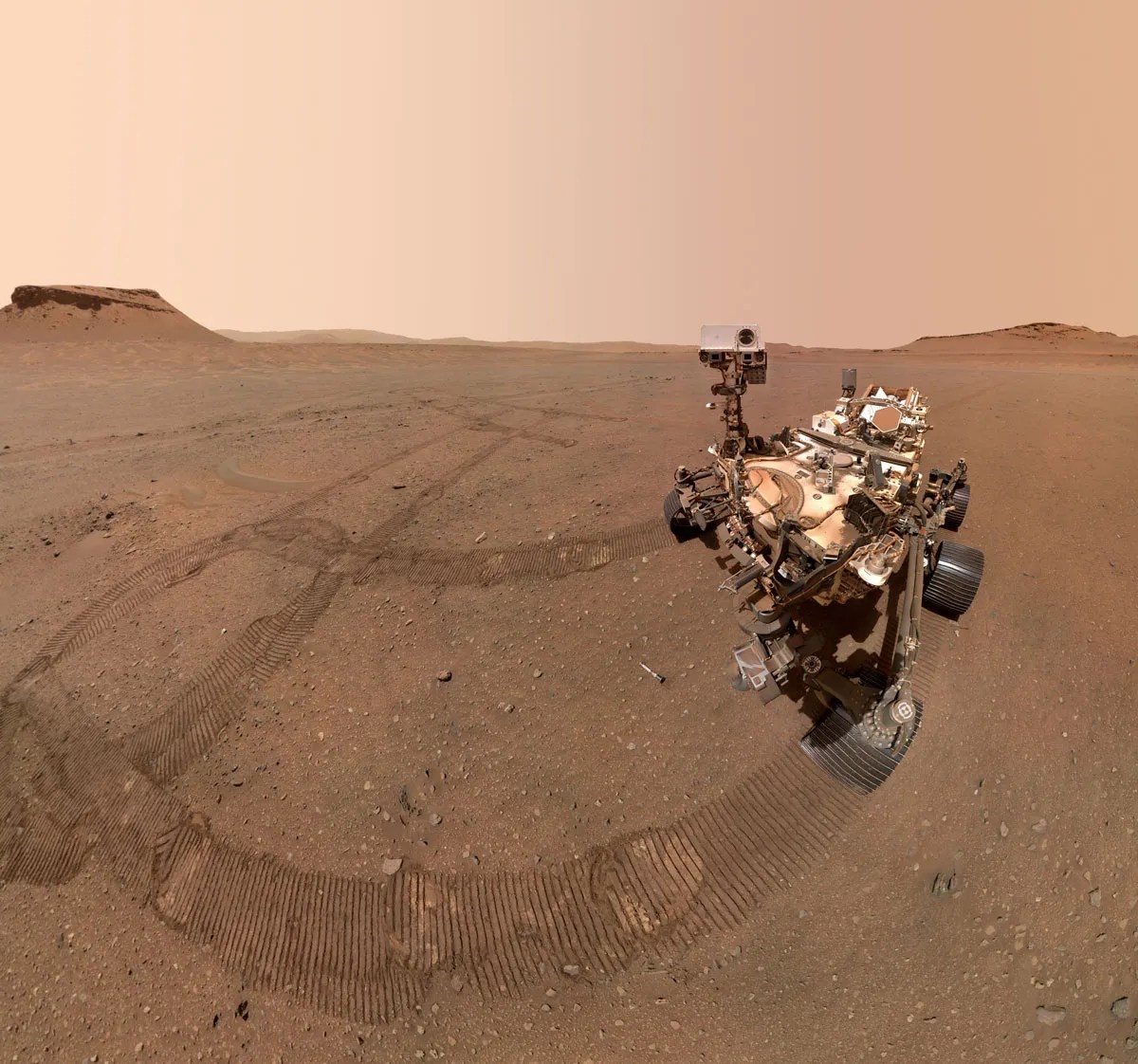
Curiosity continues to drive along the western edge of the upper Gediz Vallis channel. After exiting the channel a few weeks ago, we turned north to image the “back side” of the deposits that we investigated on the eastern side before the channel crossing. As a member of the Channel Surfers working group, we believe that acquiring these views will help further our understanding of the geometry, nature, and evolution of these landforms. The bumpy terrain in front of us, however, plays a role in determining our route and length of drive. The rover planners on the team always do a fantastic job in charting the course on this once-in-a-lifetime road trip. I like to imagine Curiosity with the windows down, blaring U2, as she steadily blazes a new path across the sulfate unit.

With an eye towards imaging in this two-sol plan, Mastcam crafted a large mosaic of “Fascination Turret” that rises above the channel floor. ChemCam fit an unprecedented number of long distance RMI images in the plan that will document the upper extent of the white stone deposit, the nature of the “Kukenan” mound, and characterize the rocks in Fascination Turret at targets named “Chimney Tree” and “Forgotten Canyon.” In our immediate workspace, ChemCam used the Laser Induced Breakdown Spectroscopy (LIBS) instrument on a laminated (very thinly bedded) bedrock in the workspace at “Puppet Lake” to determine its chemical composition, which will be documented with a coordinating Mastcam image. MAHLI and AXPS teamed up to analyze a cluster of small gray rocks in front of us at “Jumble Lake.” 

The second sol includes a 25-meter (about 82 feet) drive to the west/northwest as we continue along our path adjacent to the channel. The Environmental theme group included a range of activities such as a Mastcam tau that will measure the optical depth of the atmosphere and constrain aerosol scattering properties, dust devil movies, and a suprahorizon movie to monitor clouds.  

Written by Sharon Wilson Purdy, Planetary Geologist at the Smithsonian National Air and Space Museum

Share

Details

Last Updated
Oct 18, 2024

Related Terms

Powered by WPeMatico

Get The Details…

Space Medicine, Lab Upkeep Top Thursday’s Station Schedule

Space Medicine, Lab Upkeep Top Thursday’s Station Schedule

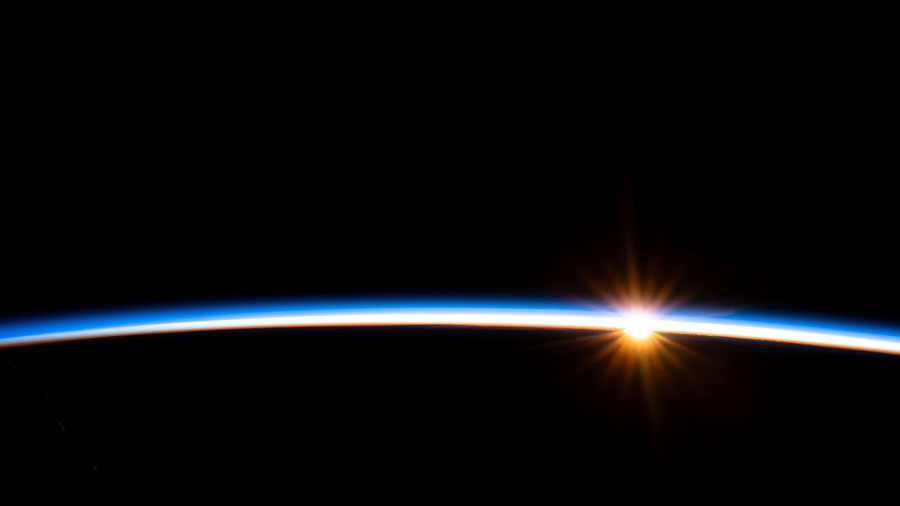
The first rays of an orbital sunrise illuminate Earth's atmosphere in this photograph from the space station as it orbited above the Pacific Ocean near Chile's Patagonia coast.
The first rays of an orbital sunrise illuminate Earth’s atmosphere in this photograph from the space station as it orbited above the Pacific Ocean near Chile’s Patagonia coast.

Space medicine, spacesuits, and eye checks filled the schedule aboard the International Space Station on Thursday. Cargo operations and life support maintenance rounded out the day as the Expedition 72 crew awaits the departure of four crewmates.

Scientists are continually using the orbiting lab’s microgravity environment to explore new phenomena not possible on Earth to promote industry and human health. Thursday’s space research explored ways to improve treatments for patients on Earth and keep astronauts healthy on long-term missions.

NASA Flight Engineer Butch Wilmore serviced samples and observed how fluids flow using capillary force to understand how liquid drugs are transported in the lungs. Results may benefit the health care and food industries with improved respiratory therapies and better contamination prevention techniques.

NASA Flight Engineers Matthew Dominick and Don Pettit worked on advanced research gear ensuring it remains operable for high-quality results. Dominick organized the hardware inside the BioServe centrifuge that supports a range of science from DNA studies, to materials research, and more in space. Pettit replaced cables on the Cell Biology Experiment Facility, an incubator with an artificial gravity generator. Pettit also collected and stowed his urine samples in a science freezer for later analysis. He finally joined Flight Engineer Nick Hague for eye exams using medical imaging gear with assistance from doctors on the ground. Hague earlier relocated air sensors from the Destiny laboratory module to the Tranquility module.

Lab maintenance is also key aboard the orbital outpost to ensure ongoing science operations and healthy crews. Commander Suni Williams and Flight Engineer Jeanette Epps, both NASA astronauts, serviced thermal systems and orbital plumbing components, while also organizing food stowed in the Unity module. NASA Flight Engineer Mike Barratt spent his shift in the Quest airlock dumping and filling spacesuit water tanks then  cleaning Quest’s smoke detectors.

Roscosmos Flight Engineer Ivan Vagner completed his 24-hour heart monitoring session on Thursday and handed over the sensors to Flight Engineer Alexey Ovchinin so he could record his heart rate. Vagner also swapped out orbital plumbing gear in the Nauka science module while Ovchinin replaced hydraulic pumps in the Zvezda service module. Flight Engineer Alexander Grebenkin continued photographing crew activities for documentation while Flight Engineer Aleksandr Gorbunov jogged on a treadmill for a regularly schedule fitness evaluation.

NASA and SpaceX mission managers continue monitoring weather conditions off the coast of Florida and are now targeting no earlier than 3:05 a.m. EDT on Sunday for the undocking of NASA’s SpaceX Crew-8 mission aboard Dragon Endeavour.


Learn more about station activities by following the space station blog@space_station and @ISS_Research on X, as well as the ISS Facebook and ISS Instagram accounts.

Get weekly video highlights at: https://roundupreads.jsc.nasa.gov/videoupdate/

Get the latest from NASA delivered every week. Subscribe here: www.nasa.gov/subscribe

Powered by WPeMatico

Get The Details…

Mark Garcia