Preparing for Artemis II: Training for a Mission Around the Moon

Preparing for Artemis II: Training for a Mission Around the Moon
4 Min Read

Preparing for Artemis II: Training for a Mission Around the Moon

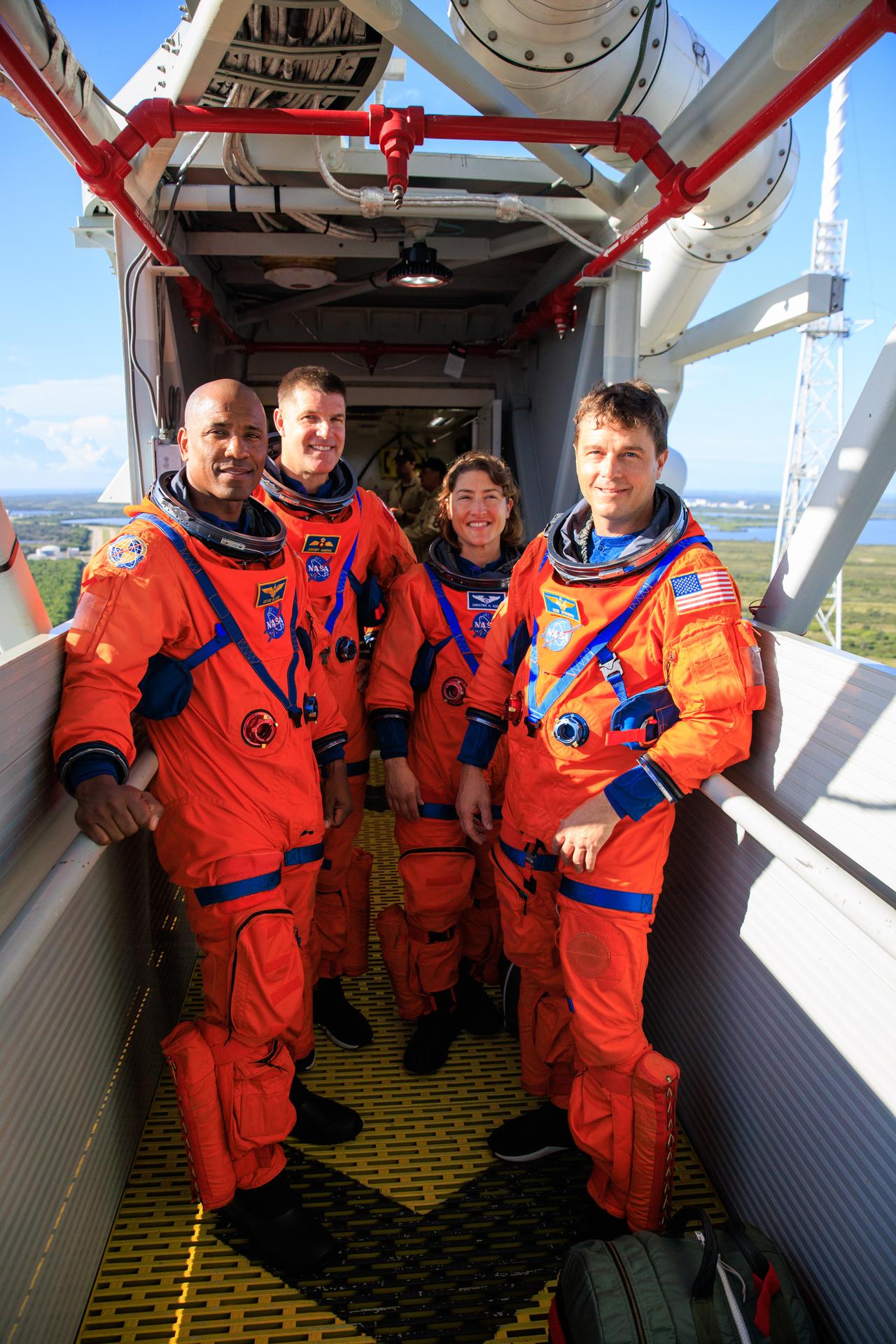
Artemis II astronauts, from left, NASA astronaut Victor Glover, CSA (Canadian Space Agency) astronaut Jeremy Hansen, and NASA astronauts Christina Koch and Reid Wiseman stand on the crew access arm of the mobile launcher as part of an integrated ground systems test at NASA’s Kennedy Space Center in Florida.

Credits:
NASA/Frank Michaux

Four astronauts will soon travel beyond low Earth orbit and fly around the Moon on Artemis II, a mission that will test NASA’s systems and hardware for human exploration of deep space. 

Since June 2023, NASA astronauts Reid Wiseman, Victor Glover, Christina Koch, and CSA (Canadian Space Agency) astronaut Jeremy Hansen have been preparing for their lunar journey. The approximately 10-day mission will test the SLS (Space Launch System) rocket and Orion spacecraft, named Integrity by the crew, while requiring the quartet to operate with greater autonomy and make critical decisions far from Earth.

Training for Artemis II is all risk mitigation. By preparing the astronauts and flight controllers for what they might encounter, we enable mission success.

Artemis II Chief Training Officer

Artemis II Chief Training Officer

Jacki Mahaffey

Unlike missions to the International Space Station, Artemis II offers no nearby safe harbor and no option to be back on Earth within hours of a problem. Training reflects that reality. Crews are prepared not just to follow procedures, but to understand spacecraft systems well enough to adapt when conditions change. 

Training began with mission fundamentals, including how Orion and SLS systems function individually and together. From there, the crew progressed through phases of training that moved from routine on-orbit operations to more complex mission segments such as ascent, entry, and landing. Each phase builds on the last as the crew moves closer to flight. 

In parallel, astronauts trained in medical operations, exercise systems, spacesuits, and daily life aboard Orion. Together, these elements form a single, integrated mission timeline. 

Observing the Moon Through the Lens 
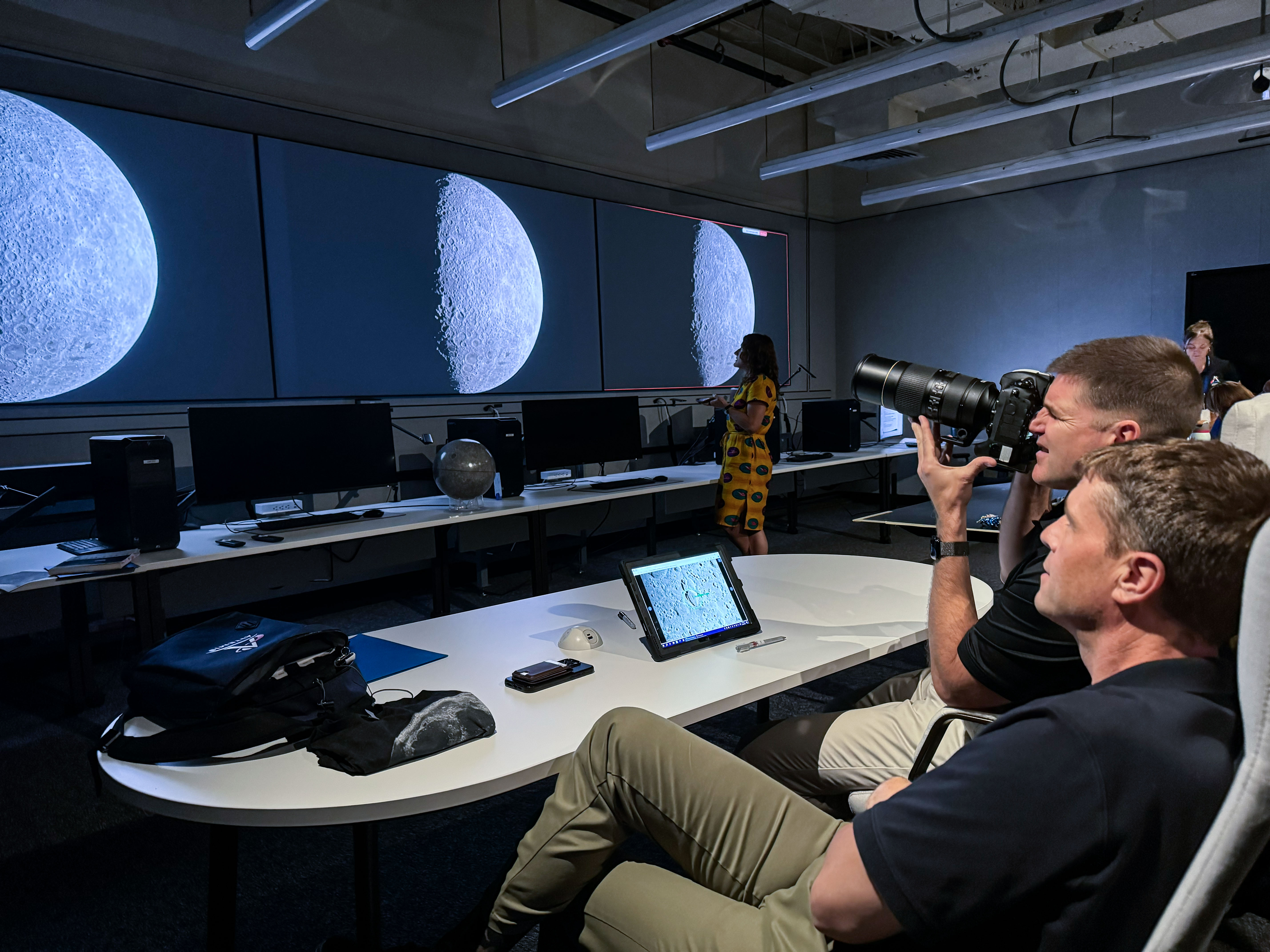
Two people observe phases of the moon inside of a room. The person on the right is holding a camera.
The Artemis II crew practices lunar photography at NASA’s Johnson Space Center in Houston.
NASA/Kelsey Young

A key part of Artemis II training includes lunar observation and photography. At NASA’s Johnson Space Center in Houston, astronauts studied the Moon’s far side, learning to identify crater shapes, surface textures, color variations, and reflectivity. 

Although Artemis II will not land on the Moon, the crew will conduct detailed observations from lunar orbit to prepare for future Artemis missions.  

Flight Training at Ellington Field 
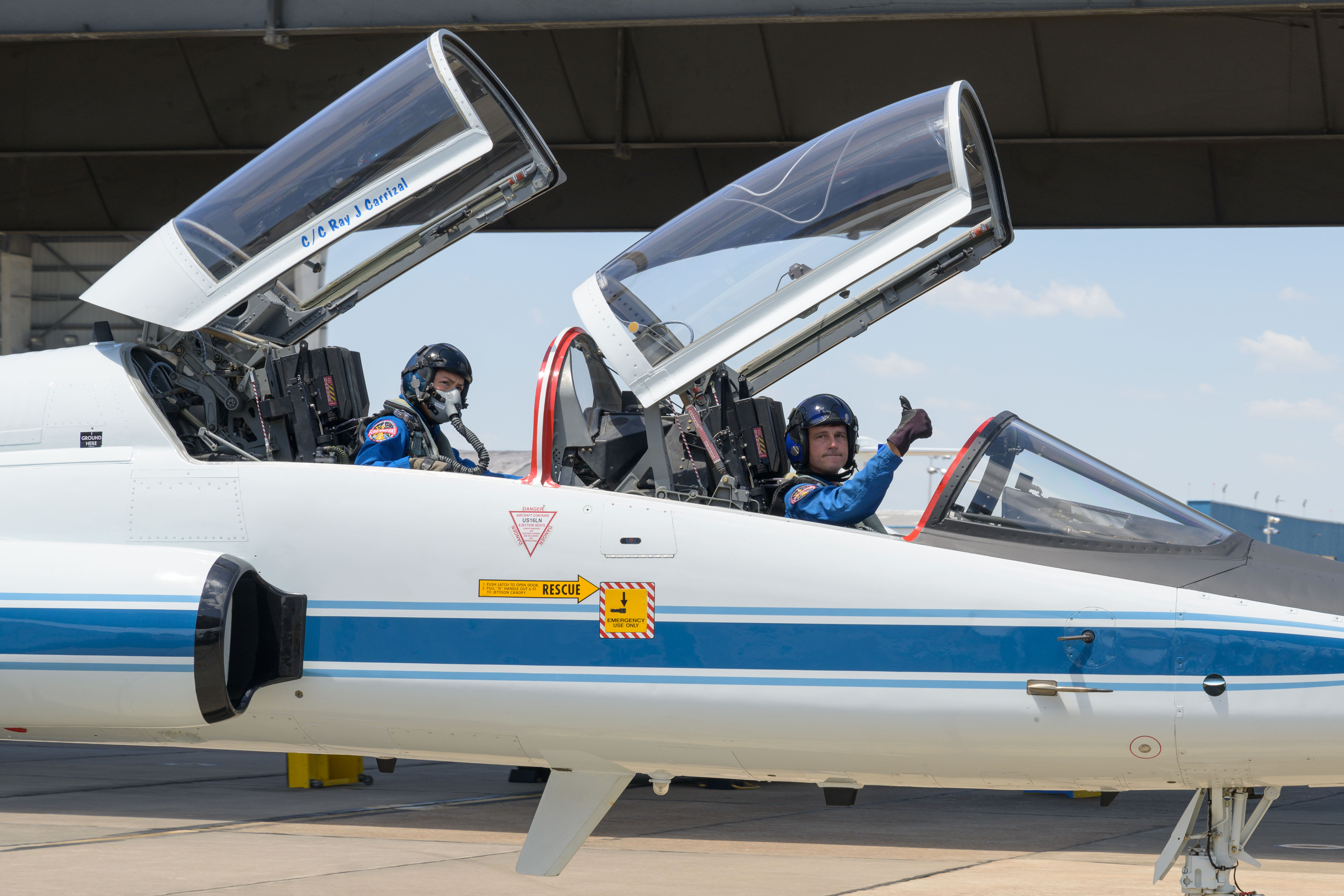
Artemis II crew members Reid Wiseman and Christina Koch during T-38F flight training at Ellington Field.
NASA/Josh Valcarcel

In addition to classroom instruction and simulations, the Artemis II crew trains in T-38 jet aircraft at Johnson’s Ellington Field. The T-38 exposes astronauts to high-workload, dynamic flight conditions that build spatial awareness and adaptability, skills that translate directly to decision-making under pressure in spaceflight.  

Protecting Crew Health in Deep Space 
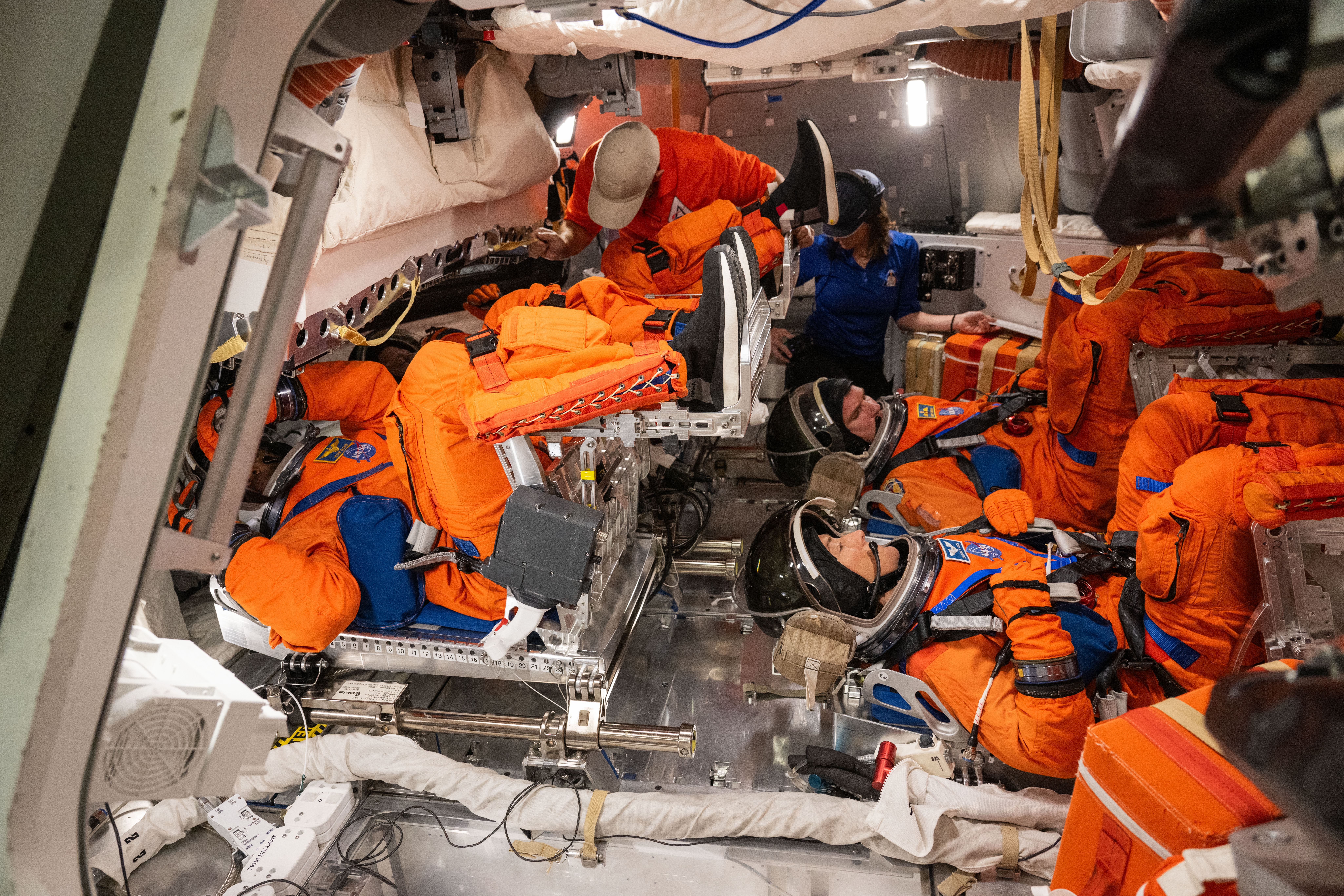
Four people dressed in orange spacesuits sit in a mockup of a spacecraft.
The Artemis II crew don their Orion Crew Survival System spacesuits for post landing emergency egress inside the Orion Mockup at Johnson’s Space Vehicle Mockup Facility.
NASA/James Blair

The crew donned their Orion Crew Survival System spacesuits during training to support testing of Orion’s environmental control and life support systems. The suit provides pressure, oxygen, and thermal protection during launch, entry, and contingency scenarios while Orion’s life support systems manage cabin oxygen, water, temperature, and overall crew health throughout the mission. 

Mastering Orion Systems and Simulations 

Artemis II Commander Reid Wiseman (front) and Pilot Victor Glover participate in an Artemis II entry simulation at Johnson Space Center.
NASA/Bill Stafford

Inside the Orion Mission Simulator at Johnson, the crew rehearsed every phase of the mission, from routine operations to emergency response. Simulations are designed to teach astronauts how to diagnose failures, manage competing priorities, and make decisions with delayed communication from Earth. 

Through this process, the quartet learned every aspect of the Orion crew module’s interior, including how to navigate onboard displays and execute the procedures used to fly and monitor the spacecraft. 

Science Preparation and Geology Training
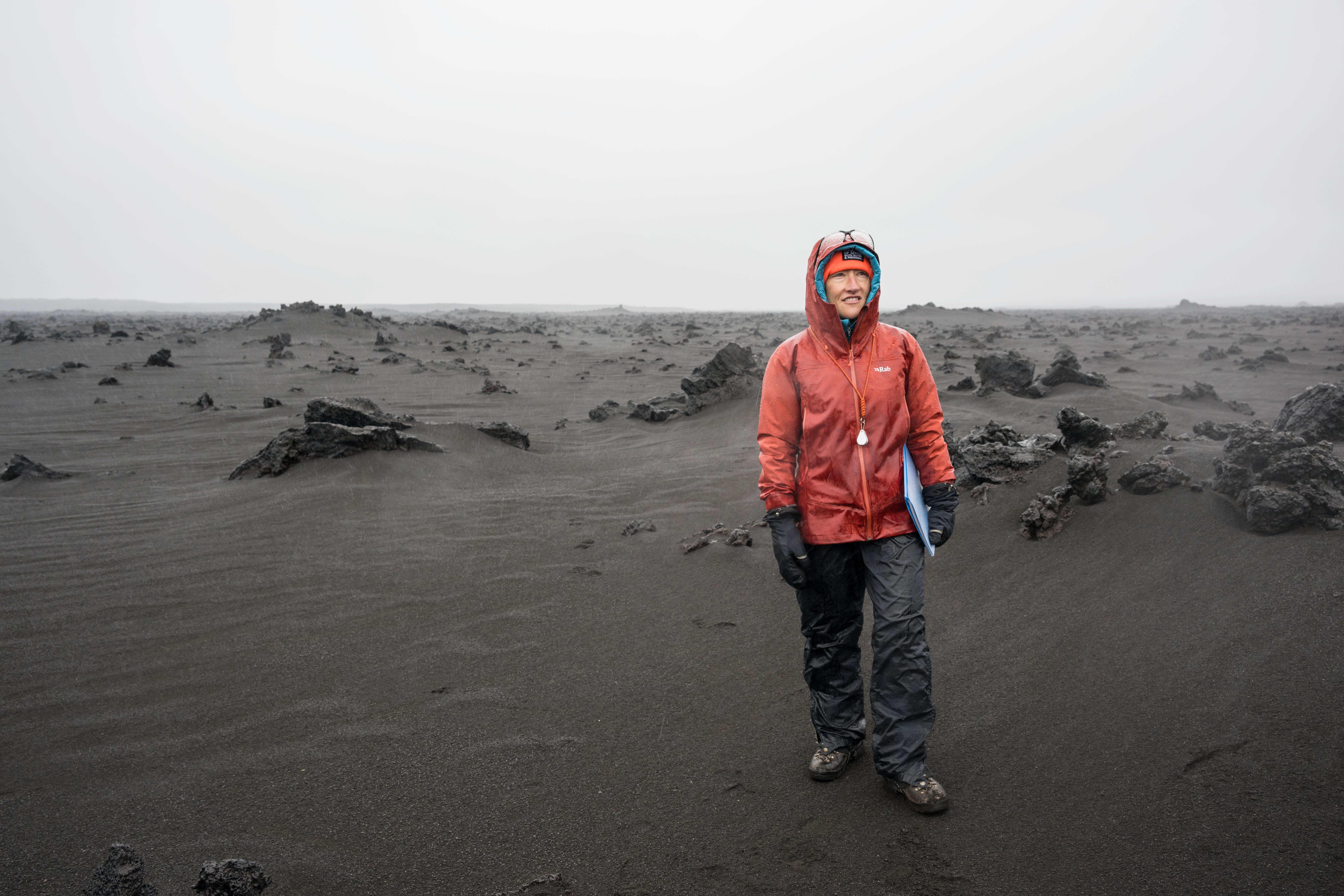
A woman wearing an orange jacket holding a folder poses in a rocky terrain.
Artemis II Mission Specialist Christina Koch stands in a windswept volcanic field during geology training in Iceland, where volcanic terrain serves as an analog for lunar landscapes.
NASA/Robert Markowitz

While Artemis II astronauts will not land on the Moon, the geology fundamentals they develop during field training in remote environments are critical to meeting the mission’s science objectives. 

During the mission, the crew will examine a targeted set of surface features, including craters and regolith, from orbit. Astronauts will document variations in color, reflectivity, and texture to help scientists interpret geologic history. 

Preparing for Splashdown and Recovery 
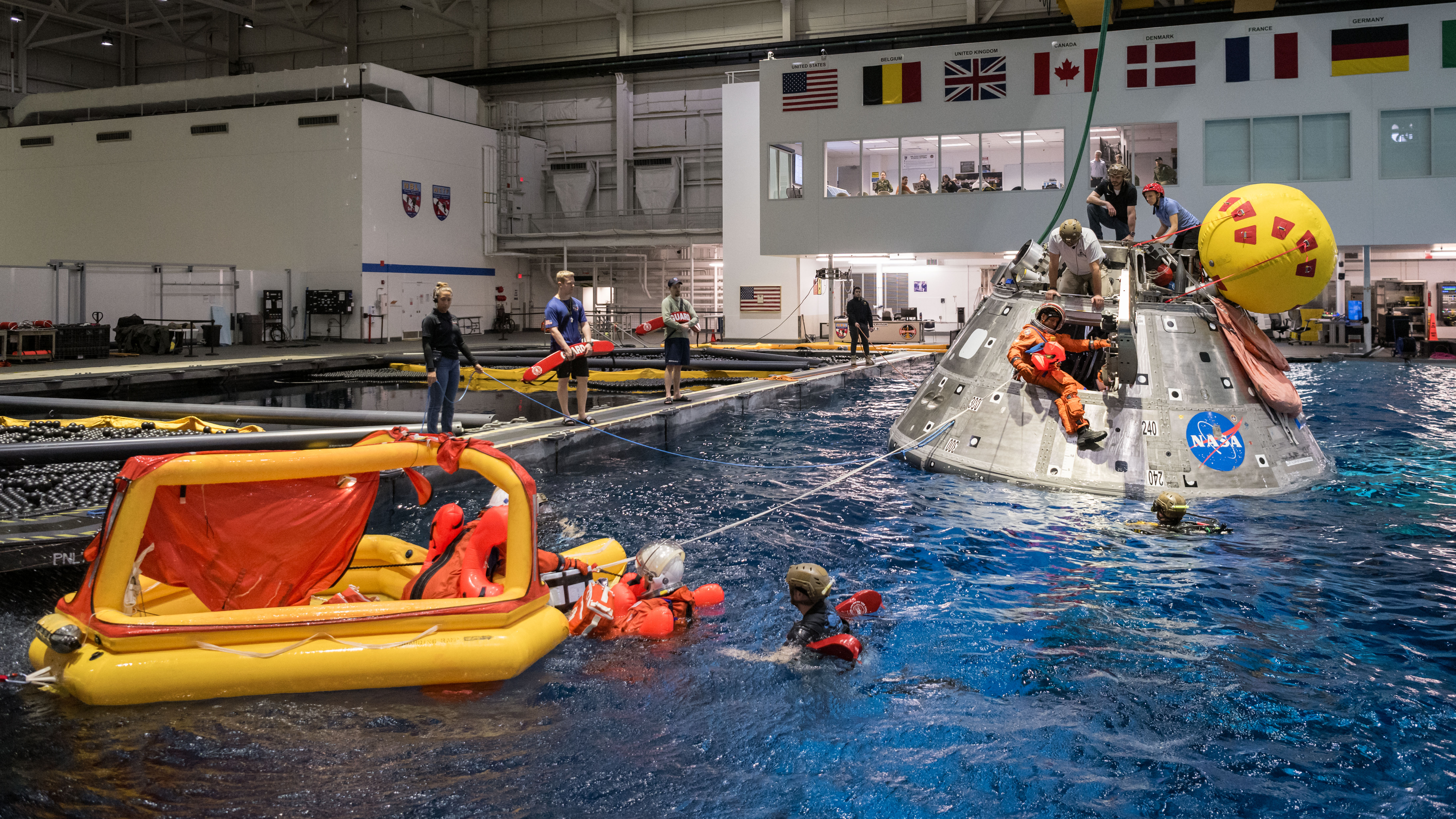
The Artemis II astronauts during water survival recovery training at NASA’s Neutral Buoyancy Laboratory.
NASA/Josh Valcarcel

The mission will conclude when the Artemis II mission splashes down.

The crew worked through splashdown and recovery operations at the agency’s Neutral Buoyancy Laboratory. They rehearsed how to exit the Orion spacecraft safely in different scenarios, stabilize the spacecraft, and board a raft – skills they will rely on after returning from their mission around the Moon. 

The Crew is Go for Launch 
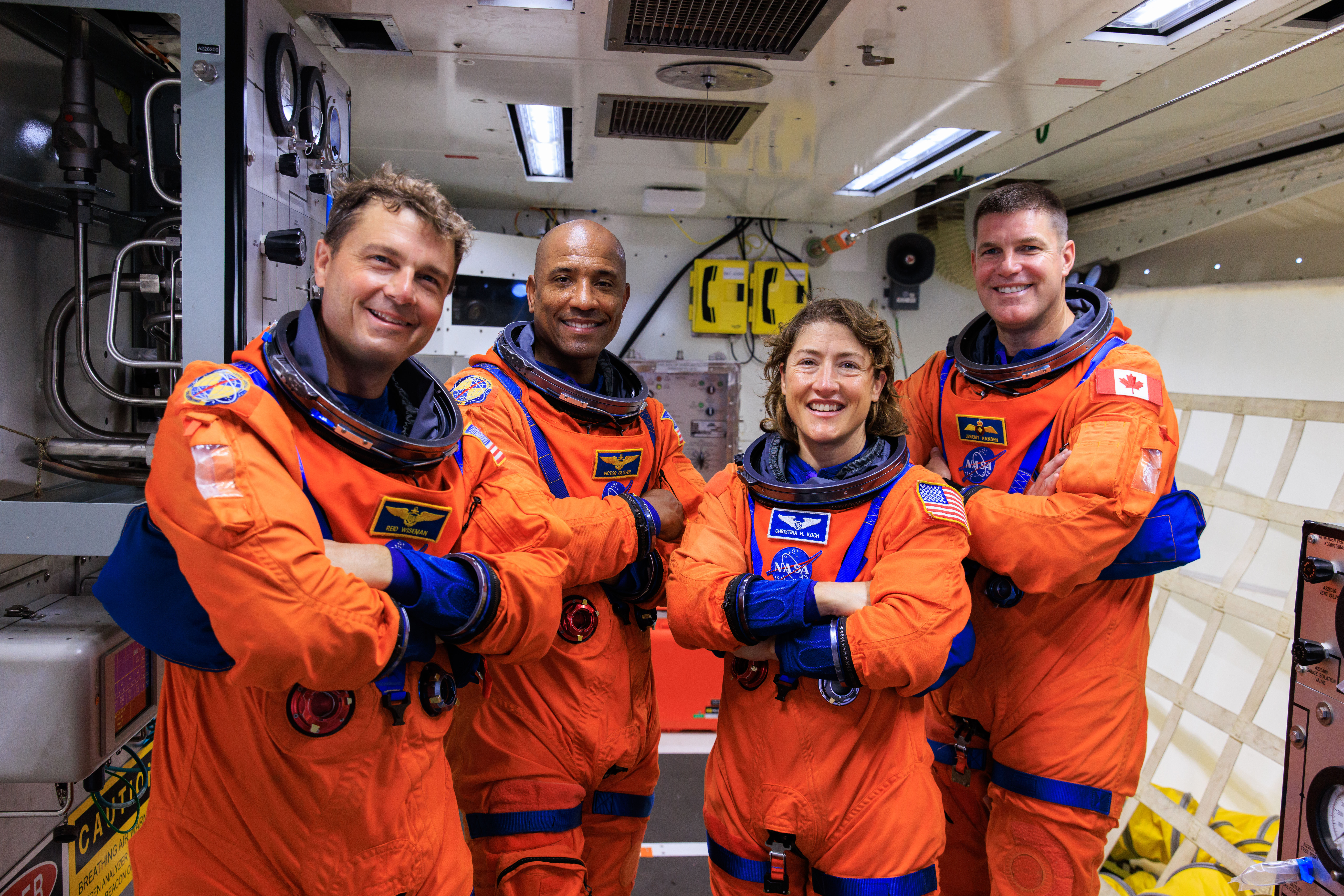
Four astronauts wearing an orange and blue spacesuit pose with their arms crossed inside of a facility.
Artemis II crew members (left to right) Reid Wiseman, Victor Glover, Christina Koch, and Jeremy Hansen stand in the white room on the crew access arm of the mobile launcher at Launch Pad 39B at NASA’s Kennedy Space Center in Florida.
NASA/Frank Michaux

The Artemis II crew also completed integrated ground systems tests at NASA’s Kennedy Space Center in Florida. These included suited tests, full mission rehearsals, and launch-day dry runs that walked astronauts through every step, from traveling to the launch pad to entering Orion at Launch Pad 39B. 

As Artemis II moves closer to launch, the focus shifts from preparation to readiness as the crew enters the next era of exploration beyond low Earth orbit.  

About the Author

Sumer Loggins

Sumer Loggins

Share

Details

Last Updated

Jan 30, 2026

Powered by WPeMatico

Get The Details…
Sumer Loggins
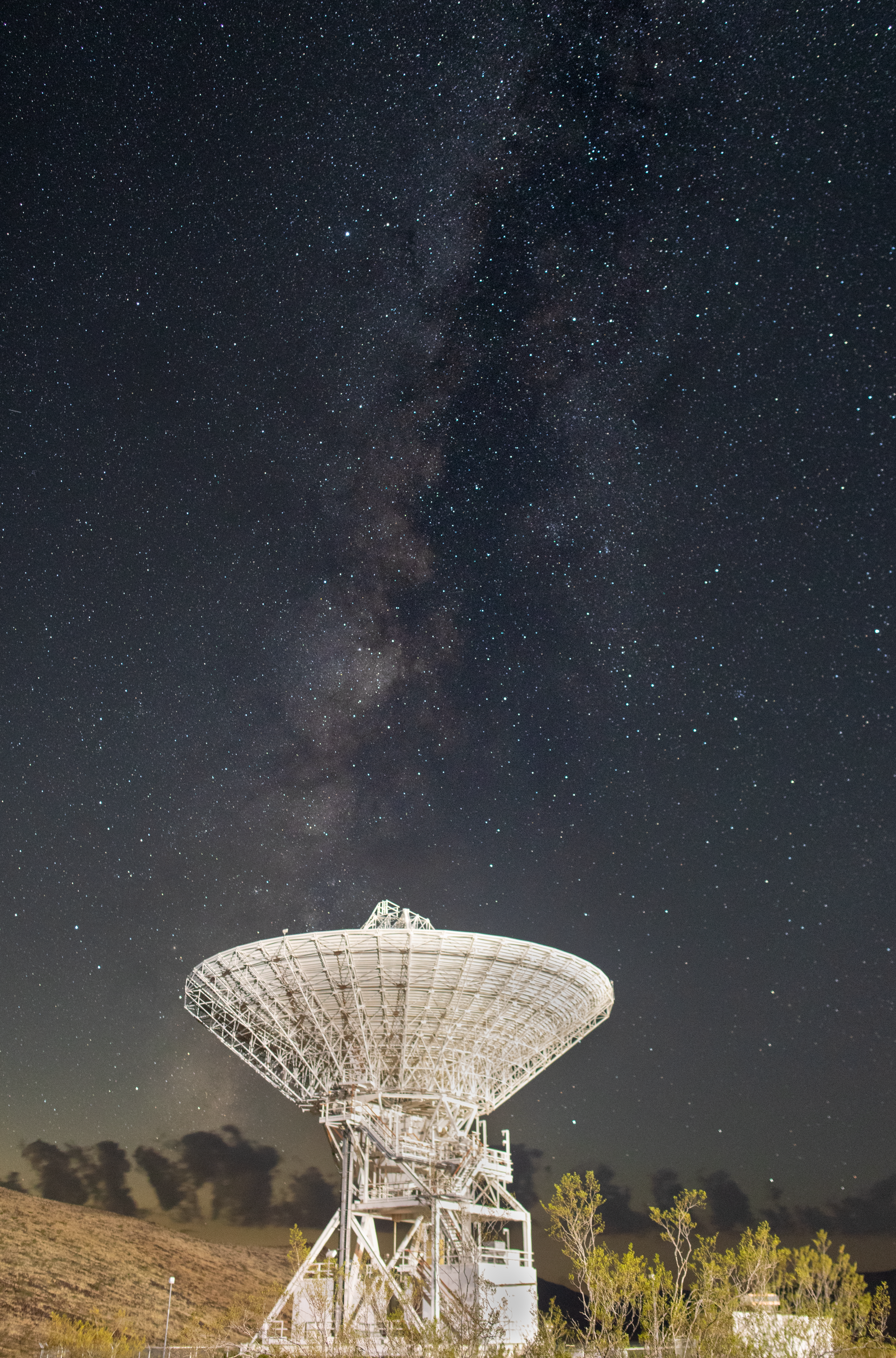
Goldstone’s DSS-15 Antenna and the Milky Way

Goldstone’s DSS-15 Antenna and the Milky Way

A white radio antenna faces upward in the direction of a star-studded night sky.
NASA/JPL-Caltech

Deep Space Station 15, one of the 112-foot antennas at the Goldstone Deep Space Communications Complex near Barstow, California, looks skyward, with the stars of the Milky Way overhead, in September 2025. Goldstone is part of NASA’s Deep Space Network (DSN), which operates three complexes around the globe that support communications with dozens of deep space missions.

The DSN is NASA’s international array of giant radio antennas that supports interplanetary spacecraft missions, plus a few that orbit Earth. The DSN also provides radar and radio astronomy observations that improve our understanding of the solar system and the larger universe.

Through Artemis, NASA is establishing an enduring presence in space and exploring more of the Moon than ever before. To achieve this, Artemis missions rely on both the Deep Space Network and the Near Space Network. These networks, with oversight by NASA’s SCaN (Space Communications and Navigation) Program office, use global infrastructure and relay satellites to ensure seamless communications and tracking as Orion launches, orbits Earth, travels to the Moon, and returns home.

Image credit: NASA/JPL-Caltech

Powered by WPeMatico

Get The Details…
Monika Luabeya

Resurrecting Ancient Enzymes in NASA’s Search for Life Beyond Earth

Resurrecting Ancient Enzymes in NASA’s Search for Life Beyond Earth

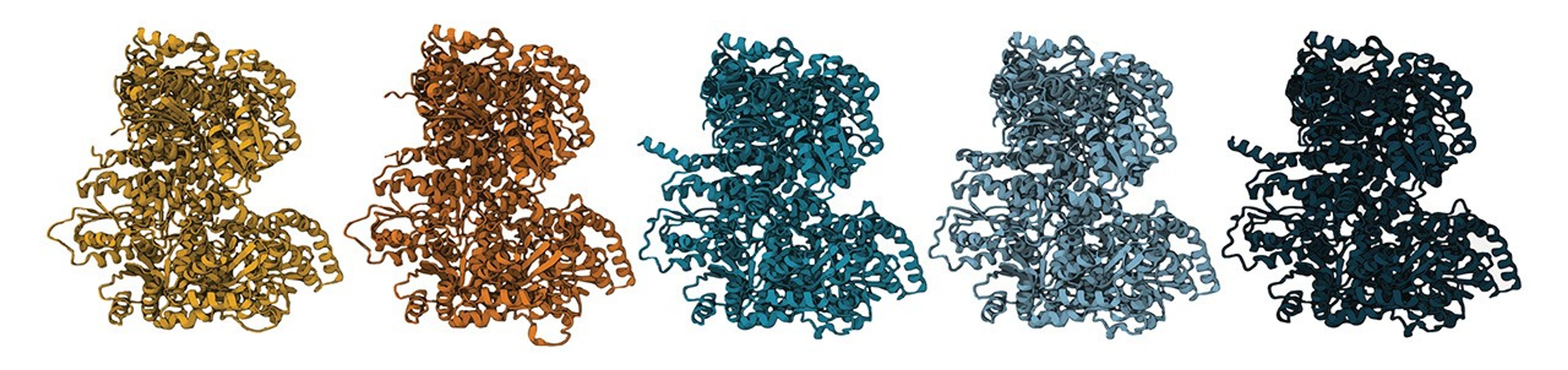
Five molecules are shown as 3D renderings in a line. They are shaded different colors, left to right: yellow, orange, green/blue, light blue, and dark blue. Slight differences can be seen in the twists and turns of their structure as they get more complicated moving from left to right.
Predicted 3D structures of the ancestral nitrogenase DDKK complex from oldest to modern.
Holly Rucker/UW Madison

NASA-supported scientists have resurrected an enzyme first used by organisms on Earth 3.2-billion years ago and, in the process, have validated a chemical biosignature in rocks that is used to understand ancient life on Earth. The research provides a new understanding of what Earth’s biosphere was like early in our planet’s history and confirms  a reliable biosignature that could be used by robotic or human explorers to look for signs of ancient life on other worlds.

Nitrogen, Earth’s biosphere

The study, published in Nature Communications on Jan. 22 , focuses on a type of metabolism called nitrogen fixation, or diazotrophy. This process is what converts biologically unusable nitrogen in Earth’s atmosphere into molecules that all living organisms use to survive.
 
On Earth, there is a select group of organisms called diazotrophs that can perform nitrogen fixation. This group is a motley crew of bacteria (and a few archaea and eukaryotes) that are found dotted across different branches of the tree of life. Some diazotrophs are free-living organisms that fix nitrogen as they go about their day. Others are symbiotic and survive in partnership with other organisms, living in places like plant roots, lichens, fungi, and even the guts of termites and shipworms.
 
What ties this varied group of organisms together is that they all contain an enzyme called nitrogenase. This enzyme gives them the power to convert nitrogen gas from the atmosphere into compounds that are essential for building some of life’s most important molecules, such as proteins and DNA. Specifically, they convert diatomic nitrogen (N2) into biologically useful forms of nitrogen such as ammonia (NH3), thereby allowing nitrogen to enter the food chain.
 
In this way, every organism in Earth’s entire biosphere relies on diazotrophs to provide the nitrogen we all need to survive.

Nitrogenase through time

Because nitrogen fixation is critical for life as we know it, scientists believe that nitrogenase must have evolved early in life’s history, at a time when only single-celled microorganisms existed. 

“Early life on Earth operated under conditions so different from today that it may have appeared almost alien,” said Betül Kaçar, who leads the Kaçar Lab at the University of Wisconsin-Madison. With support from NASA, Kaçar and her team are working to understand the history of life at a planetary scale and the potential for life in the universe by rebuilding extinct biochemistries used by ancient organisms. “Studying these systems helps us understand not just where life can exist, but what life can be.”

Details about early life on Earth are obscure because the fossils microorganisms leave behind in the rock record can be ambiguous or difficult to attribute. However, when nitrogen from the atmosphere is fixed, it is slightly altered in a way scientists can recognize. The isotopic signature of the nitrogen atoms within the diazotroph is changed. Over time, as the microorganisms die, this altered nitrogen gets incorporated into rocks. Sediments are laid down, become buried, compressed, worn, and churned through the ages of the Earth. Yet even after billions of years, scientists can still identify the N-isotope biosignature left by ancient diazotrophs in the geological record.

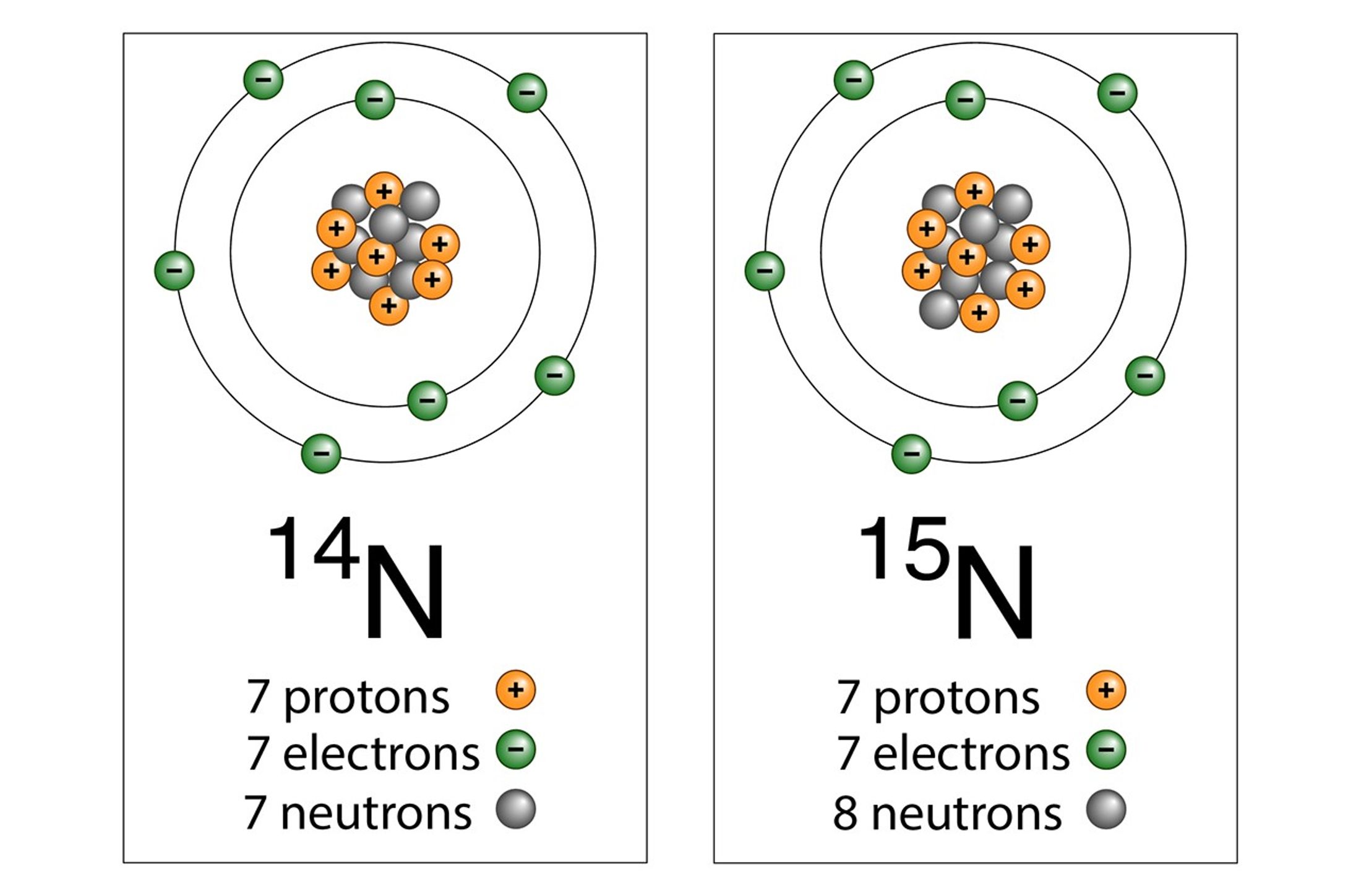
Two isotopes of nitrogen are shown with a list of what they are made of. 14N has 7 protons, 7 electrons, and 7 neutrons. 15N has 7 protons, 7 electrons, and 8 neutrons.
Isotopes are different forms of the same element. Each form has the same number of protons in their nuclei, but a different number of neutrons. Nitrogen in the atmosphere is found primarily as nitrogen-14 (7 neutrons and 99.6337% of atmospheric N) and nitrogen-15 (8 neutrons and only 0.3663% of atmospheric N). Biological processes like nitrogen fixation use mostly nitrogen-14.
NASA/Aaron Gronstal

By looking at the N-isotope record, scientists can thereby estimate when nitrogenase enzymes first appeared.

Building ancient enzyme

Questions about the accuracy of using N-isotopes as a biosignature have been raised in the past. Like life itself, enzymes evolve over time. As environmental conditions on Earth change, enzymes are altered at the molecular level in response. The original nitrogenase was likely smaller and less complicated than the version we see in organisms now. This means that the N-isotope signatures left behind by ancient nitrogenase enzymes could be different than the ones we see today.

To solve the question of whether N-isotopes can indeed be used as a robust biosignature, the team used synthetic biology techniques to resurrect possible ancient versions of the enzyme. They reverse-engineered modern nitrogenase, peeling away layers of evolution to reveal simpler versions of the enzyme that might have existed long ago. 

The behaviors of the older versions of the enzyme were then observed when they were inserted into living microbes. What they found is that N-isotope signatures have remained the same for billions of years. The results prove that the isotopic signatures of nitrogen fixation in Earth’s oldest rocks do indeed reflect the activity of early life.

“As you step back in time, the DNA sequences of these ancient nitrogenases are very different than modern nitrogenases,” said Holly Rucker, a doctoral candidate in the Kaçar Lab and lead author on the paper. “We also see that the enzyme structure varies with age. Yet we find that despite these sequence and structure-level differences, these ancient enzymes still do the same chemistry as their modern descendants.”

The collection of synthetic genes created by the team also represent different versions of nitrogenase that would have existed over a span of two billion years of evolutionary history. This has helped fill in gaps of knowledge about how nitrogenase has changed over time, and what ancient nitrogen fixers were like. 

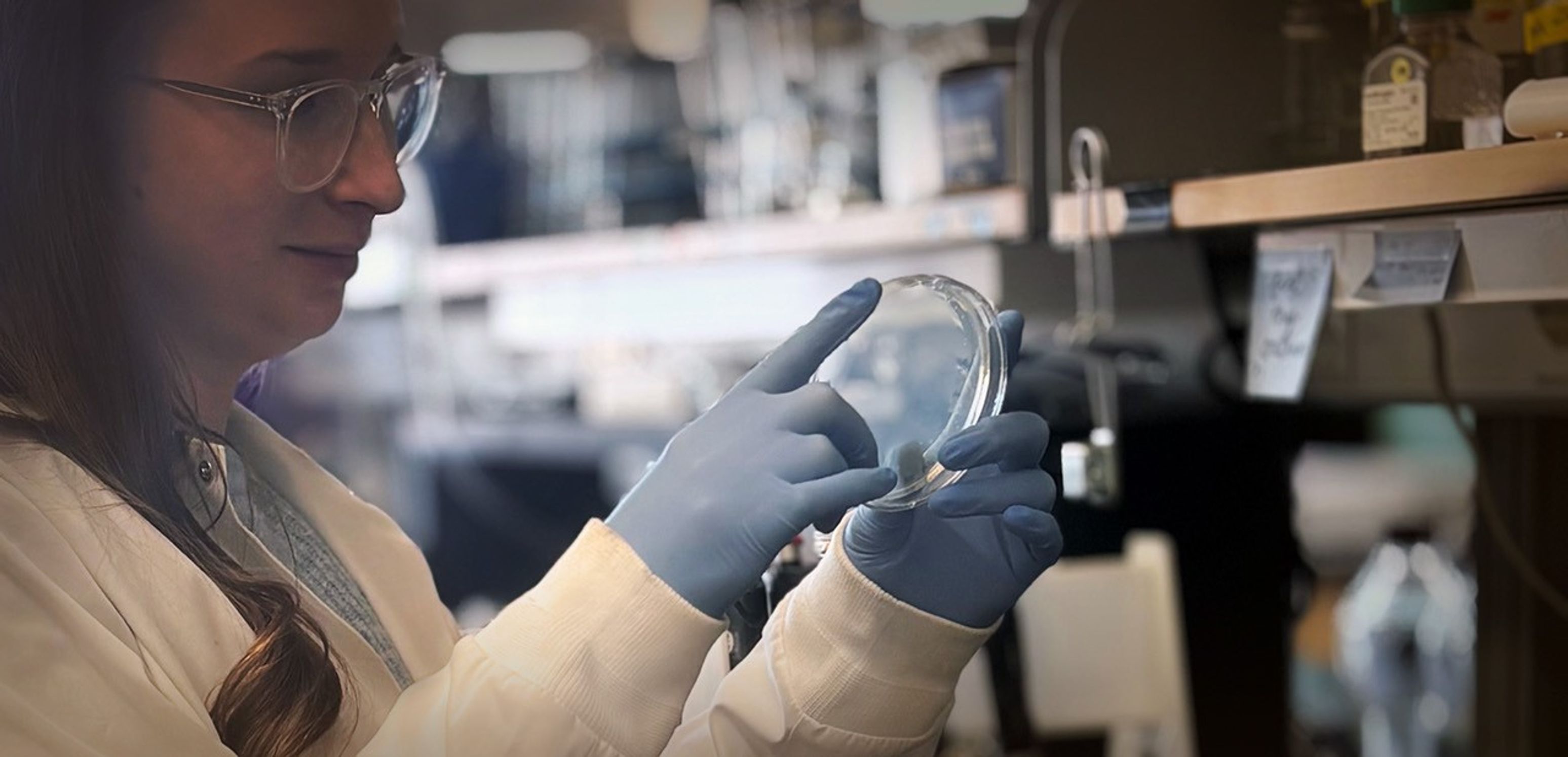
A woman in profile view lifts a petri dish to examine it. The petri dish is center of frame. She wears glasses, a white lab coat, and blue gloves. The shelves of the lab full of equipment can be seen out of focus in the background.
Holly Rucker examines a petri dish in the lab at the University of Wisconsin-Madison.
Holly Rucker/ UW Madison

“This research reveals how robust nitrogenase (and its associated N-isotope signature) are to change, at both an enzyme sequence level and at the planetary environment level,” explains Rucker. “The fact that the ancestral nitrogenases produce the same isotopic signature throughout billions of years of molecular tinkering, and in the face of drastic changes to the Earth’s environment, really highlights the potential of N-isotopes as a biosignature. Another key aspect of this work is that it provides further validation of our interpretation of the most ancient nitrogenase signatures in the rock record on Earth, which is important for understanding the timing of when critical metabolisms like nitrogen fixation emerged on Earth.”

Because nitrogen fixation is such an important part of biology on Earth, the research could also provide clues in the search for life beyond our planet.

“If we want to recognize life beyond Earth, we can’t limit ourselves to life as we know it today,” said Kaçar.

Nitrogenase, search for life

Now that scientists have validated the use of N-isotopes as a biosignature for ancient life on Earth, the same technique could potentially be used on other rocky worlds. 

“Validated biosignatures like nitrogen isotopes give us a powerful tool for planetary exploration and access to lost biological histories” said Kaçar. “If similar signals are found on Mars or other rocky worlds, they could point to ancient metabolisms that once supported life under very different conditions. Studying these systems helps us understand not just where life can exist, but what life can be.”

For more information on astrobiology at NASA, visit:

https://science.nasa.gov/astrobiology

-end-

Karen Fox / Molly Wasser
Headquarters, Washington
202-358-1600
karen.c.fox@nasa.gov  / molly.l.wasser@nasa.gov

Powered by WPeMatico

Get The Details…

Hubble Sees Galaxy with Dark Rings in New Light

Hubble Sees Galaxy with Dark Rings in New Light

3 Min Read

Hubble Sees Galaxy with Dark Rings in New Light

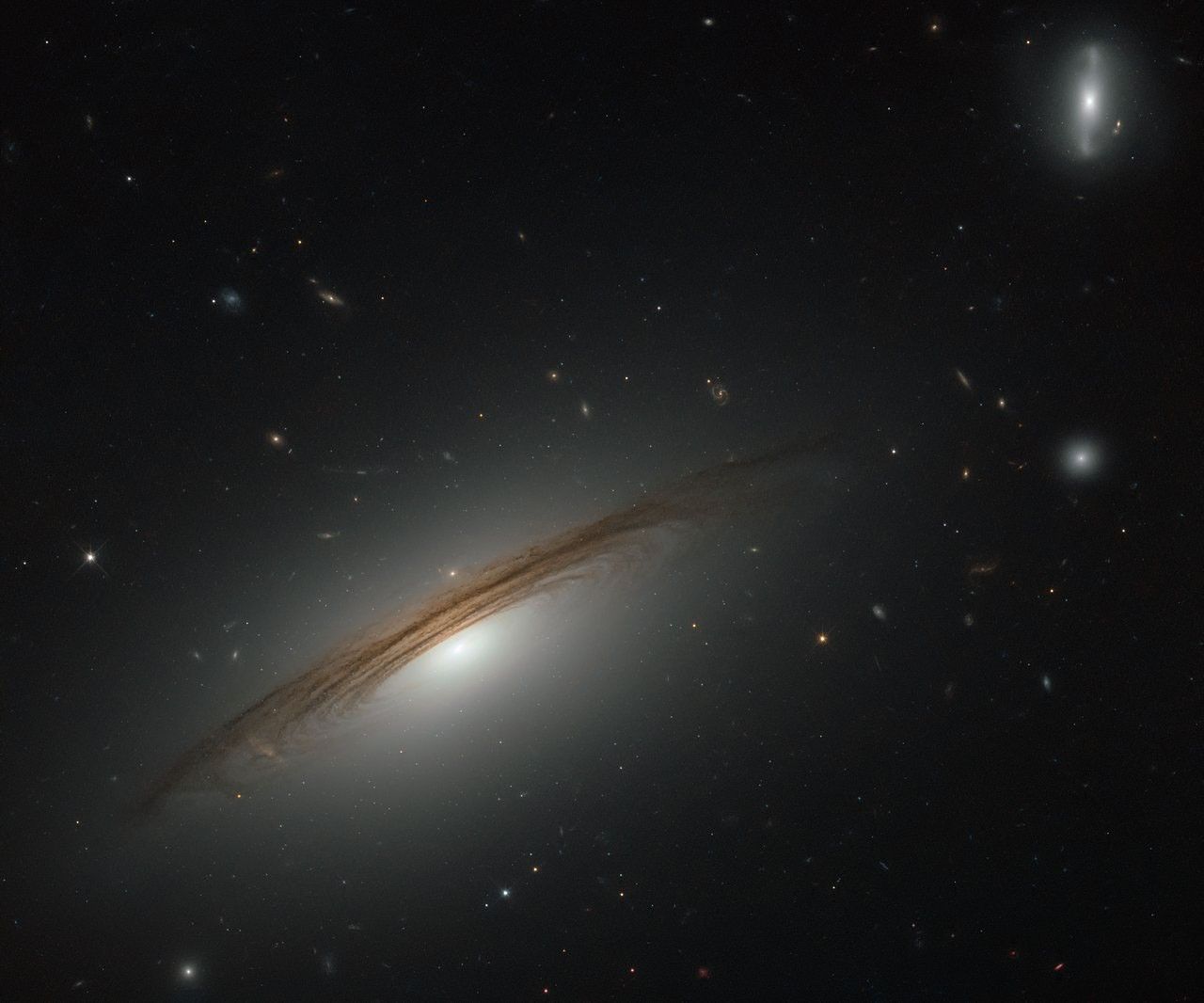
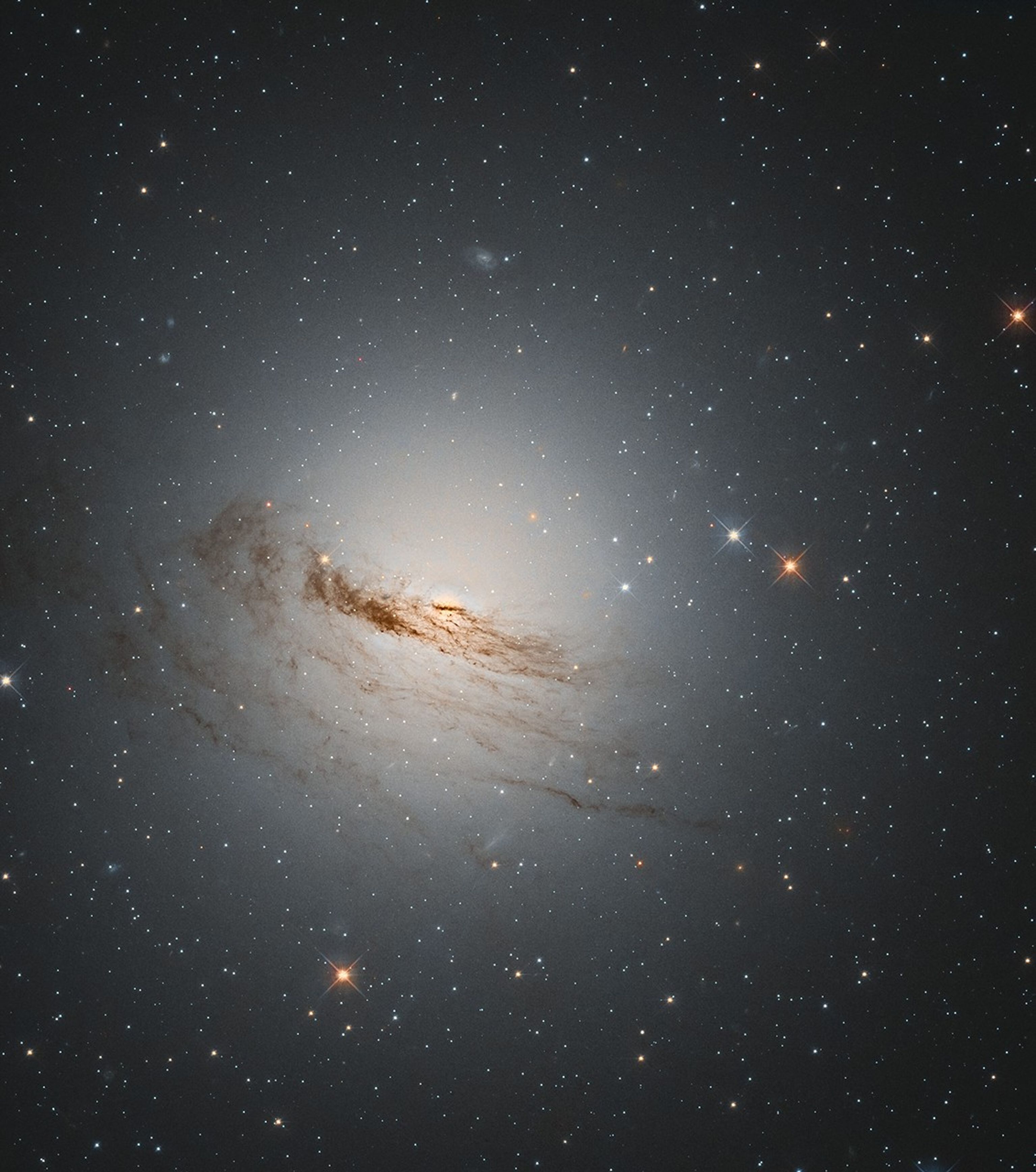
A disk-shaped galaxy. It glows brightly at the center and shines a faint white light all around it. The disk is made up of tightly-packed rings of dust, some darker and some lighter. Wide, long lanes of dark reddish dust cross the galaxy in front of its edge, blocking out some of its light; the long strands twist and break apart at each side. A couple of nearby stars and distant galaxies are also visible on the black background.
This Hubble image features the striking lenticular galaxy NGC 7722.
Credits:
ESA/Hubble & NASA, R. J. Foley (UC Santa Cruz), Dark Energy Survey / DOE / FNAL / DECam / CTIO / NOIRLab / NSF / AURA; Acknowledgment: Mehmet Yüksek

This NASA/ESA Hubble Space Telescope image features an uncommon galaxy with a striking appearance. NGC 7722 is a lenticular galaxy located about 187 million light-years away in the constellation Pegasus.

A lenticular, meaning “lens-shaped,” galaxy is a type whose classification sits between more familiar spiral galaxies and elliptical galaxies. It is also less common than spirals and ellipticals — partly because these galaxies have a somewhat ambiguous appearance, making it hard to determine if it is a spiral, an elliptical, or something in between. Many of the known lenticular galaxies sport features of both spiral and elliptical. In this case, NGC 7722 lacks the defined arms of a spiral galaxy, while it has an extended, glowing halo and a bright bulge in its center like an elliptical galaxy. Unlike elliptical galaxies, it has a visible disk — concentric rings swirl around its bright nucleus. Its most prominent feature, however, is undoubtedly the long lanes of dark red dust coiling around the outer disk and halo.

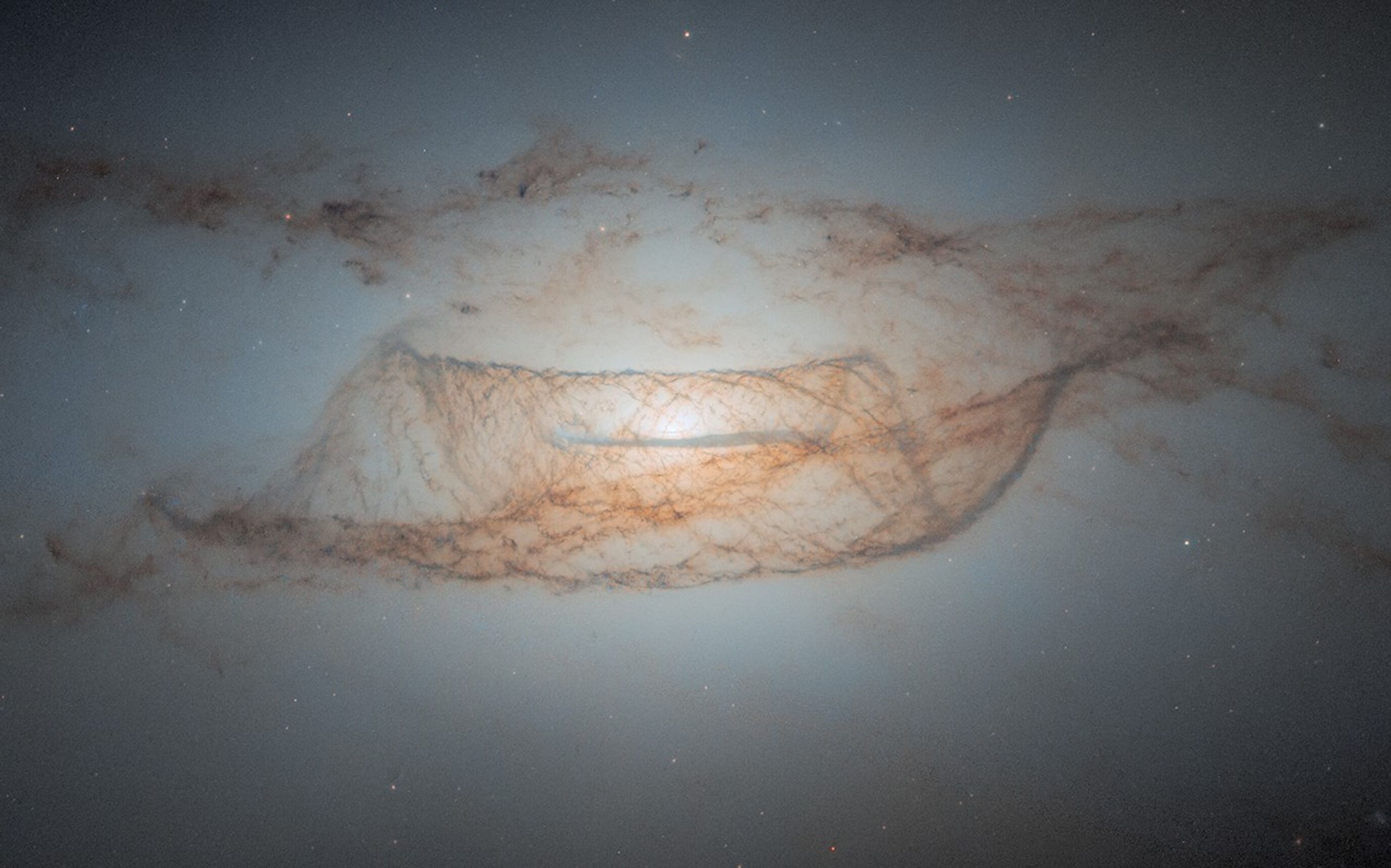
A disk-shaped galaxy. It glows brightly at the center and shines a faint white light all around it. The disk is made up of tightly-packed rings of dust, some darker and some lighter. Wide, long lanes of dark reddish dust cross the galaxy in front of its edge, blocking out some of its light; the long strands twist and break apart at each side. A couple of nearby stars and distant galaxies are also visible on the black background.
This NASA/ESA Hubble Space Telescope image of NGC 7722, a lenticular galaxy located about 187 million light-years away, features concentric rings of dust and gas that appear to swirl around its bright nucleus.
ESA/Hubble & NASA, R. J. Foley (UC Santa Cruz), Dark Energy Survey/DOE/FNAL/DECam/CTIO/NOIRLab/NSF/AURA; Acknowledgment: Mehmet Yüksek

This new Hubble image, the sharpest taken of NGC 7722, brings the galaxy’s impressive dust lanes into sharp focus. Bands of dust like this are not uncommon in lenticular galaxies, and they stand out against the broad, smooth halo of light that typically surrounds lenticulars. Astronomers think NGC 7722’s distinctive dust lanes are the result of a past merger with another galaxy, similar to other lenticular galaxies. Researchers do not fully understand how lenticular galaxies form, but they think mergers and other gravitational interactions play an important part in reshaping galaxies and exhausting their supplies of gas while bringing new dust.

While it doesn’t host as many new, young stars as a spiral galaxy, there’s still activity in NGC 7722: in 2020 it was host to the explosion of a star that astronomers detected from Earth. SN 2020SSF was a Type Ia supernova, an event that occurs when a white dwarf star in a binary system siphons enough mass away from its companion star that it grows unstable and explodes. These explosions output a remarkably consistent level of light: by measuring how bright they appear from Earth and comparing that to how bright they intrinsically are, astronomers can tell how far away they must be. Type Ia supernovae are one of the best ways to measure distances to galaxies, so understanding exactly how they work is of great importance for astronomy.

Taken with Hubble’s Wide Field Camera 3, this Hubble image was obtained as part of an observing program (#16691, PI: R. J. Foley) that followed up on recent supernovae. SN 2020SSF, is not visible in this image. Researchers purposefully observed NGC 7722 two years after the supernova faded to witness the supernova’s aftereffects and examine its surroundings, which can only be accomplished once the intense light of the explosion is gone. With Hubble’s clear vision, astronomers can search for radioactive material created by the supernova, catalog its neighbors to help determine the original star’s age, and look for the companion star it left behind — all from almost 200 million light-years away.

Text Credit: European Space Agency (ESA)

Media Contact:

Claire Andreoli
NASA’s Goddard Space Flight CenterGreenbelt, MD
claire.andreoli@nasa.gov

Galaxies are the visible foundation of the universe; each one a collection of stars, planets, gas, dust, and dark matter held together by gravity. Hubble’s observations give us insight into how galaxies form, grow, and evolve through time.
NASA’s Goddard Space Flight Center; Lead Producer: Miranda Chabot; Lead Writer: Andrea Gianopoulos

Powered by WPeMatico

Get The Details…

Extreme January Cold

Extreme January Cold

January 21-29, 2026

In the wake of a winter storm that blanketed numerous U.S. states with snow and ice, unusually low temperatures continued to grip a large swath of the nation east of the Rockies in late January 2026. The cold spell was notable for severity, longevity, and geographic scope.

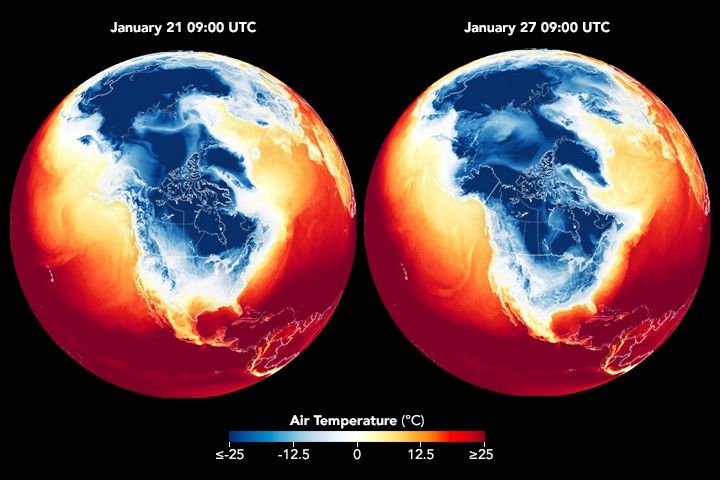
This animation depicts surface air temperatures across part of the Northern Hemisphere, including North America, from January 21 to 29. It combines satellite observations with temperatures calculated by a version of the Goddard Earth Observing System (GEOS) global model, which uses mathematical equations to simulate physical processes in the atmosphere.

Dark blue areas indicate the lowest surface air temperatures. The brief pulses show daily warming and cooling, while the broader pattern reveals cold air spreading south and east and lingering through much of the week.

According to the National Weather Service (NWS), the surge of Arctic air pushed deep into the United States on January 22, ushering in a period of low temperatures and harsh wind chills. The cold coincided with a jet of moisture to produce significant accumulations of snow and ice spanning from the U.S. Southwest to New England.

In the days after the storm, dangerously cold weather persisted. In the Midwest, for example, the temperature in Alliance, Nebraska, dropped to minus 26 degrees Fahrenheit (minus 32 degrees Celsius) on January 24, the lowest daily minimum temperature for that date on record, according to preliminary NWS reports. In the South, an extreme cold warning was in effect in south-central Texas overnight on January 26, with temperatures dipping into the single digits. By January 27, parts of the South had started to see slight warming, but wind chills down to -20°F (-29°C) continued across the Midwest and Northeast.

Two maps compare overnight cold air on January 21 and January 27. The January 27 map shows cold air (blue) covering more of the United States, especially in the South, Midwest, and East.

According to meteorologists, the cold snap was caused by frigid air from the Canadian and Siberian Arctic funneling into eastern North America, then being driven south as high-pressure systems forced the jet stream to dip. Forecasts called for another blast of Arctic air late in the week, with below-normal temperatures persisting into early February.

The lingering cold has posed extra challenges to those who remained without power or heat after the storm and for those working to clean up, clear streets, and restore power and transportation services.

NASA’s Disasters Response Coordination System has been activated to support agencies responding to the winter storm. The team will be posting maps and data products on its open-access mapping portal as new information becomes available.

NASA Earth Observatory images and animation by Lauren Dauphin, using GEOS data from the Global Modeling and Assimilation Office at NASA GSFC. Story by Kathryn Hansen.

References & Resources

You may also be interested in:

Stay up-to-date with the latest content from NASA as we explore the universe and discover more about our home planet.

Winter Grips the Michigan Mitten

3 min read

A blanket of snow spanned Michigan and much of the Great Lakes region following a potent cold snap.

Article

Snow Buries the U.S. Interior and East

2 min read

Satellites observed a frozen landscape across much of the country after a massive winter storm.

Article

Summer Heat Lingers in the West

3 min read

A prolonged high-pressure weather system brought unusually warm September temperatures to British Columbia and the Pacific Northwest.

Article

Powered by WPeMatico

Get The Details…