Reaching Top Speed in the Dolomites

Reaching Top Speed in the Dolomites

A 3D map shows the town of Cortina d’Ampezzo, Italy, in the foreground with tall peaks in the Dolomites rising behind it. A label indicates the location of the Olympic ski run on a mountain called Tofana di Mezzo. Snow covers the ground in most of the scene.

Nestled among high snowy peaks in northern Italy, Cortina d’Ampezzo is hosting athletes in the 2026 Winter Olympics and Paralympics who are skiing, sliding, and curling toward a spot on the podium. The scenic mountain town is the co-host, along with Milan, of the international sporting extravaganza.

Cortina sits within the Dolomites, a mountain range in the northern Italian Alps known for its sheer cliffs, rock pinnacles, tall peaks, and deep, narrow valleys. In this three-dimensional oblique map, several peaks over 3,000 meters (10,000 feet) tall rise above the town. To create the map, an image acquired with the OLI (Operational Land Imager) on Landsat 8 on January 27, 2026, was overlaid on a digital elevation model.

Tofana di Mezzo, the third-highest peak in the Dolomites at 3,244 meters (10,643 feet), is the site of the Tofane Alpine Skiing Centre, the venue for the Olympic women’s Alpine skiing and all Paralympic skiing events. Competitors on the Olympia delle Tofane course descend 750 meters (2,460 feet), reaching high speeds and catching big air along the way. A highlight is the steep, 33-degree drop through the Tofana Schuss, a chute bounded by tall rock walls near the top of the course.

More adrenaline-filled races are taking place at the Cortina Sliding Centre, the venue for bobsled, luge, and skeleton events. Athletes are competing on a rebuilt version of the track used in the 1956 Olympics, hosted by Cortina. And curlers, trading speed for strategy, are going for gold at the Cortina Curling Olympic Stadium, built for the 1956 Olympic figure skating competition and opening ceremony. (There is indeed a theme: almost all of the 2026 Games are being held in existing or refurbished facilities.)




Natural Color
False Color

Cortina d’Ampezzo, Italy, co-host city of the 2026 Winter Olympics, sits in a valley surrounded by tall mountains in the Dolomites. Snow covers the ground in most of the scene.
NASA Earth Observatory

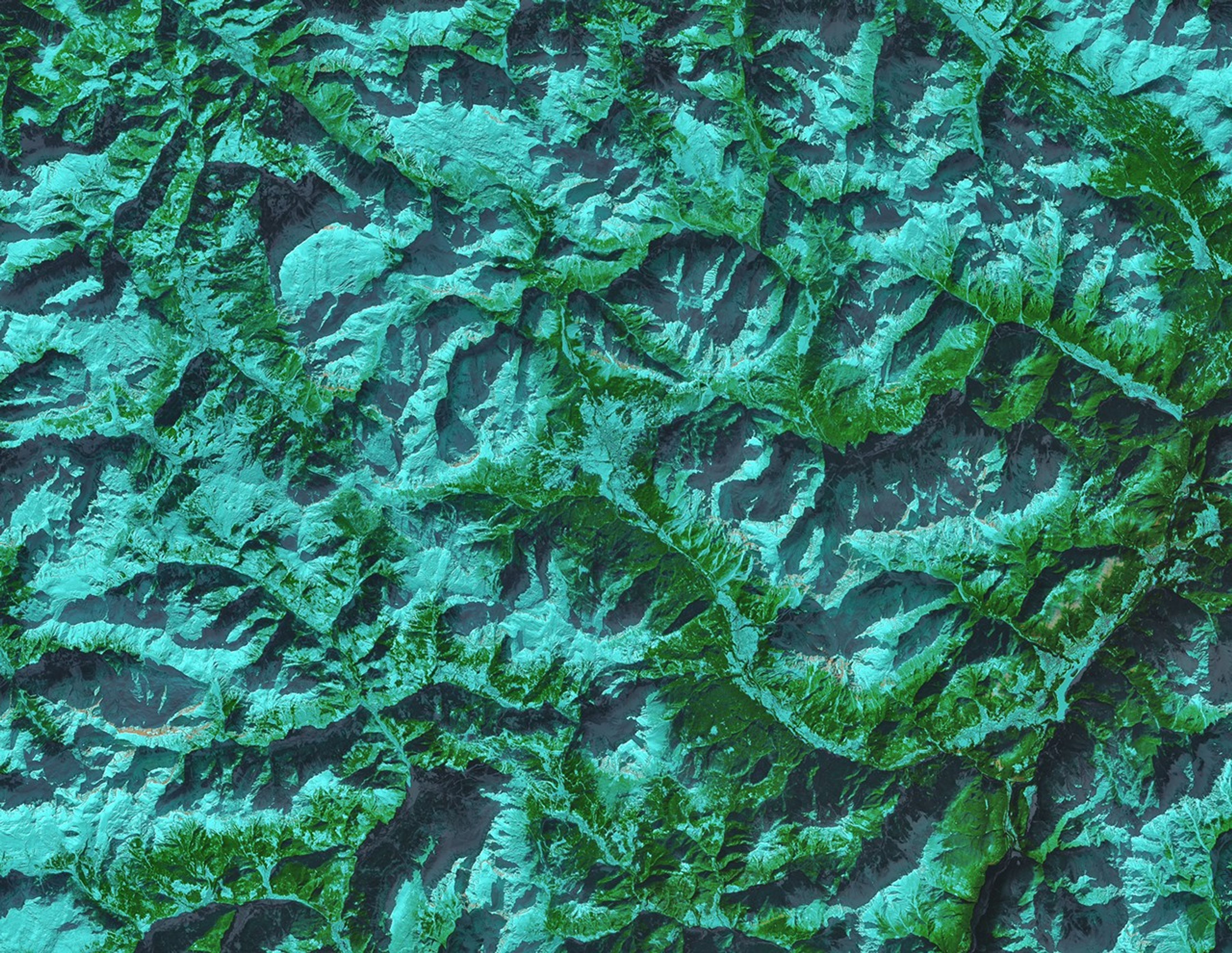
A false-color satellite image shows the town of Cortina d’Ampezzo, Italy, surrounded by tall mountains in the Dolomites. Snow appears light blue, forested areas are green, and bare cliff bands and light brown.
NASA Earth Observatory

Cortina d’Ampezzo, Italy, co-host city of the 2026 Winter Olympics, sits in a valley surrounded by tall mountains in the Dolomites. Snow covers the ground in most of the scene.
NASA Earth Observatory
A false-color satellite image shows the town of Cortina d’Ampezzo, Italy, surrounded by tall mountains in the Dolomites. Snow appears light blue, forested areas are green, and bare cliff bands and light brown.
NASA Earth Observatory

Natural Color

False Color

January 27, 2026


These Landsat images show Cortina and its surrounding alpine terrain in natural color and false color. The band combination (6-5-4) highlights areas of snow (light blue), while steep, mostly snow-free cliffs stand out as areas of light brown, and forests appear green.

Locations across the Italian Alps join Cortina in hosting the snow sports, which also include cross-country skiing, ski jumping, ski mountaineering, and snowboarding. As with many past Olympics, the 2026 Winter Games are manufacturing snow at the various venues to ensure consistent conditions. New high-elevation reservoirs were created to store water for snowmaking, according to reports. Automated systems are being used to limit snow production to the minimum amount required, and most snowmaking operations are being powered by renewable energy, the International Olympic Committee said.

Snowfall in northern Italy was below average at the start of the season, but a storm on February 3—three days before the opening ceremony—eased some of the need for snowmaking. Still, snow coverage and the ability of Winter Olympic venues to maintain consistent conditions are areas of concern as global temperatures rise. Researchers studying the issue have suggested several ways to address this, including holding competitions at higher elevations, choosing regional or multi-country hosts, and shifting the Paralympic Games from early March to January or February when it’s typically colder and snowier.

NASA Earth Observatory images by Michala Garrison, using Landsat data from the U.S. Geological Survey and elevation data from TINITALY. Story by Lindsey Doermann.

References & Resources

You may also be interested in:

Stay up-to-date with the latest content from NASA as we explore the universe and discover more about our home planet.

Milano Cortina 2026

4 min read

About 2,900 Olympic athletes have converged on northern Italy to sort out who is the GOAT—or perhaps the stoat.

Article

The West Faces Snow Drought

4 min read

Very wet—but very warm—weather in the western U.S. has left many mountainous regions looking at substantial snowpack deficits.
Article

Snow Buries the U.S. Interior and East

2 min read

Satellites observed a frozen landscape across much of the country after a massive winter storm.

Article

Powered by WPeMatico

Get The Details…

NASA’s SpaceX Crew-12 Proceeds Toward Launch

NASA’s SpaceX Crew-12 Proceeds Toward Launch

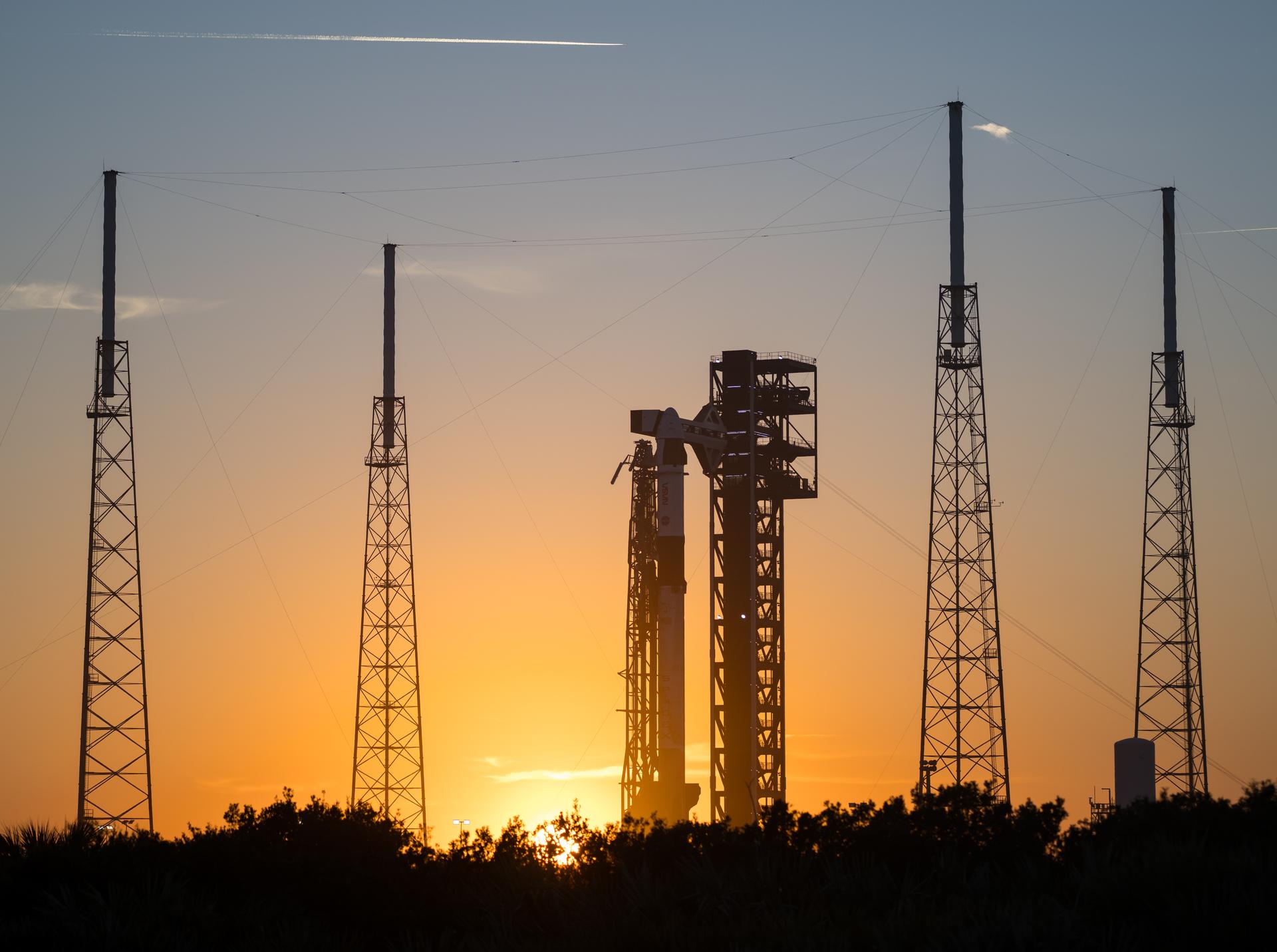
Image shows the sunset while a SpaceX rocket and SpaceX Dragon spacecraft stand vertical for NASA's SpaceX Crew-12 mission at Space Launch Complex 40 at Cape Canaveral Space Force Station in Florida on Tuesday, Feb. 10, 2026. Photo credit: NASA/Aubrey Gemignani
A SpaceX Falcon 9 rocket with the company’s Dragon spacecraft on top is seen on the launch pad at sunset at Space Launch Complex 40 as preparations continue for the Crew-12 mission, Tuesday, Feb. 10, 2026, at Cape Canaveral Space Force Station in Florida.
NASA/Aubrey Gemignani

NASA and SpaceX teams completed the final major review – the Launch Readiness Review – for the agency’s Crew-12 mission to the International Space Station, with mission leaders polling “go” to proceed into the launch countdown pending weather along the ascent corridor. Liftoff remains targeted for no earlier than 5:15 a.m. EST Friday, Feb. 13, aboard a SpaceX Dragon spacecraft and Falcon 9 rocket from Space Launch Complex 40 at Cape Canaveral Space Force Station in Florida. Weather at the launch site is 85% favorable, with cumulus clouds being the main concern. Teams continue to monitor elevated winds along the Atlantic Coast in Crew-12’s flight path which prompted earlier shits in the launch date from Feb. 11.

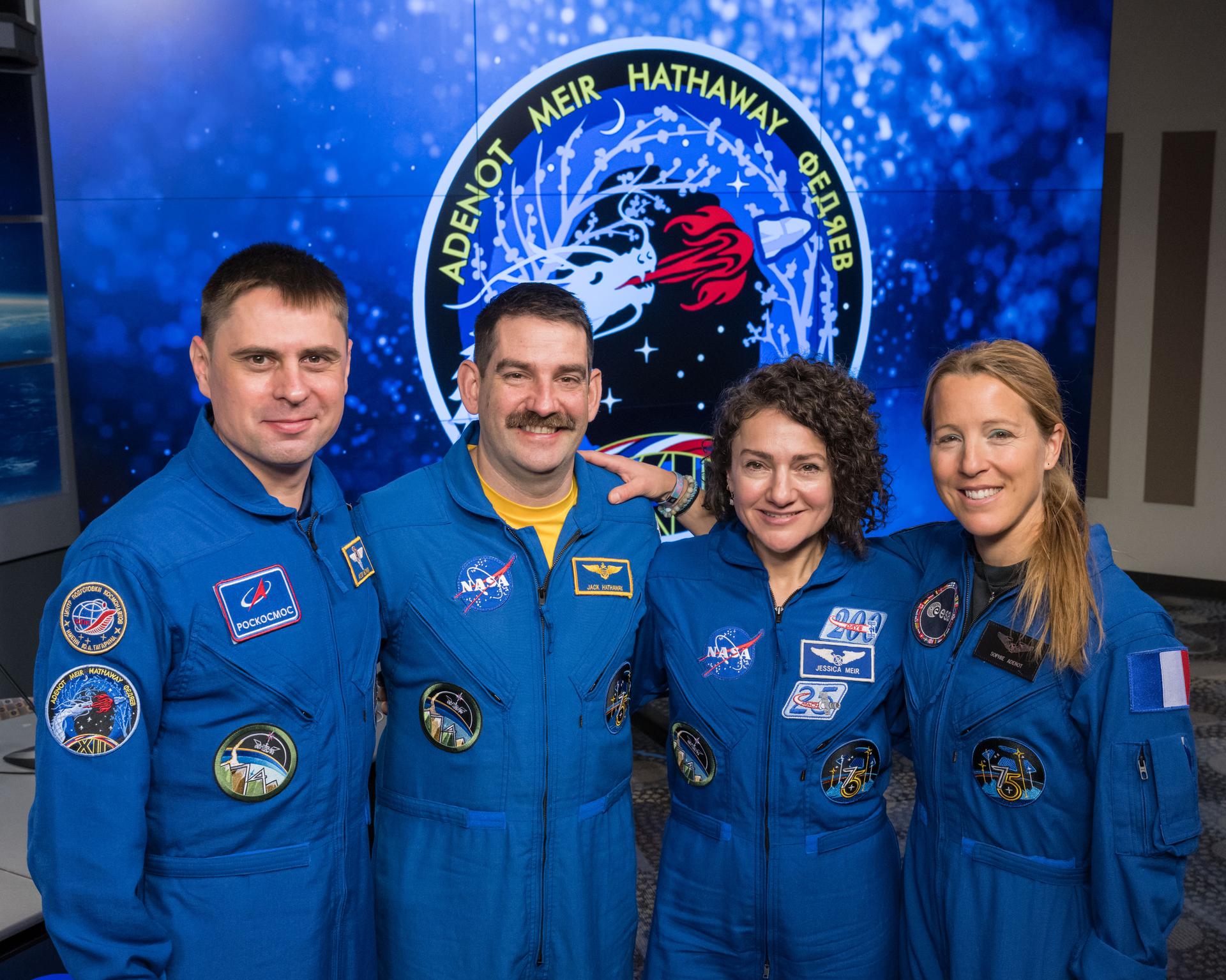
NASA astronauts Jessica Meir, commander, and Jack Hathaway, pilot, ESA (European Space Agency) astronaut Sophie Adenot and Roscosmos cosmonaut Andrey Fedyaev will fly aboard the Dragon to begin an eight-month crew rotation mission aboard the orbiting laboratory. The four remain in quarantine at NASA’s Kennedy Space Center in Florida since arriving on Feb. 6 at the launch site.

Crew-12 will be SpaceX’s 12th crew rotational flight to the space station and 13th crewed mission as part of NASA’s Commercial Crew Program.

Watch agency launch coverage starting at 3:15 a.m., on NASA+, Amazon Prime, and the agency’s YouTube channel. Learn how to watch NASA content through a variety of online platforms, including social media.

For a Feb. 13 launch, Crew-12 would arrive at the space station at approximately 3:15 p.m. Saturday, Feb. 14.

Blog coverage of the Crew-12 launch will begin at 1:15 a.m. Feb. 11, and the live broadcast coverage begins at 4 a.m. on NASA+NetflixAmazon Prime, and more. Learn how to watch NASA content through a variety of platforms, including social media.

Powered by WPeMatico
Get The Details…

Elyna Niles-Carnes

NASA Completes First Flight of Laminar Flow Scaled Wing Design

NASA Completes First Flight of Laminar Flow Scaled Wing Design

3 min read

Preparations for Next Moonwalk Simulations Underway (and Underwater)

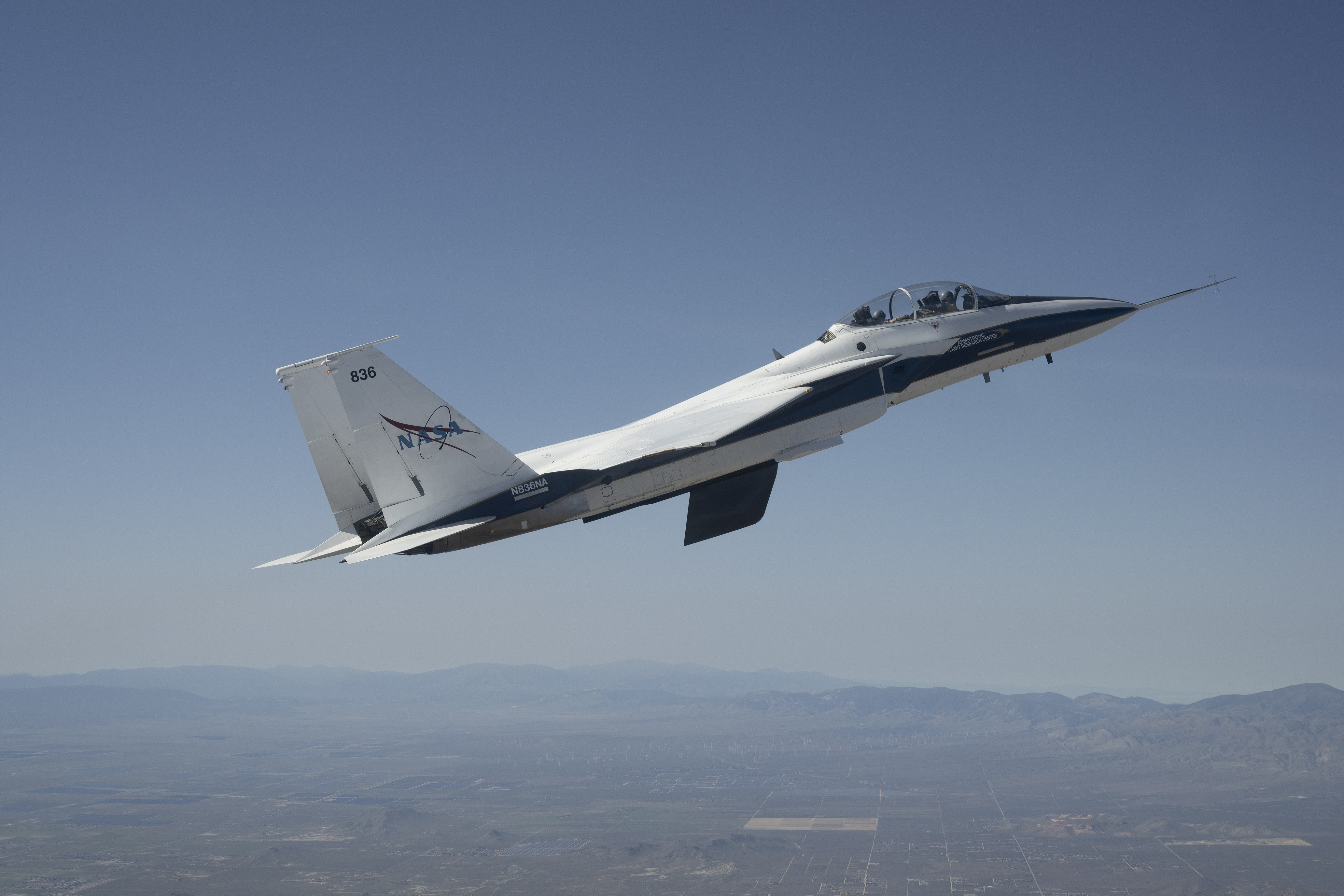
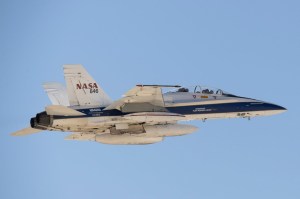
A white and blue NASA F-15 research jet climbs to altitude with an approximately 3-foot experimental wing design mounted beneath its fuselage. Viewed in profile against a blue sky with mountains in the distance, the test article resembles a ventral fin below the aircraft.
NASA’s Crossflow Attenuated Natural Laminar Flow (CATNLF) scale-model wing flies for the first time on a NASA F-15 research jet during a test flight from NASA’s Armstrong Flight Research Center in Edwards, California. The 75-minute flight confirmed the aircraft could maneuver safely with the approximately 3-foot-tall test article mounted beneath it. NASA will continue flight tests to collect data that validates the CATNLF design and its potential to improve laminar flow, reducing drag and lowering fuel costs for future commercial aircraft.
NASA/Carla Thomas

NASA completed the first flight test of a scale-model wing designed to improve laminar flow, reducing drag and lowering fuel costs for future commercial aircraft. 

The flight took place Jan. 29 at NASA’s Armstrong Flight Research Center in Edwards, California, using one of the agency’s F-15B research jets. The NASA-designed, 40-inch Crossflow Attenuated Natural Laminar Flow (CATNLF) wing model was attached to the aircraft’s underside vertically, like a fin. 

The flight lasted about 75 minutes, during which the team ensured the aircraft could maneuver safely in flight with the additional wing model. 

“It was incredible to see CATNLF fly after all of the hard work the team has put into preparing,” said Michelle Banchy, research principal investigator for CATNLF. “Finally seeing that F-15 take off and get CATNLF into the air made all that hard work worth it.” 

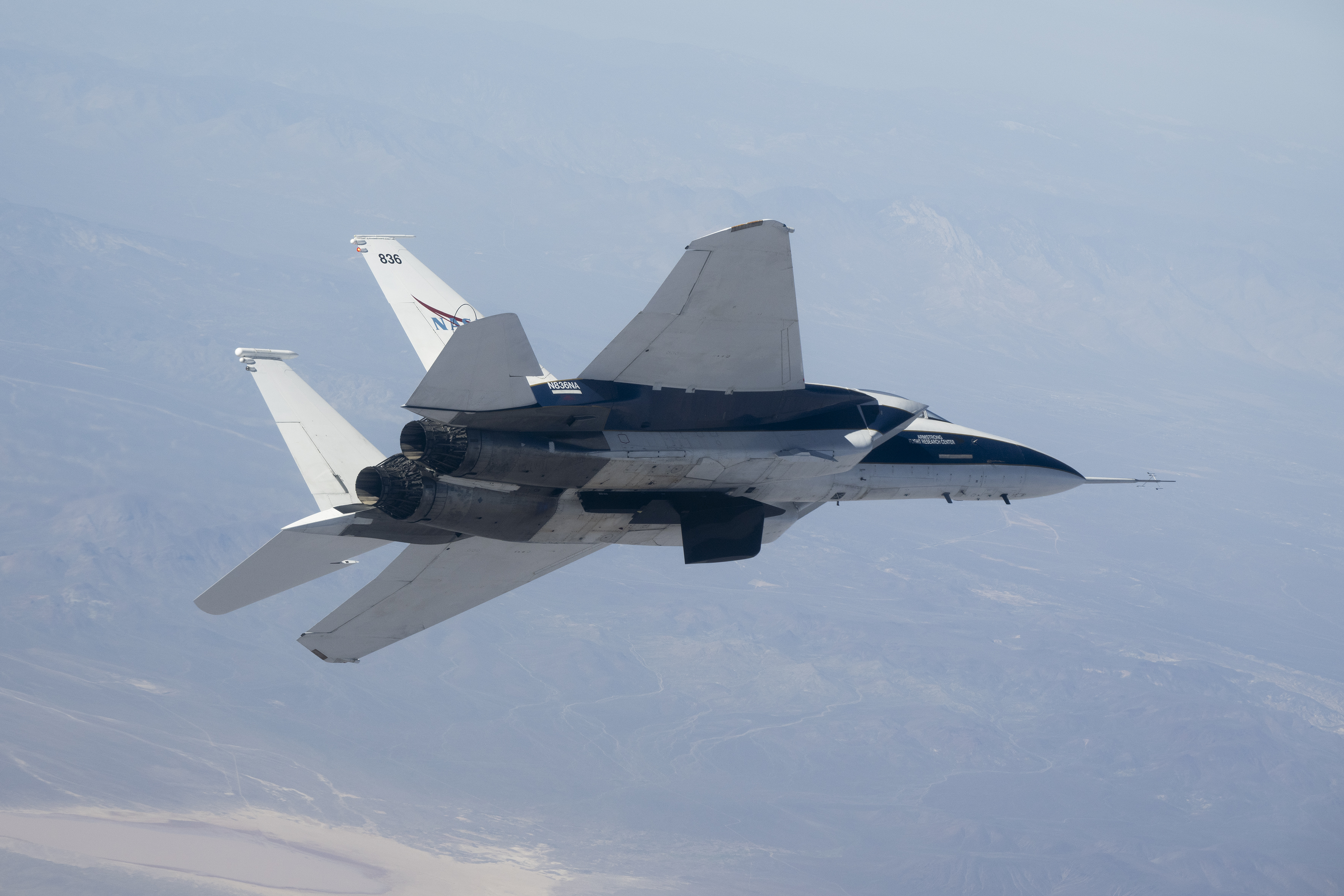
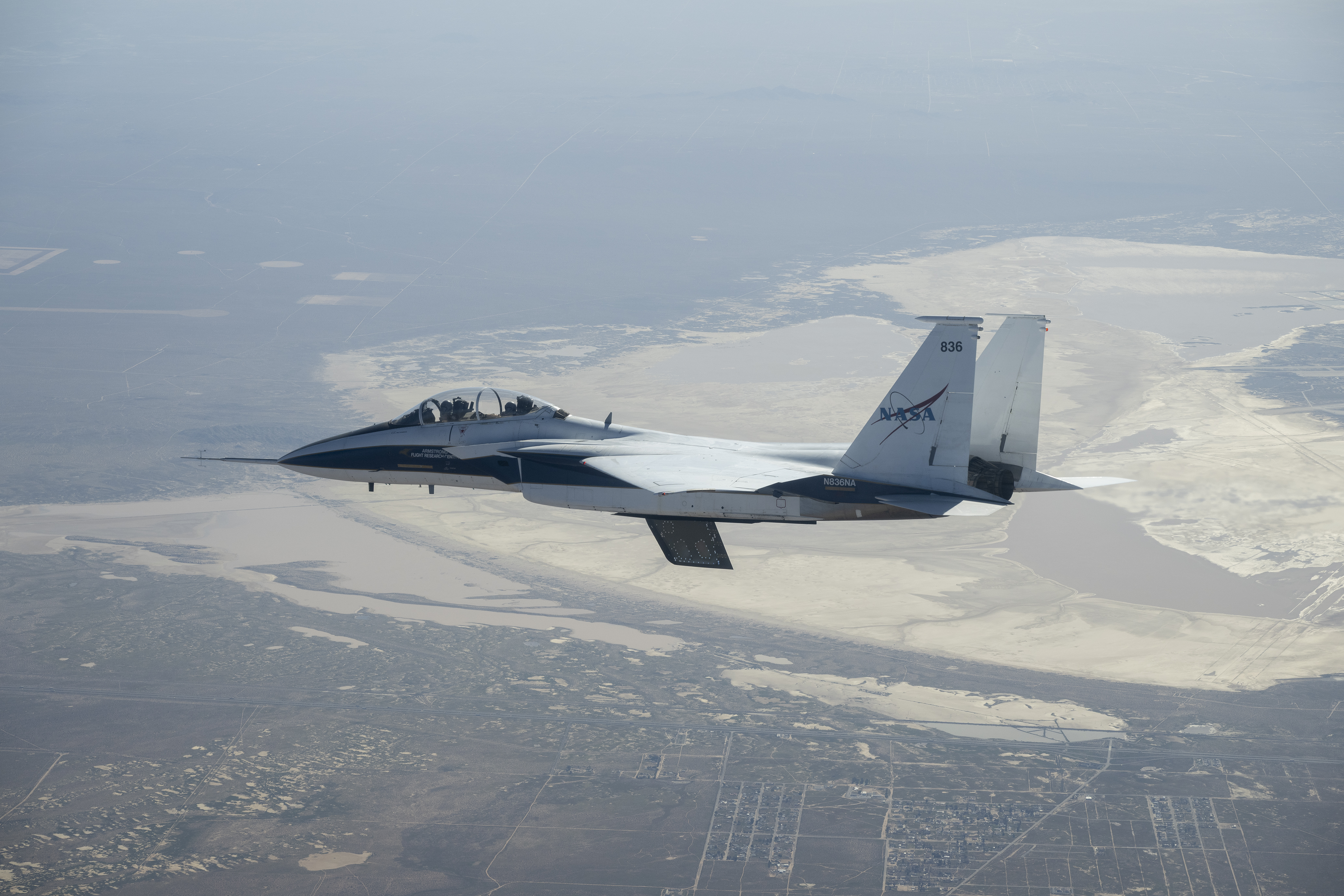
A NASA F-15 research jet flies over the California desert with an experimental wing design attached beneath its fuselage, shown in profile above a dry lakebed and a nearby city during the first flight of the experimental wing.
NASA’s Crossflow Attenuated Natural Laminar Flow (CATNLF) scale-model wing flies on a NASA F-15 research jet during a test flight from NASA’s Armstrong Flight Research Center in Edwards, California. The CATNLF technology is designed to maintain smooth airflow, known as laminar flow. NASA will continue flight tests to collect data that validates the CATNLF design and its potential to improve laminar flow, reducing drag and lowering fuel costs for future commercial aircraft.
NASA/Carla Thomas

NASA designed the CATNLF technology to improve the smooth flow of air, known as laminar flow, over swept-back wings, used in everything from airliners to fighter jets, by reducing disruptions that lead to drag. Maintaining laminar flow could help lower fuel burn and costs. 

This flight was the first of up to 15 planned for the CATNLF series, which will test the design across a range of speeds, altitudes, and flight conditions. 

“First flight was primarily focused on envelope expansion,” Banchy said. “We needed to ensure safe dynamic behavior of the wing model during flight before we can proceed to research maneuvers.” 

During the flight, the team performed several maneuvers, such as turns, steady holds, and gentle pitch changes, at altitudes ranging from about 20,000 to nearly 34,000 feet, providing the first look at the aerodynamic characteristics of the wing model and confirming that it is working as expected. 

A white and blue NASA F-15 research jet climbs to altitude with an approximately 3-foot experimental wing design mounted beneath its fuselage. Viewed in profile against a blue sky with mountains in the distance, the test article resembles a ventral fin below the aircraft.
NASA’s Crossflow Attenuated Natural Laminar Flow (CATNLF) scale-model wing flies for the first time on a NASA F-15 research jet during a test flight from NASA’s Armstrong Flight Research Center in Edwards, California. The 75-minute flight confirmed the aircraft could maneuver safely with the approximately 3-foot-tall test article mounted beneath it. NASA will continue flight tests to collect data that validates the CATNLF design and its potential to improve laminar flow, reducing drag and lowering fuel costs for future commercial aircraft.
NASA/Carla Thomas

The team measured laminar flow using several tools, including an infrared camera mounted on the aircraft and aimed at the wing model to collect thermal data during flight tests. They will use this data to confirm key aspects of the design and evaluate how effectively the model maintains smooth airflow. 

“CATNLF technology opens the door to a practical approach to getting laminar flow on large, swept components, such as a wing or tail, which offer the greatest fuel burn reduction potential,” Banchy said.  

Early results showed airflow over the aircraft closely matched predictions made using computer models, she said. 

The first flight builds on earlier work accomplished through computer modeling, wind tunnel testing, ground tests, and high-speed taxi tests. NASA plans to continue flight tests to gather research data that will help further validate the CATNLF test article and its potential for future commercial aircraft designs. 

The CATNLF testing is a collaboration under NASA’s Flight Demonstrations and Capabilities project and Subsonic Vehicle Technologies and Tools project. The CATNLF concept has been supported through the combined efforts of NASA’s Advanced Air Vehicles Program and Integrated Aviation Systems Program under the agency’s Aeronautics Research Mission Directorate.

Powered by WPeMatico
Get The Details…
Dede Dinius

Crew-12 Targets Friday Launch as Expedition 74 Keeps Up Tech, Psych Research

Crew-12 Targets Friday Launch as Expedition 74 Keeps Up Tech, Psych Research

The four crew members representing NASA's SpaceX Crew-12 mission to the International Space Station pose for a portrait at the Johnson Space Center in Houston, Texas. From left are, Roscosmos cosmonaut and Mission Specialist Andrey Fedyaev, NASA astronauts Jack Hathaway and Jessica Meir, Crew-12 Pilot and Commander respectively, and ESA (European Space Agency) astronaut and Mission Specialist Sophie Adenot.
The four crew members representing NASA’s SpaceX Crew-12 mission to the International Space Station are (from left) Roscosmos cosmonaut and Mission Specialist Andrey Fedyaev, NASA astronauts Jack Hathaway and Jessica Meir, Crew-12 Pilot and Commander respectively, and ESA (European Space Agency) astronaut and Mission Specialist Sophie Adenot.
NASA/James Blair

NASA and SpaceX managers continue targeting no earlier than 5:15 a.m. EST on Friday, Feb. 13, for the launch of Crew-12 aboard a SpaceX Dragon to the International Space Station. NASA astronauts Jessica Meir and Jack Hathaway, ESA (European Space Agency) astronaut Sophie Adenot, and Roscosmos cosmonaut Andrey Fedyaev remain in Florida ahead of a liftoff from Cape Canaveral Space Force Station.

Expedition 74 Flight Engineer Chris Williams of NASA has been preparing the orbital outpost for the arrival of Crew-12 expected at 3:15 p.m. on Saturday, Feb. 14. Williams spent several days staging a variety of lab hardware, such as tablet computers, the soon to arrive crew will use during their mission, as well as required emergency gear to be transferred inside Dragon shortly after the quartet’s arrival. Williams will be on duty Saturday monitoring Dragon’s automated approach and rendezvous from the cupola.

NASA’s Crew-12 launch coverage begins at 3:15 a.m. on Friday with docking coverage starting at 1:15 p.m. on Saturday on NASA+Amazon Prime, and the agency’s YouTube channel. Learn how to watch NASA content through a variety of online platforms, including social media.

Meanwhile on Wednesday, the space station trio kept up its ongoing microgravity research duties exploring spacecraft fuel physics and crew psychology. The NASA astronaut and two Roscosmos cosmonauts also focused on cargo transfers and standard lab maintenance.

Williams began Wednesday photographing the configuration of scientific hardware attached to the outside of the Cygnus XL cargo spacecraft that will demonstrate a new electronic propulsion technology. Next, he continued stowing experiments and lab gear inside a SpaceX Dragon spacecraft for its upcoming return to Earth and retrieval.

During the afternoon, the first-time space flyer inspected lithium-ion batteries for continued use or disposal. Afterward, he wrapped up his shift injecting gas into research hardware installed inside the Destiny laboratory module’s Microgravity Science Glovebox. The physics experiment is testing ways to control a spacecraft’s fuel tank pressure due to cryogenic fuel propellants evaporating from the surrounding heat.

Station Commander Sergey Kud-Sverchkov and Flight Engineer Sergei Mikaev joined each other at the beginning of their shift and took a test with increasing complexity to help researchers understand and improve crew communications, operations, and training. Kud-Sverchkov then explored how living in space affects stress, cognitive performance, and immune function. He ended his shift inventorying orbital plumbing components and synchronizing station cameras to Greenwich Mean Time. Mikaev tested and configured the operation of the physics research hardware and power supply systems then photographed and inspected the Zvezda service module’s windows.

Learn more about station activities by following the space station blog, @space_station on X, as well as the ISS Facebook and ISS Instagram accounts.

Get the latest from NASA delivered every week. Subscribe here.

Powered by WPeMatico
Get The Details…

Mark A. Garcia

I Am Artemis: Jesse Berdis

I Am Artemis: Jesse Berdis

3 Min Read

I Am Artemis: Jesse Berdis

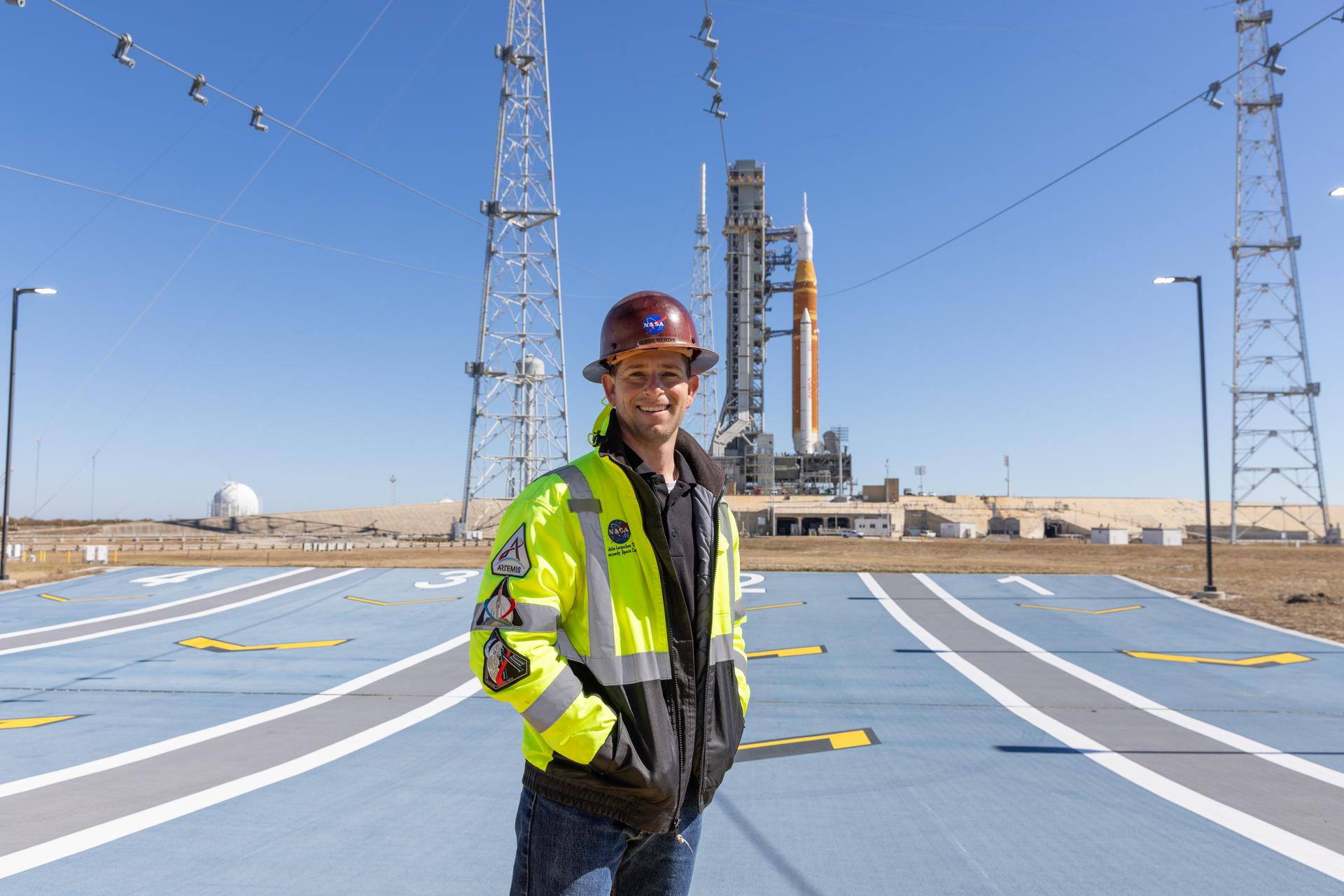
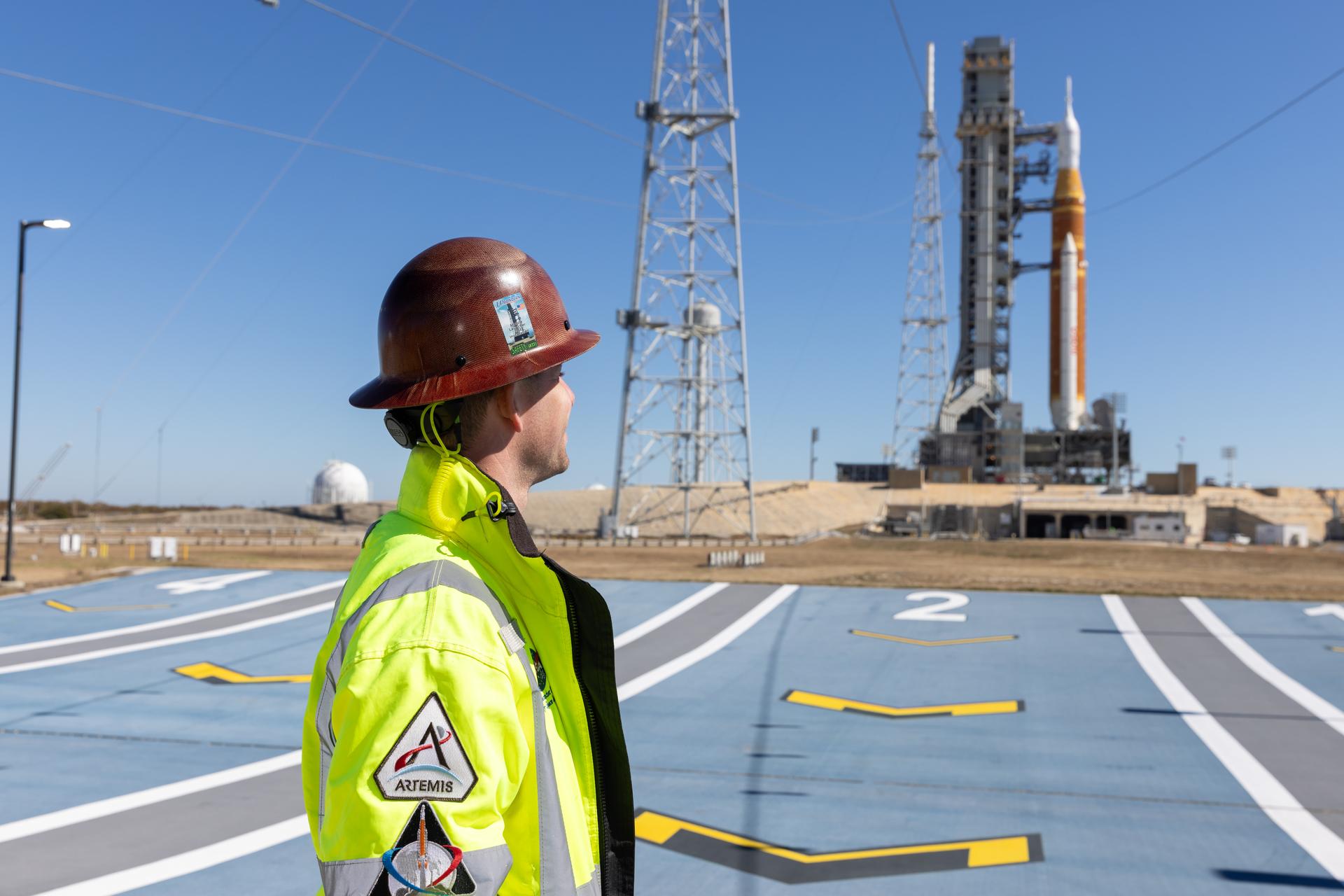
Image shows Jesse Berdis standing standing at the pad of Launch Complex 39B at NASA's Kennedy Space Center in Florida. Behind him are clear blue skies and NASA's SLS (Space Launch System) rocket and Orion spacecraft for the Artemis II mission. Photo credit: Kim Shiflett

Listen to this audio excerpt from Jesse Berdis, Artemis II mobile launcher 1 deputy project manager:

0:00 / 0:00

Jesse Berdis’s dream of becoming a structural engineer began with visions of skyscrapers rising above the Dallas and Oklahoma skyline. Today, that dream has soared beyond city limits, reaching towering heights at the agency’s Kennedy Space Center in Florida.

Berdis, the deputy project manager for mobile launcher 1 for the agency’s Artemis II mission, had a path to NASA which was anything but planned. While attending an engineering leadership conference in Orlando, he left a copy of his resume with NASA recruiters. Four weeks later, that simple gesture turned into a life-changing opportunity: a role at Kennedy as a launch infrastructure engineer with the Exploration Ground Systems Program, working on Artemis I, the uncrewed test flight of SLS and Orion.

Anyone I talk to, that’s what’s on my mind, getting ready for the Artemis campaign. It can go from technical issues we’re solving to the passion we have for launching the crew and taking the next step in humanity of going back to the Moon.

Jesse Berdis

Jesse Berdis

Artemis II mobile launcher 1 deputy project manager

The mobile launcher serves as a backbone to the SLS (Space Launch System) rocket and Orion spacecraft for the Artemis missions before and during launch. It is designed to support the integration, testing, and checkouts of the rocket and spacecraft, in addition to serving as the structural platform, or as Berdis calls it, “the shoulders, at liftoff.” Standing more than 400 feet tall, the mobile launcher houses the umbilicals that provide power, communications, coolant, fuel, and stabilization prior to launch, as well as access for the Artemis II crew to safely board Orion.

When Berdis first arrived on center, the sight of massive ground systems left an unforgettable impression. To him, these weren’t just structures, they were skyscrapers for space exploration.

Image shows Jesse Berdis standing standing at the pad of Launch Complex 39B at NASA's Kennedy Space Center in Florida. Behind him are clear blue skies and NASA's SLS (Space Launch System) rocket and Orion spacecraft for the Artemis II mission. Photo credit: Kim Shiflett
Jesse Berdis, Artemis II mobile launcher 1 deputy project manager, poses for a photo near the emergency egress system at Launch Complex 39B at NASA’s Kennedy Space Center in Florida on Friday, Feb. 6, 2026. The emergency egress system is an abort system for personnel to climb into four baskets of the mobile launcher to the base of the pad in the unlikely event of an emergency at the launch pad. Mobile launcher 1 supports the integration, testing, and checkouts of the SLS (Space Launch System) rocket and Orion spacecraft for the Artemis II mission.
Photo credit: NASA/Kim Shiflett
NASA/Kim Shiflett

After the historic launch of Artemis I, Berdis and his team turned their focus to an even greater challenge: preparing for Artemis II, NASA’s first crewed Moon mission in more than 50 years.

One of the most critical upgrades for Artemis II is the emergency egress system, an abort system for personnel to use in the unlikely event of an emergency at the launch pad. Located on the 274-foot level of the mobile launcher, four baskets will provide a rapid escape route from the mobile launcher to the base of the pad in case of emergency, using electromagnetic braking technology.

“That is a true feat of humanity: someone putting all of their passion into these systems to make it all come together at T-0.

Jesse Berdis

Jesse Berdis

Artemis II mobile launcher 1 deputy project manager

Berdis recently set his sights on the Artemis human landing system lander ground operations, to develop and maintain an integrated schedule. Under his leadership, the team ensures accuracy of combined schedules, risks, and insights, ensuring the ground operations and human lander development remain in sync.

About the Author

Laura Sasaninejad

Strategic Communications Specialist

Powered by WPeMatico

Get The Details…
Antonia Jaramillo