NASA Careers Take Off with Internships

NASA Careers Take Off with Internships

4 min read

Preparations for Next Moonwalk Simulations Underway (and Underwater)
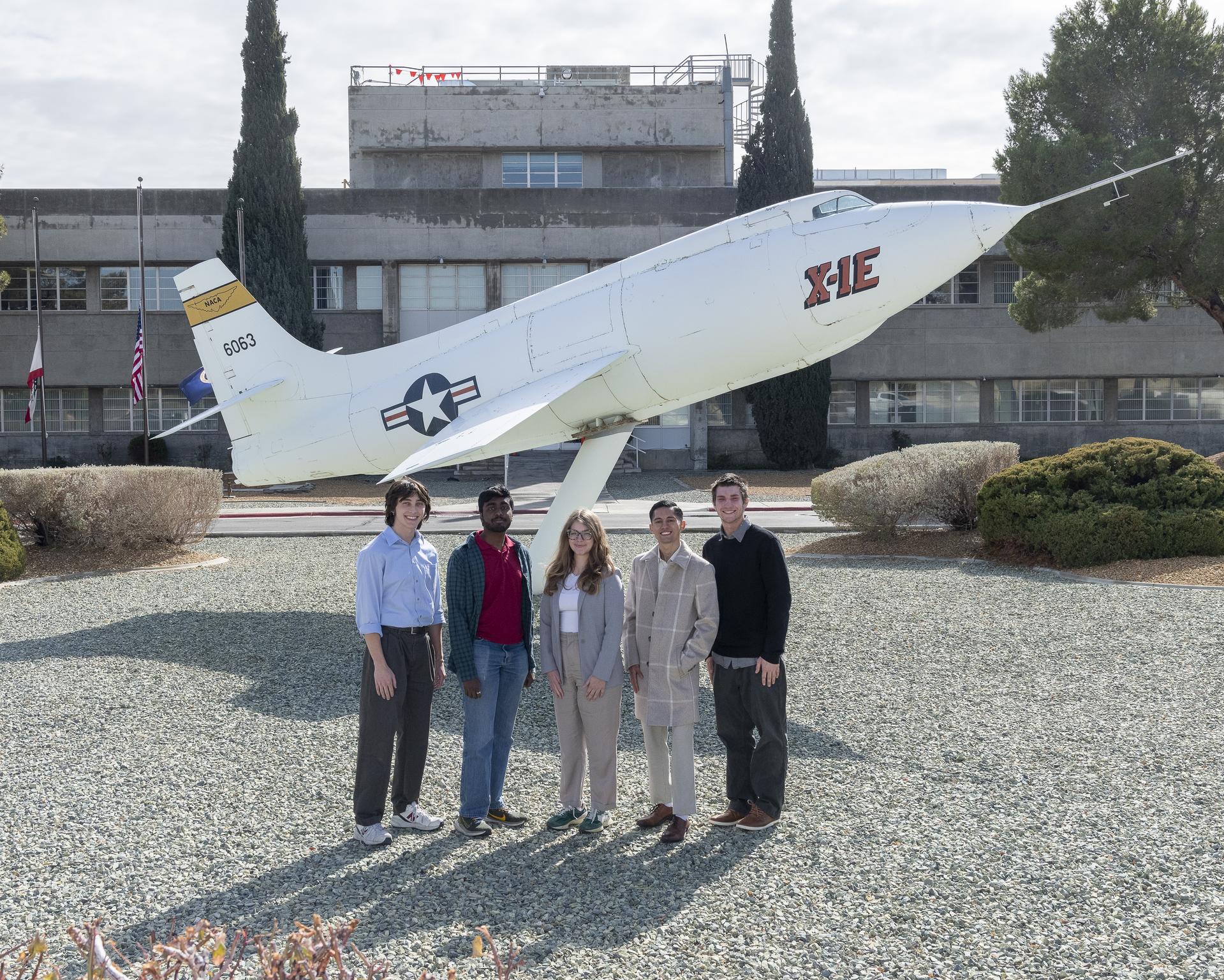
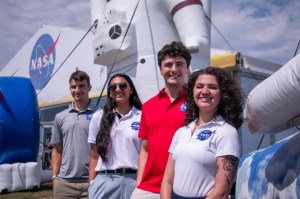
Students pose side-by-side in front of a static aircraft display in front of a building at NASA Armstrong. The students are wearing professional clothes and sneakers.
The 2025 internship class at NASA’s Armstrong Flight Research Center in Edwards, California, stand in front of the historic X-1E aircraft on display at the center. From left are interns: Tyler Requa, Gokul Nookula, Madeleine Phillips, Oscar Keiloht Chavez Ramirez, and Nicolas Marzocchetti.
NASA/Steve Freeman

Lee esta historia en español aquí.

Do you dream of working for NASA and contributing to exploration and innovation for the benefit of humanity? The agency’s internship programs provide high school and college students opportunities to advance NASA’s mission in aeronautics, science, technology, and space.  

Claudia Sales, Kassidy McLaughlin, and Julio Treviño started their careers as interns at NASA’s Armstrong Flight Research Center in Edwards, California, where they continue to explore the secrets of the universe. Their journeys highlight the long-term impact of the NASA’s science, technology, engineering, and mathematics (STEM) programs.
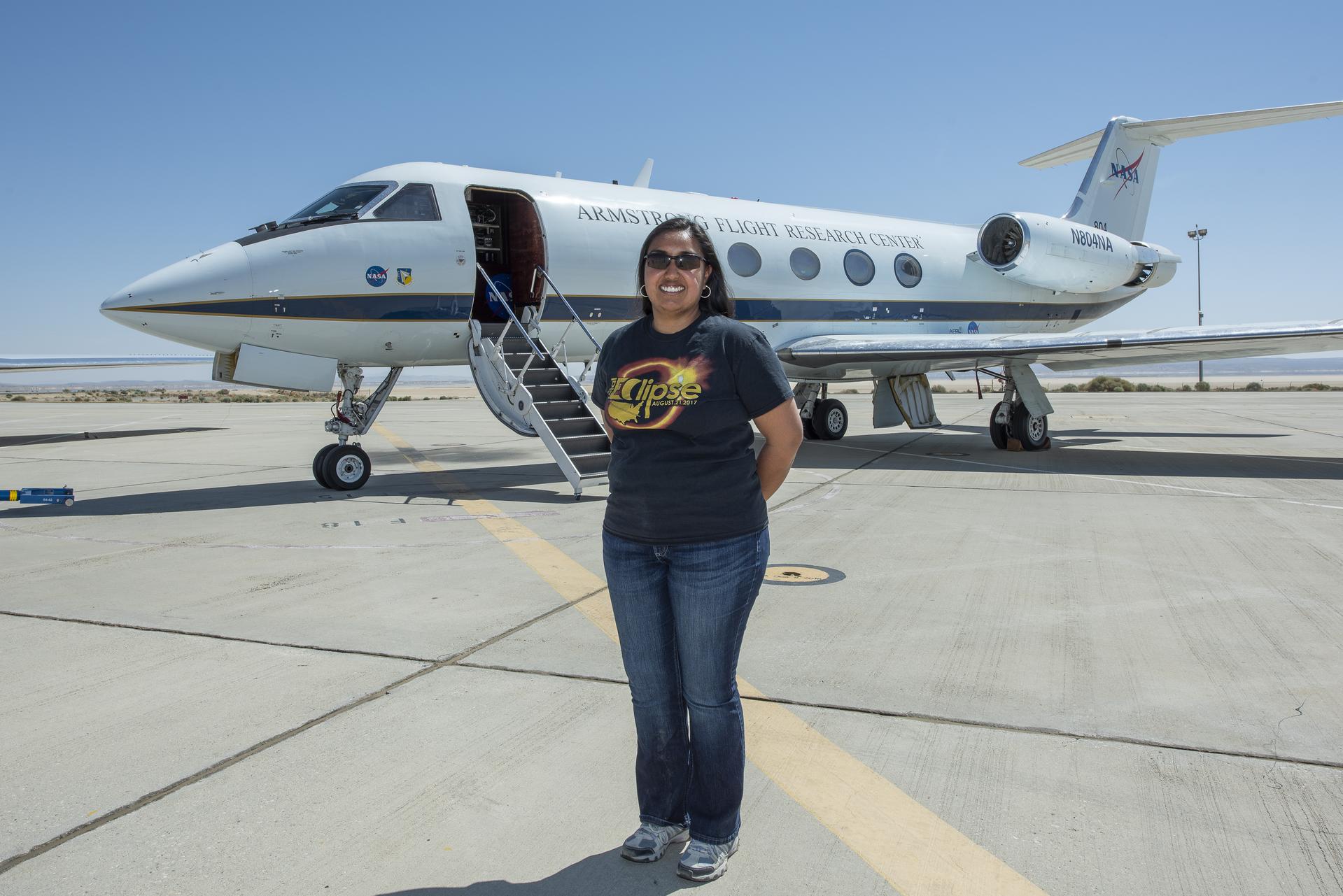
A group of engineers work together at a table outside of a testing trailer. A fold-up table is set up with their computers, binders, walkie-talkies, and thermoses while they record and analyze data.
Claudia Sales, NASA’s acting X-59 deputy chief engineer and airworthiness certification lead for the quiet supersonic research aircraft, supports ground testing for Acoustic Research Measurements (ARM) flights. The test campaign to evaluate technologies that reduce aircraft noise was conducted at NASA’s Armstrong Flight Research Center in Edwards, California, in 2018.
NASA/Ken Ulbrich

Claudia Sales

“I knew since I was a child that I wanted to work for NASA,” said Claudia Sales, acting X-59 deputy chief engineer X-59 deputy chief engineer and airworthiness certification lead for the agency’s quiet supersonic research aircraft.

Sales’ journey at NASA started in 2005 as a Pathways intern, a NASA work-study (co-op) program. She worked in propulsion and structures branches and supported such projects as the X-43A hypersonic research aircraft (Hyper-X) and the X-37 reusable orbital launch vehicle, where she had the opportunity to perform calculations for thermal estimations and trajectory analyses. She also completed design work with NASA Armstrong’s Experimental Fabrication Shop.

“It had been a dream of mine to be a part of unique, one-of-a-kind flight research projects,” Sales said. “My mentor was amazing at exposing me to a wide variety of experiences and working on something unique to one day be implemented on an air vehicle to make the world a better place.”
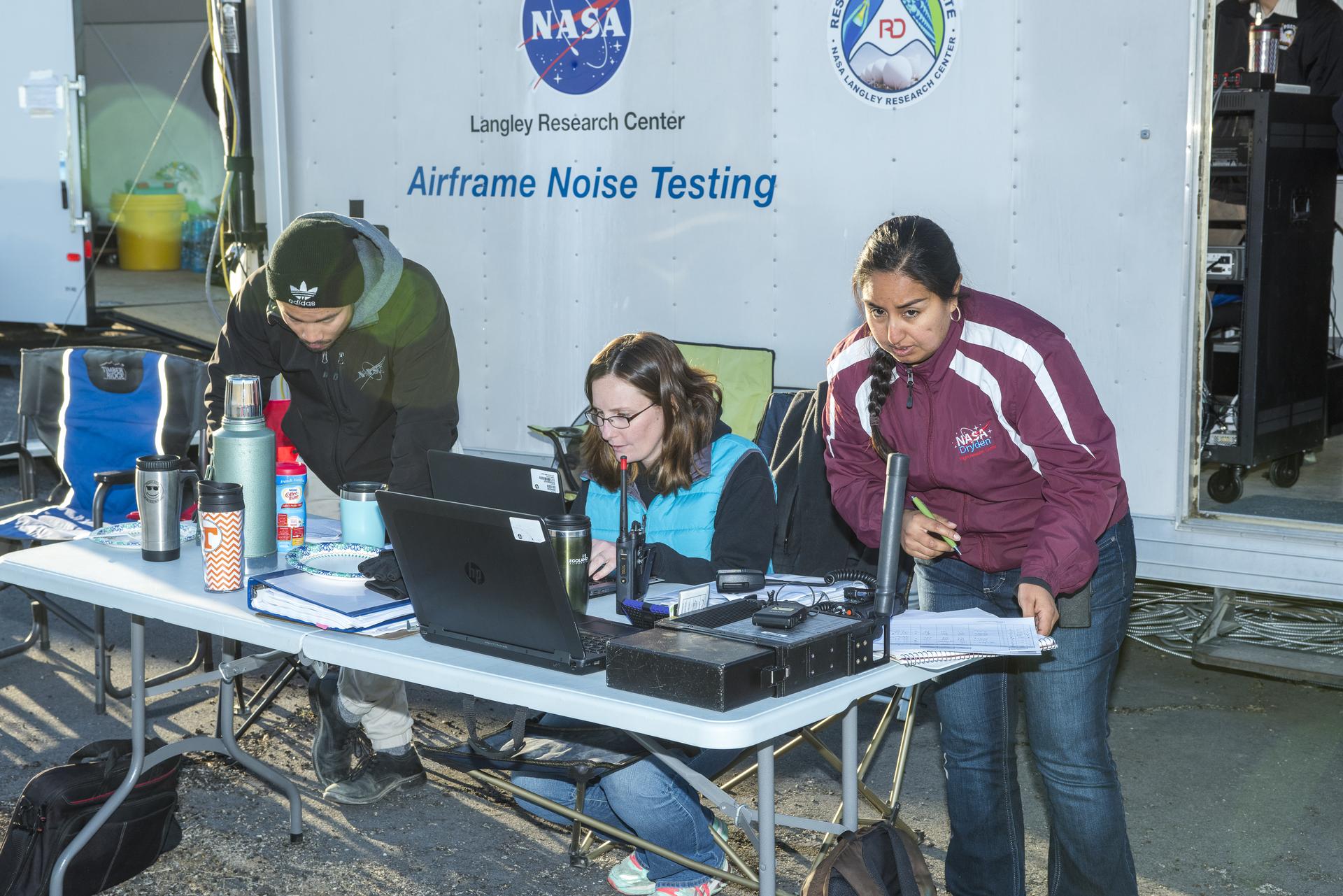
A woman standing on a sunny tarmac in front of a research aircraft. She wears sunglasses, a black tee shirt, and jeans. The airplane behind her is white with the front stair ramp open.
Claudia Sales, NASA’s acting X-59 deputy chief engineer and airworthiness certification lead for the quiet supersonic research aircraft, stands in front of a Gulfstream G-III, also known as Subsonic Research Aircraft Testbed (SCRAT). Sales supported ground testing as test conductor for Acoustics Research Measurements (ARM) flights at NASA’s Armstrong Research Flight Center in Edwards, California, in 2018.
NASA/Ken Ulbrich
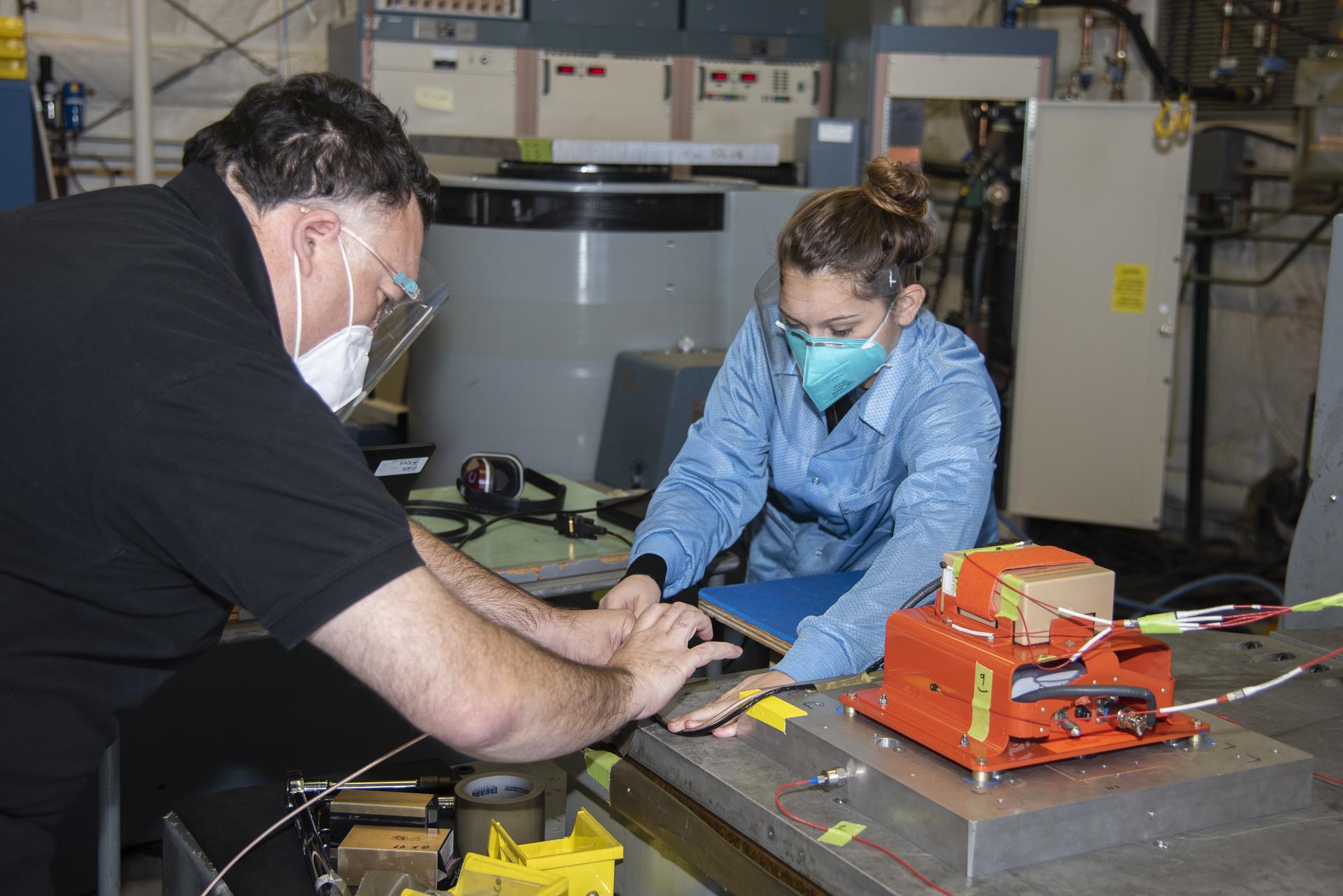
Woman working with a man on a piece of equipment used for testing. They both wear safety goggles and masks as they manipulate the instrument component with their hands. The woman wears a blue jacket while the man wears a short-sleeve black polo.
NASA’s flight systems engineer, Kassidy Mclaughlin conducts environmental testing on an instrumentation pallet. The pallet was used during NASA’s National Campaign project in 2020 at NASA’s Armstrong Flight Research Center in Edwards, California.
NASA/Lauren Hughes

Kassidy McLaughlin

Similarly, flight systems engineer Kassidy McLaughlin discovered that mentorship and hands-on experience as an intern were key to her professional development. She currently leads the development of a ground control station at NASA Armstrong.

In high school and college, McLaughlin enrolled in STEM classes, knowing she wanted to pursue a career in engineering. Encouraged by her mother to apply for a NASA internship, McLaughlin’s career began in 2014 as an intern for NASA Armstrong’s Office of STEM Engagement. She later transitioned to the Pathways program.

“My mentor gave me the tools necessary, and encouraged me to ask questions,” McLaughlin said. “He helped show me that I was capable of anything if I set my mind to it.”

During five rotations as an intern, she worked on the Unmanned Aircraft Systems Integration in the National Airspace System (UAS in the NAS) project. “It is such a rewarding feeling to be in a control room when something you have worked on is flying,” McLaughlin said. That experience inspired her to pursue a career in mechanical engineering.

“NASA Armstrong offered something special when it came to the people,” McLaughlin said. “The culture at the center is so friendly and everyone is so welcoming.”
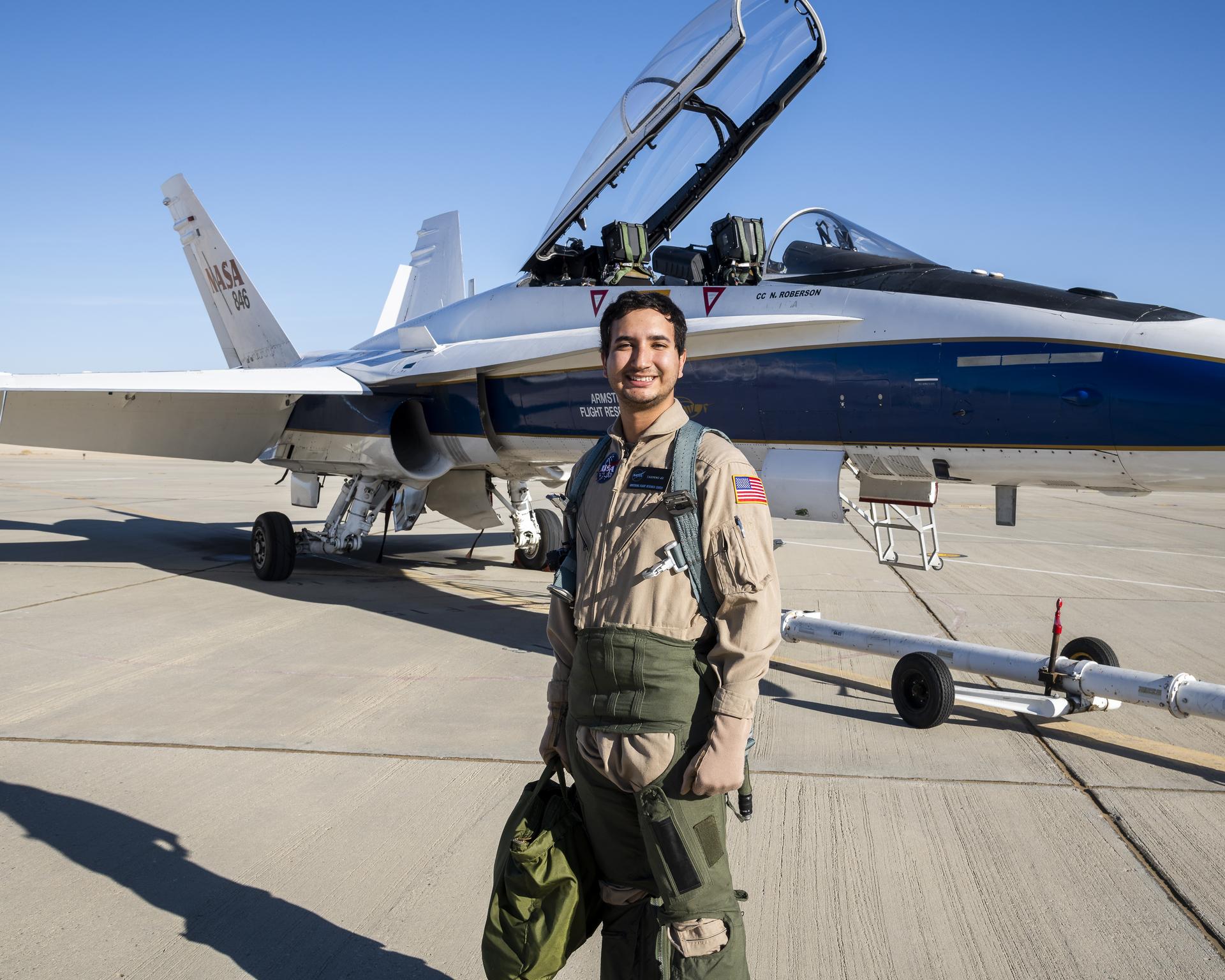
A man standing on the tarmac in front of an experimental aircraft on a sunny afternoon. He smiles in his flight suit and evacuation pack, ready for flight. The loading window of the aircraft cockpit behind him is propped open.
Julio Treviño, lead operations engineer for NASA’s Global Hawk SkyRange project, stands in front of an F/A-18 mission support aircraft at NASA’s Armstrong Flight Research Center in Edwards, California.
NASA/Joshua Fisher

Julio Treviño

Julio Treviño, lead operations engineer for NASA’s Global Hawk SkyRange project, ensures airworthiness throughout the planning, integration, and flight phases of unique systems and vehicles. He is also a certified mission controller, mission director, and flight test engineer for various agency aircraft.

Much like McLaughlin, Treviño began his journey in 2018 as a Pathway’s intern for the Dynamic and Controls branch at NASA Armstrong. That experience paved the way for success after graduating with a degree in mechanical engineering.

“As an intern, I had the opportunity to work on designing and creating a battery model for an all-electric aircraft,” Treviño said. “It was officially published as a NASA software model for use by anyone throughout the agency.”

Treviño also credits NASA’s culture and people as the best part of his internship. “I had very supportive mentors throughout my time as an intern and the fact that everyone here genuinely loves the work that they do is awesome,” he said.

2025 Application Deadlines

Every year, NASA provides more than 2,000 students the opportunity to impact the agency’s mission through hands-on internships. The 2025 application for fall is May 16, 2025.

To learn more about NASA’s internship programs, application deadlines, and eligibility, visit https://www.nasa.gov/learning-resources/internship-programs/

Share

Details

Last Updated

May 12, 2025

Editor
Dede Dinius
Contact
Priscila Valdez

Powered by WPeMatico

Get The Details…
Dede Dinius
Crew Works Tech Demos and Maintenance on Friday

Crew Works Tech Demos and Maintenance on Friday

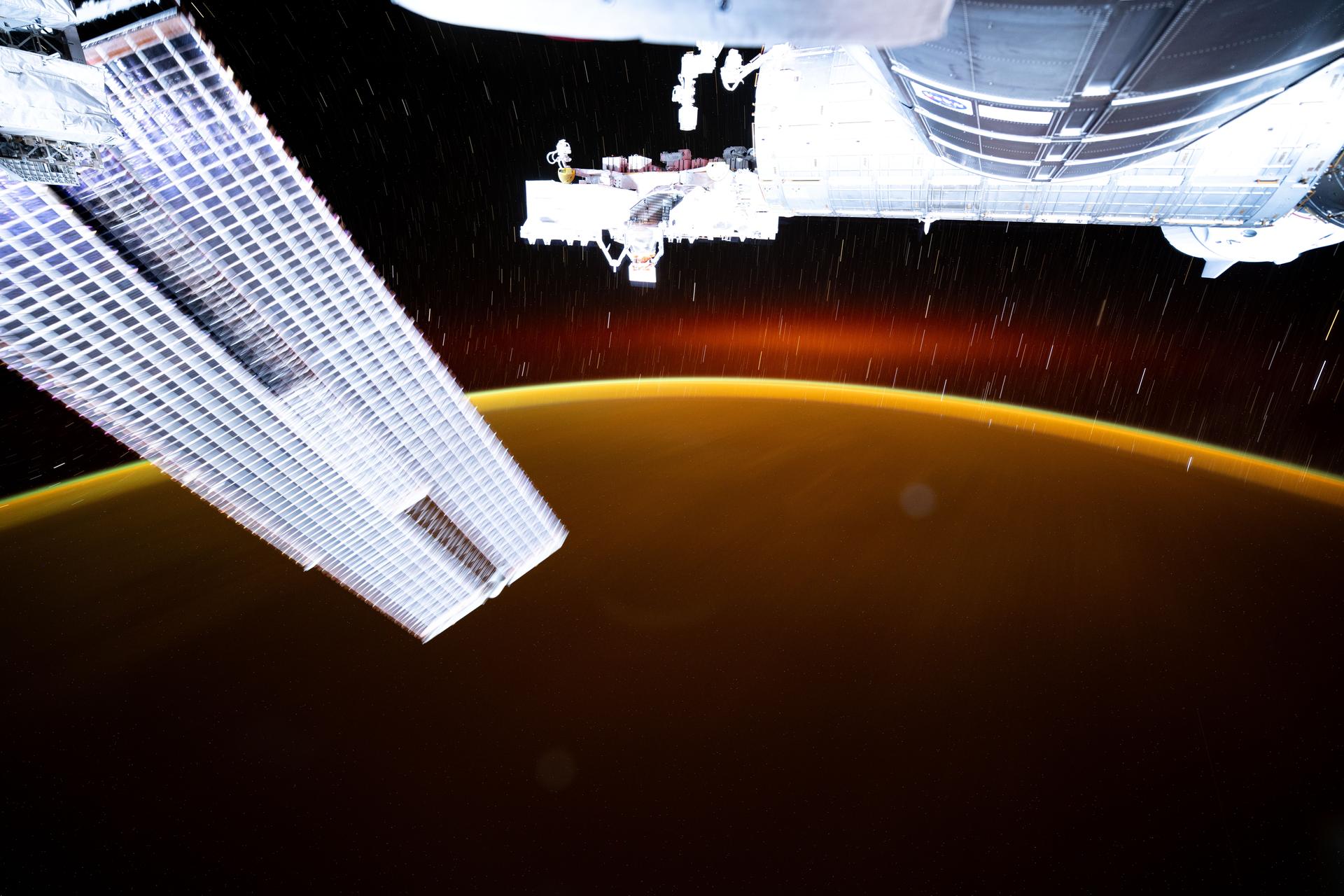
This long-duration photograph from the International Space Station highlights star trails and an atmospheric glow blanketing Earth's horizon. In the foreground, is a set of the space station's main solar arrays (left), the Kibo laboratory module (right), and Kibo's External Platform that houses experiments exposed to the vacuum of space. The orbital outpost was soaring 259 miles above the Pacific Ocean southeast of Japan moments before sunset.
This long-duration photograph from the International Space Station highlights star trails and an atmospheric glow blanketing Earth’s horizon. In the foreground, is a set of the space station’s main solar arrays (left), the Kibo laboratory module (right), and Kibo’s External Platform that houses experiments exposed to the vacuum of space. The orbital outpost was soaring 259 miles above the Pacific Ocean southeast of Japan moments before sunset.
NASA

Friday’s schedule aboard the International Space Station included maintenance and tech demonstration set up for the Expedition 73 crew.

In the Japanese Experiment Module (JEM), NASA Flight Engineers Anne McClain and Nichole Ayers teamed up in the morning to remove MISSE hardware and sample carriers before bagging them for return to Earth. The facility provides a unique platform for the testing of materials, coatings, and components in the space environment.

Afterward, the duo split up for a majority of the afternoon to focus on other tasks. McClain photographed tomato plants for a space agricultural study, while Ayers set up ELVIS—a microscope for 3D imaging of objects such as bacteria—in the Life Sciences Glovebox. She then inserted Colwellia bacteria samples into GLACIER, one of the station’s ultra-cold freezers, before conducting a sample run to analyze the active behavior and genetic changes in the bacteria. Ayers and McClain were then joined by NASA Flight Engineer Jonny Kim and current station commander Takuya Onishi of JAXA (Japan Aerospace Exploration Agency) for a conference with ground support.

Kim spent most of the day on maintenance and IT activities. He first set up hardware on the orbital lab’s bicycle, CEVIS, then scanned the disk drive of the Microgravity Science Glovebox for any system errors. Later on, he conducted some computer hard drive tests, then took inventory of supplies in the Human Research Facility.

Onishi had a light-duty morning before work picked up in the afternoon. In the Harmony Module, he installed a crystallizer in the ADvanced Space Experiment Processor, or ADSEP, a biotech facility that contains three thermal zones to accommodate a variety of experiments, including crystal growth. He then replaced the controller card in the Potable Water Dispenser before setting up a tech demo in JEM that will more efficiently transfer space-to-ground data.

The station’s three Roscosmos cosmonauts, Alexey Zubritsky, Sergey Ryzhikov, and Kirill Peskov, all enjoyed a day off, relaxing and completing their routine two hours of daily exercise.

Learn more about station activities by following the space station blog, @space_station and @ISS_Research on X, as well as the ISS Facebook and ISS Instagram accounts.

Get the latest from NASA delivered every week. Subscribe here: https://www.nasa.gov/subscribe

Powered by WPeMatico

Get The Details…

Abby Graf

Biotech and Health Research Top Thursday’s Workday, Crew Completes Training

Biotech and Health Research Top Thursday’s Workday, Crew Completes Training

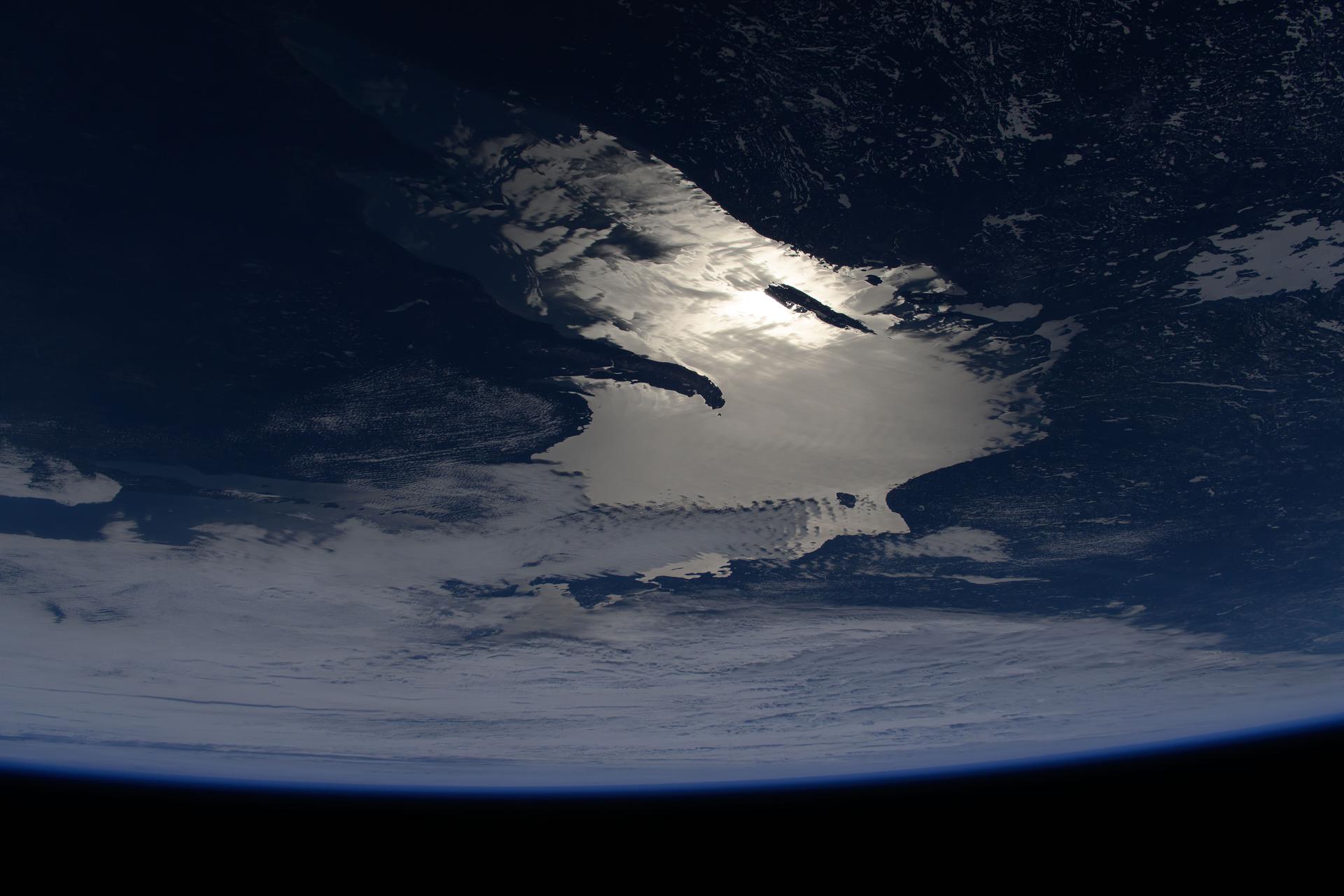
This oblique of view of the sun's glint beaming off Lake Superior was taken at about 8:34 a.m. local time from the International Space Station as it orbited 263 miles above the state of Minnesota, Land of 10,000 Lakes.
This oblique of view of the sun’s glint beaming off Lake Superior was taken at about 8:34 a.m. local time from the International Space Station as it orbited 263 miles above the state of Minnesota, Land of 10,000 Lakes.
NASA

Biotechnology work and health research was the main focus on Thursday aboard the International Space Station. Five Expedition 73 crew members also scheduled some time for training and additional experiment cleanup duties.

Understanding how the human body reacts to spaceflight is crucial as humans prepare for missions to the Moon and beyond. The CIPHER investigation, or the Complement of Integrated Protocols for Human Exploration Research, is one of many ongoing health-focused studies in microgravity that looks at how various systems in the body—the heart, muscles, bones, and eyes—adapt to longer missions. NASA Flight Engineer Anne McClain dedicated a large portion of her week to CIPHER activities and continued through today as she collected biological samples for processing and analysis. Later on, she completed a cognition test, then teamed up with NASA Flight Engineer Jonny Kim, as he guided her through a vestibular exam before a scan that measures the pressure in her eyes.

Kim also spent a portion of his day working with the Life Sciences Glovebox. He and NASA Flight Engineer Nichole Ayers conducted biotechnology work that aims to understand in-space manufacturing of nanomaterials that mimic DNA in space. Throughout experiment operations, three different products will be manufactured and returned to Earth for analysis. In the afternoon, current station commander Takuya Onishi of JAXA (Japan Aerospace Exploration Agency) continued this work while Kim and Ayers moved onto other tasks.

After donning the Bio-Monitor for 48 hours to investigate the effects of microgravity on the cardiovascular system, Ayers doffed the headband and garment to collect data. She was then joined by McClain, Kim, Onishi and Roscosmos Flight Engineer Kirill Peskov to complete a round of training in the event an emergency were to occur aboard station. Afterward, the five residents held a conference with ground teams to go over the materials.

Before winding down for the evening, Ayers cleaned out the Veggie facility after APEX-12 experiment operations wrapped. As part of the investigation, earlier this week, she and McClain harvested thale cress plants to observe how space radiation affects plant genetics.

Peskov, along with Flight Engineer Sergey Ryzhikov of Roscosmos, completed some orbital plumbing duties today. Additionally, Ryzhikov and Flight Engineer Alexey Zubritsky both completed a virtual reality test that tracks their eye and brain movement.

Learn more about station activities by following the space station blog, @space_station and @ISS_Research on X, as well as the ISS Facebook and ISS Instagram accounts.

Get the latest from NASA delivered every week. Subscribe here: https://www.nasa.gov/subscribe

Powered by WPeMatico

Get The Details…

Abby Graf

NASA Astronaut Anne McClain Works on Space Station

NASA Astronaut Anne McClain Works on Space Station

NASA astronaut and Expedition 72 flight engineer Anne McClain is pictured near one of the International Space Station’s main solar arrays during a spacewalk to upgrade the orbital outpost’s power generation system and relocate a communications antenna.

Powered by WPeMatico

Get The Details…