NASA Observes First Visible-light Auroras at Mars
6 min read
NASA Observes First Visible-light Auroras at Mars
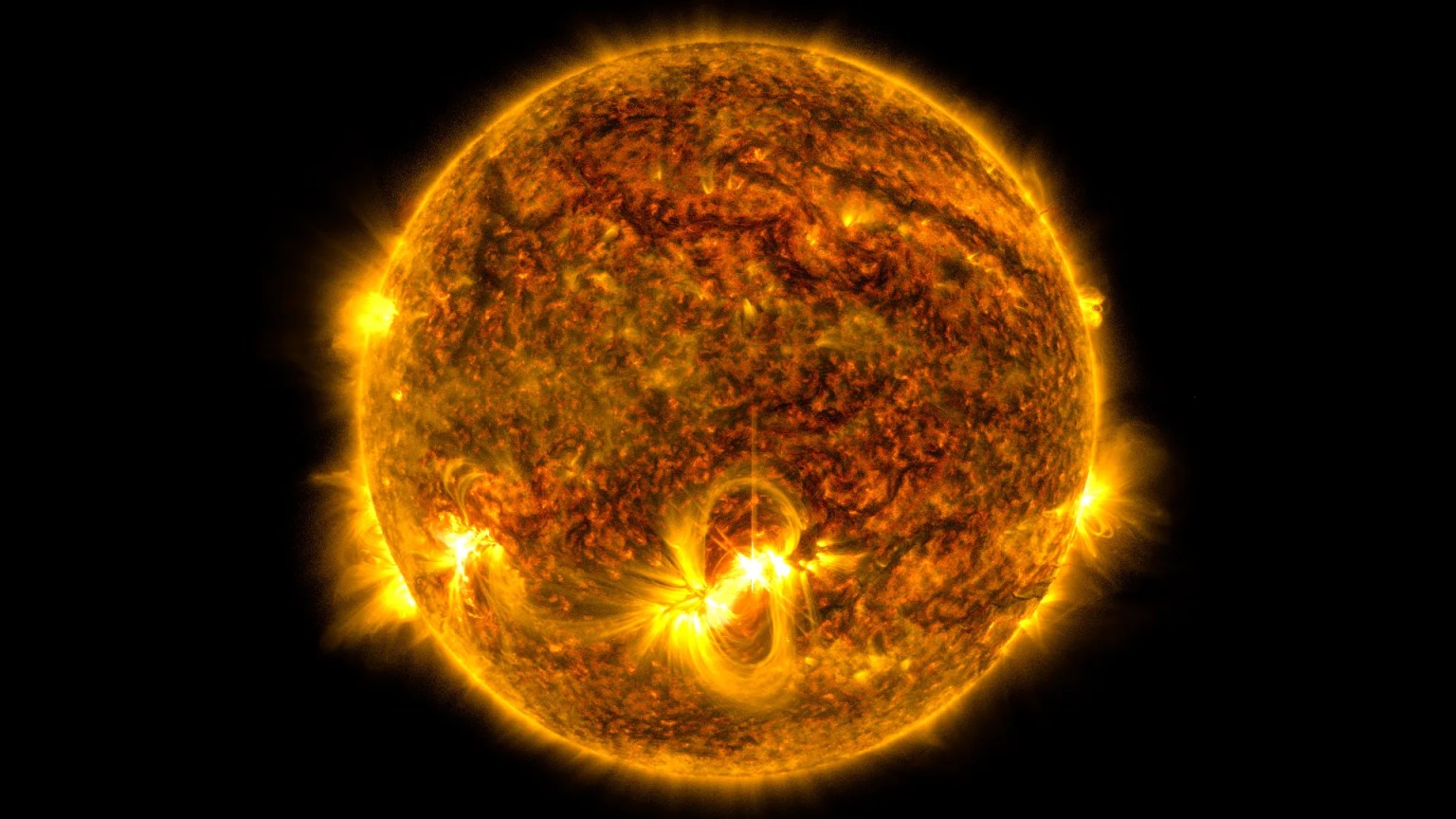
On March 15, 2024, near the peak of the current solar cycle, the Sun produced a solar flare and an accompanying coronal mass ejection (CME), a massive explosion of gas and magnetic energy that carries with it large amounts of solar energetic particles. This solar activity led to stunning auroras across the solar system, including at Mars, where NASA’s Perseverance Mars rover made history by detecting them for the first time from the surface of another planet.
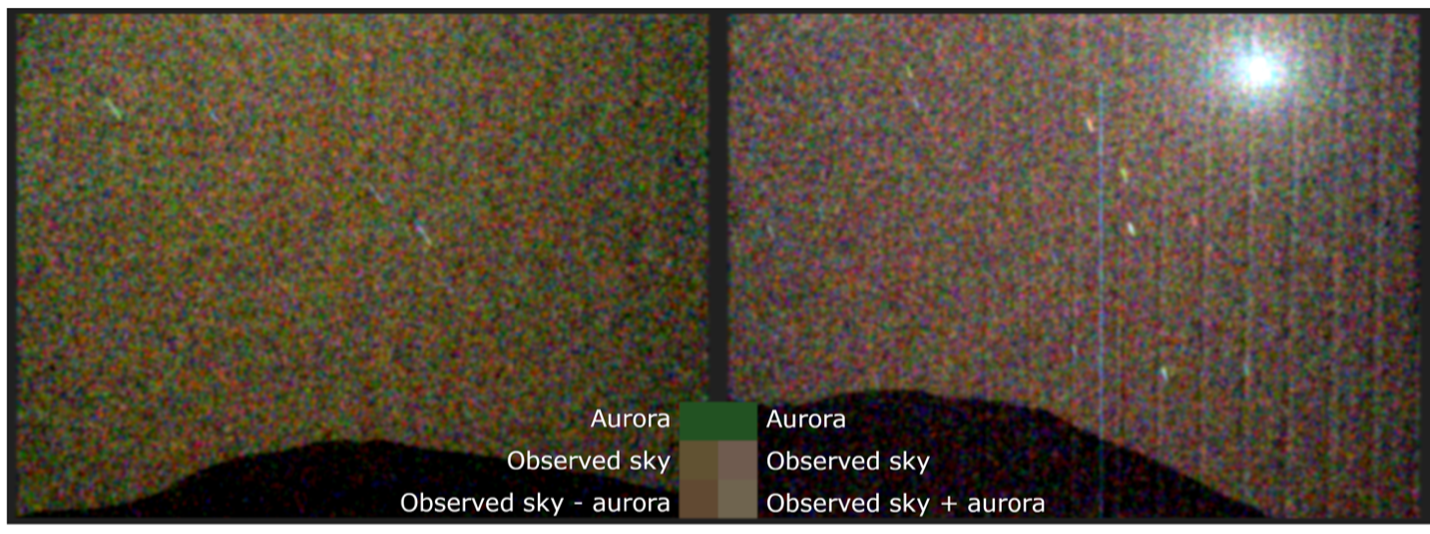
“This exciting discovery opens up new possibilities for auroral research and confirms that auroras could be visible to future astronauts on Mars’ surface.” said Elise Knutsen, a postdoctoral researcher at the University of Oslo in Norway and lead author of the Science Advances study, which reported the detection.
Picking the right aurora
On Earth, auroras form when solar particles interact with the global magnetic field, funneling them to the poles where they collide with atmospheric gases and emit light. The most common color, green, is caused by excited oxygen atoms emitting light at a wavelength of 557.7 nanometers. For years, scientists have theorized that green light auroras could also exist on Mars but suggested they would be much fainter and harder to capture than the green auroras we see on Earth.
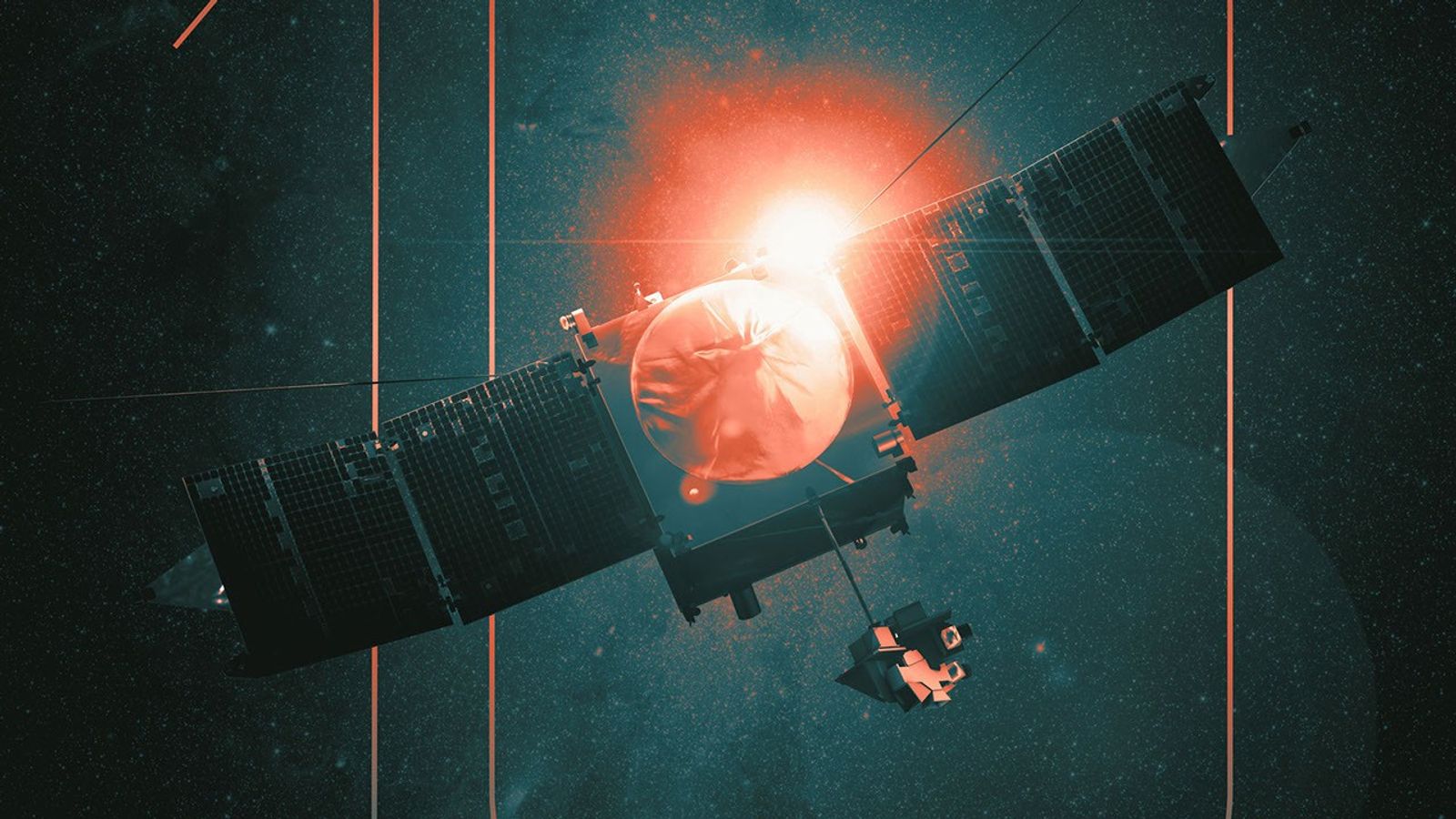
Due to the Red Planet’s lack of a global magnetic field, Mars has different types of auroras than those we have on Earth. One of these is solar energetic particle (SEP) auroras, which NASA’s MAVEN (Mars Atmosphere and Volatile EvolutioN) mission discovered in 2014. These occur when super-energetic particles from the Sun hit the Martian atmosphere, causing a reaction that makes the atmosphere glow across the whole night sky.
While MAVEN had observed SEP auroras in ultraviolet light from orbit, this phenomenon had never been observed in visible light from the ground. Since SEPs typically occur during solar storms, which increase during solar maximum, Knutsen and her team set their sights on capturing visible images and spectra of SEP aurora from Mars’ surface at the peak of the Sun’s current solar cycle.
Coordinating the picture-perfect moment
Through modeling, Knutsen and her team determined the optimal angle for the Perseverance rover’s SuperCam spectrometer and Mastcam-Z camera to successfully observe the SEP aurora in visible light. With this observation strategy in place, it all came down to the timing and understanding of CMEs.
“The trick was to pick a good CME, one that would accelerate and inject many charged particles into Mars’ atmosphere,” said Knutsen.
That is where the teams at NASA’s Moon to Mars (M2M) Space Weather Analysis Office and the Community Coordinated Modeling Center (CCMC), both located at NASA’s Goddard Space Flight Center in Greenbelt, Maryland, came in. The M2M team provides real-time analysis of solar eruptions to the CCMC for initiating simulations of CMEs to determine if they might impact current NASA missions. When the simulations suggest potential impacts, the team sends out an alert.
At the University of California, Berkeley, space physicist Christina Lee received an alert from the M2M office about the March 15, 2024, CME. Lee, a member of the MAVEN mission team who serves as the space weather lead, determined there was a notable solar storm heading toward the Red Planet,which could arrive in a few days. She immediately issued the Mars Space Weather Alert Notification to currently operating Mars missions.
“This allows the science teams of Perseverance and MAVEN to anticipate impacts of interplanetary CMEs and the associated SEPs,” said Lee.
“When we saw the strength of this one,” Knutsen said, “we estimated it could trigger aurora bright enough for our instruments to detect.”
A few days later, the CME impacted Mars, providing a lightshow for the rover to capture, showing the aurora to be nearly uniform across the sky at an emission wavelength of exactly 557.7 nm. To confirm the presence of SEPs during the aurora observation, the team looked to MAVEN’s SEP instrument, which was additionally corroborated by data from ESA’s (European Space Agency) Mars Express mission. Data from both missions confirmed that the rover team had managed to successfully catch a glimpse of the phenomenon in the very narrow time window available.
“This was a fantastic example of cross-mission coordination. We all worked together quickly to facilitate this observation and are thrilled to have finally gotten a sneak peek of what astronauts will be able to see there some day,” said Shannon Curry, MAVEN principal investigator and research scientist at the Laboratory for Atmospheric and Space Physics (LASP) at the University of Colorado Boulder (CU Boulder).
The future of aurora on Mars
By coordinating the Perseverance observations with measurements from MAVEN’s SEP instrument, the teams could help each other determine that the observed 557.7 nm emission came from solar energetic particles. Since this is the same emission line as the green aurora on Earth, it is likely that future Martian astronauts would be able to see this type of aurora.
“Perseverance’s observations of the visible-light aurora confirm a new way to study these phenomena that’s complementary to what we can observe with our Mars orbiters,” said Katie Stack Morgan, acting project scientist for Perseverance at NASA’s Jet Propulsion Laboratory in Southern California. “A better understanding of auroras and the conditions around Mars that lead to their formation are especially important as we prepare to send human explorers there safely.”
More About Perseverance and MAVEN
The Mars 2020 Perseverance mission is part of NASA’s Mars Exploration Program portfolio and NASA’s Moon to Mars exploration approach, which includes Artemis missions to the Moon that will help prepare for human exploration of the Red Planet. NASA’s Jet Propulsion Laboratory, which is managed for the agency by Caltech, built and manages operations of the Perseverance rover.
The MAVEN mission, also part of NASA’s Mars Exploration Program portfolio, is led by LASP at CU Boulder. It’s managed by NASA’s Goddard Space Flight Center and was built and operated by Lockheed Martin Space, with navigation and network support from NASA’s JPL.
—
By Willow Reed
Laboratory for Atmospheric and Space Physics (LASP), University of Colorado Boulder
Media Contact:
Karen Fox / Molly Wasser
Headquarters, Washington
202-358-1600
karen.c.fox@nasa.gov / molly.l.wasser@nasa.gov
Nancy N. Jones
NASA’s Goddard Space Flight Center, Greenbelt, Md.
DC Agle
Jet Propulsion Laboratory, Pasadena, Calif.
818-393-9011
agle@jpl.nasa.gov
Share
Details
Related Terms
Powered by WPeMatico