Compton J. Tucker Retires from NASA and is Named NAS Fellow

Compton J. Tucker Retires from NASA and is Named NAS Fellow

Dr. Compton J. Tucker – a senior researcher at NASA’s Goddard Space Flight Center (GSFC) – joins 149 newly elected members to the National Academy of Sciences (NAS) – see Photo. NAS is one of the highest honors in American science. Compton gave a virtual presentation at GSFC on July 21, 2025, in which he showed highlights from his 50 years of research and reflected on the honor of being selected as an NAS fellow. He admitted that he was surprised upon learning of his election in April 2025 – despite his prestigious career.
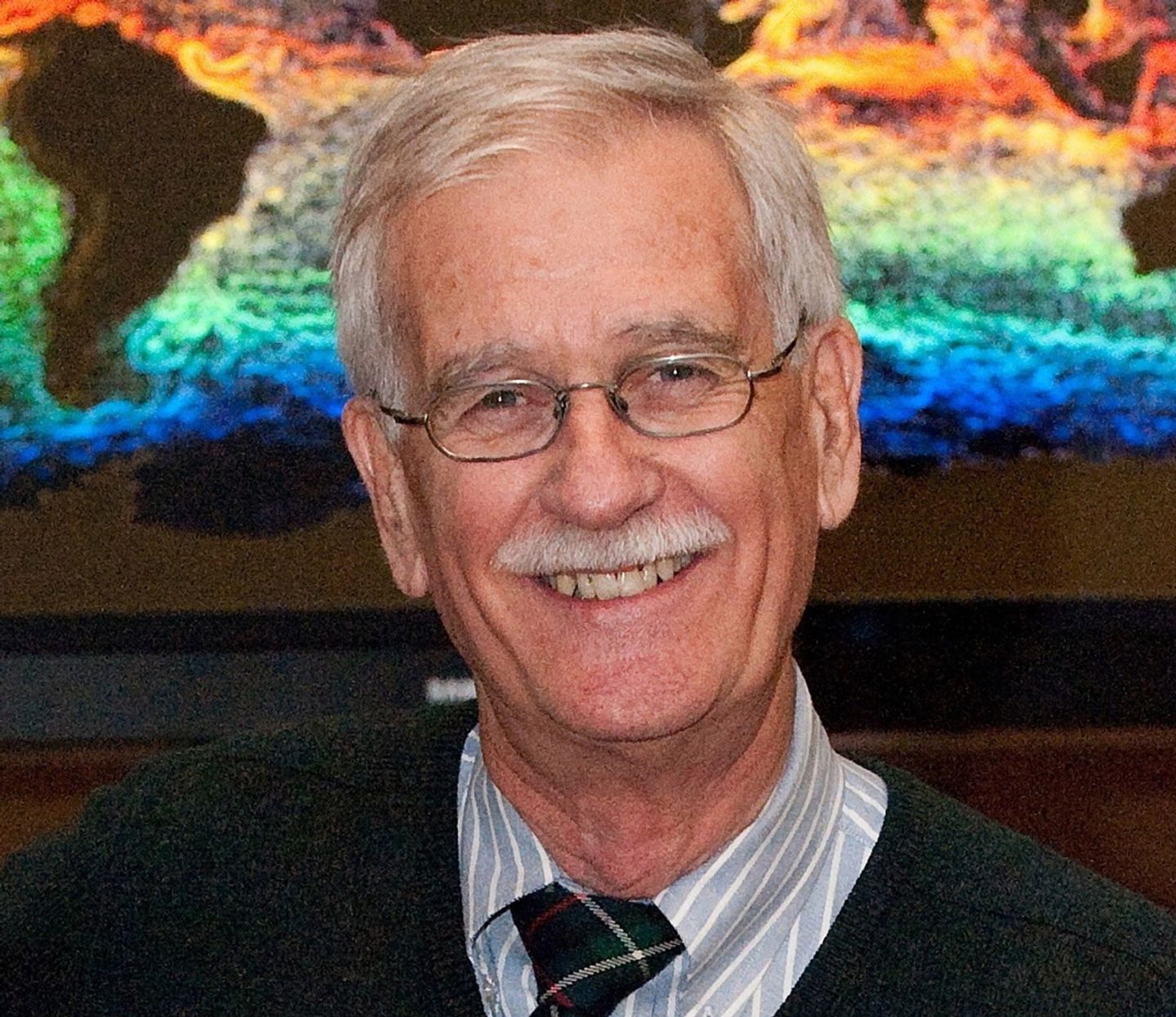
Tucker photo 1
Photo 1. Compton Tucker uses satellites to address global environmental challenges.
Photo credit: Colorado State University

In some ways this award brings Compton’s career full circle. He first came to GSFC as a NAS postdoc in 1975 after having earned his Bachelor’s of Science degree at Colorado State University (CSU) in 1969. He followed with his Master’s of Science degree and Ph.D. from CSU’s College of Forestry in 1973 and 1975 respectively. Two years later, he joined NASA as a civil servant. After a prestigious 48 years of public service, Compton has decided to retire in March 2025.

Compton is a well-known pioneer in the field of satellite-based environmental analysis, using data from various U.S. Geological Survey–NASA Landsat missions and from the National Oceanographic and Atmospheric Administration’s (NOAA) Advanced Very High Resolution Radiometer (AVHRR) instrument, the prototype of which launched aboard the Television Infrared Observation Satellite–N (TIROS-N) in 1978, with launches continuing on NOAA and European polar orbiting satellites throughout the next 40 years. The last two AVHRR instruments, which launched on the European Organisation for the Exploitation of Meteorological Satellites’ (EUMETSAT) Meteorological Operational satellites (METOP–B and -C) in 2012 and 2018 respectively, are still operational today.
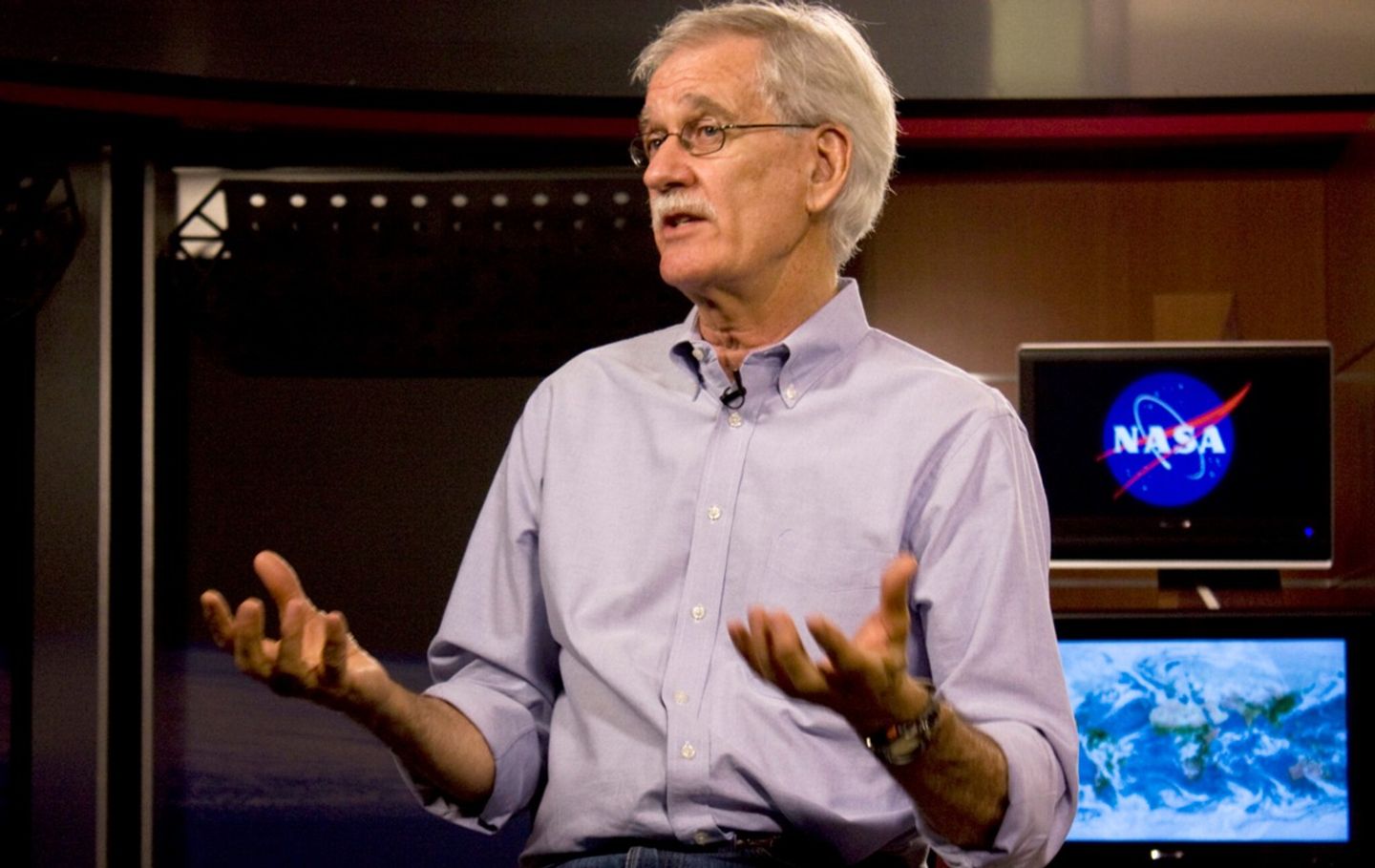
Tucker photo 2
Photo 2. Earth scientist Compton Tucker, who has studied remote sensing of vegetation at NASA Goddard for 50 years, has been elected to the National Academy of Sciences.
Photo credit: Compton Tucker

In his GSFC presentation, Compton described how, in the course of doing their research, he and his colleague(s) realized the original plans for AVHRR resulted in Channel 1 and 2 overlapping one another. In short, he explained that his input helped persuade NOAA management to change the design for Channel 1 of AVHRR – beginning with NOAA-7. It is fair to say that this change had a lasting impact, with 16 more AVHRR instruments (with slight modifications over time) launched over the next four decades.

Compton’s research has focused on global photosynthesis on land (e.g., grass-dominated savannas), determined land cover (i.e., forest fragmentation, deforestation, and forest condition), monitored droughts and food security, and evaluated ecologically coupled disease outbreaks. From 2005 to 2010, he was the co-chair of two Interagency Working Groups for Observations and Land Use and Land Cover Change. Compton was active in NASA’s Space Archaeology Program, participating in ground-based radar and magnetic surveys in Turkey, particularly at Troy, the Granicus River Valley, and Gordion. Over the course of his 50-year career, he has authored or co-authored more than 400 scholarly articles that have appeared in scientific journals – and in his presentation he hinted that more might be in store after retirement.

Compton has received numerous scientific awards and honors. He was elected to a fellow of the American Geophysical Union in 2009 and to the American Association for the Advancement of Science in 2015. He received the Senior Executive Service Presidential Rank Award for Meritorious Service (2017), the Vega Medal from the Swedish Society of Anthropology and Geography (2014), the Galathea Medal from the Royal Danish Geographical Society (2004), the William T. Pecora Award from the U.S. Geological Survey (1997), the Michael Collins Trophy for Current Achievement from the National Air and Space Museum (1993), the Henry Shaw Medal from the Missouri Botanical Garden (1992), and the Exceptional Scientific Achievement Medal from NASA (1987).

Compton enjoyed sharing his knowledge with the next generation of scientists. He served as an adjunct professor at the University of Maryland (1994–2024) and a consulting scholar at the University of Pennsylvania Museum of Archeology and Anthropology (2005–2024).

Congratulations to Compton on earning this prestigious – and well-earned – recognition from NAS. Best wishes to him in whatever is next on his journey.

Black Separator Line

The National Academy of Sciences is a private, nonprofit institution that was established under a congressional charter signed by President Abraham Lincoln in 1863. It recognizes achievement in science by election to membership, and – with the National Academy of Engineering and the National Academy of Medicine – provides science, engineering, and health policy advice to the federal government and other organizations.

Black Separator Line

Powered by WPeMatico

Get The Details…

Alligator Goes for a Swim

Alligator Goes for a Swim

An alligator swims through green and brown water. It is facing left and we can see the side of its face. A small wave of water marks where its front left leg is moving.
NASA/Bill White

An alligator moves through a brackish waterway at NASA’s Kennedy Space Center in Florida in this May 8, 2017, photo. The center shares space with the Merritt Island National Wildlife Refuge. More than 330 native and migratory bird species, 25 mammals, 117 fishes and 65 amphibians and reptiles call NASA Kennedy and the wildlife refuge home. The refuge is also home to over 1,000 known plant species.

Image credit: NASA/Bill White

Powered by WPeMatico
Get The Details…
Monika Luabeya

NASA’s Hubble Uncovers Rare White Dwarf Merger Remnant

NASA’s Hubble Uncovers Rare White Dwarf Merger Remnant

5 min read

NASA’s Hubble Uncovers Rare White Dwarf Merger Remnant

An illustration of a white dwarf star merging with a red giant star. The red giant is an arch across the bottom of the illustration, with a textured surface. The white dwarf is a white pinpoint object at upper center right. The white dwarf in embedded inside a teardrop-shaped cocoon of white gas. It is enveloped in a white open ellipsoid that is the bow shock from speeding through the red giant's outer atmosphere. The words u201cartistu2019s conceptu201d are at lower left.
This is an illustration of a white dwarf star merging into a red giant star. A bow shock forms as the dwarf plunges through the star’s outer atmosphere. The passage strips down the white dwarf’s outer layers, exposing an interior carbon core.
Artwork: NASA, ESA, STScI, Ralf Crawford (STScI)

An international team of astronomers has discovered a cosmic rarity: an ultra-massive white dwarf star resulting from a white dwarf merging with another star, rather than through the evolution of a single star. This discovery, made by NASA’s Hubble Space Telescope’s sensitive ultraviolet observations, suggests these rare white dwarfs may be more common than previously suspected.

“It’s a discovery that underlines things may be different from what they appear to us at first glance,” said the principal investigator of the Hubble program, Boris Gaensicke, of the University of Warwick in the United Kingdom. “Until now, this appeared as a normal white dwarf, but Hubble’s ultraviolet vision revealed that it had a very different history from what we would have guessed.”

A white dwarf is a dense object with the same diameter as Earth, and represents the end state for stars that are not massive enough to explode as core-collapse supernovae. Our Sun will become a white dwarf in about 5 billion years. 

In theory, a white dwarf can have a mass of up to 1.4 times that of the Sun, but white dwarfs heavier than the Sun are rare. These objects, which astronomers call ultra-massive white dwarfs, can form either through the evolution of a single massive star or through the merger of a white dwarf with another star, such as a binary companion. 

This new discovery, published in the journal Nature Astronomy, marks the first time that a white dwarf born from colliding stars has been identified by its ultraviolet spectrum. Prior to this study, six white dwarf merger products were discovered via carbon lines in their visible-light spectra.  All seven of these are part of a larger group that were found to be bluer than expected for their masses and ages from a study with ESA’s Gaia mission in 2019, with the evidence of mergers providing new insights into their formation history.

Astronomers used Hubble’s Cosmic Origins Spectrograph to investigate a white dwarf called WD 0525+526. Located 128 light-years away, it is 20% more massive than the Sun. In visible light, the spectrum of WD 0525+526’s atmosphere resembled that of a typical white dwarf. However, Hubble’s ultraviolet spectrum revealed something unusual: evidence of carbon in the white dwarf’s atmosphere. 

White dwarfs that form through the evolution of a single star have atmospheres composed of hydrogen and helium. The core of the white dwarf is typically composed mostly of carbon and oxygen or oxygen and neon, but a thick atmosphere usually prevents these elements from appearing in the white dwarf’s spectrum. 

When carbon appears in the spectrum of a white dwarf, it can signal a more violent origin than the typical single-star scenario: the collision of two white dwarfs, or of a white dwarf and a subgiant star. Such a collision can burn away the hydrogen and helium atmospheres of the colliding stars, leaving behind a scant layer of hydrogen and helium around the merger remnant that allows carbon from the white dwarf’s core to float upward, where it can be detected.  

WD 0525+526 is remarkable even within the small group of white dwarfs known to be the product of merging stars. With a temperature of almost 21,000 kelvins (37,000 degrees Fahrenheit) and a mass of 1.2 solar masses, WD 0525+526 is hotter and more massive than the other white dwarfs in this group.

WD 0525+526’s extreme temperature posed something of a mystery for the team. For cooler white dwarfs, such as the six previously discovered merger products, a process called convection can mix carbon into the thin hydrogen-helium atmosphere. WD 0525+526 is too hot for convection to take place, however. Instead, the team determined a more subtle process called semi-convection brings a small amount of carbon up into WD 0525+526’s atmosphere. WD 0525+526 has the smallest amount of atmospheric carbon of any white dwarf known to result from a merger, about 100,000 times less than other merger remnants.

The high temperature and low carbon abundance mean that identifying this white dwarf as the product of a merger would have been impossible without Hubble’s sensitivity to ultraviolet light. Spectral lines from elements heavier than helium, like carbon, become fainter at visible wavelengths for hotter white dwarfs, but these spectral signals remain bright in the ultraviolet, where Hubble is uniquely positioned to spot them.

“Hubble’s Cosmic Origins Spectrograph is the only instrument that can obtain the superb quality ultraviolet spectroscopy that was required to detect the carbon in the atmosphere of this white dwarf,” said study lead Snehalata Sahu from the University of Warwick.

Because WD 0525+526’s origin was revealed only once astronomers glimpsed its ultraviolet spectrum, it’s likely that other seemingly “normal” white dwarfs are actually the result of cosmic collisions — a possibility the team is excited to explore in the future.

“We would like to extend our research on this topic by exploring how common carbon white dwarfs are among similar white dwarfs, and how many stellar mergers are hiding among the normal white dwarf family,” said study co-leader Antoine Bedrad from the University of Warwick. “That will be an important contribution to our understanding of white dwarf binaries, and the pathways to supernova explosions.”

The Hubble Space Telescope has been operating for more than three decades and continues to make ground-breaking discoveries that shape our fundamental understanding of the universe. Hubble is a project of international cooperation between NASA and ESA (European Space Agency). NASA’s Goddard Space Flight Center in Greenbelt, Maryland, manages the telescope and mission operations. Lockheed Martin Space, based in Denver, also supports mission operations at Goddard. The Space Telescope Science Institute in Baltimore, which is operated by the Association of Universities for Research in Astronomy, conducts Hubble science operations for NASA.

To learn more about Hubble, visit: https://science.nasa.gov/hubble

Share

Details

Last Updated
Aug 13, 2025
Editor
Andrea Gianopoulos
Contact
Media

Claire Andreoli
NASA’s Goddard Space Flight Center
Greenbelt, Maryland
claire.andreoli@nasa.gov

Ray Villard
Space Telescope Science Institute
Baltimore, Maryland

Bethany Downer
ESA/Hubble
Garching, Germany

Powered by WPeMatico
Get The Details…

NASA’s SpaceX-33 Resupply Mission to Launch Research to Station

NASA’s SpaceX-33 Resupply Mission to Launch Research to Station

Research traveling to the International Space Station aboard NASA’s SpaceX 33rd commercial resupply mission includes testing 3D bioprinting of an implantable medical device, observing behavior of engineered liver tissues, examining microgravity’s effects on bone-forming cells, and additional 3D printing of metal in space. The SpaceX Dragon spacecraft is scheduled to launch to the orbiting laboratory in late August.

For nearly 25 years, the International Space Station has provided research capabilities used by scientists from over 110 countries to conduct more than 4,000 groundbreaking experiments in microgravity. Research conducted aboard the space station advances future space exploration – including missions to the Moon and Mars – and provides multiple benefits to humanity.

Read more about some of the latest investigations headed to the orbiting lab.

Better nerve bridge

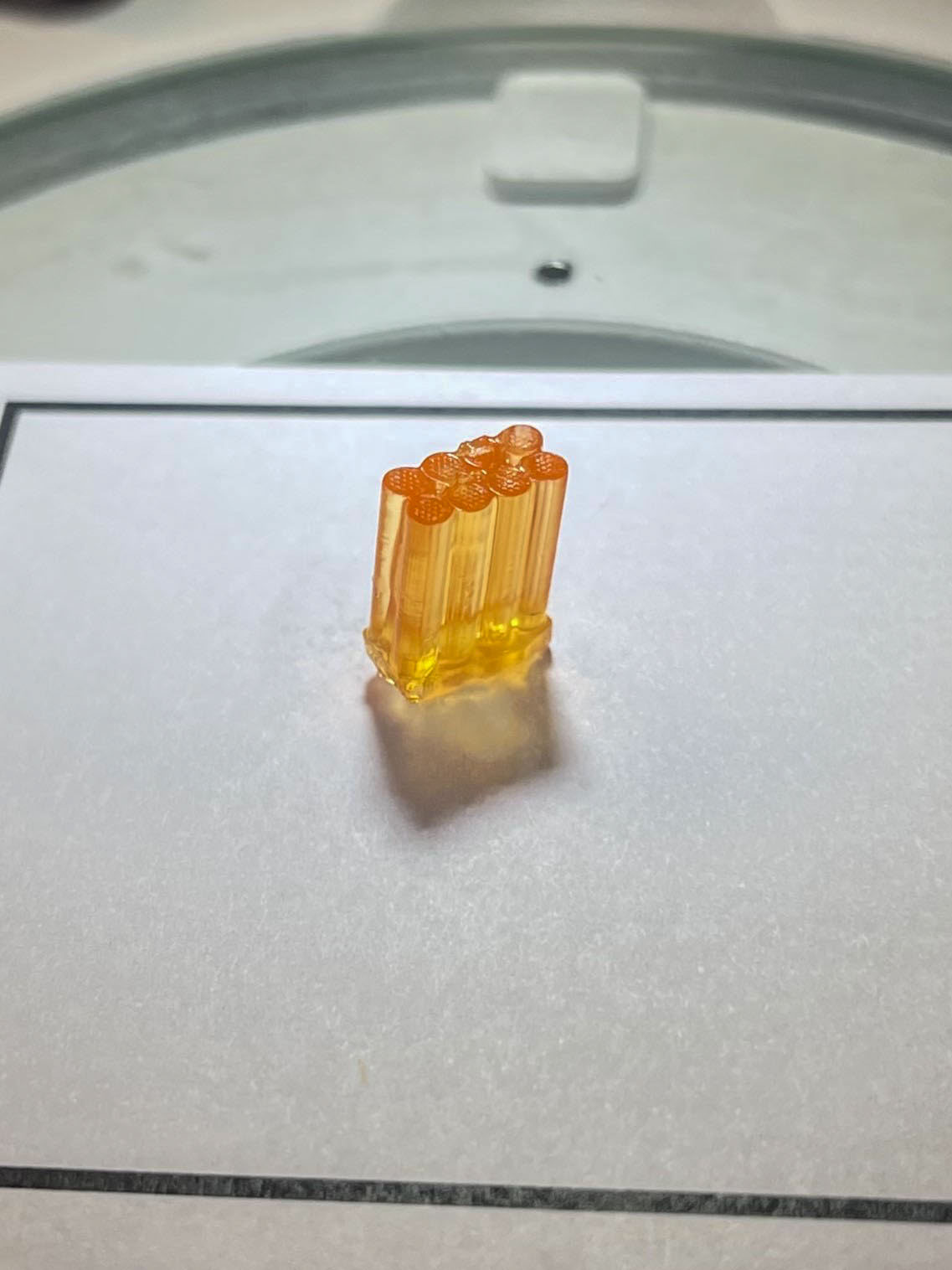
Eight translucent orange cylinders that look a bit like gummy candies are attached to each other in two rows of four and sitting on a white surface.
Eight implantable nerve devices printed on the space station.
Auxilium Biotechnologies

Scientists are creating an implantable device in microgravity that could support nerve regrowth after injuries. The device is created through bioprinting, a type of 3D printing that uses living cells or proteins as raw materials.

Traumatic injuries can leave a gap between nerves, and existing treatments have limited ability to restore nerve function and may result in impaired physical function. A bioprinted device to bridge the nerve gap could accelerate recovery and preserve function.

“On this mission, we plan to print up to 18 of the implants and anticipate using them in preclinical studies on the ground in 2026 and 2027,” said Jacob Koffler, principal investigator at Auxilium Biotechnologies Inc in San Diego. Tissues bioprinted in microgravity may be higher quality than those made on Earth and results could support future manufacturing of medical devices in space for crew members on space missions and patients on Earth.

Bioprinted tissues with blood vessels

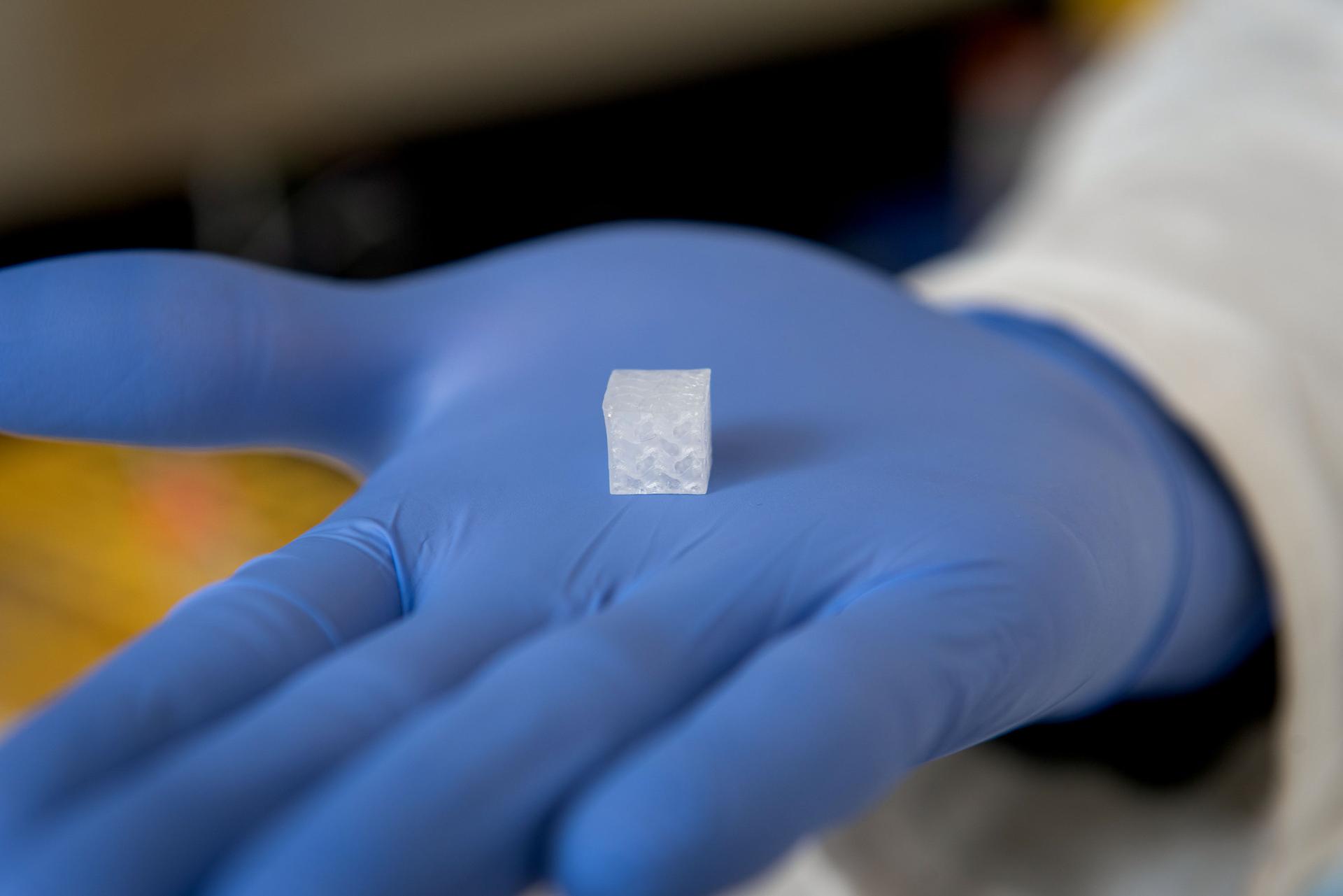
A small, white gel-like cube, about the size of a sugar cube, sits in the palm of a hand wearing a blue latex glove. The cube has a pattern of open spaces inside of it.
A researcher holds vascularized tissue bioprinted on the ground for study in space.
The Wake Forest Institute of Regenerative Medicine

Researchers plan to bioprint liver tissue containing blood vessels on the ground and examine how the tissue develops in microgravity. Results could help support the eventual production of entire functional organs for transplantation on Earth.

A previous mission tested whether this type of bioprinted liver tissue survived and functioned in space, according to James Yoo, principal investigator at the Wake Forest Institute of Regenerative Medicine in Winston-Salem. This round could show whether microgravity improves development of the bioprinted tissue.

“We are especially keen on accelerating the development of vascular networks in the tissue,” Yoo said. Vascular networks produce the blood vessels needed to keep these tissues functional and healthy.

Blocking bone loss

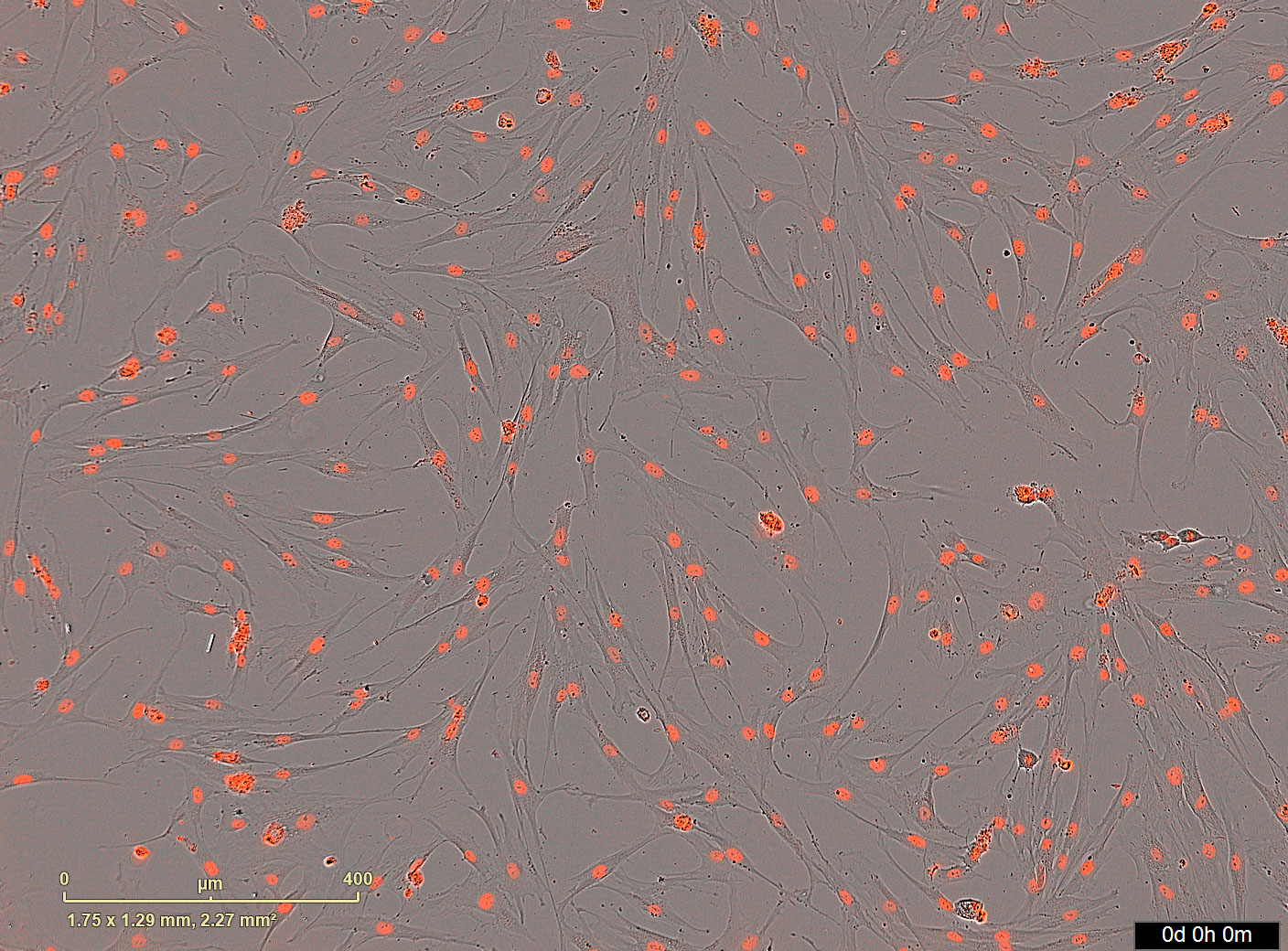
Translucent, fiber-like cells cover this slide image, which has a grayish-tan background. Each of the cells has a small, rounded body in it that is stained an orange-red color.
A microscopic image of stem cells derived from human bone marrow stained with red dye.
Mayo Clinic

A study of bone-forming stem cells in microgravity could provide insight into the basic mechanisms of the bone loss astronauts experience during space flight.

Researchers identified a protein in the body called IL-6 that can send signals to stem cells to promote either bone formation or bone loss. This work evaluates whether blocking IL-6 signals could reduce bone loss during spaceflight.

“If we are successful, the compound also can be evaluated for the treatment of conditions associated with bone loss on Earth, such as osteoporosis and certain types of cancers,” said Abba Zubair, principal investigator at the Mayo Clinic in Florida.

Space printing goes metal

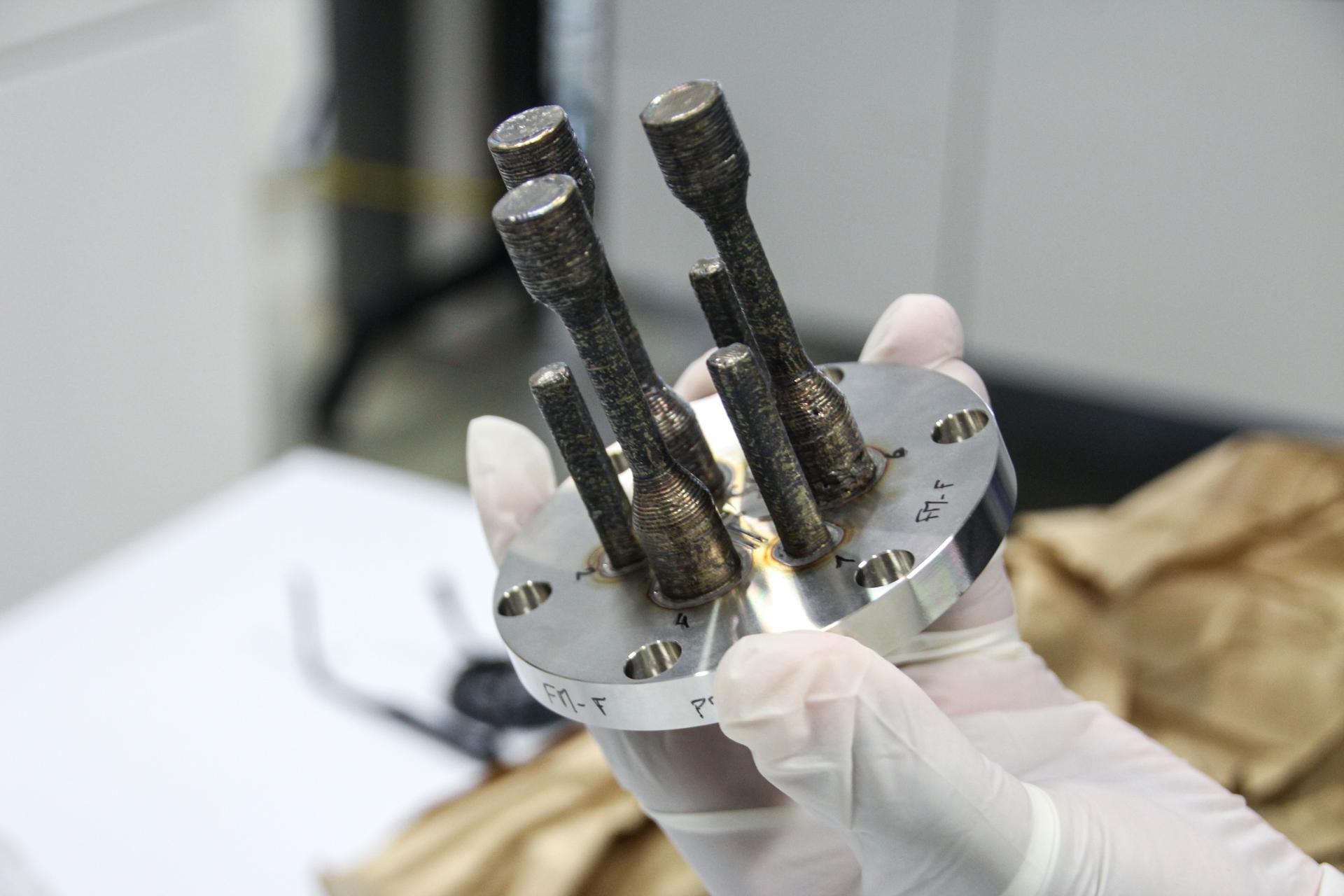
A white-gloved hand holds a shiny metal cylinder about the size of a hockey puck. Three straight metal posts extend from the cylinder, alternating with three slightly taller posts that are thicker on each of their ends.
Metal specimens printed on the ground for ESA’s Metal 3D Printer investigation.
Airbus Defence and Space SAS

As mission duration and distance from Earth increase, resupply becomes harder. Additive manufacturing or 3D printing could be used to make parts and dedicated tools on demand, enhancing mission autonomy.

Research on the space station has made great strides in 3D printing with plastic, but it is not suitable for all uses. The ESA (European Space Agency) Metal 3D Printer investigation builds on recent successful printing of the first metal parts in space.

“We’ll print several small cubes using different strategies to help determine the optimal approach for metal printers in space,” said Rob Postema, ESA technical officer. Quality of the space-printed items will be compared against reference prints made on the ground.

This investigation is a continuation of ESA’s efforts to develop in-space manufacturing and materials recycling capabilities. The ESA investigation team includes Airbus Defence and Space SAS and the User Support Centre CADMOS in France.

Download high-resolution photos and videos of the research mentioned in this article.

Learn more about the research aboard the International Space Station at:

www.nasa.gov/iss-science

Powered by WPeMatico
Get The Details…
Christian M. Getteau

Webb Narrows Atmospheric Possibilities for Earth-sized Exoplanet TRAPPIST-1 d

Webb Narrows Atmospheric Possibilities for Earth-sized Exoplanet TRAPPIST-1 d

6 Min Read

Webb Narrows Atmospheric Possibilities for Earth-sized Exoplanet TRAPPIST-1 d

Illustration of a planet silhouetted in front of a star. The star shows a large eruption on one side and more wisps of red coming from its southern hemisphere. Two more planets appear in the background.
This artist’s concept depicts planet TRAPPIST-1 d passing in front of its turbulent star, with other members of the closely packed system shown in the background. Full illustration and caption show below.
Credits:
NASA, ESA, CSA, Joseph Olmsted (STScI)

The exoplanet TRAPPIST-1 d intrigues astronomers looking for possibly habitable worlds beyond our solar system because it is similar in size to Earth, rocky, and resides in an area around its star where liquid water on its surface is theoretically possible. But according to a new study using data from NASA’s James Webb Space Telescope, it does not have an Earth-like atmosphere.

“Ultimately, we want to know if something like the environment we enjoy on Earth can exist elsewhere, and under what conditions. While NASA’s James Webb Space Telescope is giving us the ability to explore this question in Earth-sized planets for the first time, at this point we can rule out TRAPPIST-1 d from a list of potential Earth twins or cousins,” said Caroline Piaulet-Ghorayeb of the University of Chicago and Trottier Institute for Research on Exoplanets (IREx) at Université de Montréal, lead author of the study published in The Astrophysical Journal.

Planet TRAPPIST-1 d

The TRAPPIST-1 system is located 40 light-years away and was revealed as the record-holder for most Earth-sized rocky planets around a single star in 2017, thanks to data from NASA’s retired Spitzer Space Telescope and other observatories. Due to that star being a dim, relatively cold red dwarf, the “habitable zone” or “Goldilocks zone” – where the planet’s temperature may be just right, such that liquid surface water is possible – lies much closer to the star than in our solar system. TRAPPIST-1 d, the third planet from the red dwarf star, lies on the cusp of that temperate zone, yet its distance to its star is only 2 percent of Earth’s distance from the Sun. TRAPPIST-1 d completes an entire orbit around its star, its year, in only four Earth days.

Webb’s NIRSpec (Near-Infrared Spectrograph) instrument did not detect molecules from TRAPPIST-1 d that are common in Earth’s atmosphere, like water, methane, or carbon dioxide. However, Piaulet-Ghorayeb outlined several possibilities for the exoplanet that remain open for follow-up study.

“There are a few potential reasons why we don’t detect an atmosphere around TRAPPIST-1 d. It could have an extremely thin atmosphere that is difficult to detect, somewhat like Mars. Alternatively, it could have very thick, high-altitude clouds that are blocking our detection of specific atmospheric signatures — something more like Venus. Or, it could be a barren rock, with no atmosphere at all,” Piaulet-Ghorayeb said.

Image: TRAPPIST-1 d (Artist’s Concept)

Illustration of a planet silhouetted in front of a star. The star shows a large eruption on one side and more wisps of red coming from its southern hemisphere. Two more planets appear in the background.
This artist’s concept depicts planet TRAPPIST-1 d passing in front of its turbulent star, with other members of the closely packed system shown in the background. The TRAPPIST-1 system is intriguing to scientists for a few reasons. Not only does the system have seven Earth-sized rocky worlds, but its star is a red dwarf, the most common type of star in the Milky Way galaxy. If an Earth-sized world can maintain an atmosphere here, and thus have the potential for liquid surface water, the chance of finding similar worlds throughout the galaxy is much higher. In studying the TRAPPIST-1 planets, scientists are determining the best methods for separating starlight from potential atmospheric signatures in data from NASA’s James Webb Space Telescope. The star TRAPPIST-1’s variability, with frequent flares, provides a challenging testing ground for these methods.
NASA, ESA, CSA, Joseph Olmsted (STScI)

The Star TRAPPIST-1

No matter what the case may be for TRAPPIST-1 d, it’s tough being a planet in orbit around a red dwarf star. TRAPPIST-1, the host star of the system, is known to be volatile, often releasing flares of high-energy radiation with the potential to strip off the atmospheres of its small planets, especially those orbiting most closely. Nevertheless, scientists are motivated to seek signs of atmospheres on the TRAPPIST-1 planets because red dwarf stars are the most common stars in our galaxy. If planets can hold on to an atmosphere here, under waves of harsh stellar radiation, they could, as the saying goes, make it anywhere.

“Webb’s sensitive infrared instruments are allowing us to delve into the atmospheres of these smaller, colder planets for the first time,” said Björn Benneke of IREx at Université de Montréal, a co-author of the study. “We’re really just getting started using Webb to look for atmospheres on Earth-sized planets, and to define the line between planets that can hold onto an atmosphere, and those that cannot.”

The Outer TRAPPIST-1 Planets

Webb observations of the outer TRAPPIST-1 planets are ongoing, which hold both potential and peril. On the one hand, Benneke said, planets e, f, g, and h may have better chances of having atmospheres because they are further away from the energetic eruptions of their host star. However, their distance and colder environment will make atmospheric signatures more difficult to detect, even with Webb’s infrared instruments.

“All hope is not lost for atmospheres around the TRAPPIST-1 planets,” Piaulet-Ghorayeb said. “While we didn’t find a big, bold atmospheric signature at planet d, there is still potential for the outer planets to be holding onto a lot of water and other atmospheric components.”

“As NASA leads the way in searching for life outside our solar system, one of the most important avenues we can pursue is understanding which planets retain their atmospheres, and why,” said Shawn Domagal-Goldman, acting director of the Astrophysics Division at NASA Headquarters in Washington. “NASA’s James Webb Space Telescope has pushed our capabilities for studying exoplanet atmospheres further than ever before, beyond extreme worlds to some rocky planets – allowing us to begin confirming theories about the kind of planets that may be potentially habitable. This important groundwork will position our next missions, like NASA’s Habitable Worlds Observatory, to answer a universal question: Are we alone?”

The James Webb Space Telescope is the world’s premier space science observatory. Webb is solving mysteries in our solar system, looking beyond to distant worlds around other stars, and probing the mysterious structures and origins of our universe and our place in it. Webb is an international program led by NASA with its partners, ESA (European Space Agency) and CSA (Canadian Space Agency).

To learn more about Webb, visit:

https://science.nasa.gov/webb

Downloads

Click any image to open a larger version.

View/Download all image products at all resolutions for this article from the Space Telescope Science Institute.

Media Contacts

Laura Betz – laura.e.betz@nasa.gov
NASA’s Goddard Space Flight Center, Greenbelt, Md.

Hannah Braun – hbraun@stsci.edu
Space Telescope Science Institute, Baltimore, Md.

Related Information

Read more about the TRAPPIST-1 system

Read more about changing views on the “habitable zone”

Webb Blog: Reconnaissance of Potentially Habitable Worlds with NASA’s Webb

Video: How to Study Exoplanets

Video: How do we learn about a planet’s Atmosphere?

Learn more about exoplanets

Read more about studying TRAPPIST-1 c with Webb

Read more about studying TRAPPIST-1 b with Webb

More Webb News

More Webb Images

Webb Science Themes

Webb Mission Page

Related For Kids

What is the Webb Telescope?

SpacePlace for Kids

En Español

Ciencia de la NASA

NASA en español 

Space Place para niños

Powered by WPeMatico

Get The Details…