NASA Astronaut Jeanette Epps Retires

NASA Astronaut Jeanette Epps Retires

A black woman in a red shirt poses in the International Space Station cupola with the Earth pictured behind her.
Expedition 71 Flight Engineer and NASA astronaut Jeanette Epps poses for a portrait inside the seven-window cupola, the International Space Station’s “window to the world,” while orbiting 259 miles above Greece.
NASA

NASA astronaut Jeanette Epps retired May 30, after nearly 16 years of service with the agency. Epps most recently served as a mission specialist during NASA’s SpaceX Crew-8 mission, spending 235 days in space, including 232 days aboard the International Space Station, working on hundreds of scientific experiments during Expedition 71/72.

“I have had the distinct pleasure of following Jeanette’s journey here at NASA from the very beginning,” said Steve Koerner, acting director of NASA’s Johnson Space Center in Houston. “Jeanette’s tenacity and dedication to mission excellence is admirable. Her contributions to the advancement of human space exploration will continue to benefit humanity and inspire the next generation of explorers for several years to come.”

Epps was selected in 2009 as a member of NASA’s 20th astronaut class. In addition to her spaceflight, she served as a lead capsule communicator, or capcom, in NASA’s Mission Control Center and as a crew support astronaut for two space station expeditions.

“Ever since Jeanette joined the astronaut corps, she has met every challenge with resilience and determination,” said Joe Acaba, NASA’s chief astronaut. “We will miss her greatly, but I know she’s going to continue to do great things.”

Epps also participated in NEEMO (NASA Extreme Environment Mission Operation) off the coast of Florida, conducted geologic studies in Hawaii, and served as a representative to the Generic Joint Operations Panel, which addressed crew efficiency aboard the space station.

The Syracuse, New York, native holds a bachelor’s degree in physics from Le Moyne College in Syracuse. She also earned master’s and doctorate degrees in aerospace engineering from the University of Maryland in College Park. During her graduate studies, she became a NASA Fellow, authoring several journal and conference articles about her research. Epps also received a provisional patent and a U.S. patent prior to her role at NASA.

Learn more about International Space Station research and operations at: 

https://www.nasa.gov/station

-end-

Chelsey Ballarte

Johnson Space Center, Houston

281-483-5111

chelsey.n.ballarte@nasa.gov

Powered by WPeMatico

Get The Details…
Andrea Dunn

Jack Kaye Retires After a Storied Career at NASA

Jack Kaye Retires After a Storied Career at NASA

Jack Kaye [NASA HQ—Associate Director for Research, Earth Science Division (ESD)] has decided to retire on April 30, 2025, following 42 years of service to NASA – see Photo 1. Most recently, Kaye served as associate director for research of the Earth Science Division (ESD) within NASA’s Science Mission Directorate (SMD). In this position, he was responsible for the research and data analysis programs for Earth System Science that addressed the broad spectrum of scientific disciplines from the stratopause to the poles to the oceans.

EC Supplemental image
Photo 1. Jack Kaye [NASA HQ—Associate Director for Research, Earth Science Division (ESD)] retired from NASA on April 30, 2025, after a 42-year career.
Photo credit: Public Domain

A New York native, Kaye’s interest in space was piqued as a child watching early NASA manned space launches on television. He would often write to NASA to get pictures of the astronauts. In high school, he started an after school astronomy club. Despite a youthful interest in Earth science, as he explained in a 2014 “Maniac Talk” at NASA’s Goddard Space Flight Center, Kaye pursued a slightly different academic path. He obtained a Bachelor’s of Science in chemistry from Adelphi University in 1976 and a Ph.D. in theoretical physical chemistry at the California Institute of Technology in 1982. For his graduate studies, he focused on the quantum mechanics of chemical reactions with an aim toward being able to understand and calculate the activity.

Following graduate school, Kaye secured a post-doctoral position at the U.S. Naval Research Laboratory, where he studied the chemistry of Earth’s atmosphere with a focus on stratospheric ozone. It was while working in a group of meteorologists at NASA’s Goddard Space Flight Center that Kaye returned to his roots and refocused his scientific energy on studying Earth.

“NASA had a mandate to study stratospheric ozone,” Kaye said in an interview in 2009. “I got involved in looking at satellite observations and especially trying to interpret satellite observations of stratospheric composition and building models to simulate things, to look both ways, to use the models and use the data.”

Kaye has held numerous science and leadership positions at NASA. He began his career at GSFC as a researcher for the Stratospheric General Circulation and Chemistry Modeling Project (SGCCP) from 1983–1990 working on stratospheric modeling.  In this role, he also worked on an Earth Observing System Interdisciplinary proposal.  His first role at NASA HQ was managing  as program scientist for the Atmospheric Chemistry Modeling and Analysis Program (ACMAP), as well as numerous other missions. In this role, he was a project scientist for the Atmospheric Laboratory for Applications and Science (ATLAS) series of Shuttle missions. While managing ATLAS, Kaye oversaw the science carried out by a dozen instruments from several different countries. He also managed several other Earth Science missions during this time. See the link to Kaye’s “Maniac Talk.”

Kaye entered the Senior Executive Service in 1999, where he continued to contribute to the agency by managing NASA’s Earth Science Research Program. In addition, Kaye has held temporary acting positions as deputy director of ESD and deputy chief scientist for Earth Science within SMD. Throughout his career he has focused on helping early-career investigators secure their first awards to establish their career path—see Photo 2.

Jack Kaye photo 3
Photo 2. Throughout his career, Jack Kaye has been an advocate for young scientists, helping them get established in their careers. Here, Kaye speaks with the Climate Change Research Initiative cohort at the Mary W. Jackson NASA Headquarters building in Washington, DC on August 7, 2024. The Earth Science Division’s Early Career Research Program’s Climate Change Research Initiative is a year-long STEM engagement and experiential learning opportunity for educators and students from high school to graduate level.
Photo Credit: NASA/Joel Kowsky

On numerous occasions, Kaye spoke to different groups emphasizing the agency’s unique role in both developing and utilizing cutting-edge technology, especially remote observations of Earth with different satellite platforms – see Photo 3. With the launch of five new NASA Earth science campaigns in 2020, Kaye stated, “These innovative investigations tackle difficult scientific questions that require detailed, targeted field observations combined with data collected by our fleet of Earth-observing satellites.”

Jack Kaye photo 3
Photo 3. Jack Kaye hands out eclipse posters and other outreach materials to attendees at Eclipse Fest 2024.

Kaye has also represented NASA in interagency and international activities and has been an active participant in the U.S. Global Change Research Program (USGCRP), where he has served for many years as NASA principal of the Subcommittee on Global Change Research. He served as NASA’s representative to the Subcommittee on Ocean Science and Technology and chaired the World Meteorological Organization Expert Team on Satellite Systems. Kaye was named an honorary member of the Asia Oceania Geoscience Society in 2015. He previously completed a six-year term as a member of the Steering Committee for the Global Climate Observing System and currently serves an ex officio member of the National Research Council’s Roundtable on Science and Technology for Sustainability and the Chemical Sciences Roundtable, as well as a member of the Roundtable on Global Science Diplomacy.

NASA has honored Kaye with numerous awards, including the Distinguished Service Medal in 2022 and the Meritorious Executive in the Senior Executive Service in 2004, 2010, and 2021. In 2024 he was awarded the NASA-USGS Pecora Individual Award honoring excellence in Earth Observation. He was named a Fellow by the American Meteorological Society in 2010 and by the American Association of the Advancement of Science (AAAS) in 2014. Kaye was elected to serve as an office of the Atmospheric and Hydrospheric Science section of the AAAS (2015–2018). AGU has recognized him on two occasions with a Citation for Excellence in Refereeing.

Over the course of his career Kaye has published more than 50 papers, contributed to numerous reports, books, and encyclopedias, and edited the book Isotope Effects in Gas-Phase Chemistry for the American Chemical Society. In addition, he has attended the Leadership for Democratic Society program at the Federal Executive Institute and the Harvard Senior Managers in Government Program at the John F. Kennedy School of Government at Harvard University.

“The vantage point of space provides a way to look at the Earth globally, with the ability to observe Earth’s interacting components of air, water, land and ice, and both naturally occurring and human-induced processes,” Kaye said in a November 2024 article published by Penn State University. “It lets us look at variability on a broad range of spatial and temporal scales and given the decades of accomplishments, has allowed us to characterize and document Earth system variability on time scales from minutes to decades.”

Powered by WPeMatico

Get The Details…

In Memoriam: Dr. Stanley Sander

In Memoriam: Dr. Stanley Sander

In Memoriam Banner

3 min read

In Memoriam: Dr. Stanley Sander

In Memoriam – Sander

Dr. Stanley Sander dedicated more than five decades to atmospheric science at the Jet Propulsion Laboratory, beginning his JPL career as a graduate research assistant in 1971. A leading figure in atmospheric chemistry, Stan made foundational contributions to our understanding of stratospheric ozone depletion, tropospheric air pollution, and climate science related to greenhouse gases.

His pioneering work in laboratory measurements—particularly of reaction rate constants, spectroscopy, and photochemistry—was designed to forge consensus among often disparate measurements.  His steadfast application of the scientific method was essential for furthering scientific research, as well as for providing sound advice for use in air quality management and environmental policies. His expertise extended beyond Earth’s atmosphere, with studies of methane chemistry on Mars, halogens on Venus, and hydrocarbons in Titan’s atmosphere.

Stan’s scientific output was vast. He authored over 180 peer-reviewed publications, beginning with his 1976 paper on sulfur dioxide oxidation. His work spans major aspects of atmospheric chemistry—from chlorine, bromine, and nitrogen oxides to sulfur compounds and peroxides. The rate constants, cross-sections, and photochemical data produced in his lab form the cornerstone of atmospheric modeling crucial to the scientific foundation of the Montreal Protocol on Substances that Deplete the Ozone Layer.  He played a central role in the widely used JPL Chemical Kinetics and Photochemical Data for Use in Atmospheric Studies reports, which have collectively garnered over 10,000 citations. His spectroscopic research, which included development of novel spectrometers and polarimeters, resulted in insightful data from sites at JPL, the Table Mountain Facility as well as the California Laboratory for Remote sensing (CLARS). These activities have contributed significantly to the calibration and validation of satellite missions like TES, OCO, OMI, and SAGE, helped advance remote sensing technologies, and informed local air quality metrics.

Stan was not only a brilliant scientist but a deeply respected mentor and leader. He guided 40 postdocs at JPL, 14 graduate students at Caltech, and 14 undergraduate researchers. At JPL, he held key leadership roles including Supervisor of the Laboratory Studies and Modeling Group, Chief Engineer and Acting Chief Technologist in the Science Division, and Senior Research Scientist.  Those of us lucky enough to be fostered by Stan in this capacity will always remember his kindness first approach and steadfast resolve in the face of challenges.

Stan’s contributions were recognized with numerous honors, including two NASA Exceptional Achievement Medals, a NASA Exceptional Service Medal, and elected as a fellow for both the American Geophysical Union (2021) and the American Association for the Advancement of Science (2024). Although the announcement of his AAAS Fellowship came posthumously, he was informed of this honor before his passing.

Stan was a rare combination of scientific brilliance, humility, and kindness. He was not only a leader in his field, but also a generous collaborator and cherished mentor. His loss is profoundly felt by the scientific community and by all who had the privilege of working with him. His legacy, however, will endure in those he mentored and the substantial contributions he made to scientific knowledge. 

Powered by WPeMatico

Get The Details…

Sols 4559-4560: Drill Campaign — Searching for a Boxwork Bedrock Drill Site

Sols 4559-4560: Drill Campaign — Searching for a Boxwork Bedrock Drill Site

3 min read

Sols 4559-4560: Drill Campaign — Searching for a Boxwork Bedrock Drill Site

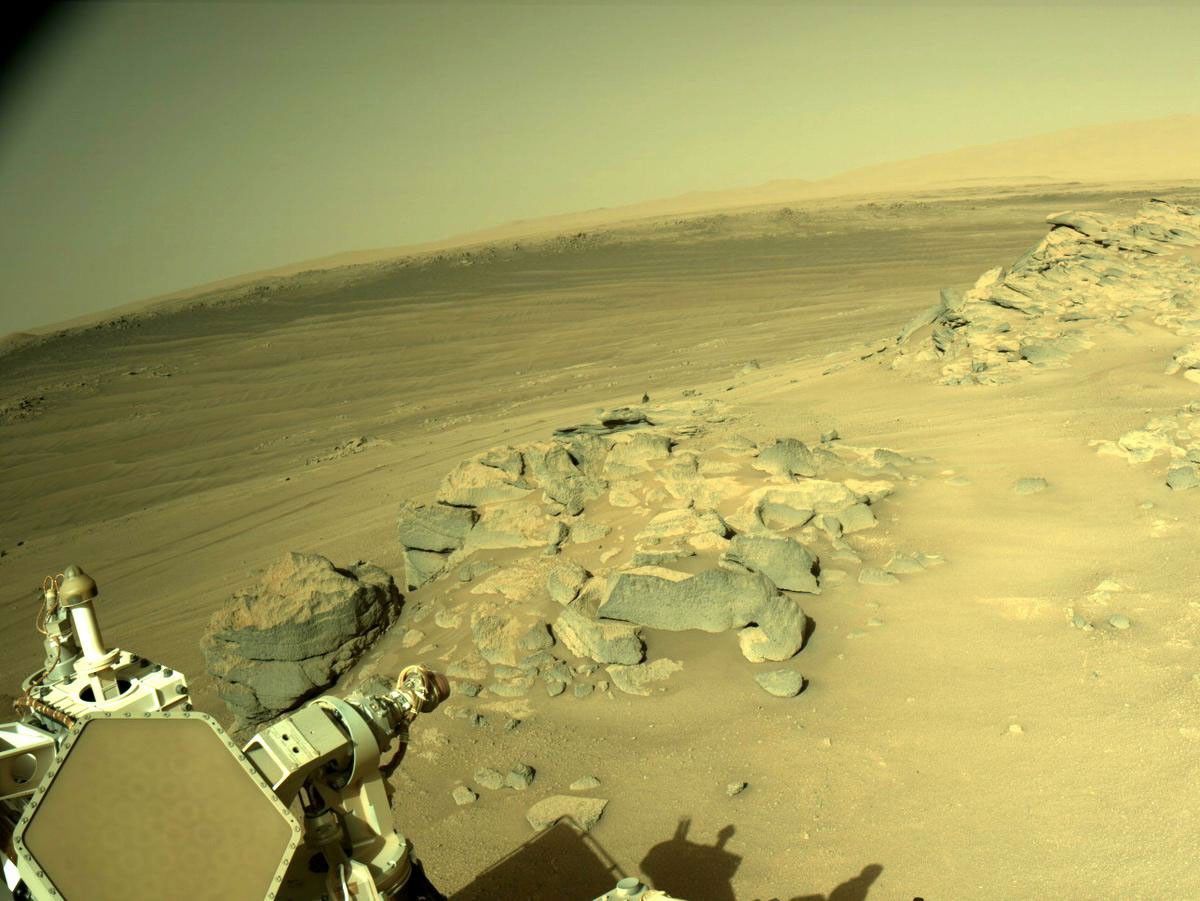
A grayscale photo looking down at the Martian surface, showing very rough terrain in front of the Curiosity rover. Light gray, gravel-covered rocks are in bright sunlight in the upper half of the frame. A shadow silhouette of the rover covers much of the rest of the image, from the center toward the lower right corner. Portions of the rover itself are sunlit and visible at the bottom and left side of the image.
NASA’s Mars rover Curiosity acquired this image of a portion of its workspace, full of interesting but not drillable bedrock, using its Left Navigation Camera on June 2, 2025 — Sol 4558, or Martian day 4,558 of the Mars Science Laboratory mission — at 12:23:24 UTC.
NASA/JPL-Caltech

Written by Lucy Lim, Planetary Scientist at NASA’s Goddard Space Flight Center

Earth planning date: Monday, June 2, 2025

Now that Curiosity has spent a few sols collecting close-up measurements of the rocks in the outer edge of the boxwork-forming geologic unit, the team has decided that it’s time to collect a drill sample. The geochemical measurements by APXS and ChemCam have shown changes since we crossed over from the previous layered sulfate unit, but we can’t figure out the mineralogy from those data alone. As we’ve often seen before on Mars, the same chemical elements can crystallize into a number of different mineral assemblages. That’s even more the case in sedimentary rocks such as we are driving through, in which different grains in our rocks may have formed in different times and places. This also means that when we do get our mineral data, those minerals will tell us a lot about the history of these new-to-us rocks.

On board Curiosity, that mineral analysis is the job of the CheMin instrument, which uses X-ray diffraction to identify minerals. CheMin shines a narrow X-ray beam through a powdered sample in order to generate the diffraction pattern, which means that it needs a drilled sample. So the team today was busy looking for a drillable spot. Unfortunately the rover’s drill reach from today’s parking spot included only rocks that were too fractured or had too much debris sitting on them to be considered likely to produce a good drilled sample, so we will have to move, or “bump,” at least one more time before progressing to the drill preload test, which is the next step in drilling. 

In the meantime, we are taking more measurements to understand the range of compositions that can be found in this rock layer. Dust removal (DRT) + APXS + LIBS + MAHLI were all planned for target “Holcomb Valley,” while a short distance away a second DRT/APXS/MAHLI measurement was planned for “Santa Ysabel Valley” and in another direction, a second LIBS for “Stough Saddle.” One long-distance ChemCam remote imaging mosaic was planned to cover a boxwork structure off in the distance. Mastcam had a relatively light day of imaging, with just a couple of small mosaics covering a nearby trough feature, and providing context for the RMI of the boxwork structure, in addition to documenting the two LIBS targets. The modern Mars environment was also recorded with a couple of movies to look for dust-devil activity, a measurement of atmospheric opacity, and a pair of suprahorizon observations to look for clouds, plus the usual passive observations by DAN and REMS to monitor the neutron environment, temperature, and humidity.

I’ll be on rover planning Wednesday as Geology and Mineralogy Science Theme Lead and looking forward to what we find — hopefully some drillable boxwork-unit bedrock!

Share

Details

Last Updated
Jun 04, 2025

Related Terms

Powered by WPeMatico

Get The Details…

Blood, Oxygen Research for Crew Health, and Axiom Preps Fill Day

Blood, Oxygen Research for Crew Health, and Axiom Preps Fill Day

NASA astronaut and Expedition 73 Flight Engineer Anne McClain works inside the Destiny laboratory module's Materials Science Research Rack and swaps filters inside the Kermit microscope. Kermit is an all-in-one fluorescence microscope system used to conduct biological, physical, and materials science research.
NASA astronaut Engineer Anne McClain works inside the Destiny laboratory module’s Materials Science Research Rack and swaps filters inside the Kermit microscope used to conduct biological, physical, and materials science research.
NASA

Blood and oxygen investigations to improve health in space dominated the research schedule aboard the International Space Station on Wednesday. The Expedition 73 crewmates also trained for the arrival next week of the Axiom Mission 4 (Ax-4) crew inside the Space Dragon spacecraft.

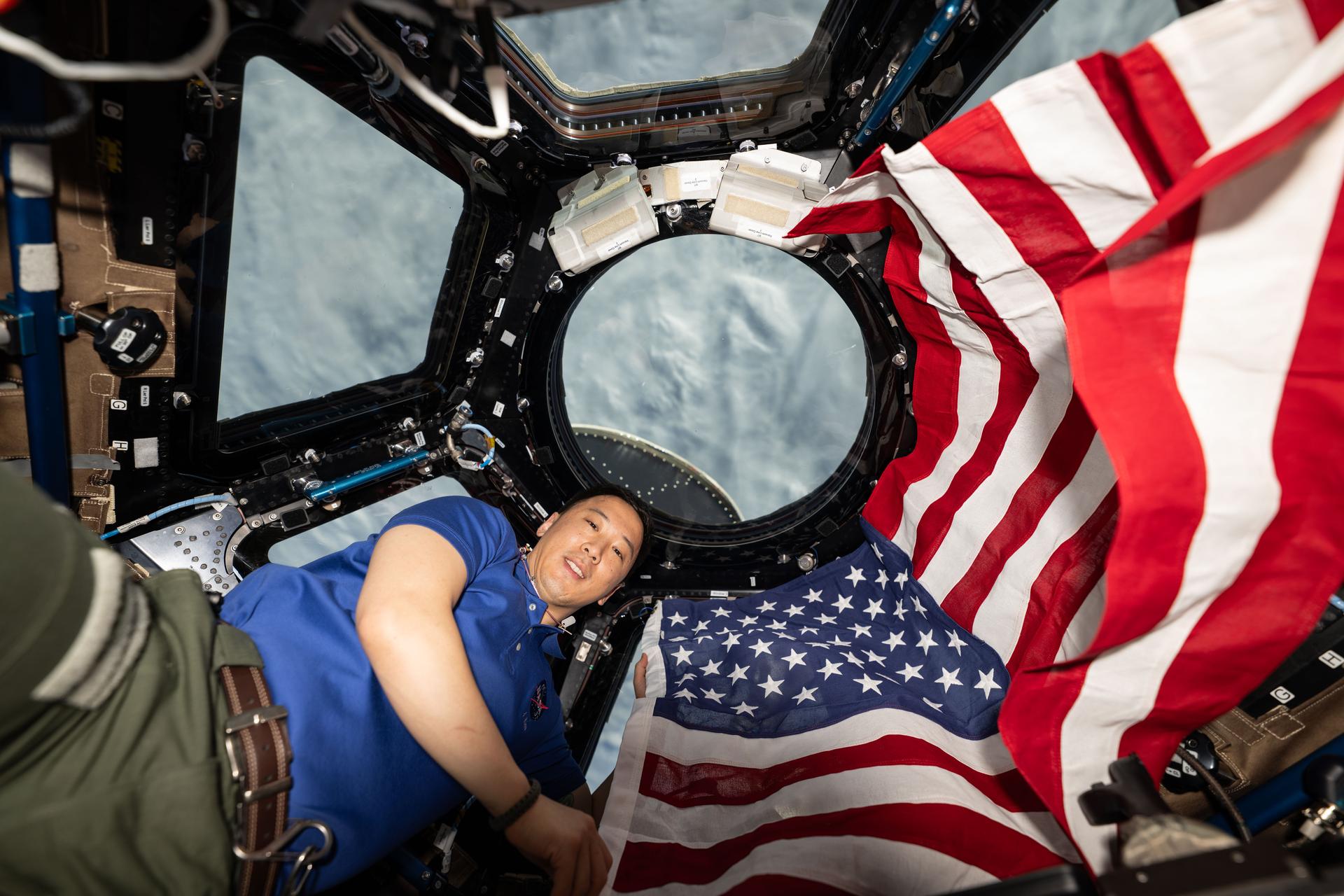
NASA Flight Engineer Jonny Kim completed a 48-hour session on Wednesday wearing a sensor-packed headband and vest that comfortably monitored his health data while he worked aboard the orbital outpost. He also downloaded his blood pressure measurements so doctors on the ground could review his cardiac health and compare the data collected from astronauts on previous missions.

Station Commander Takuya Onishi from JAXA (Japan Aerospace Exploration Agency) attached electrodes to his neck and chest that measured blood flow from his brain to his heart. The Drain Brain 2.0 experiment is helping doctors test a rapid screening tool that may identify and prevent potential space-caused thrombosis, or blood clots, on future missions.

Next, Onishi turned his attention to Ax-4 checking out tablet computers the private astronaut crew will use aboard the orbiting lab. Finally, the two-time station visitor joined NASA Flight Engineers Anne McClain and Nichole Ayers and called down to mission controllers to discuss upcoming approach and rendezvous operations when Ax-4 docks autonomously aboard Dragon to Harmony module’s space-facing port on June 11. Earlier, McClain and Ayers reviewed on a computer a variety of approach scenarios Dragon may encounter as it nears the space station next week. The SpaceX Falcon 9 rocket with the Dragon crew spacecraft atop is targeted to launch Ax-4 no earlier than 8:22 a.m. EDT on Tuesday, June 10, from NASA’s Kennedy Space Center.

Before she began her Ax-4 mission review, McClain pedaled on the Destiny laboratory module’s exercise cycle for a long-running workout study. She wore chest electrodes and breathing gear to measure her aerobic capacity, or the maximum amount of oxygen the body uses during exercise, in microgravity. Researchers will use the data to improve space exercise programs and ensure astronauts are in shape to conduct intense physical activities such as spacewalk. Ayers began her shift transferring nitrogen from Harmony to the Quest airlock. Ayers then organized food packs inside the Unity module before beginning her Ax-4 preparations.

Working from the orbital outpost’s Roscosmos segment, Flight Engineer Alexey Zubritskiy was back on Earth observation duty photographing landmarks across Eastern Europe. Flight Engineer Kirill Peskov also pointed his camera at the Earth capturing imagery of the Volga River and Aral Sea for a study documenting the effects of natural and man-made disasters. Veteran cosmonaut and three-time station resident Sergey Ryzhikov electronically stored data collected for an investigation studying how to improve communication among international crews and mission controllers from around the world.

Learn more about station activities by following the space station blog, @space_station and @ISS_Research on X, as well as the ISS Facebook and ISS Instagram accounts.

Get the latest from NASA delivered every week. Subscribe here.

Powered by WPeMatico

Get The Details…

Mark A. Garcia