NASA’s Webb Digs into Structural Origins of Disk Galaxies

NASA’s Webb Digs into Structural Origins of Disk Galaxies

5 Min Read

NASA’s Webb Digs into Structural Origins of Disk Galaxies

Eight edge-on disk galaxies observed by the James Webb Space Telescope, split in two rows. Each disk galaxy is centered within a square frame and lies against the black background of space. They appear as thin lines with a slight bulge in their centers. A few of the galaxies are horizontal or vertical, but many are angled diagonally.
Astronomers pulled from NASA’s James Webb Space Telescope’s data to analyze a sample of 111 edge-on galaxies. The team’s analysis suggests that thick disk formation occurs first, and thin disk formation follows. Full image and caption below.
Credits:
NASA, ESA, CSA, T. Tsukui (Australian National University).

Present-day disk galaxies often contain a thick, star-filled outer disk and an embedded thin disk of stars. For instance, our own Milky Way galaxy’s thick disk is approximately 3,000 light-years in height, and its thin disk is roughly 1,000 light-years thick.

How and why does this dual disk structure form? By analyzing archival data from multiple observational programs by NASA’s James Webb Space Telescope, a team of astronomers is closer to answers, as well as understanding the origins of disk galaxies in general.

The team carefully identified, visually verified, and analyzed a statistical sample of 111 edge-on disk galaxies at various periods — up to 11 billion years ago (or approximately 2.8 billion years after the big bang). This is the first time scientists have investigated thick- and thin-disk structures spanning such vast distances, bridging the gap between observers probing the early universe and galactic archaeologists seeking to understand our own galaxy’s history.

“This unique measurement of the thickness of the disks at high redshift, or at times in the early universe, is a benchmark for theoretical study that was only possible with Webb,” said Takafumi Tsukui, lead author of the paper and a researcher at the Australian National University in Canberra. “Usually, the older, thick disk stars are faint, and the young, thin disk stars outshine the entire galaxy. But with Webb’s resolution and unique ability to see through dust and highlight faint old stars, we can identify the two-disk structure of galaxies and measure their thickness separately.”

Image: A Sample of Galaxy Disks (NIRCam)

Two mosaics of edge-on disk galaxies observed by the James Webb Space Telescope. Each mosaic has eight images, split in two rows. The mosaic at the top is titled “thin and thick disk galaxies.” The mosaic at the bottom is titled “thick disk only galaxies.” Each disk galaxy is centered within a square frame and lies against the black background of space. They appear as thin lines with a slight bulge in their centers. A few of the galaxies are horizontal or vertical, but many are angled diagonally. The thin and thick disk galaxies are overall whiter and brighter compared to the thick disk only galaxies, which are fainter and brown-orange. Text in the bottom right of each box lists the galaxy’s redshift. From left to right, the first row of the top mosaic reads z =0.12; z = 0.25; z = 0.45; and z = 0.72. The second row reads z = 0.21; z = 0.38; z =0.65; and z = 0.73. The top row of the bottom mosaic reads z = 0.73, z = 0.94; z = 1.25; and z = 2.63. The bottom row reads z = 0.91; z = 1.03; z = 2.13; and z = 3.01.
Astronomers pulled from NASA’s James Webb Space Telescope’s data to analyze a sample of 111 edge-on galaxies. The team’s analysis suggests that thick disk formation occurs first, and thin disk formation follows. When this process occurs depends on the galaxy’s mass.
NASA, ESA, CSA, T. Tsukui (Australian National University).

Data Through Thick and Thin

By analyzing these 111 targets over cosmological time, the team was able to study single-disk galaxies and double-disk galaxies. Their results indicate that galaxies form a thick disk first, followed by a thin disk. The timing of when this takes place is dependent on the galaxy’s mass: high-mass, single-disk galaxies transitioned to two-disk structures around 8 billion years ago. In contrast, low-mass, single-disk galaxies formed their embedded thin disks later on, about 4 billion years ago.

“This is the first time it has been possible to resolve thin stellar disks at higher redshift. What’s really novel is uncovering when thin stellar disks start to emerge,” said Emily Wisnioski, a co-author of the paper at the Australian National University in Canberra. “To see thin stellar disks already in place 8 billion years ago, or even earlier, was surprising.”

A Turbulent Time for Galaxies

To explain this transition from a single, thick disk to a thick and thin disk, and the difference in timing for high- and low-mass galaxies, the team looked beyond their initial edge-on galaxy sample and examined data showing gas in motion from the Atacama Large Millimeter/submillimeter Array (ALMA) and ground-based surveys.

By taking into consideration the motion of the galaxies’ gas disks, the team finds their results align with the “turbulent gas disk” scenario, one of three major hypotheses that has been proposed to explain the process of thick- and thin-disk formation. In this scenario, a turbulent gas disk in the early universe sparks intense star formation, forming a thick stellar disk. As stars form, they stabilize the gas disk, which becomes less turbulent and, as a result, thinner.

Since massive galaxies can more efficiently convert gas into stars, they settle sooner than their low-mass counterparts, resulting in the earlier formation of thin disks. The team notes that thick- and thin-disk formation are not siloed events: The thick disk continues to grow as the galaxy develops, though it’s slower than the thin disk’s rate of growth.

How This Applies to Home

Webb’s sensitivity is enabling astronomers to observe smaller and fainter galaxies, analogous to our own, at early times and with unprecedented clarity for the first time. In this study, the team noted that the transition period from thick disk to a thick and thin disk roughly coincides with the formation of the Milky Way galaxy’s thin disk. With Webb, astronomers will be able to further investigate Milky Way-like progenitors — galaxies that would have preceded the Milky Way — which could help explain our galaxy’s formation history.

In the future, the team intends to incorporate other data points into their edge-on galaxy sample.

“While this study structurally distinguishes thin and thick disks, there is still much more we would like to explore,” said Tsukui. “We want to add the type of information people usually get for nearby galaxies, like stellar motion, age, and metallicity. By doing so, we can bridge the insights from galaxies near and far, and refine our understanding of disk formation.”

These results were published in the Monthly Notices of the Royal Astronomical Society.

The James Webb Space Telescope is the world’s premier space science observatory. Webb is solving mysteries in our solar system, looking beyond to distant worlds around other stars, and probing the mysterious structures and origins of our universe and our place in it. Webb is an international program led by NASA with its partners, ESA (European Space Agency) and CSA (Canadian Space Agency).

To learn more about Webb, visit:

https://science.nasa.gov/webb

Downloads

Click any image to open a larger version.

View/Download all image products at all resolutions for this article from the Space Telescope Science Institute.

View/Download the research results from the Monthly Notices of the Royal Astronomical Society.

Media Contacts

Laura Betz – laura.e.betz@nasa.gov
NASA’s Goddard Space Flight Center, Greenbelt, Md.

Abigail Majoramajor@stsci.edu
Space Telescope Science Institute, Baltimore, Md.

Hannah Braunhbraun@stsci.edu
Space Telescope Science Institute, Baltimore, Md.

Related Information

Article: Types of Galaxies

Video: Celestial Tour: Different types of galaxies

Article: Learn more about Webb’s views of nearby spiral galaxies

Visualization Video: Galaxy Traverse

More Webb News

More Webb Images

Webb Science Themes

Webb Mission Page

Related For Kids

What is the Webb Telescope?

SpacePlace for Kids

En Español

Ciencia de la NASA

NASA en español 

Space Place para niños

Powered by WPeMatico

Get The Details…

Axiom Mission 4 Astronauts Enter Station, Begin Research Mission

Axiom Mission 4 Astronauts Enter Station, Begin Research Mission

The Axiom Mission 4 crew gathers inside the International Space Station's Harmony module shortly after docking aboard the SpaceX Dragon spacecraft. From left are, Mission Specialist Sławosz Uznański-Wiśniewski, Commander Peggy Whitson, Pilot Shubhanshu Shukla, and Mission Specialist Tibor Kapu.
The Axiom Mission 4 crew gathers inside the International Space Station’s Harmony module shortly after docking aboard the SpaceX Dragon spacecraft. From left are, Mission Specialist Sławosz Uznański-Wiśniewski, Commander Peggy Whitson, Pilot Shubhanshu Shukla, and Mission Specialist Tibor Kapu.
NASA+

At 8:14 a.m. EDT on Thursday, the hatch opened between the SpaceX Dragon spacecraft and the International Space Station following the arrival of Axiom Mission 4. NASA’s live coverage will continue through welcome remarks from the crew.

The spacecraft docked at 6:31 a.m. to the space-facing port of the space station’s Harmony module.

Former NASA astronaut Peggy Whitson, ISRO (Indian Space Research Organisation) astronaut Shubhanshu Shukla, ESA (European Space Agency) astronaut Sławosz Uznański-Wiśniewski of Poland, and Tibor Kapu of Hungary now are aboard the space station after launching at 2:31 a.m. on June 25, on the company’s Falcon 9 rocket from Launch Complex 39A at NASA’s Kennedy Space Center in Florida for the fourth private astronaut mission to the orbiting laboratory, Axiom Mission 4.

The private astronauts plan to spend about two weeks aboard the orbiting laboratory, conducting a mission of science, outreach, and commercial activities. 

Learn more about station activities by following the space station blog, @space_station and @ISS_Research on X, as well as the ISS Facebook and ISS Instagram accounts.

Get the latest from NASA delivered every week. Subscribe here.

Powered by WPeMatico

Get The Details…

Mark A. Garcia

Axiom Mission 4 Astronauts Dock to Station Inside Dragon

Axiom Mission 4 Astronauts Dock to Station Inside Dragon

The SpaceX Dragon spacecraft carrying Axiom Mission 4 nears the International Space Station's space-facing docking port on the Harmony module.
The SpaceX Dragon spacecraft carrying Axiom Mission 4 nears the International Space Station’s space-facing docking port on the Harmony module.
NASA+

At 6:31 a.m. EDT on Thursday, the SpaceX Dragon spacecraft docked to the International Space Station for the fourth private astronaut mission to the orbiting laboratory, Axiom Mission 4. NASA’s arrival coverage will continue through hatch opening and welcome remarks from the crew.

Former NASA astronaut Peggy Whitson, ISRO (Indian Space Research Organisation) astronaut Shubhanshu Shukla, ESA (European Space Agency) astronaut Sławosz Uznański-Wiśniewski of Poland, and Tibor Kapu of Hungary lifted off at 2:31 a.m. on June 25, aboard a SpaceX Dragon spacecraft on the company’s Falcon 9 rocket from Launch Complex 39A at NASA’s Kennedy Space Center in Florida.

Learn more about station activities by following the space station blog, @space_station and @ISS_Research on X, as well as the ISS Facebook and ISS Instagram accounts.

Get the latest from NASA delivered every week. Subscribe here.

Powered by WPeMatico
Get The Details…

Mark A. Garcia

Axiom Mission 4 Mission Approaches Station for Docking on NASA+

Axiom Mission 4 Mission Approaches Station for Docking on NASA+

(From left) Ax-4 Mission Specialist Tibor Kapu, Pilot Shubhanshu Shukla, Commander Peggy Whitson, and Mission Specialist Sławosz Uznański-Wiśniewski wave from inside the Space Dragon spacecraft.
(From left) Axiom Mission 4 Mission Specialist Tibor Kapu, Pilot Shubhanshu Shukla, Commander Peggy Whitson, and Mission Specialist Sławosz Uznański-Wiśniewski wave from inside the Space Dragon spacecraft.
Axiom Space

NASA’s live coverage is underway on NASA+ for the arrival of the fourth private astronaut mission to the International Space Station, Axiom Mission 4.

The Dragon spacecraft is ahead of schedule and may autonomously dock at approximately 6:18 a.m. EDT Thursday, June 26, to the space-facing port of the space station’s Harmony module.

Former NASA astronaut Peggy Whitson, ISRO (Indian Space Research Organisation) astronaut Shubhanshu Shukla, ESA (European Space Agency) astronaut Sławosz Uznański-Wiśniewski of Poland, and Tibor Kapu of Hungary lifted off at 2:31 a.m. EDT on June 25, on the SpaceX’s Falcon 9 rocket from Launch Complex 39A at NASA’s Kennedy Space Center in Florida.

Once docked, the private astronauts plan to spend about two weeks aboard the orbiting laboratory, conducting a mission comprised of science, outreach, and commercial activities. The mission is sending the first ISRO astronaut to the station as part of a joint effort between NASA and the Indian space agency. The private mission also carries the first astronauts from Poland and Hungary to stay aboard the space station.

Learn more about station activities by following the space station blog, @space_station and @ISS_Research on X, as well as the ISS Facebook and ISS Instagram accounts.

Get the latest from NASA delivered every week. Subscribe here.

Powered by WPeMatico

Get The Details…

Mark A. Garcia

Ax-4 Orbiting Toward Station as Expedition 73 Studies Pharma, Blood Pressure

Ax-4 Orbiting Toward Station as Expedition 73 Studies Pharma, Blood Pressure

This time-lapse photograph shows Axiom Mission 4 soaring into space aboard the SpaceX Dragon after launching at 2:31 a.m. EDT from NASA's Kennedy Space Center in Florida.
This long-duration photograph shows Ax-4 soaring into low Earth orbit aboard the SpaceX Dragon spacecraft after launching at 2:31 a.m. EDT on Wednesday from NASA’s Kennedy Space Center in Florida.
SpaceX

The SpaceX Dragon spacecraft carrying four Axiom Mission 4 (Ax-4) crew members is orbiting Earth and on its way to the International Space Station after launching from Kennedy Space Center at 2:31 a.m. EDT on Wednesday. Dragon is carrying Ax-4 Commander Peggy Whitson, Pilot Shubhanshu Shukla, and Mission Specialists Sławosz Uznański-Wiśniewski and Tibor Kapu and will dock to the Harmony module’s space-facing port at 7 a.m. on Thursday with NASA+ coverage beginning at 5 a.m.

NASA Flight Engineers Anne McClain and Nichole Ayers will be on duty at the beginning of their shift monitoring Dragon during its automated approach and rendezvous maneuvers. After docking, the Ax-4 private astronauts will greet the seven Expedition 73 crewmates, call down to Earth for welcoming remarks, then participate in a safety briefing with the station residents.

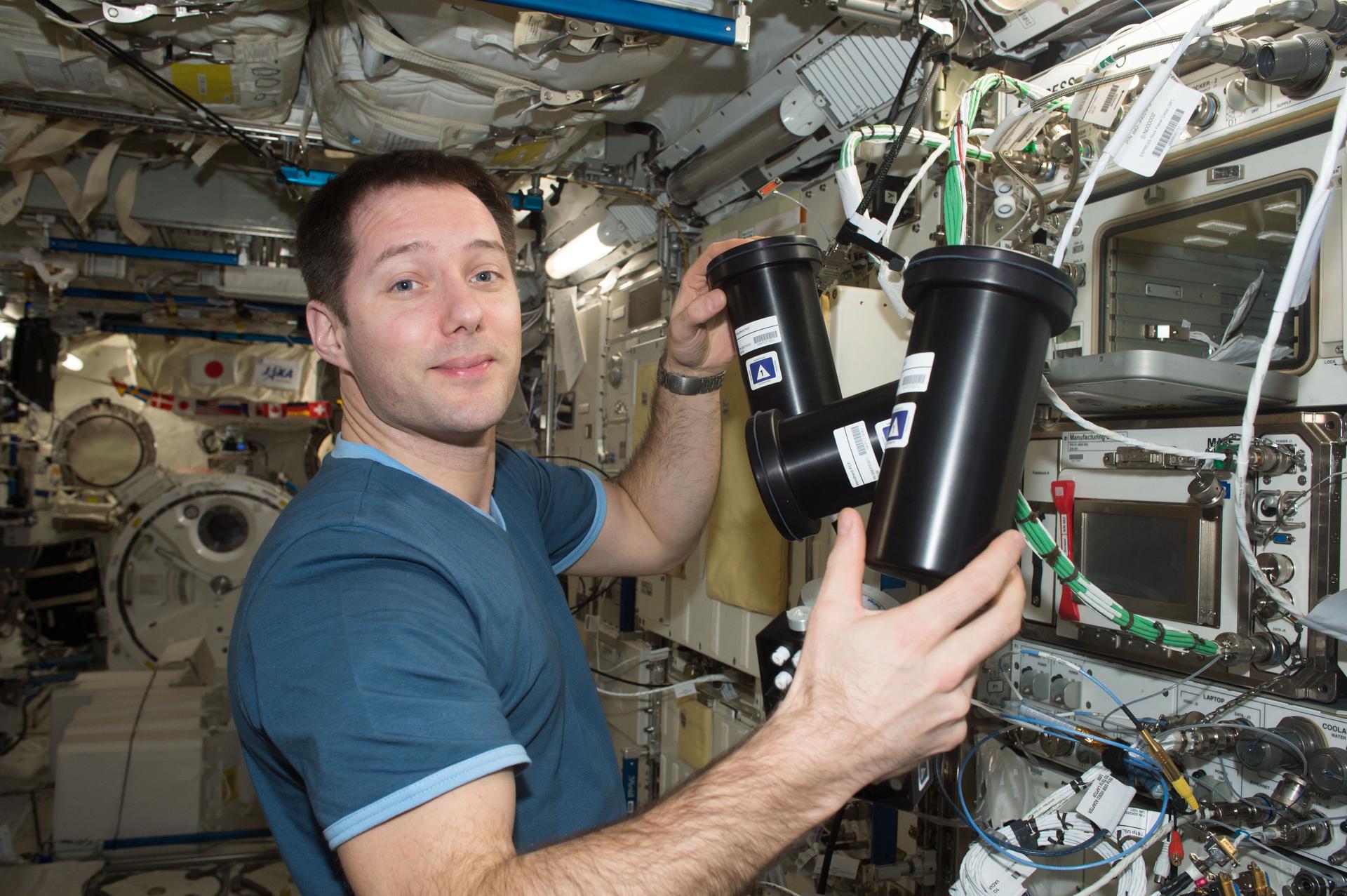
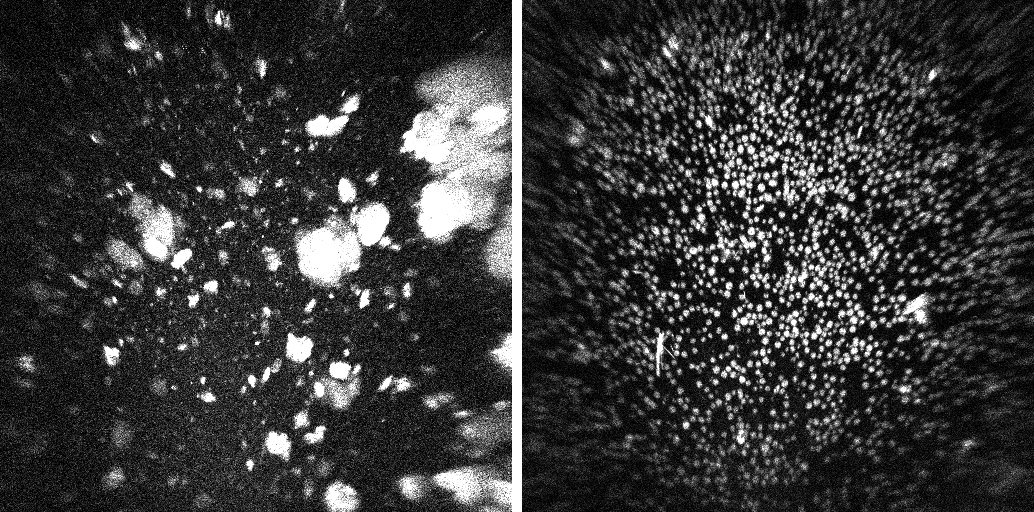
Meanwhile, McClain and Ayers, including the rest of the station crew, had a normal shift on Wednesday keeping up microgravity research and lab maintenance. McClain configured research hardware and processed samples in the Destiny laboratory module then photographed her work for analysis on the ground. Ayers once again tended to a fluid physics study in the Microgravity Science Glovebox that may benefit pharmaceutical manufacturing techniques and 3D printing in space.

NASA Flight Engineer Jonny Kim partnered together with station Commander Takuya Onishi from JAXA (Japan Aerospace Exploration Agency) and tested a specialized thigh cuff that may reverse space-caused fluid shifts toward a crew member’s upper body. The duo took turns wearing the biomedical device in the Columbus laboratory module as Ultrasound 2 scans and blood pressure checks measured cardiac output, heart rate, and more to determine the effectiveness of the thigh cuff to protect crew health.

Veteran cosmonaut and three-time space station visitor Sergey Ryzhikov began his shift in the Zvezda service module replacing computer components before wrapping up his day charging science experiment batteries and activating an Earth observation camera. Flight Engineer Alexey Zubritskiy spent his day reorganizing cargo inside the Nauka science module and stowing trash and discarded gear inside the Progress 90 cargo craft due to depart the Poisk module next week. Flight Engineer Kirill Peskov cleaned Nauka ventilation systems then checked radiation exposure data the station experiences while orbiting Earth.

Learn more about station activities by following the space station blog, @space_station and @ISS_Research on X, as well as the ISS Facebook and ISS Instagram accounts.

Get the latest from NASA delivered every week. Subscribe here.

Powered by WPeMatico

Get The Details…

Mark A. Garcia