NASA Launches 2026 Lunabotics Challenge

NASA Launches 2026 Lunabotics Challenge

Students prepare their robots to enter Artemis Arena during NASA’s Lunabotics competition on May 20, 2025, at the Center for Space Education near the Kennedy Space Center Visitor Complex in Florida.
NASA/Isaac Watson

As college students across the country embark upon the academic year, NASA is giving them something else to look forward to – the agency’s 2026 Lunabotics Challenge. Teams interested in participating can submit their applications and supporting materials through NASA’s Stem Gateway portal beginning Monday, Sept. 8.

Key dates and challenge details are available in the 2026 Lunabotics Challenge Guidebook. Once all applications and supporting materials are received and evaluated, NASA will notify the selected teams to begin the challenge.

Student teams participating in this year’s challenge will create robots capable of building berms out of lunar regolith – the loose, fragmental material on the Moon’s surface. Structures like these will be important during lunar missions as blast protection during lunar landings and launches, shading for cryogenic propellant tank farms, radiation shielding around nuclear power plants, and other uses critical to future Moon missions.

“We are excited to continue the Lunabotics competition for universities as NASA develops new Moon to Mars technologies for the Artemis program,” said Robert Mueller, senior technologist at NASA, as well as co-founder and chief judge of the Lunabotics competition. “Excavating and moving regolith is a fundamental need to build infrastructure on the Moon and Mars and this competition creates 21st century skills in the future workforce.”

An in-person qualifying event will be held May 12-17, 2026, at the University of Central Florida’s Space Institute’s Exolith Lab in Orlando. From this round, the top 10 teams will be invited to bring their robots to the final competition on May 19-21, at the Kennedy Space Center Visitor Complex’s Artemis Arena in Florida, which has an area filled with a lunar regolith simulant. The team scoring the most points will receive the Lunabotics Grand Prize and participate in an exhibition-style event at NASA Kennedy.

By encouraging innovative construction techniques and assessing student designs and data the same way it does its own prototypes, NASA casts a wider net to find innovative solutions to challenges inherent in future Artemis missions, like developing future lunar excavators, in-situ resource utilization capabilities, and living on the Moon or Mars. With its multidisciplinary approach, Lunabotics also serves as a workforce pipeline, with teams gaining valuable hands-on experience in computer coding, engineering, manufacturing, fabricating, and other crucial skills, while also receiving technical expertise in space technology development.

NASA’s Lunabotics Challenge, held annually since 2010, is one of several Artemis Student Challenges. The two-semester competition provides U.S. college and technical school teams an opportunity to design, build, and operate a prototype lunar robot using NASA systems engineering processes. Competitions help NASA get innovative design and operational data, reduce risks, and cultivate new ideas needed to return to the Moon under the Artemis campaign to prepare for human exploration of Mars.

To learn more about Lunabotics, visit:

https://www.nasa.gov/learning-resources/lunabotics-challenge/

Powered by WPeMatico

Get The Details…
Jason Costa

Jeni Morrison Continues a Family Legacy of Service at NASA 

Jeni Morrison Continues a Family Legacy of Service at NASA 

A child of the Space Shuttle Program, Jeni Morrison grew up walking the grounds of NASA’s Johnson Space Center in Houston with her parents and listening to family stories about human spaceflight. 

Now, with more than 15 years at NASA, Morrison serves as one of Johnson’s Environmental Programs managers. She ensures the center complies with laws that protect its resources by overseeing regulatory compliance for cultural and natural resources, stormwater and drinking water programs, and the National Environmental Policy Act. She also safeguards Johnson’s historic legacy as Johnson’s Cultural Resources manager. 

A woman smiles outside in front of green
Jeni Morrison in the mall area at NASA’s Johnson Space Center in Houston, where employees often see local wildlife, including turtles, birds, deer, and the occasional alligator.

“I make sure our actions comply with the National Historic Preservation act, since the center is considered a historic district with two National Historic Landmarks onsite,” Morrison said. “I make sure we respect and document Johnson’s heritage while paving the way for new efforts and mission objectives.” 

Morrison takes pride in finding solutions that increase efficiency while protecting resources. One example was a project with Johnson’s Geographic Information System team to create an interactive material and chemical spill plan map. The new system helps responders quickly trace spill paths above and underground to deploy resources faster, reducing cleanup costs and minimizing environmental impacts. 

“Every improvement we make not only saves time and resources, but strengthens our ability to support NASA’s mission,” she said.  

By the very nature of our work, NASA makes history all the time. That history is important for all people, both to remember the sacrifices and accomplishments of so many, but also to ensure we don’t repeat mistakes as we strive for even bolder achievements.

Jeni Morrison

Jeni Morrison

Environmental Program Manager

Jeni Morrison presents an overview of environmental compliance and center initiatives to employees at NASA’s Johnson Space Center in 2014.
NASA/Lauren Harnett

For Morrison, success often comes down to teamwork. She has learned to adapt her style to colleagues’ needs to strengthen collaboration.  

“By making the effort to accommodate others’ communication styles and learn from different perspectives, we create better, more efficient work,” she said. “Thankfully, so many people here at NASA are willing to teach and to share their experiences.”  

Her message to the Artemis Generation is simple: Always keep learning! 

“You never know when a side conversation could give you an answer to a problem you are facing down the line,” she said. “You must be willing to ask questions and learn something new to find those connections.” 

A group of twelve people pose in a facility with a miachie behind them.
Jeni Morrison (second from right) with the Biobased Coolant Project Team at NASA’s Johnson Space Center in 2018. The team tested biobased metalworking coolants and identified a product that outperformed petroleum-based options, meeting flight hardware specifications while reducing waste disposal costs and labor hours.

Even as a young child visiting NASA Johnson, I could feel the sense of adventure, accomplishment, and the drive to reach new heights of human capability. I realize that those experiences gave me a fascination with learning and an inherent need to find ways to do things better.

jENI mORRISON

jENI mORRISON

Environmental Program Manager

Her passion for learning and discovery connects to a family tradition at NASA. Her grandfather contributed to multiple Apollo missions, including helping solve the oxygen tank malfunction on Apollo 13. Her mother worked at the center transcribing astronaut recordings and writing proposals, and her father flew experiments aboard the space shuttle and International Space Station. Morrison’s sister and extended family also worked at Johnson.  

Now her son is growing up on the center grounds while attending the JSC Child Care Center. “As the fourth generation to be at Johnson, he is already talking about how he loves science and can’t wait to do his own experiments,” she said. 

For Morrison, carrying that family legacy forward through environmental stewardship is a privilege. “Being able to contribute to NASA’s mission through environmental compliance feels like the best of both worlds for me,” Morrison said. “It combines my love of science and NASA with my drive to find more efficient ways to operate while protecting this incredible site and everything it represents.” 

Powered by WPeMatico

Get The Details…
Sumer Loggins
Space Biomedical Research Wraps Week as Station Gears Up for Two Cargo Missions

Space Biomedical Research Wraps Week as Station Gears Up for Two Cargo Missions

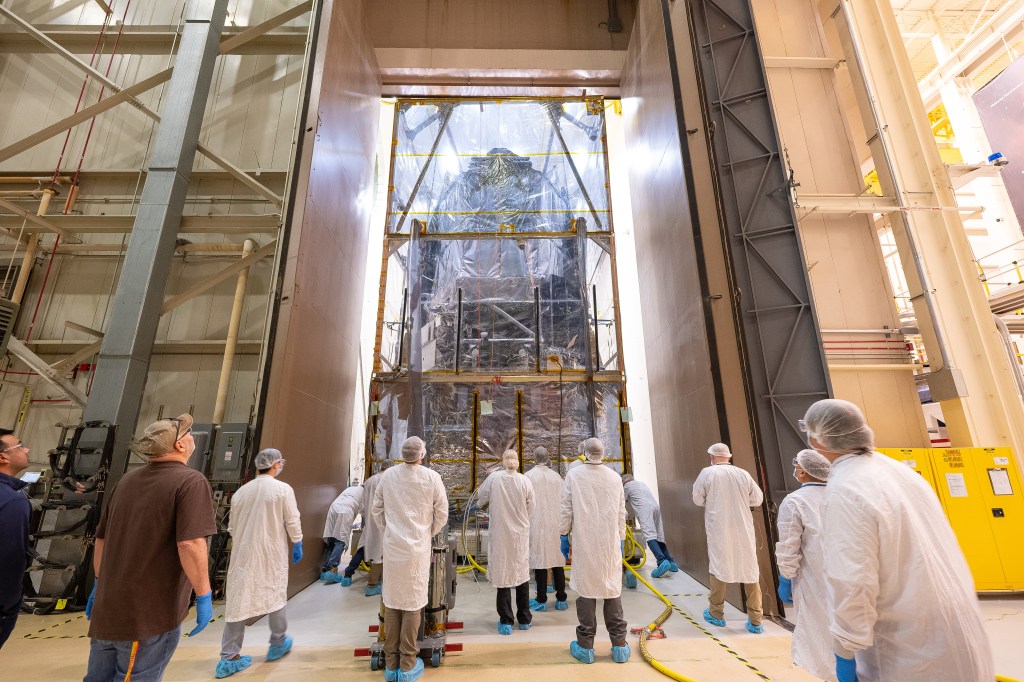
The International Space Station's 57.7-foot-long robotic arm, Canadarm2, with its fine-tuned robotic hand, Dextre, attached is pictured extending from the International Space Station's Harmony module. The orbital outpost was soaring 260 miles above the Saharan Desert in Libya at the time of this photograph.
The International Space Station’s 57.7-foot-long robotic arm, Canadarm2, with its fine-tuned robotic hand, Dextre, attached is pictured extending from the Harmony module. The orbital outpost was soaring 260 miles above the Saharan Desert in Libya at the time of this photograph.
NASA

Space-based production of human tissues and preventing space-caused head and eye pressure were the main research topics at the end of the week for the Expedition 73 crew. The International Space Station is also gearing up for a pair cargo missions this month supplying the orbital residents with food, fuel, science experiments, and more.

The SpaceX Dragon cargo craft delivered bioprinted liver tissues to the orbital outpost on Aug. 25 to help researchers understand how microgravity affects the formation of blood vessels in engineered tissue. Flight Engineers Zena Cardman of NASA and Kimiya Yui of JAXA (Japan Aerospace Exploration Agency took turns on Friday processing the bioprinted tissue samples for placement inside an artificial gravity-generating research device. Researchers are monitoring how the tissues progress and develop over several weeks in weightlessness to gain new health insights. Result may lead to advanced treatments protecting astronauts on long-duration spaceflights and improve bioprinting techniques for patient therapies on Earth.

A common symptom of living in space is called “puffy face” where an astronaut’s face appears swollen and redder. This results from blood pooling toward an astronaut’s head potentially leading to eye structure and vision changes. NASA Flight Engineers Mike Fincke and Jonny Kim joined each other in the Columbus laboratory module and tested a specialized thigh cuff that may counteract the fluid shifts in weightlessness and reduce pressure on a crew member’s head and eyes. Fincke wore the thigh cuff as Kim measured his blood pressure and scanned his veins with the Ultrasound 2 device while chest electrodes collected cardiac data. A variety of other space station medical tools and techniques are used throughout the investigation to understand how an astronaut’s eyes, heart, and blood vessels respond to the thigh cuff.

Roscosmos Flight Engineer Oleg Platonov wrapped up a 24-hour session wearing sensors measuring his blood pressure and heart rate. Doctors were monitoring his cardiac activity as he worked, exercised, then slept for their ongoing biomedical research in microgravity.

Station Commander Sergey Ryzhikov and Alexey Zubritsky set up the TORU, or tele-robotically operated rendezvous unit, simulator they will train on soon inside the Zvezda service module. The duo will practice remote-controlled spacecraft rendezvous techniques on the TORU simulator in the unlikely event an approaching Roscosmos spacecraft is unable to dock to the orbital outpost on its own. The training comes ahead of the launch of the Progress 93 cargo craft scheduled for 11:54 a.m. EDT on Thursday, Sept. 11 to deliver about three tons of cargo to the Expedition 73 crew two days later.

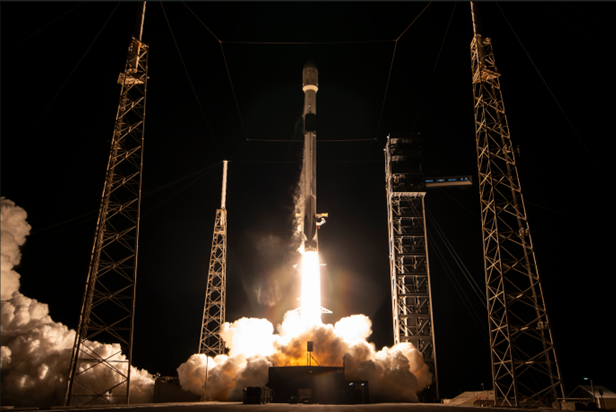
One day after the Progress 93 docks to Zvezda’s aft port, Northrop Grumman’s Cygnus XL cargo craft will launch atop a SpaceX Falcon 9 rocket at 6:11 p.m. on Sept. 14 from Cape Canaveral Space Force Station in Florida. Cygnus XL, carrying over 11,000 pounds of new science and supplies, will orbit Earth for two-and-a-half days before it catches up to the space station where the Canadarm2 robotic arm will capture it then install it on the Unity module’s Earth-facing port.

Learn more about station activities by following the space station blog, @space_station on X, as well as the ISS Facebook and ISS Instagram accounts.

Get the latest from NASA delivered every week. Subscribe here.

Powered by WPeMatico

Get The Details…

Mark A. Garcia

NASA Seeks Industry Input on Next Phase of Commercial Space Stations

NASA Seeks Industry Input on Next Phase of Commercial Space Stations

3 Min Read

NASA Seeks Industry Input on Next Phase of Commercial Space Stations

The aurora australis appears to lap over the Earth like a tide washing ashore in this photograph taken at approximately 3:45 a.m. local time from the International Space Station as it orbited 269 miles above the Indian Ocean southwest of Australia.

The aurora australis appears over the Earth in this photograph taken from the International Space Station as it orbited 269 miles above the Indian Ocean southwest of Australia.

Credits:
NASA

NASA is requesting feedback from American companies on the next phase of its commercial space stations strategy to ensure a seamless transition of activities in low Earth orbit from the International Space Station.

The agency released a draft Phase 2 Announcement for Partnership Proposals (AFPP) Friday, asking for feedback from industry partners by 1 p.m. EDT Friday, Sept. 12. NASA will hold an informational industry briefing on Monday, Sept. 8, to provide a top-level summary of the documents and expectations.

Under the direction of acting NASA Administrator Sean Duffy, the agency reassessed the commercial space stations acquisition strategy to ensure mission continuity, affordability, and national alignment, and to reduce the potential for a gap of a crew-capable platform in low Earth orbit.

“NASA has led in low Earth orbit for 25 years and counting. Now, as we prepare for deorbiting the International Space Station in 2030, we’re calling on our commercial space partners to maintain this historic human presence,” Duffy said. “The American space industry is booming. Insight from these innovative companies will be invaluable as we work to chart the next phase of commercial space stations.”

In Phase 2, NASA intends to support industry’s design and demonstration of commercial stations through multiple funded Space Act Agreements, selected through a full and open competition.

“NASA is committed to continuing our partnership with industry to ensure a continuity in low Earth orbit,” said Angela Hart, manager, Commercial Low Earth Orbit Development Program at NASA’s Johnson Space Center in Houston. “The work done under our Phase 1 contracts and agreements have put us in a prime position to be successful for this next funded Space Act Agreement phase. By leveraging these agreements, we provide additional flexibility to our commercial partners to define the best path forward to provide NASA a safe and affordable crewed demonstration.”

The Phase 2 agreements are expected to include funded milestones leading to critical design review readiness and an in-space crewed demonstration of four crew members for a minimum of 30 days. Agreements are expected to include up to a five-year period of performance.

The agency’s phased approach will culminate in a follow-on Phase 3 using Federal Acquisition Regulation-based contract(s) to purchase station services through a full and open competition. This final phase will also provide formal design acceptance and certification, ensuring the commercial stations meet NASA’s safety requirements.

NASA remains committed to fostering innovation and collaboration within the American space industry.

The agency’s commercial strategy for low Earth orbit will provide the government with reliable and safe services at a lower cost, enabling the agency to focus on the next step in humanity’s exploration of the solar system while also continuing to use low Earth orbit as an ideal environment for training and a proving ground for Artemis missions to the Moon and Mars.

Learn more about commercial space stations at:

https://www.nasa.gov/commercialspacestations

Powered by WPeMatico

Get The Details…
Ana Guzman

NASA Announces CHAPEA Crew for Year-Long Mars Mission Simulation

NASA Announces CHAPEA Crew for Year-Long Mars Mission Simulation

A view inside the sandbox portion of the Crew Health and Performance Analog, where research volunteers participate in simulated walks on the surface of Mars. Credit: NASA

Four research volunteers will soon participate in NASA’s year-long simulation of a Mars mission inside a habitat at the agency’s Johnson Space Center in Houston. This mission will provide NASA with foundational data to inform human exploration of the Moon, Mars, and beyond.

Ross Elder, Ellen Ellis, Matthew Montgomery, and James Spicer enter into the 1,700-square-foot Mars Dune Alpha habitat on Sunday, Oct. 19, to begin their mission. The team will live and work like astronauts for 378 days, concluding their mission on Oct. 31, 2026. Emily Phillips and Laura Marie serve as the mission’s alternate crew members.

Through a series of Earth-based missions called CHAPEA (Crew Health and Performance Exploration Analog), carried out in the 3D-printed habitat, NASA aims to evaluate certain human health and performance factors ahead of future Mars missions. The crew will undergo realistic resource limitations, equipment failures, communication delays, isolation and confinement, and other stressors, along with simulated high-tempo extravehicular activities. These scenarios allow NASA to make informed trades between risks and interventions for long-duration exploration missions.

“As NASA gears up for crewed Artemis missions, CHAPEA and other ground analogs are helping to determine which capabilities could best support future crews in overcoming the human health and performance challenges of living and operating beyond Earth’s resources – all before we send humans to Mars,” said Sara Whiting, project scientist with NASA’s Human Research Program at NASA Johnson.  

Crew members will carry out scientific research and operational tasks, including simulated Mars walks, growing a vegetable garden, robotic operations, and more. Technologies specifically designed for Mars and deep space exploration will also be tested, including a potable water dispenser and diagnostic medical equipment.

“The simulation will allow us to collect cognitive and physical performance data to give us more insight into the potential impacts of the resource restrictions and long-duration missions to Mars on crew health and performance,” said Grace Douglas, CHAPEA principal investigator. “Ultimately, this information will help NASA make informed decisions to design and plan for a successful human mission to Mars.”

This mission, facilitated by NASA’s Human Research Program, is the second one-year Mars surface simulation conducted through CHAPEA. The first mission concluded on July 6, 2024.

The Human Research Program pursues methods and technologies to support safe, productive human space travel. Through applied research conducted in laboratories, simulations, and aboard the International Space Station, the program investigates the effects spaceflight has on human bodies and behaviors to keep astronauts healthy and mission-ready.

Primary Crew

Ross Elder, Commander

Ross Elder, from Williamstown, West Virginia, is a major and experimental test pilot in the United States Air Force. At the time of his selection, he served as the director of operations of the 461st Flight Test Squadron. He has piloted over 35 military aircraft and accumulated more than 1,800 flying hours, including 200 combat hours, primarily in the F-35, F-15E/EX, F-16, and A-10C. His flight test experience focuses on envelope expansion, crewed-uncrewed teaming, artificial intelligence, autonomy, mission systems, and weapons modernization.

Elder earned a Bachelor of Science in astronautical engineering from the U.S. Air Force Academy in Colorado Springs, Colorado, and commissioned as an Air Force officer upon graduation. He earned a Master of Science in mechanical engineering from the University of Colorado in Colorado Springs and a master’s degree in flight test engineering from the U.S. Air Force Test Pilot School at Edwards Air Force Base in California.

Ellen Ellis, Medical Officer

Ellen Ellis, from North Kingstown, Rhode Island, is a colonel and an acquisitions officer in the United States Space Force. She currently serves as a senior materiel leader in the National Reconnaissance Office (NRO) Communications Systems Directorate. She is responsible for fielding commercial cloud and traditional information technology hosting solutions and building modernized data centers for the NRO. She previously served as an Intercontinental Ballistic Missile operations officer and GPS satellite engineer, and she also developed geospatial intelligence payloads and ground processing systems.  

She earned a Bachelor of Science in aerospace engineering at Syracuse University in New York and holds four master’s degrees, including a Master of Science in systems engineering from the Naval Postgraduate School in California, and a Master of Science in emergency and disaster management from Georgetown University in Washington.

Matthew Montgomery, Science Officer

Matthew Montgomery, from Los Angeles, is a hardware engineering design consultant who works with technology startup companies to develop, commercialize, and scale their products. His focus areas include LED lighting, robotics, controlled environment agriculture, and embedded control systems.

Montgomery earned a Bachelor of Science and a Master of Science in electrical engineering from the University of Central Florida. He is also a founder and co-owner of Floating Lava Studios, a film production company based in Los Angeles.

James Spicer, Flight Engineer

James Spicer is a technical director in the aerospace and defense industry. His experience includes building radio and optical satellite communications networks; space data relay networks for human spaceflight; position, navigation, and timing research; and hands-on spacecraft design, integration, and tests.

Spicer earned a Bachelor of Science and Master of Science in aeronautics and astronautics, and holds a Notation in Science Communication from Stanford University in California. He also holds commercial pilot and glider pilot licenses.

Alternate Crew

Emily Phillips

Emily Phillips, from Waynesburg, Pennsylvania, is a captain and pilot in the United States Marine Corps. She currently serves as a forward air controller and air officer attached to an infantry battalion stationed at the Marine Corps Air Ground Combat Center in Twentynine Palms, California.

Phillips earned a Bachelor of Science in computer science from the U.S. Naval Academy in Annapolis and commissioned as a Marine Corps officer upon graduation. She attended flight school, earning her Naval Aviator wings and qualifying as an F/A-18C Hornet pilot. Phillips has completed multiple deployments to Europe and Southeast Asia.

Laura Marie

Born in the United Kingdom, Laura Marie immigrated to the U.S. in 2016. She is a commercial airline pilot specializing in flight safety, currently operating passenger flights in Washington.

Marie began her aviation career in 2019 and has amassed over 2,800 flight hours. She holds a Bachelor of Arts in philosophy and a Master of Science in aeronautics from Liberty University in Lynchburg, Virginia. In addition to her Airline Transport Pilot License, she also possesses flight instructor and advanced ground instructor licenses. Outside the flight deck, Marie dedicates her time to mentoring and supporting aspiring pilots as they navigate their careers.

Powered by WPeMatico

Get The Details…
Nathan Cranford