NASA’s Northrop Grumman CRS-23 Infographics & Hardware

NASA’s Northrop Grumman CRS-23 Infographics & Hardware

A cylinder-shaped spacecraft with prominent cymbal-shaped solar arrays on either side of it nears a long robotic arm, with a cloudy Earth below.
Northrop Grumman’s Cygnus cargo craft awaits its capture by the International Space Stations’ Canadarm2 robotic arm, commanded by NASA astronaut Matthew Dominick on Aug. 6, 2024.
Credit: NASA

NASA’s Northrop Grumman Commercial Resupply Services 23, or Northrop Grumman CRS-23, will deliver more than 11,000 pounds of science and supplies to the International Space Station. This mission will be the first flight of the Cygnus XL, the larger, more cargo-capable version of the company’s solar-powered spacecraft.

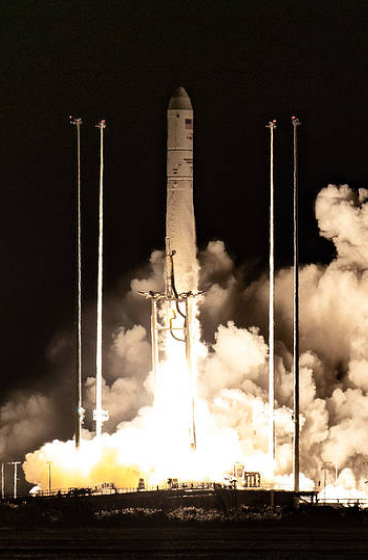
The Cygnus XL will launch on a SpaceX Falcon 9 rocket from the Cape Canaveral Space Force Station in Florida.  Following arrival, astronauts aboard the space station will use the Canadarm2 to grapple Cygnus XL before robotically installing the spacecraft to the Unity module’s Earth-facing port for cargo unloading. Stream live launch and arrival coverage on NASA+Amazon PrimeYouTube.

Mission Infographics

NASA’s Northrop Grumman 23 commercial resupply mission will launch on a SpaceX Falcon 9 rocket to deliver research and supplies to the International Space Station.
NASA
NASA’s Northrop Grumman 23 commercial resupply mission will launch from Space Launch Complex 40 at Cape Canaveral Space Force Station in Florida.
NASA
NASA selected William
NASA selected William “Willie” McCool as an astronaut in 1996. McCool flew as a pilot on STS-107, his first mission. The STS-107 crew, including McCool, died on February 1, 2003, when space shuttle Columbia was lost during reentry over east Texas at about 9 a.m. EST, 16 minutes prior to the scheduled touchdown and NASA’s Kennedy Space Center. NASA’s Northrop Grumman 23 spacecraft is named in his honor.
NASA
NASA astronauts Jonny Kim and Zena Cardman will be on duty during the Cygnus spacecraft’s approach and rendezvous. Kim will be at the controls of the Canadarm2 robotic arm ready to capture Cygnus as Cardman monitors the vehicle’s arrival.
NASA

Mission Hardware

IDA Planar Reflector – This is a reflective element used by visiting spacecraft during docking. The spacecraft bounces a laser off the reflector to compute relative range, velocity, and attitude on approach to the International Space Station. Due to degradation found on the installed reflector, this unit will launch to support a future spacewalk to replace the damaged reflector.

Urine Processing Assembly (UPA) Distillation Assembly – The urine processor on the space station uses filtration and distillation to separate water from wastewater to produce potable water. This unit is launching as a spare.

Reactor Health Sensor – Part of the Environmental Control and Life Support System – Water Processing Assembly, includes two sensors with inlet and outlet ports to measure reactor health. This unit is being launched as a spare.

Pressure Management Device – This is an intravehicular activity system for performing pressurization and depressurization of the space station vestibules between the space station hatch and the hatch of a visiting spacecraft or other module, like the NanoRacks Airlock. During depressurization, most of the air will be added to the space station cabin air to save the valuable resource.

Air Selector Valve – This electro-mechanical assembly is used to direct airflow through the Carbon Dioxide Removal Assembly. Two units are launching as spares.

Major Constituent Analyzer Mass Spectrometer Assembly – This assembly monitors the partial pressure levels of nitrogen, oxygen, hydrogen, methane, water vapor, and carbon dioxide aboard station. This unit is launching as a contingency spare.

Major Constituent Analyzer Mass Sample/Series Pump Assembly – This contains plumbing and a pair of solenoid valves to direct sample gas flow to either of the redundant sample pumps. It draws sample gas from the space station’s atmosphere into the analyzer. This unit is launching as a contingency spare.

Major Constituent Analyzer Sample Distribution Assembly – This isolates the gas sample going to the Mass Spectrometer Assembly. The purpose is to distribute gas samples throughout the analyzer. This unit is launching as a contingency spare.

Charcoal Bed – The bed allows the Trace Contaminant Control System to remove high molecular weight contaminants from the station’s atmosphere. This unit is launching as a spare.

Common Cabin Air Assembly Heat Exchanger – This assembly controls cabin air temperature, humidity, and airflow aboard the space station. This unit is launching as a spare.

Sequential Shunt Unit – This regulates the solar array wing voltage when experiencing high levels of direct sunlight; in doing so, it provides usable power to the station’s primary power system. This unit is launching as a spare.

Solid State Lighting Assembly – This is a specialized internal lighting assembly aboard station. NASA will use one lighting assembly to replace a failed unit and will keep the others as spares.

Remote Power Control Module Type V This module distributes 120V/DC electrical power and provides current-limiting and fault protection to secondary loads aboard the orbiting laboratory. This module is launching as a spare.

Treadmill Isolator Assembly – The Upper, X, Y, and Z Isolator Assemblies are launching as spares for the space station’s treadmill, where they work together to reduce vibration and force transfer when astronauts are running.

Pump Fan Motor Controller – The controller is an electronic controller to modulate the power to the motor windings, which are coils of conductive wire that are wrapped around its core carrying electric current to drive the motor. Windings are commonly used in household appliances, cars (power steering), pumps, and more.

Quick Don Mask Assembly – This mask is used by the crew, along with the Pre-Breath Assembly, in emergency situations. This unit is launching to replace a unit aboard station.

Anomaly Gas Analyzer – This analyzer senses various gases, like oxygen, carbon dioxide, carbon monoxide, ammonia, and others, along with cabin pressure, water vapor and temperature. Two units are launching as an upgrade to the current analyzer system used on board.

Nitrogen, Oxygen Resupply Maintenance Kit – One tank of nitrogen and one tank of oxygen used for gas replenishment aboard the space station are launching to maintain gas reserves.

Crew and Equipment Translation Aid Luminaire – This is a lighting unit used aboard station to illuminate the astronauts’ equipment cart and surrounding work areas during spacewalks.

Powered by WPeMatico

Get The Details…
Joseph Zakrzewski

Progress 93 Cargo Craft Launching to Station Live on NASA+

Progress 93 Cargo Craft Launching to Station Live on NASA+

The Progress 91 cargo craft lifts off on time from the Baikonur Cosmodrome in Kazakhstan.
The Progress 91 cargo craft lifts off on Feb. 27, 2025, from the Baikonur Cosmodrome in Kazakhstan to the International Space Station.
NASA+

NASA’s live coverage is underway on NASA+, Amazon Prime, and more. Learn how to watch NASA content through a variety of platforms, including social media.  

The unpiloted Progress 93 spacecraft is scheduled to launch at 11:54 a.m. EDT (8:54 p.m. Baikonur time) on a Soyuz rocket from the Baikonur Cosmodrome in Kazakhstan. The Roscosmos spacecraft will carry about three tons of food, fuel, and supplies for the Expedition 73 crew aboard the International Space Station. 

After a two-day, in-orbit journey to the station, the spacecraft will dock autonomously to the aft port of the station’s Zvezda module at approximately 1:27 p.m. on Saturday, Sept. 13. NASA’s rendezvous and docking coverage will begin at 12:30 p.m. on NASA+, Amazon Prime, and more.

Learn more about station activities by following @NASASpaceOps and @space_station on X, as well as the International Space Station’s Facebook and Instagram accounts.    

Powered by WPeMatico

Get The Details…

Mark A. Garcia

Near-Earth Asteroids as of September 2025

Near-Earth Asteroids as of September 2025

1 min read

Near-Earth Asteroids as of September 2025

The graphic presents data on near-Earth asteroids as of September 8, 2025.   Key statistics include: 39,123: Total number of discovered near-Earth asteroids of all sizes. 873: Discovered asteroids larger than 1 kilometer, with an estimated 50 left to be found. 11,343: Discovered asteroids larger than 140 meters, with an estimated 14,000 remaining to be found. NASA-DLR BECCAL Photo Op at the Space Symposium. 100 Tons amount of dust and sand-sized particles that bombard Earth daily. Near-Earth asteroid close approaches: 12 passed closer to Earth than the Moon in the last 30 days. 176 passed closer in the last 365 days. 500,000,000: Observations of near-Earth objects submitted to the Minor Planet Center. The background shows a space-themed image with the NASA logo at the top right.

Each month, NASA’s Planetary Defense Coordination Office releases a monthly update featuring the most recent figures on NASA’s planetary defense efforts, near-Earth object close approaches, and other timely facts about comets and asteroids that could pose an impact hazard with Earth. Here is what we’ve found so far.

Updated: September 11, 2025

Powered by WPeMatico

Get The Details…

Biology, Botany Research Advancing Health as Two Resupply Missions Near Launch

Biology, Botany Research Advancing Health as Two Resupply Missions Near Launch

NASA astronaut and Expedition 73 Flight Engineer Mike Fincke inserts a cryogenic storage unit, called a dewar, containing blood samples collected from a crew member into a science freezer for preservation and later analysis. The Minus Eighty-Degree Laboratory Freezer for International Space Station, or MELFI, is a research freezer that maintains experiment samples at ultra-cold temperatures in microgravity.
NASA astronaut Mike Fincke inserts a cryogenic storage unit containing research samples into a science freezer for preservation and later analysis. The Minus Eighty-Degree Laboratory Freezer for International Space Station, or MELFI, is a research freezer that maintains experiment samples at ultra-cold temperatures in microgravity.
NASA

Scientific operations filled the day for the Expedition 73 crew with a wide variety of research advancing human health on and off the Earth. Meanwhile, two rockets on opposite sides of the world stand at their launch pads and are counting down to their lift off to resupply the International Space Station.

Doctors on the ground continuously study what happens to a crew member’s body after months of living and working in microgravity. The voluminous data is measured and collected almost constantly revealing the physical and mental changes an astronaut goes through during the course of a long-term spaceflight. The insights help doctors develop numerous countermeasures to protect crews as NASA and its international partners plan longer missions farther away from Earth to the Moon, Mars, and beyond.

Cardiovascular health in space is a key research topic for scientists studying how the lack of gravity affects an astronaut’s blood flow. NASA Flight Engineer Zena Cardman on Wednesday wore chest electrodes and scanned her leg arteries with an ultrasound device as medical experts from Canada, France, and the U.S. remotely guided the operations. The doctors were looking for signs of space-caused arterial stiffness and changes in cardiac function for the CIPHER human research investigation using the Vascular Echo hardware.

Cardman later partnered with NASA Flight Engineer Jonny Kim and studied how bone stem cells, recently delivered aboard a SpaceX Dragon cargo craft, adapt to microgravity. The duo took turns processing the cell samples in the Destiny laboratory module’s Microgravity Science Glovebox before stowing them inside a science freezer for future analysis. Doctors will use the data gleaned from the experiment to learn how to protect an astronaut’s skeletal system in space and treat aging conditions and bone diseases on Earth.

NASA Flight Engineer Mike Fincke explored ways to produce vitamins and nutrients on spacecraft helping supply adequate nutrition for crews on space missions without reliance on cargo missions launched from Earth. He treated yeast, yogurt, and fermented milk samples then installed them in a research incubator for the BioNutrients-3 investigation seeking to create a biomanufacturing facility to help sustain future space crews.

Another way to sustain and nourish crews too far away from Earth to be resupplied is to grow crops in spaceships or space habitats. Flight Engineer Kimiya Yui of JAXA (Japan Aerospace Exploration Agency) explored space botany studying how plant cells divide in microgravity. He first processed algae cell samples retrieved from a research incubator then stowed them inside a science freezer for future treatment. The cell samples will be imaged inside JAXA’s COSMIC fluorescent microscope to visualize microgravity’s effect on plant cell division and microstructures. Understanding how weightlessness affects plant growth may lead to food crop production techniques on missions to the Moon and Mars.

Station Commander Sergey Ryzhikov and Flight Engineer Alexey Zubritsky, both Roscosmos cosmonauts, joined each other in the Nauka science module configuring physics research gear to study advanced space propulsion systems and plasma-based technologies. Flight Engineer Oleg Platonov started his shift in the Zarya module replacing electronic power components before an afternoon Earth photography session imaging glaciers in South America and mountains in Africa.

Roscosmos’ Progress 93 spacecraft, packed with 2.8 tons of food, fuel, and supplies, sits atop a Soyuz rocket at its launchpad at the Baikonur Cosmodrome in Kazakhstan counting down to a liftoff at 11:54 a.m. EDT on Thursday. It will orbit Earth for two days before docking to the Zvezda service module at 1:27 p.m. on Saturday where it will stay for six months.

Just one day after the Progress 93’s arrival, Northrop Grumman’s Cygnus XL resupply ship will launch atop a SpaceX Falcon 9 rocket at 6:11 p.m. on Sunday, Sept. 14,  from Florida’s Cape Canaveral Space Force Station. Cygnus will deliver over 11,000 pounds of new science experiments and station hardware to the orbital outpost. Kim, assisted by Cardman, will be at the cupola’s robotics workstation commanding the Canadarm2 robotic arm to capture the spacecraft at 6:35 a.m. on Wednesday, Sept. 17. Ground controllers will then take over and remotely command Canadarm2 to install Cygnus to the Unity module’s Earth-facing port about an hour-and-a-half later for a six-month stay.

Powered by WPeMatico

Get The Details…

Mark A. Garcia

NASA Uses Colorado Mountains for Simulated Artemis Moon Landing Course

NASA Uses Colorado Mountains for Simulated Artemis Moon Landing Course

4 Min Read

NASA Uses Colorado Mountains for Simulated Artemis Moon Landing Course

A LUH-72 Lakota helicopter flies over the mountains of northern Colorado Aug. 28 during a certification run for a lander flight training course for crewed Artemis missions. The mountains and valleys in Colorado have similar visual illusions to the Moon.

NASA has certified a new lander flight training course using helicopters, marking a key milestone in crew training for Artemis missions to the Moon. Through Artemis, NASA explore the lunar South Pole, paving the way for human exploration farther into the solar system, including Mars. 

The mountains in northern Colorado offer similar visual illusions and flight environments to the Moon. NASA partnered with the Colorado Army National Guard at the High-Altitude Army National Guard Aviation Training Site near Gypsum, Colorado, to develop the foundational flight training course.

“Artemis astronauts who will land on the Moon will need to master crew coordination and communication with one another,” said Paul Felker, acting deputy director of flight operations at NASA’s Johnson Space Center in Houston. “Much like they will on the Moon, astronaut teams are learning how to work together efficiently in a stressful environment to identify hazards, overcome degraded visual environments, and evaluate risks to successfully land.”

During the two-week certification run in late August, NASA astronauts Mark Vande Hei and Matthew Dominick participated in flight and landing training to help certify the course. The pair took turns flying a helicopter and navigating to landing zones. Artemis flight crew trainers, mission control leads, and lunar lander operational experts from NASA Johnson joined them on each helicopter flight to assess the instruction, training environment, and technical applications for crewed lunar missions.

The NASA astronauts and trained instructor pilots with the Army National Guard flew to progressively more challenging landing zones throughout the course, navigating the mountainous terrain, and working together to quickly and efficiently land the aircraft. 

Teams can train year-round using the course. Depending on the season, the snowy or dusty conditions can cause visual obstruction. Lunar dust can cause similar visual impairment during future crewed missions.

“Here in Colorado, we have specifically flown to dusty areas, so we know and understand just how important dust becomes during the final descent phase,” Vande Hei said. “Dust will interact with the lander thrusters on the Moon. During our flight training, we have had to revert to our instruments – just like we would on the Moon – because astronauts may lose all their visual cues when they’re near the surface.” 

During Artemis III, four astronauts inside the agency’s Orion spacecraft on top of the SLS (Space Launch System rocket) will launch to meet SpaceX’s Starship Human Landing System in lunar orbit. Orion will then dock with the Starship system and two astronauts will board the lander. Astronauts will use the Starship lander to safely transport themselves from lunar orbit to the lunar surface. Following surface operations, the two astronauts will use Starship to launch from the lunar surface, back to lunar orbit, and dock with Orion to safely journey back to Earth.

The NASA-focused course has been in development since 2021. Vande Hei and Dominick are the 24th and 25th NASA astronauts to participate in and evaluate the course based on functionality and Artemis mission needs. One ESA (European Space Agency) astronaut has also participated in the course.

“This course will likely be one of the first group flight training opportunities for the Artemis III crew,” said NASA astronaut Doug Wheelock, who helped to develop the foundational training course for the agency. “While the astronauts will also participate in ground and simulation training in Ohio and Texas, the real-world flight environment in Colorado at offers astronauts an amazing simulation of the problem solving and decision making needed to control and maneuver a lunar lander across an equally dynamic landscape.”

Though the course is now certified for Artemis, teams will continue to evaluate the training based on astronaut and technical feedback to ensure mission success and crew safety.

Through the Artemis campaign, NASA will send astronauts to explore the Moon for scientific discovery, economic benefits, and to build the foundation for the first crewed missions to Mars for the benefit of all. 

For more information about Artemis visit: 

https://www.nasa.gov/artemis

Share

Details

Last Updated

Sep 10, 2025

Editor
Beth Ridgeway
Contact
Corinne M. Beckinger

Powered by WPeMatico

Get The Details…
Corinne M. Beckinger