Crew Exploring Life Science Before Relaxing on New Year’s Day

Crew Exploring Life Science Before Relaxing on New Year’s Day
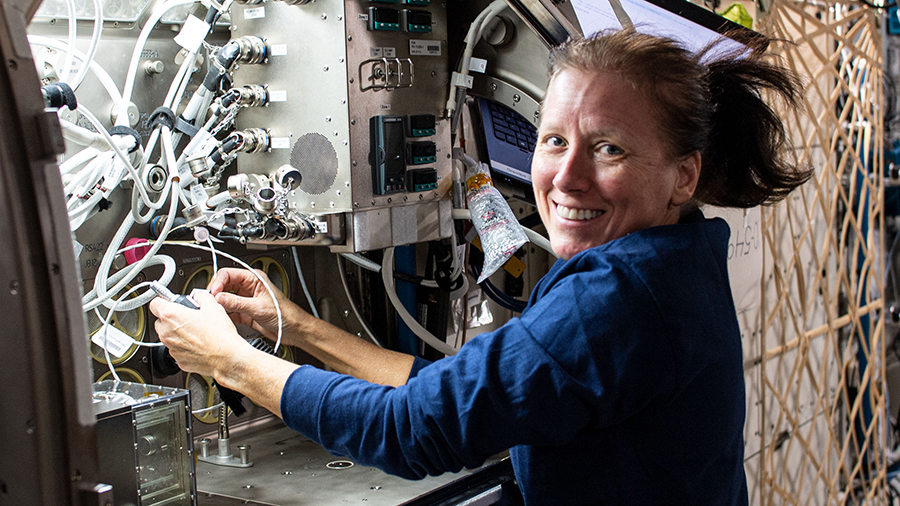
NASA astronaut Shannon Walker sets up hardware inside the Microgravity Science Glovebox for an experiment to learn more about the process of semiconductor crystal growth to benefit Earth and space industries.
NASA astronaut Shannon Walker sets up hardware inside the Microgravity Science Glovebox for an experiment to learn more about the process of semiconductor crystal growth.

The seven Expedition 64 crew members aboard the International Space Station will see the New Year sixteen times today and take the day off on the first day of 2021. The orbital residents are also exploring how microgravity affects mice and protein crystals to improve human health.

The station orbits the Earth at 17,500 miles per hour (28,000 kilometers per hour) giving the crew the opportunity to see 16 sunrises and sunsets each day. The space residents set their clocks to GMT, or Greenwich Mean Time, and will start their new year at 12:00 a.m. GMT on Jan. 1, or five hours ahead of Eastern Standard Time.

Rodent research has been taking place all December aboard the station so scientists can understand how living in space impacts vision and bone tissue. NASA astronaut Victor Glover tended to mice today for the two studies before they will return in January aboard the SpaceX Cargo Dragon for analysis on Earth.

NASA Flight Engineer Kate Rubins photographed scientific samples for a study that seeks to commercialize the production of medical therapies in space. The Monoclonal Antibodies investigation is specifically exploring the creation of protein crystals that target cancer cells and could improve the crystallization process on Earth.

Rubins also joined Flight Engineers Shannon Walker and Soichi Noguchi as the trio packed the Northrop Grumman Cygnus space freighter throughout Thursday. The trio packed Cygnus with trash and discarded gear for its departure scheduled on Jan. 6. After its separation, Cygnus will orbit Earth on its own until Jan. 26 for flight tests and science experiments.

Station Commander Sergey Ryzhikov serviced a variety of Russian hardware today before loading the Progress 76 cargo craft ahead of its February departure from the Pirs docking compartment. Cosmonaut Sergey Kud-Sverchkov spent Thursday on engineering and plumbing tasks in the orbiting lab’s Russian segment.

Get The Details…

Mark Garcia

Powered by WPeMatico

Cargo Packing and Radish Harvesting Aboard Station Today

Cargo Packing and Radish Harvesting Aboard Station Today

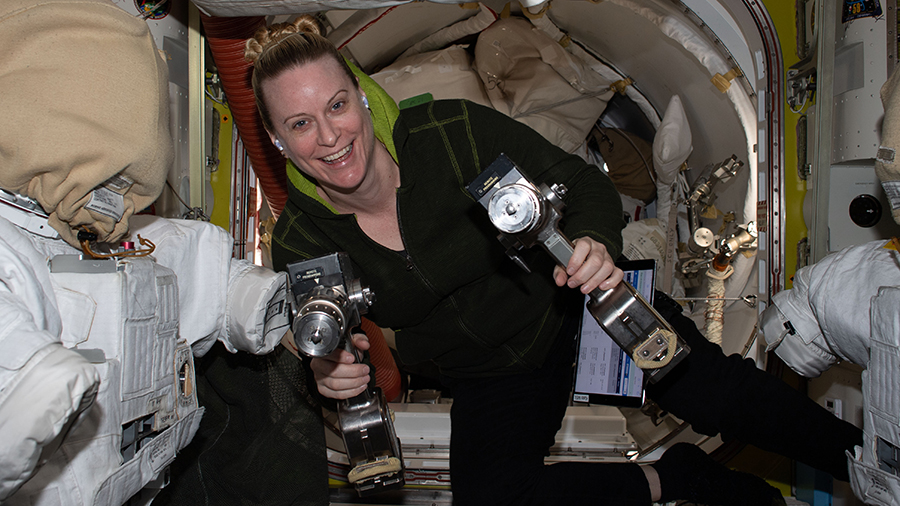
Expedition 64 Flight Engineer Kate Rubins is pictured inside the U.S. Quest airlock carrying a pair of pistol grip tools used for maintenance work during spacewalks.

The Expedition 64 crew is packing a pair of U.S. resupply ships for departure next month. The International Space Station is also humming with microgravity research to benefit humans on and off the Earth.

Space agriculture is key to the long-term success of human exploration missions beyond low-Earth orbit. Astronauts and botanists are learning how to manage food production aboard the station and have been harvesting a variety of edible plants for several years.

NASA Flight Engineer Michael Hopkins spent Wednesday harvesting radish plants and readying them for consumption for the Plant Habitat-02 experiment. Their short cultivation time is ideal for research and evaluating nutrition and taste in microgravity.

Rodents are being studied to understand the impacts to vision and bone tissue while living in space. Today, JAXA Flight Engineer Soichi Noguchi fed the mice and cleaned their specialized research habitats. Those mice will be returned to Earth for analysis next month aboard the SpaceX Crew Dragon.

NASA astronauts Kate Rubins and Shannon Walker packed trash inside the Cygnus space freighter today ahead of its Jan. 6 departure. Following its separation, Cygnus will orbit Earth on its own for an extended period of flight tests and science experiments. Walker also readied research and development hardware and sample modules for return to Earth aboard the SpaceX Crew Dragon less than a week after Cygnus departs.

Station Commander Sergey Ryzhikov of Roscosmos spent the day configuring communications gear and cleaning ventilation systems inside the orbiting lab’s Russian segment. His fellow cosmonaut Sergey Kud-Sverchkov wiped down module surfaces to rid the station of microbes and vacuumed the Zarya module.

Get The Details…

Mark Garcia

Powered by WPeMatico

U.S. Cargo Ships Depart In January; Crew Exploring Biology and Physics

U.S. Cargo Ships Depart In January; Crew Exploring Biology and Physics

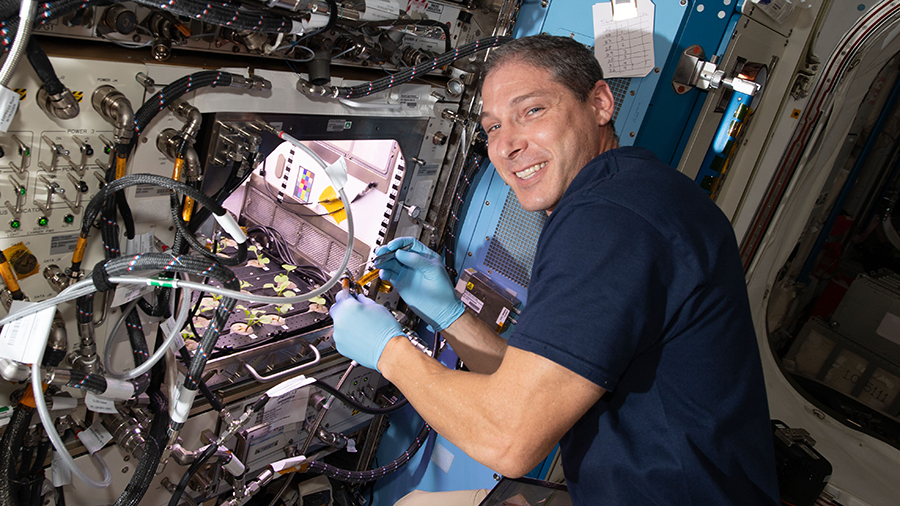
Expedition 64 Flight Engineer Michael Hopkins checks on young radish plants growing for the Plant Habitat-02 experiment that seeks to optimize plant growth in space.

Two U.S. resupply ships are being readied for their departure next month from the International Space Station. Meanwhile, the Expedition 64 crew continued its intense schedule of space research with cardiac studies and radish harvesting today.

Northrop Grumman’s Cygnus space freighter is due to be the first cargo craft to leave the station in 2021 on Jan. 6. Ground controllers will remotely command the Canadarm2 robotic arm to release Cygnus into Earth orbit after 93 days attached to the Unity module. Cygnus will separate to a safe distance away from the station and continue orbiting Earth for an extended mission of flight tests and science experiments.

Less than a week later, the SpaceX Cargo Dragon will undock from the Harmony module’s space-facing international docking adapter. The upgraded version of the returnable space freighter will splash down the same day in the Atlantic Ocean loaded with space station hardware and science investigations for analysis.

The station residents also focused Tuesday on a host of space studies exploring heart cells, semiconductors and botany. These studies and others being hosted on the station may benefit human health and improve products around the world and on future space missions.

Samples of engineered heart tissues were serviced aboard the orbiting lab today for the Cardinal Heart study that seeks to understand space-caused cell and tissue abnormalities. Hardware is being set up this week to learn more about the process of semiconductor crystal growth to benefit Earth and space industries. Finally, radish plants are being harvested on the station this week helping botanists learn to manage food production in space and evaluate nutrition and taste in microgravity.

Get The Details…

Mark Garcia

Powered by WPeMatico