What Would It Take to Say We Found Life? We Asked a NASA Expert: Episode 63

What Would It Take to Say We Found Life? We Asked a NASA Expert: Episode 63

4 min read

Preparations for Next Moonwalk Simulations Underway (and Underwater)

What Would It Take to Say We Found Life?

We call this the podium test. What would it take for you personally to confidently stand up in front of an international audience and make that claim? When you put it in that way, I think for a lot of scientists, the bar is really high.

So of course, there would be obvious things, you know, a very clear signature of technology or a skeleton or something like that. But we think that a lot of the evidence that we might encounter first will be much more subtle. For example, chemical signs of life that have to be detected above a background of abiotic chemistry. And really, what we see might depend a lot on where we look.

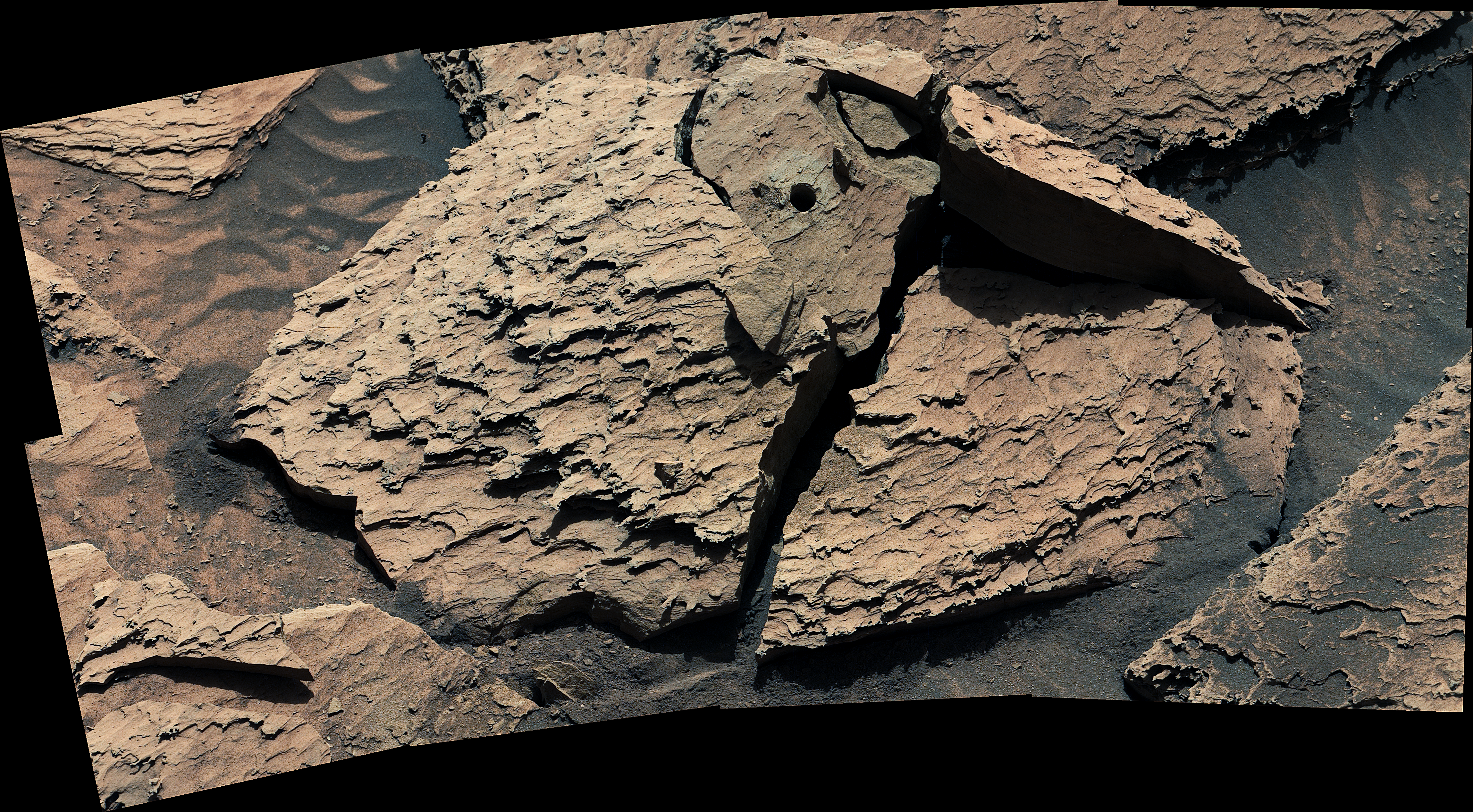
On Mars, for example, the long history of exploration there gives us a lot of context for what we might find. But we’re potentially talking about samples that are billions of years old in those cases, and on Earth, those kinds of samples, the evidence of life is often degraded and difficult to detect.

On the ocean worlds of our outer solar system, so places like Jupiter’s moon Europa and Saturn’s moon Enceladus, there’s the tantalizing possibility of extant life, meaning life that’s still alive. But potentially we’re talking about exceedingly small amounts of samples that would have to be analyzed with a relatively limited amount of instrumentation that can be carried from Earth billions of miles away.

And then for exoplanets, these are planets beyond our own solar system. Really, what we’re looking for there are very large magnitude signs of life that can be detectable through a telescope from many light-years away. So changes like the oxygenation of Earth’s atmosphere or changes in surface color.

So any one of those things, if they rose to the suspicion of being evidence of life, would be really heavily scrutinized in a very sort of specific and custom way to that particular observation. But I think there are also some general principles that we can follow. And the first is just: Are we sure we’re seeing what we think we’re seeing? Many of these environments are not very well known to us, and so we need to convince ourselves that we’re actually seeing a clear signal that represents what we think it represents.

Carl Sagan once said, “Life is the hypothesis of last resort,” meaning that we ought to work hard for such a claim to rule out alternative possibilities. So what are those possibilities? One is contamination. The spacecraft and the instruments that we use to look for evidence of life are built in an environment, Earth, that is full of life. And so we need to convince ourselves that what we’re seeing is not evidence of our own life, but evidence of indigenous life.

If that’s the case, we should ask, should life of the type we’re seeing live there? And finally, we need to ask, is there any other way than life to make that thing, any of the possible abiotic processes that we know and even the ones that we don’t know? And as you can imagine, that will be quite a challenge.

Once we have a piece of evidence in hand that we really do think represents evidence of life, now we can begin to develop hypotheses. For example, do we have separate independent lines of evidence that corroborate what we’ve seen and increase our confidence of life?

Ultimately, all of this has to be looked at hard by the entire scientific community, and in that sense, I think the really operative word in our question is we. What does it take to say we found evidence of life? Because really, the answer, I think, depends on the full scientific community scrutinizing and skepticizing this observation to finally say that we scientists, we as a community and we as humanity found life.

[END VIDEO TRANSCRIPT]

Full Episode List

Full YouTube Playlist

Powered by WPeMatico

Get The Details…
Colleen C. Kaiser

Cargo Craft Departs Before Two Resupply Spacecraft Launch

Cargo Craft Departs Before Two Resupply Spacecraft Launch

JAXA (Japan Aerospace Exploration Agency) astronaut Kimiya Yui smiles for a portrait after trimming NASA astronaut Mike Fincke's hair aboard the International Space Station.
JAXA (Japan Aerospace Exploration Agency) astronaut Kimiya Yui smiles for a portrait after trimming NASA astronaut Mike Fincke’s hair aboard the International Space Station.
NASA

The Zvezda service module’s rear port opened up today after the undocking and departure of the trash-filled Progress 91 cargo craft completing a six-and-a-half-month stay at the International Space Station. The vacant port now awaits the arrival of the Progress 93 cargo craft set to launch from Kazakhstan at 11:54 a.m. EDT on Thursday. The new Progress, from Roscosmos and packed with 2.8 tons of cargo, is set to dock to Zvezda at 1:27 p.m. on Saturday following its automated approach and rendezvous maneuvers resupplying the Expedition 73 crew. NASA+ will begin its live launch broadcast at 11:30 a.m. on Thursday followed by docking coverage beginning at 12:30 p.m. on Saturday.

Just over a day later, Northrop Grumman’s expanded Cygnus XL cargo craft will launch atop a SpaceX Falcon 9 rocket from Florida at 6:11 p.m. on Sunday, Sept. 14. Cygnus XL will orbit Earth for two-and-a-half-days before catching up to the orbital outpost. NASA Flight Engineers Jonny Kim and Zena Cardman will be at the controls of the Canadarm2 robotic arm ready to capture the Cygnus when it reaches a point about 10 meters away from the space station. Engineers on the ground will then take over and remotely command Canadarm2 to maneuver Cygnus in its grips toward the Unity module’s Earth-facing port where the cargo craft will be installed.

Kim and Cardman spent Tuesday training for the arrival Cygnus XL, first reviewing its mission profile and the tools and procedures they will use during the spacecraft’s approach and rendezvous. Second, they practiced on a computer the robotic maneuvers and commanding techniques necessary to grapple Cygnus when it reaches its capture point near the orbital outpost. Kim and Cardman will be on duty when Cygnus arrives for its capture at 6:35 a.m. on Wednesday, Sept. 17, loaded with over 11,000 pounds of new science and supplies.

Station flight engineers Mike Fincke of NASA and Kimiya Yui of JAXA (Japan Aerospace Exploration Agency) focused on lab hardware on Tuesday checking electronics equipment and readying scientific gear for deployment. Fincke spent his shift inside the Columbus laboratory module testing power outlets, activating a laptop computer, and connecting cable. Yui worked in the Kibo laboratory module installing CubeSats inside a small satellite deployer that will soon be placed outside the space station. The shoebox-sized satellites will be deployed into Earth orbit for educational, public, and private research.

Researchers from around the world continue studying how crew members adapt their sense of balance and orientation in microgravity to train new crews for future space missions. Station Commander Sergey Ryzhikov and Flight Engineer Alexey Zubritsky took turns wearing electrodes and virtual reality glasses while responding to computer-controlled visual stimuli. The data collected will help researchers track and measure space-caused changes to a crew member’s vestibular system, or sensory system.

Roscosmos Flight Engineer Oleg Platonov began his shift on orbital plumbing maintenance before servicing electronics hardware in the Zarya module. He wrapped up his day inside the Zvezda service module refilling the Elektron oxygen generator.

Learn more about station activities by following the space station blog, @space_station on X, as well as the ISS Facebook and ISS Instagram accounts.

Get the latest from NASA delivered every week. Subscribe here.

Powered by WPeMatico

Get The Details…

Mark A. Garcia

Roscosmos Progress 91 Undocked from Space Station 

Roscosmos Progress 91 Undocked from Space Station 

Sept. 9, 2025: International Space Station Configuration. Four spaceships are docked at the space station including the SpaceX Dragon cargo craft, the SpaceX Crew-11 Dragon spacecraft, the Soyuz MS-27 crew ship, and the Progress 92 resupply ship.
NASA

The unpiloted Roscosmos Progress 91 spacecraft undocked from the International Space Station at 11:45 a.m. EDT on Tuesday, backing away from the station for a deorbit maneuver and destructive re-entry into Earth’s atmosphere to dispose of trash loaded by the crew.  

 The spacecraft launched on Feb. 27 on a Soyuz rocket from the Baikonur Cosmodrome in Kazakhstan, carrying about three tons of food, fuel, and supplies for the crew aboard the International Space Station. After a two-day in-orbit journey, the spacecraft arrived at the orbiting laboratory on March 1 and automatically docked to the aft port of the station’s Zvezda module. 

Learn more about station activities by following @NASASpaceOps and @space_station on X, as well as the International Space Station’s Facebook and Instagram accounts.   

Powered by WPeMatico

Get The Details…

Joshua A. Finch

NASA Partnerships Allow Artificial Intelligence to Predict Solar Events

NASA Partnerships Allow Artificial Intelligence to Predict Solar Events

3 min read

Preparations for Next Moonwalk Simulations Underway (and Underwater)

The green lights of an aurora dramatically explode outward against the backdrop of the night sky peppered with fluffy white clouds and pinprick stars. A hint of red is also visible in the center of the light. Pine trees cast in shadow are seen below.
While auroras are a beautiful sight on Earth, the solar activity that causes them can wreak havoc with space-based infrastructure like satellites. Using artificial intelligence to predict these disruptive solar events was a focus of KX’s work with FDL.
Credit: Sebastian Saarloos

In the summer of 2024, people across North America were amazed when auroras lit up the night sky across their hometowns, but the same solar activity that makes auroras can cause disruptions to satellites that are essential to systems on Earth. The solution to predicting these solar events and warning satellite operators may come through artificial intelligence. 

The Frontier Development Lab of Mountain View, California, is an ongoing partnership between NASA and commercial AI firms to apply advanced machine learning to problems that matter to the agency and beyond. Since 2016, the Frontier Development Lab has applied AI on behalf of NASA in planetary defense, Heliophysics, Earth science, medicine, and lunar exploration.

Through a collaboration with a company called KX Systems, the Frontier Development Lab looked to use proven software in an innovative new way. The company’s flagship data analytics software, called kdb+, is typically used in the financial industry to keep track of rapid shifts in market trends, but the company was exploring how it could be used in space. 

Between 2017 and 2019, KX Systems participated in the Frontier Development Lab partnership through NASA’s Ames Research Center in Silicon Valley, California. Working with NASA scientists, KX applied the capabilities of kdb+ to searching for exoplanets and predicting space weather, areas which could be improved with AI models. One question the Frontier Development Lab worked to answer was whether kdb+ could forecast the kind of space weather that creates the auroras to predict when GPS satellites might experience signal interruption due to the Sun.

By importing several datasets monitoring the ionosphere, solar activity, and Earth’s magnetic field, then applying machine learning algorithms to them, the Frontier Development Lab researchers were able to predict disruptive events up to 24 hours in advance. 

While this was a scientific application of AI, KX Systems says some of this development work has made it back into its commercial offerings, as there are similarities between AI models developed to find patterns in satellite signal losses and ones that predict maintenance needs for industrial manufacturing equipment.

A division of FD Technologies plc., KX Systems is a technology company that offers database management and analytics software for customers that need to make decisions quickly. While KX started in 1993, its AI-driven business has grown considerably, and the company credits work done with NASA for accelerating some of its capabilities.

From protecting valuable satellites to keeping manufacturing lines moving at top performance, pairing NASA’s expertise with commercial ingenuity is a combination for success.  

Share

Details

Last Updated

Sep 09, 2025

Powered by WPeMatico

Get The Details…
Andrew Wagner

Artemis II Crew Walks Out for Practice Scenarios

Artemis II Crew Walks Out for Practice Scenarios

Four astronauts - three men and one woman - walk down a dark gray ramp, exiting a building. A Black man at front left waves as he looks to our right. The other three people are smiling. All of the astronauts wear bright orange jumpsuits with various patches on them.
NASA/Kim Shiflett

The Artemis II crew (from front left to back right) – pilot Victor Glover, commander Reid Wiseman, mission specialist Jeremy Hansen of CSA (Canadian Space Agency), and mission specialist Christina Koch – walk out of the Neil A. Armstrong Operations and Checkout Building at NASA’s Kennedy Space Center in Florida on Monday, Aug. 11, 2025.

During a two-day training, the crew practiced launch day operations if the Artemis II test flight launches at night.

Join the Artemis II mission and sign up to launch your name aboard the Orion spacecraft and SLS (Space Launch System) rocket alongside the crew.

Through the Artemis program, NASA will send astronauts to explore the Moon for scientific discovery, economic benefits, and to build the foundation for the first crewed missions to Mars – for the benefit of all.

Image credit: NASA/Kim Shiflett

Powered by WPeMatico

Get The Details…
Monika Luabeya