

Pilot Bob Hines in Training for Crew-4
NASA astronaut and SpaceX Crew-4 pilot Bob Hines is pictured during a training session inside a mockup of the Crew Dragon vehicle at SpaceX Headquarters.
Powered by WPeMatico
NASA astronaut and SpaceX Crew-4 pilot Bob Hines is pictured during a training session inside a mockup of the Crew Dragon vehicle at SpaceX Headquarters.
Powered by WPeMatico
NASA and Axiom Space will provide coverage of the upcoming prelaunch and launch activities for Axiom Mission 1 (Ax-1), the first private astronaut mission to the International Space Station.
Powered by WPeMatico

NASA astronaut Mark Vande Hei ended his record-breaking time on the International Space Station with a parachute-assisted landing on the steppe of Kazakhstan, southeast of the remote town of Dzhezkazgan, at 7:28 a.m. EDT (5:28 p.m. Kazakhstan time). Vande Hei, along with Anton Shkaplerov and Pyotr Dubrov, began the journey back to Earth in the early morning hours on the Soyuz MS-19 spacecraft.
Vande Hei arrived at the International Space Station on April 9, 2021, spending 355 days in low-Earth orbit, breaking the previous record held by retired NASA astronaut Scott Kelly by 15 days.
“Mark’s mission is not only record-breaking, but also paving the way for future human explorers on the Moon, Mars, and beyond,” said NASA Administrator Bill Nelson. “Our astronauts make incredible sacrifices in the name of science, exploration, and cutting-edge technology development, not least among them time away from loved ones. NASA and the nation are proud to welcome Mark home and grateful for his incredible contributions throughout his year-long stay on the International Space Station.”
During his 355 days aboard the station, Vande Hei experienced:
Expedition 67 formally began aboard the station after undocking, with new station Commander Tom Marshburn, NASA astronauts Raja Chari and Kayla Barron, ESA (European Space Agency) astronaut Matthias Maurer, and Roscosmos cosmonauts Oleg Artemyev, Denis Matveev, and Sergey Korsakov.
The Soyuz MS-19 crew will now split up, as per standard crew return practice, with Vande Hei returning to his home in Houston, while the cosmonauts fly back to their training base in Star City, Russia.
Learn more about station activities by following the space station blog, @space_station and @ISS_Research on Twitter, as well as the ISS Facebook and ISS Instagram accounts.
Get weekly video highlights at: http://jscfeatures.jsc.nasa.gov/videoupdate/
Get the latest from NASA delivered every week. Subscribe here: www.nasa.gov/subscribe
Mark Garcia
Powered by WPeMatico
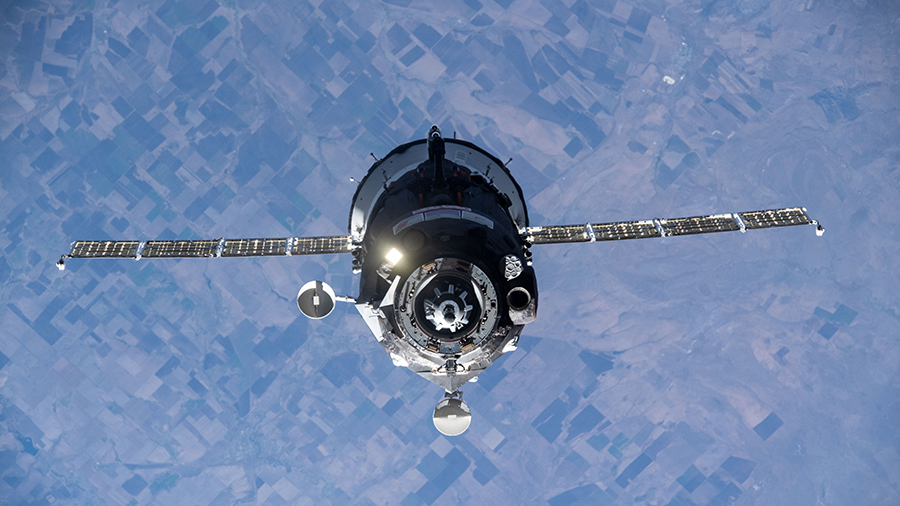
NASA Television coverage of astronaut Mark Vande Hei and two Roscosmos cosmonauts’ end of mission aboard the International Space Station and return to Earth is underway.
Vande Hei, along with Anton Shkaplerov and Pyotr Dubrov, began the journey back to Earth in the early morning hours on the Soyuz MS-19 spacecraft. The Soyuz spacecraft undocked from the Rassvet module at 3:21 a.m. EDT and is heading for a parachute-assisted landing on the steppe of Kazakhstan, southeast of the remote town of Dzhezkazgan, at 7:28 a.m. EDT (5:28 p.m. Kazakhstan time).
While clocking the single longest spaceflight by a NASA astronaut, Vande Hei contributed to dozens of studies from the hundreds executed during his mission, including six science investigations supported by NASA’s Human Research Program, or HRP.
For one investigation, Vande Hei helped grow and evaluate vegetables harvested with the space station’s Vegetable Production System, or Veggie. The investigation seeks to develop a food production system that can help astronauts meet their dietary needs with fresh vegetables cultivated in space.
Vande Hei also provided biological samples for an investigation that collects a core set of measurements, called Spaceflight Standard Measures. The investigation seeks to characterize “normal” changes in the human body during spaceflight. For instance, wrist-worn sensors that measure activity levels and light exposure can help researchers better understand the sleep-wake cycle of astronauts. Blood and saliva samples collected by crew members throughout their mission can also help scientists assess changes in various hormones, proteins, and cells that reveal how the immune system changes in space.
In addition, he contributed to a separate investigation collecting biological samples from the crew aboard the space station and placing them in a storage bank. Researchers can draw upon the samples to study spaceflight-induced changes in human physiology.
Expedition 67 formally began aboard the station after undocking, with new station Commander Tom Marshburn, NASA astronauts Raja Chari and Kayla Barron, ESA (European Space Agency) astronaut Matthias Maurer, and Roscosmos cosmonauts Oleg Artemyev, Denis Matveev, and Sergey Korsakov.
After landing, the Soyuz MS-19 crew will split up, as per standard crew return practice, with Vande Hei returning to his home in Houston, while the cosmonauts fly back to their training base in Star City, Russia.
Learn more about station activities by following the space station blog, @space_station and @ISS_Research on Twitter, as well as the ISS Facebook and ISS Instagram accounts.
Get weekly video highlights at: http://jscfeatures.jsc.nasa.gov/videoupdate/
Get the latest from NASA delivered every week. Subscribe here: www.nasa.gov/subscribe
Mark Garcia
Powered by WPeMatico
NASA astronaut Mark Vande Hei, left, and cosmonauts Anton Shkaplerov, center, and Pyotr Dubrov are seen inside their Soyuz MS-19 spacecraft after landing.
Powered by WPeMatico
