Russian Trio Nears Departure, Rest of Crew Busy with Research, Lab Upkeep

Russian Trio Nears Departure, Rest of Crew Busy with Research, Lab Upkeep
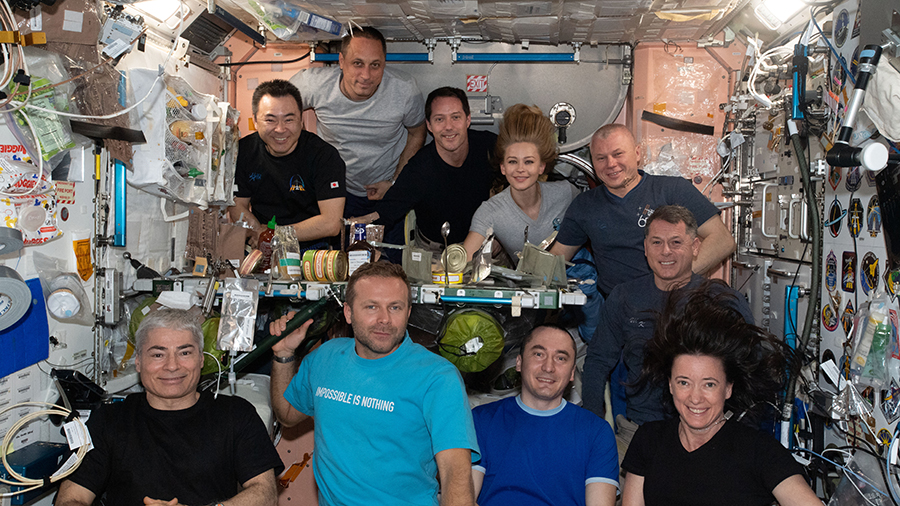
The ten station inhabitants are gathered together in the Unity module for a meal and a portrait. In the front row (from left) are, Mark Vande Hei, Klim Shipenko, Pyotr Dubrov, and Megan McArthur. In the back row (from left) are, Akihiko Hoshide, Anton Shkaplerov, Thomas Pesquet, Yulia Peresild, Oleg Novitskiy, and Shane Kimbrough.

A veteran cosmonaut will soon lead two Russian spaceflight participants on a ride through Earth’s atmosphere to a parachuted landing in Kazakhstan this weekend. Meanwhile, the rest of the Expedition 65 crew stayed focused on a multitude of science, cargo, and maintenance activities throughout Thursday.

Soyuz Commander Oleg Novitskiy will complete his third station mission when he undocks from the Nauka multipurpose laboratory on Saturday at 9:14 p.m. EDT inside the Soyuz MS-18 crew ship. He, with the station’s two filmmaking guests Yulia Peresild and Klim Shipenko riding alongside him, will touchdown on the Kazakh steppe on Sunday at 12:36 a.m. (10:36 a.m. Kazakh time).

Novitskiy has been packing the Soyuz spacecraft for several days with station hardware, science samples and personal items. He has also been practicing Soyuz descent techniques and training for the departure maneuvers on a Russian computer. The three-time station resident, with assistance from cosmonaut Pyotr Dubrov, has also been testing a specialized suit, the lower body negative pressure suit, that may help his body adjust quickly to Earth’s gravity after 191 days in space.

The station’s three NASA flight engineers had their hands full today with a host of research and lab upkeep activities in the orbiting lab’s U.S. segment. Megan McArthur swapped fuel bottles inside the Combustion Integrated Rack then performed simulated robotic tasks for a cognition test. Shane Kimbrough had some light plumbing duties during the morning before continuing cargo work inside the Cygnus space freighter. Mark Vande Hei, who is staying on the station for nearly a year, filmed a video about safety in space for students on Earth then worked on life support and networking gear.

The two international astronauts, Thomas Pesquet and Akihiko Hoshide, spent some time in their respective modules, Europe’s Columbus laboratory and Japan’s Kibo laboratory, ensuring smooth lab operations. Pesquet, of ESA (European Space Agency), serviced a variety of science freezers inside Columbus. Hoshide of the Japan Aerospace Exploration Agency (JAXA) reorganized stowage space inside Kibo making room for new science gear soon to be delivered on the next SpaceX Cargo Dragon mission.

Over in the station’s Russian segment, Roscosmos Flight Engineer Anton Shkaplerov worked on an exercise study and dismantled a radiation detector. Dubrov downloaded and checked radiation data then configured radiation sensors, or dosimeters.

Get The Details…

Mark Garcia

Powered by WPeMatico

Virtual Reality, Spacesuits, Departure Preps Keeping Crew Busy

Virtual Reality, Spacesuits, Departure Preps Keeping Crew Busy

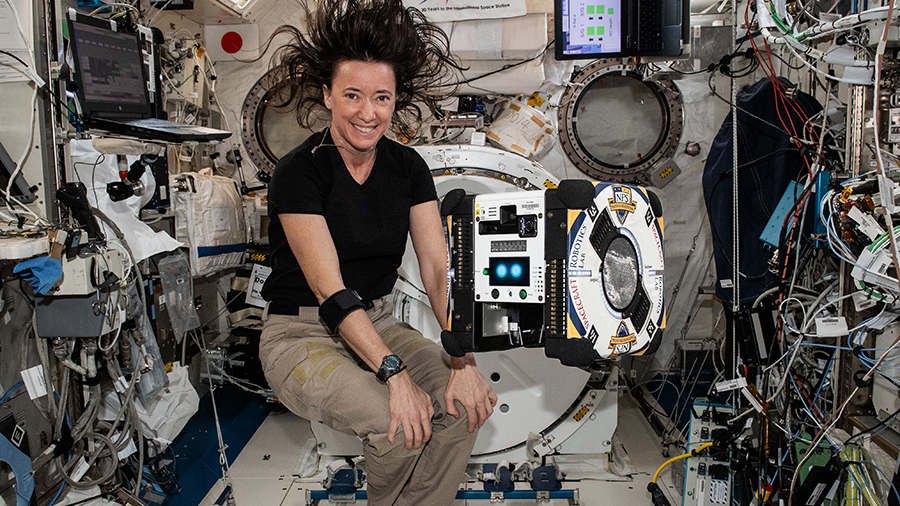
NASA astronaut Megan McArthur poses with an AstroBee robotic free-flying assistant inside the space station's Kibo laboratory module.
NASA astronaut Megan McArthur poses with an AstroBee robotic free-flying assistant inside the space station’s Kibo laboratory module.

Exercising wearing virtual reality goggles, replacing spacesuit components, and getting ready for this weekend’s crew departure were the main objectives for the Expedition 65 crew today. The residents aboard the International Space Station also juggled ongoing research and maintenance tasks amidst Russian filmmaking activities.

Daily exercise in microgravity is vital to maintain bone and muscle health in the weightless environment of the orbiting lab. Scientists are studying whether virtual reality may add an extra dimension of pleasure and satisfaction for a crew member during an exercise session in space. Commander Thomas Pesquet of ESA (European Space Agency) put on a virtual reality headset and strapped himself on to an exercise bike Wednesday morning for the Immersive Exercise study. The virtual reality sequence, including audio, is synchronized with the pedaling speed to increase the immersive sensation.

Pesquet then spent the afternoon with NASA Flight Engineer Shane Kimbrough working on a U.S. spacesuit. The duo swapped components to resize the spacesuit and checked out the suit’s communications gear.

Kimbrough earlier swapped out fuel bottles inside the Combustion Integrated Rack before cleaning up the seven-windowed cupola. NASA Flight Engineer Megan McArthur spent her day deploying camcorders inside the Harmony module where the SpaceX Crew Dragon and Cargo Dragon vehicles are docked.

In the Unity module, NASA Flight Engineer Mark Vande Hei set up networking hardware and software then moved on to cargo work inside Northrop Grumman’s Cygnus space freighter. Flight Engineer Akihiko Hoshide of the Japan Aerospace Exploration Agency (JAXA) cleaned smoke alarms in the Kibo laboratory module then worked on botany and life science activities.

Cosmonaut Oleg Novitskiy is preparing for his return to Earth this weekend inside the Soyuz MS-18 crew ship. Joining him for this morning’s Soyuz descent training session were Russian spaceflight participants Yulia Peresild and Klim Shipenko. Novitskiy will lead the duo aboard the Soyuz to a parachuted landing in Kazakhstan on Sunday at 12:36 a.m. EDT (10:36 a.m. Kazakh time).

Veteran cosmonaut Anton Shkaplerov spent Wednesday morning studying future spacecraft piloting and robotic techniques. First time space-flyer Pyotr Dubrov of Roscosmos photographed Shkaplerov during the session. The duo, including Novitskiy, then spent the afternoon on filmmaking activities with their two Russian space station guests.

Get The Details…

Mark Garcia

Powered by WPeMatico

Station Orbits Higher During Science and Crew Departure Preps

Station Orbits Higher During Science and Crew Departure Preps

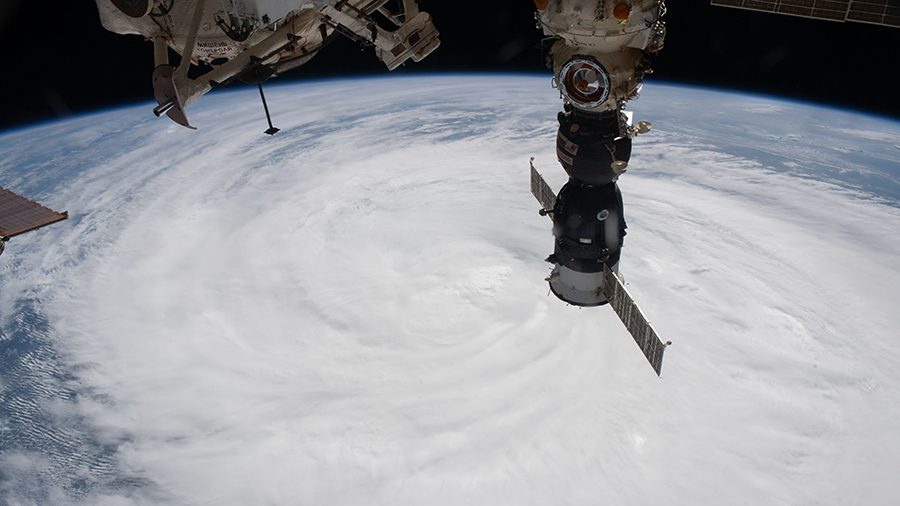
Typhoon Mindulle is pictured 261 miles below the space station on Oct. 1, 2021. The Soyuz MS-18 crew ship (foreground) is docked to the Nauka multipurpose laboratory module.

The Expedition 65 crew kicked off the work week with robotics research, combustion, and life science as the International Space Station orbits a little higher today. Three Russian orbital residents are also preparing for their return to Earth this weekend.

NASA Flight Engineer Shane Kimbrough worked in the NanoRacks Bishop airlock today installing cameras, work lights and the new GITAI robotic arm technology demonstration. The GITAI tech demo will test the small robotic arm’s ability to push buttons, flip switches, and plug and unplug cables inside the station saving the crew time.

NASA Flight Engineer Megan McArthur opened up the Combustion Integrated Rack and replaced components for the ACME series of gaseous flame studies today. Akihiko Hoshide, Flight Engineer from the Japan Aerospace Exploration Agency (JAXA), participated in a cognition test for the Standard Measures experiment before setting up the wearable Bio-Monitor that monitors crew health.

Commander Thomas Pesquet of ESA (European Space Agency) spent most of the day servicing laptop computers and swapping out science hardware in the Columbus laboratory module. NASA Flight Engineer Mark Vande Hei had a light duty day as well as conducted a ham radio pass with students from England.

The return to Earth of Roscosmos Flight Engineer Oleg Novitskiy and spaceflight participants Yulia Peresild and Klim Shipenko is still on track for Oct. 17 just after midnight Eastern time. The trio will undock from the Nauka multipurpose laboratory module inside the Soyuz MS-18 crew ship and parachute to a landing in Kazakhstan on Sunday at 12:36 a.m. EDT (10:36 a.m. Kazakh time).

Novitskiy continued packing the Soyuz MS-18 then joined cosmonaut Pyotr Dubrov and tested the lower body negative pressure suit that may help crew members adjust to gravity after returning to Earth. Veteran cosmonaut Anton Shkaplerov studied how microgravity affects the circulatory system before moving on to filmmaking activities with the other two cosmonauts and the two spaceflight participants.

The space station’s Zvezda service module fired it engines for 39 seconds early Tuesday morning lifting the station’s orbit by just over half-a-mile. The orbital reboost readies the station for December’s planned approach and rendezvous of the Soyuz MS-20 crew ship with one Russian cosmonaut and two Japanese spaceflight participants.

Get The Details…

Mark Garcia

Powered by WPeMatico