Crew Prioritizes Science, Training, and Exercise Before Cygnus Departure

Crew Prioritizes Science, Training, and Exercise Before Cygnus Departure
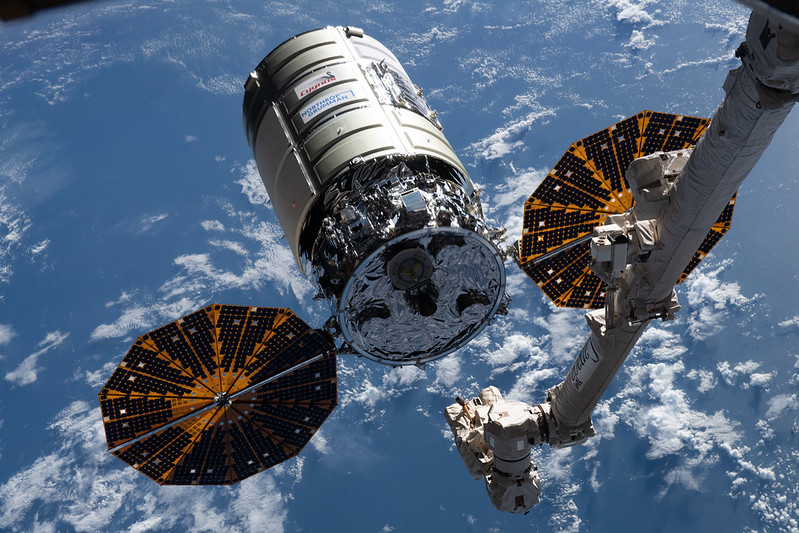
Northrop Grumman's Cygnus space freighter pictured arriving at the International Space Station on Aug. 12, 2021. Cygnus will depart from the space station on Nov. 20, 2021.
Northrop Grumman’s Cygnus space freighter pictured arriving at the International Space Station on Aug. 12, 2021. Cygnus will depart from the space station on Nov. 20, 2021.

The Expedition 66 crew focused on science, training, and exercise aboard the International Space Station on Friday and prepared for the Cygnus departure tomorrow.

NASA Flight Engineers Raja Chari and Kayla Barron continued the GRIP experiment that they began earlier this week. The experiment studies how long-duration spaceflight affects crews’ ability to regulate grip force and upper limbs trajectories when manipulating objects during different movements. The pair set up hardware and completed GRIP science tasks in the supine position while donning noise-canceling headphones. Chari performed the GRIP science tasks in the seated position as well.

Additionally, NASA astronauts Thomas Marshburn and Barron completed a robotics research session for the Behavioral Core Measures experiment. The study aims to accurately assess the risk of adverse cognitive or behavioral conditions during extended spaceflight. Marshburn and Barron set up the appropriate robotics hardware and performed the BCM testing. Crews are expected to complete the session at least once per month, starting two weeks after they arrive aboard the space station.

For medical training, NASA astronaut Mark Vande Hei and cosmonauts Anton Shkaplerov and Pyotr Dubrov of Roscosmos reviewed rescuer roles for a situation requiring cardiopulmonary resuscitation (CPR). Emergency medical equipment was deployed during the session. The trio practiced CPR positioning to ensure they could perform the procedure in space if necessary.

Focusing on fitness, crews also squeezed in a workout today. The astronauts completed cardio exercises on a stationary bicycle and treadmill fastened to the space station and resistive exercises using equipment that enables them to lift weights in weightlessness. Crews workout on average two hours per day in space. Routine exercise helps astronauts counter the bone and muscle loss that accompanies living and working in microgravity.

Meanwhile, ESA (European Space Agency) astronaut Matthias Maurer transferred data from a fiber-optic monitor called Lumina. The device tracks radiation levels aboard the space station in real-time. Maurer completed the data transfer with an iPad-based application that gathers medical data from astronauts.

Looking ahead, Barron, Chari, Marshburn, and Vande Hei made final preparations to the Cygnus cargo ship, which is slated to depart from the space station on Saturday at 11 a.m. EST. Cygnus arrived at the space station in August carrying more than  8,200 pounds of cargo. Flight controllers will remotely decouple Cygnus from the space station by forwarding commands to the Canadarm2 robotic arm from Earth. Live coverage of the spacecraft’s departure will begin at 10:45 a.m. on NASA TV.

Get the latest from NASA delivered every week. Subscribe here: www.nasa.gov/subscribe

Get The Details…

Deepthi Cauligi

Powered by WPeMatico

Crew Packs Cargo Ship for Departure and Preps for Spacewalk

Crew Packs Cargo Ship for Departure and Preps for Spacewalk

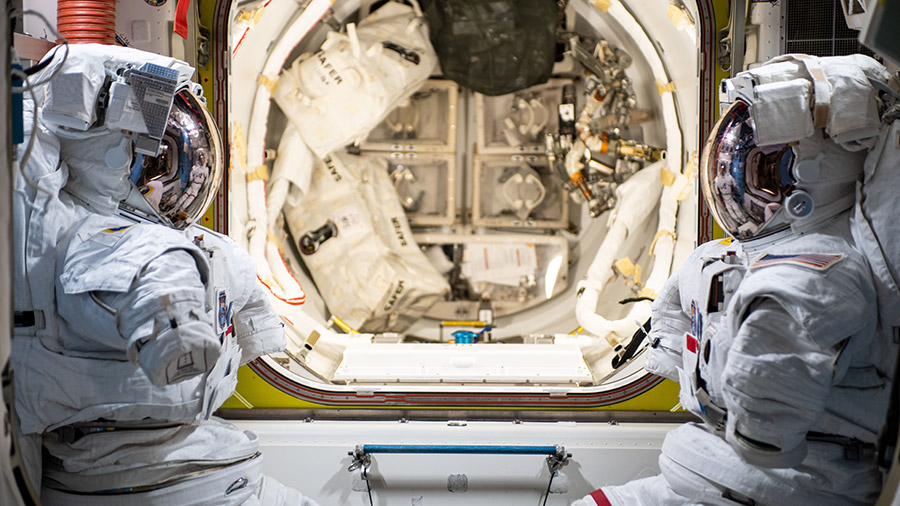
A pair of U.S. spacesuits that will be worn by NASA astronauts Thomas Marshburn and Kayla Barron are pictured in the station's Quest airlock.
A pair of U.S. spacesuits that will be worn by NASA astronauts Thomas Marshburn and Kayla Barron are pictured in the station’s Quest airlock.

The Expedition 66 crew is turning its attention to the U.S. Cygnus space freighter as it nears departure this weekend after 100 days berthed to the station’s Unity module. The astronauts are also preparing for a spacewalk to replace a faulty antenna system on the International Space Station.

NASA astronauts Thomas Marshburn, Raja Chari and Mark Vande Hei spent Wednesday afternoon packing Cygnus with trash and obsolete gear. ESA (European Space Agency) astronaut Matthias Maurer continued the cargo loading on Thursday. He will be at the robotics workstation monitoring its departure on Saturday at 11 a.m. EST. Robotics controllers remotely operating the Canadarm2 robotic arm from Earth will command Cygnus’ release live on NASA TV starting at 10:45 a.m.

Cygnus will have one more mission as it re-enters Earth’s atmosphere for a fiery, but safe destruction above the Pacific Ocean. The Kentucky Re-entry Probe Experiment will deploy three capsules from Cygnus to collect and transmit thermal data from sensors embedded in heat shields. The data may help validate thermal protection systems in space and heat shield materials on Earth.

Meanwhile, Marshburn and NASA Flight Engineer Kayla Barron are due to exit the U.S. Quest airlock soon to swap the S-Band Antenna System with a spare already attached outside the station. Maurer will be at the controls of the Canadarm2 assisting the duo during the planned six-and-a-half hour spacewalk.

Marshburn and Barron were joined by NASA Flight Engineers Raja Chari and Mark Vande Hei inside Quest on Thursday as they tried on their U.S. spacesuits for a fit check. Chari and Vande Hei will be on duty monitoring the two astronauts during the spacewalk and helping them in and out of their spacesuits. A news conference to discuss the spacewalk activities has been scheduled for Monday, Nov. 29.

Science was back on track Thursday with the crew exploring human research, botany, and space physics. Chari and Barron tested how astronauts perceive up and down movements and grip and manipulate objects In microgravity. Vande Hei cleaned up debris around chile peppers growing inside the Advanced Plant Habitat. Finally, station Commander Anton Shkaplerov of Roscosmos swapped samples inside the Microgravity Science Glovebox for a physics study seeking to improve the production of higher quality semiconductor crystals.

Get the latest from NASA delivered every week. Subscribe here: www.nasa.gov/subscribe

Get The Details…

Norah Moran

Powered by WPeMatico