Station Residents Wrap Up 2021 With Spacesuits and Dragon Work

Station Residents Wrap Up 2021 With Spacesuits and Dragon Work
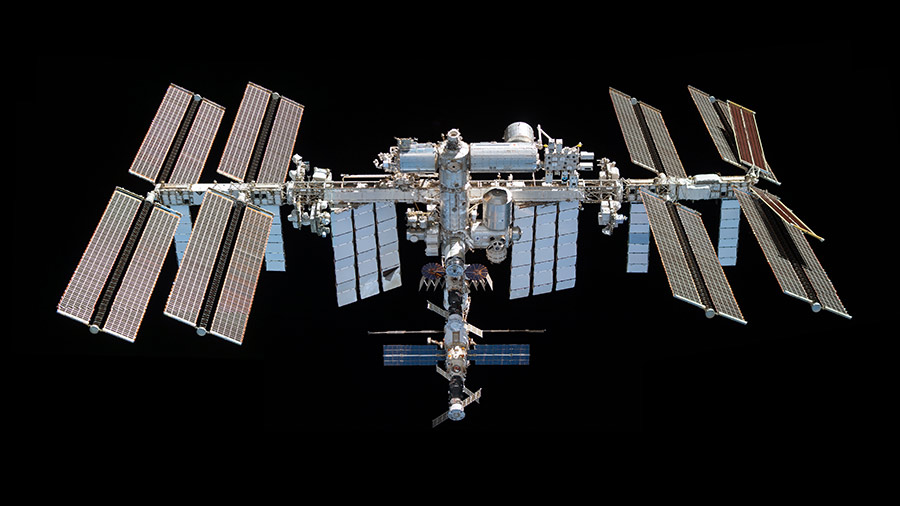
This mosaic depicts the space station pictured from the SpaceX Crew Dragon Endeavour on Nov. 8, 2021.

The astronauts and cosmonauts of Expedition 66 worked throughout Wednesday on U.S. and Russian spacesuits. The orbital residents will also end 2021 working on life science and cargo operations aboard the International Space Station.

Among the 6,500 pounds of cargo delivered aboard the SpaceX Cargo Dragon on Dec. 22 were a U.S. spacesuit and other spacewalking gear. NASA Flight Engineers Kayla Barron and Thomas Marshburn removed the new spacesuit from Dragon on Wednesday then installed communications gear and configured it. The duo also packed an older U.S. spacesuit inside the Cargo Dragon for return to Earth in January. The next U.S. spacewalk is targeted for spring when two astronauts will install a third set of roll-out solar arrays on the orbiting lab.

Russian spacewalks are also planned at the station in 2022 to outfit the Nauka multipurpose laboratory module that arrived in July. Cosmonauts Anton Shkaplerov and Pyotr Dubrov began reviewing procedures today for the upcoming excursions when they will configure Nauka to operate with the rest of the space station. The pair from Roscosmos also started organizing Russian Orlan spacesuit components and spacewalking tools.

The last days of 2021 will see the station crew move headlong into a variety of space biology research. The astronauts have already begun initiating some of the nearly 2,500 pounds of science experiments and research gear delivered in Dragon. Barron and Marshburn will start observing mice on Thursday to understand how microgravity affects the visual function. ESA (European Space Agency) astronaut Matthias Maurer has already started the new Cytoskeleton experiment and will work on it the rest of the week to study how the human cell adapts to weightlessness.

Orbital maintenance is critical to ensure ongoing and safe station operations. NASA Flight Engineers Mark Vande Hei and Raja Chari will focus on that work the rest of the week. Vande Hei will be configuring different research hardware while also assisting the cosmonauts with their Russian spacesuit work. Chari will spend the next few days unpacking the Cargo Dragon and work on station life support and plumbing tasks.

The space station blog is taking a short break until Monday, Jan. 3, as the station’s five astronauts and two cosmonauts orbit Earth into the New Year.


Learn more about station activities by following the space station blog, @space_station and @ISS_Research on Twitter, as well as the ISS Facebook and ISS Instagram accounts.

Get weekly video highlights at: http://jscfeatures.jsc.nasa.gov/videoupdate/

Get the latest from NASA delivered every week. Subscribe here: www.nasa.gov/subscribe

Get The Details…

Heidi Lavelle

Powered by WPeMatico

Crew Unpacks Cargo Dragon and Starts New Space Research

Crew Unpacks Cargo Dragon and Starts New Space Research

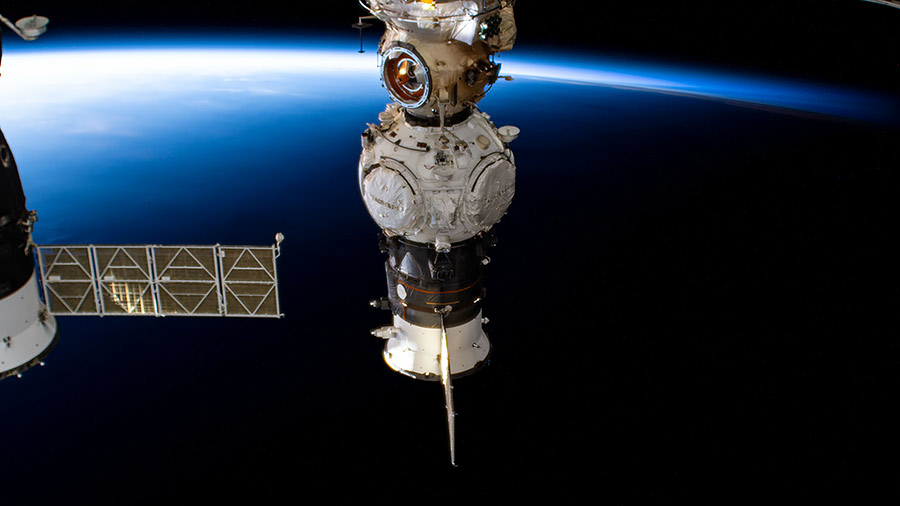
The Prichal, pictured still attached to the Progress delivery vehicle, is docked to the Nauka multipurpose laboratory module as the station orbited into a sunrise.

The Expedition 66 crew members continue unpacking the SpaceX Cargo Dragon vehicle and initiating brand new microgravity investigations. Some of the new science taking place aboard the International Space Station today is looking at plant genetics, human cellular function, and even space laundry techniques.

The four NASA astronauts living on the orbital lab took turns on Tuesday offloading some of the 6,500 pounds of new crew supplies, station hardware, and science experiments. Flight Engineer Kayla Barron began her morning working inside the Cargo Dragon. She then serviced samples inside the Electrostatic Levitation Furnace, a research device that observes the thermophysical properties of high temperature materials.

Astronauts Mark Vande Hei, Thomas Marshburn and Raja Chari got together on Tuesday afternoon to unpack the Cargo Dragon as well. Vande Hei and Marshburn have also begun work on a pair of new experiments exploring how to improve life in space. Vande Hei is testing detergent samples to learn how to keep clothes clean in a variety of gravity environments during long-term space missions. Marshburn set up the Veggie botany research facility for observing plant growth at the genetic level to promote space agriculture. Chari collected and spun his blood samples in a centrifuge then stowed them for later analysis. Afterward, Chari entered the Columbus laboratory module and began organizing cargo packed inside.

Flight Engineer Matthias Maurer of ESA (European Space Agency) collected research hardware from inside Columbus for a space biology investigation. He then began assembling that gear and thawing culture chambers inside the Kibo laboratory module. The work is for the new Cytoskeleton biology study, taking place in the Life Science Glovebox, and will explore how the machinery of the human cell is impacted by weightlessness.

Cosmonauts Anton Shkaplerov and Pyotr Dubrov, along with Vande Hei, started their day practicing emergency evacuation procedures. The trio trained on a computer for the procedures they would use in the unlikely event they would have to quickly board the Soyuz MS-19 crew ship, undock and return to Earth. Shkaplerov then unpacked Russian spacewalk gear delivered recently aboard the Prichal docking module. Dubrov focused on electronics and hardware maintenance for the rest of the day.


Learn more about station activities by following the space station blog, @space_station and @ISS_Research on Twitter, as well as the ISS Facebook and ISS Instagram accounts.

Get weekly video highlights at: http://jscfeatures.jsc.nasa.gov/videoupdate/

Get the latest from NASA delivered every week. Subscribe here: www.nasa.gov/subscribe

Get The Details…

Heidi Lavelle

Powered by WPeMatico

Last Week of 2021 Sees New Space Research Kick Off

Last Week of 2021 Sees New Space Research Kick Off

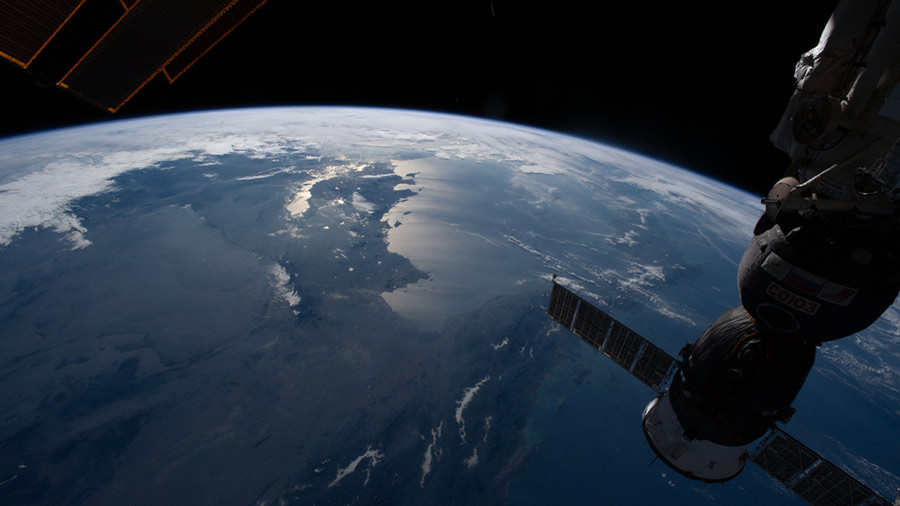
The Soyuz MS-19 crew ship is pictured docked to the Rassvet module as the International Space Station orbited 260 miles above southeast Asia.

The seven-member Expedition 66 crew is going into the final week of 2021 with a host of science experiments exploring numerous space phenomena benefitting astronauts in space and humans on Earth.

NASA Flight Engineers Mark Vande Hei and Kayla Barron worked on a pair of space farming studies during Monday afternoon exploring a variety of plant characteristics. Vande Hei set up components for the MVP (Multi Variable Platform) Plant-01 experiment inside the Harmony module. That study is investigating how a plant’s molecular mechanisms and regulatory networks adapt to weightlessness. Barron worked inside the Kibo laboratory module and configured the Plant Habitat-05 investigation which will observe the regenerative capacity of a variety of cotton genotypes.

NASA astronauts Raja Chari and Thomas Marshburn started Monday morning transferring research samples to science freezers in the Kibo lab. Chari then moved on and updated emergency checklists while also collecting and stowing his blood and urine samples for later analysis. Marshburn serviced the station’s oxygen generation system then unpacked medical gear from the SpaceX Cargo Dragon vehicle.

Flight Engineer Matthias Maurer of ESA (European Space Agency) spent his day working throughout the orbiting lab on a variety of research gear. Maurer first swapped science freezers inside the Unity module. Next, he installed the BioSentinel radiation exposure study in the Kibo lab. Finally, the astronaut from Germany worked in the Columbus laboratory module thawing research samples for the Cytoskeleton experiment before uninstalling the Kubik incubator.

The station’s commander, Roscosmos cosmonaut Anton Shkaplerov, recharged computer tablets inside the Soyuz MS-19 crew ship while also working on Russian life support maintenance throughout the day. Russian Flight Engineer Pyotr Dubrov checked out electronics gear in the morning before joining Shkaplerov in the afternoon and replacing components on the Zvezda service module’s treadmill.


Learn more about station activities by following the space station blog@space_station and @ISS_Research on Twitter, as well as the ISS Facebook and ISS Instagram accounts.

Get weekly video highlights at: http://jscfeatures.jsc.nasa.gov/videoupdate/

Get the latest from NASA delivered every week. Subscribe here: www.nasa.gov/subscribe

Get The Details…

Mark Garcia

Powered by WPeMatico

NASA Invites Media to NOAA’s Weather Observing Satellite Launch

NASA Invites Media to NOAA’s Weather Observing Satellite Launch

Media accreditation is now open for the upcoming launch of the National Oceanic and Atmospheric Administration (NOAA) GOES-T satellite, the Western Hemisphere’s most advanced weather observing and environmental monitoring system.

Get The Details…

Powered by WPeMatico