Curiosity Blog, Sols 4934-4940: In the Land of the Polygons
2 min read
Curiosity Blog, Sols 4934-4940: In the Land of the Polygons
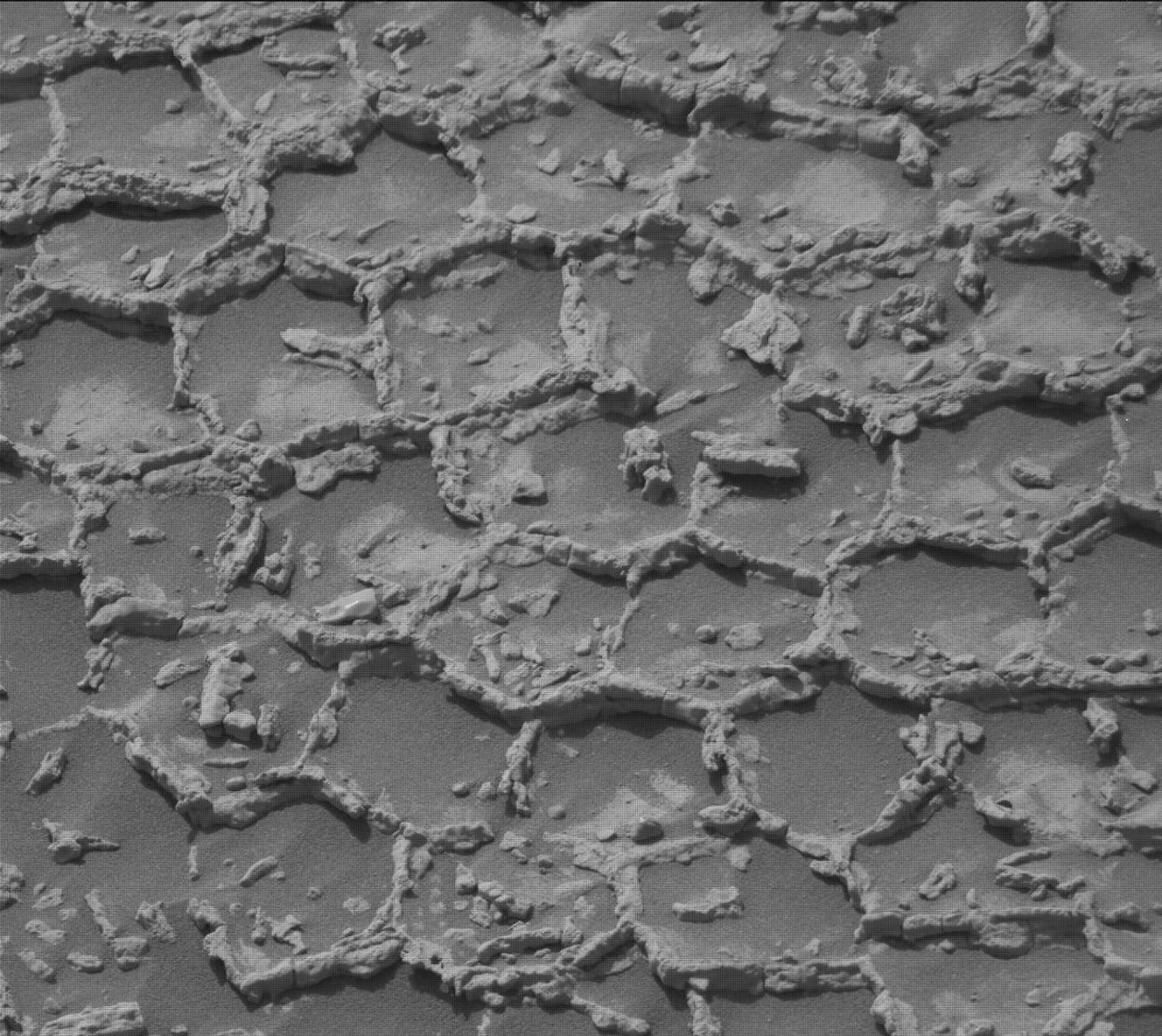
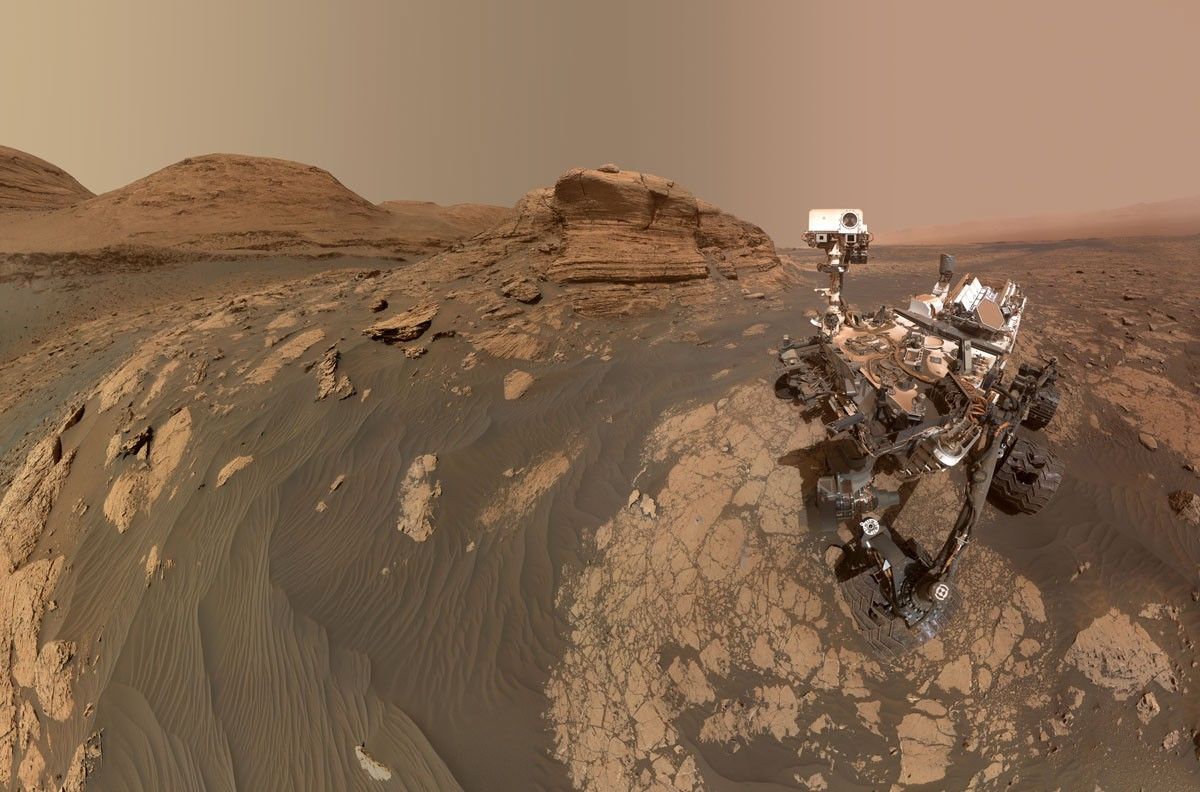
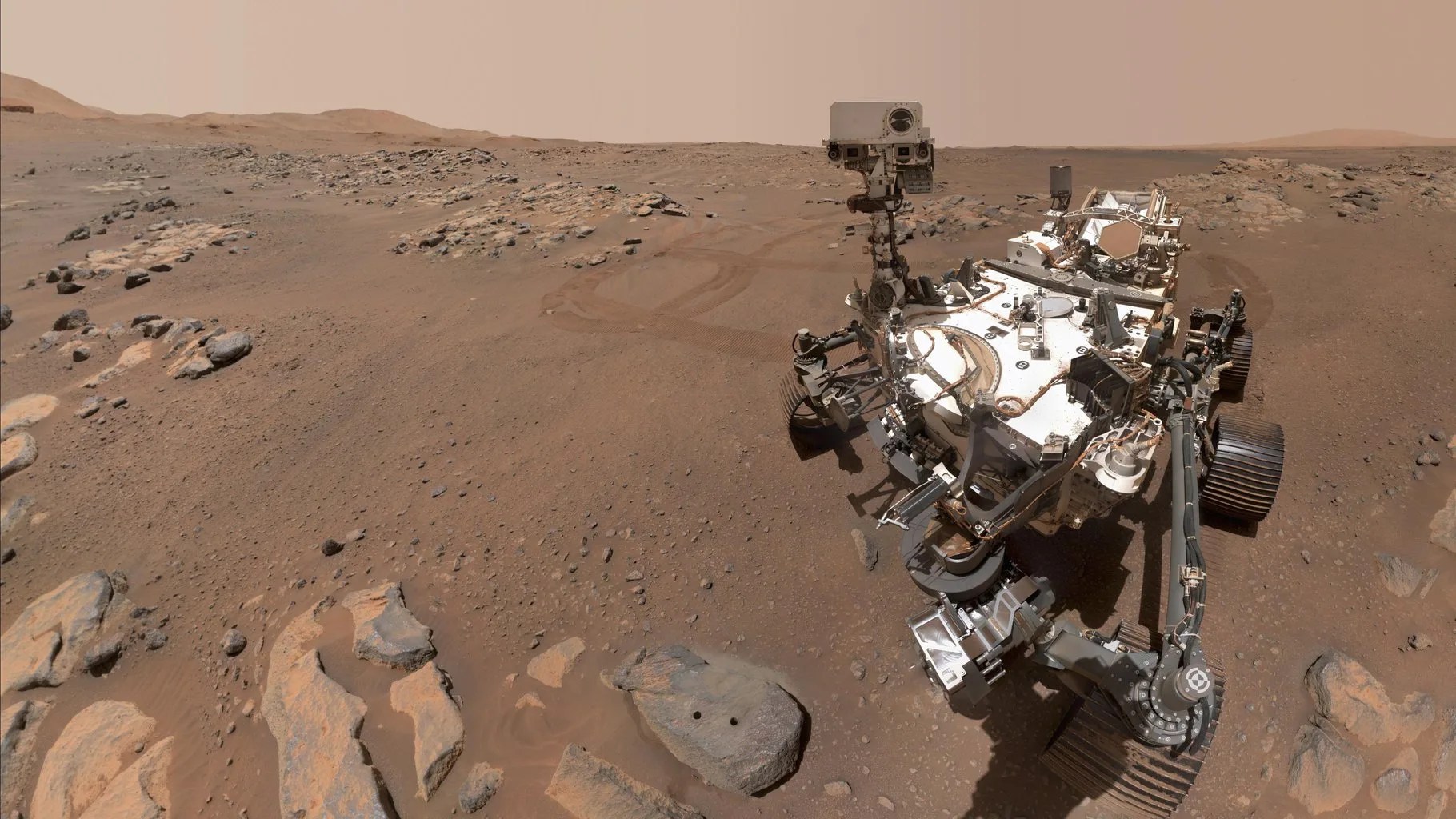
NASA’s Mars rover Curiosity acquired this image of polygonal structures using its Mast Camera (Mastcam) on June 21, 2026 — Sol 4932, or Martian day 4,932 of the Mars Science Laboratory mission — at 14:57:55 UTC.
NASA/JPL-Caltech/MSSS
Written by William Farrand, Senior Research Scientist, Space Science Institute
Earth planning date: Friday, June 26, 2026
There were two planning cycles over this span of sols. The Monday planning took place with Curiosity situated within a unit that from orbital imagery appeared light-toned, and from earlier rover positions appeared smooth. Reaching this unit, the rover team was surprised to see the unit covered with polygonal structures like the top of a giant Martian honeycomb. Driving further into the unit, the polygonal ridges were more eroded. Littered about this unit are pebble to cobble-sized dark-toned rocks. A still-to-be-resolved question is whether these are bits of Mars that “floated” down from higher in the stratigraphy, were ejected from distant impacts outside of Gale crater, or are meteorites from beyond Mars altogether. Examination of some previous dark “float” rocks indicated the presence of nickel, common in meteorites but less so in Martian rocks, but are all of the dark-toned pebbles and cobbles meteorites? Further investigations should help in answering this question.
Monday’s four-sol plan had APXS and MAHLI investigations looking at the ridges and centers of the polygons. The plan also included ChemCam Remote Micro-Imager (RMI) views of the “Miraflores” small knob and of the “Cordillera” mesa. Similar to the contact science activities, ChemCam LIBS measurements were focused on the polygons, with two measurements on different ridges and one on a polygon center. A ChemCam passive reflectance measurement of one of the aforementioned dark cobbles was also carried out. Environmental activities included a Navcam dust-devil search and atmospheric opacity (“tau”) measurements.
After driving further towards the upper boundary of the light-toned, polygon-covered unit, the three-sol Friday plan included APXS and MAHLI measurements of another polygon ridge and one of the dark-toned cobbles, “Cortadera.” ChemCam LIBS was also targeted on “Cortadera” and on a polygon ridge. ChemCam RMI was targeted on the top and base of the “Cordillera” mesa. Mastcam mosaics were planned of “Cordillera,” nearby troughs, part of the nearby “Valle Grande” channel, and documentation of LIBS targets and the Mastcam calibration target.
In the coming week, Curiosity will cross over into another band of materials which appear darker-toned in orbital images and rougher-textured, as viewed currently by the rover.
Caltech Welcomes Astrophysicist Ray Jayawardhana as New President
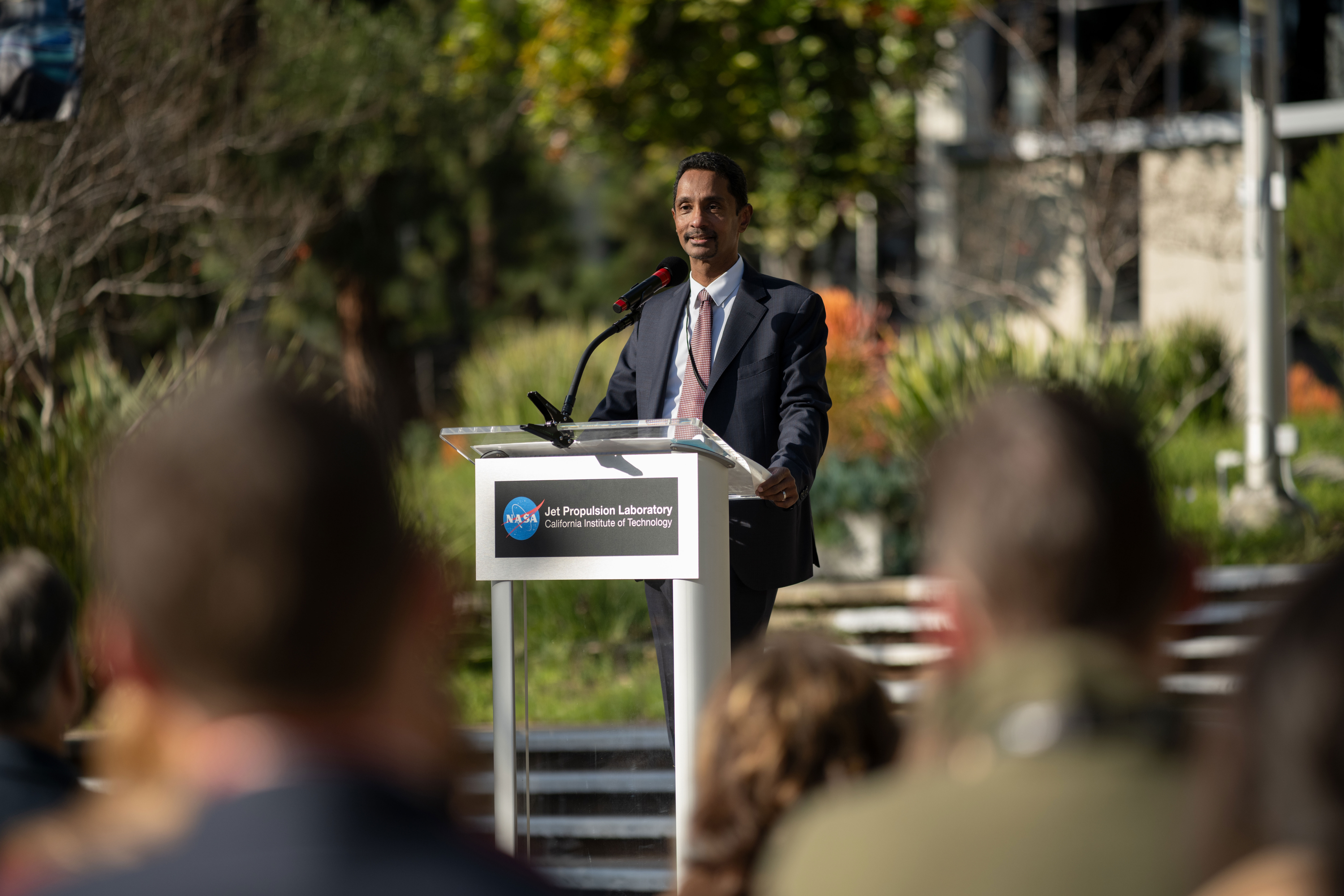
Ray Jayawardhana, Caltech’s 10th president, spoke at JPL on Jan. 6, 2026, the day his appointment was announced.
NASA/JPL-Caltech
Ray Jayawardhana begins his tenure today as the 10th president of the California Institute of Technology. His selection as Caltech’s president, and as the Sonja and William Davidow Presidential Chair and professor of astronomy, was announced Jan. 6. Jayawardhana succeeds Thomas Rosenbaum, who had served as Caltech’s president since 2014.
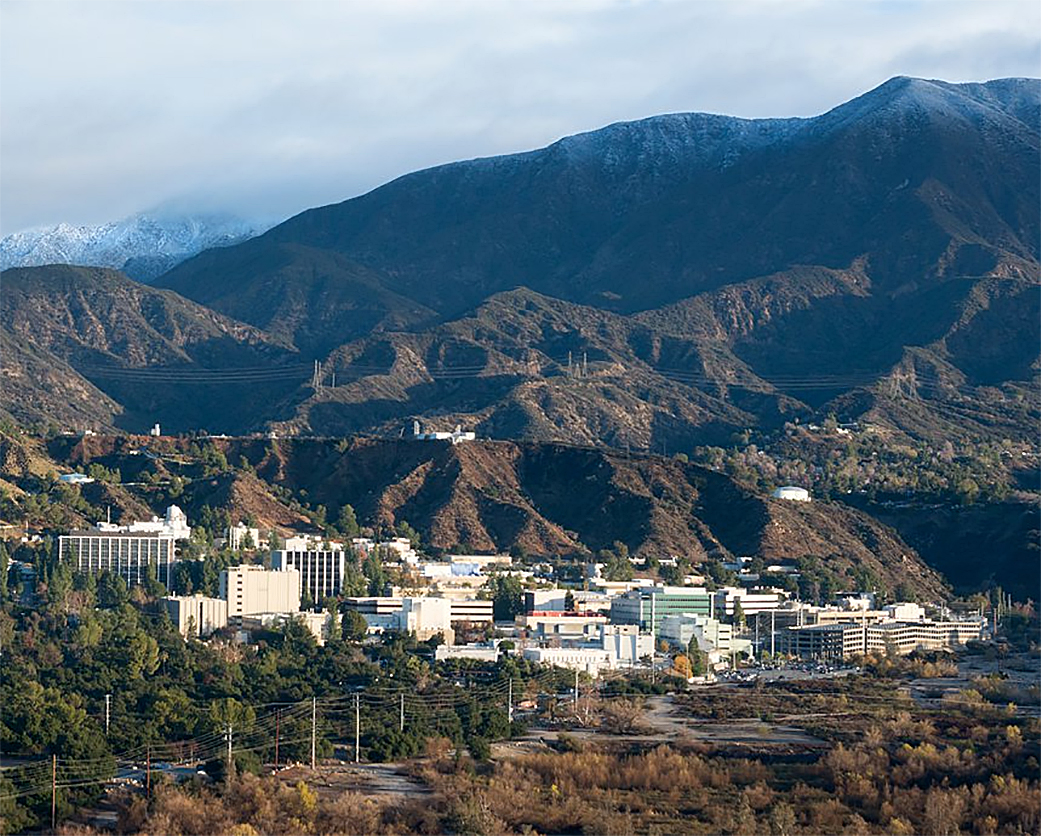
Founded in 1891, Caltech manages the Jet Propulsion Laboratory for NASA. The lab traces its origins to 1936, when a group of Caltech graduate students and other rocket enthusiasts began pioneering work in rocket propulsion. Once NASA was established in 1958, JPL became the space agency’s first and only federally funded research and development center.
“Today, I’m honored to begin my service as Caltech’s 10th president,” Jayawardhana wrote in his first message to the Caltech community. “Long before this day appeared on the horizon, Caltech and JPL have held a special place in my mind as beacons of humanity’s most ambitious acts of exploration and discovery.”
Looking ahead, Jayawardhana said he will be a fierce advocate for the Institute’s mission and the people who advance it, partnering with Caltech and JPL colleagues and other stakeholders to ensure the Institute will continue to have transformative impact on humanity. He also said he aims to pursue bold, catalytic investments in “blue-sky” ideas on campus, at JPL, and across the Institute’s suite of global observatories; enrich the educational experience of undergraduates, graduate students, and postdoctoral scholars; and expand the Institute’s engagement with the public.
“Dr. Jayawardhana steps into this role at a pivotal moment for Caltech, JPL, and NASA,” said Dave Gallagher, director of JPL. “We look forward to working closely with him on missions that will help define a new era of U.S. exploration — extending humanity’s reach into the solar system, unlocking extraordinary scientific discovery, and inspiring future generations to dare mighty things.”
Jayawardhana comes to Caltech from Johns Hopkins University, where as provost he oversaw the university’s 10 schools as well as an expansive portfolio of interdisciplinary programs, academic centers, and core administrative and operational units.
Prior to Johns Hopkins, he served as the Harold Tanner Dean of the College of Arts and Sciences and the Hans A. Bethe Professor and professor of astronomy at Cornell University. Earlier in his career, he was on the faculty at the University of Toronto, where he held a Canada Research Chair and served as senior adviser on science engagement to the university’s president. Jayawardhana earned his Ph.D. in astronomy from Harvard University and a B.S. in astronomy and physics from Yale University.
A pioneering astrophysicist, Jayawardhana investigates the origin and evolution of planets and planetary systems, as well as the formation of stars and brown dwarfs. Using the largest telescopes on the ground (including the W. M. Keck Observatory, which Caltech co-manages with the University of California) and in space (especially NASA’s James Webb Space Telescope), he and his collaborators use remote sensing to characterize planets outside our solar system, or exoplanets, with an eye toward assessing the prospects for life beyond Earth. He is a core science team member for the Near Infrared Imager and Slitless Spectrograph instrument aboard the Webb telescope, and his research group has led Gemini Observatory large programs on high-resolution spectroscopy of exoplanetary atmospheres.
Jayawardhana will continue his research alongside his presidential responsibilities as a Caltech professor of astronomy in the Division of Physics, Mathematics and Astronomy.
“Time and again, I’ve been struck not only by the audacity and brilliance of the work underway here, but also by this community of creative and original thinkers who seem constitutionally incapable of leaving the hardest questions unanswered,” Jayawardhana wrote in his note to the Caltech and JPL community.
The appointment marks a return to an early source of inspiration for the astrophysicist. Growing up as a self-described “space-obsessed kid” in Sri Lanka, Jayawardhana wrote to JPL asking for images from NASA’s Voyager and Viking missions (JPL manages Voyager and played a major role in Viking). A few weeks later, a package arrived at his childhood home.
“I still remember the thrill of finding the manila envelope waiting for me … with the unmistakable JPL logo,” he recalled in remarks to the JPL community in January. Inside was a viewbook filled with images of Jupiter and Saturn. “Holding it in my hands, I felt a rush of amazement, as if I were sharing in the grand quest to explore other worlds despite growing up in a remote corner of this one.”
Now, as Caltech’s president, that childhood inspiration has come full circle. “As an astrophysicist, I have the deepest respect for JPL’s enduring contributions to humanity’s quest to explore the solar system and beyond. And as Caltech’s president, I’m excited to work alongside you in that quest.”
NASA’s TESS Mission Finds Planetary System in New Way
5 Min Read
NASA’s TESS Mission Finds Planetary System in New Way
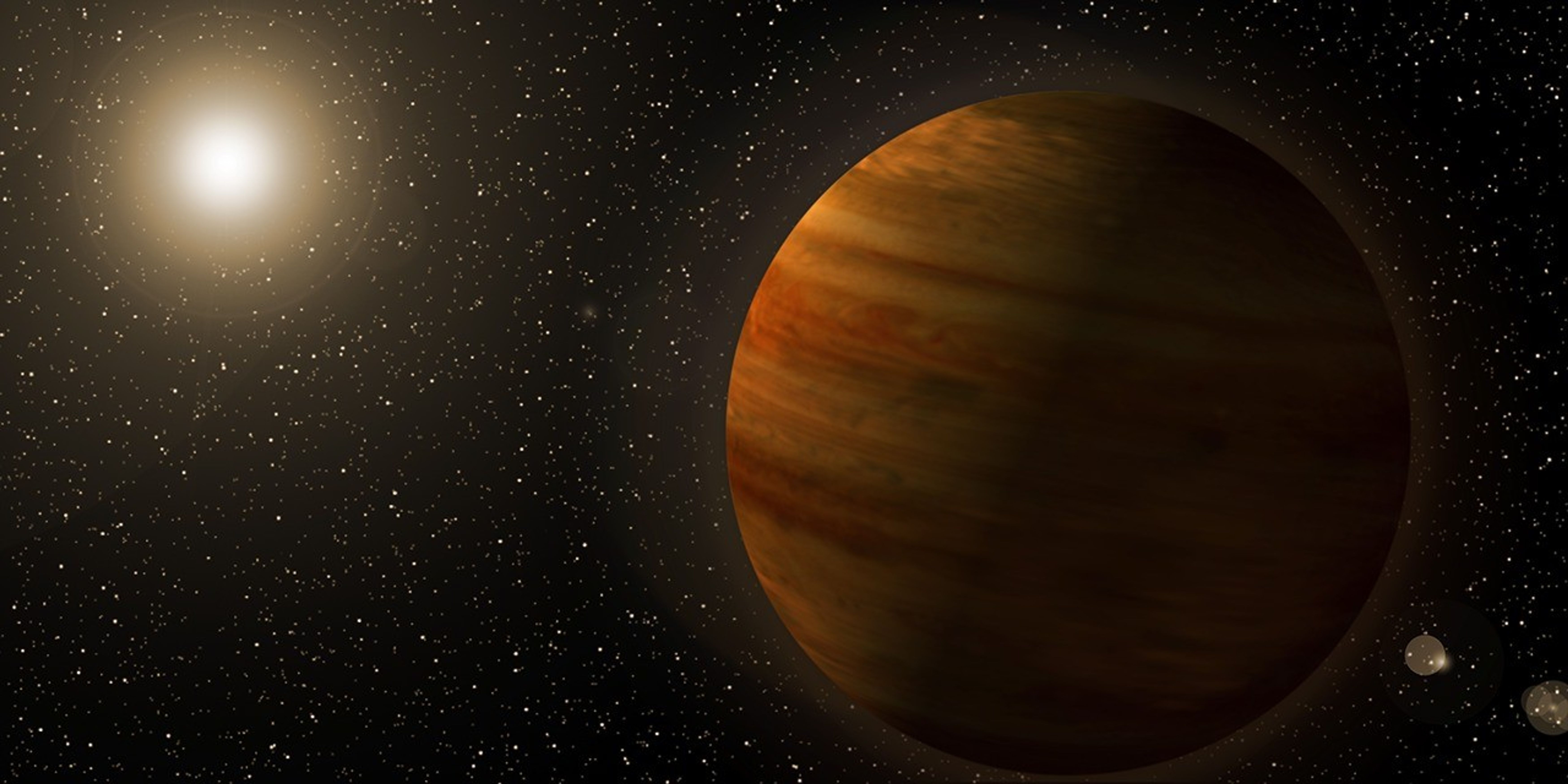
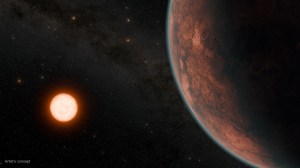
This artist’s concept visualizes a super-Jupiter orbiting an orange dwarf star at a distance similar to Jupiter’s distance from the Sun.
Credits: NASA’s Goddard Space Flight Center
For the first time, NASA’s TESS (Transiting Exoplanet Survey Satellite) mission has identified a planet orbiting a distant star thanks to ripples in space-time. Unlike the star-hugging transiting planets TESS regularly reveals, the newfound world is a super-Jupiter orbiting far from its host star.
“When TESS launched, no one expected it to ever be capable of finding this kind of planet,” said Diana Dragomir, a professor at the University of New Mexico in Albuquerque and co-author of a paper describing the results. At 1.6 times Jupiter’s mass and a similar orbital distance, it would be extremely unlikely to find such a planet via the primary detection method TESS was designed for. “The discovery implies that there are probably other so-called microlensing planets hiding in TESS’s data that we hadn’t previously thought to look for.”
This artist’s concept visualizes Gaia23bra b, the first microlensing planet orbiting a distant star found by NASA’s TESS (Transiting Exoplanet Survey Satellite). This super-Jupiter orbits an orange dwarf star at a distance similar to Jupiter’s distance from the Sun.
NASA’s Goddard Space Flight Center
Astronomers found the first hint of the planet, called Gaia23bra b, in 2023 using ESA’s (European Space Agency) now-retired Gaia space telescope. Gaia’s alert system flagged a star that brightened — something that can happen when a foreground star passes in front of a more distant one and magnifies its light through gravitational microlensing.
Researchers later looked back through archived TESS data and found TESS had caught it too.
“Gaia’s observations were too sparse to pick up on the planet,” said Mallory Harris, a Ph.D. candidate at the University of New Mexico, who led the study. “The TESS spacecraft happened to be monitoring the same area of the sky during the event, and its denser time coverage showed extra features in the light curve caused by a planet.”
The team’s analysis, published July 1 in The Astrophysical Journal Letters, revealed that Gaia23bra b, which orbits an orange dwarf star that’s about 80 percent of the Sun’s mass, is nearly 40,000 light-years away from Earth, far exceeding TESS’s usual search radius of about 150 light-years.
Microlensing 101
Out of more than 6,000 known exoplanets (worlds outside our solar system), about three-fourths were discovered via the transit method, TESS’s typical planet-hunting technique. Astronomers monitor hordes of stars, watching for ones that periodically dim as orbiting planets cross in front of them — an event called a transit.
This animation illustrates the concept of gravitational microlensing. When one star in the sky (shown in the center of the animation) appears to pass nearly in front of another (located in the dashed circle at the right) from our vantage point, the light rays of the background star become bent due to the warped space-time around the foreground star. This star acts like a virtual magnifying glass, amplifying the brightness of the background star and causing its position to appear to slightly shift. If the nearer star harbors a planetary system, then those planets can also act as lenses, each one producing a short deviation in the brightness of the source. When astronomers find planets this way, they can measure their mass and orbital distance from their host star.
NASA’s Goddard Space Flight Center/CI Lab
Microlensing has revealed less than 5% of known exoplanets. This light-bending phenomenon occurs when two stars align closely from our vantage point. Light from the more distant star curves as it travels through the warped space-time caused by the nearer star’s mass.
If the alignment is especially close, the nearer star acts like a cosmic lens, focusing and magnifying light from the background star. Planets orbiting the foreground star may also modify the distant star’s light, acting as their own tiny lenses. Astronomers see the effect as a spike in the star’s brightness.
The transit method is best at finding large planets orbiting very close to their host stars; large planets block the most starlight, while close-in planets are more likely to pass in front of the host star. These gargantuan, steamy worlds are fascinating to scientists, but astronomers want to find planets like those in our solar system, too. That’s microlensing’s specialty.
With microlensing, we can find smaller planets with greater orbital distances, including worlds in the habitable zone of their star and even farther away.
Mallory harris
Ph.D. candidate at the University of New Mexico
Microlensing isn’t well suited to finding huge, close-in planets because their gravitational signals would just blur together.
“Transits and microlensing are complementary because they each reveal a category of planet the other may not be able to detect,” Dragomir said. “And they offer different details. Transits give us the size of a planet, and in concert with other methods we can determine its mass and density. Microlensing gives us masses and orbital distances for planets we’d otherwise never see.”
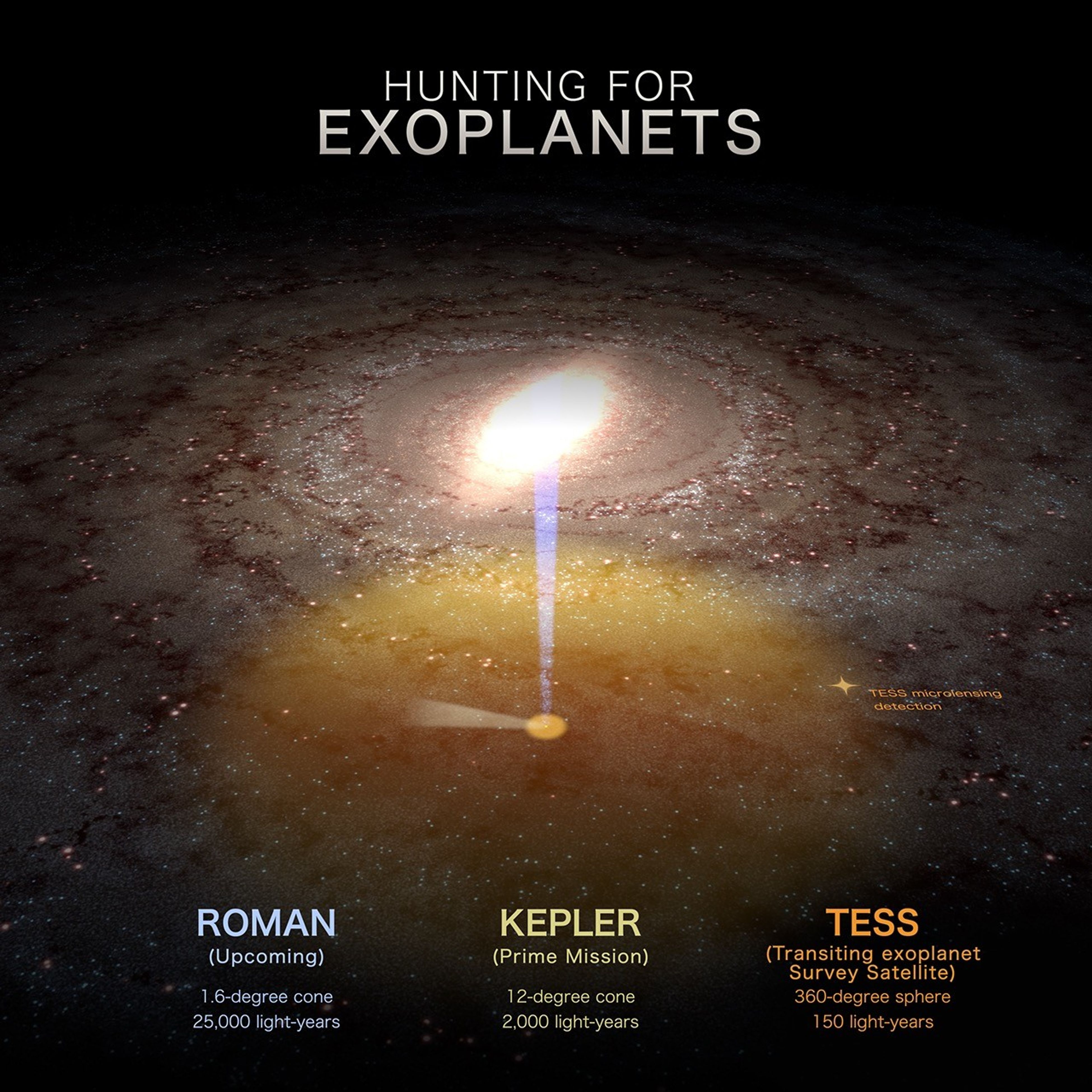
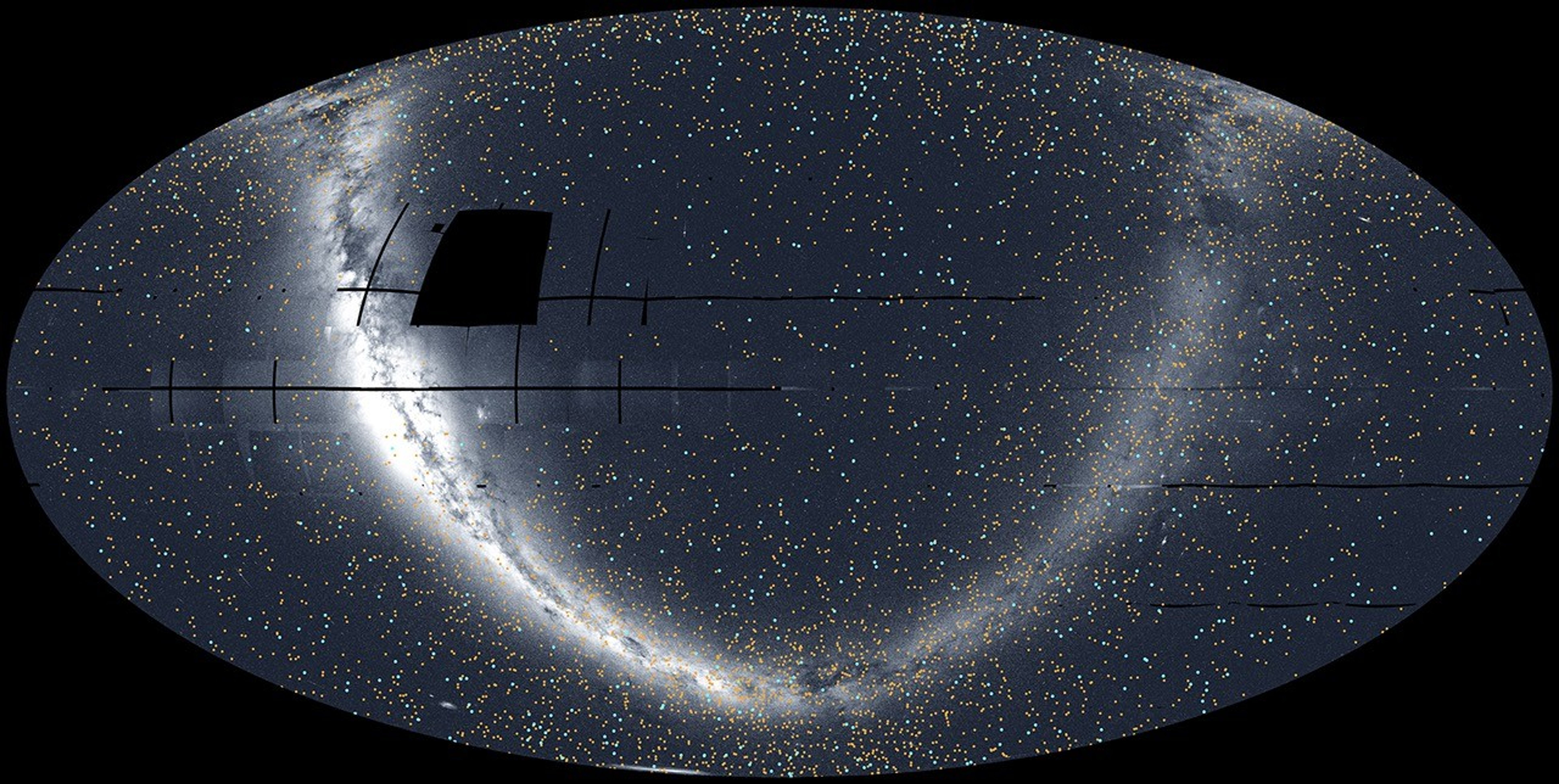
This graphic highlights the search areas of three planet-hunting missions: NASA’s upcoming Nancy Grace Roman Space Telescope, the retired Kepler Space Telescope, and NASA’s TESS (Transiting Exoplanet Survey Satellite). While TESS discovers transiting planets within a 150-light-year radius of Earth, it recently detected a planet about 40,000 light-years away (marked by the star symbol) via another method, called microlensing.
NASA’s Goddard Space Flight Center
But microlensing observations are time-limited opportunities.
Microlensing events happen once and they’re gone — they don’t repeat. I like to joke that we’ll probably find the first Earth analog with microlensing, and then wave at it as it goes by because we’ll never see it again.
Mallory Harris
Ph.D. candidate at the University of New Mexico
That makes detailed observations of microlensing planets tough. However, the method can serve as a powerful demographics tool that offers broad information about planetary populations.
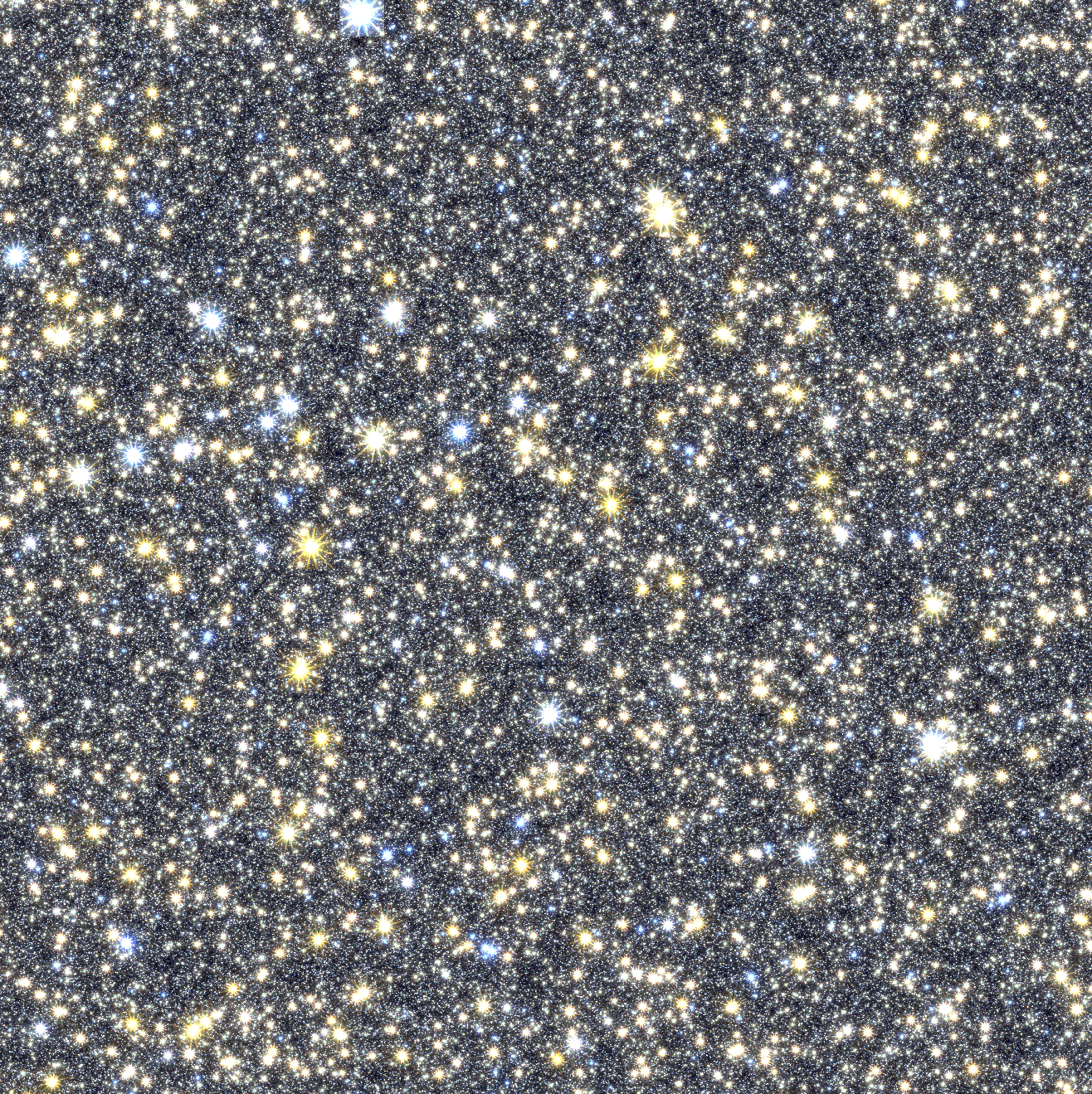
Roman will specifically target the heart of the galaxy because stars are packed so tightly together there, increasing the odds of seeing microlensing events. While that crowding would make many stars blend together in TESS’s larger pixels, TESS looks at nearly the whole sky, where stars are more spread out.
“Since TESS looks elsewhere in the galactic plane, it can naturally find microlensing planets in other parts of the galaxy, as demonstrated by this first microlensing planetary system,” Dragomir said. “That means it could help us study planets in regions with different conditions.”
That could have implications for the search for habitable worlds. The bustling galaxy center is rife with radiation from more frequent supernova explosions, which could sterilize planets. And gravitational encounters between crowded stars may disrupt planetary systems. Observations from TESS focus on a milder part of the galaxy.
“The key to Roman’s microlensing survey is its dense time coverage targeting the galactic bulge,” Fausnaugh said. “The TESS mission uniquely provides these rapid observations for stars in other parts of the galaxy, and pairing the two opens up prospects for understanding planet formation in a diverse population of stars. Since microlensing finds solar system-like planets, this offers a new chance to understand how planetary systems like our own vary in different regions of the galaxy.”
Astronauts Repair Canadarm2 Robotic Arm and Complete Spacewalk
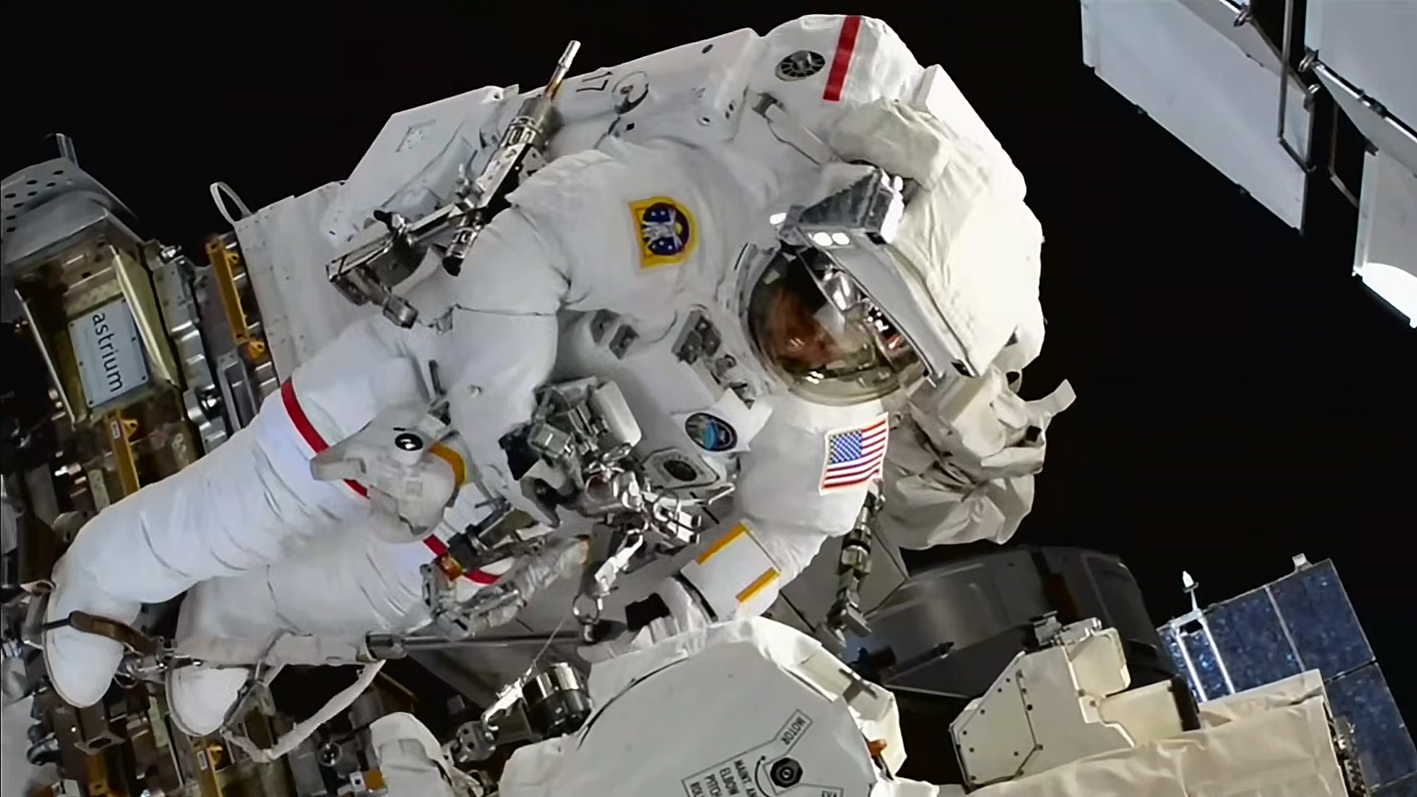
NASA astronaut Chris Williams works outside the International Space Station during a spacewalk to swap out a malfunctioning wrist joint on the Canadarm2 robotic arm.
Following the repair by the astronauts, NASA’s Mission Control in Houston powered up Canadarm2 to successfully complete an initial check out the system’s power and data connectivity. Over the coming week, ground controllers also will begin moving the arm as system checkouts continue.
NASA and CSA (Canadian Space Agency) elected to replace the wrist joint after it malfunctioned during normal Canadarm2 operations on May 27 after the arm drew elevated motor current and did not move as expected. Repairs to robotics, like Canadarm2, are normal and expected after more than 25 years of continuous operations, as the system was designed with replaceable components and planned maintenance in mind.
The faulty joint will be returned to Earth to be inspected and refurbished for future use on the robotic arm, if needed.
U.S. Spacewalk 95 was Williams’ second career spacewalk and the fifth for Meir. It also was the 280th spacewalk in support of space station assembly, maintenance, and upgrades.
NASA’s Chandra Reveals ‘Red, White, Blue’ Universe for US 250th
7 Min Read
NASA’s Chandra Reveals ‘Red, White, Blue’ Universe for US 250th
In celebration of the 250th birthday of the United States, NASA has unveiled four cosmic images from its Chandra X-ray Observatory rendered in red, white, and blue that represent the wonders of the universe the agency explores. The images are accompanied by a trio of new sonifications – a technique that translates astronomical data into sounds.
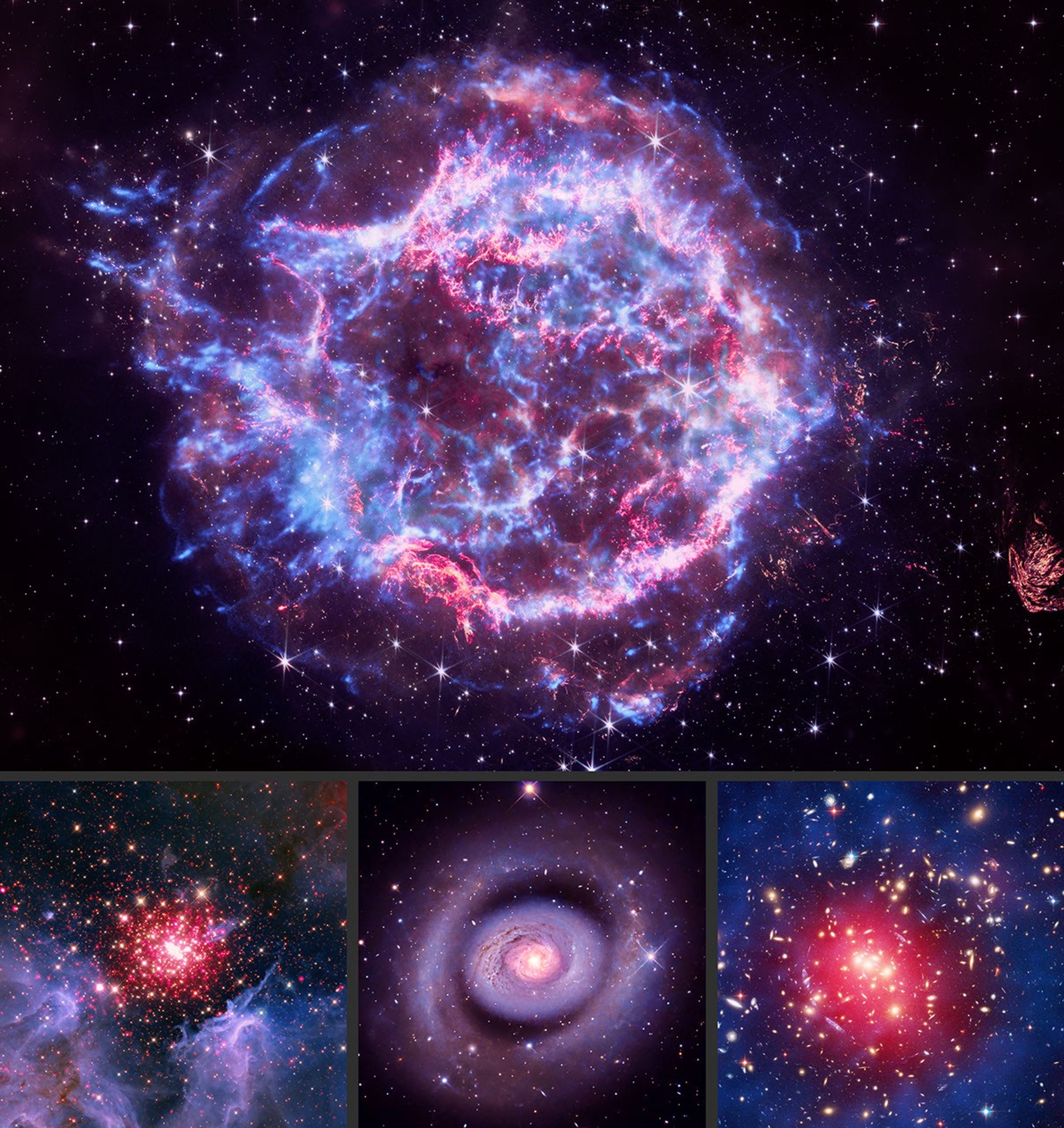
In celebration of the 250th birthday of the United States, NASA’s Chandra X-ray Observatory has unveiled four cosmic images rendered in red, white, and blue that represent the wonders of the universe that NASA explores.
NASA/CXC/SAO
The image set begins with Cassiopeia A in the top panel, where X-rays from Chandra (represented in blue and purple) have been combined with an infrared image from NASA’s James Webb Space Telescope (red and white). Chandra’s X-ray vision reveals the blast wave that tore through the star, as well as elements in the debris field like iron, calcium, and oxygen. Webb’s infrared data also shows the expanding shell of material from the explosion and cosmic dust throughout the remnant.
In the bottom row, the first image on the left is the nebula NGC 3603, which contains a massive cluster of stars and is located in the Milky Way Galaxy. This new composite image contains Chandra’s X-ray data (red and white) and shows diffuse emissions near the galaxy’s center along with point-like X-ray sources throughout the middle of the image. Optical, infrared, and ultraviolet light from NASA’s Hubble Space Telescope (red-orange, green, blue, and yellow) reveal stars in the center of the image and dust and gas toward the bottom. The combined layering of the colors makes this nebula and the stars forming within it appear primarily red, white, and blue, with X-rays showing the sparkling lights of young stars.
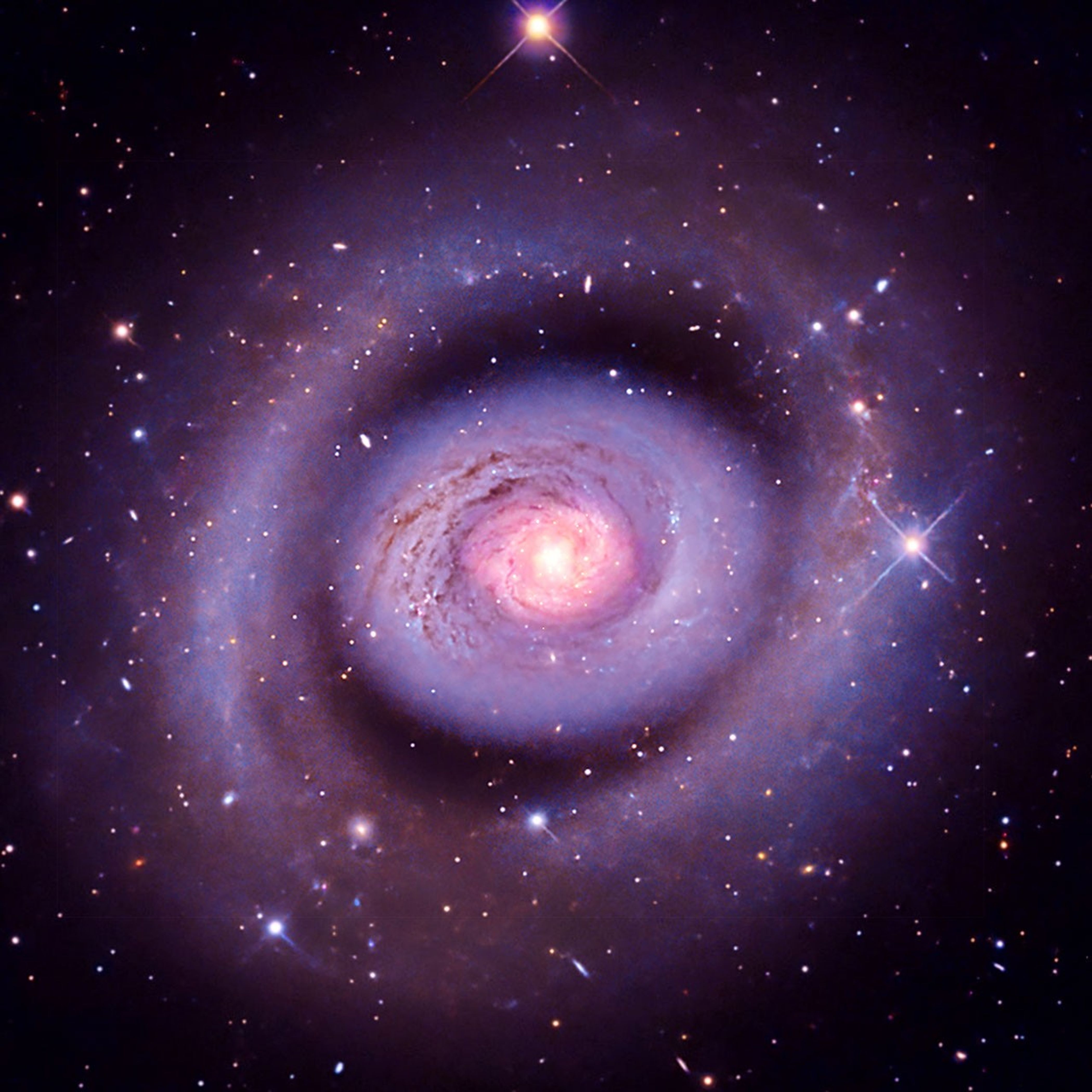
The middle panel of the bottom row is a new look at the galaxy NGC 4736, also known as Messier 94. In this image, X-rays of different wavelengths from Chandra (red, orange, and blue) are layered with a visible light image from astrophotographers using their telescopes on the ground (red, green, and blue). Messier 94 is a spiral galaxy with a bright inner ring around it, called a starburst ring, where new stars are forming, perhaps fueled by gas driven in the unique oval-shaped structure seen here.
The final image in this red, white, and blue quartet features ZwCl 0024+1652. This is a distant galaxy cluster in which astronomers have found evidence for dark matter by using specially processed data from Hubble (blue). Another image from Hubble reveals the individual galaxies in the cluster (appearing as yellow and white). X-ray data from Chandra shows the enormous reservoir of superheated gas that pervades this galaxy cluster (red) with much more mass than all the galaxies taken together.
New sonifications of the three images along the bottom row of this mosaic are also available, allowing listeners to experience data through sound.
The translation of NGC 3603 into sound begins with a left to right scan, where the brightnesses of the sources once again dictate volume. Chandra’s observations of compact sources sprinkled throughout the galaxy are heard as piano notes, while the diffuse X-ray emission is mapped to a range of audio frequencies. The Hubble optical data is played as sustained tones and acoustic guitar harmonics.
In the sonification of NGC 4736, the radar-like scan moves clockwise, and the brightness of the sources dictates the volume of the sounds. X-rays from Chandra have been turned into wind-like sounds that follow the shape of the X-ray emission. Neutron stars and stellar-mass black holes (known as “compact sources”) detected by Chandra are mapped to pitched tones on a glass marimba. Optical data from ground-based observations is mapped to musically pitched tones, creating a low drone, while stars and background galaxies are heard as a soft piano.
For ZwCl 0024+1652, the sonification begins as a circle on the outside of the image and moves inward. The volume is linked to the brightness of the data, reaching one peak as the circle passes over the dark matter detected by inference from Hubble optical observations and another as it reaches the core. The background stars are heard as a swelling glockenspiel-like sound, and the galaxies are played on a piano. Chandra’s X-rays, which dominate the center of the galaxy cluster and reveal superheated gas, are represented by airy synthesizer notes.
The sonification program is led by the Chandra X-ray Center (CXC) and included as part of NASA’s Universe of Learning program. The collaboration was driven by visualization scientist Kimberly Arcand, (CXC), Matt Russo, astrophysicist; and Andrew Santaguida, musician, SYSTEM Sounds project; along with Christine Malec, consultant. Previously released sonifications of data from Cassiopeia A can be found at chandra.si.edu/sound.
NASA’s Marshall Space Flight Center in Huntsville, Alabama, manages the Chandra program. The Smithsonian Astrophysical Observatory’s Chandra X-ray Center controls science operations from Cambridge, Massachusetts, and flight operations from Burlington, Massachusetts.
To learn more about NASA’s Chandra mission, visit:
In celebration of the 250th birthday of the United States, this release includes a series of images featuring four wonders of the universe, rendered in red, white, and blue. The images contain X-ray data from the Chandra X-ray Observatory, optical and infrared data from the Hubble Space Telescope and the James Webb Space Telescope, as well as ground-based telescopes.
The main image set features composite images of the four individual objects; Cassiopeia A, NGC 3603, M94/NGC 4736, and ZwCl 0024+1652.
Cassiopeia A occupies the top panel of the frame, significantly larger than the other images in the set. The cloudy blast-wave of the supernova remnant is ring-like in shape, streaked with veins of iron, calcium, and oxygen. Here, presented in red, white, and blue, the remnant resembles an electrified donut, crackling with marbled veins of strawberry and blueberry icing.
At our lower left of the image set is the nebula NCG 3603, which contains a massive cluster of stars on the other side of the Milky Way galaxy. Here, a tight cluster of neon red and white stars packs the center of the image, dissipating as it reaches the outer edges of the panel. Sweeping in at the lower corners of the image are hazy blue clouds resembling sheets of gauze.
Centered at the bottom of the image set is the galaxy NGC 4736, also known as Messier 94 (M94). Here, the spiral galaxy is seen face on, with concentric pale violet cloud rings flecked with scores of stars in white, pale blue, soft red, and golden yellow. The inner ring of the galaxy is bright, and rosy yellow in color. This is a starburst ring, where new stars are forming.
At our bottom right of the image set is the distant galaxy cluster ZwCl 0024+1652. The image is packed with streaks and specks in golden yellow and brilliant white. Upon close inspection, each streak and speck is revealed to be an individual galaxy, some with discernible spiral shapes. At the center of the image is a round pool of bright red light, surrounded by royal blue haze. The red light represents X-ray observations by Chandra, which reveal an enormous reservoir of superheated gas pervading the cluster. The blue haze represents specially-processed data from Hubble, suggesting evidence of dark matter.
This release also includes new sonifications of the three images presented in the bottom row of this data set, allowing listeners to experience the data through sound.