Dragon Resupply Ship Splashes Down Returning Critical Science

Dragon Resupply Ship Splashes Down Returning Critical Science
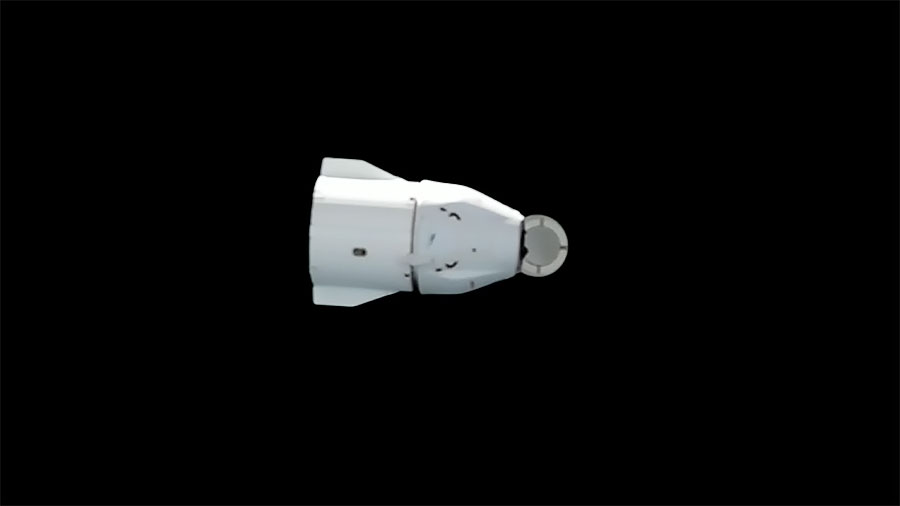
The SpaceX Dragon cargo craft is pictured departing the vicinity of the space station following its undocking from the Harmony module's space-facing port.
The SpaceX Dragon cargo craft is pictured departing the vicinity of the space station following its undocking from the Harmony module’s space-facing port.

SpaceX’s uncrewed Dragon cargo spacecraft splashed down at 5:19 a.m. EST Wednesday, Jan. 11, off the coast of Tampa, Florida, marking the return of the company’s 26th contracted cargo resupply mission to the International Space Station for NASA. The spacecraft carried approximately 4,400 pounds of valuable scientific experiments and other cargo back to Earth.

Some of the scientific investigations returned by Dragon include:

  • Deep space radiation protection: A vest designed to protect astronauts from high doses of radiation caused by unpredictable solar particle events is returning to Earth after months of testing. Crew members wore the Astrorad vest while performing daily tasks and provided feedback about how easy it is to put on, how it fits and feels, and the range of motion possible while wearing it. The vest’s developers plan to use that feedback to improve design of the garment, which could provide radiation protection for astronauts on Artemis missions to the Moon.
  • Air, water, plants: XROOTS used hydroponic (water-based) and aeroponic (air-based) techniques to grow plants without soil or other growth media. Researchers collected video and still images to evaluate growth chambers through the plant life cycle from seed germination through maturity. The plant chambers are returning to Earth for additional analysis. Similar techniques could be used to produce crops for future space missions and to enhance cultivation and food security for the benefit of people on Earth.
  • Bioprospecting in space: Bioprospecting is the process of identifying plants and animals that may contain substances with potential for use as drugs, biochemicals, and more. Previous studies found that space can cause genetic and physiological changes that could result in microbes yielding such materials. Rhodium Microgravity Bioprospecting-1 studied a way to search for these microbes. The science chambers and temperature logger from the investigation are returning to Earth for further examination.

Learn more about station activities by following the space station blog@space_station and @ISS_Research on Twitter, as well as the ISS Facebook and ISS Instagram accounts.

Get weekly video highlights at: https://roundupreads.jsc.nasa.gov/videupdate/

Get the latest from NASA delivered every week. Subscribe here: www.nasa.gov/subscribe

Get The Details…

Mark Garcia

Powered by WPeMatico

Astronauts Relax after Dragon Leaves, Cosmonauts Study Heart Activity in Space

Astronauts Relax after Dragon Leaves, Cosmonauts Study Heart Activity in Space

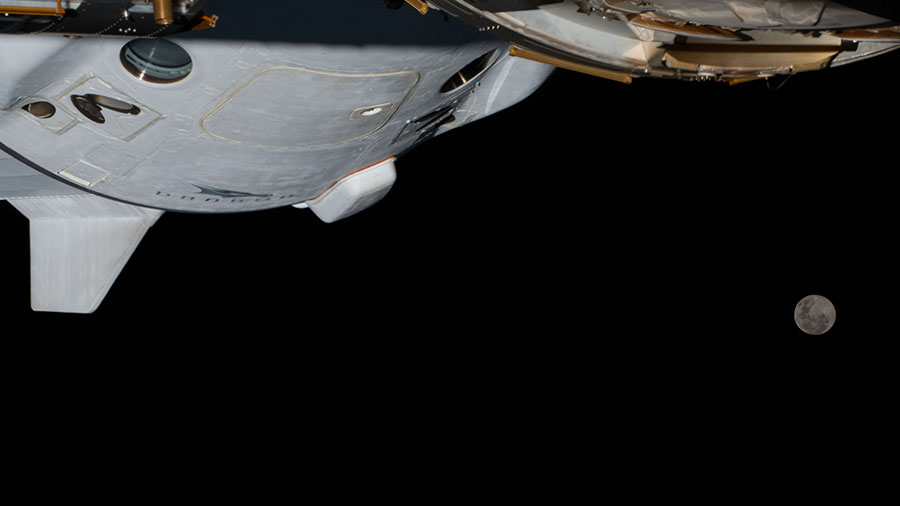
The Full Moon is pictured behind the SpaceX Dragon Endurance crew ship while the space station was orbiting above southern Brazil.

Four Expedition 68 astronauts are enjoying Tuesday off after spending the weekend packing a U.S. cargo craft and readying it for departure on Monday. The International Space Station’s three cosmonauts spent their day concentrating on cardiac research while servicing a variety of orbital lab systems.

The SpaceX Dragon resupply ship is orbiting Earth following its undocking from the Harmony module’s space-facing port at 5:05 p.m. EST on Monday. Dragon will return about 4,400 pounds of station hardware and scientific cargo when it splashes down off the coast of Florida on Wednesday.

NASA astronauts Nicole Mann, Josh Cassada, and Frank Rubio along with Flight Engineer Koichi Wakata of Japan Aerospace Exploration Agency (JAXA) completed loading Dragon a couple of hours before it departed on Monday. The quartet worked over the weekend and into Monday carefully preserving and packing sensitive biological and physical research samples inside Dragon for retrieval and analysis in laboratories on Earth. All four flight engineers relaxed throughout Tuesday taking time off for quick medical checks, watering plants, and calling down to family members.

Meanwhile, the orbiting lab’s three Roscosmos cosmonauts stayed busy Tuesday with their standard research and maintenance schedule.

Commander Sergey Prokopyev partnered with Flight Engineers Dmitri Petelin and Anna Kikina taking turns attaching electrodes to themselves to measure their heart activity. Just one of numerous heart studies that have taken place on orbit, the investigation explores how living in space long-term affects the cardiovascular system.

Prokopyev also spent some time dismantling navigation components inside the ISS Progress 81 cargo ship. Petelin explored the physics of fluids exposed to vibrations, magnetic fields, and electric fields in microgravity. Kikina worked on orbital plumbing tasks then photographed crew activities on the station.


Learn more about station activities by following the space station blog@space_station and @ISS_Research on Twitter, as well as the ISS Facebook and ISS Instagram accounts.

Get weekly video highlights at: https://roundupreads.jsc.nasa.gov/videupdate/

Get the latest from NASA delivered every week. Subscribe here: www.nasa.gov/subscribe

Get The Details…

Mark Garcia

Powered by WPeMatico

NASA to Host Media Update on Space Station Plans, Soyuz Status

NASA to Host Media Update on Space Station Plans, Soyuz Status

NASA will host a media teleconference at 9 a.m. EST Wednesday, Jan. 11, to discuss results from the investigation of the Roscosmos Soyuz MS-22 external coolant leak and the forward strategy for uninterrupted human operations aboard the International Space Station.

Get The Details…

Powered by WPeMatico

NASA, NOAA to Announce 2022 Global Temperatures, Climate Conditions

NASA, NOAA to Announce 2022 Global Temperatures, Climate Conditions

Climate researchers from NASA and the National Oceanic and Atmospheric Administration (NOAA) will release their annual assessments of global temperatures and discuss the major climate trends of 2022 during a media briefing at 11 a.m. EST Thursday, Jan. 12.

Get The Details…

Powered by WPeMatico