Crew Ends Week with Science-Packed Day

Crew Ends Week with Science-Packed Day

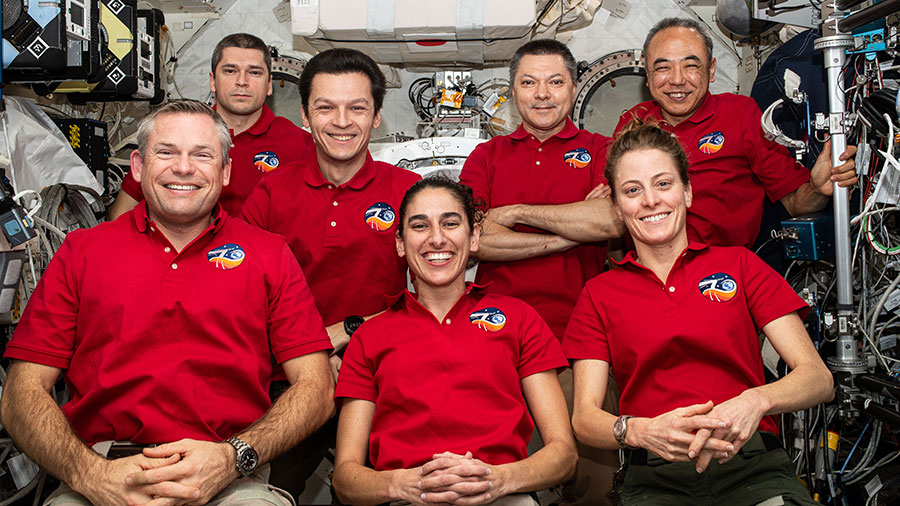
The seven-member Expedition 70 crew poses for a portrait inside the International Space Station's Kibo laboratory module. In the front row (from left) are, Commander Andreas Mogensen from ESA (European Space Agency) and NASA Flight Engineers Jasmin Moghbeli and Loral O'Hara. In the back are, Roscosmos Flight Engineers Nikolai Chub, Konstantin Borisov, and Oleg Kononenko; and JAXA (Japan Aerospace Exploration Agency) Flight Engineer Satoshi Furukawa.
The seven-member Expedition 70 crew poses for a portrait inside the International Space Station’s Kibo laboratory module. In the front row (from left) are, Commander Andreas Mogensen from ESA (European Space Agency) and NASA Flight Engineers Jasmin Moghbeli and Loral O’Hara. In the back are, Roscosmos Flight Engineers Nikolai Chub, Konstantin Borisov, and Oleg Kononenko; and JAXA (Japan Aerospace Exploration Agency) Flight Engineer Satoshi Furukawa.

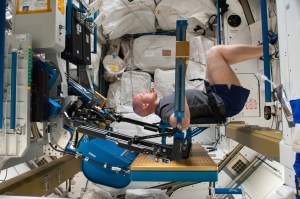
The Expedition 70 crew wrapped up the work week with microbiology, bioprinting, and ultrasound scans aboard the International Space Station. Cardiac research and fluid physics also rounded out the microgravity science schedule for the orbital septet.

Uncontrolled microbial growth is a potential threat to spacecraft possibly contaminating and corroding systems and affecting the health of space crews. Researchers are exploring how to identify and disinfect microbes to protect spacecraft and crews traveling longer and farther away from Earth.

NASA Flight Engineers Jasmin Moghbeli and Loral O’Hara partnered together and researched ways to control microbial growth inside the Kibo laboratory module. The duo took turns treating bacteria samples in Kibo’s Life Science Glovebox helping scientists learn how to promote successful long-term spaceflights and protect extreme environments on Earth.

Moghbeli also assisted Commander Andreas Mogensen of ESA (European Space Agency) as he removed tissue cassettes containing cardiac cells from the BioFabrication Facility. The 3D bioprinter is demonstrating the potential to manufacture human organs in space from existing patient cells. The samples are then stowed in an advanced sample processor for incubation allowing the tissues to cohesively form on a cellular level. Mogensen earlier studied water recovery and purification techniques under microgravity conditions.

O’Hara began her day conducting ultrasound scans and collecting blood pressure measurements with Flight Engineer Satoshi Furukawa from JAXA (Japan Aerospace Exploration Agency). The biomedical work was done in conjunction with doctors on the ground and is part of the CIPHER suite of 14 human research experiments. Afterward, Furukawa swapped cargo in and out of the SpaceX Dragon cargo spacecraft as it counts down to undocking from the station later this month and returning to important research samples to Earth.

Working in the Roscosmos segment of the orbiting lab, three cosmonauts began their morning conducting cardiac research. The trio of flight engineers, Oleg Kononenko, Nikolai Chub, and Konstantin Borisov, participated in the study that measures the bioelectrical activity of the heart as it rests in weightlessness. Afterward, the cosmonauts each participated in a computerized test solving problems for a study exploring how crews and mission controllers can communicate better.

Kononenko later examined eggs in an incubator for a space biology study then checked ventilation systems in the Nauka science module. Chub moved on and investigated how magnetic and electrical fields affect fluid systems in microgravity. Finally, Borisov worked on a variety of science tasks throughout the day including watering and photographing plants and configuring an array of research hardware.


Learn more about station activities by following the space station blog, @space_station and @ISS_Research on X, as well as the ISS Facebook and ISS Instagram accounts.

Get weekly video highlights at: https://roundupreads.jsc.nasa.gov/videoupdate/

Get the latest from NASA delivered every week. Subscribe here: www.nasa.gov/subscribe

Powered by WPeMatico

Get The Details…

Mark Garcia

Cluster in the Cloud

Cluster in the Cloud

This striking image shows the densely packed globular cluster known as NGC 2210, which is situated in the Large Magellanic Cloud (LMC). The LMC lies about 157 000 light-years from Earth, and is a so-called satellite galaxy of the Milky Way, meaning that the two galaxies are gravitationally bound. Globular clusters are very stable, tightly bound clusters of thousands or even millions of stars. Their stability means that they can last a long time, and therefore globular clusters are often studied in order to investigate potentially very old stellar populations.

Powered by WPeMatico

Get The Details…

Artemis II Booster Surges Ahead at NASA’s Kennedy Space Center 

Artemis II Booster Surges Ahead at NASA’s Kennedy Space Center 

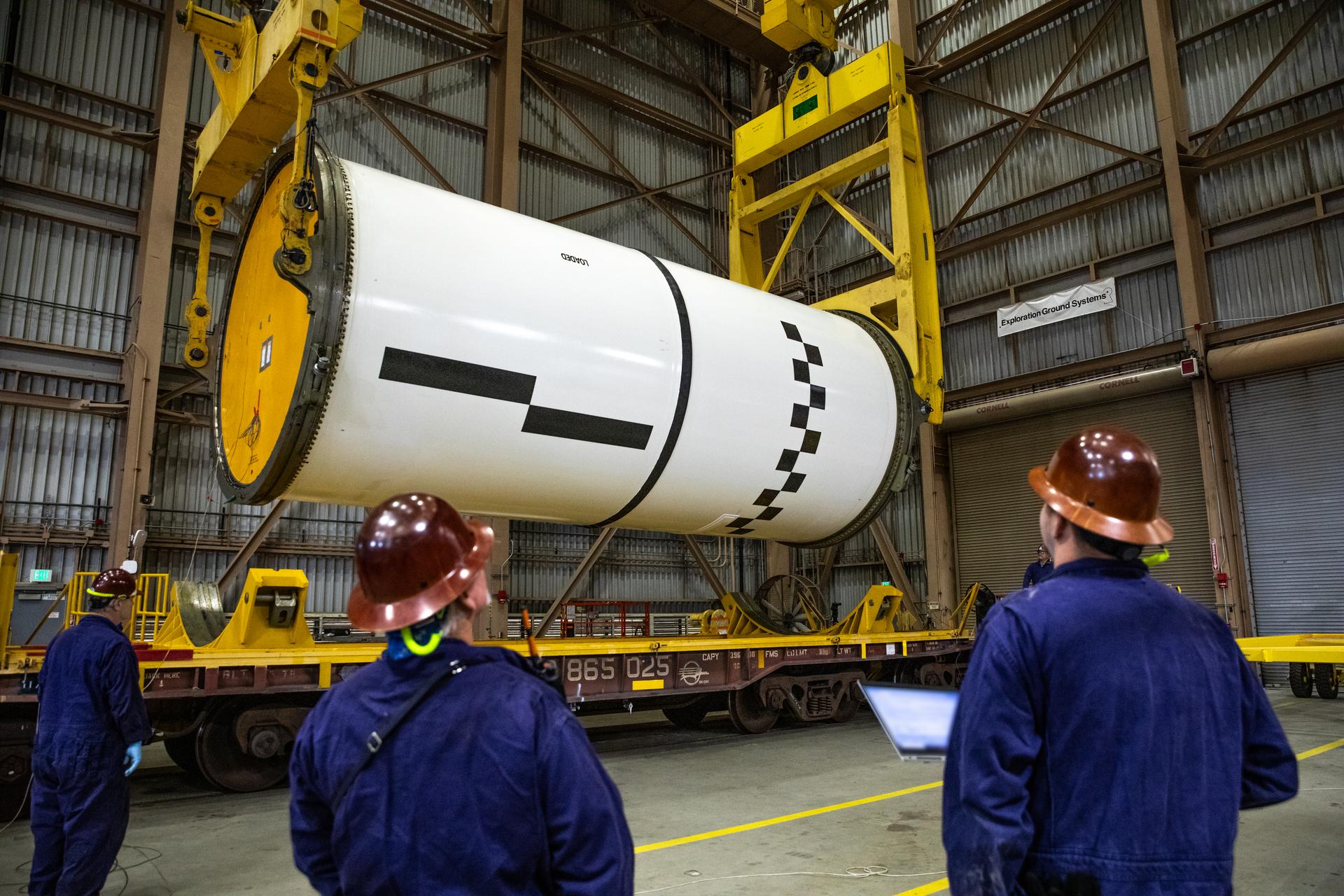
The right forward center segment of the Space Launch System solid rocket boosters is processed.
Engineers and technicians process the right forward center segment of the Space Launch System solid rocket boosters for the Artemis II mission inside the Rotation, Processing and Surge Facility (RPSF) at NASA’s Kennedy Space Center in Florida on Tuesday, Nov. 27, 2023.

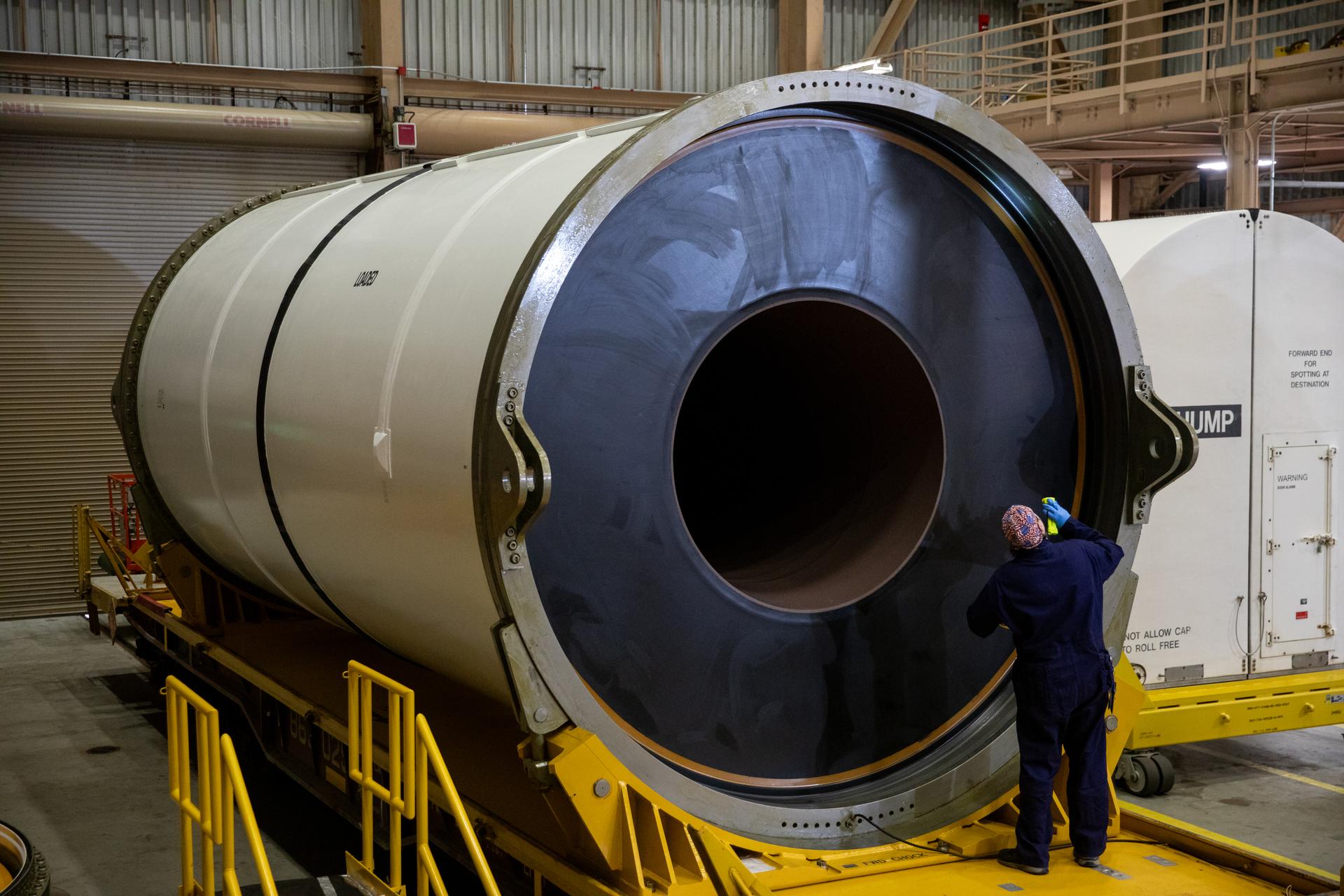
Inside the Rotation, Processing and Surge Facility at NASA’s Kennedy Space Center in Florida, engineers and technicians process the right forward center segment of the SLS (Space Launch System) rocket on Nov. 28, 2023. The ongoing processing of the segments is the first step before stacking operations begin and the segments will form the twin solid rocket boosters for the SLS rocket that will power NASA’s Artemis II mission. After arriving via rail in September, the team has been inspecting each segment one-by-one and lifting them to a vertical position to ensure the solid propellant and segment are ready for integration and launch. 

The right forward center segment of the Space Launch System solid rocket boosters is processed.
Engineers and technicians process and inspect the propellant of the right forward center segment of the Space Launch System solid rocket boosters for the Artemis II mission inside the Rotation, Processing and Surge Facility (RPSF) at NASA’s Kennedy Space Center in Florida on Monday, Nov. 27, 2023.

Once processing is complete for all 10 segments, they will be moved one at a time to the Vehicle Assembly Building for stacking atop the mobile launcher. Standing 17 stories tall and burning approximately six tons of propellant every second, each booster generates more thrust than 14 four-engine jumbo commercial airliners. Together, the twin boosters provide more than 75 percent of the total SLS thrust at launch. 

The Artemis II mission will send four astronauts around the Moon as part of the agency’s effort to establish a long-term science and exploration presence at the Moon, and eventually Mars. 

Photo credit: NASA/Kim Shiflett

Powered by WPeMatico

Get The Details…
Jamie Groh

NASA Helps Study One of the World’s Most Diverse Ecosystems

NASA Helps Study One of the World’s Most Diverse Ecosystems

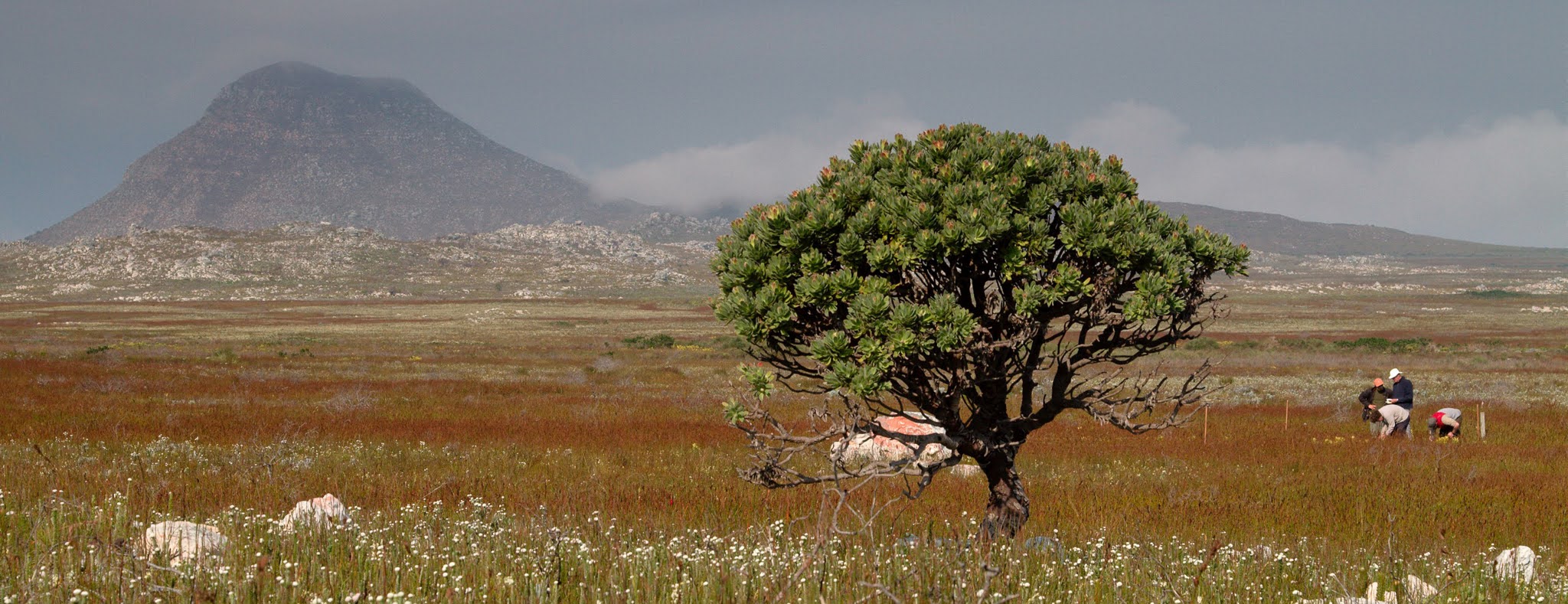
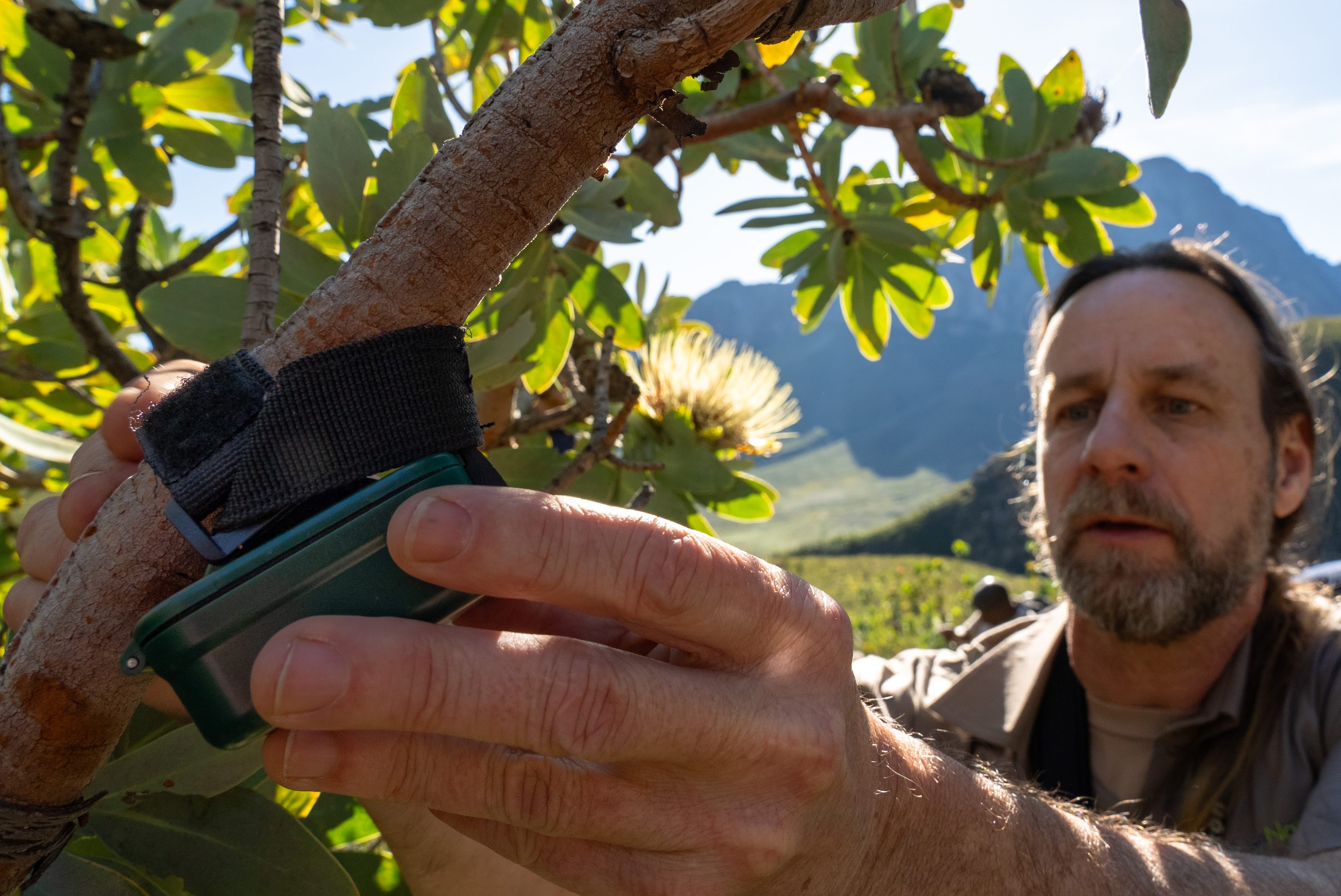
Researchers with the BioSCape campaign collect vegetation data from the Cape of Good Hope in South Africa. The field work, which took place in October and November, was part of an international collaboration that could help inform the capabilities of future satellite missions aimed at studying plants and animals.
Adam Wilson

NASA satellite and airborne tools aid an international team studying biodiversity on land and in the water around South Africa.

An international team of researchers spent October and November 2023 in the field studying one of the world’s most biologically diverse areas – South Africa’s Greater Cape Floristic Region. As part of the effort, researchers used NASA airborne and space-based instruments to gather complementary data to better understand the unique aquatic and terrestrial ecosystems in this region. Their findings will inform the capabilities of future satellite missions aimed at studying plants and animals.

“The food we eat, the clean water that we drink, and the air we breathe comes from the diversity of life on planet Earth,” said Erin Hestir of the University of California, Merced, and the campaign’s lead aquatic researcher. “As we lose species, we’re potentially losing Earth’s ability to sustain healthy human societies and provide healthy food and clean water for all.” Known as the Biodiversity Survey of the Cape (BioSCape), the effort is a large collaboration led in the U.S. by NASA, the University at Buffalo in New York, and the University of California, Merced. It is led in South Africa by the University of Cape Town and the South African Environmental Observation Network.

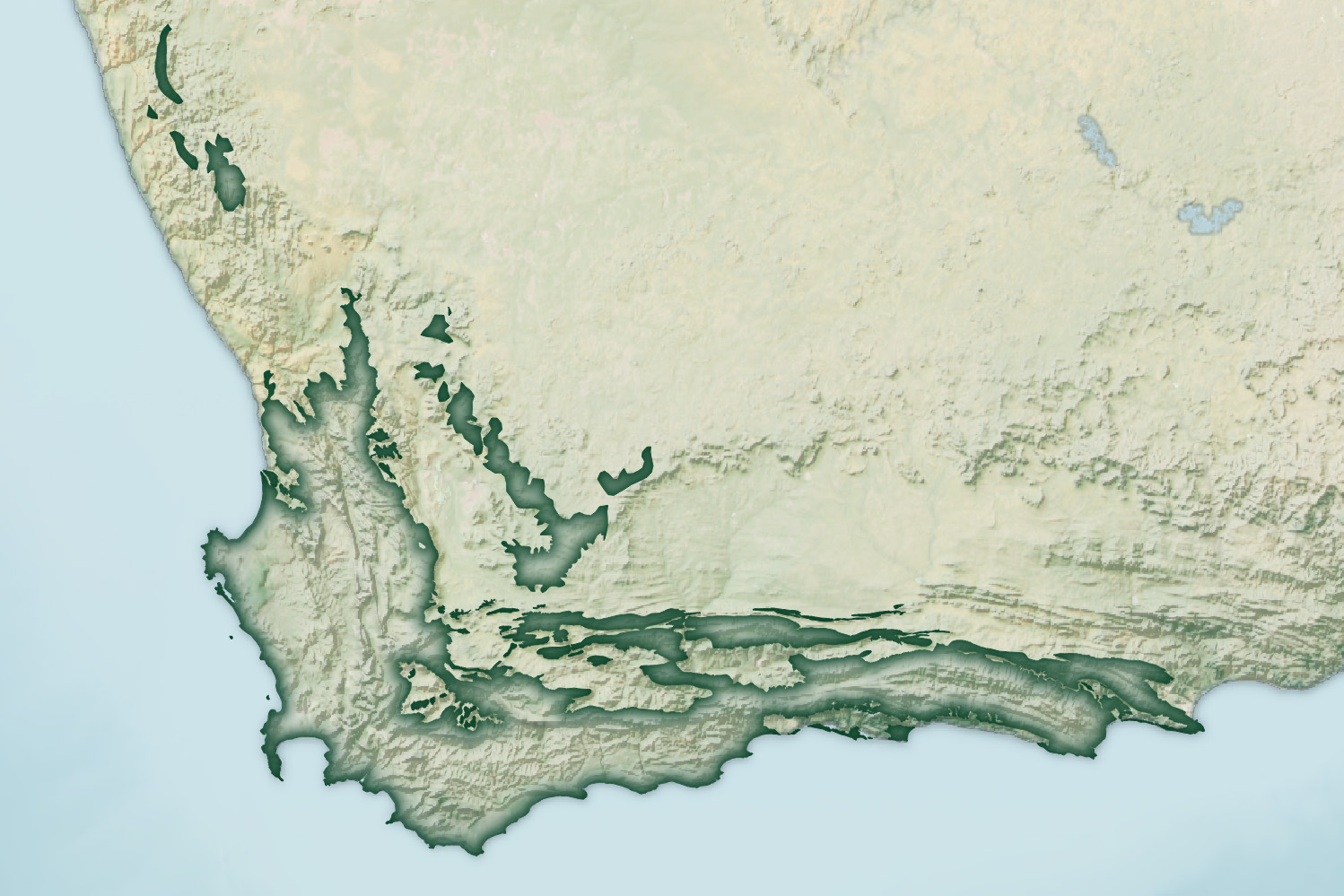
The Greater Cape Floristic Region, where the BioSCape field work took place, is outlined in dark green in this map of the southwestern tip of South Africa. The region is a biodiversity hotspot that includes environments dominated by a shrubland called fynbos.
NASA Earth Observatory

The Greater Cape Floristic Region covers about 2.5 million acres (1 million hectares) on South Africa’s southwestern tip. Home to many plant and animal species found nowhere else on Earth, the biodiversity hotspot is recognized as a World Heritage Site by the United Nations Educational, Scientific, and Cultural Organization (UNESCO). The area also includes several UNESCO Biosphere reserves to protect unique terrestrial and aquatic environments.

The BioSCape team is testing how well airborne and satellite remote sensing can characterize the region’s terrestrial, freshwater, and marine biodiversity. Space- and airplane-based instruments can cover more ground – and do so faster as well as more frequently – than crews in the field. This has a wide range of practical applications, from mapping the presence of invasive plants to better understanding the drivers of harmful algal blooms.

A Challenging Area

“South Africa is a hugely biodiverse place, but it’s a very challenging environment in which to do remote sensing research,” said Anabelle Cardoso, BioSCape science team manager at the University at Buffalo and the University of Cape Town. “With so many plant and animal species packed into a relatively small area, using remote sensing instruments to differentiate between species living in close proximity can be difficult.”

Three of the BioSCape aircraft sensors are imaging spectrometers, which observe different wavelengths of visible and infrared light reflected or emitted by various materials on Earth’s surface and in the atmosphere. Each material has its own spectral fingerprint, enabling researchers to tell what they are observing.

For example, the dominant vegetation in the Greater Cape Floristic Region is a type of shrubland known as fynbos, which contains thousands of plant species. “We want to know whether the spectral signatures from these closely related fynbos variations are different enough that we can tell them apart in the data,” said Kerry Cawse-Nicholson, a research scientist at NASA’s Jet Propulsion Laboratory in Southern California.

“The discrimination of the biodiversity of phytoplankton in coastal and inland waters with imaging spectrometer data would advance science on aquatic ecosystem dynamics,” said Liane Guild, a research scientist at NASA’s Ames Research Center in California’s Silicon Valley. It would do this by offering new insights on land-water interactions, including riverine plumes, runoff, sedimentation, and algae blooms in coastal and inland waters that could have impacts on food security.

Remote sensing capabilities like these will be vital for future satellites, such as the Surface Biology and Geology mission being planned for NASA’s Earth System Observatory.

A More Complete Picture

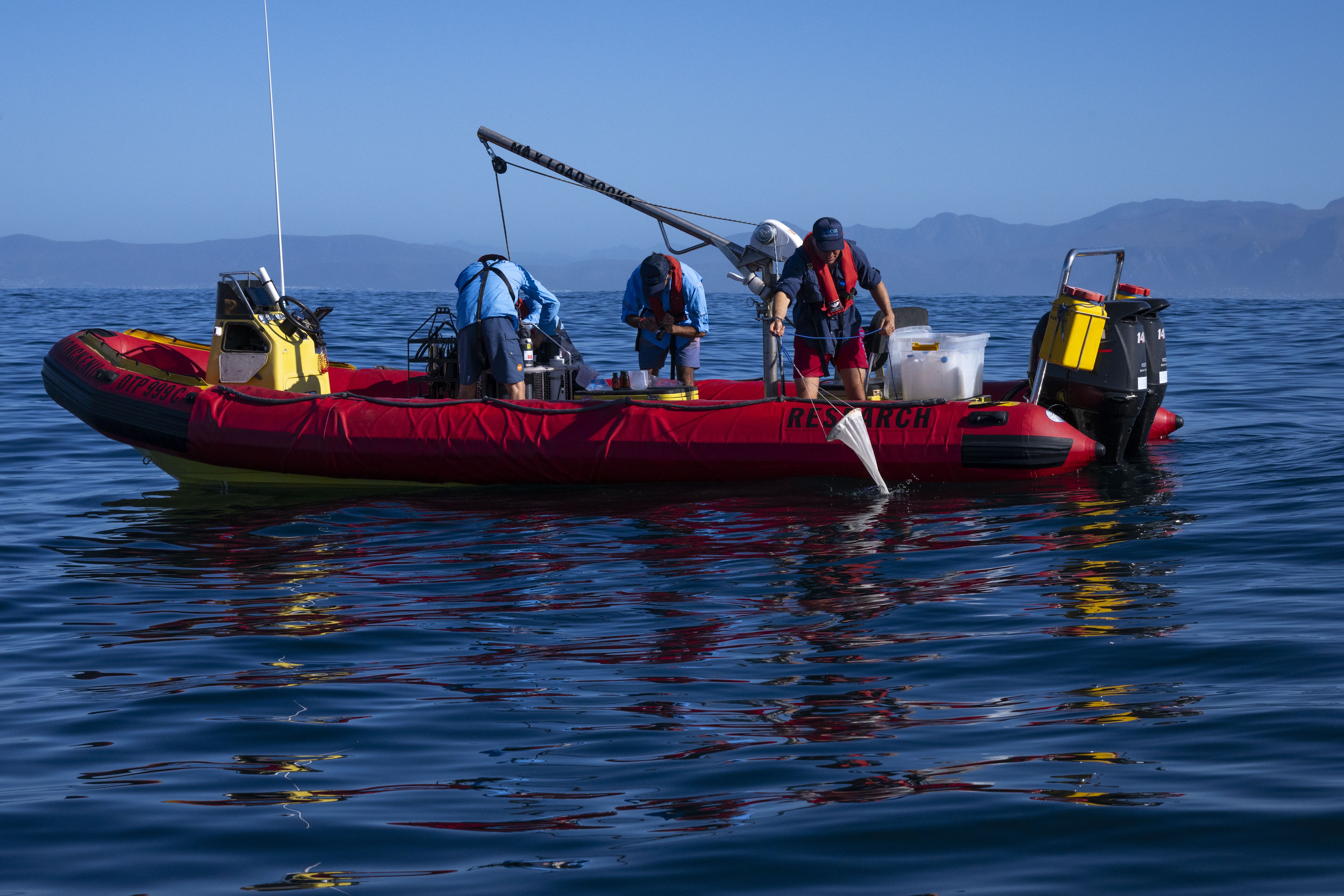
BioSCape crews collected data on land and in the water, efforts that include conducting plant and animal surveys and taking environmental DNA samples. Their findings will both augment and help confirm species information gathered by four NASA airborne instruments and two of the agency’s space-based instruments.

Mounted on airplanes, the Airborne Visible/Infrared Imaging Spectrometer – Next Generation, the Hyperspectral Thermal Emission Spectrometer, and the Portable Remote Imaging Spectrometer are managed by JPL. Their detection of spectral fingerprints ranges from the ultraviolet part of the spectrum through the visible and into the infrared. Combined, their data provides information to help differentiate species and study water quality in reservoirs, among other things.

Managed by NASA’s Goddard Space Flight Center in Maryland, the fourth airborne instrument is the Land, Vegetation, and Ice Sensor, which uses laser technology, known as lidar, to construct a 3D representation of the land surface and vegetation. That data can provide information on the structure of vegetation – including tree and plant height and the internal layers of forests – as well as the ground topography beneath tree cover. This data will also help calibrate and inform current and future space-based lidars, such as the Global Ecosystem Dynamics Investigation currently operating on the International Space Station and a potential mission to study surface topography and vegetation.

In addition, the BioSCape team is using observations from two JPL-managed instruments on the space station. NASA’s ECOsystem Spaceborne Thermal Radiometer Experiment on Space Station measures land surface temperature and can be used to assess plant stress due to temperature or water availability. The imaging spectrometer EMIT, short for Earth Surface Mineral Dust Source Investigation, gathers data on surface minerals, among other things, lending insight into the geology of the Greater Cape Floristic Region.

“One of the really exciting things is that when we combine the spectroscopy and the 3D structure, we can get a detailed biochemical and structural picture of the ecosystem,” said Adam Wilson of the University at Buffalo and one of the campaign’s lead researchers. This could help identify which plant species live in various environments, the presence of invasive plants, and how vegetation recovers after a wildfire.

The data collected by BioSCape has the potential for wide-ranging research and applications, particularly for the people of South Africa. The project was designed in collaboration with several South African institutions, as well as national and provincial park systems, which plan to incorporate data and analyses from BioSCape into management of natural resources.

To learn more about BioSCape, visit:

https://www.bioscape.io/home

News Media Contacts

Jane J. Lee / Andrew Wang
Jet Propulsion Laboratory, Pasadena, Calif.
818-354-0307 / 626-379-6874
jane.j.lee@jpl.nasa.gov / andrew.wang@jpl.nasa.gov

2023-178

Powered by WPeMatico

Get The Details…
Naomi Hartono

NASA Names Winners of 2023 NASA Entrepreneurs Challenge

NASA Names Winners of 2023 NASA Entrepreneurs Challenge

NASA has announced the 2023 winners of the NASA Entrepreneurs Challenge, which recognizes and supports entrepreneurs working on technology that advances the agency’s science goals.
NASA

NASA is announcing final winners of the 2023 NASA Entrepreneurs Challenge, which focused this year on lunar exploration and climate science.

Entrepreneurs from across the United States came together at the Defense TechConnect Innovation Summit and Expo in Washington to pitch their ideas to a panel of NASA judges and venture experts. Winning organizations will be awarded an $85,000 grand prize for technologies that advance the agency’s science goals.

“Science and technology work hand in hand,” said Nicky Fox, associate administrator for science at NASA Headquarters in Washington. “Our science goals are advanced by creative new technologies, and challenges like this open doors to innovative ideas from entrepreneurs around the country. We are always looking for the brightest, cutting-edge ideas to help NASA move forward its visionary research regarding Earth, the Moon, and the entire universe.”

The 2023 NASA Entrepreneurs Challenge sought solutions in two areas: to provide ideas for lunar payloads that may attract non-governmental funding for delivery to the surface of the Moon by a commercial provider; and climate science to obtain high quality data from small, hosted instruments, as well as new business models for using existing climate data to address climate and environmental problems. Earlier this year, 11 challenge participants were selected as Round 1 winners, and received $16,000 each to advance to the final, second round of the challenge.

The Round 2 Winners are as follows:

  • Visual-Inertial Position & Navigation for Moon by Skyline Nav AI
  • Lunar Anti-Dust Microgrid Payload by Front Range
  • Deep Detection of Methane in Satellite Data by GeoLabe
  • Cislune Lunar Fuel Refinery and Exporter by Cislune
  • Ringside Seats: Mote Lunar Landing Support System by Space Initiatives
  • Robotic Utility Transmission Infrastructure by BlinkSpace
  • PRISM: Personal RealTime Insight from Spatial Maps by Pegasus Intelligence and Space

In addition to the monetary prize, the challenge provided winners with exposure to external funders and investors, and offered insight into how entrepreneurs can work with NASA in the future. NASA emphasized reaching entrepreneurs from historically underrepresented communities.

To learn more about the award, visit:

https://www.nasaentrepreneurchallenge.org

-end-

Karen Fox
Headquarters, Washington
202-358-1600
karen.fox@nasa.gov

Share

Details

Last Updated

Dec 08, 2023

Powered by WPeMatico

Get The Details…
Roxana Bardan