NASA Selects Four Small Explorer Mission Concept Studies

NASA Selects Four Small Explorer Mission Concept Studies
NASA meatball logo
NASA logo
Credits: NASA

NASA has selected four small explorer missions to conduct concept studies. These studies aim to expand knowledge of the dynamics of the Sun and related phenomena, such as coronal mass ejections, aurora, and solar wind to better understand the Sun-Earth connection.

Any missions selected to move forward after the concept studies are conducted will join the current heliophysics mission fleet, which not only provides deeper insight into the mechanics of our universe, but also offers critical information to help protect astronauts, satellites, and communications signals, and helps enable space exploration. 

“These four mission concept studies were selected because they address compelling science questions and could greatly impact the field of heliophysics,” said Nicky Fox, the associate administrator for science at NASA Headquarters in Washington. “These mission proposals are exciting because they build upon and complement the science of our current mission fleet, have the potential for broad impact and could provide new and deeper insight into the solar atmosphere and space weather.”

CINEMA

The Cross-scale Investigation of Earth’s Magnetotail and Aurora (CINEMA) mission would work to understand the structure and evolution of Earth’s plasma sheet – a long sheet of denser space plasma in the magnetic fields flowing behind Earth, known as the magnetotail — using a constellation of nine CubeSats flown in sun-synchronous, low Earth orbit.  The primary purpose of this mission is to study the role of plasma sheet structure, as well as how Earth’s magnetic fields transfer heat  and change over time at multiple scales. CINEMA will complement current heliophysics missions, such as the THEMIS (Time History of Events and Macroscale Interactions during Substorms), MMS (Magnetospheric Multiscale) mission, and the planned Geospace Dynamics Constellation mission. The principal investigator for the CINEMA mission concept study is Robyn Millan from Dartmouth College, in Hanover, New Hampshire.

CMEx

The Chromospheric Magnetism Explorer (CMEx) mission would  attempt to understand the magnetic nature of solar eruptions and identify the magnetic sources of the solar wind. CMEx proposes to obtain the first continuous observations of the solar magnetic field in the chromosphere – the layer of solar atmosphere directly above the photosphere or visible surface of the Sun. These observations would improve our understanding of how the magnetic field on the Sun’s surface connects to the interplanetary magnetic field. The principal investigator for this mission concept study is Holly Gilbert from the National Center for Atmospheric Research in Boulder, Colorado.

EUV CME and Coronal Connectivity Observatory

The Extreme ultraviolet Coronal Mass Ejection and Coronal Connectivity Observatory (ECCCO) consists of a single spacecraft with two instruments, a wide-field extreme ultra-violet imager and a unique imaging EUV spectrograph. ECCCO’s observations would contribute to understanding the middle corona, the dynamics of eruptive events leaving the Sun, and the conditions that produce the outward streaming solar wind. The mission would address fundamental questions about where the mass and energy flow linking the Sun to the outer corona and heliosphere originate ECCCO’s concept study principal investigator is Katharine Reeves from the Smithsonian Astrophysical Observatory, in Cambridge, Massachusetts.

MAAX

The primary objective of the Magnetospheric Auroral Asymmetry Explorer (MAAX) mission would be to improve our understanding of how electrodynamic coupling between Earth’s magnetosphere and ionosphere regulates auroral energy flow. The mission would use two identical spacecraft equipped with dual-wavelength ultraviolet imagers to provide global imaging of northern and southern aurora. The principal investigator for the MAAX concept study is Michael Liemohn from the University of Michigan in Ann Arbor.

“These mission concept study selections provide so much promise to ongoing heliophysics research,” said Peg Luce, acting Heliophysics division director at NASA Headquarters. “The potential to gain new insights and answer longstanding questions in the field while building on the research and technology of our current and legacy missions is incredible..”

Funding and management oversight for these mission concept studies is provided by the Heliophysics Explorers Program, managed by the Explorers Program Office at NASA’s Goddard Space Flight Center in Greenbelt, Maryland.

For more information on NASA heliophysics missions, visit:

https://science.nasa.gov/heliophysics

-end-

Denise Hill

Headquarters, Washington

202-308-2071

denise.hill@nasa.gov

Share

Details

Last Updated

Sep 29, 2023

Powered by WPeMatico

Get The Details…
Abbey A. Donaldson
NASA Invites Media to Upcoming SpaceX Resupply Launch to Space Station

NASA Invites Media to Upcoming SpaceX Resupply Launch to Space Station

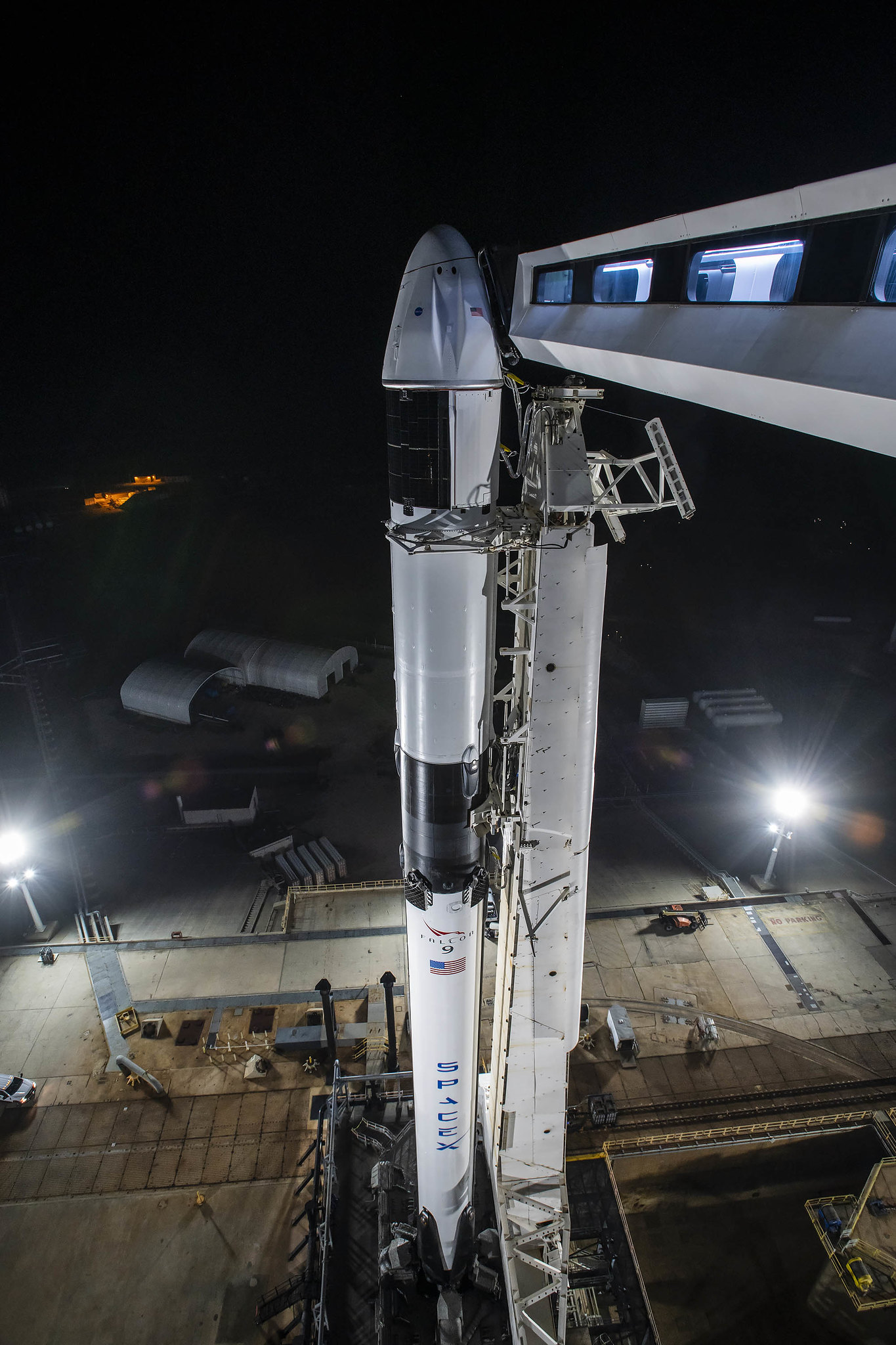
The SpaceX Falcon 9 rocket with the Dragon capsule atop is raised to the vertical position on June 2, 2021, at Launch Complex 39A at NASA’s Kennedy Space Center in Florida, in preparation for the company’s 22nd Commercial Resupply Services mission for NASA to the International Space Station.
SpaceX

Media accreditation is open for SpaceX’s 29th commercial resupply mission for NASA to the International Space Station.

Liftoff of the SpaceX Dragon cargo spacecraft on the company’s Falcon 9 rocket is targeted no earlier than Wednesday, Nov. 1, from Launch Complex 39A at NASA’s Kennedy Space Center in Florida.

Media prelaunch and launch activities will take place at NASA Kennedy. Attendance for this launch is open to U.S. citizens. The application deadline for U.S. media is 11:59 p.m. EDT Wednesday, Oct. 18.

All accreditation requests should be submitted online at:

https://media.ksc.nasa.gov

Credentialed media will receive a confirmation email upon approval. NASA’s media accreditation policy is available here. For questions about accreditation, or to request special logistical needs, please email ksc-media-accreditat@mail.nasa.gov. For other questions, please contact Kennedy’s newsroom at: 321-867-2468.

Para obtener información sobre cobertura en español en el Centro Espacial Kennedy o si desea solicitar entrevistas en español, comuníquese con Antonia Jaramillo at: antonia.jaramillobotero@nasa.gov or 321-501-8425.

SpaceX’s Dragon will deliver new science investigations, food, supplies, and equipment to the international crew. The research includes work to understand interactions between weather on Earth and space, and laser communications. NASA’s Atmospheric Waves Experiment (AWE) will study atmospheric gravity waves –powerful waves formed by weather disturbances on Earth such as strong thunderstorms or brewing hurricanes – to understand the flow of energy through Earth’s upper atmosphere and space. Another experiment – Integrated Laser Communications Relay Demonstration Low-Earth-Orbit User Modem and Amplifier Terminal – (ILLUMA-T) aims to test high data rate laser communications from the space station to Earth. This will complete NASA’s first two-way, end-to-end laser relay system by sending high-resolution data to the agency’s Laser Communications Relay Demonstration, which launched in December 2021.

Other investigations that will launch with the resupply mission include ESA’s (European Space Agency) Aquamembrane-3, which will test water filtration using proteins found in nature for water recycling and recovery, and Plant Habitat-06, which will evaluate the effects of spaceflight on plant defense responses using multiple genotypes of tomato.

Commercial resupply by U.S. companies significantly increases NASA’s ability to conduct more investigations aboard the orbiting laboratory. These investigations lead to new technologies, medical treatments, and products that improve life on Earth. Other U.S. government agencies, private industry, and academic and research institutions can also conduct microgravity research through the agency’s partnership with the International Space Station National Laboratory.

Humans have occupied the space station continuously since November 2000. In that time, 273 people and a variety of international and commercial spacecraft have visited the orbital outpost. It remains the springboard to NASA’s next great leap in exploration, including future missions to the Moon under Artemis, and ultimately, human exploration of Mars.

For more information about commercial resupply missions, visit:

https://www.nasa.gov/commercialresupply

-end-

Lora Bleacher / Julian Coltre
Headquarters, Washington
202-358-1100
lora.v.bleacher@nasa.gov / julian.n.coltre@nasa.gov

Stephanie Plucinsky / Steven Siceloff
Kennedy Space Center, Fla.
321-876-2468
stephanie.n.plucinsky@nasa.gov / steven.p.siceloff@nasa.gov

Sandra Jones
Johnson Space Center, Houston
281-483-5111
sandra.p.jones@nasa.gov

Powered by WPeMatico

Get The Details…
Abbey A. Donaldson
NASA Announces Launch Services for Pair of Space Weather Satellites

NASA Announces Launch Services for Pair of Space Weather Satellites

NASA meatball logo
NASA logo
Credit: NASA

NASA has selected SpaceX of Hawthorne, California, and its Falcon 9 rocket to provide the launch service for the agency’s TRACERS (Tandem Reconnection and Cusp Electrodynamics Reconnaissance Satellites) mission, a pair of small satellites that will study space weather and how the Sun’s energy affects Earth’s magnetic environment, or magnetosphere

TRACERS will be an important addition to NASA’s heliophysics fleet and aims to answer long-standing questions critical to understanding the Sun-Earth system. The spinning satellites will study how solar wind, the continuous stream of ionized particles escaping the Sun and pouring out to space, interacts with the region around Earth dominated by our planet’s magnetic field. This interaction, or magnetic reconnection, is an intense transfer of energy that can happen when two magnetic fields meet, which could potentially impact operations with crew and sensitive satellites. TRACERS is led by the University of Iowa with partners at the Southwest Research Institute in San Antonio, and Millennium Space Systems in El Segundo, California.

NASA’s Launch Services Program, based out of the agency’s Kennedy Space Center in Florida, in partnership with NASA’s Heliophysics Small Explorers program, announces the launch service as part of the agency’s VADR (Venture-Class Acquisition of Dedicated and Rideshare) launch services contract.

Learn more about NASA’s TRACERS mission online:

https://blogs.nasa.gov/tracers/

-end-

Joshua Finch
Headquarters, Washington
202-358-1100
joshua.a.finch@nasa.gov

Leejay Lockhart / Laura Aguiar
Kennedy Space Center, Florida
321-747-8310 / 321-593-6245
leejay.lockhart@nasa.gov / laura.aguiar@nasa.gov

Share

Details

Last Updated

Sep 29, 2023

Editor

Jennifer M. Dooren

Powered by WPeMatico

Get The Details…
Jennifer M. Dooren

Honoring Hispanic Heritage Month: Patriot Construction Supports NASA Ames Research Center

Honoring Hispanic Heritage Month: Patriot Construction Supports NASA Ames Research Center

In celebration of National Hispanic Heritage Month, the NASA Office of Small Business Programs (OSBP) is highlighting the contributions made by Hispanic-owned businesses to NASA’s mission. Through collaborative efforts, Patriot Construction, Inc. has played a pivotal role in the enhancement and maintenance of NASA’s Ames Research Center in California. They have worked on the N244 Seismic Risk Reduction, Restore Reliability of Main Switchboard for Agency Telecom Gateway N254, Historic Preservation of Building 025 Phase 2 of 2, and the N258 Hyperwall Room Remodeling. 

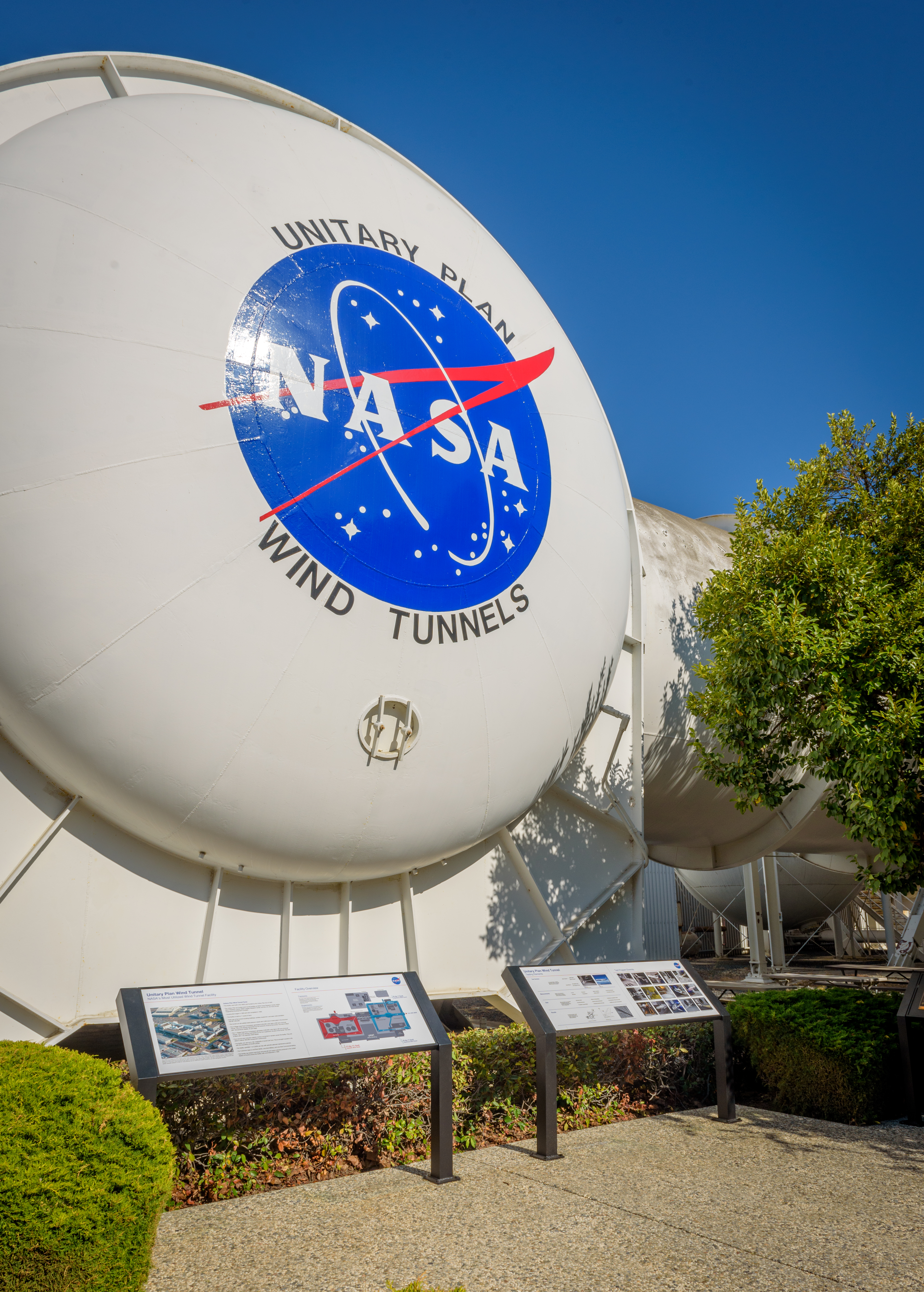
Unitary Plan Wind Tunnel
This outdoor display of the Unitary Plan Wind Tunnel (UPWT), on DeFrance Ave at Ames Research Center, was updated in August 2023. The display will inform the visiting public of the contributions this National Historic Landmark has made to the Nation’s aeronautical research.

The projects Patriot have been involved in, Buildings N244, N254, N258 are critical buildings to NASA missions. The Restore Reliability of Main Switchboard for Agency Telecom Gateway N254 project is an upgrade to their main switchboard. This building is an essential 24/7 operation that holds the Security Operations Center (SOC) which is the nerve center for detection and monitoring of security incidents for the Agency.  

The N258 Hyperwall Room Remodeling is a dedicated space equipped with a hyperwall, accessible to all users NASA Supercomputer users. The Supercomputer is available to every mission directorate in NASA. Additionally, the hyperwall significantly increases efficiency, allowing wind tunnel personnel to conduct analyses more quickly. 

The Historic Preservation of Building 025 Phase 2 of 2 is a historical building which NASA is restoring to make it ready for occupancy. Building 025 has not received maintenance since the Navy’s departure in 1998. In accordance with the National Historic Preservation Act (NHPA), NASA, as a federal agency, has a responsibility to preserve and maintain the historical integrity of all properties under its jurisdiction. The N244 Seismic Risk Reduction project is a proactive initiative aimed at ensuring the safety of all personnel within building N244 during earthquakes.

As we honor hispanic heritage, Patriot’s partnership with NASA exemplifies the incredible achievements that can be realized when diverse talents unite in pursuit of technological advancement.

Editor: Maliya Malik, NASA Office Of Small Business Programs Intern

Share

Details

Last Updated

Sep 29, 2023

Powered by WPeMatico

Get The Details…
Garrett Shea

NASA’s New Horizons to Continue Exploring Outer Solar System

NASA’s New Horizons to Continue Exploring Outer Solar System

3 min read

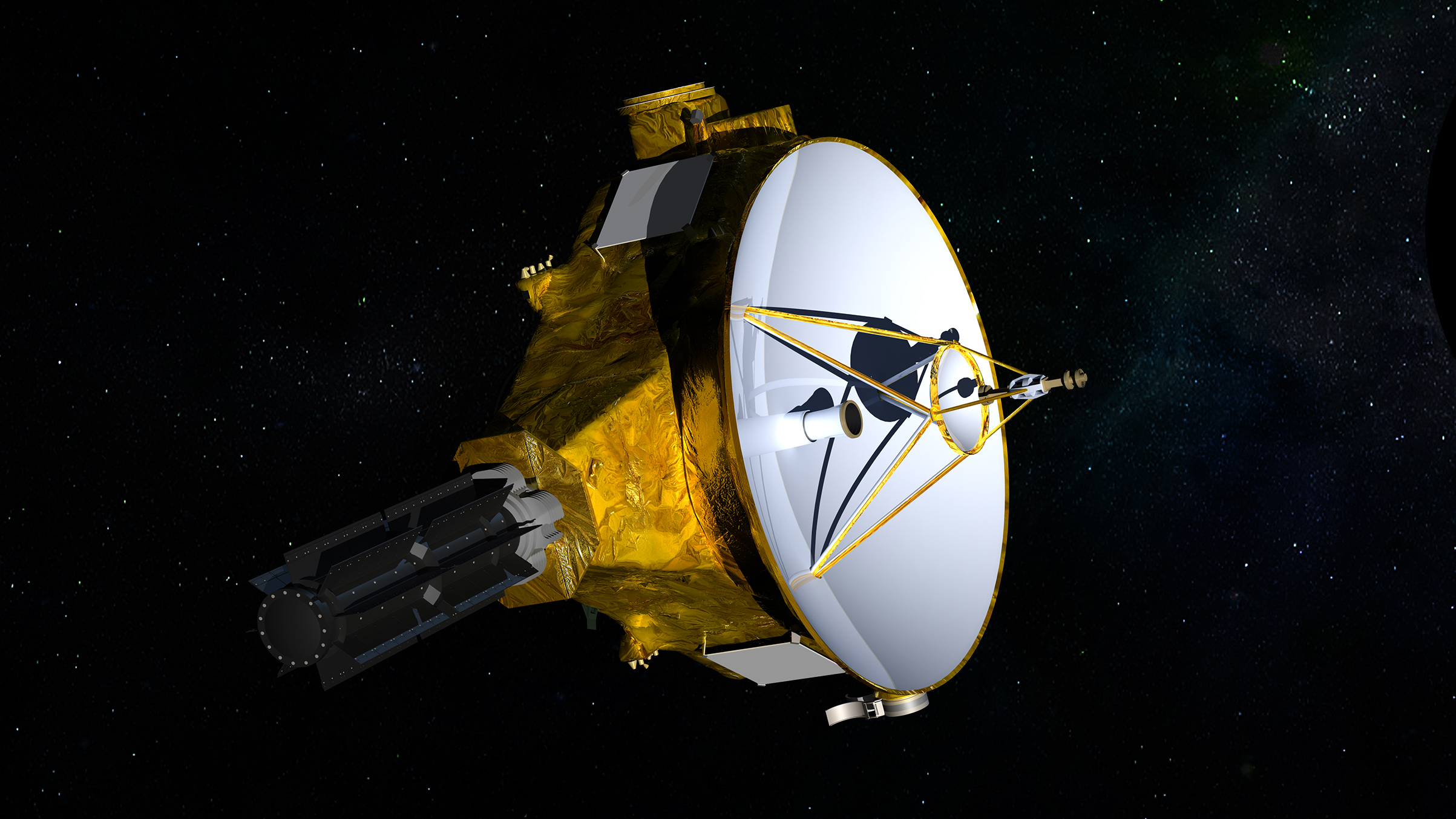
NASA’s New Horizons to Continue Exploring Outer Solar System

New Horizons in space

NASA has announced an updated plan to continue New Horizons’ mission of exploration of the outer solar system. 

Beginning in fiscal year 2025, New Horizons will focus on gathering unique heliophysics data, which can be readily obtained during an extended, low-activity mode of operations. 

While the science community is not currently aware of any reachable Kuiper Belt object, this new path allows for the possibility of using the spacecraft for a future close flyby of such an object, should one be identified. It also will enable the spacecraft to preserve fuel and reduce operational complexity while a search is conducted for a compelling flyby candidate. 

“The New Horizons mission has a unique position in our solar system to answer important questions about our heliosphere and provide extraordinary opportunities for multidisciplinary science for NASA and the scientific community,” said Nicola Fox, associate administrator for NASA’s Science Mission Directorate in Washington. “The agency decided that it was best to extend operations for New Horizons until the spacecraft exits the Kuiper Belt, which is expected in 2028 through 2029.” 

This new, extended mission will be primarily funded by NASA’s Planetary Science Division and jointly managed by NASA’s Heliophysics and Planetary Science Divisions.

NASA will assess the budget impact of continuing the New Horizons mission so far beyond its original plan of exploration. As a starting point, funding within the New Frontiers program (including science research and data analysis) will be rebalanced to accommodate extended New Horizons operations, and future projects may be impacted.

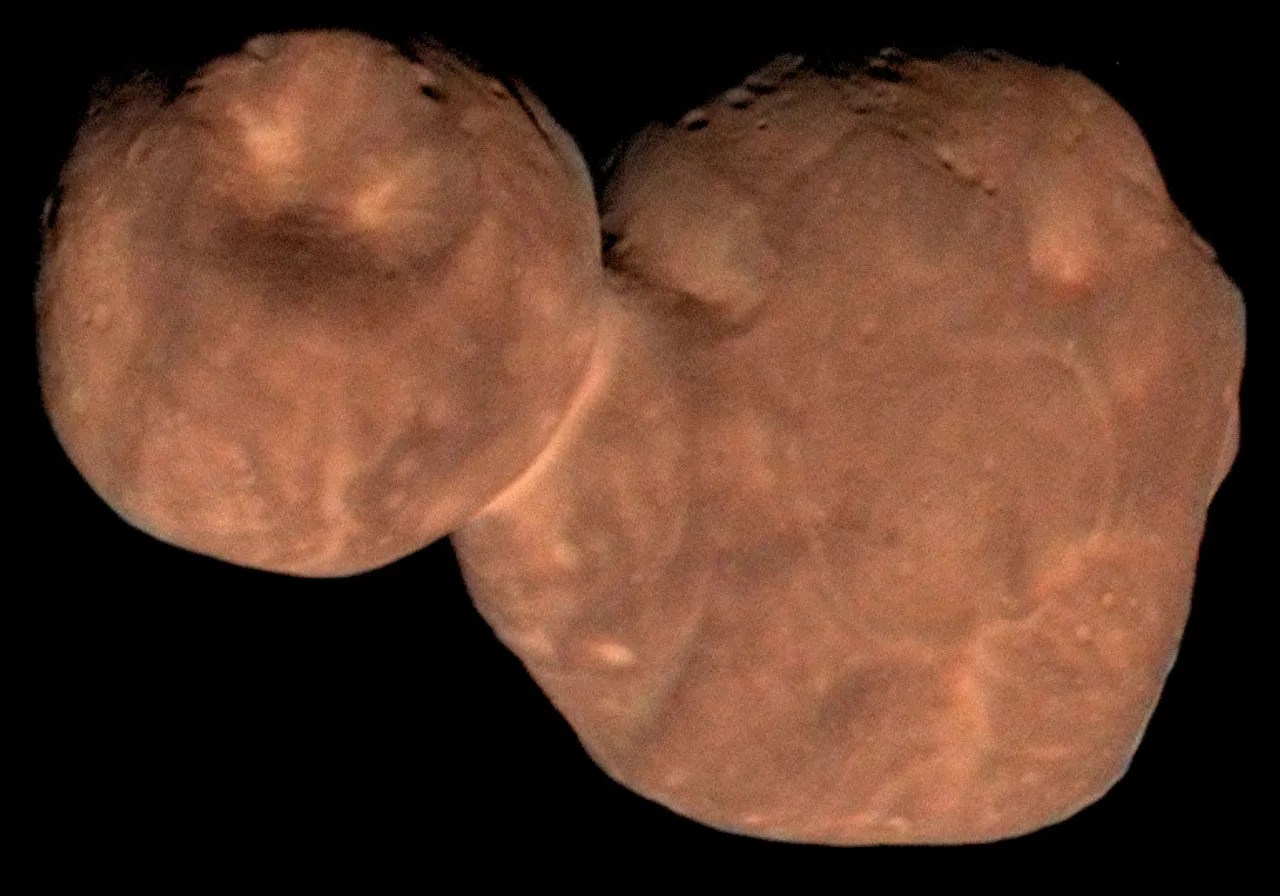
Launched on January 18, 2006, NASA’s New Horizons spacecraft has helped scientists understand worlds at the edge of our solar system by visiting the dwarf planet Pluto (its primary mission) and then venturing farther out for a flyby of the Kuiper belt object Arrokoth, a double-lobed relic of the formation of our solar system, and other more remote observations of similar bodies.  

The Johns Hopkins University Applied Physics Laboratory in Laurel, Maryland, designed, built and operates the New Horizons spacecraft, and manages the mission for NASA’s Science Mission Directorate. The Marshall Space Flight Center Planetary Management Office provides the NASA oversight for the New Horizons. Southwest Research Institute, based in San Antonio, directs the mission via Principal Investigator Stern, and leads the science team, payload operations and encounter science planning. New Horizons is part of the New Frontiers Program managed by NASA’s Marshall Space Flight Center in Huntsville, Alabama.

Share

Details

Last Updated

Sep 29, 2023

Editor

Tricia Talbert

Powered by WPeMatico

Get The Details…
Tricia Talbert