Station Awaits Dragon Carrying Four Ax-3 Astronauts

Station Awaits Dragon Carrying Four Ax-3 Astronauts

The SpaceX Falcon 9 rocket lifts off from Kennedy Space Center carrying four Axiom Mission 3 astronauts aboard the Dragon Freedom spacecraft. Credit: SpaceX

The seven-member Expedition 70 crew will welcome the third private astronaut mission from Axiom Space to the International Space Station on Saturday. The Axiom Mission 3 (Ax-3) mission lifted off from the Kennedy Space Center in Florida on Thursday carrying four astronauts aboard the SpaceX Dragon spacecraft. The foursome will conduct a two-week research and education mission on the orbital outpost.

Station Flight Engineers Loral O’Hara and Jasmin Moghbeli, both from NASA, will be on duty monitoring Dragon when it begins its automated approach and rendezvous. Dragon will dock to the forward port on the station’s Harmony module at around 4:19 a.m. EST on Saturday. About an hour-and-a-half later, the hatches will open and Ax-3 Commander Michael Lopez-Alegria will enter the space station followed by Pilot Walter Villadei and Mission Specialists Alper Gezeravci and Marcus Wandt.

Coverage will air live beginning at 2:30 a.m. Saturday on the NASA+ streaming service, NASA TV, the NASA app, YouTube, and the agency’s website. Learn how to stream NASA TV through a variety of platforms, including social media.

Lopez-Alegria, a dual citizen of the United States and Spain, is making his second visit to the station as a private astronaut from Axiom Space. This will be Lopez-Alegria’s sixth time to space. The three other Ax-3 crew members, Villadei from Italy, Gezeravci from Turkey, and Wandt from Sweden, are each making their first flight to space.

O’Hara and Moghbeli had light duty on the orbital outpost on Friday ahead of a busy day of dual crew operations on Saturday. The two NASA astronauts began Friday with housecleaning tasks and computer maintenance before taking the afternoon off. Astronauts Andreas Mogensen from ESA (European Space Agency) and Satoshi Furukawa from JAXA (Japan Aerospace Exploration Agency) helped out with the lab tidying duties before splitting up to service science hardware and tablet computers. The ESA and JAXA duo also had a light duty day taking half the day off at the end of the week.

The station’s three cosmonauts from Roscosmos stayed busy throughout Friday focusing on their schedule of science and maintenance. Five-time station flight engineer Oleg Kononenko started his day installing software on a computer in the Nauka science module then inspected surfaces inside the Zvezda service module. Flight Engineer Nikolai Chub jogged on a treadmill for a fitness assessment before studying how magnetic and electrical fields affect fluid physics. Flight Engineer Konstantin Borisov spent his day on a variety of life support and orbital plumbing work in the space station’s Roscosmos segment.


Learn more about station activities by following the space station blog, @space_station and @ISS_Research on X, as well as the ISS Facebook and ISS Instagram accounts.

Get weekly video highlights at: https://roundupreads.jsc.nasa.gov/videoupdate/

Get the latest from NASA delivered every week. Subscribe here: www.nasa.gov/subscribe

Powered by WPeMatico

Get The Details…

Mark Garcia

NASA Science, Astrobotic Peregrine Mission One Concludes

NASA Science, Astrobotic Peregrine Mission One Concludes

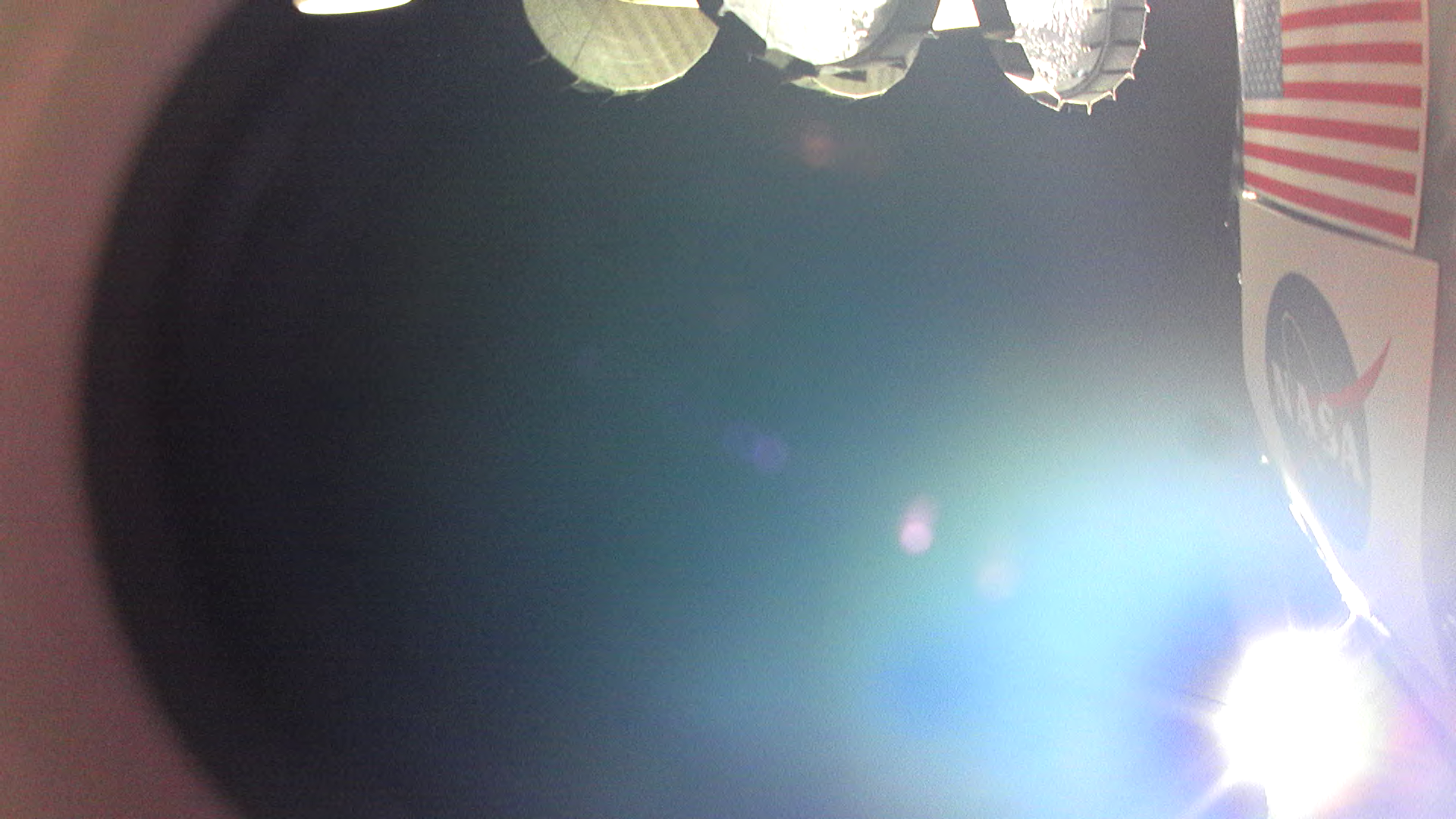
Cameras aboard Peregrine capture the American flag and the NASA insignia on one of the lander’s tanks to signify America’s return to the Moon.
Credits: Astrobotic

The first flight of NASA’s commercial lunar delivery service carrying agency science and technology, as well as other customer payloads intended for the Moon, has come to an end. After 10 days and 13 hours in space, Astrobotic’s Peregrine Mission One made a controlled re-entry on Earth over open water in the South Pacific at approximately 4:04 p.m. EST on Jan. 18.

Astrobotic was the first commercial vendor to launch a mission to the Moon as part of NASA’s CLPS (Commercial Lunar Payload Services) initiative, which aims to advance capabilities for science, exploration or commercial development of the Moon under the agency’s Artemis campaign. There are seven additional CLPS deliveries awarded to multiple American companies, with more awards expected this year and for years to come. The next CLPS commercial flight is targeted for no earlier than February.

Following a successful launch and separation from the rocket on Jan. 8, the spacecraft experienced a propulsion issue preventing Peregrine from softly landing on the Moon. After analysis and recommendations from NASA and the space community, Astrobotic determined the best option for minimizing risk and ensuring responsible disposal of the spacecraft would be to maintain Peregrine’s trajectory toward Earth, where it burned up upon re-entry.

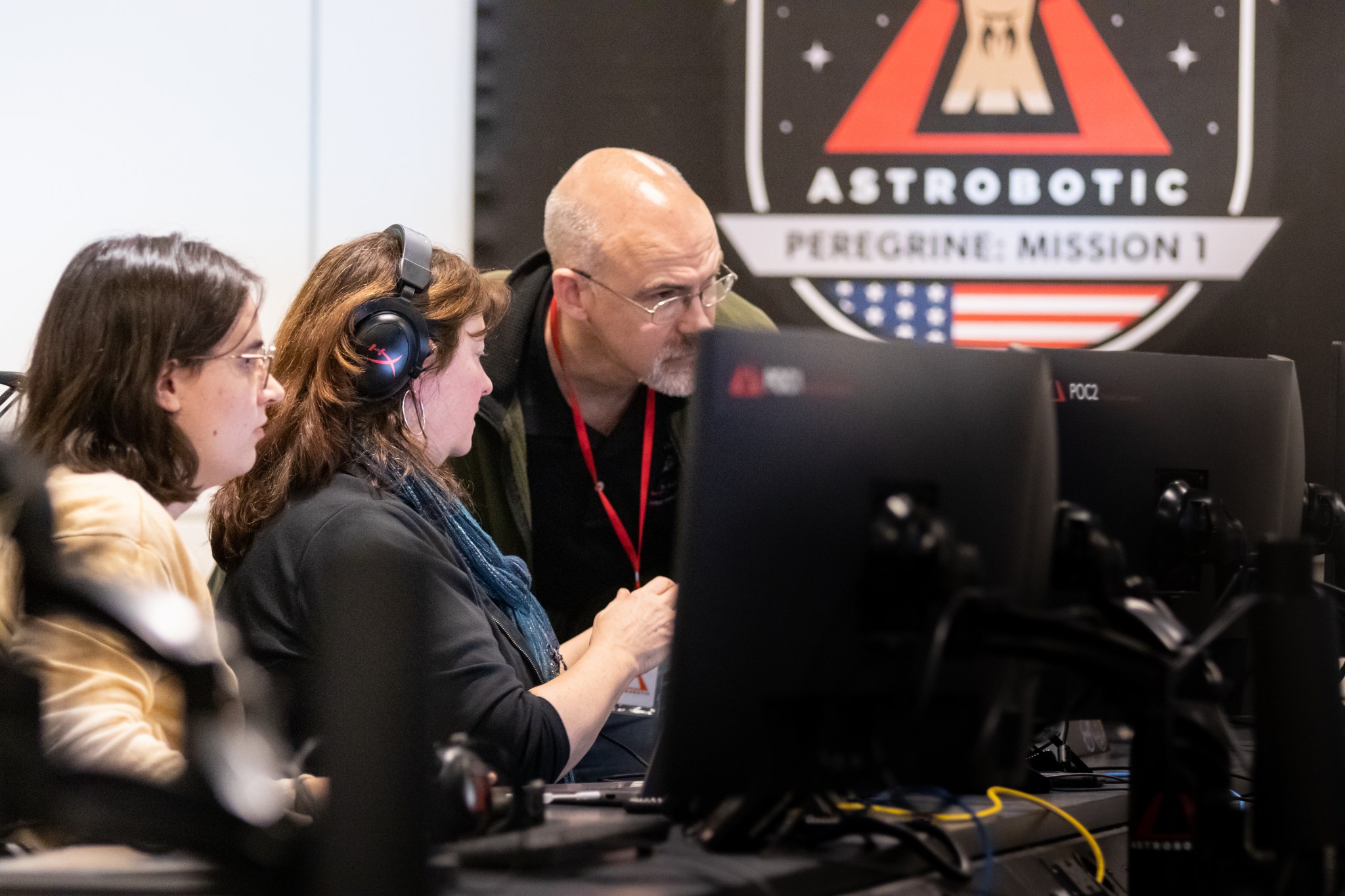
(L-R) Hailey Moosebrugger, payload manager, Astrobotic, works with project scientists Maria Banks and Paul Niles, CLPS in Astrobotic’s control center.
Credits: Astrobotic

“Space exploration is a daring task, and the science and spaceflight data collected from Astrobotic’s lunar lander is better preparing NASA for future CLPS deliveries and crewed missions under Artemis,” said NASA Administrator Bill Nelson. “The future of exploration is strengthened by collaboration. Together with our commercial partners, NASA is supporting a growing commercial space economy that will help take humanity back to the Moon, and beyond.”

Four out five NASA payloads on Peregrine successfully powered on and collected data while in flight:

As NASA’s LRA (Laser Retroreflector Array) instrument is a passive experiment, and operations could only take place on the lunar surface.

NASA science teams are currently working to interpret the results. Preliminary data suggests the instruments have measured natural radiation and chemical compounds in the area around the lander.

“Astrobotic’s Peregrine mission provided an invaluable opportunity to test our science and instruments in space, optimizing our process for collecting data and providing a benchmark for future missions,” said Nicola Fox, associate administrator for NASA’s Science Mission Directorate at NASA Headquarters in Washington. “The data collected in flight sets the stage for understanding how some of our instruments may behave in the harsh environment of space when some of the duplicates fly on future CLPS flights.”

NASA is committed to supporting its U.S. commercial vendors as they navigate the challenges of sending science and technology to the surface of the Moon.

For more information about CLPS, visit:

https://www.nasa.gov/clps

-end-

Faith McKie / Karen Fox
Headquarters, Washington
202-358-1600
faith.d.mckie@nasa.gov / karen.c.fox@nasa.gov

Nilufar Ramji
Johnson Space Flight Center, Houston
281-383-5111
nilufar.ramji@nasa.gov

Powered by WPeMatico

Get The Details…
Roxana Bardan

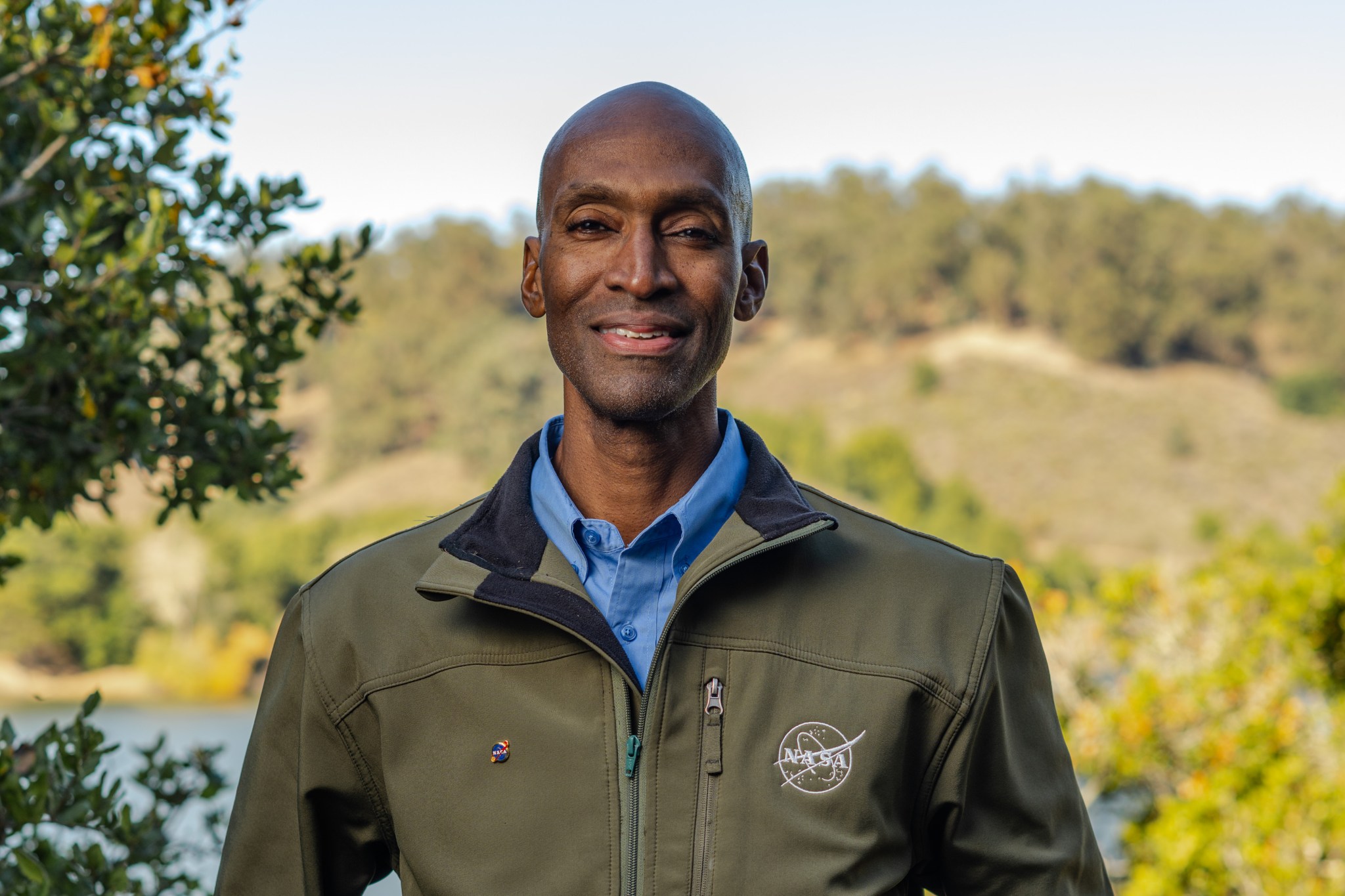
Deputy Discovery and Systems Health Technical Area Lead Dr. Rodney Martin

Deputy Discovery and Systems Health Technical Area Lead Dr. Rodney Martin

Rodney Martin, wearing an olive-colored NASA jacket and a blue dress shirt underneath, smiles at the camera. He is standing in the foreground with Lake Chabot Park in the background.

“[In] everyone’s life, they have a pivotal moment when they ask the question, ‘What am I really doing? What am I here for?’ … I’m reminded of a credo that I came up [with] through the evolution of my engagement of a whole bunch of recreational pursuits [including being a marathoner, ultrarunner, and Ironman triathlete] … as well as my professional pursuits. It’s threefold, and here’s what it is:

“[First,] I’m here because I want to be able to challenge myself, to see how much I can squeeze out of me – whatever that is, whatever ‘me’ is. [For example,] I applied to the astronaut candidate program twice, but I failed to make it to the second round. I figured I’d give a go at throwing my hat in the ring! Like with [an earlier career experience of failing out of] the Navy Nuclear Power Training Program, failure in one domain just means that you have to pick yourself up, dust yourself off, and find a new direction – often pursuing stretch goals that are outside of your comfort zone.

“[Second,] I want to serve others. I want to find a way to be of use to others, whether it’s in a structured manner or unstructured manner, whether it’s volunteering or just being a civil servant. I really focus on this service aspect; I did become a supervisor about three years ago, and I really take that role seriously. I really have a service-based leadership philosophy. … That’s why I think [mentoring student interns] represented such a [career] highlight for me, because I felt like I was serving their needs. I was helping to really educate them and [provide] knowledge that I want to … transfer to them, to really inspire that next generation of folks.

“… And the third – which I think NASA fits beautifully – is, ‘How do I build the future? How do I help build the future?’

“So again, it’s challenge, service, and building the future. If I don’t do anything else in my entire life except for those three things, I’m at least getting something right. I might be getting everything else entirely wrong, but I can at least work toward those three things.”

— Dr. Rodney Martin, Deputy Discovery and Systems Health Technical Area Lead, NASA’s Ames Research Center

Image Credit: NASA / Brandon Torres
Interviewer: NASA / Michelle Zajac

Check out some of our other Faces of NASA.

Powered by WPeMatico

Get The Details…
Michelle Zajac

NASA’S OSIRIS-REx Curation Team Reveals Remaining Asteroid Sample

NASA’S OSIRIS-REx Curation Team Reveals Remaining Asteroid Sample

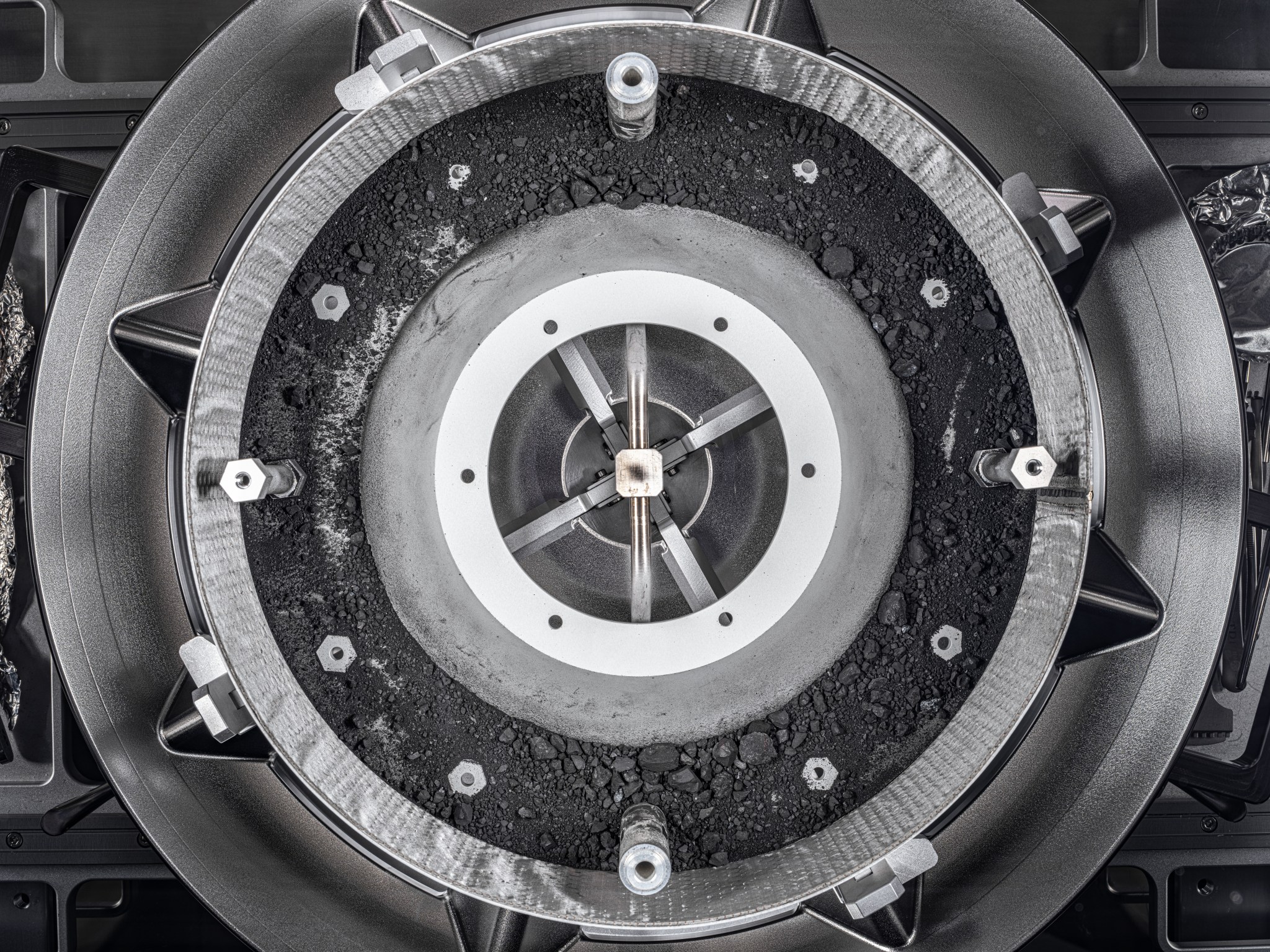
A top-down view of the OSIRIS-REx Touch-and-Go-Sample-Acquisition-Mechanism (TAGSAM) head with the lid removed, revealing the remainder of the asteroid sample inside. 
Photo: NASA/Erika Blumenfeld & Joseph Aebersold

The astromaterials curation team at NASA’s Johnson Space Center in Houston has completed the disassembly of the OSIRIS-REx sampler head to reveal the remainder of the asteroid Bennu sample inside. On Jan. 10, they successfully removed two stubborn fasteners that had prevented the final steps of opening the Touch-and-Go-Sample-Acquisition-Mechanism (TAGSAM) head.

Erika Blumenfeld, creative lead for the Advanced Imaging and Visualization of Astromaterials (AIVA) and Joe Aebersold, AIVA project lead, captured this photograph of the open TAGSAM head including the asteroid material inside using manual high-resolution precision photography and a semi-automated focus stacking procedure. The result is an image that shows extreme detail of the sample.

Next, the curation team will remove the round metal collar and prepare the glovebox to transfer the remaining sample from the TAGSAM head into pie-wedge sample trays.

These trays will be photographed before the sample is weighed, packaged, and stored at Johnson, home to the most extensive collection of astromaterials in the world. The remaining sample material includes dust and rocks up to about 0.4 inch (one cm) in size. The final mass of the sample will be determined in the coming weeks. The curation team members had already collected 2.48 ounces (70.3 grams) of asteroid material from the sample hardware before the lid was removed, surpassing the agency’s goal of bringing at least 2.12 ounces (60 grams) to Earth.

The curation team will release a catalog of all the Bennu samples later this year, which will allow scientists and institutions around the world to submit requests for research or display.

Download high-resolution image here

Powered by WPeMatico

Get The Details…
Wendy K. Avedisian

NASA Goddard Experts to Take Part in February STEM Conference 

NASA Goddard Experts to Take Part in February STEM Conference 

3 min read

Preparations for Next Moonwalk Simulations Underway (and Underwater)

Alongside experts from academia and industry, leaders from NASA’s Goddard Space Flight Center in Greenbelt, Maryland, will be on hand at the Feb. 25–29 PowerSource Global Summit conference in Orlando. Dr. Christyl Johnson, Goddard’s deputy center director for technology and research investments, will deliver the conference’s keynote address on Feb. 26, sharing insights on space exploration developments as they relate to the 2024 summit’s theme: “Women in STEAM Powering the Metaverse.” “STEAM” adds “arts” to the “STEM” science, technology, engineering, and math acronym.   

NASA Goddard’s Deputy Center Director for Technology and Research Investments, Dr. Christyl Johnson, speaks during a panel discussion as part of a Women’s History Month program Wednesday, March 22, 2023, at NASA’s Goddard Space Flight Center.
Dr. Christyl Johnson, deputy center director for technology and research investments at NASA’s Goddard Space Flight Center, will provide keynote remarks at the PowerSource Global summit in Orlando at the end of February 2024.
NASA

“As NASA embarks toward a sustained human presence on the Moon and onward to Mars, it’s critical that we underpin our efforts with a diverse and inclusive community,” Johnson said. “I look forward to sharing NASA’s latest efforts at the conference and to bringing back ideas and perspectives that will help ensure our exploration reflects humanity’s values and aspirations.” 

Johnson has been a deputy center director at Goddard since 2010. In her current position, she manages the center’s research and development portfolio and formulates the center’s future science mission and technology goals.

In addition to Johnson’s keynote, NASA Chief Information Officer Jeff Seaton will attend and present on a panel, “Cybersecurity in a Hackable World,” at 7:30 a.m. EST on Feb. 27. 

Other Goddard speakers at the conference include Chief Digital Engineer Aaron Comis; research scientist Dr. Bethany Theiling; Dr. Evana Gizzi, an AI research lead at the center; and systems engineer Matthew Vaerewyck. The four will present an interactive panel, “From Vision to Reality,” that showcases Goddard’s digital engineering design capabilities. The panel will be 10:30 a.m. EST on Feb. 26. 

Dr. Omar Hatamleh, Goddard’s chief adviser for AI and innovation, will participate in a panel discussion, “Medical Technology’s Transformative Impact,” at 11:45 a.m. EST on Feb. 27. 

The private sector-led PowerSource Global Summit developed out of a 2016 collaboration that Johnson spearheaded to boost female representation in STEM fields. 

“Continuing dialogue allows us to move the needle forward to ensure a diverse, equitable, inclusive, and accessible workforce where barriers in STEAM careers cease to exist, particularly for women,” Johnson said. “That’s why it’s important for Goddard to participate in summits like PowerSource that convene STEAM professionals to share best practices and learn from one another. We need to engage the next generation, the Artemis Generation, to build a diverse future workforce for exploration.” 

In the conference’s current form, it allows diverse experts across disciplines to exchange ideas about technology’s influences on society, according to its website. The February conference takes place at World Center Marriott in Orlando. 

Goddard is NASA’s premiere space flight complex. The center is home to the nation’s largest organization of scientists, engineers and technologists who build spacecraft, instruments and new technology to study Earth, the Sun, our solar system and the universe.

Share

Details

Last Updated

Jan 19, 2024

Editor
Rob Garner
Contact
Rob Garner
Location
Goddard Space Flight Center

Powered by WPeMatico

Get The Details…
Rob Garner