Workshop to Highlight NASA’s Support for Mobility, In-Space Servicing

Workshop to Highlight NASA’s Support for Mobility, In-Space Servicing
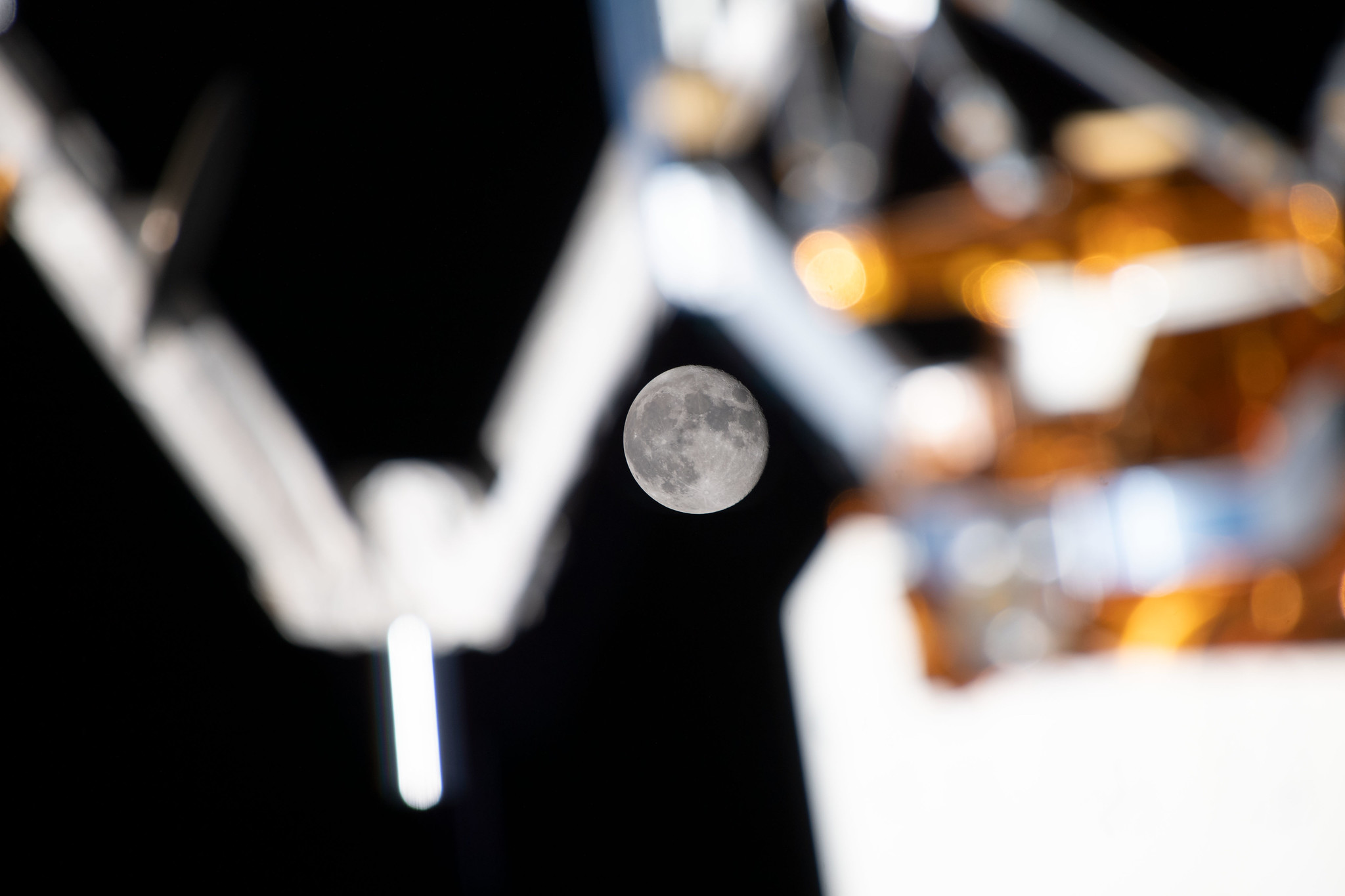
September's full Moon, the Harvest Moon, is photographed from the International Space Station, perfectly placed in between exterior station hardware.
September’s full Moon, the Harvest Moon, is photographed from the International Space Station, perfectly placed in between exterior station hardware.

NASA leadership, including Deputy Administrator Pam Melroy, will participate in a workshop on space mobility and in-space servicing on Tuesday, Nov. 7, at the University of Maryland in College Park.

Beginning at 8:30 a.m. EST, the Consortium for Space Mobility and ISAM Capabilities (COSMIC) workshop runs through Wednesday, Nov. 8. NASA announced the consortium in April, aiming to create a nationwide aerospace community alliance that provides global leadership in space mobility and in-space servicing, assembly, and manufacturing (ISAM) for use in Earth orbit, lunar orbit, deep space, and on planetary surfaces.

Following welcome remarks from Prasun Desai, acting associate administrator, Space Technology Mission Directorate at NASA Headquarters in Washington, Melroy will provide a keynote on NASA’s support for ISAM.

Other leaders from The White House Office of Science and Technology Policy, the U.S. Department of Defense, the defense and aerospace industry, and academia, also will participate. The conference features panel discussions and breakout workshops for COSMIC’s three caucuses ­– U.S. government, industry, and academia ­– and the Consortium’s five focus areas.

Media interested in attending the opening day, either in person or virtually, should RSVP by 12 p.m. on Monday, Nov. 6, to Parker Wishik at 708-391-7806 or parker.wishik@aero.org. NASA and COSMIC experts will be available for interview opportunities upon request. Other COSMIC plenary sessions will be recorded and later published to the COSMIC YouTube channel.

NASA funds COSMIC, creating a nationwide alliance around the capability areas, and it will support the ISAM National Strategy and National ISAM Implementation Plan, released in 2022, which define a national approach to build on existing investments and emerging capabilities to realize future opportunities enabled by ISAM. The Consortium aims to accelerate ISAM’s universal adoption and support its utilization as a routine part of space architectures and mission lifecycles.  

The Aerospace Corporation leads COSMIC as the management entity contracted by NASA’s Space Technology Mission Directorate to ensure coordination among members, caucuses, and focus areas and to execute COSMIC initiative-focused events.  

For information on the COSMIC kickoff meeting, including the full agenda, visit:

https://cosmicspace.org/2023/08/cosmics-kickoff-meeting

-end-

Jimi Russell
Headquarters, Washington
216-704-2412
james.j.russell@nasa.gov

Parker Wishik
COSMIC
708-391-7806
parker.wishik@aero.org

Powered by WPeMatico

Get The Details…
Jennifer M. Dooren
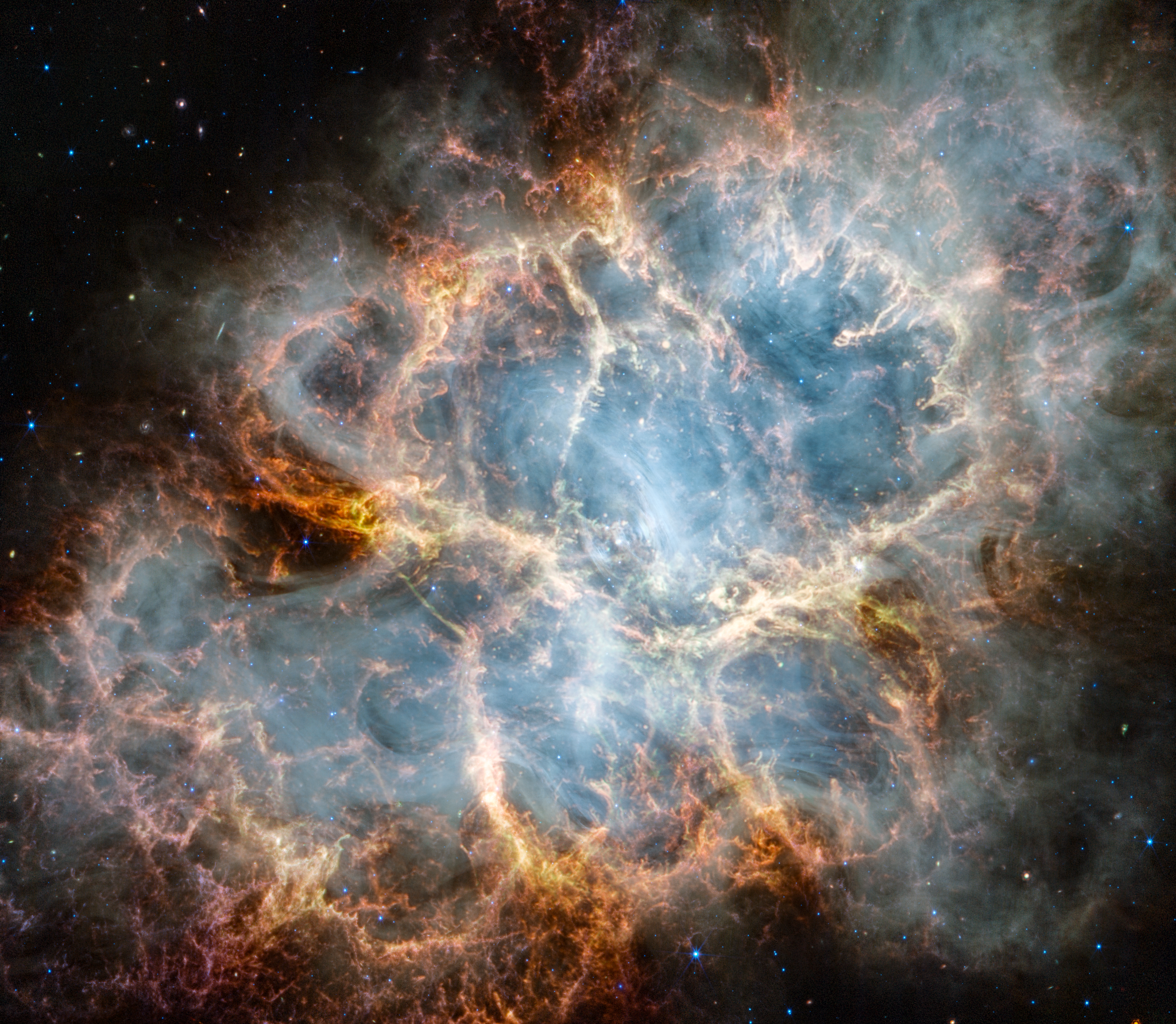
Details from Webb’s Cameras Reveal Crabby Composition

Details from Webb’s Cameras Reveal Crabby Composition

The Crab Nebula is an oval nebula with complex structure against a black background. On the nebula’s exterior, particularly at the top left and bottom left, lie curtains of glowing red and orange fluffy material. Its interior shell shows large-scale loops of mottled filaments of yellow-white and green, studded with clumps and knots. Translucent thin ribbons of smoky white lie within the remnant’s interior, brightest toward its center. The white material follows different directions throughout, including sometimes sharply curving away from certain regions within the remnant. A faint, wispy ring of white material encircles the very center of the nebula. Around and within the supernova remnant are many points of blue, red, and yellow light.
NASA, ESA, CSA, STScI, T. Temim (Princeton University)

The James Webb Space Telescope captures new details of the Crab Nebula, 6,500 light-years away, in this image released on Oct. 30, 2023. While these remains of an exploded star have been well-studied by multiple observatories, including the Hubble Space Telescope, Webb’s infrared sensitivity and resolution offer new clues into the makeup and origins of this scene.

Thanks to Webb’s Near-Infrared Camera (NIRCam) and Mid-Infrared Instrument (MIRI), scientists were able to determine the composition of the material ejected from the explosion. The supernova remnant is comprised of several different components, including doubly ionized sulfur (represented in red-orange), ionized iron (blue), dust (yellow-white and green), and synchrotron emission (white). In this image, colors were assigned to different filters from Webb’s NIRCam and MIRI: blue (F162M), light blue (F480M), cyan (F560W), green (F1130W), orange (F1800W), and red (F2100W).

Take a video tour of this image.

Image Credit: NASA, ESA, CSA, STScI, T. Temim (Princeton University)

Powered by WPeMatico

Get The Details…
Monika Luabeya

Scorching, Seven-Planet System Revealed by New Kepler Exoplanet List

Scorching, Seven-Planet System Revealed by New Kepler Exoplanet List

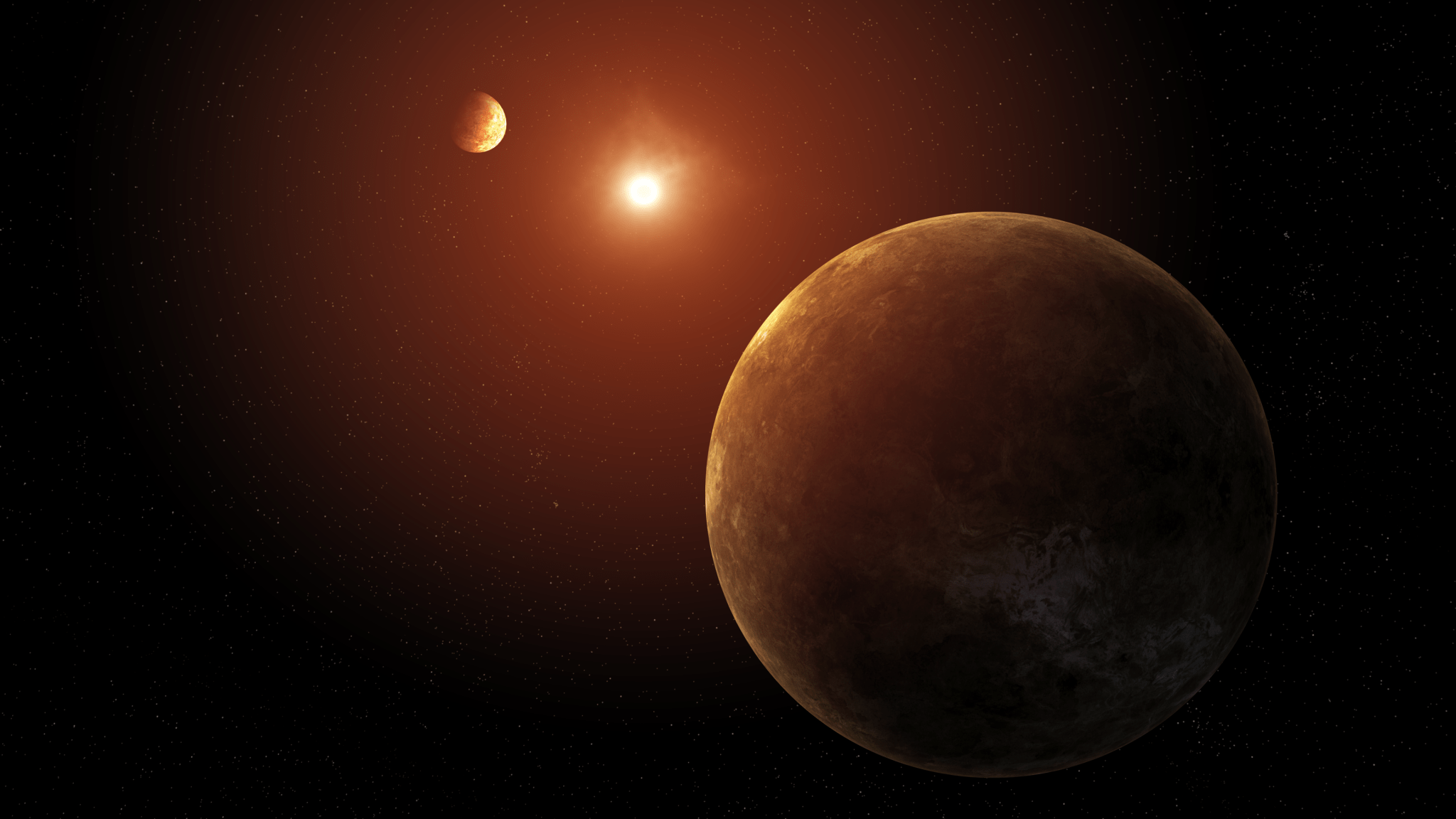
Artist’s concept showing two of the seven planets discovered orbiting a Sun-like star. The system, called Kepler-385, was identified using data from NASA’s Kepler mission.
NASA/Daniel Rutter

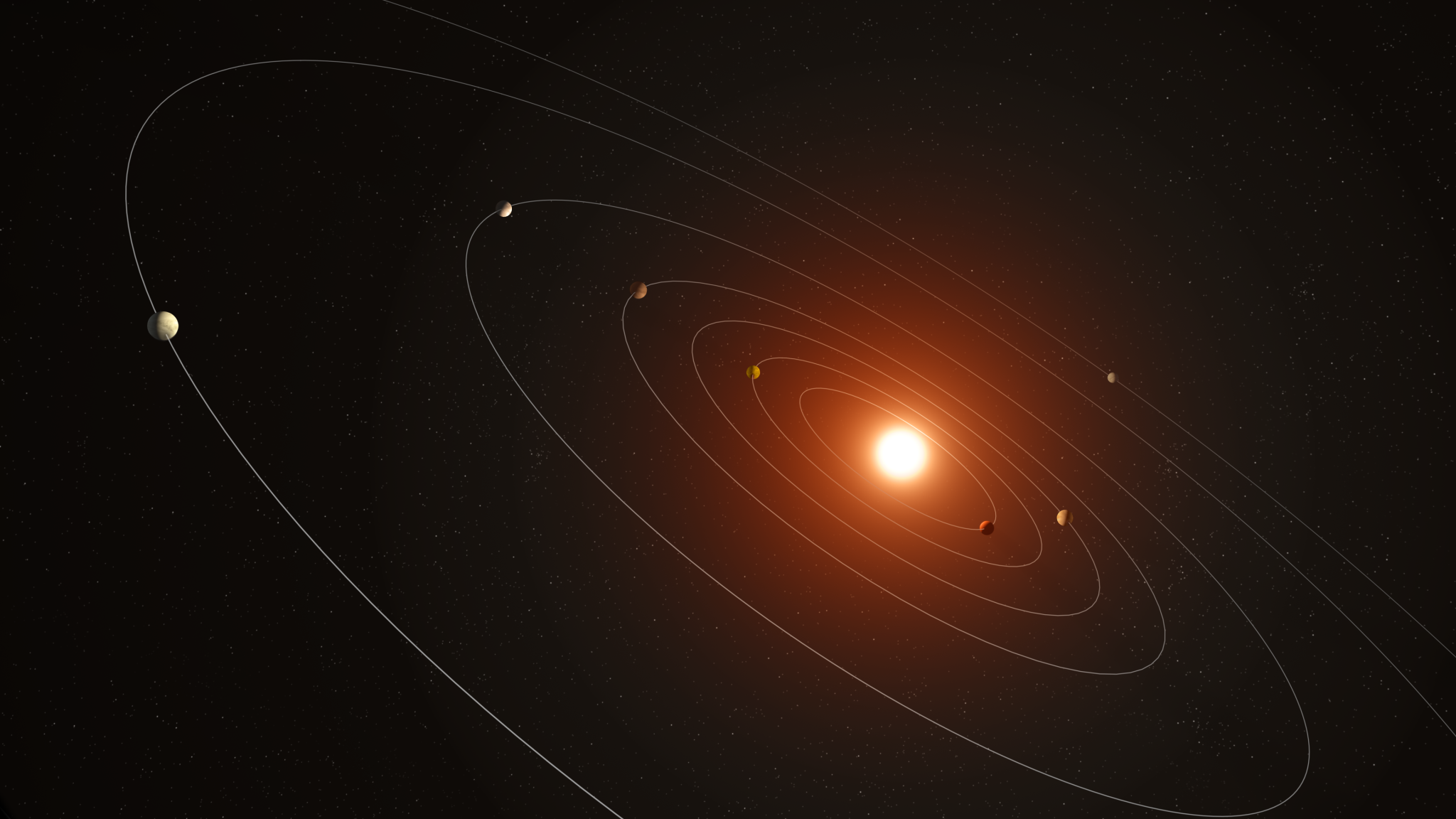
A system of seven sweltering planets has been revealed by continued study of data from NASA’s retired Kepler space telescope: Each one is bathed in more radiant heat from their host star per area than any planet in our solar system. Also unlike any of our immediate neighbors, all seven planets in this system, named Kepler-385, are larger than Earth but smaller than Neptune. It is one of only a few planetary systems known to contain more than six verified planets or planet candidates. The Kepler-385 system is among the highlights of a new Kepler catalog that contains almost 4,400 planet candidates, including more than 700 multi-planet systems.

“We’ve assembled the most accurate list of Kepler planet candidates and their properties to date,” said Jack Lissauer, a research scientist at NASA’s Ames Research Center in California’s Silicon Valley and lead author on the paper presenting the new catalog. “NASA’s Kepler mission has discovered the majority of known exoplanets, and this new catalog will enable astronomers to learn more about their characteristics.”

At the center of the Kepler-385 system is a Sun-like star about 10% larger and 5% hotter than the Sun. The two inner planets, both slightly larger than Earth, are probably rocky and may have thin atmospheres. The other five planets are larger – each with a radius about twice the size of Earth’s – and expected to be enshrouded in thick atmospheres.

Artist’s concept of Kepler-385, the seven-planet system revealed in a new catalog of planet candidates discovered by NASA’s Kepler space telescope.
NASA/Daniel Rutter

The ability to describe the properties of the Kepler-385 system in such detail is testament to the quality of this latest catalog of exoplanets. While the Kepler mission’s final catalogs focused on producing lists optimized to measure how common planets are around other stars, this study focuses on producing a comprehensive list that provides accurate information about each of the systems, making discoveries like Kepler-385 possible.

The new catalog uses improved measurements of stellar properties and calculates more accurately the path of each transiting planet across its host star. This combination illustrates that when a star hosts several transiting planets, they typically have more circular orbits than when a star hosts only one or two.

Kepler’s primary observations ceased in 2013 and were followed by the telescope’s extended mission, called K2, which continued until 2018. The data Kepler collected continues to reveal new discoveries about our galaxy. After the mission already showed us there are more planets than stars, this new study paints a more detailed picture of what each of those planets and their home systems look like, giving us a better view of the many worlds beyond our solar system.

The research article, “Updated Catalog of Kepler Planet Candidates: Focus on Accuracy and Orbital Periods” is forthcoming in The Journal of Planetary Science.

Learn more:

Listen to a sonification of the orbit data of the seven planets in the Kepler-385 system: https://www.youtube.com/watch?v=2BCiOTJjcQQ

For news media:

Members of the news media interested in covering this topic should reach out to the NASA Ames newsroom.

Powered by WPeMatico

Get The Details…
Frank Tavares

Una nueva aplicación de la NASA ayuda a avistar la estación espacial

Una nueva aplicación de la NASA ayuda a avistar la estación espacial

4 min read

Una nueva aplicación de la NASA ayuda a avistar la estación espacial

NASA

Read this release in English here.

La NASA está haciendo más fácil para el público avistar Estación Espacial Internacional, el hogar de la humanidad en el espacio, mientras esta sobrevuela la Tierra, así como ampliando el acceso a noticias y recursos sobre este laboratorio en microgravedad con una nueva aplicación para teléfonos móviles, o celulares, llamada Spot the Station (Avista la estación).

La aplicación para celulares ya está disponible para descargar en iOS y Android.

La aplicación se basa en el sitio web Spot the Station de la agencia y proporciona información y capacidades adicionales para mejorar la experiencia del público en el avistamiento de la estación espacial. Una interfaz de realidad aumentada facilita a los usuarios ubicar la estación y ofrece opciones para capturar y compartir imágenes y vídeos de sus avistamientos en tiempo real. Con el poder de la realidad aumentada, la brújula incorporada en la aplicación le mostrará al espectador dónde se encuentra la estación espacial, incluso si se está al otro lado del planeta. Los usuarios también pueden registrarse para recibir notificaciones de las próximas oportunidades de avistamiento en sus teléfonos móviles en función de su ubicación exacta.

“Incluso después de 23 años de presencia humana continua a bordo de la Estación Espacial Internacional, es increíblemente emocionante ver la estación cuando miras hacia arriba en el momento justo”, dijo Robyn Gatens, directora de la Estación Espacial Internacional en la sede de la NASA en Washington. “Este laboratorio orbital, que continúa proporcionando tantos beneficios únicos y tangibles para la humanidad, realmente no está tan lejos de nuestro alcance”.

La estación espacial es visible porque refleja la luz del Sol, que es la misma razón por la que podemos ver la Luna. Pero a diferencia de la Luna, la estación espacial no es lo suficientemente brillante como para poder observarla durante el día. Solo es posible verla cuando amanece o anochece en la localidad del espectador. Por lo tanto, la oportunidad de avistamiento varía de una vez al mes a varias a la semana, ya que es necesario que haya oscuridad en la localidad del espectador, y la estación espacial tiene que pasar por encima de su cabeza. Con la aplicación Spot the Station para móviles, los usuarios sabrán cuándo la estación está sobrevolando su área y cómo localizarla.

La aplicación fue desarrollada por el Programa de la Estación Espacial Internacional en la Dirección de Misiones de Operaciones Espaciales de la NASA y el Centro de Excelencia para la Innovación Colaborativa, el cual es parte del programa de Premios, Desafíos y Crowdsourcing de la Dirección de Misiones de Tecnología Espacial de la agencia. El código de la aplicación está abierto para que cualquiera pueda acceder a ella, modificarla y utilizarla en sus propios proyectos, así como ofrecer comentarios opcionales para los programadores. La NASA continuará actualizando y mejorando la aplicación para móviles de forma continua a medida que reciba los comentarios de los usuarios.

El lanzamiento de esta aplicación también se produce justo antes del 25.o aniversario del inicio de operaciones de la Estación Espacial Internacional, el cual marca la unión de los módulos Zarya y Unity, los primeros elementos de lo que hoy es un enorme complejo orbital, el 6 de diciembre de 1998. La estación espacial permite el avance del conocimiento científico en las ciencias de la Tierra, del espacio, físicas y biológicas para el beneficio de los habitantes de nuestro planeta natal. Además, la estación espacial sirve como el laboratorio líder mundial para las investigaciones de vanguardia y el desarrollo de la tecnología que respalda la exploración humana y robótica de destinos más allá de la órbita baja de la Tierra, incluyendo la Luna y Marte.

Aprende más sobre la estación espacial, sus investigaciones y su tripulación en el sitio web (en inglés):

https://www.nasa.gov/station

-end-

News Media Contacts:

Julian Coltre / María José Viñas
Sede, Washington
202-358-1100 / 240-458-0248
julian.n.coltre@nasa.gov / maria-jose.vinasgarcia@nasa.gov

Leah Cheshier / Kenna Pell
Johnson Space Center, Houston
281-483-5111
leah.d.cheshier@nasa.gov / kenna.m.pell@nasa.gov

Powered by WPeMatico

Get The Details…
Claire A. O’Shea

Look Up: New NASA App Helps Stargazers Spot Space Station

Look Up: New NASA App Helps Stargazers Spot Space Station

3 min read

Look Up: New NASA App Helps Stargazers Spot Space Station

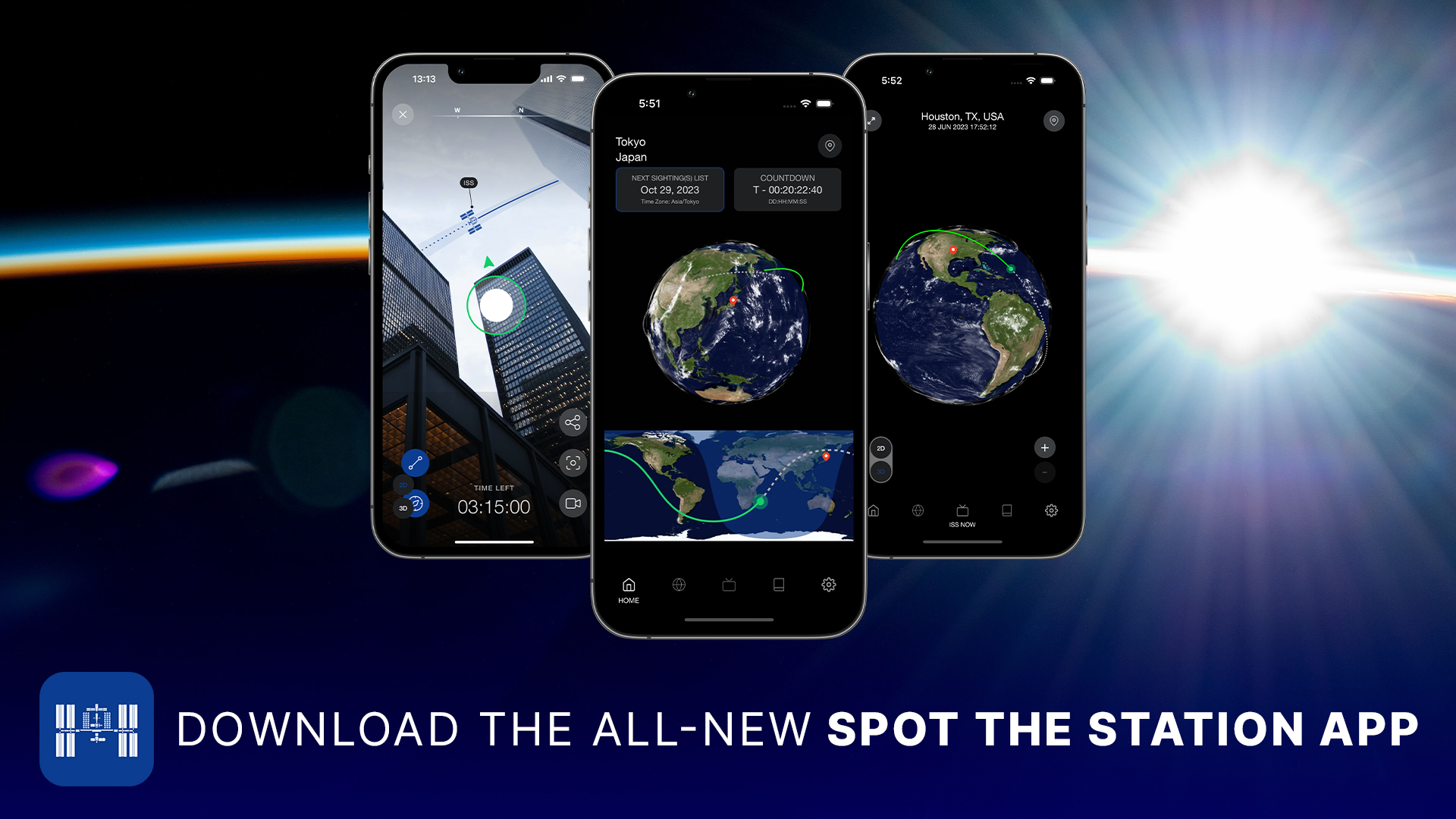
An augmented reality interface makes it easier for users to locate the station and provides options for capturing and sharing pictures and videos of their sightings in real-time. The app’s built-in compass will show you where the space station is – even if you’re on the other side of the globe.
NASA

Lee esta nota de prensa en español aquí.

NASA is making it easier for the public to spot the International Space Station, humanity’s home in space, as it passes over Earth and expanding access to news and resources about the microgravity laboratory with a new Spot the Station mobile app.

The mobile app is available to download now on iOS and Android.

The app builds on the agency’s Spot the Station website by providing additional capabilities and information to enhance the station sighting experience for the public. An augmented reality interface makes it easier for users to locate the station and provides options for capturing and sharing pictures and videos of their sightings in real-time. With the power of augmented reality, the app’s built-in compass will show you where the space station is – even if you’re on the other side of the globe. Users also can sign up for mobile notifications of upcoming viewing opportunities based on their exact location.

“Even after 23 years of continuous human presence aboard the International Space Station, it’s incredibly exciting to see the station when you look up at just the right moment,” said Robyn Gatens, International Space Station director at NASA Headquarters in Washington. “The orbiting laboratory that continues to provide so many unique, tangible benefits for humanity really isn’t that far out of reach.”

The space station is visible because it reflects the light of the Sun – the same reason we can see the Moon. Unlike the Moon, the space station isn’t bright enough to see during the day. It can only be seen when it is dawn or dusk at your location. As such, it can range from one sighting opportunity a month to several a week, since it has to be both dark where you are, and the space station has to happen to be going overhead. With the Spot the Station mobile app, users will know when the station is overhead and how to locate it.

The application was developed by the International Space Station Program in NASA’s Space Operations Mission Directorate and the Center of Excellence for Collaborative Innovation, part of the Prizes, Challenges, and Crowdsourcing program in the agency’s Space Technology Mission Directorate. The app’s code is open source for anyone to access, modify, and use in their own projects and to provide optional feedback to the developers. NASA will continue to update and improve the mobile application on a rolling basis as it receives feedback from users.

Timing of this app’s release also comes just ahead of the 25th anniversary of International Space Station operations, which marks the joining of the Zarya and Unity modules on Dec. 6, 1998 – the first elements of what today is an enormous orbital complex. The space station advances scientific knowledge in Earth, space, physical, and biological sciences for the benefits of people living on our home planet. In addition, the station serves as the world’s leading laboratory for cutting-edge research and technology development that supports human and robotic exploration of destinations beyond low Earth orbit, including the Moon and Mars.

Learn more about the space station, its research, and crew, at:

https://www.nasa.gov/station

-end-

News Media Contacts:

Julian Coltre
Headquarters, Washington
202-358-1100
julian.n.coltre@nasa.gov

Leah Cheshier / Kenna Pell
Johnson Space Center, Houston
281-483-5111
leah.d.cheshier@nasa.gov / kenna.m.pell@nasa.gov

Share

Details

Last Updated

Nov 02, 2023

Editor

Claire A. O’Shea

Powered by WPeMatico

Get The Details…
Claire A. O’Shea