Aging, Human Research Studies Ahead of Next Cargo Mission

Aging, Human Research Studies Ahead of Next Cargo Mission
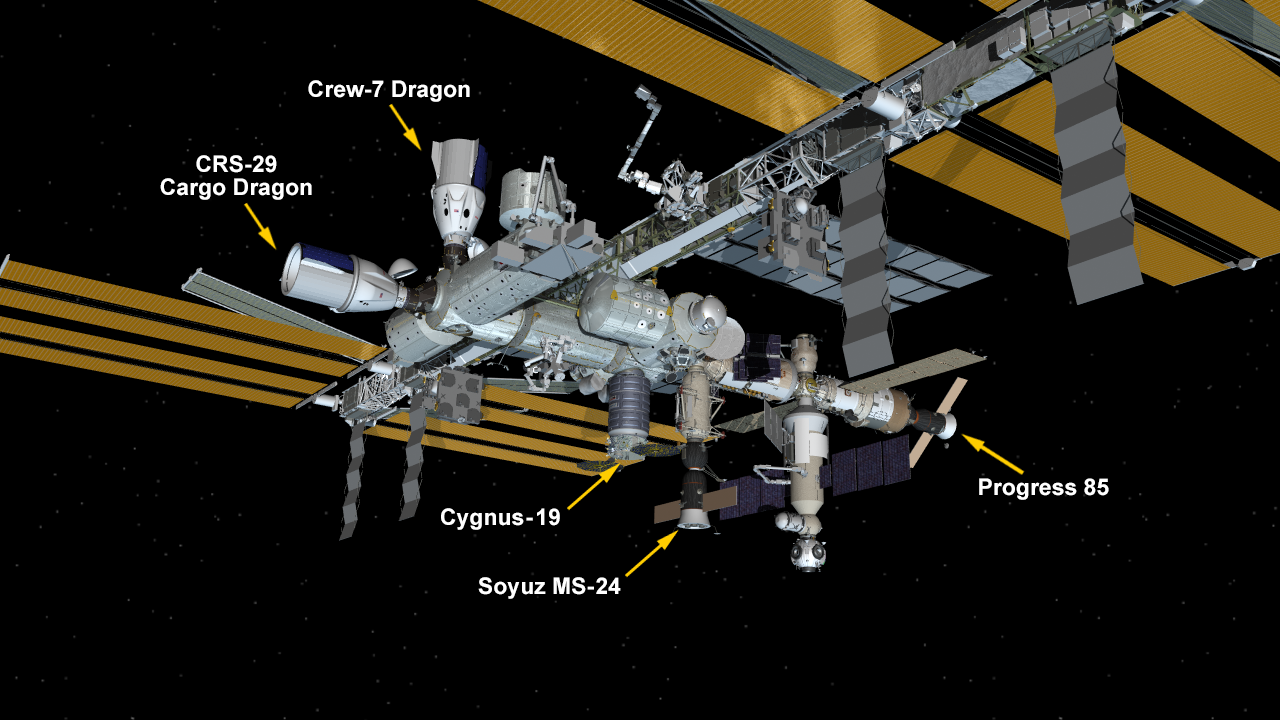
Nov. 29, 2023: International Space Station Configuration. Five spaceships are parked at the space station including the SpaceX Dragon cargo spacecraft, the SpaceX Dragon Endurance crew spacecraft, Northrop Grumman's Cygnus space freighter, the Soyuz MS-24 crew ship, and the Progress 85 resupply ship.
Nov. 29, 2023: International Space Station Configuration. Five spaceships are parked at the space station including the SpaceX Dragon cargo spacecraft, the SpaceX Dragon Endurance crew spacecraft, Northrop Grumman’s Cygnus space freighter, the Soyuz MS-24 crew ship, and the Progress 85 resupply ship.

The International Space Station hosted numerous microgravity experiments on Wednesday investigating how the human body adapts to weightlessness and ways to live and work off the Earth. The Expedition 70 crewmembers also continued preparing for a cargo mission then conducted an emergency drill.

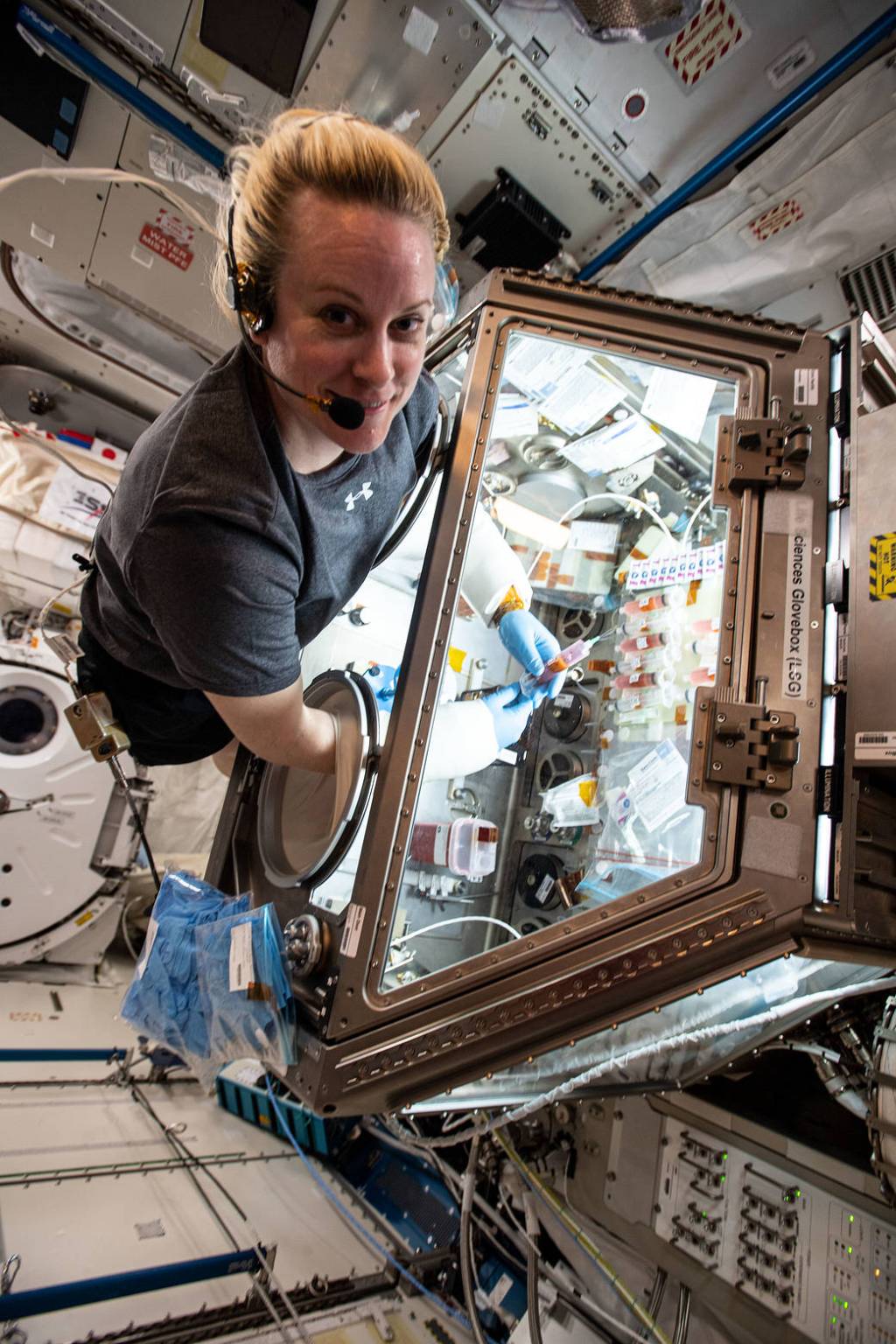
More aging research was underway aboard the orbital lab today as NASA astronaut Jasmin Moghbeli processed samples inside the Kibo laboratory module for the Space AGE study. The biology work took place in Kibo’s Life Science Glovebox and may provide better insights into the aging process on cells and its effects on disease mechanisms both on Earth and in space.

Working in the Columbus laboratory module, NASA Flight Engineer Loral O’Hara configured and wore portable medical gear that is monitoring her blood pressure for the CIPHER human research study. She conducted other research activities throughout the day including inspecting microbial detection hardware and calibrating components inside the Combustion Integrated Rack.

Commander Andreas Mogensen began his day documenting his reactions to a new lighting system that may help astronauts maintain their circadian rhythms in outer space. The ESA (European Space Agency) astronaut then uploaded software for a technology experiment demonstrating how the Astrobee free-flying robotic helpers, and potentially future satellites, can rendezvous, dock, and undock autonomously.

Astronaut Satoshi Furukawa of JAXA (Japan Aerospace Exploration Agency) was back on life support duty servicing Kibo’s Internal Thermal Control System (ITCS). The ITCS cools and rejects heat from equipment ensuring a safe operating environment aboard the space station.

The Roscosmos Progress 84 resupply ship ended its cargo mission today after six months docked to the Poisk module. The uncrewed and trash-packed Progress 84 departed the station at 2:55 a.m. EDT then reentered the Earth’s atmosphere above the south Pacific Ocean for a fiery, but safe demise a few hours later.

The next cargo mission to resupply the Expedition 70 crew is counting down to launch at 4:25 a.m. on Friday from the Baikonur Cosmodrome in Kazakhstan. The Progress 86 resupply ship, carrying nearly 5,600 pounds of cargo, will take a two-day trip to the orbiting lab and dock to the same port vacated by the Progress 84. Cosmonauts Oleg Kononenko and Nikolai Chub reviewed procedures today for monitoring the approaching cargo craft and practiced remotely controlling the Progress 86 if necessary.

Cosmonaut Konstantin Borisov watered plants and photographed them for a space botany study. Afterward, he checked Roscosmos tablet computers then worked in the Nauka science module maintaining its ventilation systems.

At the end of the day, all four astronauts joined the three cosmonauts and simulated an emergency with ground controllers practicing their roles and responsibilities during the drill. The orbital residents located emergency systems throughout the space lab while coordinating with mission controllers from around the world.


Learn more about station activities by following the space station blog@space_station and @ISS_Research on X, as well as the ISS Facebook and ISS Instagram accounts.

Get weekly video highlights at: https://roundupreads.jsc.nasa.gov/videoupdate/

Get the latest from NASA delivered every week. Subscribe here: www.nasa.gov/subscribe

Powered by WPeMatico

Get The Details…

Mark Garcia

Announcing the New Heliophysics Division Director 

Announcing the New Heliophysics Division Director 

3 min read

Announcing the New Heliophysics Division Director 

November 29, 2023

NASA has selected Dr. Joseph Westlake to fill the position of Heliophysics Division Director. Joe will join the Science Mission Directorate and assume his new role on Jan. 16, 2024. 

I am pleased to have Joe take on the role as the Heliophysics Division Director. Joe has a strong background in heliophysics and planetary science and has already made significant contributions to our efforts by supporting several NASA missions including the Magnetospheric Multiscale mission, the Van Allen Probes, Parker Solar Probe, the Interstellar Boundary Explorer mission, the Juno mission, Cassini and the European Space Agency’s Juice mission to Ganymede. 

Joe brings with him more than 18 years of scientific, technical, management, and programmatic experience in heliophysics, astrophysics, and planetary science. He is coming to us from the Johns Hopkins University Applied Physics Laboratory (JHUAPL) where he works as a researcher and project scientist for the Interstellar Mapping and Acceleration Probe mission and principal investigator for the Plasma Instrument for Magnetic Sounding, or PIMS, instrument destined for Jupiter’s moon, Europa, onboard the Europa Clipper mission.  

“I’m very excited to join NASA as the Division Director for Heliophysics,” said Westlake. “I look forward to diving in and working with the vibrant community of scientists and engineers that are uncovering the mysteries of our star.” 

In 2024, the National Academies will release a new Decadal Survey that lays out a strategy to advance scientific understanding of the Sun, Sun-Earth connections and the origins of space weather, the Sun’s interactions with other bodies in the solar system, the interplanetary medium, and the interstellar medium; Joe’s experience across several scientific disciplines, as well as his leadership and technical experience, uniquely qualifies him for this critical leadership position in the Science Mission Directorate as we embark on an exciting new decade of solar and space physics. 

I extend my sincere appreciation to Peg Luce who led the Division for nearly a year while the director position was vacant; she has done a stellar job. With nearly 10 years as the deputy director, Peg’s exceptional efforts have brought significant strides within Science Mission Directorate and the broader scientific community. I am thrilled she will continue serving as the Heliophysics Division Deputy Director and helping Joe usher the division into this new era. 

“The Sun touches everything and the science of heliophysics is helping us unlock its mysteries,” said Peg Luce, deputy division director, Heliophysics Division at NASA Headquarters in Washington. “Joe’s unique experience and insight will help guide the division as we usher in solar max, launch a host of new heliophysics missions, and flow through the Heliophysics Big Year.” 

Please join me in welcoming Joe to Headquarters! 

Powered by WPeMatico

Get The Details…

The Beginnings of a Sunrise

The Beginnings of a Sunrise

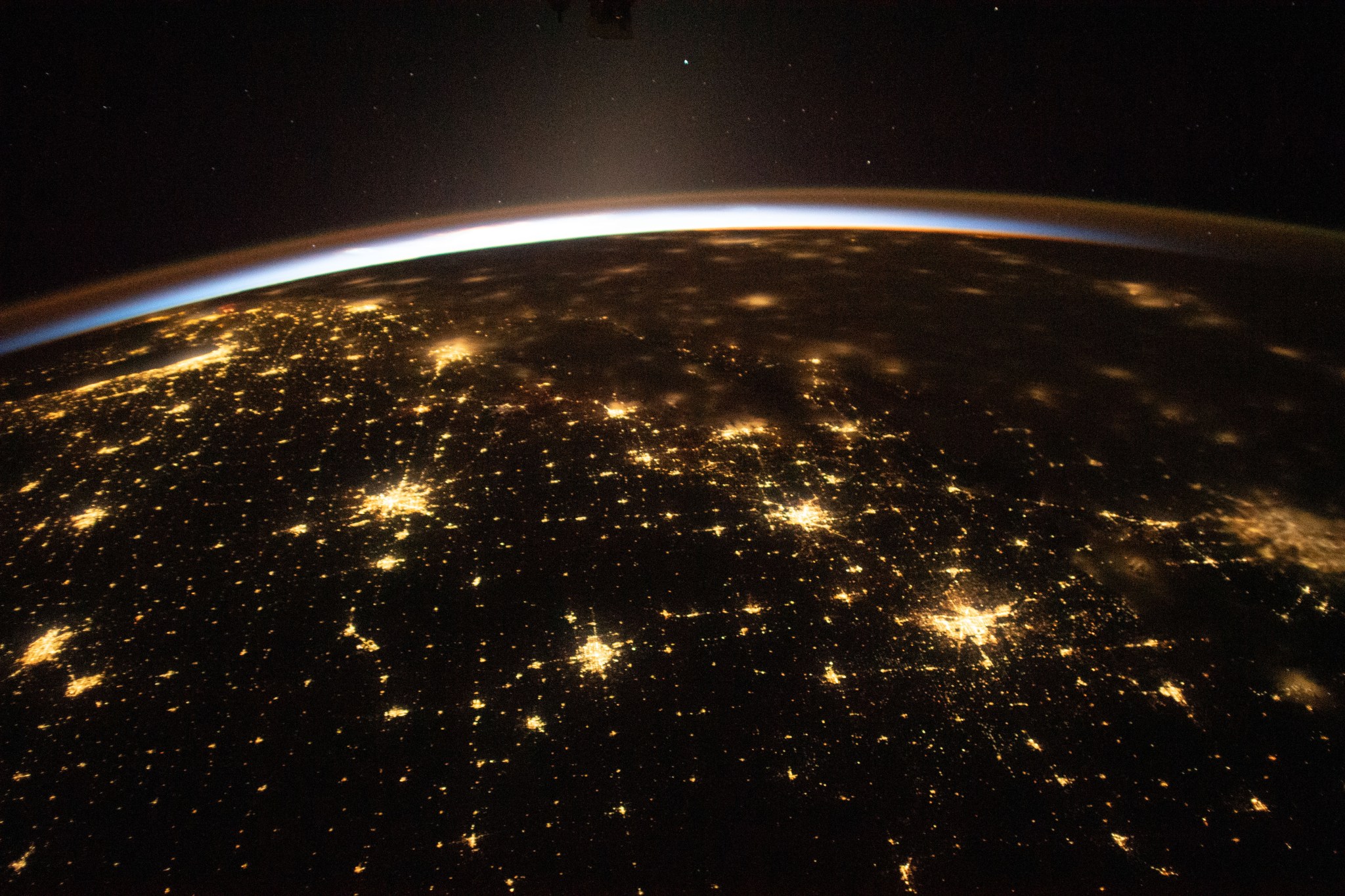
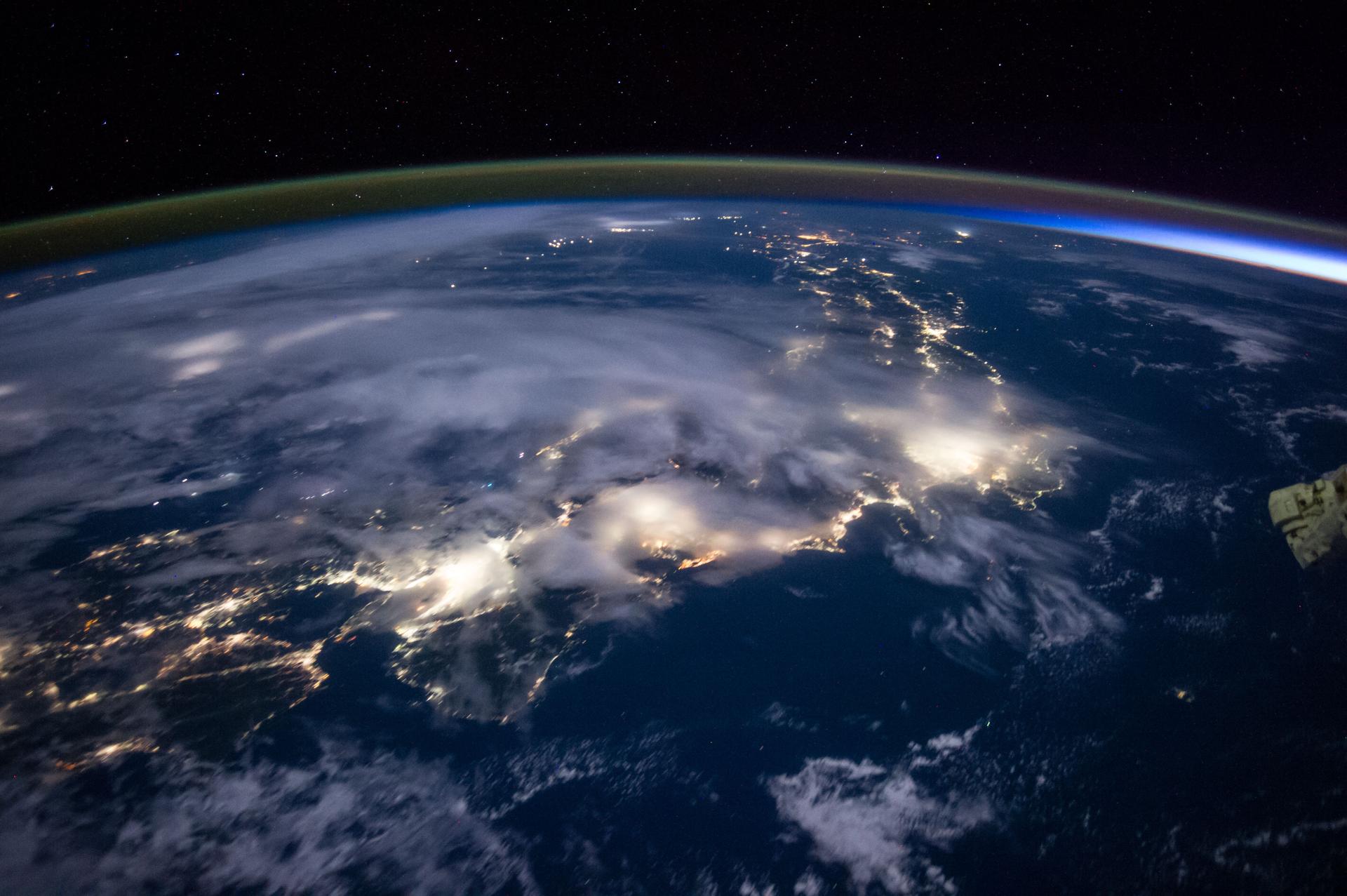
In the distance, small points of light can be seen against the darkness of space. The sun's rays peek over Earth, creating a blue haze tinged with orange. On Earth, the city lights of Chicago, Illinois, (far left) and the Dallas/Fort Worth metropolitan area (far right) shine.
NASA / Jasmin Moghbeli

City lights stretch across the United States like a string of holiday lights in this image taken from the International Space Station on Nov. 10, 2023. At far left, the lights of Chicago, Illinois, are outlined by Lake Michigan. At far right, the Dallas/Fort Worth metropolitan area shines through the clouds while the sun’s first rays start to light up Earth’s atmosphere (at top).

Since the space station became operational in November 2000, crew members have produced hundreds of thousands of images of the land, oceans, and atmosphere of Earth. Their photographs of Earth record how the planet changes over time due to human activity and natural events. This allows scientists to monitor disasters and direct response on the ground and study phenomena, from the movement of glaciers to urban wildlife.

Explore more images of cities at night taken by astronauts on the space station.

Image Credit: NASA/Jasmin Moghbeli

Powered by WPeMatico

Get The Details…
Monika Luabeya

NASA, Small Companies Eye New Cargo Delivery, Heat Shield Technologies

NASA, Small Companies Eye New Cargo Delivery, Heat Shield Technologies

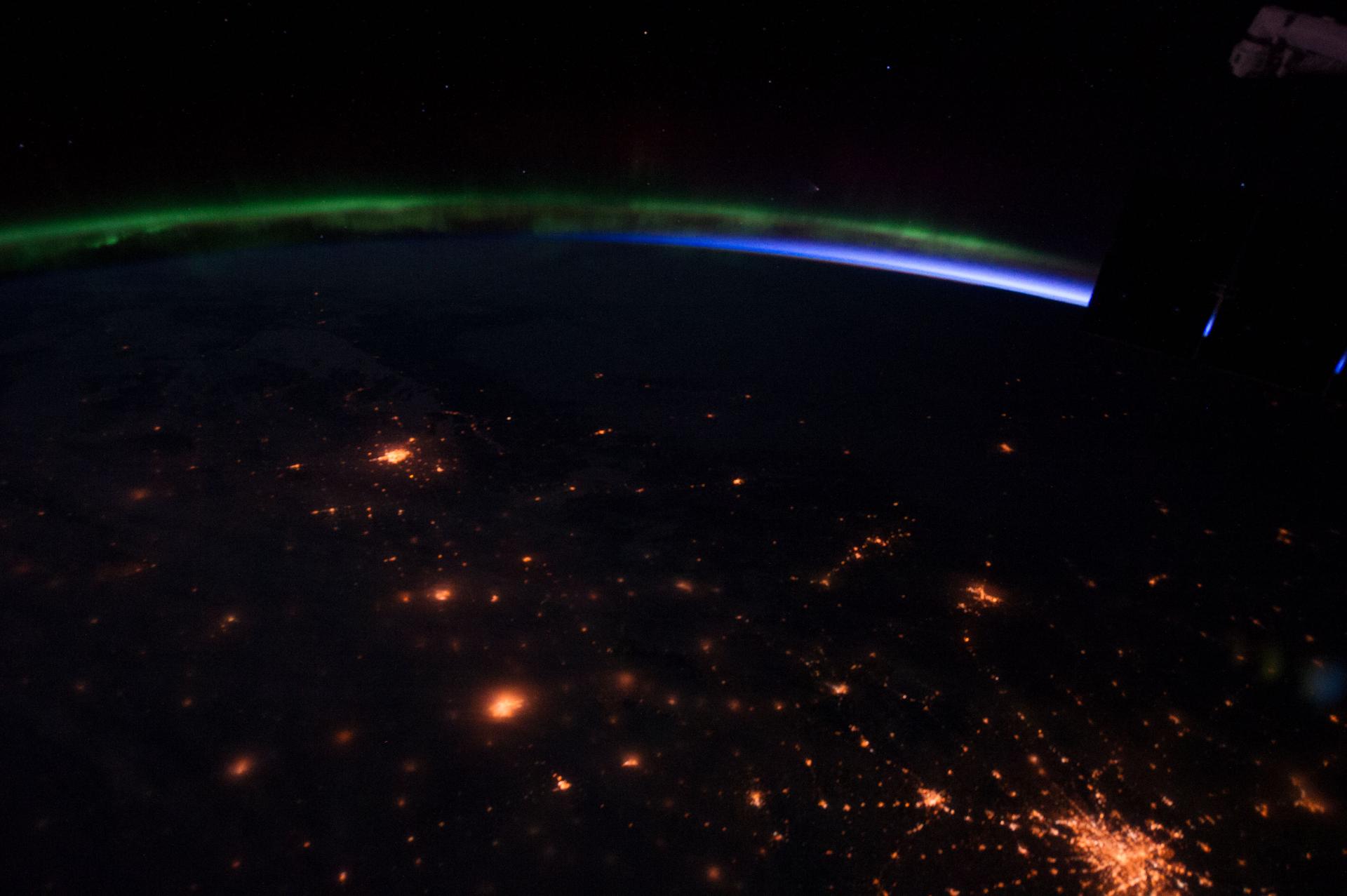
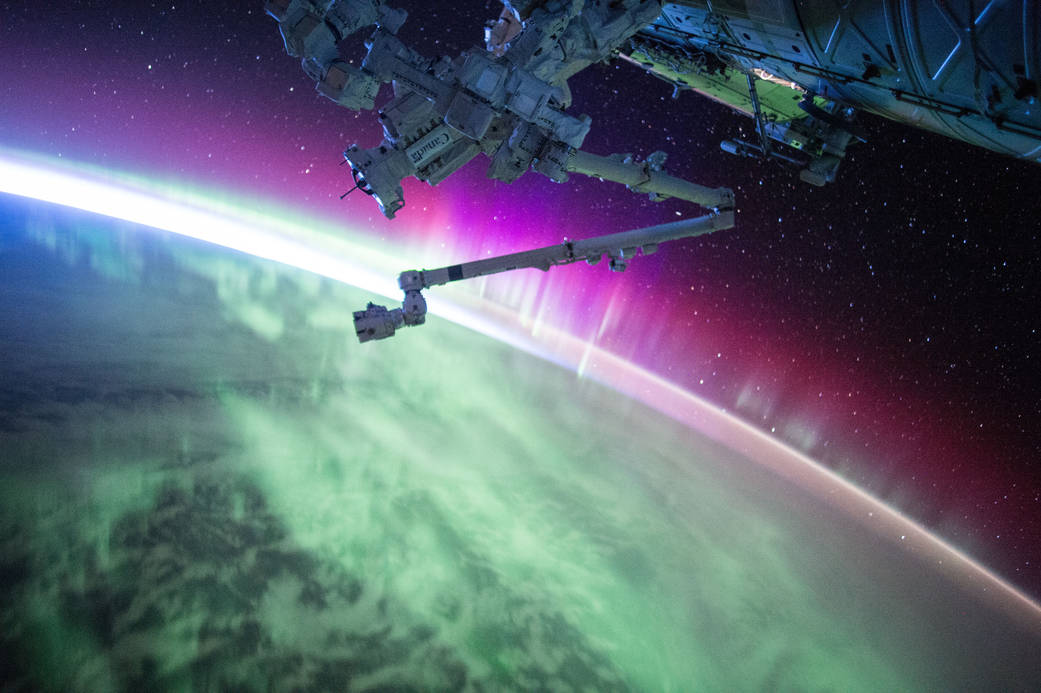
A view of the Earth with Aurora Borealis and an orbital sunrise taken by the Expedition 35 crew aboard the International Space Station.
NASA

Two small businesses are benefitting from NASA’s expertise as they develop heat shield technologies, cargo delivery systems, and new protective materials for spacecraft and space stations in the growing commercial industry of low Earth orbit operations.

The two American companies – Canopy Aerospace Inc. of Littleton, Colorado and Outpost Technologies Corp. of Santa Monica, California – recently announced progress in the development of a new heat shield manufacturing capability and a new cargo transportation system for potential use on the International Space Station and future commercial space stations.

“These projects are a great example of how NASA is supporting a growing commercial space industry,” said Angela Hart, manager of NASA’s Commercial Low Earth Orbit Development Program at the agency’s Johnson Space Center in Houston. “There is an entire ecosystem emerging where companies are working together and innovating to meet NASA’s needs and also positioning themselves to reach new customers, so that NASA can be just one of many customers in low Earth orbit.”

The companies work with NASA’s Commercial Low Earth Orbit Development Program through SBIR (Small Business Innovation Research) contracts funded by NASA’s Space Technology Mission Directorate. Both contracts are part of an innovative pilot program known as SBIR Ignite, focused on small businesses with commercially viable technology ideas aligned with NASA mission needs that can help support the expanding aerospace ecosystem.

Improving heat shields, saving time

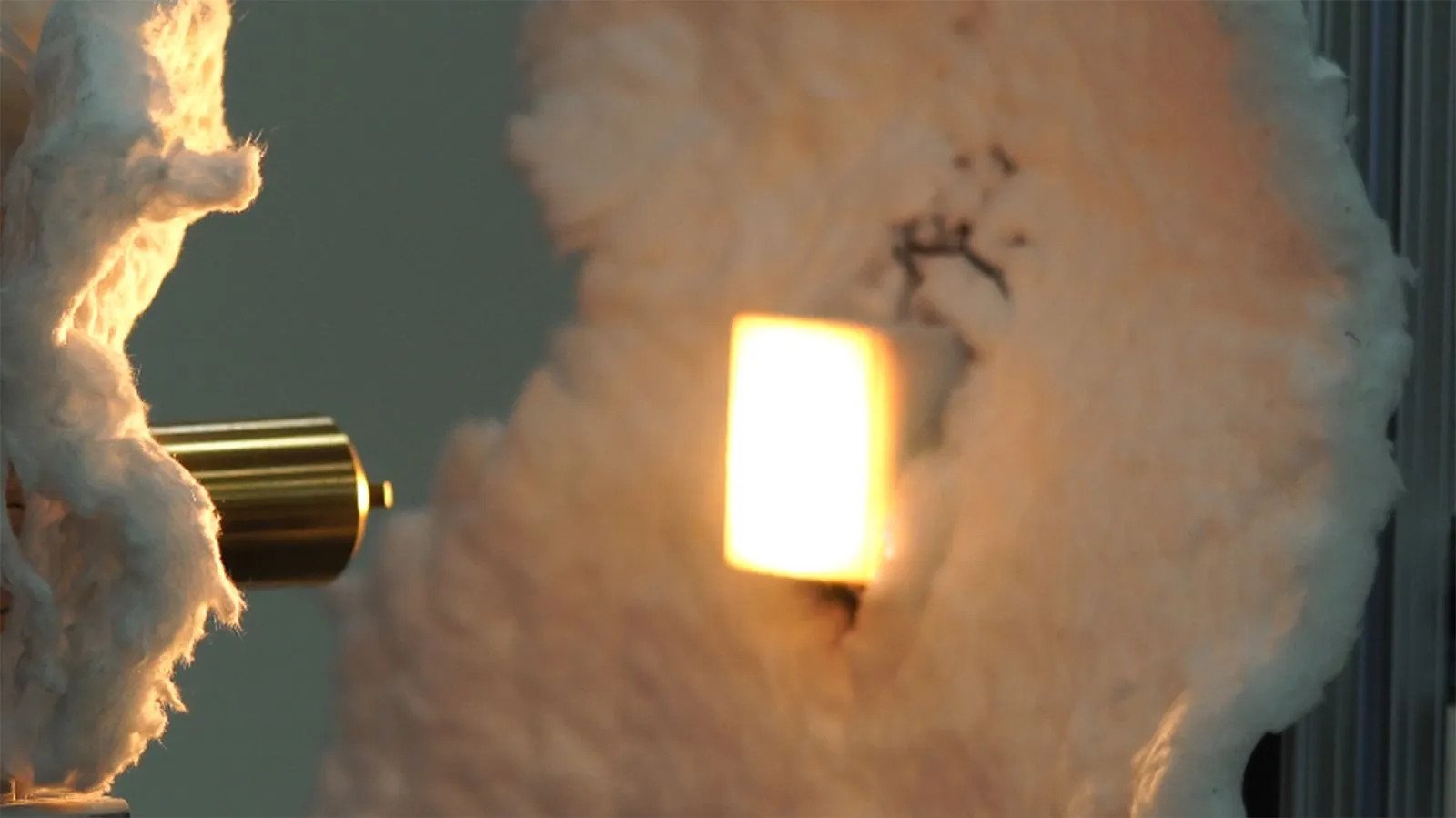
A piece of Thermal Protection System (TPS) material undergoes high temperature testing at Canopy Aerospace’s facility in Littleton, Colorado.
Canopy Aerospace

Canopy Aerospace Inc., a venture-funded startup, is collaborating with NASA to develop a new manufacturing system that can improve production of ceramic heat shields – otherwise referred to as thermal protection systems (TPS). In the vacuum of space, spacecraft and space station hardware must withstand extreme cold and heat environments. Upon re-entry to Earth’s atmosphere, these craft in low Earth orbits are exposed to temperatures as high as 3,000 degrees Fahrenheit.

To protect spacecraft and space stations during re-entry, engineered TPS are required. NASA developed the first TPS types under the Space Shuttle Program, and similar technologies are still used today to protect the Orion spacecraft as it returns to Earth from space. Canopy’s RHAM (Reusable Heatshields Additive Manufacturing) platform builds on the shuttle program’s heritage methods, but utilizes novel materials, new binding, and heat treatment processes to create a new type of ceramic heat shield and produce it at scale in the commercial sector.

As more companies enter the commercial space market, improved heat shield manufacturing methods are critical to driving down launch costs, shortening lead times, and enabling new mission capabilities for future spacecraft.

Transporting cargo, saving space

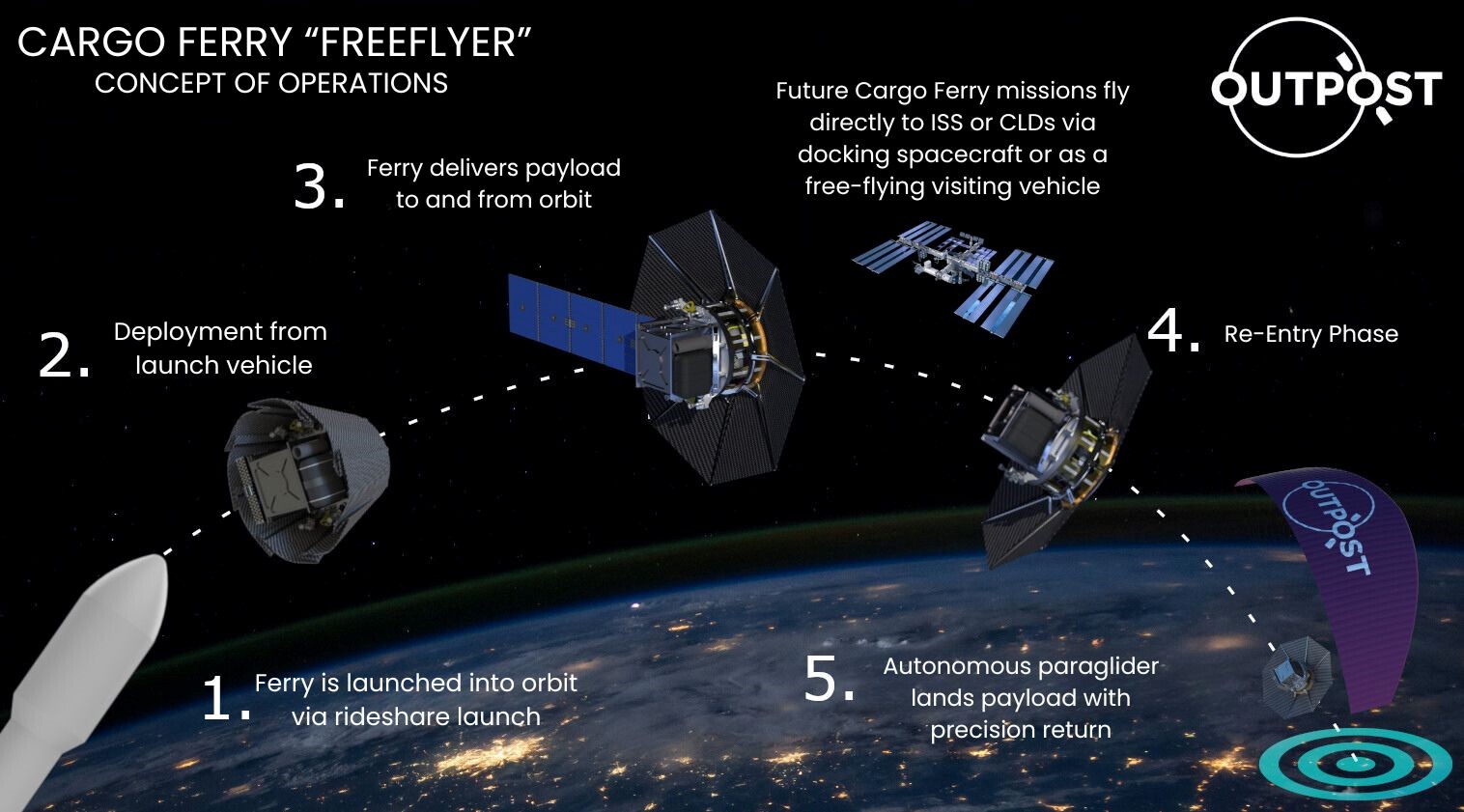
A concept infographic depicting the Cargo Ferry cargo transportation vehicle’s launch and return process.
Outpost Technologies Corp.

Outpost Technologies Corp. is collaborating with NASA to develop a new cargo transport vehicle, named Cargo Ferry. The reusable vehicle consists of a payload container for cargo, solar array wings to power the vehicle, a deployable heat shield to protect it on re-entry to Earth’s atmosphere, and a robotic paraglider system to deliver it safely to the ground with “landing pad” precision.

Cargo Ferry could transport non-human cargo including science and hardware from space stations back down to Earth more frequently, freeing up vital research and stowage space on board the station. Commercial space stations are expected to be smaller than the International Space Station, thus systems like Cargo Ferry could offer a more versatile and adaptable solution for cargo transportation.

NASA is supporting the design and development of multiple commercial space stations with three funded partners, as well as several other partners with unfunded agreements through NASA’s Collaborations for Commercial Space Capabilities-2 project.

NASA’s commercial strategy for low Earth orbit will provide the government with reliable and safe services at a lower cost and enable the agency to focus on Artemis missions to the Moon in preparation for Mars while also continuing to use low Earth orbit as a training and proving ground for those deep space missions.

For more information about NASA’s commercial space strategy, visit:

https://www.nasa.gov/humans-in-space/commercial-space/

Joshua Finch
Headquarters, Washington
202-358-1100
joshua.a.finch@nasa.gov

Rebecca Turkington
Johnson Space Center, Houston
281-483-5111
rebecca.turkington@nasa.gov

Powered by WPeMatico

Get The Details…
Ana Guzman