NASA Johnson’s 2025 Milestones

NASA Johnson’s 2025 Milestones

NASA’s Johnson Space Center in Houston closed 2025 with major progress across human spaceflight, research, and exploration. From Artemis II mission preparations to science aboard the International Space Station, teams at Johnson helped prepare for future missions to the Moon and, ultimately, Mars.

Orion Stacked for Artemis II, Orion Mission Evaluation Room Unveiled 

NASA’s Artemis II Orion spacecraft with its launch abort system is stacked atop the agency’s SLS (Space Launch System) rocket in High Bay 3 of the Vehicle Assembly Building at NASA’s Kennedy Space Center in Florida on Oct. 20, 2025.
NASA/Kim Shiflett

As NASA prepares for the crewed Artemis II mission, a 10-day journey around the Moon and back in early 2026, teams at Johnson continue work to ensure the Orion spacecraft is flight-ready. The mission will carry NASA astronauts Reid Wiseman, Victor Glover, Christina Koch, and CSA (Canadian Space Agency) astronaut Jeremy Hansen. 

In October, NASA completed stacking of the Orion spacecraft and launch abort system atop the agency’s SLS (Space Launch System) rocket inside the Vehicle Assembly Building at NASA’s Kennedy Space Center in Florida. Following Orion stacking, teams completed testing critical communications systems between SLS and Orion, and confirmed the interfaces function properly between the rocket, Orion, and the ground systems. 

The new Orion Mission Evaluation Room inside the Mission Control Center at NASA’s Johnson Space Center in Houston.
NASA/Bill Stafford

Teams also unveiled the Orion Mission Evaluation Room inside NASA’s Mission Control Center in Houston. The new facility will support Artemis II by allowing engineers to monitor Orion spacecraft systems in real time and assess vehicle performance throughout the mission, strengthening flight operations beyond low Earth orbit. 

These milestones were made possible by teams across Johnson, including the Orion Program, Flight Operations Directorate, Systems Engineering and Integration Office, Crew and Thermal Systems Division, and the Human Health and Performance Directorate, working closely with other NASA centers and industry partners. 

Together, these accomplishments mark steady progress toward Artemis II and reflect the work underway across NASA to advance the next era of human spaceflight. 

Gateway Lunar Space Station
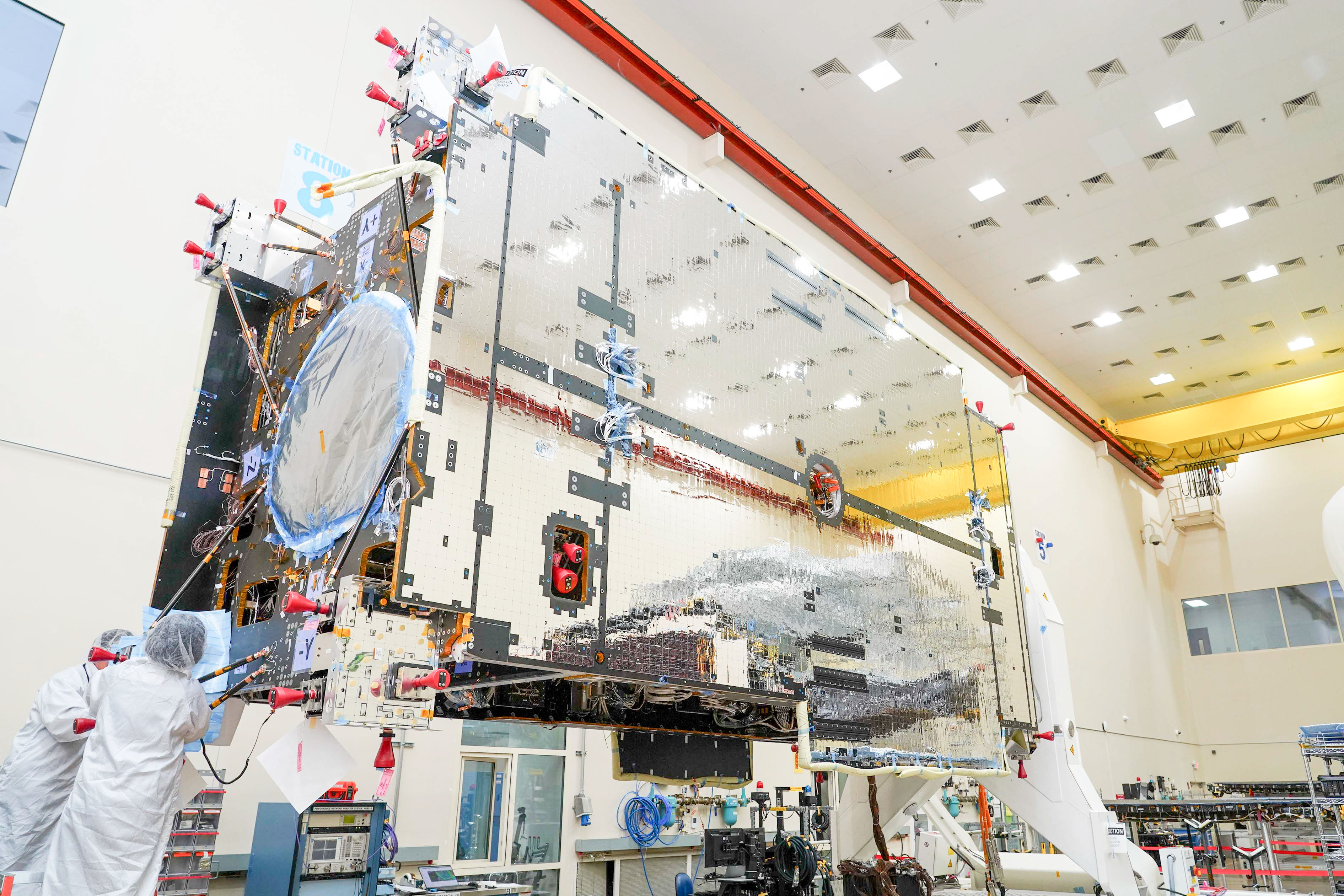
The primary structure of Gateway’s Power and Propulsion Element (PPE) undergoing assembly, integration, and testing at Lanteris Space Systems in Palo Alto, California, on September 29, 2025.
Lanteris Space Systems

Together with international and industry partners, the Gateway Program continued progress toward building humanity’s first lunar space station. The powerhouse reached a major milestone this fall with its successful initial power on.

A Space Station Anniversary

NASA and its partners have supported humans continuously living and working in space since November 2000.
NASA/Jonny Kim

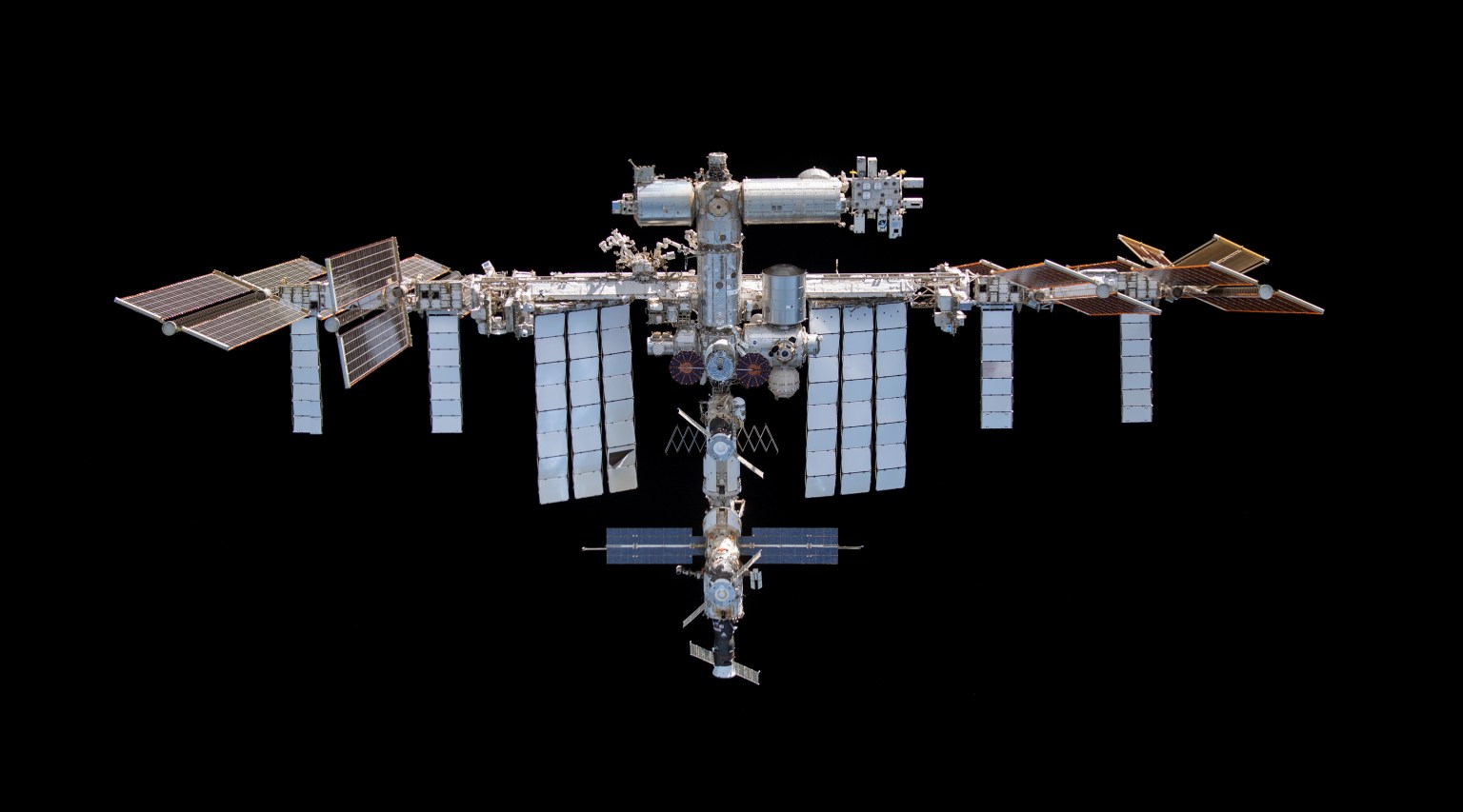
On Nov. 2, 2025, NASA marked 25 years of continuous human presence aboard the space station. What began as a set of connected modules has grown into a cornerstone of international partnership, scientific discovery, and technology development in low Earth orbit.
For a quarter of century, the orbiting laboratory has supported research that advances human health, drives innovation, and prepares NASA for future crewed missions to the Moon and Mars.

A truly global endeavor, the space station has been visited by more than 290 people from 26 countries and a variety of international and commercial spacecraft. The unique microgravity laboratory has hosted more than 4,000 experiments from over 5,000 researchers from 110 countries. The orbital outpost also is facilitating the growth of a commercial market in low Earth orbit for research, technology development, and crew and cargo transportation.

After 25 years of habitation, the space station remains a symbol of international cooperation and a proving ground for humanity’s next giant leaps.

Record-Breaking Spacewalks
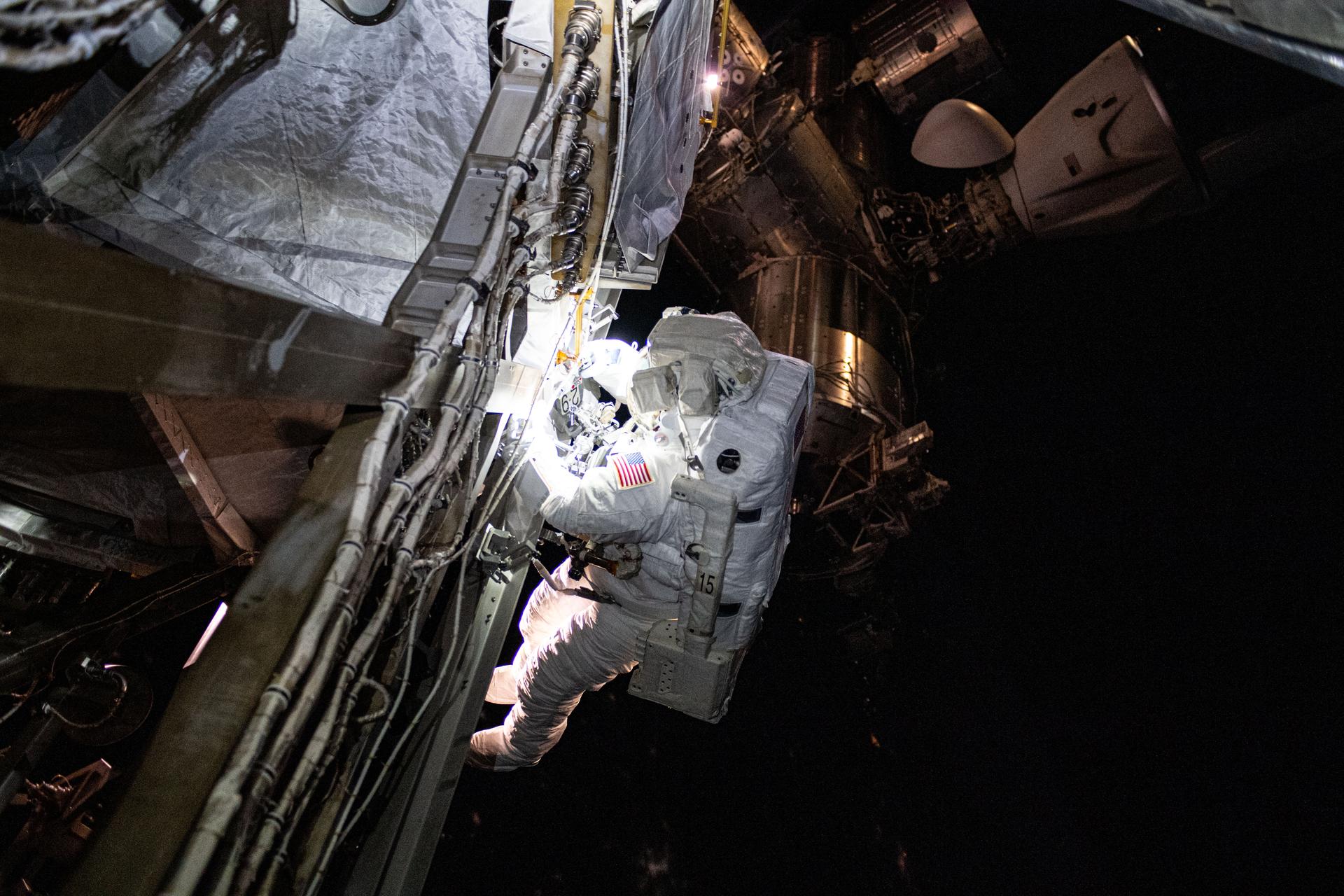
NASA astronaut and Expedition 72 Commander Suni Williams is pictured during a six-hour spacewalk for science and maintenance on the International Space Station. At upper right, is the SpaceX Dragon crew spacecraft docked to the Harmony module's space-facing port.
NASA astronaut and Expedition 72 Commander Suni Williams is pictured during a six-hour spacewalk for science and maintenance on the International Space Station. At upper right, is the SpaceX Dragon crew spacecraft docked to the Harmony module’s space-facing port.
NASA

NASA astronauts Nick Hague, Suni Williams, and Butch Wilmore began 2025 with two successful spacewalks, completing key maintenance and research tasks. Their work included removing an antenna assembly and collecting surface material samples for analysis at Johnson’s Astromaterials Research and Exploration Services, or ARES, division.

With her latest spacewalks, Williams now holds the record for the most cumulative spacewalking time by a woman–62 hours and 6 minutes–placing her fourth among the most experienced spacewalkers.

NASA astronauts Anne McClain and Nichole Ayers also conducted spacewalk operations, installing a mounting bracket to prepare for the future installation of an additional set of International Space Station Rollout Solar Arrays and relocating a space station communications antenna.

These achievements were made possible by countless Johnson teams across the International Space Station, Flight Operations Directorate, and Exploration Architecture, Integration, and Science Directorate.

Two Expeditions Take Flight

NASA’s SpaceX Crew-10 arrived at the International Space Station on March 15 and returned to Earth on on Aug. 9. Crew-10 included NASA astronauts Anne McClain and Nichole Ayers, JAXA (Japan Aerospace Exploration Agency) astronaut Takuya Onishi, and Roscosmos cosmonaut Kirill Peskov—all of whom are trained pilots. Crew-9 also splashed down off Florida’s coast on March 18. 

NASA astronaut Jonny Kim launched aboard the Soyuz MS-27 spacecraft on April 8, marking his first mission to the space station. Expedition 73 officially began following the departure of NASA astronaut Don Pettit aboard Soyuz MS-26 on April 19. NASA astronaut Chris Williams then launched aboard the Soyuz MS-28 spacecraft on Nov. 27 with Kim returning to Earth shortly after on Dec. 9, marking the start of Expedition 74.

A Year of Lunar Firsts

Firefly’s Blue Ghost lunar lander captured a bright image of the Moon’s South Pole (on the far left) through the cameras on its top deck, while it travels to the Moon as part of NASA’s CLPS (Commercial Lunar Payload Services) initiative and Artemis campaign.
Firefly Aerospace

Firefly Aerospace’s Blue Ghost Mission 1 launched delivering 10 NASA science and technology instruments to the Moon on March 2. The lander touched down near Mons Latreille in Mare Crisium, a basin on the near side of the Moon. Just days later on March 6, Intuitive Machines’ IM-2 mission landed closer to the lunar South Pole than any previous lander.  

Part of NASA’s Commercial Lunar Payload Services (CLPS) and Artemis campaign, these lunar deliveries are helping scientists address challenges like lunar dust mitigation, resource utilization, and radiation tolerance. 

These milestones were made possible by the collaborative efforts of Johnson teams across NASA’s CLPS initiative, as well as the Engineering; Exploration Architecture, Integration, and Science; and Flight Operations directorates—along with support from other NASA centers. 

First Asteroid-Detecting Space Telescope Completes Testing

A picture of a massive, silver, statuesque piece of hardware inside a cavernous testing chamber. The image is mostly dark, with an illuminated section in the lower center half of the picture. The hardware has two large, vertical silver metal posts on either side of it, and two silver metal posts that cross horizontally between them. In the center of those posts is a large portion of silver thermal blanketing that is gathered toward the middle. White lights shine upward from the base of either side of the hardware. A line of six, small, white lights with a blueish starburst effect crown the hardware.
The instrument enclosure of NASA’s Near-Earth Object Surveyor is prepared for critical environmental tests inside the historic Chamber A at the Space Environment Simulation Laboratory at NASA’s Johnson Space Center.
NASA

NASA’s Near-Earth Object (NEO) Surveyor—its first space-based telescope designed specifically for planetary defense—has successfully completed thermal vacuum testing in Johnson’s Space Environment Simulation Laboratory in Chamber A. 

Set to launch no earlier than late 2027, NEO Surveyor will seek out, measure, and characterize hard-to-detect asteroids and comets that could pose a hazard to Earth. The spacecraft is now at NASA’s Jet Propulsion Laboratory in Southern California for continued development. 

Explore the capabilities and scientific work enabled by the thermal testing conducted in Johnson’s Chamber A. 

These achievements were made possible by countless Johnson teams across the ARES Division and Engineering Directorate. 

First Houston AutoBoative Show

Johnson Space Center employees present the Artemis Exhibit at the 2025 Houston AutoBoative Show at NRG Center.
NASA/Robert Markowitz 

For the first time, NASA rolled out its Artemis exhibit at the Houston AutoBoative Show at NRG Center from Jan. 29 to Feb. 2. Johnson employees introduced vehicle enthusiasts to the technologies NASA and its commercial partners will use to explore more of the lunar surface than ever before.

The Artemis exhibit stood alongside some of the world’s most advanced cars and boats, offering visitors an up-close look at the future of human space exploration.

Attendees explored Artemis II and Artemis III mission road maps, practiced a simulated Orion docking with Gateway in lunar orbit, and tested their skills driving a virtual lunar rover simulator.

NASA showcased lunar rover concepts, highlighting vehicles under development to help Artemis astronauts travel farther across the Moon’s surface.

All three Lunar Terrain Vehicle (LTV) contractors, Astrolab, Intuitive Machines, and Lunar Outpost, completed their Preliminary Design Review milestones in June 2025, marking the end of Phase 1 feasibility study task orders that began in May 2024. NASA is preparing to award Phase 2 of the Lunar Terrain Vehicle Services contract with a demonstration mission task order that will result in the development, delivery, and demonstration of an LTV on the Moon  later this decade.

First Dual NBL Run for NASA’s Artemis III Lunar Spacesuit

NASA astronauts Loral O’Hara (left) and Stan Love (right) pose during the first dual spacesuit run at NASA’s Neutral Buoyancy Laboratory in Houston on Sept. 24, 2025. The astronauts wore Axiom Space’s Artemis III lunar spacesuit, known as the Axiom Extravehicular Mobility Unit (AxEMU), during the final integrated underwater test, confirming the spacesuit and facility are ready to support Artemis training.
NASA

NASA and Axiom Space teams held the first dual spacesuit run at NASA’s Neutral Buoyancy Laboratory with NASA astronauts Stan Love and Loral O’Hara. Both crewmembers wore Axiom Space’s lunar spacesuit, called the Axiom Extravehicular Mobility Unit (AxEMU), while performing simulated lunar surface operations underwater to test the spacesuit’s functionality and mobility. This was the final integration test in the pool, proving both the spacesuit and facility are ready to support NASA Artemis training. To date, the Axiom team has conducted over 700 hours of manned, pressurized testing of the Artemis III lunar spacesuit. Axiom Space is scheduled to complete the critical design review in 2026.

These efforts were made possible by teams across Johnson’s Joint Extravehicular Activity and Human Surface Mobility Test Team.

Watch how astronauts, engineers, and scientists are preparing for the next giant leap on the lunar surface.

OSIRIS-REx Team Honored for Asteroid Sample Return
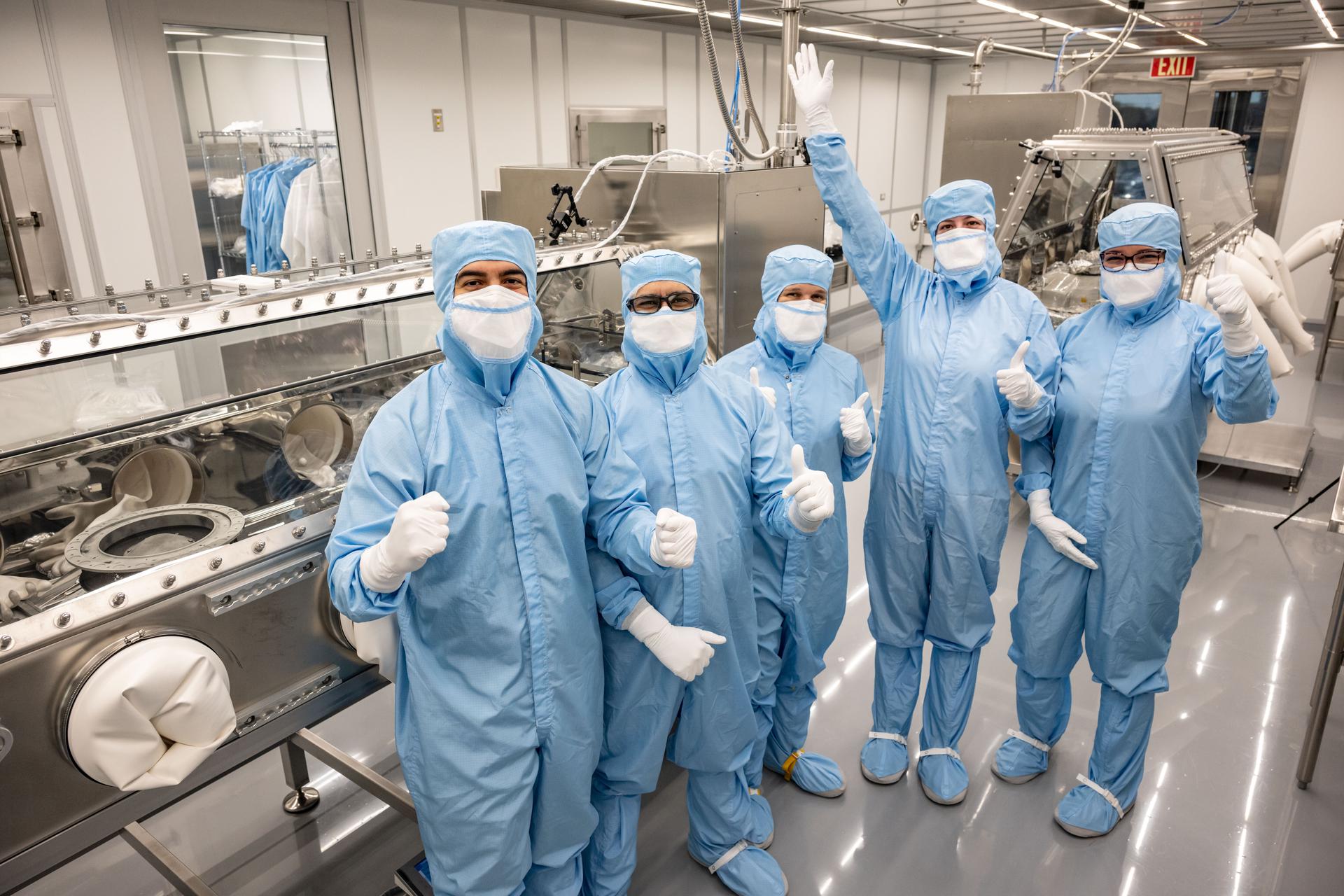
OSIRIS REx curation team attempting to remove the two stuck fasteners that are currently prohibiting the complete opening of the TAGSAM head.
NASA’s OSIRIS-REx team poses inside a cleanroom at Johnson Space Center after successfully freeing fasteners on the TAGSAM (Touch-and-Go Sample Acquisition Mechanism) head, allowing access to samples collected from asteroid Bennu.
NASA/Robert Markowitz

NASA’s OSIRIS-REx curation team earned an Agency Group Achievement Award for their dedication to acquiring, preserving, and distributing asteroid samples from Bennu—the agency’s first asteroid sample return mission.

“The curation team ensured we were ready to receive and safeguard the samples, prepare and allocate them, and make them available to the broader scientific community,” said Jemma Davidson, Astromaterials curator and branch chief of the Astromaterials Acquisition and Curation Office.

After years of preparation, the team overcame unforeseen technical challenges to recover and preserve more than 120 grams of asteroid material—now accessible to scientists worldwide for research into the origins of our solar system.

These achievements were made possible by Johnson teams across the ARES Division and the Exploration Architecture, Integration, and Science Directorate.

Axiom Mission 4 Marks International Firsts in Space Station Mission 
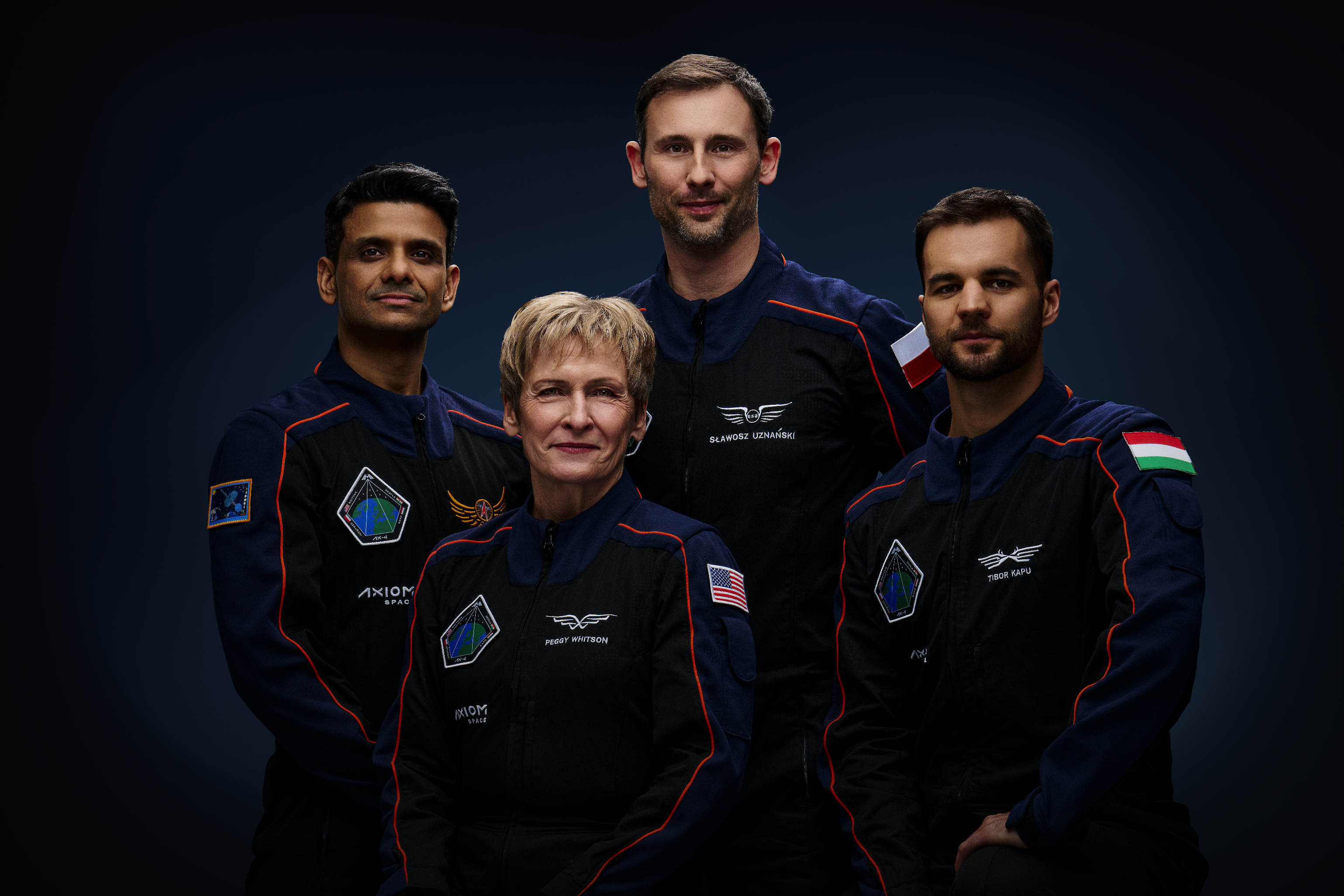
The official crew portrait of the Axiom Mission-4 private astronaut mission to the International Space Station. From left are, Pilot Shubhanshu Shukla from India, Commander Peggy Whitson from the U.S., and Mission Specialists Sławosz Uzanański-Wiśniewksi from Poland and Tibor Kapu from Hungary.
Axiom Space

The Axiom Mission 4 crew successfully returned to Earth after an 18-day mission aboard the space station, conducting more than 60 experiments and educational outreach activities. Launched aboard a SpaceX Dragon spacecraft on June 25, the crew docked with the orbiting laboratory the following day to begin a packed schedule of science and outreach. 

The mission marked the first space station flight for India, Poland, and Hungary. Led by former NASA astronaut and Axiom Space director of human spaceflight Peggy Whitson, the crew included ISRO (Indian Space Research Organization) astronaut Shubhanshu Shukla, ESA (European Space Agency) project astronaut Sławosz Uznański-Wiśniewski of Poland, and Hungarian to Orbit (HUNOR) astronaut Tibor Kapu. 

These achievements were made possible by Johnson’s dedicated teams across the International Space Station Program, Commercial Low Earth Orbit Development Program, and Flight Operations Directorate. 

Johnson-Built Mars Hardware on Display at the Smithsonian 

Perseverance Mars rover, with a circle indicating the location of the calibration target for the rov-er’s SHERLOC instrument
At left is NASA’s Perseverance Mars rover, with a circle indicating the location of the calibration target for the rover’s SHERLOC instrument. At right is a close-up of the calibration target. Along the bottom row are five swatches of spacesuit materials that scientists are studying as they de-grade.
NASA/Malin Space Science Systems
The SHERLOC calibration target displayed at a museum next to R2-D2.
Scanning Habitable Environments with Raman & Luminescence for Organics & Chemicals (SHERLOC) calibration target built at NASA’s Johnson Space Center is on display in the Smithsonian National Air and Space Museum’s Futures in Space gallery in Washington, D.C.
NASA/Smithsonian National Air and Space Museum

A piece of NASA Johnson Space Center’s Mars legacy has landed at the Smithsonian National Air and Space Museum in Washington, D.C. 

Nearly 10 years in the making, the Scanning Habitable Environments with Raman & Luminescence for Organics & Chemicals (SHERLOC) calibration target—built by Johnson’s ARES Division with partners at NASA’s Jet Propulsion Laboratory and Amentum—now has a permanent place in the museum’s Futures in Space gallery.  

The palm-sized device is displayed beside an R2-D2 replica, connecting the wonder of space travel with the inspiration of seeing real flight hardware up close. 

The calibration target, still in use aboard NASA’s Perseverance rover after more than four years of operations in Jezero Crater, Mars, helps keep SHERLOC’s laser, cameras, and spectrometers precisely tuned as it searches for ancient signs of life on Mars. Mounted on the rover’s front, the target carries 10 known samples so engineers can check SHERLOC’s performance during routine operations. 

Trevor Graff, an ARES scientist who conceived the idea and led the team that designed and built SHERLOC’s calibration device, said the project highlights the unique role of geology in space exploration. “What excites me most is the practical application of geology—where science enables exploration and exploration enables science,” he said.  

SHERLOC itself sits on the rover’s seven-foot robotic arm and combines a laser, camera, and chemical analyzers to look for signs that water once altered the Martian surface, potentially revealing evidence of past microscopic life. Several calibration targets are made from spacesuit material samples, allowing Johnson scientists to study how fabrics endure the harsh Martian environment to protect future explorers. 

Powered by WPeMatico

Get The Details…
Sumer Loggins

NASA’s Wideband Technology Demo Proves Space Missions are Free to Roam

NASA’s Wideband Technology Demo Proves Space Missions are Free to Roam

4 Min Read

NASA’s Wideband Technology Demo Proves Space Missions are Free to Roam

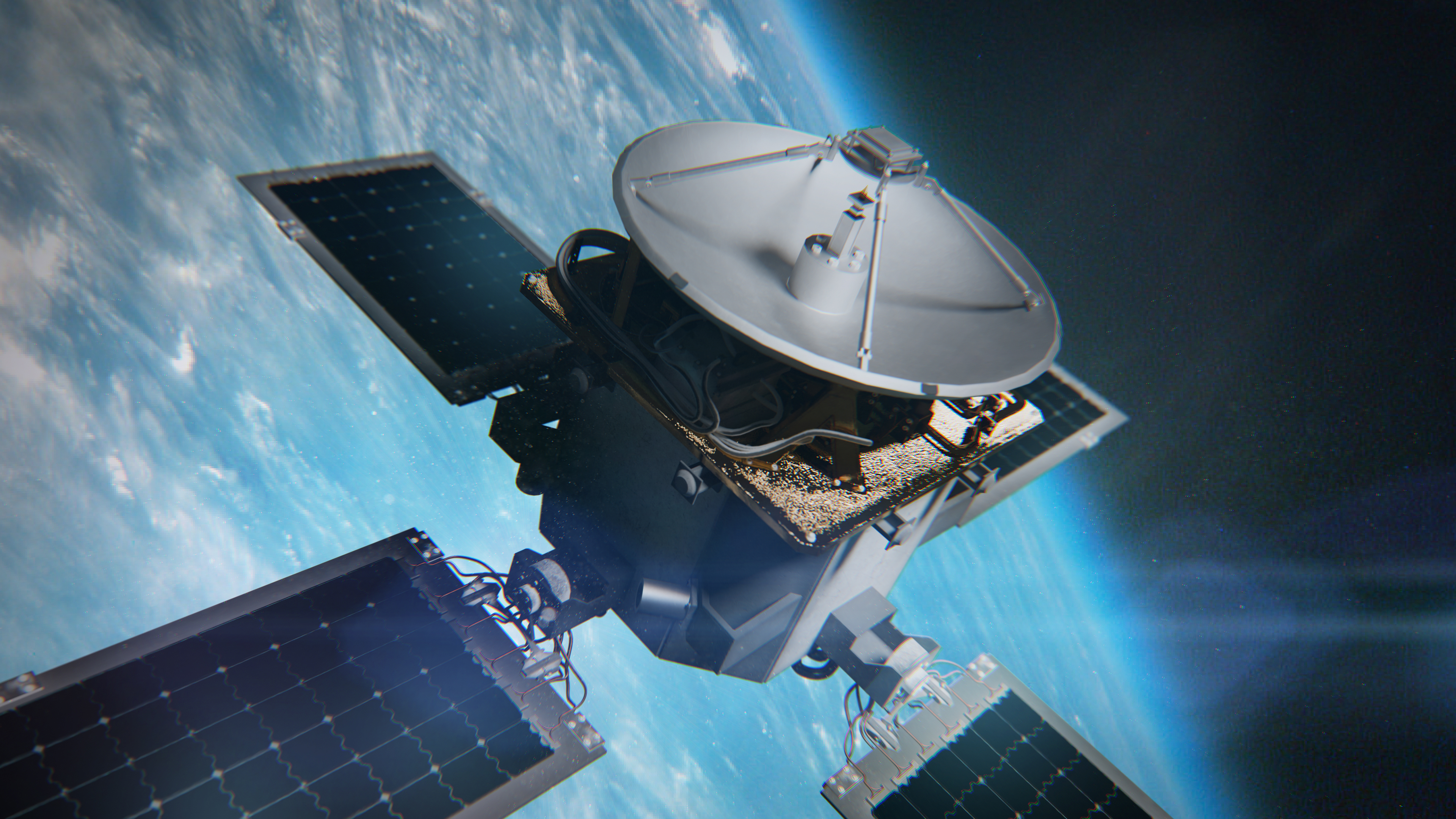
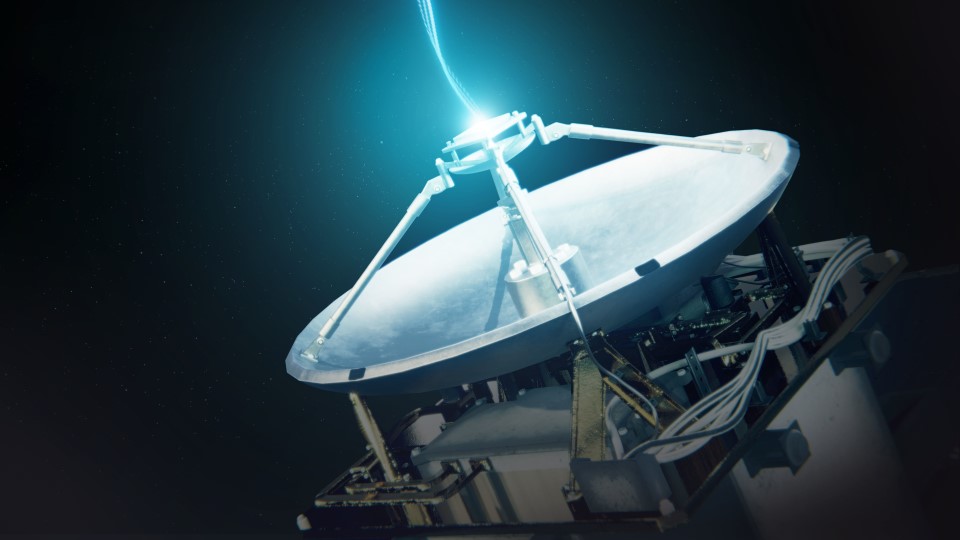
An artist’s concept of the Polylingual Experimental Terminal transmitting data in space.

Credits:
NASA/Morgan Johnson

Just like your cellphone stays connected by roaming between networks, NASA’s Polylingual Experimental Terminal, or PExT, technology demonstration is proving space missions can do the same by switching seamlessly between government and commercial communications networks.

NASA missions rely on critical data to navigate, monitor spacecraft health, and transmit scientific information back to Earth, and this game-changing technology could provide multiple benefits to government and commercial missions by enabling more reliable communications with fewer data interruptions.

“This mission has reshaped what’s possible for NASA and the U.S. satellite communications industry,” said Kevin Coggins, deputy associate administrator for the agency’s SCaN (Space Communications and Navigation) Program at NASA Headquarters in Washington. “PExT demonstrated that interoperability between government and commercial networks is possible near-Earth, and we’re not stopping there. The success of our commercial space partnerships is clear, and we’ll continue to carry that momentum forward as we expand these capabilities to the Moon and Mars.”

This mission has reshaped what’s possible for NASA and the U.S. satellite communications industry.

Kevin Coggins

Kevin Coggins

Deputy Associate Administrator for SCaN

Wideband technology enables data exchange across a broad range of frequencies, helping bridge government and commercial networks as NASA advances commercialization of space communications. By providing interoperability between government and commercial assets, this technology unlocks new advantages not currently available to agency missions.

As commercial providers continue to advance their technology and add new capabilities to their networks, missions equipped with wideband terminals can integrate these enhancements even after launch and during active operations. The technology also supports NASA’s network integrity by allowing missions to seamlessly switch back and forth between providers if one network faces critical disruptions that would otherwise interfere with timely communications.

An artist’s concept of the BARD mission in space.
NASA/Dave Ryan

“Today, we take seamless cellphone roaming for granted, but in the early days of mobile phones, our devices only worked on one network,” said Greg Heckler, SCaN’s capability development lead at NASA Headquarters. “Our spaceflight missions faced similar limitations—until now. These revolutionary tests prove wideband terminals can connect spacecraft to multiple networks, a huge benefit for early adopter missions transitioning to commercial services in the 2030s.”

On July 23, the communications demo launched into low Earth orbit aboard the York Space Systems’ BARD mission. Designed by Johns Hopkins Applied Physics Laboratory, the compact wideband terminal communicates over a broad range of the Ka-band frequency, which is commonly used by NASA missions and commercial providers. After completing a series of tests that proved the BARD spacecraft and the demonstration payload were functioning as expected, testing kicked off with NASA’s TDRS (Tracking and Data Relay Satellite) fleet and commercial satellite networks operated by SES Space & Defense and Viasat.

During each demonstration, the terminal completed critical space communications and navigation operations, ranging from real-time spacecraft tracking and mission commands to high-rate data delivery. By showcasing end-to-end services between the BARD spacecraft, multiple commercial satellites, and mission control on Earth, the wideband terminal showed future NASA missions could become interoperable with government and commercial infrastructure.

An artist’s concept of the Polylingual Experimental Terminal transmitting data in space.
NASA/Morgan Johnson

Due to the flexibility of wideband technology and the innovative nature of this mission, NASA recently extended the Polylingual Experiment Terminal demonstration for an additional 12 months of testing. Extended mission operations will include new direct-to-Earth tests with the Swedish Space Corporation, scheduled to begin in early 2026.

This technology demonstration will continue testing spaceflight communications capabilities through April 2027. By 2031, NASA plans to purchase satellite relay services for science missions in low Earth orbit from one or more U.S. companies.

To learn more about this wideband technology demonstration visit:

PExT – NASA

The Polylingual Experimental Terminal technology demonstration is funded and managed by NASA’s SCaN Program within the Space Operations Mission Directorate at NASA Headquarters in Washington. York Space Systems provided the host spacecraft. Johns Hopkins Applied Physics Laboratory developed the demonstration payload. Commercial satellite relay demonstrations were conducted in partnership with SES Space & Defense and Viasat.

An artist’s concept of the BARD mission in space.
NASA/Dave Ryan

Powered by WPeMatico

Get The Details…
Molly Kearns

Water Droplet Science

Water Droplet Science

White streaks of motion swirl and swoop all over the image. At the middle of the image is a Teflon knitting needle.
NASA/Don Pettit

NASA astronaut Don Pettit demonstrates electrostatic forces using charged water droplets and a knitting needle made of Teflon. This series of overlapping frames from Feb. 19, 2025, displays the unique attraction-repulsion properties of Teflon and charged droplets, similar to how charged particles from the Sun behave when they come in contact with Earth’s magnetic field. Highly energetic particles from space that collide with atoms and molecules in the atmosphere create the aurora borealis.

Explore more of what Pettit has coined “science of opportunity.”

Image credit: NASA/Don Pettit

Powered by WPeMatico

Get The Details…
Monika Luabeya

Space Station Research Supports New FDA-Approved Cancer Therapy

Space Station Research Supports New FDA-Approved Cancer Therapy

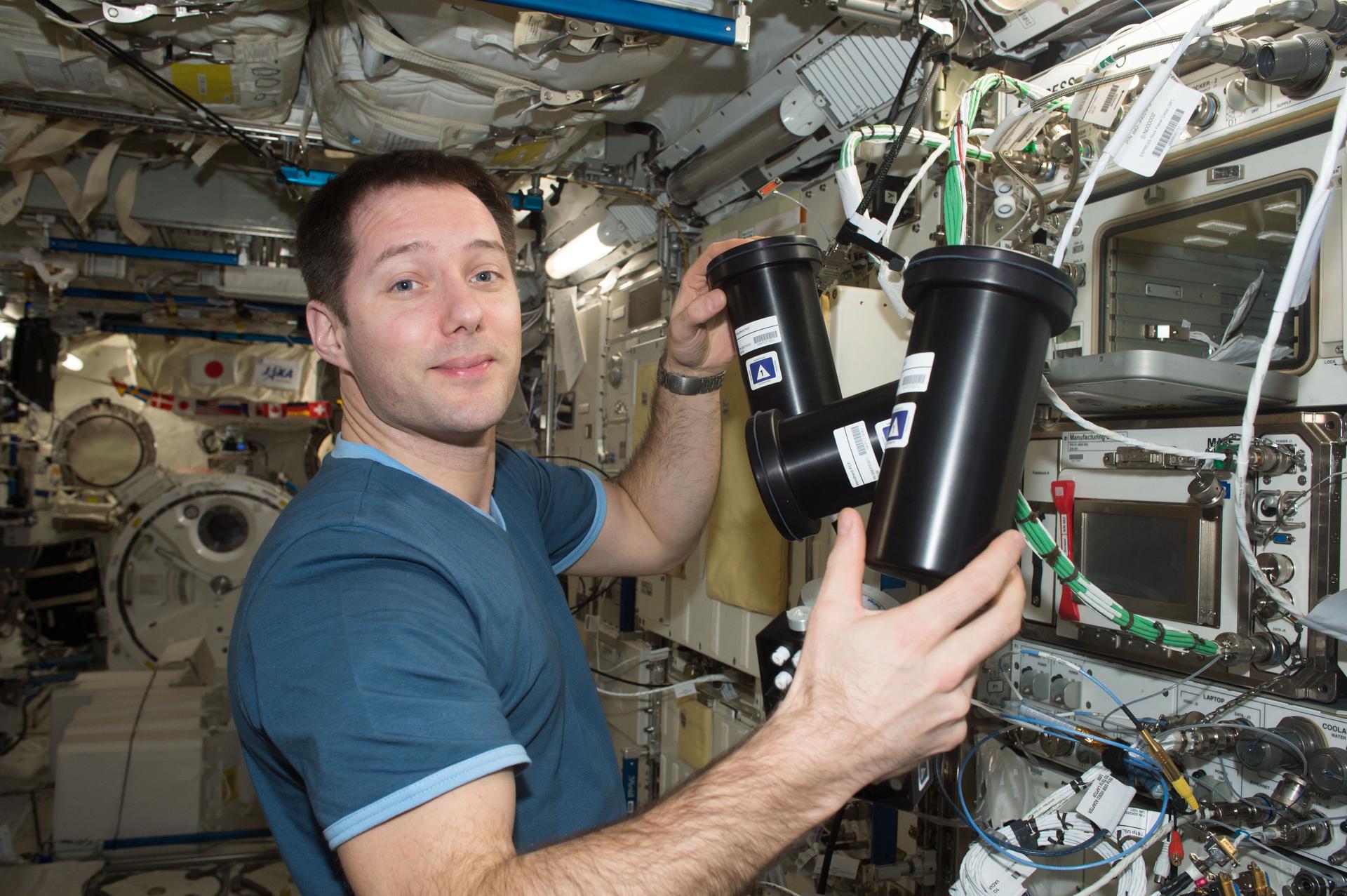
European Space Agency astronaut Thomas Pesquet works inside the International Space Station, . He is holding two cylindrical black experiment containers to deactivate and stow the Protein Crystal Growth-5 hardware. The background is filled withIn the background, cables, silver knobs, instruments, and research equipment are visible.
European Space Agency (ESA) astronaut Thomas Pesquet removes the Protein Crystallization Facility hardware from an incubator aboard the International Space Station for the CASIS PCG-5 investigation, which crystallized a monoclonal antibody developed by Merck Research Labs.
NASA

NASA opens the International Space Station for scientists and researchers, inviting them to use the benefits of microgravity for private industry research, technology demonstrations, and more. Today, half of the crew’s time aboard station is devoted to these aims, including medical research that addresses complex health challenges on Earth and prepares astronauts for future deep space missions.

Supported by knowledge gained from space station experiments, researchers at Merck Research Labs received approval in September from the U.S. Food and Drug Administration for a new injectable version of a medication used to treat several types of early-stage cancers called pembrolizumab, also known by its brand name KEYTRUDA. The development of the injectable formula has been supported by research efforts aboard the space station through the ISS National Laboratory, resulting in reduced treatment times while maintaining its efficacy. 

Originally, the treatment was delivered during an in-office visit via infusion therapy into the patient’s veins, a process that could take up to two hours. Initial delivery improvements reduced infusion times to less than 30 minutes every three weeks. The newly approved subcutaneous injectable form takes about one minute every three weeks, promising to reduce cost and significantly reduce treatment time for patients and healthcare providers.

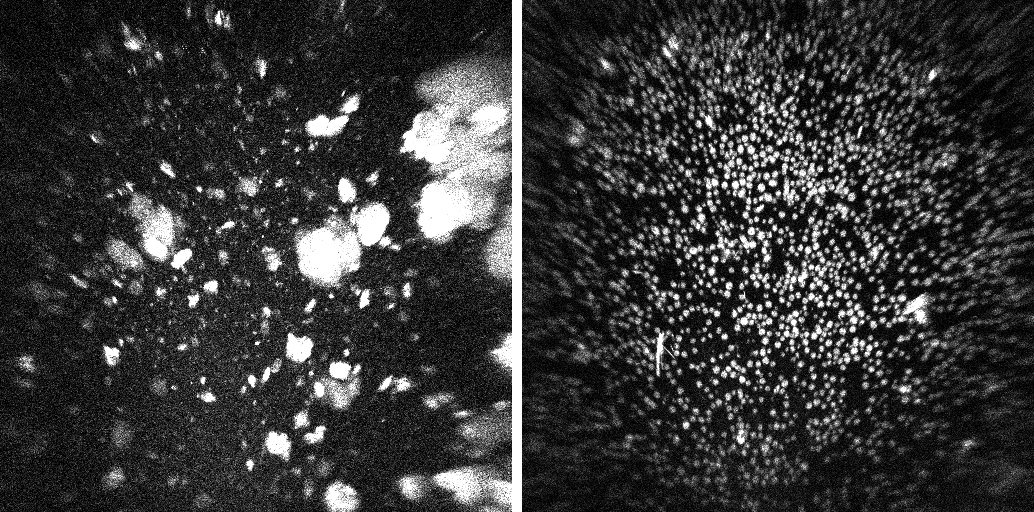
Black-and-white UV images show white crystals against a black background, comparing crystal growth on Earth and in space. The ground sample on the left features large, coarse clusters with varying sizes and shapes, while the spaceflight sample on the right exhibits more uniform size distribution, characterized by fine, evenly spaced bright dots.
UV imaging of a ground control sample (left) and spaceflight sample (right) from Merck’s research shows the much more uniform size and distribution of crystals grown in microgravity. These results helped researchers to refine ground-based production of uniform crystalline suspensions required for an injectable version of KEYTRUDA.
Merck

Since 2014, Merck has flown crystal growth experiments to the space station to better understand how crystals form, including the monoclonal antibody used in this cancer treatment. Monoclonal antibodies are lab-made proteins that help the body fight diseases. This research focused on producing crystalline suspensions that dissolve easily in liquid, making it possible to deliver the medication by injection. In microgravity, the absence of gravity’s physical forces allows scientists to grow larger, more uniform, and higher-quality crystals than those grown in ground-based labs, advancing medication development and structural modeling.

Research aboard the space station has provided valuable insights into how gravity influences crystallization, helping to improve drug formulations. The work of NASA and its partners aboard the space station improves lives on Earth, grows a commercial economy in low Earth orbit, and prepares for human exploration of the Moon and Mars.

Powered by WPeMatico

Get The Details…
Christian M. Getteau

Curiosity Blog, Sols 4743-4749:  Polygons in the Hollow

Curiosity Blog, Sols 4743-4749:  Polygons in the Hollow

3 min read

Curiosity Blog, Sols 4743-4749:  Polygons in the Hollow

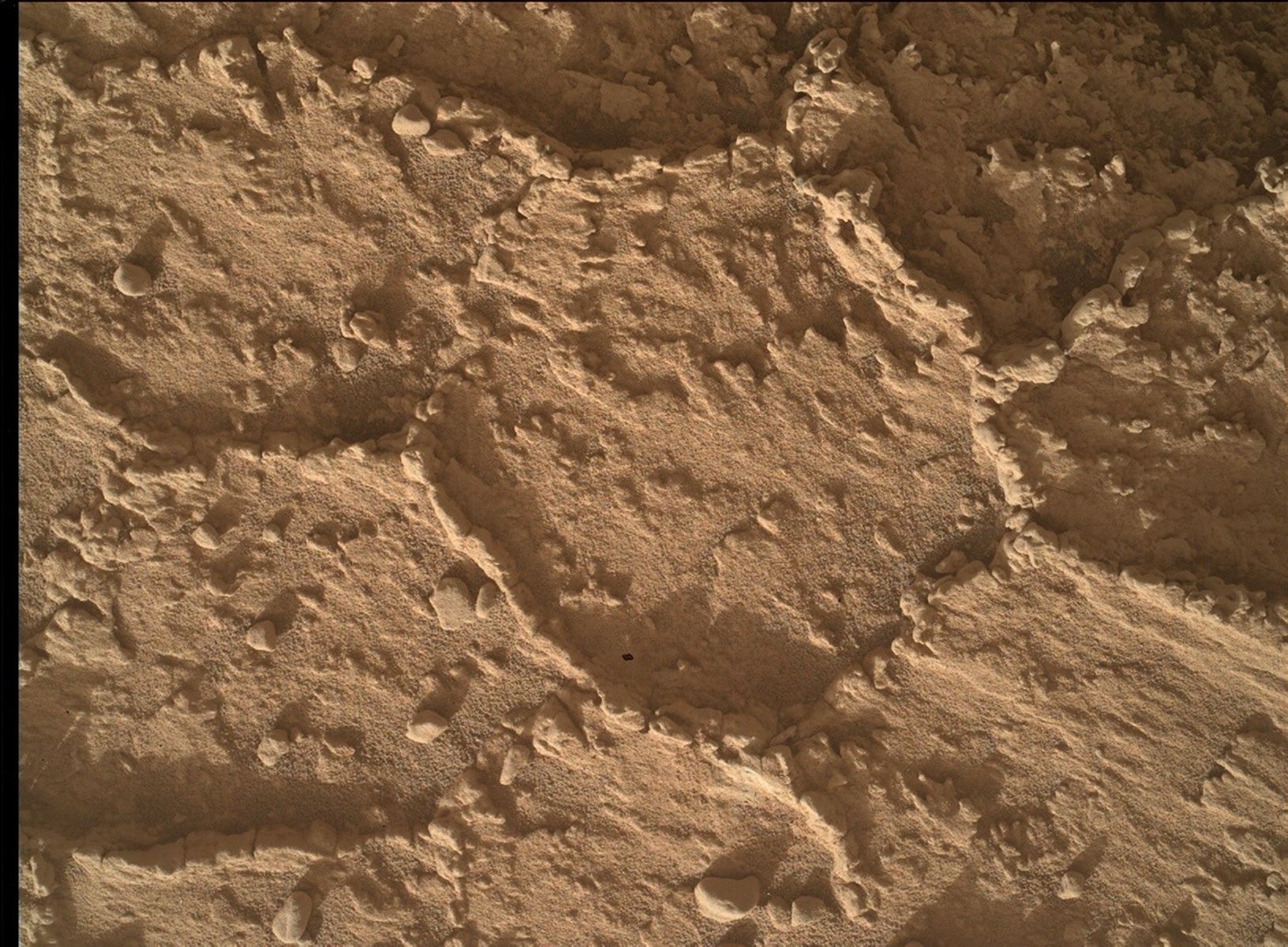
A close-up view of tan-orange rocks on the Martian surface that are in a vaguely honeycomb array, with grooves separating the edges of polygonal chunks of surface material.
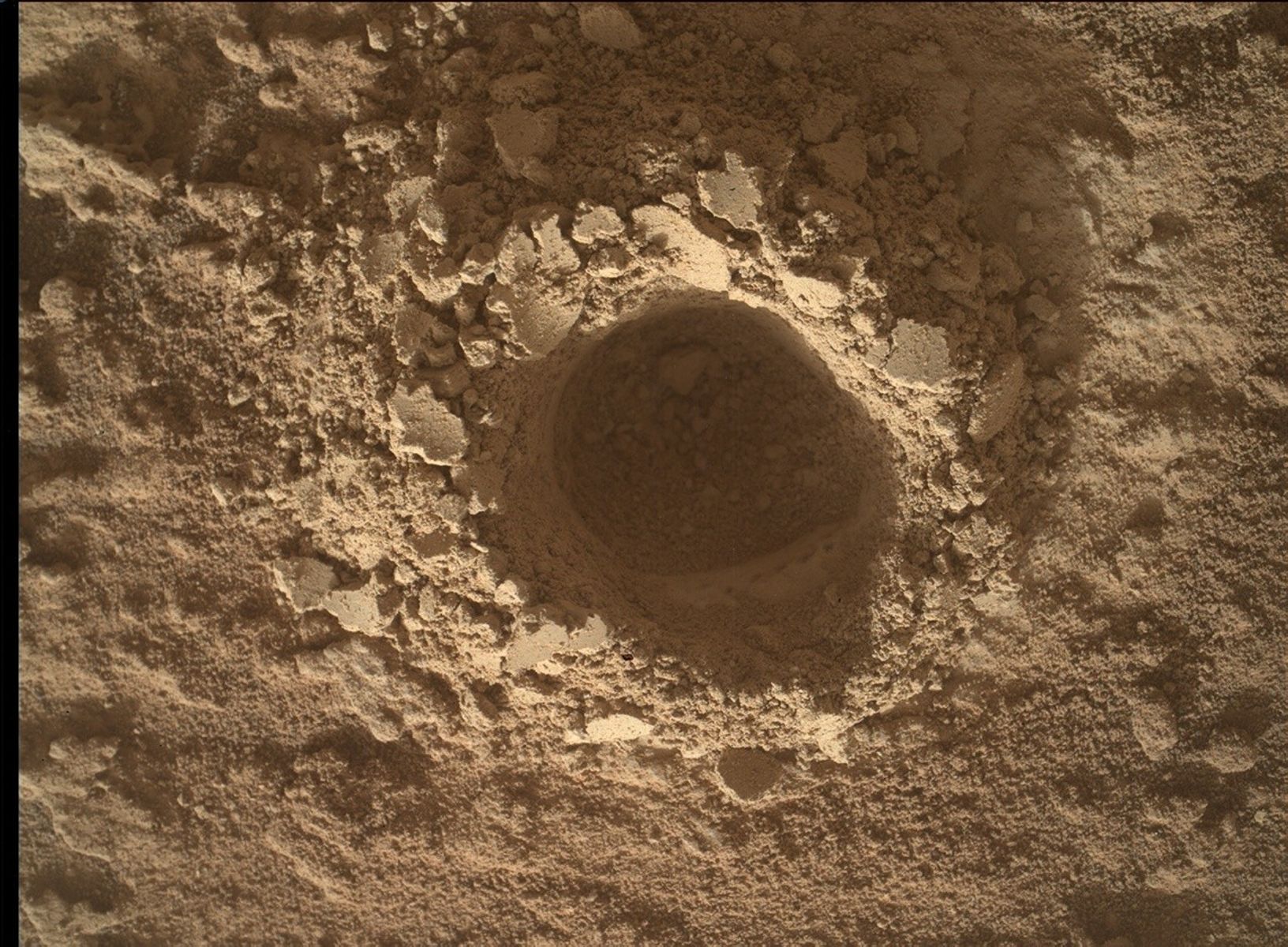
NASA’s Mars rover Curiosity acquired this close-up image of polygon-shaped features in the “Monte Grande” boxwork hollow. Similar polygonal patterns in various strata were seen previously, elsewhere in Gale Crater. Curiosity captured the image using its Mars Hand Lens Imager (MAHLI), located on the turret at the end of the rover’s robotic arm, on Dec. 11, 2025 — Sol 4745, or Martian day 4,745 of the Mars Science Laboratory mission — at 16:55:37 UTC.
NASA/JPL-Caltech/MSSS

Written by Lucy Lim, Planetary Scientist at NASA’s Goddard Space Flight Center

Earth Planning Date: Friday, Dec. 12, 2025

The weekend drive starting from the “Nevado Sajama” drill site brought Curiosity back into the “Monte Grande” boxwork hollow. We’ve been in this hollow before for the “Valle de la Luna” drill campaign, but now that the team has seen the results from both the “Valle de la Luna” and “Nevado Sajama” drilled samples, we’ve decided that there’s more work to do here. 

Overall science goals here included analysis of the other well-exposed bedrock block in Monte Grande to improve our statistics on the composition of the bedrock in the hollows, and also high-resolution imaging and compositional analysis of portions of the walls of the hollow, other than those that had been covered during the Valle de la Luna campaign. These are part of a systematic mini-campaign to map a transect over the hollow-to-ridge structure from top to bottom at this site.

The post-drive imaging revealed a surprise — Valle de la Luna’s neighboring block was covered with polygons! As it turned out, the rover’s position during our previous visit for the Valle de la Luna drill campaign happened to have stood in the way of imaging of the polygonal features on this block so this was our first good look at them. We have seen broadly similar polygonal patterns in various strata in Gale Crater before — recently in the layered sulfate units (for instance, during Sols 4532-4533 and Sols 4370-4371) but we hadn’t seen them in the bottom of a boxwork hollow. Interestingly, this block looks more rubbly in texture than many of the previously observed polygon-covered blocks.

We’re interested in the relationship of the visibly protruding fracture-filling material here to fracture-filling materials seen in previous polygons, and also in the relationship of the polygonal surface on top to the more chaotic-appearing exposures lower on the block, and to the equivalent strata in the nearby wall of the hollow. We therefore planned a super-sized MAHLI mosaic that will support three-dimensional modeling of the upper and lower exposed surfaces of the polygon-bearing block. Several APXS and ChemCam LIBS observations targeted on the polygon centers and polygon ridges were also planned, to measure composition. Meanwhile, Mastcam has been busy planning stereo images of the nearby hollow wall in addition to the various blocks on the hollow floor.

The hollow also included freshly exposed light-toned material from where the rover had driven over and scuffed some bedrock, so another APXS measurement and a ChemCam LIBS went to the scuffed patch to measure the fresh surface.

We’ll be driving on Sol 4748. As we drive we’ll be taking a MARDI “sidewalk” observation, to image the ground beneath the rover as we approach the wall for a closer view, and hopefully some contact science in next week’s plans.

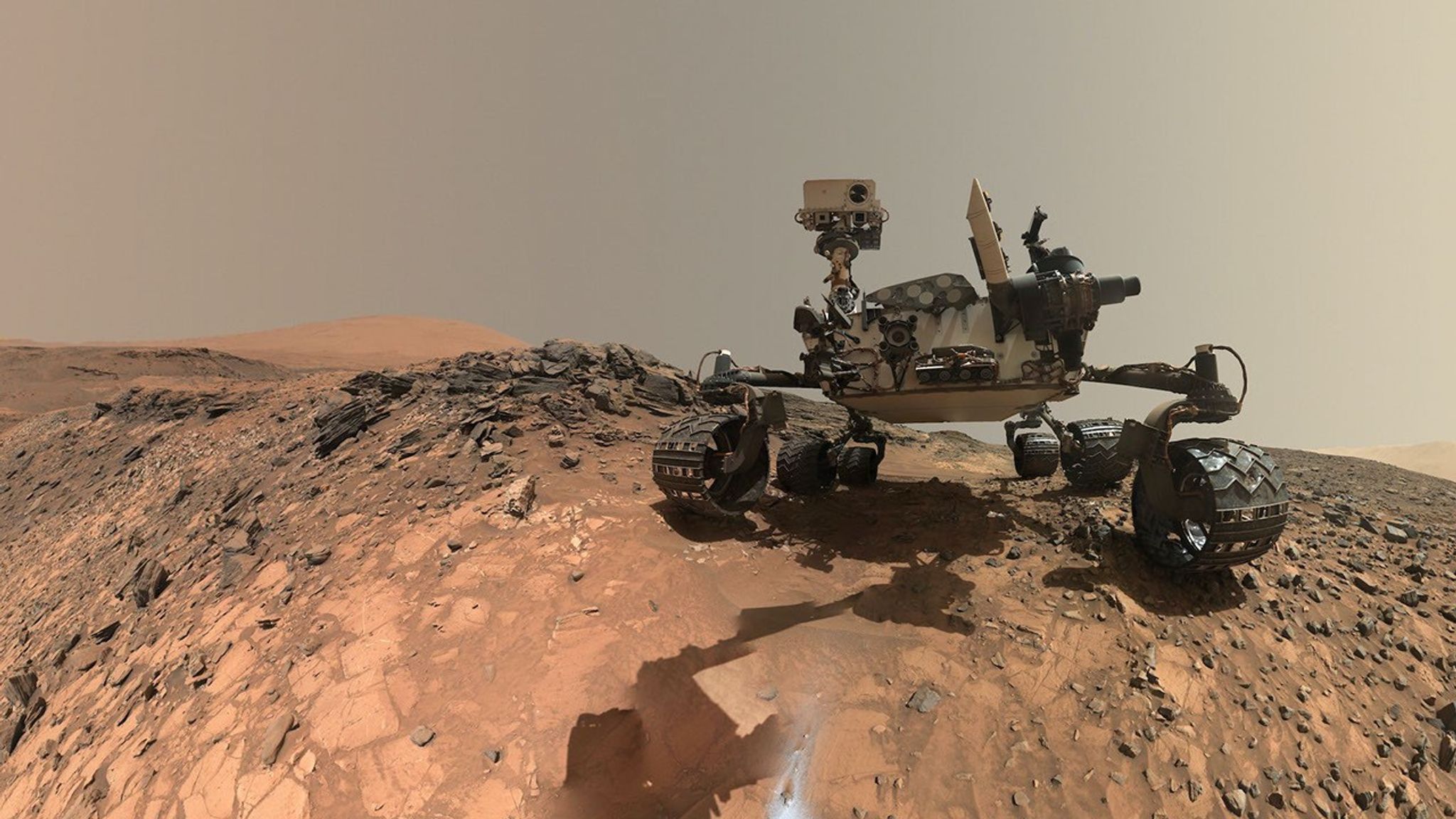
A rover sits on the hilly, orange Martian surface beneath a flat grey sky, surrounded by chunks of rock.
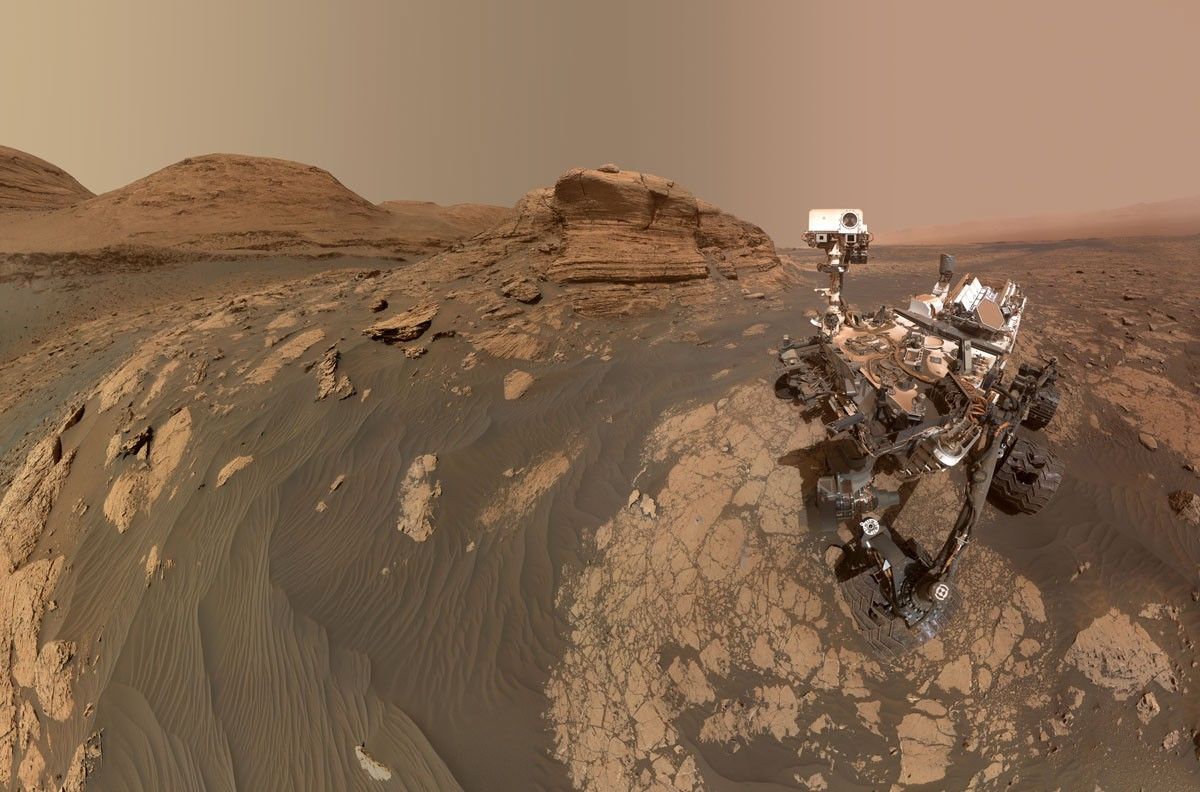
NASA’s Mars rover Curiosity at the base of Mount Sharp
NASA/JPL-Caltech/MSSS

Share

Details

Last Updated
Dec 18, 2025

Related Terms

Powered by WPeMatico

Get The Details…