Psyche Approaches Mars

Psyche Approaches Mars

This composite of images taken by NASA’s Psyche mission shows the crescent of Mars grow as the spacecraft approached the planet for a gravity assist from May 2 to May 15, 2026. Because Psyche approached Mars from a high phase angle, the planet appeared as a thin crescent in the days running up to the close approach, lit by sunlight reflecting off its surface.

Powered by WPeMatico

Get The Details…

Robotically Assembled Electromagnetic Metamaterials for Long-Range Space Situational Awareness 

Robotically Assembled Electromagnetic Metamaterials for Long-Range Space Situational Awareness 

3 min read

Preparations for Next Moonwalk Simulations Underway (and Underwater)

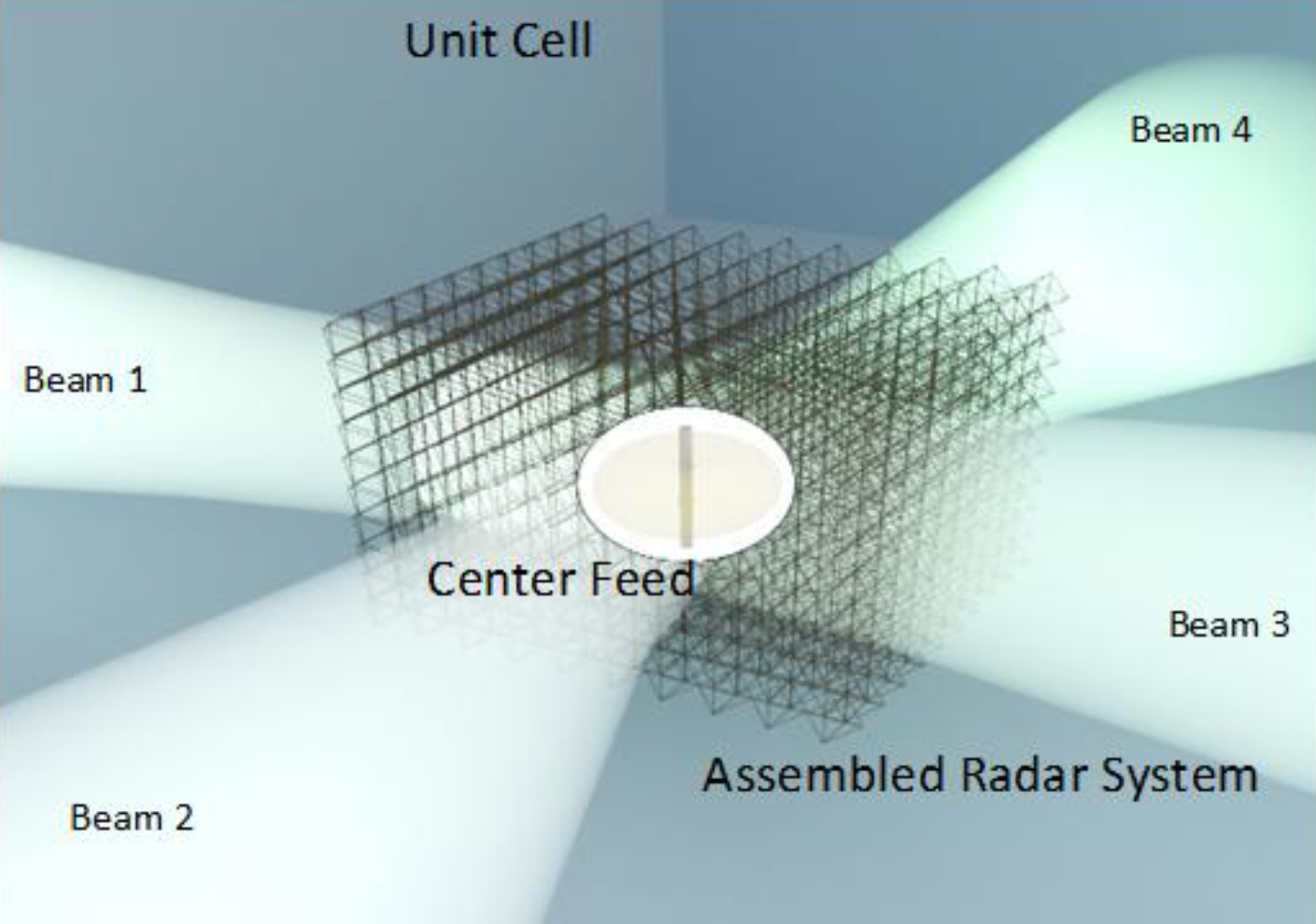
Graphic depiction of the Robotically Assembled Electromagnetic Metamaterials concept.
David Smith

David Smith
Duke University 

The increasing population of spacefaring vehicles and satellites motivates increasingly powerful technologies for space situational awareness (SSA). While the US space surveillance network (SSN) is able to monitor objects down to about four inches in size using, for example, the latest upgrade to the space fence, the associated requirements limit implementation to ground-based tracking of low earth orbit (LEO) objects using kilometer-scale radar arrays. Beyond LEO, the prospect of cislunar traffic and the extreme distances involved render ground-based arrays impractical. This limitation is fundamental to coherent radar systems: for a given detection performance, the required array size grows in direct proportion to the target distance. As a result, it can in fact become simpler to decrease the sensing distance rather than extend array sizes, and this can only be achieved by shifting to a space-based SSA platform.  

Although space-deployed radar systems offer distinct advantages in terms of sensing capabilities, the large distances associated with cislunar surveillance still require extremely large apertures for adequate performance. This poses significant practical challenges based on limitations to modern deployable structures which, to date, cannot consistently achieve dimensions greater than 100 meters. This limitation arises because state-of-the-art deployable antennas, including membrane, mesh, and inflatable architectures, require the entire structure to be housed inside a single launch fairing. In contrast, the prospect of in-space assembly suggests the potential for scalable structures that are not limited by launch constraints and so can meet the challenging requirements of long-range SSA.  

We propose a spaceborne radar system that pairs the demonstrated performance of robotically assembled mechanically stable structures with reconfigurable, volumetric electromagnetic metamaterials. The former technology enables modular and precise construction of arbitrary volumetric structures, while the latter offers a sophisticated and readily compatible design platform for achieving the challenging requirements of long-range SSA. Both approaches exploit a unit cell-driven, modular design procedure that enables nearly arbitrary scaling for mechanically and electromagnetically robust antenna platforms. The ability to reliably assemble and control volumetric antenna structures in this way provides access to new and powerful capabilities including steering over wide fields of view (FOV) without the need for slow, mechanical slewing of the antenna.  

The proposed work will demonstrate the feasibility and scalability of a reconfigurable, volumetric S-band metamaterial for achieving various beam steering capabilities. This effort will include advancement of metamaterial design strategies for omnidirectional electromagnetic beam forming and initial assessment/design of a reconfigurable unit cell compatible with robotic assembly. The development of the metamaterial design procedure will exploit a numerically efficient dipole model that has been previously validated at smaller scales, while the metamaterial element design will proceed by established full-wave numerical methods. System design concepts will incorporate practical constraints according to successful demonstrations of robot assembly by the Automated Reconfigurable Mission Adaptive Digital Assembly Systems (ARMADAS) project.  

While the project will target SSA applications, the design considerations involved are equally applicable to missions requiring large physical apertures such as low-frequency radiometry for earth observation and deep-space communications. Since the performance (resolution, sensitivity) of all beam steering, radar, and observation missions improves with increased aperture sizes, the realization of alternative electromagnetic strategies that offer reduced CSWaP can provide advantages across a wide range of NASA programs. 

2026 Selections

Share

Details

Last Updated

Jul 21, 2026

Editor
Loura Hall

Powered by WPeMatico

Get The Details…
Loura Hall

Photophoretic Tracers for Near-Space Remote Sensing at 30-100 km Altitudes 

Photophoretic Tracers for Near-Space Remote Sensing at 30-100 km Altitudes 

3 min read

Preparations for Next Moonwalk Simulations Underway (and Underwater)

Labeled diagram of Earth from space with
Graphic depiction of the Stacked Solar Sails for Very High delta-V Missions concept.
Benjamin Schafer

Benjamin Schafer
Rarified Technologies, Inc.

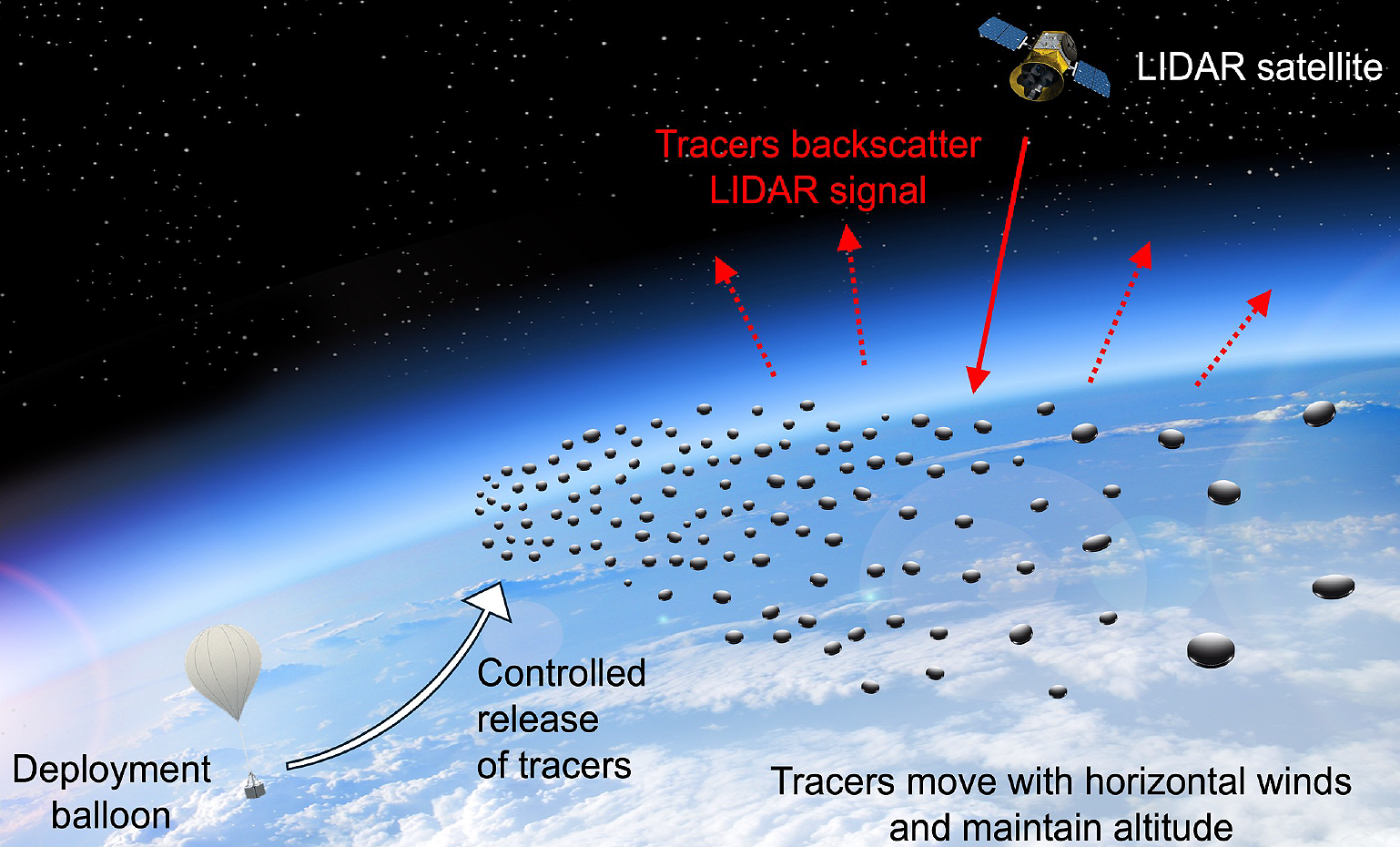
We propose a new approach to atmospheric sensing at 30-100 km altitudes using photophoretically levitating tracers. These lightweight structures harness sunlight to remain suspended for up to months at controlled altitudes and can be remotely tracked by satellite-based lidar or radar. Unlike natural aerosols, these tracers are designed to provide strong and tunable backscatter at standard remote sensing wavelengths, enabling passive, persistent, and altitude-selective measurements of wind, temperature, and pressure in a region that is critically under-measured by existing systems.  

This concept addresses a major gap in current sensing capabilities. The mesosphere and upper stratosphere play a key role in atmospheric dynamics, space-domain awareness, space weather, and high-altitude platform navigation. Despite the importance of this region, data collection remains a challenge. Near-space is too high for sustained balloon flight and too low for satellites to orbit. Concentrations of extant atmospheric species are also too low for remote sensing techniques such as lidar and radar. Photophoretic tracers offer a new solution: a persistent, stratified sensor layer of non-toxic, inert backscattering points that require no onboard power, propulsion, or control. These tracers can be deployed via high-altitude balloons or rockets and autonomously reach their target altitudes based on their geometry and coatings.  

In a representative mission, thousands of tracers are released from a lightweight balloon at around 30 km. The tracers rise to their target altitude of 90-100 km, the lower ionosphere. Satellite-based lidar tracks their motion over their month-long lifetimes. Tracer trajectories enable continuous mapping of wind shear, thermal gradients, and pressure profiles at sub-kilometer resolution and hourly cadence. The collected real-time data are used to calibrate boundary conditions of ionospheric space weather models. As more data is collected, the predictive capabilities of these models improve, leading to enhanced situational awareness and communications resilience in near-space and LEO. Other early deployments could, for example, support weather model improvements in the tropics and monitor atmospheric conditions over spaceports.  

This work builds on emerging experimental results in photophoretic flight, with laboratory validation of levitation in near-space conditions and initial simulations of tracer dispersion and visibility. Backscatter models confirm feasibility for orbital detection using commercially available lidar systems. The tracers are designed to safely disintegrate at end-of-life and are compatible with scalable fabrication techniques. By engineering the scattering medium itself, this concept inverts traditional atmospheric remote sensing. It enables lower-SWaP-C satellite sensing systems and a fundamentally new class of persistent measurement tools for national security, meteorology, heliophysics, and planetary exploration.  

2026 Selections

Powered by WPeMatico

Get The Details…
Loura Hall

Actively Steerable Femtosat Constellations for In-situ Exploration of Saturn’s Rings, Atmosphere, and Magnetosphere

Actively Steerable Femtosat Constellations for In-situ Exploration of Saturn’s Rings, Atmosphere, and Magnetosphere

1 min read

Preparations for Next Moonwalk Simulations Underway (and Underwater)

Labeled diagram of Saturn's Rings.
Graphic depiction of the Actively Steerable Femtosat Constellations concept.
Michael Rubenstein

Michael Rubenstein
Northwestern University, Chicago

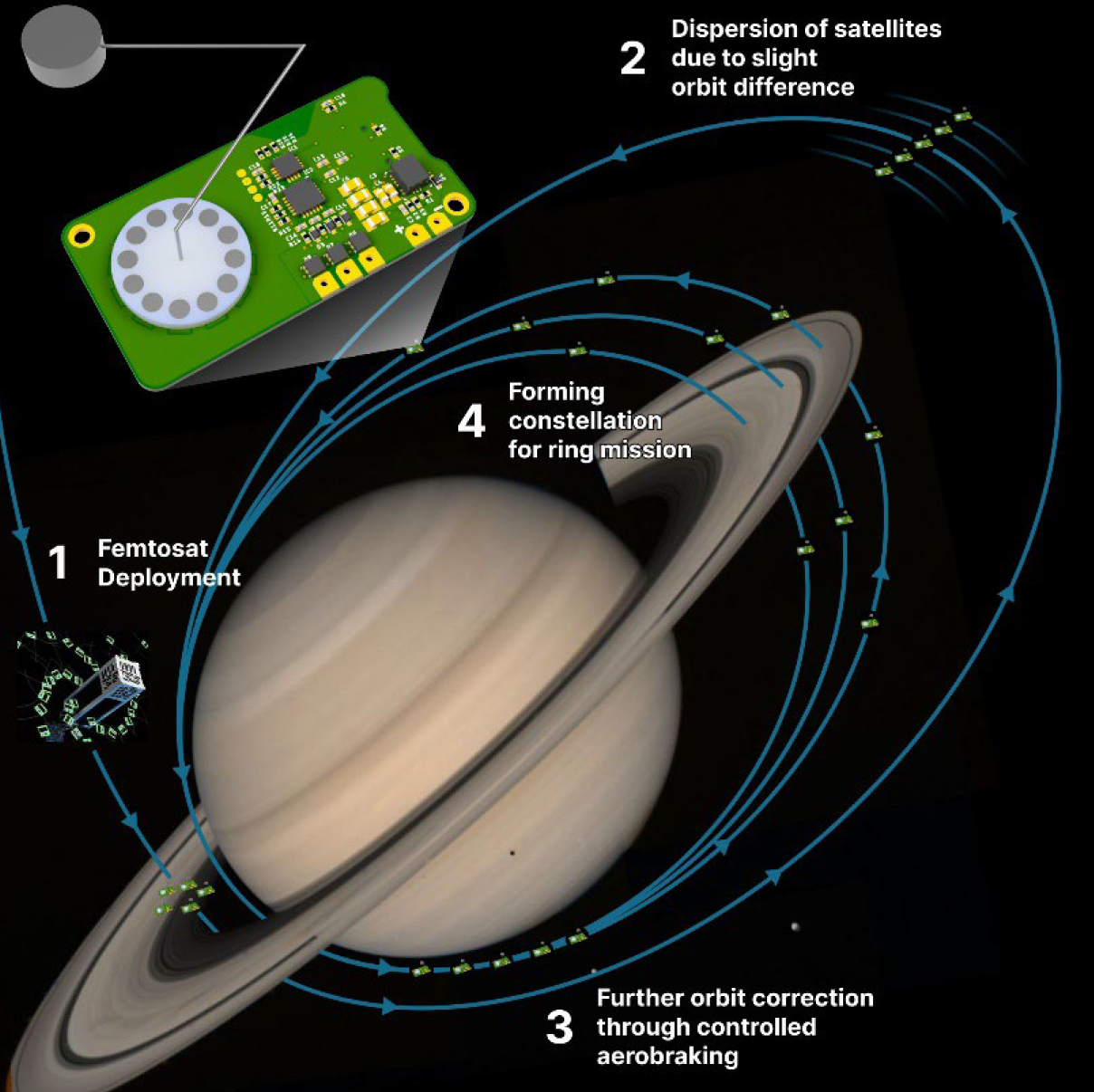
We propose a mission to use ~10,000 actively steerable femtosats to map the ring composition, atmospheric composition and density, and the magnetic field distribution of Saturn. Conducting in-situ surveys of Saturn’s rings with a single flagship mission, such as Cassini, would carry an unacceptably high risk of mission failure due to particle collisions. However, the distributed nature of the proposed mission means it can accept a risk that could destroy many of femtosats in the constellation, making in-situ survey of the ring possible.  

2026 Selections

Share

Details

Last Updated

Jul 21, 2026

Editor
Loura Hall

Powered by WPeMatico

Get The Details…
Loura Hall

PRAXIS: Planetary Rings Autonomous EXploration with In-situ Sampling

PRAXIS: Planetary Rings Autonomous EXploration with In-situ Sampling

3 min read

Preparations for Next Moonwalk Simulations Underway (and Underwater)

Labeled diagram of of
Graphic depiction of the PRAXIS concept.
Marco Quadrelli

Marco Quadrelli
NASA Jet Propulsion Laboratory

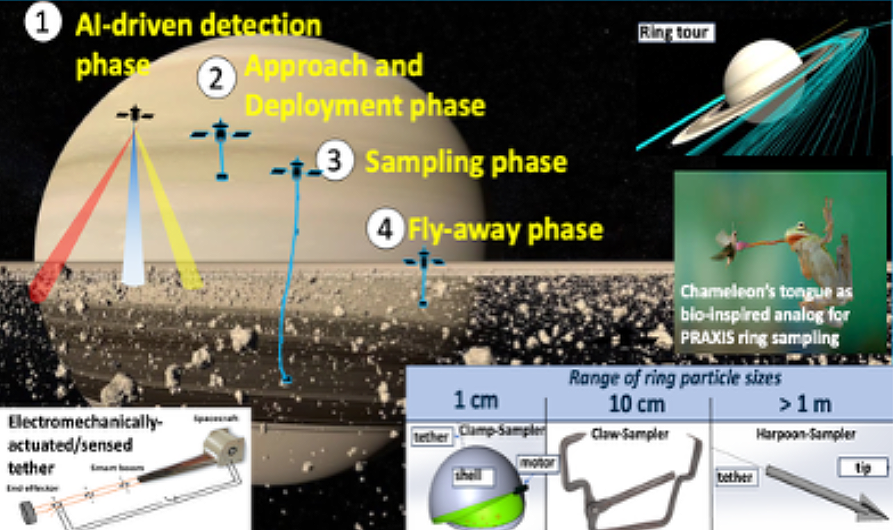
Humanity has never touched the particles of a planetary ring, but if we were able to get close enough and sample them, it will transform understanding of ring structure and origins for Saturn (dense), Uranus and Neptune (tenuous), rings of other objects such as Centaurs Chariklo and Chiron, and even early protoplanetary and circumstellar disks. Despite Cassini’s groundbreaking discoveries, fundamental questions about the formation, dynamics, and evolution of planetary rings remain unanswered. After Cassini, there is a very strong scientific case to learn more about the microphysical interactions of Saturn’s rings, and this necessitates sampling them. Many ring structures and features such as self-gravity wakes, “propellers”, density waves and gap edges remain to be explored at high resolution. Saturn’s rings are micron-size grains to house-size boulders, always in motion. They are made mostly of water ice, piles of rubble coming together and breaking apart. PRAXIS addresses a key Decadal priority by delivering the first direct observations of mm- to cm-scale ring particles, a capability Cassini lacked. Planetary rings are highly dynamic environments where constant particle motion demands advanced robotic autonomy for collision avoidance, precision sampling, and in situ analysis. Our system adapts innovations from sport casting to capture free-floating particles, and instrument miniaturization for real-time analysis. AI integration enables the first-ever autonomous collection of ring particles, directly measuring science priorities like particle size, porosity, and composition. PRAXIS develops and tests a novel AI-driven, bio-inspired robotic explorer to perform in situ ring sampling, a capability never before attempted. This effort directly supports Decadal Survey priorities in planetary ring science while spearheading the next generation of planetary robotic exploration and delivering transformative insights into the origins and evolution of ring systems. Feasibility of PRAXIS is already on firm ground because it leverages key element of the Saturn Ring Observer Mission Study, which considered an orbit grazing the rings and hovering above them to directly image the ring particles in motion. After an initial imaging and characterization phase to select the ring particle, the spacecraft conducts a touch-and-go sampling event of the particle surface with a long and soft deployable boom. Since the particles are always in motion within the ring, there is a compelling case for the spacecraft staying away to avoid collision, hence the agile sampling with the long boom is justified. Once the sample is retrieved, the PRAXIS exploration system moves to another section (or gap) of the rings, thus sampling many diverse regions. Feasibility of PRAXIS will be demonstrated Phase I with simulation and sound system design, motivating solid system design and development of a physical prototype in Phase II. The system’s versatility makes it valuable across planetary formation missions, positioning it for infusion into the upcoming Uranus Probe mission. 

2026 Selections

Share

Details

Last Updated

Jul 21, 2026

Editor
Loura Hall

Powered by WPeMatico

Get The Details…
Loura Hall