Expedition 69 Crew, Three NASA Astronauts to Share Mission Highlights

Expedition 69 Crew, Three NASA Astronauts to Share Mission Highlights
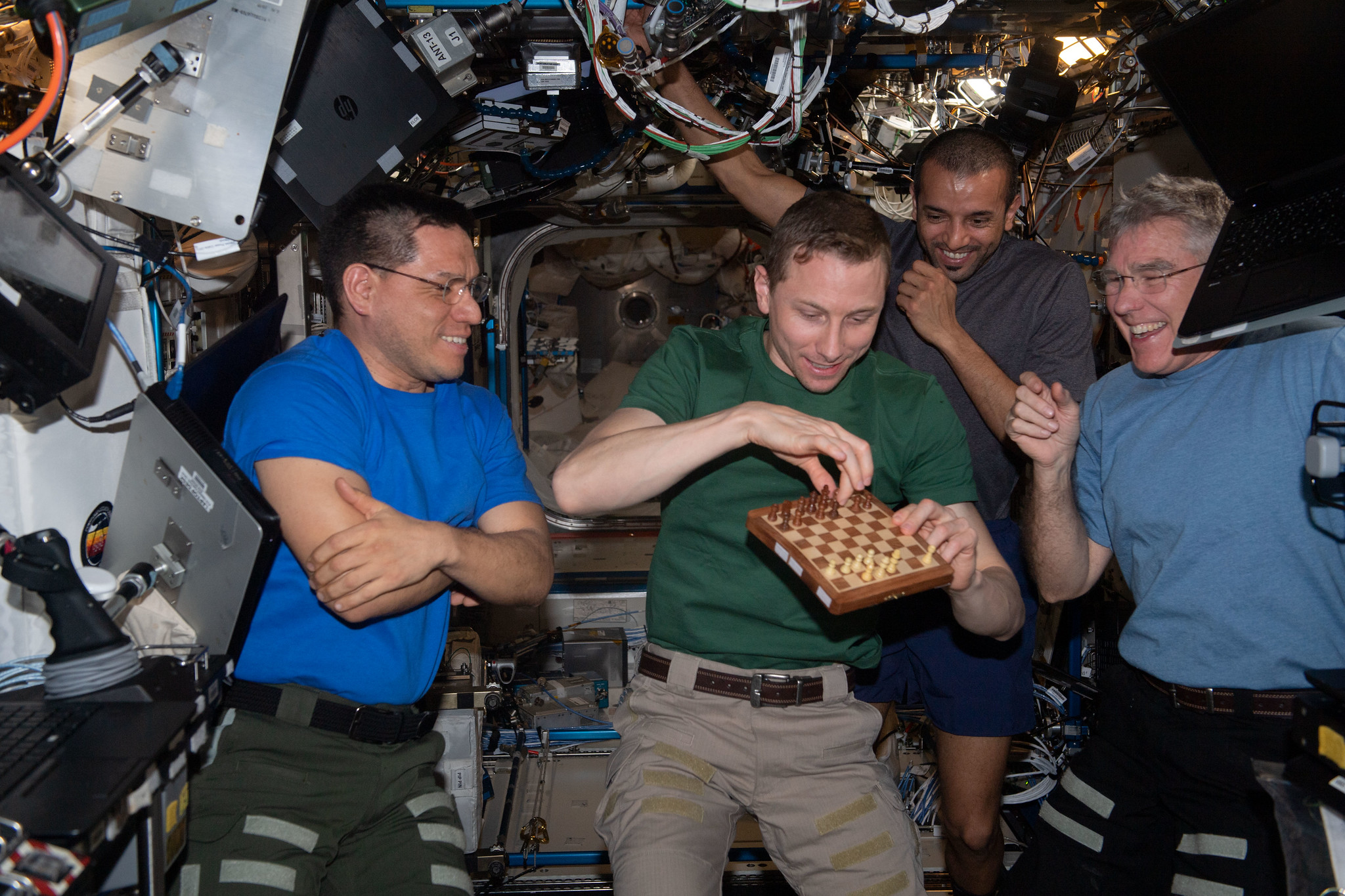
Flight Engineers playing chess onboard ISS
Expedition 69 Flight Engineers play chess with NASA mission controllers
Credit NASA

Jan. 16, 2024

RELEASE: 24-001

Four astronauts, including the current record holder for the longest single U.S. stay in space aboard the International Space Station, will make their first public appearance in Houston since returning to Earth. The crew also will be available for interviews before the event at 5 p.m. CST Thursday, Jan. 18, at Space Center Houston.

Expedition 69 NASA astronauts Stephen Bowen, Woody Hoburg, and Frank Rubio, along with United Arab Emirates (UAE) astronaut Sultan Alneyadi, will be at NASA Johnson Space Center in Houston official visitor center to share accomplishments from their mission during a free, public event at 5:30 p.m. At 7 p.m., the crew, along NASA leadership, will help recognize key contributors to the mission’s success in an awards ceremony.

Reporters may request an in-person interview no later than 12 p.m. Jan. 18 by emailing Dana Davis at dana.l.davis@nasa.gov.  

Expedition 69

NASA’s SpaceX Crew-6 mission launched in March 2023 with Bowen, Hoburg, and Alneyadi, as well as Roscosmos cosmonaut Andrey Fedyaev, on the sixth commercial crew rotation mission to the space station. The crew spent 186 days in orbit, traveled 78,875,292 miles, and completed 2,976 Earth orbits, splashing down off the coast of Jacksonville, Florida, on Sept. 4, 2023. This was Bowen’s fourth spaceflight and the first spaceflight for Hoburg, Alneyadi, and Fedyaev. The crew helped improve power systems for the space station through a series of spacewalks. In June 2023, Bowen completed his 10th career spacewalk, tying the U.S. record for number of spacewalks. Alneyadi also completed the first long-duration mission for a UAE astronaut.

The Dragon crew was welcomed aboard the station by the international crew that flew on the Soyuz spacecraft and served on Expeditions 68 and 69. NASA astronaut Frank Rubio and Roscosmos cosmonauts Sergey Prokopyev and Dmitri Petelin launched six months earlier, on the Soyuz MS-22 spacecraft in September 2022. The Soyuz crew spent a total of 371 days aboard the space station, traveled 157,412,306 statute miles, and completed 5,963 Earth orbits, landing in Kazakhstan aboard the Soyuz MS-23 spacecraft on Sept. 27, 2023. This was the second spaceflight for Prokopyev and Petelin. This was Rubio’s first spaceflight mission and it broke the U.S. record for a single spaceflight by an American.

While aboard the station, the Expedition 69 crew contributed to hundreds of experiments and technology demonstrations, including conducting a student robotic challenge, studying plant genetic adaptations to space, and monitoring human health in microgravity to prepare for exploration beyond low Earth orbit and to benefit life on Earth. The crew released Saskatchewan’s first satellite, which tests a new radiation detection and protection system derived from Melanin that’s found in many organisms including humans.

Stay current on space station activities by following @space_station and @ISS_Research on Twitter, as well as the station Facebook and Instagram accounts and the space station blog.

-end-

Chelsey Ballarte
Johnson Space Center, Houston
281-483-5111
chelsey.n.ballarte@nasa.gov

Dana Davis

Johnson Space Center, Houston

281-244-0933

dana.l.davis@nasa.gov

Powered by WPeMatico

Get The Details…
Wendy K. Avedisian

Crew Preps for Private Astronaut Arrival as Ax-3 Mission Nears Launch

Crew Preps for Private Astronaut Arrival as Ax-3 Mission Nears Launch

The SpaceX Dragon Freedom spacecraft is pictured docked to the space station on May 28, 2023, during Axiom Space's second private astronaut mission, Axiom Mission-2.
The SpaceX Dragon Freedom spacecraft is pictured docked to the space station on May 28, 2023, during Axiom Space’s second private astronaut mission, Axiom Mission-2.

Four private astronauts are readying for launch to the International Space Station this week while the Expedition 70 crew ramps up microgravity research and maintenance tasks after yesterday’s off-duty day.

The third private astronaut mission to the station, Axiom Mission 3 (Ax-3), is scheduled to liftoff from Launch Complex 39A at NASA’s Kennedy Space Center in Florida at 5:11 p.m. EST Wednesday, Jan. 17. Ax-3 crew members, Commander Michael López-Alegría, Pilot Walter Villadei of Italy, Mission Specialist Alper Gezeravcı of Turkey, and ESA (European Space Agency) project astronaut Marcus Wandt of Sweden, will make the trek to the orbital lab aboard the SpaceX Dragon spacecraft, docking at 5:15 a.m. Friday, Jan. 19. The quartet will spend about two weeks conducting science and research in microgravity before heading home.

Ahead of Ax-3 arrival, NASA Flight Engineer Loral O’Hara spent most of the day prepping station for new visitors. O’Hara inspected the airflow in crew quarters, prepped sleep accommodations for crew occupancy, and cleaned the liners and vents where the four private astronauts will sleep while aboard the orbital outpost.

ESA (European Space Agency) Commander Andreas Mogensen also prepped for Ax-3, completing training for Dragon rendezvous and docking. Afterward, he set up ECHO, which is equipped with motorized probs, for ground teams to perform remote maintenance activities.

While O’Hara and Mogensen prepped for Ax-3 crew arrival, other crew members took to space botany and biology tasks. NASA Flight Engineer Jasmin Moghbeli spent the day working with Plant Habitat-06, thinning wild-type tomato seedlings. Afterward, she set up and installed the Plant Water Management 5 hardware to the Maintenance Work Area.

JAXA (Japan Aerospace Exploration Agency) Flight Engineer Satoshi Furukawa removed culture units from the microscope used for the Space Organogenesis investigation, which demonstrates growth of organ buds from 3D printed human stem cells. Additionally, Furukawa collected water samples from the station’s potable water dispenser for in-flight analysis.

The Roscosmos trio—Flight Engineers Oleg Kononenko, Nikolai Chub, and Konstantin Borisov—performed an array of maintenance activities on Tuesday. Kononenko replaced hardware in the Zvezda service module, while Chub replaced the thermal control system pump panel in the Zarya module. Afterward, Chub conducted an experiment studying liquid phases in microgravity, while Borisov distilled samples from the Roscosmos segment water management system and conducted maintenance on the station’s vacuum cleaner.


Learn more about station activities by following the space station blog, @space_station and @ISS_Research on X, as well as the ISS Facebook and ISS Instagram accounts.

Get weekly video highlights at: https://roundupreads.jsc.nasa.gov/videoupdate/

Get the latest from NASA delivered every week. Subscribe here: www.nasa.gov/subscribe

Powered by WPeMatico

Get The Details…

Abby Graf

NASA’s X-59 Quiet Supersonic Research Aircraft Unveiled

NASA’s X-59 Quiet Supersonic Research Aircraft Unveiled

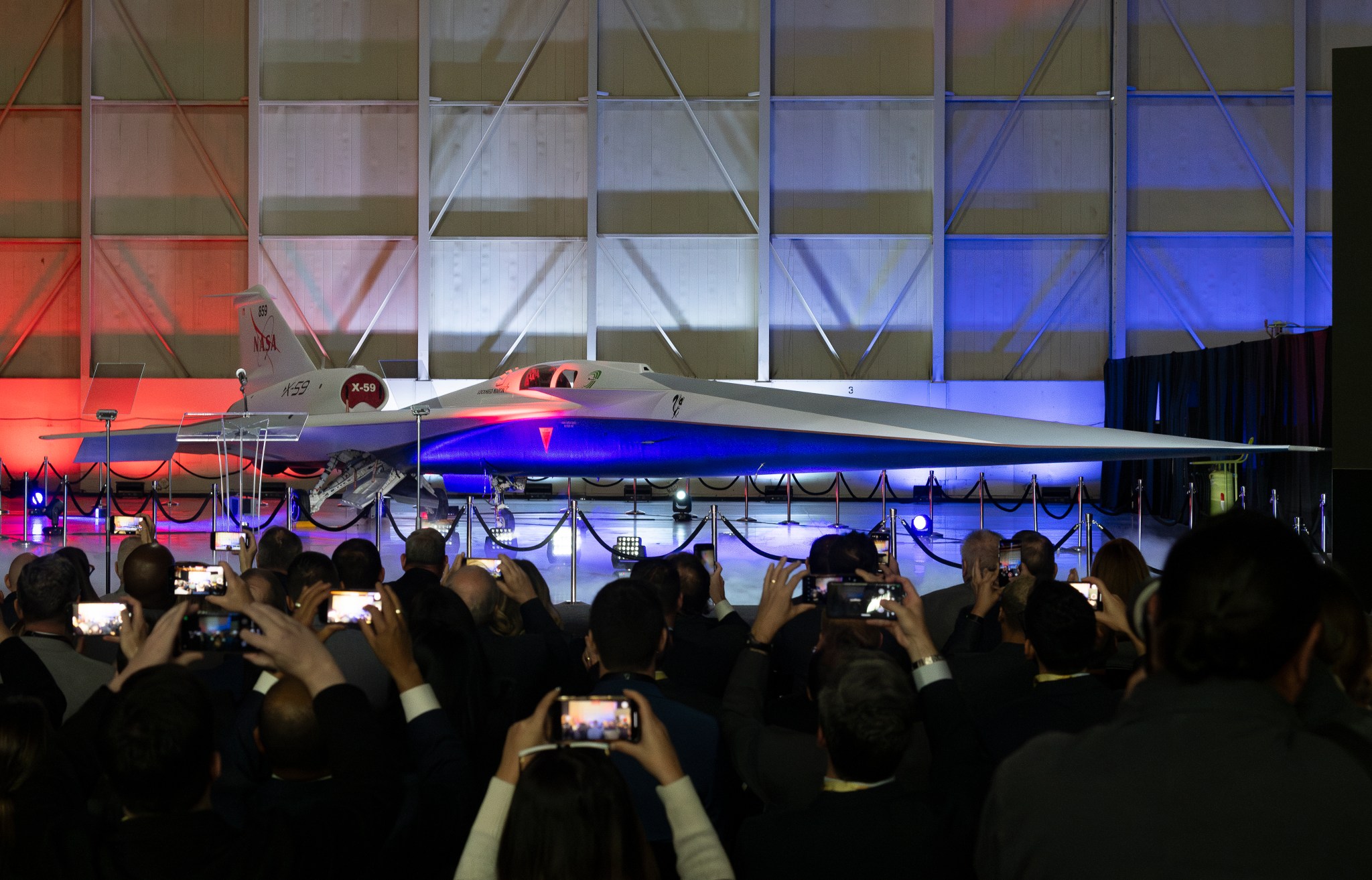
NASA and Lockheed Martin publicly unveil the X-59 quiet supersonic research aircraft at a ceremony in Lockheed Martin’s Skunk Works facility in Palmdale, California. The X-59 is the centerpiece of NASA’s Quesst mission, which seeks to solve one of the major barriers to supersonic flight over land, currently banned in the United States, by making sonic booms quieter.

Powered by WPeMatico

Get The Details…

NASA, DOD Seek Universities to Develop CubeSats for Launch 

NASA, DOD Seek Universities to Develop CubeSats for Launch 

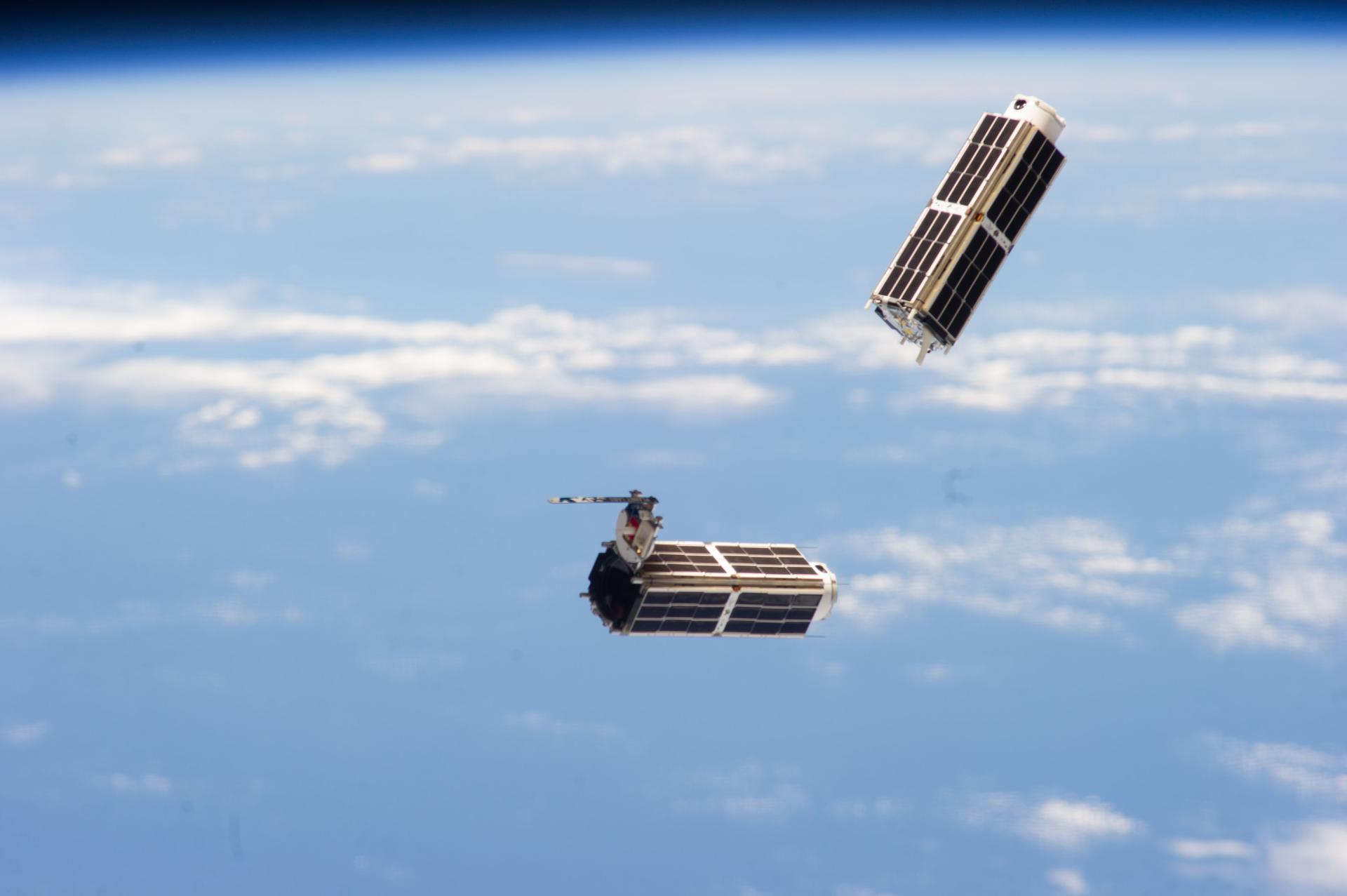
A set of NanoRacks CubeSats is photographed by an Expedition 38 crew member after the deployment by the Small Satellite Orbital Deployer (SSOD). The CubeSats program contains a variety of experiments such as Earth observations and advanced electronics testing.
NASA

NASA is collaborating with the U.S. Air Force and U.S. Space Force to offer a set of hands-on learning engagements that will help higher education institutions, faculty, and students learn more about what it takes to build small satellites and be selected for flight opportunities. 

Teams selected for the University Nanosatellite Program Mission Concepts 2024 Summer Series will receive systems engineering training that prepares them for the industrial workforce while developing small satellite expertise at U.S. universities. The program, which runs from May through August 2024, also enhances students’ potential to be selected for flights to space as part of NASA’s CSLI (CubeSat Launch Initiative) and the U.S. Air Force University Nanosatellite Program in 2024. 

The program allows faculty and students to form teams without draining university resources, and includes travel funding for kickoff, final event, and any in-person reviews, among other benefits. 

All U.S colleges and universities are eligible, and teams at minority-serving institutions and historically Black colleges and universities are strongly encouraged to apply for the Mission Concepts 2024 Summer Series in accordance with the criteria in the request for proposal. The solicitation will be available on Tuesday, Jan. 16, with a deadline to apply on Friday, Feb. 9. 

NASA’s CSLI and the agency’s Kennedy Space Center in Florida university partnerships and small satellite capabilities manager conduct the program for NASA. The agency’s collaboration with the U.S Air Force and U.S. Space Force helps broaden access to space and strengthen the capabilities and knowledge of higher education institutions, faculty, and students. 

To attend an upcoming virtual question and answer session about Mission Concepts 2024, please email laura.aguiar@nasa.gov.

For more information, visit:  https://universitynanosat.org/solicitation/

Powered by WPeMatico

Get The Details…
Jamie Groh

NASA X-59 Unveiled During Rollout Ceremony

NASA X-59 Unveiled During Rollout Ceremony

Members of an audience lift their phones to snap a photo of the recently revealed X-59 aircraft. The plane's long, sharp nose appears to jut out towards the audience.
NASA and Lockheed Martin publicly unveil the X-59 quiet supersonic research aircraft at a ceremony in Lockheed Martin’s Skunk Works facility in Palmdale, California. The X-59 is the centerpiece of NASA’s Quesst mission, which seeks to solve one of the major barriers to supersonic flight over land, currently banned in the United States, by making sonic booms quieter.
NASA/Steve Freeman

A climactic curtain drop reveals the newly painted red, white, and blue X-59 aircraft during its rollout ceremony on Jan. 12, 2024, at Lockheed Martin Skunk Works in Palmdale, California – a major milestone before its first flight.

A long-standing aviation tradition, rollout ceremonies celebrate years of technical achievements. In the case of the X-59, not only does it celebrate groundbreaking technical work, but it honors the brilliant minds behind the research, development, and construction that went into a one-of-a-kind supersonic research aircraft.

The X-59 is a research tool in NASA’s Quesst mission designed to prove quiet supersonic flight is possible. Through Quesst, NASA will fly the aircraft over select U.S. communities, working with them to collect data. NASA will provide that data to regulators so they may consider writing new sound-based rules that would amend the current ban on commercial supersonic flight over land.

Next up, the X-59 team will conduct a series of integrated ground tests, including engine runs and taxi tests, to prepare for the aircraft’s first flight.

Image Credit: NASA/Steve Freeman

Text Credit: Sasha Ellis

Read this story in Spanish:

El avión X-59 de la NASA fue revelado durante una ceremonia

Una caída culminante del telón revela el avión X-59 recién pintado de rojo, blanco y azul durante su ceremonia de lanzamiento el 12 de enero de 2024 en Lockheed Martin Skunk Works en Palmdale, California, un logro importante antes de su primer vuelo.

Las ceremonias de lanzamiento vienen de una larga tradición en la aviación donde se celebran años de logros técnicos. En el caso del X-59, no sólo se celebra el trabajo técnico innovador, sino que también honra a las mentes brillantes detrás de la investigación, el desarrollo y la construcción de un avión de investigación supersónico único en su tipo.

El X-59 es una herramienta de investigación de la misión Questt de la NASA diseñada para demostrar que es posible un vuelo supersónico silencioso. A través de Questt, la NASA volará el avión sobre comunidades seleccionadas de los Estados Unidos y trabajará con ellas para recopilar datos. La NASA proporcionará esos datos a los reguladores para que puedan redactar nuevas reglas de los vuelos supersónicos comerciales sobre tierra considerando los niveles de ruido en lugar de la velocidad.

A continuación, el equipo del X-59 llevará a cabo una serie de pruebas en tierra integradas, incluidos funcionamientos del motor y pruebas de rodaje, para prepararse para el primer vuelo del avión.

Crédito de la foto: NASA/Steve Freeman
Crédito de texto: Sasha Ellis, NASA
Traducido por: Jessica Arreola, NASA

Powered by WPeMatico

Get The Details…
Monika Luabeya