Earth to Gateway: Electric Field Tests Enhance Lunar Communication

Earth to Gateway: Electric Field Tests Enhance Lunar Communication

2 min read

Preparations for Next Moonwalk Simulations Underway (and Underwater)

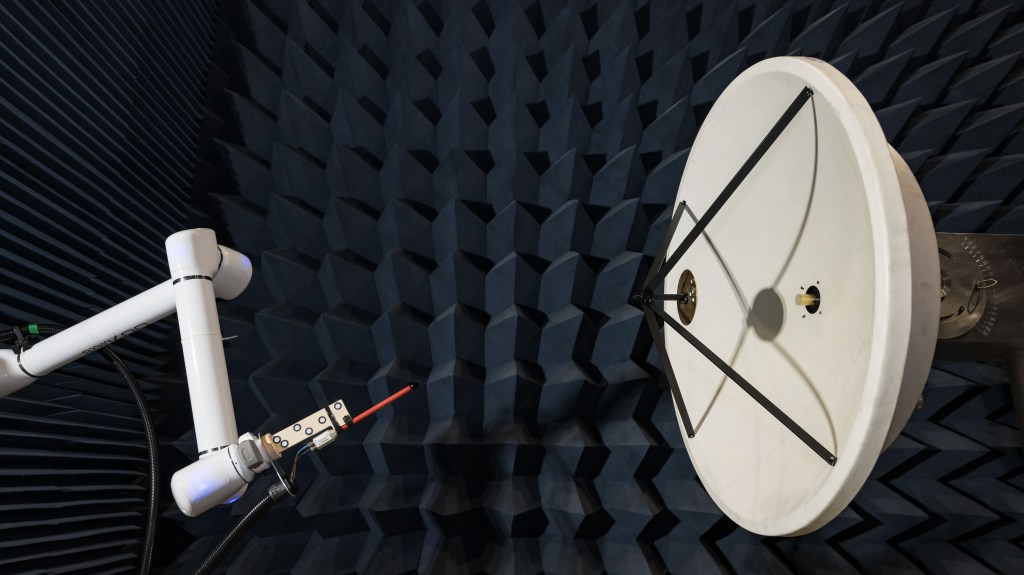
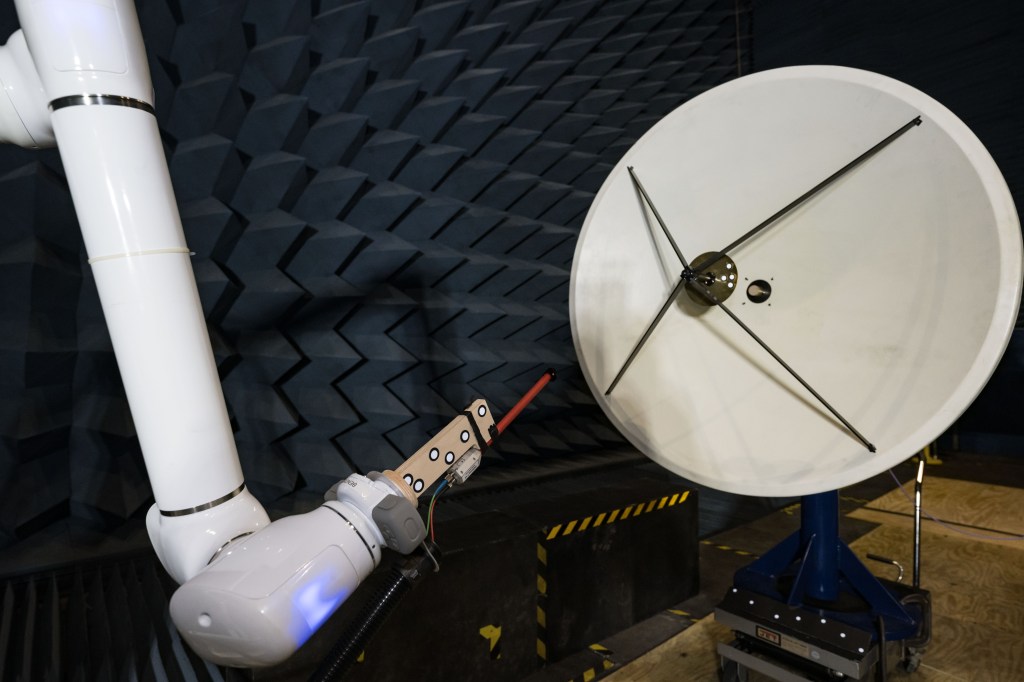
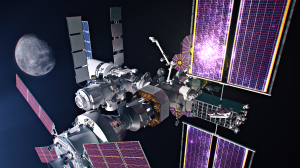
Left: An artist's rendering of Gateway space station's Power and Propulsion Element (PPE) and Habitation and Logistics Outpost (HALO) in lunar orbit. The image showcases the space station's intricate design, including solar panels, antennas, and docking ports against a starry backdrop. Right: A photograph of an antenna being tested in an anechoic chamber at NASA’s Johnson Space Center. The antenna, mounted on a stand, is positioned in a room lined with blue, sound-absorbing foam.
An artist’s rendering of NASA’s Gateway space station in lunar orbit, featuring the Power and Propulsion Element (PPE) and Habitation and Logistics Outpost (HALO), left, and a photograph of an antenna undergoing testing in an anechoic chamber at NASA’s Johnson Space Center, right.
NASA/Robert Markowitz

Engineers at NASA’s Johnson Space Center recently began electric field testing on representative communications hardware for Gateway, humanity’s first space station to orbit the Moon.

An orbiting laboratory for deep space science and a staging ground for lunar exploration, Gateway will help NASA and its international partners establish a sustained human presence on and around the Moon in preparation for the next giant leap – human exploration of Mars.

High-gain antennas are an important component of Gateway’s communication and tracking system that connects operations across the vast distances of the lunar South Pole region, to Gateway in orbit around the Moon, to Earth, and back again.  

NASA is conducting rigorous testing on the electric field levels radiated by the antennas to ensure safe and efficient communication and to avoid any interference with Gateway’s crew and equipment. By validating simulation models to accurately predict electric field levels, NASA can establish precise safety zones around the K/Ka-band parabolic reflector antennas to protect astronauts and hardware without sacrificing high-rate communications.

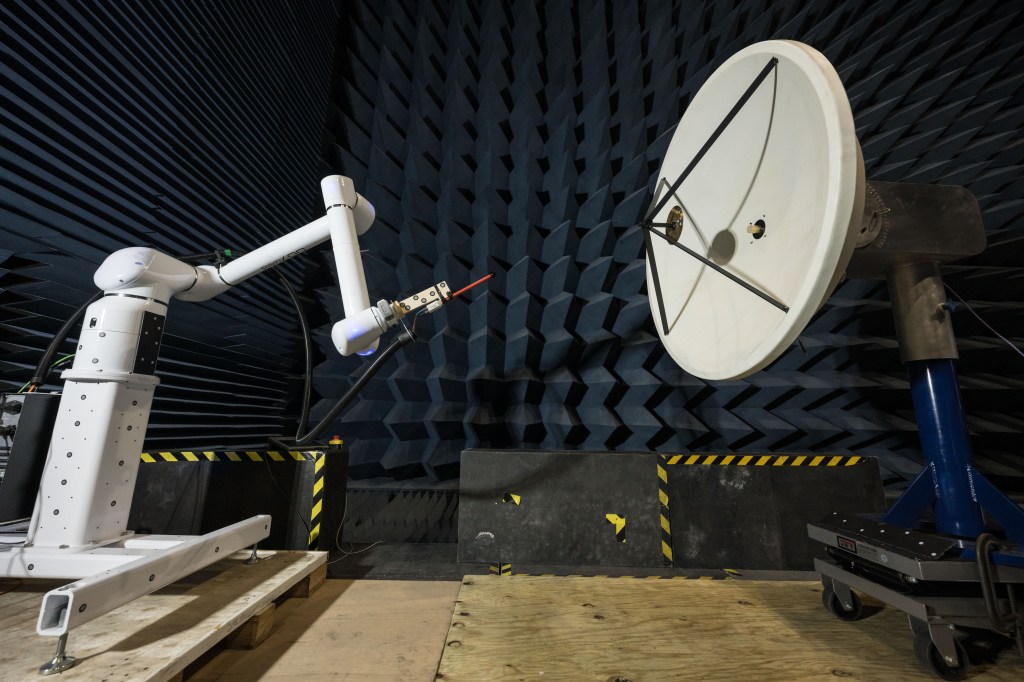
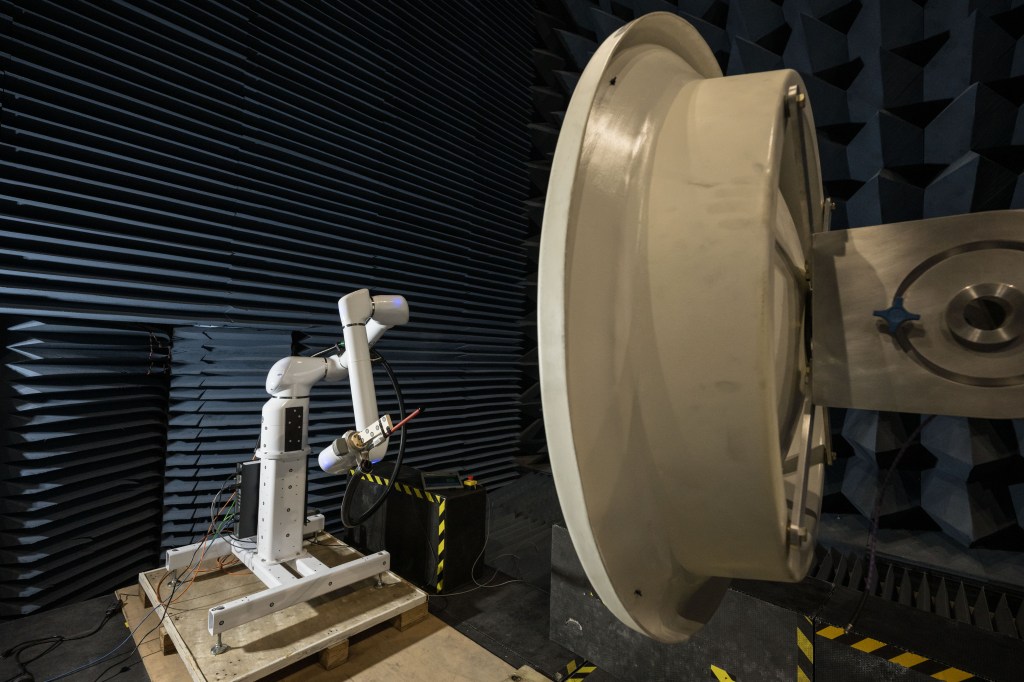
During the meticulous testing process, engineers use electric field and waveguide probes, which measure the strength and quality of electromagnetic signals, to scan the near fields of a representative high-gain antenna. Robotic arms and optical tracking systems provide the precise measurements needed for model validation. The testing is being conducted in an anechoic chamber, a specialized room that provides a controlled environment for measurements of electromagnetic waves.

“We are sharpening our pencil in conducting model validation measurements – ensuring high accuracy in the analysis of electric fields radiated by the high-gain antennas on Gateway,” said Timothy Kennedy, one of the NASA engineers overseeing the tests. “This enables reduced margins on antenna masking needed to protect equipment and crew, while maximizing communication coverage.”

Findings are expected to enhance NASA’s understanding of the electric field levels emitted by Gateway’s antennas and inform critical decisions for operating them safely during Artemis missions, ensuring that Gateway is a safe home for astronauts around the Moon.
Share

Details

Last Updated

Jul 29, 2024

Editor
Briana R. Zamora
Contact
Briana R. Zamora

Powered by WPeMatico

Get The Details…
Dylan Connell
Astronauts, Cosmonauts Focus on Maintenance; SpaceX Crew-9 Introduces Itself

Astronauts, Cosmonauts Focus on Maintenance; SpaceX Crew-9 Introduces Itself

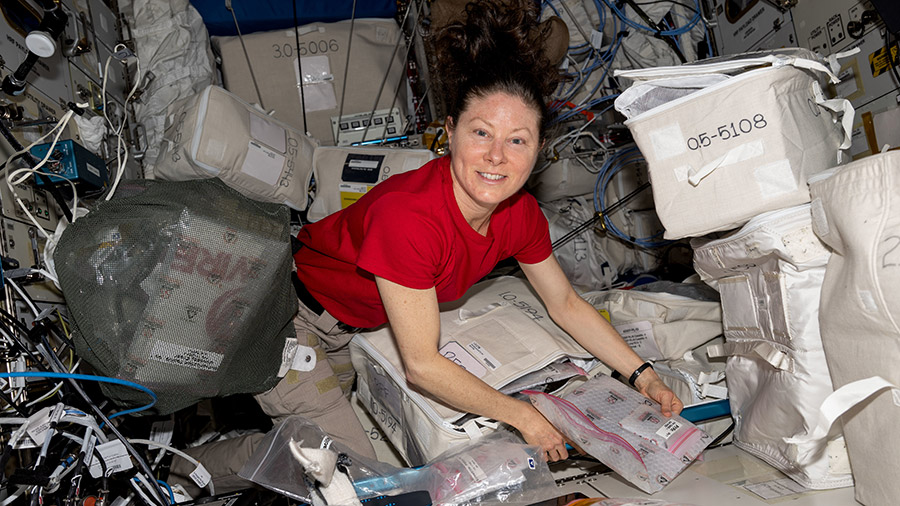
Astronaut Tracy C. Dyson unpacks and examines research gear inside the International Space Station's Columbus laboratory module.
Astronaut Tracy C. Dyson unpacks and examines research gear inside the International Space Station’s Columbus laboratory module.

The orbital residents representing Expedition 71 and NASA’s Boeing Crew Flight Test switched gears on Friday and turned their attention to a host of lab maintenance activities. The nine astronauts and cosmonauts living and working aboard the International Space Station focused on spacewalking tools, computer networks, housecleaning, and inspections at the end of the week.

NASA Flight Engineers Tracy C. Dyson, Mike Barratt, and Jeanette Epps joined each other midday Friday and reorganized cargo inside the Unity module ahead of the Aug. 5 arrival of Northrop Grumman’s Cygnus space freighter. Dyson and Barratt then finished the afternoon inside the Quest airlock collecting and stowing tools used during earlier spacewalk preparations.

Epps began her day with NASA astronaut and Starliner Commander Butch Wilmore examining the Permanent Multipurpose Module for open spaces before spending her afternoon exercising. NASA Flight Engineer Matthew Dominick checked the overhead crew quarters in the Harmony module and measured its ventilation system airflows after spending his morning working out.

Wilmore also joined Starliner Pilot Suni Williams and tested cloud network connectivity using a pair of computer tablets linked to mission applications and other computer services. Williams then recorded a video for junior high and high school students demonstrating 3D printing operations in microgravity. Toward the end of the day, the NASA duo called down to Boeing mission personnel and discussed Starliner spacecraft systems and operations. The day before, NASA and Boeing managers provided a Starliner status update during a televised news conference.

Station Commander Oleg Kononenko kicked off his day synchronizing digital cameras with space station cameras.  The five-time visitor to the orbital outpost worked the rest of the day with Flight Engineer Nikolai Chub continuing ongoing inspections in the aft-end of the Zvezda service module. Chub began his day conducting research activities in Zvezda before the inspection work.

The next crew to visit the International Space Station, SpaceX Crew-9, introduced itself today during a televised crew news conference live on NASA TV on Friday. Commander Zena Cardman, Pilot Nick Hague, and Mission Specialists Stephanie Wilson and Aleksander Gorbunov are counting down to a mid-August launch to the orbital lab aboard the SpaceX Dragon Endurance for a six-month mission. Earlier, mission managers from NASA and SpaceX discussed the Crew-9 mission and other upcoming missions to the orbiting lab. Watch the SpaceX Crew-9 Crew News Conference and the Mission Overview on YouTube.

Beginning Monday, July 29th, the IMC Daily Summary will be discontinued.

To learn more about the groundbreaking science and engineering happening daily on the International Space Station, please visit the space station blog at https://blogs.nasa.gov/spacestation/, or browse a variety of space station research resources at https://nasa.gov/iss-science.


Learn more about station activities by following the space station blog, @space_station and @ISS_Research on X, as well as the ISS Facebook and ISS Instagram accounts.

Get weekly video highlights at: https://roundupreads.jsc.nasa.gov/videoupdate/

Get the latest from NASA delivered every week. Subscribe here: www.nasa.gov/subscribe

Powered by WPeMatico

Get The Details…

Mark Garcia

Three NASA Interns Expand Classroom Access to NASA Data

Three NASA Interns Expand Classroom Access to NASA Data

3 min read

Preparations for Next Moonwalk Simulations Underway (and Underwater)

This summer, NASA welcomed interns with professional teaching experience to help make the agency’s data more interactive and accessible in the classroom. Their efforts are an important step in fostering the education and curiosity of the Artemis Generation of students who will shape the future workforce.

Diane Ripollone: Making Activities Accessible for Low-Vision Students

Diane Ripollone wearing a blue flight jacket standing in front of an SOFIA airplane
In the center, Diane Ripollone smiles in a blue jacket with the blue, white, and red NASA logo on the left and a SOFIA patch on the right. Behind Diane is the SOFIA aircraft and her arm rests on a railing beside her.
Credit: Diane Ripollone

A 35-year-veteran educator, Diane Ripollone teaches Earth science, astronomy, and physics to high school students in North Carolina. In her decades of experience, she’s seen firsthand how students with physical challenges can face difficulties in connecting with lessons. She decided to tackle the issue head-on with her internship.

Ripollone supports the My NASA Data Program, which provides educational materials to interact with live data collected by NASA satellites, observatories, and sensors worldwide. As a NASA intern, she has worked to create physical materials with braille for students with- vision limitations.

“It’s a start for teachers,” Ripollone said. “Although every classroom is different, this helps to provide teachers a jumpstart to make engaging lesson plans centered around real NASA data.” Her NASA internship has excited and inspired her students, according to Ripollone. “My students have been amazed! I see their eyes open wide,” she said. “They say, ‘My teacher is working for NASA!’”

Felicia Haseleu: Improving Reading and Writing Skills

North Dakota teacher  Felicia Haseleu never imagined she’d be a NASA intern until a colleague forwarded the opportunity to her inbox. A teacher on her 11th year, she has seen how COVID-19 has affected students: “It’s caused a regression in reading and writing ability,” a shared impact that was seen in students nationwide.

A science teacher passionate about reading and writing, Felicia set out to utilize these in the science curriculum. As an intern with My NASA Data, she’s prepared lesson plans that combine using the scientific method with creative writing, allowing students to strengthen their reading and writing skills while immersing themselves in science.

Haseleu anticipates her NASA internship will provide benefits inside and outside the classroom.

“It’s going to be awesome to return to the classroom with all of these materials,” she said. “Being a NASA intern has been a great experience! I’ve felt really supported and you can tell that NASA is all encompassing and supports one another. From the camaraderie to NASA investing in interns, it’s nice to feel valued by NASA.”

Teri Minami: Hands-on Lesson for Neurodivergent and Artistic Students

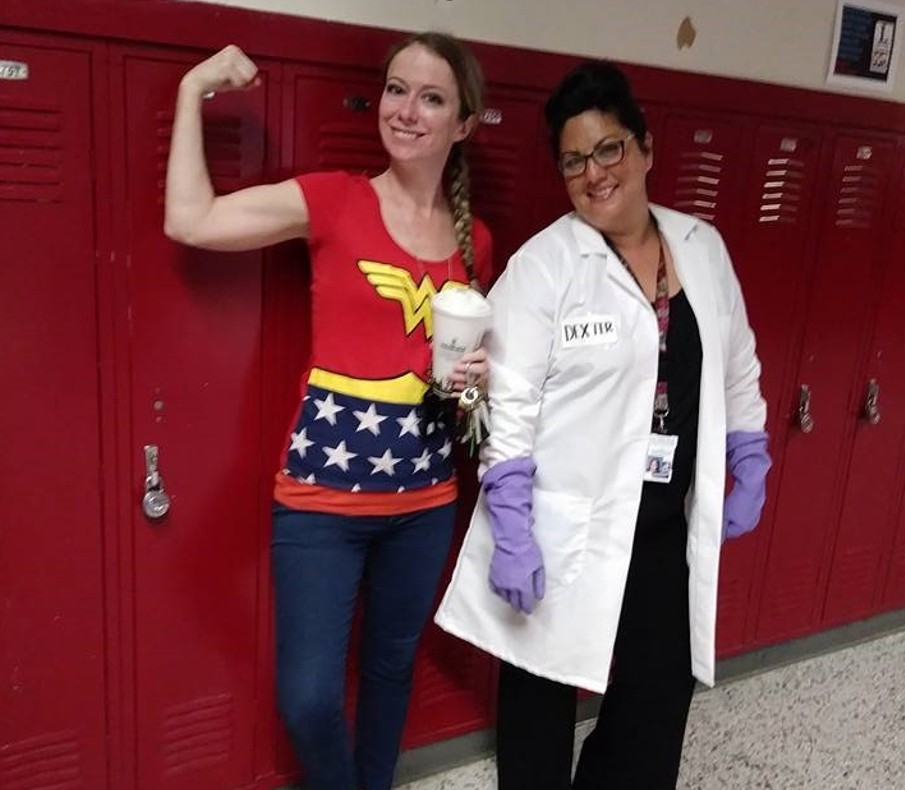
Two female teachers standing in front of student lockers. One person is wearing a white jacket and the other a wonder women shirt flexing her muscle
Teri Minami poses in a white lab coat, lilac gloves, glasses, and “Dexter” name tag. She is on the right of the image with a coworker on the left. Red school lockers line the wall behind them.
Credit: Teri Minami

“I’ve never been a data-whiz; I’ve always connected with science hands-on or through art,” said NASA intern Teri Minami, a teacher of 10 years in coastal Virginia. She cites her personal experience in science to guide her to develop lessons using NASA data for neurodivergent students or those with a more artistic background.

Through her NASA internship, she aims to create lesson plans which allow students to engage first-hand with science while outdoors, such as looking at water quality data, sea level ice, and CO2 emissions, taking their own measurements, and doing their own research on top of that.

Although many people associate being an intern with being an undergraduate in college, NASA interns come from all ages and backgrounds. In 2024, the agency’s interns ranged in age from 16 to 61 and included high school students, undergraduates, graduate students, doctoral students, and teachers.

Interested in joining NASA as an intern? Apply at intern.nasa.gov.

Powered by WPeMatico

Get The Details…
Sandra May