


Spacesuits, Lunar Agriculture, and Breathing Research Top Wednesday’s Schedule
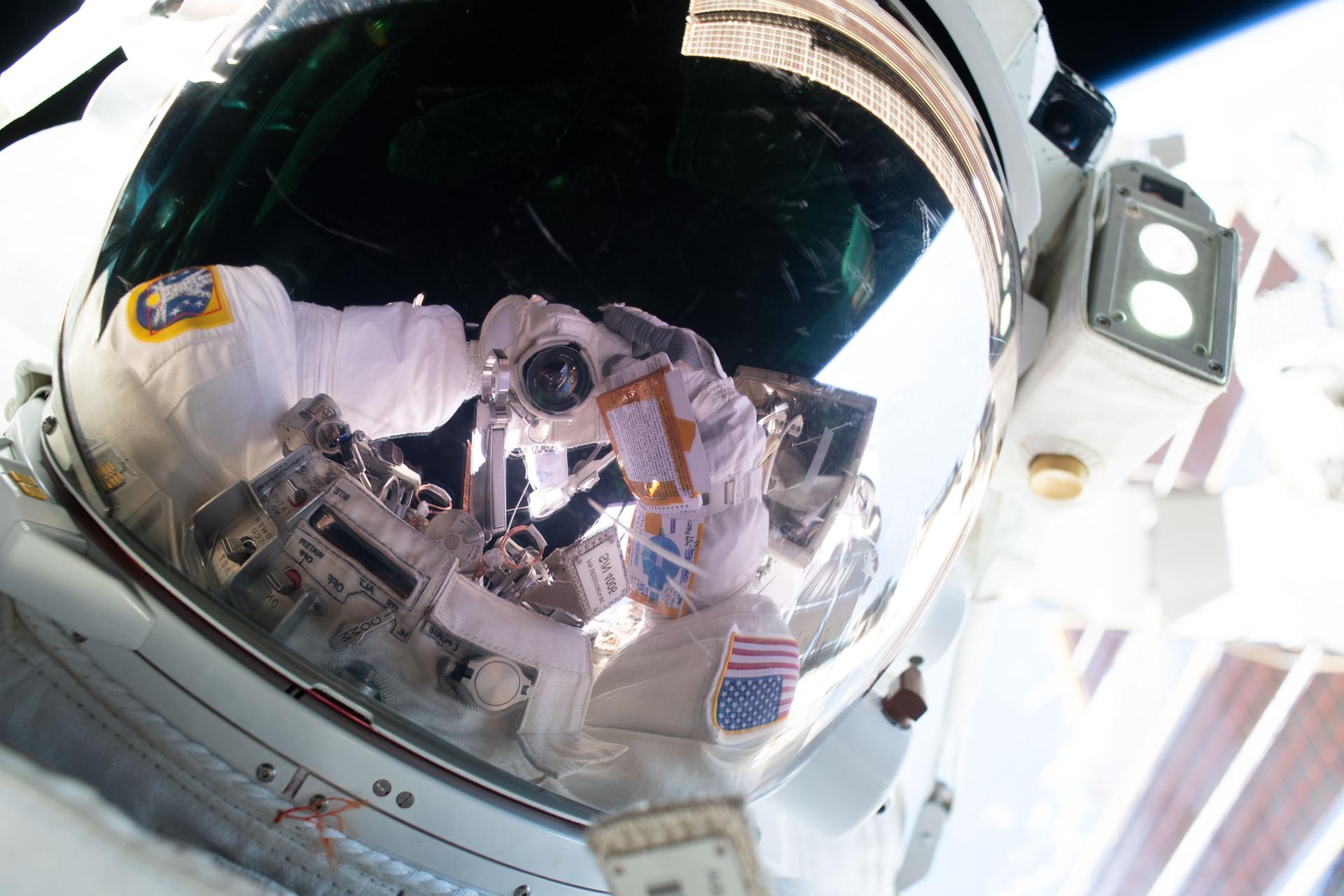
Spacesuit checks topped Wednesday’s task list aboard the International Space Station as two astronauts prepare for a spacewalk next week. The Expedition 75 crew members also kept up advanced microgravity research exploring space agriculture and the respiratory system midweek.
Flight engineers Anil Menon of NASA and Joshua Kutryk of CSA (Canadian Space Agency) are gearing up for the first of two spacewalks that will see the duo install a pair of roll-out solar arrays on the orbital outpost’s truss structure. The spacewalkers are scheduled to exit the Quest airlock on Oct. 29 and Nov. 5 to finalize the yearslong solar array installation work increasing the station’s power generation capability by up to 30 percent.
NASA+ coverage begins at 6:30 a.m. EDT for the Thursday, Oct. 29, spacewalk scheduled to start at 8 a.m. Then on Thursday, Nov. 5, NASA+ coverage starts at 5 a.m. EST with the second spacewalk beginning at 6:35 a.m.
Menon and Kutryk spent Wednesday in Quest organizing tools, inspecting tethers, and cleaning spacesuit helmets they will use during the external power upgrade job. Afterward, the duo outfitted a pair of spacesuits with communications gear, medical monitoring hardware, and other components ahead of a suit fit verification planned for Thursday. Spacesuit fit checks account for body changes that take place in microgravity, ensure astronaut comfort, and confirm systems functionality.
NASA flight engineers Jessica Watkins and Luke Delaney reviewed the procedures they will use to assist the astronauts in and out of their spacesuits during both spacewalks. The duo, along with Menon and Kutryk, also studied the spacewalking procedures necessary to maneuver outside the space station, retrieve the solar arrays, and install them.
Menon on Wednesday still had time to process green algae and cultured tobacco cell samples for the Plant Cell Division investigation. The space botany study takes place in the Kibo laboratory module and explores how to grow crops on the lunar and Martian surface to feed future crews.
Roscosmos cosmonauts Pyotr Dubrov and Anna Kikina took turns wearing an acoustic sensor around their necks that recorded their rapid exhalation rate. The high-quality airway sound recordings will be sent down to Earth for analysis to learn how living in microgravity affects a crew member’s breathing. Dubrov later swapped electronics gear on an exercise cycle while Kikina reorganized cargo and docking hardware inside the Progress 96 cargo spacecraft.
Roscosmos flight engineer Sergey Teteryatnikov spent the first half of his shift servicing life support and communications gear. After lunchtime, Teteryatnikov collected air samples to analyze the station’s breathing environment then conducted a computerized hearing test to wrap up his shift.
Learn more about station activities by following the space station blog, @space_station on X, as well as the ISS Facebook and ISS Instagram accounts.
Get the latest from NASA delivered every week. Subscribe here.
Powered by WPeMatico
Mark A. Garcia
